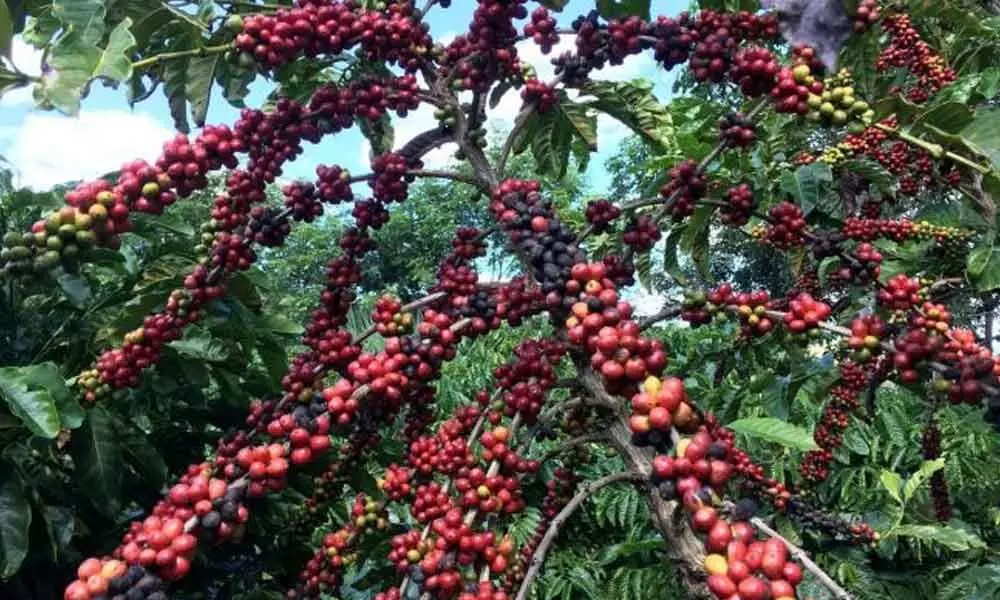
The Arabica Parchment coffee price has soared to an all-time high of Rs 16,200 per 50-kg bag on Thursday, in Somwarpet and Chikamagalur markets.
Madikeri:
The Arabica Parchment coffee price has soared to an all-time high of Rs 16,200 per 50-kg bag on Thursday, in Somwarpet and Chikamagalur markets. A large-scale destruction caused by snowfall to the similar coffee variety in Brazil, the largest producer of the crop, has come as a blessing in disguise for the growers here.
According to traders, normally, this coffee variety commands a price of Rs 10,500 to 11,500. Similarly, the cost of Robusta Parchment has touched Rs 7,600 per bag. The last time when Arabica coffee reached the highest price was in 2014 when it sold at Rs 9,600-Rs 9,800 per bag. The price saw a downward trend and touched Rs 6,000.
The prices of Arabica Cherry and Robusta Cherry have seen a marginal rise in price. They command a price of Rs 7,500-7,600 and Rs 3,800-Rs 4,100 per bag respectively. Growers in Kodagu, Chikkamagaluru and Hassan are elated over rise in the prices of coffee, despite problems of shortage.
Coffee was bought and exported by the government through the Coffee Board before growers were allowed to sell their produce directly in the open market since 1992, following protests by them.
December to April is the time for coffee harvesting and 90 percent of growers sell the produce before the beginning of the rainy season due to the price fluctuations and lack of warehousing facilities. The total annual coffee production in the country is approximately 3.6 lakh tonnes. Most of the Arabica growers have already sold their produce.
Speaking to The Hans India, a coffee exporter and promoter of AWIT Innovations (P) Ltd in Kushalnagar, Rajiv Kushalappa said that the price fluctuations are likely to increase in the near future due to prevailing international market conditions. According to him, the rise in the price was fallout of crop loss in Brazil following heavy snowfall. Ratan Machaiah, a coffee grower in Gonicoppa, said that the cost of production of coffee has increased significantly in recent years and growers are in a distress.
The wages of labourers, cost of fertilisers, pesticides, etc., have doubled over the past decade, but the price remains the same. The growers are gambling on unpredictable climatic conditions year after year. He has urged the government to support the growers by announcing a special package.
source: http://www.thehansindia.com / The Hans India / Home> News> State> Karnataka / byCoovercolly Indresh / Hans News Service / February 10th, 2022
It’s a fine balance between high quality espresso, hot milk and silky milk foam, explains coffee sensei Sherri Johns
A perfect cup of cappuccino. (Photo: Unsplash)
Sensei is a Japanese word which translates to a teacher or master. Coffee expert Sherri Johns was regarded as a sensei when she was in Japan doing what she does best—training people to brew the perfect cup. Johns’ helped set up India’s first Specialty Coffee Association Premier Training Campus and Araku’s flagship store in Bengaluru. Now, she is visiting the city for the certificate programmes at ARAKU World Specialty Coffee Academy (AWSCA) which run from January 25 to February 16.
In a career spanning more than 40 years, the Portland-based Johns worked with Starbucks, launched the World Barista Championship and was on the board of Specialty Coffee Association (SCA)—a nonprofit, membership-only organization that represents coffee professionals across the globe. In 1980, during the early days of her career in San Francisco, she entered an annual Barista competition, won it for three years straight, and earned the title ‘cappuccino queen of San Francisco’.
source: http://www.lifestyle.livemint.com / Mint Lounge / Home> Food> Drinks / by Jahnabee Borah / February 02nd, 2022
If you are fond of roaming and live in India, you can visit many of the best places in India. If you are a coffee lover, today we are going to tell you about places in India where you will enjoy visiting and you would love to go there again and again.
* Wayanad is a beautiful place in Kerala. People often go for a walk here. However, apart from romance, this place is one of the coffee places in India. You can enjoy the lush green coffee plantations here if you want.
* Coorg is considered to be the pride of Karnataka, although it is home to many coffee gardens that produce Arabica and Robusta. In that case, if you are planning to visit here, the month of November will be the best. Well, everyone must go here once.
* Chikmagalur in Karnataka is the best place. It is famous among tourists for its beautiful views. Coffee was first introduced in India during the British Raj, situated a few hours away from Kurdish. There are a variety of coffee gardens.
* Arku is a beautiful place in Andhra Pradesh which is also excellent for sightseeing. Thousands of tribals here depend on coffee cultivation. If you are ever going to Arku, be sure to taste the organic coffee grown by the locals here.
* Yarcaud is in Tamil Nadu and is called the jewel of South India. In fact, there are many coffee gardens, so if you ever visit here, you must take advantage of the coffee garden once. It is also said to be home to MSP coffee, the first Indian owned coffee plantation ever.
source: http://www.english.newstracklive.com / News Track / Home / by Arpit Birtharia / January 13th, 2022
TATA Coffee Grand celebrates the unique sounds of the harvest festivity this Pongal along with its ‘Shik Shik Shik’ campaign
Coimbatore :
TATA Coffee Grand, the coffee brand from the house of Tata Consumer Products continues its celebration of bringing out the emotions and excitement associated with coffee in Tamil Nadu. In line with this, the brand has released a festive film celebrating the various sounds that reflect the unique spirit of Pongal with the ‘Sounds of Tamil Nadu’ campaign of Tata Coffee Grand.
The vibrant film is a montage of various visuals and sounds that are associated with the Pongal festival; the crunch of sugarcane, the clink of children’s anklets, and the musical echoes of the ‘kulavai’ among others. Replete with sumptuous Pongal delicacies, family gatherings, and a splash of rich hues that the Tamil culture is well-known for, the film concludes with the thought, ‘How can any festive meal be complete without coffee and the emotions associated with it?’
Talking about the film, Puneet Das, President – Packaged Beverages (India and South Asia), Tata Consumer Products said, “Our campaign of Tata Coffee Grand launched last year, synonymizes the word ‘Coffee’ with the sound i.e. Shik-Shik-Shik – which represents the sound heard when the Tata Coffee Grand jar or pack is shaken! We have gone a step ahead this year and have extended the ‘shik shik shik’ proposition to the sound of the Pongal festivities, to capture the excitement of the festival along with the emotions of drinking coffee. These festivities are not just reflected in the visuals but also in the unique sounds that reverberate throughout the harvest season. In highlighting this, we are happy to launch our new film which doubles up as a feast to the senses and has a distinct sound design that celebrates the festive taste of Tamil Nadu”.
Commenting on the campaign idea, Sonali Khanna, Executive Director and Branch Head, Lowe Lintas South said, “Pongal is a festival that the people of Tamil Nadu hold very close to their hearts, resulting in a joyous tapestry of celebratory sights and sounds. What’s striking is that many of the authentic sounds of Pongal are expressed as triplets. This is exactly the same aural mnemonic we have used to bring our product USP to life: the ‘Shik Shik Shik’ of the packet representing the Tata Coffee Grand crystals. The wonderful interplay of musical triplets, the rich festive hues, and the catchy sound of the pack, all come together seamlessly. To create a film that is as aurally arresting as it is visually resplendent.”
source: http://www.covaipost.com / The Covai Post / Home / by Covai Post Network / January 14th, 2022
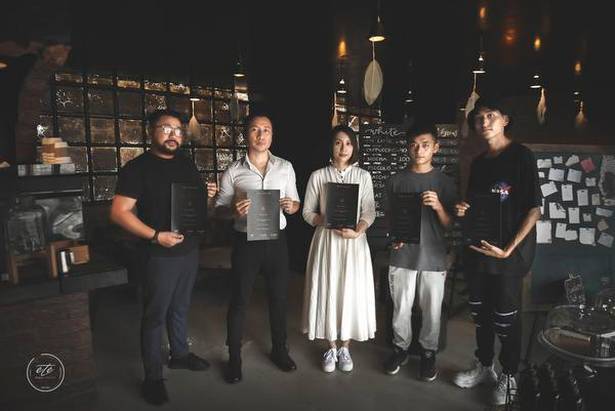
Inside Été Coffee Roasters in Kohima | Photo Credit: Lichan Humstoe
More than 180 years after the Northeast began its journey to becoming synonymous with tea, coffee is demanding space on those verdant hill slopes
There’s an aroma of Brazil in Haflong, Assam’s only hill station 1,000 metres above sea level. It has much to do with a café in a two-storeyed cottage named after soccer legend Pele.
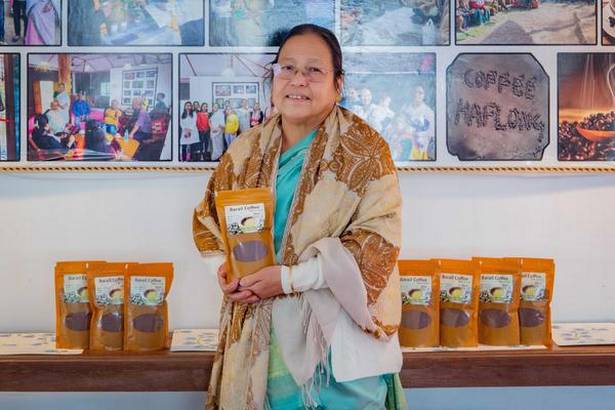
Nibila Jidung set up Pele Coffee Shop in the town’s Gadain Raji locality in 2020. The shop is named as much after the Brazilian football star as Jidung’s deceased son, who was born the day Pele landed in Kolkata in September 1977 to play a friendly match for New York Cosmos versus Mohun Bagan. And, as in Brazil, the coffee she serves is home-grown.
In just two years, the café has become a popular hangout for the young in Haflong. Its success, however, began with a big failure more than two decades ago.
Nibila Jidung of Barail Coffee at her cafe in Haflong, Assam | Photo Credit: Special Arrangement
In the 1990s, the Assam Plantation Crops Development Corporation Ltd had started a coffee plantation on a large area leased from Disagisim village near Haflong, and then handed it back to the villagers to give them a source of income. But the plantation soon fell into disuse; the people were not used to growing coffee as a staple. But when Jidung’s late husband Prahlad Chandra Jidung retired, his family decided to lease the plantation in 1999 and started employing local hands. “This helped us generate some income and provide livelihood to the people of the village,” says Jidung, 65. But the plantation area reduced from 100 bighas to 25 over time, for several reasons.
First, of course, the Jidungs faced worker shortage during a decade of extremism. Another problem was the loss of quality — the delay in transporting the cherry to the auction centre in Bengaluru resulted in a lower price for their coffee beans. “The Coffee Board would take the cherries from us, keep them in a warehouse in Haflong, then transport them for auction in Bengaluru.”
When Jidung’s son died in 2015, she realised her coffee business was going nowhere. “It was around that time that the Coffee Board advised me to create my own brand and open an outlet to promote local consumption,” she says.
Schooled for success
The board helped her procure the equipment to process freshly-plucked coffee: machinery to do everything from removing the shell of the fruit, drying the coffee bean, and hulling (crunching off the parchment skin of the bean) to roasting and grinding. The effort has been worth it; people are developing a taste for her brand, Barail Coffee, in two forms — filter coffee and cold coffee. Her brand is a mix of the Robusta she grows and Arabica from the coffee garden of Sehahohen Eanlhou at Changpijang village about 25 km away.
Jidung is one of a few people in the Northeast who grows, roasts, grinds and brews her own brand of coffee from an annual yield of about 2,500 kg. Lichan Humtsoe, her counterpart in Nagaland’s capital Kohima, has taken a similar venture to a different level. A fashion photographer-turned-beverage entrepreneur, Humtsoe is the founder of Été Coffee. Été in the Lotha Naga dialect means ‘us’ or ‘ours’ and the branding, he says, reflects the diversity of the multi-tribe Naga community as well as the multiple flavours of the coffee sourced from different districts of Nagaland.
Été Coffee dabbles in everything but farming. It has a full-fledged roastery and production unit, retail line, two coffee breweries, consultancy services, a coffee school, three observation farms, two nursery units, coffee laboratory services and an upcoming e-commerce space.“We established Été in 2016 as the first specialty coffee roasting company in the Northeast. It was around that time the third wave of the coffee movement of the 1990s had created a new focus on specialty coffees that were offering a range of aromas and tastes. We subsequently opened the first coffee school in the region to provide eight courses on coffee-related services,” he says. Thanks to the school and consultancy services, Humtsoe’s firm has been able to establish more than 10 coffee shops across Nagaland and train and deploy baristas in several other cafes.
Staff at Été’s units. | Photo Credit: Lichan HumtsoeTrainees at Été’s units | Photo Credit: Lichan Humtsoe
Farmers and growers across Nagaland are at the core of the Été Coffee enterprise. “Farmers form an integral part of the coffee industry and deserve their share of the benefits. Our EML (educate, motivate and lead) network provides a safety net against any form of exploitation and ensures that the resources are optimised, not exploited,” says Humtsoe. His venture coincided with the revival of coffee farming in Nagaland. The Nagaland Plantation Crop Corporation had also undertaken extensive coffee plantations in the 1980s with inputs from the Coffee Board, but the initiative could not be sustained because of transportation and marketing issues, and the corporation was disbanded. In 2015-16, the State’s Land Resource Department was given the responsibility of bringing coffee back to the table.
Says the department’s director, Renben Jami: “We studied the potential of coffee afresh, and realised 10 lakh hectares can be used for it across the State. But we are focussing on 50,000 ha now, with plantations currently covering 12,000 ha. “We are acting as a bridge between farmers and buyers, who are lining up from abroad and elsewhere in the country.” .
Single-estate varieties
The primary buyer of coffee grown in Nagaland is Pieter Vermeulen based in South Africa’s Cape Town.
He exports the Naga Coffee brand of several single-estate varieties. He came to know about the coffee in Nagaland after his farming venture in Nepal met with a bovine end; cows that roamed about the villages devoured most of the 20,000 coffee shrubs he had planted. He signed an agreement with the Nagaland government in 2015 to provide logistical support, training and seedlings to subsistence farmers, and helped them market their coffee. “We were not able to export for two years due to the COVID-19 restrictions but we expect our first harvest of 40 metric tonnes this year,” he says. “The challenge now is to bring coffee in the region at par with international standards,” says Vermeulen.
According to Humtsoe, the organically-grown local coffee, with research having gone into varietals and soil quality, is on par with the best in the world. The coffee grown here has a ‘wild’ flavour, induced by the other plants that are grown alongside, and this gives it an edge over coffee grown elsewhere, says Jubanylla G. Bang, product head of Zizira, a farmer-driven company based in Meghalaya’s capital, Shillong. The estate sells ‘7000 Steps Coffee’, so named because of the number of steps one has to climb to reach Mynriah in the East Khasi Hills district where some of the coffee is grown.
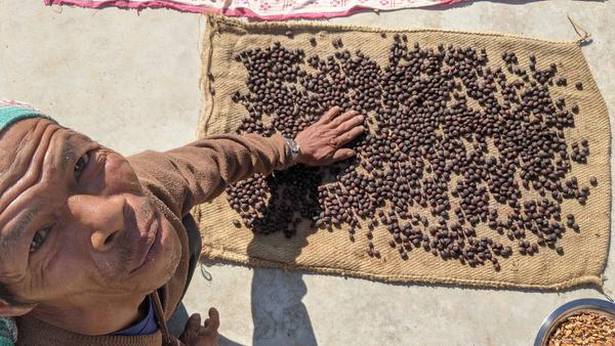
A farmer dries coffee beans in Meghalaya’s West Khasi Hills | Photo Credit: Zizira
Rashi Vaswani runs two Bread Café outlets in Shillong. “We depended on coffee imported from southern India when we started out 12 years ago. About four years ago, we switched to local varieties and they have turned out to be just as good,” she says. “Packaged smartly, the local coffee flies off our shelves.” Her supplier is Smoky Falls Coffee Tribe, the first coffee roaster of Meghalaya.
Arabica over Camellia?
A Sufi saint named Baba Budan is credited with having brought coffee to India in the 16th century. But the beverage actually gained popularity in the 19th century in colonial settlements, and the earliest farming in the Northeast is mentioned in a 1908 book titled Coffee Cultivation in Khasi Hills (in Meghalaya, then a part of Assam). This was about eight decades after the first commercial tea plantation came up in eastern Assam’s Chabua.
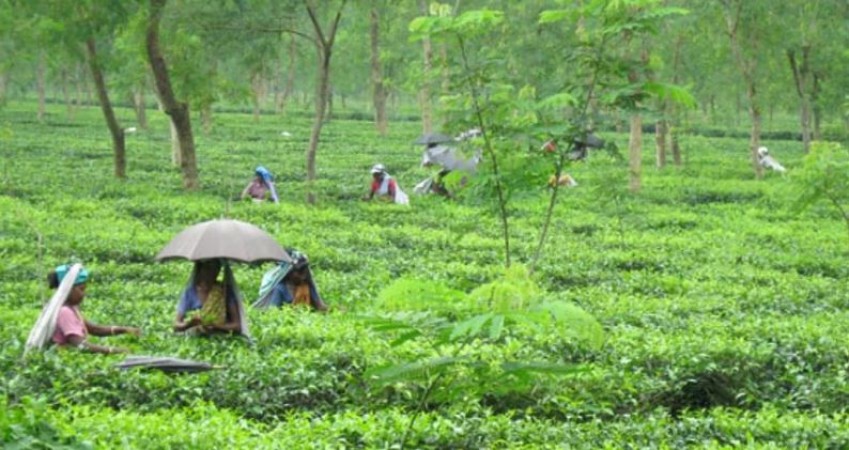
Synonymous with tea, Assam today has 3,37,690.35 ha under tea plantation with an annual production of 626.23 million kilos. Tea is also grown in the other six contiguous States of the Northeast, together accounting for some 25 million kilos more.
Since the Coffee Board’s initiatives in the 1980s, the total coffee planted area in the Northeast is 4,618.26 ha, with 1,394.21 ha of coffee-bearing area yielding an average annual 150 metric tonnes of clean coffee.
Bidyananda Borkakoty, advisor to the North Eastern Tea Association, does not think coffee can become a threat to tea. “About 70% of coffee in India is grown in Karnataka, but many popular tea boutiques or lounges have also come up in Bengaluru in the last five years,” he points out. Coffee Board officials say the push for coffee in Assam since 1976 was never intended to give tea competition: for one, coffee is grown in areas above 500 metres altitude while tea in Assam thrives below 100 metres; and two, coffee cultivation in the Northeast is primarily pursued by tribal people.
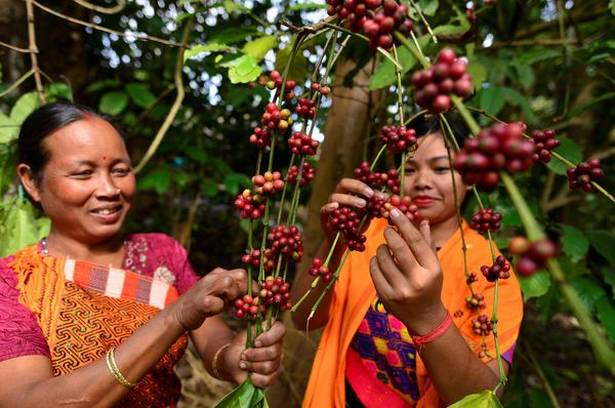
Tiwa women tend to coffee plants in Karbi Anglong | Photo Credit: RITU Raj Konwar
Coffee Board’s joint director (extension) for the Northeast, Navin K.B. Ryntathiang, says the board’s extension personnel collect the coffee produced by the tribal growers and take it for processing and auctioning. “Besides the decentralisation, we have been providing subsidy and research support to farmers and brewers to pursue their own branding and marketing,” he says. The support system includes coffee processing and curing facilities and a 25 ha regional coffee research station in Central Assam’s Diphu.
Officials involved in promoting coffee, in fact, attribute their strategy to that adopted by the tea industry. “Our department is setting up coffee bars across Nagaland, deviating from the earlier theory of growing coffee for export alone. India has a huge captive coffee market that needs tapping into, and the tea industry has taught us how this market can help us sustain,” says Jami. Humtsoe says the coffee culture is growing exponentially in Nagaland and elsewhere in the Northeast, but the supply from local farms is way below the demand. “In 2021, we ran out of the 15 tonnes we procured in no time. We hope we get more than the 30 tonnes we expect to sell this year,” says Zizira’s Bang.
Equally, the growing demand is making smaller farmers on Assam’s hills create space for coffee in their holdings that grow ginger, black pepper, long pepper and broomstick grass. “I started growing coffee on one bigha last year with seeds and training provided by the Coffee Board. I am prepared to wait three years for the shrubs to yield fruit and five years for commercial harvesting,” says Litha Kholar of Umswai in central Assam’s West Karbi Anglong district.
source: http://www.thehindu.com / The Hindu / Home> Society> New Brew / by Rahul Karmakar / January 22nd, 2022
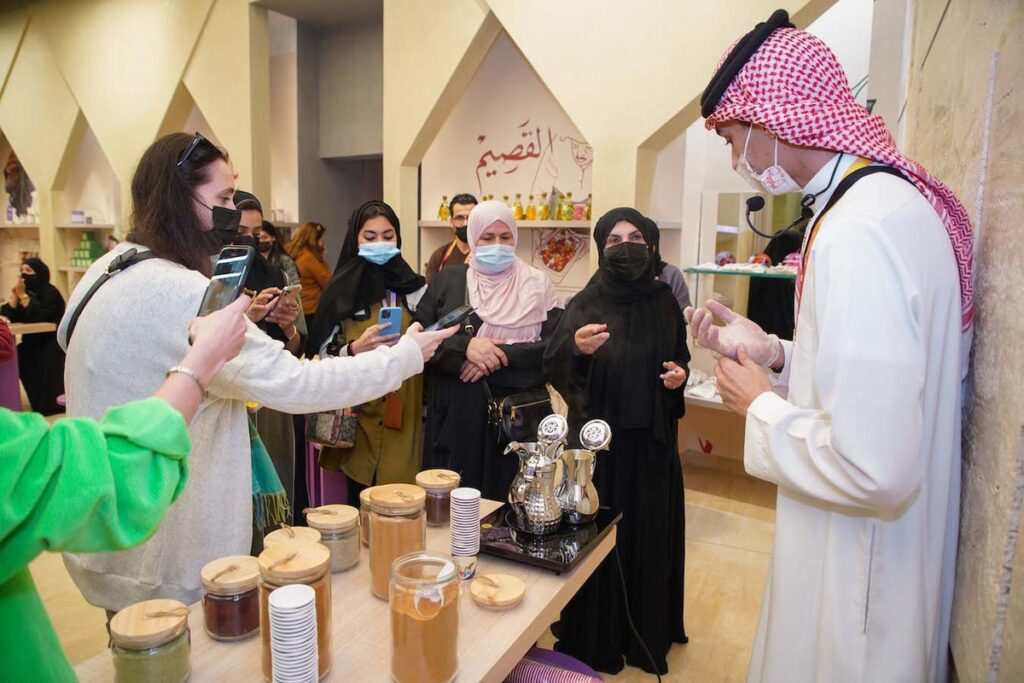
The Saudi pavilion at Dubai’s Expo 2020 Dubai on Tuesday launched Saudi Coffee Week, a five-day event to celebrate the country’s coffee culture.
Running until Jan. 29 from 3:00 to 9:00 p.m., the series features daily activities to inspire and educate visitors on the Kingdom’s coffee traditions that form an essential part of its culture.
The event will also host two workshops at Sard Café to help guests learn the art of making Saudi coffee. (Supplied)
This includes showing casing a variety of coffee-making and brewing techniques, as well as tasting experiences.
The event will also host two workshops at Sard Café to help guests learn the art of making Saudi coffee.
The pavilion also features booths from Ethiopia, Colombia, Honduras, Panama, and Australia at the Open Square to familiarize visitors with traditions of other countries.
source: http://www.arabnews.com / Arab News / Home> Lifestyle / January 26th, 2022
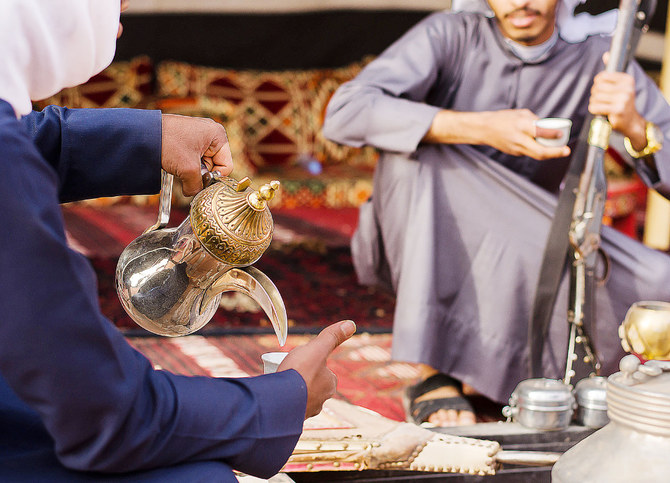
The traditional Arabic coffee has always been associated with generosity and the unique Saudi hospitality. (Shutterstock)
A wide range of programs, events and competitions will be held throughout 2022
The ministry was inspired by the traditional Arabic coffee cup for the logo, which has always been associated with generosity and the unique Saudi hospitality.
The ministry started working on the “Year of Saudi Coffee” when Minister of Culture Prince Badr bin Abdullah bin Farhan announced the initiative and allocated an electronic platform for the celebrations:
The ministry also provided a detailed description of the initiative and its objectives and set guidelines for using the visual identity. At the end of January 2022, the platform will provide a space to receive the ideas of individuals and all parties wishing to implement joint projects that serve the initiative and promote its objectives.
The initiative is part of the Quality of Life Program, one of the Kingdom’s Vision 2030 realization programs, through which the Ministry of Culture seeks to celebrate the cultural value of Saudi coffee and its close connection with the customs and traditions of the Kingdom.
______________
HIGHLIGHT
At the end of January 2022, the platform will provide a space to receive the ideas of individuals and all parties wishing to implement joint projects that serve the initiative and promote its objectives.
______________
The ministry, in cooperation with the Culinary Arts Commission, plans to hold a wide range of programs, events and competitions under the initiative’s umbrella throughout 2022, with government and semi-governmental agencies, private sector institutions, restaurants, hotels, cafes and individuals involved in this field.
Through this initiative, the ministry seeks to celebrate Saudi coffee as a distinctive cultural product of the Kingdom and contribute to its marketing locally and internationally, in addition to encouraging related products and activities.
It further aims to highlight the Khawlani coffee produced in southern Saudi Arabia and underline how coffee is prepared in different ways in each of the 13 Saudi regions. It also details how coffee is served to guests in various ways, which gives the Kingdom’s coffee a unique cultural depth.
source: http://www.arabnews.com / Arab News / Home> News> Saudi Arabia / January 01st, 2022
Why Ajai Thandi quit a Wall Street job to start a homegrown coffee brand in India with his best buddies – more on the journey of Sleepy Owl Coffee, its Forbes 30 Under 30 founders and ‘brew-ginnings’ from a small kitchen to raising a whopping $6.5million in funding.
After schooling at YPS Mohali, Sanawar and Woodstock Mussoorie, Ajay Thandi went on to pursue Economics at the University of California.
The cool climes, mountain breeze carrying a refreshing hint of fresh pinecones, sun bathed slopes and a frothy glass of cold coffee. Sundays at The Lawrence School, Sanawar were special.
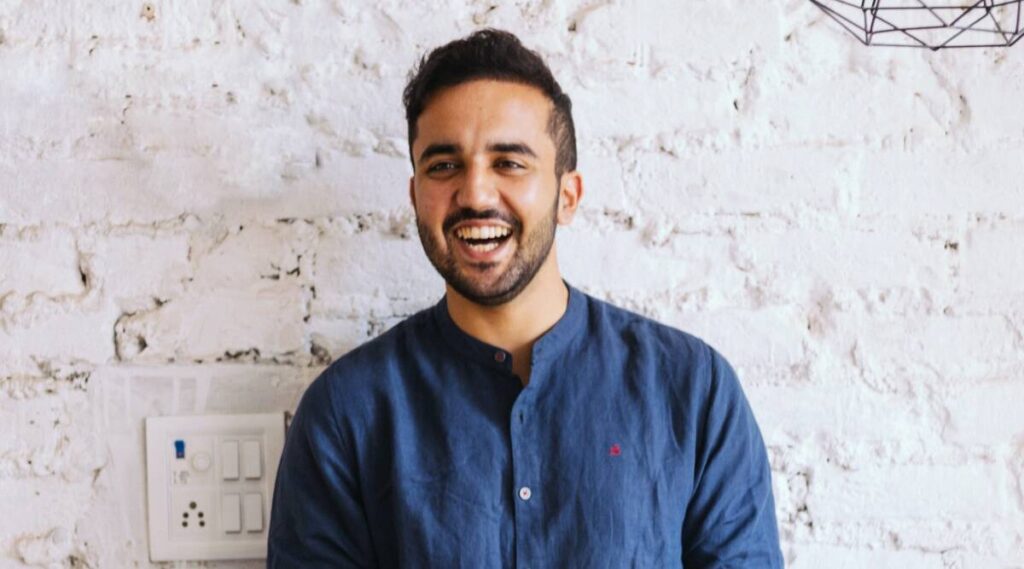
“The taste of that cold coffee still lingers on as a cherished memory,” says Ajai Thandi. Today, this co-founder of the very quirkily named homegrown coffee brand, Sleepy Owl, is in the business, er, correction please – mission of creating memories, conversations and more over a freshly brewed, ready to drink gourmet cup of coffee.
Best pals, Armaan Sood, Ashwajeet Singh and Thandi love a good coffee – “but could never find a great cup when needed.” So they decided to brew their own and box it in a to-go. Founded in 2016, Sleepy Owl is active across the country, and boasts of a 75 product portfolio including cold brew packs, hot brew bags, ready-to-drink cold brew bottles, ground coffee, brew boxes and merchandise.
“We don’t consider ourselves in the business of making and selling coffee, but on a mission to make consumers blissfully happy, and transform India into a country of coffee drinkers,” says Thandi. Now, that’s a serious dare to the champions of chai, but going by this start up’s increasing popularity, national traction and the latest $ 6.5 million raised in funding, the Sleepy Owl boys are perched on the top of their game.
Something’s Brewin’
Days jam-packed with meetings, interviews, innovation and strategies round the clock – it was really not an easy task to catch 28-year-old Thandi. But when one’s a tea drinker (steaming cups of kadakadrak chai), it became all the more imperative to check out the first movers of a very niche segment – the coffee drinkers, and the space it occupies in the Indian teacup, growing beyond good ol’ Nescafe.
After schooling at YPS Mohali, Sanawar and Woodstock Mussoorie, Thandi went on to pursue Economics at the University of California. An investment banker at JP Morgan, New York, he was living the dream, except that deep inside, he always had this urge to do something on his own. Talent and brilliant ideas, he feels, were never the problem, it was the lack of opportunities and monopolistic hold of giants corporations in India with their muscle and money that limited the possibility of a middle class person to start a business on their own.
“There was hardly anything beyond IIT or IIM for a non-business family person,” says Thandi. It was in the USA that he experienced a disruption of new age companies, online platforms like Shopify (first started out of Canada), that cut down barriers, and provided an all-in-one democratised commerce platform to start, run, and grow a business independently.
Post 2010, Amazon and Flipkart proved to be the game-changers in India. Inspired and motivated, Thandi moved back home in 2014, touched base with his best pals, lawyers Sood and Singh, and brainstormed. Always in search of good coffee, Singh was into brewing his own, while Thandi came home with stories of a stimulating New York coffee culture. Their shared passion for coffee and the experiences it offers literally became the conversation starter of their business idea.
They also saw a potential in the country’s untapped market for freshly brewed coffee. “Indian kitchens, for years, have only known one or two coffee brands. We wanted to change that, give people a product that is easy to use, of great quality and value, and educate them on what a freshly brewed cup of coffee can offer.”
With Rs 15 lakh pooled in from their savings, the brewing began from a small kitchen in Dwarka, New Delhi with Singh as the in-house brewmaster, experimenting relentlessly in search of the perfect brew. Research and recce were undertaken. The best Arabica coffee beans were sourced from Chikmagalur, Karnataka. A category creating product, consumer awareness and feedback was paramount, so to suit the Indian palette, their coffee was fine-tuned to be less bitter, less acidic, and taste better. Their cold brew (freshly pressed coffee that can be brewed at home) had been perfected, and in 2016, Sleepy Owl took the first flight.
“The name is a fun play of words really. One doesn’t mind a caffeinated boost to shake off the sluggishness, and owls, well, they are nocturnals, aren’t they?”
The Coffee Tales
People don’t just drink coffee. Although Sleepy Owl are the first movers in this now rapidly-growing category, their ground rule has always been to create a great product, package it well, accentuate ease of use and educate the consumer, aggressively using social and digital media to reach their target audience.
“We curated events, tastings, visited offices, delivered door-to-door, entertained anyone who invited us with a captive audience, all three of us would be there with Sleepy Owl,” says Thandi, who manages the financial aspect of the start up.
Expansion, sustainability, awareness, innovation are the key areas of focus. “We three are innovators by nature, driven by our curiosity.” Their risk paid off when the trio, after two years of testing and trying, introduced coffee bags in the market. “There are tea bags, so why not some good coffee bags too?” he says.
When they arrived, it was just “Nescafe, Bru and us.” Today, the market is brewing with new players, and Thandi is bracing for a competitive 2023. “Challenges are part of life. As entrepreneurs we navigate it on a daily basis.”
It’s this attitude, planned and disciplined use of their funds that helped Sleepy Owl raise USD 6.5 million (about Rs 48.3 crore) in funding, led by existing investor Rukam Capital, recently. The company has raised $8.5 million in total.
The Highs & the Lows
By all means, the biggest high is ‘when employees are happy, when customers love our product, and when you walk into someone’s home and find Sleepy Owl on their shelf, or on in some shop in a random market place’. Being featured in the coveted ‘Forbes 30 under 30 India’ for the year 2020 was a bravo moment.
The biggest low was the pandemic and the early days of national lockdown. A dip in sales, transportation stalled, markets shut – the co-founders were facing crisis, and an inventory with limited shelf life. It was time to think fast and act faster – “we got special passes made, loaded our inventory and went door to door to sell our cold brew direct to consumer”.
Post ready-to-drink bottles and cold brew, Sleepy Owl needed another shot of caffeine and it came in the form of hot brew bags—coffee in a tea bag—which the startup rolled out during the winter of 2019.
In this uncertainty, the team went into survival mode by opting for zero budgeting – growth, slow and steady, but not at all cost. This rigorous fiscal discipline and their coffee bags bagged them their funding. “It was great validation for our mission. Our vision is being backed,” says Thandi.
The Secret Brew
Thandi gets his entrepreneurial spirit from his father. Retired from the Army, his father’s only regret in life is risk not taken. “The craziest thing I’ve ever done is to quit my job on Wall Street to start a company in India. Once an entrepreneur, always an entrepreneur,” he says, conditioned to take risks, be independent and walk the path less taken thanks to the Army life and boarding school. Curiosity, innovative spirit and resilience – “true grit in the face of massive uncertainty and defeat,” is what keeps Thandi driven.
The Tricity traction
Thandi is passionate about helping people, especially youngsters, make their life easier by mentoring and guiding them. “I love the city, but would definitely like a better start up ecosystem, more opportunity and infrastructure for new businesses and ideas to germinate here – see Chandigarh turn into a model base city for start ups and innovation.”
source: http://www.indianexpress.com / The Indian Express / Home> Cities> Chandigarh / by Jaskiran Kapoor, Chandigarh / December 17th, 2021
Sanjay Ponnapa at the opening of the first Fuel Espresso takeaway cart, on The Terrace, Wellington, in 1996.
Sanjay Ponnapa: businessman; b January 10, 1964; d November 26, 2021
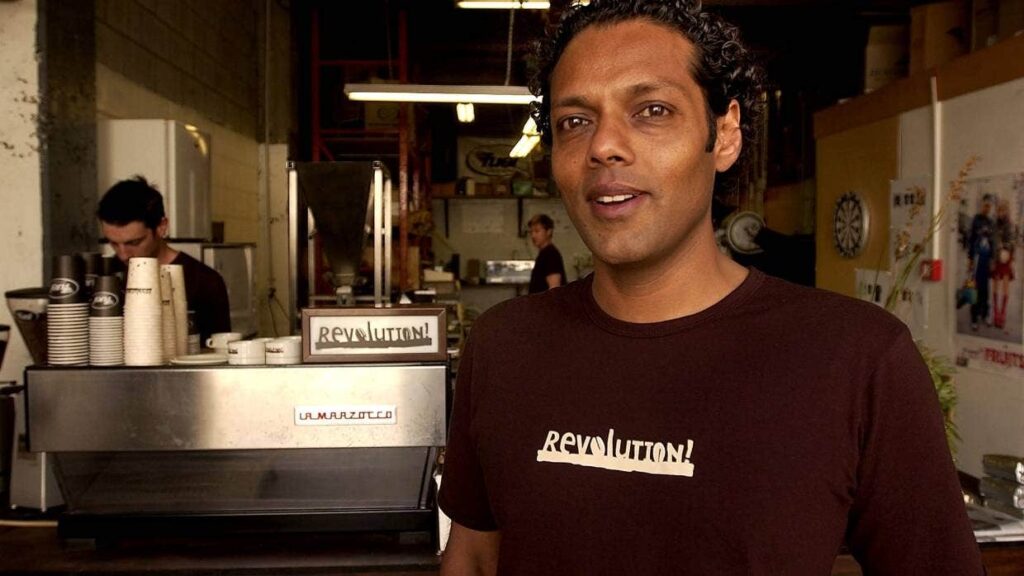
Sanjay Ponnapa, who has died aged 56 in Hong Kong, was one of the founders of Wellington’s coffee industry, going on to build a highly successful coffee empire in Wellington and Asia.
He was born in Tamil Nadu, near to his family’s homeland of Kodagu. The Kodagu (formerly known as Coorg) is a small, sparsely populated region nestled in the rich coffee-growing hills of the Western Ghats, about halfway down India’s western side.
His family were coffee farmers and soldiers; his uncles included Field Marshal Kodendera Madappa Cariappa, the first Indian commander-in-chief of the Indian Army, and General Kodendera Subayya Thimayya.
Sanjay Ponnapa in 2004, at the launch of Fuel Espresso’s Revolution brand. He roasted and created his own coffee blends, including specialty arabica beans from his family’s plantations in Coorg, western India.
Coming from India to the gastronomically bleak New Zealand of the 1960s must have been a shock, but Ponu’s brother sent over bags of Coorg coffee, which Leela would roast in the family kitchen.
Sanjay went to school at Viard College in Porirua and then St Patrick’s College (Silverstream). He grew up into a tall, strongly built, strikingly good-looking man, with a love of fine clothes, whiskey and late 50s jazz. He attended Victoria University and the University of Canterbury, but left without a degree.
He worked in the fashion industry, then travelled to New York, supporting himself by cocktail bartending. Those playboy years were not wasted, as seeds were being planted that were to bear fruit later; attention to detail, a love of quality and customer service. One seed in particular was to grow into a plant that would build an empire.
Around 1995 he returned to Wellington and took a job with a young business called Coffee Supreme. It was the first years of what was to become the city’s cafe boom. Supreme founder Chris Dillon remembers Ponnapa as “very entrepreneurial”.
“He was always picking your brains. We had a lot of conversations about what he wanted to do next, and the potential he could see for takeaway carts, like he had seen in the US.”
Yeonhee and Sanjay Ponnapa with daughter Leela in 2015. Fuel now has seven sites in Hong Kong and two in Shanghai, in addition to three in Wellington.
Ponnapa wanted to do something different. He still wasn’t sure how. Then, in 1996, things came together. He designed and built his first coffee cart.
Anyone who was in Wellington then will remember it: based on the 1950s design icon, the Airstream Caravan, in silver, black and red, with the sounds of Miles Davis and Sonny Rollins wafting through aromas of the finest arabica coffee served in branded cups. It was an instant hit with Wellingtonians. Fuel Espresso Ltd was born.
“He wanted to elevate takeaway,” says Dillon. “Many thought it was second-best. He wanted to show it could be beautiful. He paid a lot of attention to branding, to how staff deported themselves, to make sure it would be a very coherent presentation. I’m pretty sure staff didn’t get to play fast and loose with the music playlist.”
That year Ponnapa also met his first wife, Alexandra Tylee. They were married the same year. For the first five years, they worked side by side developing Fuel.
The first cart, on The Terrace, showed them that the concept worked; the next challenge was getting more sites. Ponnapa persuaded sceptical bureaucrats to allow coffee carts at the hospital and airport.
“It hadn’t been done. We had to convince them it was a good thing to do,” Tylee says. “Back then lots of people hadn’t had proper espresso coffee. He was really charming, determined and tenacious, and didn’t give up.”
Fuel soon expanded to seven carts and sites around Wellington. Unhappy with the wholesale imported beans most cafes used, they travelled to Trieste, Italy, and created their own blend with coffee maestro Vincenzo Sandalji. They then set up their own roastery in Holland St.
“We practised the roasting for about a year before he was happy with it. He wanted to get it right. He was a perfectionist,” says Tylee.
Ponnapa was very proud of his blend, a closely guarded mix of Italian and specialty arabica beans from his family plantations in Coorg. He believed passionately that good coffee, like good wine, needed close attention to blending and even ageing. He decided to age his coffee, contrary to what he called the “global industry’s obsession with the ‘fresh is best’ dogma”.
Tylee says his talent as a leader helped the business grow. “Everyone at Fuel was really like a family. He loved being able to integrate his passion for his music, and his family. He had a vision and saw it through.”
Unfortunately, family life was not so smooth. The couple’s son Zeus was born in late 1999. He died only a few months later, from Sudden Infant Death Syndrome, and his parents eventually parted ways.
By 2005, Fuel Espresso was well-established in the Wellington coffee scene, and Ponnapa was looking for the next step. He saw it in Hong Kong. He had a vision for a chain of high-end cafes nestled amongst the Guccis, the Versaces and other luxury shops of Hong Kong’s plazas.
Over the next decade he built it. Fuel now has seven sites in Hong Kong and two in Shanghai, in addition to three in Wellington. It has been stunningly successful; a tribute to the boy from Porirua who exported the taste and aroma of his secret blend to Asia.
Hong Kong became his home; he met his second wife, Yeonhee Kim, who worked in the financial sector. They married in 2012. Their daughter, Leela, was born the next year.
On Friday, November 26, Ponnapa mentioned to his wife that he was feeling unwell. He attended a staff dinner that evening, but left early. While entering an escalator, he is believed to have suffered a medical event that caused him to fall. He died at the scene.
Dillon says Ponnapa made a significant contribution to the development of Wellington’s cafe culture. “Fuel was the first high-end New Zealand takeaway coffee chain. He would say the only one. No-one had made good-quality takeaway coffee with that level of attention to detail and quality and presentation.”
Tylee says it’s hard to believe he’s gone. “He was so full of life, he had so many interests and so much he wanted to do.
“He was really warm, and a caring person.”
Chris Brown, of Sputnik PR, worked closely with Ponnapa to build his brand, but says his business achievements were ultimately not what gave him most satisfaction.
“He was very excited about celebrating their [his and Yeonhee’s] 10th anniversary. After all he’d been through, he thought his little family was his greatest success.”
Sources: Mythi Ponnapa, Chris Brown, Chris Dillon, Alexandra Tylee
source: http://www.stuff.co.nz / Stuff / Home> Life & Style> Food & Drink / by Patrick Piercy / December 11th, 2021
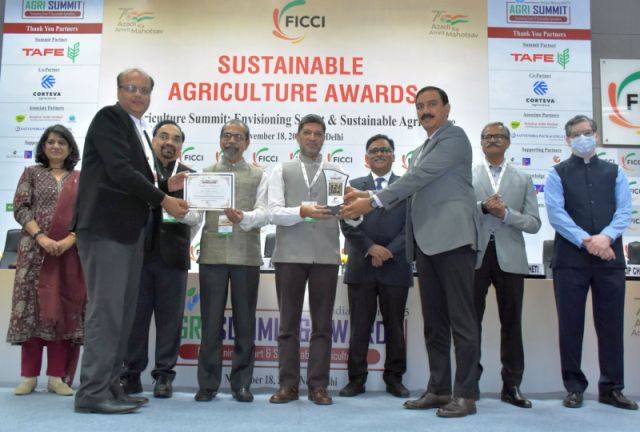
Kiran Ganapathy, Head of Plantations – Operations & Samir Palsule, Head – Business Excellence, Tata Coffee Limited receiving the FICCI award
Tata Coffee Limited (TCL) recently won the ‘Sustainable Agriculture Award’ at the Federation of Indian Chamber of Commerce and Industry (FICCI) Agriculture Summit and Awards 2021. The company was recognized for its Soil and Water Conservation initiatives undertaken at its plantations and instant coffee plants.
Kiran Ganapathy (Head of Plantations – Operations) and Samir Palsule (Head – Business Excellence) received the award on behalf of the company from members of the FICCI Agriculture Committee. The award was granted under the ‘Large Corporate’ category and TCL was conferred the award for significant on-ground interventions in sustainable agriculture development.
The entries were shortlisted and evaluated based on the agricultural challenges faced, the CSR initiatives to mitigate such challenges, the outcome and impact of the practices, its scalability and ways to extend the program to benefit small farmers.
The Agri summit brought key stakeholders and policymakers on a common platform to ideate an implementable strategy for smart and sustainable agriculture. It was attended by CEOs and business heads of the agri and food industry, policymakers, multilateral and bilateral institutions, NGOs, academicians, researchers, embassies, financial institutions, development organisations etc. who discussed and recommended practical pathways for the promotion and adoption of best sustainable agriculture practises on a large scale.
Chacko Thomas, Managing Director & CEO, Tata Coffee speaking on receiving the award said, “Tata Coffee is honoured to be recognized for its commitment to sustainable agricultural practices, and soil and water conservation are a key part of our sustainability strategy. We have adopted scientific ways to conserve water to store excess run-off from the rainwater, in healthy catchment areas. As a result, we now have 274 tanks with a storage capacity of 3.4 Mn cubic meters. This model has ensured that our irrigation is 95% self-reliant and no groundwater is ever exploited. Over the last few years, we have also successfully enhanced the soil fertility in the estates, through regular application of organic compost into the soil. Few other initiatives undertaken towards soil conservation include – contour planting, intercropping, planting of new trees and cover crops. We have also carried out several interventions in terms of training programmes and CSR awareness campaigns towards adopting improved technologies in all operations.”
source: http://www.thecsrjournal.in / The CSR Journal / Home> Categories> Agricultural & Rural Development / by The CSR Journal / December 09th, 2021
WELCOME. If you like what you see "SUBSCRIBE via EMAIL" to receive FREE regular UPDATES.
Read More »