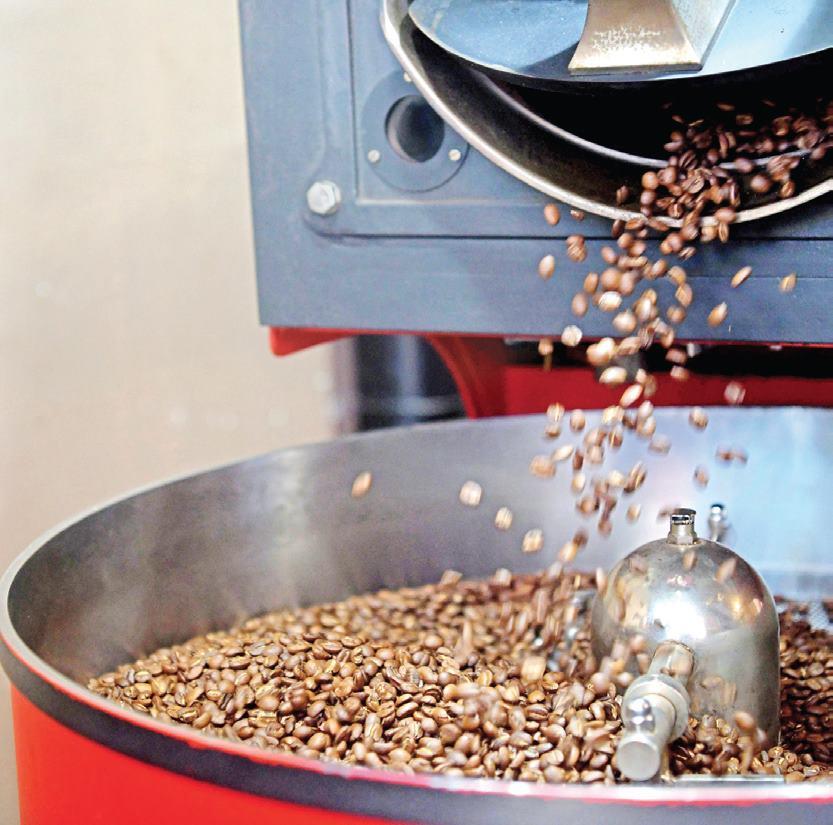
Coffee pulp, a waste product of coffee production, could be used to speed up tropical forest recovery on post agricultural land, suggests a new study.
In the study published in the journal ‘Ecological Solutions and Evidence’, the team spread 30 dump truck loads of coffee pulp on a 35-40m area of degraded land and marked out a similar sized area without coffee pulp as a control.
“The results were dramatic”, said lead researcher Rebecca Cole from the University of Hawai’i in the US.
“The area treated with a thick layer of coffee pulp turned into a small forest in only two years while the control plot remained dominated by non-native pasture grasses,” Cole added.
After only two years, the coffee pulp treated area had 80 per cent canopy cover compared to 20 per cent in the control area. The canopy in the coffee pulp area was also four times taller than that of the control area.
The addition of the half metre thick layer of coffee pulp eliminated the invasive pasture grasses which dominated the land.
These grasses are often a barrier to forest succession and their removal allowed native and pioneer tree species, that arrived as seeds through wind and animal dispersal, to recolonise the area quickly.
The researchers also found that after two years, nutrients, including carbon, nitrogen and phosphorous, were significantly elevated in the coffee pulp treated area compared to the control.
For the study, the researchers analysed soil samples for nutrients immediately prior to the application of the coffee pulp and again two years later.
They also recorded the species present, the size of woody stems, percentage of forest ground cover and used drones to record canopy cover.
source: http://www.daijiworld.com / Daijiworld.com / Home> Health / by IANS / March 29th, 2021
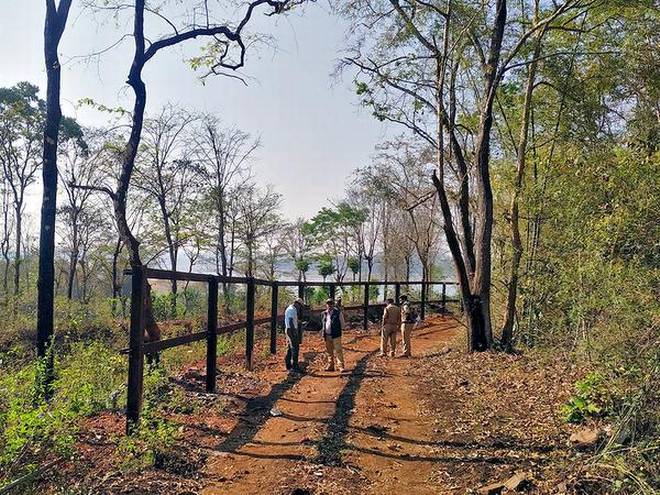
The Forest Department has installed railway barricades to stop entry of elephants in Alur range.
Across 4.5 km in Alur range, these will restrict elephant movement
The Forest Department has put up railway barricades for about 4.5 km in Alur range of Hassan district to avoid the movement of elephants. The 2.1 m tall barricades, made of used railway tracks, have been installed between Nagavara Elephant Camp and Bharatur in Alur taluk. This is the area wherein elephants from Kattepura forest in Kodagu district move towards Alur range crossing the backwater of Hemavati Reservoir located at Gorur.
People of Hassan have been dealing with the elephant menace for decades. As many as 70 lost their lives in the conflict in the district since 1991. Similarly, 63 elephants have died so far. Besides solar fencing and elephant-proof trenches (EPT), the department has taken up the installation of railway barricades as a solution to avoid conflicts.
K.N. Basavaraj, Deputy Conservator of Forests, on Friday, took a team of journalists to Nagavara Elephant Camp to show them the barricades. “We keep learning how to avoid conflicts. Now, the installation of railway barricades is considered to be the effective system to minimise the conflicts,” he said. Chandrashekhar, a contractor from Mysuru, has bagged the contract to put up barricades for 4.5 kms at a cost of ₹4.65 crore. He procured 750 tonnes of the used tracks from the Ministry of Railways at an open auction. “The barricades are 2.1 m above ground level. They have been erected with the support of concrete 1.5 m below the ground. Two horizontal barricades are such that neither a cub nor adult elephant could cross them. We have learnt from the past experiences where elephants died while attempting to cross the barricades,” the officer said.
The purpose is to avoid the entry of elephants from Kodagu to Hassan. In 2014, the department captured 24 elephants and relocated them, resulting in a decrease in man-animal conflict for a brief period. “However, the number of elephants increased gradually, as many crossed the Hemavati backwaters. Now, we are plugging the hole so that elephants’ entry from Kodagu is restricted,” the officer said.
The department plans to extend the barricade for 40 km covering the boundary points. In Kodagu, the elephants that raid coffee estates could be driven back to forest areas easily, while in Hassan it was not possible. The herds keep moving from one estate to another damaging the crop, the officer said.
Opposition from farmers
Farmers of Nagavara and surrounding villages in Alur taluk have opposed the railway barricades alleging that these would force the elephants to camp in their estates for a long period.
Rangaswamy, a resident of Nagavara, said, “No doubt the barricades restrict elephants coming from Kodagu. What about those elephants already in the boundaries? Now, they cannot go back to Kodagu because of the barricades and continue to remain in the estates located close to the barricades.”
Mr. Basavaraj, DCF, reacting to the allegations, said the barricades had been put up just now. The officers would analyse the elephants’ movement and take appropriate action whenever necessary. “We have plans to extend the barricades for 40 km. As of now, we have a system to open the barricades at key points to let the elephants go back to their places,” he said.
He further clarified, “The path that we are blocking is not considered to be the natural path of the elephants. Only in the recent years, they have begun to tread this path.”
source: http://www.thehindu.com / The Hindu / Home> News> States> Karnataka / by Sathish G.T. / Hassan – March 27th, 2021
Kumar worked with adivasis in Andhra’s Araku Valley for decades, grew coffee of the highest quality and took it to Paris in 2017. On March 19, Araku Coffee opened its first café in India in Bengaluru. Kumar wants to replicate the Araku model for other crops as well, he tells us how
Cafe L’Orange
In the late 1990s, the late Kallam Anji Reddy, founder-chairman of pharmaceutical company Dr Reddy’s Laboratories, appointed developmental economist Manoj Kumar as the head of his NGO, the Naandi Foundation. Kumar’s brief was to foster sustainable livelihoods in rural India.
One of the many projects Kumar embarked on in the early 2000s was to get adivasi farmers in Andhra Pradesh’s Araku Valley to grow specialty coffee, which, simply put, is organic and sustainably grown coffee of the highest quality. To many people, it appeared to a quixotic endeavour. Araku was not a traditional coffee-growing region. Kumar, who grew up in Kerala drinking kattan kaapi, the traditional home-brewed black coffee, had no real knowledge about coffee; and the Araku Valley had been riddled with Naxal insurgency for decades. Kumar worked with, and lived among, the tribals for over a decade and through biodynamic farming and the formation of an adivasi cooperative, one of the world’s largest fair-trade and organic certified cooperatives, he achieved the seemingly impossible.
In 2017, Kumar opened the first Araku Cafe and store in Paris and about a year later, Araku Coffee bagged top honours for the best coffee pod at the prestigious Prix Epicures OR awards in Paris. On March 19, Araku opened its first cafe in India. The 6000 sq ft, two-level flagship cafe in Indira Nagar in Bengaluru features, among others, an in-house roastery, the country’s first Specialty Coffee Association-certified Coffee Academy, a book store, and food that is sustainably procured.
In an interview to Moneycontrol, Kumar talks about the growing interest in specialty coffee in India, its transformative potential, and about replicating the Araku model in other parts of the country. Edited excerpts:
How do you see Araku’s flagship cafe take the specialty coffee story forward in India?
By and large, the production of specialty coffee in India has so far been almost nil, barring a few micro estates. We have been a notable exception. Our success has made coffee growers realise that it is possible to get much higher value and definitely profits if they can elevate their coffee to the level of a specialty coffee. I’m hoping that this desire to excel will be infectious to the community of coffee growers in India. They could learn to look at coffee as being more than just an average-to-poor-quality mass-produced commodity, which is neither financially rewarding nor sustainable. We are blessed to have the climate and topography to grow coffee. Europe and most of the coffee-drinking nations don’t grow coffee. I see our cafe in Bangalore as a place where people can interact and learn more about the power of specialty coffee. And we would want to take it beyond producers to policy makers and to everyone through a consumer movement to inculcate a certain pride in the opportunity we have to make coffee a profitable Indian-origin commodity and revive India’s agriculture to an extent. Araku is not a traditional coffee-growing region, and yet we have grown world-class coffee there. So, you can imagine the potential of places such as Chikmagalur and Coorg…
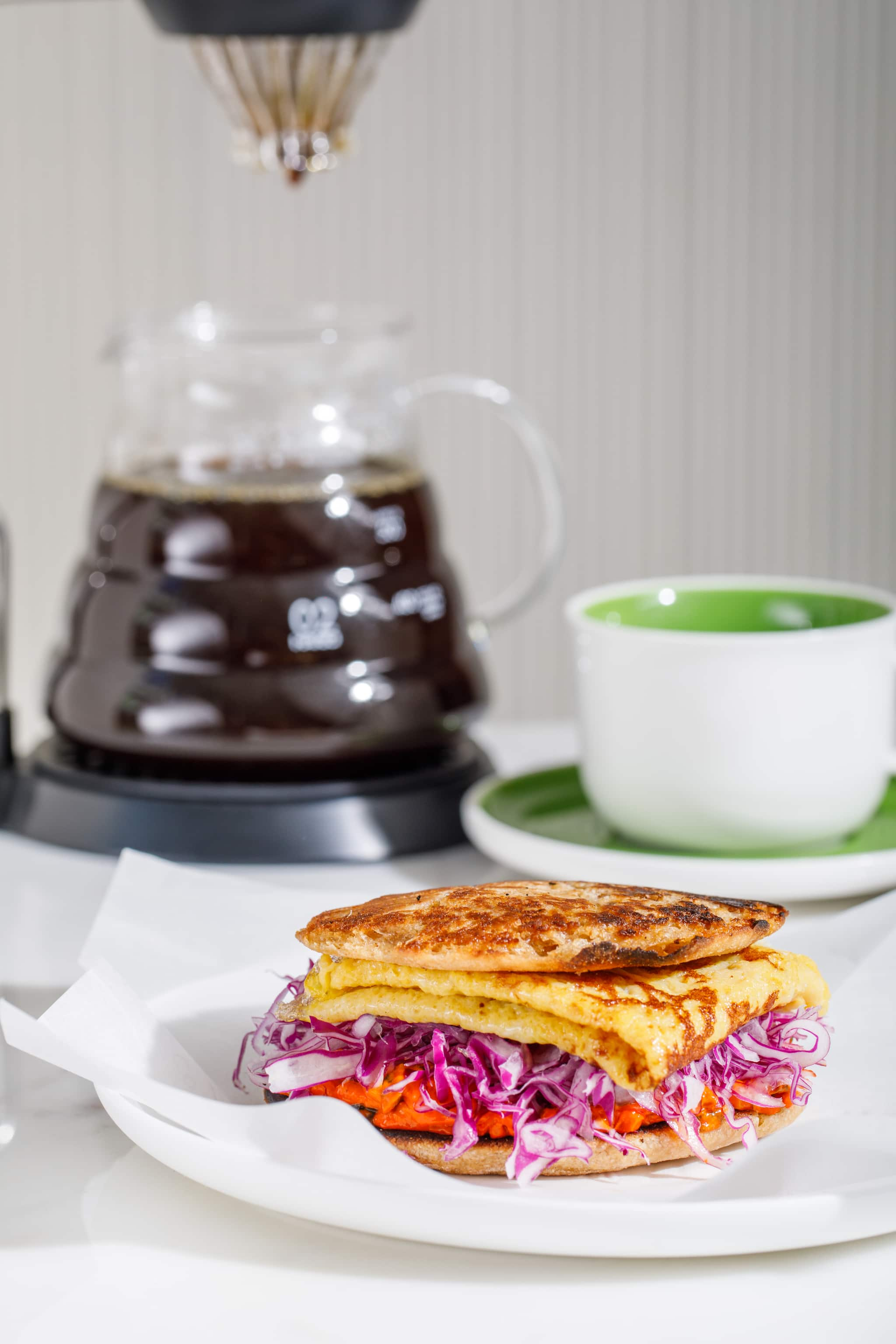
Tamagoyaki Toastie is on the menu of Araku’s café in Bengaluru.
Have you met people from the coffee-growing community who want to get into specialty coffee?
Absolutely. When we started the Araku journey, we had only between 10 percent to 20 percent of farmers whose coffee could be rated as specialty coffee. Today, I have 80 percent of my farmers all growing specialty coffee. I have requests from many small estate and large estate owners, and even people who are into wine now want to know if we can help them with the same regenerative agricultural practices that made our coffee world-class.
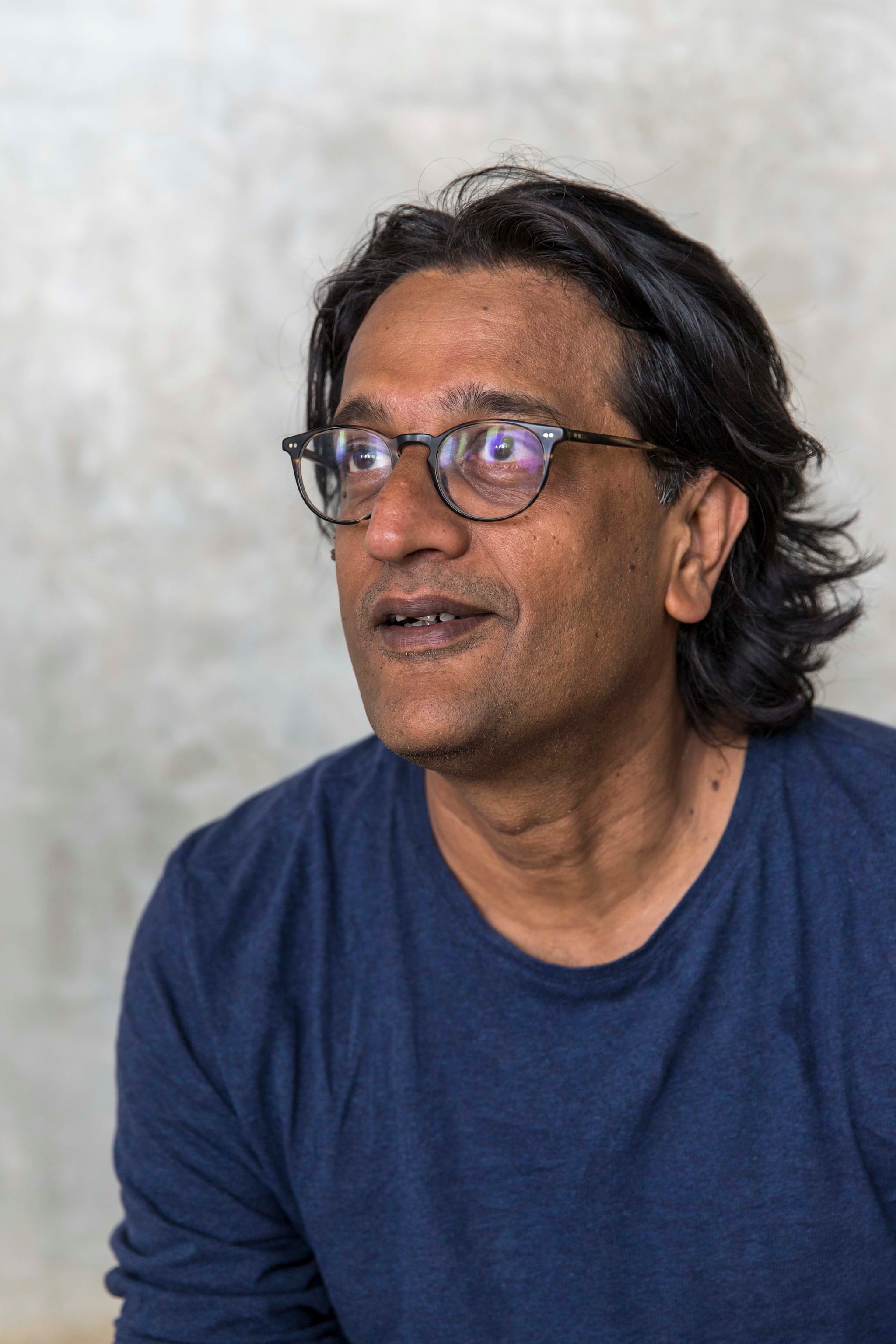
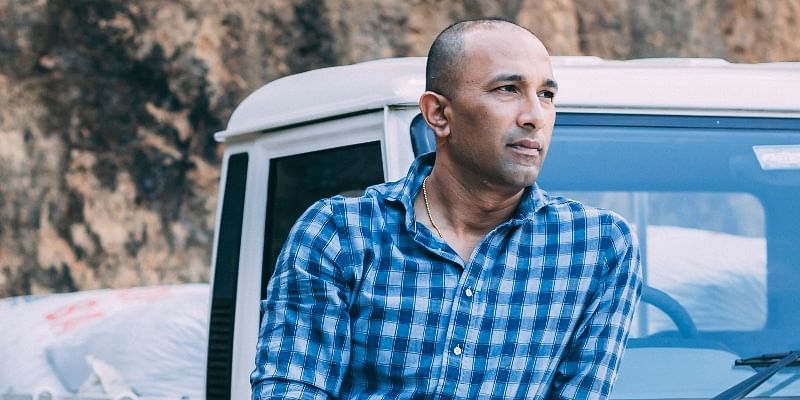
Araku Coffee co-founder Manoj Kumar
You’ve been to specialty coffee hotspots across the world. How have your experiences shaped the flagship store?
Scandinavia inspired me a lot. The quality of service there was based predominantly on knowledge. Every brewer, roaster, and barista I met had a completely different level of knowledge and that knowledge was shared with the customer. A relatable example would be going to an Apple store for the first time and discovering that every staffer has an in-depth knowledge about the products. So, one of the things I took away from there was that our team had to be knowledgeable about what they were selling, even if it meant setting up a coffee school at the cafe. Our team is not just selling a random service, they are selling coffeeology. And our prices are extremely competitive. Somebody even mentioned that a lot of the coffee we serve is, more or less, the same price as the coffee you get at Starbucks.
The Naandi Foundation has been at work replicating or adapting the Araku model in other parts of India. How has that worked out?
The Naandi Foundation is now massively expanding its agricultural footprint. We are now in a large way expanding into Wardha and the Vidarbha region, replicating the Araku model with other crops. We started off with pomegranate and that is very much on track but we are also exploring or expanding into other portfolios. Turmeric in that region is world-class, and it has a Geographical Indication tag. Then, we looked at red gram and other pulses. The idea is to have a bouquet of produce for the farmer to get it to be profitable and to identify one or two which become unique to that region. I think the winners here will be turmeric, pulses, and organic cotton. We are also looking closely at working in Meghalaya and Kerala and the Konkan belt.
You first went to the Araku Valley in 2001. Looking back, which was the turning point of your journey?
I’d think earning the trust and respect of the tribals was the turning point. I had started with just 1,000 farmers, and I would tell them that one day their land would produce a coffee that would be world-class. And they would always tell me that they wouldn’t let me down. That kind of love and trust from their end really made all the difference.
MURALI K MENON works on content strategy at HaymarketSAC.
source: http://www.moneycontrol.com / MoneyControl / Home> News> Trends> Features / by Murali K Menon / March 20th, 2021
Members of this group have a secondary metabolite used in colon cancer: Expert
Researchers of western Assam’s Bodoland University have recorded a new plant species that may go a long way in fighting cancer.
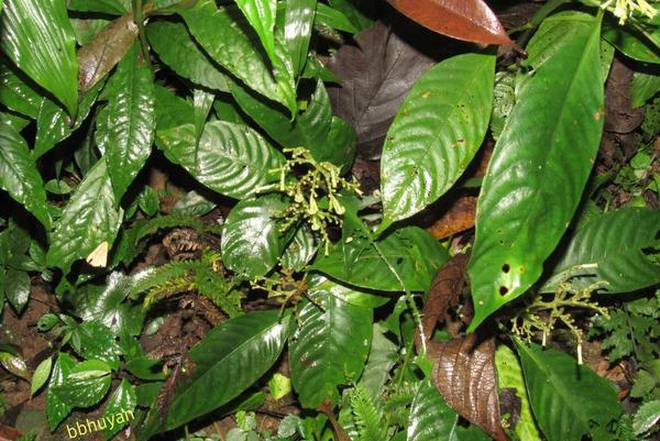
The species, named Ophiorrhiza recurvipetala, has been found at 675 metres above mean sea level in central Assam’s Dima Hasao district. It has been classified under the Rubiaceae family of flowering plants, to which the plant yielding coffee belongs.
Recurvipetala means petals curved back.
The finding was published in the March 2021 issue of the Nordic Journal of Botany.
“This is a new species to plant science and may be a potential anticancer research candidate. All members of this group have a secondary metabolite called Camptothecin used in colon cancer,” Sanjib Baruah, assistant professor of Bodoland University’s Department of Botany said.
He co-authored the study with research scholars Birina Bhuyan of Bodoland University and Selim Mehmud of Guwahati’s Cotton University.
“It is now our turn to find the Camptothecin content occurring in this novel species. There is a possibility to cultivate this species as a promising medicinal plant for the northeast, but its agrotechnology is not known,” Dr. Baruah told The Hindu.
The researchers had spent a few months in the hilly areas of Jatinga and Haflong in Dima Hasao district to locate a few plants on a wooded mound. “The new species is restricted to this area where it grows in moist shady places,” he said.
Ophiorrhiza is a predominantly herbaceous genus distributed from eastern India to the West Pacific from South China to northern Australia. According to the World Checklist of Selected Plant Families, 2017, it is a notably species-rich and taxonomically complicated genus with about 318 species worldwide.
In India, 47 species and nine varieties have been recorded and among them 21 species and one variety are from the northeast.
The Ophiorrhiza recurvipetala is a perennial herb with a maximum height of 60 cm and is branched. It yields a creamy white flower.
source: http://www.thehindu.com / The Hindu / Home> News> National / by Rahul Kamakar / Guwahati – March 19th, 2021
Fermentation techniques that involve anything from fruits to alcohol are giving the brew a new high.
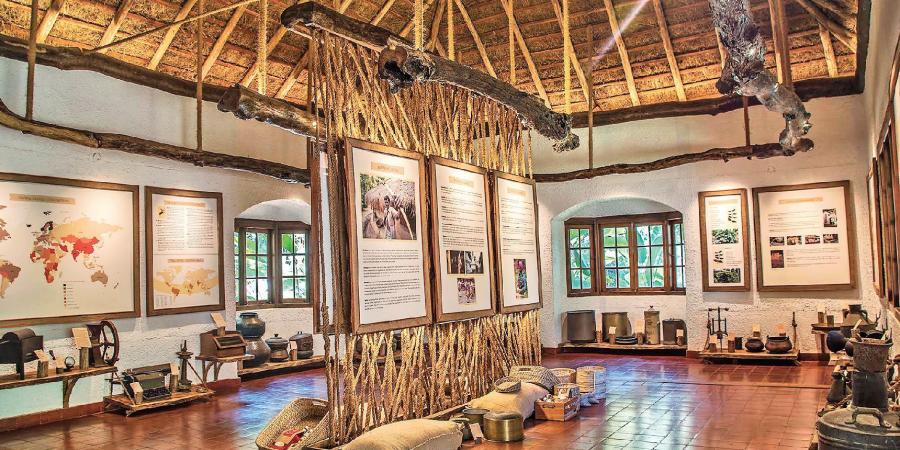
If you want to educate yourself on all things coffee, a visit to Sidapur Coffee and Culture Museum at Evolve Back in Coorg, will take you on a journey of discoveries.
From whisky barrel-aged coffee to fruit-fermented beans and innovative experiments in farming, fermentation and drying the fourth wave of coffee is set to spring a surprise. The brew is going artisanal. There is an increased focus on how it is grown, nurtured, processed as well as how it is being roasted. Sunalini Menon, Asia’s first woman professional coffee taster, and President, Coffeelab Ltd, Bengaluru, says: “Artisanal coffees are unique in taste and are always available in micro quantities.”
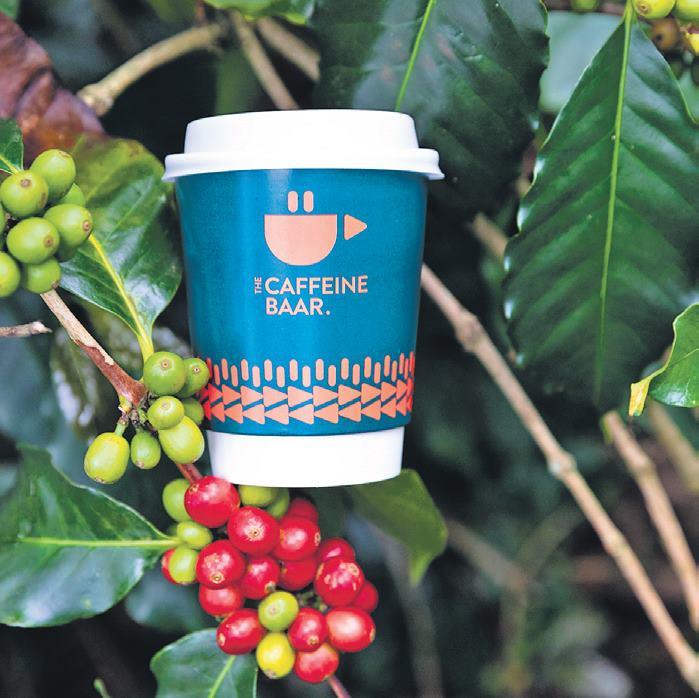
Such coffees are identified with sustainable practices in cultivation and prepared with care, precision and high-quality roasting.” Something like this is happening at Baarbara Estate, currently managed by the fourth generation of coffee growers from Chikmagalur, Karnataka.
Through their brand The Caffeine Baar, they are seeking to serve many coffee explorations to enthusiasts. Poojya Prasad, the co-founder, says, “We have worked on a unique fermentation process involving pineapple, which has given good results. To start with, pulped coffee beans are mixed with pineapple for a select number of hours.
The natural juices and the skin of pineapple, ferment the coffee beans. This process is monitored in a controlled environment. Once it’s complete, the mixture is dried on raised beds over several days. The coffee is monitored at each interval, resulting in batches with varying depths and notes of flavours.” Roasters are having a field day. Take for instance, Maverick and Farmer Coffee Roasters, who have introduced new coffees that unlock more than what species, terroir or roasting can offer.
By intervening in the growing, processing, drying, blending and roasting stages of coffee (without any artificial additions), the endeavour is to explore different kind of tasting notes Indian coffee can offer. “We work on micro-lot coffees,” says Ashish D’ábreo, the founder-partner at Maverick and Farmer Coffee Roasters. Last year, they began work with fermentation and used ingredients such as fruit, yeasts, and cultured bacteria for the fermentation process. Abdul Sahid Khan, the training manager at Lavazza Training Center, India, adds, “Being passionately connected between coffee products and a need for eco-consciousness, have coffee roasters sourcing whole beans in small batches through direct and fair trade.
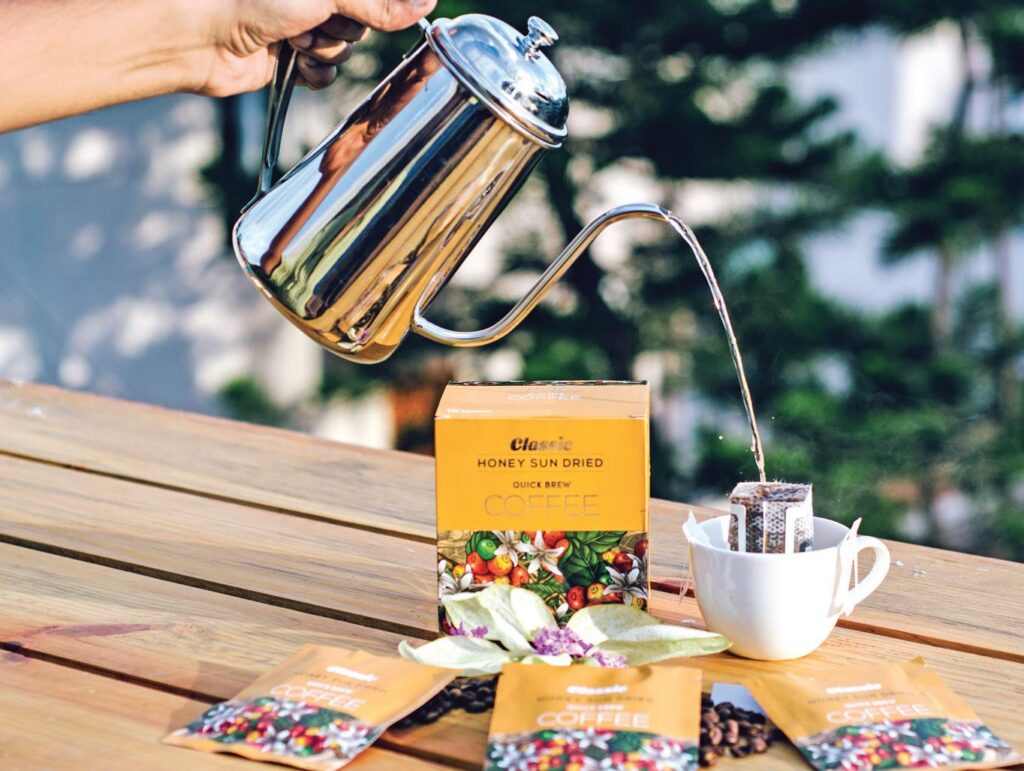
Many of the coffee roasters and importers today partner with handpicked farmers, and even reinvest into the farmer family’s land/business.” Research is at the cornerstone of these innovations. Located in Sakleshpur in Karnataka, Harley Estate, an extension of Harley Plantation Research Institute (HPRI), Asia’s first private research facility dedicated to coffee, is a lab where coffee-related experimentation goes on round the year. The purpose is to improve plantation management techniques and develop unique processing methods.
“We have, over the last couple of years, created over 50 processing methods, each bringing out different aspects of the coffee. We also conduct educative sessions for those who are in the coffee business,” says Chandini D Purnesh, Director, Classic Coffees. Coffee also has a health angle that is often overlooked.
Green coffee, for instance, is different from regular coffee and is the natural unroasted form of Arabica Coffee grains, said to have three times more antioxidants and lesser caffeine compared to black coffee.
“It boosts metabolism and provides support and strength to achieve health and fitness goals, that serve you in the long-term,” says Amit Tyagi, Founder and CEO, Neuherbs India. So the next time you sip on a cup of coffee, don’t forget that the long journey of the bean to cup has had several turns and twists to create that perfect flavour you love.
Sidapur Coffee and Culture Museum “If you want to educate yourself on all things coffee, a visit to Sidapur Coffee and Culture Museum at Evolve Back in Chikkana Halli Estate, Coorg, will take you on a journey of fascinating discoveries. The museum has different sections that talk of the story of the founding Ramapuram family, the history of coffee in Coorg, how coffee is cultivated globally and how to brew the perfect cup of coffee. This also features the culture of Coorg and its close association with coffee cultivation. Our hugely popular programme, Coffeeology, is a daily live session on the art and science of gourmet coffee, where visitors can observe and experience the making of an assortment of coffee preparations from around the world.” Jose T Ramapuram, Executive Director, Evolve Back
source: http://www.newindianexpress.com / The New Indian Express / Home> Lifestyle> Food / by Bindu Gopal Rao / Express News Service / March 07th, 2021
Their daily grind is to evaluate and certify the bean
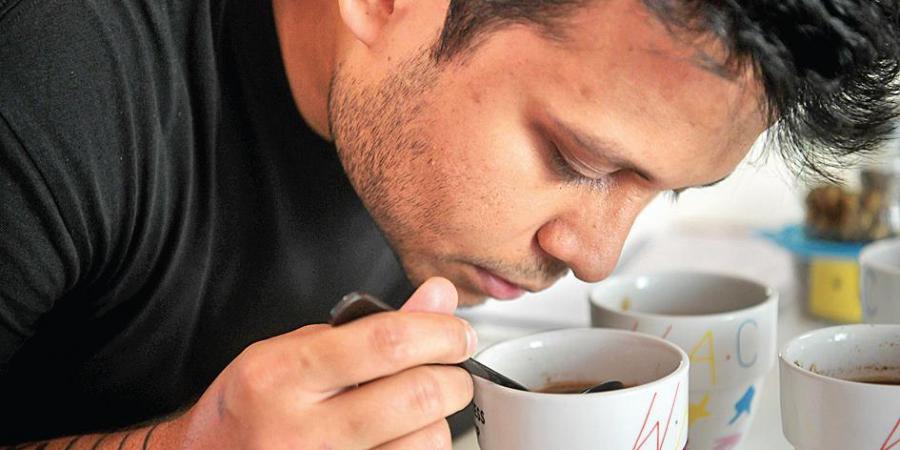
Suhas Dwarkanath slurps coffee
Bengaluru :
Imagine having coffee breaks throughout the day! And imagine your boss insisting that you take these coffee breaks! Well, coffee tasting or cupping is not as simple as that. There is a science and a philosophy behind that hot cuppa you consume daily.
Coffee goes through a process – from beans to brew. From planting the seed to picking the fruits, to curing it, roasting it and finally grinding it – making it ready for consumption. In between the planter and the consumer, is a very important person called the taster who not only certifies that the coffee is good for consumption but also grades it, helping planters fix a price.
This profession started when consumers were able to recognise the difference in the coffees, and roasters started tasting every batch of coffee, and preparing a cupping report to ensure consistency. This report quantifies all the sensory attributes to coffee which are fragrance (dry coffee), aroma (wet coffee) and taste. Tasting evaluates coffee on flavour, body, acidity and after taste. The coffee industry took cues from the beer, wine and scotch industries as they have been doing it for much longer.
Ideally, a coffee taster should be on a bland diet for a week before tasting. However, when it becomes a regular job and tasting happens a lot more frequently, a taster shouldn’t eat for a minimum of two hours before tasting. Most of them do it first thing in the morning on an empty stomach or after a minimum of a two-hour gap.
Tasting starts with roasting and one such taster Suhas Dwarkanath (32) is a Bengaluru boy, who fell in love with coffee as a child. He used to walk past Coffee Day every day on his way to school and the aroma that wafted through made him decide that he wanted to work with coffee when he grew up. After completing MBA, he went to Dubai to pursue a job and it was then that he found out that there’s more to coffee than filter coffee. He studied at ‘Specialty Coffee Association’ and became a certified taster.
He decided to return home and opened a business called ‘Benki Brewing Tools’ making his childhood dreams a reality. The tasting room is a sacred place and is kept free of any outside smell so as to not interfere with the aroma. He says, “All your senses are working when you are tasting the coffee.” The tasting room has a red light as the human eye cannot differentiate between different shades of brown under this light making the process unbiased.
The temperature is between 22 and 26 degrees Celsius because it influences taste and anyone tasting a batch of coffee anywhere in the world should get the same result. The process is quite elaborate. A taster needs to roast the beans first as roasting is transforming the green bean to something that’s consumable and soluble in water. Tasters must have knowledge of roasting but don’t need to be roasters.
Tools of the coffee taster’s trade
Roasting the beans caramelises the sugars, increases the size, changes colour and makes the flavours pop. The taste of the coffee depends on the soil, weather conditions and the microorganisms that migrate as these factors determine how the plant matures. For instance, if a farmer is growing pepper in the same estate, the microorganism that feeds on pepper will sit on a coffee cherry and influence the taste of the coffee.
After analysing and roasting the beans, it rests for 8-24 hours after which it is ground (coarse grind). A taster takes 8.5gm of coffee in a cup, evaluates the fragrance, then introduces 150gm of water at 92 degrees Celsius which rests for 4 minutes. The taster then breaks the crust to evaluate the aroma and slurps the coffee and evaluates the taste.
While tasting multiple cups, a taster cleanses the palate using unsweetened/unsalted crackers or just rinses mouth with plain room temperature milk. The nasal cavity is neutralised by smelling one’s skin.
Suhas also trains people and one such person is Sandesh. A computer engineer, Sandesh is married to a coffee lover. While sourcing coffee for his wife from across the globe, he decided to open a roastery. He learnt the art of tasting as every roaster needs to understand it so as to sell the right product to the right customer. He calls his business ‘Kohi Roasters’. He says, “I have found the love of my life.”
Once you fall in love with coffee you carry it everywhere you go. One such coffee taster is Ajay from Maharashtra, who, tired of being cooped during the lockdown, visited coffee estates in Chikkamagaluru and Kodagu. En route home, he stopped in Bengaluru to meet his coffee buddies and share his experiences. He has a small brewing kit and carries it wherever he goes. He says, “I can brew my coffee in a moving bus.”
COURSE CUP To become a coffee taster, one needs to study cupping. It is available as an independent course as well as a part of other coffee courses. Specialty Coffee Association is the only one that has international recognition. It was first formed in Europe with its headquarters in Essex, UK (SCAE), and later in the USA with its headquarters in Santa Ana, California (SCAA).
WHERE THEY TEACH Coffee Board of India Central Coffee Research Institute, Chikkamagaluru Benki Brewing Tools, Bengaluru Araku, Hyderabad
POPULAR COFFEES IN INDIA
Arabica: Flavourful, aromatic, acidic (needs shade). Arabica comes from Robusta
Robusta: Bold, double the amount of caffeine, strong. Mother plant
Liberica: Mix of Arabica and Robusta (not very commercial, gets mixed in Robusta here in India)
Excelsa: Delicate and difficult to grow in all kinds of topography (not very commercial, gets mixed in Robusta here in India)
source: http://www.newindianexpress.com / The New Indian Express / Home> Cities> Bengaluru / by Meghana Sastry, Emirates News Service / February 28th, 2021
You’re reading this with a cup of coffee in your hand, aren’t you? Coffee is the most popular drink in many parts of the world. Americans drink more coffee than soda, juice and tea — combined.
How popular is coffee? When news first broke that Prince Harry and Meghan were considering Canada as their new home, Canadian coffee giant Tim Hortons offered free coffee for life as an extra enticement.
Given coffee’s popularity, it’s surprising how much confusion surrounds how this hot, dark, nectar of the gods affects our biology.
Coffee’s ingredients
The main biologically active ingredients in coffee are caffeine (a stimulant) and a suite of antioxidants. What do we know about how caffeine and antioxidants affect our bodies? The fundamentals are pretty simple, but the devil is in the details and the speculation around how coffee could either help or harm us runs a bit wild.
The stimulant properties of caffeine mean that you can count on a cup of coffee to wake you up. In fact, coffee, or at least the caffeine it contains, is the most commonly used psychoactive drug in the world. It seems to work as a stimulant, at least in part, by blocking adenosine, which promotes sleep, from binding to its receptor.
Caffeine and adenosine have similar ring structures. Caffeine acts as a molecular mimic, filling and blocking the adenosine receptor, preventing the body’s natural ability to be able a rest when it’s tired.
This blocking is also the reason why too much coffee can leave you feeling jittery or sleepless. You can only postpone fatigue for so long before the body’s regulatory systems begin to fail, leading to simple things like the jitters, but also more serious effects like anxiety or insomnia. Complications may be common; a possible link between coffee drinking and insomnia was identified more than 100 years ago.
The National Film Board of Canada produced a documentary on the cultural history of coffee called ‘Black Coffee: Part One, The Irresistible Bean’
Unique responses
Different people respond to caffeine differently. At least some of this variation is from having different forms of that adenosine receptor , the molecule that caffeine binds to and blocks. There are likely other sites of genetic variation as well.
There are individuals who don’t process caffeine and to whom drinks like coffee could pose medical danger. Even away from those extremes, however, there is variation in how we respond to that cup of coffee. And, like much of biology, that variation is a function of environment, our past coffee consumption, genetics and, honestly, just random chance.
We may be interested in coffee because of the oh-so-joyous caffeine buzz, but that doesn’t mean that caffeine is the most biologically interesting aspect of a good cup of coffee.
In one study using rats, caffeine triggered smooth muscle contraction, so it is possible that caffeine directly promotes bowel activity. Other studies, though, have shown that decaffeinated coffee can have as strong an effect on bowel activity as regular coffee, suggesting a more complex mechanism involving some of the other molecules in coffee.
Antioxidant benefits
What about the antioxidants in coffee and the buzz that surrounds them? Things actually start out pretty straightforward. Metabolic processes produce the energy necessary for life, but they also create waste, often in the form of oxidized molecules that can be harmful in themselves or in damaging other molecules.
Antioxidants are a broad group of molecules that can scrub up dangerous waste; all organisms produce antioxidants as part of their metabolic balance. It is unclear if supplementing our diet with additional antioxidants can augment these natural defences, but that hasn’t stopped speculation.
Antioxidants have been linked to almost everything, including premature ejaculation.
Are any of the claims of positive effects substantiated? Surprisingly, the answer is again a resounding maybe.
Coffee and cancer
Coffee won’t cure cancer, but it may help to prevent it and possibly other diseases as well. Part of answering the question of coffee’s connection to cancer lies in asking another: what is cancer? At its simplest, cancer is uncontrolled cell growth, which is fundamentally about regulating when genes are, or are not, actively expressed.
My research group studies gene regulation and I can tell you that even a good cup of coffee, or boost of caffeine, won’t cause genes that are turned off or on at the wrong time to suddenly start playing by the rules.
The antioxidants in coffee may actually have a cancer-fighting effect. Remember that antioxidants fight cellular damage. One type of damage that they may help reduce is mutations to DNA, and cancer is caused by mutations that lead to the misregulation of genes.
Studies have shown that consuming coffee fights cancer in rats . Other studies in humans have shown that coffee consumption is associated with lower rates of some cancers.
Interestingly, coffee consumption has also been linked to reduced rates of other diseases as well. Higher coffee consumption is linked to lower rates of Parkinson’s disease and some other forms of dementia. Strikingly, at least one experimental study in mice and cell culture shows that protection is a function of a combination of caffeine and antioxidants in coffee.
Higher coffee consumption has also been linked to lower rates of Type 2 diabetes. Complexity, combined effects and variation between individuals seems to be the theme across all the diseases.
At the end of the day, where does all this leave us on the biology of coffee? Well, as I tell my students, it’s complicated. But as most reading this already know, coffee will definitely wake you up in the morning.
This is an updated version of a story originally published on Jan. 19, 2020. The original story called coffee the world’s most popular beverage. The term “most popular” can be defined differently. Retail sales of coffee outpace tea globally, but tea is the most consumed beverage after water.
Thomas Merritt , Professor and Canada Research Chair, Chemistry and Biochemistry, Laurentian University .This article is republished from The Conversation under a Creative Commons license. Read the original article.
source: http://www.interaksyon.com / InterAksyon / Home / by Thomas Meritt via The Conversation / February 15th, 2021
Maria Eduarda Becker Pavani establishes specialty roastery in the UAE
Eight years in the UAE are all that were required for Brazilian coffee specialist Maria Eduarda Becker Pavani to establish a thriving roastery and bean business, supplying this country and beyond with South America’s delicious aromas adding to the already vibrant café scene. Tres Marias is the latest gourmet coffee brand sweeping the nation.
Maria’s first encounter with specialty coffee was working at Café Cultura, a leading special coffee house in Brazil which sparked a quest to gather more knowledge on the industry. A graduate of marketing, she has since furthered her education to become a Specialty Coffee Association Trainer, a sensory judge for barista championships and a Q Arabica Grader: a certification that only 10,000 people in the world hold.
Maria moved to Dubai in 2013 to work as a barista in a local five-star hotel and within three months was offered a job at the very first specialty coffee roastery in the region where she was exposed to the growing market of specialty coffee in the Middle East. Following this opportunity, she was offered a partnership deal where she set up and developed Tres Marias from scratch. We caught up with Maria to find out more.
How discerning do you find the UAE market when it comes to coffee?
It’s amazing to see how people here are passionate about their coffee, and will go above and beyond to find the perfect cup. It did cross my mind to set up in Europe, but Dubai is such an amazing city to live in.
How easy/difficult was it to set up the importation of beans from South America?
It is always a challenge to trade goods with countries in South America but with the help of my amazing team and the fact that I speak the language, we’ve been able to streamline the process. The major challenges however are the time difference and how fast paced it gets.
Your roastery is based in Jebel Ali?
Tres Marias Coffee is based out of the DMCC Coffee Centre, a beautiful and professional coffee facility with the best coffee equipment available. We store our green coffee inside the centre and utilise the roasting facilities to roast our beans, and the training room to run our Authorized Speciality Coffee Trainings. All our products are freshly roasted in the UAE and distributed from Jebel Ali.
What made you come up with the name Tres Marias?
As a Latina, I wanted to include an element of my origin in the name. Tres Marias in Portuguese or Spanish is the translation of the ‘Three Kings Stars’ on the constellation of Orion. I used this methaphor to believe that Tres Marias Coffee would be like the three stars: easy to recognise and distinguish.
Do you think people are becoming far more professional in their appreciation of coffee? How far is sustainability a core value of your company?
Definitely yes! One of the reasons Tres Marias Coffee is very focused on education is because we believe that the more educated our industry is, the easier it is for us to communicate the importance of good coffee. People worldwide are not only paying more attention to the coffee they drink, but also to who they give their money to. That’s why there is bigger support for local businesses. Since our inception, we’ve been paying close attention to sustainability. We started by selecting CO2 Neutral Packaging for our beans as well as compostable and biodegradable materials to our capsules and instant coffee.
Did you have any worry about branching into the instant coffee market?
When we started developing the product, I was 100 per cent focused on how we would become more accessible to speciality coffee lovers and simplifying the coffee making process. We created the product to solve a problem and we’ve been able to do that and stay true to our brand.
What are your plans for 2021?
We managed to create a solid system for our e-commerce, grow our team, expand our portfolio, operate our first retail space during the Ripe Markey (every Friday and Saturday in the Dubai Police Academy) and of course, keep ourselves healthy and well. We’re considering retail options and creating a wider range of productions for our clients.
source: http://www.khaleejtimes.com / Khaleej Times – City Times / Home> City Times> In the city / by David Light (david@khaleejtimes.com) / February 17th, 2021
Haven Café is a cozy space inside Haven Palm Beach, a recently opened experiential design center at 211 Royal Poinciana Way. It is the perfect venue for meeting up with friends and enjoying one of the most exceptional cups of coffee on the island.
Nandini Jayaprasad and David Bell serve Chik Monk Coffee at the Haven Cafe inside Haven Palm Beach. (Meghan McCarthy. / Palm Beach Daily News)
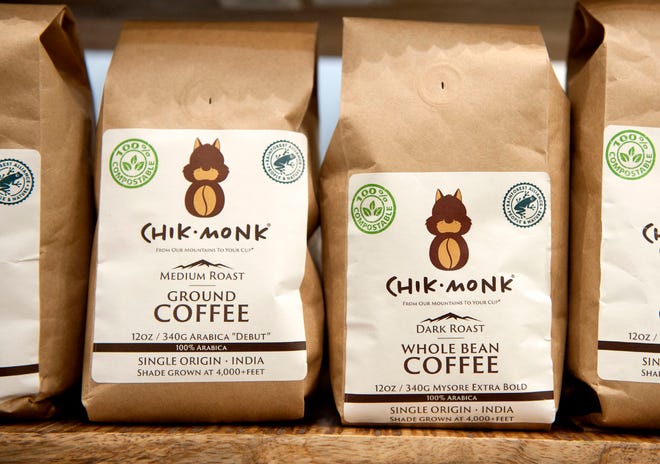
The café features Chik Monk coffees and Chik Monk specialty coffee products made from beans grown on barista Nandini Jayaprasad’s family coffee estates in the lush mountain range of Chikmagalur, India.
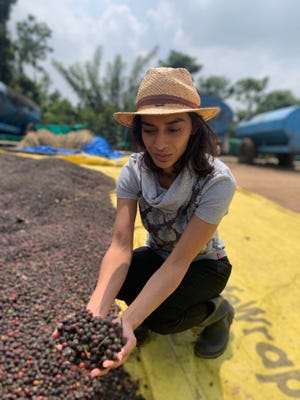
Nandini Jayaprasad is shown with the coffee berries which are left in the open air to dry. This releases the green coffee beans. Courtesy of Nandini Jayaprasad.
It is coffee with a conscience. The beans are tended, hand-picked, sun-dried by the local community and are Rainforest Alliance Certified. This part of southern India is known as the garden of the sub-continent. It has a microclimate, with a dense rain forest canopy and is home to large agricultural estates that grow some of the most coveted coffee beans in the world.
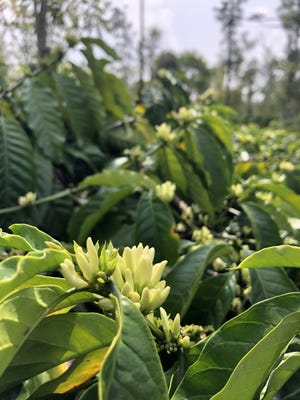
The coffee blossoms have their own scent but the closest comparison would be Jasmine. Courtesy of Nandini Jayaprasad.
Most of the production is presold to France, Belgium, the United Kingdom, Italy, the Scandinavian countries and marketed under well-known brand names.
Jayaprasad is currently in India overseeing this year’s harvest.
David Beil, Jayaprasad’s husband and business partner, is running the day-to-day operations at home. Beil grew up in Grosse Pointe, Michigan but his family has deep roots in Palm Beach. His father, Leo Beil, was an associate of Chuck Muer and Harold Kaplan, the team that opened the former Chuck and Harold’s and Charley’s Crab restaurants.
As children, the Beil family took extended vacations throughout Europe. This gave Beil a view of the world that tweaked his interest in developing countries. While studying in Germany for his doctorate in economics, an opportunity to attend a seminar in India came up.
The welcome reception, held at a coffee bar in downtown Bangalore, was hosted by Jayaprasad. Beil was smitten by the hostess, fascinated by the country and found excuses to go back to India often. The couple began a trans-continental romance that culminated in a three-day traditional wedding on the estate attended by 600 friends and family.
They are passionate about their coffee. The beans come into the country green and are locally roasted in small batches to their specifications by Oceana Coffee in Tequesta.
The Haven Cafe sells estate-grown Chik Monk Coffee from India / Megan McCarthy / Palm Beach Daily News
Chik Monk’s style is coffee with low acidity, smooth on the tongue with balanced flavors. Medium roast, whole or ground, has hints of caramel, citrus, fruits and spices. Dark roast also comes whole or ground, and has notes of chocolate, caramel and nuts with a touch of spice. French roast, whole or ground, has roasted nuts and dark chocolate accents. Espresso, whole bean only, is well-balanced with caramel, chocolate and fruity tones.
The 12-ounce bags of coffee are $15 to $17. The company offers free local delivery.
2 shots of hot espresso or 2 ounces of hot strong brewed coffee
2 or 3 tablespoons milk, oat milk or other non-dairy milk
Place the ice in a cocktail shaker, pour hot coffee over the ice and shake for about 10 seconds.
Pour the iced coffee into a cup and top with milk.
Makes one serving.
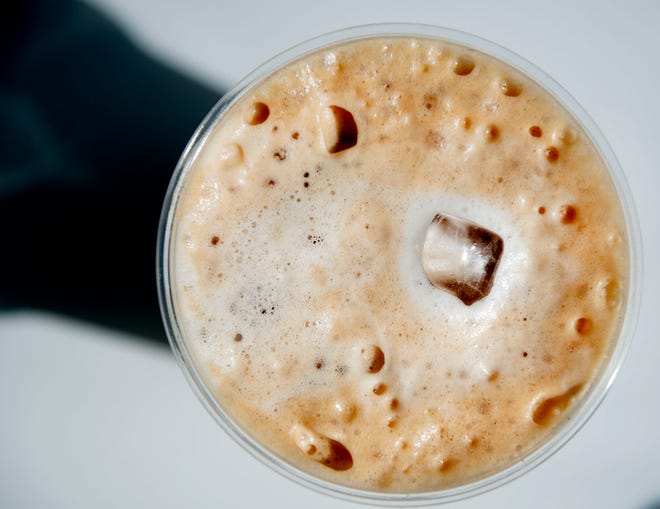
An iced beverage with two shots of single-origin Chik Monk espresso, oat milk, almond milk and coconut milk is served at Haven Cafe (Meghan McCarthy , Palm Beach Daily News)
source: http://www.palmbeachdailynews.com / Palm Beach Daily News / Home> Lifestyle / by Roberta Sabban, Special to Daily News / February 23rd, 2021
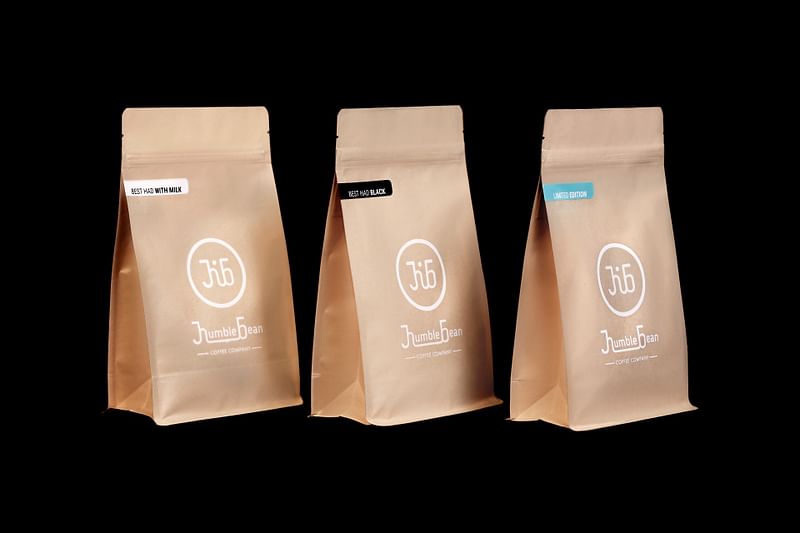
Ex-banker Soomanna Mandepanda and his wife, Puja Soomanna set up their startup Humblebean in 2017 to ensure better prices and reach for small coffee farmers and improve every part of the value chain.
For former banker Soomanna Mandepanda, the motivation for setting up Humblebean was not just to sell the best coffees, but more importantly, uplift the small and medium Indian farmers who grow them.
In the process, he is trying to bring about changes at almost each stage of the business — from cultivation and supply chain to research and education.
Founded in 2017 by Soomanna and his wife and former Yahoo executive Puja Soomanna, Bengaluru-based Humblebean works on an omnichannel model: It ties up with small coffee farmers in south India, roasts and grounds supply, provides the beans to roasters, exports its products, operates brew bars, and has an online presence.
A responsible way to grow coffee
The coffee drinking experience has been gaining traction in India, with the market for the brew expected to record a compound annual growth rate of 7.2 percent during 2021-25, according to a January 2021 Statista report.
Startups including Sleepy Owl, The Flying Squirrel, and Coffeeza, as well as shops such as Third Wave Coffee Roasters are making their presence felt in the market.
India is the world’s sixth-largest producer of coffee and fifth in terms of exports; in fact, 70 percent of its production is exported, says a January 2021 report by the India Brand Equity Foundation. Yet, Soomanna says, “a lot of small and medium farmers and farms aren’t getting the kind of business and reach they should” .
Soomanna would know: he spent most of his childhood on the coffee estates of Coorg and was a small farmer before moving to the world of finance and banking for 13 years. One way to correct the imbalance, he says, is by “making great biodiverse coffee that farms in India are already poised to do”.
According to him, 80-90 percent of coffee farms in India are held by small and medium farmers, whose secondary income comes from crops such as jackfruit, avocado, pepper, and orange that are part of the same farms.
Cultivating other crops alongside coffee “ensures automatic carbon sequestration, top soil replenishment, and lesser need to feed chemicals unlike commercial crops grown in other countries”, says Soomanna. “The mining of the minerals is automatic and you become carbon neutral.”
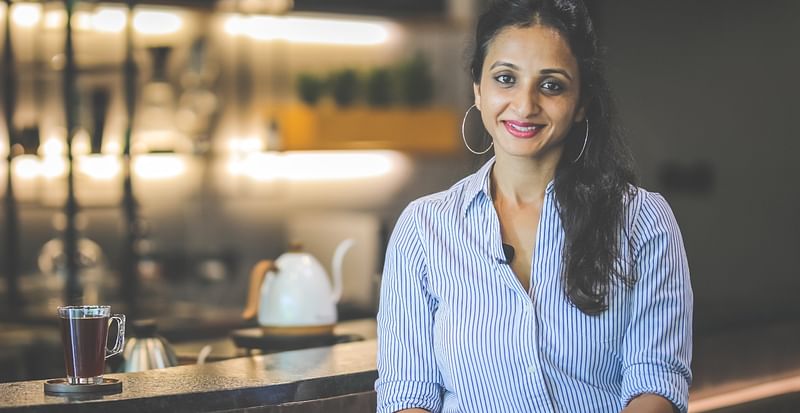
Puja Soomanna
Advocating farmer-friendly norms
Increasingly popular among young consumers are organic, speciality, and Rainforest Alliance coffees that respectively employ natural methods of cultivation dispensing with harmful chemicals, are of the highest grade being derived from a single origin or single estate and protect the environment as well as worker rights.
However, in India these certified varieties are grown largely on rich estates; most small and medium farmers cannot afford the costly certifications and grades.
Coffee cultivation and the business are still quite unorganised in India, the certifications cost a lot of money, and need constant follow-ups, says Soomanna. “The norms are difficult to adhere to for most small farmers. It is a replication of an American model.”
___________________
He says most large corporations in India export to Europe. “The small companies in Hassan, Chikmagalur, etc. certify about 150 estates and add the tags. But the farmer doesn’t get the price because the better prices are still being fetched with the local trader. The local traders are important, but the real traceability is lost.”
As farmers don’t get better prices, there is little driving them to improve their produce, he says. “Speciality coffee is something few farmers can afford to grow.”
Hence, the need to bring in farmer-friendly rules, he says.
The Humblebean coffee
Promoting social value investing
Given the largely unorganised state of affairs, Humblebean focused on getting farmers on board. The team collected random samples, tasted them, and guided farmers on growing the beans in a better way.
By 2018, the team had got 50-60 farmers on board and given them assessment reports free of cost. Until then, the startup was in its pre-revenue stages, bootstrapped with funds from family and friends.
The team then focused on getting roasters to directly buy from farmers. For this, it adopted the idea of social value investing, in which everyone who is part of the value chain comes together to solve a problem and there is money in it for all.
__________________
“Once we got the farmers on board, we decided to tie up with brands and introduce them to the new portfolios of coffees,” says Soomanna. “We incubated close to four different brands in India from scratch to start a unique brand with a different blend. The idea was to bring in multiple partnerships and inclusiveness in the farming community on one platform.”
Most of the speciality coffee firms have restricted names and types of beans grown on particular estates. “The idea is to bring in more brands that can access different estates, work with them, and encourage the farmers,” says Soomanna.
Humblebean also fulfils the complete roast and ground process for such brands and even gives them a credit facility, he says.
Quality comes with education
Towards the end of 2018 and early 2019, the Humblebean team found that coffees served at most star hotels weren’t up to the mark.
One of the reasons for this, Soomanna says, is that coffee as education is lacking in hotel management schools: one has to go to Italy to learn more about its nuances. The Coffee Board of India mostly takes care of the functionality, he says.
_________________
“We met a few management schools and after some discussions it was decided that the colleges would look at it as part of the curriculum,” says Soomanna.
Brewing innovative Indian blends
Even as Humblebean works to improve every part of the value chain, it is trying to offer consumers a very Indian coffee drinking experience.
To that end, the startup opened its first Brew Bar in the food experience section of a workspace on Bengaluru’s Residency Road in 2019. Humblebean was one of the early members of that workspace set up by a Singapore-based company.
Puja, who conceptualised Brew Bar, spent time innovating the blends with the use of Indian robustas.
“We don’t serve a single cup of speciality coffee; we wanted to make sure through the brewing methods can small and medium farmers come into mainstream brewing?” says Soomanna.
______________
He says these Indian blends “aren’t being used by a single new-age speciality coffee company” as they are considered “harsh and used as a filler across the world. But they are unique and you need great expertise and experience to make a robusta out of them”.
Following research and development, the startup has also come up with its own set of products. Together with B2B partners, it has launched these products online and will soon sell them at other marketplaces. The range is priced at Rs 220-350 for 250 gm for limited editions and depending on the roast.
“Indian coffees can have a global impact,” says Soomanna. “The idea is to be farmer-friendly and also not cause too much environmental damage. We want to bring an amazing cup of coffee from the farms the way it should be drunk.”
Edited by Lena Saha
source: http://www.yourstory.com / YourStory / Home> Start Up / by Sindhu Kashyap / February 07th, 2021
WELCOME. If you like what you see "SUBSCRIBE via EMAIL" to receive FREE regular UPDATES.
Read More »