From setting up his own business to embracing different cultures and understanding spirituality — Marc Tormo tells CE that India has helped him…
Marc is a travel and nature enthusiast
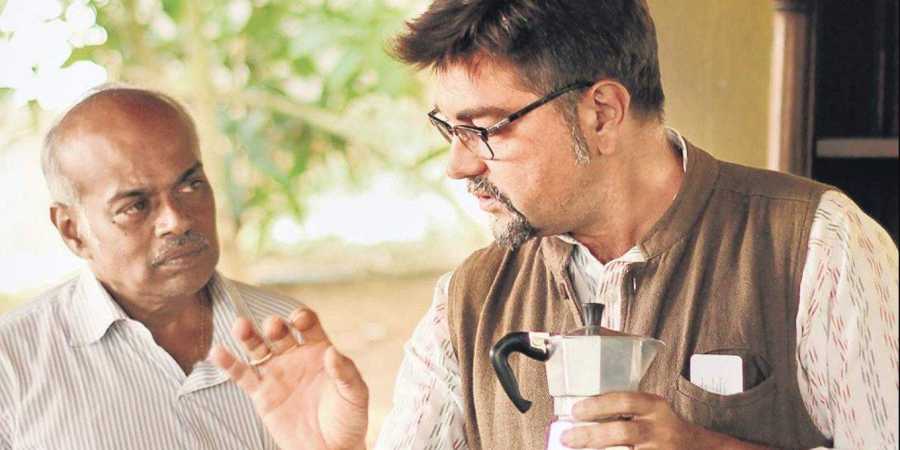
How far can one go in search of coffee? Apparently, from Spain to India. Marc Tormo did exactly that in 1997 when he moved to Auroville in Puducherry. CE talks to Tormo, the founder of Marc’s Coffee in Auroville, about his love for coffee, opening up to spirituality and raising kids in India
What brought you to India?
I come from a place called Catalonia in Spain. I was into the business of coffee there where I had a speciality coffee shop. I came to India a few times when I was 19 years old to understand about coffee and I found out about coffee plantations in the southern part of India. People were not aware of the entire process of coffee-making. I understood this method and helped people trace the journey of the coffee they were drinking. Finally, in 2008, we launched Marc’s coffee here in Auroville. Before setting up the coffee place, I had to put in a lot of research on not just coffee but the farmers, their psyche among other things. After setting it up, it took us five years to pick up speed. But it was a pleasant cultural change. Europe is more materialistic. People here are spiritual. Auroville allows me to explore that part as well. My children were born and raised here. India is now second home. Plus, we have a cosmopolitan environment here at Auroville. There are Koreans and Spaniards and many others here.
How do you keep in touch with your roots?
My children can speak Catalan very well which is the dialect from the region I come from. They have learned Tamil, French, Catalan, Spanish and English. We make it a point to visit Spain every year. I like to keep all the goodness of the Spanish culture. People from my region are adventurous and entrepreneurial. I would like to retain all that. But spirituality is something I understood after living in India.
How do you and your family spend time together?
I love to cook, especially for my family. We all spend time cooking. I like making paneer butter masala, khichdis and chapatis. We make a mix of Spanish and Indian cuisines at home. We travel a lot. I take them on my trips to coffee plantations. But this is not just so that they understand coffee but also they understand people and cultural diversity wherever they go. I like to spend time gardening with my children.
What are your interests apart from coffee?
I love to sing, I love to listen to music and be with nature. Life in Auroville lets me enjoy all of this. I can work and be in the midst of nature and pursue my interests.
Auroville is considered to have deep spiritual roots. What is your experience of spirituality?
Auroville has taught me the concept of unity with diversity. We have people from different cultures living here. It has helped me understand the inner meanings. One of the things living in Auroville has helped me with is understand myself and have a holistic view of anything.
One half of India is populated with tea lovers. Have you ever thought of shifting your beverage loyalties?
I have nothing against tea. But I feel coffee has not been studied enough. I chose to focus on coffee. Coffee needs a lot of support to reach everybody so that everyone understands coffee. That is why I chose coffee.
What are your favourite destinations in India?
I love the Western Ghats. Wayanad, Coorg, Mysuru and Chikmaglur are some of my favourite destinations. I am a coffee lover and a nature lover. I like to see wildlife.
Marc will be conducting a Coffee workshop till December 9 at Old Kents Estate, Coorg
source: http://www.newindianexpress.com / The New Indian Express / Home> Cities> Chennai / by Veena Mani / Express News Service / December 07th, 2019
Coffee lovers are discovering new coffee destinations from within the cities all the way to the countryside, including the heartland of coffee in India – Coorg. This workshop provides an excellent opportunity to learn from a certified Q-Grader & connoisseur Marc Tormo, Roastmaster from Barcelona, who has more than 20 years of experience in the international coffee movement.
Harvest with the locals, learn about how coffee is sustainably cultivated in India while gaining a deeper appreciation of roasting techniques and experience the subtle notes hidden in the beans. Learn exciting brewing techniques and impress your friends with your barista skills creating art from the rich froth of your latte.
So, don’t miss the change to grab this opportunity with both hands! Because, this is a unique platform for all coffee lovers, coffee enthusiasts, those trying to make an entry into the coffee world, or simply those trying to impress their guests!
Date: 06th-09th December 2019
Venue: Old Kents Estate, Coorg
Price: Rs 30,000 ++ (all-inclusive stay in a spacious English cottage with a private garden)
For Reservations: Call 9789896454
source: http://www.hungryforever.com / Hungry Forever / Home> Events / by Christina George / November 29th, 2019
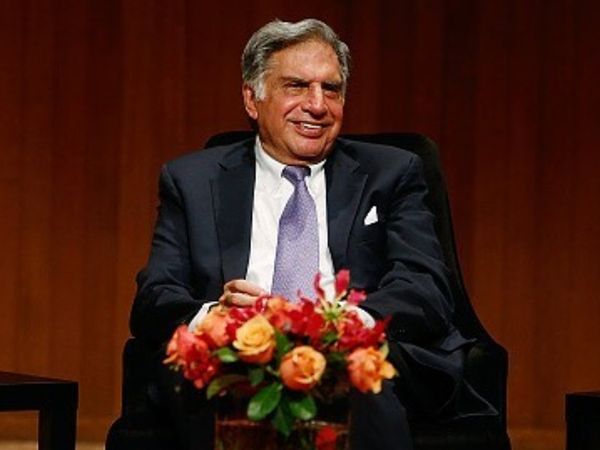
Tata is known for his generosity, grace, wisdom and remarkable, insightful talks. In fact, Tata’s grace and wisdom once moved former Starbucks CEO Howard Schultz to tears.
File Photo | Photo Credit: Instagram
_______________________________________
KEY HIGHLIGHTS
– Starbucks was brought to India Tata Global Beverages Ltd. In 2012, these two companies announced a joint venture of 50% each and TGBL now owns and operates Starbucks stores in India
– Starbucks had actually tried to enter India earlier in 2007 but withdrew the business in some time
– Currently, Starbucks has a foothold in eight cities and has over 157 outlets in India
________________________________
New Delhi:
Tata Trusts chairman Ratan Tata is one of the most respected industrialists not just in India but internationally. The notable industrialist is the recipient of two of the highest civilian awards – Padma Vibhushan (2008) and Padma Bhushan (2000). Tata is known for his contribution in transforming the Tata group under his chairmanship and for his philanthropic work.
It may be noted that to the delight of his fans, Tata joined Instagram last month and within a couple of hours, garnered over 85,000 followers. The first post from the 81-year-old industrialist who has not been very active on social media gained nearly 50,000 likes within no time. He joined the social media platform with a picture that had the caption, “I don’t know about breaking the internet, but I am so excited to join all of you on Instagram!”
Tata is known for his generosity and remarkable, insightful talks. In fact, Tata’s grace and wisdom once moved former Starbucks CEO Howard Schultz to tears.
For those who are not aware, in January 2011, Starbucks Corporation and Tata Coffee announced plans to begin opening Starbucks locations in India. In January 2012, Starbucks finally announced a 50:50 joint venture with Tata Global Beverages, called Tata Starbucks Ltd., which currently operates outlets branded “Starbucks, A Tata Alliance” in India.
In a book titled ‘Reimagining India: Unlocking The Potential of Asia’s Next Superpower’, Schultz wrote an essay in which he mentioned how Ratan Tata once moved him to tears. “At the celebratory dinner the night of the Mumbai (store’s) opening, Ratan Tata offered a toast that really moved me,” he wrote.
In the essay, he recalled Starbucks’ India launch and how Tata’s remarks at the celebrations after the launch to a gathering of his company officials in the US, he even began to cry and was overpowered by emotion.
He had said, “A few weeks after returning from the opening of our Mumbai store, we held one of our big open forum meetings where we get the entire company together. And as I tried to describe that moment for everyone, something came over me. I started to cry. It just hit me emotionally. In India, we’d had a chance to do something extraordinary, something truly world-class. And I am excited that we have a chance to grow and give back in a land where so much opportunity lies ahead and to contribute to making it a little better place than the one we found.”
His admiration for Tata did not stop there. He further went on to describe how Tata’s remarks on the night of the Mumbai opening were “perfect and so heartfelt. He went on to add that he considers Tata to be a “man with so much grace.” “I could sit and listen to Ratan Tata for days on end. He has so much wisdom and insight not only about India but about the world,” he said.
source: http://www.timesnownews.com / ETNowNews.com / Home> Business> Companies / by ET Now Digital / November 24th, 2019
After a tepid launch earlier this year, the Coffee Board of India‘s (CBoI) blockchain coffee marketplace is seeing rising demand. The platform now has about 30,000 farmers registered compared to just 23 when the platform was launched, reported Down To Earth.
CBoI is one of the first government agencies in the country to have an in a production blockchain platform. The Coffee Board has developed a mobile app and a web portal with support from Eka Software Solutions.
The coffee supply chain is highly fragmented, with intermediaries such as farmers, traders, roasters, curers and other processors. In the past few years, global coffee prices have also stumbled. To remedy the situation, the Coffee Board has turned to blockchain and its ability to immutably track and trace products in supply chains.
“Blockchain offers unmatched traceability and increases the transparency, accountability and efficiency of the coffee supply chain,” Shuchi Nijhawan, vice-president, New Business and Global Human Relations, Eka Software Solutions told Down to Earth.
The platform aims to enable farmers to get better prices for their produce by eliminating agents and other intermediaries.
Based on Ethereum distributed ledger technology, the marketplace employs smart contracts to capture information regarding the product and ensure settlement. The Coffee Board is also training its staff to provide certificates to guarantee the quality of coffee, which can be uploaded to the marketplace.
Food traceability is in high demand due to conscious consumers who want to know what they are buying. Blockchain for coffee traceability is being trialed elsewhere in the world as well. Two months ago, blockchain firm GrainChain signed agreements with the Honduras coffee industry participants to unite them on its platform.
Another project is being led by blockchain startup Farmer Connect which has onboard coffee companies such as The J.M. Smucker Company and Jacobs Douwe Egberts (JDE) for coffee traceability. Farmer Connect’s platform is planned to go live in 2020.
Meanwhile, the coffee brand Starbucks is working with Microsoft Azure Blockchain for coffee traceability.
source: http://www.legderinsights.com / Ledger Insights / Home> News> Supply Chain / by Ledger Insights / November 21st, 2019
Rahul Kamath, a man from the world of advertising and a newly converted lover of coffee, sat back in his chair.
Bengaluru :
When Rahul first developed an extreme love of coffee, he had not imagined even remotely where this affair would lead him. It had only been a year but this obsession had marked a sudden, clean and dramatic shift from his long-standing penchant for elaichi chai.
When his colleague Srinivasan, the accountant who sat in the cubicle next to his, commented on this change, Rahul was quick to respond, ‘It is elaichi chai that I’ve been having since my college days. How long can one keep drinking the same thick, inky stuff? Coffee, on the other hand, is so seductive and cool, man. Good coffee is like delicious, lingering sex, you know?’
Srinivasan, a nearly celibate Tamil Brahmin from Trichy [also called Tiruchi or Tiruchirappalli], did not like these casual mentions of sex in the office. However, well aware that Rahul was in an expansive mood, one where he would go on and on about assorted and inane things, Srinivasan persevered with the conversation, probably for the sake of friendship. It was only when it became quite likely that more graphic descriptions would follow to further illustrate what was already an inappropriate comparison that he thought it best to walk back to his cubicle. Shaking his head, he buried himself in the safety of his accounting ledgers where coffee and lingering sex thankfully made no appearances.
Rahul Kamath, a man from the world of advertising and a newly converted lover of coffee, sat back in his chair. He brushed back his thick black hair, stared into space and then closed his eyes. This almost always helped him think. Why did Srini go away so quickly? Rahul could never understand people who first initiated a conversation and then withdrew inexplicably. Unfortunately, there are plenty of such people in our offices these days—shallow guys with thick spectacles and a bucketload of grand degrees, most of them unable to hold a conversation for more than a few minutes. Let it go, let it go, Rahul, it is not worth the thought. Only a nice hot cup of freshly brewed black coffee was worth his time now; some lovely Americano would allow him to think and rise above the usual rut that was office civility.
Rahul took off for Red Horse Café, his favourite coffee place. It was small, cozy and warm, and just ten minutes away if one walked briskly. Just the thought of a steaming cup of Americano had geared him up for some thinking. He had read somewhere that Americano literally meant American coffee though it had actually originated in Italy. This nugget of information had intrigued him until he found an unconfirmed story suggesting that the name owed itself to American soldiers fighting in Italy during World War II. They used hot water to dilute the strong Italian espresso to produce the sort of coffee they drank at home. The Italians must have been aghast. But he doubted if anyone cared; after all Americano helped the Americans win the war.
Excerpted from An Extreme Love Of Coffee by Harish Bhat, with permission from Penguin Random House India.
source: http://www.newindianexpress.com / The New Indian Express / Home> Cities> Bengaluru / by Express News Service / October 30th, 2019
Rwanda’s Ngamba Coffee Washing Station, represented by Ms. Celine Niwemugeni, awarded “Coffee Lover’s Choice” for second consecutive year
The Ernesto Illy International Coffee Award celebrates excellence in growing coffee beans of the highest quality through sustainable means to offer the best coffee to the world
New York :
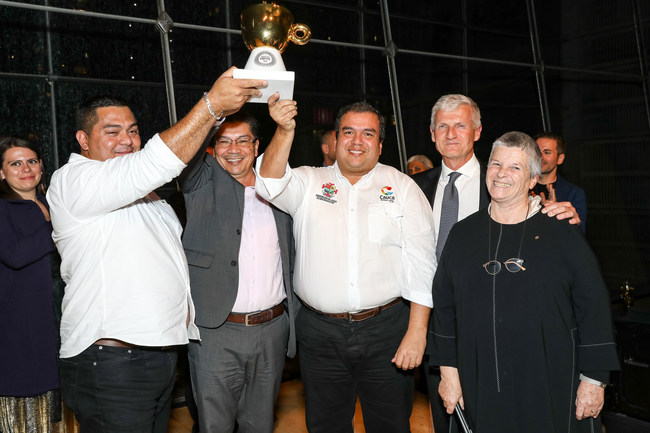
illycaffè, the global leader in high-quality, sustainably grown coffee, announced ‘Spirit of Peace Ex-Combatants’ – Asacafè (represented by Carlos Arturo López Guarnizo and Oscar Rodrigo Campo Hurtado) is the “Best of the Best” at the fourth annual Ernesto Illy International Coffee Award, held yesterday night in New York City. An independent jury of 9 top culinary and coffee connoisseurs from around the world gathered on October 15 for a series of blind coffee tastings, brewed individually from the harvests of nine different countries, to thoughtfully determine the best bean of the 2018-2019 season.
(PRNewsfoto/illycaffè)
Twenty-seven top grower representatives from the nine countries, including this year Brazil, Colombia, Costa Rica, Ethiopia, Guatemala, Honduras, India, Nicaragua and Rwanda, were recognized and celebrated in New York City for their sustainable quality. Each lot, before being examined by the independent jury in New York, was selected through intensive analysis at illy’s Quality Lab and then judged on aromatic richness/complexity, balance/elegance and aroma intensity/strength. Carlos Arturo Lopez, Oscar Campo, Gerardo Montenegro, Andrea Illy, Anna Illy
“It is an honor and a pleasure to recognize Colombia, ‘Spirit of Peace’ and Asacafè for their achievement, as well as applaud all of our finalists who are focused on producing the highest-quality coffee through sustainable methods,” said Andrea Illy, Chairman of illycaffè. “This award celebrates and honors the Spirit of Peace project, that we supported since the very beginning, with the aim to give a chance to the rural Colombian community of coffee to become the engine of a bigger transformation through the economic reintegration of the ex-combatants and their victims in the Cauca region.”
A separate “Coffee Lover’s Choice” honor was awarded to Rwanda’s Ngamba Coffee Washing Station, represented by Ms. Celine Niwemugeni, for the second consecutive year.
The Ernesto Illy International Coffee Award, named after illycaffè’s visionary, second-generation leader, celebrates the company’s hand-in-hand work with farmers for nearly 30 years to offer the best sustainably grown coffee to the world, as well as its commitment to improving the wellbeing of the world’s coffee growers. The top growers in attendance also participated in a coffee-specific seminar hosted at the United Nations in New York by Chairman Andrea Illy and representatives from the ICO – International Coffee Organization, covering topics including best agronomical practices, climate change mitigation and adaptation, and long-term sustainability of the coffee sector.
The jury – a panel of tasting, culinary and coffee experts from around the world who took on the task of choosing this year’s “Best of the Best” bean – was comprised of:
Matthew Accarrino: Accarrino is the nationally recognized chef known for his unique culinary style drawn from his Italian heritage, personal experience and classical training. He was named a Star Chefs “2010 Rising Star,” a James Beard Foundation semi-finalist for “Best Chef: West” for four consecutive years, and Food & Wine’s “People’s Best Chef California” in 2013 and “Best New Chef” in 2014.
Jaquelin Adriana Mednilla de Águila: Aguila is QGrader and Barista from Anacafe Coffee School.
Victor Cadenas: Cadenas is a QGrader and professional coffee roaster in Costa Rica, roasting for Cup of Excellence for five years. He evaluates genetic materials and varieties for ICafe, Catie, World Coffee Research and others.
Berhanu Gezahegn: Gezahegn is Director of the Coffee Quality Inspection and Certification Center (CQICC) at the Ministry of Agriculture (MoANR) in Ethiopia. Previously, he served as its director for training and advisory service.
Anthony Giglio: Giglio is a writer, educator and storyteller focused on wine, spirits and other beverages. He writes a weekly “Wine Wise Guy” column for Food & Wine, is the wine reporter for CBS News Radio, and is a contributor for Departures, Esquire and other major media outlets. Additionally, he serves as Wine Director for The Centurion Lounge at LaGuardia airport.
Maria Loi: Loi is a Greek food ambassador, author and healthy lifestyle expert. She is a popular TV chef in Greece, and the author of more than 36 cookbooks and 150 magazine editions. She has been recognized as the Global Ambassador of Greek Gastronomy by The Chef’s Club of Greece and has since earned a reputation as the U.S. leader in authentic Greek cuisine.
Sunalini Menon: Menon is Asia’s first female professional in the field of coffee tasting, also known as coffee cupping. She has been called “Asia’s first lady of coffee.” Formerly, Menon was director of quality control for the Coffee Board of India, and founder of her own company, Coffee Labs, in Bangalore.
Spencer Turer: Turer is the Director of Coffee Operations at Coffee Enterprises. He has dedicated his career to creating coffee quality and has become a pioneer for roaster certification. He is also a writer and technical editor for ROAST Magazine and Tea & Coffee Trade Journal.
Francesco Apreda: Apreda is a renowned Italian chef and recipient of a Michelin star, securing his status as a world-class chef. His talent lies in the ability to recreate a modern Italian cuisine full of flavors and turn them into incredible dishes for a sensory eating experience like no other.
The “Coffee Lover’s Choice” award, presented by illycaffè CEO Massimiliano Pogliani, was determined by a demanding jury of its own: more than 1,000 discerning visitors to flagship illy cafès locations in London, Milan, Paris, Shanghai and San Francisco.
“The Ernesto Illy International Coffee Award starts with the unique illy blend, developed consistently year after year, which gives us a deep knowledge of the coffee origins. We then combine this expertise with our direct sourcing model, working hand-in-hand with coffee growers to produce the highest quality Arabica beans sustainably,” said Massimiliano Pogliani, illycaffè CEO. “Coffee lovers and connoisseurs around the world are becoming more and more interested in learning and understanding not only about aromatic and taste profile typical of a specific terroir – very similarly to what happens int the wine world – but also how their coffee is produced and who produces it. This is the deep meaning of this Award, which wants to shorten the distance and bring together growers & consumers.”
Direct Sourcing Pioneering
The Ernesto Illy International Coffee Award is rooted in a program that illy established 28 years ago in Brazil, called Premio de Qualidade do Cafè para Espresso, that drove illy’s transformation to a company that today purchases nearly 100 percent of its coffee beans directly from producers able to meet its exacting quality standards, at a guaranteed premium over market prices averaging 30 percent. Today, illy stands as one of the world’s major purchasers of top-quality Arabica coffee directly from producers, whereby many coffees continue to be purchased on commodity markets, which can guarantee neither consistent quality nor a living wage to the coffee chain’s most important stakeholders: its 25 million families of growers.
source: illycaffè
source: http://www.prnewswire.com / CISTON PR Newswire / by illycaffe / October 17th, 2019
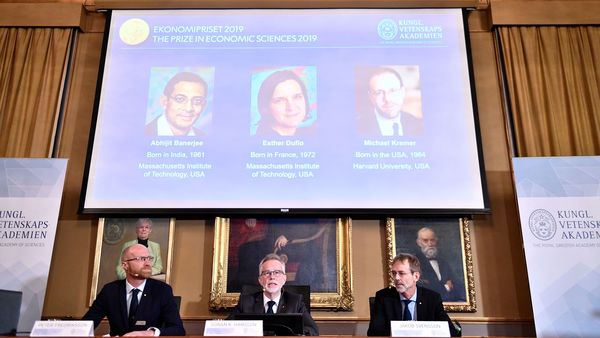
The winners of the 2019 Nobel Prize in Economics in the screen grab — Abhijit Banerjee, Esther Duflo and Michael Kremer (AP file)
– Michael Kremer, a Harvard University professor, was the co-Founder of ‘Precision Agriculture Development’ or PAD
– It advised the Coffee Board to pilot a missed-call enabled service to help coffee farmers in Karnataka
___________________________________
Bengaluru:
India’s Coffee Board, a state-run body that promotes coffee production and drinking, shares a slice of history with Michael Kremer, who won the Nobel Prize in Economics along with Esther Duflo and Abhijit Banerjee.
Kremer, a Harvard University professor, was the co-Founder of ‘Precision Agriculture Development’ or PAD, which advised the Coffee Board to pilot a missed-call enabled service to help coffee farmers in Karnataka. The IVR call service can give precise advise to the grower from scientists at Central Coffee Research Institute.
“Under his guidance and leadership, Team PAD have been working with Coffee Board of India and the coffee ecosystem for more than one year now. Thanks to the stellar efforts of Michael, Shawn, Madhur, Niriksha and Team Coffee Board, we have been able to have a positive impact on the lives of 15000 coffee farmers using a simple missed call service, free of cost to coffee farmers,” said Srivatsa Krishna, Chief Executive Officer of Coffee Board, in a statement to the media.
The service, Coffee Krishi Taranga, gives registered growers a weekly advisory on critical farm operations and daily market statistics through an automated push call when a farmer places a missed call on the helpline (080-37685000) run by the Board. It has helped growers improve productivity, profitability and environmental outlook, and will be expanded to cover 50000 growers shortly, according to the Coffee Board.
The PAD’s journey in India begun as an academic experiment in Gujarat with cotton farmers in 2011, when Narendra Modi, then chief minister of Gujarat, encouraged testing a similar service in his state called Krishi Tarang, said Srivatsa. “On behalf of the entire Indian coffee ecosystem, the finest shade-grown, hand-picked rainforest Coffees in the world, we congratulate Dr.Kremer and thank Team PAD for their contributions,” said Srivatsa Krishna.
source: http://www.livemint.com /Live Mint / Home> Explore / by Nidheesh M.K. / October 15th, 2019
Unicorn cappuccino to nitrogen black coffee…new trends have made the hot beverage more than just a remedy keep you sharp.
According to The Coffee Board of India, the country’s coffee production in 2018-19 stood at 3,19,500 tonnes.
It’s time to wake up to a new cuppa. Either with magic on your brew like the Unicorn Cappuccino or with luxury like the Gold Cappuccino. Given coffee’s popularity as one of the most loved beverages in the world, its growing demand drives the yearly trends within the segment.
We spotted the ones that give the best kick to your daily cup of Joe. While India remains a tea-loving country, it is already the seventh-largest producer of coffee in the world and if the growing trend is to be believed, India might become one of the world’s largest coffee-producing countries, according to CoffeeBI, an independent consulting firm.
Studies show a 40 per cent increase in the demand for coffee in India in the past decade alone. And with 66 per cent millennials in India choosing coffee as their preferred drink, according to Euromonitor, the beverage industry is working doubly hard to supplement the growth revenue by creating more options.
Hipster-fuelled trends
Take for instance, Matcha Cappuccino. Matcha, an electric green powder made from green tea leaves, has found its way into coffee too.
Besides being rich in antioxidants, it is packed with EGCG, a plant compound that promotes heart and brain health. The matcha in the cappuccino I ordered was from the farmlands of Kyoto, Japan.
Other interesting variants include the drool-worthy and photo-worthy Gold Cappuccino, Silver Cappuccino and the extremely pretty looking Unicorn Cappuccino, all made with edible cake glitter.
Not to mention, non-dairy coffee has become sought after with the growing number of vegans in India.
“To stay ahead of our game, coffee retailers need to prioritise innovation. Every year we go through published reports on coffee consumption as well as popular ingredient trends to see if we can add a bit of magic to your coffee in new ways,” says Dipanshu Narang, COO, Coffee Culture.
Recently, butter found its way into coffee. In this DIY concoction, add one tablespoon of coconut oil and unsalted butter (or ghee) into your coffee. Have it black. It’s a great source of energy and lubrication.
Nitrogen fueled coffee, a silken cold brew charged with nitrogen gas, sans milk or sugar, buzzes with an element of adventure as it is had straight from the tap and forms a froth similar to beer.
“Which is what makes it an evolutionary coffee beverage and contains close to 30 per cent more caffeine per ounce,” informs Narang.
Growth curve
According to The Coffee Board of India, the country’s coffee production in 2018-19 stood at 3,19,500 tonnes.
“Coffee, much like chocolate, is very adaptable. It doesn’t just feature in beverages and desserts but makes for an excellent barbeque rub as well. Base flavours of coffee range from sweet, like vanilla and caramel to savoury, like whole spices and nuts, and citrus, making it a very versatile ingredient,” says Sahil Mehta, coffee aficionado, and food curator at Cafe Tesu.
One of the few things he believes has made coffee popular is bean origin. At Tesu, for instance, they have collaborated with Devi Coffee under the umbrella of Sussegado Coffee India PVT LTD, Goa.
Devi Coffee offers over 30 variants of Indian coffee from coffee-producing regions Karnataka, Kerala and Tamil Nadu. “Quality of a bean distinguishes good coffee and very good coffee,” he says. So whether it’s coffee in a mocktail, cocktail or a popsicle, what makes or breaks a trend is its origin.
Stamp of a good CUPPA
“Good coffee has a fresh, nutty aroma. If not stored, grown or roasted right, you could get a batch in which the signature aroma will be tainted with a rancid odour.
The best way to tell good coffee and very good coffee is to enjoy them at places that are conscious of where they sourcing from…bean origin is key to a cuppa good coffee,” informs Sahil Mehta.
source: http://www.newindianexpress.com / The New Indian Express / Home> Lifestyle> Food / by Ayesha Singh / Express News Service / October 05th, 2019
Livelihoods of farmers under threat, says organising panel
The Coffee Board of India, in association with Way Win, a farmer producer company in the coffee sector in Wayanad, Wayanad Chamber of Commerce, Wayanad Coffee Growers Association, NABARD and Brahmagiri Development Society, is organising various programmes to mark International Coffee Day on October 1.
Agricultural Production Commissioner Devendra Kumar Singh will inaugurate the event at M.C. Auditorium here at 10 a.m. on the day. M. Karuthamani, Deputy Director, Coffee Board (Extension) Kerala, will preside over the function.
Coffee had never been more popular, but the livelihoods of coffee farmers were under threat, said organising committee chairman M.K. Devassia. Due to an increase in crop yield, causing two consecutive years of surplus in the market, there was currently a global oversupply of coffee, he said. The oversupply was driving down market price of coffee, he added. But the input cost, including labour cost and price of fertilizers, had increased considerably. Hence, the theme of the day was ‘Coffee’s future needs you’, he said.
“Wayanad, a major Robusta coffee growing area in the country, is facing the impact of global warming and climate change,” said Mr. Devassia, adding that it was expected that the crisis could be overcome by increasing production and doubling the income of farmers by value addition under the brand name of ‘Malabar Coffee’.
GI tag
The geological indication (GI) tag for Wayanad Robusta and the State government’s initiation to make the hill district carbon neutral would also help farmers get a better price for the produce, he added.
source: http://www.thehindu.com / The Hindu / Home> News> States> Kerala / by Staff Reporter / Kalpetta, September 28th, 2019
‘They are stuck in their home State owing to NRC procedures’
The ongoing verifications for National Register for Citizens (NRC) in Assam have stopped thousands of workers from returning to the coffee estates of Karnataka. The Assamese workers left the estates in March-April, ahead of the parliamentary elections, and a majority of them are yet to return.
In Hassan district alone, more than 10,000 people from Assam are employed in many estates. Similarly, they work in estates of Chikkamagaluru and Kodagu districts. For the last 15 years, the estates in the three districts have been dependant on workers from northeastern States, Odisha and Madhya Pradesh.
Estates suffer
The final draft of the NRC was published in July 31, 2018. Many workers, whose names did not figure in the draft, were worried. They left to resubmit documents to claim citizenship. B.N. Jagaish Shetty, manager of IBC company-owned Hasirugudda Estate in Belur taluk, said last year more than 100 workers from Assam were in the estate. Now, there was none. “A few of them had returned very late and by then, we had made alternative arrangements. They must have gone to other estates,” he said.
The final NRC is expected to be published on August 31 and people are worried about leaving their native until then. U.M. Thirthamallesh, president of the Karnataka Growers’ Federation, said 25 Assamese were working in his estate and they had not yet returned. “The last communication I received was that they would come back after Bakrid (August 12). I hope they return as our estates are dependant on them,” he said.
This year owing to decrease in rainfall, the demand for labour is minimum. Anticipating dip in production, estate-owners are trying to manage with the available workforce. “But if the workers delay further, the activities in the estates will suffer,” he added.
“Coffee production has always been dependant on outsiders. In the past, there were workers from Dakshina Kannada. Later, it was Tamil Nadu. Many of them settled here over the years,” said B.A. Jagannath, planter and former member of the Coffee Board. People from Assam are stuck in their home State because of the NRC procedures and the floods. They will not return until their citizenship issue is settled, he said.
source: http://www.thehindu.com / The Hindu / Home> News> States> Karnataka / by Sathish G. T / Hassan – August 05th, 2019
WELCOME. If you like what you see "SUBSCRIBE via EMAIL" to receive FREE regular UPDATES.
Read More »