Category Archives: Coffee News

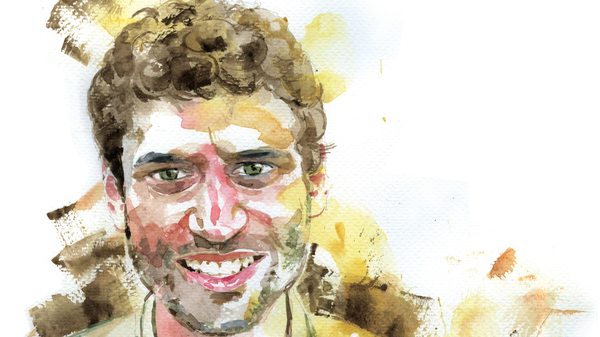
Matt Chitharanjan: Brewing the perfect cup

Matt Chitharanjan (Jayachandran/Mint)

Matt Chitharanjan, co-founder, Blue Tokai, talks about the artisanal coffee wave, the importance of package design, and ordering Americanos on food delivery apps

Blue Tokai has now grown from a single roastery-cafe and e-commerce venture in 2016 to 21 cafes in Delhi and the National Capital Region, Jaipur, Mumbai and Bengaluru
_____________________________

It was in January 2016 that I first visited Blue Tokai, tucked away in the by-lanes of Said-ul-Ajaib in south Delhi. For a coffee junkie like me, it was an exciting prospect to visit a new roastery—the first in Delhi at the time—that focused on single-estate beans from India. It was after several wrong turns that I found Blue Tokai, located a stone throw’s from car workshops and cramped houses.

The urban chaos dissipated the minute I entered the roastery-café, where I was greeted by the whirring of grinders and the warm enveloping aroma of coffee. The co-founder, Matt Chitharanjan, 37, could be seen working with a team of roasters, controlling the temperature and humidity to extract the best flavour possible from the coffee bean. It was a process called profile roasting, something Blue Tokai was the first to offer in the Capital.

It has been three years since that first visit and much has changed. Artisanal coffee has become a part of hipster culture, and many more coffee entrepreneurs have joined Blue Tokai in offering Indian consumers A-grade beans straight from plantations located in Chikmagalur, Kodaikanal, Coorg, even Nagaland. The average millennial is now aware of the complex notes and flavour profiles underlying coffee—incidentally, while wine has 200-400 notes, coffee has 1,200—and even has a favourite estate from which his or her beans are sourced.

As I head to Blue Tokai again, these changes are even more palpable. For one, it is no longer the sole occupant of the lane in Said-ul-Ajaib. Now called Champa Gali, the little alley is teeming with eateries such as Jugmug Thela and Studio Thali, dedicated to the quaint and the artisanal. Meanwhile, Blue Tokai has grown from a single roastery-café and e-commerce venture in 2016 to 21 cafés in Delhi and the National Capital Region, Jaipur, Mumbai and Bengaluru, with plans to open more in the next four months in the these three metro cities. Chitharanjan and I settle down at a table overlooking the roastery with a couple of Americanos—mine being from Karnataka’s Attikan Estate, a medium dark brew with notes of dark chocolate, figs and roasted almonds—and look back at how the company and the coffee culture in India have grown in tandem.

The roots of Blue Tokai lie in Chitharanjan’s personal quest for good coffee. “I grew up in the US, and my father is from Chennai. While growing up, my parents would drink a lot of filter coffee,” he says. When he moved to San Francisco after completing his master’s degree in economics from the University of British Columbia, the third wave of coffee (the speciality coffee movement) was sweeping across the US. “Blue Bottle Coffee had opened a café close to my apartment and a lot of local roasteries were nearby. I got exposed to better-sourced and better-roasted beans,” says Chitharanjan, who started roasting beans as a hobby. Some years later, his work as an economist brought him to Chennai, and it was while working at the Institute for Financial Management and Research that he met his wife, Namrata Asthana.

In 2012, the couple was hoping to start an entrepreneurial venture and coffee was a common point of interest. “We moved to Delhi and it was very difficult to find good coffee here. There were either Cafe Coffee Day (CCD) outlets or very expensive imported coffee. So, Namrata said why not try doing coffee on our own,” says Chitharanjan. The couple reached out to growers who were producing high-quality beans and tried to convince them to sell a part of the produce to them. In early 2016, Blue Tokai received seed funding from Snow Leopard Ventures and Bold Ventures. “We have also raised subsequent rounds of funds after the initial seed funding,” he says.

Slowly and steadily, they started getting green coffee beans from single estates in Karnataka and Tamil Nadu, which would then be profile-roasted fresh on order, ground to a perfect grain according to the customer’s requirement, and shipped within 24 hours.

According to Chitharanjan, coffee should be consumed within three-four weeks of being roasted. One of the reasons that the brew served in coffee chains or bought off the shelves sometimes tastes stale is because it takes a long time for the coffee to make its way through the supply chain, thereby leading to a breakdown in flavour compounds. Which is why now even restaurants and hotels such as the Roseate House in Delhi and the Oberoi Patisserie in Gurugram order roasted beans directly from Blue Tokai and serve them fresh to diners.

Was it difficult initially to convince farmers to part with their A-grade beans to an Indian coffee startup? “It was. They felt it was a waste of their time, as until then no one in India had been willing to pay a premium for high-quality beans. When we approached them, there was reluctance and also a sense of wariness about who we were and what we were doing,” says Chitharanjan.

The couple was upfront with plantation owners about the fact that the packages would feature the name of the estate the coffee was sourced from. This was crucial both to maintain transparency and educate the consumer. “Each estate has its own terroir, which impacts the flavour profile. And that needed to get highlighted,” he says. For instance, the organic coffee from M S Estate in Chikmagalur. which is grown at an altitude of 1,100-1,400m, is wash-processed and has notes of berries, molasses and milk chocolate. The Bibi Plantation AAA coffee from Coorg, on the other hand, is grown at a lower altitude, and has warm notes of toffee, almond and caramel. “It was a risk for the plantations too. If we did a bad job, they would get a bad name. Luckily, they took a chance on us,” he says.

Once Blue Tokai started selling artisanal coffee online, it began to get word-of-mouth publicity. “One of the good things about coffee is that it is very community driven. People who like coffee are very vocal about their favourite brands and they tell everyone about it. We were lucky in the beginning as there was this unmet demand for what we were offering. So, appreciation for Blue Tokai grew organically,” says Chitharanjan.

Initially, he participated in farmers’ markets and embassy events. It was a time when e-commerce ventures were taking off and people were slowly getting used to finding coffee online, but “the online market wasn’t very crowded at that time”, he says.

One of the striking things about Blue Tokai coffee is not just the quality of the roast but also the packaging, with artwork by folk and tribal artists such as Sukhandi Vyam at the back, and information about the estate, type of processing and date of roast in the front.

“That was all Namrata. I was worried about the price and wanted to do basic simple packaging. But she has a background in design and communications, and it was she who came up with the logo and the idea to customize the pack with the name of the consumer and to put artwork as well. All this connects with our ethos of sustainability, transparency and education,” says Chitharanjan.

In fact, consumer education is always on top of Chitharanjan’s list. There are classes every month at Said-ul-Ajaib and the café in Mumbai for customers on how to make coffee on machines, and even manual brewing sessions for those interested. There are sessions on roasting and cupping. Last year, he roped in two experts from Australia to put together a barista and roaster training school in Said-ul-Ajaib and Mumbai. “We train baristas at other restaurants that stock Blue Tokai as well so that they are able to tell our story better,” he says. Of late, he has been noticing demand for artisanal coffee from smaller cities and towns such as Thane and Jodhpur. “People are opening up cafés in some of the tier 2 cities. They have been exposed to good-quality coffee through some channel and are interested in bringing it back to wherever they live,” says Chitharanjan.

At a time when the gourmet coffee market is growing, with names such as The Flying Squirrel, Koinonia, Black Baza, Halli Berri and Third Wave innovating with high-quality Indian beans, what is it that differentiates Blue Tokai from the rest? “I think we are all complementing each other in this ecosystem. Everyone is catering to their own customer base and helping the market grow in its own unique way. All our coffees are different, sourced from different estates. Even when we source from the same estate, the way we roast the coffee is different from others,” says Chitharanjan.

At the end, the customer is the winner, with a variety of styles and options at his disposal. “We want to be known as the coffee company and not as a café company. Even though we have 20-plus cafés at the moment, we don’t want to be the next CCD or Starbucks,” he says. The idea is for the coffee to be accessible and for the Blue Tokai cafés to act as customer engagement points, with a team of baristas guiding them.

“Putting together a coffee culture is important to us. Some entrepreneurs feel their coffee should taste good simply because they have bought a machine worth lakhs and good-quality beans. Anyone can press buttons on a machine, but an untrained person can easily ruin your coffee,” Chitharanjan says.

For most of us, coffee is a way to de-stress. But I wonder if this holds true for Chitharanjan, who is surrounded by the whiffs and smell of coffee all day. “I still have four-five cups a day. But for me, the best way to de-stress is spending time with family in the evening,” he says.

Having said that, his palate has changed over the years. He used to drink instant coffee while growing up, but after being exposed to the third wave of coffee, he moved to lighter roasted ones. “I used to make pour-overs at home all the time. But I have become so lazy now that I order Americanos from Zomato all the time. It is interesting to see delivery aggregators change my own consumption behaviour,” says Chitharanjan, who is now working on packaging techniques to help coffee transport better.

***

Notes that you enjoy in a cup of coffee

I enjoy fruity and floral notes in a coffee, as well as depth of flavour. You end up finding new notes as the coffee cools down.

How do you unwind?

By spending time with my family and exploring new destinations. One country on my bucket list is Japan.

Your favourite book

‘The Asian Saga’, a series of six books by James Clavell, which traces the lives of Europeans living in Asia.

Your favourite café

Father Carpenter in Berlin has great coffee, good food, and, most importantly, knowledgeable staff, which has none of the pretensions that you encounter in speciailty cafés.

source: http://www.livemint.com / Live Mint / Home> Explore / by Avantika Bhuyan / July 04th, 2019

How his mother’s search for the perfect cup of coffee led this entrepreneur to found a ‘filterless’ decoction business

Harold Pereira started TrueSouth in Mysuru after spending 16 years in R&D to brew the perfect cup of convenient instant coffee.

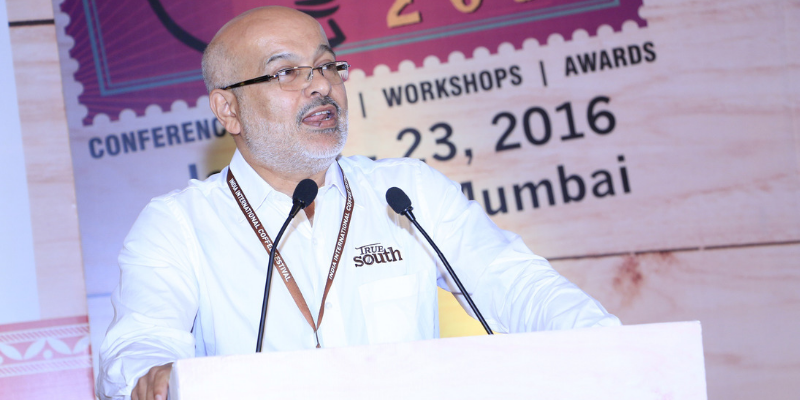
Harold Pereira, Founder, TrueSouth

As Terri Guillemets once said, “Coffee is the best thing to douse the sunrise with.” For many coffee lovers, the day does not begin without a hot cup of freshly brewed coffee. And if you are a coffee connoisseur, you would definitely look forward to the aroma of filter coffee wafting through your home.

But what if you did not have time to make a cup of filter coffee in the morning but wish to have coffee running through veins nevertheless? Understanding the time constraints of coffee lovers, Harold Pereira launched True South, an instant coffee decoction brand in Mysuru in July 2013.

While growing up, Harold had seen his mother preparing the coffee decoction before she went to bed every night. The first thing she did in the morning was to have her cup of coffee and head to church. And, at times, if she had forgotten to perform this activity at night, she would miss her coffee and her day just wouldn’t start right.

In this video interview with SMB Story Harold Pereira, Founder of TrueSouth, explains how his mother’s conundrum to brew the best decoction led him to start TrueSouth. Says,

video 01

I wondered why she did not just make the decoction in the morning? Little did I understand then, about the time, skill, and effort required to make a decoction. The freshly brewed decoction is always the best, as the profile changes within two to three hours, but households compromised and made it in the night to have the decoction ready in the morning.”

And, this got him thinking: why can’t filter coffee be filterless?

Harold then started experimenting by preparing instant filter coffee decoction without preservatives, which would taste similar to the freshly brewed filter coffee. It took him 16 long years to come up with the product, and today, TrueSouth is among the first brands to launch this first-of-its-kind product.

TrueSouth is a true farm-to-table organisation as it grows, roast, grinds, processes, and packages and sells the coffee decoction. The coffee is shade-grown, hand-picked, and sun-dried at Harold’s own farms. It is then carefully roasted and processed in the plant to ensure quality, consistency, and convenience. Quality is adhered to at every level of operations and the company complies with all the necessary FSSAI, HACCP, and halal regulations.

Struggle with the R&D

Talking about the tough phase of Research & Development of the instant coffee decoction, Harold says that he didn’t pour in a lot of money, but used the coffee beans from his own plantations in Chikmagalur and Coorg to come up with the right product. His team was doing the R&D under Hindustan Food and Beverages, which was formed in 1996.

Initially, they packed the decoction in bottles and within a day, they would bloat and explode. Then they added preservatives to the product to stabilise it but prominent coffee cuppers likened the taste of the coffee to that of cough syrups. He says,

“We have our own R&D team and multiple iterations and years of hard work led us to our product today, which is a boon for coffee lovers that makes the sip of their morning coffee easier without any hassle,” Harold adds.

Market reach

Harold first targeted the HoReCa (Hotel, Restaurant, and Cafe) segment. The chefs loved the decoction, and it was an instant hit; TrueSouth decoction is now available in ITC hotels, Leela chain, Lemon Tree chain, and more.

“We also make machines which make the decoction relevant in different environments like office spaces, cafes, etc. All the machines are designed and produced in-house. We also run five small outlets across Chennai and Bengaluru,” Harold explains.

The company is also exporting the brand and has managed to make inroads in the UAE and the UK market. TrueSouth is also available in multiple quick service restaurant (QSR) chains across the country and is listed on Amazon and Bigbasket too.

At present, TrueSouth records 28 percent YoY growth.

Future prospects

On future plans, Harold says that the company is focussed on R&D and soon will come up with a few more products. He is also planning to come up with a kiosk model, and expand to other parts of the country.

source: http://www.yourstory.com / Your Story / Home> SMB Story / by Palak Agarwal / June 03rd, 2019

Coffee Board takes tech route to help growers boost yield

App-solutely smart: In the case of white stem borer, growers and the Board have validated 90% accuracy.   | Photo Credit: Reuters
App-solutely smart: In the case of white stem borer, growers and the Board have validated 90% accuracy. | Photo Credit: Reuters

Apps fed with data help forecast weather, predict leaf rust

For the 3.5 lakh coffee growers in India, 98% of whom are small-scale, challenges affecting production include labour shortage, climate change and pest attacks.

One way to manage these is by adopting technology, which the Coffee Board is trying to bring about for the growers.

Last year, Eka Software Solutions took up a pilot project for the Coffee Board of India on machine-learning based applications. According to Shuchi Nijhawan, vice president – agri business for Eka Software, the Board and the company took up three areas to try machine learning based apps. One was addressing the white stem borer problem, another was weather forecasting, and the third, predicting leaf rust.

Machine-learning

“Based on the data, photos provided, we created a machine learning algorithm to forecast each of these issues (for a grower). We worked with 20 liaison officers of the Board and they coordinated with the growers.

“The success of the app depends on the data fed in. In the case of white stem borer, the growers and the Board have validated 90% accuracy,” she says. Eka’s digital platform for agriculture aggregates data from different sources and applies the algorithm to provide insight to the coffee growers.

Srivatsa Krishna, chairman of the Coffee Board, adds that though there is no exact data, it is learnt that in the last 10 to 15 years white stem borer would have brought down Arabica production by 25-30%. “The growers do need solutions for such issues.”

“Despite the Coffee Act having been around for more than seven decades, farmers have zero technology. The only way to increase productivity is by bringing in technology,” he says. Even before smartphones became popular, coffee growers had checked prices on the London and New York exchanges almost on a daily basis.

Hence, adopting technology should not be difficult for them. The Board has plans to scale up the analytics technology for adoption by more farmers.

Currently, 90% of the estates depend on labourers for most of the work and there is not much technology adoption among coffee growers in cultivation or to increase production.

“If someone is ready to do it [technology] for us, we will adopt it. It will help increase yield,” says Sundar Subramanium, executive director of Mother Mirra Coffee Plantations. Ms. Nijhawan says the company is exploring partnerships for other crops too. “Indian farmers want such technology services. There are several agriculture institutes and cooperatives in the country that have a lot of data. I see a huge potential for these technologies.”

source: http://www.thehindu.com / The Hindu / Home> Business> Industry> Green Shoots / by M Soundariya Preetha / June 02nd, 2019

Tata Coffee opens first freeze-dried production plant outside of India

Tata Coffee has opened its first free-dried instant coffee plant outside of its native India after GEA, a tech supplier for food processing, completed work on the new Vietnam plant.

After Brazil, Vietnam is the world’s second largest producer of green coffee and the new plant based in Binh Duong Province produces 5,000 metric tonnes per year of free-dried coffee.

GEA supplied the entire production line from roast bean treatment right through to the packing of the freeze-dried powder.

This isn’t the first time GEA has undertaken work for Tata Coffee, having built a coffee extraction and evaporation plant for the company in 2013.

“This type of project is ideal for us at GEA because our expertise and scope of supply allows us to build the entire coffee line using our own resources,” said Kim Knudsen, Head of Sales, Coffee and Freeze Drying at GEA.

“This means we can maintain control and take responsibility for the entire project from start to finish.”

source: http://www.fdiforum.net / Food & Drink International / Home> Production / by Dominic Cuthbert / May 28th, 2019

How many coffees are really in your cup?

India is the seventh-largest producer of coffee beans in the world. Some varieties are so prized abroad, you’d be hard pressed to find a cup here. Take a look at six of the most special Indian beans.

Drinking coffee used to be a simple matter of instant or filter. When Café Coffee Day and Barista first began to spread at the turn of the millennium, we began to be able to tell our lattes from our cappuccinos, but we still know more about where our wine comes from, than our brew.

India is currently the seventh largest producer of coffee in the world, and there are Indian coffees so sought-after by foreign markets that they’re hard to find here at home. According to the Coffee Board of India (CBoI), we produce about 3.1 lakh tonnes of coffee beans a year. Most, and the best, of it is exported to Italy, Germany and Russia. “About 75 per cent is exported,” says Babu Reddy, deputy director of market research at the CBoI.

There are 13 major coffee-growing regions in the country, Coorg and Chikmagalur in Karnataka being the largest. Coffee is also grown in parts of Orissa, Andhra Pradesh and the north-east.

Six Indian varieties have recently been awarded the Geographical Indicator (GI) tag by the Government of India, meaning that their names can only be ascribed to beans from those specific regions. Here’s a look at the six, and the brands where you might encounter them.

BABA BUDANGIRI & CHIKMAGALUR ARABICA: DESI MOCHA

Taste notes: Intensity and clarity of a rich mocha flavour
Used by: KC Roasters, Dope Coffee Roasters

The Baba Budangiri hills in Chikmagalur, Karnataka, are where coffee was first grown in the country. According to legend, seven coffee beans were smuggled here from Yemen in the 17th century, hidden in the tunic of a Sufi saint. His name was Hazrat Shah Janab Allah Magatabi, or Baba Budan. The coffee grown here takes his name.

WAYANAD ROBUSTA: THE INSTANT BEAN

Taste notes: Bitter, pungent, but with a mild flavour and full body
Used by: A number of instant coffee and filter coffee brands

The gently sloping hills and rich laterite soil of low-lying Wayanad district in Kerala is excellent for the cultivation of Robusta beans. According to the Coffee Board of India, Wayanad produces 90% of the state’s coffee.

Broken Robusta beans are used to make instant coffee as well as in filter coffee blends. Indian filter coffees are usually a blend of Robusta and Arabica, combined with chicory for a strong flavour base. This type of blend is best suited for the milk-and-sugar coffee that Indian coffee drinkers prefer.

ARAKU VALLEY ARABICA: THE DESI EXPAT

Taste notes: Exhibits a full body coupled with bright citric flavours and striking aroma with a note of chocolate and a sweetness in the finish.
Used in India by: Araku Valley Coffee House in Vishakapatnam

Getting your hand on a cup of Araku Valley coffee might be easier in Paris than in India. This smooth, mellow, complexly flavoured bean grows in a single region on the borders of Orissa and Andhra Pradesh, by tribals who follow traditional practices of growing, selective picking and management. The cherry ripens slowly in the mild climate at the high altitude of Araku Valley, but as with the Ratnagiri Hapus, most of it is exported.

COORG ARABICA: SOUTHERN STAPLE

Taste notes: A well-balanced and mildly sweet taste with subtle body, it’s neither bitter nor sour, has low acidity levels and a mild chocolatey aftertaste.
Used by: Dope Coffee Roasters, Blue Tokai Coffee Roasters

Coorg is the largest coffee-growing district in the country. The Coorg Arabica is identified by its uniform beans that lend itself to an even roast. It is cultivated at high altitudes, and registers a slow growth rate, which prolongs the time for the cherry to ripen. Its balanced flavours are best extracted through a medium roast and hot brew.

MONSOONED MALABAR

Taste notes: Mellow, musty and fruity-flowery flavour, mildly aromatic and reduced acidity
Used by: Marc’s Coffees, Dope Coffee Roasters, The Coffee Co

The Monsooned Malabar was identified and branded as a specialty coffee by the Coffee Board of India in the 1960s. It is harvested just before the monsoon and left to soak up the moisture laden winds of the Western Ghats during the rains, in order to replicate the conditions created during its rocky voyage from India to Europe centuries ago. As the story goes, owing to the monsoon winds en route, the swollen beans at the end of the journey acquired special characteristics that resulted in reduced acidity and mellow taste. It is usually blended with stronger and more acidic varieties of coffee.

source: http://www.hindustantimes.com / Hindustan Times / Home> More Lifestyle / by Natasha Rege, Hindustan Times / May 26th, 2019

Farming a wonder It’s slice of nature in this couple’s Acres

This is no doubt a one-stop point for anyone wishing to gather information on organic farming.

The farm is also frequented by gaur, deer, elephants and sometimes tigers and leopards which leave their pug marks.

Nature lovers, Satish Gowda and his wife Ganavi, both post-graduates in Coffee Quality Management from Coffee Board of India, are on a mission to promote organic farming in Chikkamagaluru. The farm maintained by Satish has inspired many to set-up organic farms on the same lines. It’s not only organic farming for which the farm has become famous, it is also the abode for numerous birds and grazing animals which go in search of fruits. Photographers love the place as they can easily sight the birds which perch on trees. The Organic farmers association has done its bit to popularise the spot by bringing foreign national to have a close look at the farm and learn the tenets of organic farming. M.B. Girish explores this unique farm which is any nature lover’s delight

The future is organic and who would know this better than Satish Gowda, a honorary wildlife warden in Chikkamagaluru and his wife Ganavi, who hails from a family of coffee planters? Their painstaking efforts spread across eight years, has created an eco-lovers’ paradise at Honnala village, Sirivase post in Chikkamagaluru where they have converted an area covered with wild shrubs into a lush green expanse by cultivating about a 1,000 fruit bearing trees. This is no doubt a one-stop point for anyone wishing to gather information on organic farming.

Organic farming is not all that this farm boasts of, it is also a bird lovers’ hallowed spot where they can film rare species which have made the farm their home.

Temple Tree Farm is spread across 7.15 acres and has a variety of fruit bearing trees including some from foreign countries which attract birds, butterflies and herbivores from the neighbouring Bhadra Tiger Reserve located on the banks of River Somavahini.

Satish and Ganavi were inspired to set up their organic farm after a visit to Navadarshanam, an eco-ashram in Bengaluru. They met Ananthu and his wife Jyothi and were inspired by their eco- sustainable way of living.

To make their dream of setting up an organic farm come true, Satish and Ganavi purchased land at Sirivase in 2011 and named it Temple Tree Farm because a Temple Tree is located right at the entrance of the farm.

The farm uses solar energy to pump water to every nook and corner and has several varieties of fruit bearing trees such as Rambutan, Java apple, mulberry, rose apple, pineapple, rampala, seethapala, lakshmanpala, hanumanthpala, papaya, cashew, guava, jack fruit, velvet apple, peach, carambola, kokum, avocado, chikoo, orange, musambi, mango, litchi, pomelo and mangosteen. Among the fruits grown at the farm, the Nakkare variety is unique as it should be eaten raw and not ripe as it tastes sweeter. Nakkare is used to make pickles and chutney.

Observing that many varieties of birds come to the farm to feed on the fruit, Satish Gowda has engaged a naturalist, Shivakumar of Chikkamagaluru to study the various species of birds and butterflies and make a note of it for documentary purposes. Shivakumar says he has sighted about 60 species of birds in the last three years including the Grey Hornbill, Malabar Trogon, Rocket Tail Dragon, Blue-fly Catchers, Asian Paradise Fly Catchers and Ruby Throated Bulbul among others. The fruits at the farm are not harvested to allow the visiting birds feast on them.

“I even see Otters in River Somavahini flowing close to the farm, the other place I get to see Otters is in the Bhadra backwaters,” says Shivakumar. Another rare species he has seen at the farm is the Flying Lizard. “I read about the Flying Lizard in writer Poornachandra Tejaswi’s book and was lucky to spot it at Satish’s farm.”

The farm is also frequented by gaur, deer, elephants and sometimes tigers and leopards which leave their pug marks.

Malnad Gidda, an indigenous cow was added to the farm and dung and urine from the cows are being used as plant nutrients and pesticide. Satish says milk from Malnad Gidda is highly nutritious and has medicinal properties. A fish pond is an artificial tank to collect rain water as the region receives copious rainfall during the monsoon. The pond has stocks of fish varieties such as Gowri, Rohu and Katla.

The chicken are fed paddy and dry paddy hay is used as fodder for cows. Goats and cows are also fed green grass. No dry fodder is bought from outside. Honey boxes are kept around the farm and help in a collection of over 25 kg of honey in a year.

Ganavi says visitors to the farm are amazed how an empty piece of land was transformed into a fully functional farm. Taking a cue from Satish Gowda, Partasarthy Wodeyar, a resident of Salagame hobli near Hassan city, is developing an eco-farm on the lines of Temple Tree Farm. He also plans to start an eco-tourism centre in an area of four acres and wants to serve organic food to visitors.

“I learnt a lot from Satish Gowda’s farm. It is difficult to maintain a farm like his and the effort put in by Gowda is worth appreciating,” he says.

Satish being an honorary wildlife warden, is also rendering a helping hand in mitigating human-animal conflict in and around Bhadra Tiger Reserve. He offers compensation for cattle killed by tigers or leopards. Besides, Anti-Poaching Camp personnel are given torches, water repellent coats and other accessories to enable them guard the forest areas from smugglers or poachers.

source: http://www.deccanchronicle.com / Deccan Chronicle / Home> Nation> Current Affairs / by M B Girish, Deccan Chronicle / May 19th, 2019

Tata Coffee reports total income of Rs 757 crore in FY19

Mumbai :

Tata Coffee, a subsidiary of Tata Global Beverages and Asia’s largest integrated coffee company, has reported standalone total income of Rs 757 crore in April to March 2018-19 compared to Rs 762 crore in the previous financial year.

The profit after tax was Rs 72 crore against Rs 63 crore in the same period due to an improved plantation and instant coffee performance as well as on the sale of its non-core fixed assets.

For the quarter ended March 31, the company reported a total income at Rs 212 crore compared to Rs 207 crore during January to March 2018. Profit after tax was higher at Rs 12 crore compared to Rs 4 crore in the same period.

“The offtakes to Africa and European geographies continue to be strong and our focus on customer acquisition in new geographies has enabled a robust and healthy order book,” said Tata Coffee’s Managing Director Chacko Thomas.

“While volumes are high, the instant coffee business continues to be under margin pressure due to the current competitive scenario in the industry and hardening rupee,” he said.

On March 6, the company unveiled its first off-shore freeze-dried coffee production plant in Vietnam with a capacity of 5,000 million tonnes per annum.

Tata Coffee produces 8,000 to 10,000 million tonnes of shade-grown Arabica and Robusta coffees at 19 estates in south India. Its two instant coffee manufacturing facilities have a combined installed capacity of 8,400 million tonnes.

lt exports green coffee to 40 countries in Europe, Asia, the Middle East, and North America.

source: http://www.newkerala.com / New Kerala / Home> News> Business India News / by ANI / April 20th, 2019

Brimming up with Speciality brews

Newly launched Quick Brown is riding the third wave of coffee culture in India.
coffeebrownKF17apr2019

What is in a name’, the famous quote by English poet William Shakespeare has been recalled many times since the 17th century when it was first uttered. Cut to the 21st century, the ‘name’ still finds itself wrapped in an ambiguous identity that cannot be clearly or coherently defined, yet carrying the message of an intention lucidly.

For Quick Brown Fox, a new coffee roastery at Dhanmill Compound, the name doesn’t stand for much besides adding a bit of quirk to the tongue that speaks it. Inside, space is an entirely different creation that takes after a Scandinavian design undercurrent. Yet, the contrast in the name and space doesn’t go in vain. It sets the tone for the unexpected, exactly what its Founder, Vaibhav Bindal, wanted to achieve.

coffeebrown02KF17apr2019

Gauging by the meteoric rise in specialised coffee shops in India, people like Bindal are new age coffee revolutionaries who are riding the third wave of the coffee culture in India. This phase calls in for high-quality artisanal coffee employing state-of-the-art devices, latest technology, new knowledge, latest scientific research, and transparency and traceability about the source of coffee.

“On a 100 point scale that Specialty Coffee Association, a nonprofit, organisation that represents thousands of coffee professionals, considers to evaluate coffee characteristics, we follow 80 or above points, therefore ours is always A grade coffee,” says Bindal, whose retail brand of roasted coffee is also called Quick Brown Fox, delivered to metros as well as tier two cities.

Working out a new business structure, that of a physical coffee shop was stepping it up into the expanding coffee space. They specialise in single estate Arabica coffee that is roasted lightly in small batches to ensure the flavour of the bean is dominant. “We maintain a direct trade relationship with the farmers without the intervention of middlemen. Each coffee is treated uniquely and a roast profile has been created to showcase the flavours of the origin,” he says.

Besides coffee, you want to get your hand on the house special Eggs Benedicts in four versions sectioned out as a separate segment on the menu. The rest of it is a mix of various morning sweets and savouries. But save that for later. First and foremost, it’s coffee that you want to call out for.

Quick Brown Fox specialises in single estate Arabica coffee that is roasted lightly in small batches to ensure the flavour of the bean is dominant. They maintain a direct trade relationship with the farmers without the intervention of middlemen. Each coffee is treated uniquely and a roast profile has been created to showcase the flavours of the origin.

source: http://www.newindianexpress.com / The New Indian Express / Home> Cities> Delhi / by Ayesha Singh / Express News Service / April 16th, 2019

India to launch coffee consumption drive

CoffeePickingKF14apr2019

The World Coffee Producers Forum has decided to reach out to the coffee consuming countries around the world.

India will plan and roll out a coffee consumption campaign on behalf of global coffee growers who suffered huge financial losses on account of falling coffee prices and soaring labour cost.

The context is that coffee growers around the globe are going paupers and turning poverty stricken. As per International Coffee Organization (ICO), 25 million farmers, including more than 3,00,000 in India, produce coffee in 60 counties. Over 90% of these growers are smallholders and are forced to sell their coffees at a price much below the cost of production. This scenario has led to socio-economic issues. These growers and their families have gone deeper into debts. Many even have abandoned their farms and migrated to cities.

To bring world coffee producers, including Indian growers, out of this appalling situation, The World Coffee Producers Forum has decided to reach out to the coffee consuming countries around the world.

As a precursor to this, India, which has a domestic consumption of more than 5 million bags (of 60 kg each) will kick off a five-year coffee consumption campaign in collaboration with top global roasters including Nestle and Starbucks, cafe chains, other stakeholders and the Government of India.

Anil Kumar Bhandari, president of India Coffee Trust and also chairman of Private Sector Consultative Board of ICO told The Hindu that, a special entity would be formed to execute this country-wide coffee campaign. The plan is to get most of the funding from international roasters while ICO will play a catalyst’s role.

The campaign will address a population of 450 million, mostly school and college students, in India. Carlos Brando, who ran various coffee projects in more than 50 countries — including Brazil’s famous coffee campaign that significantly pushed up the country’s consumption in 1990 — will be actively involved in the India campaign that will be ready for launch by mid 2020.

‘Demand-supply issue’
“There is a huge demand-supply imbalance that currently exists in the global coffee markets. That’s the root cause for price fall. Increasing the consumption is the only way to counter this and therefore demand for the commodity in the global markets will increase. This exercise has to begin somewhere and let that be from India,” said Mr. Bhandari.

The plan was to import excess coffees from Brazil, Colombia and Vietnam, provided the government of India waives off the import duty on coffee which is 105%, he added.

“It is like catching them young, before students get involved with colas, carbonated sugar drinks or liquors. We have to create a generational change and build a coffee culture. The campaign will be run in consultation with parents, teachers and school/college managements. We will also rope in sugar companies, dairy brands into it,” he added.

As per ICO, the world drinks 1.5 billion cups of coffee every day and consumers on an average pay $3.1 a cup in the U.S., $4.60 in Shanghai, $6.24 in Copenhagen and $3 to $4 in Bangalore and New Delhi. But unfortunately, not even 5% of this cup price reaches the grower.

source: http://www.thehindu.com / The Hindu / Home> Business> Industry / by Mini Tejaswi / Bengaluru – April 13th, 2019

Behind Araku Valley coffee’s GI Tag

ArakuCoffeeKF12apr2019

It might have been around for a century, but Araku’s Arabica coffee didn’t get the tag that easily
Araku Valley, the highlands of the Eastern Ghats mountain range overlooking the Bay of Bengal, is brewing one of the best coffees in the world and its aroma just got headier with the Geographical Indication (GI) tag it was recently awarded.

Located 2,985 feet above sea level, coffee plantations here are spread across hilly terrain growing under the shade of towering silver oaks. What makes this coffee unique is that it is organic and cultivated by Adivasi farmers in 10 mandals of the region. The peculiar mix of climate in Araku — hot days and cool nights — coupled with naturally iron-rich soil lends the Araku coffee body, intensity and a rich aroma. No wonder it has fans across France, Sweden, Dubai and Switzerland as well.

Interestingly, the Girijan Cooperative Corporation (GCC), which has been promoting Araku coffee for three years now, had applied for the GI tag at the Chennai-GI registry in 2016. However, its claims at that time were dismissed by the Coffee Board of India, an organisation managed by the Ministry of Commerce and Industry.
____________________

Coffee Statistics

– In India, coffee is cultivated on approximately 4.54 lakh hectares
– There are nearly 3.66 lakh coffee farmers (according to government
figures, 98 % are small farmers)
– In 2018-19 Coffee production in India is estimated to be 3,19,500
tonnes (according to Coffee Board).
– There has been a rise of 13.26 % in the first two months of this
year, totalling to to 48,330 tonnes

_____________________

Things changed, however, when the Coffee Board itself applied this year; the Chennai-based GI registry awarded the GI tag to Araku, along with four others (Coorg Arabica coffee from Karnataka, Wayanad Robusta coffee from Kerala, Chikmagalur Arabica from Karnataka and Bababudangiris Arabica coffee also from Karnataka).

“The GI tag will help Indian coffee varieties be specifically identified with their unique flavour and also increase their popularity. The adivasis of Araku will now get a better price for their produce,” says T Baburao Naidu, GCC vice-chairman and managing director. The GCC is expanding its footprint across the State and the country by setting up outlets selling Araku coffee.

Coffee cultivation in the Araku region began around the early 1900s. But it came into the limelight only a few years ago after a couple of players like GCC and Naandi Foundation (an organisation working in the social sector) entered the fray to help the adivasis grow quality beans and market their produce on the global platform.

_______________

What it means

A GI is a name or sign used on products which belong to a specific geographical location or origin and is a certification that the product possesses certain qualities that are unique to that locality.

_______________

Manoj Kumar, CEO of Naandi Foundation, says, “When I started working in the area as part of Naandi Foundation 20 years ago, people told us this is was a ‘non-traditional’ coffee region! We have come a long way since then, with a strong cooperative of 10,000 adivasi farmers and a central processing unit. We opened a flagship store in Paris, and won the Gold Medal for the best coffee pod at the Prix Epicures OR 2018 Award. The GI tag is a safety net and a recognition that this region’s coffee has a unique identity.”

A loyal Araku coffee fan, Vidya Raghu, says, “It is different. There is an exhilarating aroma, golden-brown froth and a lingering, slightly sharp after-taste that envelopes your senses. I haven’t experienced this kind of refreshing flavour with any other coffee I’ve had.”

source: http://www.thehindu.com / The Hindu / Home> Life & Style>Food / by Nivedita Ganguly / April 11th, 2019