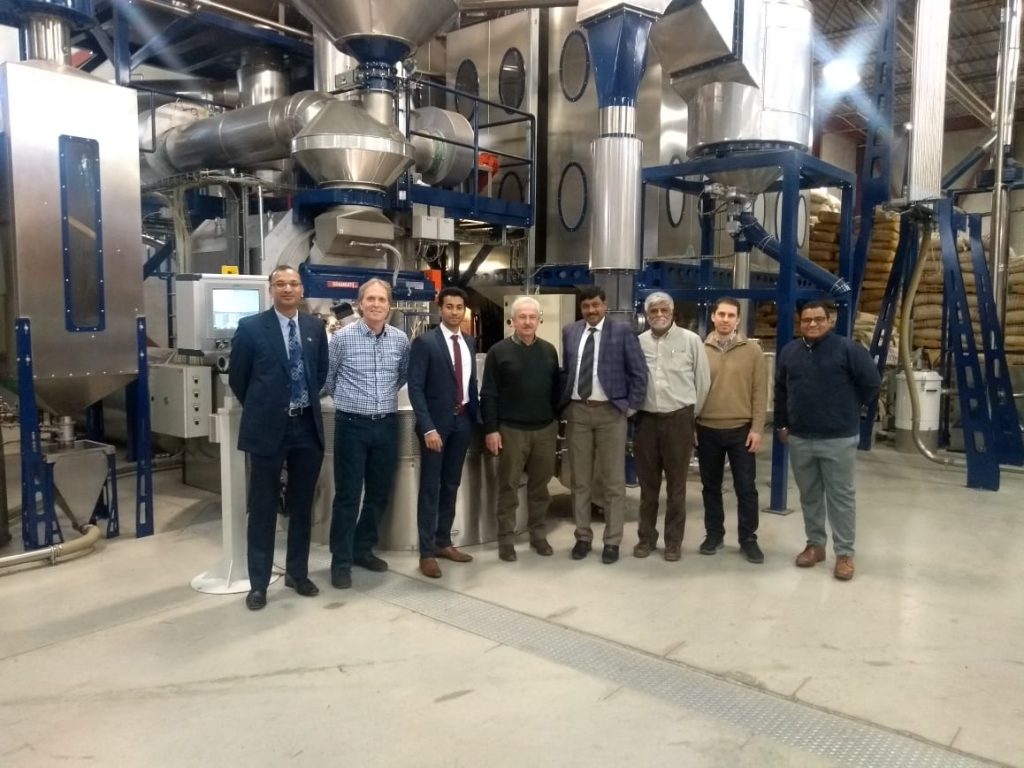
The Coffee Board of India, Ministry of Commerce & lndustry, Govt. of India in association with The Consulate General of India, Toronto organized a special program to promote coffees of India and to facilitate Indian coffee trade. The Indian Delegation comprised of executives from the Coffee Board of India, key exporters, coffee roasters and a coffee planter.
Coffee occupies a place of pride among plantation crops grown in India. India ranks seventh in global coffee production with an annual average profusion of around 320,000 tons contributing to approx. 3.5% of global production and stands at the fifth position in terms of exports contributing to 5% of the global coffee trade. Indian Robustas are perceived to be the best in the world and high-elevation shade-grown Indian Arabicas are sought after as premium eco-friendly coffees. Canada is one of the major importers and consumers of coffee, and imports around 350,000 tons of coffee annually. However, India’s share in this high-value coffee import market in Canada is quite negligible.
The composite delegation led by Mr. Srivatsa Krishna, lAS, CEO & Secretary, Coffee Board of India met with Canadian regulatory officials and Canadian business community on March 11, 2019 at the Indian Consulate in Toronto. The Consul general of India, Mr. Dinesh Bhatia and CEO of Coffee Board of India, Mr. Srivatsa Krishna opened the program by addressing delegates and guests.
The program included an in depth presentation on ‘coffees of India’ followed by a coffee cupping session and exclusive one-to-one interactions with top coffee manufacturers and key stakeholders from the coffee industry of India. On the following day, March 12, delegates Dr. Mandappa I.M (Coffee Quality Specialist, Coffee Board), Shri. N.N. Narendra (Director of Finance, Coffee Board), Mr. V.E Ovian (Director, Indcaffe), Mr. Kaashif Asghar (Managing Partner, The Aldur Group) and key Indian traders met up with Indo Canadian Chamber of Commerce, South Indian Business Community and prominent Canadian coffee business giants in order to create inroads for Indian coffees with the prime objective to benefit all stakeholders including Indian coffee traders, roasters and farmers. -CINEWS
source: http://www.canindia.com / Can India / Home> Community / by CanIndia News Online Edition / March 22nd, 2019
New store invites customers to embark upon a unique experiential coffee journey Bangalore, Karnataka
Tata Starbucks announced the opening of its largest coffee forward store in Bangalore at 38/1st, Vittal Mallya Road.
The Starbucks store at Vittal Mallya Road will welcome its customers with a promise of delivering the iconic ‘Third Place’ experience while stewarding the company’s commitment to the community.
The Vittal Mallya store marks Starbucks 140th store in India and 22nd store in Bangalore. “We are pleased to introduce our customers in Bangalore to a unique sensorial coffee experience while showcasing our expertise, craft and passion for all things coffee.
The Starbucks store at Vittal Mallya celebrates every aspect of the coffee journey – the bean, grind, brewing styles, and the skills of our Coffee Masters. The store’s design and curated offerings reflect Starbucks legacy of coffee leadership,” said Mr. Navin Gurnaney, CEO, Tata Starbucks Pvt Ltd. “Customers can seek out Starbucks Coffee Masters for their coffee expertise to discover a new favorite beverage or a pairing suggestion. The different brewing methods offered at the store give us an opportunity to engage with our customers as they explore new ways to enjoy coffee. The store offers customers a place where they can relax and share conversations as well as immerse themselves into an artisanal coffee experience.”
The store features two separate bars – an espresso bar and a separate brew bar.
At the heart of the espresso bar lies the state-of-the-art Black Eagle which allows the skill of the Starbucks baristas to come alive as each partner manually creates a customized and perfect shot of espresso.
The Brew Bar offers customers a range of other brewing techniques. For example, the Siphon, which is known to bring out the intense flavours of the coffee, uses halogen to boil water and move the coffee through the vertical chambers, whereas the Chemex®, a manual pour-over brewing method, pours into a perfectly balanced cup of coffee.
The store pays tribute to the coffee culture of the city by offering an extensive range of specially curated Starbucks beverages, including Sparkling Shaken Espresso with Mint, Cortado, Hazelnut Bianco Latte amongst other Starbucks signature beverages.
The store also offers a first for Starbucks in India with an affogato station, where coffee craft meets ice-cream to create a range of unique beverages including Signature Affogato, Cold Brew Malt, Nitro Cold brew float and Cold Brew float.
The store’s exclusive food menu was curated to complement the coffee experience and features a range of light bites, holistic meals and desserts such as Griilled cottage cheese with pepperonata sauce, The classic breakfast, Mushroom and Asparagus Quiche among many other Starbucks signature food.
An extensive collection of Teavana Teas is also available at the store.
Sitting amid one of the most upscale and premium neighborhoods in the city of Bangalore, the Starbucks store on the Vittal Mallya junction is an invitation to coffee lovers for a quiet escape. Signature beverages are presented at the center part of our ground floor, where a separated brew bar offers a theater for Starbucks baristas to interact with the customers.
The coffee aroma inspires the waved appearance of the core bar, while the shape of the brew bar resembles the curves of a coffee bean. Motif etching on the back wall is inspired by the intriguing tribal art style of Kalamkari in Southern India, integrating stories of coffee farms and the natural, botanical environment. The Kalamkari artwork displays intricate trees, expressive characters, animals and huts to tell the Starbucks coffee journey.
As Tata Starbucks continues to grow, so does its commitment to be a positive force in contributing to the future success of India.
The company announced last fall its aspirations to be the employer of choice in India, with plans to double the number of partners (employees) over the next five years to 3,000 and with a commitment to further increase the proportion of women in its workforce from an already industry best of 25 percent.
PWR PWR
source: http://www.outlookindia.com / Outlook / Home> The News Scroll/ March 20th, 2019 . (via press release -Business Wire India)
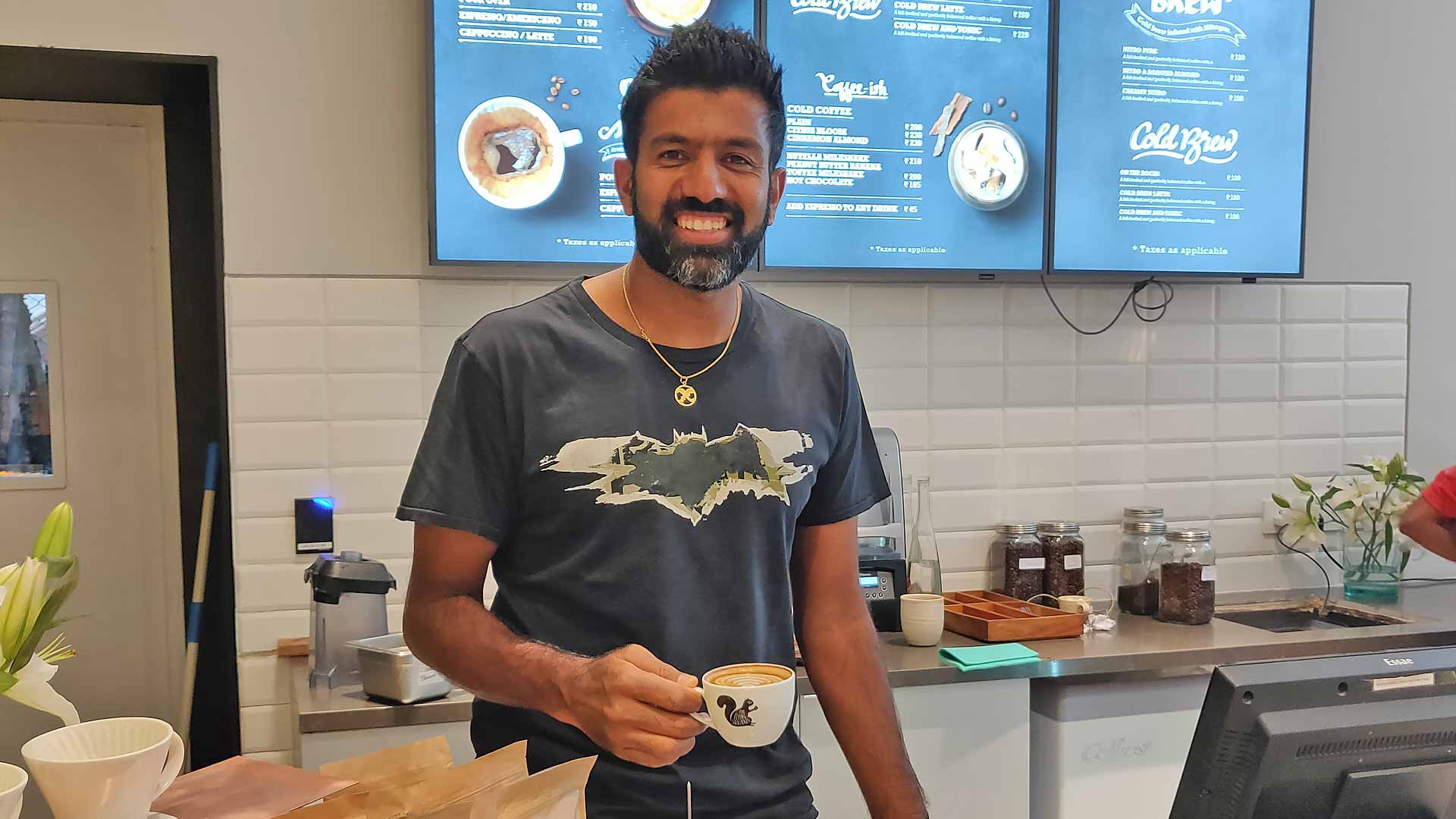
Rohan Bopanna has served plenty of aces in his career. But the Indian doubles star also serves something else on the ATP Tour: coffee expertise.
“When I go to the tournaments, everybody comes to me and says, “Rohan, this is bad coffee!’ Bopanna said, cracking a laugh. “I say, ‘I’m sorry but I can’t do anything with it’!”
Bopanna is more than just a coffee connoisseur. The 39-year-old, currently No. 36 in the ATP Doubles Rankings, has his own line of The Flying Squirrel coffee: Rohan Bopanna’s Master Blend.
“To be honest, the coffee came first, before my tennis. That’s something which has been part of the family. We grow coffee, hence the coffee love came,” Bopanna said. “I’ve been through the whole process of how it works, how the plants grow. Now I’m learning so much more about getting the right blend, roasting the coffee and everything from the past three years. But the growing part I’ve always known how to grow the coffee and all of that goes back to my childhood.”
Bopanna’s family estate, home of their coffee plantation, is in Coorg, a district in the state of Karnataka, in southwest India. When the former No. 3 doubles player in the world was growing up, his father had not started a coffee company — they simply sold beans to those who were interested in buying. But nevertheless, it’s been a part of his life as long as he can remember.
“Me being the only son, I feel there is an opportunity for me to go back whenever I’m done [with tennis] to take care of that plantation,” Bopanna said. “This [venture] was something added on, something different and yes, of course, I would love to still be very much part of it. One of the reasons I started now is that with tennis, obviously [my life] as a player is going to end one day. There’s something more to look for and coffee’s been a pure love from the beginning, so why not continue with it?”
Not only does Bopanna get to share his work with other players on the ATP Tour, but by travelling the world, he gets to try different blends every week. The 18-time tour-level titlist does bring his own beans and filter on the road with him, though.
“Tennis takes us to some beautiful cities, where automatically I get to taste all the greatest coffees,” Bopanna said. “Australia has some great coffee places. Even last week I was in Phoenix, Arizona. I was in the old town of Scottsdale and that had exceptional coffee places at the different cafes.
“Tennis has given me an opportunity to taste different coffees and hopefully take that experience to improve Indian coffee more.”
While it is as catchy as hot shots you see on the court, one may wonder where the name of the company — ‘The Flying Squirrel’ — came from.
“The family friend who I tied up with, at the estate, we have flying squirrels there,” Bopanna said. “When I started my blend, I thought the best way was to tie [my line] up with his [brand] since they already have the roasters and everything… to start everything from scratch would have been tough, hence the name ‘The Flying Squirrel’.”
While Bopanna takes his coffee seriously, he’s certainly not done on the court yet. At this week’s Miami Open presented by Itau, Bopanna is competing alongside #NextGenATP Canadian Denis Shapovalov. The Indian also played with Shapovalov at the BNP Paribas Open in Indian Wells.
“The idea is to obviously try and do well in these big tournaments, big Masters series events. That’s the key,” Bopanna said. “I’m at a stage that when I play these tournaments, I’m looking to obviously do well and try to win the tournament. You’ve been on the [ATP] Tour for such a long time. You know every player out there, you know what to expect and you’re going there to try to win the tournament.”
As Bopanna continues to try to make his mark on the court, he’s trying to win over his colleagues’ taste buds, too.
“Indian coffee I feel has really grown in a big way in India and I feel we can really bring it out to the world to try to experience it. I feel the best way for me is to try to use my tennis platform to give a lot of my homegrown coffee to all the tennis players who love coffee,” Bopanna said. “I’ve gotten great feedback from all these players who have tried it and enjoyed it so far. It’s something very, very different, and I enjoy doing it.”
source: http://www.atptour,com / ATP Tour / Home> News / by Andrew Eichenholz / March 22nd, 2019
Whether you’re looking for a hot cup of tea, some authentic Indian food, or a hard cocktail, you’ll find it at Coorg Indian Café in Mt. Pleasant.
Owners Preethi and Darshan Ayandra are both full time employees of Boeing, but their coffee concept has been percolating for a long time.
They are from the coffee-growing region of Coorg in India. Indian Coffee is primarily distributed to Europe and Russia, but hasn’t been served up in the United States before now, the owners say.
Eventually they’d like to sell the coffee by the bag!
Coffee isn’t the only thing brewing at this café. Food is also a shining star. You won’t find the standard Indian fare. Curry Chicken and Coorg Ribs are traditional recipes from their region.
All entrees are served with a variety of chutneys with different levels of heat. Feeling bold? Try the mint!
Coorg is closed on Monday and Tuesday. The owners would like to expand their staff, so if you’re interested in working for them, stop in!
source: http://www.abcnews4.com / ABC4 NEWS / Home> News / by Emiley Gracey / March 01st, 2019
Brahmagiri Development Society joins hands with Coffee Board
The Brahmagiri Development Society (BDS), a people’s initiative in Wayanad, has joined hands with the Coffee Board to support small-scale coffee growers in the district, a major Robusta coffee growing region in the country.
The BDS recently signed a memorandum of understanding with the Coffee Board for preparing a comprehensive business plan to promote coffee-based livelihoods in Wayanad.
“According to the Coffee Board, domestic coffee consumption has shown an annual growth of 8%. But the farming community is yet to benefit from it as the profit is pocketed by middlemen and international corporate giants,” P. Krishnaprasad, chairman, BDS, told The Hindu.
“Hence, we are planning to double the income of the coffee farmers in a time-bound manner by avoiding middlemen,” Mr. Krishnaprasad said.
Value addition
They are planning to execute a project in which the BDS would initiate a set of activities, including collective marketing and value addition, along the entire coffee value chain to increase the income of small-scale coffee growers.
Market study
The board, as the consultant, would conduct a comprehensive market study in south India on the feasibility and viability of the initiative and also specify the marketing strategy.
It would hand over the study to the BDS in a month.
The Kerala Chicken Project of the BDS was a huge success and it inspired us to enter into the new venture, he said.
A team of experts from the Coffee Board will interact with the coffee growers in Wayanad at Kattikulam on February 21 and 22.
State initiative
Meanwhile, the State government has initiated a three-pronged strategy, including selling coffee of Wayanad under the brand name ‘Malabar’ to support and double the income of coffee farmers in the district.
The State government allocated a budgetary provision of ₹150 crore to set up a KINFRA mega food park with KIIFB funding in the district.
source: http://www.thehindu.com / The Hindu / Home> News> State> Kerala / by E.M. Manoj / Kalpeta – February 12th, 2019
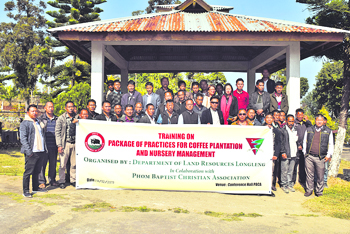
Participants with department officials at the one day training program organized by the Land Resources department at PBCA Centre in Longleng on February 15. (NP)
In collaboration with the Phom Baptist Christian Association (PBCA) Longleng, the department of Land Resources Longleng conducted a one day training on ‘Package of practices for coffee plantation and Management’ on February 15 at PBCA Conference Hall with John Tsulise Sangtam, Deputy Commissioner Longleng as the guest of honour.
Appreciating the PBCA for taking up the joint venture which is the first of its kind in the state, the DC said that Nagaland was coming up as a favorable land for cultivating coffee in the country. He explained that the state government signed a Memorandum of Understanding (MoU) with the Coffee Board of India recently to boost the State’s economy through supplying coffee.
Tsulise also said that Churches in Nagaland have an important role to play. According to the DC, preaching from the pulpit and collecting from the congregation alone will not better the Church economy. He urged Churches to encourage people to venture into income generating activities.
He also urged the people to not only look for subsidies alone but take up coffee farming so that they may build for themselves a sustainable source of income.
District Project Officer (DPO) Longleng, Kughalu Chishi, in his welcome note advocated for use of improved technologies to increase yield.
He said that coffee production in Nagaland was still in its infancy even if it has been blessed with an ideal climate to yield the best quality coffee in the country. He therefore urged all stakeholders to nurture and grow the industry.
In the technical session, resource person Rongsenkoba Ao, inspector of the Land Resources department Longleng, spoke on the principles of Coffee plantation and its management.
According to Rongsenkoba, there are two different species of Coffee — Arabica and Robusta. He said Arabica grows well at altitudes, and requires gentle to moderate slopes. It is less tolerant to pest and diseases. Robusta grows well in lower altitudes, in plain to gentle slopes and is more tolerant to pest and diseases.
He also explained that coffee is a permanent cultivation and can be grown under the shade of a tree or any other high rise plantation. He said in order to grow healthy coffee plants and for better yield, it is very important to pay attention to soil health.
Speaking about harvest, Rongsenkoba said that to maintain quality, aroma, brew thickness, taste, and acidity, the right kind of coffee beans have to be harvested in the right time adhering to proper suggested guidelines.
During the interactive session, many queries were raised by the participants which were clarified by the resource person.
During the training, more than 50 people from 16 Churches under PBCA and well wishers were in attendance in the program which included a field demonstration and distribution of coffee seeds.
The program was chaired by N. Tialemba Phom, executive secretary, Phom Baptist Christian Association and invocation prayer was pronounced by Nganlang Phom, PBCA Longleng.
source: http://www.nagalandpost.com / Nagaland Post / Home> State / February 15th, 2019
Starbucks is taking beverage innovation to new heights with the simultaneous launch of 134 new, crafted beverages. Delivering on the iconic ‘Third Place’ experience, while strengthening commitment to innovation and coffee passion, the global coffee chain has introduced a new initiative called Starbucks Barista Pride where baristas from each Starbucks store will feature a beverage unique to their store, conceptualized and created by themselves.
Till the end of February, all Starbucks stores across India will serve a specially curated beverage, enabling customers to ‘coffee hop’ and try 134 unique beverages across the 134 Starbucks stores in India.
Based on the idea of customization and personalization, while celebrating the heart and soul of the signature Starbucks Experience, Starbucks Barista Pride is here to showcase the talent and innovation the Starbucks baristas have to offer.
The wide range of unique beverages includes Turkish Espresso Praline available at the Chapel Road store in Mumbai, Chai White Chocolate Mocha available at the Vega Mall store in Bangalore and Winter Chocolate Cream available at the DLF Hub store in Delhi.
“Starbucks is committed to delivering an unparalleled, unique experience for every customer. We are delighted to introduce ‘Starbucks Barista Pride’- a new coffee forward initiative which highlights the exemplary coffee skills of our Starbucks baristas and brings to our customers a wide range of artisanal beverages. At Starbucks, we believe in celebrating each customer’s individual coffee preference and profile. For us each cup of coffee is unique and especially suited to the coffee palette of our customer. With a deep understanding of coffee, our Starbucks baristas personalize each cup to perfection,” said Ms. VeetikaDeoras, head – marketing, category, digital and loyalty at Tata Starbucks Pvt. Ltd. “We are humbled to lead specialty coffee in India and initiatives like Starbucks Barista Pride are a tribute to our customers and reflect the Starbucks 47-year legacy of sourcing, roasting and serving world’s top Arabica coffee.”
____
(Eds: Disclaimer: The following press release comes to you under an arrangement with Business Wire India. PTI takes no editorial responsibility for the same.)
134 Starbucks stores serve 134 unique beverages – offering customers 134 ways to celebrate handcrafted coffee
Mumbai, Maharashtra, India – Business Wire India
—-
source: http://www.theweek.in / The Week / Home> Live Updates> Business / by PTI / Mumbai – Business Wire India / January 22nd, 2019
Long famous for their teas, the hills of North East and West Bengal are embracing coffee.
Reuters
The North East of India, with its rolling hills and verdant plantations, has long been synonymous with tea. Coffee – that dark, moody brew, lightened with milk, and frothed to perfection by rigorous pouring and mixing – largely remained a South Indian phenomenon, with most of the plantations located in Karnataka, Tamil Nadu and Kerala. But as the Indian economy opened up, global café chains such as Costa Coffee and Starbucks set up shop and took coffee to various parts of the country. They were followed by entrepreneurs who rode the artisanal wave and introduced Indians to pourovers and Chemex. And now, in the North East too, there is a silent coffee storm brewing, thanks to a handful of cafes, roasters, government-backed guilds and organic farmers, who are betting big on locally-grown coffee.
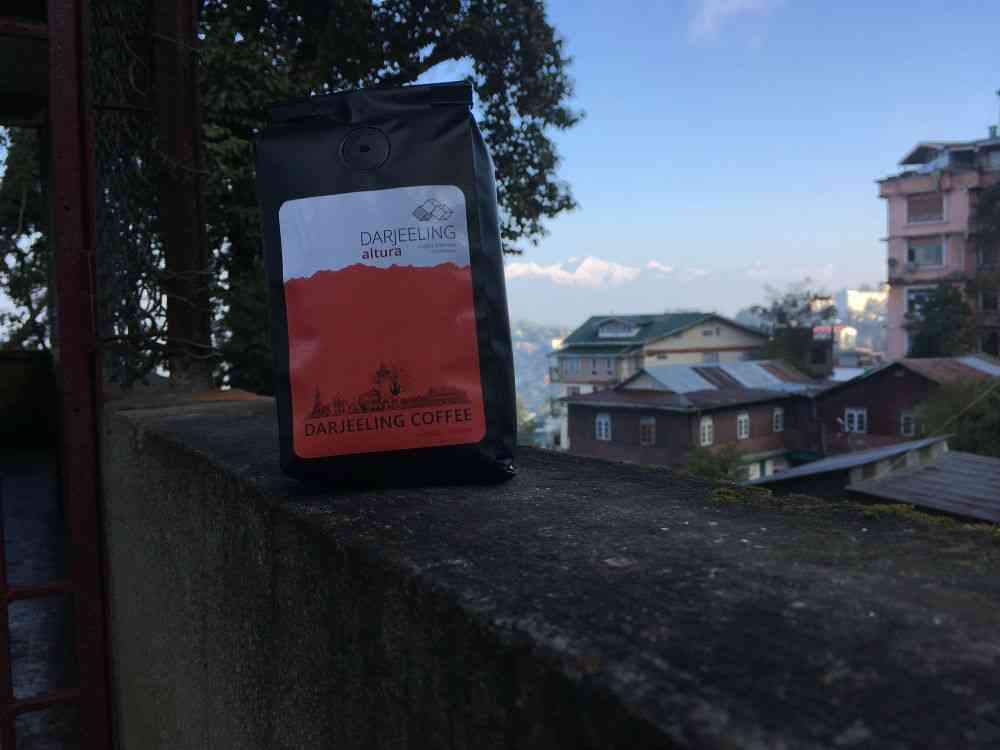
Beans grown by roasters such as Meghalaya’s Smoky Falls Tribe Coffee, Nagaland’s Été Coffee and Darjeeling Altura (an offshoot of the famous Beatles-inspired hotel Revolver in Darjeeling) are making their way to cafes and restaurants in the region and even being exported to countries like Singapore. Several artisanal coffee shops have mushroomed in towns and cities such as Kohima, Dimapur, Shillong, Gangtok, Darjeeling, Siliguri, Kalimpong, Guwahati, Imphal, Naharlagun, Tawang and Aizawl – all serving up delicious lattes and long blacks, complete with coffee art.
“Our hills are synonymous with tea, [but] we [Indians] know very little about it,” said Prayash Dewan, partner at Darjeeling Altura. “[We drink our] tea adulterated with milk, and the leaves used are mostly CTC [processed using the crush, tear, curl method]. We cannot afford to drink the real Darjeeling tea, nor do we know how to savour it. Coffee is something we can do better with and make it our own, from growing to processing to consumption.”
Photo credit: Darjeeling Altura
Local factors
In the late 1980s, the Coffee Board of India, the governmental organisation tasked with promotion of coffee in the country, began to develop coffee plantations in the North East, partnering with nodal agencies on the ground. But this was soon discontinued. The agencies became defunct and the board began to implement its coffee development scheme directly by offering subsidies and training to farmers. The main goal was to provide livelihood to tribal communities and detract them from pursuing jhum or swidden cultivation.
According to the latest statistics from the Coffee Board in May 2018, out of an 8,013-hectare planted area in the North East, about 3,000 hectares is yielding area, and the rest is in the pre-yielding stage – coffee cherries take three to four years to grow. The Board’s November 2017 report had placed the total planted area at 7,501 hectares, which indicates that 512 hectares were planted with fresh saplings in the region within a few months – a marker of how rapidly local farmers are embracing coffee cultivation. Only 200 metric tonnes are being produced annually – yield levels are still low because the climate and geography of the Himalayas are not as conducive to large-scale coffee cultivation as in the Western Ghats. Also, farmers in the Himalayas still continue to treat coffee as ancillary income as compared to growing pepper, says Y Raghuramulu, director of research, Coffee Board of India.
Photo credit: Pxhere [Creative Commons CC0]
So what has contributed to the growing popularity of coffee growing in the region?
“Regional entrepreneurs have set up roasteries and cafes that promote North East Indian coffee,” said Raghuramulu. “Since the region produces very small quantities for big retail players to make profits, local businesses are key. Earlier, the coffee board would buy the beans from farmers and auction them, bearing the cost of marketing, but now we’re all [for] encouraging local entrepreneurship.”
Another advantage is that coffee from the North East is more or less organic, which appeals to new-age consumers and artisanal roasters alike.
Photo credit: Été Coffee.
Stories of autonomy
In a region that depends heavily on the state for employment, most entrepreneurial stories are about becoming independent. “The philosophy of our company is based on one simple truth: every single person should stand on their own,” said Lichan Humtsoe, founder of Été Coffee. “In our state [Nagaland], nearly 95% of the population depends on the government directly or indirectly, which means if you are not part of the system, you are nowhere. And the number of graduates we are churning out every year is staggering.”
Eté consists of a 19-member team that runs a mobile coffee bar, a roastery, and a brick-and-mortar coffee bar. It has so far sold around 20,000 packs of coffee, provided consultancy services and powered up 13 cafes in Nagaland, Manipur, Delhi and Singapore. Quality control is strict – only 100% organic Arabica is used, sourced from six districts in Nagaland. When they started, an online shopping site was launched for pan-India retail. But as local demand superseded the produce, they were compelled to put it on hold.
Eté had humble beginnings. “I am a science graduate with a Master’s degree in social work, and I worked as a professional wedding photographer as well as with the government,” said the 32-year-old Humtsoe. “It was a self-taught venture when we started in 2016, driven by a passion and love for coffee, and the need to offer alternative employment opportunity. And with more growers coming up, and the government vigorously implementing coffee plantation projects in Nagaland, it is likely to influence the economy of the state.”
Photo credit: Été Coffee.
The Nagaland government has pledged to set up 50,000 hectares of coffee plantations by 2030. Local farmers are being encouraged to give up the traditional practice of Jhum farming, and embrace shade coffee cultivation instead. The two-year-old Nagaland Coffee, a subsidiary of a South African company with a memorandum of understanding for 30 years with the state, deals directly with coffee growers in rural Nagaland. It exports single origin organic coffee to the Persian Gulf and South Africa, and supplies to its coffee shop in Dimapur.
Most of these businesses are possessed by a conscientious zeal. Été Coffee’s tagline is Justice a Cup, while both Darjeeling Altura and the café and bookstore Nerdvana, also in Darjeeling, are champions of sustainable economy.
“Our philosophy is equity – we’d want to earn our share from our coffee while providing fair and equitable shares for the farmers from whom we purchase the cherries, and the few retailers and cafes that have been patronising Darjeeling Altura,” said Dewan. Été earmarks 10% of its earnings for its Employability of Youth Fund that sponsors local youths who are willing to undergo skills training to become employable.
Photo credit: Nerdvana.
Low awareness
One of the more interesting aspects of this trend is that none of the stakeholders held international certifications when they started, and most are driven by a passion for coffee. Darjeeling Altura, for example, started off with a few saplings that yielded good beans. These were processed and roasted in 2014 with a good deal of help from YouTube and a lot of reading.
Ditto for 30-year-old Yugal Sharma, who opened Nerdvana in 2015. “When I started, I didn’t even know how to make a cup of good tea,” said Sharma. “I got a kilo of raw beans from Bijanbari [a small town in Darjeeling], did some research on how it can be roasted in a frying pan, and posted pictures on Instagram. A month later, an entrepreneur came calling, who had just started roasting Darjeeling coffee. And I ended up dedicating a menu to that coffee. Coffee is becoming a niche market, and [Himalayan coffee] will make it special, exclusive and alive.”
The buzz around North Eastern coffee in the country is growing louder because of its unique flavour profile. “The roasting of this coffee is challenging in a good way,” said roast master Mithilesh Vazalwar, who is one of India’s few coffee-quality graders and its first AeroPress champion. “It’s well-rounded, has beautiful acidity and works very well for a smooth flat white or delicate pourover/iced AeroPress. Even cultivation and processing are incredibly methodical in the region. The North East has the potential to become a premier coffee-growing region – [it] just needs more recognition.”
But as with all small businesses, perseverance is key. “Very few people are aware of Darjeeling coffee, though the response has been positive,” said Dewan. “On the other hand, yield is so little that the economies of scale are yet to come into play. Raw costs are very high and most real coffee is sourced from South India at much cheaper rates. So, despite the encouragement, establishments choose to buy the other coffee.”
Photo credit: Été Coffee.
source: http://www.scroll.in / Scroll.in / Home> Magazine> Food / by Tania Bhattacharya / January 29th, 2019
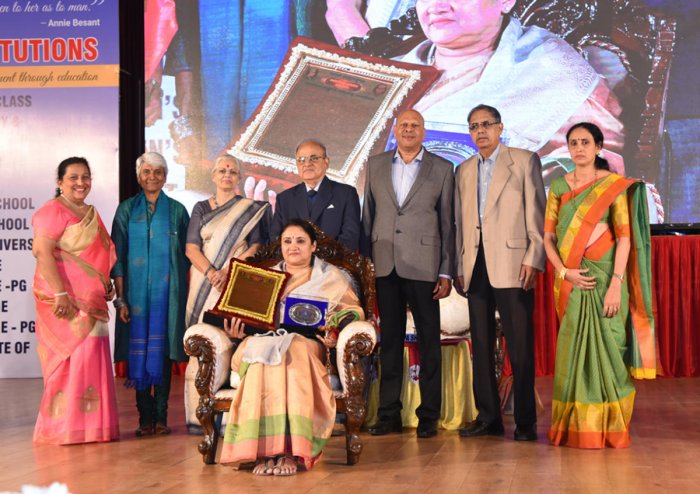
Athlete Vandana Rao was felicitated at the valedictory function of Besant centenary celebrations organised at Dr T M A Pai International Convention Centre in Mangaluru on Saturday.
Bengaluru-based Coffeelab Limited President Sunalini N Menon stressed on Saturday that excellence is taking pride in work and being the best at the work.
She was speaking at the valedictory function of the Besant centenary celebrations organised by Women’s National Education Society (WNES) at Dr T M A Pai International Convention Centre here.
She said, “Nobody remembers how fast the job was done, but how well the job was done. Whether be it washing utensils in the kitchen or sweeping the floor, being the best in your work is a self-portrait of what you are and the best insurance in the future for a job,” Sunalini said.
She said creativity and eye for detail are a must for the perfect execution of goals.
Sunalini, reflecting on her four decades of experience as a coffee taster, described the coffee tasting as a fascinating journey. “It is not a mere cup of coffee. There is so much of science and knowledge that you will learn humility,” the internationally recognised coffee-taster said.
She also invited the students present in the hall to learn more about the profession.
She said Indian Coffee Board offers ‘Kaapi Shastra’ on how to brew a perfect cup of coffee and there is a PG diploma course on coffee quality and another course on coffee entrepreneurship from Indian Institution of Plantation Management (IIPM).
She said her Coffeelab analyses samples from across the world.
“We are more as a facilitator, depending on what the market wants and what the grower can provide,” she said.
Presiding over the programme, former vice-chancellor of SNDT Women’s University Prof Rupa Shah urged women not to be fearful about the outcome. “I will compete and emerge successful should be the motto,” she stressed.
The Besant group of institutions felicitated alumni achievers including writer Kasturi, gynaecologist and well-known athlete Vandana Rao.
Kasturi and Devayani, who had emerged as toppers and declared as Vasantha Ranis while in school in 1959, were felicitated on the occasion.
Devayani thanked the management for remembering them after 50 years.
source: http://www.deccanherald.com / Deccan Herald / Home> State> Mangaluru / by Harsha, Mangaluru / January 19th, 2019
Asia’s first woman coffee taster, Sunalini N. Menon, is now opening a museum for coffee
Susheela Nair
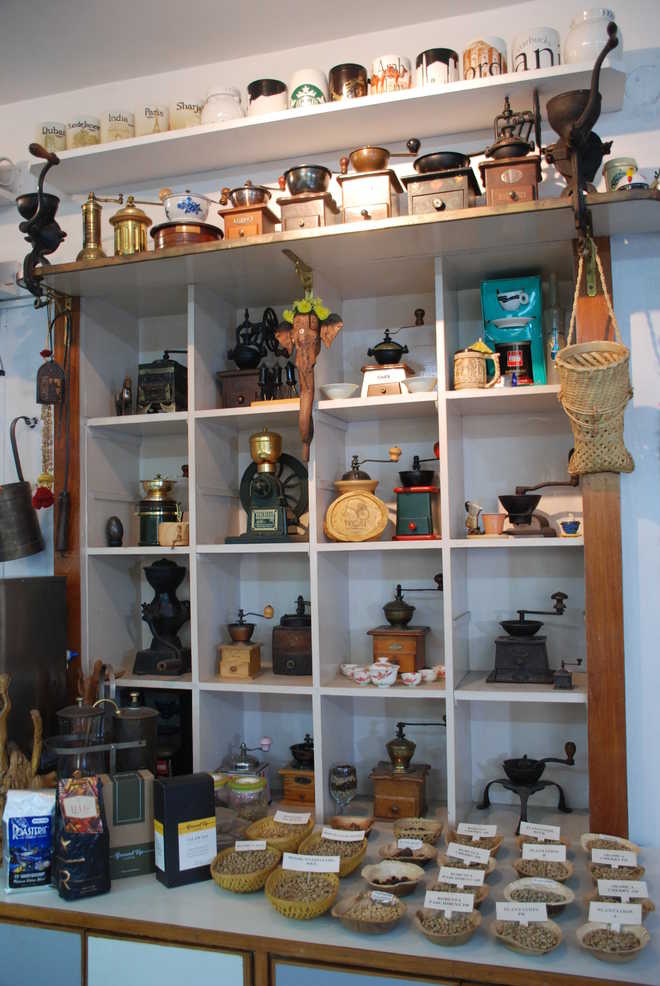
The aroma of coffee wafts through the air as one steps into the Coffee Lab in Sadhashiva Nagar, a posh locality in the heart of Bangalore. Every nook and corner of the lab is adorned with mugs, coasters, antique jugs, filters and other coffee paraphernalia collected from all over the world. The Coffee Lab bears the semblance of a mini museum with its walls lined with a variety of packaged coffee and curios from around the world — exquisite grinders, scented candles, filters, mugs, and a whole shelf of good old-fashioned tumblers, a stark contrast to a regular sparkling white laboratory filled with shiny apparatus used for coffee accreditation and testing.
It also houses memorabilia, including tribal products from coffee growing areas, areca nut pickers, ancient milk measurement units and coffee pots. Each equipment throws light on the culture of the country it comes from. For instance, Italian pots have ornate carvings; the ones in Iran are known for their silver and filigree work; Pakistan has a recurring crescent moon pattern while Egypt sports designed Cleopatra. The star attraction of the Coffee Lab is the painting of Mona Lisa in coffee powder.
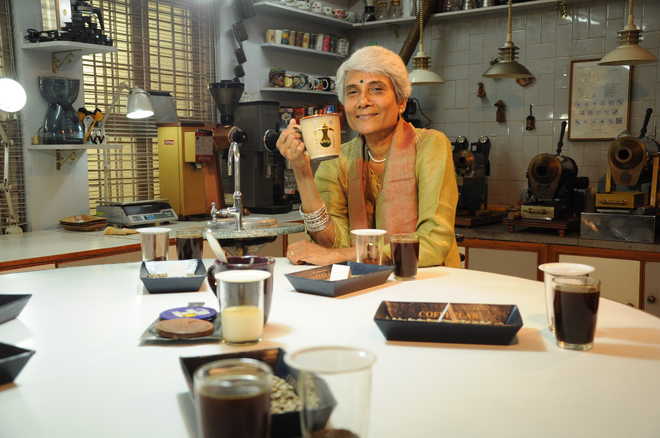
In the middle of the lab, inhaling deeply from one of the deftly prepared samples of green and roasted beans, in front of her, is the first woman coffee taster in Asia and ‘quality-control expert’ Sunalini N. Menon. After acquiring a Master of Science in food technology, Sunalini’s first choice was to become a dietician, but destiny had something more fascinating in store for her. She had to choose between further studies at the New York Institute of Dietetics or a job with the Coffee Board. But she chose the latter which was a turning point in her life.
From an assistant taster at the Coffee Board of India to the head of the quality control department (at the age of 28), and director (quality control) until 1995, Sunalini has traversed a long way fighting a lone battle against all odds at every stage of her career. Steering her way through the male-dominated world of coffee tasters and growers, recognition and acceptance as an accredited international cupper came her way belatedly, almost two decades later. She is a walking encyclopaedia on coffee and knows the coffee bean inside out. This coffee veteran takes 100 sips of coffee — all in a day’s work. Known as Asia’s first woman of coffee, she moved on to set up her own lab, the Coffee Lab in Bangalore, in 1997 for evaluating the technical nuances of Indian coffee.
The advent of liberalisation in the Indian coffee market inspired Sunalini to set up her own lab in 1996. She established Coffee Lab Private Limited, the first private sector lab of its kind equipped with modern equipment and accredited by the Coffee Board of India, in Bangalore.
Explaining the main objective of her Coffee Lab, Sunalini says, “From the seed to the cup, we offer the entire gamut of services. We delve into the technical aspects of coffee-making, quality testing, advising growers on how and when to sell the beans, and preparing special coffee brands. Coffee Lab uses the time-tested techniques of visual and organoleptic evaluation for the quality analysis of Indian coffee. We conduct appreciation courses for homemakers and also classes for farmers.”
True to her social commitment of empowering women economically, Sunalini has employed women to handle the sensitive and critical steps of green coffee evaluation. Though there are innumerable problems plaguing the coffee industry, the coffee veteran believes that the burgeoning coffee culture in the country has the potential to impact the market.
Revealing her plans to start a Coffee Museum, Menon says, “A trust will be formed as it is a non-profit initiative. We will start the story of Baba Budan (who brought coffee to South India) and traverse through the cultural aspects of coffee, diversified cultivation pattern and types of seed material. We are planning a layout that is representative of a typical Indian coffee plantation. The exhibits will include antique coffee roasters, grinders, brewing equipment, mugs, cups and coffee powders from different parts of the world.”
source: http://www.tribuneindia.com / The Tribune / Home> Trends / January 26th, 2019
WELCOME. If you like what you see "SUBSCRIBE via EMAIL" to receive FREE regular UPDATES.
Read More »


![Photo credit: Pxhere [Creative Commons CC0]](http://www.kodagufirst.in/wp-content/uploads/2019/01/CoffeeKF30jan2019.jpeg)