Category Archives: Coffee News

How single-origin coffees in India disappeared

With tax, growers have lost the incentive to sell cured coffee

Slip between the cup and lip: Production of fine coffee needs a lot of effort, but rewards are uncertain.   | Photo Credit: pixelliebe
Slip between the cup and lip: Production of fine coffee needs a lot of effort, but rewards are uncertain. | Photo Credit: pixelliebe

Under the Constitution, agricultural income can be taxed by the State and not by the Centre. However, in the case of tea, the Centre contended that there was a substantial manufacturing process involved in the production of tea; hence, income from tea could not be classified as fully agricultural income and that a part of the income had to be taxed as central income.

This was done under Sec 8 of the I-T Act, which stated that due to the manufacturing activity involved, 40% of the income would be taxed by the Centre.

In 2002, the Centre then followed the same logic and introduced Sec 7 & 7B for rubber and coffee respectively. It decided to partially tax the agricultural income from both commodities, claiming there was manufacturing activity involved.

Where coffee is cured or hulled before being sold, manufacturing activity was involved and hence 25% of the income was to be taxed by the Centre.

Curing is a process by which raw coffee is converted to green beans ready for roasting. Substantial machinery and effort is involved but the actual cost of curing works out to about ₹2 per kg for a product worth about ₹200 per kg, or 1%. The Centre thus claimed the right to tax 25% of the agricultural income from coffee.

How did this lead to the end of single-origin coffees from India?

Rise of raw coffee

Once this legislation was enacted planters, started selling uncured coffee instead of cured coffee. The coffees were sold in raw coffee form which is a ‘bulk’ coffee. Soon, a vibrant, active, regular and credible market for raw coffee developed. Today, the farm gate prices are quoted mostly for raw coffee. When raw coffee is traded, the criteria looked at is moisture content, appearance and outturns, not so much the cup taste. Overnight, the charm of producing a fine cup disappeared.

Good bulks at the least cost of production became the norm. The coffee was then bought by curers, exporters and domestic roasters, who cured, graded and bulked the coffee according to customer requirements. In the process, the origin of the coffee got lost.

The production of fine coffees takes a lot of effort; while the extra input and efforts are certain, the rewards are uncertain. There is a considerable marketing effort involved and the price realisations are uncertain.

In such a scenario, most growers will be reluctant to pursue fine coffees when they know that they fall within the jurisdiction of an income tax officer.

Though today there is no agricultural income tax, central income tax can also be avoided. As a result, one finds that most of the fine coffee awards are won by corporates, who have the administrative capacity to deal with the extra headaches.

Just before the enactment of the rule 7B, pooling of coffee was abolished and free open market sales began. The first coffee auctions were opened for growers. This was an opportunity to sell their coffees after curing in the name of the estate and an opportunity for buyers to buy single-origin coffees.

It was the ideal platform for promoting single-origin coffees. Then came Rule 7B and the sellers disappeared. The auctions never recovered from this setback.

Low-hanging fruit

The Finance Minister often talks of reducing complexity in income tax rules; deleting this rule is one of the easiest steps he can take.

Using an appropriate cliché, it is “one of the lowest hanging fruits” he is ever likely to find. This is a rule that brings little revenue, may be even no revenue, but destroys a beautiful business. We hope he picks this ripe coffee cherry at the earliest.

And, if he is a coffee drinker himself, he will find he has many fine single-origin coffees from India to choose from.

(The writer is a coffee planter with an interest in financial markets and agricultural development)

source: http://www.thehindu.com / The Hindu / Home> Business> Agri-Business / Guest Columns / by M.Meyyappan Jr / January 17th, 2018

In naxal-hit Darbha, coffee aroma to bring winds of change for farmers

Raipur :

The Chhattisgarh government has undertaken an innovative coffee plantation project in Darbha region of insurgency-hit Bastar district in a bid to boost the income of farmers.

The cash crop is raised on 20 acres of the government land under the Darbha development block, located around 35 kms away from Jagdalpur district headquarter on an experimental basis by the Jagdalpur horticulture college in collaboration with the Bastar district administration.

Jagdalpur district headquarter is located around 350 kms away from here.

“During research, the geo-climatic conditions of Darbha, located at a height of around 654 meters above the sea level and where around 100 mm rainfall occurs in summer, found suitable for growing coffee,” Dr Krishna Pal Singh, Horticulture Scientist at the College of Horticulture and Research Station, Jagdalpur, told PTI.

He said the regions like Bijapur and Kirandul (Dnatewada) in south Chhattisgarh, and Jashpur (north Chhattisgarh) also have possibilities for coffee farming.

The ultimate plan was to bring about a change in the cropping pattern of farmers who traditionally depended upon cultivation of rice, Singh said, adding that farmers could not fetch a good return from paddy farming but a coffee plantation would yield more revenue.

In the first phase of the project, 20 acres of land was finalised on terrains of Darbha-Koleng road, he asid, adding that the fund was granted by the district administration under District Mineral Foundation (DMF).

The plantation was started in September last year on two acres of the land while the remaining 18 acres will be covered by May this year, he said.

Initially ‘selection 8’ variety of coffee Arabica species was planted in two acres.

The Coffee Board of India, Bengaluru, has agreed to provide seedlings of two improved varieties of coffee Arabica- Chandrgiri dwarf and selection 9, and one Coffee Robusta variety- CxR for further plantation, he said.

The Coffee Board took this decision after its team recently visited the plantation orchard, Singh said.

As many as 12 local farmers, including six women, have been involved in the cultivation after they were imparted necessary training.

“Besides, some of the farmers will be sent to the Coffee Research Station in Koraput (Odisha) for further training so that they can take up coffee farming in their field and disseminate it to other farmers,” Dr Singh said.

For the first three years of the project, the district administration has sanctioned a fund of Rs 60 lakh, he said.

The horticulture scientist said the coffee cultivation had a span of 45 years once sown.

“Coffee beans (cherries) for commercial production will be ready from second year onwards. A small processing unit will be set up in future for processing beans into coffee powder,” he added.

The project has started attracting response of local farmers who have approached the horticulture college to take up the same plantation in their field.

A group of farmers from Mawlipadar village of Darbha block has contacted us seeking assistance and guidance for growing coffee in around 40 acres of land in their village, Singh said.

Meanwhile, the college has also planned to plant bush pepper in the coffee orchard as an inter crop.

Bush pepper will be sown in gaps between two rows of coffee plants, Singh said, adding that the mixed cultivation of both crops would yield a handsome income for the farmers.

Farmers involved in the cultivation believe that the project would give a new identity to Darbha–where a number of state Congress leaders were killed in a deadly Maoist attack on May 25, 2013 in its Jhiram valley area.

The district administration has plans to expand coffee plantation in other places of the region if it would turn successful.

“The coffee cultivation has been started on the experimental basis and once we will get good results, it would be later replicated in other suitable parts,” Bastar Collector Dhananjay Dewangan said.

The collector further added that based on the results of the project, an action plan will be drafted that would benefit the farming community.

source: http://www.outlookindia.com / Outlook / Home> The News Scroll / by Tikeshwar Patel / Raipur – January 14th, 2018

Hanging out with Huang at Bengaluru

ChefAnthonyKF09jan2018

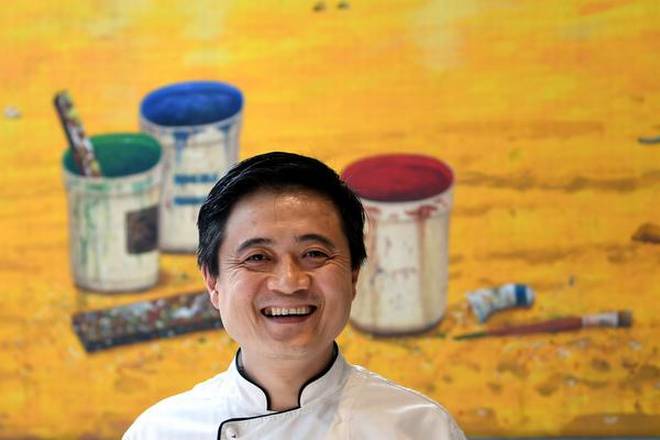
Chef Anthony Huang admits that Bengaluru played a big role in his culinary story

There are not a lot of things this small-made man with a big heart can’t whip up in his kitchen. Bengaluru-bred Anthony En Yuan Huang, is an alumnus of St. Joseph’s High School and Christ College and currently Executive Chef at JW Marriott Bengaluru.

After the recent success of creating and curating a coffee-infused menu, drawing inspiration from the Kodava cuisine, and hosting it in an exclusive Coorg food festival, the chef talks about his love for coffee, his culinary journey and where his cooking is taking him.

The idea was to keep working with the hotel’s concept of going local, explains Huang. “It only seemed fitting that we visit Coorg, which has some of the best coffee plantations in Karnataka, and try to capitalise and use the fabulous produce the State has. We did some research and found coffee actually goes well with food and doesn’t have to necessarily be looked at as a beverage. That’s where we started thinking about exploring the opportunity.”

After experimentation, Huang found that coffee, with its robust flavour, lends itself extremely well to grills, roasts and meats. “We chose to use coffee with our barbecues since its finest flavour comes when you’re roasting it. However, we did not tamper with the cuisine itself – pandi curry remains a pandi curry. We used coffee in various forms, including expresso, roast and coffee extract after decoction with higher antioxidants.”

So where did his interest in cooking begin? Huang fails to recollect the exact moment because he is a third generation chef, albeit the only one with formal training in the family. “It was always in the blood. As a child I’ve always watched mom and grandmom cooking. They come from a line of wedding caterers in China. I have tons of memories with food and I guess it came very naturally to me.”

He adds that at one point in his life, “Like all kids, I also wanted to be a pilot, a vet or a farmer. Eventually, fate won. I was a typical Bengalurean guy hanging around everywhere except college. But I did want to be a chef. I missed my deadline to apply for hotel management. I went to Christ College anyway to put in a word with the principal. I did not expect in my wildest dreams that he would call me in a few days and allow me to join.”

He pauses to pop a yummy hot rasgulla in his mouth and continues: “The Bengalurean in me remained and I continued to bunk college. But I was the first graduate to get though Oberoi School in their campus interview. I got through OCLD which is like the IIT of hotels. I scraped through attendance and the rest is history.”

Huang went on to work in Oberoi Hotels in Delhi, Mumbai and Bengaluru before moving on to propping up free-standing restaurants that were not doing so well. “I wanted something challenging. I went on to Hyatt and then came to Marriott. This is my fourth year here and I’m loving it.”

He admits that Bengaluru played a big role in his culinary story. “Given the fact that I studied in St Josephs and Christ, I grew up as a hard core Bengalurean. He’s the most easy-going guy in the country. He accepts anything in his stride. A third person can come join our table and he will be welcomed. We, as a city, accept people the way they are. That has been drilled into my DNA since school and it has thought me in my professional line to take every input and add it to my development.”

A lot of that reflects in Huang’s food.

“Nothing is wrong – as long as I’m comfortable with it. As long as I’m happy with every plate that has my name on it, I’m cool with it. I don’t have to go by the rule book. Had I not looked at food that way, this coffee trail would have never happened. However, I’m also quite a purist. I like to keep things authentic.”

Ask him what his signature dish is and he says, “That depends on my mood and the ingredients I have around me. I’d like to take a walk and see what’s available. I believe in freshness. I like to also keep it simple. You will never find my food hiding behind a lot of fluff or garnish. If there’s something on my plate, it means it’s meant to be eaten and adds value to the dish’s taste and enhances the way it looks.”

While a large part of his life was spent as an Asian chef with Vietnamese and Chinese cuisines and he dabbled a bit with French food, “Deep down in my heart I’m an Indian chef. I love South Indian and North Indian food. I love my biryanis. When I’m at home I’m mostly cooking that for the family.”

Describing the psyche of a chef, Huang says, “They are driven by passion and work with their heart. When you choose to work in this artistic field, it is equivalent to falling in love with someone. Cooking has a lot to do with emotions.

“Never ask a chef who’s in a bad mood to cook for you.”

source: http://www.thehindu.com / The Hindu / Home> Life & Style> Food / by Allan Moses Rodricks / January 08th, 2018

India’s ‘first coffee’ brews GI tag

Representational Image / TOI

Kochi :

Baba Budangiri, 250 km from Bengaluru, where coffee was first grown in India, is going for Geographical Indication (GI) of its variety of the Arabica brew.

On January 1, the Coffee Board filed an application for the GI tagging of Baba Budangiri Arabica and four other varieties — Coorg Arabica, Wayanad Robusta, Chikmagalur Arabic and Araku Valley Arabica — with the Geographical Indication Registry at Chennai.

Coffee Board head (coffee quality) K Basavaraj said: “We have applied for the GI marker and we are also profiling the majority variety grown in Baba Budangiri, a variety called Selection-795,” Basavaraj said. Selection-795 (S-795) is considered to be the natural descendant of two of the oldest African cultivars of coffee — Coffea Arabica and Coffea Liberica — and a third variety is called Kent. Currently, S-795 is the most prominent coffee grown at Baba Budangiri.

Edmund Hull in his book ‘Coffee Planting in Southern India and Ceylon’ says that Coffea Arabica originated in Caffa in southern Abyssina and then found its way to Yemen. According to John Shortt’s ‘A Handbook on Coffee Planting in Southern India’, Baba Budan (Baba Booden), a Muslim pilgrim, brought the brew from Mocha, a port city in Yemen, in the 17th century and introduced the variety in the uninhabited hills that came to be known as Baba Budangiri.

Today, Baba Budangiri Arabica is grown acorss 15,000 hectares around the original hills, where it was first planted. Over the last few centuries, coffee plantations grew beyond Baba Budangiri and the adjoining Chickmagalur and spread to Kodagu and Hassan in Karnataka, and Wayanad, Travancore and Nelliampathy regions of Kerala. It is also grown in the hilly regions of Palani, Shevroy, Nilgiris and Anamalais in Tamil Nadu. The non-traditional areas of coffee-growing in India includes certain pockets in Andhra Pradesh, Orissa, Assam, Arunachal Pradesh, Manipur, Meghalaya, Mizoram and Nagaland.

source: http://www.timesofindia.indiatimes.com / The Times of India / News> Business News> India Business News / by Shenoy Karun / TNN / January 06th, 2018

Aspinwall to revamp Monsooned Malabar coffee brand

Kochi :

Aspinwall and Company, the 150-year-old plantations and logistics major, is going for a brand revamp of its Monsooned Malabar coffee, that caters mostly to the export market.

The product, fetching a premium price in the European market, will be known as Aspinwall Mellows in the overseas market.

According to KNR Menon, Chairman, the company is looking at marketing its speciality coffee to other countries, given the rising demand for certified coffees. Monsooned coffee from Aspinwall estates has got certifications from Rainforest Alliance and UTZ for sustainable farming.

Besides speciality coffee, the company has interests in logistics, natural rubber and natural fibres. While coffee accounts for nearly 50 per cent of its income, logistics has 35 per cent share and the remaining from rubber and natural fibres.

Rama Varma, Managing Director, said the company chalked out plans to double its turnover by 2020 from the present ₹250 crore.

source: http://www.thehindubusinessline.com / Business Line / Home> Economy> Agri Business / by The Hindu Bureau / Kochi – December 20th, 2017

Bengaluru start-up to launch Araku Aroma brand coffee in US

The company is also planning for a domestic foray in January at the India International Coffee Festival.

ArakuKF23dec2017

Krish Food and Fun India, a Bengaluru-based start-up, plans to globally launch Araku Aroma Brand of coffees in the United States. “The company is launching Araku Aroma Coffees in Edison, New Jersey in the US. We are helping marketing coffees grown in the tribal belt of Andhra Pradesh. The Araku is tribal valley near Vishakhapatnam,” said Krishna Chaitanya, Managing Director, Krish Food and Fun India.

The company is also planning for a domestic foray in January at the India International Coffee Festival. According to Chaitanya, “As per the agreement, we are to buy coffees harvested by tribal farmers in around 250 acres. The company plans to market around 500 tonnes of coffee annually.”

“For this we have invested Rs 2.5 crore to set up roasting facility and for marketing tribal grown coffees,” he added.

Chaitanya was in Bengaluru recently to make final arrangements to release Araku Aroma brand of coffees. “As part of the agreement with tribal community, we want to spend 10 per cent of our profits from selling Araku Aroma to procure anti-venom drugs and for providing general medical facilities to the tribal community,” revealed Chaitanya.

source: http://www.thehindubusinessline.com / Business Line / Home> Companies / by Anil Urs / Bengaluru – December 23rd, 2017

Coffee Homeground

DondorKF20dec2017

A “rich, strong, bitter, boiling hot, ruthless, depraved” cup of coffee is the “life blood of tired men” and most of us would agree to author Raymond Thornton Chandler on this.

In Meghalaya where tea is the traditional beverage, coffee has always remained a second fiddle to its more popular cousin. But things are changing fast and soon coffee will catch up with tea in popularity.

Though the practice of drinking coffee has seen an upward trend in the state in the last few years thanks to the booming cafe business, the beverage is not new to the hill tribes here.

“Coffee plant grows in the wild in Meghalaya and the fruits are eaten by birds. Some villagers would also drink coffee but they would prepare it indigenously,” says Dondor Giri Nongkhlaw, the owner of Smoky Falls Tribe Coffee, which is marketing the local brew.

Nongkhlaw is the first person to realise the potential of the local plantation and explore the villages for procuring beans. His quest for coffee grown in Meghalaya had its roots in his childhood memories of sipping a hot cuppa prepared by his grandmother by grinding the beans.

“I started intensive research on how to procure and market locally grown coffee after I retired in 2007. I have visited several villages and interacted with farmers and told them about the benefits of growing the cash crop,” says the former professor of Geography at Synod College. His roasting and grinding unit is the first in the entire northeastern region.

Smoky Falls is the result of Nongkhlaw’s untiring work and undaunted spirit. The 66-year-old man visits villages frequently and sensitise farmers on methods of plantation and soil replenishment. “Most of the villagers grow broomstick that affects the soil. This necessitates rejuvenation before going for coffee plantation,” he says.

Coffee, which is a labour intensive but high-return crop, was reportedly introduced in Cachar district in Assam during 1850s. It was also cultivated in Mizoram and Cherrapunjee in 1870s. Hundred tonnes of coffee were marketed in Shillong in the late 19th and early 20th centuries. But after 1930, the cultivation lost steam.

Arabica is the only variety that grew in the wilds of Meghalaya, according to a book written in 1906 by BC Basu, the then director of the Agriculture Department of undivided Assam. It was the Coffee Board of India that introduced Robusta in the state and trained farmers in planting the variety, says Nongkhlaw. There are indigenous varieties of coffee too like Coffea khasiana and Coffea bengalensis, which are common in the hills.

New avenues

The Coffee Board has taken up a large project to encourage new coffee plantation by raising group nursery with financial assistance from the board. It spent 10-15 years on survey and identification of suitable area. It was found that 44,000 hectare, including 5,900 hectare in Meghalaya, is suitable for coffee in the entire North East. Out of this, 3,350 hectare is suitable in Garo Hills and 2,545 hectare in East Khasi Hills.

In 2016-17, 1,90,000 coffee seedlings were raised in Ri Bhoi and Jaintia Hills. At present, Robusta and Arabica plantations cover an area of 1,005 hectares in Meghalaya. The production in the last five years varied between 25-30 metric tonne.

Arabica plant yields berries after the third year and Robusta after four. Nongkhlaw says sometimes the plants may bear fruits early but the quality will not be good.

While Robusta grows in low altitude areas, between 500 and 1,000 meters, Arabica is found in areas 3000 ft or more above the sea level. In East Khasi Hills, coffee plantation is found at Nongjri, Lapalang, Mawryngkang, Nongskhen, Myllat and Mynria. Marngar and Nongrim Jyrmi in Ri Bhoi also have the plantation. Four districts in Garo Hills too produce a substantial amount of coffee. The crop grown in the state is organic.

“Coffee is a cash crop and is also a perennial crop that can protect the environment. It is also giving income to the local population both directly and indirectly. The Soil Department here was helping the coffee farmers by providing technical guidance,” says a senior official of Coffee Board in Guwahati.

Now, the Meghalaya Basin Development Authority is also involved and recently two technical workshops were conducted in Tura and Shillong.

At present, around 1,700 farmers in the state are involved in coffee cultivation. The Coffee Board has a senior liaison officer in Tura and a junior liaison officer in Shillong. “The commercial crops board of the Soil Conservation Department was promoting coffee, especially in Garo Hills. But many farmers had left it due to lack of buyers until Smoky Falls came along. The Coffee Board has also been doing some work here,” said a senior official in the Agriculture Department.

Agents of change

Another agent of change, besides Smoky Falls and the various government units, is Zizira, a local food product’s venture. Zizira has explored the remotest corners of the state to find the best beans.

The young explorers at Zizira say though Meghalaya produces high quality coffee it does not count in the national market. This is because the number of farmers is less and those who grew coffee never sold the produce locally. “In fact, their harvest is purchased by the Coffee Board and sent to the nearest processing centre in Guwahati and then transported to Bengaluru’s auction houses. The identity of Meghalaya coffee is thus lost,” the team points out.

To empower the farmers here and give the indigenous crop its identity, the Zizira team has been exploring the back of beyond for the last two years. Zizira may source coffee directly from such farmers for both in-house consumption and creating its own product.

Talking about their unique experiences with coffee farmers, a member of the team narrates the story of Teibor Mynsong of Ri Bhoi district.

“Mynsong used to grow pineapples but shifted to coffee in 2012 because it requires less labour and care. The leaves fall off the plants and replenish the soil and no pesticide or fertiliser is required. He now has 1,200 coffee plants which produce 2 kg of coffee berries per year,” she says.

Nongkhlaw, who is planning to introduce green coffee soon, says while Robusta is a sturdy variety, Arabica needs care against stem borers and leaf rust.

Villagers at Nongjri in Sohra are also realising the benefits. About 20 farmers in the village near Bangladesh border have taken up coffee plantation. Along the serpentine road that leads to Nongjri Tluh from Pynursla, one would find rows of broom shrubs and bamboos and amid the bushes one can also spot a few coffee plants growing wildly.

Coffee farmers Riing Wallang and Bison Roy Laso of Nongjri Tluh love to take visitors around their coffee plantation. Though the produce is good, “we are expecting less beans this year because of the torrential rain”, says the duo in unison.

“I have planted 1,000 more. It is true that coffee does not require much care but the price that we get is low and this makes things unsustainable. If we get a higher price, we can do better,” says 65-year-old Wallang while running up the slope to his coffee bagan (garden).

The farmers sell coffee fruits at Rs 60-70 per kg, informs Laso.

Besides coffee, they also grow broom, betel nut and papaya, among other things.

Back in Shillong, Nongkhlaw too points out the drawbacks.

Erratic power supply, says the owner of Smoky Falls, hampers roasting. “If power goes off in between roasting, then the entire 5 kg of coffee beans is wasted (the roasting machine can take in 5kg at a time),” he says.

Also, high price of locally grown coffee deters many from buying the product. “The high price is because we do not add chicory to the product unlike the instant coffee you get in the market. Also, a kilogram of coffee fruits would yield only around 350 gm of beans after removing the husk. So you can imagine,” says Nongkhlaw whose Smoky Falls brand is supplied to cities like Mumbai and Chennai but the sale is only online.

The organic status, says Nongkhlaw, might improve the scenario. But the Coffee Board official says it will take some time before proper certification.

Zizira says proper processing units are important. “A government official rightly pointed out to our team that even if a good number of people take up coffee growing, lack of knowledge and the required processing units are pushing these farmers to give up cultivation,” the team points out.

Future brew

The government recently proposed to export coffee to Bangladesh but Nongkhlaw says for this, there should be sustainability. The Coffee Board official says it may take three to four years to increase the production before the state thinks about exporting.

“There has been some talk of exploring the market. Whether the idea is practical will depend on the market and consumer preferences there but a possible hurdle might arise from the HS codes of Bangladesh,” says the official in the Agriculture Department.

But VR Gudde Gowda, joint director extension at Coffee Board Guwahati, is optimistic.

“Due to the coffee culture coming up in India, the North East youths are also attracted towards it. Nongkhlaw has set up a roasting and grinding unit in Shillong. He is buying the coffee directly from growers and thereby attracting more farmers to grow coffee,” says Gowda.

(Photo courtesy: Zizira, Sunday Shillong)

source: http://www.theshillongtimes.com / The Shillong Times / Home> Sunday / by Webeditor / Heather Cecilia Phanwar & Nabamita Mitra

Coffee Board to open coffee cafes

A project in PPP model for opening India Coffee House outlets in the district has been proposed by the Coffee Board, board member Manukumar said.

Addressing reporters here on Thursday, Manukumar said that these coffee houses will be similar to that of the cafes in metropolitan cities. It has been planned to launch the outlets in Kemmannugundi Cross, Seethalaiahnagiri, Devirammana Betta, Horanadu, Shringeri and Taluk office premises. A survey in this regard is in progress. The price of the coffee served in these outlets will be lesser as compared to other cafes, he said.

“While the land will be given by the government, the Coffee Board will construct the cafes and the management will be handed over to private organisations,” he said.

Subsidies for planters

The coffee board has provided Rs 9.10 crore for coffee planters between April 2017 till date towards mechanisation, warehouses, water facilities and transplantation. A subsidy amount of Rs 2.2 crore has been released by banks to 900 coffee planters towards interest, he said.

Research is on to control the menace of white stem borer. Kits have been distributed to farmers to control snails in coffee plantations, he said.

The Coffee Board has recommended maintaining a ratio of 51:49 for coffee – chikori mixing and a letter in this regard has been sent to the Food Safety and Standards Authority of India (FSSAI).

The board has also requested the Central government to provide subsidy to encourage coffee planters.

A memorandum has been submitted to the state government to bring white stem borer and wild snail in the ambit of Karnataka Pest e Control Act, he said.

Board office bearers Pradeep Pai and M L Kallesh were present.

source: http://www.deccanherald.com / Deccan Herald / Home> District> Chikkamagaluru / DH News Service – December 14th, 2017

Coffee boost to farming

Koraput (Odisha) :

The district administration has formulated a 10-year project to popularise coffee plantation in the district.

It aims to provide sustainable income to tribal farmers and make the district a coffee hub.

A farmer of Pogra village plants shade seedlings. / Telegraph picture

The project will undertake coffee plantation over 46,500 hectares of government land in next 10 years. It is being implemented from the current fiscal.

“Even though the climatic condition of Koraput is conducive for coffee plantation, it has, however, remained neglected for various reasons. Hence, an initiative has been taken to popularise coffee plantation among the tribal farmers and to make the district a hub for coffee, other spices crop and allied plantations,” said district collector Anupam Saha.

“After planting coffee seeds, the areas will be distributed among the tribal beneficiaries to be identified through gram sabhas. The plantation area to be distributed among each beneficiary will be decided later,” he said.

The administration has also formed a coffee development trust with the district collector as its head, and accordingly, the trust has decided to take up advance shade planting of silver oak trees on 1,026 hectares in 2017-18.

“Till now, we have taken up shade plantation on around 1,250 acres and more than 25 lakhs of shade plants seedlings have been raised at 15 locations of the district,” said Bhabani Shankar Kalo, deputy director of the trust stationed in Koraput.

He said that nearly after two years of shade plantations, coffee saplings would be planted as the coffee plant required filter sun rays for its growth. “From the fifth year, the beneficiaries could be able to harvest coffee. In between, they can earn by inter-cropping of spices such as black-pepper,” said Kalo. “The life span of a coffee plant is around 60 years and requires minimum maintenance.”

Coffee plantation had first been introduced in Koraput by erstwhile king of Jeypore in 1930. However, after abolition of feudatory estates in 1951, the state government through the soil conservation department had undertaken coffee plantation as a measure to prevent siltation in the Machkund basin of the district in 1958.

Though the coffee estates, developed by the state government, had been maintained till 1990, it was neglected subsequently confining the coffee plantation to a few private parties.

“It’s a welcome move by the administration. We see how farmers are reaping benefits from coffee plantations in the bordering Araku valley of Andhra. Hope, here also we will be benefitted,” said Hare Krushna Majhi, a tribal farmer of Pogra village under Nandapur block.

According to government survey, at least 1.45 lakh hectares under Koraput, Semiliguda, Nandapur, Pottangi, Dasmanthpur, Lamataput and Lakshmipur blocks of the district are ideal for coffee plantation. But at present, only 1,467 hectares is under coffee cultivation.

source: http://www.telegraphindia.com / The Telegraph, Calcutta,India / Home> Odisha / by Telegraph Correspondent / December 14th, 2017

Coffee exports rise 8% in January-November

Coffee exports from India, Asia’s third-largest producer and exporter, rose by 8.08 per cent to 3.61 lakh tonnes in January-November 2017 compared to 3.34 lakh tonnes in the same period of last year, according to the Coffee Board.

Italy, Germany and Russia were the major export destinations for Indian coffee during the period. India ships both robusta and Arabica varieties, besides instant coffee.

Robusta coffee exports rose by 10.80 per cent to 2,11,442 tonnes in January-November 2017 from 1,90,828 tonnes in the year-ago, the board dats showed.

Export of Arabica coffee however declined by 10.81 per cent to 44,084 tonnes from 49,431 tonnes in the said period.

The outbound shipment of instant coffee increased sharply by 86 per cent to 47,734 tonnes in January-November this year from 22,966 tonnes in the same period last year, the data showed.

Of the total exports, India exported 73,705 tonnes to Italy, 38,671 tonnes to Germany and 26,319 tonnes to Russia during the period under review.

Some of the major exporting companies include CCL Products IndiaBSE 0.94 %, Tata CoffeeBSE -0.92 %, Olam Agro and Coffee Day Global Ltd.

Some of the major exporting companies include CCL Products IndiaBSE 0.94 %, Tata CoffeeBSE -0.92 %, Olam Agro and Coffee Day Global Ltd.

source: http://www.economictimes.indiatimes.com / The Economic Times / ET Home> News> Economy> Foreign Trade / PTI / December 04th, 2017