Category Archives: Coffee News

Feature: Coffee injects new vitality into Brazilian tourism city

Sao Lourenco, Brazil,(Xinhua) :

A small Brazilian city, once famous for its mineral water springs, is now welcoming tourists with new attractions — a specialty coffee with unique taste and quality.

Besides enjoying the natural beauty of Sao Sourenco, a city located in Brazil’s southeastern state of Minas Gerais, tourists from around the world are also flocking to a coffee shop at the city center to take a sip of the local coffee, which has a history of over 100 years.

The coffee sold in Junior’s shop was grown at a farm located in the mountainous region of southern Minas Gerais, the soil and climatic conditions of which are favorable to coffee growth.

Meanwhile, Sao Lorenco is famous throughout Brazil for its natural spring water, which also helps to explain why the region produces much of the best coffee in the country.

“The coffee here has acidity and sweetness, and does not need sugar,” said Helcio Junior, director and the fourth generation coffee farmer running the coffee shop Unique Cafes.

The good quality of local coffee has greatly boosted the development of tourism in the region, said Junior, who dedicated himself after graduating from university to transforming his family business from a coffee bean exporter to a specialty coffee producer.

In 2005, a coffee sample from the farm won the first place in the “Cup of Excellence,” an annual competition held in several countries to identify the highest quality coffee produced, with a world record of 95.85 points on a scale of 0 to 100.

Brazil is the world’s largest producer and exporter of coffee. Coffee plantations are mainly located in the southeastern states of Minas Gerais, Sao Paulo and Parana.

According to the Brazilian Association for the Coffee Industry, every single major coffee brand uses Brazilian coffee in its blend.

However, Brazil has, for decades, oriented its export of coffee as a commodity instead of a specialty product, therefore it has lost the marketing game when it comes to promoting its own brand.

“I started to roast our own coffee in 2005, when I entered our family business,” Junior said.

“Before that, our company had only planted and produced green coffee beans, and starting to roast coffee means that our own coffee product enters the domestic market,” Junior said.

According to Junior, his family has been exporting coffee beans to Japan, Norway, Finland, Denmark, Canada, Australia and the United States.

“We have entered the Chinese market in recent four to five years, and we have opened a coffee shop in Shanghai,” he said.

Junior believes that his specialty coffee has a promising prospect in the Chinese market.

source: http://www.news.xinhuanet.com / Xinhuanet / Home / source: Xinhua / Editor: Zhou Xin / June 24th, 2017
What’s your brew?

CoffeeBrewKF18jun2017

Here’s a lowdown on the new ways to brew your daily cuppa

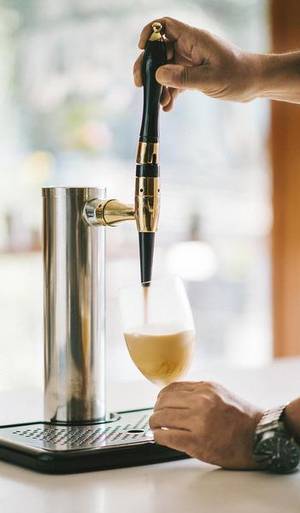
Upon entering Bengaluru’s The Flying Squirrel, I hear the distinct hum of a coffee roasting machine. The cosy 36-seater café and micro roastery is not just another coffee shop. It is all about artisan coffee. The sharp aroma of freshly-roasted coffee wafts in from the coffee bar, where Ashish D’Abreo, one of the founders of The Flying Squirrel, is brewing a cup of Pour-Over coffee. He looks up briefly, flashes a smile, and explains upon seeing intrigue on my face, that this is among the most popular kinds of brewing.

On a ceramic cup, a thin piece of filter paper is placed. Ashish weighs coffee powder on a swanky-looking weighing machine. “You need about 25 grams of coffee powder,” he explains, and then places the coffee powder on the filter paper, while carefully pouring small amounts of water. “You brew the coffee gradually,” says D’Abreo as he pours the water, starting from the edges of the filter paper in a spiral motion. “In this method, water doesn’t stay with the coffee too long. So it gives a medium body and a very nice aroma.” I sip on it and savour the smooth taste of the coffee.

But the heat makes enjoying a hot cuppa rather difficult. If you still need your caffeine fix, then there is always cold brew, which, informs D’Abreo, is not very well known; but people in India are beginning to understand it. “When you heat coffee, you get a certain acidity. There’s a gentleness and sweetness to cold brewed coffee. For about 200 grams of coffee, you put one litre water. The coffee powder has to be coarsely ground. Let the coffee stay in the cold water for about 14 hours. Soluble coffee bleaches into the water. After 14 hours, strain this out,” he says.

Then there is moka pot, also known as macchinetta, which means small machine. “Put water into the bottom shaper. Put filter coffee on the filter basket with ground coffee, tamp it lightly, screw on the lower chamber, place it on a flame for 35 to 40 seconds. Pressure builds up the chamber and coffee goes up through the device.”

Air play

The next is AeroPress. “The coffee powder used for the AeroPress is slightly coarser than the one used in a moka pot. Lock in one spoon of coffee powder. Wet the coffee a little bit, making the coffee soak in a lot more. Leave it for a few seconds. Then fill water till level one. Give it a quick stir and create an air lock. For espresso, leave it for 30 seconds, for black coffee one minute, and for coffee with milk and sugar, a minute and a half.” Then with a bit of force, D’Abreo presses down the device, saying: “and the coffee is ready.”

At The Flying Squirrel, coffee is freshly roasted and ground everyday and retailed across the country; it is sold across the counter as well as ordered online on www.flyingsquirrel.in. The coffee is grown in their estates in Coorg in Karnataka. Tej Thammaiah, the other founder, belongs to the Ajjikuttira family, and is a third-generation farmer, who is at the helm of affairs in the Nellikad estate where coffee is grown, along with pepper, vanilla, citrus fruits, avocados, ginger and honey.

“Roasted coffee is perishable,” informs D’Abreo, “It is best to consume it within a month.” He goes on to add that the coffee we get at stores is roasted months in advance. “Our coffee is roasted not more than days back. It is dispatched at the earliest.”

As to the question of the many varieties of coffee preparations that keep coming up, D’Abreo replies: “Dark roast is the easiest way to camouflage the flaws in your coffee.”

source: http://www.thehindu.com / The Hindu / Home> Life & Style> Food / Sravasti Datta / June 08th, 2017

Coffee growers present wish list to Union Minister

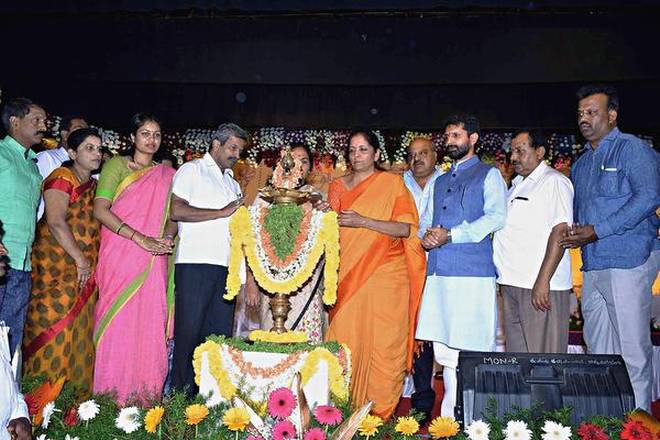
Union Minister of State for Commerce and Industry Nirmala Sitharaman inaugurating a public meeting at Mudigere in Chikkamagaluru district on Thursday.

Demands include support to coffee cultivation and checking elephant menace

Union Minister of State for Commerce and Industry Nirmala Sitharaman interacted with coffee growers at Mudigere on Thursday. The growers placed a number of demands before her, including finding a permanent solution to the elephant menace.

Representatives of Karnataka Growers’ Federation, Black Gold League and other organisations participated in the interaction.

B.L. Shankar, coffee planter and former MP, said the production of Arabica coffee had been declining every year. He wanted the government to take steps to support Arabica cultivation.

“Coffee cultivation has been hit by many problems; there is also shortage of workers,” he said.

Lok Sabha member Shobha Karandlaje stressed the need for research to address the stem borer attack, which had been causing huge losses to the growers.

C.T. Ravi, Chikkamagaluru MLA, wanted an ESI hospital in Chikkamagaluru, as there were a large number of workers in the plantations. Black Gold League president Kenjige Keshava appealed to the Minister to set up a spices park in Chikkamagaluru.

Interest waiver

Representatives of Karnataka Growers’ Federation sought waiver of interest on coffee loans and also five instalments to repay the dues.

B.S. Jairam, chairman of the federation, told The Hindu: “We submitted a memorandum listing all our demands. We have sought waiver of interest and bringing down interest on loans. We have also urged the government to take measures to check elephant menace in Hassan, Chikkamagaluru and Kodagu districts.”

Ms. Sitharaman said the government would take steps to increase coffee production and expand its market overseas.

“Growers in Andhra Pradesh, who began coffee cultivation only a few years ago, have succeeded in marketing it in America. If they could do, why can’t the growers in Hassan, Kodagu and Chikkamagaluru do?” she asked. The government was committed to encouraging coffee growers. After many years, and for the first time, a coffee planter had been appointed chairman of the Coffee Board. This showed the government’s commitment to supporting coffee cultivation, she added.

Coffee Board chairman M.S. Boje Gowda was present during the interaction.

source: http://www.thehindu.com / The Hindu / Home> News> States / by Special Correspondent / Chikkamagaluru – June 16th, 2017

How wildlife-friendly is your brew?

WildKaapi01KF03jun2017 Wild Kaapi, your morning coffee comes from certified estates that support gaurs, elephants and monkeys, along with Arabica beans

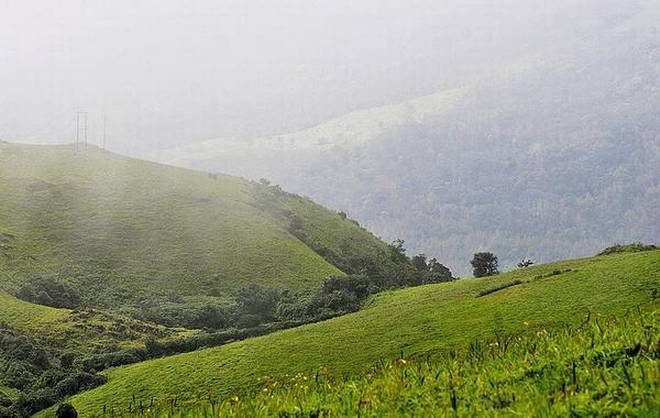
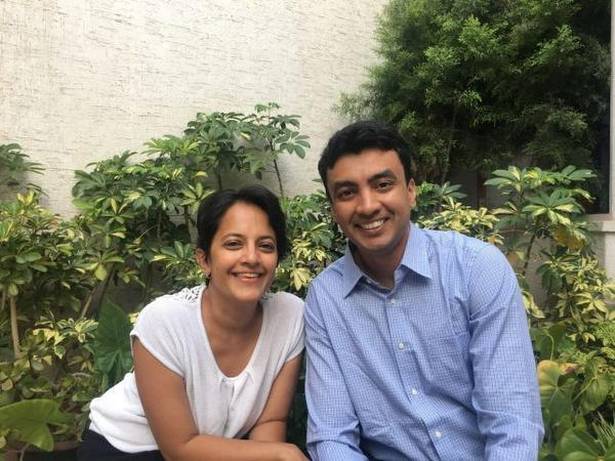
Under the cool canopy of native trees in the Western Ghats, coffee bushes spread out, gleaming with red berries. In the early morning hours, if you are lucky, you may spot rare species like the Malabar grey hornbill, water snow flat butterfly or the Asian fairy bluebird among these shade-loving plants. And now, thanks to the efforts of Wild Kaapi — the world’s first ‘certified wildlife-friendly’ coffee brand — you can ensure your morning brew comes from plantations that foster fauna on their lands. Started by wildlife conservationist, Krithi K Karanth — who has has been working in the Western Ghats, a biodiversity hotspot, for the last 19 years — and her husband, Avinash Sosale, the coffee brand got its certification this April and opened its doors to buyers last month.

(photo credit: Ramki Sreenivasan)

Live and let live

Wild Kaapi started as an offshoot of a three-year research project (part of a grant by the National Science Foundation to study coffee, areca and rubber plantations in the Western Ghats). Karanth, of the Centre for Wildlife Studies — with Paul Robbins of the University of Wisconsin-Madison and Dr Ashwini Chhatre of University of Illinois — measured biodiversity, and studied labour practices and market dynamics of the farming areas.

During the project, she interacted with over 1,000 planters in the three coffee growing areas of Karnataka — Kodagu, Chikmagalur, and Hassan — and realised how frustrated they were “because they weren’t getting value for their coffee due to the middlemen involved”. That’s when the idea for Wild Kaapi originated, and the duo is now exploring new ways to get a premium price for products that support wildlife. “This includes social enterprises that can contribute to conservation action. (After all) traditional wildlife conservation relies heavily on donors,” says Sosale, who quit a career in automotive business to be a part of the venture. “At this stage we have two commitments: we have told coffee growers we will pay them the highest price, and, with the profit we generate, we will build a conservation fund to award grants to young conservationists,” he adds.

WildKaapi03KF03jun2017

Animal tales

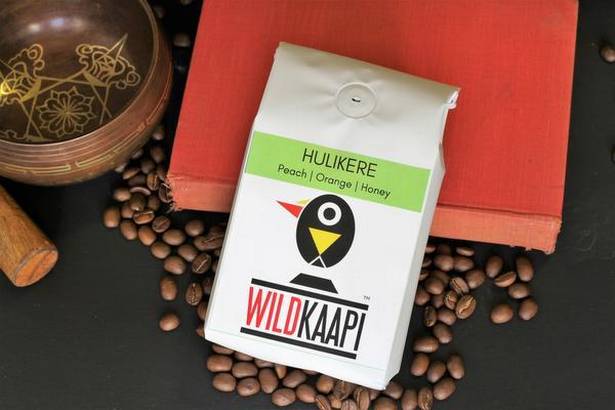
Millennials are more discerning towards coffee, observes Sosale. “Today’s consumer is informed. Ethical and conscious consumption is what we want to tap into.” To qualify for certification, the coffee not only had to have a good cupping (tasting) score, but the plantation had to support a vast biodiversity. Of the more than 187 farms they audited (recording the species of birds, butterflies, mammals, amphibians and trees), only four made the cut: Agora (with 124 species), Bindiga (137), Hulikere (119) and Cornerstone (120). Wild Kaapi has named their single-origin Arabicas after the plantations they are sourced from.

WildKaapi04KF03jun2017

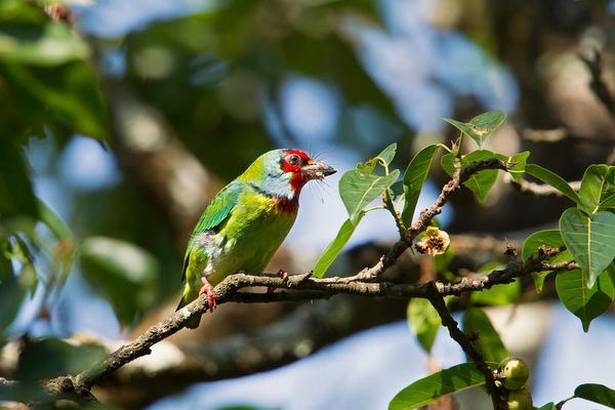
Shreedev Hulikere, a third-generation coffee grower with 60 acres in Chikmagalur, who is partnering with Wild Kaapi, says he wasn’t aware of the numerous wildlife species on their estate till now. “While my ancestors traditionally hunted, I’m a conservationist. I tell my labourers not to destroy any bird nests. I know that barbets nest here and they eat the borer worms that destroy coffee. Similarly, I’m not going to chase away the monkeys and civets that eat my coffee because I’m being compensated elsewhere. Just because a porcupine destroys a pepper creeper, I’m not going to hunt it down,” he says.

Love thy neighbour

The audit also revealed a few surprises. “We found frogs listed as endangered or threatened in the IUCN Red List (the world’s most comprehensive inventory of global conservation status) at these plantations,” says Karanth. The certification not only places their coffee in a premium space, but also paves the way for a new movement. “If you have wildlife-friendly practices, you can promote sustainable agriculture. We are trying to establish a new model — a profitable enterprise that also enables better livelihoods. This hasn’t been tried before; it’s a new way of thinking,” says Karanth.

(photo credit: Ramki Sreenivasan)

While their immediate goal is to prove that such a model is sustainable, Sosale is also mulling introducing coffee scrubs, soaps, candles and flavourings — all huge product lines in the international space. Moving into pepper and cardamom, which grow hand-in-hand with coffee, also holds much promise.

Prices start at ₹390 for 250 gms.

To know more, and buy the coffee, check out wildkaapi.com.

source: http://www.thehindu.com / The Hindu / Home> Life & Style> Homes and Gardens / by Bhumika K / June 02nd, 2017

Boosting domestic offtake is the key: new chief of Coffee Board

Coffee Board chairman M S Boje Gowda, at a function in Bengaluru on Wednesday. Somashekar GRN

Boje Gowda rues India’s low 200-g consumption compared to 7-8 kg in the West

Bengaluru :

Boosting domestic consumption is crucial to protecting the interests of coffee growers, according to MS Boje Gowda, the newly-appointed coffee Board Chairman.

After 70 years, the Coffee Board has a grower as its chief in Boje Gowda, who is third generation planter. Till recently, bureaucrats headed the apex decision-making body for the coffee sector, under the Ministry of Commerce.

Gowda, of Krishnagiri Estate in Chikmagalur, takes over at a time when growers are grappling with volatile prices, fluctuating output that’s largely being influenced by a changing climatic pattern on account of erratic rainfall, and pest issues such as the white stem borer.

Addressing growers after assuming office, Gowda said the annual per capita coffee consumption in India is not even 200 grams, while in the western world it is 7-8 kg, thereby leaving tremendous scope to boost the domestic offtake. He said there was a need to boost consumption beyond the traditional consuming States of Karnataka, Tamil Nadu, Andhra Pradesh and Kerala. “It would become a difficult situation for the growers unless the domestic consumption expands,” he said.

Gowda, a large planter, said Prime Minister Narendra Modi has set a target of doubling coffee output from the current 3 lakh tonnes to 6 lakh tonnes. India consumes merely a third of the coffee produced in the country as over two-thirds of the output is exported, mainly to Europe and Russia.

Karnataka, the main growing region that accounts for about two-thirds of the country’s coffee output, has been reeling under a drought for the past three years. Gowda said he would focus on improving the water storage facilities and take up the growers’demand for higher subsidy for increasing the coverage of drip irrigation.

Coffee growers gets only 25 per cent subsidy on the equipment cost for taking up drip irrigation, while for other plantation products such as rubber and cardamom, the subsidy component is around 80 per cent, Gowda said.

Drones to forecast crop
Addressing growers, Coffee Board Secretary Srivatsa Krishna said the body was exploring the option of using drones for better crop forecasting. Krishna said the current crop estimation was not right and the Board was looking at ways to improve the crop estimate. The Board has been in talks with 7-8 start-ups on deployment of drones for improving the accuracy of crop forecast.

Krishna said the Board is also working on creating water harvesting solutions and is exploring options such as cloud seeding. On the issue of white stem borer, a pest that attacks plants of arabica coffee, Krishna said the board has reached out to biotech firms to evolve a solution and that pilots are being carried out in some plantations.

Highlighting the importance of branding, Krishna said the growers should come out with region-specific brands such as Chikmagalur and Mysuru.

source: http://www.thehindubusinessline.com / Business Line / Home> Agri Business / by The Hindu Business Line Bureau / Bengaluru – May 17th, 2017

Tata Coffee appoints P.G. Chengappa as an additional director

We would like to inform you that the Board of Directors of the Company at their meeting held today, the 18th May 2017 and appointment of Dr. P.G. Chengappa as an Additional Director with effect from 18th May, 2017.

We would like to inform you that the Board of Directors of the Company at their meeting held today, the 18th May 2017, have considered and approved the following: a.Appointment of Dr. P.G. Chengappa as an Additional Director (Non-executive, Independent) with effect from 18th May, 2017.

A brief profile of Dr. Chengappa is enclosed herewith. Dr. Chengappa is not related to any of the Directors of the Company. b.Re-appointment of Mr. K. Venkataramanan as an Executive Director – Finance and CFO of the Company for a period of 3 years with effect from 25th October, 2017.

This disclosure is made in terms of the requirements of Regulation 30 of SEBI (Listing Obligations & Disclosure Requirements) Regulations, 2015.Source : BSE

source: http://www.moneycontrol.com / Moneycontrol.com / Home> News> Business> Announcements / May 18th, 2017

Planter takes charge at Coffee Board; regulating chicory high on his agenda

M.S. Boje Gowda
M.S. Boje Gowda

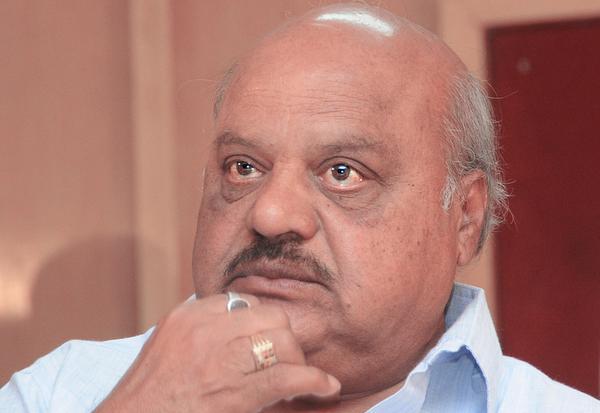
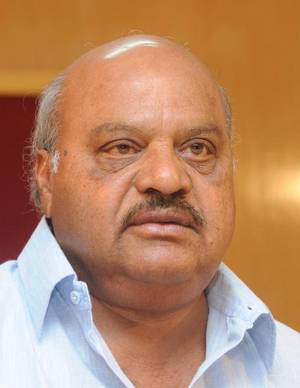
Regulating the indiscriminate use of chicory — used as an additive with coffee powder — is high on the agenda of the new chairman of the Coffee Board of India, M.S. Boje Gowda, a third-generation coffee planter from Chikkamagaluru district, who took charge on Wednesday.

“The farmer grows coffee in its pure form. But by the time it reaches the consumer, there is heavy addition of chicory deforming it. We don’t know how much chicory is added in the branded packaged coffee powder as well,” he said adding that he would discuss the issue with all stakeholders and even explore legal options to ban the addition of chicory to coffee powder.

“If the consumers want chicory let them buy it as chicory and add it. There will be choice for consumers as well,” he said.

When asked whether the Coffee Board of India had the teeth to enforce such a regulation, he said they would work with the Union government towards the end.

Mr. Gowda is the first coffee grower to become the Chairman of the Board after a gap of 70 years. In the past, the post was held by bureaucrats.

Coffee planters from across the State, who came to the city as he took charge on Wednesday, expressed immense hope of their problems being solved with a coffee planter as the chairman.

Apart from monitoring the use of chicory, Mr. Gowda said that his aim is also to increase domestic consumption of coffee while doubling the yield in the country.

“The per capita consumption of coffee is just around 200 grams and is mainly concentrated in Karnataka, Tamil Nadu, Andhra Pradesh and Telangana. We should work towards branding coffee and spread consumption to other parts of the country,” he said, adding that Prime Minister Narendra Modi had set a target to double the annual coffee production in the country from 3 lakh tonnes to 6 lakh tonnes.

source: http://www.thehindu.com / The Hindu / Home> News> States> Karnataka / Staff Reporter / Bengaluru – May 18th, 2017

The iconic India Coffee House brewing plans for revamp, expansion

Coffee Board seeks inputs from private players on new business model

A file photo of India Coffee House in Bengaluru

Bengaluru / Kochi :

The iconic India Coffee House is set for a makeover.

The state-run Coffee Board, which operates some 12 India Coffee House outlets in various locations including Parliament House, is exploring options to revamp and expand as part of its efforts to leverage the brand and promote coffee consumption across the country.

The board intends to go in for a revenue-sharing model and on a minimum investment basis for the proposed expansion.

It has initiated consultations with private players and has sought estimates on the capital expenditure and operational expenses for running a 1,000-1,500 sq feet store and smaller format kiosks of around 200-300 sq ft in 75-100 cities.

Pre-bid discussions

Confirming the development, Srivatsa Krishna, Secretary, Coffee Board, said the pre-bid discussions were still in the initial stages.

“We have two more rounds of consultations to go,” Krishna said, stating that clarity on the concept would emerge sometime in July.

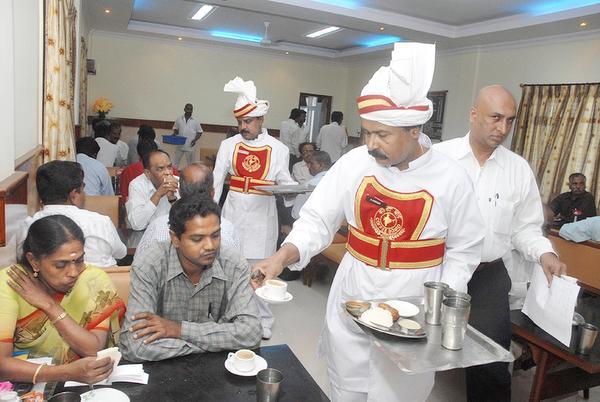
Long before the advent of the café culture led by chains such as Coffee Day, Baristas, Costas and Starbucks, India Coffee House was synonymous with the growth of the coffee culture in the country. ICH has a significant brand recall, especially among the 40-plus generation. Red turbaned staff in white uniforms serving coffees and snacks at reasonably prices is a hallmark of ICH outlets.

ICH used to be a favourite hangout or adda for political activists, writers, government employees, small-time lawyers, sales executives and the unemployed: in other words, a curious mix of the eclectic and the mundane.

Its old-world and unpretentious ambience is welcoming of everyone, not least because of the affordable coffees. The impact of liberalisation, which brought about a change in the coffee marketing system in the mid-1990s, led to a downsizing of the Coffee Board workforce and the closure of a number of loss-making India Coffee Houses.

“Some of the outlets were taken over by co-operatives formed by the retireed employees of the Coffee Board and continue to be run by them,” said N Bose Mandanna, former vice-chairman of Coffee Board.

A welcome sign

Industry stakeholders see the renewed effort to revamp the ICH by roping in private players as a positive development.

“We welcome any efforts to promote coffee. The Board should look at the right vehicle to expand the ICH,” said Anil Bhandari, President, India Coffee Trust.

Interestingly, the Board, which started India Coffee House in the early 1940s, had shut down several coffee houses in the mid-50s in various cities and dismissed many employees. Following this, Communist leader AK Gopalan took over the leadership of the retrenched employees and organised societies under the name of India Coffee Board Workers Cooperative Society. The first society was formed in Bangalore in 1957; it opened the first Indian Coffee House in Delhi on December 27, 1957.

The Indian Coffee House, as distinct from the Board-run India Coffee House, is completely owned and managed by its employees.

The society now has a chain with over 51 outlets and associate canteens operating in all major towns and in government establishments, particularly in Kerala.

source: http://www.thehindubusinessline.com / Business Line / Home> News / by Vishwanath Kulkarni – V. Sajeev Kumar / Bengaluru-Kochi – May 10th, 2017

This gentleman grows his own coffee . Right here in Bengaluru

Arjun Belmar owns 34 acres in T Dasarahalli, off Tumkur Road

For close to 30 years, Arjun Belmar hasn’t spent a penny on buying coffee. He lives in the city and grows his own coffee. Yes, you read that right. He does. Belmar and his family offer proof that coffee is not only grown in Chikkamagaluru and Kodagu, but also right here in our city.

The businessman has been growing coffee in the face of scorching summers or water scarcity. “Bengaluru is 900mt above sea level and the land can be utilised for coffee. But one needs to grow it properly in the shade,” he explains.

When Bangalore Mirror visited his 3,000 sq ft coffee plantation, it felt like a forest in the middle of the concrete hub.

“Years ago, T Dasarahalli was away from the city. Just about 100 people lived here and we had only one bus to our house from City Market. My father used to love plants and we grew everything on our land. Not just variety of trees and plants, we also had many cows which used to give us 200-300 lt of milk. We used to share it with whoever came to our home,” Belmar says.

The grand old times are gone, but the family continues its green tradition. They keep bees and harvest honey too on their property.

However, Belmar, remembers a time when they just had to dig up to half a foot to find water. “That is how we were able to grow ginger, grapes, vegetables, paddy, wheat, sugarcane, betel, pepper and other plants,” he said.

On how they started growing coffee, Belmar’s explanation is simple – Everyone in the family loves coffee and wanted to taste the authentic thing. “We used to have our own cows and buffaloes for milk and grow sugarcane for jaggery and sugar. Why then, can we not have our own coffee plants, we thought. Then we went to
Chikkamagaluru in search of the plants.”

Though they were unsure if coffee plants can survive in Bengaluru, they kept going with their plan. “Today we have around 50 plants,” he says. “We had other bigger trees on the land. Coffee grows in semi-shade so we put them between these big trees. We watered the plants continuously and saw the first flowers on the plants,” he says.

He recalls that his father had tears in his eyes when he saw the coffee plant flowering at last.

“Each coffee plant gives around 2-3kg of coffee fruit. In a year, we get close to 50 kg. We pluck the fruit and clean it and keep it for drying. Once it has dried properly, we give it for processing and get it done in a customised manner. We tell them whether we want it with or without chicory,” he said.

His friends and family, who visit the farm, are in awe of the plantation. “My friends used to ask me if I were living in Madikeri or Bengaluru. They love the coffee we give them in packets. People who visit us from abroad wait to visit again to refill their stock,” he said.

Belmar also grows the cocoa plant. He has close to 150 cocoa plants, the seeds of which he sends to Mangaluru for processing.

“We drink premium coffee personally handled by us. It is better than the coffee grown in Chikkamagaluru,” he says, with a hint of pride.

It’s all about the honey

Belmar says they started keeping bees as his grandfather was one of the founders of the Bee-keepers Association in the city. “We have been harvesting honey on our land for the past 40-50 years. Keeping bees easy here because of the rich bio-diversity.”

Bee-keeping in the city dates to the times the British were here. Belmar says, “It was during the British rule that the Bee-keepers Association began. These days, people are trained to keep bees and harvest honey.”

He has one special information about the honey. “When the Neem tree is flowering, the honey tastes best and it is clear. In the mango season, the honey is quite reddish and very sweet. When the tamarind tree is flowering, honey is a little sour. For each season, we have a different flavour of honey.”

source: http://www.bangaloremirror.indiatimes.com / Bangalore Mirror / Home> Bangalore> Others / by Kumaran P, Bangalore Mirror Bureau / May 10th, 2017

Government appoints chiefs of tea, coffee board

New Delhi (IANS) :

The central government on Thursday appointed Prabhat Kamal Bezboruah as Chairman of Kolkata-based Tea Board and M.S. Boje Gowda as Chairman of Bengaluru-based Coffee Board.

Bezboruah has been serving as the Chairman of Tea Research Association and Gowda is a well-known coffee grower.

The Appointments Committee of the Cabinet approved the proposal to appoint them, an order of Department of Personnel and Training (DoPT) said.

Bezboruah is appointed for the period up to November 1, 2018, while Gowda will have a tenure up to December 14, 2018.

“Necessary communication in this regard has been sent to the Department of Commerce,” the DoPT said.

The Tea Board is entrusted with a supervisory role for tea industry, while the Coffee Board takes care of the interests of coffee growers.

–IANS

bdc/nir

source: http://www.canindia.com / CanIndia.com / Home> Business> Economy / IANS / by CanIndia New Wire Services / May 04th, 2017