The Flying Squirrel serves high quality artisanal coffees
Catching up over coffee these days seems passé. The same cold coffee served under some fancy name, leaves you confused over whether you are drinking melted ice or cold milk. But all is not lost for coffee connoisseurs. There are cafes committed to serving the best coffee without compromising on quality.
The Flying Squirrel, located in a bustling food street in Koramangala, stands out for their high quality artisanal speciality coffees. The cool 36-seater micro roastery and cafe has a relaxed ambience with plenty of natural light streaming in. Make no mistake, though, this is no ordinary cafe. It is a coffee brand and the emphasis is on coffee, there’s no deviating from that.
The Flying Squirrel, started in 2013, by Tej Thammaiah and Ashish DÁbreo, has coffee beans sourced directly from an estate in Coorg, from where the cafe has got its name. One of the common sightings at the estate is the flying squirrel.
It is also where coffee is freshly roasted and ground before it is retailed within the city and to other parts of the country.
As you enter the micro roastery and cafe, the aroma of freshly roasted coffee and the sound of swirling in the coffee machine, fills the air. We make ourselves comfortable and then look through the menu, which has salads and burgers to choose from. The emphasis is on the coffees, which are available as pour over, espresso or Americano, cappuccino, and latte. We can’t wait to try their signature coffees, so we order parama cuppaccino , a blend of arabica and robusta. Its smooth taste gives you ‘coffee coma’ so to speak. Eager to try another variety, we are served clouds in my coffee, which has a bolder flavour than parama, but it leaves you refreshed. ‘Tis the season for cold brews, which is a welcome addition to the menu to beat the sweltering heat. So we sample citrus bloom cold coffee, infused with a hint of orange, which is a burst of delightful mildly sweet flavours.
The food has been specially designed to complement the coffees, which is central to the menu. We try the buckwheat noodles with smoked salmon. It is fresh and healthy, but the salmon slow cooked in olive oil gives it a delicious twist. There’s the Coorg bird eye chilli (grown in Coorg) spaghetti with jumbo shrimps that is again mildly flavoured. And if we thought that the food couldn’t get any better, we are serve millet lasagna.
Wrapped in multi-millet and grain lasagna sheets with baby spinach and mushroom filling. YUM! The beef burger is served with a lovely relish and fries.
Here is a place that feels like home. Where you can spend some quality time with friends over freshly brewed coffee in large servings.
—————————————————-
The Flying Squirrel Micro Roastery and Café /
@136, 1st Cross Road, 5th Block, Koramangala /
HITS:Coffees and millet lasagna /
MISSES:Beef burger/
MEAL FOR TWO:Rs. 1,200 /
: 40991044
—————————————————-
source: http://www.thehindu.com / The Hindu / Home> Features> Metro Plus / by Sravasti Datta / April 28th, 2017
If you are an avid coffee lover and miss the taste and aroma of filter coffee when you travel outside Karnataka, here is an instant solution.
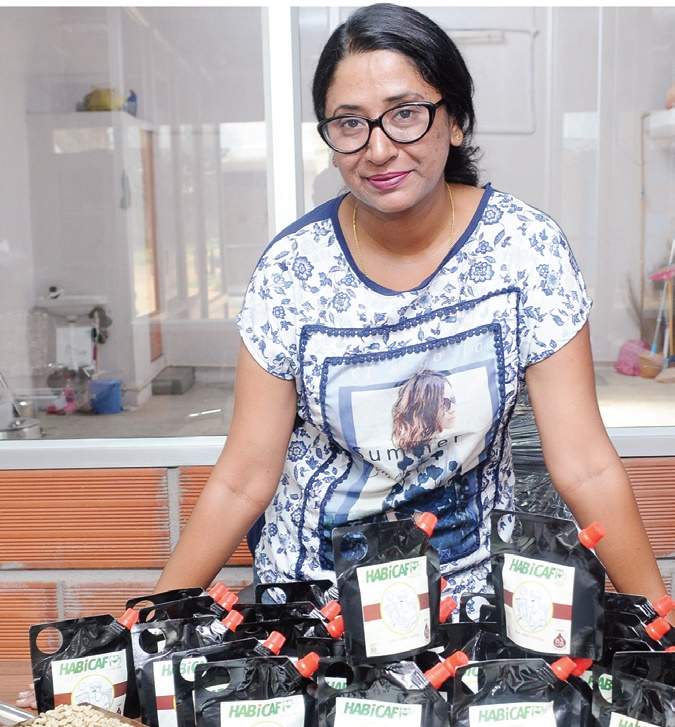
Mysuru-based HABICAF (Habit and Coffee) has come up with a readymade coffee decoction that will give you authentic coffee filter anytime you desire. They will be in Bengaluru from April 28 to 30 as part of the Organic and Millet Nation Trade fair at Palace Grounds.
HABICAF which started marketing and selling its product in October last year is getting a good response. Vijai Bopanna hails from Kodagu, and for him, coffee estates were a common sight at his native, Gonikoppa. “I tried a couple of other ventures before starting HABICAF a few months ago. As packaging, we are supplying filter coffee decoction in a sachet with a nozzle,’’ he says. The sachet is specially designed to retain the aroma of the coffee, Bopanna adds. He says that they make filter coffee with the coffee powder from his hometown.
“We use the traditional method to extract decoction, just like we do at home, but in a larger quantity. We add Central Food Technological Research Institute (CFTRI) – approved preservative that keeps the decoction fresh for longer time,” he adds. M S Jayashree is his partner in the venture. If the seal is not opened, one can use the decoction up to six months. If the seal of the nozzle is opened, it can be used up to 20 days without the need for refrigeration and 30 days when kept in a refrigerator. Each sachet contains 200 ml of decoction and can prepare 30 to 40 standard sized cups of coffee, depending on how strong the person loves his or her coffee.
According to Bopanna, most of the coffee beans are procured from Coorg, Sakleshpur and Chikmagalur. For civet coffee, they are procuring beans from Indonesia. “We are coming up with many other flavours other than the regular coffee. Our flavours will be Vanilla, Cinnamon, Hazelnut and much more. We also coming up with herbals. There is cold brew coffee which can be served cold and without milk,’’he adds.
HABICAF decoction is available in Mysuru and Bengaluru. “Very soon we are planning to sell our products through an e-commerce platform,’’ he says. “Right from getting the beans, making powder, adding chicory, extracting decoction, 90 percent of our processing is natural,’’ he adds.
source: http://www.newindianexpress.com / The New Indian Express / Home> Cities> Bengaluru / by Ashwin S. Sripad / Express News Service / April 26th, 2017
The cup that cheers has come a long way. Artisanal coffees are taking the centrestage for the distinctive taste that these possess
Bindu Gopal Rao
In the recent years, wine tasting is a word that most urban folks have come to understand. However today, coffee-tasting sessions are slowly but surely making a mark in the pretentious tasting space. The reason is a clear trend towards having speciality coffee, artisan coffee, and even micro roastaries akin to micro breweries. Well if that sounds like a lot of jargon, it is really not. For the uninitiated, micro-roastery is a small space where coffee is roasted in small batches that allow better control over profile roasting, manipulating temperature and time graphs to throw up interesting nuances and taste detailing. Artisan coffee is about applying artisanal cultivation, processing, drying and roasting methods to create unique and distinct coffees merging science and art!
New vistas
Coffees can come in a number of varieties, even if you ignore the variations introduced by types or sources of beans.
“The brews themselves are pretty much the same — save for a few bells and whistles like almond milk and Nutella, but the brewing methods have changed. The real magic happens in the roaster (machine), with the hand of the roaster (person) being paramount in successfully crafting a product that deserves the tag artisan coffee,” avers Mihir Rebello, co-founder & Roaster, Coffee Mechanics.
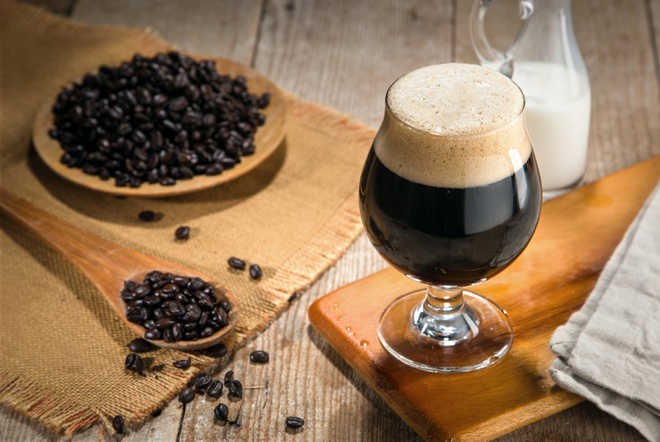
Cold brew is catching on and is basically brewing coffee without any application of heat. “We leave the coffee grounds in cold water for about 14-20 hours, and then filter it to create a refreshing, well-rounded, naturally sweet brew. Nitro brew is cold brew infused with nitrogen under high pressure. The nitrogen blends into the brew, stretching the natural flavours of coffee, without adding any additional taste (nitrogen has no taste or smell). The brew is also rendered creamy and full bodied,” says Ashish D’abreo, founding partner of The Flying Squirrel, Artisanal Coffee.
Today, artisanal coffees are taking the centrestage, considering the unique and distinctive taste profile that these coffees possess and offer in the cup. Sunalini N Menon, director of Tata Coffee Ltd and CEO, Coffee Labs India (P), says, “bullet proof coffee that entails to the addition of coconut oil to the coffee drink to energise and stimulate the coffee drinker, especially those who would like to have that extra dose of energy is trending. Besides micro, lots of coffees, single estate and single origin coffees continue to enjoy a special place in the niche coffee market.”
iStock
Being arty
At the heart of artisan coffee is the idea that what you are consuming is a special product, one that took hours of painstaking effort to create and provides you with an experience that is above and beyond what the market generally offers.
“The new-age coffee connoisseur wants a ready solution to their coffee desires, and that’s where artisan coffees come in the capsule format, thereby eliminating the hard work and ensuring that a perfect coffee is only moments away,” says Tuhin Jain, co-founder of Bonhomia. Coffee By Di Bella is currently showcasing different flavours via innovative coffee beverage creations like Spanish lattes, diamond cappuccinos, sparkling cloud drinks and coffee from different regions like Panama, Ethiopia and Colombia.
“Every cup of coffee has a story and artisan coffee pioneers want to showcase and bring to life the entire drop to cup process of the ultimate coffee experience,” says Phillip Di Bella, founder, Coffee By Di Bella.
For the connoisseurs
The name of the game is customisation and that is possible by playing with roast levels and grind size. The clincher, however, is the story for each coffee in terms of its origin, the terroir, the processing methods used and the roast profile. Rhea Sanghi, community manager of Blue Tokai Coffee Roasters, explains what makes their coffees tick. “Firstly, the coffee is completely traceable and the information about each of the farms is shared on the pouches as well as the website. The coffee is freshly roasted only on order and the roasting date clearly stated on the pouches. This matters because you want to consume the coffee within three weeks of the roast date (not the date the pack was opened or the coffee was ground) to get the best flavour.”
Home brewing is catching on and the cafe experience is now at home. Kobid Sinha, beverage manager at JW Marriott, Kolkata, avers, “People strive to take everything back to the basics by starting with green un-roasted beans and crafting our own syrups. Everybody now wants to make everything fresh and from scratch.”
Although maybe not fast enough, the awareness of different brewing methodologies is making equipments such as a French press, Moka pot and AeroPress household names.
According to Tapaswini Purnesh, director marketing and promotions, Classic Coffees, “Food pairings with coffee is a trend that is further evolving every year. If paired right, a simple nibble with your sip of coffee can create a flavour explosion and expose some beautiful flavours from your cup.”
Bullet proof coffee that involves the addition of coconut oil to the coffee drink to energise and stimulate the coffee drinker, especially those who would like to have that extra dose of energy,
is trending. Besides micro, lots of coffees, single estate and single origin, continue to enjoy a special place in the niche market
Coorg to Seattle
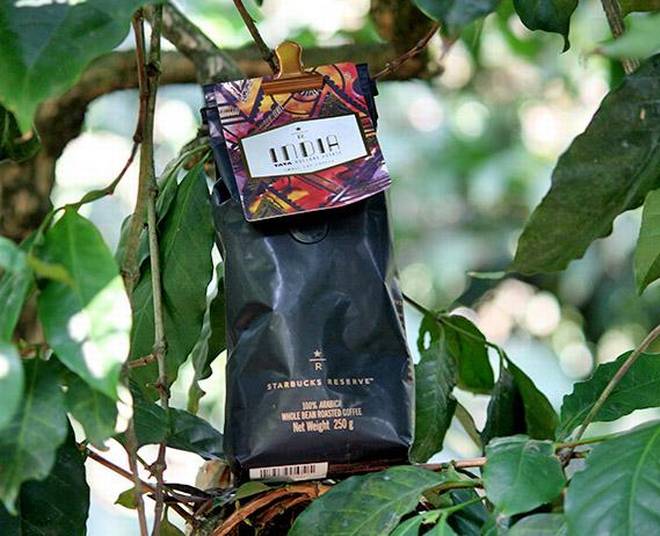
The Nullore microlot of Tata Coffee is an example of an artisanal coffee possessing distinctive features of flavours such as orange, lemon, chocolate and caramel. Grown in the Tata Coffee Limited estate in Coorg, block 19 of Bhuthanahadlu division, was selected due to the presence of fruit bat for a microlot. The coffee berries from this area were picked at the right stage of maturity and processed separately. The traceability of the lot was ensured at every stage till it was dispatched to the curing mill and the lot was garbled to ensure 100 per cent uniformity. The lot was eventually selected to the Starbucks reserve programme and is now sold out at the Seattle outlet.
source: http://www.tribuneindia.com / The Tribune / Home> Trends> Bling It On / April 15th, 2017
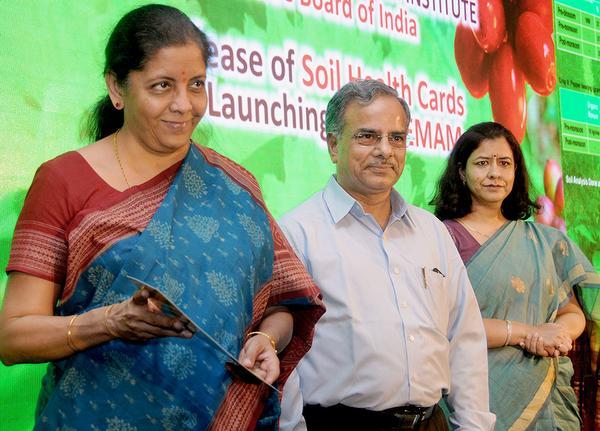
Fresh brew Union Commerce Minister Nirmala Sitharaman at the launch of the Coffee Board’s soil health cards and web portal, in Bengaluru on Friday. To her right are GV Krishna Rau, Advisor -Agricultural Marketing & Tribal Welfare, Government of Andhra Pradesh, and Arati Dewan Gupta, Director of Finance, Coffee Board
Bengaluru :
Union Minister of State for Commerce and Industry Nirmala Sitharaman exhorted the Coffee Board on Friday to take up aggressive branding and promotion of Indian coffees.
“It’s the age of branding. You need to brand everything. You need to have high profile marketing for everything to reach even the lower end of the pyramid,” she said.
The Minister was speaking at an event where she distributed soil health cards to growers and launched a web portal — a Coffee Board initiative towards soil fertility appraisal and soil health monitoring in traditional growing regions.
Citing the recent example of Araku Valley coffee making its presence felt in Paris with the support of industry, Sitharaman called upon the Board to “break the usual trodden path” in branding and marketing of Indian coffee. “If Araku on its own can go to Paris, Coffee Board should have pushed itself and said — I will market Coorg coffee. We should brand it,” she said. Branding ensures the market is sustained, she added.
Noting that countries such as Cambodia, Vietnam, Laos and even Myanmar have made long strides in packaging, value addition, presenting and marketing of coffee, the Commerce Minister said: “The Coffee Board obviously is now going to have to be on its toes.”
Sitharaman further said newer areas such as Uttarakhand and Himachal are attempting to grow arabica coffee. “The new growing areas have a great deal of enthusiasm and the energy they have is fantastic,” she remarked while expressing confidence that there will be expansion in area under coffee.
The Commerce Minister also indicated that the ambit of the Pradhan Mantri Krishi Sinchayee Yojana will be expanded to even small coffee growers, who have been facing the brunt of erratic rainfall pattern in recent years.
About 98 per cent of India’s coffee holdings are less than 10 hectares and held by small growers.
The Central Coffee Research Institute (CCRI), in collaboration with the National Bureau of Soil Survey and Land Use Policy, has started creating a database on the soil health in major growing regions and rendering site specific nutrient recommendations through soil health cards.
“The card is designed to present information on soil health indicators like pH, electrical conductivity, organic carbon and micro nutrient content, among others. It will enable judicious use of fertilisers and correct nutrient deficiencies,” said Y Raghuramulu, Director, CCRI.
Coffee flavoured stamp
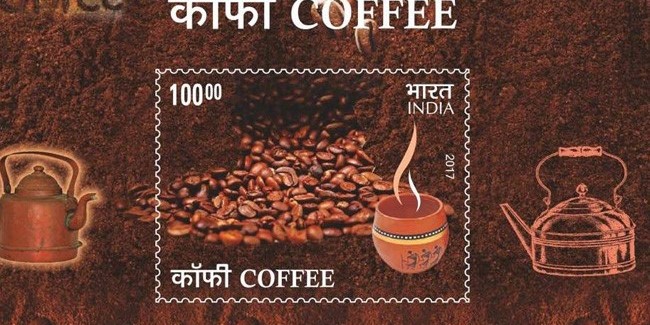
After coming out with sandalwood, rose and jasmine flavoured stamps, the Postal Department will launch a stamp that will have coffee flavour.
Telecom Minister Manoj Sinha will be releasing the stamp in Bengaluru on Sunday that will be a collector’s version, Sitharaman said. The coffee flavoured stamp will be priced at ₹100. “There is a lot of interest in Government of India in promotion of coffee. The coffee flavoured stamp is going to induce a lot of people to taste coffee,” she added.
source: http://www.thehindubusinessline.com / Business Line / Home> Markets> Commodities / by The Hindu Bureau / April 21st, 2017
Philatelic delight: India Post launches coffee flavored stamps to push the branding of Indian coffee
Indian Postal department, in collaboration with the Coffee Board, has launched its new coffee scented stamps in order to give a branding push to Indian coffee.
Telecom minister Manoj Sinha released the stamp in the presence of commerce and industry minister Nirmala Sitharaman, which are a collector’s version and are priced at Rs 100.
Sitharaman, said: “Today is an age of branding, we need to brand everything, we need to sell everything, we need to have high profile marketing for everything to even reach the lower end of the pyramid.”
She further added, “promotion of Coffee, branding of different coffee should go with a lot more hype. There is a lot of creativity we need to (put) into taking coffee further.
Noting that countries like Cambodia, Vietnam and Myanmar have done, and are doing, a lot of things in packaging, value addition, presenting and marketing of the coffee, she said: “the Coffee Board obviously is now going to have to be on its toes.”
Stamp lovers were quite happy with the news as this innovative campaign trended on Twitter as #CoffeeFlavouredStamp. Also, many retweeted and congratulated the coffee board and Nirmala Sitharaman for their efforts.
source: http://www.thedrum.com / The Drum / Home> News / by Taruka Srivastav / April 23rd, 2017
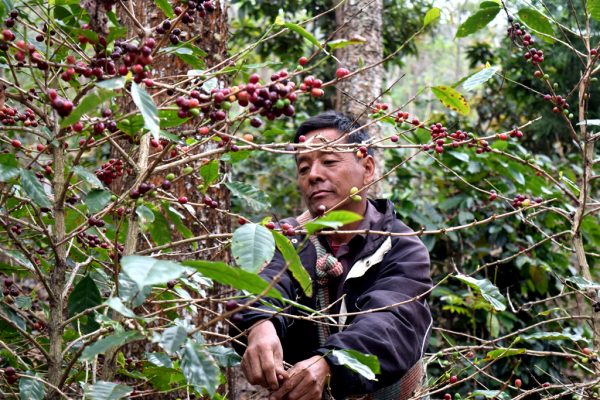
Phanbem Kithan, a coffee farmer from Wokha village, collects ripe coffee beans at his farm.
Kohima (EMN):
55-year-old Phanbem Kithan, a progressive farmer from Wokha village, in Wokha district, has been growing coffee for the past 15 years. He tried his hands at coffee plantation in 2002. Since then, he has devoted his life to growing the crop. The harvest from his crops has been increasing with each passing year.
The coffee kiosk set up by the Land Resources department at the Hornbill Festival in 2016 at Kisama, and one which was the main attraction of locals and tourists alike, was supplied by Kithan.
The farmer credits his success to the Coffee Board of India (CBI) which he said has been with him at every step of his journey in growing coffee. The journey had not been easy in the initial period of his venture. However, the logistic support and assistance rendered by the CBI has enabled him to extend his plantation every year.
Today, in an area of 6.5 hectares, Kithan has 30,000 coffee plants of Arabica coffee and Robusta coffee. He said to be expecting a harvest of 1, 000 kilograms of coffee this year; it will generate an income of possibly Rs. 1, 60, 000.
Kithan has undergone about 14 training events in various parts of India. He also won the ‘Best Nursery Maintenance’ award of the Coffee Board of India for 2014-2015; he was awarded with a certificate and a cash prize of Rs 20,000.
The CBI, he said, is highly appreciative of the coffee from Wokha as the ‘best quality and organic’ although some improvements are still required to improving the colour of the coffee. He said also that there was no problem in marketing–the produce is sent directly to the coffee board.
To encourage farmers to take up coffee plantation, Kithan has set up a nursery, since 2009, with the assistance from the CBI for maintenance. Saplings are distributed to interested farmers after inspection and after ‘analyzing’ their ‘dedication,’ he said.
Offering advice from his expertise, Kithan said that a good and healthy sapling with at least 5-12 leaves can last for about 100 years, which should begin from the nursery itself. He expressed confidence that Wokha would be covered by coffee plantations in a few years time, and that the district would be able to yield 2-3 truckloads of coffee every year.
Stating that there was no loss in growing coffee, Kithan hoped that the state of Nagaland would take up the crop. The land is blessed with highly favourable climatic conditions and the soil type is suited for production of coffee.
With the expertise that he has gained over the years, Phanbem Kithan is more than willing to assist and share his knowledge with anyone who is interested in taking up coffee plantation.
It was informed that the department of Land Resources had distributed 13.40 lakh coffee seedlings to farmers covering an area of 670 hectares. Coffee plantation in the state has been developed by the department in collaboration with the CBI. 920 hectares have been developed spreading over the eleven districts of the state.
The department has also prepared a five-year plan for development of coffee in Nagaland covering an area of 5000 hectares across the state by 2019-2020; 10,000 households have been identified for this plan and will be implemented in convergence with the board.
According to the plan, the land to be used for coffee plantation is 917 hectares during 2016-2017; 1190 hectares during 2017-2018; 1710 hectares during 2018-2019; 953 hectares during 2019-2020.
Taking advantage of tree species, including plantation crops developed through watershed programmes, coffee being a shade-loving crop has shown easy acceptance by the rural community as either main or subsidiary crop.
Unlike decades ago when farmers stopped coffee plantation due to lack of marketing avenues, it is hoped that the department working on marketing strategies will encourage more farmers to grow coffee. Another prospect is that Nagaland would emerge to produce quality organic coffee for export and local consumption.
During a visit to the state in 2016, Dr Pieter Vermuelen, a coffee expert from South Africa, commented that Nagaland had the potential to developing a sustainable economy through exporting coffee.
source: http://www.easternmirrornagaland.com / Eastern Mirror / Home> Top News> Current Article / by Akono Tsukru / April 04th, 2017
Famous for its coffee plantations, South India didn’t grow the crop naturally. Now a major producer with several hill tracts growing unique flavours of coffee, it is where the story begins… well, not exactly.
The southern Indian state of Karnataka is strewn with coffee plantations. The state is, in fact, one of the major producers of coffee in India. ‘Arabica’ and ‘Robusta’ are the kinds of coffee that are grown here under methods which are unique to this part of the country, rather, to the world.
The coffee here is grown under the shade of tress and is often inter-cropped with spices like cardamom, cinnamon, nutmeg and clove, giving it a unique flavour and aroma.
Interestingly, growth of coffee here is so dense that it might come across as shocking when someone tells you that it all started with the seeding of mere seven coffee beans, which were smuggled to the hills of Karnataka.
The story that goes around in the coffee plantations down south is that an Indian saint, named Baba Budan, once went on a pilgrimage to Mecca and from there to Mocha – a port city in Yemen and a major coffee hub.
It was here, in the 18th century, that Baba Budan first discovered coffee, when he tasted it in form of a dark and sweet liquid called Qahwa. It is said that he found the drink so refreshing that despite it being a protected Arabic beverage and industry, he sneaked out seven coffee beans by strapping them to his chest and brought them to India.
The Baba Budan Hills in Karnataka
These seven beans, Baba Budan planted in the courtyard of his home, in Chikmagalur, Karnataka – the place now synonymous to the origins of coffee in India. It is from this small patch of land that coffee began to spread over an entire hill – now called the Baba Budan hill – and then gradually to rest of Karnataka and South India.
Coffee cultivation further boosted in India under various colonies. First, the Dutch began to grow coffee in the Malabar region of south India and then the British steered its movement all over the peninsula, where they found the conditions to be apt for the growth of the crop.
In fact, coffee plantations in India were made commercial under the management of JH Jolly of Parry & Co, a trading company. Jolly saw the potential of coffee beans growing in the plantations of Chandragiri in Andhra Pradesh and had a petition sent to the Mysore government in the adjoining state of Karnataka, for 40 acres of land to grow coffee.
This not just boosted the growth of coffee but, post this, the plantations flourished with their production turning into the sole business of many from the region and coffee becoming a major commercial product. Eventually, a coffee board was also set up, which took care of the marketing of Indian coffee. It is this board that we know as the Coffee Board of India, the Indian government’s body taking care of coffee commerce in India.
Today, the coffee industry in India continues to be a flourishing one with the hill tracts of South Indian states dominating its production and the states of Kerala and Tamil Nadu following Karnataka in the list of traditional coffee growing regions. Coffee routes have further elongated to non-traditional areas, including Andhra Pradesh and Odisha on the eastern coast of the country and Assam, Manipur, Meghalaya, Mizoram, Tripura, Nagaland and Arunachal Pradesh of North-Eastern India.
The production of the crop that started on an ambiguous note has prospered into a full fledged industry, supporting the livelihood of many, especially, in the remote hilly areas of South India.
source: http://www.mediaindia.eu / Media India Group (MIG) / Home / posted in Freestyle / by Surbhi Kapila / New Delhi – March 30th, 2017
Coffee grown in the hills of Karnataka is making its way to the Starbucks Reserve store in Seattle
Coffee is undergoing something of a transformation in India. Local beans, grown in the country, are finally making it onto store shelves, where provenance and growing techniques are emphasised. Meanwhile, a certain section of savvy consumers trawls the Internet, searching for new ways to brew their daily cuppa using a range of different home-grown beans, each of which comes packaged with tasting notes that emphasise subtle flavours.
Meanwhile, an ocean away, India’s coffee prowess was given a different stamp of approval, when last October, Starbucks sold Indian coffee for the first time at its flagship Starbucks Reserve store in Seattle, the city in which the brand was founded. The coffee came from Tata’s Nullore estate in Kodagu, Karnataka, and was the company’s first microlot coffee. While Tata has 19 plantations in Kodagu (spread over 7,300 hectares), this was the first time that the company’s arabica beans made it to international shelves.
Microlot coffee refers to beans that are generally the best of the estate, and are those that imbibe flavours of the terroir. Arabica is one of two types of coffee beans, and is prized for its flavour, lower caffeine content and almost twice the concentration of sugar than is found in robusta. As a result, arabica is more expensive, and harder to grow.
Place of origin
Walking around the Nullore plantation’s block 19 (where the beans grew), what strikes you is the sense of calm that comes with standing in the midst of a 505-acre estate.
The microlot that was ultimately produced got its flavours from plants and trees that fruit bats propagate, while they make their homes in the silver oak trees above that provide shade to the arabica plants below. This two-tier system allows the coffee to grow under a canopy of trees, which includes jackfruit, pepper vines and fruits such as orange and lychee. On a tour of the block, Mandana, plantation manager, says, “We collected the coffee berries separately from eight hectares of this [block], where the fruit bat population is high.”
Changing trends
The story of the coffee though, goes beyond its growth, and rather is the story of how Tata Coffee is responding to changing customer demands, especially at the high-end, where international coffee drinkers are willing to spend between $10-30 to buy beans with unique tasting notes. Sunalini Menon, a well-known coffee cupper, who is also an independent member of the Tata Coffee board, has been instrumental in galvanising the plantation managers to experiment with microlot coffee. Chacko Thomas, the deputy CEO and executive director, says, “As a result of Nullore, we have 150 [microlot] experiments in progress.” Processing aside, the recognition has showed employees, that the beans grown in Kodagu can be cupped alongside the best in the world.
source: http://www.thehindu.com / The Hindu / Home> Life & Style> Food / by Aatish Nath / March 30th, 2017
The attention of the coffee world will be focused on the Melbourne International Coffee Expo (MICE), which is being held at the Melbourne Showgrounds from 30 March to 1 April.
All of the Australian Coffee Championships will be back at MICE for 2017
With the Australia Barista Championship, PURA Latte Art Championship, Cup Tasters Championship and Coffee in Good Spirits all taking place on the ASCA Main Stage, and Brewers Cup being held in the all-new Brewing Lounge, there truly is something for everyone over all three days at MICE2017.
All winners will be announced in a ceremony on Saturday 1 April.
And for the first time ever, MICE2017 will feature a brand new Brewing Lounge that will showcase the ASCA Australian Brewers Cup, where visitors will get the chance to taste all the competition coffee.
A range of SCAE (SCA) certified courses are also being offered to coffee aficionados and beginners alike throughout MICE2017. In partnership with MICE, reduced course fees are being offered to MICE attendees.
The show is part of a wider schedule of events that make up Melbourne Coffee Week.
On Thursday, 30 March, Ona Coffee and Dr Morse Bar and Eatery are invite coffee and beer lovers alike to join them for a BrewParty – a celebration of filter coffees, beer and good times. Special guests will include WBC 2015 Sasa Sestic and current Australian Barista Champion, Hugh Kelly.
And on Saturday, 1 April, Axil Coffee Roasters will host the MICE2017 and ASCA after party.
source: http://www.gcrmag.com / Global Coffee Report / Tuesday – March 28th, 2017
Kona Historical Society (KHS) will open the award-winning exhibit “The Kona coffee Story: Along the Hawaiʻi Belt Road,” on Monday, March 27 at H.N. Greenwell Store Museum.
KHS Board Member Alfreida Fujita gets a sneak peak at the KHS exhibit on March 23, 2017. Photo courtesy of Kona Historical Society.
This journey back in time to 20th century coffee farm life features never-before-seen photos and artifacts from the organization’s collection and archives. They have travelled to museums worldwide.
This Kona Coffee Story will be open Mondays, Tuesdays, Thursdays and the first Saturday of every month from 10 a.m. to 2 p.m. Admission is $5 and free to students of all ages, KHS members and active and retired military persons with identification.
The coffee industry emerged in Kona in 1828, and like any other industry, it experienced its highs and lows. Personal written accounts in the exhibit reveal the voices of hard working farmers and community leaders. Black and white photos preserve family portraits and images of the industry farm lands, in addition to a miniature model of a coffee mill.
KHS hosted a special preview of the exhibit to a limited audience on Thursday, March 23, featuring refreshed content. Attendees included descendants of Kona’s coffee industry pioneers who shared their memories of life on the farm, reflected in the exhibit’s photos, artifacts and written accounts.
The exhibit will be on display through the end of 2017.
source: http://www.bigislandnow.com / BigIslandNow.com / Home / by Big Island Now Staff / Hawaii – March 27th, 2017
WELCOME. If you like what you see "SUBSCRIBE via EMAIL" to receive FREE regular UPDATES.
Read More »