Category Archives: Coffee News

Cherry to cup: The tale of Kodagu coffee

From hand-picking cherries to experimenting with processing methods, Kodagu’s coffee growers are embracing change, writes Dhanyata M Poovaiah.

Once a paddy-growing area, Kodagu took to large-scale coffee cultivation during the British era. Today, it is India’s largest coffee-producing district. 

Every district in the state has a speciality and when it comes to Kodagu, it is coffee. While Karnataka accounts for around 71% of India’s total coffee production, Kodagu alone contributes around half of the state’s total output, or roughly 37% of the country’s total coffee yield.

Originally, paddy was the region’s main crop. During the 19th century, the British started large-scale coffee plantations, considering the region’s suitable climatic and soil conditions for the crop. Today, Kodagu is India’s largest coffee-producing district.

Robusta and Arabica are the two main varieties of coffee grown in Kodagu. Initially, Arabica was the most widely grown variant of coffee. “Situated within a multi-storeyed coffee agroforestry system, Kodagu nurtures the GI-tagged Coorg Arabica Coffee, celebrated for its pleasant aroma, balanced flavour, mild acidity, strong body, and subtle floral notes,” says Pradeepa Babu, Deputy Director (Research), at the Coffee Board of India.

However, over time, planters gradually switched over to the heat- and pest-resistant Robusta. “Indian Robusta gets the highest premium in the international market, preferred for its good blending quality,” Pradeepa adds. This variety has a longer lifespan and is easier to maintain. Today, 80% of the coffee produced here is Robusta.  

The Robusta plants are taller and have bigger leaves and rounder beans, and provide better yield.  The beans also offer a stronger and bitter taste profile. Arabica, on the other hand, has elongated beans and is suitable in higher altitudes and colder climates.

Commercially available coffees are often a blend of Robusta and Arabica. The South Indian filter coffee contains a touch of chicory as well.

“Kodagu’s coffee has good markets in Europe, West Asia, USA and Australia, with Italy being the top importer,” says Vishwanath Keshavamurthy, CEO of Biota Coorg Farmer Producer Company Limited.

While Robusta and Arabica dominate the coffee scene here, two more varieties are gaining ground in the district. Liberica, a larger plant, is grown in smaller quantities, and Excelsa (locally known as Mara Kaapi) is also being introduced. 

Shade-grown plantation

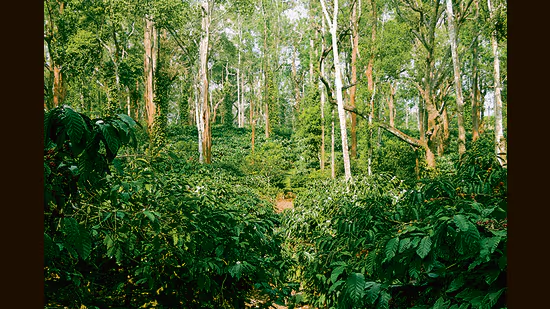
A unique feature of Kodagu coffee is the shade-grown method. “In Kodagu, coffee is grown in shade, wherein coffee plants are surrounded by taller trees and lush vegetation. The slow maturation process of coffee cherries here results in more mucilage, enhancing their flavour and the aroma,” says Naren Kuttaiah, director of Biota Coorg Farmer Producer Company Limited and the proprietor of Kallucoppa estate. Mucilage is a sticky, sugary, and pectin-rich layer found in the coffee cherry between the outer skin and the parchment layer. 

“In other major coffee-growing countries such as Brazil and Vietnam, the crop is mainly grown in open plantations,” he adds.

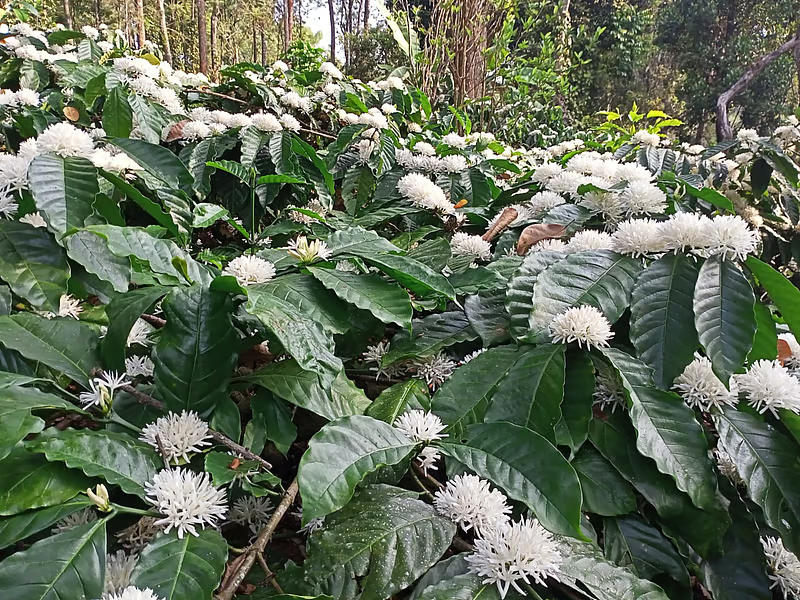
Additionally, the coffee cycle in Kodagu begins with blossom showers in February and mid-March. The right amount of rainfall and sunshine is crucial for the healthy blossoming of coffee flowers and the subsequent development of the beans. If rainfall is insufficient, irrigation is carried out after 20 to 22 days. This is followed by fertiliser application (pre, mid, post monsoon application), pruning, shade lopping, weeding, desuckering and disease control.

Post-harvest cycle

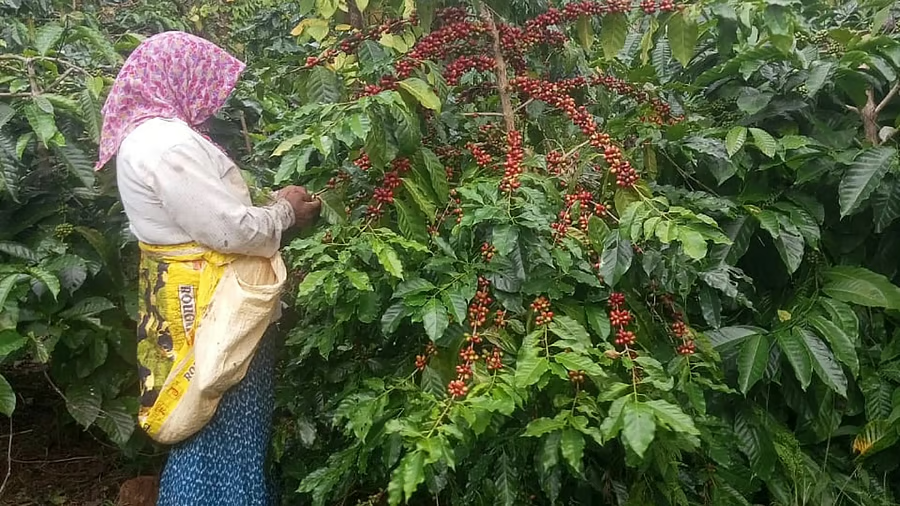
Most commonly, the coffee cherries are hand-picked and dried directly in the sun for nine to ten days. However, in the honey method of drying, ripened red cherries are picked, depulped and then dried to accentuate the flavour. In the washed process, the beans are fermented, washed and then dried. Nutty, fruity, floral, citrusy flavours can be achieved depending on the process of fermentation.

“To pick only the ripened cherries, we go through six cycles of picking. This ensures a uniform taste compared to when a mix of green and red cherries is processed. Right processing can even control the acidity, bitterness and flavour of the coffee,” says Rishwin Devaya, of the Riverside Estate in Kodagu. He grows a mix of Robusta and Arabica varieties and has also recently been experimenting with intercropping Robusta and Arabica.

Single-origin coffee

Today, there is a growing demand for single-origin coffee, where the beans come from one specific source, such as a single farm or region.

“This is because the local climate, soil, surrounding vegetation, foliage, and even the fertiliser or manure used, all bear an impact on the flavour profile of the coffee bean. The post-harvest process is carried out in a controlled manner to achieve desired characteristics,” says Sandalkad Estate’s Shamveel Nizam, who runs a specialty café in Kodagu.

Specialty coffee should score over 80 out of 100 on 10 parameters, such as aroma, flavour, acidity, aftertaste, body, balance and uniformity. This is tested by the Coffee Board of India and is increasingly sought after.

“The higher the score, the higher the price. Our specialty coffee is sold at Rs 25,000 per kg in West Asia. We also offer customisation, as per the client’s preference,” says Shamveel.

A coffee plant blossomed with flowers

Cupping is another standardised method to evaluate coffee. Under this, professional cuppers smell and taste coffee to assess its body (mouthfeel), sweetness, acidity and flavour notes. The practice is used by roasters and importers to assess new coffee beans.

New trends

In recent years, young planters have been driving innovation. “Traditionally, coffee planters only sold dried cherries. To maximise returns, we should handle the post-harvest processes as much as possible,” says Rishwin, who does end-to-end processing. Coffee workshops, seminars and courses are crucial to take the game to the next level, he adds.

The Coffee Board is also supporting coffee production through involvement in replantation, water management, quality improvements in drying yards and warehouses. Organic/eco-certification is encouraged for estates producing organic coffee, helping them achieve higher returns. In addition, an Integrated Coffee Development Project is being implemented to support the overall growth of the coffee industry.

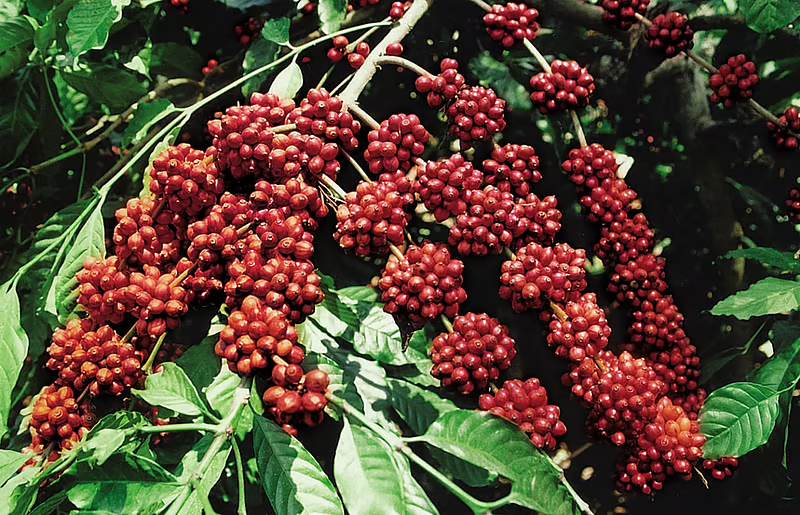
Coffee cherries. 

“Specialty coffees with local narratives, wellness-oriented blends, consumer engagement, convenience coffee formats such as drip coffee pouches, home-brewing tools and marketing through e-commerce platforms are the new trends in coffee marketing,” says Pradeepa.

From misty plantations to global cafés, Kodagu’s coffee legacy continues to brew magic.

source: http://www.deccanherald.com / Deccan Herald / Home> India> Karnataka / by Dhanyata M Poovaiah / September 11th, 2025


Grounds for hope: Coffee could make our soil, planet healthier, says Mridula Ramesh

Agricultural soils, under better management, could store up to 1.2 gigatonnes of carbon each year. That’s substantial – and coffee is showing the way.

Shade trees protect a plantation in Coorg. It turns out that shade can help soil store far more carbon, slashing the footprint of the crop. (Shutterstock)

Dappled sunlight filtered through the broad leaves of a jackfruit tree, before trickling through the waxy canopy of an avocado, casting a cool shade over my feet, which were sinking into the brown, mulchy soil as my fingers squeezed two creamy seeds out of a bright shiny cherry and onto my palm.

That was when it hit me: Origins matter: How you were shaped determines where you will thrive.

Here, in the Palani Hills, Coffea arabica was thriving in a cool, humid forested nook much like its ancient home in the Ethiopian highlands. Old and planted forests sheltered it from heat and wind, while the humus-rich soil supplied year-round moisture without drought or waterlogging.

Shaker Nagarajan, the owner of this plantation, tells me farms like his have been increasingly caught between elephants, labour-scarcity and storms, in recent years. He’s mindful of what trees he plants, because some, like the banana, draw the elephants that migrate seasonally to these slopes. “The calves really cause havoc,” he adds, running amok like toddlers do.

Coffee harvests fall between October and February, a season of festivals and rains in these parts, making labour expensive and hard to retain. A giant storm a few years ago knocked over a number of large trees (most of them non-natives with less-deep roots). That year, Nagarajan says, he was only able to salvage 25% of his crop.

Such storms may become more common as the planet warms.

As I mentioned in my last column, Part 1 of this two-part series on coffee, a 2015 study found that, based on current climate projections, about half the land currently used for coffee production would no longer be suitable for the crop, by the 2050s. Brazil, the world’s largest producer, will be especially hard-hit. Any gains at higher elevations will carry a steep deforestation cost.

For a world that consumes two billion cups of coffee a day, this is terrible news. But there is a way forward. I even saw it in action here: forests and soil, working together.

In the early afternoon, it was cool at the plantation and a light drizzle fell. “I used to maintain 40 trees to provide shade to the 1,200 coffee plants on every acre of land,” Nagarajan said. “Now, with temperatures rising, I have increased the number of shade-providing trees to 100 per acre.”

David Hogg, chief agriculture advisor at Naandi Foundation, which supports Araku Coffee, the makers of award-winning coffee produced in collaboration with over 10,000 tribal families, agreed. “I measured surface ground temperatures both inside coffee farms and outside and consistently found the shaded coffee farms were 4 degrees Celsius to 7 degrees Celsius cooler,” Hogg said. “Forests were a natural buffer. So I was able to assure our trustees that Arabica coffee would remain resilient (here) for the next 50 to 100 years, provided the ecosystem was maintained.”

Araku uses a hybrid seed that is a cross between arabica and robusta.

Rattan Lal, distinguished university professor of soil science at Ohio State University and a global authority on soils, told me, “When it’s about 27 degrees Celsius outside, the soil temperature may be 40 degrees Celsius, but under the forest canopy, it is only about 27 or 28 degrees Celsius. So, there’s a big difference.”

That’s temperature taken care of, for now. Forests also help intercept the heavy downpour, and maintain humidity in dry months.

The other adaptation is soil.

Plants, like us, need water to maintain structure, move nutrients around, fuel photosynthesis and cool themselves. Most plants draw almost all their water through their roots from the soil. So, when water content in soil falls, yields suffer.

Soil is a dynamic matrix of mineral particles, organic matter, water, air and microorganisms. Healthy soil strikes a Goldilocks balance: enough large pores to let rainwater soak in and, during heavy downpours, drain away; and enough medium pores to hold onto water against gravity, yet release it when plants need it. Humus (the organic-litter component of soil) helps keep this pore ratio just right. It also acts as a sponge. Soils rich in organic matter can store far more water — anywhere from roughly one part water per part humus to eight parts water per part humus.

Organic matter reengineers the soil’s plumbing. Vitally, it also contains microbiota that can break organic matter down into a form of nitrogen that can be absorbed by plants.

***

In India, we have destroyed our soil.

Lal tells me tropical soils should ideally contain 1% to 1.5% organic carbon, but in many Indian farms, especially in the northwest, it is now 0.1% to 0.2%, because “we take away the crop residue and either burn it or convert it into feed where the dung doesn’t return. So, Indian soils are really depleted.”

That’s a problem. In 1937, in the aftermath of the Dust Bowl crisis, US President Franklin D Roosevelt wrote: “The dust storms and floods of the last few years have underscored the importance [of programmes to] control soil erosion… The Nation that destroys its soil destroys itself.”

Farmers try to compensate for falling soil health by adding more fertiliser or more water. “But that causes its own problem,” Lal says. “The efficiency of nitrogen fertiliser in India, under ideal conditions, is only about 30%. The remaining nitrogen, which is not absorbed, [leaches] into groundwater as nitrates, which harms the health of people who drink it, or escapes into the atmosphere as nitrous oxide, a greenhouse gas 200 to 300 times stronger than carbon dioxide.”

Yikes.

The interesting thing, Hogg found, is that tribal farmers didn’t want to use chemical fertilisers. When they applied the urea the government gave them, they told him, “all the earthworms ran away”. This gave him the confidence to build an organic programme in the Araku Valley in Andhra Pradesh.

“Because coffee in Araku is surrounded by biomass, we integrated composting and microbial inoculants to restore soil health. Over the years, soil life returned, coffee quality improved, and Araku coffee began earning international recognition,” Hogg says. “Coffee thrives in a beautiful symbiosis with the forest, in which trees feed the soil with dissolved organic carbon. Organic carbon levels have doubled or tripled in five years, as soils once depleted by slash-and-burn practices began to regenerate. Levels rose from about 0.4% organic carbon to 1.6%, sometimes even higher. Some farms have even gone up to 6% organic carbon, so the sky is the limit.”

***

Carbon here is not just about climate; it is also about soil health.

Soil carbon supports microbial life, modulates structure, improves aeration and, most importantly, holds water. This water-holding capacity reduces stress on coffee plants during dry periods, making them healthier and less vulnerable to disease.

“For me,” Hogg says, “this is the essence of regenerative agriculture: restoring soil life and protecting the environment for future generations.”

Interestingly, “as soil organic carbon levels rose, sweetness and flavour depth improved too,” says Hogg. Nagarajan echoes this.

For the longest time, Indian coffee growers didn’t have an incentive to focus on quality. They had to sell everything to the coffee board, and a small payment to the chief inspector ensured it would be certified as fair average quality, or FAQ.

With liberalisation, the focus on quality began.

And there’s more. The world is realising that coffee, blessed with a rich array of polyphenols, particularly chlorogenic acids, can be a health food. A seven-year study of 36,758 adults, published in the journal Current Developments in Nutrition in 2020, found that even modest daily coffee intake was linked to a lower risk of death. These polyphenols act as antioxidants, modulate the gut microbiome and slow glucose absorption in the intestine, reducing post-meal blood-sugar spikes.

What’s fascinating is this: researchers have found that shade-grown arabica in Thailand contained roughly twice the levels of chlorogenic acids and markedly greater antioxidant activity than beans grown in full sunlight.

There’s even more: Shade changes coffee’s carbon math. A new accounting method that recognises shade’s impact on soil and biomass carbon, and on erosion protection, developed by Lal and his colleagues, shows that shaded systems store significantly more carbon than unshaded plots. This serves to lower the carbon footprint of shade-grown coffee by 22%.

Lal told me he believes that soil, globally, could sequester about 2.5 gigatonnes of carbon each year (or nearly a quarter of what humanity emits annually). Agricultural soils, under better management, could store up to 1.2 gigatonnes of carbon each year. That’s substantial.

Climate resilience, less carbon pollution, health. Those are worthy goals. Araku’s experience shows that the methods can be scalable, fair (the company’s practices have raised farmer incomes) and aspirational. Araku has won the Epicure d’Or award for taste, and the Rockefeller Foundation’s Food System Vision Prize for sustainability.

To actually scale this across India, and around the world, needs more action. “India needs a Soil Health Act,” Lal says, “to incentivise farmers to grow carbon in their soils.” While there are new schemes to wean farmers away from fertiliser abuse, when one compares the ₹1.2 lakh crore budgeted in 2024-25 for urea subsidy to the ₹45 crore for the Policy on Promotion of Organic Fertilizers, one wonders how much the needle will shift.

But shift it must, for good coffee and so much more.

(Mridula Ramesh is a climate-tech investor and author of The Climate Solution and Watershed. She can be reached on tradeoffs@climaction.net. The views expressed are personal)

source: http://www.hindustantimes.com / Hindustan Times / Home / by Mridula Ramesh / September 05th, 2025

Berry Borer Pest Threatens Andhra’s Coffee Heartland

The Central Coffee Board has confirmed the presence of this pest in four villages of the Araku Valley, located in the Alluri Sitarama Raju district.

Visakhapatnam:

For the first time in the history of coffee cultivation in Andhra Pradesh, a threat from the Coffee Berry Borer pest has raised alarm among planters.

The Central Coffee Board has confirmed the presence of this pest in four villages of the Araku Valley, located in the Alluri Sitarama Raju district. Fears are that this has the potential to cause widespread damage to tribal coffee gardens.

The Coffee Board has initiated an urgent containment operation, with its chairman MJ Dinesh overseeing the efforts on-site.

He said a special survey is currently underway across 11 mandals to track the spread of the pest-infliction. Teams of scientists and coffee board officials are working closely with tribal farmers, urging them to remain vigilant and report signs of an outbreak.

Field visits have confirmed active destruction in infected zones, prompting the launch of awareness campaigns to help farmers identify and respond to the pest early. The Integrated Tribal Development Agency (ITDA) is supporting this survey through its field officers.

The first confirmed outbreak of the Coffee Berry Borer was traced to Pakanakudi village in the Chinalabudu panchayat, under the Paderu revenue division.

Officials have begun collecting infected beans from the coffee plantations and are using hot water immersion techniques to eliminate the insects. Quarantine measures have been implemented in five villages: Pakanakudi, Malisingaram, Malivalasa, Thurraiguda and Manjaguda.

As a precaution, the export and import of coffee beans from these areas have been banned. Beans harvested in these regions will be processed locally into parchment to prevent the spread of the disease.

Attempts are on to contain the outbreak. Scientists from the Coffee Research Institute (CCRI), the RV Nagar Research Station, and the Central Coffee Board are conducting intensive field surveys in GK Veedhi, Chintapalli and G Madugula mandals. Their observations would guide the next phase of containment and support for farmers.

The scale of coffee cultivation in the ASR district highlights the urgency of the situation. Over 245,000 tribal farmers cultivate coffee on 258,000 acres, while the state Forest Development Corporation manages an additional 10,025 acres.

During a recent visit to Paderu, chief minister Chandrababu Naidu asked district officials to expand coffee cultivation by 100,000 acres.

source: http://www.deccanchronicle.com / Deccan Chronicle / Home> Southern States> Andhra Pradesh / by Aruna / September 02nd, 2025

Barista Training Programme by Coffee Board of India underway

Barista Training Programme by Coffee Board of India underway

The Coffee Quality Division, Coffee Board of India, Bengaluru, has launched a five-day Barista Training Programme in collaboration with Agora Coffee House, Chingmeirong, as the in-city partner. The training, which began on August 25, will continue till August 29, 2025.


The programme will equip participants with professional barista skills, focusing on brewing techniques, preparation of high-quality coffee beverages, and customer service essentials. The training is conducted under the theme “Barista Skills for a Perfect Cup – A Bean to Brew Journey: Master the Art of Brewing.”


Sri Yathish Gowda, an experienced Barista Trainer from the Coffee Board of India, is leading the sessions, providing hands-on training to participants. Coffee enthusiasts attending the programme are gaining valuable insights and practical exposure to enhance their expertise in coffee preparation.


Agora Coffee House, the in-city partner, has extended significant support in hosting the event, contributing to the promotion and understanding of coffee culture in Manipur.


Following the Imphal session, another five-day programme will be conducted in Senapati district from September 1 to 5, 2025, in collaboration with the Senapati Entrepreneur Association and Buddy Brew Coffee Bar, Senapati.

On successful completion, participants will receive certificates from the Coffee Board of India.

source: http://www.imphaltimes.com / Imphal Times / Home> News / by IT Web Admin / August 28th, 2025

Coffee Research Institute to unveil centenary emblem and motto tomorrow

HIGHLIGHTS

Chikkamagaluru:

As it enters its centenary year, the Central Coffee Research Institute (CCRI) is preparing for a series of celebratory events,…

Chikkamagaluru:

As it enters its centenary year, the Central Coffee Research Institute (CCRI) is preparing for a series of celebratory events, beginning with the unveiling of its Centenary Emblem and Motto on July 18 at 10 am at the Coffee Board Extension Office in Chikkamagaluru.

The event, organised jointly by the Coffee Board of India and the Central Coffee Research Institute, Balehonnur, will also feature the launch of Coffee Yatra Vastu Pradarshana 2.0, a thematic coffee exhibition tracing the crop’s history, research, and contribution to the Indian economy.

Representatives and stakeholders from across India’s coffee-growing regions have been invited. Among the key guests are Capt. G.R. Gopinath, founder of Air Deccan and a progressive coffee grower, and Kota Srinivas Poojary, MP from Chikkamagaluru-Udupi and member of the Coffee Board. Notable tribal coffee entrepreneurs Vanatala Sandhya and Korra Savitri will also be present. Several coffee industry leaders will participate as special invitees, including K. Mathew Abraham (President, South India Joint Growers’ Association), A. Nanda Belyappa (President, Kodagu Growers’ Association), and Ramesh Raj (President, Coffee Exporters’ Association).

Presidents of grower associations from Kerala, Odisha, Karnataka, Tamil Nadu, and Shevaroys, along with office-bearers of the Coffee Curers’ Association, Specialty Coffee Association of India, and Coffee Roasters’ Association, are also expected to attend.

source: http://www.thehansindia.com / The Hans India / Home> News> State> Karnataka / by The Hans News Service / July 17th, 2025

Perfect brew! Amul-model, cooperative-led coffee revolution in Kerala’s Wayanad gains global attention

Indian coffee often fetches poor prices due to lack of quality segregation. But the Climate Smart Coffee Project wants to change that.

For the first time Wayanad specialty coffee was displayed at the World Coffee Conference at Copenhagen, Denmark, last year. It received good response from participants and coffee connoisseurs. (Photo | Special Arrangement)

Kochi :

It was a stunning beginning to a perfect brew. Aroma and all.

Two years ago when the Dutch team visited Wayanad, they took back two samples of coffee beans — One from Brahmagiri and the other from Biowin Agro Research.

“We gave them our best beans,” recalls a member of the Climate Smart Coffee Project.

“But we were stunned when the results came in. One scored 83 cup scores, the other 86. That’s among the finest grades in the world. Specialty coffee starts at 80. Normally, our coffee gets a 52 cup score,” the member added.

This led to the beginning of a cooperative-led coffee revolution.

With the Kerala government’s long-envisioned Wayanad Coffee Park finally coming to life, a bold new chapter is being scripted in India’s plantation economy — one that centres around smallholders, not estates; sustainability, not volume.

Early in its planning, the project toyed with the idea of two governance models: the famed Anand/Amul dairy cooperative model of Gujarat, and the public-private model of Cochin International Airport Ltd.

After detailed deliberations and field engagement, the team chose Amul model.

“We looked at what fits our reality,” explains G Balagopal, head of the Climate Smart Coffee Project. “Over 60% of Wayanad’s 60,000 coffee farmers are small, marginal or tribal. They don’t own estates like in Coorg, across the district in Karnataka. The only way they gain power is through aggregation. The Anand model does that.”

Groundwork and Governance

The cooperative structure is being built from the bottom up: Joint Liability Groups (JLGs) of 5–10 farmers feed into Farmers Interest Groups (FIGs), which are mentored by representatives from local dairy societies and the project, explains Prakash Madhavan, an advisor to the project. Above JLGs sit Farmer Producer Companies (FPCs) — six in total across Wayanad’s three taluks. Four are general-purpose, while two are reserved: one for tribal farmers and another exclusively for women.

An apex district-level federation will unify  them, with a strong mentoring layer. Farmers will eventually gain shareholding rights in Kerala Coffee Ltd, a state government special purpose vehicle set up under the Plantation Department to lead the development of the Coffee Park.

Coffee Park: The Hub of a New Ecosystem

Spread across 20 acres in Kalpetta, the Coffee Park will house processing units, a cupping lab, a sustainability testing centre, and a coffee experience centre complete with a museum and café. At its heart will be a lake, around which tourists can engage with the coffee journey — from bean to brew.

An incubation centre for coffee startups, in partnership with NIT Calicut, is also on the cards. The goal? Spark youth and women entrepreneurship in everything from specialty roasts to coffee-based cosmetics and even textiles.

“It’s Not Just Coffee — It’s Climate Resilience”

“This isn’t a plantation revival,” says Madhavan, who is a retired joint Dairy Development Director, using his experience in the dairy sector to good use to bring together coffee farmers.

“It’s a coffee-centred agroforestry model that counters climate change.” He notes that coffee’s ability to thrive in shade and conserve biodiversity makes it ideal for Wayanad’s terrain — unlike tea or other crops, coffee plantations rarely suffer landslides.

The project originated from Meenangadi Panchayat, Kerala’s first carbon-neutral initiative launched during T M Thomas Isaac’s tenure as Finance Minister. When full carbon neutrality proved difficult for farmers, the idea evolved into “climate-smart agriculture” — with coffee as the flagship crop.

From Strip Plucking to Specialty Coffee

Wayanad’s Global Ambition

The global coffee market is volatile, with prices set on futures exchanges. Indian coffee often fetches poor prices due to lack of quality segregation. But the Climate Smart Coffee Project wants to change that.

“Wayanad produces about 50,000–60,000 tonnes of coffee annually, yet most farmers don’t know their bean’s cup score,” says Madhavan. “But we found that our Robusta parchment coffee scores 10 grades higher than expected. In fact, Robusta is now more profitable than Arabica due to its climate resilience.”

The long-term plan? Train 15,000 of Wayanad’s 60,000 coffee farmers in quality control, traceability, and value addition. Provide digital disbursement tools, climate advisory services, and establish a local processing ecosystem so that more than 90% of coffee’s value addition, which currently happens outside Kerala, stays with the farmer.

“The average farm-gate price is just 5–7% of the final retail price,” says consultant Ajit Mathai. “That must change. With quality-linked payments and proper processing, we can put Wayanad on the world map — just like Araku Valley did for Andhra.”

He adds: “This is not idealism. It’s already happening on the ground.”

In two years, the full Coffee Park will be functional. But training, aggregation, and branding are underway now. As one farmer recently quipped after a cupping session, “We didn’t know our beans were this good. Now we won’t sell them cheap again.”

And that may be the truest sign yet — that Kerala’s coffee revolution is not just brewing, but already pouring into the cup.

Farmers Engaged:

2,000 small and tribal farmers already onboarded

15,000 targeted in the next phase

Cooperative Structure (Amul Model):

—————————————————

Individual Farmers — Joint Liability Groups (JLGs)

Farmer Interest Groups (FIGs) — 6 FPCs (incl. tribal & women-led)

Apex District Federation

Coffee Park Highlights (Kalpetta, 20 acres):

—————————————————–

Coffee Experience Centre & Lakeside Café

Cupping & Grading Labs

Startup Incubation Hub (NIT Calicut tie-up)

Coffee Museum & Micro-lot Demonstration Plots

Eco-tourism integration

source: http://www.newindianexpress.com / The New Indian Express / Home> Good News / by Rajesh Abraham / July 02nd, 2025

CCRI researchers focus on four climate-resilient coffee varieties

The species identified are — Coffea stenophylla, Coffea racemosa, Coffea liberica and Coffea excelsa.

Representative Image

Bengaluru :

As climate change is affecting harvesting and cropping patterns of all agriculture produce, coffee growers too are facing challenges. To address the issue, researchers are working on climate-resilient coffee varieties.

The Centre for Excellence of Central Research Institute (CCRI) located in the Coffee Research Sun Station, Chettalli in Kodagu has identified four wild coffee varieties that are particularly resilient to climate change.

Cup tasters discovered that Coffea stenophylla tastes close to Coffea arabica. This has raised hopes that consumers may soon have a new climate resilient option to choose from.

New coffee varities will have to be blended

“There is resistance in these wild varieties as they have stood the natural test of time. They have strength in their roots, have high yields and can withstand high temperatures. The four varieties are different from the existing and popular Arabica and Robusta coffees. During research, these varieties were found growing naturally in the wild and even in the estates of some coffee growers,” said Jeena Devasia, Divisional Head, Plant Breeding and Genetics, CCRI, Chettahalli substation, told The New Indian Express.

During the study, researchers found historical evidence to show that Robusta is equal to Coffea stenophylla in taste and texture. “If all goes well, consumers will soon get a new climate-resilient coffee variety to choose from,” she said.

Researchers said wild varieties are found all over India. Some are also found in the Himalayan zone, growing naturally as trees. “The region under coffee cultivation is gradually increasing in India,” added Jeena.

Some companies are exporting some of the wild coffee varieties that are growing in their estates. Komal Sable, South India Coffee Company Partner, said they are exporting around 5.5 tonnes of green Coffea excelsa to the US, UK, Netherlands, Switzerland and other places. While some countries are consuming it as single origin and others are blending it, he added.

Explaining the advantages and disadvantages, coffee tasters and traders said it could be difficult for consumers to immediately accept the new variety as they have a set taste suiting their platter. The new varieties are climate resilient and need less pesticides. They are less acidic in nature and are more sweet. Some even have a fruity flavour and are less bitter.

Coffee Board officials said that when these varieties are launched in the domestic market, they will have to be blended to meet the consumers’ demand.

Experts said there are around 120 globally identified and accepted coffee varieties. The list continues to have additions and deletions depending upon research and quality reports. Tests and tasting is an ongoing process and is the need of the hour, they added.

Karnataka produces

72,020 metric tonnes of Arabica coffee

1,76,000 metric tonnes of Robusta coffee

Total area under coffee production — 2,48,020 acres (70.5% of coffee-growing areas in the country)

source: http://www.newindianexpress.com / The New Indian Express / Home> Karnataka / by Bosky Khanna / September 25th, 2024

Coffee futures prices soar on frost threat in Brazil, recovering from last week’s lows in both markets

Stirring up the markets were weather updates from Brazil, where a cold front of polar air is approaching. This could bring frost to some areas of Paraná, São Paulo and southern Minas Gerais, although not comparable, according to forecasters, to the winter 2021 events, which caused significant damage to crops.

Roasted coffee beans (credits: Ri Butov from Pixabay)

In the first winter session (austral winter, of course), fears of frost in Brazil caused coffee futures to surge, with a strong recovery seen yesterday, Monday 23 June 2025. In New York, the September contract gained over 3.6% (+1,150 points) to close 326.55 cents. In London, the September contract soared to $3,904, nearly 4.5% higher than the previous session’s settlement.

Stirring up the markets were weather updates from Brazil, where a cold front of polar air is approaching.

This could bring frost to some areas of Paraná, São Paulo and southern Minas Gerais, although not comparable, according to forecasters, to the winter 2021 events, which caused significant damage to crops.

Analysts expect New York coffee futures to trade within the 320–360 cent range in the near future.

According to Safras & Mercado, 43% of the Brazilian harvest was complete by 18 June. This figure is slightly lower than last year (44%), but higher than the five-year historical average (40%).

As for Robusta, Gil Barabach, analyst at S&M, reports “harvesting operations have progressed at a good pace in the last week, helped by favourable weather conditions”.

The Robusta harvest is 58% complete, compared to 62% last year. It should be noted that this year’s harvest is expected to be a record one.

The Arabica harvest advanced eight percentage points in one week reaching 34% of the estimated total. This is slightly below last year’s figure of 35%, but well above the historical average of 30%

“Overall, this year’s crop profile remains positive compared to last year, with an improvement in terms of coffee screen size,” added Barabach.

Meanwhile, Indian exports are booming. The Coffee Board of India reports that exports in FY2024/25 increased in value by 40.2% to over $1.8 billion. The main destinations included Italy, Germany, Russia, Belgium, the UAE and the US.

source: http://www.comunicaffe.com / International Comunicafe / Home> Markets & Trade> Reports & Statistics / June 24th, 2025

India’s coffee exports soar with 125% growth in shipments

As per the data, exports stood at $1.28 billion in 2023–24, compared to $1.14 billion in 2022–23. Europe continues to be the top destination for Indian coffee, with key markets including Italy, Germany, Belgium, Middle East nations, South Korea.

India’s coffee exports have surged by 125 per cent over the past 11 years, touching $1.8 billion in 2023–24, up from $800 million in 2014–15, according to central government data. The rise in exports has been attributed to a series of policy measures implemented by the Coffee Board of India, including digitalisation of permits, export incentives, and support for value addition in processing.

As per the data, exports stood at $1.28 billion in 2023–24, compared to $1.14 billion in 2022–23. Europe continues to be the top destination for Indian coffee, with key markets including Italy, Germany, Belgium, Middle East nations, South Korea and Japan.

To bolster exports, the Coffee Board has taken steps such as digital issuance of RCMC, export permits and certificates of origin, regular engagement with exporters to address bottlenecks, and providing global market intelligence. Additionally, the government has introduced transit and freight assistance, offering Rs 3 per kg for value-added exports and Rs 2 per kg for high-value green coffee shipments to far-off markets such as the US, Canada, Japan, and Nordic countries. To further aid domestic processors and entrepreneurs, the Board offers 40% subsidy on machinery costs, capped at Rs 15 lakh, for roasting, grinding and packaging units.

India, the seventh-largest coffee producer globally with a 3.5% share, ranks fifth in exports with a 5% global share. The country produces about 3.6 lakh tonnes of coffee annually, with Karnataka, Kerala and Tamil Nadu being top growers. The sector directly and indirectly supports around 2 million people.

source: http://www.maritimegateway.com / Maritime Gateway / Home> Government> Exim / June 24th, 2025

Planters want branding like Nandini for coffee in Karnataka

Coffee growers believe that while the region’s coffee is known for its flavour and aroma, without proper branding, it loses value in larger market.

Despite contributing nearly 70 per cent of India’s total coffee production, Karnataka’s coffee continues to be sold without a unified label which can represent varieties produced in the state.(Representative image)

Bengaluru :

Taking a cue from the success of Nandini in the dairy sector, coffee growers in Karnataka are pushing for a similar branding model for the state’s coffee. The Karnataka Growers’ Federation (KGF) is working on a proposal to create a unified brand called ‘Karnataka Coffee’ to give the state’s produce an identity in both national and international markets.

Federation officials confirmed that preliminary meeting have already been held with Chief Minister Siddaramaiah and Chief Secretary Shalini Rajneesh, and they are hopeful that the proposal will be taken forward in the coming days.

Despite contributing nearly 70 per cent of India’s total coffee production, Karnataka’s coffee continues to be sold without a unified label which can represent varieties produced in the state. Coffee growers believe that while the region’s coffee is known for its flavour and aroma, without proper branding, it loses value in larger market.

“Karnataka is the largest coffee-producing state in the country, but we still don’t have a common brand that represents our coffee,” KGF President H Shivanna said, adding that if the state creates one, it will improve market visibility and directly benefit growers, specifically in districts like Kodagu, Chikkamagaluru and Hassan.

He stressed that the idea is to follow a cooperative model similar to Karnataka Milk Federation (KMF), which helped make Nandini a wider brand. “The Nandini model also ensured fair pricing for farmers and made distribution marketing more efficient. We want to apply the same structure to coffee,” Shivanna said.

Federation officials pointed out that creating a state-backed brand could help bring attention to long-pending issues faced by planters, including frequent human-elephant conflict, pressure from forest officials, confusion around deemed forest classifications, and the need to extend land lease periods for growers.

source: http://www.newindianexpress.com / The New Indian Express / Home> Karnataka / by Rishita Khanna / June 16th, 2025