Over three centuries after coffee plantation was first reported in Chikmaglur district of Karnataka, Himachal Pradesh is pushing for commercial cultivation of coffee in the hill state. There is a proposal to start plantation in Bilaspur, Hamirpur, Una, Kangra, Solan and Sirmaur districts of the state with the help of Coffee Board of India.
At present, the state produces only 5-7 quintal of coffee, mainly as the result the initiative by some progressive farmers.
Coffee board member Dr Vikram Sharma of Bilaspur, who is credited with bringing coffee plantation to the state in 1999 after a visit to Chikmagalur, said the topography of lower Himachal resembles that of Chikmagalur and varieties like Chandragiri and selection-nine are best suited for the state. “Chandragiri is temperature tolerant and it would have enhanced flavour due to variation in temperature compared to the rest of India where coffee is grown,” he said.
Talking about his efforts, Sharma, said, “I had grown coffee in my waste land in 2002, so can be done in lower Himachal areas. A proposal has been submitted to the Union ministry of commerce and industries to provide the seeds to farmers in these districts.”
He said the coffee board’s survey of Bilaspur, Hamirpur, Una and Kangra districts found the state suitable for coffee cultivation. In Dramman area of Kangra, a teacher has a flourishing coffee plantation, he pointed out.
According to Sharma, interested farmers would get seeds from the coffee board soon.
Apple is the main commercial crop in upper Himachal, but Sharma says coffee has the potential to become the commercial crop of lower Himachal. With great demand for green coffee bean extracts due to its anti-obesity properties, it can prove to be a money-earner for those going in for the bean’s organic plantation.
source: http://www.timesofindia.indiatimes.com / The Times of India / News> City News> Chandigarh News / by Ananad Bodh / TNN / January 03rd, 2017
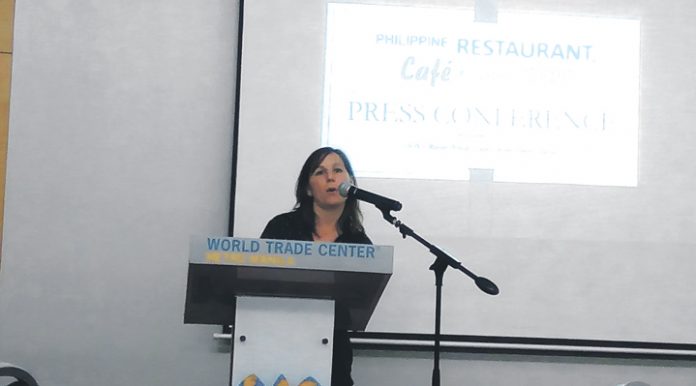
In Photo: World Coffee Events Creative Director Amy Ball
Despite the strong growth of coffee shops in the Philippines, the Filipino brand of coffee has yet to have a wider presence in the international market.
World Coffee Events, a group that is part of the Specialty Coffee Association of America and Speciality Coffee Association of Europe, said the world has yet to be fully aware of the Filipino coffee beans.
“In the United States I know there is an awareness of coffees in the Philippines, but it is not common to see beans from the Philippines in specialty cafés. But I know they are always looking for quality coffees everywhere, and I know there is interest in developing more of a sort of a specialty commodities market here,” World Coffee Events Creative Director Amy Ball said.
However, Ball said the Philippines is slowly gaining a name for itself in the world’s coffee industry through its representatives who have continued to rank high in the annual Word Barista Championships.
Ball commended the progress the Philippines is making in its bid to professionalize the country’s coffee shops.
“There is a difference now in food-and-beverage training, and they understand the specific skills of the job, and that is a really cool thing to standardize and professionalize, so that shows there is some traction and some progress,” Ball said.
Meanwhile, Philippine Asia Conferences and Exhibitions President May Juan said there is now a boom in coffee shops across the country, noting that the number of independent coffee players has exceeded those from popular franchises.
“According to research that we have seen, there are more independent cafés and coffee shops compared to franchises. But, of course, these franchises are still strong in marketing. This is also the case for restaurants. Not that we want to kill the franchises, but it is good to see that there are more independent players. This will show that our country is indeed progressing. You have to create a balance,” Juan said.
Juan, whose company will be handling the Philippine Restaurant, Café and Bar (Philresca) Expo in March, said there are now also more companies supplying equipment for café businesses.
Philresca will be the first trade event focusing on restaurants, cafés and bars. It will also host the Philippine National Barista Championship and Philippine National Latte Art Championship, where the winners will represent the Philippines at the world championship in South Korea in November next year.
Outside of coffee shops, Juan noted that full-service restaurants and fine-dining centers in the country are now revisiting Filipino cuisines.
“Mostly the food here is modernized, so the authenticity is a bit lost. If you go to Thailand or Vietnam, they have some sort of ownership of their food. Here in the Philippines, adobo alone has different versions,” Juan said. “So there is a debate. When you talk of adobo or sinigang, we have to know its history. Is it really a Filipino or a Spanish dish?”
Juan said they will be working with institutions like Culinary Generals & Razor Chef Philippines in a discussion of traditional Filipino food, and how there can be a single identity that can be presented to the international market.
source: http://www.businessmirror.com.ph / Business Mirror / Home> Envoys & Expats> Features / by Danielle Gabriel / December 24th, 2016
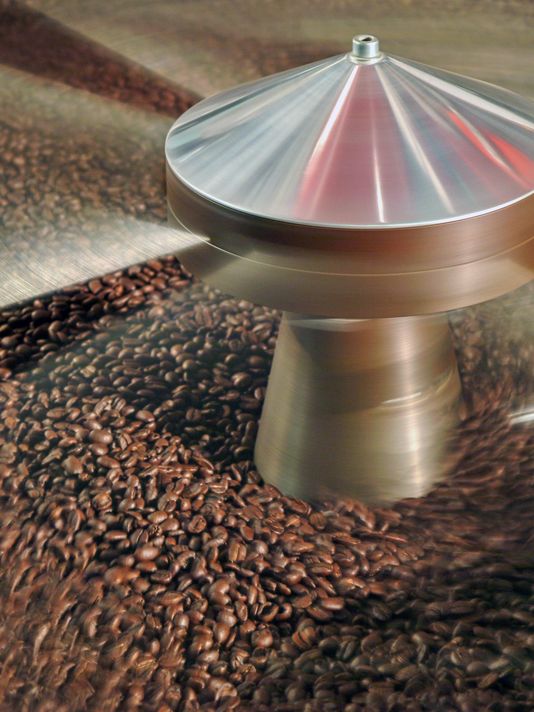
Coffee beans cool after being dark roasted at Vermont Artisan Coffee & Tea in Waterbury (Photo: Courtesy Vermont Artisan Coffee & Tea)
Coffee drinkers are growing up. So is their beverage of choice.
Baby boomers and seniors are the biggest coffee consumers in the United States, according to the National Coffee Association.
An increasing number of Vermont companies are hoping that baby boomers’ desire for locavore products will lead them to purchase coffee that is roasted close to home. They import their beans from a variety of sources and provide high-end coffee for those who have cultivated a taste for their caffeinated beverage of choice.
As is the case with craft beers and craft spirits, Vermonters are showing an affinity for locally roasted, small batch coffees. For some, the country of origin is the most important selling point. Others search for esoteric flavoring or the recognition that the coffee beans are Fair Trade or organic..
Mané Alves of Vermont Artisan Coffee and Tea in Waterbury said while some people drink coffee only for the caffeine, many others are developing a more sophisticated palate for the beverage.
“The previous generations may not have cared that much,” he said, “but I think that has evolved. We’re not at the wine model yet, but we’re moving toward it. … In a restaurant, you’re likely to ask for a cabernet or pinot, rather than just a red wine. People are starting to order coffee based on the varietal or country of origin.”
Vermont Artisan Coffee and Tea is among a growing number of Vermont companies dedicated to coffee roasting, some of which are doing very inventive things like infusing cold coffee with nitrogen or using coffee for meat rubs.
Alves, a native of Portugal, worked in the wine industry in California, but moved into the world of coffee when he followed his future wife to Vermont. Sensing a void in the field of coffee education, he said, he founded Coffee Lab International in 1995.
“I was lucky because I came from wine country and had the sensory background which could be applied to the coffee industry,” Alves said. “At that time, there was no place people could go to learn, but these days, the Specialty Coffee Association of America and other organizations in Europe have established a curriculum where we can teach about brewing, cupping, roasting, and being a barista. It’s almost like professional development classes.”
Alves is putting the finishing touches on a new building, which is tentatively scheduled to open in early January. It will include a larger space for teaching and a coffee bar. It will be the first fully certified facility on the East Coast.
“We only roast coffee when we have an order, so people have to order ahead,” he said. “This way, I can sell by the cup.”
The cupping and tasting classes Alves will offer will follow the curriculum of the nonprofit Coffee Quality Institute, while the roasting classes will be of his own design.
Alves has developed a new product line, Caff-Draft; a nitrogen-infused cold coffee. The product is poured from a tap and resembles a dark ale, but tastes like coffee.
“It’s very refreshing,” he said “and we’ll have different types that we’ll put on the market seasonally.”
The new café will have two or three different spigots for Caff-Draft. Additionally, Alves is planning some mixed coffee drinks using local brewed alcohol.
Customer loyalty matters
Like Alves, Sandy Riggen came to the world of coffee via a circuitous route. A former caterer and private chef, Riggen bought Brown and Jenkins Coffee 10 years ago with her husband, Rich Williams. The company is one of the state’s older coffee roasters, dating back to 1984.
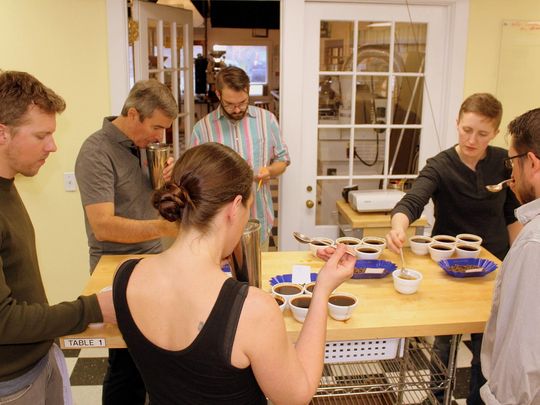
The sensory team at Vermont Artisan Coffee & Tea cups a production roast. (Photo: Courtesy Vermont Artisan Coffee & Tea)
Riggen said baby boomers continue to favor percolated coffee over more modern single-serve options. The majority of her sales are online, with a subscription business of nearly 2,000 people. The company also has commercial and personal accounts and sells its coffee at the Vermont Maple Outlet on Route 15.
“Our demographic is over 50, well-traveled, well-educated and worldly,” Riggen said. “I know a lot about my customers and they tend to be more loyal than millennials.”
Baby boomers are interested in learning more about what they drink, Riggen said, so she has begun providing more background material about her coffee on the company’s website.
Brown and Jenkins has 72 different types of coffee, including 14 single origin beans, a designation which indicates that all the beans come from the same location.
Riggen said coffee can be used in a variety of foods and she offers coffee rubs as part of her product line. It was only after she had purchased the company that she learned one of the secret ingredients in her grandmother’s signature gravy was coffee.
Boomers want better coffee
A relative newcomer to the field of gourmet coffee is Tony Basiliere, the 63-year-old owner of Earthback Coffee Roasters in South Burlington. Basiliere said he thinks baby boomers are drinking less coffee than they did in their youth, but are gravitating to better coffee.
“They are enjoying coffee more for its flavor attributes,” he said, noting that young people are following suit. “Being into coffee as a young person is a hip thing, which I think is fantastic.”
Earthback Coffee can be purchased online and at locations in Washington and Chittenden counties. It is the exclusive coffee served at Tight Squeeze in Burlington.
Baby boomers and their millennial counterparts are part of what is known as the third wave of coffee, Basiliere said, a movement which considers coffee to be an artisanal product similar to wine rather than being treated as a commodity.
But Basiliere said he thinks, in some cases, that wave is being pushed a bit too far by those who make coffee overly light in order to accentuate the flavor characteristics, but lose body as a result.
Basiliere has been in business since 2011 and his beans are certified by the Rainforest Alliance, Fair Trade or USDA Organic. He said baby boomers are particularly interested in the organic label for health reasons.
“We’ve beaten ourselves up and we want to take better care of ourselves now,” he said, “but the reality is that specialty grade coffees, even those without an organic certification, don’t have anything bad in them.”
The name Earthback comes from Basiliere’s commitment to a healthy ecosystem.
“My philosophy in business,” he said “is awareness of the environment, constantly seeking ways to lessen the impact or footprint.”
Basiliere makes his deliveries with recycled banana boxes and only a tiny percentage of the company’s waste goes to a landfill. He recently purchased a Loring coffee roaster which he described as the most energy efficient on the market, using one-fourth the energy of a conventional roaster with no emissions.
After years of medical warnings about the effects of coffee, Riggen said she is pleased that current studies show that there are benefits to drinking it.
“Coffee is universal,” she said. “It connects the world.”
Check them out
Vermont Artisan Coffee & Tea Company
Packaged Coffee & Cafe Chain India Market Segmentation and Major Players Analysis and Forecast to 2021
Pune, India :
This report gives an in-depth analysis of coffee industry in India.
Coffee as a segment has steadily gained share of total consumer spending on beverages over the last many years.
Coffee serves as the first rung on the ladder for young consumers in India, while it reflect growing demand among consumers looking for convenient, decent-quality coffee at home and in the workplace.
Opportunities for coffee to gain more popularity among new consumers, as well as reclaim those exiting the category, lies in continued modernism, both in terms of developing new flavours and improving quality.
Request a sample report @ https://www.wiseguyreports.com/sample-request/744788-india-packaged-coffee-cafe-chain-market-outlook-2021
According to “India Coffee Market Outlook, 2021”, packaged coffee market is expected to grow at a CAGR of around 12% over next five years.
Coffee market consists two categories, such as packaged coffee and coffee shops & cafe market.
Instant coffee is creating a huge demand in packaged coffee segment. The convenience, versatility of flavour and format, and branded experience provided by instant coffee enable it to be positioned as a premium hot drink option, particularly for new coffee drinkers in predominantly lower income tea drinking markets. The easy preparation of instant coffee, as well as its aptitude to be tailored to local taste preferences has made it the “coffee of choice” in most markets in India. Instant coffee has propelled brands like Nestle, HUL and Tata Coffee in its category. However filter coffee is also expanding its presence among Indian consumers.
The market for filter coffee is predominantly southern India where the competition from local/regional player is significant.
The RTD market for coffee based beverages is likely to grow, although it is currently at a very nascent stage However, it benefited from a range of new product launches towards the end of the review period.
These products are mainly consumed by young and middle-aged demographics and tend to be consumed in the mornings as an energy booster. T
The channel which contributes most to the sales of packaged coffee is traditional retail channels, whereas modern retail is currently in the moderate stage.
The growth of cafe chains over the last decade also boosted the visibility and per capita consumption of coffee among Indian consumers.
Cafe Coffee Day, Barista and Tata Starbucks are some of the leading players in cafe market.
Coffee consumption is higher among southern part of the country. However other regions are expected to increase in term of coffee consumption during forecast period.
Robusta coffee production is much higher than Arabica in India, which is anticipated to increase much higher in the future years.
Key points in table of content
1. Executive Summary
2. Global Coffee Market Outlook
2.1. Market Size By Value
2.2. Market Size By Volume
2.2.1. Overall Market
2.2.2. Europe Coffee Market
2.2.3. Asia & Oceania Coffee Market
2.2.4. North America Coffee Market
2.2.5. South America Coffee Market
2.2.6. Africa Coffee Market
2.2.7. Central America & Mexico Coffee Market
2.3. Market Share
2.3.1. By Region
2.3.2. By Country
2.4. Production
3. India Coffee Market Outlook
3.1. Market Size By Value
3.2. Market Share By Category
3.3. India Packaged Coffee Market Outlook
3.3.1. Market Size By Value
3.3.1.1. Overall Market
3.3.1.2. Instant Coffee Market
3.3.1.3. Filter (Roast & Ground) Coffee Market
3.3.1.4. Ready-To-Drink Coffee Market
3.3.2. Market Share
3.3.2.1. By Company (Instant Coffee)
3.3.2.2. By Type
3.3.2.3. By Sales Channel
3.4. India Coffee Shops and Cafe Market Outlook
3.4.1. Market Size By Value
3.4.2. Market Share By Company
3.5. Production
3.6. Product, Price & Variant Analysis
4. India Economic Snapshot
5. Raw Material
6. Manufacturing Process
7. Market Penetration
8. PEST Analysis
9. Policy & Regulatory Landscape
10. Trade Dynamics
10.1. Import
10.2. Export
11. Channel Partner Analysis
12. India Coffee Market Dynamics
12.1. Key Drivers
12.2. Key Challenges
13. Market Trends & Developments
13.1. Increasing Superiority of Coffee Shops and Baristas
13.2. Chilled Addiction among Young Consumers Drives the Popularity of Cold Brew Coffee
13.3. The Indulgence Trend Drives the Preference for Premium Coffee
13.4. Coffee has Turned out to be a Trendy Beverage for the Young Consumers
13.5. Focus on Innovation of Food & Localize Menu
14. Competitive Landscape
14.1. Porters Five Forces
14.2. Company Profiles
14.2.1. Carnation Hospitality Private Limited (Barista Cafe)
14.2.2. Coffee Day Global Limited (Cafe Coffee Day)
14.2.3. Devyani International Limited (Costa Coffee)
14.2.4. Hindustan Unilever Limited
14.2.5. Jubilant FoodWorks Limited (Dunkin Donuts)
14.2.6. Nestle India Limited
14.2.7. Pan India Food Solutions Pvt. Ltd. (The Coffee Beans &Tea Leaf)
14.2.8. TATA Coffee Limited
14.2.9. Tata Starbucks Private Limited
15. Strategic Recommendations
16. Disclaimer
Get this report @ https://www.wiseguyreports.com/checkout?currency=one_user-USD&report_id=744788
source: http://www.einnews.com / EINnews / Menu> All News Topics> Press Release by Industry Channel / EIN Presswire.com / Pune India – December 20th, 2016
Tata Coffee, part of the $100-billion salt-to-software Tata conglomerate, announced post-market hours on Monday that it would set up a green field instant coffee facility of 5,000 MT capacity in Vietnam at a cost of $50 million (about Rs 350 crore).
source: http://www.profit.ndtv.com / NDTV PROFIT / Home> Markets / by Sandeep Singh / December 20th, 2016
Coffee – the fuel that powers legions of tired-eyed Orange County workers every morning – doesn’t truly come from a cafe, a bag or even a bean.
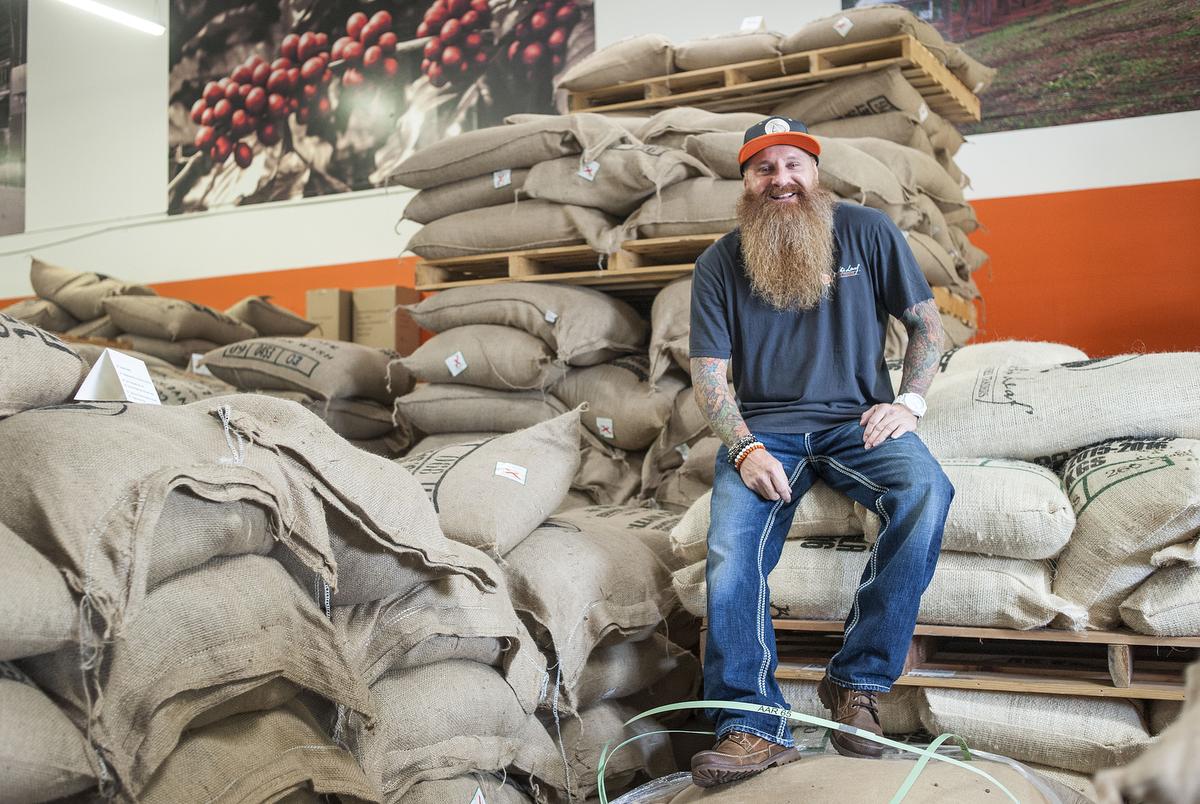
Bodhi Leaf founder Steve Sims sits among coffee beans he has imported from around the world at his facility in Orange on Thursday, December 1, 2016. (Photo by Nick Agro, Orange County Register/SCNG)
Standing in an Orange warehouse, surrounded by more than 300 tons of imported coffee beans, Bodhi Leaf Coffee Traders founder Steve Sims’ eyes gleam as he points from bag to bag, explaining the rich history behind each, going all the way back to “coffee cherries” gathered by the hundreds of international farmers he networks with. The precious pits of these cherries, known as coffee beans, can yield all kinds of flavors and sensations depending on how they are harvested and roasted.
With its Orange headquarters, an Anaheim Hills cafe and two new locations coming soon to Santa Clarita and Placentia, Bodhi Leaf works to bring the cream of the world’s caffeinated crop to hundreds of roasters, stores and individuals.
Sims, 47 of Yorba Linda, wasn’t always a coffee man. Once in real estate, he had to scramble to find a way to make a living when the Great Recession hit. After chancing upon a container of top grade Sumatran coffee in his travels, Sims made connections that – like a coffee plant – would bear bountiful fruit.
Bodhi Leaf sources its beans with the intention of going well beyond what people have come to expect from their morning cup of joe. Once they’ve had the good stuff, there’s no turning back, Sims said.
“It kind of draws you in,” he said. “Once they cross that line, they’re not going back to gas station or commodity coffee. There’s an element to coffee and people in the coffee industry – people have a passion for it, want to learn more about it and talk about it.”
Sims doesn’t just know where each bag of beans in his warehouse comes from – he personally knows the farmers who’ve cultivated them. The Bodhi Leaf team networks with farmers around the world, including in coffee hotspots in Columbia, Brazil, Ethiopia, Kenya, Guatemala and Africa.
Sims said he and his team won’t sell beans before they’ve met the farmers in person, sometimes flying up to 36 hours to see what they’ll be getting in person. When they find something they like, they buy it at a premium to help ensure the farmers can make a living off their craft.
After a long journey, this worldwide parade of beans converges at the Orange warehouse. Customers in the front cafe can watch through a wall-sized window as staff stack mountains of bags in the warehouse or sit at the bar as beans whirl in a roaster behind the counter.
People, Sims said, like to know what goes into their – the more they know of the history and the process, the better that cup will taste. To this end, the shop has started holding classes once a month, offering insight into the history of coffee and techniques to get the most out of their beans.
Sims likens the growing trend of specialty coffee to craft beers – there’s an art to it that can get people hooked. His personal favorite, African coffee, can be an acquired taste for some, but once you’re a fan you won’t settle for less, he said.
“We’ve had people that drink gas station coffee their whole life come in to drink African coffee and ask ‘what is wrong with this!?’ But if they come in and try a few different coffees, they learn to appreciate it,” Sims said. “If you know what goes into it, it really makes you appreciate that cup more.”
source: http://www.ocregister.com / The Orange County Register / Home> Top News> News / by Jonathan Winslow, Staff Writer – jwinslow@scng.com / December 05th, 2016
Manyepanda Madaiah Chengappa recently took over as the Chairman of Karnataka Planters Association (KPA). Karnataka accounts for more than 70% of the coffee production in India.
According to United Planters Association of Southern India (Upasi), Karnataka’s post-monsoon estimated coffee production for 2015-16 was 253,340 tonnes, with the all-India number standing at 350,000 tonnes. KPA has about 700 members as of date.
In an interview with Furquan Moharkan of DH, Chengappa says that his aim as the chairman is to make domestic demand for the cup of coffee transform from an elitist drink to a common man’s drink.
What are the challenges that coffee plantation sector faces today?
Climate change has increased, apart from pests and diseases impacting the coffee crop productivity. The Arabica coffee crop yield has reduced from 1,200 kgs, to 600 kgs per hectare, while Robusta coffee has decreased from 2,000 kgs, to 1,400 kgs per hectare, over the last decade. For instance, this year, Kodagu has 300 mm less rainfall over the previous year, and Chikkamagaluru has also suffered a similar fate, which affects the standing coffee crop and development of new shoots in coffee plants for the coming season.
Labour wage constitutes over 60% of the total cost of coffee cultivation. The annual wage increase was below 6% till 2007-08. From 2008-09, the increase was very steep. Against 2007-08’s wage of Rs 79 per day, the current wage is at Rs 263 — an increase of 232% or an annual average increase of 15%. This could be the highest percentage increase for any industry in Karnataka. Also the statutory and welfare costs for the labour, which are over and above the wages and benefits, works out to an additional 50% of the wages. This is an additional financial burden for both corporate and proprietary planters.
However, the sale price for coffee at the farm gate hovers around Rs 2,800 to Rs 3,500 for a 50-kg bag, while the labour and fertiliser costs have spiralled disproportionately. The need to invest more funds for R&D to develop better quality coffee plants that are high-yielding and pest-resistant is another challenge.
What are your priorities after taking over as Chairman of the KPA?
Primarily, my major objective is to make domestic demand for the cup of coffee transform from an elitist drink to a common man’s drink. I would seek the Coffee Board’s assistance to establish coffee kiosks at public places like government offices, bus and railway stations, airports, shopping malls and educational institutions. This would make the demand for coffee explode in the country. Towards this objective, it would be necessary to jointly pursue vegetative clonal and tissue culture propagation of coffee, with United Planters Association of South India (Upasi) and Central Coffee Research Institute, Balehonnur, Karnataka. Also, to push for the import of pest and disease-resistant high-yielding coffee plant material. Identify biological viable and effective methods to treat effluents.
Also, request the state government and its Department of Agriculture to allocate Rs 1.9 crore in the state budget to fund the Upasi-KPA coffee research project. To establish soil and leaf analysis laboratories at Chettalli, Kodagu district and Chikkamagaluru district for the convenience of small and large growers.
A lady planters sub-committee has been constituted to promote community outreach programmes and showcase their achievements in cultivation of coffee, plantation nurseries, local marketing initiatives at national and international levels, home stays and plantation cafes for income augmentation.
What is the impact of the GST regime on the coffee plantation sector?
GST does not affect the coffee grower directly, as being agriculturists, they come under zero tax brackets. GST is applicable only after curing at the roasting and powdering stage, when the value-addition takes place, and the coffee can be consumed as a cup of coffee. According to Rule 7B (1) of Income Tax Act — “Income derived from the sale of coffee grown and cured by the seller in India shall be computed as if it were income derived from business, and 25% of such income shall be deemed to be income liable for tax.” This I-T Rule needs to be amended to tax coffee only at the stage of roasting and powdering that would enable the grower to sell coffee, which is plantation-specific, directly to the local and global markets.
Do you think that the import of pepper from Sri Lanka could affect domestic trade?
Import of poor quality pepper is killing the Indian pepper market. A regulatory price mechanism is necessary, whereby the price of pepper imported should be about 5% lower than the Cochin pepper auction price of equal quality of the day. Also, quality parameters of the imported pepper should be strictly monitored by a suitable government agency.
Your comments on the degradation of forests and environment pollution that have a bearing on the plantations in Karnataka.
The National Forest Policy is under amendment and a high-powered committee has been instituted for the purpose. The KPA and Upasi have jointly made a representation to the Union Ministry of Environment and Forests. Also the elephant menace in Kodagu district has assumed dangerous proportions due lack of proper fodder and vegetation in the game sanctuaries. Plantation crops, fruit trees and human beings are being trampled upon and destroyed. Therefore, the translocation of elephants appears to be the only solution, as all other forms of deterrents and barriers have proved ineffective.
While tourism has phenomenally raised the socio-economic level of people in the plantation districts, it should not lead to environmental pollution. Therefore, it is necessary to promote eco-tourism in the plantation districts of the state. Also, aggressively ban all types of pollutants, plastics, discharge of sewage and chemical effluents into the rivers. People need to be aware of waste segregation, its recycling and proper disposal through the media platforms to promote eco-tourism.
source: http://www.deccanherald.com / Deccan Herald / Home> Supplements> Economy & Business / by Furquan Moharkan / DHNS – December 12th, 2016
Sunalini Menon, a coffee taster and CEO of Coffee Labs is an avid collector of memorabilia concerning coffee.
Bengaluru :
Sunalini Menon remembers the first Cafe Coffee Day (CCD) outlet VG Siddhartha started on Brigade Road in 1996. She had just ended a two decade-long stint at Coffee Board and was making brews for CCD under her independent consultancy Coffeelab.
Siddhartha, Menon reminisces, took advantage of the IT boom to make an offer: buy one cup of coffee and surf the net for one hour.
“We served filter coffee on the ground floor and espresso on the mezzanine floor. People warmed up to only cappucino and lambasted us for charging exorbitant rates for a cup of brew.“
In stark contrast, the three-day Coffee Santhe last weekend saw a footfall of 4,000 people. “We have come a long way since,“ Menon, Asia’s first woman coffee taster, points out.
It is experiences and journeys like these that Menon plans to document in a museum dedi cated to coffee. That’s her dream project and a final ode to her love for coffee.The project, which has been in the pipeline for some time now, is taking shape.
“We are forming a trust since it is a non-profit initiative. It requires two acres of land as we plan to grow coffee around it. We have decided on Devanahalli, though there is an offer for it to come up in Chikmagalur,“ she said, explaining that budgets have to worked on accordingly . Menon favours a location closer to the airport as “travellers with a transit visa can see the museum, have a cup of coffee and fly back with happy memories of India.“
Menon, 64, has the blueprint ready .“We will start with the story of Baba Budan (who brought coffee to South India) and traverse to the cultural aspects of coffee, diversified cultivation patterns and types of seed material.We are planning a layout that is representative of a typical Indian coffee plantation.“
The exhibits will include antique coffee roasters, grinders, brewing equipment, mugs, cups and coffee powders from different corners of the world. The Coffeelabs office in RMV Extension, a mini-museum in itself, houses memorabilia including tribal products from coffee-growing areas, arecanut pickers, ancient milk measurement units and coffee pots.
“Each equipment throws light on the culture of the country it comes from,“ Menon explains. For instance, Italian pots have ornate carvings; the ones in Iran are known for their silver and filigree; Pakistan has a recurring crescent moon pattern while Egypt sports designs of Cleopatra.
Education consultant and coffee addict Shaista Baljee believes that a museum will find takers not only among aficionados like herself but others.“India, especially Karnataka, has such a fantastic coffee culture that has developed phenomenally over the years. An initiative like this in a tea-drinking country will be amazing.“
source: http://www.economictimes.indiatimes.com / The Economic Times / ET Home> Magazines> Panache / by Divya Shekhar, ET Bureau / December 07th, 2016
Assam chief minister, Sarbananda Sonowal on Thursday inaugurated the exhibition cum sale of Nagaland Coffee at Kisama. He was accompanied by Nagaland chief minister, T.R. Zeliang and cabinet colleagues from Assam and Nagaland.
According to an official, the department promotes both Arabica and Robusta variety of coffee.
The department took up development of coffee in Nagaland in the year 2014 in collaboration with the Coffee Board of India with the aim of uplifting the economy of the rural people.
Coffee has a number of health benefits, such as lowering the risk of type II diabetics, alezheuner’s disease, dementia parkinson’s disease etc.
The department has teamed up with a coffee expert from South Africa, Dr. Pister to promote the production of coffee in the State. Dr. Pister will also be demonstrating the various process of coffee making like pulping, roasting etc and preparation of world class cappuccino, espresso etc.
source: http://www.nagalandpost.com / Nagaland Post / Home> State> State News / Dimapur – December 02nd, 2016
Rising international coffee prices this year could hit South Korea soon, industry officials said Tuesday, although major franchises and coffee companies say they have no immediate plans for a markup.
The International Coffee Organization (ICO) in its October report noted the significant rise in coffee prices, with Robusta, used mostly for instant coffee, increasing 30.1 percent compared to last year. Arabica, used by Starbucks and other brands of premium coffee, is priced 30.1 percent higher than last year.
The prices have been driven by serious droughts in major coffee producing nations like Vietnam and Brazil, coupled with increasing demand in developing countries, including China.
Industry officials say firms and franchises have purchased their coffee through futures contracts that will last for up to a year and help keep the local coffee price stable. When coffee prices continue to rise, however, there will be pressure for a hike, they say.
Starbucks has already marked up its coffee prices in China and the United States this summer. It hasn’t raised its prices in South Korea for over 28 months after the last hike in 2014.
“It is true that there are factors for a price increase, such as the price of coffee beans, monthly lease fees and employment costs,” an official at Starbucks Korea said. “At this point, however, we are not considering a price hike.”
“Most of the coffee beans at our stores have been purchased through futures contracts. The international price increase is not necessarily immediately reflected in our products,” he said.
Namyang Dairy Products Co. and Maeil Co., leading local producers of coffee drinks, both indicated they are not planning to raise prices for now, but industry officials say they are being pressed by poor corporate performance.
“We are looking at the price graph after coffee prices began to rise this year,” said an official at Maeil, the operator of the coffee franchise Paul Bassett. “If this trend continues for the long term, the effect is inevitable.”
source: http://www.english.yonhapnews.co.kr / Yonhap News Agency / Seoul – November 15th, 2016
WELCOME. If you like what you see "SUBSCRIBE via EMAIL" to receive FREE regular UPDATES.
Read More »