Category Archives: Coffee News

Producers from Nine Countries Honored at 1st Annual Ernesto Illy International Coffee Award

Ahmed Legesse of Ethiopia accepting the top prize at the 1st Ernesto Illy International Coffee Awards gala in New York. Illycafé photo.

Last week, the espresso-focused Italian coffee giant Illycafé presented its first annual Ernesto Illy International Coffee Awards, recognizing the top quality producers in its supply network.

Held at the Delegates Dining Room of the United Nations in New York, the event notably pulled the mask off Illy’s signature blend, while more importantly recognizing and promoting the individual producers behind it in the spirit of quality through collaboration. The company has been holding a similar awards program annually in Brazil, yet in UN-fashion, decided to expand the program to include a number of additional major producing countries.

From its quality lab in Trieste, Italy, Illy identified the three best lots from the 2015-16 crop year from each of nine countries that have regularly contributed to Illy’s signature blend, before an international jury selected the top lot from each country. The awards gala itself recognized all 27 finalists.

The countries represented included Brazil, Colombia, Costa Rica, El Salvador, Ethiopia, Guatemala, Honduras, India and Nicaragua, while the international jury — calibrated by Mark Pendergrast and Illy Quality director David Brussa — was composed of coffee professionals, chefs and members of the coffee-focused media, including Peter Giuliano, Kerri Goodman, Corby Kummer, Grace Hightower, Suvir Saran, Viki Geunes, Luigi Taglienti, Maria Loi, and Adolfo Henrique Vieira Ferreira.

In the end, Ahmed Legesse from Ethiopia was presented with the Ernesto Illy International Coffee Award, with coffee praised by the jury as having an intense yet delicate flavor, and unique high-intensity floral jasmine notes mixed with a hint of citrus and fresh fruit. Receiving an equal score, a Honduran lot from Juan Angel Milla received a special honorable mention.

“Exactly 25 years ago, my father Ernesto Illy created the Brazilian Quality Award, which triggered the transformation of Brazil into a high quality coffee producer,” illycaffè Chairman Andrea Illy said in an announcement following the event. “Today we celebrate this important milestone by extending this prestigious award to all the major producing countries of the unique illy blend, with the aim of building the future of coffee by bringing together growers and coffee lovers.”

Here, by country, are all 27 finalists in the 2016 Ernesto Illy International Coffee Awards

Brazil

1. Juliana Tytko Armelin
2. Daniella Romano Pelosini
3. Arabela Pereira Lima

Colombia
1. Carlos Arturo López Guarnizo
2. Ovalle Duarte
3. Eliecer Torres

Costa Rica
1. Mauricio Barrantes
2. Warner Quesada Elizondo
3. Johnny Marin Badilla

El Salvador
1. Jose Antonio Salaverria Jr.
2. Leopoldo Muyshondt
3. Miguel Angel Caceres

Ethiopia
1. Ahmed Legesse
2. Seada Shifa
3. Yismashewa Seyoum

Guatemala
1. Jorge Bolaños
2. Jose D. Guerra
3. Edward Andres Esteve

Honduras
1. Juan Angel Milla
2. Dario Enamorado
3. Omar Acosta

India
1. Mohamed Suhaib
2. Tanveer Jabbar
3. Anand. J . Mathais

Nicaragua
1. Jose Arauz
2. Carlos Alberto Cruz Lopez
3. Victor Hugo Castillo
________________________________________________________

Nick Brown
Nick Brown is the editor of Daily Coffee News by Roast Magazine. Feedback and story ideas are welcome at publisher@dailycoffeenews.com.
________________________________________________________

source: http://www.dailycoffeenews.com / Daily Coffee News by Roast Magazine / by Nick Brown / November 08th, 2016


GCC takes up drive to promote Araku coffee

Visakhapatnam :

The organic coffee grown by Girijan farmers in the picturesque Araku valley of Visakhapatnam district is making a mark not only in the country but internationally as well, and all efforts will be made to promote it in an aggressive manner, according to Social Welfare and Tribal Welfare Minister R. Kishore Babu.

He was speaking here on Wednesday morning after releasing two new products of the Girijan Co-operative Corporation (GCC), a state government undertaking. The products are Vaisakhi Coffee and Kumkum (saffron) powder. “Coffee cultivation is bringing light into the lives of Girijans in the Eastern Ghats of Visakhapatnam district. The state government has taken up a project to bring one lakh acres under coffee cultivation in the district and Rs. 526 crore would be spent on it,” he said.

He lauded the GCC for procuring coffee directly from the Girijan farmers and marketing it on its own, eliminating middlemen. He said Araku coffee would be promoted under the brand name Vaisakhi and there was good demand for kumkum powder. “The GCC has already received orders worth Rs. 10 lakh from the famous Srisailam Siva temple in Kurnool district, and we expect big orders from other temples in the state and outside as well,” he said.

Kishore Babu said the state government was giving the GCC functional autonomy and “in the past few years the turnover of the GCC has risen almost three-fold from Rs. 90 crore in 2013. For the current year we have set a target of Rs. 365 crore and Rs. 155 crore has already been achieved. In the next five years, the turnover of GCC should cross Rs. 1,000 crore.”

GCC Vice-Chairman and Managing Director A.S.P.S Ravi Prakash said the corporation would strive to increase the income levels of Girijans and “GCC has waived farm debts of Girijan farmers to the extent of Rs. 1.8 crores.”

Araku MLA G. Sarveswara Rao said organic products such as turmeric and coffee procured from the Eastern Ghats inhabited by the Girijans, should be promoted in the domestic and international markets.

sarma.rs@thehindu.co.in

sourcce; http://www.thehindubusinessline.com / Business Line / Home> News> National / by CH. R.S. Sarma / Visakhapatnam – November 09th, 2016

True South: Filter Coffee WIth A Twist

true-southkf01nov16

Are you a coffee lover who needs your cup of steaming, hot coffee as soon as you wake up? But the morning rush leaves you with just about enough time to grab a cup of instant coffee, and head out. There’s a solution to that. Meet true south and their life saving projuct, filter coffee in a pouch! Skeptical? We were too.

truesouth01kf01nov2016

SKIM

Being true coffee lovers, we headed over to try some of the coffee at true south, and we were very surprised. The coffee is strong, aromatic, and tastes like it was just brewed!

TRUE SOUTH: FOR EVERY COFFEE LOVER

True south is ready-made coffee decoction available in pouches. All you’ve got to do to enjoy a cup of fresh authentic tasting filter coffee is empty the contents of the pouch, add milk and sugar, and stir! Voila, your hot cuppa is ready in minutes.

The idea started when the folks at True South, who are coffee planters, wanted to make good coffee available easily. The coffee comes from Coorg and Chikmagalur, so it’s from some of the best coffee-growing regions in India. The decoction comes in two varieties: classic and royal, which vary slightly in the percentage of coffee and chicory they contain {the classic blend has 80 per cent coffee and 20 per cent chicory, while the royal variety has 75 per cent coffee and 25 per cent chicory}. They advise that you add one part decoction to five parts hot milk for a typical cup of filter coffee.

truesouth02kf01nov2016


WHERE CAN YOU GET YOUR HANDS ON SOME?

Whether you have no time to make decoction every morning, or are unable to find the perfect blend that works for you, True South coffee is the perfect solution. You can order the coffee pouches online, or pick them up from the store located on Richmond Road.

And the perfect part is that you can use them for 15 days after opened, or store them for upto five months!

Wake up and smell the coffee!

source: http://www.hungryforever.com / HungryForever.com / Home / by Aditi Sriprasad / October 31st, 2016

Crimson Cup Expands Friend2Farmer® Direct Trade Relationships with Peruvian Coffee Farmers

Columbus, Ohio coffee roaster Crimson Cup Coffee & Tea recently traveled into Peru’s Andes Mountains to expand relationships with coffee farmers. During the trip. licensed Q Grader Brandon Bir led judging for a coffee competition in the Junin region.

Columbus, Ohio :

Brandon Bir, coffee sourcing and education manager for Columbus coffee roaster Crimson Cup Coffee & Tea recently traveled into Peru’s Andes Mountains to expand relationships with coffee farmers, agronomists, and others dedicated to improving the quality of the country’s coffee. While there, the licensed coffee Q Grader led judging for a coffee competition in the Junín region.

Bir’s trip originated in Lima. While visiting the capital city, he shared samples of Crimson Cup’s Ethiopian Kossa Kebena and 1991 Blend coffees with local coffee houses and coffee cuppers.

“We had some great discussions about Peruvian coffees, Lima’s coffee culture and how things are evolving,” he said. “They have some well-put-together cafés, and everyone’s competing for exceptional coffees.”

“Local coffees are getting better every year, with better coffees scoring in the mid-80s on the 100-point coffee quality scale,” he added. “In the past, they were known for their chocolatey flavors but were not extremely nuanced.”

From Lima, Bir traveled into the Andes Mountain jungle to La Merced, a town in the Junín region. There, he visited with Don Julio Arevalo Tello, founder of private co-op NARSA (NEGOCIACIONES AGROINDUSTRIAL AREVALO S.A.) Since 1988, NARSA has focused on helping small coffee and cacao farmers in Peru’s Central Highlands and Amazon regions with achieving market access throughout Peru and beyond.

“NARSA has been instrumental in coffee development in the Junín region,” Bir said. “We’ve been extremely impressed with the way they live their principles of integrity, eco-efficiency and transparency and their focus on inclusion of indigenous families.”

For the next four days, he visited local coffee farms and prepared for the upcoming coffee competition sponsored by NARSA. “The competition is just one of the ways NARSA is involved in improving local coffee quality,” he said.

One of the farms he stayed at was Finca Santa Rosa near the small town of Villa Rica. This farm is owned by third-generation grower Selena Contreras Obregon. Established by Contreras’ grandfather in 1927, the 104-acre, Rain Forrest Alliance-certified farm grows catuai, caturra, bourbon, typica and geisha varietals under a canopy of indigenous trees at an elevation of 1,600 meters.

“This is the third year we’ve visited Selena, her family and her farm,” Bir said. “They continue to impress us with their passion for quality coffee and dedication to progress in every aspect of operations. Over this past year, Selena’s coffee professionals created a new coffee lab to evaluate coffee quality.”

On his final day at NARSA, he coordinated a quality competition among more than 25 local coffee farmers. In addition to friendly competition, a goal was to help farmers understand the qualities that are more prized in coffee beans and that command a higher price. Bir and three other Q Graders cupped coffee samples from morning until the competition ended at 10 p.m.

“Our winner was an 89-point coffee from Damien Conde in Alto Palomar,” Bir said. It stood out from the typical coffees of the region with its flavor profile more similar to that of a high grown Kenyan coffee.”

Crimson Cup will evaluate the purchase of coffee from this crop through its Friend2Farmer direct trade program in the future. The roaster developed its Friend2Farmer direct trade program to ensure that farmers receive a fairer share of proceeds from coffee sales. The company pays a premium to farmers, who can then invest in agricultural and community improvements. Crimson Cup coffee experts also collaborate with farmers on ways to improve the quality of the coffee and quality of live for farmers, workers and their communities. In addition, the roaster invests in projects such as solar dryers to help improve coffee quality.

About Crimson Cup Coffee & Tea

Since 1991, Crimson Cup Coffee & Tea has hand-roasted specialty coffee in Columbus, Ohio and taught independent business owners to succeed through its coffee shop franchise alternative program. Sustainably sourced Crimson Cup coffee is available through a network of more than 350 independent coffee houses, grocers, college and universities, restaurants and food service operations across 28 states, as well as the company’s own Crimson Cup Coffee House in the Columbus suburb of Clintonville.

For more information, visit crimsoncup.com.

For the original version on PRWeb visit: http://www.prweb.com/releases/2016/10/prweb13805703.htm

source: http://www.benzinga.com / Benzinga / Home> PR Web – Columbus, Ohio / October 28th, 2016

CCRI to depute coffee experts to Nagaland

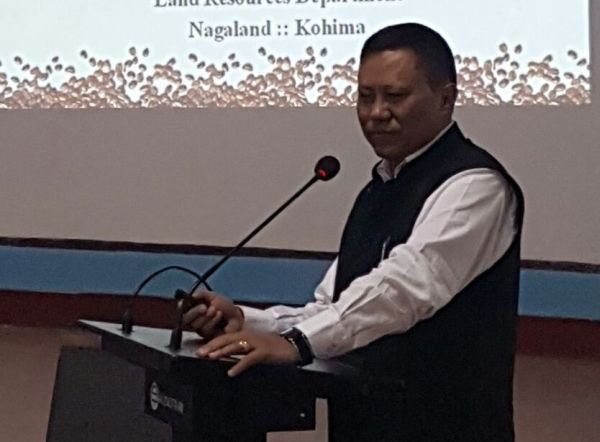
Secretary, Land Resources, Y. Kikheto Sema IAS sharing prospects of coffee plantation in Nagaland at CCRI Chikkmagalur, Karnataka.  (Morung Photo)
Secretary, Land Resources, Y. Kikheto Sema IAS sharing prospects of coffee plantation in Nagaland at CCRI Chikkmagalur, Karnataka. (Morung Photo)

Assuring all possible guidance and assistance to the state Land Resources Department for coffee plantation, the Central Coffee Research Institute, Chikkmagalur, Karnataka has agreed to depute scientists and technical experts to the state to study the climatic condition and feasibility of coffee plantations.

Speaking to The Morung Express over the phone from Bangalore, Secretary, Land Resources, Y Kikheto Sema IAS said that the Director CCRI, Dr. Raguramulu expressed happiness over the Nagaland team’s visit and agreed to depute coffee experts to Nagaland and also to provide whatever coffee seeds were required by the state.

Kikheto said that the climatic conditions of Karnataka and Nagaland were similar and expressed optimism that the state would see a landmark growth in coffee plantation with technical experts providing their valuable expertise after examining the feasibility.

He said Dr. Raguramulu recalled about the establishment of Coffee Demonstration Farm at Kiruphema in the past, which could not take off effectively owing to frequent landslides and volatile situation in the state. However, Kikheto apprised the CCRI Director that Nagaland was relatively peaceful now and assured of all government support for establishing Coffee (Arabica) Research Centre in the state.

CCRI officials, scientists and State Land Resources Department officers held a joint meeting on Wednesday at the former’s office, where Kikheto presented a power point presentation on the status of coffee in Nagaland.

He said Coffee plantation has an edge over rubber and tea since it could be intercropped with other crops such as banana, orange, citrus, pepper etc, while mixed cropping was not possible for the latter two crops. He said that the Land Resources Department was yet to receive funds even as it has been declared as the nodal department for revival of coffee plantation in the state.

Kikheto informed that the state LRD team were taken on a coffee farm visit by the officials and famers and also taken to Chikkmagalur coffee laboratory.

The LRD officials also visited the Coffee Sub Research Centre, Coorg on Thursday with CBI officials on Thursday.
“We have learned a lot from the field and laboratory visits about coffee plantation and we will accordingly train our farmers back home with proper guidance and assistance from the CCRI,” Kikheto said.

He informed that 70% of coffee production in the country was from Karnataka. Kikheto extended gratitude to the CBI Bangalore, CCRI Chikkmagalur and Coffee Sub Research Centre, Coorg for their support and cooperation.

source: http://www.morungexpress.com / The Morung Express / Home / by Morung Express News / Dimapur – October 20th, 2016(posted October 21st, 2016)

Increase allocation of coffee seeds to Nagaland: Govt says

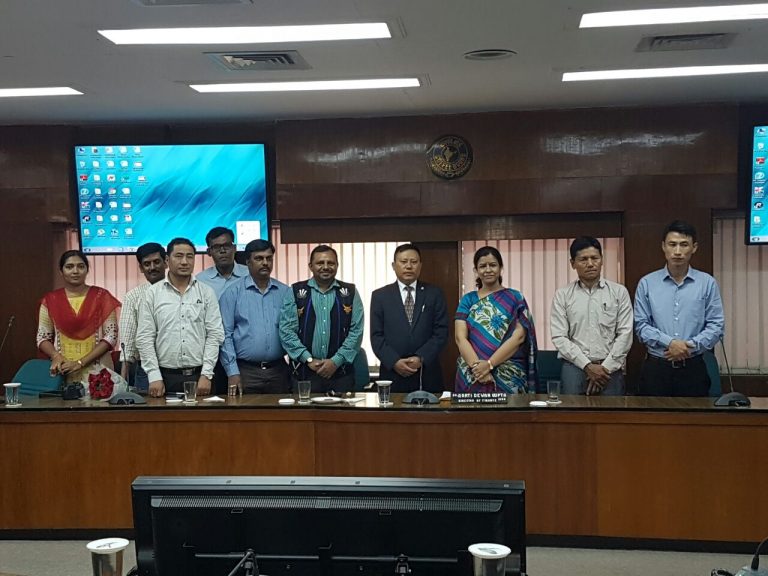
Officials of Land Resources Department, Nagaland and Coffee Board of India after a meeting in Bangalore on Monday

Citing feasibility and viability of coffee plantation in the state, the Nagaland State Department of Land Resources has requested the Coffee Board of India (CBI), Bangalore to enhance the allocation of coffee seeds to the state.

This request was made by a team of department officials led by its Secretary, Y. Kikheto Sema IAS and five other officers during a meeting with officials of the CBI, Bangalore at the latter’s office on Monday.

Speaking at the meeting, Kikheto said that there was vast coffee plantation in the state during the 1980s, however, it became a failed crop owing to lack of awareness, marketing and management problem. He said the farmers began to cut down coffee plants in desperation and that around 40 hectares remained now.

Kikheto said that a research conducted out of that 40 hectares, it was found that Arabica species coffee grown in the state was one of the best.

It may be mentioned that the state government on September 2016 had made the Department of Land Resources as the nodal department for revival of coffee plantation.

He said that the CBI had allocated 300 kgs coffee seeds during 2015-2016 but ran short since the demand was high in the state. Kikheto requested the CBI to allocate at least 4000 kgs seeds to cover 4000 hectares and added that the payment would be prompt. Responding to this request, Director of Finance, CBI, Dr. Arati Devan Gupta assured the Department officials of looking into the matter for enhancing coffee seeds allocation.

Kikheto said that the department was targeting coffee plantation coverage of about 50, 000 hectares by 2030.
He also said that the department during 2015-16 had developed 230 hectares of coffee plantation and plans to cover 600 hectares this year.

Pointing out that coffee harvesting takes about four years after planting, Kikheto asked the CBI for possible assistance to coffee farmers during the initial years of plantation and also for maintenance of nurseries.

He also made a request for establishing Arabica Coffee Research Centre in Nagaland, since the state is planning for coffee plantation on a large scale and constant research is required.

Kiheto said that the day was significant for the department since a group of three different officers’ team were attending important meetings. One team led by Additional Director, Renbenthung Jami is attending the annual rubber conference organized by Association of Natural Rubber Producing Countries at Guwahati where a new clone developed by Rubber Board of India exclusively for planting in NE was being released. Another team led by Director, Hoto Yepthomi was at Mokokchung for Springshed training programme.

The Secretary was accompanied by Deputy Director, C. Vanchamo Ngullie, Officer incharge Coffee and four District Project Officers.

This information was provided to The Morung Express over the phone by Secretary, Land Resources, Y. Kikheto Sema IAS.

source: http://www.morungexpress.com / The Morung Express / Home / by Morung Express News / Dimapur – October 17th, 2016(posted October 18th, 2016)

India makes bid to host 2020 ICO world conference

Bengaluru :

India has made a pitch to host the International Coffee Organisation’s (ICO) fifth World Coffee Conference in the country’s coffee capital Bengaluru in 2020.

ICO, the main inter-governmental organisation for the coffee producing and consuming countries, is keen that India host the next conference.

A formal decision from the apex body of the coffee producing and consuming nations is likely to be expected in March 2017, said MK Shanmuga Sundaram, Chairman, Coffee Board, confirming India’s bid to host the global meet.

Every four years, ICO holds the high-level World Coffee Conference to enable discussion around critical topics for the global coffee sector. Previously the conferences have been held in England in 2001, Brazil in 2005, Guatemala in 2010 and in Ethiopia in 2016.

ICO, which is working to strengthen the global coffee sector and promote its sustainable expansion in a market-based environment, has member governments representing 98 per cent of the world coffee production and 83 per cent of world consumption.

source: http://www.thehindubusinessline.com / Business Line / Home> Economy> Agri Business / The Hindu Bureau / Bengaluru – October 14th, 2016

What Is A Coffee Tonic, Anyway?

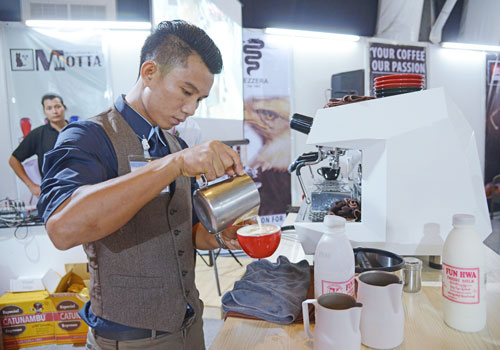
Left to right: a coffee tonic gets made by Kimhak Em at Peixoto Coffee in Downtown Chandler. / Kimhak Em

Maybe you got too caught up in colorful cans of LaCroix to notice, but over the summer, at cafes al over the country, Instagram snaps of what might have otherwise have been latte art were replaced, now and again, by some … bubbly, layered beverage in a plastic cup.

Yeah, what were those? Tan and foamy on top, mysteriously dark in the middle, clear and effervescent on bottom.

We saw it at Cartel. We saw it at Futuro. We saw it at Kream and at Peixoto.

These were clearly no boring cups of cold brew.

As the name suggests, it’s simple: a “coffee tonic;” iced, sparkling tonic water with a shot of espresso layered — not splashed — over top. You have to do it slowly; the copper-colored layer of bubbles sitting on the espresso, called “crema,” is volatile CO2 and since too much friction with fizzy water can result in quite a mess, baristas take it slow.

If you can consider a soda a soft drink that’s been carbonated, flavored, sweetened, and served cold, then you can view the coffee tonic for what it is: a coffee soda, albeit a freshly made one. Given the prominent role that the concentrated coffee plays in the beverage, this drink has really only gotten popular within the specialty coffee sector, where shops tend to pay a greater attention to the flavor of espresso.

Tonic water is pretty sweet, thanks to a good amount of added sugar, but it’s there to balance the beverage’s bittering agent, called quinine; the same stuff that lends pleasant bitter quality to your Italian liqueurs.

Some shops like Futuro put their tonic trust in a proven brand. In that shop’s case, Fever Tree, the standard bearer as of now for the tonic industry — if you asked for a gin and tonic at a craft cocktail bar, they’re probably using Fever Tree. A few widely distributed craft brands like Q are now available as well. Either way, most brands will deliver a neutral flavor that lets the complex flavors in a quality, nicely pulled shot of espresso shine, just as it would let an interesting and nuanced gin. There’s a locally made tonic mixer, too, made by Iconic Cocktail Co, which is flavored with kaffir lime.

Cartel flavored theirs, when they had it (it’s not currently on the menu; it may come back). It was simply tonic water, espresso, with a smidge of vanilla bean paste dotted in.

“We felt the vanilla bean paste helped to make it a bit rounder and accentuate the complex character of the espresso,” says Amanda Cohen, Cartel Coffee Lab’s director of education and quality control. Kream coffee, by contrast, squeezes citrus in theirs to amplify the acidity already present in espresso and the tangy flavor of the quinine.

The most from-scratch end of the coffee tonic spectrum is represented by the folks over at Peixoto, in Chandler. They make their own tonic syrup from start to finish, and add in flavors they feel will compliment the type of espresso. A formula of quinine, citric acid, and sweeter can turn into, for instance, a tonic syrup flavored with ginger and lime, and sweetened with agave. The shop currently offers this variety. They add soda water to the syrup and float the espresso atop. This approach appeals to Kimhak Em, who develops recipes and oversees quality control at the shop and has a background in culinary school. He wanted to put a culinary spin on a drink that’s been trending in coffee shops around the nation.

“I think the first time I had an espresso tonic was at one of the shops that I frequented in the Bay Area,” Em says. That was close to two years ago.

The drink hasn’t existed all that long — it began at a very prominent coffee shop and roaster in Sweden called Koppi. When a coffee shop called Saint Frank opened in San Francisco in late 2013, they paid homage to Koppi’s drink, making their own version — still just Fever Tree tonic, ice, and espresso — called the Kaffe Tonic (kaffe being the Swedish word for coffee). As Saint Frank rose to prominence in eyes of coffee professionals across the country, shops began adopting their own version, some sticking to the drink’s paired down roots, and others opting to personalize.

Three years later, it looks like the drink has stuck.

Editor’s Note: Shelby Moore works with Futuro in various capacities.

source: http://www.phoenixnewstimes.com / Phoenix News Times / Home / by Shelby Moore / Tuesday – October 11th, 2016

Myanmar moves to jump start coffee cultivation

Demand for coffee is booming in an increasingly caffeinated world, and although Myanmar is capable of producing international-quality product it has neglected the crop for years. But agricultural ministry officials are hoping to develop a coordinated strategy to ramp up production and connect cultivators with world markets.

A barista competes in the Myanmar Latte Art Competition in Yangon in June. Photo: Aung Htay Hlaing / The Myanmar Times

Myanmar has been growing coffee for years but in relatively small amounts. An itinerant Scotsman brought a strain of arabica to the Mandalay hill town Pyin Oo Lwin in the 1930s, and it is still grown today, U Myint Swe, director of the coffee crop branch under the ministry’s agriculture department, told The Myanmar Times.

But the agricultural sector’s overwhelming focus has been on an industrial approach to growing crops like rice and beans for domestic consumption and export, said U Tin Htut from the Ministry of Agriculture, Livestock and Irrigation.

“Coffee was previously a neglected crop,” he said during a ministry research workshop on coffee growing in Myanmar on September 28. But U Tin Htut is hoping that ministry workshops can help produce a strategy to boost coffee production and tap into a strong global market.

The annual growth rate in global coffee consumption has averaged 2 percent since 2011, and the world consumed the equivalent of 152.2 million 60kg bags in 2015, according to the intergovernmental International Coffee Organisation.

US demand is higher than ever, and two shipments of coffee beans to the US in August represented Myanmar’s first commercial-scale exports to that country in over 15 years, according to Reuters. The US recently announced it was lifting almost all remaining sanctions against Myanmar, and would reinstate generalised system of preferences (GSP) benefits on November 13.

Myanmar is well placed to take advantage of the global thirst and improving economic relations with the US. At a US coffee expo in June 2015, Myanmar-produced strains of arabica and catimor coffees were deemed world-standard in a quality test – receiving higher marks than most other coffees shown at the event, U Myint Swe said.

“The strains have also been tested in Germany, and they also sent a report saying the quality was world- standard,” he added.

Local firms have taken advantage of Myanmar’s climate and regional demand. Yangon-based firm Coffee Genius, owned by Ko Ngwe Tun, has exported its Shan highlands coffee to Singapore and also enjoyed high marks from the Specialty Coffee Association of America.

But although Myanmar’s local industry can produce exceptional quality, it also faces production and marketing problems that have made it hard to reach international markets, U Myint Swe said.

Strains like the arabica have been grown for over 80 years, but a lack of finance has seen little in the way of progress.

“Crop yields have decreased steadily, although the quality has not,” U Myint Swe said. The useful life of a coffee plant, depending on growing conditions, is 20 to 30 years. “In other countries, once a coffee plant reaches 30 years old it is cut down and new ones planted,” he said. “But in our country we don’t cut them down, we make existing plants produce new shoots and branches.”

Although the international market is booming – driven mainly by rising consumption in developed economies – Myanmar’s local market for coffee is poor and cultivators are producing less in response, U Zaw Tun Myint, director general of the Agriculture Department, told The Myanmar Times.

The ministry wants to see coffee planted and grown according to international-standard practice, but in order to get cultivators onside the ministry has to improve the market, he added.

“We need to cooperate with the department and expand the market for growers,” he said. “Right now profits [in the local market] are low, so growers lower inputs, which lowers quality, which lowers prices and pushes profits down further. We need to reverse this vicious cycle.”

The acreage given to coffee plantations in Myanmar is shrinking and is now less than 50,000 acres – down from over 60,000 acres at the peak of production many years ago, he said.

U Tin Htut from the agriculture department’s coffee branch said collaboration between agricultural experts, exporters and planters is crucial to remedy the slump in production. He is helping work on a strategy paper for coffee development in Myanmar.

“Now is the time to really perform,” he said. Myanmar has the human resources and skills, but needs to improve the agricultural system in order to catch up with regional competitors, he added.

The coffee strategy should include targets for the next 10 years, and cover market research, finance, technical assistance, farmer training and which strains should be planted more widely, he said. The plan will be sent to a parliamentary economic committee, which includes the vice president and officials from the finance and commerce ministries, he said.

U Myint Swe said the plan will take around six months to draw up, and should involve assistance from experts from the agriculture department, USAID, the Myanmar Coffee Planting Association and other coffee experts.

But industry interest bodes well. At the ministry workshop on coffee growing last month over 40 members of the Coffee Planting Association and the private sector attended the meeting, joined by over 100 experts and officials from government departments, U Zaw Myint Tun said.

“It was the first big meeting on coffee in the last five years,” he said. “It’s a very encouraging situation. We held meetings in the past, but there wasn’t as much freedom as there is now.”

Translation by Win Thaw Tar and Khine Thazin Han

source: http://www.mmtimes.com / Myanmar Times / Home> Business / by Htoo Thant / Wednesday – October 05th, 2016

This lab uses coffee grounds to extract lead and other toxins from water

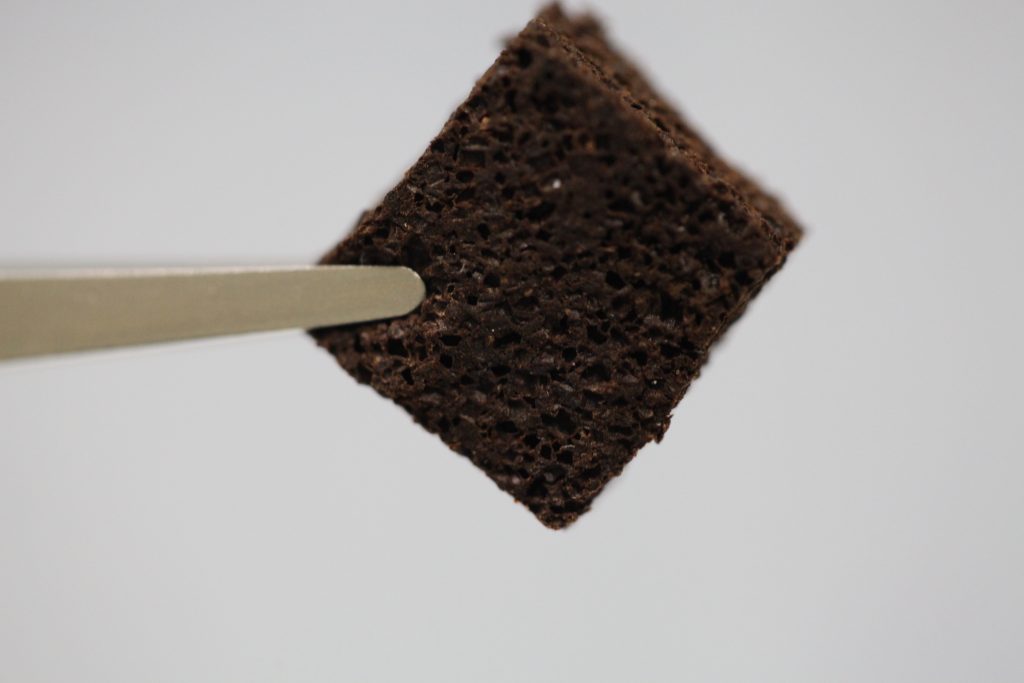
This coffee-infused bioelastic foam can filter lead from water. Photo by Chavan et al., ACS Sustainable Chem. Eng., 2016

Tune in tonight on PBS NewsHour where Miles O’Brien will look at the hazards and history of lead as part of his Leading Edge series.

Needless to say, humans have a coffee obsession.

Last year, global coffee consumption weighed in at 10 million tons — or one and half Great Pyramids worth of beans ground into caffeinated oblivion. Now, a lab at the Italian Institute of Technology wants to put those discarded grounds to good use.

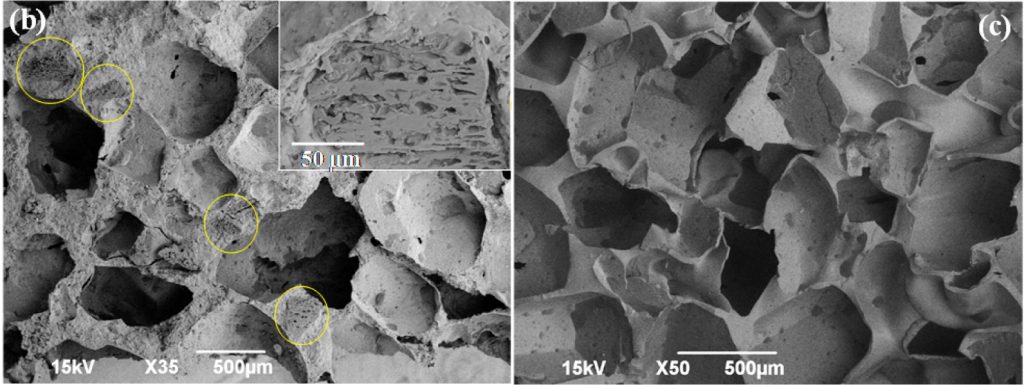
The team has engineered a coffee grounds-infused foam that removes hazardous metals, like lead, from water. Though still in its prototype phase, this foam might be able to clear the worst levels of lead contamination found in places like Flint, Michigan, within a few hours.

“The proposed method is cheaper [than current large-scale filtration systems], since it uses principally costless waste,” said IIT physicist Despina Fragouli who led the project. “and more sustainable compared to other systems, where synthetic materials are used.”

The idea isn’t entirely new. Scientists have known for years that coffee contains chemical groups — called carboxylates — that stick to metals. Early attempts at this water remediation concept tried smashing the coffee grounds into a fine powder, which was then mixed into lead-tainted water. The toxic metals bind the powder, and together, they are filtered out of the water. But this procedure is a bit redundant — you need a filter for a filter.

Fragouli and her colleagues simplified this process by chemically infusing the coffee powder onto a elastic foam. The final spongy foam is 60 to 70 percent coffee by weight.

Left panel: Bioelastic foam with the spent coffee powder indicated by the yellow circles and the inset. Right panel: Pure elastic foam without coffee powder. Photo by Chavan et al., ACS Sustainable Chem. Eng., 2016
Left panel: Bioelastic foam with the spent coffee powder indicated by the
yellow circles and the inset. Right panel: Pure elastic foam without coffee powder. Photo by Chavan et al., ACS Sustainable Chem. Eng., 2016

“Both the coffee and the heavy metal ions are entrapped in the foam,” Fragouli said of her findings published in ACS Sustainable Chemistry and Engineering. “Therefore, no additional procedures are required for the removal of the [coffee] adsorbents and the pollutants from the water.”

So, a water official would simply pull the foam from the water to take out the metal toxins. The rate of removal depends on how much lead is in the water. If Fragouli’s team started with water containing nine parts per million of lead — 360 times higher than most common amount found during the Flint water crisis — the foam could remove a third of the contamination in 30 minutes.

Though promising, Fragouli said more research is needed to determine if the foam can obtain lead and mercury levels appropriate for drinking, especially with gunky water flowing through real-world pipes. So far, the sole field test occurred with wastewater from the IIT’s chemistry department, which contained a mixture of metal ions.

“The results show that the metal ions of interest can be effectively removed,” Fragouli said.

source: http://www.pbs.org / PBS Newshour / Home> The Run Down> Science / by Nsikan Akpan / September 28th, 2016