Category Archives: Coffee News

For the love of coffee

Is the modern day coffee cultivation threatening our biodiversity? Read on to find out how you can responsibly source your favourite morning cuppa

It’s the quintessential breakfast drink, the morning elixir, the ambassador for good days and the one drink with absolute power to wake you up. Yes, our morning cuppa coffee is what we all look forward to wake us up from a slumber hangover.

But, what if we didn’t have coffee anymore? Or, if the modern day production of coffee is impacting forests and wildlife, in turn, affecting our consumption? Alarming isn’t it?

ArshiyaBoseKODAGU03may2016

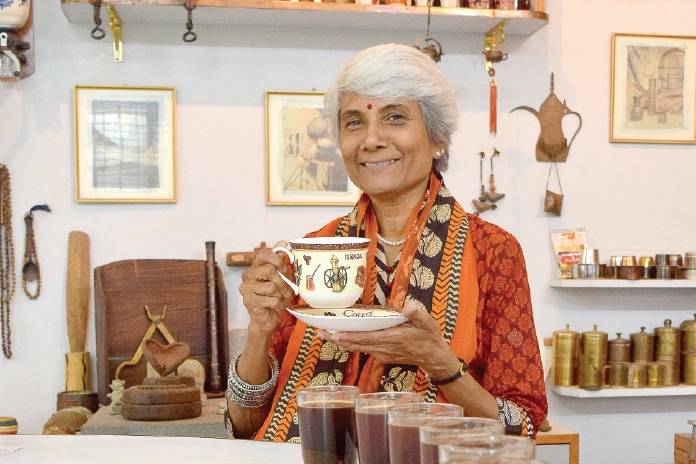
Arshiya Bose has set out on a quest to responsibly source coffee without making an imprint on our environment. She started Black Baza Coffee in an attempt to save biodiversity. Technically, coffee is grown under a marquee of trees.

But, because of deforestation, coffee is now grown under direct sunlight, giving way to monoculture which affects our biodiversity levels drastically. “After my Ph. D., I started spending time at coffee landscapes in India, mostly Coorg,” says Arshiya, a wildlife scientist.

“We found that compared to other parts of the world where forests had been clear-felled to grow coffee, India had retained forest trees and planted coffee underneath the shade of these trees. This meant that coffee farms in India have supported all kinds of beautiful biodiversity for decades. The challenge arises because, since the 1970s onwards, many farms have been removing shade trees in the hope of better coffee yields. The trade-off here is that the yields of coffee are actually higher when coffee is grown under direct sun (which is why in high coffee producing nations like Brazil, Vietnam etc., there are no shade trees). This was the problem we were trying to address. How can we make it economically viable for farmers to grow a more ecologically-friendly coffee?”

The first step involves identifying farms in places like Kodagu and B.R. hills, based on factors like potential of the farm to support biodiversity and willingness to participate in conservation projects. A conservation agreement is then drawn up with the farms that include maintaining 100 trees per acre, protection of water sources, restricting the usage of chemical pesticides and maintaining 60-80 per cent shade cover which means no cutting of tree branches.

“In 2009 I met a young scientist – Claude Garcia, a French, who spoke fairly good Tamil,” recalls Arshiya. “He told me: ‘if we can’t achieve biodiversity-friendly farming with coffee we probably can’t achieve with any other farming system either’. That sentence stuck on as I believe that coffee is the perfect crop to experiment with. Coffee gets the attention of people and then becomes a way to engage someone who previously never cared about conservation. I always say: we want to bring conservation to everybody’s breakfast table.”

Black Baza Coffee is already available at natural and health food stores, where they partner with like-minded cafes and institution who would want to serve great coffee with a story.

The bean cause -  Working together for that perfect cuppa
The bean cause – Working together for that perfect cuppa

Aesthetic packaging and cheeky questions on their cover makes Black Baza Coffee a unique product. “What does moth-friendly coffee taste like?” “What does Otter-friendly coffee taste like?” – are some of the questions you get to see on their packages. “All of our coffee varieties are a tribute to the charismatic plant and wildlife species that share the Western Ghats landscape with coffee,” says Arshiya, “For example, the Otter coffee comes from two riverside farms in Kodagu where we are protecting the Cauvery River from effluents and degradation of riverside vegetation. The Luna Moth is a magnificent indicator of ecological health as well. So while we could test our coffees in the lab for chemical residues etc. (which we do), we also go out to the farm and count Luna moths or Ficus trees or Otters because these species tell us the whole ecological picture – lab tests don’t tell us whether farms are biodiversity-friendly or not.”

Black Baza Coffee now works with 30 farmers and there are over three lakh small-medium growers in India. While Arshiya isn’t sure about the future of the model in India, she is positive and fiercely relentless about being a major coffee player that makes biodiversity-friendly coffee a household staple instead of an exception.

source: http://www.thehindu.com / The Hindu / Home> MetroPlus / by Rehna Abdul Kareem / May 03rd, 2016

Bangalore Based Startup – Aromas of Coorg, Brewing Business with Coffee

When Friedrich Durrenmatt once said “It is surely easier to confess a murder over a cup of coffee than in front of a jury.” he quite simply put across the magic of a good cup of brewing coffee!

AromasofCoorgKODAGU29apr2016

Fresh, strong, steaming hot and hassle-free service are some of the words which come to your mind when you think of coffee and vending serivces, and these very words are the part of Aromas of Coorg’s philosophy.

In conversation with Abhilasha Dafria for YourStory, A.Chithra Uthappa, co-founder of Aromas of Coorg, tells us how they, at AOC, are full of fresh ideas, believe strongly in quality and customer satisfaction and have the best designed products for their customers so that they get the maximum value for their money.

Afterall, science may never come up with a better office communication system than the coffee break!

Hi Chitra, tell us about yourself and an introduction to Aromas of Coorg

Aromas of Coorg has been in business of Beverage solutions since 2009 & coffee cultivation for more than 3 decades. Our passion is to provide the most technology driven, innovative beverage solutions to both businesses and consumers.

I, A.Chithra Uthappa, am the founder & Managing Director of Aromas of Coorg and I’m an MBA from MIT MAHE University, Manipal and B.B.M From Mysore University. I have worked with large corporates like Kotak Mahindra Bank, Aditya Birla Minacs and iSeva/e4e. All my corporate roles have been with fast growing sunrise industries and have played significant roles in building the businesses and growing the companies to the next level. In my last assignment with the start-up open2save, I was a key team member and was instrumental in setting up new business channels ground-up.

Radhakrishnan M, my co-founder & Head of Operations is a seasoned professional with over a decade’s experience in large corporate before he set-up his own company, Aromas of Coorg. He has worked with large corporate like Dell, Infosys, Manpower Inc. etc and has extensive experience in building and managing businesses including sales, building teams and organizations. He is an MBA from Loyola College, Chennai and B.Sc. from Madras University.

So what triggered this idea?

There are four important factors that made our idea into a company, ie, My husband’s passion and support for my entrepreneurship, my son, our roots from Coorg and the corporate exposure.

First and foremost, to become an entrepreneur was always the dream of my husband and me … this is what we wanted to be. I was on sabbatical for my child and during the break; I conceived the business idea too! We decided that this would be the right opportunity to start something on our own sitting at home. This is where it all started.
We are basically from Coorg and we have been into coffee cultivation for more than three decades. This was the primary driver why we chose to build something unique in this space and we thought out of the box. Having worked with corporate for more than a decade we understand this world well and we were able to quickly identify the opportunity.

Thus the birth of “Aromas of Coorg”, as we wanted our company to bear the name “Coorg” in some part and also wanted a name where our targeted customers can easily relate to it. Quite naturally the first thing that attracts anybody to any form of food is the “Aroma”. That is how we finalized on the name “Aromas of Coorg” and this also marked our entry into the beverage solutions for corporate, institutions, etc.

Since when are you operational? How big is your team? Are you looking at hiring?

We are fully operational since August 2009. We are currently a 40 member team. Yes, definitely, we are looking to strengthen our sales force and simultaneously our operational support staff will have to go hand in hand with every new client that gets added.

What is your clientele like?

We service range of clients like large corporate across multiple cities to a one location company as well. We have a well spread out client base across industries and geographies.

Where are you based and where are your clients from?

We are based in Bangalore and are currently supporting clients in Bangalore, Mysore, Tumkur, Nelamangala, Hosur and Chennai. However, we are not present in retail segment at this point of time.

Where do you have your manufacturing units? Which cities do you provide the home-delivery services?

Our manufacturing unit is also in Bangalore; currently we provide home delivery service only within Bangalore city limits.

How does the supply chain work?

We are currently able to manage the supply chain internally, our raw materials are procured from different locations and the respective vendors manage the supply chain of the respective products. All these products come to our processing units in Bangalore from where the supply of finished products to the respective clients is managed by full time employees of AOC. Machines are manufactured under our complete supervision.

Did you fund-raise to start up? If not, are you looking at getting funded now?

We used our personal money and angel money. We are looking to get funding for our future expansions.

How does the revenue module work?

We work both on variable and a fixed pricing model where clients can pay based on usage or based on usage+ a fixed monthly costs. The pricing model is designed with the motive of win-win for us and clients.

So what were the challenges you faced while starting up? Tell me about your initial hurdles.

First and foremost challenge was how to differentiate ourselves from the others; there were several big brands and more than enough small vendors. We really had to come up with a differentiator from the existing. This is the stage were we re-invented our traditional filter coffee. The wave of western form of coffee was so popular that everybody is racing towards the Cappuccino, Espresso, latte, etc.

Timing was tough; given it was the time of deep recession, all around you there were companies going under losses, almost all the corporate were planning for major cost cutting, and so on. It was also very difficult for us to penetrate the companies with our new concept and service offerings.

Of course our innovative thinking helped us make good inroads. We took this to our advantage and came up with our very own filter coffee which is truly Indian, especially south Indian, and presented to the corporate the first of its kind fully-automated Vending machines which serves authentic filter Coffee and freshly brewed Tea. In our very first Demo we knew that we hit the nail on the head with our concept.

Are there other players in the market doing similar things? What are your key differentiators?

Yes there are several big names in the market providing beverage service, Coffee day, Fresh & Honest, Tata Cafe, Hindustan lever, etc. Our USP is our focus on technology, our zeal to innovate and our relentless passion for quality. Our Vending machine is the first its kind which is fully automated to serve freshly brewed authentic filter Coffee & freshly brewed Tea on a single press of the button. We are the first company in India to build coffee vending machine with both HOT & COLD option in the same machine. We are looking at adding more features around quality assurance here.

Our Coffee is a blend of six varieties of finest coffees beans hand picked from our own cultivation and we apply expert science, combined with traditional artistry, in order to maximize the flavor attributes of each roast. Our coffee roasting process is tuned to develop coffee flavors to the fullest for flavor profile, aroma and overall character in the cup. These factors make us the pioneers and front runners in providing the most hygienic and finest Coffee but at the same time affordable vending service provider in the market today.

Can you share with us some interesting trends about the market that you are trying to capture?

The market is looking for continuous innovation and personalization as much as possible.

An interesting trend is enhanced customer awareness and focus on health drinks like badam milk, green tea, milk shakes, horlicks etc. In some clients these new drinks are consumed lot more than traditional tea and coffee.

What are the challenges of scale in this business and how do you prepare to cope with them?

The biggest challenge in scaling is to maintain the same levels of service and quality. This is B2B2C market and end consumers decide what they finally like to drink. Having a continuous feedback loop and connection with end consumers is another critical aspect of this business.

Where and how do you see yourself going ‘bout this?

We aim to build our company to PAN India multi format Beverage Company. To serve 1 lacs cups a day is our immediate 12 months target.

For more information, please visit their website: http://aromasofcoorg.com/

– Abhilasha Dafria

source: http://www.yourstory.com / Your Story.com / Home> Entrepreneur / Team YS / by Abhilasha Dafria / December 30th, 2011

The New Brew Strategy

NewBrewKODAGU26apr2016

Coffee is cool, and Indian coffee is cooler still. That’s the message a brave new breed of young coffee growers are taking to the world.

Youngsters with a family background in coffee, they are taking their products to the next level – incorporating quality produce with sustainable agriculture and state-of-theart production techniques and marketing. To them, the customer is king – and they are pleased to customise their coffees, reach out to educate and grow their customer base. Their final desired outcome is to make Indian coffee a thing of beauty at home and abroad. Meet some of the players.

Rishwin Devaya | 26
Riverside Coffee, Coorg

“A planter’s approach is usually to just maximise yield, but I am experimenting to control the end quality. I want to add value to Coorg coffee;I’m in it for the long run”

It was while Rishwin Devaya was working for a wine company that he realised he wanted to return to his roots to create a brand of world-class coffee from Riverside, his own 80-acre coffee estate in Siddapur, Coorg, along the Cauvery river. As he watched his employers go through the process of cultivating grapes, producing and selling wines, he realised he could do the same.

“My family has been growing coffee in Coorg since 1898, but we’ve always sold the beans to large-scale producers. In fact as I thought about it, I realised that very few coffee drinkers truly understand much about their preferred types of coffee (Arabica, Robusta) or different types of roasts.” He quit his job and started processing the 60 tonnes of coffee grown in his estate.

“I started sending out samples on a small scale to restaurants in Bangalore last year. I want my own strong brand, and to focus on customising coffee, so different restaurants get their own individual blends.” Devaya’s single origin coffee is UTZ and Wood certified, and has been launched in custom- designed tins in three variants – a 100 per cent Arabica, a 50/50 Arabica/ Robusta and the popular filter coffee blend which incorporates chicory.

“From April onwards, my coffee will be available on my website, besides gourmet stores. For my next phase I plan to offer blends and grinds according to customer requests — the ultimate customised coffee. What I love about coffee is that each person has his own way of enjoying it. I want people to understand how simple it is to make a really good cup.” Devaya recently launched Riverside Coffee with a tasting event at Red Fork, where he demonstrated different coffee-drinking styles for guests, a kind of show-and-tell on coffee.

This covered the entire production process, from picking the ripe ‘cherry’, to the pulping and washing stage, to getting the ‘parchment’, followed by hulling and polishing to get the green bean and finally grading (AA, A, B or peaberry, while BBB – blacks, browns and bits – are usually sold in bulk to make instant coffee.) “A planter’s approach is usually to just maximise yield, but I’m experimenting to control the end quality. I want to add value to Coorg coffee; I’m in it for the long run.”www.riversidecoffee.in

Tejini Kariappa | 28
Halli Berri Coffee, Chikmagalur

“We sold our coffee in handwritten aluminium foil packets to start with. Then the name was suggested by my sister and my mother liked it, saying, ‘We should be proudly Coorg.”

Tejini Kariappa’s idea of creating her coffee brand Halli Berri happened because “we were giving away too much free coffee,” she says. Her family-run coffee enterprise is based in Chikmagalur and is headed by her mother and herself — India’s first all-women run coffee business.

Her estate, Kambihalli, in the foothills of Chikmagalur’s Bababudan hills, has been in the family for generations, with Kariappa also running a PR firm, Estrada, in Mumbai. Halli means village in Kannada, and when juxtaposed with ‘berry’ makes the name sound ethnic, meaning ‘the village berry.’ Halli Berri grew almost organically, as visitors at the estate café run by her mother started asking for fresh-ground coffee powder to buy and take home.

Kariappa explains, “We sold our coffee in handwritten aluminium foil packets to start with. Then the name was suggested by my sister and my mother liked it. ‘We should be proudly Coorg,’ she said.” So Halli Berri was born and now remains a frontrunner in India’s single-origin coffee story. Today Kariappa sells a single variant full-bodied 100 per cent Arabica coffee made from premium graded beans under the Halli Berri brand. She prices it affordably, “in fact not much more than instant coffee,” she points out.

The brand is Rainforest Alliance certified, one of the highest certifications worldwide. She also runs a CSR initiative, ‘Be Berri Conscious’ tied in with her coffee business – it is mandatory for all her workers to send their children to school, and families are given free meals. Halli Berri also supports wildlife initiatives — tiger conservation and 296 species of migratory birds in the estate. “I want this to be a legacy for my children and their children,” she says. The estate also offers a responsible luxury’ homestay experience.

Juggling two different lifestyles has been tough, more so given the innumerable subsidies, certification and licences a business needs for survival.But Kariappa finds the journey “interesting… Indian coffee must get its due recognition. And the youth in India should realise that Indian coffee is cool. This (coffee) has really been my life from the start – so you could say I’m trying to start a revolution.” halliberri.com
________________________________________________________________

EXPERT SPEAK

“Indian single estate coffee is an idea whose time has come. The growth of India’s coffee story has been generational. Earlier generations saw coffee as a commodity, pooled to sell so there was no individual identity. For today’s new generation, whom I call ‘marketpreneurs’, marketing is important. They are more passionate in their approach.

It’s not about production alone now — there are value adds, customised blends, quality packaging, niche brands with back stories happening along with the additional benefit of e-commerce. This is excellent.

However, the new generation must be aware of a few factors. They must not ape the biggies — the Tata Coffees or Unilevers — but focus on the ‘small is beautiful’ dictum. They must also concentrate on physical distribution of their product, not only the virtual via e-commerce. And they need to focus on quality, not get overwhelmed by only branding.

Finally, customisation divides markets into choice segments: do this with scale in mind, don’t create nano-niches which are unsustainable by themselves. This is the way ahead to lift Indian coffee to world recognition”

-Harish Bijoor, coffee expert & brand consultant
_________________________________________________________________

Abhijit Shetty | 30, & Advith Shetty | 33
Seven Beans Coffee Company, Chikmagalur

“India is the sixth largest coffee producer in the world, but two-thirds of our coffee is exported to Europe, where the beans are roasted and sold; no one knows that’s Indian coffee”

Civil engineers by profession, the Shetty brothers, joint managing directors at Seven Beans Coffee Company, realised early on that their heart lay in producing the best coffees sourced from their five estates in Chikmagalur (their premium estate Woddaegudda is 450 acres and Rainforest Alliance certified). “We grew up spending summers on the estate — here coffee was grown but sold to coffee houses to process and sell,” says Advith, who handles sales.

They decided to leverage their engineering skills to develop their business, raising the bar through research and export. “India is the sixth largest coffee producer in the world, but two thirds of our coffee is exported to Europe, where the beans are roasted and sold under different international brand names. There, they command exorbitant prices, except no one knows that’s Indian coffee,” says Abhijit, who looks after production and operations, adding that they wanted to create a globally recognised brand. They incorporated Seven Beans Coffee in 2013, a complete bean-to-cup enterprise, and started the search for a global partner.

They zeroed in on Dr Dante Cagliari, a noted Italian master roaster, and the association recognises Seven Beans for a unique USP in the custom- made single estate coffee market. Seven Beans pre-blends and then roasts their coffee at their own customised Chikmagalur roastery, grinding and packaging both whole coffee beans, powder and capsules. They have begun exporting three variants under their own brand names — Mishta (70/30 Arabica/Robusta), Urja (60/40), and Eka (50/50) — and the packaging is deliberately very Indian. They also import signature Italian blends by Cagliari. Abhijit explains the historical growth of coffee, “The early 1900s saw the patenting of technology forinstant coffee. It was followed by consumers, especially those in the US, seeking better quality and asking about origin; terms like ‘fair trade’ became important. The most recent trend saw the term ‘artisanal coffee’ coined. Artisanal producers control every step of coffee production, from bean to cup.”

Seven Beans started production in 2015 and now sells its custom coffees to corporate offices and restaurants, as well as online and in gourmet stores. They offer end to end services, including renting and sale of imported Italian coffee machines. Aiming to bring the perfect cup to consumers, they offer barista training, from grinding coffee to frothing milk. “Indian consumers learn quick, want quality and are aspirational, therefore they are aware of artisanal Indian coffee,” adds Abhijit. sevenbeans.co

Meet the others

Specialised coffee brands like Flying Squirrel (flyingsquirrel.in) and Blue Tokai (bluetokaicoffee. com) have been making their presence felt among coffee lovers in India with customised coffee straight from estates in Chikmagalur and Coorg, sold online and instore. Other players include the Indian Bean Company (theindianbean. com) and Bengaluru’s Estatecraft coffee (estatecraft.in).

source: http://www.newindianexpress.com / The New Indian Express / Home> Business> News / by Ruma Singh / April 25th, 2016

Famous faeces: the story behind the civet-poo coffee craze

There’s a scene in the movie The Bucket List where Jack Nicholson’s billionaire character realises kopi luwak – the “fancy” coffee he insists on drinking – is made from the faeces of a cat-like creature.

“You’re shitting me?” he says. “Cats beat me to it,” his terminally ill mate replies. Both men laugh until tears stream down their faces and then his friend ticks: “laugh until I cry” off his bucket list.

Scatological jokes aside, there is a well-documented dark side to kopi luwak, which is also known as civet coffee.

In February, civet coffee plantation tours were ranked among the world’s top 10 cruel animal attractions by World Animal Protection.

“There is now a growing civet coffee plantation tourism industry in Indonesia where tourists visit caged civet cats and sample the coffee,” says a report by the University of Oxford’s Wildlife Conservation Research. “This is causing more and more civets to be caged and abused.”

Kopi luwak is made from coffee cherries that have passed through the intestines of a common palm civet (known as a luwak in Indonesia); a small, nocturnal carnivore. The enzymes break down the beans, which when roasted, create a smooth, less bitter brew, according to some coffee connoisseurs.

(Not everyone is a fan. The Washington Post’s food critic Tim Carman wrote of his experience: “Stale. Lifeless. Petrified dinosaur droppings steeped in bathtub water. I couldn’t finish it.)

World Animal Protection says that when civet droppings are collected from the wild, no cruelty is involved. Indeed the history of kopi luwak is purported to date back to the Dutch colonial era, when native coffee plantation workers were forbidden to pick coffee for their own use. They discovered undigested beans in civet droppings and created their own aromatic brew.

However in recent decades the coffee – with its irresistibly weird back story – has become a global sensation, with wild-sourced beans fetching prices of up to £2000 ($3700) a kilo.

The massive international demand and exorbitant prices led to civets being caged to increase productivity and create commercially viable quantities of civet poo.

“Caged civets are encouraged to gorge on an unbalanced diet of coffee cherries,” the World Animal Protection report says. The process has been compared to fattening geese to create foie gras but with a lot more caffeine. “Many show signs of great stress, including pacing and self-mutilation. This unnatural captivity and forced feeding results in injuries, disease and poor nutrition.”

But despite their famous faeces, little is known about the common palm civet itself, according to PhD student Peter Roberts, a lecturer in animal care in Britain. “How can we look after the species in captivity without knowing how they will behave in the wild?”

Roberts aims to collect data on the habitat use, behaviour and estimated population of civets around the village of Cipaganti in Java for the PhD he is doing at Oxford Brookes University. He hopes his research will add vital information to what is known about the ecology of the species and contribute to better animal husbandry and management policies.

However, because funding invariably goes to rare species – the civet is listed by the International Union for Conservation of Nature as a species of “least concern” – his PhD is largely self-funded. It’s been a painstaking process. A recent attempt to crowd-source 10 camera traps raised a paltry £15 in 56 days.

Meanwhile, the trade in civets is increasing dramatically in Indonesia. Civets have become a popular exotic pet in Indonesia and there has been a rise in the popularity of kopi luwak and civet coffee farms in Java and Bali.

The problem, Roberts says, is that no-one has been able to quantify what damage this trade is doing to wild populations. “More wild research is desperately needed.”

Although common palm civets are not protected in Indonesia, trade is regulated through an annual quota system. In 2016, a total of 250 common palm civets can be captured for domestic use and 225 for export from just four provinces in Indonesia.

Eko Arifyanto from the Biodiversity Conservation Agency says this is to keep the balance of the number of animals in the wild. There has not been a request for one permit this year.

However the sheer numbers of civets for sale in Javan and Balinese animal markets alone suggest this quota system is simply not being enforced. “It is difficult to know because we have very limited human resources while our coverage area is quite big,” Eko says.

When Fairfax Media visited Pasar Satria, a market in Denpasar, young civets were available for 450,000 Rupiah (about $45) each.

Author and former coffee trader Tony Wild believes he spawned a monster. Wild claims to be the first person to bring a kilogram of kopi luwak to the west in 1991, while working as a coffee director for Taylors of Harrogate. The product, with its “certain repulsive charm”, became a media sensation beyond his wildest dreams.

However two decades later, while researching his book Coffee: A Dark History, Wild learnt civets were being poached and caged all over south-east Asia and force-fed coffee cherries.

In 2013 he started the Facebook campaign Kopi Luwak: Cut the Crap. He also played a key role in a BBC investigation of animal cruelty on civet farms in Sumatra.

“I don’t think a large number of consumers have been put off by the life of the animal – kopi luwak is pretty much everywhere in Indonesia, and I think you will find probably the same in south-east Asia,” he says.

Wild does believe there is a sustainable business model in genuine wild kopi luwak.

In Gayo, for example, a famous coffee producing region at the tip of Sumatra, Anasryta has been gathering civet faeces foraged by collectors for more than 20 years. Gabah (the cleaned coffee beans) are worth 80,000 rupiah ($8) a kilogram. “You can tell the difference, which kopi luwak is from the wild and from the farm,” Anasryta says.

“The wild has a richer taste, luwak in the wild eats all kinds of stuff, skins of trees, fruits.”

However many kopi luwak producers are now savvy to the controversy around caged civets. “You will find most kopi luwak is now marketed as “genuine wild” kopi luwak,” Wild says. “There’s really only one way of telling and that is having a personal relationship with the producers and going to the plantation and even then it’s difficult to prove.”

Coffee certifiers Rainforest Alliance and UTZ Certified – the world’s leading label for sustainable coffee production – no longer certify coffee producers that use caged civets or other animals.

And in June 2015, Indonesia introduced standards for luwak coffee production, that emphasised the civets were not to be starved, harmed, scared or depressed.

“We welcome the Indonesian government recognising there is an issue, however if they truly wish to stop the suffering then all caged production of kopi luwak must be prohibited,” says World Animal Protection’s Joanna Toole. “There is no justification to take these animals from the wild and keep them in confinement for years on end to produce a luxury coffee for tourists.”

Bali Geo is a kopi luwak cafe in Ubud that opened several weeks ago.

The cafe has three civets on site, but the owners say they are for display only, and will eventually be released. “We buy our supplies from a luwak farm up in Kintamani,” says co-owner I. Nyoman Lanus.

“I understand they have about 70 luwak in cages. I know they keep them in good condition. One luwak per cage, so they won’t fight each other. They would only be fed coffee beans around three times a week. Luwak will die if they are only fed with coffee.”

Nyoman says the coffee cherries are placed in a bowl and the civet is allowed to pick the best. The rest are sold back to the coffee farmers.

“For anybody to claim they have a steady flow of wild luwak coffee is impossible,” Nyoman says. “A mixture of wild and luwak farm, that’s more likely. Like what we sell here.”

The story Famous faeces: the story behind the civet-poo coffee craze first appeared on The Sydney Morning Herald.

source: http://www.esperanceexpress.com / The Esperance Express / Home> News> Latest News / April 15th, 2016

Naidu markets Araku coffee at women’s meet

Vijayawada :

Chief minister N Chandrababu Naidu on Tuesday turned out to be a brand ambassador of Araku Valley Coffee at a national conference of tribal women sarpanches here.

He saw to it that the organic brew was served to Union rural development minister Chowdari Birender Singh, minister for tribal welfare Jual Oram and Sudarshan Bhagath, union minister of justice and social empowerment and let them taste it to their content right on the dais.

Even as the programme anchor invited Birender Singh to address, Naidu intervened with a plea to let the minister finish his last sip. The CM appealed to all the 3000-odd women sarpanches who came from 10 states to promote the organic brand of Araku coffee.

It may be recalled that Prime Minister Narendar Modi felt bowled over by the rich aroma of the Araku brew at the International Fleet Review (IFR) in Visakhapatnam in February last.

Araku coffee is India’s first tribal growers organic brand launched in the Araku valley in 2007. The brand has got high demand in the US, UK and parts of European Union nations.

Naidu informed that the coffee production in the Araku Valley was increased by 1 lakh tons to 8 lakh with an increase of coffee plantation area by 1 lakh acres.

The coffee plantations helped the tribals increase their income levels with each family receiving at least Rs 3,000 per year by raising plantations and selling the produce.

Chandrababu said 13 products of Araku Valley including coffee and pepper have received organic certificates recently.

source: http://www.timesofindia.indiatimes.com / The Times of India / News Home / TNN / April 19th, 2016

Delayed blossom showers, rising mercury rob coffee crop of aroma

CoffeeKF20apr2016

Bengaluru :

The unusually high temperatures and the delay in arrival of pre-monsoon or blossom showers could shrink the robusta coffee crop for the 2016-17 season, starting October.

Growers in the key regions of Coorg and Chikmagalur are concerned over the delay in pre-monsoon showers, crucial for blossoming of the coffee floral buds, and fear that it could impact robusta output by up to a fourth.

Blossom showers and subsequent backing showers are crucial for a good crop. Traditionally, the robusta and arabica areas should receive pre-monsoon showers by March 15 and April 15, respectively, for a good blossom.

“The blossom shower has been very sporadic and scanty this year and it is definitely going to affect the crop, both robusta and arabica,” said Baba PS Bedi, Chairman of the Karnataka Planters’ Association.

“Small growers, who cannot afford to take up sprinkler irrigation, are going to be hit hard,” Bedi said, adding that the planters’ association will soon urge the State government to take up cloud seeding to create artificial rain in the key growing regions.

Water crisis
Though most of the robusta area is irrigated, with growers deploying sprinklers to irrigate their estates without waiting for the blossom showers, the lack of sufficient water storage this year has turned out to be a cause for concern.

Two back-to-back droughts triggered by successive deficient monsoons have created water stress thereby affecting the availability for irrigation, Bedi added.

“The delay in blossom showers and the prevailing unusually high temperatures across all the growing regions is a real cause of worry. It will have a significant impact on the crop loss, but it is too early to quantify the impact,” said Y Raghuramulu, Director of the Balehonnur-based Central Coffee Research Institute (CCRI).

The Coffee Board is expected to take up crop assessment sometime in mid-May.

In addition, the depleting shade pattern in some areas is aggravating the problem this year, Raghuramulu added.

“The situation is terrible in South Coorg. With temperatures ruling 2-3 degrees higher than normal, there is a fear of coffee plants dying in some areas,” said N Bose Mandanna, a planter in Suntikoppa, near Madikeri. About 30 per cent of the robusta area is impacted by the delayed rainfall, he added.

“The overall situation is not comfortable. Though it has rained in some pockets, the quantum of rainfall is not sufficient. The water stress and high temperatures will affect the blossom, thereby impacting the crop,” said Nishant Gurjer, a planter in Chikmagalur.

Plants under pressure
Another factor that could affect the output this year is stressed out plants. “In the last two years, we have been picking some good crop. As a result, the plants are relatively stressed and the output could be impacted,” Gurjer added.

The Coffee Board has estimated the 2015-16 crop’s output at 3.5 lakh tonnes, a 7 per cent increase over the previous year’s 3.27 lakh tonnes.

source: http://www.thehindubusinessline.com / Businessline.com / Home> Economy> Agri Business / Vishwanath Kulkarni / Bengaluru – April 19th, 2016

Spilling the Beans of the Bitter Brew

There is a chance that Sunalini Menon is addicted to her work but there’s a compelling reason for it: she is Asia’s first woman coffee taster. Menon’s affair with Coffea Arabica and Coffea Robusta began when she was a college-going girl. No wonder, Bengaluru-based Menon, who later founded her own company Coffee Lab, likens the coffee bean to that of spreading wisdom, teaching her humbleness, perfection, passion and friendliness.

At a time when women were still trying to cement their place in the social order of things, Menon was miles ahead of the same. She completed her schooling from Good Shepherd Convent and broke the record by securing first position in BSc at the Women’s Christian College. While pursuing her master’s in Science, she got a paper published in the Indian Journal of Medical Research, a rare feat for a non-medical professional. After completing her PG, she applied for the position of a coffee taster and moved ahead in the selection rounds. Though her appointment was objected to, on the basis of her being a woman, Menon finally made it as an assistant cupper in the Coffee Board.

An unusual profession it may be, but it comes with its own set of unique challenges. “If you are a professional cupper, you need to preserve your palate and I do so by avoiding spicy food, alcohol and tobacco. I ensure that I am always in good health to be able to taste and identify the subtle nuances of coffee,” says Menon. By that same logic, ice cream too is a strict no-no for me.

There are other senses to be employed as well. Menon shares that one needs to use their eyes to see size, the degree of roast, and colour of the beans; while the sense of smell comes handy in knowing the green beans, roasted beans, coffee brew and processing of the coffee. The sense of touch helps in understanding the strain of coffee beans, while the sense of sound in measuring the right temperature —when you roast the coffee beans, they will crack or pop at certain temperatures.

Over and above, a good cupper comes equipped with an innate acuity of taste, intense training, experience and exposure to coffees from around the world, repeated calibrations of the palate with global tasters, good memory, fine concentration skills and most importantly, the ability to communicate what one has experienced in the palate.

Sunalini Menon
Sunalini Menon

Menon quit the Coffee Board in 1995, to set up her company Coffee Lab in 1997, which provides a whole range of services—right from evaluation, certification to advisory. Coffee Lab, which won the Hidden Treasure Award in 2006 by the Speciality Coffee Association of Europe (SCAE), is now developing brands for green coffee beans. “Flavours in coffee are very diverse. You could have sugar browning flavours such as chocolate, caramel, nuts, malt and vanilla; dry distillation flavours such as spices of pepper, clove, thyme; medicinal such as camphor; resinous such as black currant; or enzymatic flavours such as herbal, floral, citrus, berries, legumes etc,” elaborates Menon.

Tasting not less than 100 samples per day, Menon says: “Some coffees around the world possess very distinctive floral notes, some have blueberry flavours, some with intense citrus flavours of oranges and lemons, besides red and green apple.” She is also the proud recipient of the 2014 Alfred Peet Passionate Cup Award, conferred by the Specialty Coffee Association of America (SCAA) during their 26th annual exposition and conference at Seattle.

When asked about any coffee buying tip, she quickly replies: “One needs to look at whether the coffee is dark-roasted or medium-roasted. A medium-roasted coffee will have a balanced taste, while a dark-roasted one will have a strong mouth feel, but with bitter edges. To make the perfect blend the proportion of powder-chikri (chicory) is 70-30 and also the freshness of say an hour of the decoction is important.” But the best advice is saved for the last. “Coffee means friendship. If you have coffee with someone, you become friends with them,” concludes a smiling Menon.

source: http://www.newindianexpress.com / The New Indian Express / Home> LifeStyle> Food / by Sujitha J / April 16th, 2016

A ‘coffee cure’ for adverse effects of climate change

Kozhikode:

Can the way coffee is grown offer a cure to the adverse effects of climate change? Conservation and agriculture experts in Wayanad are in the affirmative and have mooted revitalization of historic ‘shade grown coffee plantation’ system in Wayanad as the best defence against the adverse effects of climate change acutely being felt in the hill district. Wayanad is one of the four climate change hotspots in the state and listed as highly vulnerable to vagaries of weather.

The district, which is the largest coffee producer in the state – with 85,359 hectares of land under coffee and producing over 80% of the state’s coffee output- has over the years shifted from ‘shade coffee’ to intensive ‘sun coffee’ system.

“For centuries coffee used to be grown in an agro-forest eco system with coffee plants grown under a thick green canopy provided by tall shade trees,” said, director of the biodiversity programme of M S Swaminathan Research Foundation (MSSRF) N Anil Kumar. “But during the recent years the farmers have massively cleared trees from coffee plantations and started growing the crop in full sunlight with high input of agro-chemicals for getting maximum crop productivity. This has contributed to the marked changes in the unique micro- climate of the district,” he said.

It has also caused adverse environmental impact and exposed the farmers to effects of unprecedented climate change, currently witnessed in the district in the form of weakening in the early phase of the south-west monsoon precipitation, increasing polarization of daily rainfall, rising minimum temperature and increasing pest attacks.

An approach paper prepared by MSSRF said that the revival of shade grown coffee plantations would also help regulate micro climates and induce conditions favourable to the development of wildlife diversity with provisioning of healthy ecosystem services. It would also help in increasing carbon removal and promoting sustainable coffee farming. Experts say that shade grown coffee would provide enhanced income generation for farmers as it commands a premium in global markets.

source: http://www.timesofindia.indiatimes.com / The Times of India / News Home> City> Kozhikode / TNN / April 13th, 2016

Nagaland has huge potentials to export coffee, says expert

Kohima :

With a major part of the Himalayan region considered ideal for coffee plantation, Nagaland’s climatic condition is also found to be perfect for the same and the state’s potential for exporting coffee to South Africa and European countries, if taken up seriously, is very high. This was stated by South African coffee expert and director Himalayan Network & Noble Cause, Dr. Pieter Vermeulen, who is currently in Nagaland to explore the potentials of the state’s coffee on the invitation of the Land Resources department (LRD).

The department, in collaboration with the Coffee Board of India, is undertaking a five-year comprehensive plan for coffee development (plantation) and aims to cover an area of 5000 hectares across the state from 2015-2020. The plantation will be carried out by 10,000 identified households (marginal farmers) in all the districts, out of which, 450 households in seven districts covering an area of 230 hectares have already been taken up during 2015-16 and 6,00,000 coffee saplings were reportedly raised and planted during this period.Talking to reporters here on Wednesday at the directorate of Land Resources, Dr. Pieter said he has been to Nagaland earlier to explore abandoned coffee farms, before he was associated with the department. He said he came across an active plantation in Wokha district and collected some samples to Delhi to process and after tasting the sample, he found the quality to be “very interesting” as it contained the citrus flavour which is peculiar to the popular Himalayan coffee.

Once he got invited by the LRD to study the new plantations this year for assistance on technical aspect, he has visited few coffee farms including one each at Kigwema under Kohima district, Kubza in Mokokchung, Litami in Zunheboto and Wokha village under Wokha district. “The type of coffee grown here is one of the best I’ve tasted,” the expert says.

He informed that his organization is excited to secure a source and assist the state in growing and taking its coffee to the world. He is enthusiastic that Nagaland has basic infrastructure and villages in different districts are connected with pliable roads, the state has natural fertile soil and ideal climatic condition for large scale coffee production, and he maintains that the people should take advantage of these assets. Pieter views that the biggest challenge will be to teach the people to appreciate coffee before they take out their production to the global market.

The potential that development of coffee has for the state’s economic growth is remarkable, particularly with India being a tea-growing country, and coffee being one of the fastest growing commodities in the world, Dr. Pieter said.

Meanwhile, LRD director Mhathung Yanthan said large scale coffee plantation was introduced in Nagaland in the 1980s, but the projects had failed due to problem of market avenues and farms were abandoned. He said it was in 2014 that the Coffee Board of India, seeing potentials, approached the state government to explore possibilities of reviving coffee plantation in the state and the LRD was identified as the nodal department for coffee development programme.

In the projected 5000 hectares under the programme, Nagaland is looking to produce over 8000 metric tonnes (mt) of coffee within the next five years, with a rough estimate of a turnover of approximately Rs.200 crore if successfully marketed. According to Dr. Pieter, though the development programme is still at a nascent stage, once production reaches up to 10,000mt, the market aspect should be ready to target Europe.

As per to the LRD plan, the land to be covered for plantation in 2016-17 is 917 hectares, 1190 hectares in 2017-18, 1710 hectares in 2018-19 and 953 hectares in 2019-20. The project is to be taken up in all the 11 districts of the state.

source: http://www.easternmirrornagaland.com / Eastern Mirror / Home> Front Page / by EM Nagaland Correspondent / March 30th, 2016

Weak economy spurs demand for low-priced coffees

Drop in prices hurts realisations even as shipments see 18% growth in March quarter

coffeeKF29mar2016

Bengaluru :

Sluggish economic conditions in part of Europe and West Asia is triggering demand for the low-priced coffees such as the robusta cherry and instant varieties as consumers in these regions are seen shifting to the cheaper beverage, exporter said.

The trend is reflected in the increased shipments of these varieties from India over the past three months.

Higher shipments
“We are noticing a trend that buyers in Europe and the Gulf Countries are seen buying more of cheaper coffees than in the past,” said Ramesh Rajah, President of the Coffee Exporters Association.

The shift in preference in the Gulf nations could be influenced by the drop in oil prices.

Permits rise
Total coffee permits issued by the Coffee Board for the January 1-March 24 period were up around 18 per cent at 90,274 tonnes (76,567 tonnes in corresponding last year), primarily driven by a surge in shipments of robusta cherry and the instant variety.

Permits issued for robusta cherry were up 32 per cent at 40,618 tonnes (30,756 tonnes), while for instant coffee shipments including that of re-exports, the permits issued were up 13 per cent at 25,299 tonnes (22,416 tonnes) for the period.

For the robusta parchment or the washed robusta, which command a premium in the world market, the permits issued dropped around 23 per cent to 5,822 tonnes (7,595 tonnes).

Changing preferences
However, the premium variety arabica parchment saw an increase in demand at 15,099 tonnes (11,837 tonnes).

Coffee Board officials also attributed the increase in demand for robusta cherry and instant coffee to some extent to the shift in consumer preferences to cheaper varieties in markets such as Europe.

An early harvest of robustas has also contributed to the increase in shipments as more coffee was available for exporters with growers, especially the smaller ones, preferring to sell their produce as prices continued to remain volatile.

An official with a global trading house attributed the jump in the January-March quarter shipments to an early robusta crop this year and also to the front-loading of sales by the producers, wherein growers sold off their produce as soon as it was ready to sell a few weeks ago.

But now, the market arrivals have slowed down as growers – especially the larger ones – are beginning to hold back their produce, the official said.

The harvest of robusta is complete and the growers, especially the Arabica producers are looking forward the blossom showers in the week ahead.

Export realisations
Though the March quarter shipments have been good, the earnings are likely to be under pressure due to lower prices.

The per tonne realisation has dropped considerably to ₹1,55,077 in March quarter as compared to ₹1,77,660 in the corresponding period last year.

Exporters are a bit sceptical of sustaining the growth trend in shipments in the year ahead.

“The near term order books are good, but there is slackness in the medium to long-term,” Rajah said.

The Coffee Board has pegged the 2015-16 crop at 3.5 lakh tonnes – a seven per cent increase over the previous season’s 3.27 lakh tonnes.

source: http://www.thehindubusinessline.com / Business Line / Home> Economy> AgriBusiness / by Vishwanath Kulkarni / Bengaluru – March 28th, 2016