Category Archives: Coffee News

Mysore Coffee Curing Co-op. Society (MCCCS) : General body held in city

MCCCS Convenor Mookonda Bose Devaiah is seen addressing the Society’s General Body meeting at CITB choultry in Hebbal this morning as Society’s Liquidator C. Girish looks on. Picture right shows a section of members who attended the meeting.

Mysuru :

The General Body Meeting of Mysore Coffee Curing Co-operative Society (MCCCS), KRS Road, was held at CITB Choultry in Hebbal here this morning after a gap of 17 years.

The meeting began in the presence of Liquidator C. Girish, with 223 members of the MCCCS attending the General Body, much more than the 115 members required for the quorum.

As soon as the meeting began, the members alleged that the six Liquidators appointed by the Government since 1999, following the ceasing of functioning of the Society in 1998, worked for the downfall of the Society rather than working for reviving it by taking appropriate measures.

The members unanimously demanded the government to recall the Liquidator and restore the composition of the Society which was in place between 1953 and 1998 when it functioned.

Liquidator Girish, who is currently in charge, recorded the proceedings of the General Body and said that the same will be sent to the Registrar of Co-operative Societies for due consideration. It is upto the Government to take further decision on the revival of the Society, he added.

The MCCCS Members Welfare Committee Convenor Mookonda Bose Devaiah, Co-convenors Kolathanda Subramani, K.B. Hemachandra, Alamengada Bose Mandanna, s.p. prasanna, Mathanda c. poovaiah, Kolera Jaya Chengappa, Mahesh, Thirumallesh, Nandu Subbaiah, Arun Machaiah and others were present.

A total of 223 members of the Society from Hassan, Kodagu, Chikkamagalur and Mysuru districts attended the meeting.

Society’s history: Coffee growers of Kodagu, Hassan, Mysuru and Chikkamagalur districts got together in 1953 to establish the MCCCS by procuring 10 acres and 23 guntas of land along KRS road in Mysuru.

The Society, with 1,159 members, functioned normally for many years and had also constructed several godowns. However, when the sale of coffee was freed from restriction and free market was allowed, the Society began to incur loss and gradually ceased functioning in 1998, following which the State Government appointed a Liquidator.

Later on, subsequent Liquidators auctioned 5 acre, 23 guntas of land, besides bringing down the 9 godowns built in the premises, in order to clear the Society’s debts and for various other reasons.

Despite having cleared the Society’s debts and meeting other obligations, the Liquidators tried to dispose off the remaining 5 acres of landed property belonging to the Society, through a public auction, when the members moved the High Court seeking a stay.

The High Court, which heard the Society’s plea, granted a stay on July 9, 2015 against the auction of the remaining landed property which is estimated at more than Rs. 20 crore.

source: http://www.starofmysore.com / Star of Mysore / Home> General News / September 01st, 2015
Indian coffee stall an eye-catcher at Int’l trade fair

Varanasi :

The week-long international trade fair organised in the heart of the city at Beniabagh is all about ‘Make in India’ offering a variety of products ranging from handloom to handicrafts and others from different state pavilions. But the main attraction of the event was the exclusive stall put up by the Coffee Board of Government of India offering the taste of palatable Indian coffee varieties.

Intrigued buyers were seen congregating at the coffee stall, seeking details of preparation of filtered south Indian coffee from the staff and also savouring a cuppa of ‘filtered’ coffee. Some were even seen grabbing free samples available at the stall.

“Several local buyers thronged the trade fair and ensured to give us a visit and inquire about the specialty of coffee, its distinct method of preparation and how it sets itself apart from the packaged coffee of various brands,” assistant secretary of Indian Coffee House, South Black, Coffee Board of India, HM Nagraj told TOI on Saturday. “We are aware that Indian coffee is not as much popular in Northern India, hence our main purpose is to promote the Indian filtered coffee among North Indians,” he added.

Explaining about the kinds of coffee and the method of preparation, Nagraj said, “There are two kinds of coffee beans, arabica and robusta, grown in hills of Karnataka, Tamil Nadu, Kerala and Andhra Pradesh. The coffee beans processed after curing works are available in various grades and the method of preparation is simple and one-of-its-kind.” The coffee is brewed in two cylindrical cups of a metal device, one of which that rests at the vertex is loaded with freshly ground coffee with small outlets at the bottom to filter the brewed coffee. Boiling water is then added to grounded coffee and after compression, the decoction is mixed with sugar and boiling milk, he explained.

At this stall the Indian coffee packets are available in 100g, 200g and 500g and are priced at Rs 400 per kg. “Our stall has become more of an eye-catcher at the fair and we are getting suggestions from the buyers and visitors to open an outlet here in the city,” said Nagraj.

Suyash Bajpayee, a visitor at the stall said, “The coffee tantalized my taste buds and I am glad to have visited the stall where I got to learn so much about the varieties of Indian coffee beans.” Another visitor Abhishek Mishra said, “This coffee is a perfect example of the ‘Taste in India’, ‘Made in India’.” A local resident, Brihaspati Bhattacharya, was pleased by the hospitality at the stall and thanked the staff for giving detailed information about coffee.

source: http://www.timesofindia.indiatimes.com / The Times of India / News Home> City> Varanasi / by Punkhuri Kapoor, TNN / August 23rd, 2015

Coffee Day to adopt Belur and Halebid

Will improve basic infrastructure to attract tourists in large numbers

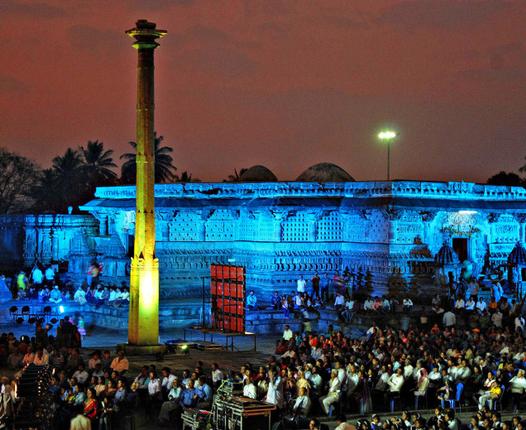
Belur and Halebid, two major tourism destinations in Hassan district, are expected to get a facelift following the Tourism Department’s initiative to involve non-governmental organisations in driving tourists to the State.

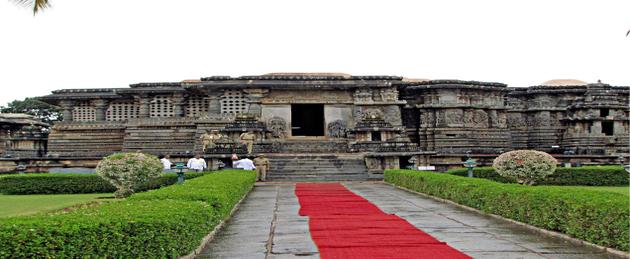
Coffee Day Enterprises Ltd. (CDEL) has shown interest to adopt the two tourism destinations, known for the Hoysala period temples, to improve basic infrastructure so as to attract tourists in big numbers.

The department launched the Adopt Tourist Destination programme in 2014. M.R. Prakash, Assistant Director of the department, told The Hindu on Tuesday that CDEL had shown interest to adopt Belur and Halebid.

“The company’s proposal is being examined by the department. The objective is to provide basic amenities such as drinking water, washrooms and toilets, and improve connectivity to the destinations,” said the officer.

When The Hindu contacted Devahuti, in-charge of media relations in CDEL, she said the company had shown interest to adopt the two places.

Details of the mode of developing these destinations will be made public later, she said.

“The CDEL has entered into an understanding with the Archaeological Survey of India and the Department of Tourism for infrastructure development in Belur and Halebid. The company is hoping to help in development work by building drinking water facilities, washrooms and toilets for tourists along with soft skill training programmes for tourist guides,” a note issued by the company said.

Belur and Halebid are widely known for the Hoysala sculptures.

The Channakeshava temple in Belur (left) and the Hoysaleshwara temple in Halebidare famous tourist destinations.— File Photos: Prakash Hassan

However, the places lack basic amenities for tourists. The State government is making efforts to develop the place around Channakeshava Temple in Belur by acquiring private properties.
HalebeduKF27aug2015

Similarly, in Halebid, tourists encounter problems of finding decent hotels.

“We can develop these centres with the help of private companies. Then, the number of those visiting these destinations will also increase,” Mr. Prakash added.

source: http://www.thehindu.com / The Hindu / Home> National> Karnataka / by Staff Correspondent / Hassan – August 26th, 2015

Coffee Day gets SEBI nod for Rs. 1,150-cr IPO

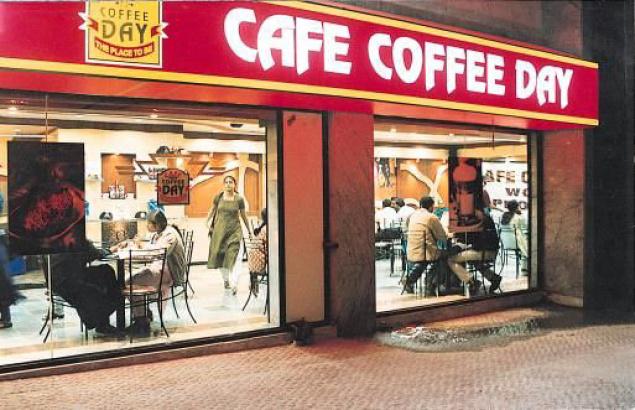
Cafe Coffee Day in Bangalore

New Delhi :

Coffee Day Enterprises, which runs the country’s biggest coffee chain Cafe Coffee Day, has received markets regulator SEBI’s go—ahead to raise Rs. 1,150 crore through initial public offering (IPO).

The firm had filed its draft red herring prospectus (DRHP) with SEBI through its lead merchant banker Kotak Mahindra Capital Company Limited on June 26 this year.

Securities and Exchange Board of India (SEBI) issued its final observations on the draft offer documents on August 14, which is necessary for companies to launch any public offer.

As per the draft paper, the company intends to raise an estimated Rs. 1,150 crore to aid its expansion plans and pay off debt.

The company, which has got private equity giants like KKR, Stanchart PE and New Silk Route as its investors, has reserved Rs. 15—crore worth shares for staff.

The company proposes to list its shares on the BSE and the NSE.

Coffee Day Enterprises is the parent company of the Coffee Day Group and operates coffee business through a subsidiary, Coffee Day Global Limited (earlier known as Amalgamated Bean Coffee Trading Company Limited), and its subsidiaries.

Coffee Day Global Limited had a total income of Rs. 1,154 crore and operating profit of Rs. 189 crore in 2013—14 fiscal.

Out of the capital raised through the issue, the parent company plans to utilise nearly Rs. 632 crore to pay off debt and the remaining to open new stores, set up coffee bean roasting plants and make vending machines, the proposal said.

In the next two financial years, the company plans to open over 215 outlets and set up 105 kiosks.

source: http://www.thehindubusinessline.com / Business Line / Home> Markets / PTI / August 17th, 2015

Instant coffee demand seen boosting exports

Shipments rise for first time this year; drop in Arabicas offset by robusta and soluble varieties

Bengaluru :

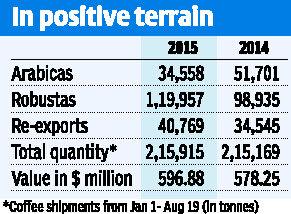
The Indian coffee exports, for the current calendar year, have registered a marginal growth for the first time, on increase in shipments of robustas and the soluble or instant variety.

According to provisional numbers, total export permits issued by the State-run Coffee Board have exceeded the last year’s levels for the first time and were pegged at 2.159 lakh tonnes (lt) for the January 1 to August 19 period against 2.151 lt in the corresponding period last year.

However, the green bean coffee exports continue to trail the last year’s levels largely on account of a 33 per cent drop in Arabica shipments, despite the robustas registering a 21 per cent growth.

CoffeeChartKF21aug2015

Green coffee trails
Also, the soluble coffee shipments measured in green bean equivalent stood at 60,842 tonnes, including the re-exports that grew 18 per cent for the period.

“We expect the shipments to maintain a small growth for the rest of the year,” said Ramesh Rajah, President of Coffee Exporters Association.

“The coffee held back by the growers anticipating better prices, would come out into the market over the next couple of months before the arrival of new crop,” he added.

Currency volatility

Rajah attributed the trailing trend in green coffee shipments to the declining production of the Arabicas.

Also, the Indian exporters are facing challenge from the devaluation of currencies by the top two coffee producing nations – Brazil and Vietnam, which has made their exports competitive.

The Brazilian Real and Vietnamese Dong have weakened by around 15 per cent against the dollar over the past year, while the Rupee has fallen by over 8 per cent.

Crop estimates

The Arabica harvest this year is likely to be advanced by a couple of weeks to September as the early rains have boosted the prospects for coffee.

The Board, in its initial estimates, pegged the crop size for 2015-16 crop year starting October at 3.55 lt – a growth of 8.75 per cent over previous year’s 3.27 lt.

Arabica crop size for 2015-16 is pegged at 1.10 lt – up 12.55 per cent over 2014-15’s final estimate of 97,700 tonnes.

Robusta crop size is estimated to expand to 2.45 lt, a growth of 7 per cent over previous year.

Export markets
C Rajendra Prasad, Chairman and Managing Director of CCL Products Ltd, the country’s largest instant coffee exporter said demand continues to be strong both from traditional markets such as Russia and Europe and even from the new geographies such as the United States.

CCL Products, which exports to about 56 countries, has so far shipped about 24,741 tonnes of instant coffees in the current calendar year. Tata Coffee has exported about 10,207 tonnes, while Nestle with 8895 tonnes were the other large instant coffee exporters.

Italy has been the largest buyer of Indian coffee at 55,378 tonnes, so far, followed by Germany at 20,537 tonnes and Russian Federation at 14,526 tonnes.

source: http://www.thehindubusinessline.com / Business Line / Home> Agri-Biz / by Vishwanath Kulkarni / August 20th, 2015

Tata Coffee appoints Chacko Thomas as Executive Director and Deputy CEO

He was earlier Managing Director of KDHP (Kanan Devan Hills Plantations), an associate company of Tata Global Beverages Ltd.

Representational image

Tata Coffee has appointed plantation industry veteran Chacko Purackal Thomas as its Executive Director and Deputy Chief Executive Officer.

Thomas, who comes from another Tata Group firm, has over 23 years of experience in the plantation industry, Tata Coffee said in a statement here on Tuesday.

His appointment was cleared at a Tata Coffee Board meeting held on August 3, it added.

He was earlier Managing Director of KDHP (Kanan Devan Hills Plantations), an associate company of Tata Global Beverages Ltd.

Thomas was the Managing Director of KDHP since 2012.

Tata Coffee, a subsidiary of Tata Global Beverages, is Asia’s largest coffee plantation company and India’s third largest exporter of the beverage.

The company produces more than 10,000 million tonnes of shade grown Arabica and Robusta coffees at its 19 estates in South India. Its two instant coffee manufacturing facilities have a combined installed capacity of 8,400 tonnes.

Tata Coffee had reported 16% fall in consolidated net profit for the quarter ended June 30, at Rs 25.4 crore, citing higher expenses.

The company, however, saw a rise in total consolidated income in the April June period of FY16 at Rs 396.04 crore, up from Rs 374.52 crore in the same period of last fiscal.

source: http://www.dnaindia.com / DNA / Home> Money /Place: Mumbai, Agency: PTI / Tuesday – August 11th, 2015

Tata Coffee to transform itself into a premium specialty coffee company

Tata Coffee is looking to transform itself into a premium specialty coffee company from a commodity player with an aim to tap the growing specialty coffee market. The company has been consistently moving up the value chain in both its plantations business as well as its instant coffee business.

The company has 19 coffee estates spread over 18,224 acres situated in the Western Ghat at different altitudes that have highly conducive micro-climates.

Tata Coffee, a subsidiary of Tata Global Beverages, is a fully integrated coffee company with its own coffee plantations, coffee curing factories, roasted and ground (R&G) coffee facility and instant coffee production plants.

source: http://www.money.livemint.com / Live Mint / Home> Company News / E-paper / Mumbai – August 03rd, 2015

Owner brews success with Kind Coffee

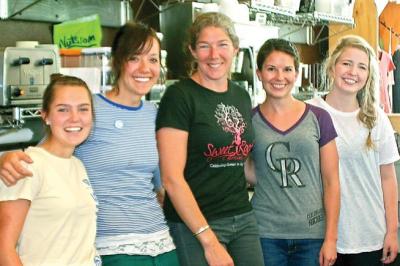
Kind Coffee's staff includes, from left, Lily Tomasula-Martin, Lea Rodderick, owner Amy Hamerick, Megan Davis and Margery Dunkle. (Debbie Holmes / Estes Park Trail-Gazette)
Kind Coffee’s staff includes, from left, Lily Tomasula-Martin, Lea Rodderick, owner Amy Hamerick, Megan Davis and Margery Dunkle. (Debbie Holmes / Estes Park Trail-Gazette)

by Debbie Holmes / Trail-Gazette

One of Estes Park’s best kept secrets is Kind Coffee, which is independently owned by Amy Hamrick. She started her coffee house journey 17 years ago.

“I like to think that many of the worlds problems are being solved right here in Kind Coffee,” said Amy. “It’s so wonderful to see friends, and even high school kids, here supporting my business. I’m proud to have established a place where locals want to come.”

Amy’s journey started in 1998 as the Estes Park Coffee Company, which was located in Ed’s Cantina. Amy was instrumental in starting, running and building the roasting business in that location before Ed’s went through ownership and remodeling changes, which opened up the opportunity for Amy to move into the current location where Kind Coffee has stood since 2004.

Even though Kind Coffee doesn’t roast its own coffee beans anymore, the recipes are the shop’s own, and it continues to use only organic, fair trade coffee beans.

“We continue to live up to our name. It’s important to me that my business is environmentally and socially responsible,” Amy said.

Kind Coffee’s philosophies also have morphed into being community-oriented and supportive. Amy enjoys developing various flavors of coffee for organizations and community needs. Following the 2013 flood, Kind coffee produced “Flood Mud” coffee which continues to raise money for flood recovery.

“Being able to do things for the community is so important to me,” Amy added.

She says that building her business hasn’t been as hard as she had thought, “when it’s from the heart, decisions are easy. It’s been fantastic to have opportunities. All opportunities, good and bad.”

Amy mentioned that she has always had the most amazing staff to help her along this journey.

“I was so thankful for the support of her staff, friends and community members during those tough months after the 2013 flood. There were probably 100 people here helping us during the flood and for months after,” Amy said. “It really touched me when I saw people out in the community and they’d ask me when we were going to open, because they missed us so much.”

Being an independent coffee shop has its draw backs at times.

“It’s important that all independent coffee shops continue to provide and be the best so that our industry stays strong and visitors don’t walk past us to visit one of the big-chain coffee shops,” explained Amy. “It makes us have to step up, work hard and always do the best that we can.”

Amy is proud of what Kind Coffee has become and enjoys going to work every day. Kind Coffee, 470 Elkhorn E. Ave., is open every day at 6:30 a.m. During the summer it closes around 8 p.m. The shop will close at 6 p.m. in the winter and spring.

Along with their delicious coffee and full menu of drinks and food items, Kind also has other fair trade items for sale. Check out the shop’s website at www.kindcoffee.com for more information.

source: http://www.eptrail.com / Estee Park Trail Gazette / Home> Story / by Debbie Homes, Trial-Gazette / July 29th, 2015

Coffee Exports From India Seen Climbing as Record Crop Looms

Coffee shipments from India may increase the most in four years as prospects for a record crop in Asia’s third-largest producer spur farmers to liquidate inventory.

Exports will rise as much as 10 percent in the year through March 2016 from 286,516 metric tons last year, said Ramesh Rajah, president of the Coffee Exporters Association of India. That would be the biggest gain since 2011-2012, when sales jumped 11 percent to 333,181 tons, data from the state-run Coffee Board show.

Rising sales from India to mostly Europe and Russia will add to a global surplus forecast by Societe Generale SA and weigh on robusta prices in London. Supplies from the South Asian nation may help bridge a shortfall in shipments from Vietnam, where farmers are hoarding the most beans in at least five years on speculation prices will rally further. Robusta accounts for about 70 percent of India’s exports.

“With a larger crop expected next season, the small farmers will keep selling” as they can’t bear the storing and logistic costs, Rajah said by phone from Bengaluru on July 14. “The crop was low in 2014-15 and farmers held back and the prices went up.”

Robusta futures last month rose 9.3 percent, the most since February 2014, and traded 1 percent lower at $1,688 a ton on ICE Futures Europe on Friday. Arabica, which advanced 5 percent in June in New York, was down 0.6 percent at $1.2805 a pound. Societe Generale predicts a surplus of 905,000 bags of 60 kilograms each this year.

Monsoon Boost
Production in India will rise 8.7 percent to a record 355,600 tons in 2015-16, the board estimates. Timely monsoon rains have boosted crop prospects, according to Anil Kumar Bhandari, a member of the state-run agency.
“We are heading for a very good crop,” Bhandari said by phone from Bengaluru on July 13. “The coffee-growing belt in Karnataka and Kerala has got adequate rains.”

Exports rose 12 percent to 102,850 tons between April 1 and July 13 from the same period a year earlier, provisional data from the board show. Italy, Germany and Russia were among the top buyers of Indian coffee.

source: http://www.bloomberg.com / Bloomberg Business / Home> Business / by Pratik Parija / July 17th, 2015

GCC re-entering coffee mart after two decades

Visakhapatnam :

After nearly two decades, the Girijan Cooperative Corporation (GCC) is re-entering the coffee sector in the Visakha Agency again and is targeting marketing around 2,000 metric tonnes of coffee procured from small tribal farmers in the Visakha Agency this year.

According to records, there are around one lakh tribals cultivating on nearly 96,337 acres and producing around 6,500 metric tonnes of coffee every year, which fetches around Rs 65 crore. With GCC’s support, the farmers are expected to earn around Rs 91 crore.

GCC has already identified 14 godowns to store the coffee stocks in the Agency and collection of material will start from December this year. It plans to set up one procurement centre each at the village level and two big centres each at the mandal level. GCC has already initiated awareness campaigns in each hamlet in June, inviting coffee growing farmers to enroll their names.

The corporation plans to register the data such as names of farmers, bank account numbers and Aadhaar number in July and August. It is likely to recruit separate manpower for coffee-related activities in September.

“The output and price realization in the Agency areas is very low due to improper harvesting techniques and marketing. If we provide guidance to coffee growing farmers in harvesting and marketing the produce, they will surely benefit. Currently, farmers get a very low price for their produce. If we market the same stocks, their earnings will increase by nearly 40% as we will ensure that each farmer gets the maximum price for his produce. GCC will be taking care of marketing the coffee from this financial year,” GCC managing director A Ravi Prakash said.

“GCC will take care of the pruning, curing, transport and auction of coffee. GCC will bear the entire cost of this and will be reimbursed by the government later. The state government will give Rs 25 crore initially and the Coffee Board will give a subsidy too. GCC will an organized marketing platform for small farmers,” he said.

This is not the first time that GCC is involved in the coffee sector. It had floated the Girijan Plantation Cooperative Development Corporation (GPCDC) in 1986 and developed 40,000 acres of plantation. However, GPCDC wound up its activities in 1997 and the plantation area was distributed among farmers and ITDA staff, sources said.

Meanwhile, the state government has also announced that GCC will provide marketing support for the Paderu Coffee Project, under which the government will invest Rs 526.16 crore in adding another one lakh acres under coffee plantations in the next 10 years. The project was announced by chief minister Chandrababu Naidu on October 17 last year after Cyclone Hudhud and a GO was released by the tribal welfare department last month.

source: http://www.timesofindia.indiatimes.com / The Times of India / Home> City> Visakhapatnam / TNN / July 03rd, 2015