Category Archives: Coffee News

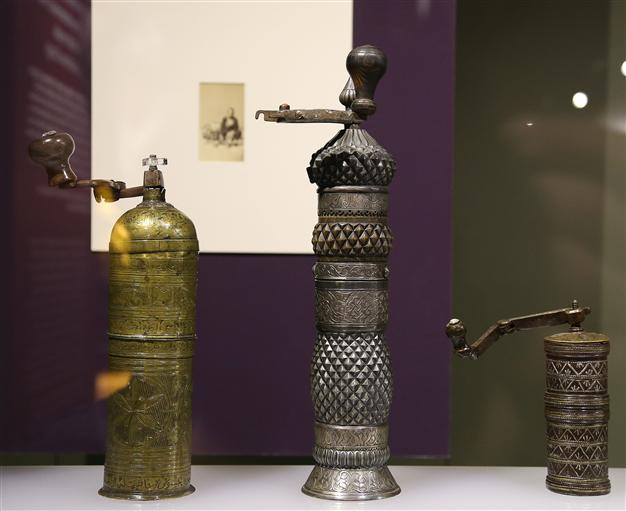
History of Turkish coffee on display

AA Photo
AA Photo

Istanbul’s Topkapı Palace Museum is hosting a new exhibition, featuring the 500-year history of Turkish coffee. Organized in collaboration with the Turkish Coffee Culture and Research Association, the exhibition, titled “A Drop of Pleasure: 500 years of Turkish Coffee” opened on Feb. 17 at the museum’s Has Ahırlar section with the attendance of Culture and Tourism Minister Ömer Çelik.

Speaking at the ceremony, Çelik said Turkish coffee was an inevitable part of social life, not only of eating and drinking culture.

He said Turkish coffee culture dated back to the 16th century, and it had particular importance in the Ottoman Empire, both in the palace and daily life, as socio-cultural event.

“Beyond being a drink, coffee exists in the center of a big cultural structure. It also has a very important place in daily life. It used to be prepared and drank in coffee houses and movable coffee cookers. The coffee houses, where coffee culture had been surviving for hundreds of centuries, also hosted traditional Turkish arts such as shadow play, eulogy shows and theater-in-the-round,” the minister said, adding that coffee was born in Yemen and expanded west thanks to the Ottomans.

He said the Ottoman Empire, which was dominant on the trade routes between the east and west, spread coffee and helped it be loved by Europeans during diplomatic relations.

“For example, during his ambassadorship in Paris, humorist Süleyman Agha promoted coffee to French culture. When he was returning to the empire, his Armenian-origin assistant stayed in Paris and opened a coffee house. Another striking example is that after the Siege of Vienna in 1683, the first coffee houses were opened in Vienna with 500 sacks of coffee left by the Ottoman Empire. From then on, Europeans met real coffee culture,” Çelik said.

UNESCO added Turkish coffee and its tradition to its List of Intangible Cultural Heritage in 2013. In this way, Çelik said for the first time the culture and tradition of a drink was added to that list.

Most comprehensive show on coffee

The exhibition “A Drop of Pleasure: 500 years of Turkish Coffee” consists of pieces from the Topkapı Palace Museum collections as well as the collections of many private museums and libraries. The show reveals the unique ceremony that Turkish coffee created in the Ottoman culture.

Curated by Ersu Pekin, the exhibition is the most comprehensive one related to coffee in Turkey and will be open through June 15.

Most of the pieces in the exhibition are being displayed for the first time. It brings together historical, cultural and social elements of coffee, its botanic features and cooking methods in the world between the 16th and 20th centuries.

source: http://www.hurriyetdailynews.com / Hurriyet Daily News / Home Page> Arts – Culture/Artss / Istanbul – Anadolu Agency / February 18th, 2015
Coffee Board to monetise ‘Coffees of India’ logos

New initiative expected to encourage and promote the Indian brew in overseas markets

Exporters, traders, roasters and curers displaying the ‘Coffees of India’ and the other regional/speciality coffee trademarks on their packages will now have to seek the Coffee Board’s permission to do so and pay a fee for using each logo.

The State-run Coffee Board, which had devised the unique identities/logos and trademarks under the umbrella brand ‘Coffees of India’, has filed for registration of some 19 logos as the Certification of Trademarks.

Issuing certificates
The Registrar of Trademarks, Chennai, has issued the registration certificate for about nine logos including the Robusta Kaapi Royale, Pulneys, Annamalais, Chikmagalur, Coorg and Coffee Swami.

Another set of ten applications for logos such as Mysore Nuggets and Monsooned Malabar are pending registration, though provisional numbers have been issued for the same.

Coffee Board is the sole custodian of the trademark of all logos and those planning to use them on their packets, sacks and publicity material will have to obtain written permission.

Payment details
Exporters or roasters seeking to use the logos will have to apply to the Board in a prescribed format with samples of the beans or instant/roast and ground coffees.

The board has fixed a fee of ₹10,000 for use of each logo and ₹2,500 for every additional logo.

Coffee Board officials said the rationale behind registering the trademarks/logos was to regulate and prevent the misuse. Also, the new initiative is expected to help encourage and promote Indian coffees in overseas markets. However, the trade is divided on the Board’s move to regulate and monetise the logos.“It is good idea.

The logos would enhance the visibility of Indian coffees in the overseas markets,” said Ramesh Rajah, President of the Coffee Exporters Association.

It will also help create awareness among the consumers, Rajah said adding that “the Board should be given a chance.” However, some exporters, who have developed their own brands, do not see major benefits from these trademarks or logos.

Coffee exports

“The logos will help the newcomers the most,” said Ashok Kurian of Balanoor Plantations, who exports under the Balanoor brand.

Coffee exports during January 1-27 were down 32 per cent, provisionally, at 14,672 tonnes against 21,573 tonnes in the corresponding period a year ago.

In 2014, coffee exports stood at 3.01 lakh tonnes valued at ₹4,984 crore or $818 million.

Crop size estimates
The Board, in its latest post monsoon estimates, has pegged the 2014-15 crop size at 3.31 lakh tonnes, a four per cent decline over its post blossom estimate of 3.44 lakh tonnes (lt), primarily due to lower arabica crop that faced a severe pest attack, erratic rainfall and a cyclone.

However, the latest estimates for 2014-15 are 8.7 per cent higher than last year’s final estimate of 3.04 lt. Arabica output for the current season is pegged at 99,600 tonnes, while production of Robusta is expected to 2.31 lt for the 2014-15 season, a decline of 5.6 per cent and 3.28 per cent respectively over the post blossom estimate.

source: http://www.thehindubusinessline.com / Business Line / Hom> Agri-Biz / by Vishwanth Kulkarni / Bengaluru – January 29th, 2015

Indian Coffee House staff want aroma of democracy

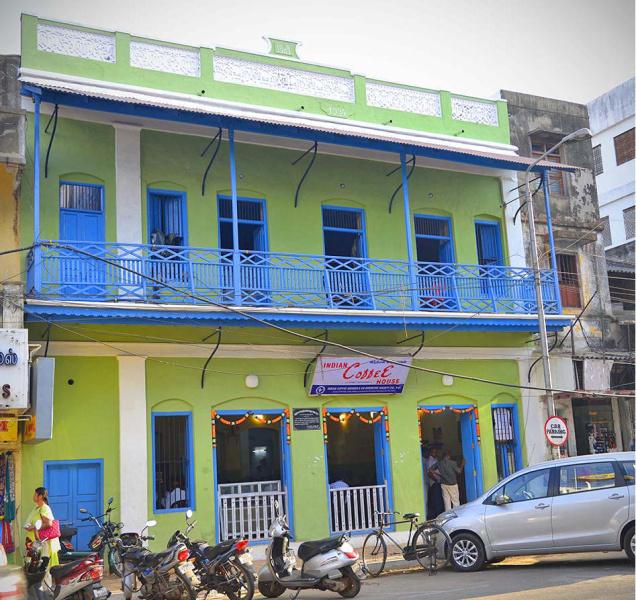
A view of the Indian Coffee House on Jawaharlal Nehru Street in Puducherry.— Photo: S.S. Kumar

The workers of the iconic Indian Coffee House are demanding early elections to choose a board of management for the Indian Coffee Workers’ Cooperative Society that would effectively govern the eatery.

The branches are managed by an interim administrator since 2011 as the previous board of management failed to conduct the elections on time.

The Society was established in 1958 by the retrenched employees of the Coffee Board under the Government of India with their terminal benefits as the working capital of the Society. The Society was formed by the then Leader of Opposition and veteran communist leader, A.K. Gopalan, with the help of the Prime Minister, Jawaharlal Nehru. The Society was registered in Puducherry under the Co-operative Societies Act 1972. It runs branches at T. Nagar and K.K. Nagar in Chennai, Kancheepuram, Big Kancheepuram, Kalpakkam and Neyveli besides having six branches in Puducherry.

As many as 154 employees working in the branches are also members and shareholders of the Society. Normally the chain of restaurants were being managed by a board of management, comprising a president, a vice-president and seven directors who were elected by the workers and a chief executive officer to be appointed by the Registrar of Cooperative Societies.

K. Ramachandran, Secretary of the Indian Coffee House Workers’ Union said, “Election was not conducted to constitute the board of management. Hence there is no improvement for the past four years as there was no board of management in place. The restaurants are not being managed in an efficient manner to turn profitable. In some places, the restaurants are having poor worker strength. Restaurants are kept unclean and service is delayed. The authorities not conducting the elections will only weaken the system further.”

R. Rajangam, president of the union, said the basic principle of cooperative movement is democratic control of the Society and the election should be conducted immediately.

The workers union also sought more fund allocation to the Society.

T. Murugan, honorary president, said the government should come forward to infuse funds to increase staff strength and open more outlets. The Tamil Nadu government exempted the Society from collection of sales tax. Puducherry government should also extend the exemption of value-added tax.

Workers demand early elections to choose board of management for Indian Coffee Workers’ Cooperative Society

source: http://www.thehindu.com / The Hindu / Home> News> Cities> Puducherry / by R. Sivaraman / Puducherry – January 28th, 2015

A flying beetle in India threatens to push up latte prices

(Reuters) – It’s 10 o’clock in the morning and a dozen workers are uprooting coffee plants, piling them in the corner of a field at M.G. Bopanna’s plantation in southern India where they lie ready to be burned.

The plants are bursting with green cherries but inside their hard bark lurk destructive white stem borer beetles. The bushes have to be destroyed to prevent the tiny winged creature from threatening Bopanna’s entire crop of arabica coffee.

The beetle, which bores through plants’ bark and feeds on their stems, is thriving this year due to unusually warm weather and scant rains in arabica growing areas in India, the world’s sixth biggest coffee producer.

If the hot spell continues and the pest continues to spread, India’s coffee crop could fall to its lowest in 17 years when the harvest starts in October, pushing up global prices that are already rallying due to drought in top exporter Brazil.

The damage caused by the beetles is so severe that Bopanna has hired an excavator to uproot affected bushes on his 63 acre plantation at the hill station in the tropical forest of the Western Ghats, west of high-tech hub Bangalore.

“Every time we think we have uprooted all the infected plants, then after a few weeks we find more,” says Bopanna, 69, who has tended the plantation bought by his father for nearly four decades.

“Earlier whenever there was an outbreak, we used to uproot five to 10 plants per acre. This year I have uprooted more than 200 plants per acre,” he said.

There is no effective pesticide to control white stem borers, so the state-run Coffee Board advises farmers to uproot and burn infested plants to limit their spread.

“You may take all precautions, but if your neighbour is lethargic then white stem borers will fly from your neighbour’s plantation,” said N. Bose Mandanna, a grower from Madikeri who has removed all affected plants from his 34 acre plantation, five kilometres west of Bopanna’s field.

SCANT RAIN

In most years heavy rainfalls and low temperatures restrict the spread of the white stem borer. But this year southern Karnataka state’s Kodagu and Chikmagalur districts, which account for two-third of India’s total coffee production, have received half the usual rainfall since the start of monsoon season on June 1.

The state run weather department said earlier this month that rainfall in July and August is expected to remain below average.

“The pest infestation will rise quickly if rainfall remains subdued in the next few weeks,” says Mandanna, a fourth-generation arabica coffee planter.

India’s arabica coffee production could drop as much as 20 percent in the 2014/15 season to 60,000-70,000 tonnes, said a spokesman at Ruchi Soya, a coffee exporter.

That would pull down India’s total coffee output, three quarters of which is exported, to 260,000 tonnes, the lowest level since 1997/98, estimates Ruchi Soya.

Italy, Germany and Belgium are the main buyers of Indian coffee and usually pay a premium for it over global prices. Starbucks, J.M. Smucker Co and Kraft Foods Group are leading buyers of arabica.

ARABICA TO ROBUSTA

Bopanna and other farmers are replacing affected plants with new seedlings, cultivating instead a robusta variety that is cheaper than arabica but resistant to white-stem borer.

“I would love to have an entire coffee plantation with arabica, but I have to consider earnings as well. How I would pay workers if the pest damages my entire arabica crop?” asks Bopanna, who is planning to convert 16 acres to robusta this year.

Arabica coffee is typically roasted and ground for brewing and can range widely in quality, with some reaching the highest levels. Robusta, on the other hand, is more bitter and either processed into instant coffee or added to a roasted blend to reduce the cost.

India, which started coffee cultivation in 1670 with seven smuggled beans, produced mainly arabica until a few decades ago. Now arabica accounts for just one third of India’s total output compared to 82 percent in 1950.

That share will fall further unless the Coffee Board develops new arabica varieties that can withstand white stem borer, says Marvin Rodrigues, former chairman of the Karnataka Planters’ Association.

“Farmers can’t absorb shocks of white stem borer,” said Rodrigues said.

“It is not hurting just one year’s income; it is squeezing four year’s earnings.”

Coffee seedlings start flowering and produce cherries only after four to five years, meaning the impact of this year’s pest infestation will persist in India’s arabica production for at least that long.

Besides, arabica is also a labour-intensive crop at a time when wages are rising quickly due to labour shortages yet yields around half the cherries of robusta.

“Though robusta prices are lower than arabica, it is economical to have robusta. You can recover at least input cost even during bad year,” said Sundaram Ramasamy, executive director at Amrutha Coffee.

For Bopanna though, this year’s crop will be costly.

“Hopes of a bumper crop flourished with widespread flowering in March, but white stem borer ruined those expectations,” he said.

“I was expecting a crop of 15 tonnes, now harvesting 10 tonnes seems difficult.” (Reporting by Rajendra Jadhav; Editing by Rachel Armstrong)

source: http://www.reuters.com / Reuters – edition U.S. / Home / Madikeri , India / by Rajendra Jadhav / June 23rd, 2014

Tata Coffee Board Approves Stock Split

New Delhi:

Tata Coffee, Asia’s largest coffee plantation company, on Tuesday said its board has approved a proposal to split its equity shares from the existing face value of Rs. 10 per share to Rs. 1 per share.

However, the stock split is subject to the approval of company’s shareholders which is proposed to be obtained through postal ballot and e-voting, the company said in a filing to the BSE.

Stock split or sub-division of equity shares is usually done by the companies with the purpose of infusing liquidity by making shares affordable for retail investors who could not invest earlier because of the high stock price.

On November 17, the company had informed that board will consider the proposal of stock split of its equity shares.

Tata Coffee had reported a manifold increase in consolidated net profit at Rs. 32.36 crore for the second quarter that ended on September 30, on account of better performance by the company’s US subsidiary.

Shares in Tata Coffee, on Tuesday, ended at Rs. 977.25 apiece on BSE, up 0.62 per cent from the previous close.

source: http://www.profit.ndtv.com / NDTV Profit / Home> Market / Press Trust of India / November 25th, 2014

Coffee Board blends co-op subsidies into coffee kettle

In an effort to enhance the production of robusta and arabica coffees, the Coffee Board has proposed higher allocation for replanting and expansion, Coffee Board Chairman Jawaid Akhtar said on Thursday.

Under the 12th Plan subsidy rates have been proposed at 40 per cent for up to 2 hectares, 30 per cent for 2-10 hectares and 25 per cent for holdings of above 10 hectares.

Inaugurating the United Planters Association of Southern India (UPASI) and Karnataka Planters Association (KPA) coffee conference on Thursday, Akhtar said, “Coffee Board has proposed to increase the unit cost by 75 per cent to Rs 1,75,000 per hectare.”
For the first time, the Board has included corporates and co-operatives to avail of the subsidy.

Besides, the Board has also introduced subsidy for eco-certification at 50 per cent of the certification cost at a ceiling of Rs 50,000 per beneficiary. It has also enhanced subsidy for quality upgradation to Rs 2.50 lakh for up to 20 hectares.

UPASI President Vijayan Rajes said the coffee committee of UPASI will submit a proposal to the Coffee Board to forward it to the Centre to release funds for producing two new robusta clones and one robusta seedling. This will be in collaboration with Incaper, Brazil’s premium research organisation for conillon robusta.

“We are planning to have a new proposal to get India-specific arabica plants with know-how from Brazil,” Rajes added. “This will help us have 10 million clones supplied to coffee growers in the first four years; and, from the fifth year, the share of Indian robusta will be increased by 50 per cent,” Rajes said.

B M Mahesh Kumar, a coffee planter from Hosathota Estate, Ballupet, spoke on ‘Achieving High Productivity of Black Pepper through Water, Shade and Nutrition Management’. He said, “Disease control can be effected by following judicious Good Agricultural Practices (GAP) and Integrated Pest Management (IPM).”

“Many people are taking up mono pepper cultivation at the cost of arabica coffee which is not a good sign,” Kumar said, adding that farmers should adopt innovative methods to multiply pepper vines for higher production.

Indian Vanilla Enterprise Pvt Ltd and Indian Vanilla Initiative Pvt Ltd, Pollachi, Chairman R Mahendran speaking on ‘Cocoa Cultivation, Processing and Management’, said that the opportunity of cultivating cocoa as another inter-crop for coconut, arecanut and oil palm in select regions of Karnataka holds promise.

Ease of cultivation and management make cocoa an attractive income generator, Mahendran added.

UPASI-TRF (Tea Research Foundation) Valparai, Quality Assurance Assistant Director N Palani stressed the importance of maintaining organic matter in the soil for preserving the physical, chemical and biological properties of soil.

Palani added that since the top soil is rich in humus, it has to be safeguarded from erosion for which soild and water conservation measures, depending on the slope of the terrain, must be taken.

source: http://www.deccanherald.com / Deccan Herald / Home> Business / DHNS – Bengaluru, November 14th, 2014

Coffee Board targets 400,000 tonnes production in 5 years

Enhances subsidy rates and extends assistance to corporates & co-operatives in 12th Plan period

The Coffee Board has set a target of achieving 400,000 tonnes of bean production through more of planting and productivity in the next five to 10 years, about 30 per cent growth over current output.

In 2013-14, production was 304,500 tonnes, a level it has roughly stayed at in recent years.

“Coffee production has stagnated. We have chalked out several programmes like area expansion in non-traditional areas and replanting in traditional areas, along with productivity enhancement,” Board chairman Jawaid Akhtar told planters here on Thursday.

A package has been readied for Andhra Pradesh and Odisha. Plantations in the former’s Araku valley were hit by the recent Hudhud cyclone; about 1,000 tonnes of damage is estimated. Tribals in the region had grown around 6,700 tonnes, spread over 58,000 hectares, Akhtar said. As part of the area expansion, he told the annual coffee conference organised by Karnataka Planters’ Association and United Planters’ Association of Southern India, the aim is to have the Araku valley produce around 25,000 tonnes in the next five years. The Board has proposed to provide Rs 10 per kg subsidy to tribals for marketing it, he said.

The Board has also proposed to continue its replantation and expansion subsidy for growers. The modalities to implement new schemes are likely to be approved next week, Akhtar said. It wishes to retain the replantation or expansion subsidy rates at 40 per cent for areas up to two hectares, 30 per cent for two to 10 ha and 25 per cent for holdings above 10 ha for the 12th Plan period. In addition, it has proposed to raise the unit cost calculation by 75 per cent to Rs 175,000 a ha. For the first time, it has proposed to have corporate groups and co-operatives be eligible for the subsidy.

Also for the first time, the Board has introduced a subsidy for eco-certification, at half the certification cost, with a ceiling of Rs 50,000 a beneficiary. It has also raised the subsidy for quality upgradation to Rs 2.5 lakh up to 20 ha.

The Board has also continued a subsidy scheme for pollution abatement measures and made corporate and cooperative growers’ bodies eligible. The rate of subsidy is to be doubled to 40 per cent, with a ceiling of Rs 5 lakh for a beneficiary.

It has also proposed to enhance the rainfall insurance premiums for small growers and reimburse them up to 75 per cent of the premium. For the first time, it has proposed a support of Rs 4 a kg of clean coffee to small grower collectives, self-help groups and other cooperatives.

The incentive for export of value-added coffee in retail packs as India brands has been enhanced by 50 per cent to Rs 3 a kg. Plus a doubling of the incentive for export of high value coffee to high value markets, to Rs 2 a kg.

Also for the first time, a 25 per cent subsidy on the cost of machinery for curing units, to a ceiling of Rs 50 lakh each.

source: http://www.business-standard.com / Business Standard / Home> Markets> Commodities> Other Commodities / by Mahesh Kulkarni / Bengaluru – November 13th, 2014

Robusta surge expected to brew up higher coffee output

India’s coffee production is forecast to increase by 1 lakh bags to 5.1 million on higher robusta output in Karnataka, the largest coffee producing state, according to the Karnataka Planters Association (KPA) Chairman D Govindappa Jayaram.

Briefing reporters on Wednesday, Jayaram said arabica production is forecast modestly lower as it enters the off-year of the biennial production cycle. Forecast for bean exports is unchanged at 3.7 million. The Coffee Board’s final estimate for 2013-14 is 3,04,500 lakh metric tonnes comprising 1,02,200 metric tonnes of arabica and 2,02,300 metric tonnes of robusta.

The final estimate for Karnataka is 2,11,100 tonnes with 78,440 tonnes of arabica and 1,32,600 tonnes of robusta. Post-blossom forecast for 2014-15 is placed at 3,44,750 metric tonnes comprising 1,05,500 tonnes of arabica and 2,39,250 tonnes of robusta.“We, however, estimate that production will decline 20-30 per cent during 2013-14 and the estimate of the Coffee Board during 2014-15 will not be reached, in particular, arabica coffee which has seen severe incidence of white stem borer,” Jayaram said.

source: http://www.deccanherald.com / Deccan Herald / Home> Business / Bengaluru – DHNS, November 12th, 2014

Coorg coffee to sail from Azhikkal port

Coffee exporters from Coorg are looking up to the newly-commissioned Azhikkal port to route their consignments as it offers savings in time and transportation costs.

“At present, we use Mangalore port for our exports, mainly to the European destinations,” said S.L.N. Vishwanath, the managing director of SVL Coffee Pvt Ltd, a major exporter from Kushal Nagar.

“Kannur port will help us cut costs as it is closer to the coffee-growing areas. We are also looking for easier transaction of business as the new port will be less congested, and hence we are keen on it,” he said.

Mr Vishwanath, along with ITC, exports 35,000 tonne of the total exports of 60,000 tonne from the region. “The port officials had contacted us with their proposal earlier and we had asked them to come back with solid proposals. If they can offer us better rates and efficiency of service, we will route our exports through Kannur.”

Kushal Nagar alone exports close to 4,000 containers of coffee and the major destinations are the European countries and the Gulf.

The exporters, however, demand that the port put in place infrastructure facilities such as electronic data interface which would facilitate seamless movement of cargo across ports.

Exporters in Kannur are also keen on the development as it would ensure that the port scale up its activities. The Kannur port, which the Central government had selected for development under the National Maritime Development Plan, received its first vessel on October 31 this year.

source: http://www.asianage.com / The Asian Age / Home> Business / by K.J.Jacob – Kochi / November 12th, 2014