Category Archives: Coffee News

Genes decide if you will love coffee or not

Genes decide if you will love coffee or not (Thinkstock Photos/ Getty Images)

In a first, researchers have identified six new genetic variants associated with habitual coffee drinking, suggesting why some people love to have coffee while others hate to sip it.

The genome-wide large study, led by the Harvard School of Public Health and Brigham and Women’s Hospital, helps explain why a given amount of coffee or caffeine has varied effects on different people.

“Our findings identifies sub-groups of people most likely to benefit from increasing or decreasing coffee consumption for optimal health,” said Marilyn Cornelis, research associate in department of nutrition at Harvard School of Public Health.

To reach this conclusion, researchers, part of the Coffee and Caffeine Genetics Consortium, conducted a genome-wide meta-analysis of more than 120,000 regular coffee drinkers of European and African-American ancestry.

They identified six variants that mapped to genes in areas involved in caffeine metabolism, influencing the rewarding effects of caffeine and involved in glucose and lipid metabolism.

“The findings suggest that people naturally modulate their coffee intake to experience the optimal effects exerted by caffeine and that the strongest genetic factors linked to increased coffee intake likely work by directly increasing caffeine metabolism,” Cornelis explained.

Genetics have long been suspected of contributing to individual differences in response to coffee and caffeine.

“Like previous genetic analyses of smoking and alcohol consumption, this research serves as an example of how genetics can influence some types of habitual behaviour,” added Daniel Chasman, associate professor at the Brigham and Women’s Hospital.

The study appeared online in the journal Molecular Psychiatry.

source: http://www.timesofindia.indiatimes.com / The Times of India / Home> Life & Style> Health & Fitness / IANS / October 08th, 2014

Starbucks to promote Indian coffee blends

Global coffee retailer Starbucks which had set shop in India in joint venture with the Tata Group, is keen to send more of Indian coffee blends, which it sources from around Coorg, to its stores in the US and other Asian countries.

“We have taken two very popular blends from India, to the US and Asia Pacific markets. India is a very long term market for us and we see such initiatives only growing in the future,” said Avani Davda, chief executive officer, Tata Starbucks.

The one blend, Indian estates blend, sourced from various plantations around Coorg and processed at the company’s roasting facility at Kushalnagar in Karnataka. Launched only in September, the blends may see a pick up after the US Autumn season.

In the two years of its presence in India, the Nasdaq listed Starbucks has set up 58 stores. Davda was in Hyderabad on Tuesday to set up their first store in the city. “We wont grow to prove store count. There have been a couple of international players who tested waters and shut down. But Starbucks is an iconic and respected brand and are here to understand the Indian consumer,” she said.

According to her, the coffee joint would customise itself to local tastes, even as the changes may not appear on the menu. “We look at social trends and it is definitely about coffee. We are not focused on the Indian competition but on how well we could weave a customer centric coffee experience,” she said.

The coffee retailing space is growing at around 12-15 per cent every year.

trushnaudgirkar@mydigitalfc.com

source: http://www.mydigitalfc.com / mydigitalfc.com / Home> My Brand / by Trushna Udgikar / Hyderabad – September 30th, 2014

Starbucks to take Coorg coffee global

StarbucksKF02oct2014

Hyderabad:

Tata Starbucks Limited, a 50:50 joint venture between Tata Global Beverages and Starbucks Coffee Company, is planning to take its Indian coffee blends global. For this, the world’s largest coffee retailer plans to send its Coorg sourced coffee blends to its stores in the United States and other Asian countries.

Speaking on the sidelines of launch of its flagship outlet in Hyderabad, the firm’s chief executive officer (CEO) Avani Davda said, “We have taken two very popular blends from India Indian estate blends and Indian espresso roast to the United States and Asia Pacific markets. India is a very long-term market for us and we see such initiatives only growing in the future.”

The coffee retailer, which has almost 58 stores spread across six cities in the country, has about 15-17 coffee estates spread in the Coorg region and out of this four are of the India estate blends. Processed at the company’s roasting facility at Kushalnagar in Karnat-aka, the blends may see a pick up after the United States autumn season, opined Ms Davda.

Elaborating on the expansion plans and also on their competitors, the chief executive said, “We look at social trends and it is definitely about coffee”.

“We are not focused on the Indian competition but on how well we could weave a customer centric coffee experience,” Ms Davada added.

source: http://www.deccanchronicle.com / Deccan Chronicle / Home> Business> Companies / DC Correspondent / October 01st, 2014

Hit the Great Indian Coffee Trail

Once confined to South India, coffee has emerged into pan Indian beverage, not just at cafes but also in homes. However, the coffee industry is facing several challenges due to shortage of labour in its estates and plantations. Hassan M Kamal investigates

There’s a story that claims how nearly 400 years ago, a Sufi poet named Baba Budan smuggled coffee beans from Mocha (Yemen), to the hills of Chikmagalur in Karnataka. While there is no recorded evidence to prove this story, it has remained a popular folklore among India’s coffee lovers.

Coffee-1KF28sept2014

The presence of a controversial shrine of the Sufi saint on top of Dattagiri (or Baba Budan) range of the Western Ghats, watching over the coffee estates of Chikmagalur, further lends credence to the belief. After its arrival, over the next four centuries, coffee grew to become an integral part of South Indian culture.

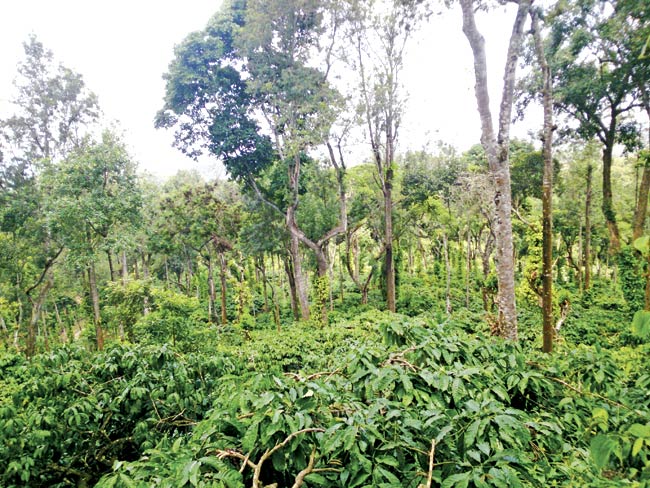
Most coffee plants in India are grown under the shade of trees. Pic courtesy/ Dr Ashwini Kumar BJ

Different communities and cities came to master the art of growing coffee, roasting and brewing a fine concoction from the coffee beans, in their own way.


Aromatic trail

“Even today, there are several households in South India who roast their own batch of coffee beans in the kitchen, grind it and prepare a decoction that suits their needs,” shares Dr Ashwini Kumar BJ, who holds the Coffee Board Research Chair at the Indian Institute of Plantation Management in Bangalore.

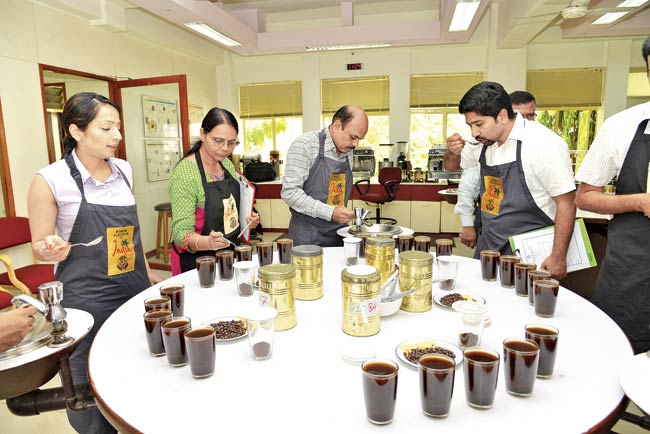
A tasting session in progress at the Coffee Board head office in Bangalore. Pic courtesy/ Dr Ashwini Kumar BJ -
A tasting session in progress at the Coffee Board head office in Bangalore. Pic courtesy/ Dr Ashwini Kumar BJ –

Their methods have created specialty coffees, which are in huge demand in the Western markets as well as location-centric versions of Indian filter coffee like the Degree coffee of Kumbakonam in Tamil Nadu (most popular among Tamilians), Coorg coffee and Chikmagalur coffee, each known for its unique taste, informs Dr Kumar (check box for details).

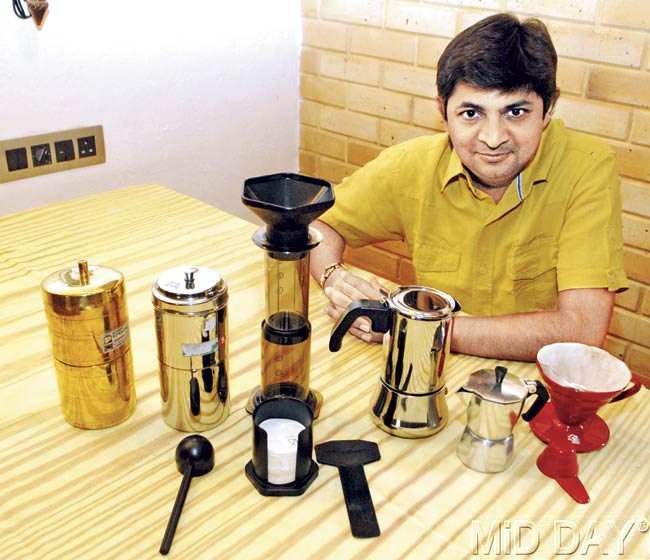
Mumbai-based brewing expert Jignesh Shah with the three coffee-making equipments (from left to right) the Indian Filter Coffee Maker (in brass and steel), Aero Press and the Moka Pot. Pics/Shadab Khan

The equipment to make the popular Indian filter coffee is proof of how engrained the beverage is in the daily life of a South Indian. While the origins of the filter coffee maker aren’t documented comprehensively, according to photographer K Suresh, a die-hard coffee lover, the earlier method required keeping ground coffee wrapped around a cloth dipped in a pot of water overnight.

“My grandma would make fresh coffee every morning; jaggery was used to sweeten it. Sugar was reserved for tea,” he recalls. He still sources coffee beans from Mangalore, but also vouches for beans sold at Philips Tea and Coffee in King’s Circle, a locality famous for its authentic coffee. “The process continues with the Indian filter coffee makers, even today.

The ground coffee is kept inside a chamber and filled with hot water. Overnight, the coffee filters down into a chamber right under it, giving the final decoction a strong flavour,” says Jignesh Shah, a Mumbai-based coffee entrepreneur. He adds that in most South Indian families, there’s a tradition of offering the first drink from the brew to the head of the family in the morning.

Arrival of new coffee fans
Shah comes from the new breed of coffee lovers, who are not South Indian, but have acquired a taste for this beverage, and see coffee as an item that needs to be appreciated. “Most Indians have been cheated with, when it comes to coffee, as we have never got anything beyond instant coffee. Coffee is more than that,” says Shah.

He adds that the beverage is gaining popularity among other communities, including the tea-crazy North Indians. “And, I’m not referring to a Barista, Cafe Coffee Day or Starbucks outlet (though they played a role in popularising coffee) or drinking instant coffee from vending machines, but coffee fans who want to prepare it from scratch in their own homes.”

Shah recently launched his brand of coffee, Jewel Aromantic, and has also been conducting workshops and taking classes, teaching Mumbaikars how to brew coffee at home. One of his focus areas has been making inexpensive fuss-free coffee makers like the Italian Moka Pot (comes for just Rs 500), Indian Filter Coffee maker (Rs 500) and the most-recent Aero Press (Rs 2,500), now available in India.

“Most of us are only aware of instant coffee or the expensive espresso machines. But there are several other equipments like the Moka Pot, the Aero Press or the Indian Filter Coffee Maker, which are inexpensive and easy to operate. Now, people are exploring these options, and loving them,” he adds, adding, “Some devices like the Aero Press and Indian Filter Coffee Maker doesn’t require any heat source.”

Home of specialties

India grows two types of commercial coffees Indian Robusta and the Indian Arabica. Earlier, most of the produce used to be the Indian Arabica, which is still in huge demand internationally. But since Arabicas are prone to pests, most coffee estates have moved to the Indian Robusta. “It has a much more stronger taste than the Arabica, and though it was initially not considered good, and still fetches lower prices internationally, it’s gaining popularity in the market,” says Shah.

Dr Kumar says that what gives Indian coffee a special place internationally is its unique coffees, which are referred to as Specialty Coffees. “The three specialty coffees produced in India are Monsooned Malabar, Mysore Nuggets and Robusta Kaapi Royale. All these coffees vary in their cup characteristics, and are popular internationally,” he adds.

India is also gaining popularity for its unique animal coffee, the Monkey Parchment coffee, a rare type of coffee made from beans chewed by Rhesus monkeys. The coffee is produced in Chikmagalur, Karnataka.
“The monkeys select the best coffee cherries, pick them, chew them leisurely for a few minutes and spit the remainder of the fruit onto the ground.

These discarded fruits are collected, rinsed, washed and processed using water to remove the pulp (parchment), and then dried. The enzymes in the saliva of the Rhesus monkey initiates a chemical process, giving the beans a different taste and colour,” says Shah.

Challenges galore
But all is not good with the coffee estates, located mostly in the Western Ghats. In the last few years, there had been several reports of labour constraints in Indian coffee estates. “Most of India’s coffee is grown in undulating slopes of the Western Ghats.

The coffee plantations are experiencing a severe shortage of labour for undertaking key farm operations, such as manuring, application of fertiliser, harvesting and farm-level processing. While larger plantations have initiated efforts for mechanisation, medium and small plantations continue to incur higher costs on labour, thereby reducing their surplus for capital investments,” says Dr Kumar.

According to a report by The Seattle Times, some plantations in India have begun offering good-quality housing, medical care and other benefits to attract labour. But it’s been of no help. Another major problem is the low level of value addition at the farm level, informs Dr Kumar.

“The value addition of coffee takes place at the level of roasters and retailers. But since most of our coffee is exported as green beans (unprocessed), most Indian coffee producers become very susceptible to the fluctuations in international prices. Higher value addition and domestic consumption could reduce the susceptibility of producers to the drastic price fluctuations that are currently seen in primary markets of Indian coffee,” he adds.

Another concern emerges from lower production due to unseasonable and fluctuating rainfall. “While the consumption of Indian coffee has increased, the productivity of Indian coffee plantations has been stagnant,” reveals Dr Kumar adding that India should produce more coffee to meet the domestic demand and exploit opportunities that emerge from a growing international demand for Indian coffee.

___________________________________________________________________________________________
Grades of Indian Coffee

Grading of coffee primarily refers to the segregation / classification of coffee beans based on their size. The primary grades of Arabica Coffee are Peaberry, AB, A, B, C, Blacks/Browns, Bits and Bulk. The primary grades of Robusta Coffee are Peaberry, AB, C, Blacks/Browns, Bits and Bulk.

CoffeeBeans5KF28sept2014

Bits and Bulk are the most inferior in the lot and used to make instant coffee. In India, coffee is also categorised based on taste like Monsooned Malabar, Mysore Nuggets and Robusta Kaapi Royale. Based on the region of production in India, 13 regional coffees have also been defined.

They are Anamalais, Araku Valley, Bababudangiris, Biligiris, Brahmaputra, Chikmagalur, Coorg, Manjarabad, Nilgiris, Pulneys, Shevaroys, Travancore and Wayanaad.

Improve your coffee quotient
What’s roasting?

Roasting is a process that helps bring out the aroma and flavour of coffee.

______________________________________________________________________________________________

AeroPress6KF28sept2014

The major techniques for roasting coffee beans are Rotating cylinder or drum roasting where the coffee beans are fed into a cylinder through which hot air is passed and the drum rotates; and fluidized bed roaster where gases entering into the fixed chamber of the roaster lead to the beans’ rapid turbulent circulation (levitation).

Following roasting, the beans are cooled and run through a destoner that uses air to remove stones and other extraneous materials. The roasted beans are then ground by using grinders.

MoccaPot7KF28sept2014

source: http://www.mid-day.com / MidDay / Home> Life and Style News> Food News / by Hassan M Kamal / September 27th, 2014

Tata Coffee reappoints Hameed Huq as MD

The Board of Directors of Tata Coffee Ltd at its meeting held on November 07, 2013, have reappointed Mr. Hameed Huq as Managing Director on the expiry of his present tenure of office viz from January 03, 2014 to March 31, 2015.

Shares of Tata Coffee Ltd was last trading in BSE at Rs.1054.65, down by Rs.78.40 or 6.92%. The stock hit an intraday high of Rs.1154.95 and low of Rs.1020.

The total traded quantity was 1.69 lakhs as compared to 2 week average of 0.42 lakhs.

Source: Equity Bulls

source: http://www.equitybulls.com / Equity Bulls / Home> Stock Report / November 07th, 2013 (2013-11-07)

From berry to brew…

CoffeeKODAGU21sept2014
Coffee was once a closely guarded Arabian secret until Baba Budan, a Sufi mystic, smuggled seven beans from Yemen and scattered them on the hills of Chikmagalur, from where it spread to the rest of India…Anurag Mallick and Priya Ganapathy spill the beans on the story of coffee, the world’s most popular brew.

It was Napoleon Bonaparte who once grandly announced, “I would rather suffer with coffee than be senseless.” Sir James MacKintosh, 18th century philosopher, famously said, “The powers of a man’s mind are directly proportional to the quantity of coffee he drank.” In The Love Song of J Alfred Prufrock, when T S Eliot revealed, “I have measured out my life with coffee spoons,” he hinted at the monotony of socialising and the coffee mania of the 1900s. German musical genius J S Bach composed the ‘Coffee Cantata’ celebrating the delights of coffee at a time when the brew was prohibited for women.

“If I couldn’t, three times a day, be allowed to drink my little cup of coffee, in my anguish I will turn into a shriveled-up roast goat,” cried the female protagonist! French author Honoré de Balzac wrote the essay ‘The Pleasures and Pains of Coffee’ to explain his obsession, before dying of caffeine poisoning at 51. Like Voltaire, he supposedly drank 50 cups a day! So, what was it about coffee that inspired poets, musicians and statesmen alike?

Out of Africa

Long before coffee houses around the world resounded with intellectual debate, business deals and schmoozing, the ancestors of the nomadic Galla warrior tribes of Ethiopia had been gathering ripe coffee berries, grinding them into a pulp, mixing it with animal fat and rolling them into small balls that were stored in leather bags and consumed during war parties as a convenient solution to hunger and exhaustion! Wine merchant and scientific explorer James Bruce wrote in his book Travels to Discover the Source of the Nile that “One of these balls they (the Gallas) claim will support them for a whole day… better than a loaf of bread or a meal of meat, because it cheers their spirits as well as feeds them”. Other African tribes cooked the berries as porridge or drank a wine prepared from the fermented fruit and skin blended in cold water.

Historically, the origins of the coffee bean, though undated, lie in the indigenous trees that once grew wild in the Ethiopian highlands of East Africa. Stories of its invigorating qualities began to waft in the winds of trade towards Egypt, North Africa, the Middle East, Persia and Turkey by the 16th Century. The chronicles of Venetian traveller Gianfrancesco Morosini at the coffee houses of Constantinople in 1585 provided Europeans with one of the foremost written records of coffee drinking. He noted how the people ‘are in the habit of drinking in public in shops and in the streets — a black liquid, boiling as they can stand it, which is extracted from a seed they call Caveè… and is said to have the property of keeping a man awake.’

It was only a matter of time before the exotic flavours of this intoxicating beverage captured the imagination of Europe, prompting colonial powers like the Dutch, French and the British to spread its cultivation in the East Indies and the Americas. Enterprising Dutch traders explored coffee cultivation and trading way back in 1614 and two years later, a coffee plant was smuggled from Mocha to Holland. By 1658, the Dutch commenced coffee cultivation in Ceylon (Sri Lanka). The word ‘coffee’ is apparently derived from qahwah (or kahveh in Turkish), the Arabic term for wine. Both the terms bear uncanny similarity to present day expressions — French café, Italian caffè, English coffee, Dutch koffie or even our very own South Indian kaapi. A few scholars attribute ‘coffee’ to its African origins and the town of Kaffa in Ethiopia, formerly known as Abyssinia. However, the plant owes its name “Coffea Arabica” to Arabia, for it was the Arabs who introduced it to the rest of the world via trade.

As all stories of good brews go, coffee too was discovered by accident. Legends recount how sometime around the 6th or 7th century, Kaldi, an Ethiopian goatherd, observed that his goats became rather spirited and pranced after they chewed on some red berries growing in wild bushes. He tried a few berries and felt a similar euphoria. Excited by its effects, Kaldi clutched a handful of berries and ran to a nearby monastery to share his discovery with a monk. When the monk pooh-poohed its benefits and flung the berries into the fire, an irresistible intense aroma rose from the flames. The roasted beans were quickly salvaged from the embers, powdered and stirred in hot water to yield the first cup of pure coffee! This story finds mention in what is considered to be one of the earliest treatises on coffee, De Saluberrima Cahue seu Café nuncupata Discurscus, written by Antoine Faustus Nairon, a Roman professor of Oriental languages, published in 1671.

Flavours from Arabia

Coffee drinking has also been documented in the Sufi monasteries of Yemen in South Arabia. Arabic manuscripts dating back to the 10th Century mention the use of coffee. Mocha, the main port city of Yemen, was a major marketplace for coffee in the 15th century. Even today, the term ‘mocha’ is synonymous with good coffee. Like tea and cocoa, coffee was a precious commodity that brought in plenty of revenue. Hence, it remained a closely guarded secret in the Arab world. The berries were forbidden to leave the country unless they had been steeped in boiling water or scorched to prevent its germination on other lands.

In 1453, the Ottoman Turks brought coffee to Constantinople, and the world’s first coffee shop Kiva Han opened for business. As its popularity grew, coffee also faced other threats. The psychoactive and intoxicating effects of caffeine lured menfolk to spend hours at public coffee houses drinking the brew and smoking hookahs, which incited the wrath of orthodox imams of Mecca and Cairo. As per sharia law, a ban was imposed on coffee consumption in 1511. The Grand Mufti Mehmet Ebussuud el Imadi was hailed when he issued a fatwa allowing the consumption of coffee, by order of the Ottoman Turkish Sultan Selim I in 1524.

Though subsequent bans were re-imposed and lifted at various points of time according to the whims of religious politics and power, coffee pots managed to stay constantly on the boil in secret, or in the open, for those desirous of its potent influence. Given the fact that Sufi saints advocated its uses in night-time devotions and dervishes and Pope Clement VIII even baptised the bean to ward off the ill-effects of what was regarded by the Vatican as ‘Satan’s drink’ and the ‘Devil’s Mixture of the Islamic Infidels’ till the 1500s, it is easy to see why coffee is nothing short of a religion to some people.

Coffee enters India & beyond

Surprisingly, India’s saga with coffee began in 1670 when a Muslim mystic, Hazrat Dada Hyat Mir Qalandar, popularly known as Baba Budan, smuggled seven beans from Arabia and planted them on a hillock in the Chikmagalur district of Karnataka. The hills were later named Baba Budan Giri in his memory. From here, coffee spread like bushfire across the hilly tracts of South India.

In 1696, Adrian van Ommen, the Commander at Malabar, followed orders from Amsterdam and sent off a shipment of coffee plants from Kannur to the island of Java. The plants did not survive due to an earthquake and flood but the Dutch pursued their dream of growing coffee in the East Indies with another import from Malabar. In 1706, the Dutch succeeded and sent the first samples of Java coffee to Amsterdam’s botanical gardens from where it made further inroads into private conservatories across Europe. Not wishing to be left behind, the French began negotiating with Amsterdam to lay their hands on a coffee tree that could change their fortunes. In 1714, a plant was sent to Louis XIV who gave it promptly to the Jardin des Plantes at Paris for experimentation. The same tree became the propagator of most of the coffees in the French colonies, including those of South America, Central America and Mexico.

The importance of coffee in everyday life can be gauged by the fact that its yield forms the economic mainstay of several countries across the world; its monetary worth among natural commodities beaten only by oil! It was only in 1840 that the British got into coffee cultivation in India and spread it beyond the domain of the Baba Budan hills.

Arabica vs Robusta

Kodagu and Chikmagalur are undoubtedly the best places to know your Arabica from your Robusta and any planter worth his beans will trace coffee’s glorious history with pride. The strain that Baba Budan got was Coffea arabica and because of its arid origins, it thrived on late rainfall. Despite its rich taste and pleasing aroma, the effort required to cultivate it dented its popularity. The high-altitude shrub required a lot of tending, was susceptible to pests, and ripe Arabica cherries tended to fall off and rot. Careful monitoring at regular intervals affected production cost and profitability.

Till 1850, Arabica was the most sought-after coffee bean in the world and the discovery of Robusta in Belgian Congo did little to change that. Robusta (Coffea canephora), recognised as a species of coffee only as recently as 1897, lived up to its name. Its broad leaves handled heavy rainfall much better and the robust plant was more disease-resistant. The cherries required less care as they remained on the tree even after ripening. Its beans had twice the caffeine of Arabica, though less flavour, which was no match for the intense Arabica. It was perceived as so bland that the New York Coffee Exchange banned Robusta trade in 1912, calling it ‘a practically worthless bean’!

But in today’s new market economy, the inexpensive Robusta makes more commercial sense and is favoured for its good blending quality. Chicory, a root extract, was an additive that was introduced during the Great Depression to combat economic crisis that affected coffee. It added more body to the coffee grounds and enhanced the taste of coffee with a dash of bitterness. Though over 30 species of coffee are found in the world, Arabica and Robusta constitute the major chunk of commercial beans in the world. ‘Filter kaapi’ or coffee blended with chicory holds a huge chunk of the Indian market. Plantations started with Arabica, toyed with Liberica, experimented with monkey parchment and even Civet Cat coffee (like the Indonesian Luwak Kopi — the finest berries eaten by the civet cat that acquire a unique flavour after passing through its intestinal tract), but the bulk of India’s coffee is Robusta.

As the coffee beans found their way from the hilly slopes of the Western Ghats to the ports on India’s Western Coast to be shipped to Europe, a strange thing happened. While being transported by sea during the monsoon months, the humidity and winds caused the green coffee beans to ripen to a pale yellow. The beans would swell up and lose the original acidity, resulting in a smooth brew that was milder. This characteristic mellowing was called ‘monsooning’. And thus was born Monsooned Malabar Coffee.

Kodagu, India’s Coffee County

Currently, Coorg is the largest coffee-growing district in India, and contributes 80% of Karnataka’s coffee export. It was Captain Lehardy, first Superintendent of Kodagu, who was responsible for promoting coffee cultivation in Coorg. Jungles were cleared and coffee plantations were started. In 1854, Mr Fowler, the first European planter to set foot in Coorg, started the first estate in Madikeri, followed by Mr Fennel’s Wooligoly Estate near Sunticoppa. The next year, one more estate in Madikeri was set up by Mr Mann. In 1856, Mr Maxwell and Mcpherson followed, with the Balecadoo estate. Soon, 70,000 acres of land had been planted with coffee. A Planters Association came into existence as early as 1863, which even proposed starting a Tonga Dak Company for communication. By 1870, there were 134 British-owned estates in Kodagu.

Braving ghat roads, torrid monsoons, wild elephants, bloodthirsty leeches, hard plantation life and diseases like malaria, many English planters made Coorg their temporary home. Perhaps no account of Coorg can be complete without mentioning Ivor Bull. Along with District Magistrate Dewan Bahadur Ketolira Chengappa, the enterprising English planter helped set up the Indian Coffee Cess Committee in 1920s and enabled all British-run estates to form a private consortium called Consolidated Coffee. In 1936, the Indian Cess Committee aided the creation of the Indian Coffee Board and sparked the birth of the celebrated India Coffee House chain, later run by worker co-operatives. With its liveried staff and old world charm, it spawned a coffee revolution across the subcontinent that has lasted for decades.

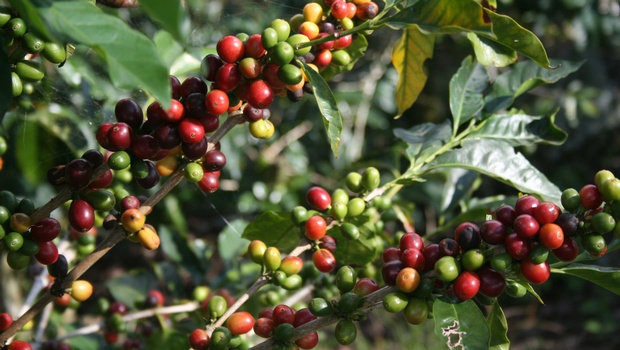
Connoisseurs say Coorg’s shade grown coffee has the perfect aroma; others ascribe its unique taste to the climatic conditions and a phenomenon called Blossom Showers, the light rain in April that triggers the flowering of plants. The burst of snowy white coffee blossoms rends the air thick with a sensual jasmine-like fragrance. Soon, they sprout into green berries that turn ruby red and finally dark maroon when fully ripe. This is followed by the coffee-picking season where farm hands pluck the berries, sort them and measure the sacks at the end of the day under the watchful eye of the estate manager.

The berries are dried in the sun till their outer layers wither away; coffee in this form is called ‘native’ or parchment. The red berries are taken to a Pulp House, usually near a water source, where they are pulped. After the curing process, the coffee bean is roasted and ground and eventually makes its journey to its final destination — a steaming cup of bittersweet brew that you hold in your hands.

The ‘kaapi’ trail

In India, coffee cultivation is concentrated around the Western Ghats, which forms the lifeline for this shrub. The districts of Coorg, Chikmagalur and Hassan in Karnataka, the Malabar region of Kerala, and the hill slopes of Nilgiris, Yercaud, Valparai and Kodaikanal in Tamil Nadu account for the bulk of India’s coffee produce. With 3,20,000 MT each year, India is the 6th largest coffee producer in the world.

Recent initiatives to increase coffee consumption in the international and domestic market prompted the Coffee Board, the Bangalore International Airport and tour operator Thomas Cook to come together and organize coffee festivals and unique holiday packages like The Kaapi Trail to showcase premium coffees of South India. Coffee growing regions like Coorg, Chikmagalur, B R Hills, Araku Valley, Nilgiris, Shevaroy Hills, Travancore, Nelliyampathy and Palani Hills are involved in a tourism project that blends leisure, adventure, heritage and plantation life.

At the Coffee Museum in Chikmagalur, visitors can trace the entire lifecycle of coffee from berry to cup. In Coorg and Malnad, besides homestays, go on Coffee Estate holidays with Tata’s Plantation Trails at lovely bungalows like Arabidacool, Woshully and Thaneerhulla…
The perfect cuppa

Making a good cup of filter coffee traditionally involves loading freshly ground coffee in the upper perforated section of a coffee filter. About 2 tbs heaps can serve 6 cups. Hot water is poured over the stemmed disc and the lid is covered and left to stand. The decoction collected through a natural dripping process takes about 45 minutes and gradually releases the coffee oils and soluble coffee compounds. South Indian brews are stronger than the Western drip-style coffee because of the chicory content. Mix 2-3 tbs of decoction with sugar, add hot milk to the whole mixture and blend it by pouring it back and forth between two containers to aerate the brew.

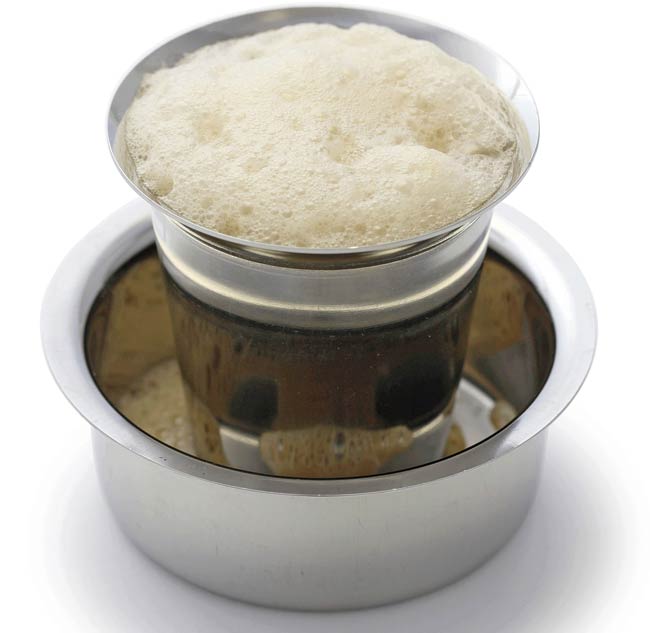
Some places and brands of coffee have etched a name for themselves in the world of coffee for the manner in which coffee is made. The strength of South Indian Filter coffee or kaapi (traditionally served in a tumbler and bowl to cool it down), the purity of Kumbakonam Degree Coffee, the skill of local baristas in preparing Ribbon or Metre coffee by stretching the stream of coffee between two containers without spilling a drop… have all contributed to the evolution of coffee preparation into an art form.

With coffee bars and cafes flooding the market and big names like Starbucks, Costa, Barista, Gloria Jean’s, The Coffee Bean, Tim Horton’s and Café Coffee Day filling the lanes and malls in India along with local coffee joints like Hatti Kaapi jostling for space, it’s hard to escape the tantalising aroma of freshly brewed coffee. And to add more drama to the complexities of coffee, you can choose from a host of speciality coffees from your backyard — Indian Kathlekhan Superior and Mysore Nuggets Extra Bold, or faraway lands — Irish coffee and cappuccino (from the colour of the cloaks of the Capuchin monks in Italy) or Costa Rican Tarrazu, Colombian Supremo, Ethiopian Sidamo and Guatemala Antigua. And you can customise it as espresso, latte, mocha, mochachino, macchiato, decaf… Coffee is just not the same simple thing that the dancing goats of Ethiopia once enjoyed.

source: http://www.deccanherald.com / Deccan Herald / Home> Supplements> Sunday Herald / September 21st, 2014


Fresh Measures to Revive Coffee Sector in State

Coffee02KF18sept2014

Kalpetta :

The Coffee Board has outlined measures to revive the ailing coffee sector in the state.

The Board will provide financial aid to struggling coffee growers to purchase equipment, fertiliser and other inputs used in farm operations.

The amount of Rs 100 crore that has been set aside for ‘supporting mechanisation of farm operations’ under the 12th Five Year Plan will be utilised for providing subsidy to planters to purchase machineries.

According to the Coffee Board officials, planters will be provided financial assistance to procure machineries such as weed/brush cutter, pit-digging machine, telescopic pruner, hand-held/battery operated coffee harvester, sprayers, mini-tractors, power tillers, mini-transporters/rubber track carriers etc.

The new initiative is being rolled to promote mechanisation of farm activities to address the shortage of skilled labour, the officials said.

While small growers owning less than 20 hectares of plantation are eligible to get 50 per cent subsidy (up to Rs 2 lakh) for purchase of machinery, large farmers are eligible to obtain 20 per cent subsidy (up to Rs 5 lakh).

Apart from growers, registered societies with not less than 20 members and farmers’ groups are also eligible to avail benefits under the scheme.

The details of the project, including the names of the machineries sanctioned under the scheme and the sellers who have the necessary authorisation to sell them, are available on http://www.indiacoffee.org/

Details can also be obtained from the nearest liaison office under the Coffee Board. The last date for submission of application is October 31.

source: http://www.newindianexpress.com / The New Indian Express / Home> States> Kerala / by Express News Service / September 15th, 2015

The Indian Bean aims to expand across India

Looking at cities like Delhi, Bengaluru, Kolkata, Bhopal and Indore

Mumbai-based The Indian Bean, the online coffee store, which sells gourmet coffee produced in the estates of Coorg in Karnataka and Kodaikanal in Tamil Nadu, is looking at selling its products across India and is tying up with logistics companies to facilitate its expansion plans.

The company has been selling premium and grounded coffee powder in Mumbai only to date, offering a free delivery service. From July, it plans to spread to cities like Delhi, Bengaluru, Kolkata, Bhopal and Indore.

Launched in October 2012, the online stores’ focus is only on single-estate filter coffee produce. Speaking to Hospitality Biz, Kunal Ross, Founder and MD, The Indian Bean, said, “A great quantity of good coffee is produced in India but most of it is exported and we are left with secondary quality produce. And this motivated us to launch a niche portal, which will cater to the coffee aficionados. We were successful with the concept in Mumbai and all set to introduce pan-India.”

Ross sources coffee beans directly from farmers in Kodaikanal and Coorg. The coffee beans are stored at an outsourced storage unit in Mysore where it is roasted, packaged and sent back to the startup. These coffee beans are also sent to a laboratory in Bengaluru to test parameters of quality. Currently, his product catalogue has three varieties—Appa’s, Coorg; Frowner’s coffee, Kodaikanal and Watapi, BR Hills, Mysore. The company is also looking at adding seven-eight coffee estates from the coffee-producing region of Chikmaglur in Karnataka, Andhra Pradesh and few more regions.

The company is already in talks with coffee shops in Mumbai and big hotel brands like Oberoi to market the brand. Leaping Windows at Versova, Coffee shop at Kalaghoda in Mumbai, and the Monkey Bar in Bengaluru, offer The Indian Bean’s coffee powder.

source: http://www.hospitalitybizindia.com / HospitalityBizIndia.com / Home> Newstrack / by Preeti Swaminathan, Mumbai / Wednesday – June 05th, 2013

Distilling coffee’s aromatic history

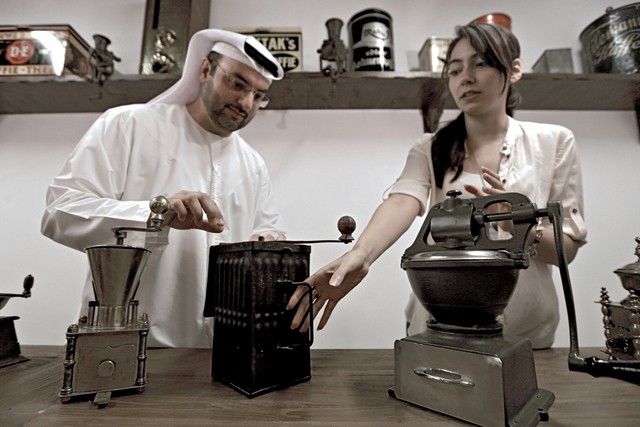
Khalid Al Mulla, the founder of the Coffee Museum. show two German-made coffee grinders from the Second World War to Arezou Schulz, a project manager at the museum. Ravindranath K / The National

During the Second World War, every German soldier carried an essential piece of equipment along with his weapon. Small, sturdy and built to survive almost anything, it was a coffee grinder.

The steel box had a handle on the top and a container at the bottom to catch the coffee grounds. It could be easily disassembled and packed away.

So strong indeed was the European love of coffee that even a scarcity of metal after the war ended did not stop the production of coffee grinders and roasters. Instead, munitions were melted down to manufacture them.

The importance of coffee to different cultures and countries through the centuries is the theme of Dubai’s new Coffee Museum, which will allow visitors to view the rituals of serving the popular beverage and to taste it.

Stepping into villa No 44, a traditional Emirati home in Bur Dubai’s Al Fahidi historical district, the visitor is immediately struck by the familiar aroma of freshly brewed coffee. Even though the museum’s signage has yet to be put up and its official opening is at the end of October, the museum is already swarming with coffee lovers.

“You will love coffee even more after visiting the museum and understanding its history and cultural relevance to us and the other cultures,” says Khalid Al Mulla, the museum’s 43-year-old founder and the director of Easternmen & Co, a coffee company.

His love of coffee begun in childhood, as it did for many Emiratis and Arabs who grew up watching their parents drink coffee and serve it to guests in a show of hospitality and friendship.

Mr Al Mulla later joined the coffee industry, importing to the UAE varieties from more than 16 countries including Indonesia, Brazil, Sri Lanka and Yemen.

He also became the local representative for several coffee brands and coffee-machine makers, including some from Japan.

But he still wanted to add another dimension to his enjoyment of coffee, so he decided to create a historical archive of his passion.

“Coffee drinking should be an entire experience, where all the senses are involved,” Mr Al Mulla says with pride as he takes The National on a tour of the museum, which comes alive with different aromas and sounds.

Seeing how coffee beans are roasted and brewed – from using traditional methods to the latest gadgets – and tasting the essence of different coffee beans are all part of the experience.

The interior of the museum at Bastakiya, Dubai / Ravindranath K / The National

In the two-storey museum, which has six rooms on each floor, each part of the exhibition tells a different story about coffee and how it relates to its fans. Three of the rooms display antiques from the Middle East and around the world.

From Britain, there is a man-sized coffee grinder with an actual carriage-like wheel for a handle that carries the 18th-century crest of a British monarch. From the Ottoman Empire, there are several grinders and hand-held portable roasters that are about 600 years old.

It is said that the first coffee house in Europe was opened in Vienna, using equipment taken from Ottoman troops defeated outside the city’s walls in the 17th century.

Other rooms in the museum display screens, filters, and grinders known as madaq, which are hundreds of years old.

The grinders, which are covered in Quranic verses and weigh more than 12 kilograms, are too heavy to carry. There are also grinders for women, with added support for the leg, allowing the grinder to lean in for support as the beans were being ground up.

In Ethiopia, the coffee pot is known as the jabena. It lacks the distinctive spout of the Emirati dallah. It was Yemenis who introduced the spout, calling the pot a jamena.
The dallah’s spout, which resembles a falcon’s beak, is sharper and narrower to allow the pouring of smaller amounts of coffee. Tradition stipulates the use of two dallahs, one for serving and the other to keep the coffee hot on the stove.

“As one digs, one discovers interesting history,” says Mr Al Mulla, citing as an example the reason for the popularity of Sri Lankan coffee beans in the UAE. “Because Sheikh Zayed used to drink it and liked it, we came to love it as well.”

All the objects on display at the museum – assembled over the years from around the globe – are from his personal collection.

“The museum connects the past of coffee to its present, and so I added live demonstrations of the coffee rituals in the Ethiopian culture, the Egyptian, the Arabic Bedouin, as well as the Levant and Turkish versions, so that every kind of coffee can and will be made here,” says Mr Al Mulla.

Coffee from the Levant is brewed over hot sand to better distribute the heat, he reveals. To be sure, Mr Al Mulla is a walking encyclopaedia on everything related to coffee.

Much of the museum’s top floor is dedicated to the research and study of coffee, with a library filled with rare books and a media room to screen coffee-related documentaries. “The history of coffee is still debated, with many versions,” says Mr Al Mulla. “But the version I like is the one about the man with the same name as me. They call him Kaldi, but his name was actually Khalid, just like mine.”

In the story of Kaldi, the drinking of coffee started in the Ethiopian Highlands hundreds of years ago. Then a goat herder, Kaldi noticed that his flock became hyperactive after eating some unknown berries from a tree. Curious, he tried them, and he remained alert and was unable to sleep afterwards.

There are different versions about how the actual drink was made.

According to some versions, Kaldi’s wife threw the beans on to a fire and roasted them. She then crushed the beans and made the grounds into a drink. In other versions, Kaldi took the coffee berries to a holy man. The latter disapproved of them, saying they were a drug and threw them into a fire. As the berries were roasting, they released the pleasant aroma with which we are all familiar. The roasted beans were then ground up and boiled in hot water, creating the world’s first cup of coffee and its second most traded commodity, after oil.

Coffee had also been drunk in monasteries, where monks were said to have consumed the beverage to keep awake for all-night prayers. From Ethiopia, the coffee trade crossed into Yemen, where Sufi Muslims used it as an aid for worship. It was in Yemen that the drink was first called qahwa.

“The legendary Mokha port in Yemen was once the main coffee exporting site for the region,” says Mr Al Mulla. “The Yemeni port’s name is synonymous with the mocha coffee that we drink today.

“Coffee spread across the world via the Arabs and Turks as the Islamic empire expanded into Europe and the rest of the world.”

Whether Asian or African, Central or South American, the islands of the Caribbean or the Pacific, all coffee varieties can trace their heritage to the trees in the ancient coffee forests of the Ethiopian plateau.

“The story of coffee started with an Ethiopian Khalid, and continues with an Emirati Khalid,” Mr Al Mulla says with a laugh. “I hope I tell it as well as he once did. The legend of coffee continues.”

His museum, unsurprisingly, has a coffee shop and a gift shop. The latter sells all kinds of coffee and coffee machines, as well as coffee-related jewellery, such as a dangling golden coffee bean on necklaces and bracelets.

The opening hours are from 10 am to 7pm, with tickets expected to be about Dh15 for adults and Dh5 for children.

Mr Al Mulla is still deciding whether to include the coffee served in the cost of the visit or to levy an extra charge.

To find out more about Coffee Museum, click here.

rghazal@thenational.ae

source: http://www.thenational.ae / The National / Home> UAE> Arts & Lifestyle / by Rym Ghazal / August 17th, 2014

Rollatainers arm to buy coffee chain Barista from Italy’s Lavazza

New Delhi :

Barista, the chain that pioneered the coffee retail business in a country used to drinking tea, will change hands with Italian coffee brand Lavazza exiting from coffee shop business in India by selling its Barista brand to Rollatainers Ltd’s wholly-owned subsidiary Carnation Hospitality Pvt Ltd, reports PTI.

The company, however, will continue to supply coffee to Barista through a long-term supply agreement.

Lavazza in a statement said it has decided to lay greater focus on its core business, which is coffee.

Commenting on the announcement, Lavazza CEO Antonio Baravalle said: “The decision to move out of Barista has been taken accordingly with the global business guidelines of the group to no longer manage directly the coffee shop business.”

Talking about the Indian market, Baravalle said: “India continues to remain an extremely important market to Lavazza’s international operations and it is strategic to the brand’s overall growth initiatives across the world.” He added that Lavazza will continue to develop its our presence in the country.

The company has a production facility in Sri City in Andhra Pradesh, its only production facility outside Italy. Lavazza bought the café brand Barista in 2007 and has sold the coffee shop chain with over 190 cafés to Carnation Hospitality Pvt Ltd. In the deal, Lavazza has been assisted by Rothschild, as financial advisor, and Desai & Diwanji, as legal advisor.

Barista’s previous owners include US-based Turner Morrison, Tata Coffee Ltd and maverick entrepreneur C. Sivasankaran’s Sterling Group.

source: http://www.freepressjournal.com / The Free Press Journal / Home> Business / by FPJ Bureau / August 13th, 2014