Deal size not disclosed; will continue to supply coffee to Barista
Mumbai :
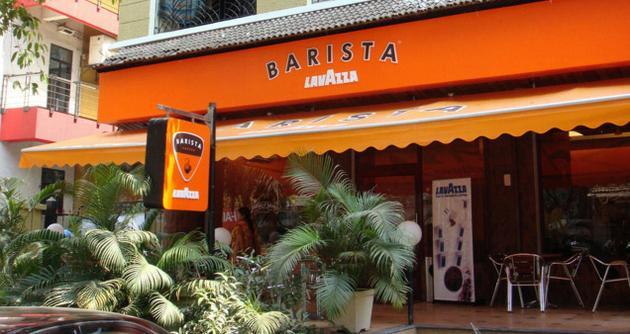
Italian coffee roaster Lavazza has exited the coffee shop business in India. The Turin-based group has sold Barista Coffee Company, which it bought in 2007, to Carnation Hospitality, a subsidiary of containers and packaging firm Rollatainers, for an undisclosed amount. Lavazza , however, will continue to supply coffee to Barista.
In a statement, Lavazza CEO Antonio Baravalle said the decision to move out of Barista was in line with “the global business guidelines of the group to no longer manage directly the coffee shop business.”
Barista has been grappling with management issues. It has also been facing increasing competition from the likes of Starbucks and Cafe Coffee Day and has been shutting down outlets. Currently, it has 190 outlets across formats, including: lounges, cafes as well as kiosks at corporate houses.
The company had tried to tag on to the Lavazza brand to become a premium player, and was also mulling over having a franchise operation in Tier II cities.
“India continues to remain an extremely important market to Lavazza’s international operations, and it is strategic to the brand’s overall growth initiatives across the world,” said Baravelle in his statement.
Changing ownership
Barista was a pioneer in coffee retail in India and had changed ownership several times. It was founded by Amit Judge of Turner Morrison in 2001, and also saw Tata Coffee pick up 34 per cent.
In 2004, it was sold to Chennai-based Sterling Infotech Group, promoted by NRI businessman C Sivasankaran, who also bought out Tata Coffee’s stake.
In 2007, Barista was acquired by Lavazza along with another coffee company, Fresh & Honest, for ₹480 crore from the Sterling Infotech Group.
source: http://www.thehindubusinessline.com / Business Line / Home> Markets / by The Hindu Bureau / Mumbai – August 12th, 2014
In January 2011, when Starbucks chairman and CEO Howard Schultz made his maiden India visit to sign the 50:50 JV with Tata Global Beverages, hopping over to Asia’s largest coffee maker Tata Coffee’s 8,258 sq feet roasting facility at Kushalnagar near Coorg made perfect sense. After witnessing the plant first hand, his team pointed out that the coffee at the roasting facility matched the global espresso blend that Starbucks prides itself on.
(The store in Horniman Circle…)
So for the first time ever in Starbucks’ history, the company pinned its faith on a partner-owned roasting facility, outside the five plants it owns across the world, including one at Amsterdam. Local coffee, global taste.
WHAT’S IN STORE
That set the ball rolling for a slew of localization initiatives which the JV kickstarted from October 2012, as it launched its very first outlet in Mumbai. The store in Horniman Circle, which can accommodate 120 people, has hand-carved wooden screens, tables of solid Indian teak, painted vintage trunks and old leather-bound books, harking back at Mumbai’s mercantile past.
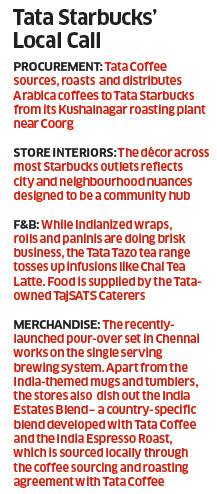
As for the grub, there’s Konkani Twist or a Reshmi Kebab Roll, jostling for mouth-share with the standard Blueberry Muffin or the Classic Breakfast Chicken Sandwich—all coming from the Tata-owned TajSATS, India’s largest provider of meals to domestic and international airlines. While the coffee variants are largely untouched, the beans and espresso blend at the heart of the coffee are locally sourced. Even the Tata Tazo tea range throws up a spice-infused Chai Tea Latte—distinctly Indian. Similarly, when Starbucks opened shop in Delhi’s Connaught Place in February 2013, the ropework design of the store stood out as a local theme, along with food offerings, such as Murg Kathi Wrap and Murg Tikka Panini.
The Pune store, on the other hand, honours the rich copper culture of the city through copper artifacts and even has a traditional Indian swing for customers to sway. While certain elements in its food kitty are customized to suit local taste-buds, things are no different when Starbucks launched its 50th store in the country at Chennai earlier this month, which is the only outlet vending a ‘pour-over set’ single brew serving merchandise, typical of the filter coffee culture down south.
Procurement, store decor, F&B, merchandise— across locations , Tata Starbucks has set out to garner neighbourhood connect, to create what its CEO Avani Davda claims as the “third place” between the office and home. Unlike rival Cafe Coffee Day, which operates across multiple formats on a franchisee model, Tata Starbucks prefers operating the third place on its own, with an average covered floor area of 1,000-1,200 square feet. Much of that is governed by homegrown research that points to a more leisurely cafe culture in India than the west, where it is an on-the-go, grab-a-bite, kiosk-led approach with tiny outlets located near workplaces. That explains why Starbucks gets about a fourth of its revenue here from food as against 20% globally.
Though Davda’s cuppa of choice is Sumatra or a vanilla latte in the morning, she would any day welcome the growing consumption of Chai Tea Lattes from her stores. Unlike in most countries, Starbucks realized that India is largely a tea-drinking nation and has now solidified that beverage selection on its menu. It has also launched the India Estates Blend – a country-specific blend developed with Tata Coffee, and the India Espresso Roast, which is sourced locally through the coffee sourcing and roasting agreement with Tata Coffee.
LATE, YET RELEVANT
As the local theme gains momentum, Starbucks’ late entry into the country’ Rs 1,200 crore coffee chain market must not be overlooked. When it finally entered in 2012 after a botched entry in 2007 with Future Group’s Kishore Biyani , the domestic market was nearing saturation, with quite a few players snapping up prime properties in the top ten cities.
Though the JV never compromised on real estate, Starbucks President, China and Asia, John Culver said forging a sense of community will be key, while inaugurating the Horniman Circle outlet. Surely, the $14.89 billion Starbucks has also drawn lessons from the localization bids of other food retail chains, particularly KFC and McDonald’s. While the former ranks Paneer Zinger and Veg Twister as its top-sellers, McDonald’s McAloo Tikki and Masala Grill scorch the tables.
But since such chains operate across multiple formats, some of them even resort to differential pricing across different formats or locations, to cater to a broader consumer base. But Starbucks is clear about its premium pricing and aware of its international brand following.
“We now have an average customer who is very well informed, and has exposure to international brands and experiences… although price and convenience play a part in their spending decisions, they are also more and more influenced by a brand’s values,” says Manmeet Vohra, Director-Marketing & Category, Tata Starbucks.
THE NAYSAYERS
The Indianizing influence, particularly from a brand like Starbucks, has its own share of skeptics though. “People line up outside Starbucks for a global gourmet coffee experience with knowledgeable staff (partners) and baristas who can toss up the Starbucks experience…. unfortunately, the company has adopted a cookie-cutter approach (in India)….it’s like Zara saying it’ll sell salwar-kameez in India,” observes Harminder Sahni, Founder and MD, Wazir Advisors.
As a counter, Davda claims that a career at Starbucks starts with learning about coffee, often through coffee tasting and roasting events. “Our baristas are trained for specific periods by certified baristas, and each partner undergoes the training before undertaking their respective roles,” she says. Keeping the debate alive, former VPMarketing of Tata Coffee and brand consultant Harish Bijoor observes that Starbucks must not dilute its international flavor in order to grow in India.
“It must not become an Indian cafeteria from an American cafe,” says Bijoor, adding that strong brands are often inflexible. Even marketing guru Jagdish Sheth dismisses the ‘think global, act local’ approach of Starbucks, pointing out the new trend as ‘think local, act global’, with a slew of examples, such as Haldiram’s, Dabur and Pathak Pickles from India now riding high overseas with very ethnic offerings.
BANKING ON THE HOOD
But Tata executives, like Davda and Vohra, remain steadfast in their commitment to serve local communities and grow the business case around regions and neighbourhoods. It goes to explain why each outlet supports the surrounding ecosystem.
In Mumbai’s Horniman Circle store, for instance, Starbucks maintains the adjoining heritage park while in Gurgaon’s HUDA Metro Station store, partners take time out for regular cleanliness drives. Pradeep, one such partner, works the counter in Delhi’s Hamilton House branch at Connaught Place and keeps watch as the outlet’s assistant manager. Amid rope chandeliers and the surrounding wood, steel and concrete surfaces that resonates the character of the Lutyen’s-era building, Pradeep helps fellow partners with orders, calling out names of consumers alongside the order on delivery.
Right next to where he stands, about one-fifth of the food section has local offerings—”Chatpata Paratha Wraps and Tandoori Paneer Rolls are the highest selling food items in this outlet,” claims Pradeep. Though Davda will be happy to see local grub flying off the tables, for Tata Starbucks, food accounts for just 25% of its Rs 16 crore revenue. It is the core beverage category that Davda will be watching closely after ensuring that the beans at least are sourced and brewed in India.
source: http://www.articles.economictimes.indiatimes.com / The Economic Times / Home> Magazines> Corporate Dossier / Moinak Mitra, ET Bureau / July 25th, 2014
When you’ve finished with your morning pick-me-up, and you’re ready to get rid of the breakfast rubbish, put your used coffee grounds aside for a simple, smart reuse. Get started, by trying some of these easy-to-follow great ideas from the Hometalk community.
1. Fertilizer
For a beautiful, luscious garden, give your flowers a dose of nitrogen-rich coffee grounds. Pamper your plants, like Penny did for her roses, using recycled coffee grounds.
Roses Growing With Coffee Grounds via Hometalker Penny
2. Compost
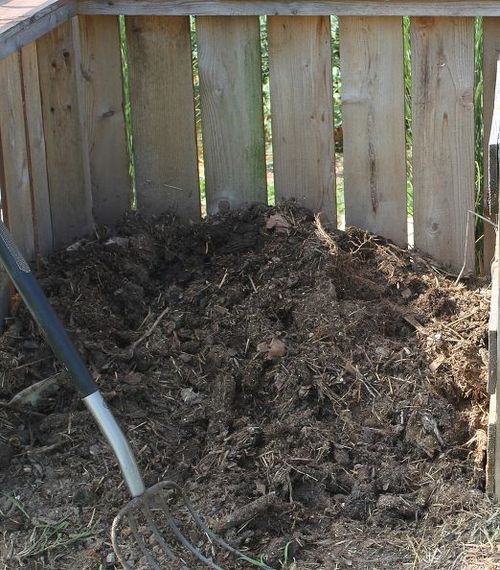
Who knew that your morning boost could be the missing ingredient in your compost mixture? Follow this tutorial to start a great compost pile using coffee grounds, for a superb organic addition to your mixture that will also naturally suppress the smell of decomposing materials.
Start a Great Compost Pile via Hometalker Old World Garden Farms
3. Pest Control
As much as you may love your Italian roast, critters and pests do not! Try out this idea, using recycled coffee grounds in your home to keep unwanted bugs away. Other Hometalkers utilize recycled coffee grounds in the garden to keep slugs and snails off of plants.
Deal With Ants in the House via Hometalker HomeSpot HQ
4. Wood Stain
This trick is the trifecta – the inexpensive, recycled, and non-toxic alternative to store-bought, chemical woodstain. Try this vinegar and coffee mixture to stain and age wood.
Vinigar and Coffee Stain via Hometalker Frugal Ain’t Cheap
5. Concrete Stain
The rich color of coffee can be used for more than just wood tinting- this Hometalker changed the look of her concrete walkway by staining the stones using coffee grounds mixed with vegetable oil, and ironite.
How to Stain Concrete via Hometalker ThriftDee
6. Air Freshener
Coffee is a natural deodorizer, and can be used in tight spaces, like under your sink or in your refrigerator, to diffuse stale odor. You can even disguise deodorizing grounds in a beautified display, like this mason jar flower vase project, which disguises fresh-smelling recycled coffee grounds as soil.
Coffee Used Grounds and Mason Jar Flower Vase via Hometalker Rethink Simple
7. Body Scrub
Their coarse texture and crisp, rich scent make recycled coffee grounds ideal for exfoliating skin. Check out this simple two-ingredient DIY hand and body scrub mixture for an all-natural refreshing and cleansing upcycle.
Two-Ingredient Hand Scrub via Hometalker Cupcakes and Crinoline
Get more inspiration for your house and garden! For more ideas on how to cleverly recycle your household waste, check out the Repurposing and Upcycling topic on Hometalk .
source: http://www.huffingtonpost.com / Huff Post / Home> The Blog> HomeTalk / April 04th, 2014 (08/04/2014)
Nirmala Sitharaman plans to have a meeting of all stake-holders of the coffee industry in Bangalore and for the Tea Industry in Guwahati.
Bangalore :
Union Ministers have assured Karnataka coffee growers that the 12th Five-Year Plan for the Coffee Board would be announced by August end.
In their meeting, coffee growers told Minister of Commerce Nirmala Sitharaman that the 12th Plan outlay for coffee is overdue by about two years and many small and large growers are eagerly awaiting the Plan proposals as they have held back some investments because of the impending notification.
After patiently hearing growers’ problems, she assured them that the notification will be made by the end of August. The growers also have urged Union ministers to revisit the Kasturirangan Report and remove plantations from the preview of the act for Karnataka and Tamil Nadu, just as it has been done for Kerala. The members of the delegation that met the Union Ministers included D Govindappa Jayaram, chairman, and K Kurian, vice-chairman, of the Karnataka Planters Association; MS Jayaram, president, Thirthamallesh, secretary, Nanda Belliappa and MS Boje Gowda of the Karnataka Growers Federation; Peter Mathias, president, and Ullas Menon, Secretary-General, United Planters Association of Southern India.
The planters’ delegation was in New Delhi from July 29 to August 1 to discuss issues with Commerce Ministry officials and Nirmala Sitharaman. The delegation also met newly-elected MPs from Karnataka and apprised them on various issues. Pollution control norms for pulping were also brought to the ministers’ attention. Growers urged them to consider studies done by the University of Agricultural Sciences, Bangalore. Ministers assured the delegation that SCTL for growers above 10 hectares would be looked into. They also said that recoveries of loans which have become non-performing assets and those before the Debt Recovery Tribunal would not be brought under the SARFAESI Act for any plantation lands.
Meetings
Nirmala Sitharaman suggested plans to have a meeting for all stake-holders of the coffee industry in Bangalore and for the Tea Industry in Guwahati.
She also suggested that the Rainfall Insurance Plan will be modified to include all plantation losses caused due to heavy rainfall, drought or heavy pest attacks, such as white stem borer or stalk/bean/leaf rot (Koleroga) etc. She also said she would explore ways of including research scientists from the agricultural department for doing research on coffee, as well as getting some funding from the Agricultural Ministry for the same.
The Ministers also assured help in getting the approval of the National Horticultural Package (for Pepper) for Karnataka.
source: http://www.thehindubusinessline.com / Business Line / Home> Agri-Biz / The Hindu Bureau / Bangalore – August 03rd, 2014
It may come as little surprise that the Arab world is considered one of the fastest growing coffee markets in the world, with the UAE one of its most active centres.
Caffeine devotees across the UAE drink nearly twice as much of the popular beverage as anywhere else in the GCC, helping create a vibrant and diverse coffee and café scene, and providing the perfect marketplace for businesses looking to tap into the increasingly diverse and sophisticated tastes of their customers.
One such business is Coffee Planet – a UAE-grown and Dubai SME 100 ranked company which, according to managing director Robert Jones, will see the largest growth levels in its history this year.
“Last year we saw 35 percent overall growth,” he says. “At the end of Q1 this year we were up 38 percent compared to Q1 last year.”
Familiar to drivers across the emirates, Coffee Planet is well known as the brand of choice at petrol stations, but there’s much more to its success than that.
Since launching in 2005, Jones and his team have built something of an empire by stealth, gradually growing a business to be proud of, and one which many people might not even know they’ve interacted with.
“I like to say that we are like an iceberg,” continues Jones.
“Most people see us in the gas stations or supermarkets, but they don’t know that on the flight they are taking via Emirates or Etihad, they’ll be drinking our coffee. Or in the hotel where they have lunch, they’ll be drinking our coffee.”
Excerpt from –
The Daily Grind: Coffee Planet
source: http://www.elanthemag.com / Elan / Home> Innovation / August 01st, 2014
Scientists have created a new biofuel to get the cars running using ground coffee. The study by University of Bath found that different varieties of coffee, including Robusta and Arabica, have reasonably standard composition and relevant physical properties of fuel, suggesting that all coffee waste could be a “viable” way of producing biodiesel.
Chris Chuck, a research fellow at the university, said that around eight million tonnes of coffee are produced globally each year, and ground waste coffee contains up to 20% oil per unit weight. This oil also has similar properties to current feedstocks used to make biofuels. Spent coffee grounds are waste and there’s a real potential to produce a truly sustainable biofuel using these, he added.
source: http://www.timesofindia.indiatimes.com / The Times of India / Home> Science / Agencies / June 18th, 2014
The ISS will soon get an espresso machine, allowing astronauts to enjoy hot, freshly brewed coffee in space. A pair of Italian companies in cooperation with the Italian Space Agency have announced plans to send an espresso machine to the ISS by November, which they are calling the ISSpresso machine.
Lavazza has joined forces with Italian aerospace engineering company to design an espresso machine.
The new machine will use a capsule system instead of a full ground system and will be capable of making not just espresso, but several other hot beverages. The plastic tube that usually conveys hot water inside a normal espresso machine has been replaced by steel tube, making the unit capable of withstanding very high pressure. They also added multiple redundant systems to ensure continued service for many years to come. The liquid product made by the machine is dispensed into a plastic bag.
source: http://www.timesofindia.indiatimes.com / The Times of India / Home> Science / PTI / June 18th, 2014
Tata Coffee Limited, India’s coffee producer and exporter of gourmet coffee, announced its win at the Golden Peacock Awards 2014, for excellence in ‘Environment Management’ in the ‘Beverages’ category. Golden Peacock Environment Management Award (GPEMA) is the coveted recognition that organisations across India strive to achieve for environment management.
The award was presented as part of the two-day ‘ 16th World Congress on Environment Management’ in New Delhi on July 11 and 12, 2014. Tata Coffee was declared the winner amidst a distinguished gathering of business leaders, jurists, academics, environmentalists, economists, legislators and policy makers. Present as Guest of Honour was Atul Chaturvedi (IAS), Chairman – Public Enterprises Selection Board.
Hameed Huq, Managing Director, Tata Coffee Limited said, “It is a proud moment for the company to be applauded on a national platform such as the Golden Peacock Awards 2014. Tata Coffee has consistently been committed to environment protection and we rely and coexist with nature at our coffee plantations. We promote eco-tourism and sustainability. We are constantly improving the quality of coffee through sustainable practices and agronomy solutions.”
Tata Coffee has been revered for excellence in ‘Environment Management’ based on its system by conservation of water and energy resources and effective utilisation of renewable energy resources. Tata Coffee is also known as a carbon-negative company as it upholds its biodiversity conservation practices.
Tata Coffee has 19 coffee estates in India which produce varieties of Arabica and Robusta coffees. The plantations adopt sustainable practices in irrigation, water management, and pest control. The plantations have set up bee hives to increase the dwindling bee population and bee activity, which, in turn, will serve the purpose of cross pollination, especially for the Robusta coffee.
Sustainable practices have their benefits, including important certifications: among these, the Utz Kapeh certification, which validates that coffees from the Tata Coffee plantations have not been exposed to harmful chemicals and processes, and the Rainforest Alliance certification, which validates the company’s sourcing and growing practices. Tata Coffee was also the first plantation company in the world to get SA 8000 certification, which recognises a company’s fair employment practices.
This year’s awards were declared by the Awards Jury under the Chairmanship of Justice P. N. Bhagwati, former Chief Justice of India and Co-Chairmanship of Justice and UN Human Rights Commission and co-chaired by Justice (Dr.) Arijit Pasayat, Chairman, Authority for Advance Ruling (Customs, Central Excise and Service Tax) and former Judge, Supreme Court of India & former Chairman, Competition Appellate Tribunal of India & Authority for Advance Ruling (Customs, Central Excise & Service Tax) and Lt Gen J S Ahluwalia, PVSM (retd), President, Institute of Directors.The award for the Environment Management System (EMS) is a powerful tool to evaluate oneself in an ecological sphere.
source: http://www.hospitalitybizindia.com / Hospitality Biz India.com / Home> F&B Overview> F&B / by HBI Staff, Mumbai / Wednesday – July 16th, 2014
In the breathtaking experience of traveling across the remote highlands and lowlands of the south-western part of Ethiopia, one can, really, admire the country’s future in building a green economy.
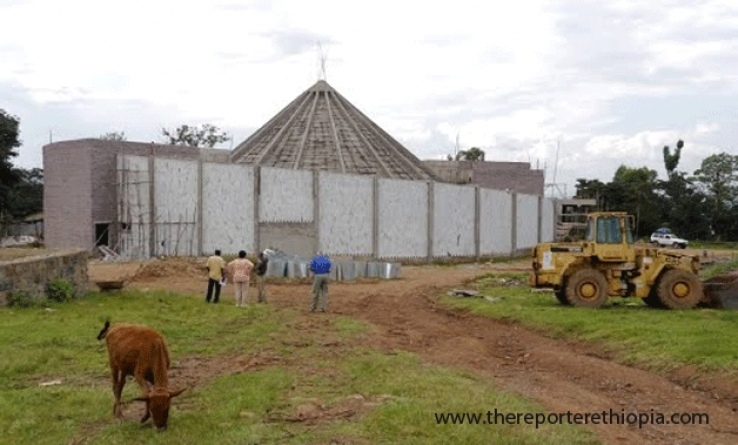
The densely planted indigenous trees on both sides of the road seem to be the gate to a wonderful savanna land. A small town, Bonga, some 420 km south-west of Addis, provides a world-class center for research. The town hosts the first coffee museum of its kind, which many hope will unravel the mystery behind the birthplace of the mysterious green beans.
A goatherd named Kalid is linked with the story of coffee. Back then, Kalid saw his goats climbing the hills easily after eating what seemed to be a special leaf – a leaf that made them so spirited. His discovery encouraged him to be a guinea-pig to test the beans, which proved to be a source of great excitement. This is said to be the compelling story of the beans whose name reached out to every corner of the world.
Coffee has always been associated with Ethiopia’s longstanding tradition and hospitality. Indeed, it became a popular culture among many to grab coffee while discussing matters on the table. A few historians and anthropologists have also embarked on the task to find the birthplace of coffee.
The Kaffa people, located in the south-west of Ethiopia, have persisted with the strong argument that the name “coffee” is derived from their tribal name. They have kept their persuasive journey through historical and legendary accounts. They are, of course, known for their ancient history of self-governing dynasty that goes back thousands of years. They elected kings to ascend the throne, in which their dynasty structure is composed of defense, foreign affairs, justice and another four divisions that typify the modern government system. The last king of Kaffa, Akigo Shokru, was defeated in 1898 and arrested by the then powerful king, Menelik II, after a protracted conflict and several wars intended to include the region under a central administration. His crown is still kept in the Institute of Ethiopian Studies at Addis Ababa University.
In fact, coffee was found to be a treasure for the region some years ago when anthropologists dug out some of the materials that were supposed to have been used for drinking coffee. Moreover, the mother coffee tree in the so-called birthplace of coffee is still erected and preserved for tourists. Mankira, where a coffee bean was first discovered, has been a tourist attraction in the region. There is still a coffee forest in a wonderful natural setting which is placed to produce an organic wild forest honey that adds further fame for the area.
However, there is little to be said in favor of promoting the area or the entire nation as an original place of coffee due to several problems. Nevertheless, the man who is now becoming an icon for the area and has played a significant role in forwarding the idea of portraying the coffee bean as a trademark of the Ethiopian millennium, celebrated five years ago and also laid the foundation for the museum. Hassen Said (Ph.d.), from the Institute of Ethiopian Studies at Addis Ababa University, took the initiative to realize the construction of the museum when he found interesting and strong evidence about the association between coffee and the people of Kaffa.
The museum, which is on the verge of completion, rests on 2,800 sq.m. of land and hosted World Museum Day for the third time last May. “It has been quite an impressive journey to reach here,” he said. From the design of the complex to the construction cost, his insightful vision for the museum was the one guiding everything until it became a reality. “It is a simple love; a love that paid for my little involvement,” he said, describing its prominence among the people. Apart from a 10 million birr contribution from the wealthy businessman Sheik Mahamud Ali Alamoudin, the entire cost of the building was borne by the local people who have paid with the last cent from their pocket. “It feels like a blood-built heritage for the people,” he says.
The museum is expected to have rooms for laboratory purpose, research and documentation. Moreover, it will have a coffee park that brings all types of coffee beans from other parts of the country. “The most important role of the museum will be to promote the area as the original birthplace of coffee, in that we failed to do so thus far,” Kifle Hilemariam, chief administrator of the zone noted. In addition to this, it will also have a bigger impact in the promotion of other tourist sites found in the surrounding areas.
With the kind of personality in which Hassen has built, the realization of having a classy museum that promotes the area’s precious treasure to the rest of the world will indeed be an asset. The zone that comprises 30 percent of the country’s forest is on the verge of being registered as a world heritage site by the United Nations Education, Science and Culture Organization (UNESCO). “This will, of course, boost the country’s image,” Mamait Yilma, director of the national museum, argued.
Aseffa Hailemariam, who is in charge of the museum, notes that it is intended to promote coffee and will also accommodate a number of heritage pieces and artifacts of the people that have been preserved for centuries. “Quite soon the world will confirm Kaffa as a place where coffee was born,” he concluded. The people that realized the importance of environmental conservation a thousand years ago, and kept themselves in the forest planting coffee and hiving bees want to be recognized as “a coffee people”, and this seems be the time to reach out for that.
source: http://www.thereporterethiopia.com / The Reporter / Home> Living & the Arts / by Henok Reta / June 15th, 2013
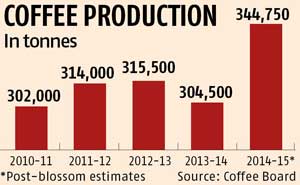
Despite widespread attack of the White Stem Borer (WSB) pest in all growing regions, the Coffee Board, a estimates India’s coffee production for 2014-15 at a record 344,750 tonnes – an increase of 13.2 per cent over the final estimate for 2013-14.
Although the Board projected an all-time high output of 347,000 tonnes for 2013-14, the final production came down to 304,500 tonnes, with 102,200 tonnes of Arabica and 202,300 tonnes of Robusta beans. Compared to 315,500 tonnes in 2012-13, the production was down by 3.5 per cent. For the current year, the pest has already affected 50 per cent of the Arabica plantations and the production loss could be the worst ever, if the monsoon continues to play truant. The Board has projected Arabica output at 105,500 tonnes and Robusta at 239,250 tonnes for 2014-15 crop.
“Our estimates are based on the conditions that prevailed during post-blossom period in April. The blossom showers were adequate this year, though the distribution was not uniform and there was a slight delay in receiving the backing showers in certain pockets. This year is an “on-year” for Robusta crop and the conditions are very good for the crop presently. The pest could come under control if there is a very good shower in the remaining months of monsoon. However, it will be known only in September, when we come out with post-monsoon estimates,” Jawaid Akhtar, chairman, Coffee Board, told Business Standard. He said last year, the Robusta crop suffered losses due to a heavy monsoon between July and September, after two months of drought earlier in the year. However, this year, the conditions might change with the monsoon rains in July and August.
Akhtar said coffee areas were facing long dry spell, followed by blossom showers. Agreeing with the Board, Ramesh Rajah, president, Coffee Exporters’ Association, said the Robusta crop has in excellent condition and depending on how the rains continue in the remaining days, the final production would vary. As WSB is rampant this year, the production of Arabica could come down by 10,000-15,000 tonnes, he said.
Planters have expressed surprise over the estimates for the current year. “Last year was an ‘on-year’ for Arabica and still it suffered losses due to WSB initially and later with heavy monsoons. This year, it is an ‘on-year’ for Robusta. With WSB surfacing, the Arabica production at the most could be in the range of 60,000 tonnes,” said Nishant R Gurjer, former chairman, Karnataka Planters Association.
source: http://www.business-standard.com / Business Standard / Home> Markets> Commodities> Food & Edible Oils / Mahesh Kulkarni / Bangalore – July 14th, 2014
WELCOME. If you like what you see "SUBSCRIBE via EMAIL" to receive FREE regular UPDATES.
Read More »