Category Archives: Coffee News

The Truth Behind Your Cup of Joe

When many people wake up in the morning, They head to the coffee pot.

But have you ever thought about where your coffee comes from?

coffeeKF19nov2013
Stephanie Price from Panhandle-Plains Historical Museum says, “coffee talk is about the history of coffee from the first cup that started in Ethiopia, to how it made it’s way to America and how it’s brewed today.”

Panhandle Plains Historical Museum, Palace Coffee, and Evocation Coffee teamed up to make coffee talk.

The owner of Palace Coffee tells us what the event means to him.

Patrick Burns says, “it’s not just how to make a cup of coffee, but really the whole story of coffee. The history of it from conception all the way to the farmers that we use and why we choose to use the coffee that we do.”

Stepanie Price says, “I can’t start my day some dayswithout a cup of coffee. So it’s a very important part of the economy of the world, but also the local economy here. Coffee is a big deal.”

From the very first cup of coffee, to cowboy coffee, no coffee been was left behind in this chat.

Patrick says cowboy coffee won the heart of the west, because to be able to caffeinate like a cowboy, you’ve got to love a cup of Joe.

He tells us, “cowboys would make their coffee strong so they could travel long distances and keep an eye on their herd.”

Around 50 people showed up sharing their love for lattes.

“How long coffee has been around. I think he said 800 AD.”

Burns tells us he doesn’t think the drink that thousands of folks in our area call necessary to start their day, will be going anyhwere anytime soon.

“500 billion cups of coffee are drank evey year here in the world and 25 millions people are tied directly to the coffee industry,” he says.

Coffee may have originated in Ethiopia, but Burns says about 50% of all coffee comes from Brazil.

We have one more fun fact for you.

Coffee beans are actually the pit of a berry, which makes them a fruit.

A cherry to be exact.

It is called a bean because of the resemblance to true beans.

source: http://www.myhighplains.com / MyHighPlains.com / Home / by Veronica Dietrich / November 09th, 2013

Kodaikanal coffee area down by half

Kodaikanal :

Kodaikanal, the princess of hill stations, is witnessing a steep decrease in the production of coffee beans lately, as area under cultivation has dwindled drastically.

Unlike Coorg district in Karnataka, where coffee is produced on large acres of land, planters’ representatives from Kodaikanal say that coffee planters here cultivate on a small scale.

Lack of promotion by the government, absence of coffee manufacturing factories and labour shortage are affecting the cultivation, planters say. A portion of the land is being diverted to real estate.

“Palani hills, which forms a part of Kodaikanal, is separated into three segments; upper, middle and lower. From the 1970s, coffee has been widely planted by farmers in the entire hills apart from upper Palani Hills.

When the mountain banana variety which was widely cultivated in these hills was attacked by a disease, they switched over to coffee plantation,” says 68-year-old Minoo Avari, president of Mya Palanimalai Farmers Association. Shekar Nagarajan, a coffee planter from lower Palani Hills said, “In a survey conducted by the government in the 1970s it was found that coffee was being grown on 14,000 acres of land. After that, no survey has been conducted .

At present, it is estimated that only 7,000 acres of land are being used for coffee plantation. The total production of coffee has also reduced by half. Initially we produced around 7,000 tonnes a year, but this has now come down to 3,500 tonnes,” Nagarajan said.

Though there have been several drawbacks, planters say their coffee beans won awards during an event which was held in Trieste, Italy, five years ago.

Planters claim that high altitude, fertile soil and organic farming methods are the key to the quality of the coffee they produce.

The coffee planters here also claim that the taste of coffee beans produced using organic method is on par with Colombian coffee, which is considered among the best in the world.

source: http://www.articles.timesofindia.indiatimes.com / The Times of India / Home> City> Chennai> Planters / by V. Devanathan, TNN / October 28th, 2013

Tea Board of India Extends Support to “World Tea & Coffee Expo” 2014, India’s Only International Trade Show Dedicated to the Tea & Coffee Sectors

As a part of its commitment to promote the Tea sector, the Tea Board of India, set up under Ministry of Commerce & Industry has extended its support to the 2nd Edition of “World Tea & Coffee Expo”™ (www.worldteacoffeeexpo.com), India’s only International trade fair dedicated to the Tea & Coffee sectors. The event is to be held at Bombay Exhibition Centre, Mumbai, India from Thursday 6th Feb 2014 to Saturday 8th Feb 2014. Tea Board of India has always been at the forefront of promoting Tea and has always taken proactive steps to address issues related to the Hot Drinks sector in India. The Tea Board of India decided to support this trade event since it shares a common goal with the show viz. promoting Hot Drinks in India. This niche expo is organized by the Mumbai headquartered Sentinel Exhibitions Asia P Ltd, a company engaged in managing and organizing trade events.

Says Mitesh M Kapadia, Director, Sentinel Exhibitions Asia P Ltd, “Hot drinks are witnessing positive growth since the last few years thanks to intensive marketing campaigns by players, launch of innovative products, the emergence of upscale Cafes offering both convenience, affordability and quality and the trend of these cafes becoming a meeting ground for young consumers.”

In addition to showcasing brands, products, machinery, retail Chains, accessories & technologies, WTCE 2014 will have Dedicated Innovations Display Zone, Interactive Demo areas (featuring Exotic Tea Tasting / Brewing sessions, Latte Art championships, Recipes and a lot more) as also Seminars & Conferences by Global Industry leaders & Policy makers to determine future trends in the Hot Beverage segment. The seminars will analyse prime factors influencing the sector and identify the sectors driving growth.

With an anticipated turnout of over 6000 Business Visitors including International buying delegations, WTCE 2014 promises to offer huge potential for franchising, marketing alliances, appointing Distributors, bulk orders, joint ventures and overall branding.

WTCE 2014 is also endorsed by a number of National & International Trade Bodies and visitors to the event will get exposure to national and international Brands, manufacturing and packaging technology, storage technology, Flavored Beverages, hi-tech vending machines, retails chains as well as a variety of products from importers and exporters of Tea & Coffee. For further details log onto www.worldteacoffeeexpo.com or contact Mr Mitesh, Director on +91 22 28625131 / +91 98205 03876 or on mitesh@sentinelexhibitionsasia.com

source: http://www.teanewsdirect.com / Tea News Direct / by K. Priti, Sentinel Public Relations P Ltd / November 06th, 2013

Tata Coffee re-appoints Deepak Kumar

Bangalore :

Tata Coffee Ltd has re-appointed M. Deepak Kumar as Executive Director-Finance for a period of one year commencing from October 25, 2013.

The decision to re-appoint Deepak Kumar was taken at the board of directors of the company at its meeting held on October 18.

source: http://www.thehindubusinessline.com / Business Line / Home> Companies / by Anil Urs anil.u@thehindu.co.in / October 18th, 2013

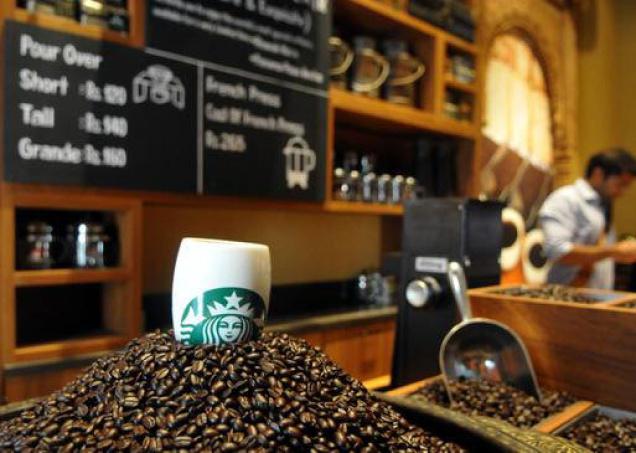
Tata Starbucks launches exclusive Indian blend

Blending well: India Estates Blend, Tata Starbucks’ latest product for the Indian market.

Mumbai :
Tata Starbucks has launched a coffee blend exclusively for the Indian market, on the occasion of the first anniversary of the opening of its first store in Mumbai. Called India Estates Blend, the coffee is sourced from the finest arabica beans produced at Tata Coffee’s four estates in Chickmagalur.

Tata Starbucks, a 50:50 venture between Tata Global Beverage and US-based Starbucks Corporation, has also set up a coffee roasting and packaging plant at Kushalnagar in Karnataka’s Kodagu district with a capacity to produce 375 tonnes.

The company chose India Estate Blend after testing various coffees across Tata’s estates in Kodagu and Chickmagalur. It will be sold at Tata Starbucks outlets for blending or consumption at home, according to the company’s Chief Executive Officer, Avani Saglani Davda. “Home bean consumption is catching up and India Estates Blend has been lined up for this,” she said. To be sold in packs of 250 g, the coffee will be available with six other varieties such as Home Blend, Italian and Addis Ababa.

It’s a long journey for the blend. The coffee beans are picked up from shady canopies in Kodagu and Chickmagalur estates and sent to Starbucks’ sourcing department in Seattle. This is the second blend brought out by the firm after the India Espresso Roast, sourced and roasted locally. The espresso is a popular product at Tata Starbucks stores across the country.

“The Starbucks sourcing department analysed the coffees and finalised the blend. The feedback is encouraging,” said Davda. The new blend is the first step Starbucks and Tata Coffee are taking to develop and improve the profile of Indian-grown arabica coffees in the global market. India Estates Blend is a medium roast coffee with a herbal juiciness and a chocolate finish. Tata Starbucks currently operates 24 stores across Mumbai, Delhi and Pune. “We will soon open an outlet in Bangalore,” a company official said.

(The writer visited Tata Starbucks’ Kushalnagar plant at the invitation of the joint venture firm).

source: http://www.thehindubusinessline.com / Business Line / Home> Companies / by M.R. Subramani / Mumbai – October 21st, 2013

Brewing recipe for success: Starbucks eyes long-term growth

The operations, which began with this historic handshake between Starbucks’ Howard Schultz and Tata group’s former chairman Ratan Tata, has only picked up steam over the last 12 months.

It’s a year to the day that coffee-chain Starbucks decided to give India a whiff of its world-famous blends. CNBC-TV18’s Vineetha Athrey travels to Tata Starbucks’ plantation in Coorg to find out what’s cooking for year-two.

This luscious Tata Coffee estate is where Starbucks sources its coffee beans from. And the Tatas have set up an exclusive plant here for Starbucks with an annual capacity of 375metric tons of coffee beans for the Indian operations.

The operations, which began with this historic handshake between Starbucks’ Howard Schultz and Tata group’s former chairman Ratan Tata, has only picked up steam over the last 12 months.

The joint venture has opened 24 outlets across Mumbai, Pune and Delhi and is now gearing up to ramp up its presence. This means newer cities with it city Bangalore becoming the next destination. Enthused by the warm welcome it has received in India; Starbucks also plans to enter other metros and tier-2 cities.

“The corner stone of the brand is the passion and commitment with which the partners create that beautiful environment and that unparalleled Starbucks experience. We feel humbled and proud that the Indian consumer has adapted to it so well, says Avani Davda CEO, Tata Starbucks.

Expansion, of course, means money and while the exact amount is as secret as its coffee recipes, Starbucks says it is aggressively shoring up its war-chest. Remember, in august the company got the go-ahead to infuse an additional Rs 150 crore into the operations and trebling its authorized capital of Rs 70 crore.

Getting that long term strategy in place means a strict standardization of beverage recipes, signature coffee blends and a stronger snack portfolio, for starters. That explains why its Indian outlets boast a new blend that is not available in any of its other markets just yet. The special blend, of course, actually boils down to the beans that come from this Tata plantation in Coorg.

Now the coffee giant is working on leveraging this further by possibly making this plant a sourcing base for its Asia operations, a move that would give it a significant competitive advantage over its competitors.

source: http://www.moneycontrol.com / MoneyControl / Home> CNBC-TV18 comments / by Vineetha Athrey, Reporter, CNBC-TV18 / October 18th, 2013

Chandigarh Institute of Hotel Management organizes coffee cuisine contest

Chandigarh :

As part of World Tourism Week celebrations being organised by UT administration, Chandigarh Institute of Hotel Management, at sector 42, organized coffee race and coffee cuisine contest.

Illumination of prominent buildings – Open Hand Monument, Le Corbusier Centre, Museum and Art Gallery, UT Secretarial has been done. Special discounts on food/accommodation can be availed at CITCO hotels. CITCO also organized complimentary ride for around 200 physically challenged students of a local school. The students were thrilled with joy as they were taken on city tour on CITCO’s hop on and hop off Bus.

A total of 10 teams from local hotel management colleges participated in the cuisine contest and carved out delicious coffee flavoured dishes. The first prize was bagged Sujeet Kumar Yadav and Stanzin Smislex (Chandigarh Institute of Hotel Management) 2nd prize by Pallavi Kundra and Saloni Jain (Home Science College, sector-10) whereas 3rd position went to Janit Bhutani and Sukhjeet Singh Walia (CGC, landran).

The main attraction of the evening was tour the city with a dice held with lot of enthusiasm in Sector 17 plaza. A Large ludo exhibited of sectors, tourism spots was depicted at the ground level where public participated and played with a large Ludo dice. While the game was on, The Band Kalkii enthralled the visitors and tourists with their hits.

source: http://www.articles.timesofindia.indiatimes.com / The Times of India / Home> City> Chandigarh> Cuisine / by Vibhor Mohan, TNN / September 30th, 2013

Tata Coffee opens extraction unit at Tamil Nadu’s Theni

Asia’s largest plantation firm Tata Coffee Wednesday unveiled its premium extraction plant at Theni near Madurai in Tamil Nadu to process the beans into freeze dried powder for exports to global markets.

Set up at a cost of Rs.80 crore with an installed capacity of 2,000 tonnes per annum, the hi-tech plant will produce spray dried, agglomerated and freeze dried instant coffee, retaining its aroma better.

“Freeze dried coffee retains aroma better and gives rich flavour, colour and appearance to the beverage,” Tata Coffee managing director Hameed Haq said in a statement from Theni, about 500 km from Chennai.

The plant is strategically located at the company’s instant coffee manufacturing facility, which is 170 km from Tuticorin port in the southern part of the state for export shipping.

“Our expertise in the bean to brew value chain, efficient processes and focus on sustainability has helped us maintain leadership position in the business. The expansion of our instant coffee facility demonstrates our commitment to provide premium coffees to customers worldwide,” Haq said.

As a 100 percent export-oriented unit, the instant coffee facility has an installed capacity of 4,000 tonnes per annum.

The Theni plant became a top exporter of soluble coffee to Russia and CIS countries last fiscal (2012-13).

As a subsidiary of Tata Global Beverages Ltd, the company produces 10,000 tonnes of shade grown Arabica and Robusta beans in its 19 estates across southern India and exports green coffee to Asia, Europe, North America and the Gulf region.

source: http://www.business-standard.com / Business Standard / Home> News-IANS> Business-Economy / IANS / Bangalore – June 19th, 2013

Bangalore, N. India to take turns hosting coffee festival

Concerted efforts are needed for coffee consumption to increase in northern India, said Hameed Haq, Managing Director, Tata Coffee, principal sponsor of the India International Coffee Festival (IICF).

“Thrust should be there to take coffee consumption from the South to North of India,” he said.

“We have taken new direction under India Coffee Trust to bring focus to the domestic consumption in India, which is low by any standards and, therefore, are trying to focus on North India which is a huge market to explore,” he said.

The fifth edition of the India International Coffee Festival (IICF) will be held in Bangalore at Lalit Ashok during January 21-25.

The Coffee Board and India Coffee Trust held its fourth edition of the IICF at New Delhi in 2012.

It was the first event outside Bangalore to give a wider exposure among the coffee drinkers in non-traditional areas such as Delhi to boost coffee consumption. “The event was taken to Delhi at the risk of adventuring in unknown waters but the resultsurprised us as we were greatly satisfied with the event.

It was a grand success by any standards,” said Jawaid Akthar, Coffee Board Chairman.

Now the steering committee of the IICF has decided that ideally the event should be alternated between Bangalore, the headquarters of coffee, and another destination preferably a consuming destination in the south.

FOCUS ON ENVIRONMENT

In addition to domestic consumption, the IICF is also to focus on environment.

“We as coffee growers have to keep in mind the changing demand on the environment. Globally, there is a lot more consciousness on coffee and the environment and during this festival, we will try and cover it all,” said Haq.

Haq further said the IICF started in 2002 and has evolved into a very mature international event and is being held at a right opportune time. Especially at a time when global coffee majors are eyeing Indian market.

NEW DIMENSIONS

“The coffee festivals are the right place to showcase Indian coffee globally; this festival has evolved over a period of time and taken certain new dimensions,” he explained.

IICF is also laying emphasis on quality.

“Of course, quality remains the benchmark and will be the differentiator to get us the premium in the world coffee market.

SMALL GROWERS

It is important to note that 95 per cent of coffee produced in the country is by small growers.

Corporates are very small, Tata Coffee being one of them,” said Haq.

FOCUS ON COORG

“We are hoping to extend our learning initially to the growers in Kodagu (Coorg) which forms a large part of the production base through the coffee trail, conference and workshops,” he added.

source: http://www.thehindubusinessline.com / Business Line / Home> Industry> Agri-Biz / by The Hindu Bureau anil.u@thehindu.co.in / Bangalore – October 16th, 2013

Coffee Board kicks off branding initiative

Seeks Andhra govt’s help to market coffee grown in Araku Valley
CoffeeKF21oct2013

In a bid to fetch higher prices in international markets, the Coffee Board of India has kicked off a branding initiative for Indian coffee. The Board intends to create a common brand to market Indian coffee, especially those grown in the Western Ghats and Araku Valley in Andhra Pradesh.

“Almost 98 per cent of coffee produced in India is grown in the Western Ghats region and some new areas in Araku Valley. Indian coffee, grown under tree shade, is very popular in the international markets. It contributes to intrinsic quality and internationally it is known as eco-friendly coffee. So, we are trying to make use of the Western Ghats tag to market our coffees in the overseas markets,” Jawaid Akhtar, chairman of Coffee Board, told Business Standard.

The Board will sell Indian coffee as “good coffee” and “organic coffee” to fetch higher prices in the overseas markets.

Akhtar said Indian exporters are able to command 40-50 per cent higher margins on the benchmark International Coffee Organization (ICO) prices for washed Robusta and 25 per cent for Robusta Cherry. “We are contemplating to come out with a common brand for Indian coffee. We are also planning to promote our coffee through international trade fairs, exhibitions and release advertisements,” Akhtar added.

For the first time, coffee grown in Araku Valley in parts of the eastern Ghats of Andhra Pradesh is coming to market this year, Akhtar said, adding the Board plans to market this coffee as “organic coffee”. In Araku Valley, the coffee is largely grown by tribals.

Popularly known as non-traditional areas in the coffee circles, this region includes the states of Andhra Pradesh, Odisha and to a small extent Madhya Pradesh. The region is predominantly inhabited by a wide variety of tribal groups, who are known for their traditional agriculture practices and ‘podu’ (shifting cultivation) over centuries.

The trees are planted at an elevation of 3,200 ft above the sea level.

“We have requested the government of Andhra Pradesh to help tribals market their coffee, so that we can reduce the role of middlemen. There are some non-government organisations like Naandi Foundation that are assisting tribals in cultivating coffee,” said Akhtar.

Araku Valley is expected to produce about 6,500 tonnes of coffee this year. Over 100,000 tribals have brought 55,000 hectares area under coffee plantations in the Valley and the average holding is one acre per person. The tribals have used mainly organic practices to grow the coffee.

Arabica coffee is the main variety and the arabica station breed selections such as S.934, Sln.4 (agaro) and Sln.5 occupy major areas in Andhra Pradesh. In Odisha, Cauvery is the main variety under cultivation. Pepper is the main inter crop adding substantially to the net returns of coffee farms. The coffees of this region are classified as medium body, medium to sharp acidity and intense aroma with a spicy tinge.

source: http://www.business-standard.com / Business Standard / Home> Markets> Commodities> Food & Edible Oils / by Mahesh Kulkarni / Bangalore – October 14th, 2013