Category Archives: Coffee News

Portland’s Coffee By Design growing from the grounds up

Portland , (Menafn – Portland Press Herald – McClatchy-Tribune Information Services via COMTEX)

Coffee By Design has come a long way in the 19 years since co-owners Alan Spear and Mary Allen Lindemann took turns sleeping in the basement of their first shop on Congress Street.

Today, the business operates four coffee shops, employs 50 people and sells nearly a half a million pounds of coffee beans a year through nearly 300 retailers as far away as Las Vegas. The company’s gross revenues for 2012 were between 6 million and 7 million, Spear said. And the married couple, considered pioneers of Portland’s robust coffee scene and a catalyst for the Congress Street renaissance, are now on the verge of a major expansion project that is expected to take the business — and the local coffee culture — to a new level.

They are converting part of a 40,000-square-foot warehouse on Diamond Street in the burgeoning East Bayside neighborhood into what Spear describes as a “playground for coffee geeks.” Along with a fifth retail location and a larger roasting facility, the building will include space where people can learn about different coffees, observe the roasting and blending of beans and, of course, sample a variety of locally roasted coffees, says Spear. It will also have a barista training center and a showroom for coffee equipment.

Even as the company continues to grow, Spear said CBD, as it’s known, remains committed to providing quality coffees at a fair price to consumers and to coffee farmers, and to fostering community on both ends of the business.

“People think we’re this big coffee roasting company,” said Spear, while standing in the cramped, bustling roasting facility on Washington Avenue. “But we’ve stayed true to our original mission.”

While Diamond Street will be a place where people can “geek out” on coffee, Lindemann said it will also cater to artists, blue collar workers, students and others looking for a cup of coffee and place to kick back in a “warm, earthy” environment.

“There is a trend in our industry that is elitist,” Lindemann said. “We want amazing coffee to be available to everybody. …

“Our humble beginnings are still there.”

‘GOT THE COFFEE BUG BAD’

Spear and Lindemann were introduced to the specialty coffee movement while living in Seattle in the mid-to-late 1980s, when Starbucks was still a start-up.

Lindemann was a marketing professional trying to land a coffee company as a client. Each night, she would bring home market research, and Spear, a landscape architect, would pore through it.

Lindemann was drawn to one West Coast company in particular, the Torrefazione Italia, where coffee was served in chinaware by knowledgeable baristas in a relaxing environment.

“She would come back to the house with these amazing stories,” said Spear, who turns 52 on July 18. “It was more than just a cup of coffee.”

“He really got the coffee bug bad,” said Lindemann, 53.

Spear, whose favorite weekend pastime was hanging out in coffee bars, was struck by the complexities of a seemingly simple drink. His life was changed after reading the book “Coffee,” by Kenneth Davids. It explained the history of coffee, the origins of the beans and the farmers who harvest them, he said.

“I picked up that book and it changed my perception about what coffee could be,” said Spear, who has traveled to more than 50 coffee farms. “A good cup of coffee can change someone’s day.”

The couple moved back to the East Coast in the early 1990s with the dream of opening a coffee cart or kiosk in a major office building. They spent a year in Burlington, Vt., and six months in Providence, R.I., looking for a location, but to no avail.

“It was getting rejected by everybody,” he said.

The couple would visit friends and family in the Portland area. At the time, Lindemann said the commercial vacancy rate along Congress Street was 40 percent. When a salon space at 620 Congress St. became vacant in what was unofficially referred to as the pornography district, the couple persuaded the landlord to give them a shot.

“That neighborhood just spoke to us,” Spear said.

The couple had saved 10,000 to put toward their business and borrowed another 20,000 from a bank. They got an additional 15,000 loan from a friend of a friend, who was impressed with their passion and business plan.

“I had the money at the time and I really wanted to help them,” said John Russell, an entrepreneur who now lives in Connecticut. “I knew they were going to be successful. I kind of saw the coffee thing coming. I believed in it.”

IN THE EARLY DAYS

Coffee by Design opened its Congress Street location on July 1, 1994. The couple’s business plan anticipated 25 customers a day.

Instead, they got 250 — a number that Spear says was driven by the fact that tickets had just gone on sale for a Bob Dylan show at the newly renovated State Theatre nearby.

Business has been booming ever since.

Even with a part-time worker, Spear and Lindemann each worked 120 hours a week in the early months. They had no apartment, opting to stay with family. But in reality the couple lived at the coffee shop for four months, taking naps in a sleeping bag on a homemade shelf in the basement during the downtimes.

“We were there all the time,” said Spear, who was the only trained barista at the time.

The shop became a hub for all walks of life — artists, students and business people. Lindemann said the company was an early and vocal advocate for equality, and for supporting local businesses.

The couple opened a cafe in Monument Square in 1996. The business struggled to get off the ground, so the couple licensed the location to another owner. But they weren’t happy with the way it was being run, so they bought the license back, and vowed that any business with the CBD brand would have to meet certain quality standards.

“That was a learning moment,” Lindemann said.

Now, anyone serving CBD coffee by the cup must be trained by Spear himself.

“I don’t want to be a coffee dictator, but I want people to prepare it well,” joked Spear.

In 1998, the couple purchased a building on India Street, where they first began roasting their own coffee beans. Within three months, Spear was roasting all of CBD’s coffee.

Two high-end restaurants in Portland — Fore Street and Street & Co. — became CBD’s first wholesale clients that same year. Spear delivered coffee on his mountain bike with a small trailer.

Spear said he won the account after a four-hour tasting session and conversation with the chef about the best way to finish a meal. He now makes proprietary blends for these and other select restaurants and cafes.

“I am thrilled to have Alan’s coffees. (He’s) a great roaster — one of the best I know,” said Sam Hayward, Fore Street’s celebrated chef. “I buy his coffees pretty much exclusively for my own home because I love them so much.”

COMMUNITY-MINDED PHILOSOPHY

Russell, the investor, said the couple’s business acumen wasn’t the only thing that made him a believer. “They do it with heart, which is what I always liked,” he said.

Spear is the coffee guru, while Lindemann oversees efforts to ensure the company contributes to the community by supporting local artists and businesses.

She said the couple’s artist friends had been hit particularly hard economically in the 1980s, so the couple wanted to support the arts. They began by holding regular art showings by local artists in their Congress Street coffee shop and became active in efforts to establish the Arts District, revitalize Portland’s downtown and launch the city’s Buy Local program. They’re also founding members of the First Friday Artwalk.

The couple commissioned a local artist, David Cedone, to paint a mural, using old photographs, in the Congress Street location that tells the CBD story. It is still there today.

Spear noted that with the Diamond Street expansion project, the couple are using as many local companies as possible, many of which are located in East Bayside.

In 1998, the company began awarding 1,000 to 2,000 grants to artists and small arts organizations by setting aside 1 for every pound of its best-selling “Rebel Blend” coffee sold.

Lindemann said the company solicits proposals and CBD staff considers the merits of each proposal and chooses the winners. About 25 groups have received funding since the program began.

Last year, CBD gave out at total of 6,000 in grants to three groups: Yes Art Works, which provides creative opportunities to people with mental and other disabilities; The Telling Room, a Portland nonprofit writing center for youth ages 6-18; and the Lewiston Auburn Film Festival’s student film contest.

And when it comes to the coffee itself, Spear says CBD will not buy coffee unless it is 100 percent traceable back to the source.

The couple visited their first coffee farm in 2003. That year, they also served as members of the International Jury at the Specialty Coffee Association of Panama’s Best of Panama competition and the Specialty Coffee Association of Bolivia’s Cupping the Mountain’s Peak.

Spear said all of their coffees are organically grown. Those that are certified organic are stored, roasted, blended and packaged according to USDA standards.

The company buys as much certified products — whether organic, Rainforest Alliance or Fair Trade — as possible, but also will buy noncertified products that are cultivated in accordance with those standards.

“Some farmers choose not to get certified because it costs them money,” Spear said.

In 2011, the couple donated 5,000 to a school for children with learning disabilities in Jardin, Colombia, so it could build a new kitchen.

They’re also committed to sustainability. CBD composts 100,000 pounds of coffee grounds and chaff annually and uses solar panels to power its Washington Avenue facility. Their new coffee roasters will be the most energy-efficient available, Spear said.

PIONEERS, EVEN TO COMPETITORS

Bob Garver, owner of Wicked Joe coffee roasters in Brunswick, credited CBD as being “a pioneer of sorts” for bringing quality, locally roasted coffee to the state.

Garver said he drinks his own coffees but that the quality of CBD’s coffee is proven by its customer base. “They have what appears to be a very loyal customer base, and that’s the best endorsement there is,” he said.

Joanna Morrissey and her husband, Cory, owned and operated Java Joe’s on Exchange Street in Portland for about seven years. The couple, who opened Java Joe’s shortly before CBD opened its first shop in 1994, decided to get out of the coffee business and sell the shop in 2001.

Morrissey also credited the couple with raising awareness — and consumer demand — for quality coffees in the state.

“The days of Mainers insisting on having quality coffee over the counter (are) here to stay, and it’s due largely to those two and their expert marketing and raising awareness about what a great cup of coffee means and is,” she said.

Morrissey also credited the company’s commitment to the well-being of its coffee farmers.

Morrissey said CBD’s products are “far superior” to other coffee roasters.

“(CBD) has figured out how to have their coffee in many different areas and somehow guarantee the taste and quality of every cup,” she said. “I honestly don’t know how they do it. It’s the secret to their success.”

Not everyone can sell CBD’s products.

Spear said wholesalers and by-the-cup sellers must undergo a training process to learn about the origins of the coffee and how to prepare it and serve it to customers. “When an account is set up, it comes with me,” Spear joked.

That’s exactly why Paul Harrison has served CBD coffee at the Little Dog Cafe in Brunswick since it opened nine years ago, despite efforts to get him to switch brands.

“They’re really partners more than just wholesalers,” said Harrison, who consults with the couple about potential new locations.

Harrison, who started going to Coffee by Design on Congress Street in 1995 when Lindemann and Spear were always behind the counter, credited the company with helping to turn around that area of town.

Meanwhile, Harrison said he was recently explaining to a customer about why his shop has been successful on Maine Street. It was the location, customer service and the space, he said.

Then a loyal but eavesdropping customer piped in.

“It’s the (expletive) coffee,” Harrison recalled, laughing. “He was right. We have a coffee that without question affects our customer flow.”

RELYING ON ORGANIC GROWTH

Like its coffees, Coffee by Design has been growing organically. It doesn’t employ a full-time salesperson to acquire new accounts.

“We don’t cold-call anybody,” said Spear. “It’s all word of mouth.”

Of course, it doesn’t hurt that so many people and publications — local and national — are so willing to sing the praises of its coffee, hipster culture and support of community organizations.

Last year, national publications piled on. Zagat’s named CBD one of the Top 10 coolest independent coffee houses in the U.S. The company was also singled out when Forbes named Downtown Portland as the 11th best hipster neighborhood in the U.S. and Travel Leisure named it the fifth best U.S. city for hipsters.

“For caffeinated hipster-watching, go to Coffee by Design, which first opened on the once-seedy, and now thriving, Congress Street, where you can sip the same java made for local foodie magnet Fore Street restaurant,” wrote Travel & Leisure.

The diversity of its customer base could be seen on a recent afternoon at the Congress Street coffeehouse. Well-heeled business people waited in line next to colorful tourists and hipsters while the eccentric tattooed and pierced baristas made their drinks and served them with smiles.

People in chairs huddled over laptops or chatted in small groups, while an elderly man mumbled and sang to himself in the corner. Above them hung colorful reduction block prints of coffee pots and French presses by Anna O’Sullivan.

Spear said more and more people are looking to carry the CBD brand. Last year, the wholesale business grew by 25 percent, he said. That was up from an 18 percent growth in each of the preceding years.

The company now has nearly 300 wholesale customers, about 75 percent of which are in Maine.

Spear said the company currently offers 35 different coffees and blends, excluding flavored coffee, from 17 countries.

For the last five years, CBD staff members have participated in a blending competition, with the winner’s blend being offered to customers.

DIAMOND STREET

Spear said the new facility on Diamond Street will be a “playground for coffee geeks.”

The roasting operation will be moved from Washington Avenue, where the existing coffee shop will remain open and expand.

At Diamond Street, connoisseurs will be able to order limited-edition roasts at the coffee bar and choose the brewing technique, including pour-over, French press and espresso.

They can participate in a “cupping event,” which Lindemann said is similar to a wine tasting. Participants can observe, smell and feel the freshly ground beans, and taste a variety of specialty coffees at different temperatures.

Housing the roasting operations on Diamond Street will allow CBD to quadruple its roasting capacity from 500,000 pounds a year to 2 million pounds. CBD will eventually feature cold-brewed coffees on tap.

Once the new facility opens later this year, Spear said that all coffee will still be roasted to order and mail orders will be shipped within 48 hours. There will be three assembly lines for packaging coffee — single origin, blends and certified organic coffees, which must be stored, roasted and packaged in accordance with strict U.S. Department of Agriculture standards.

Spear said he will also offer green coffee beans and home roasters to hobbyists.

Meanwhile, the flavoring of coffee will take place in a separate room, isolated by an airlock system to prevent cross-contamination.

The new facility will be large enough for guided tours of the roasting and blending operations. And it will function as a training center for Coffee by Design baristas and for wholesalers carrying the CBD brand.

Spear says the company has direct relationships with its coffee growers or co-ops, which have direct relationships to farmers from about 17 countries. The new facility will allow the farmers to come to Portland and give presentations to the company’s wholesale clients and public.

“Even if it is the best coffee I have ever tasted, if it doesn’t have traceability and a story, I won’t buy it,” Spear said.

Randy Billings can be contacted at 791-6346 or at:
rbillings@mainetoday.com / Twitter: @randybillings
Visit the Portland Press Herald (Portland, Maine) at www.pressherald.com Distributed by MCT Information Services

source: http://www.menafn.com / MENA – Financial Network / Portland – July 14th, 2013
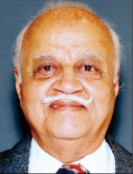
Tata Coffee independent director

Bangalore :

D.R. Kaarthikeyan has been appointed as an Independent Director at Tata Coffee Ltd.

He was appointed at the board meeting held after the annual general meeting of the company.

Further, U. Mahesh Rao, Director, who retired by rotation at the AGM of the company held on July 2, 2013 did not seek re-election.

source: http://www.thehindubusinessline.com / Business Line / Home> Companies / by The Hindu Bureau anil.thehindu.co.in / Bangalore- July 02nd, 2013

MRC former Chairman M.W. Chinnappa no more

Thithimathi (Kodagu) :

ChinnappaKF15jul2013Maneyapanda W. Chinnappa (89), former Chairman of Mysore Race Club (MRC) and a coffee planter in Devarapura Hebbale village near here, passed away last evening.

He is survived by his wife, two sons, a daughter, grandchildren and a large number of relatives.

Last rites were performed at Devarapura village today.

He was the MRC Chairman during 1985-87. He was also the member of Sports Club and JWGC.

source: http://www.starofmysore.com / Star of Mysore / Home> General News / July 05th, 2013

Today is a special day for the Coffee Board of India

Monday is a special day: it marks the golden jubilee of the Coffee Board of India’s move to the building opposite Visveswaraya Towers on Vidhana Veedhi.

It was shifted on July 1, 1963 from Prithvi Buildings on Kempe Gowda Road. The board will hold the celebrations in October.

Autonomous body

The Coffee Board of India is an autonomous body set up under an Act of Parliament in 1942 and serving the coffee industry in the country. Its basic focus is on research, development, extension and quality upgrading in addition to consolidating market information and the domestic and external promotion of coffee.

In addition to encouraging consumption of the beverage in the country and abroad, the board also runs 12 India Coffee Houses, including the one on its premises and depots across the country.

According to A.N. Balaram, who was the secretary of the board when the new building was constructed, K. Srinivasan, who was chairperson of the board, was determined to make sure the board had a building to function from. He persuaded the then Chief Minister Kengal Hanumanthaiya to sanction land and succeeded in getting land from City Improvement Trust Board. Lal Bahadur Shastri, the then Union Minister for Commerce and Industries, laid the foundation stone for the building on February 21, 1959.

T.S. Narayana Rao was the chief architect of the building and Purushottam and Company executed the project. Approximately Rs. 35 lakh was spent on the construction. “Though the building was unofficially occupied on July 1, 1963, it was formally inaugurated by the then President S. Radhakrishnan on October 9, 1963,” he told The Hindu .

source: http://www.thehindu.com / The Hindu / Home> National> Karnataka / by Special Correspondent / Bangalore – July 01st, 2013

Coffee Board ties up with NSEL for electronic spot market for coffee beans

CoffeeKF02jul2013
This is the first initiative taken by the Board to provide an opportunity for better price realisation

Coffee Board of India, an autonomous body under the ministry of commerce, has signed a memorandum of understanding with National Spot Exchange (NSEL) to launch a warehouse receipt based electronic spot market for coffee beans. This is the first of its kind initiative taken by the Board to provide an opportunity for better price realization and educate them about quality assessment.

Currently, over Rs 2,000 crore worth of coffee is traded in physical form at the farm gate level. Agents of exporters collect the beans at the estates and transport it for curing. Earlier, ABN AMRO and ITC had tried to provide online trading platforms for coffee, which did not work well, the coffee growers said.

As per the MoU, the NSEL will conduct online trading of coffee beans for both raw and cleaned coffee. It has tied up with coffee curing companies for curing of coffee post the online transaction. NSEL has set up two warehouses at Kushalnagar in Kodagu district and Chikmagalur in Chikmagalur district for storing coffee on behalf of the growers.

“The aim of this partnership is to ensure that small and medium coffee growers get an opportunity to sell their coffee online. We will provide them quality assessment and grading facilities at their farm gate with the help of Coffee Board. The growers are free to fix their own prices. There will be no fee to the growers for online trading. We will charge the buyers a small commission,” an official of NSEL said.

The partnership between Coffee Board and NSEL is also aimed at providing market linkages and relevant back-end infrastructure, education, training and technical advice to growers. The Coffee Board will carry a mobile laboratory to conduct the grading of coffee beans at the farm gate. The price will be discovered based on transparent electronic bidding. After the online trading is carried out, NSEL will deliver the beans at the doorstep of buyers or curing works through its transport network, he said.

The NSEL is also in the process of providing finance. Federal Bank, Standard Chartered and ICICI Bank among others have approached NSEL for providing finance on the warehouse receipts.

Ramesh Rajah, president, Coffee Exporters’ Association of India said, “It is an excellent idea. The seller will know how much price he will get for his coffee. However, there are many glitches involved in online trading.”

He said issues like Rule 7B, VAT and transaction costs would have to be sorted out properly. As the sale of cured coffee attracts taxation, the growers will not come forward to sell through online platform. The NSEL and Coffee Board will have to sort out these issues, he said.

NSEL has till now added 54 commodities on its online spot-trading platform.

source: http://www.business-standard.com / Business Standard / Home> Companies> News / by Mahesh Kulkarni / Bangalore – June 28th, 2013

Sethuraman estate gets US certification for robusta coffee

Bangalore :

Indian coffee estates are moving slowly to gain US’ roasters interest.

As a first step, the Sethuraman Estates located at Magundi in Chikmagalur after showcasing its produce at various speciality coffee events in the US has now become the first Indian coffee estate to get ‘R Grade’ certificate.

‘R Grade’ certificate are given for washed robusta coffees by the Coffee Quality Institute (CQI) which is an arm of Speciality Coffee Association of America (SCAA).

getting premium

The SCAA recently tested Sethuraman Estate’s robusta coffee submission at the CQI and found to have all the required quality parameters. This certificate facilitates the estate to sell and charge a high premium in the US .

The certificate and recognition allows Sethuraman Estates to sell its entire submission of 15 tonnes speciality robusta in the US market spread over a year by using the CQI and SCAA logo.

“The ‘single-origin estate-branded’ coffee of Sethuram Estates has so far fetched a premium of over 30 per cent over the domestic market prices. Currently the domestic washed robusta coffees is trading at Rs 145 a kg,” said Nishant R. Gurjer, Managing Partner, Sethuraman Estates.

entering US

“This certificate and recognition will allow us to enter the lucrative US café market as well,” he added.

The Sethuraman estate located at Chikmagalur began in operations in the 1950s. In the US market, the company is marketing estate-branded coffees – the Sitara Parchment Robusta and the Ne Plus Ultra of Robusta coffee brands.

The US, a traditionally arabica-consuming country, is slowly replacing it with robusta coffees and few companies have initiated moves to source from various countries for create blends.

shift to robusta

This has led to the Coffee Quality Institute, which used to certify only Arabica coffees, now has introduced separate certification for robusta coffees.

ratings

According to the institute’s finding of Sethuraman Estates, the following are the rating with baseline score of 7.14. Aroma 7.58 , flavour 7.42, aftertaste 7.42, acidity 7.83, mouth feel 7.42, balance 7.50, Uniformity 10, clean cup 10 Sweetness 7.42 cupper points 7.58.

Gurjer said, “We entered the US market in 2006 by exporting just two containers (36 tonnes) and so far have reached the level of 8 containers (144 tonnes) of speciality robusta coffees.”

source: http://www.thehindubusinessline.com / Business Line / Home / by Anil Urs anil.u@thehindu.co.in / Bangalore – June 21st, 2013

Tata Coffee scouts for European firms to expand instant coffee business

Tata Coffee, controlled by Tata Global Beverages, is looking for suitable companies in Europe to expand instant coffee business through inorganic route by the end of 2013.

Tata Coffee sells instant coffee as well as roasted and raw coffee beans in India, Russia, the US, Japan and Africa countries.

The company, which owns the Eight O’Clock coffee brand in the US, is looking to improve margins by pushing faster into instant coffee.

The move is in line with the company’s aim to emerge as a INR10bn ($171m) company by 2015.

Tata Coffee managing director Hameed Huq was quoted Business Standard as saying that the company has increased its instant coffee capacity by 33% to 8,500 tons with INR800m ($13.7m) at Theni in Tamil Nadu.

“We are now looking at further expansion through an acquisition, mainly in Europe, which is nearer to our customers,” Huq added.

“To achieve Rs 1,000 crore turnover it is essential for us to acquire a company in Europe and we have time till 2015 to achieve this target.”

At the same time, the Indian coffee giant mulls to invest INR4bn ($69m) to establish a greenfield instant coffee processing unit in Europe with a capacity of 4,500 tons.

source: http://www.processtechnology.drinks-business-review.com / DBR / DBR Home> Process Technology News / by DBR Staff Writer / June 18th, 2013

Pollination merely one production factor

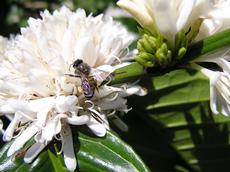
Bees of the Apis cerana (eastern honeybee) species pollinate coffee flowers. Farmers can increase the services of pollinating insects with particular cultivation methods. (Photo: J. Ghazoul / ETH Zurich)

By Peter Ruegg

No food for the human race without bees? It is not quite as straightforward as that. A case study by ecologists from ETH Zurich in a coffee-growing area in India reveals that pollinating insects are just one production factor among many. Farmers have several possibilities to increase their harvest.

All over the world, bees are dying and insect diversity is dwindling. Only recently, both the media and scientists expressed fears that insect pollination is in decline, which jeopardises food security. The (lack of) pollination has thus become a sound argument for the protection of species and natural habitats, and organic farming.

ETH-Zurich researchers from the group headed by Jaboury Ghazoul, professor of ecosystem management, set about investigating this argument by studying the influence of pollinator insects on coffee harvests in an agroforestry system at coffee plantations in the province of Kodagu in southern India. They also included soil and forest management, environmental factors such as water and soil fertility, and tree cover for the cultures in their study.

The research group thus obtained a different picture of the role of pollinators to the popular perception of this cultivation system of “no bees, no harvest”. According to their findings, pollinator bees are merely one production factor among many and to some extent coffee farmers can increase the productivity of their plantations independently of the insects. The results of the study have just been published in the journal PNAS.

Important but not the only factor
“Pollinators are important for coffee farmers,” stresses Ghazoul; “as far as effective coffee growing and increasing harvests are concerned, however, they are much less important than irrigation or liming, for instance.” This encapsulates one of the central findings from coffee farming in the Kodagu province.

Coffee is grown in a traditional agroforestry system in the region. As coffee plants must not be grown in direct sunlight, they are planted in the forest’s undergrowth or the shade of large, isolated trees. The coffee plants all bloom at the same time after heavy rains between February and March and three species of bee pollinate the flowers: the giant honeybee Apis dorsata, Apis cerana and the solitary wild bee Tetragonula iridipennis. The giant honeybee is the largest and most important pollinator, forming large colonies and needing the thick branches of tall trees to bear the weight of their nest.

Greater yield through irrigation and limestone
In order to harvest more coffee, however, the farmers have got other options than merely banking on the work of bees, as Ghazoul discovered. They can increase the yield through liming, irrespective of bee density. And instead of relying on rainfall, it is worth the farmers’ while to induce flowering with artificial irrigation. “It is particularly in a farmer’s interests to irrigate his plantations at a different time to other farmers in the vicinity,” says Ghazoul. After all, this will turn his plantations into bee magnets. This concentrated pollination increases the yield from the plantation enormously, the ETH-Zurich researchers reveal in their publication. It is a different story if the rain makes all the coffee plants in the region flower at the same time, however: the bees spread out over a wide area, the pollination is less effective and the harvest is poorer.

Trend towards deforestation
In an agroforestry system, the farmer also has another trick up his sleeve: felling trees or the forest to shed more light onto his coffee plants, which also increases the harvest. In doing so, however, he destroys the habitat of the giant honeybee (Apis dorsata).

A farmer who combines both courses of action is especially successful, initially unaffected by the disappearance of the large bees on his own plantation. Only when all farmers opt for this course of action do things take a turn for the worse. “From a plantation perspective, it makes sense to remove trees and increase yields,” says the ETH Zurich professor. “But if every farmer goes for the same option, they will all suffer the consequences of poor pollination because the giant honeybee will disappear.”

Sure enough, the researchers observed gradual deforestation in the Kodagu experiment area. Ghazoul is convinced that the farmers will lose Apis dorsata in the long run and thus – unless they take countermeasures – their valuable contribution towards coffee pollination. “It remains unclear whether the other two species of bee could compensate for this loss.” However, the farmers’ predicament is not hopeless, he says. They could domesticate Apis cerana, a very close relative of the European honeybee, and place beehives on the plantations, which would guarantee the pollination service without becoming dependent on Apis dorsata. The drawback: this absolves the farmers from their responsibility for the forest and trees. “The farmers are thus free to decide whether they want to have trees on their land or not,” stresses the ecologist, which spells bad news for nature conservation. “But good news for farmers. They have got possibilities to increase their harvest and sustain or even improve their existence.”

Unexpected threat from exotic tree species
The traditional forest trees face another danger. Farmers often replace felled local trees with the exotic Australian silver oak (Grevillea robusta), which provides the coffee plants with the shade they need. Moreover, it grows quickly and has a straight trunk, which farmers can use to grow pepper as the spice can be harvested more easily on the trunks. The sale of pepper and wood from the silver oaks is a way for the farmers to supplement their income.

However, the farmers are increasingly beginning to realise that the exotic tree also has its drawbacks. For one, its leaves barely decompose, covering the ground and coffee plants and thus becoming a breeding ground for harmful fungi and bacteria. It might also influence the nutrient cycle, which one of Ghazoul’s doctoral students is currently looking into. The silver oak leaves probably slows the nutrient cycle, preventing the coffee plants from receiving enough nitrogen in the long run, which eventually affects the harvest.

The example case of coffee growing in the province of Kodagu is interesting from a research perspective as it brings home how bees, farmers, their farming methods and natural occurrences influence and depend on each other. In this respect, the insects are not the sole influential factor in this agricultural system.

Ten principles for the reconciliation of nature and humankind
Teaming up with other scientists, ETH-Zurich professor Jaboury Ghazoul has defined ten principles that should help reconcile the conflicting interests of agriculture, nature conservation and other stakeholders with regard to a sustainable agricultural land use. The principles, which were published in the journal PNAS, include training farmers in cultivation methods that can be adapted to changing conditions. Another principle advocates taking different levels into consideration for a landscape approach, namely the landscape level itself and the individual farm level. In the example case in India, another principle is significant: the clarification of rights and responsibilities. For instance, the cultivated land belongs to the local farmers but not the trees, which belong to the state. This can cause conflicts. The principles should help to use an approach geared towards the landscape.

Further reading
Boreux V, Kushalappa CG, Vaast P, Ghazoul J. Interactive effects among ecosystem services and management practices on crop production: Pollination in coffee agroforestry systems. PNAS. 2013 May 21;110(21):8387-92. doi: 10.1073/pnas.1210590110. Epub 2013 May 13.

Sayer J, Sunderland T, Ghazoul J et al. Ten principles for a landscape approach to reconciling agriculture, conservation, and other competing land uses. PNAS 2013 110 (21) 8349-8356; published ahead of print May 21, 2013, doi:10.1073/pnas.1210595110.

source: http://www.ethlife.ethz.ch / ETH Life / Home> News Archive> Science / by Peter Ruegg / June 04th, 2013

A coffee museum has been opened in Uzhgorod

UkrainianCoffeeKF26may2013
The first Ukrainian coffee museum, that features a variety of beautifully flavored drinks from all over the world, has been opened in Zakarpattya region. Among the exhibits of the museum you can see the coffee jam, the traditional utensils for preparing and consumption of coffee, and even the famous sort of coffee “Copi Luwak”, which is produced with the help of the Malaysian palm marten.

Among the other exhibits there are Arabica, Robusta and one kind of excelsa coffee. The administrators of the museum are planning to enhance the collection by adding Liberica to the exhibition. Fyodor Shandor, the dean of the tourism department of Uzhgorod national university, has said that the visitors can currently observe 22 out of 48 existing sorts of coffee.

You can feel the love for coffee everywhere among the citizens of Uzhgorod. Apart from numerous coffee shops, there are also monuments for coffee, Cezve and the coffee bear. Currently the experts are designing a coffee route for tourists who intend to visit Uzhgorod.

source: http://www.ua-travelling.com / Ukraine online travel guide / Home> Tourism news in Ukraine

Arabica coffee could be extinct in the wild within 70 years, study suggests

coffeeKF24may2013
A study conducted by scientists at the Royal Botanic Gardens, Kew (UK), in collaboration with scientists in Ethiopia, reports that climate change alone could lead to the extinction of wild Arabica coffee (Coffea arabica) well before the end of this century. Wild Arabica is considered important for the sustainability of the coffee industry due to its considerable genetic diversity. The Arabicas grown in the world’s coffee plantations are from very limited genetic stock and are unlikely to have the flexibility required to cope with climate change and other threats, such as pests and diseases. In Ethiopia, the largest producer of coffee in Africa, climate change will also have a negative influence on coffee production. The climate sensitivity of Arabica is confirmed, supporting the widely reported assumption that climate change will have a damaging impact on commercial coffee production worldwide. These are worrying prospects for the world’s favourite beverage – the second most traded commodity after oil, and one crucial to the economies of several countries.

The research is published in PLOS ONE on 7 November 2012.
The study, which uses computer modelling, represents the first of its kind for wild Arabica coffee. In fact, modelling the influence of climate change on naturally occuring populations of any coffee species has never been undertaken. Surprisingly, even studies on plantation coffee have been limited, despite the concerns of farmers and other industry stakeholders.

The researchers used field study and ‘museum’ data (including herbarium specimens) to run bioclimatic models for wild Arabica coffee, in order to deduce the actual (recorded) and predicted geographical distribution for the species. The distribution was then modelled through time until 2080, based on the Hadley Centre Coupled Model, version 3 (HadCM3), a leading model used in climate change research, and the only one available that covered the desired time intervals, for several emission scenarios, at the resolution required (1 km). Three different emission scenarios over three time intervals (2020, 2050, 2080) were used. The models showed a profoundly negative influence on the number and extent of wild Arabica populations.

Two main types of analysis were performed: a locality analysis and an area analysis. In the locality analysis the most favourable outcome is a c. 65% reduction in the number of pre-existing bioclimatically suitable localities, and at the worst, an almost 100% (99.7%) reduction, by 2080. In the area analysis the most favourable outcome is a 38% reduction, and the least favourable a c. 90% reduction, by 2080. Bioclimatic suitability refers to the combination of climatic variables that are necessary for the health and survival of a species: loss of optimum bioclimatic suitability places natural populations under severe environmental stress, leading to a high risk of extinction. This study assesses the survival of Arabica, rather than productivity or beverage quality, under the influence of accelerated climate change. There are other studies showing that the productivity (yield of coffee beans) and beverage quality (e.g. taste) of Arabica are tightly linked to climatic variability, and are strongly influenced by natural climatic fluctuations.

Of the two analyses undertaken, the locality analysis is regarded by the authors as the most pragmatic and informative. The predicted reduction in the number of Arabica localities, between 65% and 99.7%, can be taken as a general assessment of the species’ survival as a whole, given the scope and coverage of the data and analyses used in the study. However, the predictions are regarded as ‘conservative’, as the modelling does not factor in the large-scale deforestation that has occurred in the highland forests of Ethiopia and South Sudan (the natural home of Arabica coffee). Moreover, because of the lack of suitable data, the models assume intact natural vegetation, whereas the highland forests of Ethiopia and South Sudan are highly fragmented due to deforestation. Other factors, such as pests and diseases, changes in flowering times, and perhaps a reduction in the number of birds (which disperse the coffee seeds), are not included in the modelling, and these are likely to have a compounding negative influence.

A visit to South Sudan (Boma Plateau) in April 2012 provided an opportunity to test the modelling predictions via on-the-ground observation. On comparing these observations with a study on Arabica made on the Boma Plateau in 1941, it was clear that not all of the environmental stress evident could be attributed to deforestation or agriculture over the 70 year period. The modelling predicted that Arabica could be extinct in these forests by the year 2020, due to climate change, and this appears to be realistic given the poor health (lack of seedlings, loss of mature Arabica specimens, low frequency of flowering and fruiting) of the remaining populations observed in 2012.

The outcome of climate change in Ethiopia for cultivated Arabica, the only coffee grown in the country, is also assumed to be profoundly negative, as natural populations, forest coffee (semi-domesticated) and some plantations occur in the same general bioclimatic area as indigenous Arabica. Generally the results of the study indicate that Arabica is a climate sensitive species, which supports previously recorded data, various reports, and anecdotal information from coffee farmers. The logical conclusion is that Arabica coffee production is, and will continue to be, strongly influenced by accelerated climate change, and that in most cases the outcome will be negative for the coffee industry. Optimum cultivation conditions are likely to become increasingly difficult to achieve in many pre-existing coffee growing areas, leading to a reduction in productivity, increased and intensified management (such as the use of irrigation), and crop failure (some areas becoming unsuitable for Arabica cultivation). Despite a recent dip, coffee prices are still the highest they have been for some 30 years, due to a combination of high demand and poor harvests. It is perceived by various stakeholders that some of the poor harvests are due to changed climate conditions, thus linking price increases to climate change.

It is hoped that the study will form the basis for developing strategies for the survival of Arabica in the wild. The study identifies a number of core sites, which might be able to sustain wild populations of Arabica throughout this century, serving as long-term in situ storehouses for coffee genetic resources. In many areas of Ethiopia loss of habitat due to deforestation might pose a more serious threat to the survival of Arabica, although it is now clear that even if a forest area is well protected, climate change alone could lead to extinction in certain locations. The study also identifies populations that require immediate conservation action, including collection and storage at more favourable sites (for example in seed banks and living collections).

Aaron Davis, Head of Coffee Research at the Royal Botanic Gardens, Kew, says, “Coffee plays an important role in supporting livelihoods and generating income, and has become part of our modern society and culture. The extinction of Arabica coffee is a startling and worrying prospect. However, the objective of the study was not to provide scaremonger predictions for the demise of Arabica in the wild. The scale of the predictions is certainly cause for concern, but should be seen more as a baseline, from which we can more fully assess what actions are required.”

Tadesse Woldemariam Gole, from the Environment and Coffee Forest Forum in Ethiopia, says, “As part of a future-proofing exercise for the long-term sustainability of Arabica production it is essential that the reserves established in Ethiopia to conserve Arabica genetic resources are appropriately funded and carefully managed.”

Justin Moat, Head of Spatial Information Science at the Royal Botanic Gardens, Kew, says, “The worst case scenario, as drawn from our analyses, is that wild Arabica could be extinct by 2080. This should alert decision makers to the fragility of the species.
“Our aim is to develop and apply these analyses to other important and threatened plants, on a routine basis. There is an immense amount of information held in museum collections around the world, such as Kew, and we have only just started to unlock their potential for assessing some of society’s most pressing issues.”

Source : http://phys.org/ Home> Biology> Ecology / Provided by Royal Botanic Gardens Kew / November 07th, 2012