Category Archives: Coffee News

Indian robusta bowls over Boston roasters

Bangalore :

Indian robusta coffees have been received well at the Specialty Coffee Association of America meet held recently at Boston, US.

“With Boston being in close proximity to major coffee roasters in the US, the event was attended by a sizeable crowd,” Jawaid Akhtar, Chairman, Coffee Board told Business Line.

“Robustas are generally known to be harsh, but when American roasters tested our coffees, they were amazed to discover the mildness and aroma of Indian coffees,” he said.

The Coffee Board had taken up space at the specialty coffee association and visitors tasted liquid coffee, instead of coffee samples from different regions.

At the event, a session on “Emerging Markets in Specialty Coffee: India” was also held to educate the US roasters. The one-hour session mainly focused on why specialty coffee needs Indian robustas. The session was attended by about 70 roasters from the North America, Europe, Australia and New Zealand.

Sunalini Menon, CEO, Coffeelab Ltd, talked about the distinct characteristics of Indian coffee and coffee growers’ representative Nishant Gurjer, Partner, Kaapi Royale Coffee, and Chairman of Karnataka Planters’ Association (KPA), spoke about the farm practices of cultivating coffee in India. The moderator of the event was Andrew Hetzel, consultant, CafeMakers.

The Indian delegation had, besides the Coffee Board Chairman and the KPA Chairman, quality control expert Sunalini Menon, M.P. Devaiah of Allana Sons, Bharat Mandanna of BBTC, Jacob Mammen of Bhadra Group, Kurien who was representing Small Coffee Growers Association, Kerala, and US coffee trader Joseph John.

For the last three to four years, the Coffee Board has been focussing on the US market. “Roasters in US are increasingly using robustas in their blends, it is here we are focusing our attention to penetrate the most important market in the world,” said Gurjer.

Creating awareness of the Indian coffee in the US has led to gaining some ground in the market. Indian coffee exports to US are currently averaging at around 6,000 tonnes and is the 14th important market. Exports have doubled in the last five years. In 2008-09 exports stood at 2,556 tonnes.

source: http://www.thehindubusinessline.com / Business Line / Home> Industry> Agri-Biz / by Anil Urs anil.u@thehindu.co.in / Bangalore, May 21st, 2013

Coffee and the selfish gene

Tempting: Caffeine in nectar hooks bees.— photo: AFP

How did coffee become more popular in south India and tea in the north? History appears to give the reason. Legend has it that in the late 16{+t}{+h}century while Haji Baba Budan was returning from Haj through Yemen, he found people boiling coffee beans in water and enjoying the “decoction”. He then smuggled a handful of the (forbidden to export) beans with him and planted them on the Chikamagalur hills in Karnataka and the locals took to it with elan. Soon, coffee plantations appeared in Kodagu and the Nilgiris, and we all were hooked on to the morning coffee. Tea, on the other hand, was introduced later (early 19{+t}{+h}century) by the colonial British who copied it from the Chinese and planted it in Assam and Darjeeling. This colonial drink soon became popular among the subjects in the plains as well. Coffee and tea are thus external entrants into the Indian taste buds.

But why are we hooked on to coffee and tea? The answer comes from science, which tells us that they both contain the mood- altering and addictive drug caffeine. While this is a proximal answer, the ultimate question is why at all do these plants go to the trouble of making the molecule in the first place. After all, it takes metabolic energy to do so. The answer appears to be “to deter herbivores”, or as a defence chemical. Note that the raw bean or leaf is bitter to taste, and the animal would shy away, leaving the plant alone to grow and flourish.

Recent findings add another dimension to the tale. It has been found the caffeine is found not only in the bean or the leaves but also in the nectar that the plant produces and packs a drop or two in its flowers. And why it would do so and what this stored caffeine does in the flower nectar has been investigated by a group of researchers from U.K. and published in the March 8, 2013 issue of Science .

They note that while plant-derived drugs like caffeine and nicotine (the drug in the tobacco plant) are lethal in high doses, they do generate pleasant effects when taken in very low doses. But then why in the floral nectar? Is it in order to “hook on” bees and other pollinating insects? To understand this, the researchers first measured the levels of caffeine in the nectar of three plants, Coffee arabica , C. liberica and C. canephora , to which bees make a bee-line for (pardon the pun), and found the amounts to be less than a thousand-fold that of the sugar present in the bean — just a teasing touch.

They hypothesised that the caffeine in the nectar could affect the learning and memory of the foraging pollinators. Could it be that they would come to these flowers, enjoy the nectar and in the process take away and dispense the pollen, thus breeding these plants in preference to those that do not store caffeine in their nectar? In order to test this, the researchers took the trouble of training individual bees to associate a floral scent with sugar reward. In one set the bees would go to the containers with sugar solution, and in another set the sugar solution spiked with a bit of caffeine. And they found that the bees would consistently return to the caffeine sugar scent even three days later. In other words, caffeine acted as a memory enhancer. The bees were hooked onto caffeine.

The researchers went further ahead and investigated the biological mechanisms behind the mode of action of the caffeine. The bee brain contains what are called projection neurons or nerve cells that have a protein surface (a receptor) that normally binds to the molecule adenosine. When these nerve cells are adenosine-bound, the behaviour of the bee is one of quiet and calm. However when caffeine is brought in, it kicks out the adenosine and attaches itself to the receptors at the end of the sensory neurons. The effect is to stimulate the neurons, increase memory, and wake up and excite the insect.

In effect then, caffeine has two roles in the plant. One is defence against the predator goats and cows, while the other is to entice the pollinating insect by drugging it and tweaking its memory so that it pollinates this plant in preference to other pants that do not pack the drug in their nectar. The researchers conclude by stating that “our experiments suggest that by affecting a pollinator’s memory, plants reap the reproductive benefits arising from enhanced pollinator fidelity”.

In plainer English, one can say that the trick the coffee plants play is another example of the ‘selfish gene’ idea, namely, use any ruse to help propagate my genes over other competitors, and do so for generations; and if it takes caffeine to entice and tweak the memory of the pollinator, so be it.

source: http://www.thehindu.com / The Hindu / Home> Features> Sci-Tech & Agri / by D. Balasubramanian / April 18th, 2013

Climate change threatens wild coffee populations

Coffee-lovers take note; climate change could put an end to your daily Starbucks, a new study has found.

coffee_beansKF06may2013

The latest research from scientists at London’s Royal Botanic Gardens, Kew, suggests that climate change could wipe out wild populations of Arabica coffee (Coffea arabica) within the next 70 years.

The scientists used data from museum records and current populations of wild Arabica in Ethiopia to map its distribution until 2080 under different climate scenarios.

They found that the predicted changes in climate, in line with what’s expected over the coming decades, would have a devastating impact on wild Arabica populations, decreasing their number and extent. The study, published in the open-access journal PLOS ONE, also confirmed that the Arabica species is sensitive to climate change.

Along with Robusta coffee (Coffea canephora), Arabica is one of the two most important species of coffee economically, accounting for over 60 percent of world production.

Justin Moat, head of spatial information science at the Royal Botanic Gardens, Kew, says:
“The worst case scenario, as drawn from our analyses, is that wild Arabica could be extinct by 2080. This should alert decision makers to the fragility of the species.”

Commercially grown Arabica has a very limited genetic stock – which means your morning latte relies on conserving healthy populations of wild plants in Ethiopia, the largest producer of coffee in Africa.

“Coffee plays an important role in supporting livelihoods and generating income, and has become part of our modern society and culture. The extinction of Arabica coffee is a startling and worrying prospect,” says Aaron Davis, head of coffee research at the RBG.

“However, the objective of the study was not to provide scaremonger predictions for the demise of Arabica in the wild. The scale of the predictions is certainly cause for concern, but should be seen more as a baseline, from which we can more fully assess what actions are required.”

source: http://www.tgdaily.com / TG Daily / Home / by Flora Malein / November 08th, 2013

First national coffee museum on the way

The construction of the first national coffee museum is nearing completion despite lagging behind its schedule in Bonga town with a budget outlay of 32 million birr.
ethiopiacoffeemuseumKG04may2013

The initiative had originally come from the National Millennium Festival and Celebration Secretariat Office five years ago.

The then secretariat handed over the initiative first to the Southern Nations, Nationalities and Peoples Regional Administration and then the latter handed it over to the Bonga Zonal Administration to carry out the construction of the museum.

Kifle Gebremariyam, head of Bonga zone administration, said that though the budget was supposed to be financed by the federal government, as it is a national museum, it’s covered by both the SNNP and the Bonga zone.

If all goes according to plan, after a few months, the museum will open its door. The design of the museum depicts traditional rural housing of Ethiopian.

The zone administrator also said that the construction is lagging behind its original schedule due to the delay of budget supply and lack of construction material.

He told The Reporter that the decision to make it at Bonga is because Bonga is the birthplace of coffee.

The museum is also intended to show the tie Ethiopians have with coffee.

The internal part of the museum consists of both permanent and temporary exhibition areas. It will also have the Ethiopian cultural coffee ceremony.

Upon completion of the construction, the museum is going to be handed over to the Ministry of Culture and Tourism, according to Kifle. So far the zonal administration has paid over 22 million birr to the contractor.

By Yonas Abiye
Source: EthiopianReporter

source: http://www.diretube.com / Home> Ethiopian News / November 19th, 2012

Why coffee might surpass India’s favourite beverage – tea

Like many industries, India’s coffee industry too is going through a tough time. There is a strong lull in the coffee business.

Weak demand in the European market due to slowdown, attacks by pests and erratic monsoon have impacted production and exports of coffee in calendar year 2012.

Here is a lowdown on the coffee industry and the government initiatives taken to sustain growth of the industry.

Industry

The beverages industry is one of the highest employers in India. It provides employment to over a million workers in various segments such as plantation and other ancillary activities. It is estimated that coffee producing countries consume 30% of the world’s coffee.

Among the coffee producing countries Brazil has the highest consumption of coffee with 1.1 million tonnes in 2010. The remaining 70% of the coffee produced is traded internationally.

The United States is the biggest importer of coffee with an average import of 1.27 million tonne a year in the period 2006-10, followed by Germany (5,46,000 tonne) and Japan (431,000 tonne) and the United Kingdom (184,000 tonne).

The global consumption of coffee continues to grow in the steady range of 1.5% to 2% despite the fact that green coffee prices have gone up and the increase in prices has been passed on to the consumers.

According to an estimate, the global production of coffee is estimated at 135 million bags. Thanks to such optimistic estimates, the consumption of coffee is expected to grow especially in countries such as Brazil, Russia and China.

Experts believe that consumption is rising not only in traditional coffee-drinking countries such as UK, Russia, India and Japan, but also in emerging new markets in Eastern Europe and China.

It is estimated that the instant coffee sector has a bright future due to increasing preference for instant coffee among consumers. It is believed that consumers prefer instant coffee because of the sheer uncomplicated way in which the coffee is prepared.

According to one estimate, the demand for coffee in India is expected to grow at 10.5% per annum in the 2008-13 period. This growth would be driven substantially through rising per capita income, urbane lifestyle and high appreciation among youths for the convenience of instant coffee.

In India, there are different coffee-growing regions, which produce coffee under diverse climatic conditions. And these discrete climatic conditions suit different varieties of coffees.

Mountainous regions (high-elevated) are typically suited for growing Arabicas of mild quality while those with warm humid conditions are best suited for Robustas.

Nearly 3,90,000 Harvested Area (ha) is under coffee cultivation in India. Of this, 70% are small farms of less than 10 (ha). A vast majority of coffee is grown in the three southern states of Karnataka (71%), Kerala (22%) and Tamil Nadu (5%).

According to experts, 80% of India’s Arabica coffee is grown in Karnataka at elevations of 1,000 m to 1,500 m. It can go up to 2,000 m. Robusta coffee is grown at lower elevations.

In Karnataka, a few regions where coffee is produced include Chikmagalur, Coorg, and Mysore.

On the domestic front, coffee consumption is expected to grow very fast over the next five years. This will be predominantly seen in the instant coffee segment. Private label coffees could see a rise through increasing modern trade.

Rural markets and semi urban markets are expected to drive consumption. Freeze dried coffee is expected to form a new segment in the domestic market.

Health and wellness platform being appropriated by other beverages could limit the growth in coffee consumption. New technologies in vending could also increase competition in the domestic market.

As far as tea is concerned, climate change initiatives have opened opportunities to look at alternative fuels, such as agri briquettes instead of firewood, which is fast becoming a scarce commodity. This has led to a 60% reduction in the usage of firewood in 2010-11.

According to an industry estimates, the global consumption of instant coffee has shown an annual average growth of about 6% in the last decade from 70,000 MT to 1,02,000 MT till the year 2009.

Hence, going ahead, while these concerns seem to be temporary and addressable, the future of the coffee industry looks promising, given the urbanization and transition from tea-drinking to coffee-drinking among the urban youth. Though the number of tea-drinkers seems high, those of coffee-drinkers is likely to soon catch up.

Source: Nirmal Bang’s Beyond Market

Disclaimer: The views and investment tips expressed by investment experts/broking houses/rating agencies on moneycontrol.com are their own, and not that of the website or its management. Moneycontrol.com advises users to check with certified experts before taking any investment decisions.

source: http://www.moneycontrol.com / Home> News / by Nirmal Bang’s Beyond Market / March 23rd, 2013

Five coffees to energise your Monday morning

coffeeKF23apr2013
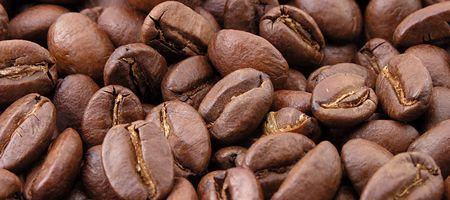
Following on from Gary Berry’s introduction to coffee houses in Soho, we thought we’d pick out five flavoursome coffee brands to help you wake up on those dreary Monday mornings back in the office.

Coffee has an interesting history. Now commonly associated with the New World, it was originally cultivated in Yemen and Ethiopia from as early as the 13th Century. From Ethiopia and Yemen, the drink spread to Egypt, the Middle East, Asia Minor and northern Africa. The name itself is thought to come from the Arabic qahhwat al-bun (‘wine of the bean’).

Early Arab mystics drunk coffee to help them communicate with god and maintain focus, and at one point the spread of the beverage was seen as such a terrible social ill the drink was considered as bad as alcohol (hence the name ‘wine of the bean’). Coffee houses were seen as places where rebellious ideas began. While coffee houses now might occasionally be jittery places, they’re probably much tamer affairs than in the dark and middle ages.

With this in mind we thought we’d add a bit of mystique and danger to your coffee drinking habits, with our brief round-up of some of the most exciting coffee brands out there.


Marley Coffee

Anecdote has it that Bob Marley wanted to return to a simpler life of farming at some point in his life. His grandmother apparently dried her own coffee beans in the sun each morning, before making herself a strong cup of the black stuff. Now Rohan Marley, and his friend Shane Whittle, have selected their own beans from Ethiopia, Central America and the Blue Mountains in Jamaica. Marley Coffee has a rich but smooth flavour, and a strong aroma.

Marley Coffee‘s One Love Organic Coffee is an organic medium roast with blueberry, cocoa and spicy notes, with an aftertaste of cherry. The Lively Up! espresso blend again has cocoa hints, but this time with the tastes of sweet caramel and candied fruits. Meanwhile the Buffalo Soldier blend is a dark, sweet roast with an earthy flavour.

Jamaica Blue Mountain Coffee
Like the Marley brand, Jamaica Blue Mountain Coffee hails from the Chepstowe area of Jamaica. Jamaica Blue Mountain Coffee is mostly Arabica Typica and is wet processed. The Coffee Industry Board of Jamaica inspects exports to make sure that the quality is top notch. Jamaica Blue Mountain coffee has a mild flavour, lacking the bitterness of some blends, and as such is one of the world’s favourites.

Cluwak
Sumatra Island in Indonesia is the home of the world’s most expensive coffee, Kopi Luwak. Cluwak is one of the key brands for this type of coffee.

‘Kopi’ means coffee in the local tongue, while the ‘Luwak’ is an animal that eats coffee beans. The Luwaks, although keen to eat the beans, can’t digest them. So when they come out the other end, the inner beans pass through, having fermented, and are gathered to make this coffee. Prices can reach almost £500 per pound for this scatalogical luxury. Vietnamese weasel coffee (a specific type) goes for up to £1,000 per pound. The Specialty Coffee Association of America, however, claims the coffee tastes bad, and there is an assumption it is bought for prestige (and for the story) rather than for taste.


Woolloomooloo Blend

Toby’s Estate’s Woolloomooloo Blend is the perfect coffee for milk lovers. Based on a monsooned Indian bean, the flavour is bold, rich and earthy. The blend is named for the estate’s first roastery and cafe on Cathedral Street, and means ‘place of plenty’ in the indigenous language. The full taste of this bean means it isn’t drowned out by the milk.

Gloria Jean’s Coffees White Russian
Another blend for the milk-lovers, this full-bodied coffee has a gentle boozy edge. The liqueur flavour is perfect for those with a taste of alcohol after a heavy weekend, but is also smooth on the palate. This smooth blend is decadent and still packs a kick.

source: http://www.sosogay.co.uk / Home> Food & Drink / by Adam Love / April 22nd, 2013

Coffee and the selfish gene

Caffeine in nectar hooks bees. / The Hindu

How did coffee become more popular in south India and tea in the north? History appears to give the reason. Legend has it that in the late 16th century while Haji Baba Budan was returning from Haj through Yemen, he found people boiling coffee beans in water and enjoying the “decoction”. He then smuggled a handful of the (forbidden to export) beans with him and planted them on the Chikamagalur hills in Karnataka and the locals took to it with elan. Soon, coffee plantations appeared in Kodagu and the Nilgiris, and we all were hooked on to the morning coffee. Tea, on the other hand, was introduced later (early 19 century) by the colonial British who copied it from the Chinese and planted it in Assam and Darjeeling. This colonial drink soon became popular among the subjects in the plains as well. Coffee and tea are thus external entrants into the Indian taste buds.

But why are we hooked on to coffee and tea? The answer comes from science, which tells us that they both contain the mood- altering and addictive drug caffeine. While this is a proximal answer, the ultimate question is why at all do these plants go to the trouble of making the molecule in the first place. After all, it takes metabolic energy to do so. The answer appears to be “to deter herbivores”, or as a defence chemical. Note that the raw bean or leaf is bitter to taste, and the animal would shy away, leaving the plant alone to grow and flourish.

Recent findings add another dimension to the tale. It has been found the caffeine is found not only in the bean or the leaves but also in the nectar that the plant produces and packs a drop or two in its flowers. And why it would do so and what this stored caffeine does in the flower nectar has been investigated by a group of researchers from U.K. and published in the March 8, 2013 issue of Science.

They note that while plant-derived drugs like caffeine and nicotine (the drug in the tobacco plant) are lethal in high doses, they do generate pleasant effects when taken in very low doses. But then why in the floral nectar? Is it in order to “hook on” bees and other pollinating insects? To understand this, the researchers first measured the levels of caffeine in the nectar of three plants, Coffee arabica, C. liberica and C. canephora, to which bees make a bee-line for (pardon the pun), and found the amounts to be less than a thousand-fold that of the sugar present in the bean — just a teasing touch.

They hypothesised that the caffeine in the nectar could affect the learning and memory of the foraging pollinators. Could it be that they would come to these flowers, enjoy the nectar and in the process take away and dispense the pollen, thus breeding these plants in preference to those that do not store caffeine in their nectar? In order to test this, the researchers took the trouble of training individual bees to associate a floral scent with sugar reward. In one set the bees would go to the containers with sugar solution, and in another set the sugar solution spiked with a bit of caffeine. And they found that the bees would consistently return to the caffeine sugar scent even three days later. In other words, caffeine acted as a memory enhancer. The bees were hooked onto caffeine.

The researchers went further ahead and investigated the biological mechanisms behind the mode of action of the caffeine. The bee brain contains what are called projection neurons or nerve cells that have a protein surface (a receptor) that normally binds to the molecule adenosine. When these nerve cells are adenosine-bound, the behaviour of the bee is one of quiet and calm. However when caffeine is brought in, it kicks out the adenosine and attaches itself to the receptors at the end of the sensory neurons. The effect is to stimulate the neurons, increase memory, and wake up and excite the insect.

In effect then, caffeine has two roles in the plant. One is defence against the predator goats and cows, while the other is to entice the pollinating insect by drugging it and tweaking its memory so that it pollinates this plant in preference to other pants that do not pack the drug in their nectar. The researchers conclude by stating that “our experiments suggest that by affecting a pollinator’s memory, plants reap the reproductive benefits arising from enhanced pollinator fidelity”.

In plainer English, one can say that the trick the coffee plants play is another example of the ‘selfish gene’ idea, namely, use any ruse to help propagate my genes over other competitors, and do so for generations; and if it takes caffeine to entice and tweak the memory of the pollinator, so be it.

source: http://www.thehindu.com / The Hindu / Home> S&T> Science / by D. Balasubramanian / April 17th, 2013

Coffee exporters upbeat on high Robusta demand

( There is a good demand…)

Kochi :

Though coffee prices continue to move in a lower range, rising demand for the robusta variety may provide some relief to exporters. High demand and the prospects of a lower crop in Vietnam, the largest producer of robusta coffee, are expected to stoke a rally in prices. Arabica prices have crashed in the world market owing to a bumper crop in Brazil.

“There is a good demand for robusta cherries. We can expect a good offtake of the variety in the next few months,” said Ramesh Rajah, president of Coffee Exporters Association of India.

However, the issue is whether India will be able to offer robusta at a competitive price. Robusta prices touched $2,139 tonne in the world market on Monday. “But right now India is offering its produce at a price which is higher by $75-100 per tonne compared to the shipments from Vietnam and Uganda. Buyers are increasingly looking for coffee from cheaper origins,” said an officer of major exporter NKG Jayanti Coffee.

Exporters are expecting higher robusta supplies and the fresh stock will enable shipments at competitive rates. Planters have forecast a lower crop for both varieties. But the robusta crop is not as bad as arabica, which is predicted to be one of the worst in the recent times due to pest attacks. On Monday, the arabica price stood at $1.35 per pound. “The harvest has been just over and we are still assessing the total output. From what we gather, it could be near to our earlier estimates of 80,000 tonne of arabica and 2 lakh tonne of robusta,” said Nishant Gurjer, chairman of the Karnataka Planters’ Association.

Coffee Board’s post-monsoon estimate for 2012-13 is 1,00,225 tonne of arabica and 2,15,275 tonne of robusta. Meanwhile, reports of a possible lower crop in Vietnam have raised the hopes of Indian coffee exporters. The earlier estimate was that the Vietnam crop will be at 25 million bags (of 60 kg each) but it now appears that the harvest could be still smaller. “If the Vietnam crop is low, robusta prices will move up in the world market,” said an exporter.

Such a situation augurs well for Indian coffee exporters as it will lead to better earnings. Coffee exports for this calendar year have gone up marginally because of the export of the carryover arabica stock.

source: http://www.articles.economictimes.indiatimes.com / Home> Markets /by PK Krishnamurthy, ET Bureau / March 26th, 2013

Starbucks opens sixth store in Mumbai

There are now a total of five stores in Delhi and six in Mumbai

Coffee house major Starbucks, which has a joint venture with the Tata Group in India, has launched its sixth store in Mumbai at the Chhatrapati Shivaji International Airport, taking its tally to 11 stores so far.

As things stand now, there are a total of five stores in Delhi and six in Mumbai, with plans afoot to ramp up this number.

Avani Davda, CEO, Tata Starbucks, says the idea of launching stores at airports, its third so far, is to provide convenient locations to consumers. “We have received an overwhelming response to our two stores at New Delhi’s IGI Airport. We hope to continue to cater to the travel channels in the country and extend our experience,” she said.

The 18,000-outlet-strong Starbucks, which operates in 60 countries, has opted to price a cup of coffee in India between Rs 80 and Rs 200, while the food, an assortment of which is on offer at its stores, is also priced in a similar bracket.

After signing a coffee roasting and sourcing deal in January 2011 with Tata Coffee, Stabucks got into a JV with Tata Global Beverages, parent of Tata Coffee, a year later, launching its first store by October 2012. Since then it has moved quickly, launching stores in Mumbai and Delhi respectively. The JV is expected to step into other cities in the near future in its drive to expand its footprint.

source: http://www.business-standard.com / Business Standard / Home> News> News / by Viveat Susan Pinto / Mumbai / April 03rd, 2013

The Coffee Enigma

latte-artKF27mar2013
I love coffee and everything that goes with it. Because I seldom drink it alone, it carries a social aspect and a comfort dimension that are difficult to separate from the actual beverage itself. I do try to restrict my daily consumption to three or four cups. We all know that it isn’t healthy to drink more than that, or at least that’s what we’ve always been told.

The Mayo Clinic now suggests 2-4 cups of brewed coffee a day is okay but more than that can cause insomnia, restlessness, stomach upset, and increased heartbeat. The Globe and Mail in September 2012, reported that people who drink 4-6 cups of coffee a day are 28% less likely to develop type 2 diabetes, benefits attributed to antioxidants. The same article also cautions that more than 2 8-oz. cups of coffee may increase the risk of miscarriage. According to an *article in the Health section, March 18th issue of Mail Online, a UK newspaper, Swedish researchers have been quoted as saying that one cup of coffee a day could reduce your blood pressure and provide a temporary boost to your brainpower; researchers at the University of Florida say that two cups could stave off Alzheimer’s and according to The International Journal of Sports Medicine, enhance exercise performance; the American medical journal Cancer states that three cups could reduce the risk of developing ovarian cancer in women and, according to the Journal of the American Medical Association, reduce the risk of gallstones in men; another U.S. study found that more than three cups could increase the risk of heart attack; five cups, according the National Cancer Centre in Tokyo, reduce the risk of serious liver damage by three-quarters; researchers at Wayne State University in Detroit report that drinking six cups can reduce the risk of some skin cancers but according to Dr. Sarah Schenker, dietitian, can lead to dehydration. More than six cups … well, you get the idea. Simply choose the advice you like best.

All medical research aside, I find that ordering a cup of coffee is becoming more complicated all the time. Unless your coffee shop of choice is the ubiquitous Tim Horton’s, you may find everything on the menu except a normal cup of coffee. I have a good friend that refuses to drink the specialty options. He loves his coffee straight up in a normal mug with a shot of cream. That’s it. He gets a little testy when he steps up to order and sees nothing that he recognizes. “Just a plain cup of coffee,” he laments. “Can I get that?”

Last weekend, my friend said this to the woman behind the counter and she looked totally puzzled. I felt sad for her, guessing that no one had made such an archaic choice before and obviously her training hadn’t prepared her for this. This particular shop sold green coffee beans and home roasters so that you could not only grind your own beans at home, but roast them first. I wondered what hour these people wake up in the morning in order to brew their breakfast coffee and still arrive at work on time.

I am of two minds on the subject though. I have to admit that I was curious about the green beans. I do love a great java and have to believe the more you know about the growing and harvesting, roasting, grinding and brewing process, the better the resulting coffee has to be and then, as if to affirm my suspicions, the carafe of that beautiful black elixir that they served was incredibly delicious!

Things have changed since the days when my parents would drink a cup of instant coffee mid-afternoon. It seems the natural cycle prevails in this context as in everything – our inclination to wish for more choice and then when that happens, to wish for simpler times.

source: http://www.janethepburn.com / Home> Blog> Non-Fiction / March 20th, 2013