Monthly Archives: August 2025

Orange alert for Kodagu as rain gains momentum; flood alert issued as outflow from KRS to be increased

The reservoir level at the KRS was 124.46 ft against the maximum level of 124.80 ft at 8 a.m. on August 17, according to Karnataka State Natural Disaster Monitoring Centre.
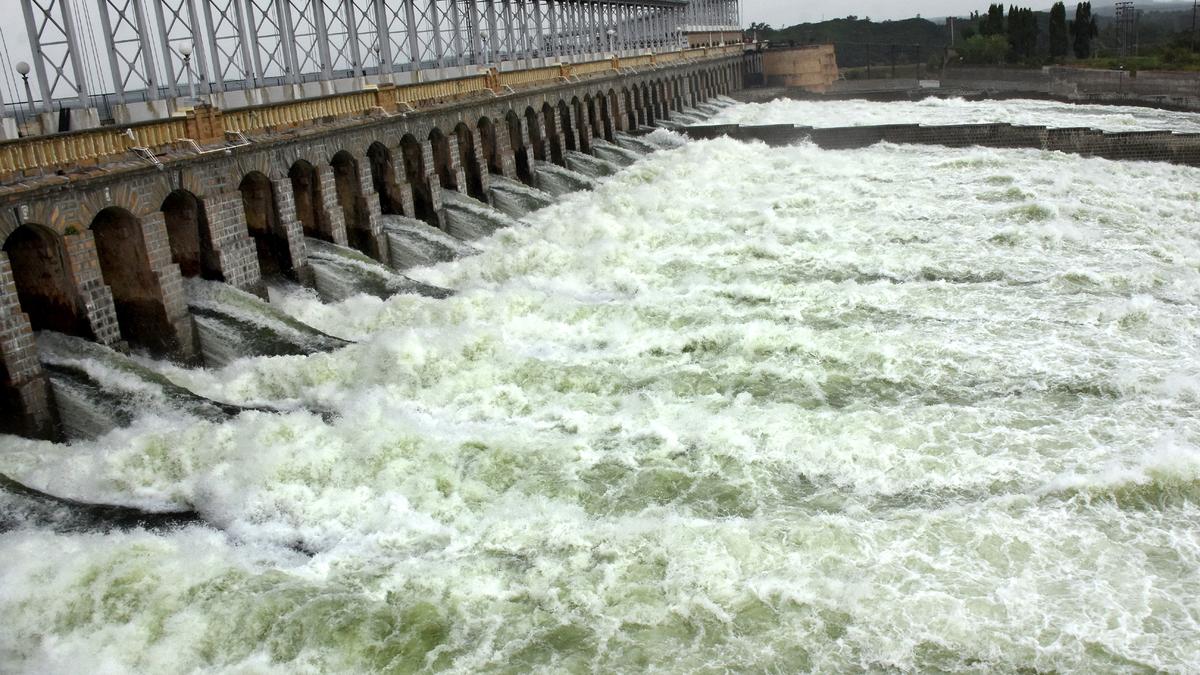
A file photo of KRS reservoir used for representational purpose only. | Photo Credit: The Hindu

After a prolonged break, monsoon is active in parts of south interior Karnataka since the last few days and the Indian Meteorological Department (IMD) has issued an Orange Alert for Kodagu valid till Monday (August 18, 2025).

Meanwhile, in view of heavy rains in the catchment areas of the Cauvery and its tributaries, the Cauvery Neeravari Nigam Limited (CNNL) has issued a flood warning for people living on the downstream of the Krishnaraja Sagar (KRS) reservoir as the outflow from the dam will be increased to nearly 50,000 cusecs.

This is due to increase in the rate of inflow to the reservoir, according to CNNL which said that people living on both banks of the river and the low-lying area of river Cauvery should move to safer places and take precautionary measures for safety and security of their lives and property.

The reservoir level at the KRS was 124.46 ft against the maximum level of 124.80 ft at 8 a.m. on Sunday (August 17, 2025), according to Karnataka State Natural Disaster Monitoring Centre (KSNDMC). The gross storage capacity of the reservoir is 49.452 tmc ft against which the present storage is 48.977 tmc ft.

During the 24 hour period ending 8.30 a.m. on August 7, parts of Kodagu received heavy to very heavy rains and Birunani in Virajpet taluk recorded 148 mm of rainfall. Other places which recorded significantly high rainfall included Srimangala (83 mm), Kudlipet (82.6), Madde (77.5 mm) Sampaje (77) Shanivarsanthe (76), Shanthalli (75), Kutta (60.5) Kadanuru (51), Kakatuparambu (50) and Hudikeri and Bhagamandala recorded 41.2 mm each.

The locations with highest rainfall in the region during the last 24 hours included Begar gram panchayat in Chikkamagaluru district which received 204.5 mm of rains followed by Shanuvalli GP with 185 mm. Hodgadahalla GP in Hassan district recorded 171 mm of rainfall while Kyamanahalli, also in Hassan district, registered 160.5 mm of rainfall. Niluvagilu GP in Chikkamagalur received 150.5 mm of rains during the same period, according to KSNDMC.

While the rains have gained fresh traction in the last few days, the period August 1 to 16 was on the deficit side. Kodagu has received 194 mm of rainfall (August 1 to 16) which is 45% below normal. Chikkamagalur which is another major catchment for the tributaries of Cauvery, also recorded below normal rains between August 1 and 16. According to KSDNCM, Chikkamagalur received 125 mm of rains during the period which is 52% below normal.

However, the cumulative rainfall from June 1 to August 16 is under normal category and while Kodagu has received 1624 mm of rains, it is below normal for Chikkamagalur which has received 897 mm of rainfall and it is 21% below normal. Other districts in the region including Hassan, Mysuru, Chamarajanagar fall under normal category while Mandya district has received 204 mm and is under excess category.

source: http://www.thehindu.com / The Hindu / Home> News> India> Karnataka / by The Hindu Bureau / August 17th, 2025
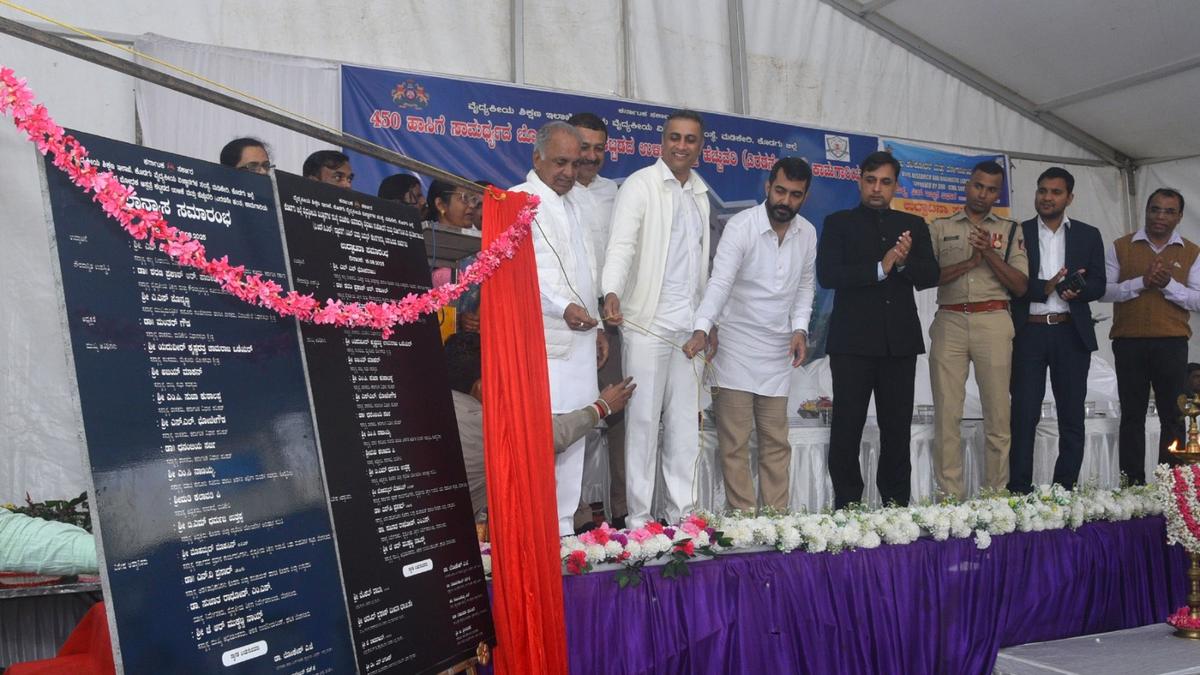
Karnataka: Second phase works for construction of 450-bed Kodagu hospital launched

Minister in charge of Kodagu district N.S. Boseraju unveiling the foundation stone for the second phase works for construction of the 450-bed teaching hospital at Kodagu Institute of Medical Sciences in Madikeri on Friday. | Photo Credit: SPECIAL ARRANGEMENT

The foundation stone for the remaining and additional works (second phase) for the construction of the 450-bed teaching hospital of Kodagu Institute of Medical Sciences (KoIMS) was laid in Madikeri on Friday.

Minister in charge of Kodagu district N.S. Boseraju laid the foundation stone on the KoIMS premises in the presence of MLAs Mantar Gowda and A S Ponnanna.

Speaking on the occasion, the Minister told the doctors to provide quality healthcare services to poor patients. “When quality healthcare reaches the people timely, it brings a good name to the government. Therefore, doctors must ensure quality healthcare services,” Mr. Boseraju said.

The Medical Education Minister and the district’s MLAs have worked hard for upgrading the infrastructure of the institute, he added.

Mr. Ponnanna said healthcare services should reach everyone as all necessary development works were being carried out, while Mr. Gowda said it is the duty of doctors to provide quality healthcare to poor patients.

Steps have been taken to provide basic facilities to various departments of the institute, including the MRI scanning unit, Mr. Gowda said, adding that the cardiology department will also be upgraded soon.

Further, Mr. Gowda said that the hospital needs permanent doctors, and urged the Minister to take steps in this regard.

The upgradation works will be completed within a span of 18 months, and an additional ₹20 crore will be sought for the development of the Kodagu Institute of Medical Sciences, he added.

Steps will also be taken to start a Critical Care Centre, Mr. Gowda informed.

source: http://www.thehindu.com / The Hindu / Home> News> India> Karnataka / by The Hindu Bureau / August 15th, 2025

AUGUST 15th : Independence Day celebrations: ‘Har Ghar Tiranga’ campaign launched in Karnataka’s Kodagu district

Kodagu Deputy Commissioner Venkat Raja during the inauguration of ‘Har Ghar Tiranga campaign’ in Madikeri on Tuesday. | Photo Credit: SPECIAL ARRANGEMENT

The Kodagu district administration, on Tuesday, launched the three-day ‘Har Ghar Tiranga’ campaign, which will see a variety of programmes being organised as part of the Independence Day celebrations.

The ‘Har Ghar Tiranga’ campaign, commemorating the 78th year of India’s independence, will be held from August 13 to 15 across the district.

Deputy Commissioner Venkat Raja inaugurated the campaign at his office in Madikeri. The Revenue, Panchayat Raj, School Education and Literacy, Pre-University Education, Social Welfare, Backward Classes Welfare, Urban Development, Municipal Administration, and Kannada and Culture Departments have joined hands to conduct various activities at the event.

Mr. Raja said that the ‘Har Ghar Tiranga’ campaign was being organised as per government directions, and added that programmes will be conducted at district, taluk, and gram panchayat levels through different departments. He appealed to all the participants to upload their selfies to https://hargartiranga.com after participating in the campaign.

Municipalities, town panchayats, and city councils will host a variety of events; schools, colleges, and hostels will also conduct a range of activities, the Deputy Commissioner said. “It is very important that everyone participates in the ‘Har Ghar Tiranga’ campaign,” he added.

Additional Deputy Commissioner R. Aishwarya said that various programmes had already been conducted in schools, colleges, and historical places, and urged everyone to contribute to the success of the campaign. Social Welfare Department Deputy Director and taluk panchayat Executive Officer Shekhar said that arrangements had been made to organise the campaign in various gram panchayats and hostels.

source: http://www.thehindu.com / The Hindu / Home> News> India> Karnataka / by The Hindu Bureau (Headline edited) / August 12th, 2025

Learn the art of coffee brewing at CFTRI’s BioNEST

BioNEST at CFTRI, in collaboration with the Coffee Quality Division, Coffee Board of India, has organised a five-day specialised Barista Training Program aimed at promoting excellence in coffee brewing and service. The program, titled “A Bean to Brew Journey – Master the Basics of Brewing”, will be held from September 1 to 5 at CSIR-CFTRI, Mysuru.

This hands-on, non-residential program is open to individuals who have completed their 12th standard and wish to gain professional coffee-making expertise. The training will be conducted in English, with lunch and coffee provided daily.

Participants will learn and practice essential skills for the coffee industry, including Espresso Basics – Mastering grind size, extraction, and tamping; Milk Frothing & Latte Art – Creating perfect microfoam and its designs; Customer Service Excellence – Building rapport and delivering quality; Coffee Knowledge – From bean origins to tasting notes; Equipment Maintenance – Caring for espresso machines and grinders; Hygiene and Safety – Ensuring quality and cleanliness and Certification – From the Coffee Board to be distributed, a press release said.

The training costs ₹10,000 plus 18% GST. There will be 50 per cent discount for SC, ST, and student participants.

For registration and contact, email: managerbionest@cftri.res.in and the registration link: https://forms.gle/mK226XFExht1Jsyi7

Contact details- 0821-2412608 (Weekdays 9 a.m. to 5 p.m.), 9482157878. Website: coffeeboard.gov.in

The training program is limited to first 20 participants only.

source: http://www.thehindu.com / The Hindu / Home> News> India> Karnataka / by The Hindu Bureau / August 13th, 2025

World Elephant Day today: Karnataka loses 380 elephants in 5 years

Chamarajanagar reported 134 deaths, Kodagu 126 deaths, Mysuru records 51

Mysuru:

Today, Aug. 12, World Elephant Day, throws a harsh light on the growing crisis facing Asian elephants.

In Karnataka — home to the largest elephant population in India — over 380 jumbos have died in the past five years, with more than 64 deaths attributed to unnatural causes. Disturbingly, electrocution alone has claimed 50 of these lives.

Forest Department data from 2021 to 2025 shows that the State’s prime elephant belt — Kodagu, Chamarajanagar, and Mysuru — has lost 311 elephants. Chamarajanagar recorded the highest toll at 134, followed by Kodagu with 126 and Mysuru with 51.

While most deaths were due to natural causes, nearly one in eight elephants fell victim to man-made hazards. In Kodagu, electrocution emerged as the single biggest killer, with 30 deaths caused by low-hanging power lines, fallen cables and uninsulated electric fences.

Other unnatural deaths included five from gunshot wounds, two in road accidents and five from other causes.

Of the 380 elephants lost Statewide, 204 were adults (over 15 years), 77 sub-adults (5–15 years), 23 juveniles (1–5 years), 49 calves (under one year) and 23 newborns. Four deaths could not be age-classified as the carcasses were too decomposed.

In Kodagu, 103 elephants died of natural causes and 23 due to unnatural causes, 18 of which were electrocutions. In Chamarajanagar, 130 died naturally and four died unnaturally. Mysuru reported 41 natural deaths and 10 unnatural ones.

Undermining reproductive potential

Experts warn that the loss of 281 adults and sub-adults severely undermines the reproductive potential of herds. “Elephants in Karnataka are dying at an alarming rate of 8–10 percent annually,” said Surendra Varma of the Asian Elephant Research and Conservation Centre, Indian Institute of Science, Bengaluru.

“With Karnataka’s elephant population, a 2 percent five-year mortality is normal. But when it rises to 8–10 percent, it’s a crisis. No concrete measures are being taken and in the long run, this will be disastrous for the State, which is a haven for these pachyderms,” he warned.

The gender ratio further deepens the crisis — there is only one male for every three females and the ‘musth’ mating period lasts just about 20 days to two months a year on average.

Males are fit to mate between the ages of 15 and 40, meaning the death of so many adults and sub-adults will directly hit the birth rate.

“Sadly, we seem to remember elephants only during Dasara. Their silent deaths in the forests go unnoticed and even the Forest Department has failed to take adequate precautions to prevent these tragedies,” Varma added.

A 2015 High Court order had directed Chamundeshwari Electricity Supply Corporation (CESC) and other power supply companies to raise the height of electric poles to 11 metres and insulate all electricity wires to prevent dangerous exposure. However, the corporations have been installing poles only up to a height of 7 metres. The Court also directed them to insulate the wires to reduce risks. Despite repeated written communications from the Forest Department urging compliance, the safety measures remain unimplemented.

Murthy, former Chief Conservator of Forests, Kodagu Circle

source: http://www.starofmysore.com / Star of Mysore / Home> News / August 12th, 2025

Mysore Kodava Samaja pays tribute to KBG

Mysore Kodava Samaja paid floral tributes to Kalyatanda B. Ganapathy (KBG), Founder-Editor of Star of Mysore and Mysuru Mithra, who passed away on July 13, at the condolence meeting held at the Samaja premises in Vijayanagar yesterday.

Samaja President Ponjanda A. Ganapathy, former Samaja President and present BVB Mysuru Hon. Secretary Poyyettira S. Ganapathy, former Rajiv Gandhi University (Arunachal Pradesh) Vice-Chancellor Prof. Kambeyanda C. Belliappa, Samaja Advisor Jammada Ganesh Ayyanna, former Rangayana Director Addanda C. Cariappa, KBG’s son and Star of Mysore Managing Editor Vikram Muthanna, Bharani Art Gallery Convenor Nellamakkada B. Kaverappa and others spoke about KBG.

Samaja Vice-President Machimada P. Nanaiah, Hon. Secretary Ketolira A. Belliappa, Joint Secretary Ajjikuttira Diana Poovaiah, Hon. Treasurer Ittira G. Kashiappa and others were present.

source: http://www.starofmysore.com / Star of Mysore / Home> Gallery> Photo News / August 11th , 2025

Paddy diversity, agricultural heritage highlighted in Mysuru desi rice mela

Nearly 200 varieties of indigenous rice varieties on display at the desi rice mela, which was inaugurated in Mysuru on Saturday. | Photo Credit: M.A. SRIRAM

The two-day desi rice mela commenced in Mysuru on Saturday, with seed conservators expressing concern that commercial crops were pushing the traditional paddy varieties to the brink.

The objective of the mela is to highlight the paddy diversity that existed in the Old Mysuru region, and how scores of indigenous paddy varieties are going out of vogue due to the proliferation of hybrid varieties and shifting consumer preference to white polished rice.

With over 200 paddy varieties on display, the mela is being held at Nanjaraja Bahadur Choultry, and has been organised under the aegis of Sahaja Samrudha and the Save Our Rice Campaign. Also on display are traditional rice varieties from different States, including rare types such as red rice, aromatic rice, black rice, medicinal rice, and bold-grained rice, along with value-added rice products.

Paddy conservators from across the State are selling their own desi rice directly. Seeds of popular varieties like Rajamudi, Burma Black, Sidda Sanna, Ratnachudi, Navara, Govind Bhog, HMT, and Sindhoor Madhusale are also on display and for sale.

The mela was inaugurated by B.P. Ravishankar, a seed conservator from Hudoor in Ponnampet, Kodagu. He has preserved as many as 57 desi rice varieties.

“Paddy cultivation is becoming increasingly expensive. With the arrival of commercial crops, traditional paddy varieties are being pushed to the margins and the government must provide necessary support to bring these desi rice varieties back into farmers’ fields”, said Mr. Ravishankar.

Unveiling medicinal rice varieties, Shridevi Annapurna Singh, former Director of the Central Food Research Institute, said that traditional varieties are rich in nutrients, while the black and red rice varieties have medicinal properties, and called for their inclusion in people’s diets.

Presiding over the event, G. Krishna Prasad, Director of Sahaja Samrudha and the Organic Farmers’ Collective, said that farmer-breeders in Karnataka have developed excellent paddy varieties like Sidda Sanna, Sindhoor Madhusale, Andanoor Sanna, and NMS-2. “The government must take steps to release these varieties, which are popular among farmers,” he said.

Mr. Prasad also cautioned against any attempts by the government to introduce transgenic paddy varieties that pose risks to the environment and consumer health. Farmers and consumers must remain vigilant to prevent transgenic paddy from entering farmers’ fields, he added.

C. Shanthakumar, the coordinator of Save Our Rice Campaign, said that Karnataka was the home of paddy diversity, but hundreds of varieties have been lost due to lack of demand. ‘’The desi rice mela has been organised to create awareness among farmers and consumers about nutrient-rich, traditional paddy varieties suited to local food habits,” he added.

The mela also offers millets, vegetable seeds, tubers, organic products, and fruit saplings that are for sale.

source: http://www.thehindu.com / The Hindu / Home> News> India> Karnataka / by The Hindu Bureau / August 09th, 2025

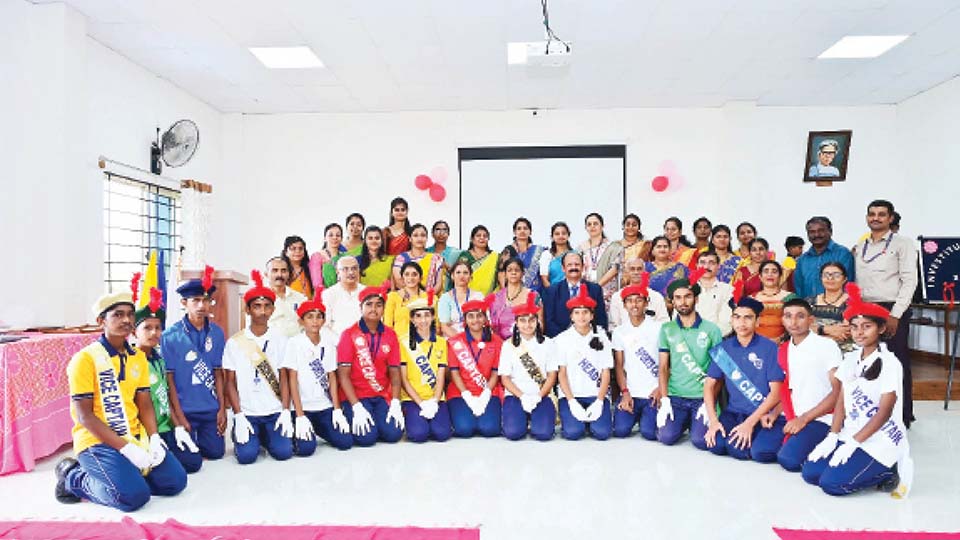
Investiture Ceremony of Kodagu Model School

Mysuru :

The Investiture Ceremony of Kodagu Model School, promoted by Sri Kavery Kodava Association – Mysuru East, was held in the presence of the Management Council recently.

The meet was declared open by showering of flowers followed by release of pigeons, symbolising peace, hope and new beginning. Students performed march-past. The stage programme started with traditional lighting of the lamp proceeded by an invocation & welcome address.

The chief guest for the day, Dr. Neravanda B. Suresh, former International Volleyball Coach & Director, Sports Authority of India, Special Area Games (SAG) Centre, Thalassery, Kerala.

Dr. M.M. Dechamma, retd. Associate Professor, Cauvery Degree College, Virajpet, Kodagu, was the guest of honour.

Dr. Suresh, in his motivating speech, emphasised that students should be physically, mentally, emotionally and socially healthy to become a responsible individual. In his interaction with the students, he mentioned that everyone should have a guru in their life to be successful.

Dr. Dechamma urged the student leaders to lead by example and inspire others. She highlighted the values of discipline, commitment and integrity in leadership.

The highlight of the ceremony was the conferring of badges and sashes to the newly elected members of the Student Council with oath administration.

K.M. Belliappa, President of the School, congratulated the Council Members and reminded them that leadership was not about authority but about service & setting the right example.

The ceremony concluded with a vote of thanks followed by the National Anthem.

source: http://www.starofmysore.com / Star of Mysore / Home> News / August 07th, 2025

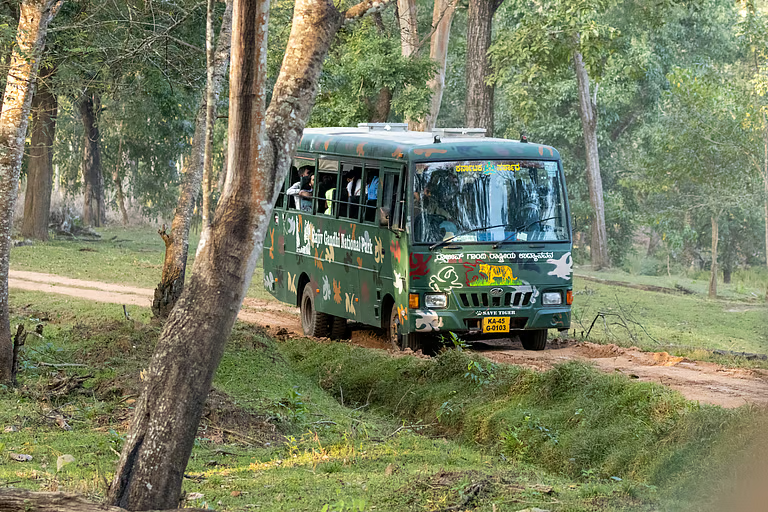
‘We are protectors, not intruders’: Indigenous protest builds over evictions in Nagarahole

Deadly fencing, forced evictions and surveillance deepen tensions as Adivasis fight to reclaim ancestral land in Karnataka

The tourism routes within Nagarahole encroach on Indigenous lands and are part of community forests, alleged Adivasi rights groups.iStock

Summary

  • Dozens of Jenu Kuruba families have returned to ancestral forest lands in Nagarahole, sparking clashes with Karnataka’s forest department.
  • The group, classified as a Particularly Vulnerable Tribal Group (PVTG), will lead a two-day protest on August 9 with support from Adivasi collectives and civil society.
  • Protesters accuse forest authorities of eviction, intimidation, and wildlife tourism in areas from which they are being forcibly removed.
  • They demand recognition of forest rights under the Forest Rights Act and an end to surveillance, displacement, and ecological destruction for commercial gain.

Adivasi and Indigenous communities in Karnataka are set to launch a major protest against the forest department’s ongoing attempts to evict tribal families from the Nagarahole reserve. The move follows the return of 52 Jenu Kuruba families to their ancestral homes in Karadikallu Hattur Kollehaadi village, land they say is rightfully theirs under Indian law.

Classified as a Particularly Vulnerable Tribal Group, the Jenu Kuruba have deep-rooted spiritual and ecological ties to the forest, its wildlife and sylvan deities. They gather medicine, honey, fruits, vegetables, tubers and the thatch and bamboo needed to build their houses. The name of the tribe means “honey collector”.

The communities’ return was met with resistance from forest officials, leading to fresh conflict.

On August 9, indigenous groups under the banner of the Nagarahole Adivasi Jammapale Hakku Sthapana Samiti (NAJHSS), supported by civil society organisations and forest rights defenders, will march to the Nanachi Forest Gate to protest against what they describe as “systemic violations” of the Forest Rights Act (FRA) of 2006. August 9 commemorates the International Day of the World’s Indigenous Peoples every year.

In a joint statement issued by Survival International, an organisation campaigning for tribal rights globally, the group said the protest would focus on “the systemic violations of forest and habitat rights guaranteed under the FRA and the continuing violence on our lives, livelihoods and our bio- cultural lifeworld.”

Despite directives from the Union Ministry of Tribal Affairs, they say the state government and local administrations in Mysuru and Kodagu have failed to implement the FRA and recognise their habitat rights. “This refusal to act reflects a deliberate and systemic denial of our constitutional and legal rights under national and international laws and covenants,” the statement said.

Forest authorities, they alleged, continue to evict families and criminalise indigenous leaders who assert their legal claims. At the same time, wildlife tourism continues unabated in the same “inviolate” areas the Jenu Kuruba are being removed from. 

“The tourism routes within Nagarahole are encroaching on our lands and are part of our community forests. This blatant contradiction exposes the commodification of the forest under the guise of conservation, while denying rightful claims over forests that our people have protected for generations,” the group said.

The militarisation of the forest has escalated tensions and distressed the local communities, as artificial intelligence-enabled surveillance cameras and paramilitary units are stationed across the reserve. Community leaders argue this amounts to intimidation.

Officials have blamed the evictions on rising human-animal conflict in Kodagu, but tribal leaders disagree.

The real threat comes from deforestation and commercial coffee plantations. The evictions are meant to distract from the real crisis, as Adivasi communities have long been protectors of nature and have lived in harmony with wildlife for generations

Barbed wire and electrified fencing around plantations have led to injuries and deaths among wild animals, further fragmenting habitats and intensifying ecological stress.

These plantations have severely fragmented wildlife habitats, and in several instances, the deadly solar and barbed-wire fences have injured or killed animals. Such incidents, they noted, have worsened human-wildlife conflict and added to the ecological stress in Nagarahole.

The NAJHSS has demanded recognition of their forest and habitat rights under the Forest Rights Act, along with an immediate halt to evictions, intimidation, and the criminalisation of indigenous communities.

They have also called for an end to the surveillance of communities, a halt to tourism, and a stop to the ecological destruction of forests for commercial coffee plantations.

source: http://www.downtoearth.org / Down To Earth / Home> Forests / by Himanshu Nitnaware / August 07th, 2025

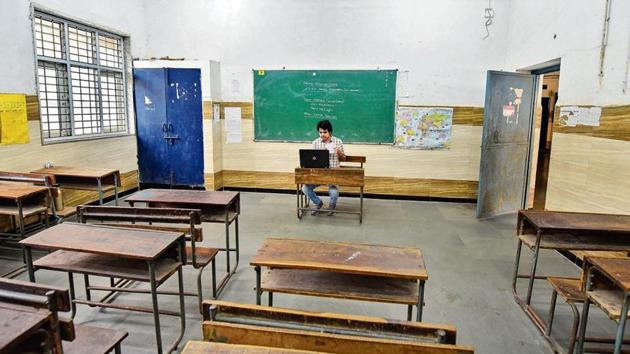
Daily creative activities revive tribal student attendance in Kodagu government school: Report

Representative Image (PTI)

Madikeri:

A government school in a tribal settlement of South Kodagu has reversed falling student attendance through an innovative daily programme.

Chennangi Government Primary School, which caters to tribal children, has introduced Dinnakondu Karyakram — a daily programme designed to make learning enjoyable. Since its launch, the school has achieved 100% attendance, a rare feat amid widespread concerns over declining enrolment in government schools across Karnataka, as reported by The New Indian Express.

The school, now accommodating 52 students, has witnessed a notable increase in admissions over the past two years. Children who once resisted attending classes are now showing up eagerly each day.

“Several tribal students stayed away from the institution. When their parents left for daily wage work, these students sat at home. However, we conducted a survey before the start of this academic year and have ensured that all the children from the tribal colony attend classes at the institution,” TNIE quoted Susha K., the headmistress of the institution, as saying.

Previously, the school had introduced Thingaligondu Karyakrama, a monthly talent programme, but some students continued to remain absent. In response, the school shifted to a more consistent approach with daily activities.

Each morning begins with engaging sessions of yoga, singing, dancing, literature, crafts, and unique games. This shift has not only ensured full attendance but also encouraged more than five students who had previously dropped out to return to school, added the report.

To further motivate students, the school has launched a YouTube channel where talent performances are uploaded regularly. “This has resulted in all the students attending classes without fail. It is like an incentive to these students, as the entire village watches and celebrates them after watching the YouTube channel,” the headmistress added.

Admissions have risen from 39 to 52 students over two academic years. In some cases, children who had taken transfer certificates were reportedly persuaded by the headmistress to rejoin the school.

Additionally, the school management has held awareness meetings with parents, urging them to prioritise their children’s education to secure a better future.

source: http://www.english.varthabharati.in / Vartha Bharati / Home / by Vartha Bharati / August 08th, 2025