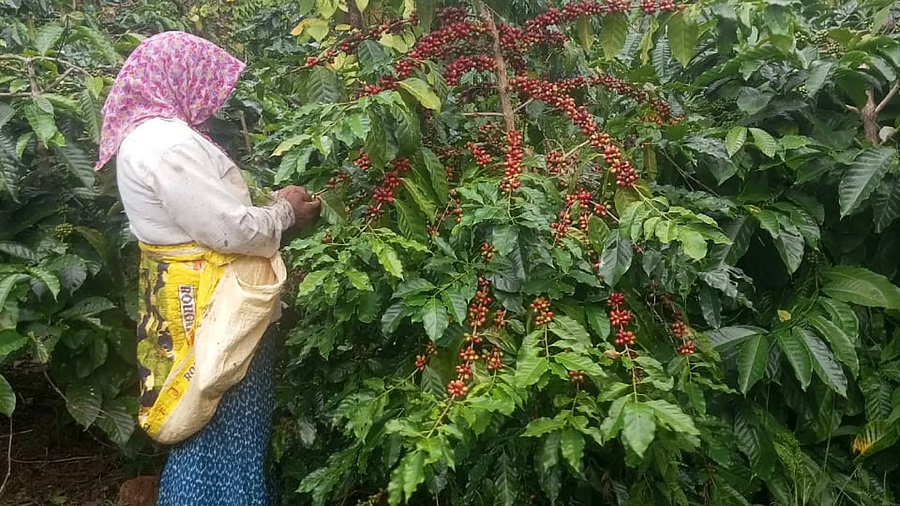
According to Coffee Statistics, Coffee Board, Government of India, India’s coffee production is projected to touch 4.03 lakh metric tonnes in 2025-26, a strong 10.9 per cent rise from the 3.63 lakh tonnes harvested in 2024-25. The surge is anchored by Karnataka, which alone contributes nearly 70 per cent of India’s coffee, with its output climbing to 2.80 lakh tonnes, up from 2.56 lakh tonnes last year.
Within Karnataka, Chikkamagaluru’s production leapt to 1.04 lakh tonnes, Kodagu delivered 1.30 lakh tonnes, and Hassan clocked 45,175 tonnes, collectively powering the state’s robust growth. Kerala followed with 85,150 tonnes, a sharp rebound over last year’s 72,950 tonnes as robusta yields strengthened, while Tamil Nadu posted 20,315 tonnes, consolidating its steady trajectory.
Production from non-traditional areas also recorded healthy gains, with Andhra Pradesh breaching the 16,500-tonne mark and Odisha improving to 500 tonnes, signaling diversification beyond the Western Ghats. The North-Eastern Region added 210 tonnes, underscoring the Coffee Board’s efforts to promote cultivation in new geographies.
Arabica production is forecast at 1.18 lakh tonnes, while robusta — India’s export mainstay — is projected at 2.85 lakh tonnes, reinforcing the country’s positioning as a leading supplier of premium washed robusta to global markets.
India’s coffee economy now spans 3.79 lakh holdings, with over 1.75 lakh farms concentrated in traditional belts and nearly 1.97 lakh holdings emerging in non-traditional regions, reflecting the crop’s widening footprint.
With domestic consumption consistently crossing 1 lakh tonnes and global demand for traceable, sustainably grown coffee surging, the Coffee Board emphasized the need for continued investment in quality upgradation, post-harvest infrastructure, and climate-resilient agronomy. This record output could help India strengthen its share in specialty and value-added coffee exports, provided supply chain modernization and price discovery keep pace with production growth.
Rajya Sabha member Ajay Maken and MLA for Virajpet A.S. Ponnanna, who is also Legal Advisor to the Chief Minister, looking at a map during an inspection of a site reserved for a sports facility in Kodagu on Monday. | Photo Credit: SPECIAL ARRANGEMENT
Rajya Sabha member Ajay Maken has assured to provide funds from his grants for the construction of a Sports Training Residential Hostel in Kodagu.
Mr. Maken, along with the Chief Minister’s Legal Advisor and MLA for Virajpet A.S. Ponnanna, inspected a site reserved for a high-level sports facility at V. Badaga village in Virajpet in Kodagu district on Monday.
During the inspection, Mr. Ponnanna explained to the Rajya Sabha member that the residential hostel in Kodagu will attract athletes, especially those from Kodagu.
Mr. Maken, during the inspection of the 11.2 acres of land reserved for the sports facility, assured that maximum possible funds from his grants will be allocated to the hostel.
Speaking to reporters, Mr. Ponnanna recalled that he had submitted a request to the MP earlier and the latter had fondly remembered Kodagu’s proud contributions to sports and armed forces, while assuring full support by providing grants to the best of his ability.
A statement said that preparatory work for the construction of the Sports Training Residential Hostel has already been under way. An official programme in the presence of Chief Minister Siddaramaiah, Sports Minister and Mr. Maken will be held likely in November this year and the date for the same will be finalised later.
source: http://www.thehindu.com / The Hindu / Home> News> India> Karnataka / by The Hindu Bureau / September 15th, 2025
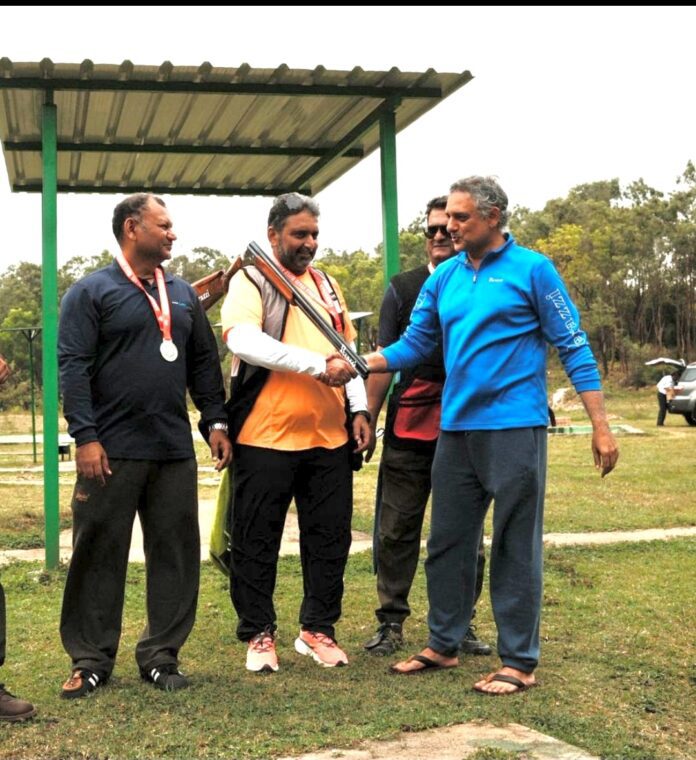
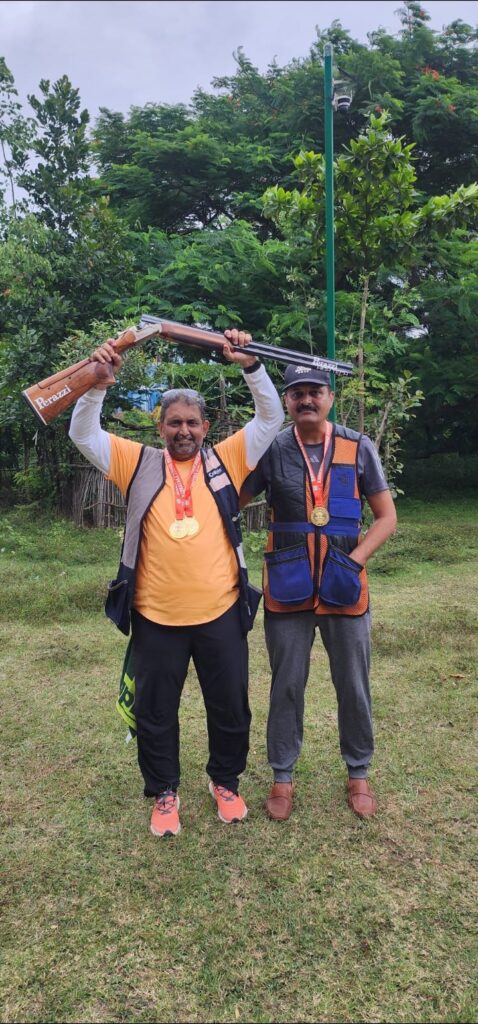
Karthamada Navin Bopaiah retains his No. 1 State ranking, winning the individual Gold in the Trap event (NR Masters) at the recently concluded 13th Karnataka State Skeet & Trap Shooting Competition, held at SAI, Bangalore. He also secured the team Gold (Masters NR) along with Kalliyanda Sajan Sajan Aiyappa. Both are shooters representing the Coorg Rifle Association, Madikeri.
The Coorg Rifle Association (CRA) has been thriving with a rich history and is home to talented shooters such as Baduvamanda Dhanu Devaiah and his family. Dhanu and Sajan Aiyappa are both ‘Renowned Shots’, and Kodagu has also produced international-level shooters in the past.
The Coorg Rifle Association continues to flourish with its legacy of skilled shooters and has been instrumental in promoting shooting sports both in the past and in the present. While recent local competitions within the district have boosted interest in conducting shooting events, it also serves as a reminder for organizers to emphasize gun safety regulations, which have seen a decline, in order to prevent any major accidents.
The Coorg Rifle Association is actively working with regulatory bodies to improve its facilities and is hopeful that upgrades will be completed in a couple of years. CRA’s goal is to produce quality shooters who can compete at the national and international levels.
Presently, KALS School has been instrumental in promoting shooting sports and has been actively involved in grooming youngsters in this discipline.
source: http://www.clnews.in / CLN News / Home> Sports / by CLN Newsdesk / July 08th, 2025
In this legend, the three elder brothers living in Kannur send their remaining siblings into Kodagu and Wayanad.
An idol of Pannangalatamme. Credit: Roshan Bopanna and Chenanda Rohan Ponnaiah
Kodagu folklore speaks of seven divine siblings — six gods and one goddess — who were from Kerala and settled in various parts of Kodagu and the adjacent districts in northern Kerala (Kannur and Wayanad).
In this legend, the three elder brothers living in Kannur send their remaining siblings into Kodagu and Wayanad. The three younger brothers (the eldest among them being Igguthappa) and the only sister enter Kodagu on foot. The sister is the best archer among them; she shoots arrows the farthest. She cooks food for them without using fire, instead relying on the hot sand on the banks of a river.
Igguthappa flings an arrow that lodges itself in the trunk of a mango tree. The sister takes the form of an egret and flies to that tree, near which she takes up residence. There, she fulfils her destiny. This is Pannangalatamme, the goddess of the Kodava-speaking Dalit community, the Kembattis.
The worship of Pannangalatamme and the celebration of her temple festival are central to the Kembatti identity today.
Festivities
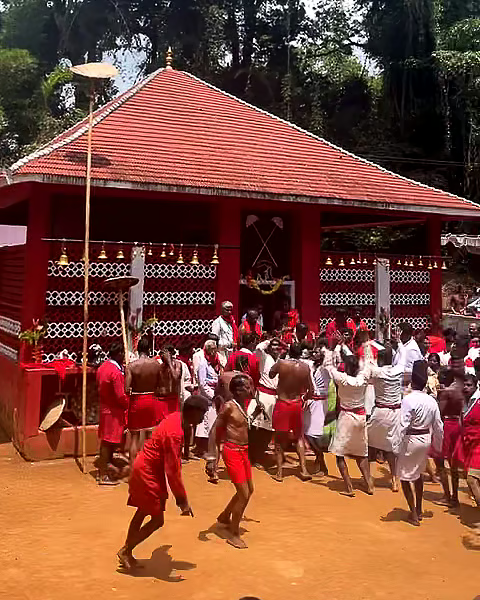
Every year, during a two-day festival, members of the Kembatti community gather at the main temple of Pannangalatamme, which is near Kakkabe, a large village in Kodagu. The men dress in traditional wraparound tunics called kuppyas, often coloured red or white. There are also temples dedicated to Pannangalatamme in Beppunaad Armeri and a few other locations.
Devotees at the main shrine in Kakkabe Kodagu district.
The kuppya is a long coat worn by the Kodavas and other natives of Kodagu. It is secured at the waist by a sash called a chele. In the past, the kuppya and chele came in various colours. These days, the kuppya is often black or white, and the chele is gold-embroidered and usually has a silver-covered dagger called the pichekaththi tucked into it.
The Kembattis were also village musicians, playing the vaalaga, a double-reed wind instrument similar to the oboe, the shehnai, and the nadaswara, which lent its name to the popular folk music of the region.
The Kembattis also blew long brass horns called kombu and played with thaala cymbals. They were often accompanied by drummers called Medas, who otherwise worked with cane, making baskets and mats. Their large drums were of two types: pare and dhol. This motley band of musicians performed at Kodagu weddings, funerals, and temple festivals.
It is difficult to trace the historical timeline of these traditions and temples, which are rooted more in folklore than classical literature. The Kembatti community and the Igguthappa temple are referenced in nineteenth-century texts of the Haleri Rajas, who ruled Kodagu.
The legend of Igguthappa, Pannangalatamme, and their brothers is old and appears probably for the first time in print in the 1870 Gazetteer of Coorg.
In some villages such as Chembebelloor and Bilugunda, the Kodavas, the Kembattis, and others celebrate their annual village festival through various performances in groups, either in disguise or as musicians.
Author Dr Bodukuttada Radhika Kuttappa, who belongs to the community, notes that there are currently 51 Kembatti clan names. On the other hand, Dr M G Nagaraj claims in his 2017 book Kodagina Kembatti Samskriti that there are 97 Kembatti clans in existence. While Dr Radhika listed unique names, Dr Nagaraj counted unrelated clans, sharing the same name as separate entries for different villages.
source: http://www.deccanherald.com / Deccan Herald / Home> India> Karnataka / by Mookonda Kushalappa / August 07th, 2025
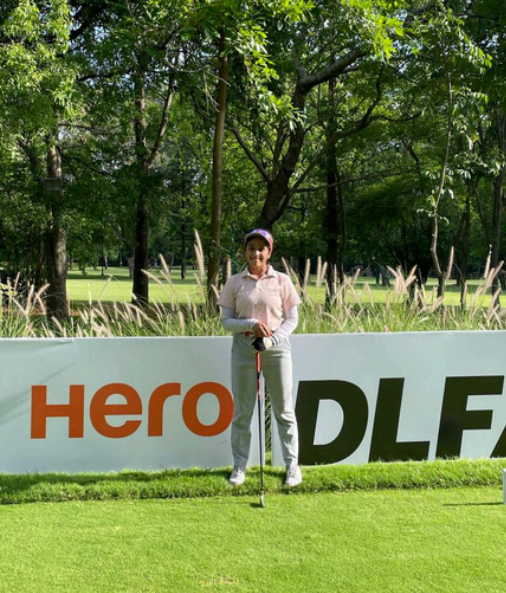
At just 13 years of age, Rianca Thimmaiah, a Class 8 student of BGS International Residential School (BGSIRS), Bengaluru, has emerged as one of Karnataka’s brightest young golfing talents. With consistent performances across regional and national tournaments, she has quickly risen through the ranks to establish herself as a name to watch in Indian junior golf.
Rianca began her golfing journey in Class 1 at the BGSIRS Golf Academy and has since trained under the guidance of professional golfer Trishul Chinnappa and school coach Revanna, with fitness support from national athlete Madhan Kumar. Her dedication has earned her recognition at the Indian Golf Union (IGU) National Circuit, where she now represents Karnataka.
In 2024, Rianca secured several notable victories, including the Mercara Downs Golf Club (Coorg) title in Category C, and a remarkable performance at the Bangalore Golf Club, where she recorded her career-best score of 68 (+1). She capped the year by winning in Category B at Clover Greens, Bangalore. Her strong showing in the IGU Nationals included a 4th place finish at the Karnataka Golf Association, Bengaluru, her best result yet on the National Tour.
Her winning streak continued into 2025 when she clinched the South Zone Tour Girls Category B title at the Bangalore Golf Club.
Apart from golf, Rianca is a well-rounded achiever excelling in academics, athletics, swimming, and National Cadet Corps (NCC) drills. She is also an avid reader and sports enthusiast, drawing inspiration from golf champion Nelly Korda and football star Cristiano Ronaldo.
From winning local tournaments in Coorg and Mysuru to competing on the global stage at the US Kids Indian Championship in Delhi, where she finished in the top four among players from eight countries, Rianca’s journey reflects discipline, perseverance, and a growing mastery of the sport.
With her recent successes and steady progress, Rianca Thimmaiah is positioning herself as a rising star in Indian golf, with the potential to make her mark internationally in the coming years.
source: http://www.clnews.in / CoffeeLand News / Home> Articles> Sports / by CLN Newsdesk / September 02nd, 2025
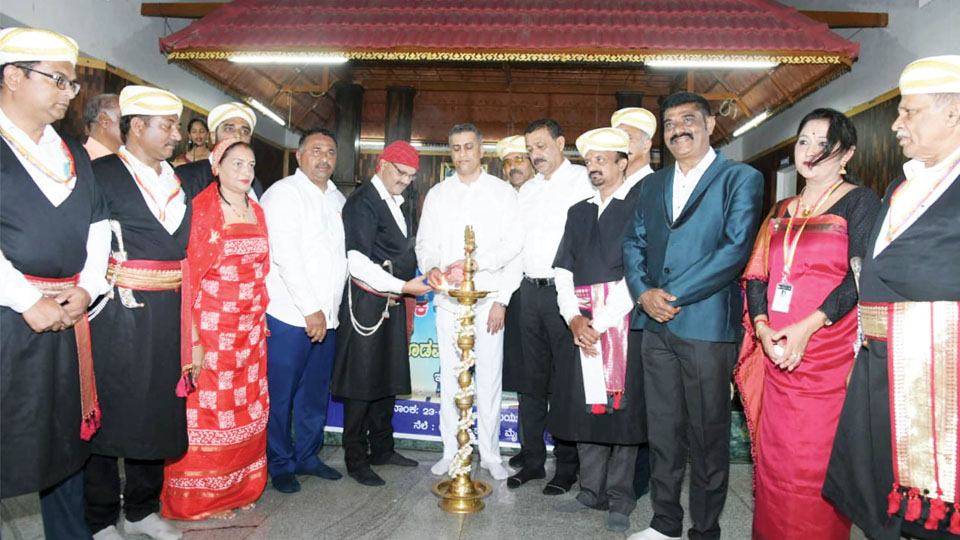
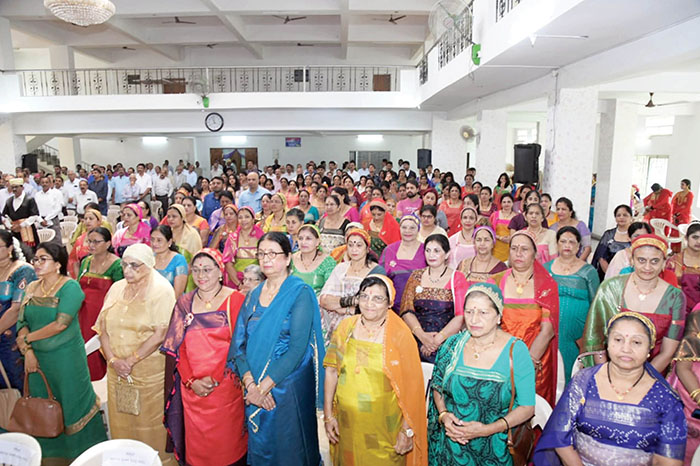
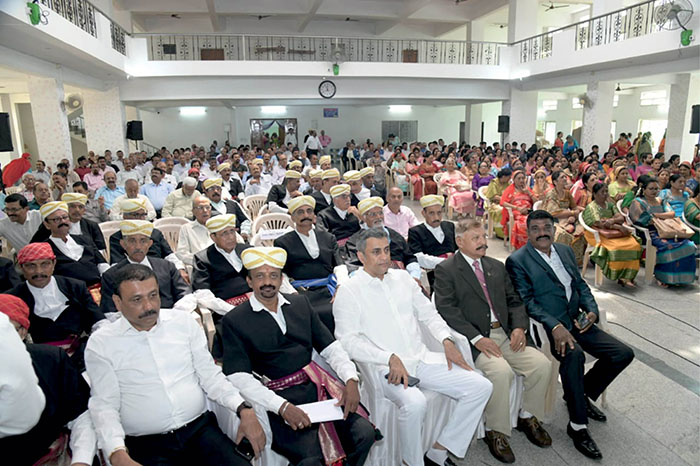
The day-long ‘Kodavaamera Aara Bera,’ a grand celebration of Kodava Heritage, Tradition, Music and Unity (Kodava Cultural Namme), organised by Karnataka Kodava Sahitya Academy in collaboration with Kodava Samaja, Mysuru and Department of Kannada and Culture, began at Kodava Samaja premises in Vijayanagar here this morning.
Virajpet MLA Ajjikuttira S. Ponnanna inaugurated the event by lighting the lamp along with Kodava Sahitya Academy President Ajjinikanda C. Mahesh Nachaiah.
Speaking on the occasion, Ponnanna said that this festival aims at projecting the rich Kodava culture, language and tradition.
Observing that there are many Kodavas in Mysuru, he stressed on the need for conserving the rich traditions and practices of Kodavas. The Kodava community members, who have settled at far off places for pursuing their career, should not forget their homeland’s culture and traditions.
Pointing out that a higher grant was provided for Madikeri Dasara last year, he said that this year too the celebrations would be on a grand scale in Madikeri and Gonikoppa with Government support.
The event features vibrant performances from folk tunes to traditional dance and drama, showcasing the spirit and essence of Kodava culture.
Kodagu District Guarantee Implementation Committee President Theethira Dharmaja Uthappa, Mysuru Kodava Samaja President Ponjanda A. Ganapathy, Event Convenor Kambeyanda Deena Bojanna, Co-convenors Putharira Pappu Thimmaya, Kondijammana M. Balakrishna and Napanda C. Ganesh, Kodava Sahitya Academy members Mollekuttanda Dinu Bojappa, Panikuttira K. Kuttappa, Ponnira U. Gagan, Kudiyara Kaverappa, Nayandira R. Shivaji, Cheppudira S. Uthappa, Nayakanda Baby Chinnappa, Chotteyanda A. Sanju Kaverappa and a host of Mysuru Kodava Samaja members were present.
MLA on Dharmasthala row
Speaking to media persons on Dharmasthala row on the sidelines of the Kodava event, MLA A.S. Ponnanna, who is also the Legal Advisor to Chief Minister Siddaramaiah, said that the Government is for a transparent investigation into Dharmasthala mass burial case and all those found guilty will be punished.
Commenting on the arrest of the ‘mask man’, the complainant in Dharmasthala mass burial case, Ponnanna said that the Government ordered investigation into the row in order to maintain the sanctity of the holy place.
Stating that it is not correct to say that no investigation should be made on allegations of mass burials at Dharmasthala, he said that SIT has arrested the complainant, who had made a statement before a Judge alleging that a mass burial of unidentified bodies had taken place in the surroundings of Dharmasthala.
Maintaining that the SIT has been doing its job in accordance with the law, he said that it has come to be known that the complainant himself is guilty of making false claims, for which he has been arrested this morning.
Wondering why the Opposition BJP is raising unnecessary hues and cries over the Dharmasthala issue, he questioned the propriety of the BJP taking out a march to Dharmasthala, which is nothing but politics.
The MLA further said it is left to the Police whether to take Sujatha Bhat, who had made allegations regarding Ananya Bhat missing case, into custody.
source: http://www.starofmysore.com / Star of Mysore / Home> News / August 23rd, 2025
Experience the rich flavors of Coorg at The Westin Pune Koregaon Park from September 12-21. Join us for a 10-day celebration of authentic Kodava cuisine.
This September, embark on an exquisite culinary sojourn as The Westin Pune Koregaon Park brings the authentic flavors of Coorg to your table. From September 12 to 21, 2025, The Market will transform into a celebration of Kodava cuisine, offering a 10-day showcase of recipes and traditions that are deeply rooted in the region’s culture.
Curated by Chef Priya Aiyappa, a proud Coorg native, the festival promises an authentic dining experience, with dishes prepared using time-honoured techniques and locally inspired ingredients. On the menu are signature delicacies such as the legendary Pandi Curry, paired with pillowy Kadambuttu (steamed rice dumplings), alongside Paputtu (soft rice and coconut cakes), and Noolputtu (delicate rice noodles). Seasonal specialties like the rich Kakkada Nyend Curry—crafted with prized monsoon mud crabs—and the earthy Baimbale Curry made from tender bamboo shoots, bring the lush terrain of Coorg directly to the plate. For a sweet finish, the humble yet comforting Thambuttu, a banana-based dessert, completes the experience.
“Coorg food is a reflection of its land—simple, bold, and deeply connected to tradition,” says Chef Priya. “Through this festival, I want to bring the warmth of Kodava hospitality and the true flavours of my home to Pune.”
With its inviting ambiance and vibrant setting, The Market at The Westin Pune Koregaon Park provides the perfect canvas for this unique celebration. Whether you’re a passionate foodie or simply curious to explore the rich culinary heritage of Karnataka’s Western Ghats, the festival offers an unmissable opportunity to savour one of India’s most distinctive regional cuisines.
When: September 12 – 21, 2025| Lunch, Dinner & Brunch Where: The Market, The Westin Pune Koregaon Park Cost: 2399++ onwards Contact: +91 70662 00300
source: http://www.hospibuz.com / Hospibuz.com / Home> Hotel Listicles> Listicles / by Hospibuz / September 12th, 2025
From hand-picking cherries to experimenting with processing methods, Kodagu’s coffee growers are embracing change, writes Dhanyata M Poovaiah.
Once a paddy-growing area, Kodagu took to large-scale coffee cultivation during the British era. Today, it is India’s largest coffee-producing district.
Every district in the state has a speciality and when it comes to Kodagu, it is coffee. While Karnataka accounts for around 71% of India’s total coffee production, Kodagu alone contributes around half of the state’s total output, or roughly 37% of the country’s total coffee yield.
Originally, paddy was the region’s main crop. During the 19th century, the British started large-scale coffee plantations, considering the region’s suitable climatic and soil conditions for the crop. Today, Kodagu is India’s largest coffee-producing district.
Robusta and Arabica are the two main varieties of coffee grown in Kodagu. Initially, Arabica was the most widely grown variant of coffee. “Situated within a multi-storeyed coffee agroforestry system, Kodagu nurtures the GI-tagged Coorg Arabica Coffee, celebrated for its pleasant aroma, balanced flavour, mild acidity, strong body, and subtle floral notes,” says Pradeepa Babu, Deputy Director (Research), at the Coffee Board of India.
However, over time, planters gradually switched over to the heat- and pest-resistant Robusta. “Indian Robusta gets the highest premium in the international market, preferred for its good blending quality,” Pradeepa adds. This variety has a longer lifespan and is easier to maintain. Today, 80% of the coffee produced here is Robusta.
The Robusta plants are taller and have bigger leaves and rounder beans, and provide better yield. The beans also offer a stronger and bitter taste profile. Arabica, on the other hand, has elongated beans and is suitable in higher altitudes and colder climates.
Commercially available coffees are often a blend of Robusta and Arabica. The South Indian filter coffee contains a touch of chicory as well.
“Kodagu’s coffee has good markets in Europe, West Asia, USA and Australia, with Italy being the top importer,” says Vishwanath Keshavamurthy, CEO of Biota Coorg Farmer Producer Company Limited.
While Robusta and Arabica dominate the coffee scene here, two more varieties are gaining ground in the district. Liberica, a larger plant, is grown in smaller quantities, and Excelsa (locally known as Mara Kaapi) is also being introduced.
Shade-grown plantation
A unique feature of Kodagu coffee is the shade-grown method. “In Kodagu, coffee is grown in shade, wherein coffee plants are surrounded by taller trees and lush vegetation. The slow maturation process of coffee cherries here results in more mucilage, enhancing their flavour and the aroma,” says Naren Kuttaiah, director of Biota Coorg Farmer Producer Company Limited and the proprietor of Kallucoppa estate. Mucilage is a sticky, sugary, and pectin-rich layer found in the coffee cherry between the outer skin and the parchment layer.
“In other major coffee-growing countries such as Brazil and Vietnam, the crop is mainly grown in open plantations,” he adds.
Additionally, the coffee cycle in Kodagu begins with blossom showers in February and mid-March. The right amount of rainfall and sunshine is crucial for the healthy blossoming of coffee flowers and the subsequent development of the beans. If rainfall is insufficient, irrigation is carried out after 20 to 22 days. This is followed by fertiliser application (pre, mid, post monsoon application), pruning, shade lopping, weeding, desuckering and disease control.
Post-harvest cycle
Most commonly, the coffee cherries are hand-picked and dried directly in the sun for nine to ten days. However, in the honey method of drying, ripened red cherries are picked, depulped and then dried to accentuate the flavour. In the washed process, the beans are fermented, washed and then dried. Nutty, fruity, floral, citrusy flavours can be achieved depending on the process of fermentation.
“To pick only the ripened cherries, we go through six cycles of picking. This ensures a uniform taste compared to when a mix of green and red cherries is processed. Right processing can even control the acidity, bitterness and flavour of the coffee,” says Rishwin Devaya, of the Riverside Estate in Kodagu. He grows a mix of Robusta and Arabica varieties and has also recently been experimenting with intercropping Robusta and Arabica.
Single-origin coffee
Today, there is a growing demand for single-origin coffee, where the beans come from one specific source, such as a single farm or region.
“This is because the local climate, soil, surrounding vegetation, foliage, and even the fertiliser or manure used, all bear an impact on the flavour profile of the coffee bean. The post-harvest process is carried out in a controlled manner to achieve desired characteristics,” says Sandalkad Estate’s Shamveel Nizam, who runs a specialty café in Kodagu.
Specialty coffee should score over 80 out of 100 on 10 parameters, such as aroma, flavour, acidity, aftertaste, body, balance and uniformity. This is tested by the Coffee Board of India and is increasingly sought after.
“The higher the score, the higher the price. Our specialty coffee is sold at Rs 25,000 per kg in West Asia. We also offer customisation, as per the client’s preference,” says Shamveel.
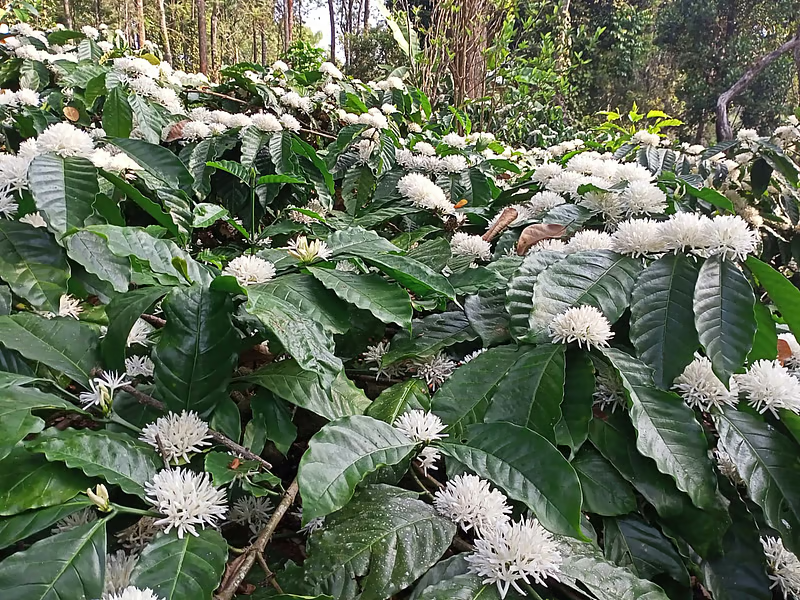
A coffee plant blossomed with flowers
Cupping is another standardised method to evaluate coffee. Under this, professional cuppers smell and taste coffee to assess its body (mouthfeel), sweetness, acidity and flavour notes. The practice is used by roasters and importers to assess new coffee beans.
New trends
In recent years, young planters have been driving innovation. “Traditionally, coffee planters only sold dried cherries. To maximise returns, we should handle the post-harvest processes as much as possible,” says Rishwin, who does end-to-end processing. Coffee workshops, seminars and courses are crucial to take the game to the next level, he adds.
The Coffee Board is also supporting coffee production through involvement in replantation, water management, quality improvements in drying yards and warehouses. Organic/eco-certification is encouraged for estates producing organic coffee, helping them achieve higher returns. In addition, an Integrated Coffee Development Project is being implemented to support the overall growth of the coffee industry.
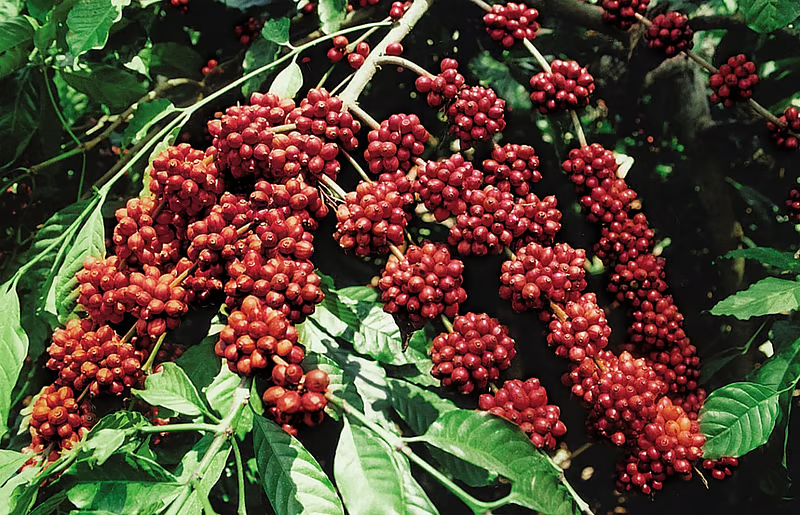
Coffee cherries.
“Specialty coffees with local narratives, wellness-oriented blends, consumer engagement, convenience coffee formats such as drip coffee pouches, home-brewing tools and marketing through e-commerce platforms are the new trends in coffee marketing,” says Pradeepa.
From misty plantations to global cafés, Kodagu’s coffee legacy continues to brew magic.
source: http://www.deccanherald.com / Deccan Herald / Home> India> Karnataka / by Dhanyata M Poovaiah / September 11th, 2025
Kodagu’s Aida Thimmaiah, a resident of Bengaluru, finished third in Girls 11 category at US Kids Golf World Championship – 2025 organised by US Kids Golf Foundation, which concluded at Pinehurst Village, North Carolina, on Aug. 2.
Competing in the Girls Age 11 category, Aida’s journey was nothing short of extraordinary.
After a challenging start on Day 1 with a score of +3, she stood in 27th position. Undeterred by the pressure, Aida staged a remarkable comeback on Day 2, shooting -4 and climbing an incredible 21 places to finish the day in 6th place.
On the final day, with grit and determination, Aida delivered her best round yet — a flawless -6, the lowest score of the day, propelling her into 3rd place overall among the world’s best young golfers.
Speaking to Star of Mysore, Aida Thimmaiah, said, “It is an amazing and proud moment to represent India on a world stage. I feel very happy to have finished third in the world championship. I am very thankful to my coach Rahul Ganapathy at Golf Academy in Karnataka Golf Association (KGA), Bengaluru, my parents for their constant support and also my sponsors.”
The US Kids World Championship is one of the most competitive platforms for junior golfers, bringing together the most talented young athletes from around the world.
Aida Thimmaiah is the daughter of Ballachanda Den Thimmaiah and Sanjana Thimmaiah couple. Den is a native of Virajpet in Kodagu, now settled in Bengaluru. While Den Thimmaiah is into land development, his wife is a wedding planner.
source: http://www.starofmysore.com / Star of Mysore / Home> Sports / August 04th, 2025
Team Ibbani from Heggadihalli, Bengaluru Rural, defeated Team Appu Boys from Marasanahalli panchayat, Chikkaballapur Rural, to emerge as regional champions.
Team Black Panthers from Maragodu, Kodagu, aced the women’s throwball competition at Isha Gramotsavam. Credit: Special arrangement
Bengaluru:
Team Ibbani won the men’s volleyball and Team Black Panthers the women’s throwball events at the Karnataka regional finals of rural sports festival Isha Gramotsavam on Sunday.
Team Ibbani from Heggadihalli, Bengaluru Rural, defeated Team Appu Boys from Marasanahalli panchayat, Chikkaballapur Rural, to emerge as regional champions.
In women’s throwball, Team Black Panthers from Maragodu, Kodagu, overcame Team Shasthara Padumale (Kudla Strikers), from Badagannuru, Dakshina Kannada, to clinch the regional title.
Sadhguru Jaggi Vasudev, former Indian cricketer Robin Uthappa and South Indian actress Srinidhi Shetty attended the event held at Sadhguru Sannidhi in Chikkaballapur.
The event featured men’s volleyball and women’s throwball competitions.
Eighteen men’s volleyball teams from nine districts and 16 women’s throwball teams from eight districts competed for their place in the grand finale to be held at Adiyogi, Isha Yoga Center, Coimbatore.
Launched by Sadhguru in 2004, Isha Gramotsavam was envisioned to rekindle the spirit of rural India. The festival helps rural communities break free from addictions, rise above caste, creed and religious divisions, and actively supports women’s participation in community life.
Unlike professional tournaments, Gramotsavam provides rural citizens with a platform to play, compete, and celebrate the unifying power of sports and culture, according to a press release.
source: http://www.deccanherald.com / Deccan Herald / Home> India> Karnataka / by DHNS / September 09th, 2025
WELCOME. If you like what you see "SUBSCRIBE via EMAIL" to receive FREE regular UPDATES.
Read More »