Tag Archives: Kodava

True-blue Kodava : Saluting The Cariappas

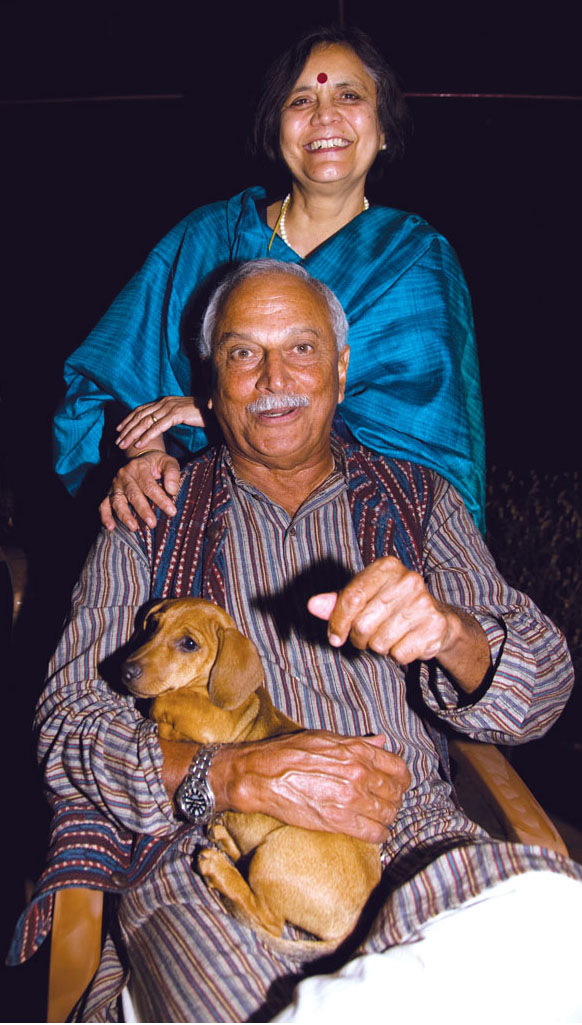
An invitation from Air Marshall K C Cariappa to join him and his wife Meena for dinner at his home was the highlight of my trip to Coorg.

There is something about the Air Force  men that arouse feelings of awe, and this strapping man was even more special. Not only because he was the son of Field Marshall K M Cariappa, but a hero who was once captured as a prisoner of war (Indo-Pak, Sept ’65) My colleagues and I left Mahindra Resort, where we were staying, in good time to be able to reach Roshanara, the ancestral home of the Cariappas in Madikeri. The appointed hour was “10 minutes past eight”.

Driving in the daytime in the Madekeri hills is tricky enough with endless stretches of narrow tree-lined roads, so you can imagine how it was at night. The dark seemed darker and we got quite lost on the hilly roads. Trying to find someone on the lonely path, to ask for directions, was a task in vain. , , , .

We were feeling pretty rotten because you just don’t keep people like the Cariappas waiting. Punctuality is the norm with them.

When we did reach our destination, gracious as he is, the Air Marshall was more concerned about our predicament rather than the fact that we messed up with his idea of  “an early dinner”. Brushing aside our apologies, he immediately put us at ease by introducing himself simply as Nanda and insisting we address him so. “Let´s get the drinks out of the way,” he said, “who is drinking, what?” he enquired, rubbing his hands.

The drinks order taken and quickly executed, he returned with a tray in hand and was leading us out the back door and into the back yard where chairs and tables were set, along with a two-seater metal swing under a fabric canopy, painted by his grandchildren.

“So! What brings you to Coorg, my Coorg?” he asked, eyes twinkling. I told him about the magazine and the popular UpperCrust Destination section that our readers look forward to, where we now planned to feature Coorg. But I didn’t tell him just then that I was hoping to include them too and that in my handbag I had a ´verrry´ serious camera.

Instead, I asked him when did he retire and how does it feel. “Oh, it’s been marvellous,” he said. “I retired on Jan 31, 1996 and drove down straight from Jodhpur, where I had given up charge. I reached Coorg on Feb 6 and have been here ever since. I hate leaving Coorg and do so only when I really have to. It’s strange, but just before you retire, you dread it, and now it’s been 15 years and I don’t know where they have gone!”

By and by as one conversation led to another, each of us felt more and more comfortable with the warmth that Meena and Nanda exuded. The night was chilly and we were sitting out in the open, under the stars which were shinning brilliantly in the clear skies. Pointing towards the sloping land and in the direction of the dark shadows, Nanda nonchalantly informed us that there could be wild animals right there. Brrr…

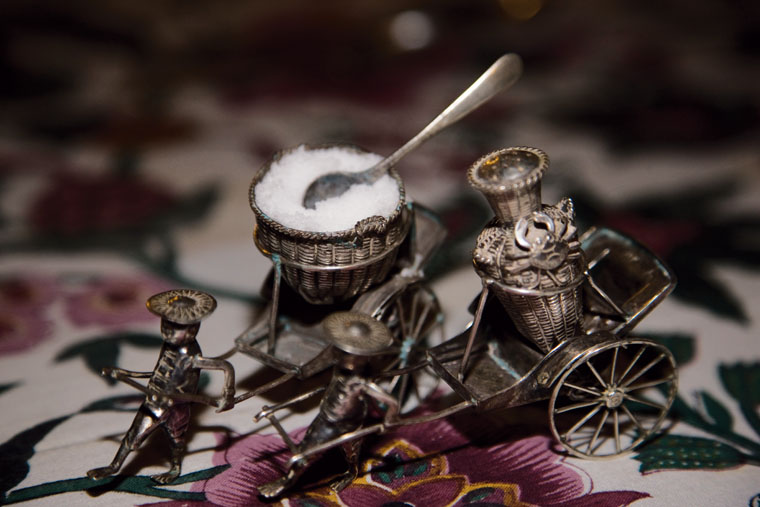
Roshanara is a house with character. Not a showcase kind of a house, but one which tells a tale. Where each artifact has a story to tell, a reason to be there.
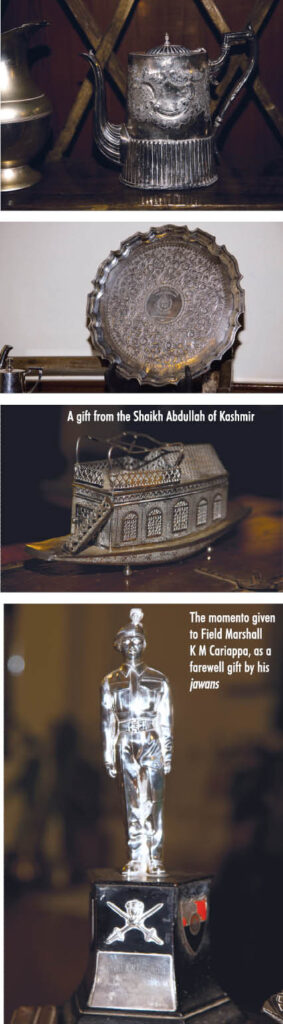
I don’t normally ask for a tour of a house I am visiting, that too for the first time, but this one I was curious about.

“Chalo,” said Nanda Cariappa, when I asked if I could prowl around. And actually accompanied me. The anteroom was so rustic. Sports jackets and long coats, mufflers hanging on hooks, walking shoes and boots in another corner, hats, one with a feather stuck to it an a stand… not the kind of things we city people often see in homes. The large living room with a fire place “that works brilliantly and has never ever given us any problems” led to another sunken sitting room, painted a soft blue. The chandeliers, with delicate glass work were obviously antique, but then the house itself qualifies as heritage being 160-years old. “It’s been in our family since 1944. We have some nice drawings and water colours done by the different residents, it is a remarkable house. When Father bought it, it came with some 50-odd acres, but now after bequeathing some to my sister and other people, also the municipality, it´s down to 33, but it´s much more than enough,” said Nanda.
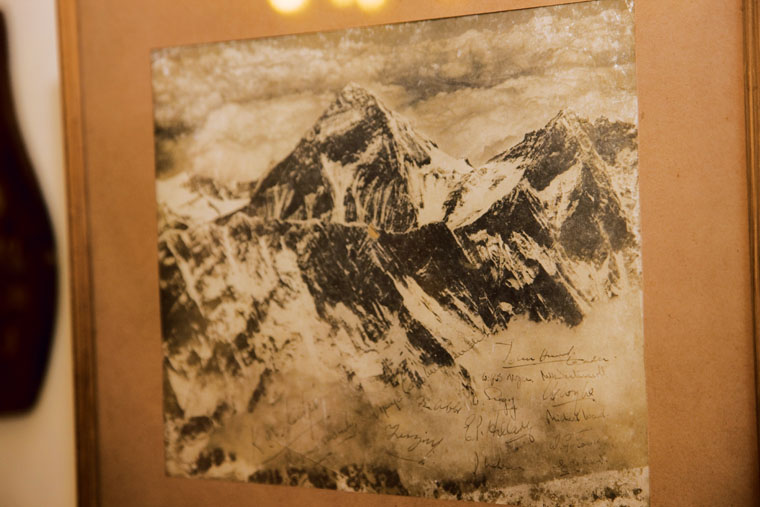
When I asked to be shown Field Marshall Cariappa’s favourite room I saw it was a modest room, opening to the garden and had many picture frames in it.

Again, each with a story. But one was extra special. An original black and white photograph of the Himalayan range with Mount Everest Massif with signatures of members of the first expedition, including those of Edward Hillary, Tenzing Norway and Capt John Hunt. It was then and with some trepidation that I checked if I could click some photographs. Nanda Cariappa looked at me, paused for just a moment and then said a quiet, ‘yes’ and I got to work as inconspicuously as possible. I respect people like Nanda who though fiercely private will not make a fuss about it. It was in that instant that I was reminded of another photo shoot, the very first cover story of this magazine, in 1999.

Co-incidentally it was  with Air Marshall Idris Latif and Begum Bilkis Latif in their house in Hyderabad. Publicity shy as they were too, they could not refuse a request from Behram and I. Latif´s only plea was could we eat without interruption the Hyderabadi food which his wife had lovingly cooked. And could I shoot pictures of them and their guests, after we had eaten lunch?

Keeping that memory in mind, I put my camera away after taking just two pictures at the dining table. Some things we have to save in the memory chip of our mind’s eye.
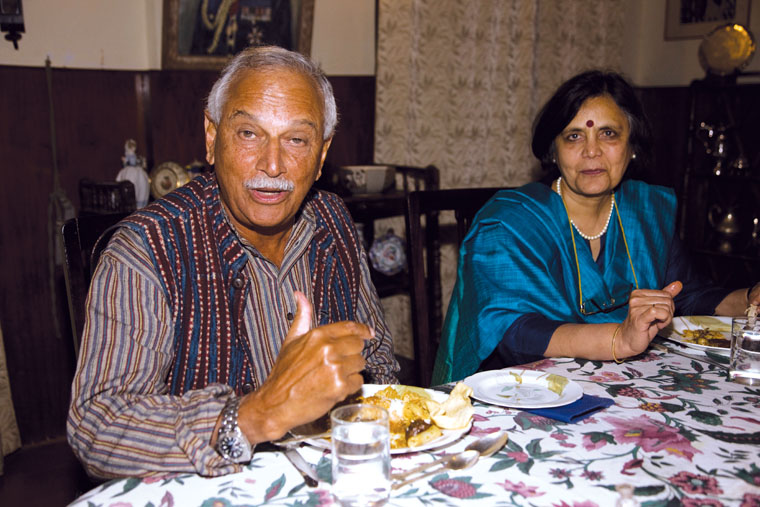
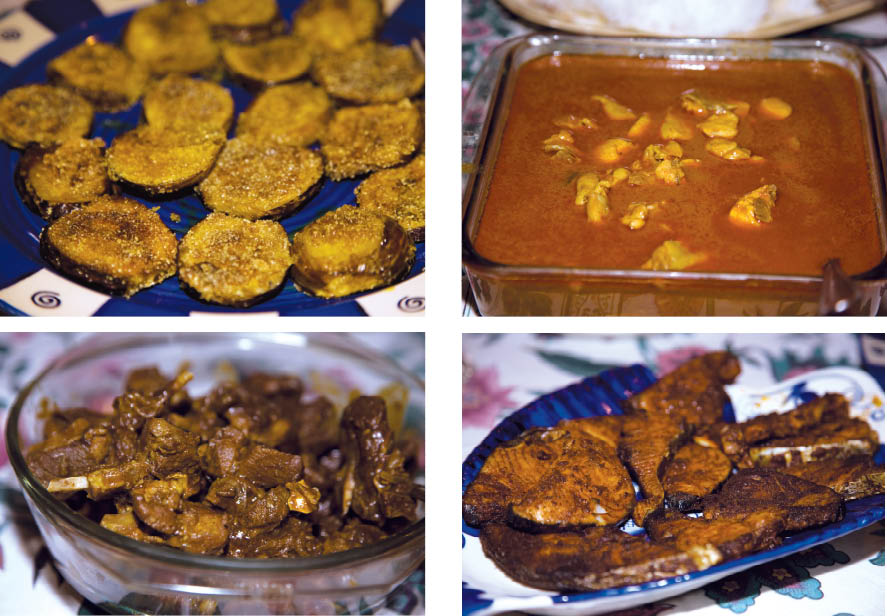
Dinner was typical Coorg fare. Meena is a good cook. Used to entertaining, she had set a good table and at such short notice. But she was apologetic. And invited us to come again when she would do better. Naw…
After dinner, with GJ (Gulab Jamun) nestling in the Air Marshall´s arms and Tojo at his feet, we again sat talking and discussing everything under the sun (moon, actually), like old friends. Life in Coorg, life after retirement, food, wine, music, travel, religions of the world.

Both Meena and Nanda love the quiet life in Coorg. They are happy to spend time by themselves and few close friends. Nanda enjoys his golf, and sometimes goes angling. He used to ride, but has now got himself a mountain bike, which he loves to ride. He likes wearing the traditional Coorg kupiya when he goes for weddings.

At home, at night they both love to listen to Indian Classical Music. Nanda writes a fair amount for journals on subjects like Wild Life, Environment and International Relations. He had in fact spent four months in the U.S. in 2001 writing a paper on ‘Confidence Building Measures’, between India and Pakistan, a collaborative exercise with a fellow Air Marshall from Pakistan. The paper, due to the many unfortunate events (read terror activities) that took place around and since that time, got shelved. A pity.
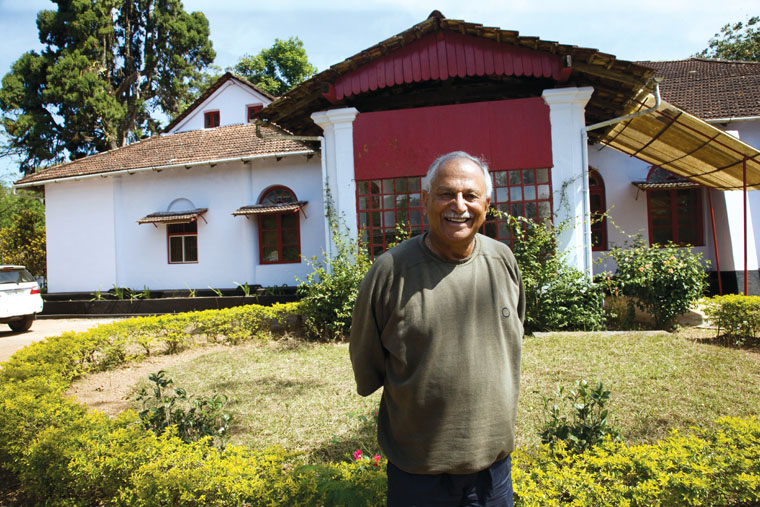
For the present, Nanda Cariappa finds solace in trekking. Which he says he discovered only after retiring. Every year he goes into the Himalayas for two weeks of intensive walking and climbing. The next one in August is already planned right down to the last detail.

Lastly, I learned that Nanda is pretty fascinated by two other religions, Islam and Sikhism. He reads the Quran in the ´Roman English´ version  and its translation in English, going to the local mosque for clarifications from the maulvi, if he does not understand something.

He even recommended a book he was currently reading; Foundation of Islam, The Making of a World Faith by Benjamin Walker. He is so influenced by Islam, his speech is peppered by Insha’allah and Masha’allah.

Come to think of it, when we were leaving, he had said, Khuda Hafiz.

Well, Khuda Hafiz dear Nanda, phir milenge, Insha’allah.

source: http://www.uppercrustindia.com / Upper Crust / Home> True Blood Kodava / July-Sept 2015
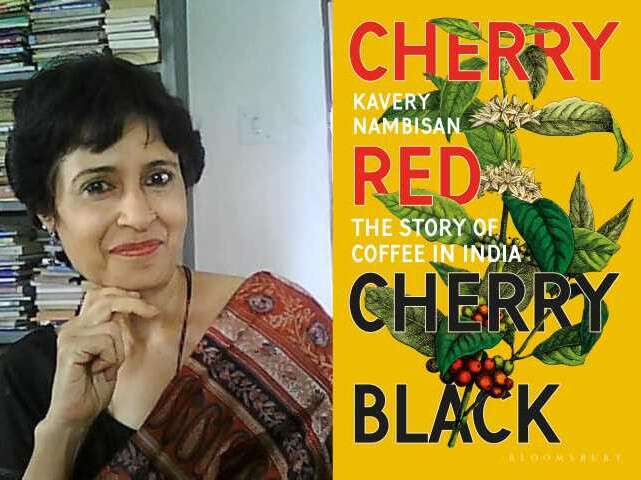
Spilling The Beans On Coffee In India

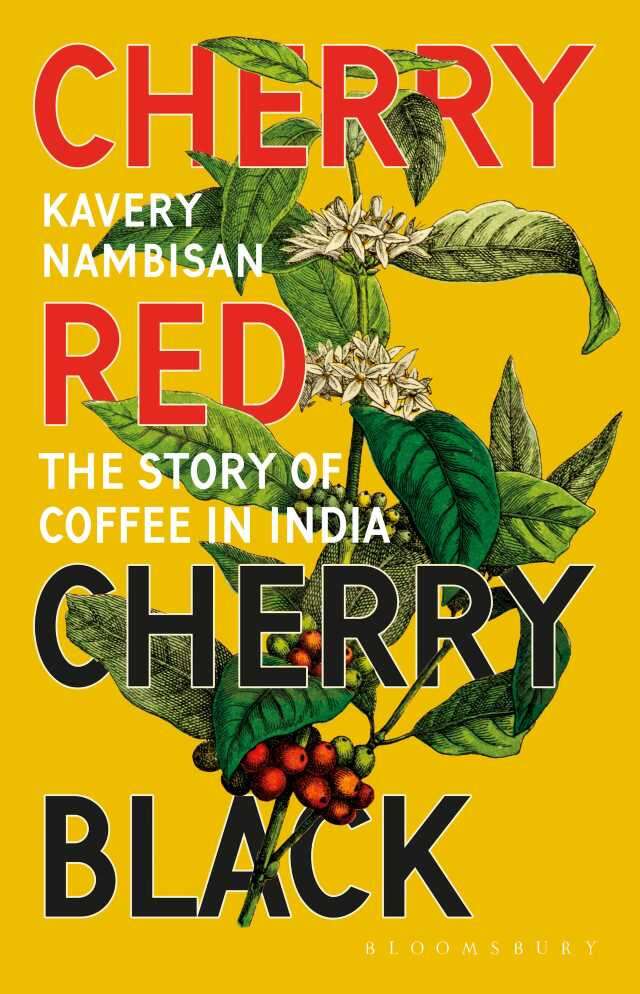
Kavery Nambisan’s new book Cherry Red, Cherry Black details the fascinating story of coffee in India 


Kavery Nambisan was born on a coffee estate, grew up among the “twisted branches and dark green leaves of the coffee bushes”; her parents joked that she was among those children who had been “plucked off the coffee bushes.”

It is therefore fitting that the surgeon’s latest book Cherry Red, Cherry Black (Bloomsbury India) is about the history of coffee in India.

Written with anecdotes woven into chronology, this comprehensive look at the coffee industry reveals intriguing nuggets – the origins of the coffee terms ‘Robusta’ and ‘Arabica’; the story of how Southern India became coffee country (it’s more complex than the Baba Budan tale); how coffee made sugar popular… Kavery explores the world of coffee far beyond its cultivation via the journeys of rulers and invaders and the ways of governance and tribute to its current status as one of the most valuable legally-traded commodities in the world. With the pride of a true Kodava, she writes of how coffee cultivation in Coorg (now Kodagu) changed the social, ecological and economic nature of the land and its people, and of the planters clubs that still exist.

A large part of the book details the story of how Tata Coffee, with whom the author has been associated in her medical avatar, came to be, but its scope goes far beyond company history and personalities to showcase coffee’s ability to be the great leveller available to every layer of society, and details the journey of the bean from plant to cup. Readers will be fascinated to know that the coffee served at Starbucks is made with beans from Kodagu, Hassan and Chikmagalur and cured in Kushalnagar. 


Excerpts from an interview

You speak of yourself as “almost a child plucked off a coffee plant”. How was the experience of going back with research to discover what is such an integral part of your childhood? How long has this book been in the making? Have there been any surprising learnings?

Yes, coffee has been integral to my being, but I did not consciously think about it until recently when I started to write this book.  It has been a pleasure to discover the history behind coffee, and, along with it, to learn more clearly certain aspects of local history. I started to read up sometime after the middle of 2018 and wrote in 2019 but was unable to conduct some important interviews during the period when Covid came and went. After that, everything had to be ‘fast-forward.’ 

As for surprise learnings, yes, of course. There can be no better way of learning something new than writing about it. I learned much.


You are a proud Kodava and now live and work again in Kodagu. What aspects of life there do you enjoy most, both connected to coffee and otherwise?

I have worked as a surgeon in Kodagu for over 10 years, off and on. My husband and I built a house in a village here and it is surrounded by coffee estates that do not belong to us – so pleasure without responsibility! The tall shade trees that surround us are a blessing – with so much life going on in the branches and the undergrowth. As a doctor, I have a great rapport and a serious commitment to my neighbours, many of them being daily wage earners in the estates. I think we live a good life.


What does your own coffee cache look like? What would we find in there?

You would find a cache of roasted coffee beans (a blend of Arabica and Robusta). I roast the beans every few weeks or so and use about 10% of chicory to enhance its strength.


You’ve detailed a bewildering number of ways to prepare a cup of good coffee. Which is your favourite?

I use three methods, depending on my mood. Filter coffee (in the afternoons); the Moka pot or a rustic brew (adding coffee powder to just boiled water and letting it steep for two to three minutes) in the mornings. Always with a little milk and jaggery.      


India Coffee House remains your coffee house of choice in Bengaluru. Tell us what you have there when you visit these days?

It’s a great place to hang around with friends. I always have coffee and, if peckish, an omelette or a cutlet. I have been frequenting this grand old place (although now in a changed location) from my medical college days. Satisfaction guaranteed. 

source: http://www.femina.in / Femina / Home> Life> Books / by Primrose Monteiro D’Souza / November 04th, 2022

City game for ‘American league’

American football could become big in the country with a tournament being planned in the next two years
 

A lot of sports, most of which a majority of the average Indians aren’t aware of, are making inroads into our society. The latest being American football, the top US sport which has at least five per cent of American population earning through the game, apart from players, coaches and staff directly involved with the game.

History has it that only four players of Indian origin have played in the National Football League (NFL), a lucrative organisation that runs the sport in the US. One of the four, Brandon Chillar, who has his roots in Punjab, was convinced the game had something to offer for the Indian masses. He felt it could become big and give the average Indian a chance to excel in it.

TEAMS’ FORMATION
The Elite Football League of India (EFLI) was launched in India in August this year and the government of India and the Sports Authority of India decided to back the game. A custom-fit stadium is ready in Pune, where the inaugural EFLI will be held within the next two years between eight teams from different states.

Having already formed four teams, the EFLI concentrated on Karnataka. Thimmaiah Madanda, a former India rugby player, with a passion for contact sport, was brought in as coach of the state team. The Kodava took his job seriously. He scouted for talent in Kodagu, Shimoga, Devanahalli and Bangalore. “I went to all these places and mostly visited government colleges and finally invited 140 players. A first shortlist of 115 went through a four-day orientation programme last week,” he said.

Thimmaiah, Sailesh Devrukhkar, the chief coach of EFLI, and Jeff Whelan, EFLI coaching co-coordinator, watched the hopefuls through drills and games before settling on the final 44 who will represent Karnataka.

DECENT SALARY
EFLI is more unique than most associations in the country. It will pay players a salary rather than a match fee as does happen with most sporting disciplines. That too, a decent sum of Rs 15,000 per player. Jeff Whelan said, “This, we are offering till we sign a deal with Ten Sports to televise the league matches. Once we get everything in order, players will earn much more than what any coach earns.”

Does the average Indian have the physique or skill to compete in such a “ruthless sport”? All three men laugh it off and Thimmaiah says, “It is nothing like what the public imagine. Played with an elongated ball, the game offers 44 players the chance of being involved in a game (including substitutions). The game accommodates all physical attributes; athletes from any sport can take to this game. It calls for power, speed and agility. It does not need special skills,” he says.

The forwards and interiors do not even touch the ball, leave alone catch it. Their job is only to defend the quarter-backs… to stop the opposition from getting to the quarter-backs,” said Thimmaiah, adding: “You have a defending team, an attacking team and a kicking team. It is not about just 11 on field. Thirty players are used in each game, with the other 14 used for substitutions. So, it involves a lot of people and does not need any one qualification or requirement to play the game.”

TALENT APLENTY
The EFLI does have some convictions that other sports administrators mostly talk about. “We know that if we search enough, we could find the right guys. The right athletes are in the villages of India,” said Jeff. “The game does not need any special skill. It combines a lot of disciplines like cricket, football, baseball, rugby,” he added.

Having watched the NFL mess it up in England when it tried to introduce the game there, the EFLI is more focused. “We are planning a league for players born and brought up in India. Unlike the NFL, we will not allow foreigners. That way, we know the cities can relate to players and will stand up for the team,” he said.

CHALLENGING CRICKET
“India, with its masses, offers an opportunity for us (EFLI) to become a top sport in the country. India is a one sport country (cricket) and we believe we stand a good chance of becoming a top sport. Because we feel we can offer more opportunities for athletes and people of India,” said Jeff.

“We plan to have eight Indian teams and will invite two from Sri Lanka, one from Bangladesh, and each team will only be allowed proper citizens to represent them. No outsiders, guests or foreign players,” he said.

“At some point of time, we hope to invite a team from Pakistan to play a series against an Indian team. Because that is the ultimate battle in this part of the globe and we are sure millions will tune in to that game and the whole world will watch,” he said.

source: http://www.BangaloreMirror.com/ Home> News> City / by R Sathish Paul / Tuesday October 04th, 2011