Drivers who want to avail this service can call Ashok and breakfast or lunch will be readied in half an hour’s time.
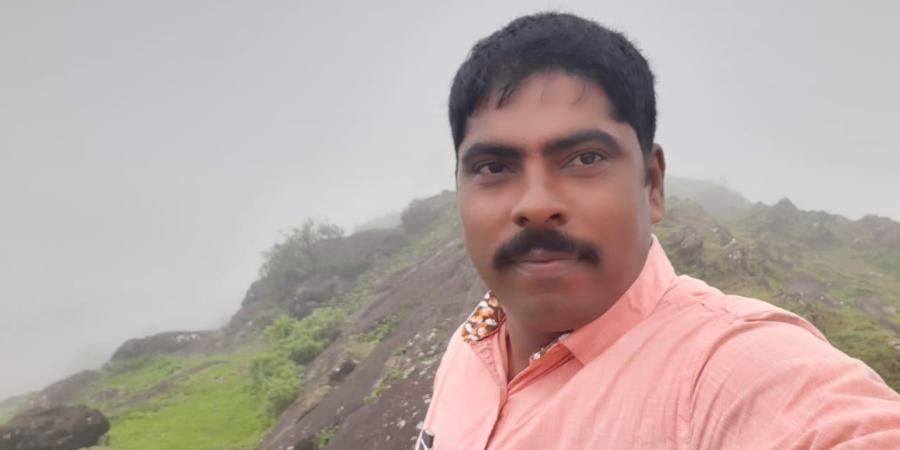
A former ambulance driver himself, Ashok (in pic) says he knows the stress they go through (Photo | Special arrangement)
Madikeri :
A resident of Kodagu has come up with a unique initiative to help ambulance drivers during the COVID-19 lockdown. Ashok BS, who hails from Madenadu village, is offering free food to ambulance drivers across Kodagu.
Ashok is a jeep driver by profession. He also owns an earth mover and often works at construction sites. From Wednesday, Ashok has started a unique initiative to help the numerous ambulance drivers who are working amidst the curfew.
“I worked as an ambulance driver for 12 years in Bengaluru. I know the stress that they have to go through. At this time of curfew, they won’t be able to eat on time as everything shuts by 10 am. I wanted to do my bit during this time of the pandemic,” shared Ashok.
Ashok has shared his phone numbers across social media platforms and has offered to provide free food (take-away) to ambulance drivers. Drivers who want to avail this service can call Ashok and breakfast or lunch will be readied in half an hour’s time. He will pack the home-cooked food and wait near Madenadu Main Road, where ambulance drivers can collect the take-away free of cost.
“I prepare simple food – dosa for breakfast and rice & rasam for lunch. If I avail fish on the day, I make a dish out of the same and pack them. On the first day, three drivers availed the facility. I would be happy if more drivers benefit from the initiative,” shared Ashok. To avail the facility, ambulance drivers can call Ashok on the mobile numbers 9902270046 and 9483069621.
source: http://www.newindianexpress.com / The New Indian Express / Home> Good News / by Prajna GR, Express News Service / April 29th, 2021
This was decided four decades ago when Harangi reservoir was built
The High Court of Karnataka has directed the State government to transfer within one month the entries in respect of 11,722.29 hectares of identified lands of C and D categories in Kodagu district to the Forest Department as was decided four decades ago to compensate forest area utilised for Harangi reservoir project.
A Division Bench comprising Justice B.V. Nagarathna and Justice J.M. Khazi issued the direction while allowing a PIL petition filed by K.A. Ravi Chengappa, President of Cauvery Sene, Madikeri, and C.C. Devaiah of Virajpet of Kodagu district.
The petitioners had pointed out that the reservoir was built during 1970s near Hudgur village in Somwarpet taluk and the government had on May 12, 1972, ordered release of 900 acres of land from the Yadavanadu forest area and 3,000 acres from the Atturu forest area to rehabilitate the persons who had lost their lands on account of the reservoir project.
Also, the government in 1972 and 1994 had directed that 18,000 acres of land from the Revenue Department should be handed over to the Forest Department to re-compensate the forest land utilised for the reservoir project, the petitioners said.
Though orders were passed in 1972 and 1994 for transferring 11,722.29 hectares of land to the Forest Department, the revenue authorities, including the Deputy Commissioner of Kodagu, till today had not transferred the records of these lands in favour of the Forest Department, the petitioners contended.
During the hearing of the petition, the government counsel told the Court that only formal handing over of lands to Forest Department was not done while clarifying that the Forest Department is at liberty to take charge of the 11,722.29 hectares of lands and the court issue such a direction.
The Bench, while referring to apex court’s judgements in T.N. Godavarman Thirupulkpad case on protection of environment and forest lands, said that the Government was required to transfer these lands to Forest Department as the 11,722.29 hectares of lands were mean to re-compensate the forest area used for the reservoir project.
source: http://www.thehindu.com / The Hindu / Home> News> States> Karnataka / Bengaluru – April 28th, 2021
Syed Hussain and Robert Rodriguez have packed the bodies of all 93 COVID victims in Kodagu and continue to work day and night without any leave since March last year.
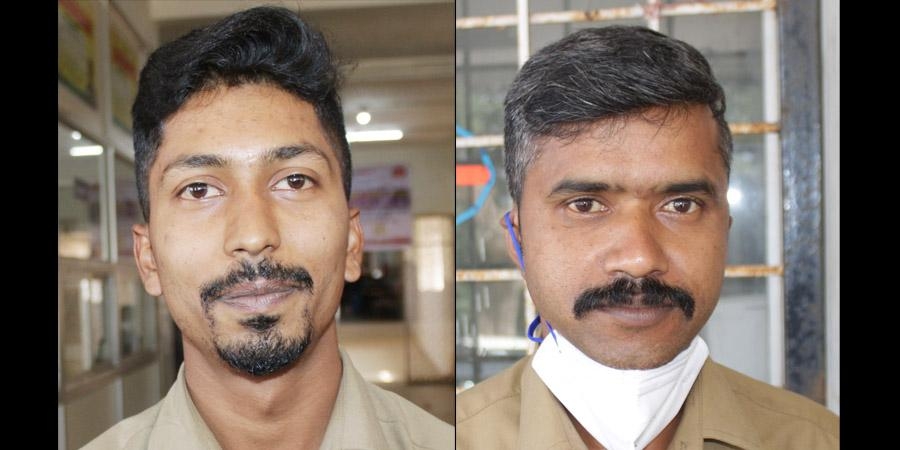
Syed Hussain and Robert Rodriguez (Photo | Express)
Madikeri :
“I had not observed Ramzan last year and I won’t be able to take part in the festivities this year too. Work occupies a major part of my life now and my job has forced me to stay away from my family and friends,” said Syed Hussain, a forensic department staffer of Madikeri District Hospital, who is involved in packing the bodies of COVID-19 victims.
Syed joined the forensic department staff in the hospital nearly four years ago and there were moments when he questioned his career choice. “There were times when we had to conduct a postmortem of fetuses and it was heart-wrenching to carry out the job. But it was my duty,” he recalled. Syed, however, stuck to his choice and today he has offered exceptional service as a frontline COVID warrior.
Syed and Robert Rodriguez (the only other staffer in the forensic department) have packed all the 93 bodies of COVID-19 victims of Kodagu and continue to work day and night without any leave since March last year. “We have stayed away from our family since last year. It’s painful not to be a part of the festivities. But we do not want to risk others’ lives. I, however, visited my family last week. It was a short visit and I went to collect a few belongings,” said Syed.
He noted how it is stressful to always work wearing PPE kits and added that all healthcare workers including D-Group employees are working under stress to ensure the safety of citizens. “We have to do away with food and sometimes even drinking water as we are always wearing PPE kits,” he explained. He added that the government has not made new appointments to the district hospital and the existing staff is working under stress. “We do not get incentives for working overtime. Yet, we cannot demand things at this time of crisis and we go about doing our job,” he said.
He spoke out against publicity-seekers on social media and said, “We are working 24/7 under stress. Yet, some people shoot videos inside the hospital and make false allegations against healthcare workers. We do not expect anything huge in return for our work. The least we can ask from the public is respect. There might be a few loopholes in the hospital. But the public cannot highlight this illogically across social media for a minute’s fame. My only request to the public of Kodagu is – please respect all the healthcare workers. We too have family. But we are working for the greater good.”
source: http://www.newindianexpress.com / The New Indian Express / Home> States> Karnataka / by Prajna G R / Express News Service / April 27th, 2021
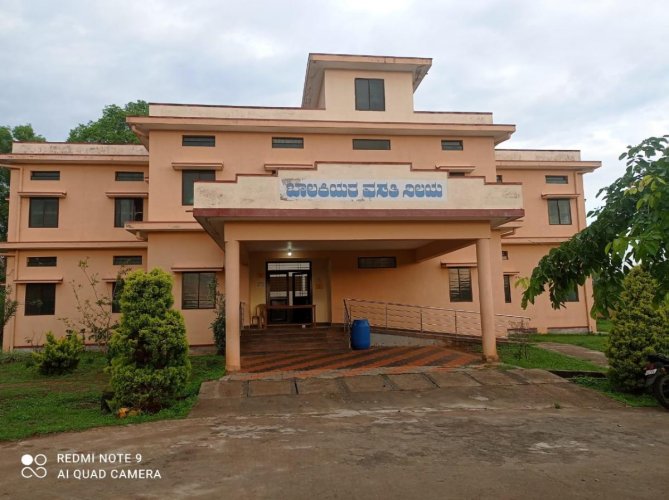
The Covid Care Centre set up at Morarji Desai Residential School in Koodige.
Deputy Commissioner Charulata Somal said that five Covid Care Centres have been opened in the district as the Covid-19 pandemic is spreading fast.
Chairing a meeting at her office on Monday, she said that nodal officers have been appointed for Covid Care Centres.
She directed the officials concerned to ensure proper food and other basic facilities for Covid-19 patients undergoing treatment at the Covid Care Centres.
Facilities of books, newspapers and indoor games should be provided. Cleanliness and hygiene should be maintained at the centres and the premises should be sanitised on a regular basis. There should be no room for any complaint, she said.
Stating that the management of containment zones is good, she felt there is a need to pay more attention to ensure adherence to guidelines.
The statistics related to the pandemic should be properly maintained and disseminated to the authority concerned, she added.
Charulata Somal also noted that posters are not displayed at several containment zones in the district and directed the officials concerned to do the needful.
Stressing on the tracking of primary contacts of Covid-19 patients, she said that the target set by the government towards the tests should be met without fail.
The deputy commissioner also sought from the nodal officials, the day-to-day information on the admission of Covid-19 patients in Covid Care Centres and the availability of vacant beds.
“Regular check-ups of people who are availing treatment at hospitals and Covid Care Centres should be carried out. The health condition of people in home isolation should be tracked regularly,” she added.
Charulata Somal also told officials to ensure the availability of medical oxygen in sufficient quantity.
The controller of drugs has been appointed as the nodal officer for the supply of medical oxygen, she added.
District Health and Family Welfare Officer Dr K Mohan said that medical students have been appointed at the Covid-19 helpline centres. The peoples queries on their health issues will be addressed through the resource persons.
There is a stock of Remdesivir and medical oxygen in the required quantities and 24 jumbo jet cylinders filled with oxygen have been provided to Somwarpet and Virajpet taluks.
Kodagu Institute of Medical Sciences (KoIMS) Director Dr Cariappa, Government Medical College Superintendent Dr Lokesh, Community Health Officer Dr Mahesh, local resident officer Dr Rupesh and Dr Anand provided necessary information during the meeting.
Zilla Panchayat CEO Bhanwar Singh Meena, Additional Deputy Commissioner Raju Mogavira and Assistant Commissioner Srinivas were present.
Covid Care Centre at Morarji Desai Residential School
In the wake of an increase in Covid-19 cases in various villages in Kushalnagar limits, an 80-bedded Covid Care Centre has been set up at Morarji Desai Residential School in Koodige.
People who are diagnosed with mild symptoms are being admitted to the Covid Care Centres. The same centre operated during the previous year as well.
After a health check-up, the inmates who are fit to be home isolated are discharged from the Covid Care Centre.
The patients are treated at the centre for 10 days. They will be admitted to the designated Covid hospital only if there is no improvement in their condition.
A total of 18 people have availed of treatment at the centre during the last three days. Around 600 people who visited the centre have been subjected to home isolation.
source: http://www.deccanherald.com / Deccan Herald / Home> State> Mangaluru / by DHNS, Madikeri / April 26th, 2021
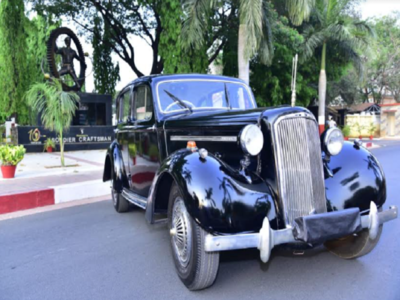
The Super Snipe was introduced in October, 1938, derived by combining the four-litre inline six-cylinder engine from the larger Humber Pullman with the chassis and body of the Humber Snipe which was normally powered by a three-litre engine
Hyderabad :
A 1941 vintage car which was once used by Gen Cariappa has become a thing to be proud of for the Military College of Electronics and Mechanical Engineering (MCEME) in Secunderabad which has completely overhauled it. The ‘Humber super snipe’ now stands out as one of the main attractions at the college.
The Super Snipe was introduced in October, 1938, derived by combining the four-litre inline six-cylinder engine from the larger Humber Pullman with the chassis and body of the Humber Snipe which was normally powered by a three-litre engine. The result was a car of enhanced performance and a top speed of 79 mph, fast for its day.
Within a year of introduction, World War II broke out in Europe but the car continued in production as a British military staff car, 4-seater, 4 x 2 , while the same chassis was used for an armoured reconnaissance vehicle and the Humber Light Reconnaissance Car.
The model with MCEME is of 1941 vintage, which was initially assigned with the number of AB-11, which was later changed to AP-10 F 4566 post its decommissioning from Military service.
The vintage car was packed by the British army and ferried to India in 1943 and ultimately assigned to ‘A’ Pl of Army HQ Transport Company.
After Independence, the car was used by the then serving General K M Cariappa, OBE who later became the Field Marshall. In 1958 the car got its marching order and was declared unserviceable and was sent to the Barracks of Equipment and Vehicle Depot in Avadi after its stock transfer inspection.
On December 29, 1964, the Vintage car was taken by 515 Army base Workshop, Bangalore which carried out extensive repairs. The car provided its services to various commandants of 515 Army Base Workshop, Bangalore and after serving for 12 years, on March 10, 1976, the car was once again declared unfit for employment in service.
But that was not the end of it. Since the car was a Vintage and Elite model, in 1977, it was brought to Secunderabad and kept in the Mechanical Engineering Department of MCEME. It remained as a show piece and young officers used to relish watching the old classic. However, the Mechanical as well as the physical condition of the car started deteriorating. Consequently an initiative was taken in 1994 to carry out its complete overhaul by the Mechanical Engineering Department, MCEME.
“When it comes to the maintenance of a vintage car, it can be difficult since replacement parts are often hard to come by, and can end up spending more time in maintaining it than actual utilisation., MCEME said. “With the diligent work of the skilled technicians of MCEME and soldier craftsman of Corps of Electronics and Mechanical Engineering, the Humber Super Snipe still roars and services the Commandant, MCEME,” it said.
With the great legacy behind and efforts of various officers in maintaining the Vintage car, the car was pitched for Competing in Vintage Car Competition on November 10, 1995 against the likes of Rolls, Royce of 1930, Buick Super of 1949 and Little Baby Austin of 1921 and was one of the winners.
source: http://www.eveningstandard.in / Evening Standard / Home> Hyderabad / April 24th, 2021
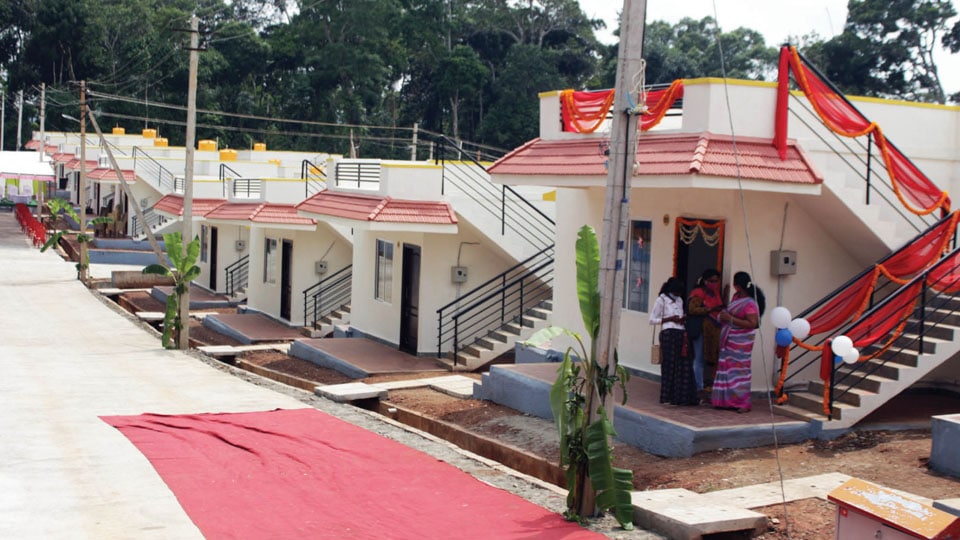
After a long delay amidst losing hope and living in despair, 2018 flood victims of Kodagu district have finally got houses of their own, built by the State Government. The victims have either completely lost their houses due to floods and landslides or the destruction of houses was to such an extent of beyond repairs.
In 2018 and 2019, unprecedented rains triggered by cloudbursts, floods and landslides brought untold misery to the people of Kodagu and over 30 percent of land in Madikeri and Somwarpet taluks was destroyed in previously unheard of havoc that was unleashed by nature, rendering hundreds of people homeless.
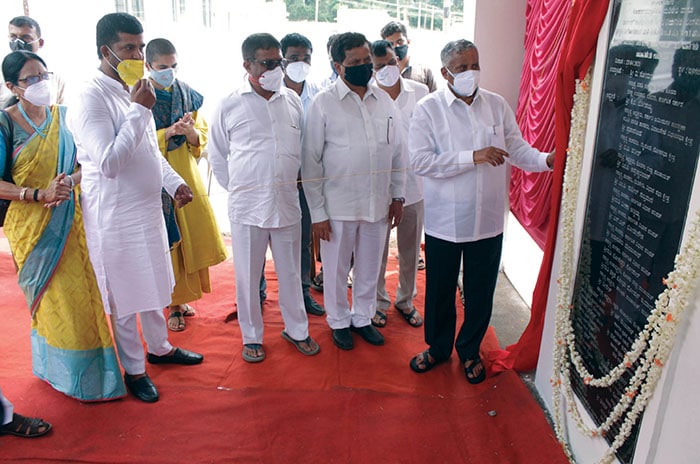
On Friday (Apr. 23), Kodagu District Minister V. Somanna symbolically handed over houses to 162 families. He handed over the keys to the beneficiaries at a simple ceremony. As many as 22 houses were provided in Biligere village and 140 houses in Galibeedu village.
Each house has been built by the Rajiv Gandhi Housing Corporation with pre-cast concrete. Rs. 9.80 lakh has been spent on each house and the areas that have been identified to build houses are certified by Geological Survey of India (GSI) as flood-and-landslide-proof. Each concrete mould house has been designed according to ‘M-20 Grade Design’ and the built area is 425 square feet.
Modern techniques have been used to build the houses and each house has 2 bedrooms, a hall and a kitchen. The houses are fire and earthquake-resistant and have modern facilities, said Rajiv Gandhi Rural Housing Corporation Project Director Srinivas.
Somanna said 660 houses had been handed over to the flood victims so far in three phases. As many as 35 houses in Karnangeri, 80 houses in Madenadu, 383 houses in Jambur and 162 houses in Biligiri have been handed over to the beneficiaries so far. This adds upto 660 houses. Over 76 houses are under construction at K. Nidugane and they too will be handed over in the next two months, the Minister added. Infosys Foundation is building 200 houses in Jambur and the work is in progress.
“A total of 836 families had lost homes during the natural calamity. Houses have been handed over to 660 beneficiaries so far. Houses that are being built at K. Nidugane village will be handed over in a month,” he said.
Virajpet MLA K.G. Bopaiah and Madikeri MLA Appachu Ranjan were present.
source: http://www.starofmysore.com / Star of Mysore / Home> News / April 25th, 2021
According to sources, more number of patients are reportedly coming to the hospital from neighbouring district including places like Sulia.
Oxygen supply unit at COVID-19 hospital in Madikeri. (Photo | Express)
Madikeri :
The Government Covid-19 Hospital in Kodagu, which is the only hospital treating coronavirus patients in the district, is efficiently handling the pandemic despite a spike in cases and shortage of staff.
Nearly 2,000 swab samples are being collected daily at the lone Covid-19 testing lab of the district.
According to sources, more number of patients are reportedly coming to the hospital from neighbouring district including places like Sulia.
A video alleging mismanagement at the Covid Hospital went viral recently, causing fear among many residents. The person recording the video alleged that the Covid hospital in Madikeri did not have enough beds and four persons were made to share a single bed at the centre.
Nevertheless, this allegation is far from the truth as one of the doctors working at the Hospital clarified, “once a patient tests positive, they will have to undergo many other tests including CT Scan. While the Hospital is equipped with a CT Scan facility, the center is not appointed with a radiologist. Hence, there is a minor delay in availing the CT Scan report as they are availed from a private hospital in Mysuru. Hence, patients are required to wait for nearly two hours at the hospital wards equipped with beds during the waiting period.”
However, this issue was wrongly publicised by a patient who alleged that three to four patients share a bed, while they were just waiting inside a ward for their CT Scan report.
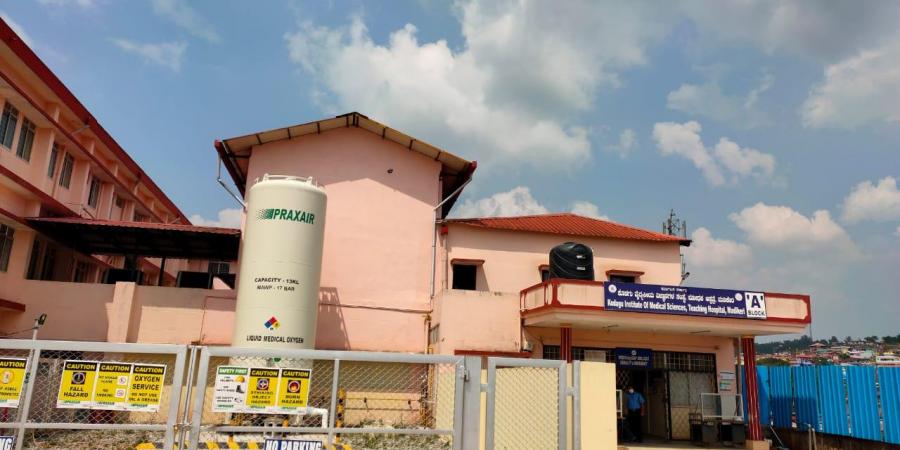
“The Covid Hospital is equipped with 150 beds attached with the oxygen supply facility. An additional 100 beds equipped with oxygen supply will be operational from Monday. A total of 13,000 liters of oxygen is available at the hospital and the same will be refilled once in 12 to 15 days,” confirmed Dr Kariappa, dean of Kodagu Institute of Medical Sciences. He, however, said that there is a shortage of staff at the hospital.
The existing staff and doctors are working overtime to ensure efficient treatment and consultation to the patients.
source: http://www.newindianexpress.com / The New Indian Express / Home> States> Karnataka / by Prajna G R, Express News Service / April 25th, 2021
Who on earth would like to miss a morning cup of hot steaming coffee?
Climate change could make about 50-88% of coffee-producing areas unsuitable and lead to an increase in pests and diseases, affecting its production and quality. There is an urgent need for research to save the bean from extinction.
Who on earth would like to miss a morning cup of hot steaming coffee? Coffee is becoming more popular, especially among the young around the world. Around 2.5 billion cups of coffee are consumed every day. The demand for coffee is projected to by 2050. But the question is: Can coffee supply be sustained?
Coffee is produced in around 70 countries but the dominant among them are Brazil, Vietnam, Columbia, Indonesia, Ethiopia, Honduras and India. Coffee is also the second-most traded commodity after petroleum oil, employing over 125 million people around the world. Most of the coffee grown is made up of two types: Coffea arabica and Coffea robusta, with the former making up 70% of all coffee grown globally.
In India, robusta dominates in terms of production. Karnataka is the dominant state producing coffee in India, accounting for nearly 70% of the total production, followed by Kerala. Together, they account for about 90% of the production. In India, the area under coffee cultivation is 4,16,741 hectares (ha). There are 3,79,697 coffee holdings, out of which most are smallholdings of less than 10 ha in size.
Weather and long-term climate patterns are very critical for growing coffee. Temperature and rainfall conditions are the main drivers determining the yield, production and quality. Altitude is another key factor. Robusta is slightly hardier, as it evolved in lowland equatorial Africa, but grows well in areas with abundant rainfall, which should be well distributed. The optimum temperature range for robusta is 24 to 30°C, but it is less tolerant to very high or very low temperatures. Currently, the annual and seasonal temperature and rainfall variability lead to fluctuations in yield in almost all coffee-growing countries, affecting supply and price.
Climate change is projected to impact all crops, including plantation crops. Changing climate and associated pest and diseases could adversely impact coffee-growing areas. Higher temperatures will not only favour the proliferation of certain pests and diseases but also kill large swaths of insects that pollinate coffee plants. As temperature rises, coffee ripens more quickly, leading to a fall in quality. Rising temperature is expected to make some areas less suitable or completely unsuitable for coffee cultivation.
A recent review of studies in 2020 concluded that all studies based on modelling predict that areas suitable for coffee cultivation could decline by about 50% under moderate climate change projection scenarios by 2050 for both arabica and robusta. Another study published in the journal Proceedings of the National Academy of Sciences concludes that the area unsuitable for coffee cultivation could be as high as 88% in Latin America, the dominant producer, by 2050. About half of the land around the world currently used to produce high-quality coffee could be unproductive by 2050, according to a recent study in the journal Climatic Change.
Thus, multiple studies show that climate change will have an extremely negative effect on future coffee production worldwide in terms of suitable cultivation areas, pest and diseases. Howard Schultz, who was the chairman of Starbucks — the largest global coffee chain — till 2017, is quoted to have said, “Climate change is going to play a bigger role in affecting the quality and integrity of the coffee.”
Coffee is a globally traded product and any impact on it in one part of the world will impact the rest, including India. International prices will determine the investment, income and survival of Indian coffee growers. If there is surplus production in Brazil and Columbia, prices in the international market will collapse. This will lead to a decline in market prices for Indian coffee, due to which farmers will experience heavy losses.
Research in India
There is limited research on the impact of climate change on coffee production in India. There are two ways the impact can be assessed: first, by long-term monitoring of changing climate and response of coffee production, which may take decades.
Modelling is another option to project the impact of climate change. There is limited modelling efforts globally and in India, in particular. With the current knowledge, one can conclude that climate change will have serious implications for coffee production and quality. We may have to brace for the disrupted supply of coffee and loss of aroma. According to climate change models, an increase of 20% to 25% in monsoon rainfall is projected for the Western Ghats districts of Karnataka and Kerala, along with the increased occurrence of high-intensity rainfall events. Further, increased warming of around 2 degrees Celsius is projected by the mid-2030s for these districts.
India has a Central Coffee Research Institute under the Coffee Board. Research on developing climate-resilient coffee varieties and cultivation practices would require several years or decades. Further, there is a need for extension service to train farmers in new practices, especially since a majority are smallholdings. In the meantime, coffee growers may need increased protection, price and insurance support from the Government of India and Karnataka.
In response to the risk of climate change on coffee, a global alliance of companies has been formed (‘Coffee and Climate’) with an objective to develop and implement coping strategies and to support smallholders to adapt to climate change, and ultimately to increase the resilience of entire coffee landscapes. Even Starbucks is conducting dedicated research and training of coffee growers in adaptation to climate change. Hope the Coffee Board also takes serious note of the threat of climate change and implement strategies to develop resilient varieties and practices, not only to help coffee growers sustain production, but also to ensure that hundreds of millions of coffee lovers continue to enjoy their morning cup.
(The writer is a retired professor, Indian Institute of Science, Bengaluru)
source: http://www.deccanherald.com / Deccan Herald / Home> Opinion> Perspective / by N H Ravindranath / April 22nd, 2021
Mahesh Babu’s ‘Mind Block’ song from his previous venture Sarileru Neekevvaru has reached a new high. The song premiered on February 29, 2020 has created a record with its views on YouTube. Crooned by Blaaze and Ranina Reddy, the song has hit 100 million views on the video streaming platform. Featuring the Superstar and National Crush Rashmika Mandanna, ‘Mind Block’ is a quirky dance number composed by renowned music director Devi Sri Prasad.
Upon its release last year, the song received huge attention of thenetizens, thanks to the charming chemistry of the stars, endearing short dialogues, mind-blowing dance moves of the lead actors, brilliant choreography, vibrant colour palette used in cinematography, crooning style of the singers, catchy lyrics, groove-worthy music and last but not the least the background dancers who made the song a visual treat with their immense synchronization.
Notably, the song has garnered 575K likes so far on YouTube. Well, as the song creates a massive record on the video streaming platform, fans and followers are now trending hashtag #SarileruNeekevvaru on social media.
On a related note, Sarileru Neekevvaru written and directed by Anil Ravipudi also features Vijayashanti, Prakash Raj, Rajendra Prasad, Rao Ramesh, Murali Sharma, Posani Krishna Murali, Satyadev Kancharana and Brahmaji in key roles. The action-comedy drama revolves around an army major who is assigned a mission in Andhra Pradesh’s Kurnool, where he witnesses a major scam. His journey of unfolding the truth and bringing the offenders before the law forms the crux of the film. The film which released on January 11, turned out to be a hit at the box office despite tough competition with Allu Arjun’s Ala Vaikunthapurramuloo, which hit the cinemas on January 12.
Backed by Dil Raju, Mahesh Babu and Anil Sunkara under Sri Venkateswara Creations, GMB Entertainment and AK Entertainments respectively, Sarileru Neekevvaru has camera cranked by R Rathnavelu and editing carried out by Bikkina Thammiraju.
source: http://www.filmibeat.com / FilmiBeat / Home> Telugu> News / by Sruthi Hemachandran / April 24th, 2021
The artwork by B S Yashaswini, which has won an award.
An artwork created by B S Yashaswini, a student from Virajpet in Kodagu district has won first place in the Mysuru city level art competition organised by Vyjayanti Chitrakala Mahavidyalaya, Mysuru.
Yashaswini is a first-year student of Master of Fine Arts (MFA) at Charmarajendra Academy Of Visual Arts (CAVA), Mysuru.
She is well versed in watercolour, oil paint, acrylic and mixed medium.
Yashaswini has taken part in a number of art exhibitions and art demonstration camps.
She was awarded the state-level Pratibha Puraskara in 2008, organised by Bal Bhavan.
She is also a recipient of National Bal Bhavan scholarship.
Yashaswini is the daughter of artist B R Satish and K N Damayanti.
source: http://www.deccanherald.com / Deccan Herald / Home> State> Mangaluru / by Adithya KA, DHNS, Madikeri /March 11th,2019
WELCOME. If you like what you see "SUBSCRIBE via EMAIL" to receive FREE regular UPDATES.
Read More »