How a group of eight locals rescued people stuck in flooded homes in Kodagu

Around 50 residents of Kodagu’s Goodugadde village were stranded in their flooded homes on Friday morning.

FloodKF14aug2019

Around 50 residents of Kodagu’s Goodugadde village were stranded in their flooded homes on Friday morning, hoping that help would come before the river Cauvery would take away their lives.

Luckily for Goodugadde’s residents, help came in the form of eight Good Samaritans, who ferried them to safe places through small iron-made coracles.

Mustafa, a 32-year-old activist from Kodagu, suspected that people were stranded in Goodugadde and other villages along the banks of the Cauvery river. Mustafa had heard from the local grapevine that many people had not left their homes despite a flood warning.

At around 6 am on Friday, Mustafa and his friends Ranjith Kumar, Afzal, Iliyas, Shafiq and four others from Siddapura, were anxious as the Dubbare Rafting Team was busy with rescue elsewhere.

Mustafa and his friends rushed to the Siddapura Police Station and requested the police to lend them the iron-made coracle lookalikes that the police had kept in the evidence room, which they had seized when they busted an illegal sand mining ring.

“We call it thappe in Kannada. They are circular, iron made vessels sand miners use to transport sand. It’s smaller than a coracle but bigger than the round vessels used to carry sand in construction sites. We wanted those so we could row it and look for stranded people,” Mustafa explains.

When the group reached Goodugadde, they found several senior citizens, children and middle aged people stranded in their flooded homes. Many were sitting on their rooftops, while some of them clung to trees, waiting for help.

“There were about 50 people. We began rescue at 7am and it went on till 11 am. We lost count of the number of trips we made to bring all of them to safety. They were sent to relief camps in Siddapura. By 12 pm, the Dubbare Rafting Team came to help us and we continued rescue operations in Baradi and Kakkattagadu villages,” Ranjith Kumar says.

Mustafa, Ranjith and the team of local rescuers claim that they are experienced swimmers and that they had volunteered during rescue operations in the floods that hit Kodagu in 2018.

“We have lived along the banks of river Cauvery all our lives. We have a very close relationship with the river and swimming is the first thing we learnt as children. We are expert swimmers and if our skill could be put to use to help people in need, then it’s our duty to help them. What is the point of being an expert at something and not helping those who could benefit from it?” Mustafa says.

Mustafa and his motley crew continue their rescue operations even now. “We will help as much as we can. Our people have seen too much damage due to rains and floods. Currently, we are going back and forth Goodugadde and recovering their belongings,” Mustafa adds.

source: http://www.thenewsminute.com / The News Minute / Home> Karnataka Floods / by Theja Ram / August 10th, 2019

Hyderabad Open: Silver for Ashwini Ponnappa and N Sikki Reddy

Top-seeded Indian women’s double champions Ashwini Ponnappa and N Sikki Reddy won the silver at the Hyderabad Open badminton championship, losing to Korean players Baek Ha Na and Jung Kyung Eun in the final clash. The pair lost to the Korean champions 17-21, 17-21 at the Gachibowli Indoor Stadium on Sunday.

Reddy took to social media to announce the silver in an emotional post: “It’s silver medal for me and my partner @p9ashwini in Hyderabad open Grand Prix.

We had played pretty good matches from the first round but unfortunately we couldn’t pull the finals match which will make us learn and get better. I would like to thank each and everyone who came and supported us especially to my family, friends, fans and well wishers. I have nothing but gratitude. Also it wouldn’t have been possible without the support of my coaches, support staff and to my sponsors…. Thank you everyone #nevergiveup #toughsituationsbuildstrongpeople #keepfighting #bepositive”

Meanwhile, reighning national champion Sourabh Verma defeated Singapore’s Loh Kean Yew of Singapore 21-13, 14-21, 21-16 in the 52-minute final to win the men’s single title.

source: http://www.femina.in / Femina / Home> Trending> Achievers / by femina / August 12th, 2019

Kodagu’s pride: These women officers led from the front

District deputy commissioner, 33- year- old Annies Kanmani Joy, superintendent of police, 34 -year -old.

SP Suman D. Pennekar

Mysuru:

As Kodagu hobbles back to normalcy with the flood receding and the rains abating, the people have three young women government officers to thank for helping to contain the loss of life and damage to property by their preparedness for the deluge in light of last year’s disaster.

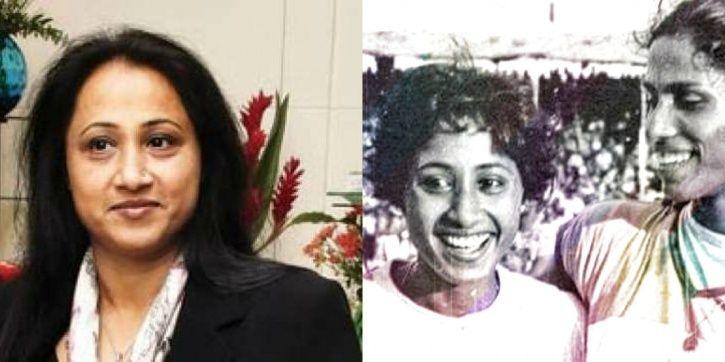
District deputy commissioner, 33- year- old Annies Kanmani Joy, superintendent of police, 34 -year -old , Dr Suman D Pennekar and 29- year -old zilla panchayat CEO, K Lakshmi Priya, led the rescue and relief operation by the officers of the district administration and the various forces, keeping it coordinated and systematic.

Kodagu ,which received as much as 964.99 mm of rain in a week, saw its plantations and hilly terrain flooded and heavy landslides bring down houses and even entire hillsides, claiming lives and leaving many homeless. At the end of the eight days of mayhem 7,873 people have found shelter at 45 relief centres.

Annies Kanmani Joy
Annies Kanmani Joy

Reflecting on the last week, Ms Annies Kanmani Joy said, “Last year North Kodagu was affected and this year, it was South Kodagu. The last time the rain was intense but less widespread. But this time, the rain was not as heavy, but covered a bigger area and more people were affected.. We had started taking precautionary measures well in advance and so every official was alert. This helped us manage the situation systematically, and contain the damage. Now the challenge ahead is rehabilitation.”

Said Dr Suman Pennekar, “In light of last year’s disaster, we started preparing meticulously six months in advance. We had 60 dedicated police trained in evacuation and rescue and a team of 20 police led by an inspector in the control rooms, which received at least a 100 calls a day and traced the victims. They contacted the concerned teams at ground level, which were formed well in advance by the district administration, who rushed to the spot and rescued and shifted victims to relief centres. While landslides were our focus, as floods was rare situation in Kodagu, we saw more floods. We also faced landslides at two unexpected places, which killed eight people. Operations are on to trace seven others who are missing.” While the Geographical Survey of India (GIS) had already identified 105 sensitive/vulnerable places, the deputy commissioner formed special task forces of the police, fire and emergency services, CHESCOM, PWD, panchayatraj engineering department, NHAI, Pradhan Manthri Gram Sadak Yojana, minor and major irrigation, health, veterinary and forest departments, besides village committees Mock rescue operations too were held.

source: http://www.deccanchronicle.com / Deccan Chronicle / Home> Nation> Current Affairs / by Shilpa P / Deccan Chronicle / August 14th, 2019

Knock, knock, welcome to ain manes

A fifteen-minute drive down Bollarimadu village on Madikeri-Virajpet Road leads one to a magnificent edifice proudly displaying the name of Puttichanda family.

Madikeri :

A fifteen minute drive down Bollarimadu village on Madikeri-Virajpet Road leads one to a magnificent edifice proudly displaying the name of Puttichanda family. The over 150-year-old traditional abode stands tall alongside picturesque surroundings. This proud edifice is the ‘Ain Mane’ (original house) or ‘Ballya Mane’ (big house) of the Puttichanda family.

Among the 650-odd houses of its kind, ‘Ain Mane’ is the sacred dwelling of a Kodava family. “Not just a dwelling place, it is equivalent to a temple, a court, and a place of cultural importance,” explains Bacharaniyanda Appanna, a Kodava historian.

While modern houses are abbreviated to BHK and have minimum segments, the Ain Mane of Kodavas is magnificent, with each part of the house having cultural significance. “Roughly, the Ain Mane has 39 distinctive segments or parts that are named in Kodava language. While there are three types – Mandh Mane, Othe Pore, Madak Mane — they all have a certain common and must features,” adds Appanna.
Mundh Mane is the most popular among such magnificent houses. It has an opening facing the sky at the centre of the house. (Mundh in Kodava language means courtyard). Othe Pore roughly translates into a single-roofed house (without a courtyard) and Madak is extinct.

“Madak Mane used to be L-shaped and this did not work well in Kodagu’s weather, especially during monsoon as the L-shaped corner of the house often leaked. It was rather less scientifically built,” opines Appanna.

These traditional houses also took charge as a protective fort during the British period. Any intruder into the property could be detected over a mile away from the actual abode as these houses have elaborate entrances.

’Vaade’ or ‘Bendode’ forms the first part of Ain Mane and is a non-cultivated land. It was used to welcome guests . Then there is an elaborate alley ‘ooni’,” says Appanna.

“There is a traditional wooden carved window facing the entrance and one could detect any intruder from inside the house. This window maintained secrecy,” says Don Devaiah, a member of Puttichanda family. He also adds that in olden days, the bride saw the groom from inside the house through this window.

“Kodagu depended on Kerala for most of its trade. The two regions were trade-bound, which also resulted in exchange of culture and architecture; the creative craftsmanship of Kerala artisans is visible in Ain Manes of Kodagu,” says Appanna.

He adds that the entrance of the house faced the East and there was always a back exit –Kunnibade. Each part of the house has its own personality and Apanna says that there are some sacrosanct segments of the house. “’Aimara’, a pillar standing at the entrance of an aisle, is reserved only for the head of the family; family disputes were solved by the head of the family at this place. ‘Kannikamba’ is a sacred pillar located on the south-west corner of the house and has been given a godly figure. ‘Kanni kombre’ is the sacred room and is located in the south-west corner; this is the puja room,” explains Appanna.

Apart from the sanctity, the architecture of the house is also scientific. The foundation for the house was laid differently and is said to be earthquake-proof as the foundation sat on a strong plinth that was left untouched for over a year so that the earth settled down following the onset of summer and monsoon months. The house also had a secret subway, which was often used to escape from an enemy attack during the ancestral time. “Weapons and a torch smeared with pork fat and oil was always hidden in the path of the subway, which helped in the escape plan,” explains Appanna. “The modern underground drainage system too was present in the ‘Mundh Mane’,” says Patrapanda Pavithra Achappa, a resident of Bollarimadu village .

While the house was lively with many family members residing under one roof in the ancient times, in this modern era the house echoes with laughter and celebrations only during Kodava festivals.
“Puttari, Cauvery Sankramana and Kail Podh are a few festivals that are celebrated by the entire family at Ain Mane. The ritualistic annual ceremony observed to remember the ancestors – Karanaido – is also celebrated at Ain Mane. Nevertheless, a lamp is always lit at the house and families take turns to light the lamp – once in the morning and once in the evening every day. Every member of the family contributes certain amount for the maintenance of the ancestral house,” says Ammanichanda Ranju, whose Ain Mane is at V Badaga.

Apart from the Kodava festivals, the Ain Manes are thrown open during the village festivals. “Puttichanda family Ain Mane used to be filled with rituals and activities during the ‘Bodu Namme’, a village festival. However, the village festival celebration has been stopped recently following a minor misunderstanding,” says Subramani, a member of Puttichanda family.

The biggest gathering of the Kodavas – Kodava Hockey Namme – has played a major part in the revival of Ain Mane. “Ain Manes have been a picture of neglect. But following the hockey fest, families started reuniting at their family house and every player prayed at the ancestral house before heading to the game of hockey,” explains Kayapanda Shashi Sommaih of Madikeri.

“The ‘Hockey Namme’ has made youngsters come back to Kodagu and start searching for their roots,” says Puttichanda Poovanna, a member of Puttichanda family.

However, with urbanization, the ancestral houses are still at stake and many opine that they need boost from government bodies for their survival. “Many ancestral houses were destroyed due to various reasons ages ago. However, revival of these houses needed finance and a few families could not manage the funds. If the government had sanctioned some support, the Ain Manes could have survived,” says Puttichanda Narendra, another family member.

source: http://www.newindianexpress.com / The New Indian Express / Home> States> Karnataka / by Prajna G R / Express News Service / August 11th, 2019

Exploring the Waterfalls of Coorg: 6 sites you cannot miss

CoorgWaterfallskf10aug2019

I often observe that most people tend to cover the popular and must-see sites or engage in a particular activity when vacationing. Take Coorg for example. Most travelers, including me, have visited this beautiful hill town to discover its rich, aromatic, coffee plantations, stay at a quaint retreat, and do what travel blogs advise us to do. Until I discovered a different characteristic of Coorg in its waterfalls. You heard that right. These sparkling water bodies are the real treasures, hidden from the common sight, waiting to be explored more, but only by those who want to see beyond the obviousness of Coorg. Inspired by my own experience of this unique facet of this scenic hamlet, I made a list of the seven best waterfalls you cannot miss while touring Coorg.

When to travel
While most of these waterfalls are perennial and you can visit them any time of the year, their beauty is enhanced during the monsoon months of June through October. From rocky slopes to thick plantations, or dense mountain bluffs, you will find these waterfalls in various natural settings, each making for a magical sight.

How to explore
The best way to tour Coorg, especially if you want to do a waterfall-hopping trip, is to drive down from the nearest metro city of Bangalore. The taxi fare from Bangalore to Coorg is cheap, and you can easily keep the car with you throughout your tour. Also, when traveling in monsoon, the hilly terrain could be tricky, so I prefer to have an experienced driver take me around instead of me driving.

The Cascades of Coorg

Abbey Falls
About 6 KM from Madikeri town, this is the most popular waterfall of the district and a tourist hotspot. You simply cannot miss this, even if you want to. From the parking area, you have to take a 5-minute walk downhill to reach the falls. During the rainy season, the upper streams of Cauvery River rise in volume and cascade through thick plantations of coffee and spices. For the best view, stop by the hanging bridge, right opposite the falls and enjoy the panorama of cloud-capped mountains.is

Best time to visit: August to November
Timings: 9 AM – 5 PM
Entry Fee: Rs 15 per person.

Iruppu Falls
After Abbey, this is the next best waterfalls in Coorg. About 75 KM south of Madikeri town, Iruppu Falls sits in the Brahmagiri Hills. Note that you cannot drive up to the falls area. Once you park the car at the end of the road, you have to hike for 500 meters, down a steep path. The falls result from the overflowing Lakshmana Tirtha River dropping from a high altitude. The plush surroundings of monsoon greenery and the frothy waters of the falls is definitely a sight to savor.

Chelavara Falls
About 44 KM from Madikeri town, sitting on the edges of the Brahmagiri Wildlife Sanctuary, you will find the rapid torrents of Chelavara. Tucked amidst dense deciduous forests, this waterfall hides in plain sight, away from the prying eyes of commercial tourism. But those who have managed to discover this like me, have found this to be the most picturesque waterfall of all. With its massive size and water volume, especially during the monsoon, the scenic vistas of Chelavara Falls attracts offbeat travelers and trekkers. It is also called the Emepaare or the ‘tortoise’, owing to the shape of the rock at the pool below.

Mallalli falls
To reach this spectacular waterfall of Coorg, you have to drive to Somwarpet. From there, it is another 26 KM, from where you have to trek through forested trails to reach the catchment area of the falls. Nestled within the Pushpagiri hills, this is a sight to savor.

Best time to visit: July to November

Napandapole Falls
This waterfall is truly a treasure to unravel. If you are a true explorer and an adventurous soul, you will love the torrential flow of the Napandapole Falls, dropping from 120 feet, lying at the foothills of the Kote Betta peak. Surrounded by three smaller waterfalls, and set in rocky terrain, this cascade is a great site for rappelling and invites adventurers from all over. There are plenty of unexplored corners around the falls, which also make for a great hiking destination.

Best time to visit: August to December

Burude Falls
This five-step waterfall is a marvelous and stunning site to explore. Trek through the narrow creeks flanked by forests. If you are traveling Coorg during the peak season and looking for a respite from the bustling crowd in town, the Burude Falls and its surroundings can be the perfect spot for a day trip. Drive for about 29 KM from Madikeri town, and then hike for 1 KM to reach the falls.

My travel tips:

If you are traveling directly from the airport, get an affordable and dependable Bangalore airport taxi for your Coorg tour.

When trekking around waterfalls in the monsoon, always wear well-gripping shoes.

Some waterfalls are remotely located, so be prepared for long walks, and stay hydrated.

source: http://www.headlinesoftoday.com / Headlines of Today / Home> Sponsored Content / by Team HOT / August 10th, 2019

Coffee estates await return of workers from Assam

AssamKF09aug2019

‘They are stuck in their home State owing to NRC procedures’

The ongoing verifications for National Register for Citizens (NRC) in Assam have stopped thousands of workers from returning to the coffee estates of Karnataka. The Assamese workers left the estates in March-April, ahead of the parliamentary elections, and a majority of them are yet to return.

In Hassan district alone, more than 10,000 people from Assam are employed in many estates. Similarly, they work in estates of Chikkamagaluru and Kodagu districts. For the last 15 years, the estates in the three districts have been dependant on workers from northeastern States, Odisha and Madhya Pradesh.

Estates suffer
The final draft of the NRC was published in July 31, 2018. Many workers, whose names did not figure in the draft, were worried. They left to resubmit documents to claim citizenship. B.N. Jagaish Shetty, manager of IBC company-owned Hasirugudda Estate in Belur taluk, said last year more than 100 workers from Assam were in the estate. Now, there was none. “A few of them had returned very late and by then, we had made alternative arrangements. They must have gone to other estates,” he said.

The final NRC is expected to be published on August 31 and people are worried about leaving their native until then. U.M. Thirthamallesh, president of the Karnataka Growers’ Federation, said 25 Assamese were working in his estate and they had not yet returned. “The last communication I received was that they would come back after Bakrid (August 12). I hope they return as our estates are dependant on them,” he said.

This year owing to decrease in rainfall, the demand for labour is minimum. Anticipating dip in production, estate-owners are trying to manage with the available workforce. “But if the workers delay further, the activities in the estates will suffer,” he added.

“Coffee production has always been dependant on outsiders. In the past, there were workers from Dakshina Kannada. Later, it was Tamil Nadu. Many of them settled here over the years,” said B.A. Jagannath, planter and former member of the Coffee Board. People from Assam are stuck in their home State because of the NRC procedures and the floods. They will not return until their citizenship issue is settled, he said.

source: http://www.thehindu.com / The Hindu / Home> News> States> Karnataka / by Sathish G. T / Hassan – August 05th, 2019

Dubai: Emotional farewell offered to creative art director B K Ganesh Rai

Dubai :

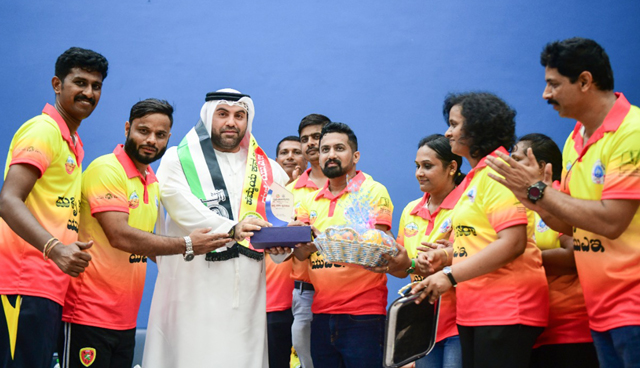
UAE Kannadigas and Tuluvas bid an emotional farewell to creative art director B K Ganesh Rai, who had come from the land of warriors and natural beauty Kodagu district of Karnataka, 25 years ago and is going back to his native after retirement.

The farewell function took place on Friday, August 2 at 11 am at the Fortune Plaza auditorium at Al Ghusais in Dubai.

The convener of UAE Kannadigaru and Tuluvara Sanghatane, which consists of 40 pro-Karnataka organizations, Sarvotham Shetty welcomed the gathering.

B K Ganesh Rai was serving as the creative art director and manager at the Gulf Public Relations and Advertising section, which is one of the B R Ventures group of companies that is owned by senior entrepreneur of UAE Dr B R Shetty.

Sarvotham Shetty lauded the social service done by Ganesh Rai by getting involved in various pro-Karnataka organizations that are active in UAE.

He also congratulated Majula Ganesh Rai, wife of Ganesh Rai and their children Monish Rai and Aishwarya Rai.

Ganesh Rai is sculptor by profession. In addition, he is an expert artist and computer graphic designing. He himself is a blood donor. He has played a stellar role in organizing the blood camps by pro-Karnataka associations. He has designed more or less all the emblems of Kannada associations. In addition, he has depicted the rich cultural heritage of Karnataka through various digital displays and canvas. He has also designed the invitation cards of meetings, functions, Sneha Milana, sports meets, leisure outings and literature conventions. Ganesh Rai, who is a writer also, has published articles about great personalities before and after the programmes of various organization in web media. He has also compered many Kannada events and participated as the chief guest.

Honorary accreditation certificate from Dubai government health authority

Ganesh Rai started blood donations camps from the time he was the president of Sharjah Karnataka Sangha and continued to organize blood donation camps through all pro-Karnataka associations from 2007 to 2019. Recognizing Ganesh Rai’s efforts in organizing blood donation camps, the Dubai government health authority conferred the honorary accreditation certificate on him. This letter was handed over to Ganesh Rai by Balakrishna Salian, organizer of blood camps and Sarvotham Shetty.

Felicitation to Ganesh Rai and family

Ganesh Rai and his family were felicitated in the presence of presidents and office bearers of pro-Karnataka organizations in UAE. Sarvotham Shetty, Premnath Shetty, Balakrishna Salian and Satish Poojary conducted the felicitation. Sampath Shetty read the letter of honour.

Ganesh Rai acknowledged the felicitation offered and thanked the office bearers and members of various associations. He also recalled the encouragement, support, honour and opportunity given to him during his journey of achievement in art.

Organizations served by Ganesh Rai

During his stay of 25 years in UAE, Ganesh Rai has served in Abu Dhabi Karnataka Sangha, Karnataka Sangha Dubai, Karnataka Sangha Sharjah, Karnataka NRI committee UAE, Al Ain Kannada Sangha, India Social and Cultural Center Abu Dhabi, UAE Tulukoota, Namma Tuluver, Tulu Siri Dubai, Dhwani Pratistana UAE, Kannadigaru Dubai, UAE Bunts, Billava Family Dubai, Byaris Cultural Forum Dubai, Mangloor Konkans Dubai, Gammat Kalavider Dubai, Yaksha Mitraru Dubai and Padmashali Samudaya UAE. Mogaveers UAE, Amchigele (GSB) Samaja UAE, Basava Samiti UAE, Ganiga Samaja UAE, Kulala Vrinda UAE, Vokkaliga Samaja UAE, Vishwakarma Seva Samiti UAE, Kodagu-Dakshina Kannad Gowda Samaja, Kodava Samaja, Devadiga Sangha Dubai, Kundapur Devdiga Mitraru (KADAM), Ramakshatriya Sangha UAE, Magadeepa cultural committee, Rajaka Samaja UAE, Tulu Pateruga Tulu Oripaga UAE, Varamahalaxmi Pooja Samiti, Samoohika Sri Satyanarayana Samiti, Brahmana Samaja UAE, Theeya Samaja, Karnataka journalists’ association UAE and Karnataka association Blood Donors’ Group.

Satish Poojary, one of the organizers of UAE Kannadigaru and Tuluvaru compered the event in a grand manner.

source: http://www.daijiworld.com / DaijiWorld.com / Home> Middle East / Media Release / August 05th, 2019

Do not glorify caste identity, says Sanehalli pontiff

Priests from various disciplines take out a rally in Madikeri on Monday as a part of ‘Matte Kalyana’ programme.

Hosadurga Sanehalli Mutt pontiff Panditaradhya Shivacharya Swami lamented that caste identity is being glorified in society, instead of unity.

He was speaking at ‘Matte Kalyana’ conference organised at Kaveri Hall in Madikeri on Monday.

There must be a connect between our words and action. The imbalance will give rise to serious problems. The pioneers of Sharana movement envisaged a model society on the basis of this ideology. They maintained that all should be considered equal. The issues should be solved through wisdom. But the current developments where caste and region cards are played are unacceptable, the pontiff said.

Speaking on the significance of Vachana movement, intellect G N Nagaraj said that Matte Kalyana is a new concept for the nation, aimed at eliminating the caste oriented hierarchical system.

The vachana movement of the 12th century stressed on the work done by a person rather than his caste. The vachana composers said that when work becomes worship, all other criterion becomes secondary, he added.

Intellectual Dr K Sharifaa said that the Sufi saints dreamed of a society free of superstitions and tried to reestablish human values. Unfortunately, their aspirations are not fulfilled even after 900 years. Criticising the attitude of looking at Dalits and women as criminals, she said that they should be seen as human beings.

Kodava Samaja President K S Devaiah said that the administration should be non-political. No community should be treated as mere vote banks.

Artistes from Shivasanchara troupe sung vachana songs on the occasion.

A rally ‘Samarasya Nadige’ was taken out from Basaveshwara Temple to Kaveri Hall.

Amid rains, priests of various religions, elected representatives and students took part in the rally.

source: http://www.deccanherald.com / Deccan Herald / Home> State> Mangaluru / by Adithya K A / DH News Service, Madikeri / August 05th, 2019

Brewing storm in coffee country

A regular tea/coffee stall in the coffee belt—Hassan, Chikmagalur and Kodagu districts—of Karnataka (Photo: Getty Images)

Given the huge role CCD’s V.G. Siddhartha played in India’s coffee ecosystem, there’s uncertainty in the air.

Chikmagalur/Bengaluru:

A memorial service on Tuesday for late V.G. Siddhartha at Mudigere, Karnataka, took a maudlin turn. This was a gathering of coffee growers at the hometown of late Café Coffee Day (CCD) founder, who allegedly ended his life due to financial stress. B.R. Balakrishna, a small planter, was in tears: “Without ‘Anna’, I’m a helpless orphan. I feel like I am better off dead.” He was not an exception; almost all the coffee growers were inconsolable.

Beneath the wailing was the fear that prices and profit from growing coffee could be hit, or that they may not find a buyer like Siddhartha who was also a well-wisher and a mentor. More than the circumstances behind Siddhartha’s death, which has been discussed threadbare, it is what lies ahead that terrifies many—from coffee growers to those working at CCD, a part of Coffee Day Global Ltd.

With Siddhartha vanishing from the scene, coffee growers across the states are anxious about the churn it will bring in to the industry. “The industry will have to go through a period of turmoil until CCD gets a grip on things and it is able to reposition itself as the first company of coffee business in India,” said a veteran grower from neighbouring state Kerala, which accounts for a fifth of India’s coffee production, requesting anonymity.

“But then, whoever heads CCD will have big shoes to fill. To earn the trust of growers like Siddhartha did, to consistently innovate, and, most crucially, to increase the yield and revenue in the business is easier said than done,” he adds.

CCD was one of India’s top 20 leading exporters of coffee, according to the Coffee Board of India’s database. “Nobody can really fill in that space, currently. So everything about what happens ahead will depend on CCD’s survival,” said a Bengaluru-based expert on coffee research, requesting anonymity.

Importance of Siddhartha

Travelling through the coffee growing region of Karnataka—Hassan, Chikmagalur and Kodagu—one is assured of delectable coffee in the middle of nowhere, the aroma from the mug mixed with the air of the hill estates. From the bean to the cup, Siddhartha had his stamp all over the industry and his death is worrying those in the supply side of the business, from growers worried of wholesale prices to exporters concerned how long their dominance in the overseas market will last.

Siddhartha had realized the importance of systems across the value chain, from growing, research, marketing, export and value addition. Most importantly, he drove the expansion of coffee consumption in India, and branded Indian coffee in the international market, said Abhimanyu M.B., a senior member of the state-run Coffee Board of India. “It is a daunting task which can be driven only by those who have shared a dream… I wonder anybody can repeat that performance or take it to the next level.”

Siddhartha also spurred export to the First World by starting overseas consumption market for Indian coffee, partly by starting CCD outlets, and by marketing the finished and value-added products to the importers of coffee. “Today, India exports 30,000 metric tonnes of coffee in all its forms, and to keep up this export volume, the CCD leadership will have to keep up with the spirit of Siddhartha,” added Abhimanyu.

Downstream reforms

At just 59 years, Siddhartha had a great future not only for CCD but for the coffee industry. Over a 100,000 people are employed directly and indirectly in the coffee ecosystem he built. They are all clueless as to who can replace him, and help steward the industry like he did during the last few decades. To understand what their worries are is to essentially know how the coffee industry works and what role the CCD founder played.

“Siddhartha was a visionary for the coffee industry. Right from the plantation, picking up coffee berries, curing them, grading them, marketing them and adding value to them and bring it closer to the lips of millions of coffee lovers not just in India but in six different countries of the world. He was a visionary who saw great things for coffee. From a mere 12,000 tonnes, he took the domestic coffee consumption to 100,000 tonnes per annum,” said K. Jayaram, former president of the Karnataka Coffee Growers Association.

Before Siddhartha started Amalgamated Bean Coffee Trading Co. Ltd in Chikamagalur, he had deeply studied the prospects, problems and scope of coffee cultivation. He developed his own nursery with high yielding varieties such as Kaveri and Chandragiri, which he distributed freely to all planters in three districts. His advisory was to plant them in high density, a revolution of sorts.

The Coffee Board advisory was to plant 1,752 plants per acre, but research done by Siddhartha showed that the plot could accommodate as much as 2,000 plants, which together with new plants could result in a yield increase of at least 20%. Kodagu, Chikmagalur and Hassan were the direct beneficiaries of this research. “This experiment had paid big dividends to the industry, especially to the planters. This was also replicated in smaller coffee growing areas in Tamil Nadu and Kerala. Overall, the total area under coffee cultivation soon reached 425,000 hectares in South India,” said Thirtha Mallesh, president of the association.

Lakshman Gowda, a grower in Mudigere, showed a patch of Kaveri and Chandragiri varieties, and said: “Though Siddhartha and his family had thousands of acres of coffee plantation, he did not keep his knowledge for himself. He freely disseminated it among all the planters not only in Karnataka but also in Tamil Nadu and Kerala, and at a time when other coffee growing nations like Brazil, Columbia and Vietnam expressed doubts about India’s capacity to increase cultivation.”

Forward trading

Many experts Mint spoke to seemed anxiously waiting for how the untimely death of Siddhartha would impact domestic market prices. Not so long ago, Indian coffee growers were burdened with dependency on the New York and London pricing mechanisms for exports and the Coffee Board for the domestic pricing. A pressure group of private growers led by Siddhartha broke this in the 1990s, and from then on, Indian coffee has developed its own price determination mechanism, with over 110,000 metric tonnes of coffee dependent on the pricing decided by CCD.

Coffee growers in Kodagu, Chikmagalur and Hassan remember that this small region was first to introduce what is known as forward trading in coffee as early as 1996. The association annals point out that Amalgamated Bean Coffee had launched the scheme for growers by benchmarking the daily rates of Arabica parchment variety with the New York and London markets.

In addition, Amalgamated Bean Coffee used to reserve a sizable quantity of coffee beans under the forward trading norms which benefitted all planters supplying raw beans to Amalgamated Bean Coffee . “As a result, there emerged a self-regulating mechanism for coffee pricing and stocking fully under the control of the growers,” said a senior coffee marketing officer of the Coffee Board, requesting anonymity.

“This was done on fine forward trading norms. Siddhartha had so much liquidity in trading coffee domestically that the growers could bet their stocks under forward trading with Siddhartha. No trading house except CCD was able to match,” said Nanjappa, who is a coffee activist of Kodagu. The growers benefitted out of this arrangement, he added.

“We growers could gain at least 15-20% annual profits due to forward trading. A grower having even a smallholding of 2-5 acres could make a handsome profit. With Siddhartha gone, the growers are now left at the mercy of other trading firms that are more profit-motivated for themselves than that of the growers.”

Siddhartha hardly made any profit out of these reforms, according to experts, and in fact, when Coffee Day Global Ltd (formerly Amalgamated Bean Coffee Trading Co. Ltd) was floated he even went under financial stress. But this heralded the foray into value addition in the coffee business.

When the first CCD outlet was opened in Bengaluru in 1996, it was a shock to the coffee lovers of Bengaluru, known for its filter coffee culture. “It was hard to trust any coffee that came out of an espresso machine. We thought who would sit over a cup of coffee for hours, that too paying at least five times more than the filter coffee available at neighbouring Ranganatha Cafe?” reminiscences Srikanth Rao, a coffee aficionado, who is a top executive in a multinational company in the city.

CCD made sure that it captured the coffee consumer market in Bengaluru first, which according to the CCD research unit was a top coffee consumers in the country, second only to Chennai. Then, Bengaluru had become well known for its pubs. But Siddhartha bet on the young crowd spending quality time at a cafe, and his signature statement “a lot could happen over coffee” paid off. This is when the IT crowd, college goers, and company executives started frequenting CCD outlets all over Bengaluru and using CCD outlets as their makeshift offices, conference rooms and client meeting places.

In conclusion

CCD looms larger than life over the industry. That’s why there’s fear in the air. “Their growth created a good base and gave some kind of stability for domestic prices. That is the reason why you can find their prices quoted every day in the local newspapers. So if they go down in a spectacular way, the domestic market will also suffer. Some 40,000 employees would also be involved. It has become one of those sectors where growth happened very quickly and suddenly a vacuum has been created,” said the Bengaluru-based expert on coffee research quoted earlier.

One of the reasons Siddhartha, who was always on the lookout for unusual types of coffee, loved Mangaluru was because it serviced the coffee planters of Kodagu, Chikamagalur and Hassan by offering garbling, curing and drying facilities. In particular, “Monsooned Coffee” discovered by Siddhartha was from Mangaluru. When raw coffee beans were stored in depots during the monsoons, the coffee used to get a particular aroma due to the moisture—these were not to be roasted but boiled to make green coffee. That’s why in his home territory, he will be remembered for his role in developing the coffee ecosystem.

M. Raghuram is a journalist based in Mangaluru.

source: http://www.livemint.com / Live Mint / Home> Explore / by M. Raghuram and Nidheesh M.K. / August 06th, 2019