Not just honey, bees can make you money too; find out how

Indian and European bees are the most sought after while stingless bees are slowly catching our attention for its medicinal properties.
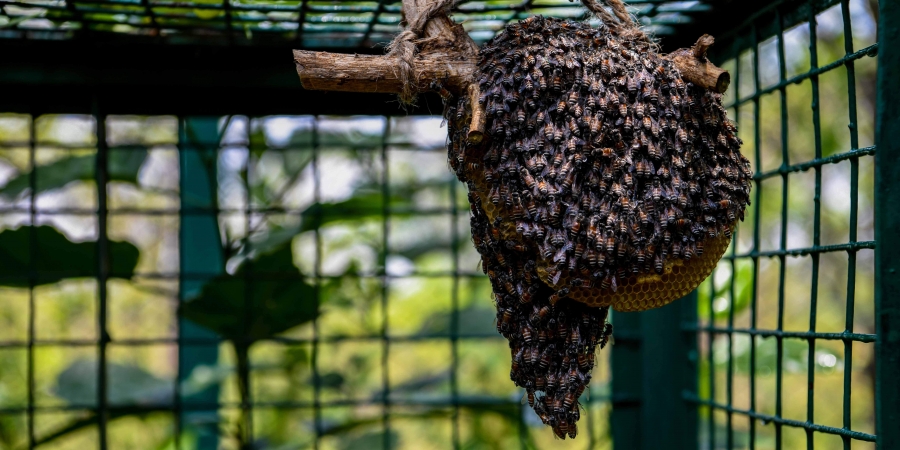
(Photo | Meghana Sastry, EPS)

Your favourite mango will definitely become dearer if not extinct, if we don’t act now. Pollinators, which include bees, need a major protection boost.

There are 2,00,000 pollinators of which honeybees are the most sought after, why?

There’s a popular saying ‘as busy as a bee’. That term comes from the fact that honey bees are the only species who identify a flower and make multiple visits to the same flower until they get all the nectar and pollen out of it. They are the best pollinators and work in the most methodical fashion. From identifying to communicating and dividing work. Their social structure is fascinating and one that we can learn a lot from. There are 20,000 types of bee species of which the ones mentioned below are the most popular types in India. Indian and European bees are the most sought after while stingless bees are slowly catching our attention for its medicinal properties.

____________________________________________________________

Common Name Scientific Name Natural Nesting Site Honey Yield
(KG)
____________________________________________________________
Indian Bees Apis Cerena Cavity, Termite Mounds, Tree Hollow etc. 8-10

European Bees Apis Mellifera Cavity 25-30

Rock Bees Apis Dorsata Tree Branches, Buildings etc 30-35

Dwarf Bees Apis Florea Twig in a bush <1 Himalayan Rock Bees Apis Laboriosa Underside of rock cliffs 40-45 Indian Stingless Bees/Dammer Bees Tetragonula Iridipennis Cavities, Hollows in tree trunks and walls <500 grams _______________________________________________________ There’s been a lot of buzz about bees going extinct and people have been trying to find a way around it. Here is a story from beekeepers who have found it very lucrative to harvest them. There are multiple beekeepers like Apoorva - the bee man of India and organisations like the University of Agricultural Sciences in GKVK, Bangalore who conduct workshops and help people understand the importance of bees, train them on beekeeping and provide them with bee boxes. Honey02KF29oct2019
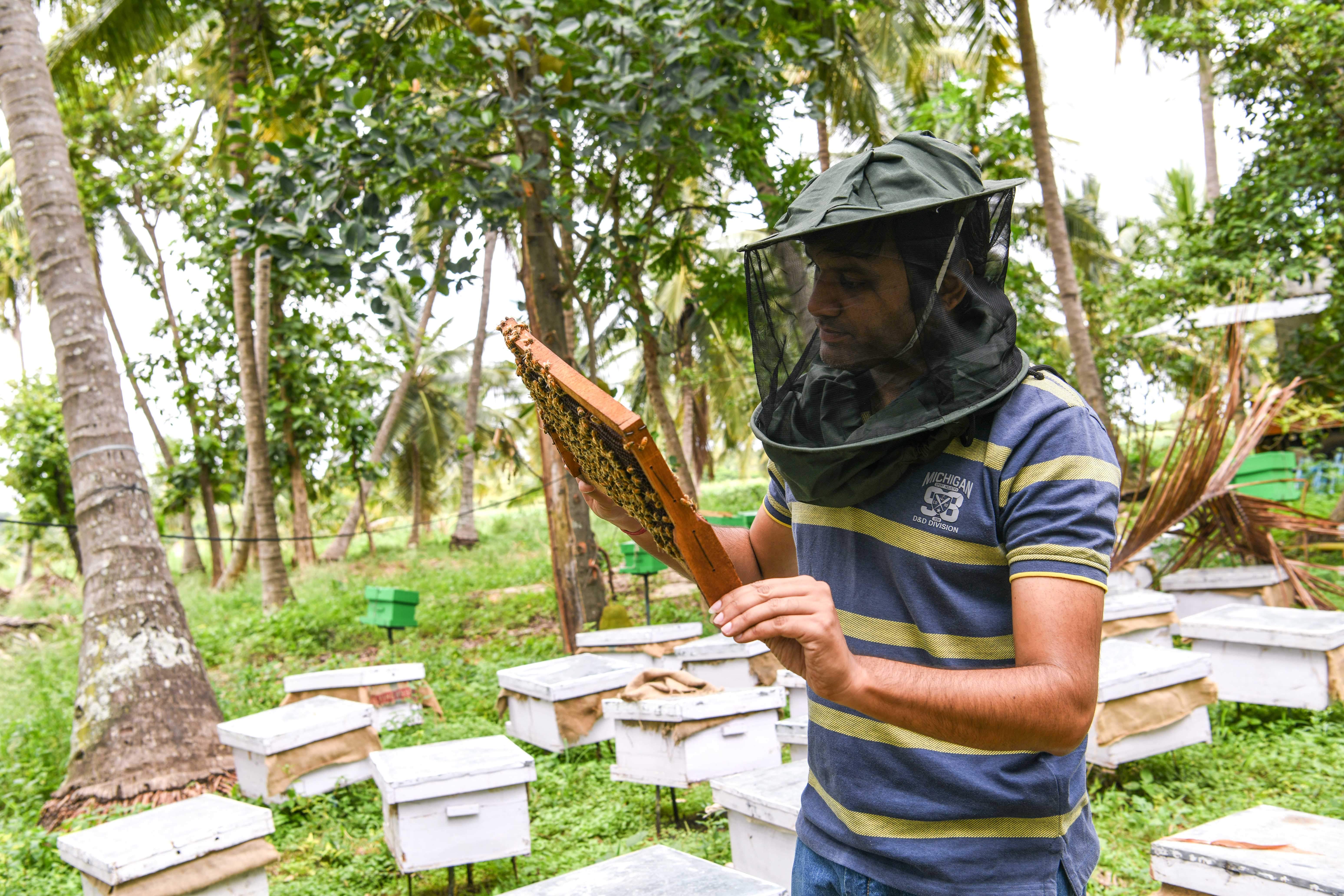
Apoorva visits his bee farm in Bidadi regularly to check the health of the bees. He is a mechanical engineer but a beekeeper by profession. He found his passion for bees even before he graduated and took it up soon after. He’s been working on bees for over 10 years and works closely with farmers across the country. He travels, meets farmers, trains them, gives them bee boxes, follows up with them on the progress and reviews the health of the bees regularly. He also helps them sell their produce. While Apoorva works with a lot of people across the country, this is a story close to home where he’s been working with flood victims in Coorg.

He is involved in multiple activities such as honey production, bee breeding, manufacturing beekeeping equipment, selling honey and beehive by-products, mainly wax. His company’s annual turnover is over 2 crores. He has both Indian and Italian bees.
Honey03KF29oct2019

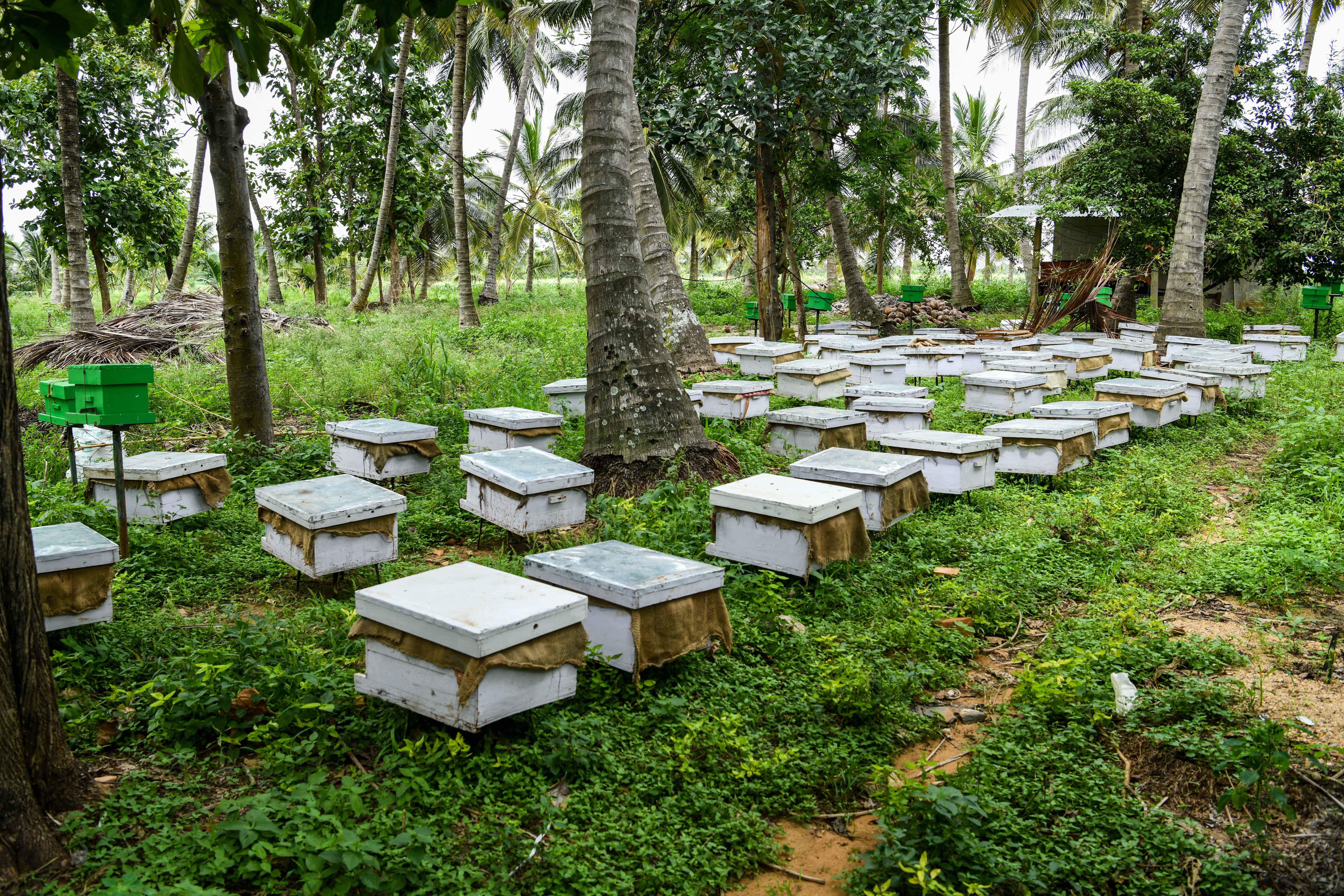
He initially collected bees from hives and then started breeding them in his apiary during the natural division season of bees. He also buys colonies from farmers when they multiply. This bee farm is near a cornfield which is rich in pollen. It is important to understand your demography he says. Having bee flora next to an apiary is very beneficial to harvest more honey and keep bees in good health. He harvests Indian bees in forests and hilly regions and also promotes only Indian bees to farmers as it’s easier since most of them cannot handle migratory beekeeping.

European bees which in India are Italian bees requires 4-7 migrations in a year for which, he travels around 1,200 kms pollinating thousands of acres in North Karnataka mainly Sunflowers, Til, Niger, Coconuts, Arecanuts, Banana, Avacado, Litchi and more. Honey yielding fields for Italian bees are Sunflowers, Eucalyptus, Til and Niger. He has more than 200 colonies now and will split them to make about 800 during the breeding season. A farmer keeps anywhere between 4-25 boxes. He needs about 3 boxes per acre and has to distance each colony by at least 10 feet.

Bee Harvesting has helped Coorg flood victims make a livelihood

Vijay Panduranga talks about the effects of the flood and the rehabilitation work in Coorg.

After the floods in 2018 that hit Coorg, a lot of farmers lost their land in turn livelihood and haven’t received much relief from the government. There were rescue operations but then not much is being done on the rehabilitation front.

With paltry compensation from the govt. Coorg flood victims are finding solace in the new beekeeping venture. Nectar flow is an initiative/program started by a few local people, spearheaded by Retd. Brigadier Devaiah to help provide a steady income to people interested in beekeeping. People have seen returns in the 1st few months. They say that the money that comes in lets them breathe. While beekeeping in an age-old tradition in Coorg, the methods are ancient. Devaiah was on the lookout for someone with a scientific approach to help them and that’s when he found Apoorva and sought help. Apoorva readily agreed and continues to work closely with the farmers. He has helped the farmers understand the species better, eventually getting them better yields. At Coorg, each farmer makes a minimum of 5 kgs of honey per year and each box sells at Rs. 600/- per kg. They also make money by selling colonies at Rs. 1,500/- per colony. Farmers produce about 2-3 kgs of beeswax per year which is approximately Rs. 350/ kg

Farmers from the North East, Chhattisgarh, Coorg and other parts of India find it difficult to sell the honey and wax that they produce. Apoorva helps them by buying the whole lot from them, filters them further if there’s moisture and sells them as and when he gets enquires. Honey is labeled as per the flowering season such as litchi, cardamom, clover, mustard, chilli, etc., the honey tastes different too.

The by-products such as beeswax, royal jelly and bees venom are other sources of income and, used in pharmaceuticals and beauty products.

The below-mentioned statistics are only an example of how bee pollination increases the yield anywhere between15% – 80%. These are scientifically proven numbers in ideal conditions (these are underestimated values).

Estimated global economic value of pollination is 217 billion USD in 2005

_______________________________________________

Crop Increase in yield per acre (%) Increase in yield per acre Income generation by pollination per acre
_______________________________________________

Coffee 15% 5 Bags 15,000/-

Aracanut 25% 2 Quintals 64,000/-

Coconut 20% 3,000 nuts 36,000/-

Banana 20% 5 Quintals 10,000/-

Watermelon 80% 4 Tonnes 20,000/-

___________________________________________

Farmers tell us their personal stories of how beekeeping has helped increase their yield with pollination in crops such as coffee, fruits and spices. They also make a good livelihood but extracting honey and wax. What they make is pure and unadulterated making the quality far more superior than the ones available off the shelves at supermarkets.
Honey04KF29oct2019

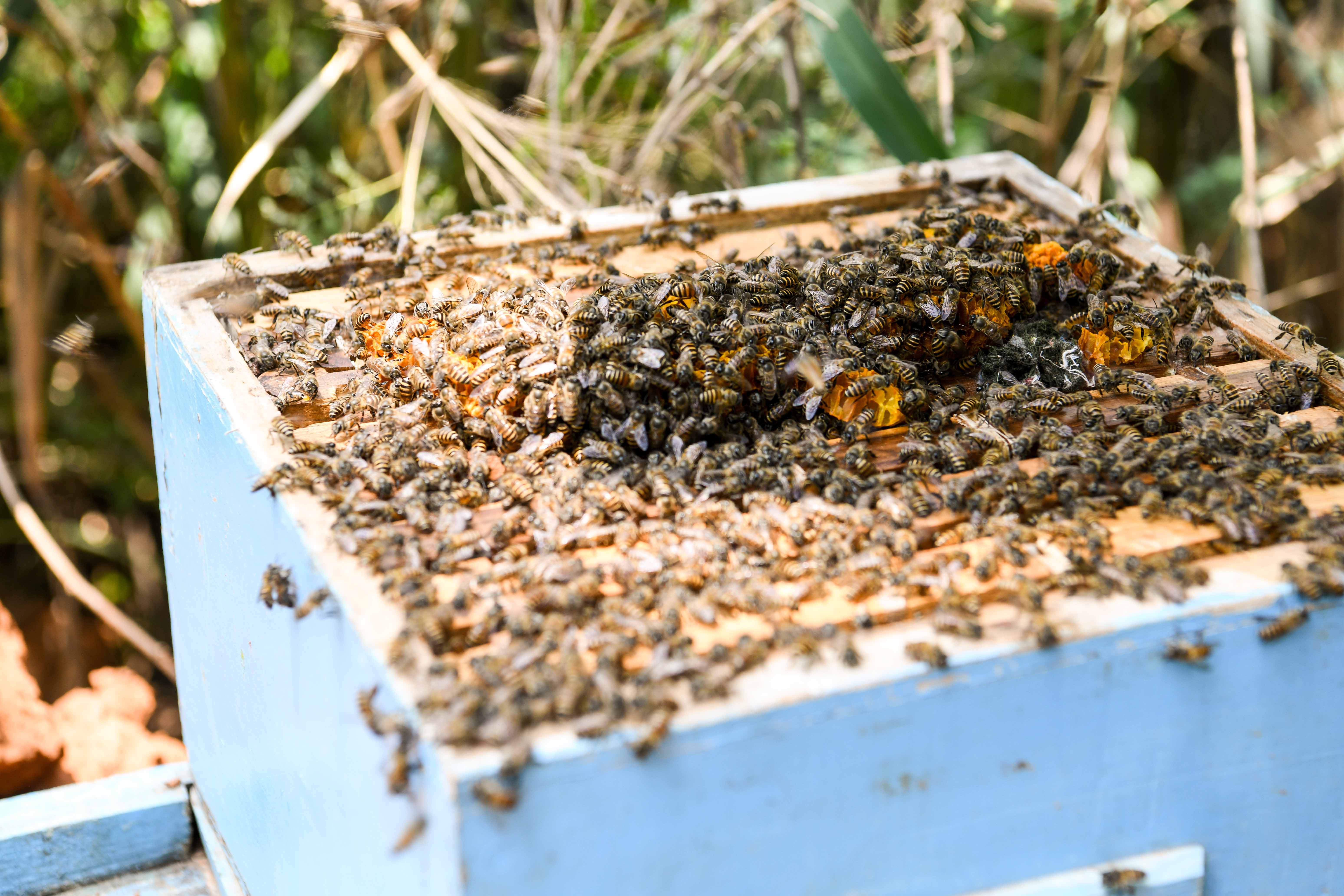
This is what a bee box looks like. This is one bee colony. They come on top to feed. There are multiple wooden frames inside quoted with wax, which help them construct combs.
Honey05KF29oct2019

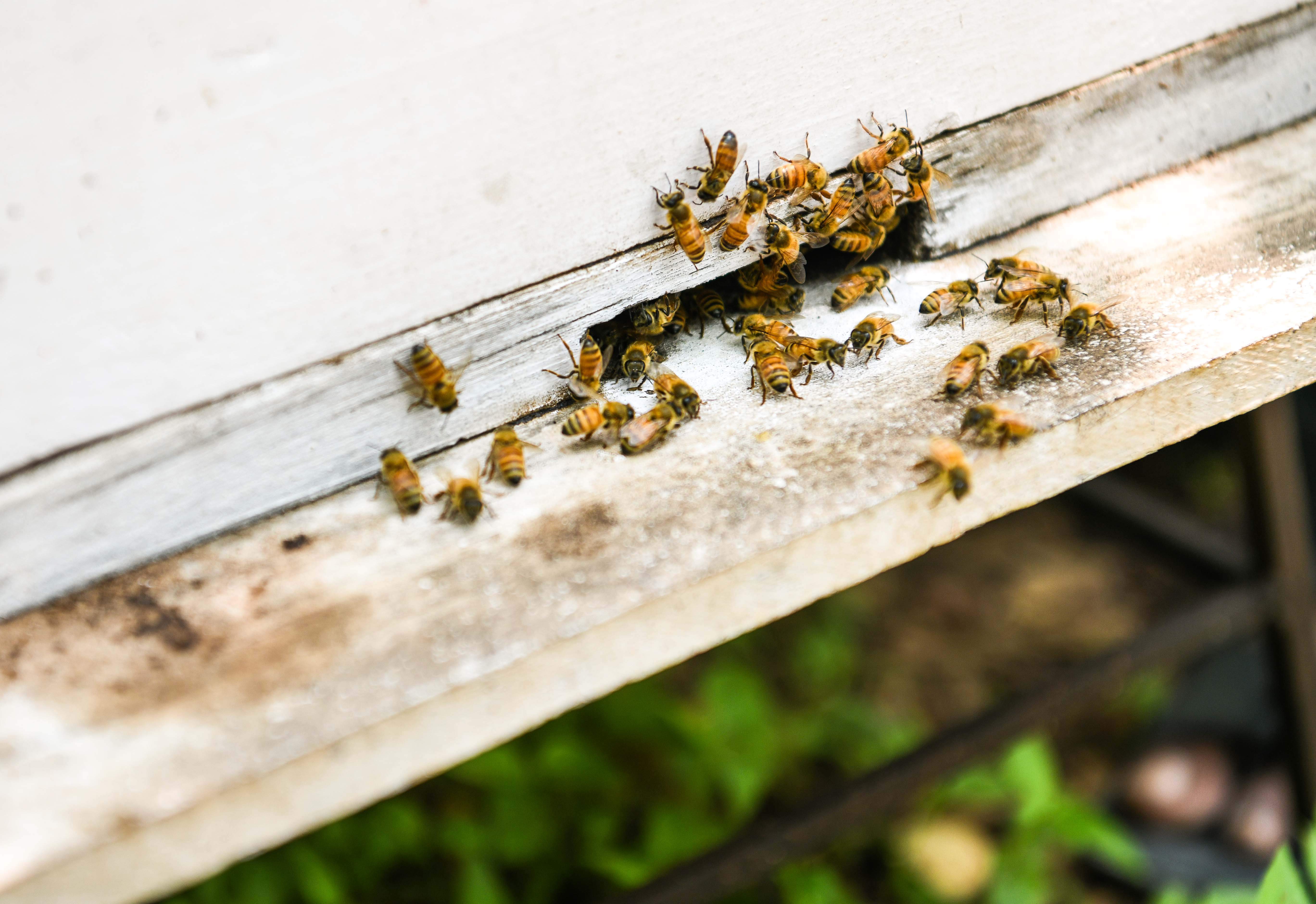
Every bee box has an opening at the bottom which allows the bees to move in and out of it, to go out and collect nectar and pollen. Some farmers who have these bee boxes are also given out on rent for pollination to seed producers or other farmers who are in need of pollination.
Honey06KF29oct2019

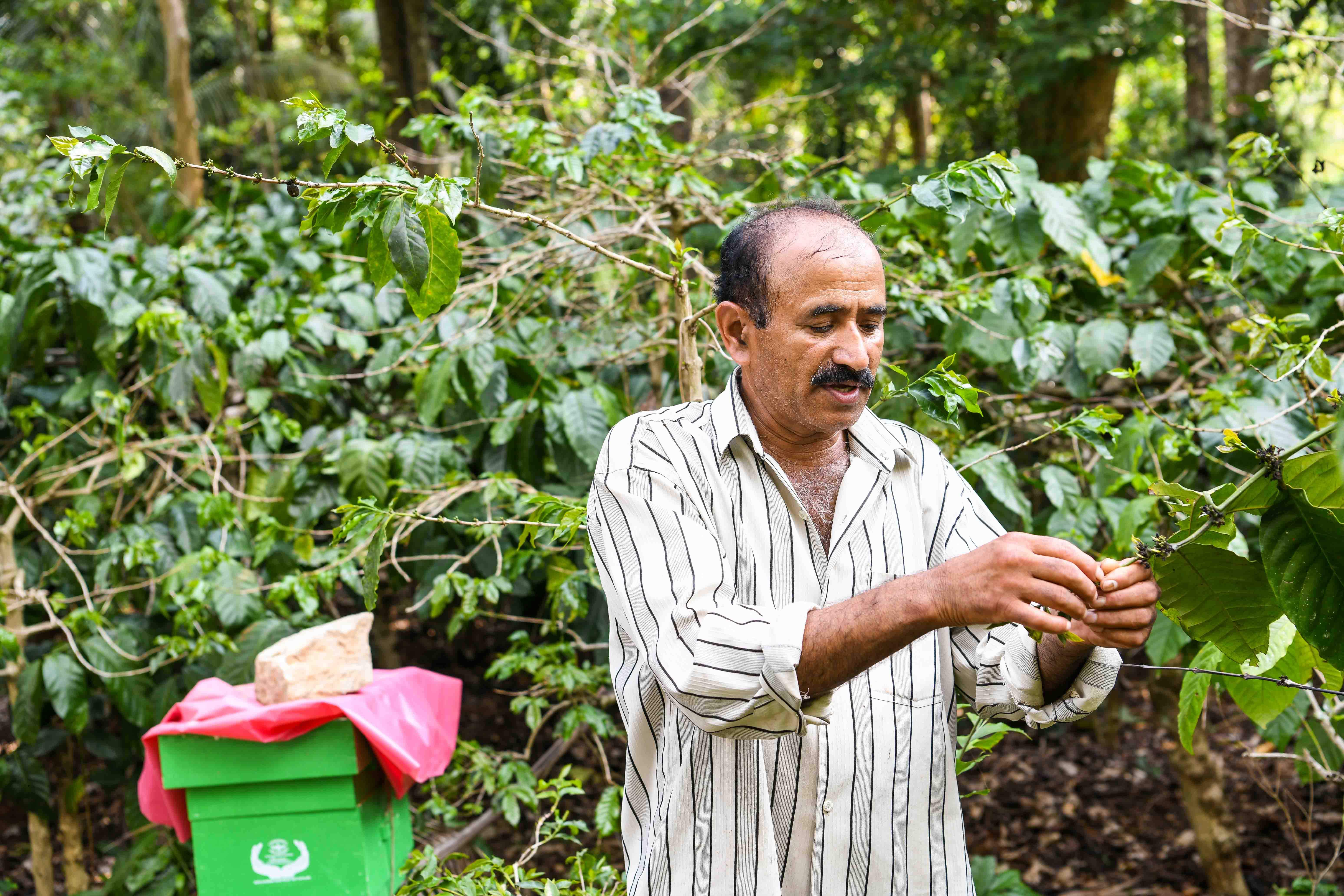
Naganna (Saachi) Kalappa lives 3 kms away from the main Madhapur town in Somwarpet Taluk. He has been harvesting bees for 18-20 years. Bees were available in abundance then as the ecology was healthy and rich, and filled with plants that the bees needed to survive. However, the species has seen a massive decline in numbers as the human population has been increasing and trees are being cut down for personal benefits such as planting silver oak trees as it yields timber and in a short span of time. Since the decline in numbers, they now need to procure boxes and up their skills and knowledge. After adopting this scientific method, he has benefited as his crops are multiplying. He is making enough money to take care of the needs of his family. He also says I request people to stop destroying forests and help in sustaining them and grow trees that are required for agriculture instead of timber to improve the ecology.
Honey07KF29oct2019

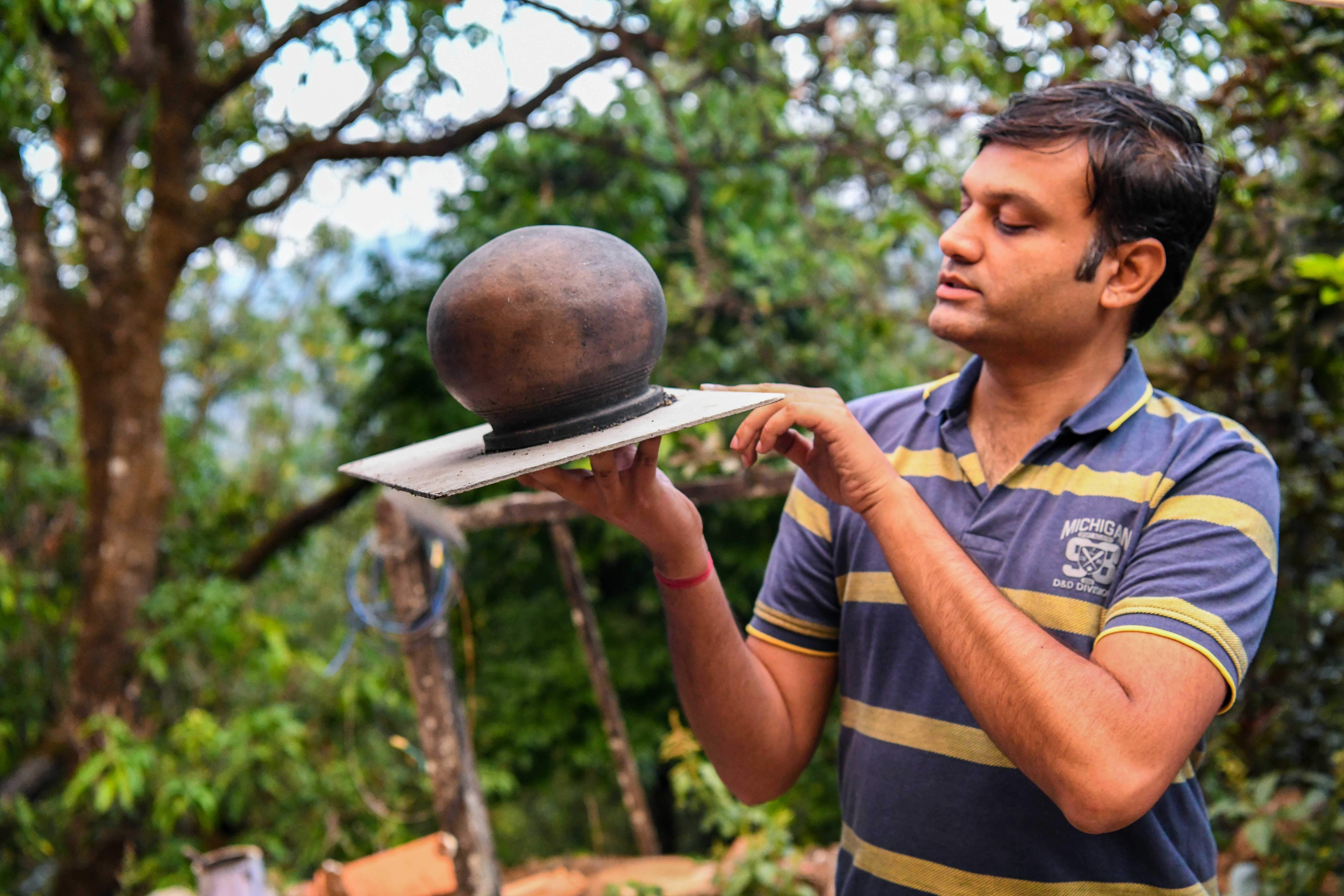
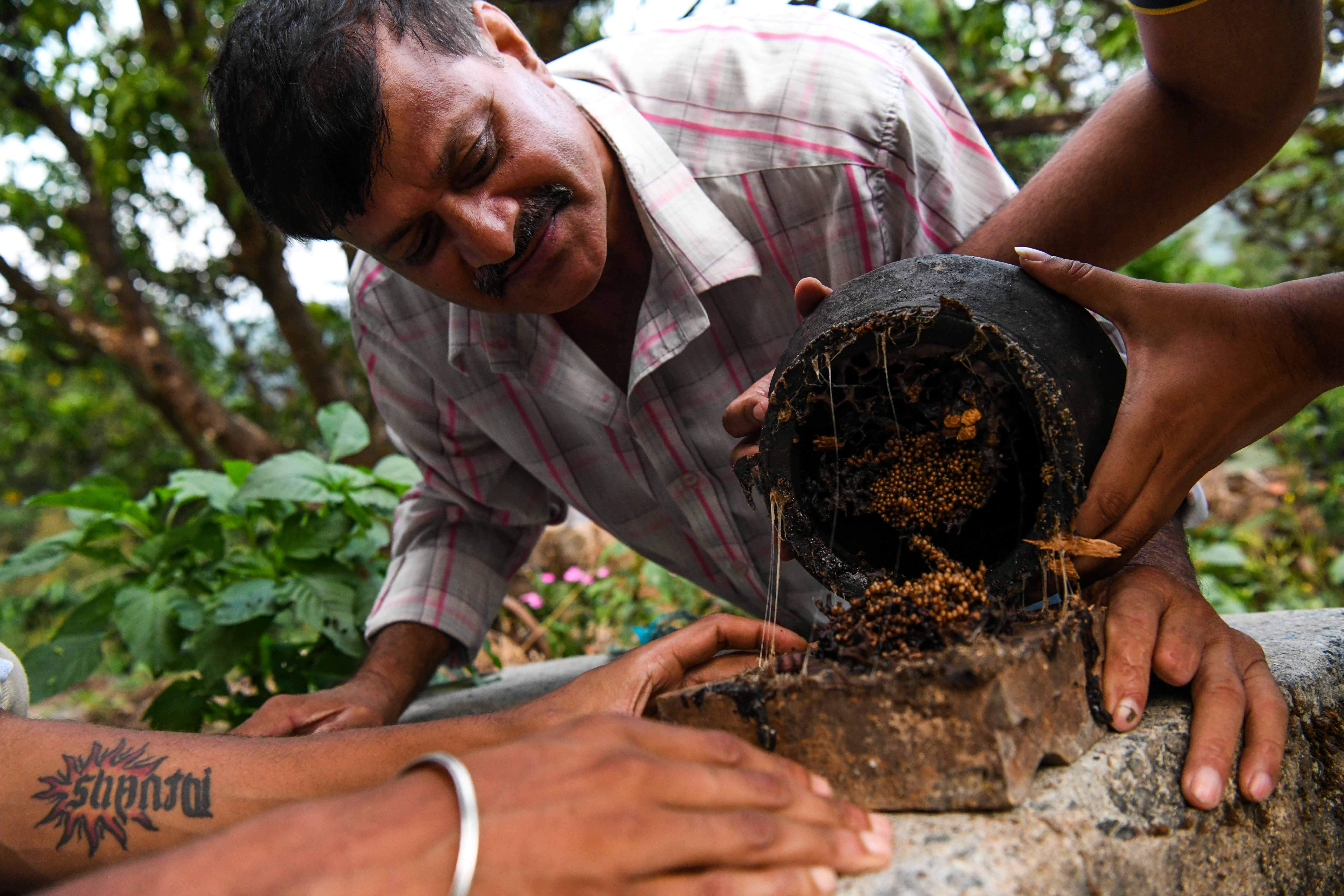
Thammaiah CB (Dolly) lives 7 kilometers away from the main Madhapur town in Somwarpet taluk in the Coorg district. This part of Coorg witnessed the worst of nature’s fury in 2018. While he has been harvesting Indian Apis Cerena Bees in boxes he also harvests stingless bees in pots. The quantity of honey is way lesser than what is produced by other bees however, the quality is far more superior as it has a lot of medicinal properties and is sold at a much higher rate.
Honey08KF29oct2019

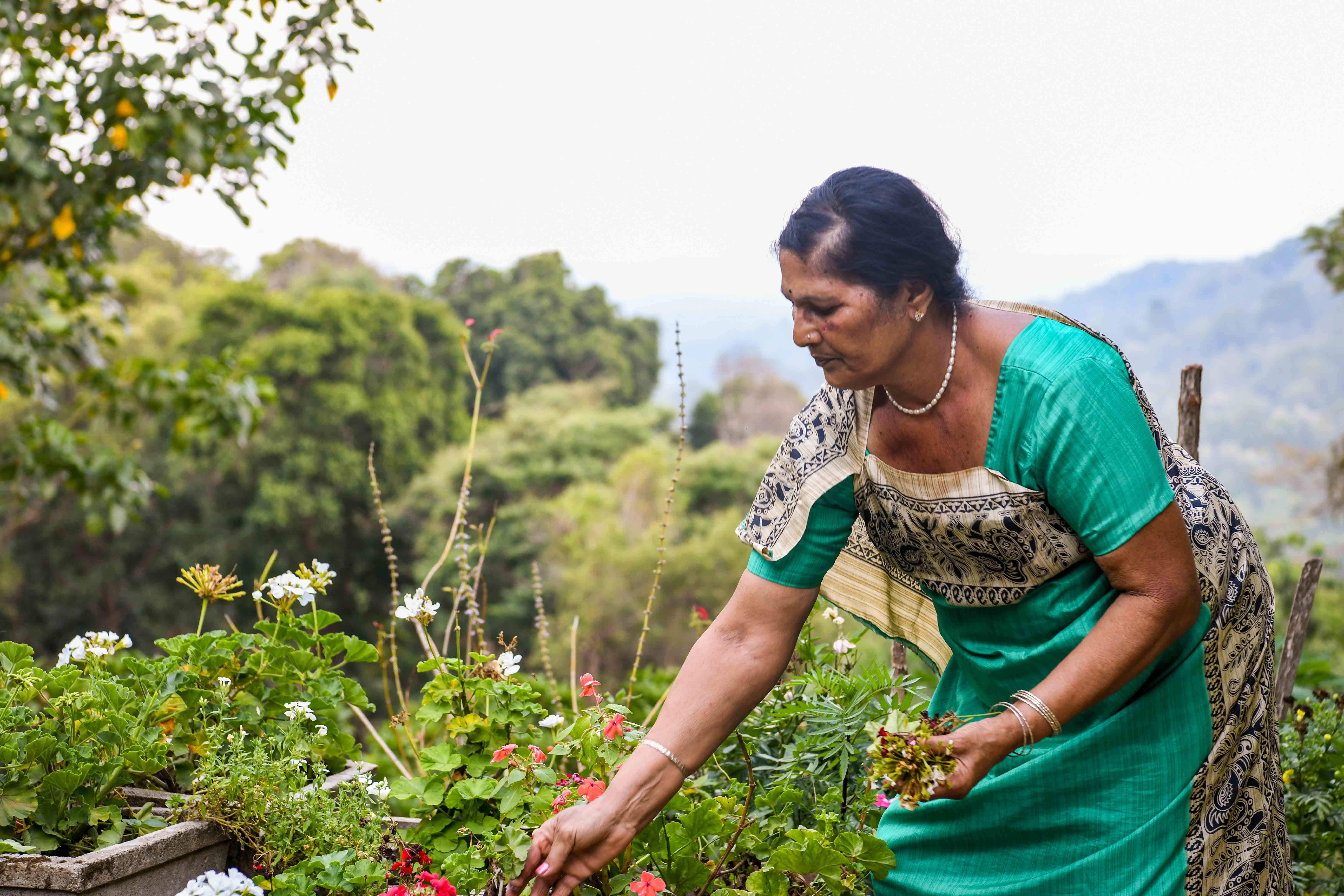
Thammaiah’s mother tends to her garden every day. She says it isn’t enough if you just harvest bees and have a coffee estate, it is very important to understand what kind of flowers and fruits attract them and cultivate them in your garden. This helps in increasing pollination and nectar production.
Honey09KF29oct2019

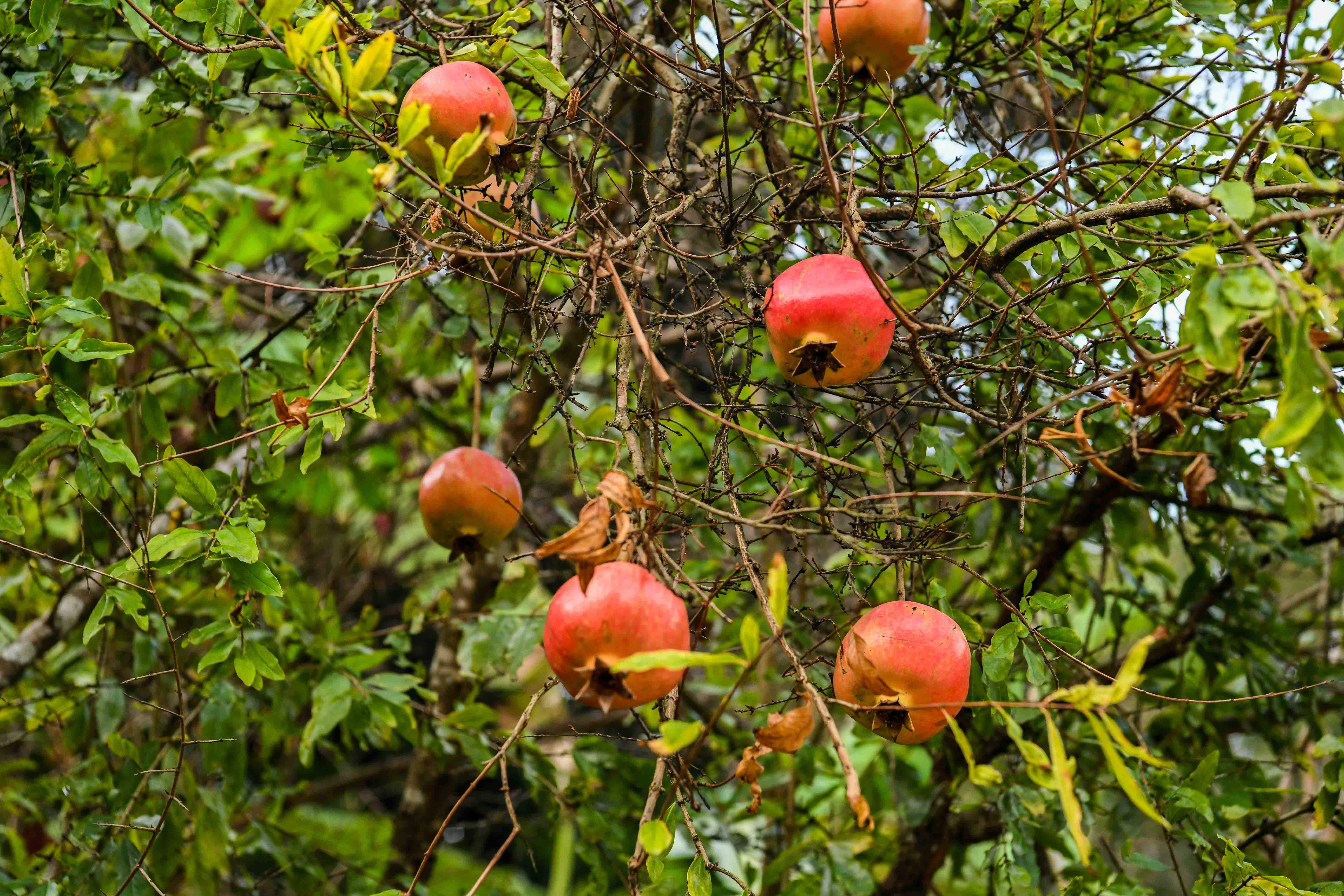
Fruit especially those with seeds are good pollinators.

Honey10KF29oct2019

Plants that one should cultivate to yield better results

Nectar: Plants such as Avocado, Litchi, Hibiscus etc.

Pollination: Plants such as Sunflower, Sesame, Mustard, Coriander, Niger, Coconut and more (bees are attracted to vibrant colours such as yellow and blue)
Honey11KF29oct2019

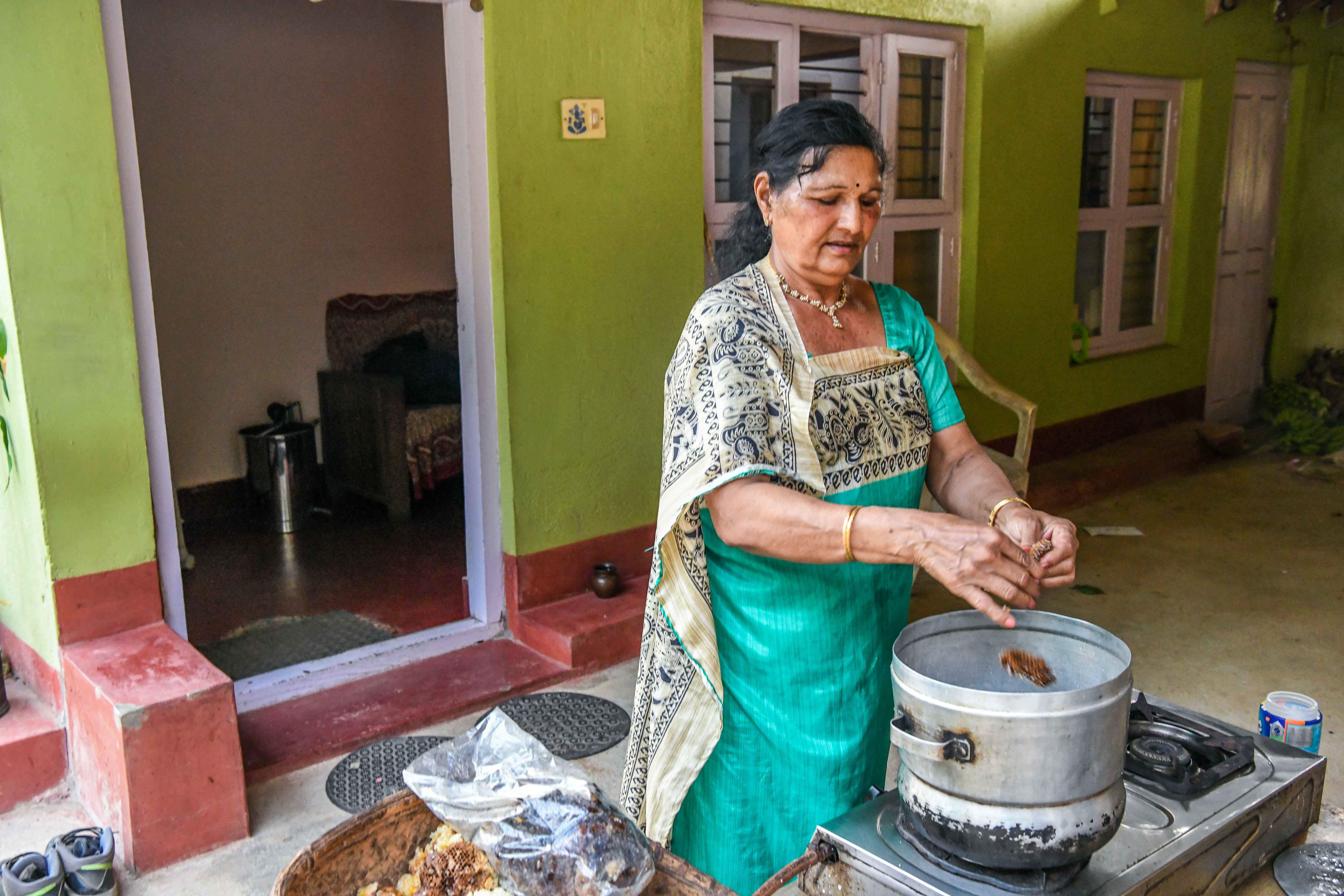
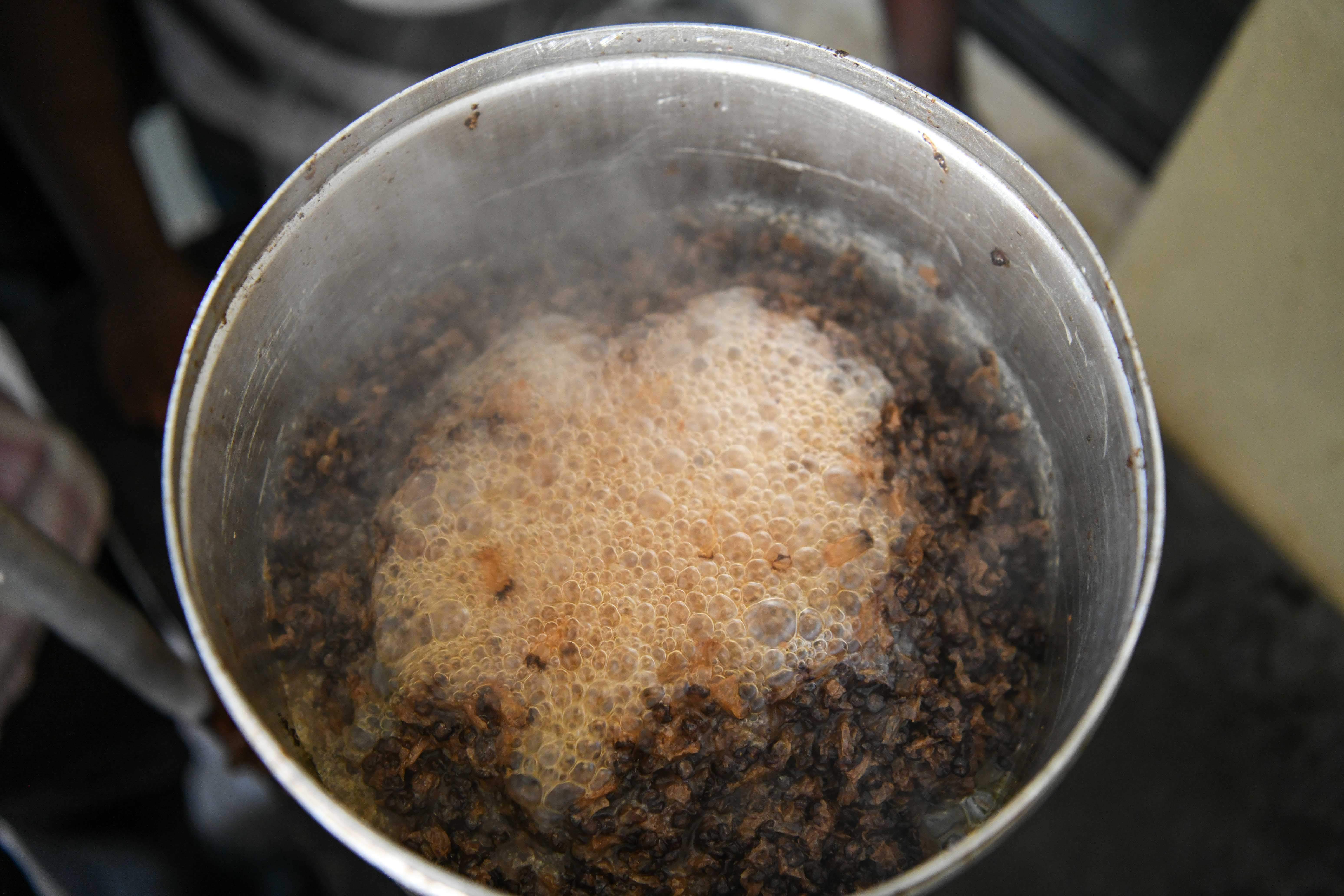
She also makes beeswax at home which is another income generator. She says that it is not a very laborious process and demonstrates. You first break the comb into a utensil with enough water and let it boil.
Honey12KF29oct2019

You let it boil until it reaches the required consistency.
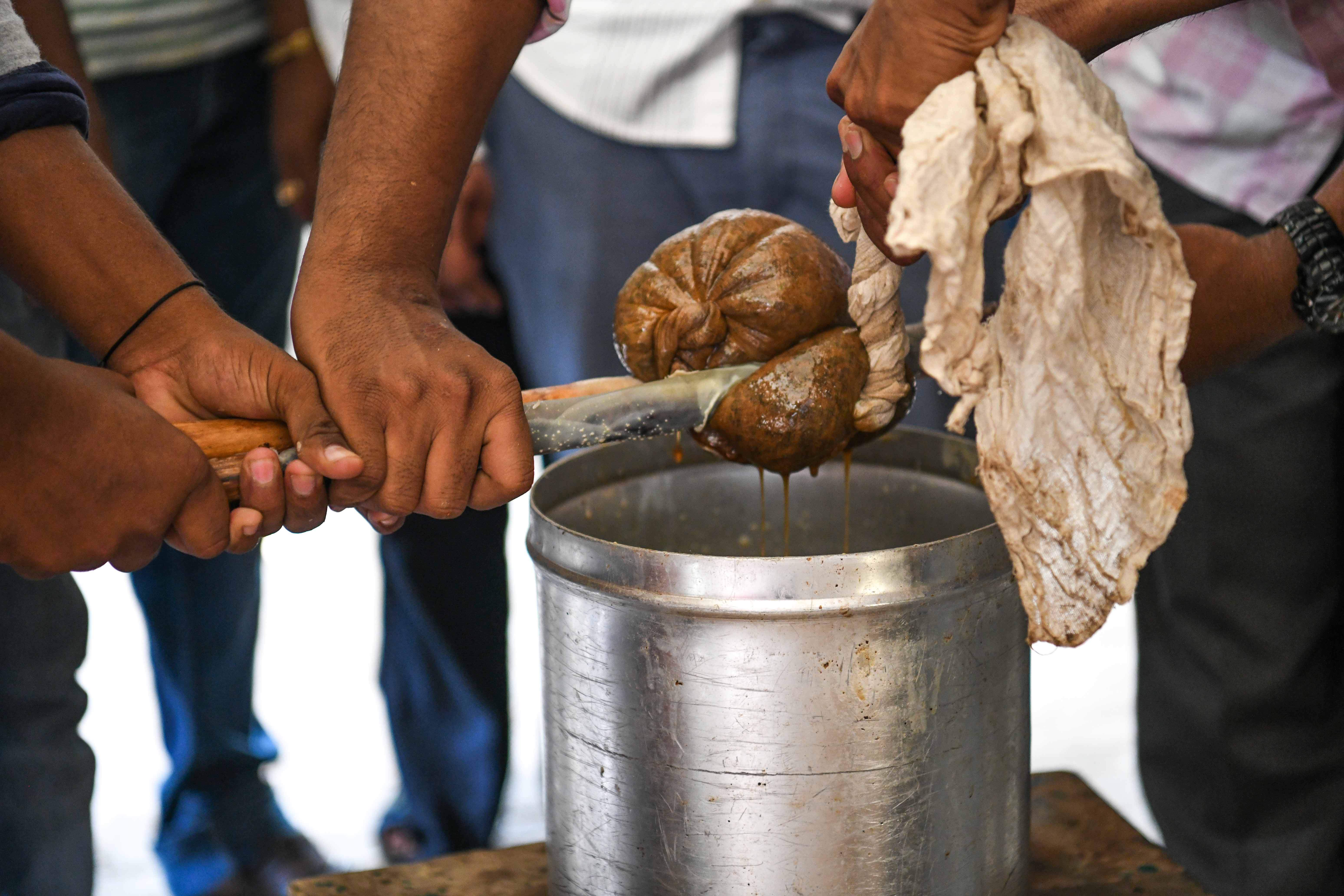
Honey13KF29oct2019

You then squeeze out all the excess water and use the residue to make wax cakes.
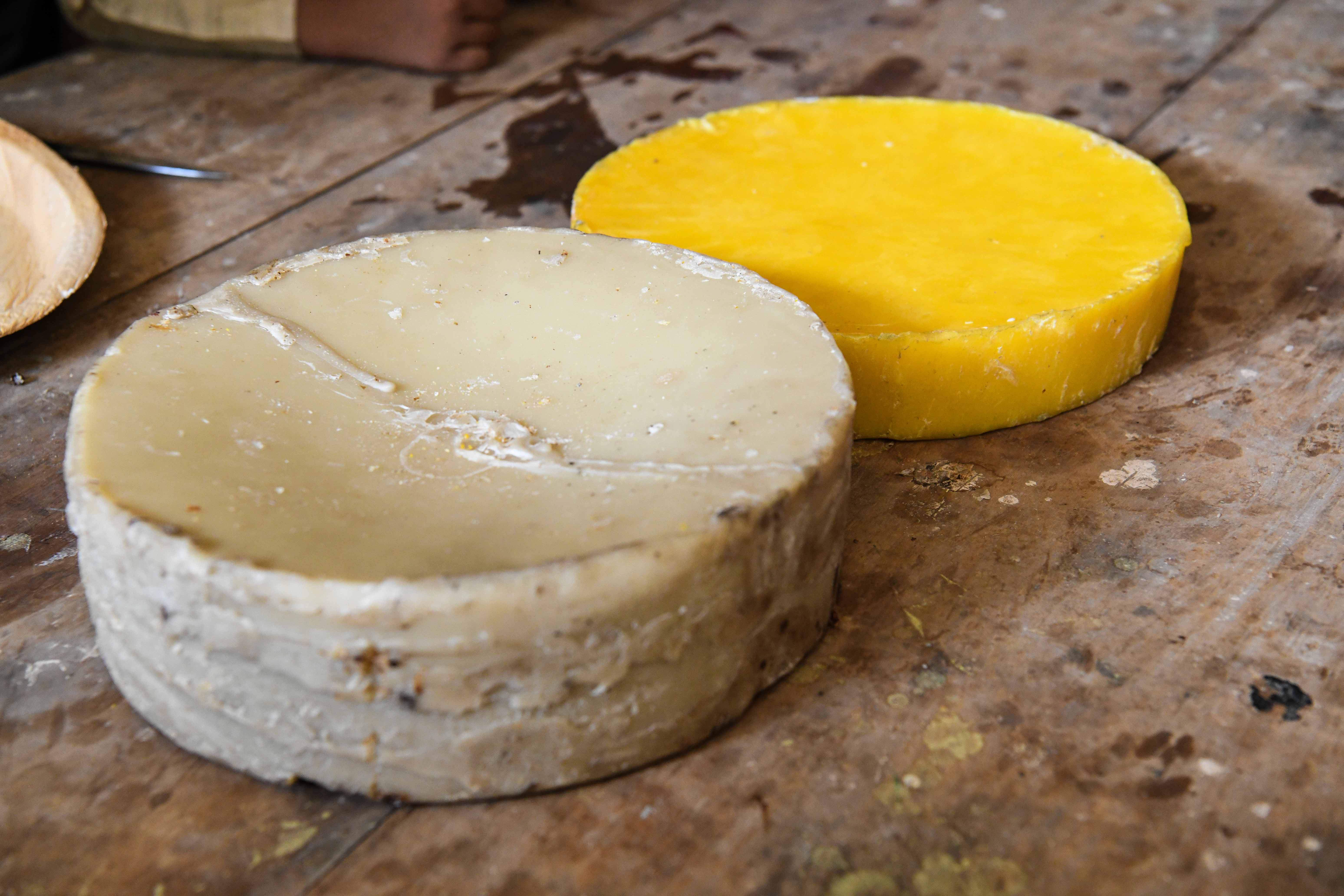
Honey14KF29oct2019

This is the final product.

Honey15KF29oct2019

Apoorva pays regular visits to all the farmers across the country and conducts a health check.
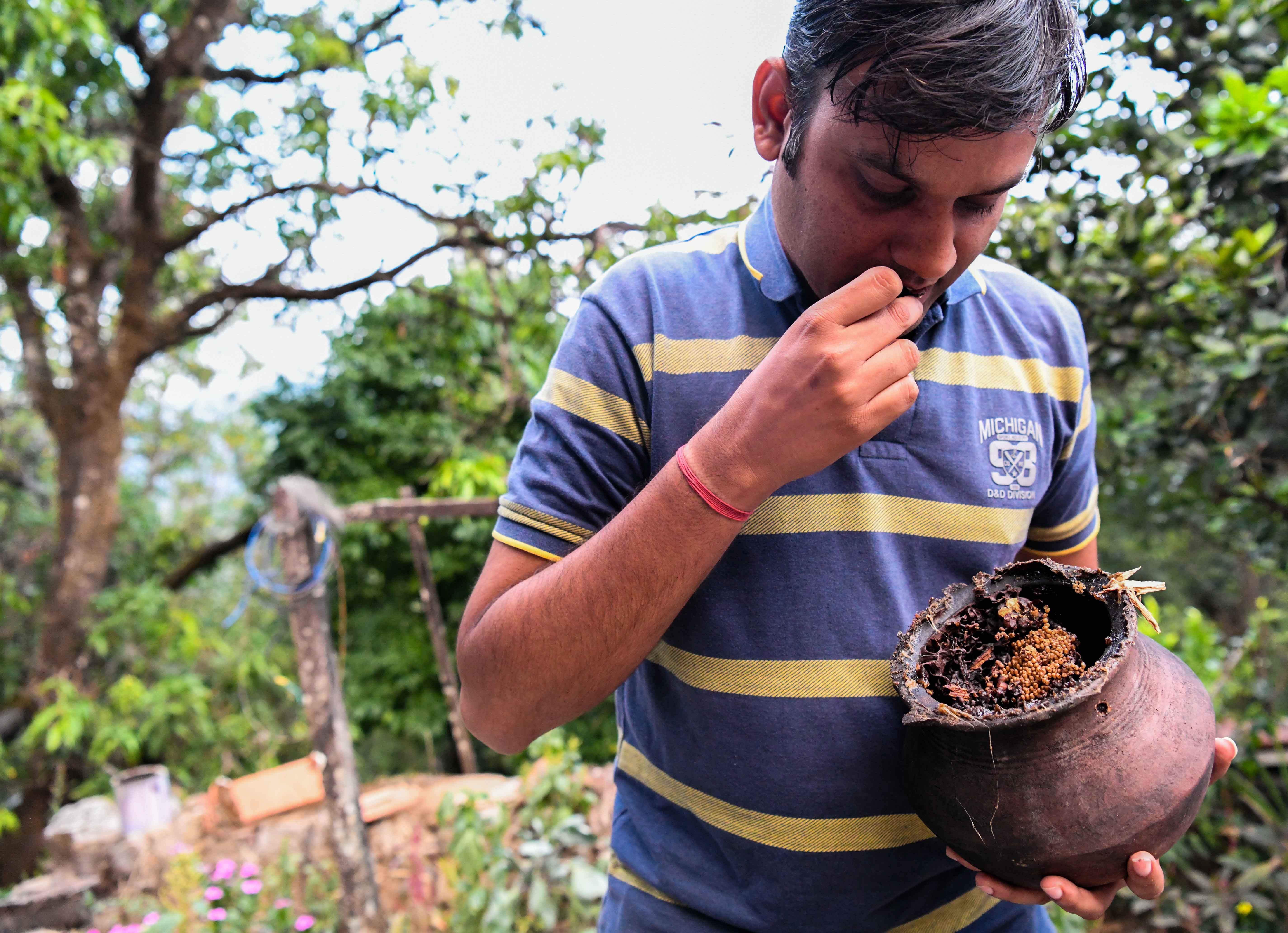
Honey16KF29oct2019

It is very important to taste it as well. Every house he goes to gives him honey to taste. He jokes and says I am glad I don’t have diabetes. If I did, for the amount of honey I consume, I would be in a lot of trouble.
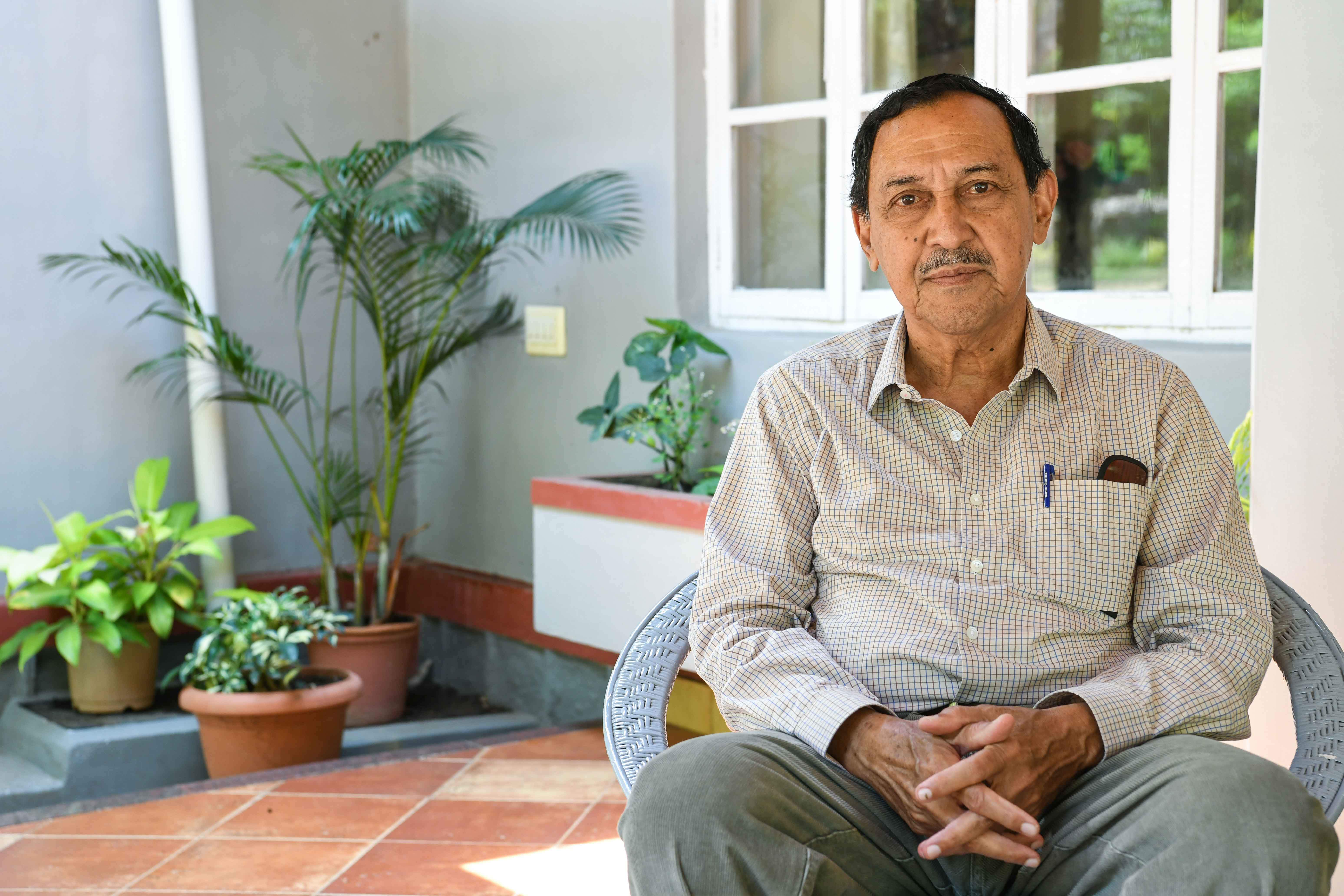
Honey17KF29oct2019

Bose Mandanna is the fourth generation coffee grower. He moved back to Coorg 53 years ago after completing a bachelor’s degree in Agricultural Economics. He talks of how he has seen farming change in the years to come. Back in the day farming was done in a very environmentally friendly way. Over a period of time, when they found pests taking over the plantation, they used some chemicals to deal with the pest issue. However, they soon realised that they were not only harming humans but also the bees and other pollinators in the environment. These chemicals known as weed killers have cancer-causing properties. On realising this, they decided to go back to organic farming. However, a lot of farmers have been affected by this chemical especially in Punjab as they are one of the largest agriculturists, and the Punjab mail is popularly called the cancer express as a lot of them are coming to Bombay for treatment. Also to note the groundwater gets affected by these chemicals. People are saying that there are bee-friendly pesticides available. He jokes and says “there are all chemicals and they cannot be friendly, they might not kill you but make you unconscious”. Please avoid chemicals and use bio controlled agents.

Honey18KF29oct2019

White Stem Borer Problem: These pests are known to attack the coffee plants and wreak havock hence they wrap the plants with white cloths to avoid this menace. There is a mild chemical in it but it only
touches the trunk of the plant and does not reach the coffee flower thereby not harming humans or bees.
Honey19KF29oct2019

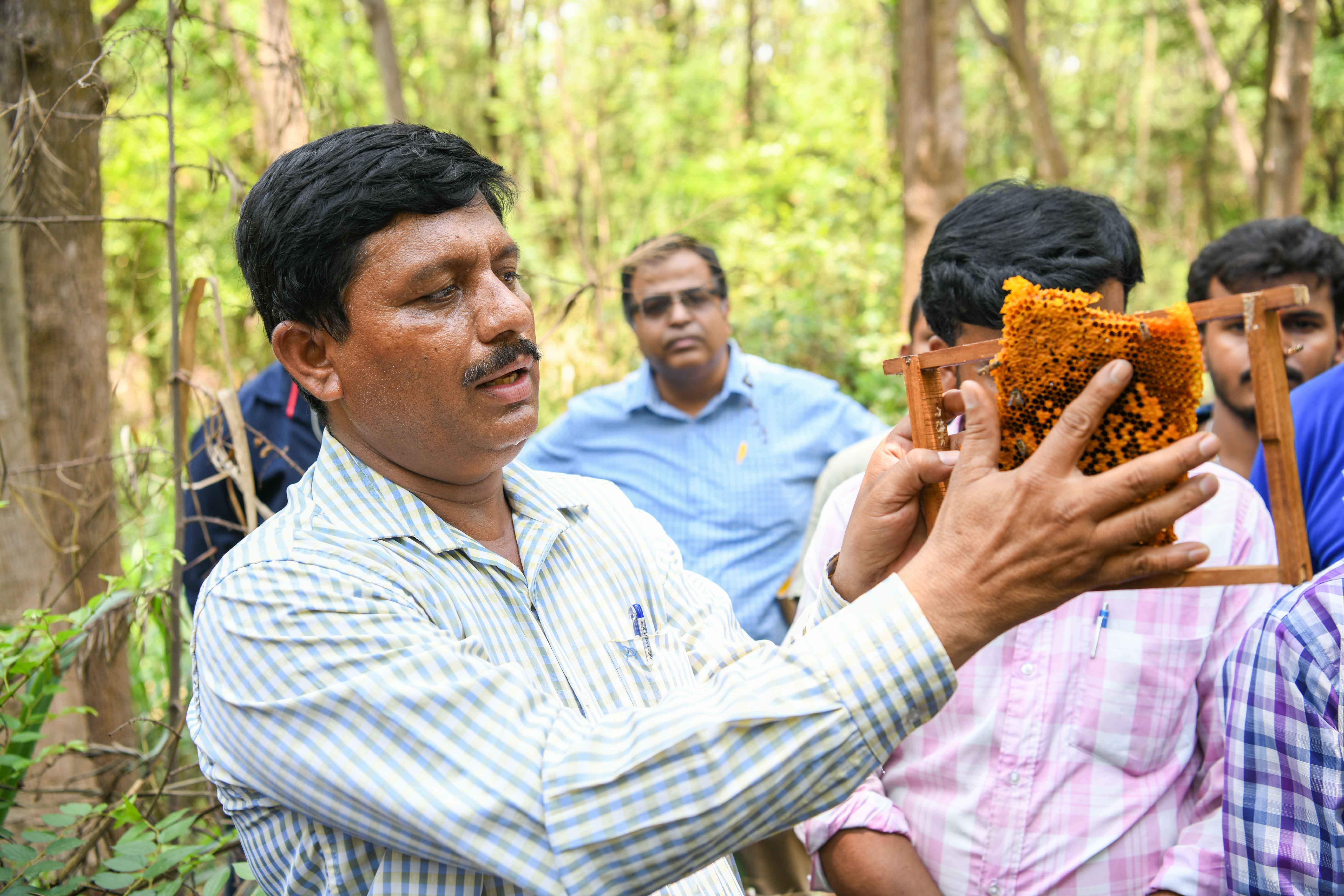
May 20th is International Bees Day. UAS in GKVK conducted a 2 day class for people interested in beekeeping. Urban beekeeping is also becoming popular as people from the cities have started showing
interest.
Honey20KF29oct2019

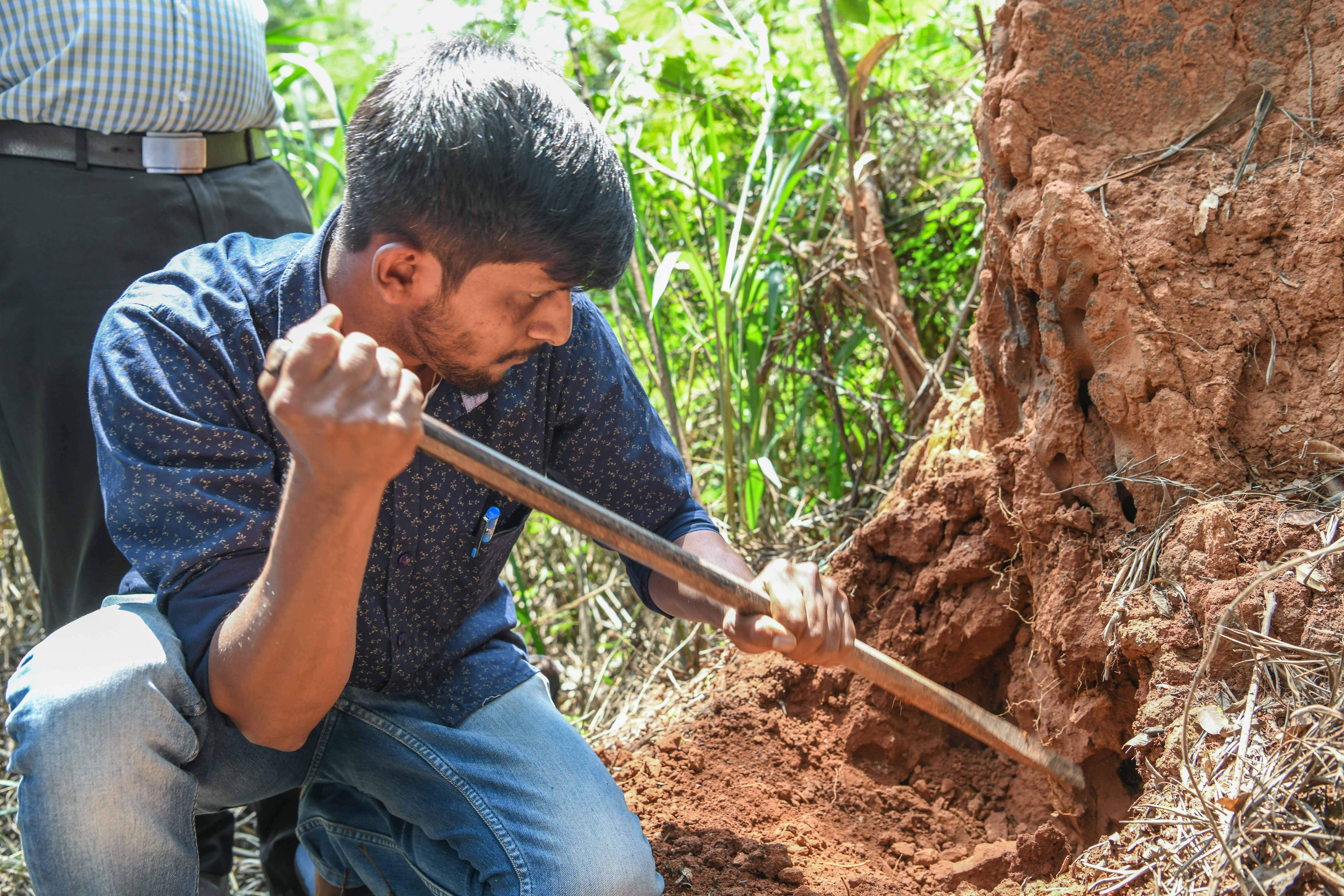
The staff showed them how to identify and dig out for a beehive as they can build hives anywhere. This has to be done with caution so as to not break the hive.
Honey21KF29oct2019

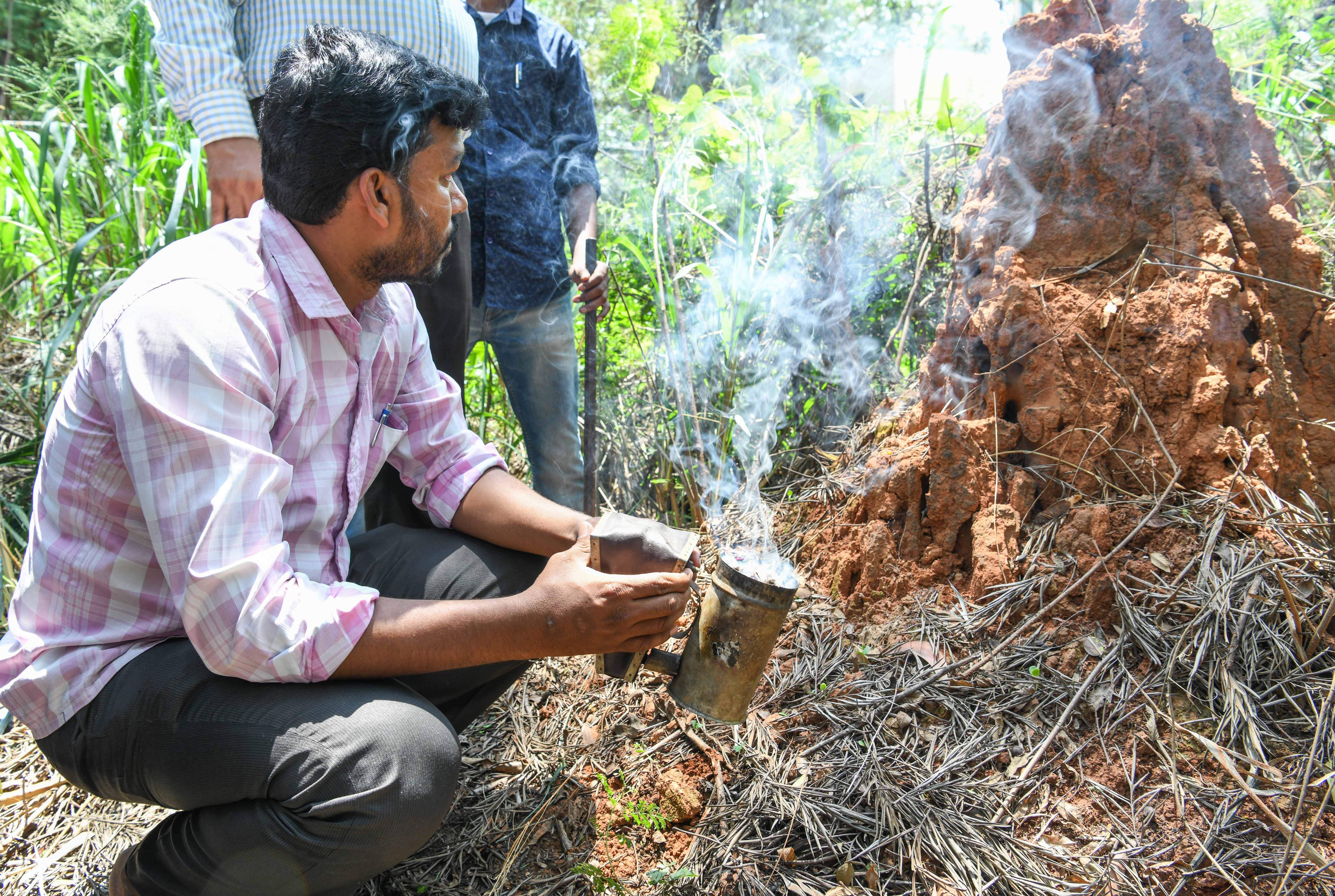
You then mildly sedate the bees with some smoke by burning dry cotton cloth and get the comb out

Honey21KF29oct2019

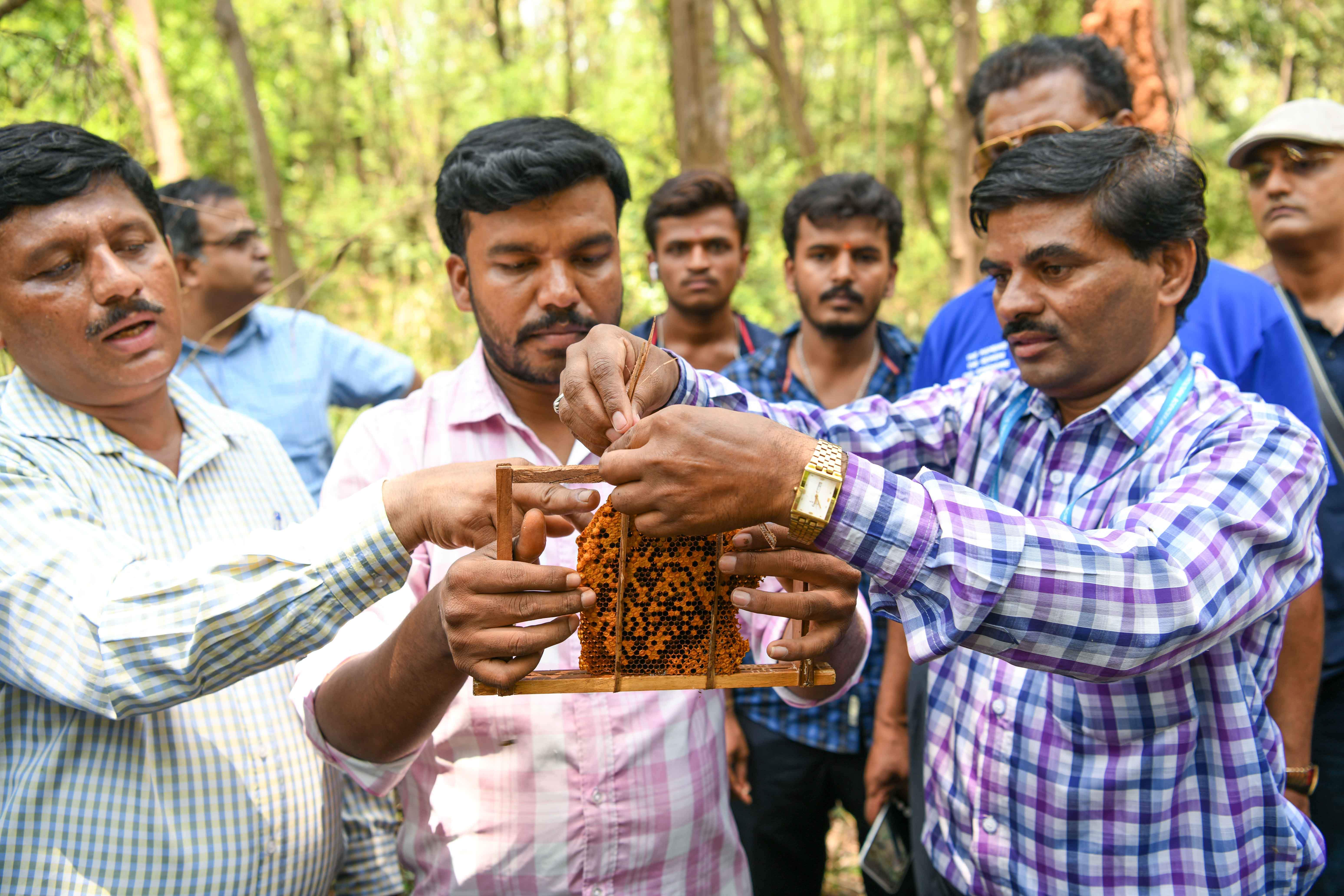
Once you get the comb out, you tie them tightly to a frame but not so tight that they break.
Honey22KF29oct2019

Students learn to tie the comb to the frame.
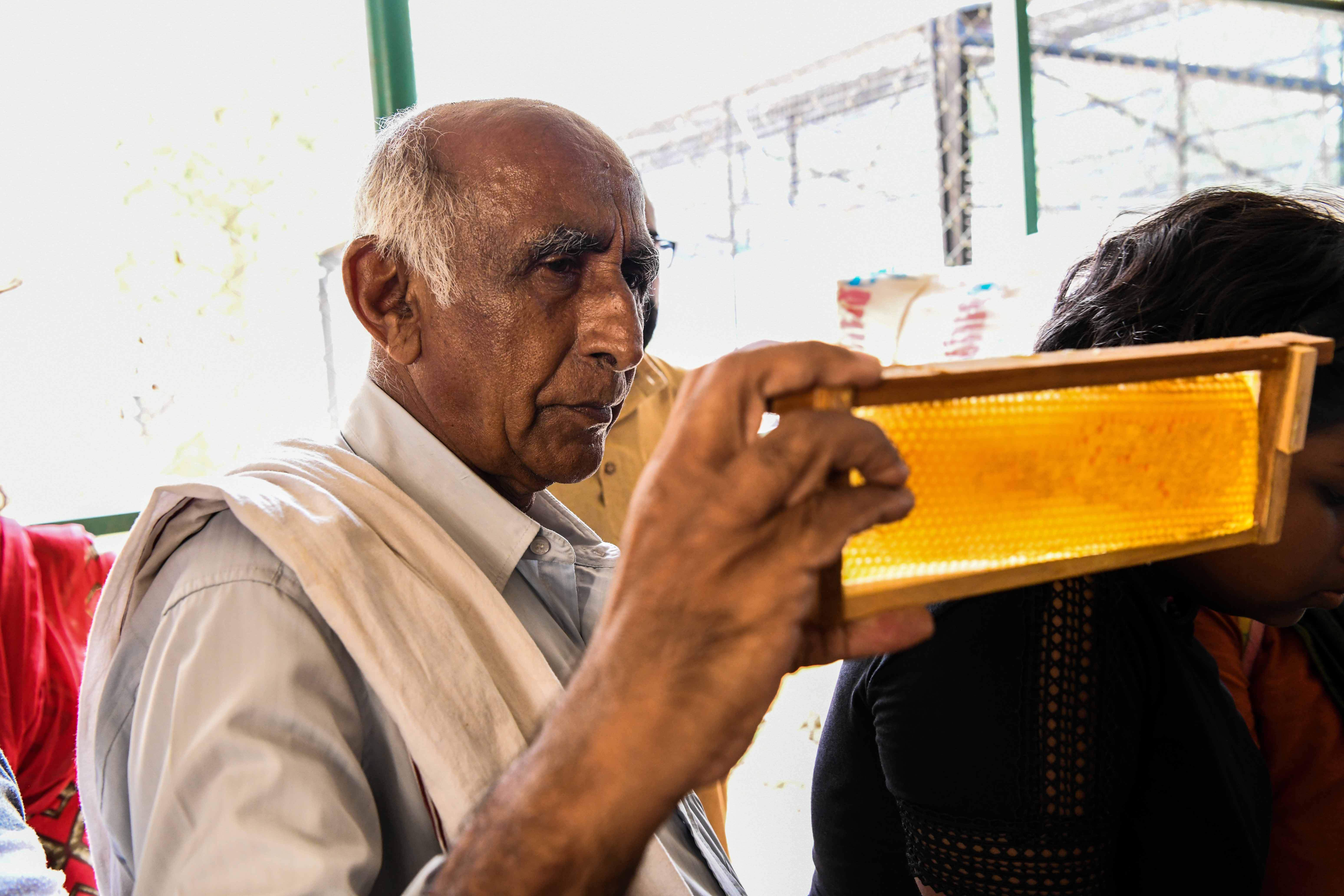
Honey23KF29oct2019

While they learn to make honey, a student observes the comb.
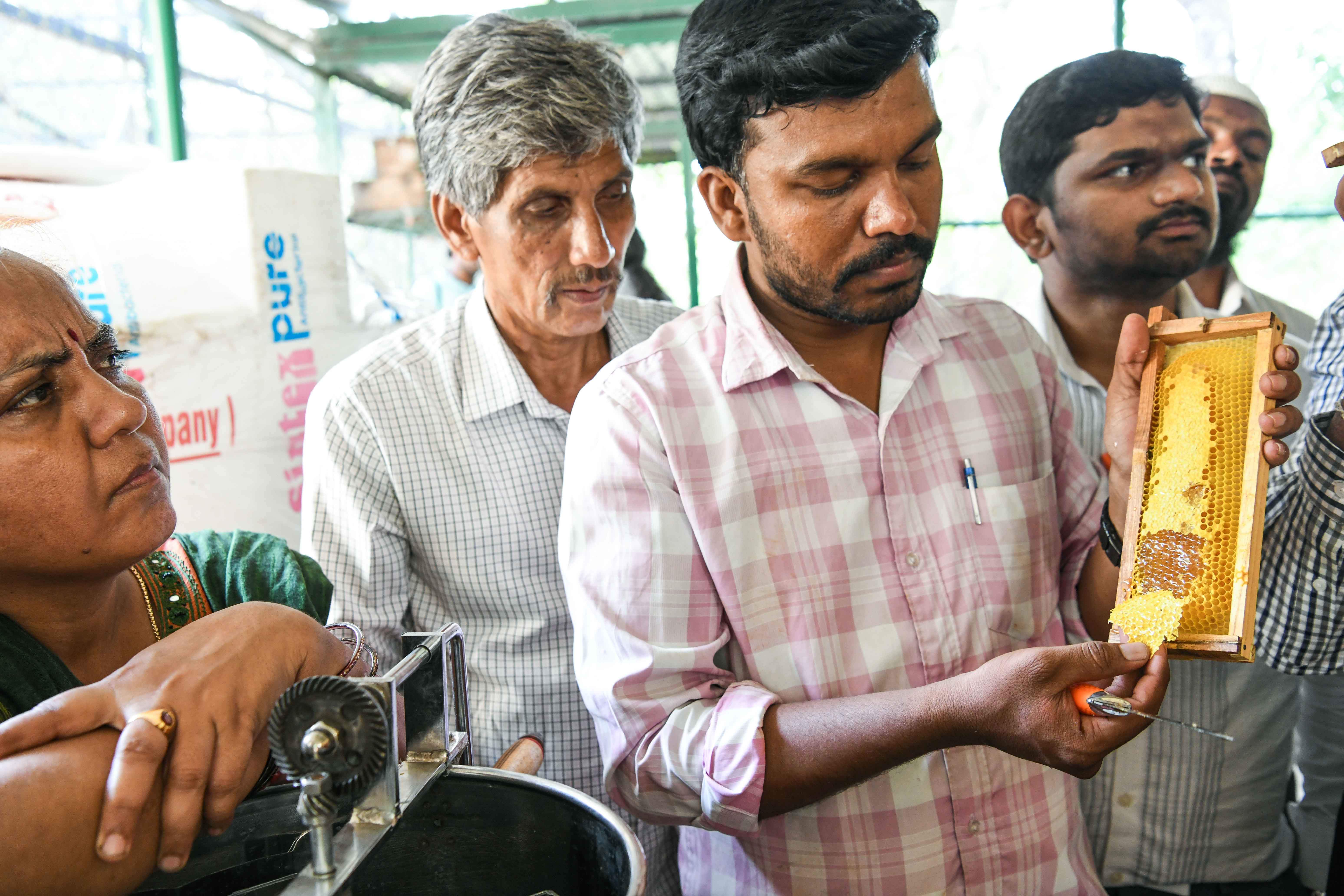
Honey24KF29oct2019

Santosh from the faculty shows the class how to peel the comb before you can put it into a vessel to churn honey. The peeling has to be very fine.
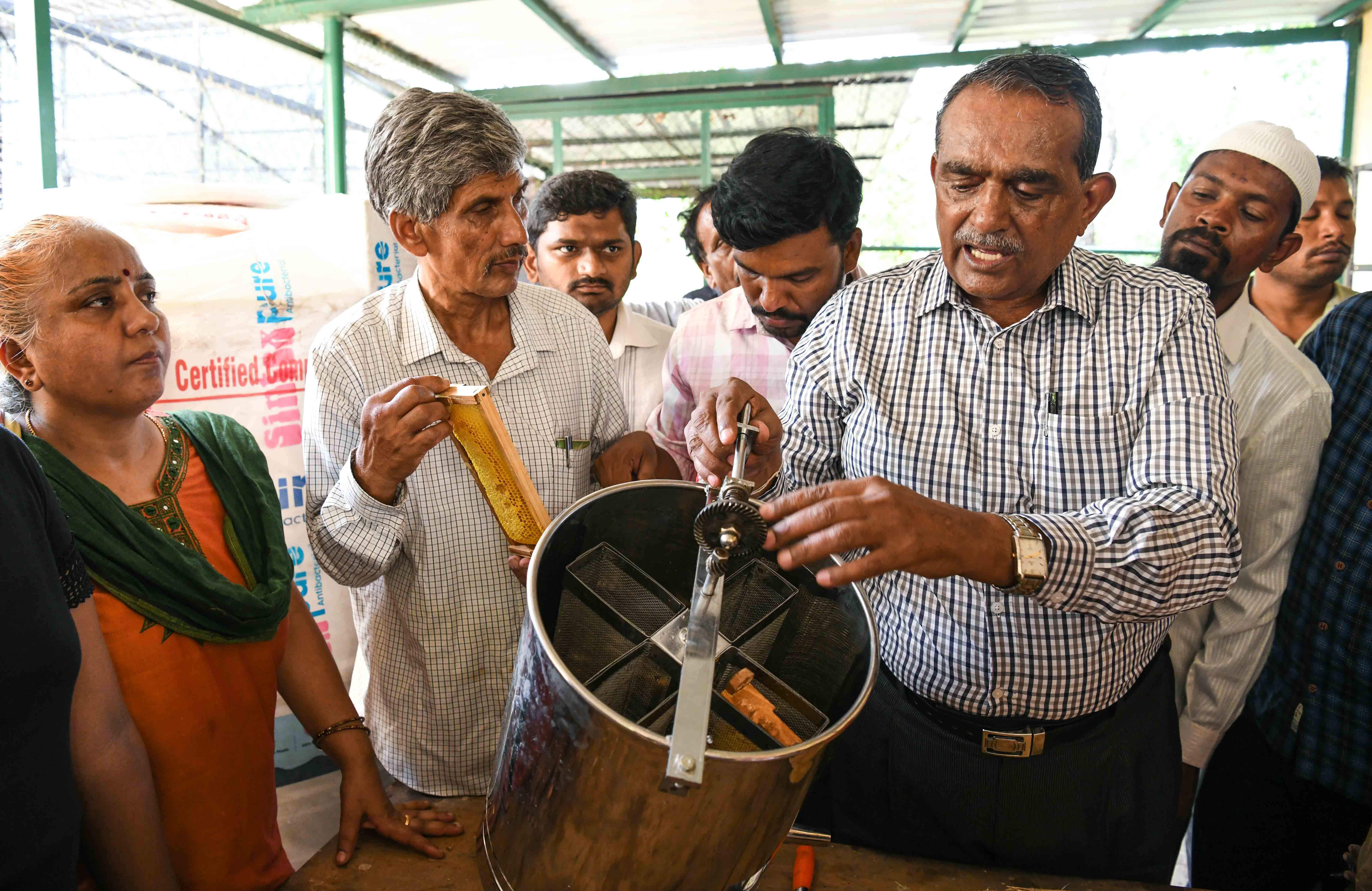
Honey25KF29oct2019

These are the machines in which you put the combs in to extract honey. These machines are also made by Apoorva and sold to the farmers. There is a particular way the combs have to be kept and then manually churned.

A small community of farmers can only do so much, the government needs to step up and help take this initiative forward, make this bigger and reach more people.

source: http://www.newindianexpress.com / The New Indian Express / Home> Specials / by Meghana Sastry / Express News Service / October 28th, 2019

Madikeri Fort, Palace Restoration

MadikeriFort01KF29oct2019

High Court orders contempt petition against officials

Bengaluru:

The Karnataka High Court has expressed its displeasure over the neglect of the historic Madikeri Fort and has directed the Government Advocate to register a Contempt of Court Case against officials for not obeying Court directives.

The Court was hearing the Public Interest Litigation (PIL) filed by J.S. Virupakshaiah, a retired IAS Officer and a resident of Somwarpet. The petitioner contended that the Fort and Palace premises are heritage sites, dating back to more than three centuries. They are neglected and the exterior walls of the Palace are infected with fungus.

The government is running its offices on the Palace premises and despite this the monuments are neglected with no action plan initiated by the officials. The petitioner had prayed before the Court to issue directions to the Government to vacate its offices and hand over the monuments to the Archaeological Survey of India (ASI) to maintain it.

Saving the monuments

The petitioner had said that the Government officials under the Zilla Panchayat had been functioning from the old Palace for many years. There are also offices of two MLAs and MLCs of Kodagu. A request was made to the ASI to take measures to preserve the Palace. The Government office buildings should be vacated first in order to take up the repair work. It was therefore inevitable to approach the Court, he contended. Also, there is an urgent need to save the historic monuments as incessant rains were causing harm to the structures.

Virupakshaiah said that the District Administration had promised to hand over the Palace by October end, to take up a temporary makeover. There is, however, no use of temporary work. In order to inspect the present condition of the Palace and the Fort, the officials from the ASI visited the Fort premises and have submitted a report to the Court on the matter, he added.

Roof Collapse

The petitioner told the Court that in January this year, the roof of the Palace in the Fort premises suddenly collapsed. The walls of the Palace are discoloured and the soldiers’ quarters have totally collapsed. The leaking roof of the main building was covered with plastic sheets as a temporary measure.

A Division Bench comprising Justice Abhay Shreeniwas Oka and Justice Krishnakumar noted that despite the Court order to shift the Government offices by Oct. 30, nothing has been done so far. Upset at the officers’ attitude, the High Court has directed the Government advocate to name the officials and file a Contempt of Court Case against them. The High Court has now posted the hearing to Oct. 31.

MadikeriFort02KF29oct2019

Glorious history

History of the old Fort dates back to the 17th century AD. It was built by King Mudduraja of Haleri dynasty. Tipu Sultan rebuilt the Fort with stone. The Palace was built by Lingaraja Wadiyar II in 1812. The Fort was acquired by Dodda Veera Rajendra in 1790 and later came under the rule of British in 1834.

Earlier, the Deputy Commissioner’s office too was housed in the same building. However, it was shifted to the present building four years ago.

The offices of the Agriculture Department, District Library, Court complex and Balamandira are functioning in the Old Fort premises.

The officials said that if the entire Palace is handed over to the ASI, the Central Government will release funds.

Offices must be shifted before Oct. 31: DC

Kodagu Deputy Commissioner Annies Kanmani Joy has directed the Assistant Director of Land Records to shift the Government offices from the Old Fort to the new building of Zilla Panchayat, before Oct. 31 as per the High Court orders.

After shifting, the Archaeological Survey of India (ASI) will take up renovation works of the historic monuments. Officials from the ASI visited the Fort premises and inspected the condition of the Old Fort building. The team of officials also furnished a report to the Court, on the probable steps towards the repair of the building. Following the same, the officials from various Government Departments agreed to vacate their offices.

source: http://www.starofmysore.com / Star of Mysore / Home> News / October 27th, 2019

DC for shifting of offices from Madikeri Fort

Deputy Commissioner Annies Kanmani Joy has directed the assistant director of land records to shift the government offices from the Old Fort to the new building of Zilla Panchayat, before October 31, as per the court orders.

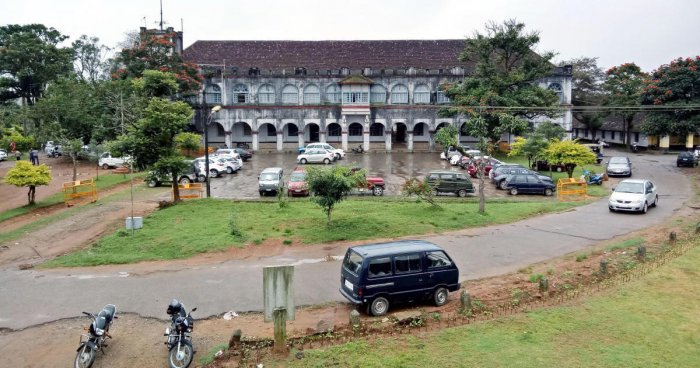
The Madikeri Fort, also known as Old Fort.

The orders by the deputy commissioner have come in the wake of the High Court direction towards taking up renovation work of the historic establishment. The work will be carried out by the Archaeological Survey of India (ASI).

Annies Kanmani Joy said that the district administration had promised the Department of Archaeology of handing over the old building by October end.

As there are government offices inside the Old Fort, the department could not carry out the restoration work of the building. Also, there were demands to shift the government offices to the newly built Zilla Panchayat building.

As per the directions issued by the High Court, officials from the ASI visited the fort premises and inspected the condition of the Old Fort building.

The team of officials also furnished a report to the court, on the probable steps towards the repair of the building. Following the same, the officials from various government departments had agreed to vacate their offices.

While the repair work was going on in January, the roof of the palace in the Fort premises had suddenly collapsed.

The walls of the palace are discoloured and the soldiers’ quarters have totally collapsed.

The leaking roof of the main building was covered with plastic sheets as a temporary measure.

Glorious history

Mudduraja, a ruler of Haleri dynasty, had built the fort in the 17th century.

Tipu Sultan rebuilt the fort using stones later.

The fort was acquired by Dodda Veera Rajendra in 1790 and later came under the rule of British in 1834.

source: http://www.deccanherald.com / Deccan Herald / Home> State> Mangaluru / by Adithya K A / DH News Service, Madikeri / October 23rd, 2019

Gourmet Secrets by Karen Anand: Pandi curry… a mouthful of Coorg!

Although there are many versions of this ancient dish, no article on Coorg food is complete without this pork delicacy.

At the big village feasts and celebrations, besides the barbequed pork, there is always a deep, rich, pandi curry! (Kaveri Ponnapa)

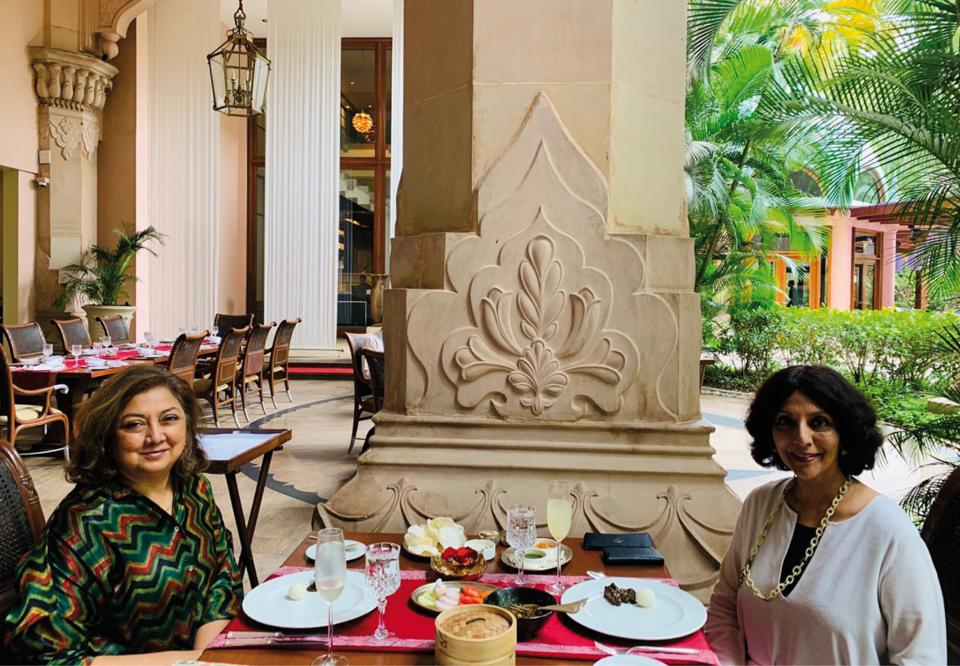
In continuation of my eulogy on Coorg, I came across a wonderful person, Kaveri Ponnapa, dedicated to the Coorg Table, preserving traditions and informing us in a style reminiscent of 19th century romantic novels, about the flavours, aromas and life in Coorg. I had a Coorg lunch with her in Bangalore where she now lives and I was enlightened about Coorg spices, specialities and ingredients.

No article on Coorg food is complete without the famous Pandi curry…here’s what she has to say and her recipe.

“The Coorgs retreat to their homes, fields and ancestral strongholds to harvest, feast, sing and dance…The community hunt, once so much a part of these celebrations is gone; hunting parties no longer comb the forests in pursuit of wild boar, preferred, as recorded by early visitors to the land, by the Coorgs to all other meat. But true to tradition, pork features at the puthari feast.

An ancient tradition

We smoke, dry, preserve, curry, braise, fry and roast pork, extracting every ounce of flavour, varying the texture as much as we can, sometimes scooping a spoonful of preserved pork fat from a ceramic jar into a dish, intensifying flavours. At the big village feasts and celebrations, besides the barbequed pork, there is always a deep, rich, pandi curry…There are probably as many versions of this ancient dish, born out of our hunting past, as there are kitchens. I have my own favourites, tasted at various tables and feasts.

Karen Anand and Kaveri Ponnapa

Food changes with the ingredients available at hand; but sometimes one comes across a dish that has evolved so perfectly in its own time and place that it is best left alone. The personal benchmark for pandi curry came to me from a set of proportions for dry spices I wrote down in a journal more than three decades ago. It has travelled with me across countries and continents; every mouthful takes me back to Coorg, to that particular collective history —of forests, and a coming together of culture and spices from where this curry emerged.

If you cook it, you should get is something like this: cubed chunks of tender pork in a dense, molten gravy, releasing the slow heat of black peppercorns, grown in the hills of Coorg since the times when wild vines could be seen looping across trees, sketching great arcs and webs across the dense jungles. Red chillies were latecomers: even the violent little bird’s eyes, referred to locally as parangi, betray their foreign origins. Hidden notes from dark roasted spices that have survived a pounding in a mortar and pestle, and have begun to release their flavours into the pork should follow the heat of the roasted peppercorns. A sharp burst of kachampuli —that’s all you need—to slice through the gleam of melted fat. You may like a squeeze of lime, just for its exuberant freshness, before you tuck into a plateful. If you happen to have a wood fire in your kitchen and the patience to slowly meld all its flavours into one, harmonious whole: fierce, crushed ginger; a touch of golden sesame oil; all those dark spices, and rendered fat, it’s unlikely that you will ever forget the taste. It is as perfect a dish that ever came out of an extraordinary place.”

Coorg Pandi Curry

Ingredients

For the spice mix:

1 tbsp black peppercorns, or more, according to taste

1 tbsp cumin seeds

1 ½ tbsp coriander seeds

1 tablespoon mustard seeds

A pinch of fenugreek seeds

(1 teaspoon of cassia bark; ½ teaspoon cardamom; ½ teaspoon cloves, optional)

Dry roast each of the above spices separately, cool and grind to a powder in a mortar and pestle or spice grinder

For the curry:

1 kg pork, a combination of lean meat, fat and bone, cut into approximately 1-inch cubes

1 tsp turmeric powder

Red chilli powder to taste, optional

3 large onions

3 inch root ginger, scraped

1½ bulbs garlic peeled

2-3 fresh green chillies slit

3-4 tablespoons sesame oil

Salt to taste

2cups hot water

1 level tbsp kachampuli (Coorg vinegar)

Method

Wash the pork, pat dry. Sprinkle with turmeric powder, and red chilli powder if using, mix well, and set aside. Chop the onions finely. Scrape the ginger, peel the garlic, and grind together to a smooth paste in a food processor. Slit the green chillies and set aside.

Heat the sesame oil in a pressure cooker, and when hot, add the chopped onions. Stir and fry over medium heat until translucent. Add the ginger-garlic paste, and fry until the raw smell disappears. Add the marinated pork cubes, raise the heat and fry until the meat changes colour. Now reduce the heat, add the dry-roasted spices, and mix until the cubes of pork are well coated with the spice mixture. Add salt to taste, 2 cups hot water (more or less, according to the thickness of gravy you prefer) and bring to a boil over medium heat. Cover, reduce the heat to low-medium, and pressure cook for about 20 minutes. Remove from the heat. Allow the pressure to drop. Test for doneness. The pork should be tender but firm. Return to the heat, toss in the slit green chillies, add the kachampuli, and simmer for about 5-7 minutes over low heat. Serve with an extra squeeze of lime and kadambuttus (steamed rice dumplings). Pandi curry a few days old tastes even better.

Author Bio: Culinary expert and explorer Karen Anand has been writing extensively on the subject of food and wine for 30 years. Apart from having her own brand of gourmet food products, she has anchored top rated TV shows, run a successful chain of food stores, founded the hugely successful Farmers Markets, and worked as restaurant consultant for international projects, among other things. Her latest passion is food tours, a totally curated experience which Karen herself accompanies, the first of which was to Italy.

source: http://www.hindustantimes.com / Hindustan Times / Home> Brunch / by Karen Anand, Hindustan Times / September 28th, 2019

‘Fitter than ever’ squash ace Joshna Chinappa aims to reclaim spot in top-10

– The 33-year old achieved a career-high ranking of world number 10 in 2016.

– Chinappa will face 42nd-ranked Haley Mendez of USA in the first round followed by either Mariam Metwally (27) or Ho Tze-Lok of Hong Kong.

– The Chennai-based player, who has been spearheading India’s challenge in international events for more than a decade, wants to carry on at least till the 2022 Commonwealth and Asian Games.
in the World Championship in Cairo.

Chennai:

India’s leading female squash player Joshna Chinappa is working harder than ever as the world number 12 aims to break back into the top-10 of PSA rankings, starting with a good showing in the World Championship in Cairo.

The 33-year old, who achieved a career-high ranking of world number 10 in 2016, will be competing at the World Championship starting on Thursday.

“I am looking forward to competing at the World Championship. I would like to break back into top-10 this season, better my career-high rank of 10 and take it from there,” Chinappa told PTI in an interaction.

Chinappa will face 42nd-ranked Haley Mendez of USA in the first round followed by either Mariam Metwally (27) or Ho Tze-Lok of Hong Kong. In the pre-quarters, the Indian could face world number 2 Nour El Sherbini of Egypt.

“Right now, I am seeded 12 in the tournament. I have a couple of tough first and second-round matches. I have the current world No 2 in my pre-quarter, so, right now, I am just looking forward to taking it match by match,” she said.

Chinappa said she is also looking forward to representing her country in the upcoming SAF Games starting in December.

“After the World Championships I will go to the UK to train for few weeks. We have been informed that we have SAF Games coming up. And hopefully I can be part of the Indian team that plays there in Nepal.”

Indian players have been training without a full-time coach ever since Egyptian Achraf Karargui left on a bitter note ahead of the Commonwealth Games last year.

Talking about the standard of Indian squash presently, Chinappa, who won her 17th national title in June, said the competition at the domestic level has got a lot stronger.

“I have been playing nationals for a long time, the competition has gotten me a lot stronger especially in the last few years. You have Sunayna (Kuruvilla), Tanvi Khanna, and a bunch of other girls who have improved a lot and they are playing in the professional tour.”

The Chennai-based player, who has been spearheading India’s challenge in international events for more than a decade, wants to carry on at least till the 2022 Commonwealth and Asian Games.

“At the back of my mind, I still have the Commonwealth Games and Asian Games in 2022, that I would like to compete in and win medals for India there. Yeah… that is what motivates me, and exciting times in squash and I really hope to do more for the game,” Chinappa added.

source: http://www.firstpost.com / FirstPost / Home> Latest News> Sports News / by Press Trust of India / October 24th, 2019

Flood relief: Donations touch Rs 188 crore

Donors from various organisations and companies have donated a combined total of Rs 188.04 crore for the Chief Minister’s Natural Disaster Relief Fund. The donations were received following a public appeal by Chief Minister B S Yediyurappa to contribute generously towards flood relief.

According to data, the donations came between August 13 and October 22, with officials expecting more funds in the coming days. The donations were by a total of 4,105 donors, with the highest number of donations on October 14. Highest in terms of donations received was on August 20, when a total of Rs 39.15 crore was contributed to the fund.

While the total amount available in the Natural Disaster Relief Fund was Rs 316.09 crore, Rs 97.17 crore of the said amount was the pending amount collected after the 2018 floods in Kodagu. “A total of 186 crore was collected from donors for Kodagu flood relief,” P A Gopal, joint secretary, Chief Minister’s Relief Fund, said. As on October 23, the amount of funds available was Rs 217 crore.

Donations were also received online for flood relief. Also, Rs 32.53 crore – one day salary of government employees – was handed over from the district treasuries for the relief, according to data.

source: http://www.deccanherald.com / Deccan Herald / Home> State> Food Relief / by Akram Mohammed / DH News Service, Bengaluru / October 24th, 2019

It’s Vidyut Jammwal vs Gulshan Devaiah in ‘Commando 3’ Trailer

The trailer of the third installment of action-franchise Commando 3 is out and Vidyut Jammwal has upped the ante once again by performing some new innovative stunts.

The actor makes an entry in the kushti akhada (wrestling ring), doing back-flips, kicks and using props to destroy his opponents. And he is up against baddie, Gulshan Devaiah this time around.

While in the first film, Vidyut’s character was seeing fighting for love and in the second one he stood up against black money rackets, this time around he will be fighting for the country.

Commando 3|Official Trailer|Vidyut, Adah, Angira, Gulshan|Vipul Amrutlal Shah|Aditya Datt|29 Nov

Directed by Aditya Datt, the film also stars Adah Sharma and Angira Dhar. Produced by Vipul Shah, Commando 3 is slated to release in theatres on 29th November.

source: http://www.thequint.com / The Quint / Home> Bollywood / by Suparna Thombare / October 24th, 2019

Screening Of Kodava Language Film ‘Kodagura Sipayi’ Begins

KodavaMovieKF27oct2019

Mysuru:

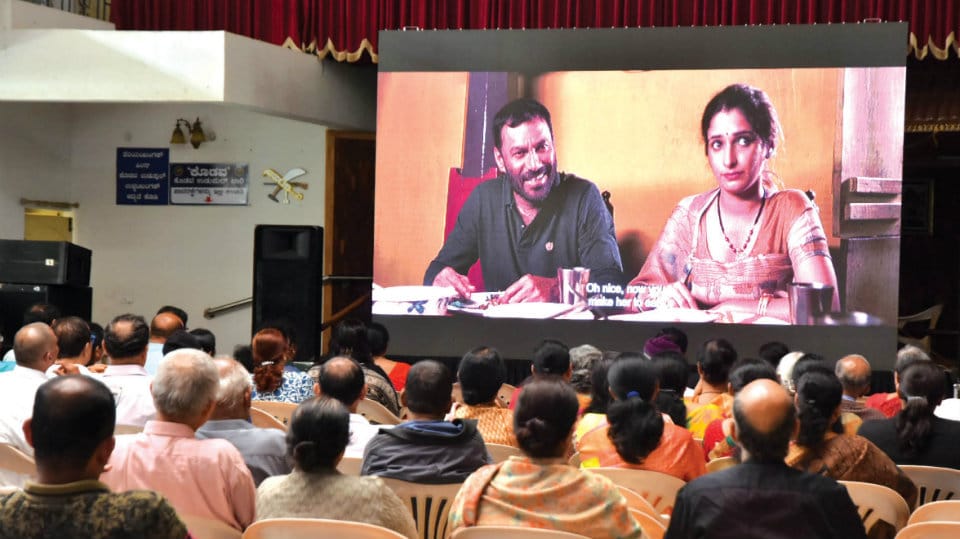
The first screening of ‘Kodagura Sipayi’, a movie in Kodava language produced and directed by Kottukathira Prakash Cariappa was held at Mysuru Kodava Samaja in Vijayanagar First Stage this morning.

The movie, presented by Coorg Coffeewood Movies, is based on a novel and narrates the story of a soldier, played by former international athlete and personality development speaker Theethamada Arjun Devaiah.

The special screening of the movie will be held today and tomorrow (Oct. 27). There will be three shows (11 am, 2 pm and 6.30 pm) on both the days and tickets are priced at Rs. 100 each.

After the screening, a stage programme was scheduled to be held, presided by Mysuru Kodava Samaja President Kekada M. Belliappa. Kodava Samaja Cultural and Sports Club President Machimada P. Nanaiah was to be the chief guest.

source: http://www.starofmysore.com / Star of Mysore / Home> News / October 26th, 2019

Coorg Coffeewood Movies

Special screening of ‘Kodagura Sipayi,’ a movie in Kodava language.

Produced and Directed by Kottukathira Prakash Cariappa, Mysuru Kodava Samaja, Vijayanagar 1st Stage, 11 am, 2 pm and 6.30 pm

[Note: There will be three shows on both the days (Oct.26&27) and tickets priced at Rs. 100 will be available at the Office of Mysuru Kodava Samaja and special ticket counters at the Samaja premises.]

source: http://www.starofmysore.com / Star of Mysore / Home> Events Tomorrow / October 25th, 2019

‘Each Assembly seat to get Rs 30 cr under Sadak Yojana’

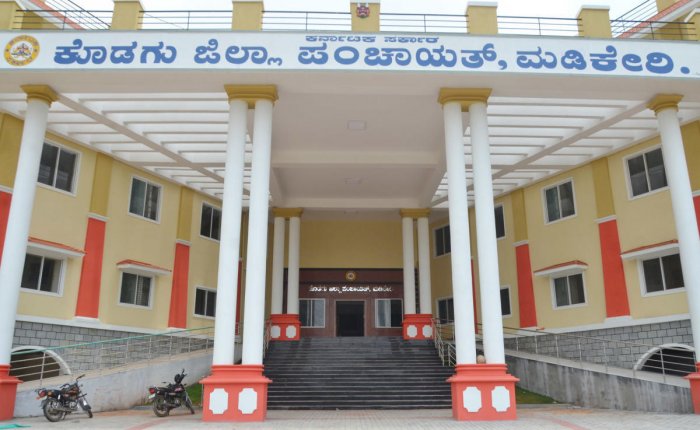
The new building of Kodagu Zilla Panchayat in Madikeri.

Rural Development and Panchayat Raj Minister K S Eshwarappa and Housing and Kodagu In-charge Minister V Somanna inaugurated the new building of Kodagu Zilla Panchayat at K Badaga village, near Madikeri, on Friday.

The groundbreaking for the new building, constructed at a total cost of Rs 30 cr, was done in 2016.

Speaking on the occasion, Eshwarappa said that a grant of Rs 30 crore would be given to each Assembly constituency under Pradhan Mantri Grameen Sadak Yojana.

“Also, grants will be released for solving drinking water problem,” he added.

The minister meanwhile assured of providing Rs 20 lakh each to 28 gram panchayats towards solid waste management unit.

“Task Forces will be formed for ZP members and every task force will be granted a fund of Rs one crore”, he said.

“Floods have ravaged the state. The Central government has provided Rs 1,200 crore for relief measures and the state has already released Rs 1,500 crore. Another Rs 1,500 crore will be released soon. It has been decided in the Cabinet meeting to utilise Central government grants for compensating the loss of crops,” Eshwarappa said.

He also assured of providing integrated funds towards the rejuvenation of lakes in Kodagu.

Lauding the job done by top officials of the district — Deputy Commissioner Annies Kanmani Joy, Zilla Panchayat Chief Executive Officer K Lakshmipriya and Superintendent of Police Dr Suman D Pennekar, the minister said the district was peaceful as women adored all the key posts in Kodagu.

He also mentioned that he has four daughters and a son.

District In-charge Minister V Somanna said there had been loss of life, both human and animals, in the district due to floods.

Agriculturists in the district have incurred a huge loss. A package of Rs 532 crore has been announced to Kodagu out of which Rs 100 crore has been released. The problems of flood victims will be duly addressed, he added. Somanna meanwhile added that Chief Minister B S Yediyurappa was supposed to be take part in the programmes of handing over houses to flood victims and the inauguration of new building of the ZP. But the chief minister could not attend due to unfavourable weather conditions.

MLA K G Bopaiah urged the state government to provide 350 acres of ‘C’ and ‘D’ (categories) land to those who have lost their agricultural land in Mudigere, owing to landslides.

MLA Appacchu Ranjan urged the government to release Rs 1 crore for the restoration of historic Old Fort in Madikeri.

MLC Veena Acchaiah said the government should construct houses for flood victims of 2019 at a cost of Rs 9.85 lakh each, instead of Rs 5 lakh.

source: http://www.deccanherald.com / Deccan Herald / Home> State> Karnataka Districts / DHNS, Madikeri / October 25th, 2019