Brewing storm in coffee country

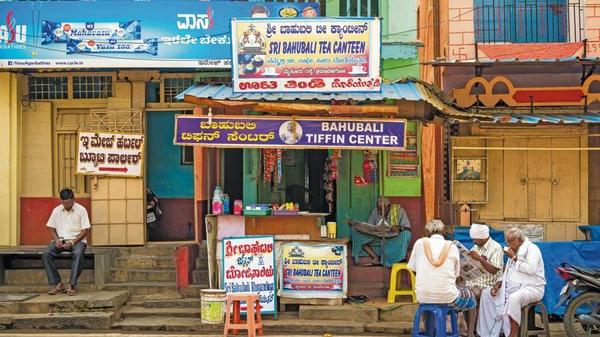
A regular tea/coffee stall in the coffee belt—Hassan, Chikmagalur and Kodagu districts—of Karnataka (Photo: Getty Images)

Given the huge role CCD’s V.G. Siddhartha played in India’s coffee ecosystem, there’s uncertainty in the air.

Chikmagalur/Bengaluru:

A memorial service on Tuesday for late V.G. Siddhartha at Mudigere, Karnataka, took a maudlin turn. This was a gathering of coffee growers at the hometown of late Café Coffee Day (CCD) founder, who allegedly ended his life due to financial stress. B.R. Balakrishna, a small planter, was in tears: “Without ‘Anna’, I’m a helpless orphan. I feel like I am better off dead.” He was not an exception; almost all the coffee growers were inconsolable.

Beneath the wailing was the fear that prices and profit from growing coffee could be hit, or that they may not find a buyer like Siddhartha who was also a well-wisher and a mentor. More than the circumstances behind Siddhartha’s death, which has been discussed threadbare, it is what lies ahead that terrifies many—from coffee growers to those working at CCD, a part of Coffee Day Global Ltd.

With Siddhartha vanishing from the scene, coffee growers across the states are anxious about the churn it will bring in to the industry. “The industry will have to go through a period of turmoil until CCD gets a grip on things and it is able to reposition itself as the first company of coffee business in India,” said a veteran grower from neighbouring state Kerala, which accounts for a fifth of India’s coffee production, requesting anonymity.

“But then, whoever heads CCD will have big shoes to fill. To earn the trust of growers like Siddhartha did, to consistently innovate, and, most crucially, to increase the yield and revenue in the business is easier said than done,” he adds.

CCD was one of India’s top 20 leading exporters of coffee, according to the Coffee Board of India’s database. “Nobody can really fill in that space, currently. So everything about what happens ahead will depend on CCD’s survival,” said a Bengaluru-based expert on coffee research, requesting anonymity.

Importance of Siddhartha

Travelling through the coffee growing region of Karnataka—Hassan, Chikmagalur and Kodagu—one is assured of delectable coffee in the middle of nowhere, the aroma from the mug mixed with the air of the hill estates. From the bean to the cup, Siddhartha had his stamp all over the industry and his death is worrying those in the supply side of the business, from growers worried of wholesale prices to exporters concerned how long their dominance in the overseas market will last.

Siddhartha had realized the importance of systems across the value chain, from growing, research, marketing, export and value addition. Most importantly, he drove the expansion of coffee consumption in India, and branded Indian coffee in the international market, said Abhimanyu M.B., a senior member of the state-run Coffee Board of India. “It is a daunting task which can be driven only by those who have shared a dream… I wonder anybody can repeat that performance or take it to the next level.”

Siddhartha also spurred export to the First World by starting overseas consumption market for Indian coffee, partly by starting CCD outlets, and by marketing the finished and value-added products to the importers of coffee. “Today, India exports 30,000 metric tonnes of coffee in all its forms, and to keep up this export volume, the CCD leadership will have to keep up with the spirit of Siddhartha,” added Abhimanyu.

Downstream reforms

At just 59 years, Siddhartha had a great future not only for CCD but for the coffee industry. Over a 100,000 people are employed directly and indirectly in the coffee ecosystem he built. They are all clueless as to who can replace him, and help steward the industry like he did during the last few decades. To understand what their worries are is to essentially know how the coffee industry works and what role the CCD founder played.

“Siddhartha was a visionary for the coffee industry. Right from the plantation, picking up coffee berries, curing them, grading them, marketing them and adding value to them and bring it closer to the lips of millions of coffee lovers not just in India but in six different countries of the world. He was a visionary who saw great things for coffee. From a mere 12,000 tonnes, he took the domestic coffee consumption to 100,000 tonnes per annum,” said K. Jayaram, former president of the Karnataka Coffee Growers Association.

Before Siddhartha started Amalgamated Bean Coffee Trading Co. Ltd in Chikamagalur, he had deeply studied the prospects, problems and scope of coffee cultivation. He developed his own nursery with high yielding varieties such as Kaveri and Chandragiri, which he distributed freely to all planters in three districts. His advisory was to plant them in high density, a revolution of sorts.

The Coffee Board advisory was to plant 1,752 plants per acre, but research done by Siddhartha showed that the plot could accommodate as much as 2,000 plants, which together with new plants could result in a yield increase of at least 20%. Kodagu, Chikmagalur and Hassan were the direct beneficiaries of this research. “This experiment had paid big dividends to the industry, especially to the planters. This was also replicated in smaller coffee growing areas in Tamil Nadu and Kerala. Overall, the total area under coffee cultivation soon reached 425,000 hectares in South India,” said Thirtha Mallesh, president of the association.

Lakshman Gowda, a grower in Mudigere, showed a patch of Kaveri and Chandragiri varieties, and said: “Though Siddhartha and his family had thousands of acres of coffee plantation, he did not keep his knowledge for himself. He freely disseminated it among all the planters not only in Karnataka but also in Tamil Nadu and Kerala, and at a time when other coffee growing nations like Brazil, Columbia and Vietnam expressed doubts about India’s capacity to increase cultivation.”

Forward trading

Many experts Mint spoke to seemed anxiously waiting for how the untimely death of Siddhartha would impact domestic market prices. Not so long ago, Indian coffee growers were burdened with dependency on the New York and London pricing mechanisms for exports and the Coffee Board for the domestic pricing. A pressure group of private growers led by Siddhartha broke this in the 1990s, and from then on, Indian coffee has developed its own price determination mechanism, with over 110,000 metric tonnes of coffee dependent on the pricing decided by CCD.

Coffee growers in Kodagu, Chikmagalur and Hassan remember that this small region was first to introduce what is known as forward trading in coffee as early as 1996. The association annals point out that Amalgamated Bean Coffee had launched the scheme for growers by benchmarking the daily rates of Arabica parchment variety with the New York and London markets.

In addition, Amalgamated Bean Coffee used to reserve a sizable quantity of coffee beans under the forward trading norms which benefitted all planters supplying raw beans to Amalgamated Bean Coffee . “As a result, there emerged a self-regulating mechanism for coffee pricing and stocking fully under the control of the growers,” said a senior coffee marketing officer of the Coffee Board, requesting anonymity.

“This was done on fine forward trading norms. Siddhartha had so much liquidity in trading coffee domestically that the growers could bet their stocks under forward trading with Siddhartha. No trading house except CCD was able to match,” said Nanjappa, who is a coffee activist of Kodagu. The growers benefitted out of this arrangement, he added.

“We growers could gain at least 15-20% annual profits due to forward trading. A grower having even a smallholding of 2-5 acres could make a handsome profit. With Siddhartha gone, the growers are now left at the mercy of other trading firms that are more profit-motivated for themselves than that of the growers.”

Siddhartha hardly made any profit out of these reforms, according to experts, and in fact, when Coffee Day Global Ltd (formerly Amalgamated Bean Coffee Trading Co. Ltd) was floated he even went under financial stress. But this heralded the foray into value addition in the coffee business.

When the first CCD outlet was opened in Bengaluru in 1996, it was a shock to the coffee lovers of Bengaluru, known for its filter coffee culture. “It was hard to trust any coffee that came out of an espresso machine. We thought who would sit over a cup of coffee for hours, that too paying at least five times more than the filter coffee available at neighbouring Ranganatha Cafe?” reminiscences Srikanth Rao, a coffee aficionado, who is a top executive in a multinational company in the city.

CCD made sure that it captured the coffee consumer market in Bengaluru first, which according to the CCD research unit was a top coffee consumers in the country, second only to Chennai. Then, Bengaluru had become well known for its pubs. But Siddhartha bet on the young crowd spending quality time at a cafe, and his signature statement “a lot could happen over coffee” paid off. This is when the IT crowd, college goers, and company executives started frequenting CCD outlets all over Bengaluru and using CCD outlets as their makeshift offices, conference rooms and client meeting places.

In conclusion

CCD looms larger than life over the industry. That’s why there’s fear in the air. “Their growth created a good base and gave some kind of stability for domestic prices. That is the reason why you can find their prices quoted every day in the local newspapers. So if they go down in a spectacular way, the domestic market will also suffer. Some 40,000 employees would also be involved. It has become one of those sectors where growth happened very quickly and suddenly a vacuum has been created,” said the Bengaluru-based expert on coffee research quoted earlier.

One of the reasons Siddhartha, who was always on the lookout for unusual types of coffee, loved Mangaluru was because it serviced the coffee planters of Kodagu, Chikamagalur and Hassan by offering garbling, curing and drying facilities. In particular, “Monsooned Coffee” discovered by Siddhartha was from Mangaluru. When raw coffee beans were stored in depots during the monsoons, the coffee used to get a particular aroma due to the moisture—these were not to be roasted but boiled to make green coffee. That’s why in his home territory, he will be remembered for his role in developing the coffee ecosystem.

M. Raghuram is a journalist based in Mangaluru.

source: http://www.livemint.com / Live Mint / Home> Explore / by M. Raghuram and Nidheesh M.K. / August 06th, 2019
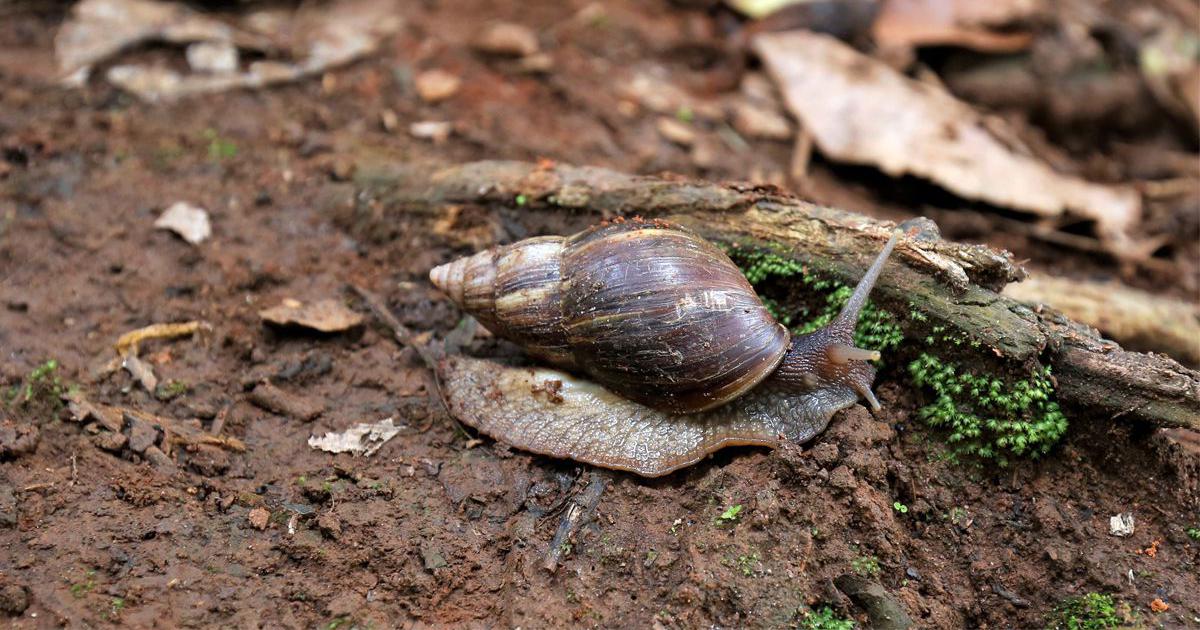
Both Kodagu and Kerala are fighting off an invasion of giant snails – but only one has found success

The foreign pest, which is thought to have arrived in India through trade routes, devours tender leaves and stems, completely destroying plants.

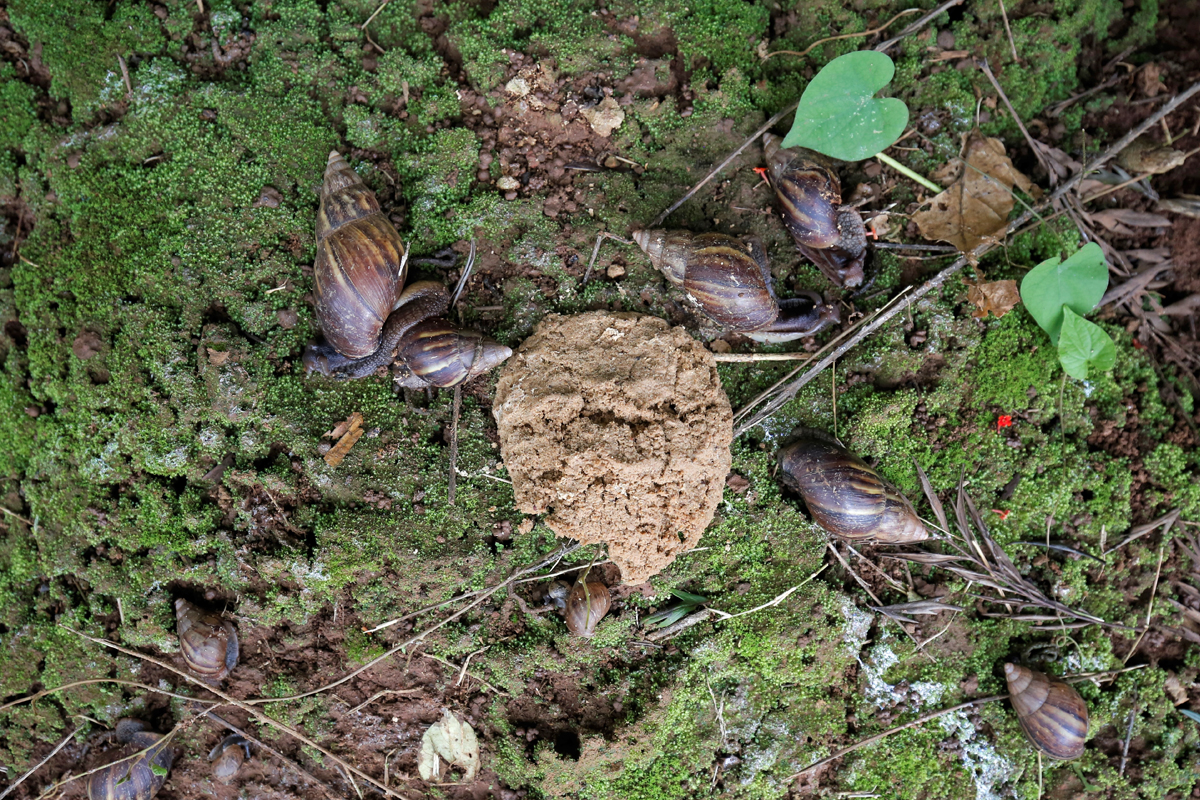
A giant African land snail, Achatina fulica, in a coffee estate in Kodagu district, Karnataka. | Abhishek Chinnappa/Mongabay

The monsoon rains have arrived late this year in the verdant hills of Kodagu – commonly known as Coorg – in Karnataka, the coffee capital of India. For some planters, it’s a mixed blessing. A delayed monsoon is bad news in the Western Ghats mountain range, where farmers and planters have found themselves at the receiving end of extreme weather events triggered by climate change. Last year in August, unprecedented rains and floods harmed crops and coffee plantations, affecting many lives and livelihoods.

In recent years, the rains have brought another problem with them – an infestation of giant African land snails that have caused massive losses to some 40-45 plantations spread over 300 acres of land in Northern parts of Kodagu.

The foreign pest, which is thought to have arrived in India through trade routes, attacks young coffee plants and devours tender leaves and stems, completely destroying the plants. These giant snails, whose shells can grow up to 20 cm in length, are not picky eaters. They eat over 500 plant species and adapt easily to different ecosystems, researchers have found.

Giant African land snail, an invasive species, infest a coffee plant in Kodagu, Karnataka. Planters lose up to Rs 12,000 per acre in efforts to get rid of the pest. Credit: Pradeep Kumar/Mongabay

A fast breeder, this snail has emerged as a major problem for planters in the Shanivarasanthe area of Somwarpet taluk in Kodagu. “They multiply in large numbers within a short span of time,” said Pradeep B Shekar, who owns 40 acres of a coffee plantation.

The giant African land snail, locally known as shanku hoola or conch worm due to the shape of its shell, appeared in Kodagu for the first time in 2012-’13 in 50-60 acres of coffee plantations in Shanivarsanthe. The local plantation owners fought the infestation and thought they have ridden themselves of the pest.

But in 2017, the snails reappeared, wreaking havoc in an expanded area of 300 acres belonging to some 40-45 plantations. The planters say the pest attack costs them an additional expense of between Rs 10,000 and Rs 12,000 per acre, mainly due to the efforts to contain them. This shrinks their profit margins from the produce.

source: http://www.youtube.com

Invasive species
The International Union for Conservation of Nature lists the giant African land snail Achatina fulica as one of the worst invasive species in the world. An invasive alien species is “a problematic species introduced outside its natural, past or present distribution,” the International Union for Conservation of Nature says. “They may lead to changes in the structure and composition of ecosystems, detrimentally affecting ecosystem services, human economy and well being.”

African snails spread to new locations via trade routes, piggybacking on agricultural products, equipment, cargo and plant or soil matter. While there is no consensus on how they found their way into the pristine landscape of Kodagu, it is certain that these pesky visitors have come with no exit plan.

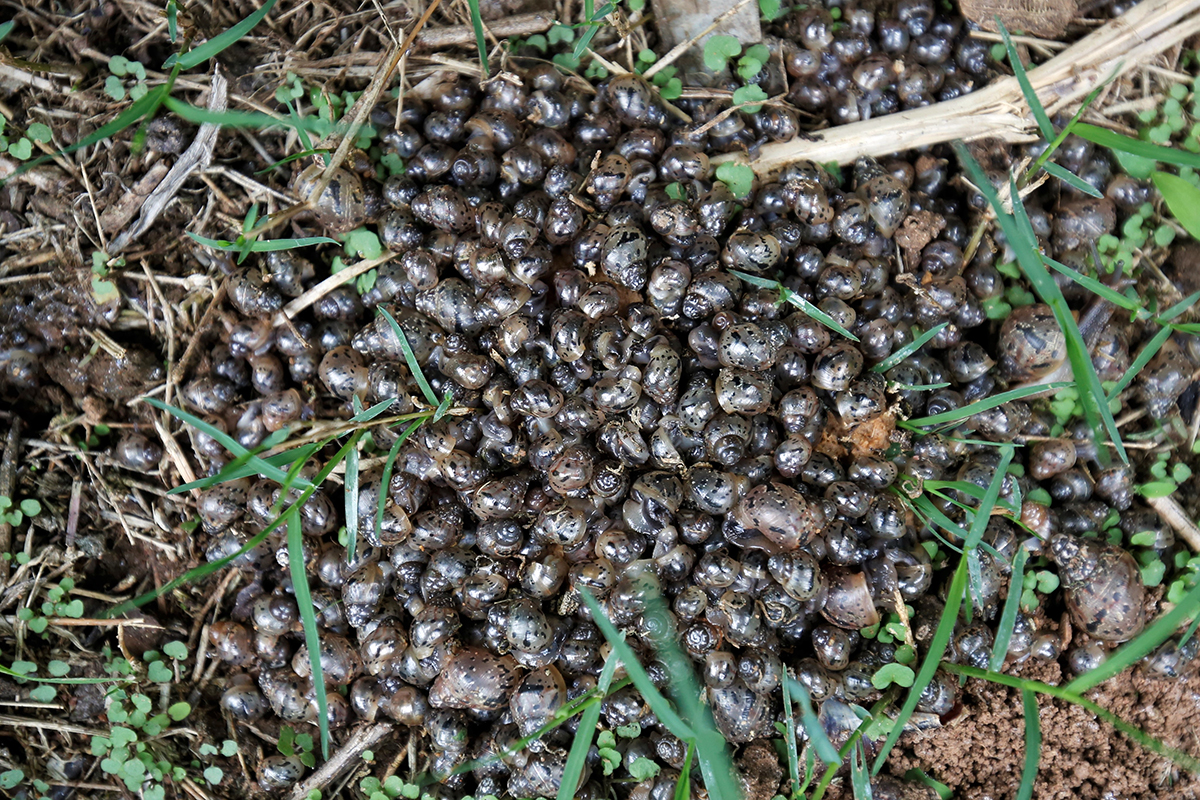
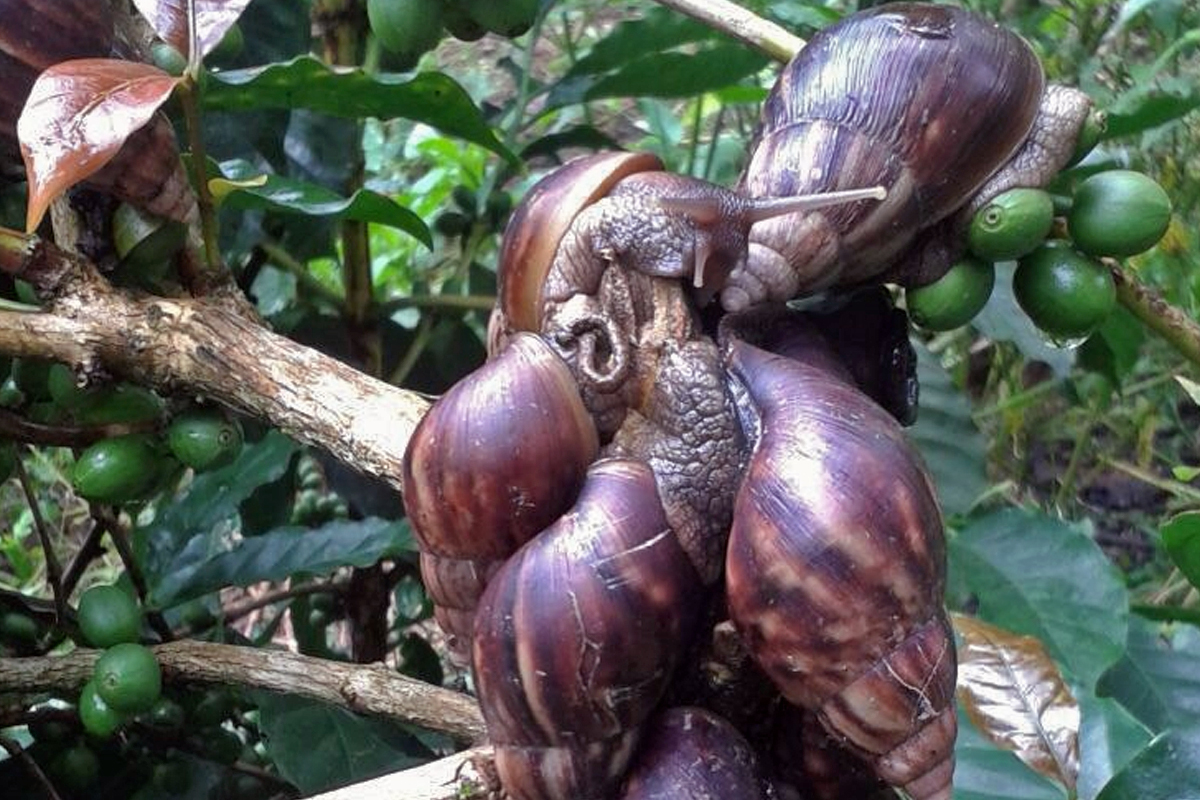
Giant African land snails in their early development stages inside a coffee estate in Handli village, Kodagu district. These fast-breeding snails have a lifespan of almost 15 years and can produce approximately 1,000 eggs in that period. Credit: Abhishek Chinnappa/Mongbay

Achatina fulica is one of the four species of giant snails belonging to the Achatinidae gastropod family native to Africa. It is classified as an obligate-outcrossing hermaphrodite, which means that just one externally fertilised snail can establish a population. These snails reproduce in large numbers.

The snails begin laying eggs at six months of age and can lay around 100 eggs in their first year, and up to 500 in the second year. Their life expectancy is around five years, and one snail can produce up to 1,000 eggs by then. The shell length of these snails ranges from 5 cm to 10 cm, though some adults may exceed 20 cm, and their average weight is about 32 gm.

Effective solution

Despite the destructive potential of the giant shells, the planters in Kodagu have been successful in tackling the infestation. They have reduced the infestation by about 90%, a remarkable achievement given that people in the neighbouring state of Kerala have been fighting this pest unsuccessfully for close to three decades.

The Coffee Board of India has emerged as the unlikely hero in this battle with the African snail. Researchers at the Central Coffee Research Institute in Balehonnur in Chikmagalur district of Karnataka and research sub-station in Chettalli in Kodagu devised a bait for the snail, in a method they dubbed “catch and kill”.

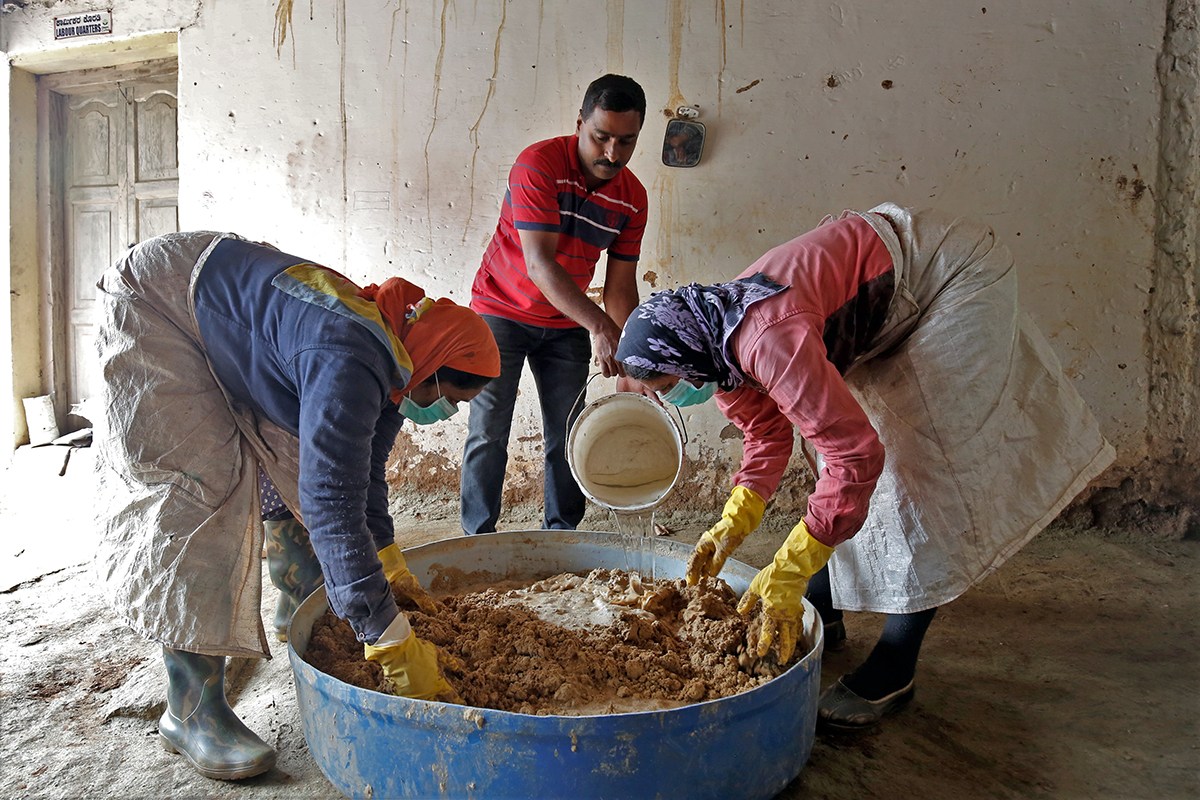
“The bait is made of rice bran, jaggery, castor oil and a chemical, thiodicarb,” explained Vishwanath Hadagalli, junior liaison officer of Coffee Board at Shanivarsanthe. “These are mixed together and balls of it are placed between four coffee plants.”

Researchers at the Central Coffee Research Institute in Chikmagalur district of Karnataka devised a successful catch-and-kill method to control the snail’s invasion. A bait made of rice bran, jaggery, castor oil and a chemical, thiodicarb, is used to lure and kill the pests. Credit: Abhishek Chinnappa/Mongabay

The researchers experimented with methomyl, a broad-spectrum insecticide, but it has been banned because the cost to the soil is too high. Thiodicarb is considered a less harmful insecticide that is effective against in killing the giant snails. “We tried every method available in the literature to get rid of these pests and this bait was found to be the most effective,” said Manjunath Reddy, assistant entomologist, coffee research sub-station at Chettalli, Kodagu.

In 2015, the Coffee Board used this bait and killed as much as 30 tonnes of snails. Encouraged by this, the Board, with active participation from Karnataka’s Horticulture Department and the Planters Association of Shanivarsanthe, upped their act through regular awareness meetings and distribution of bait kits to all the affected planters. The kit consists of a pair of gloves, 25 kg of rice bran, 100 gm of Larvin branded thiodicarb, 3 kg of jaggery and 100 ml castor oil. It costs Rs 1,000 but is distributed among the farmers at a subsidised rate of Rs 100.

Co-ordinated operation

“This has to be a collective effort,” said Pradeep Kumar, an affected farmer from Handli village in Shanivarsanthe. “If one affected farmer doesn’t participate, the infestation cannot be contained.” Hadagalli said there’s 90% success in eliminating these pests from Kodagu farms. “While we did not maintain records properly for the years 2014, 2015 and 2016, dead snails weighing 24 tonnes were collected in 2017, which came down to eight tonnes in 2018,” he said. “We expect much lower infestation this year.”

The Coffee Board also came up with the innovative idea of buying back the dead snails. It initially offered Rs 4 per kg of dead snails, which has since been increased to Rs 8 per kg. “The dead snails are disposed of in a pit that’s one-and-a-half feet deep,” said Hadagalli. “Salt is put over the dead ones to ensure even the last of the caught snails are dead and then buried.”

This burial is a precautionary measure against the spread of any disease through the snails. The giant snails are known to serve as intermediate hosts of several parasites that cause diseases in pets, free-ranging vertebrates and humans. They are hosts of rat lungworm Angiostrongylus cantonensis, which causes Eosinophilic meningitis in human beings.

Workers prepare a concoction to bait the giant African land snails inside a coffee estate. Co-ordinated efforts of farmers and officials have recently helped curb the infestation. Credit: Abhishek Chinnappa/Mongabay

Kerala experience

“In the past 5-6 years, seven children and at least one adult have been reported to have contracted meningitis through contact with giant African land snails,” said TV Sajeev, a scientist at Kerala Forest Research Institute, which who has been involved in the eradication of these snails in Kerala.

Although the fight against the snails has been largely successful in Kodagu, the experience is Kerala, where these creatures are seen as a nuisance, has been different. There have been as many as 223 outbreak points from 12 districts out of 14 in the southern state.

There is a cogent reason for this, said Sajeev. “The chemical used in the bait is not suitable for areas where there is human activity. These chemicals are found to be harmful, especially to aquatic organisms,” he said. “The case of Kerala, where the infestation is in towns and villages, is very different from that of an estate.”

Sajeev said one of the main problems that an invasive species brings with it is the invitation to use strong chemicals to eliminate them. Research has shown that exposure to chemicals like thiodicarb can be detrimental to human and animal health. The Kerala Forest Research Institute has been spraying an organic decoction of tobacco mixed with copper sulphate on snails that are lured with crushed papaya and cabbage leaves as bait.

Another big challenge in Kerala, said Sajeev, is the difficulty in organising people in these areas to work in tandem. “In Kerala, more than the destruction of agricultural crops, snails are a nuisance because they are seen in and around houses,” he said, adding that it is nearly impossible to get all the people in these houses to work together against the snails.

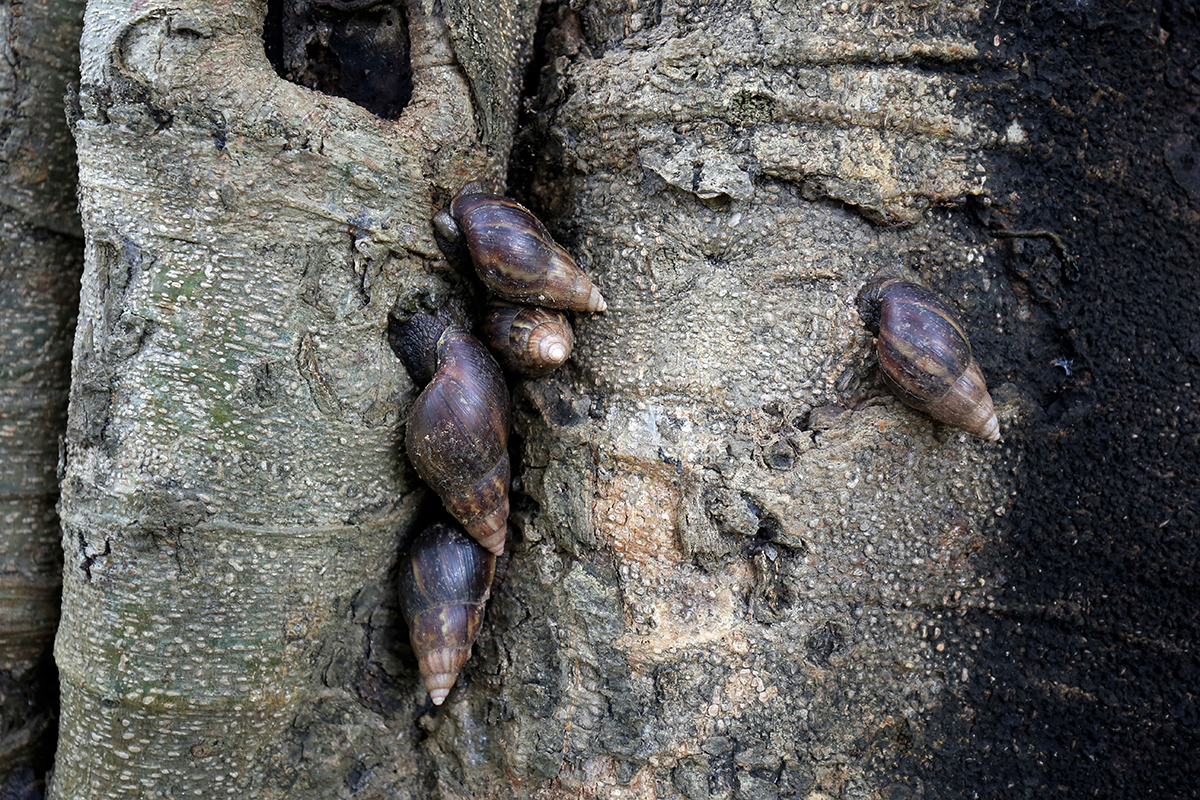
An escargatoire of giant African land snails on a ficus tree inside a coffee estate in Kodagu. While the infestation seems to be under control in the estates of Kodagu, Kerala is yet to find a solution. Credit: Abhishek Chinnappa/Mongabay


This article first appeared on Mongabay.

source: http://www.scroll.in / Scroll.in / Home> Pest Control / by Arathi Menon / August 05th, 2019

Free Health Camp On Aug.11

Shree Kaveri Kodagu Mahila Sangha, Mysuru, has organised a free health camp at Rotary Midtown Academy in Hootagalli on Aug.11 from 10 am to 3 pm.

Neuro-Surgeon Dr. Kanjithanda Bopaiah will inaugurate the camp.

Sangha President Bollamma Kuttappa will preside.

Orthopaedician Dr. Devaiah, Physicians Dr. Latha Muthanna and Dr.Aiyappa, Gynaecologists Dr. Sonia Mandappa and Dr. Poovamma, Dermatologist Dr. P.A. Kushalappa, Urologists Dr. Madappa and Dr. Somanna, Paediatrician Dr. Rajeshwari Madappa, Neurologist Dr. K. Bopaiah, kidney surgeon Dr. Vipin Kaverappa, Ayurveda expert Dr. Aiyanna, Anaesthetist Dr. Padmini Kaverappa and Dentist Dr.Shruti Somaiah will be available for consultation.

source: http://www.starofmysore.com / Star of Mysore / Home> In Briefs / August 03rd, 2019

Little champs reign in slush-filled paddy field

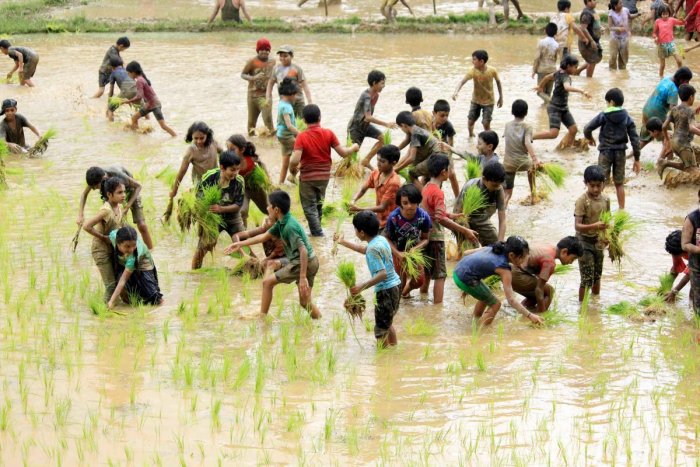
Students of Kodagu Vidyalaya transplanted paddy seedlings in a field at Ibnivadi in Madikeri taluk recently.

Children played to their hearts’ content in a slush-filled paddy field at Ibnivadi during the ‘Nati Sambhrama’ programme.

The Ibni Springs Cottage and Green City Forum jointly organised the programme – in which more than 40 students from the Kodagu Vidyalaya took part and got an experience of paddy transplantation for the first time.

Children soiled their body and clothes to gain practical knowledge of transplantation. Even though the children did not have any training in paddy transplantation, they learnt it through trial and error and transplanted paddy as they fancied.

They also took part in rounds of football, throw ball and tug-of-war that were organised in the field while their parents cheering them.

Kukkera Jaya Chinnappa, Green City Forum president, who spoke on the occasion, said that the forum intends to send out messages on environment conservation, agriculture, waste management and cleanliness to the people. Programmes are being conducted in this regard in both urban and rural areas, he added.

The winning teams were awarded prizes.

Kodagu District Working Journalists’ Association President Savitha Rai, Kodagu Press Club President Ajjamada Ramesh Kuttappa, Green City Forum founder-president Cheyyanda Satya Ganapathy, former president Ambekal Navin Kushalappa, general secretary Polakanda Rakesh and director P Krishnamurthy were present.

source: http://www.deccanherald.com / Deccan Herald / Home> State> Mangaluru / by Adithya K A / DH News Service, Madikeri / August 03rd, 2019

Kodagu Shuttler For World Seniors Badminton

JyothiKF02aug2019

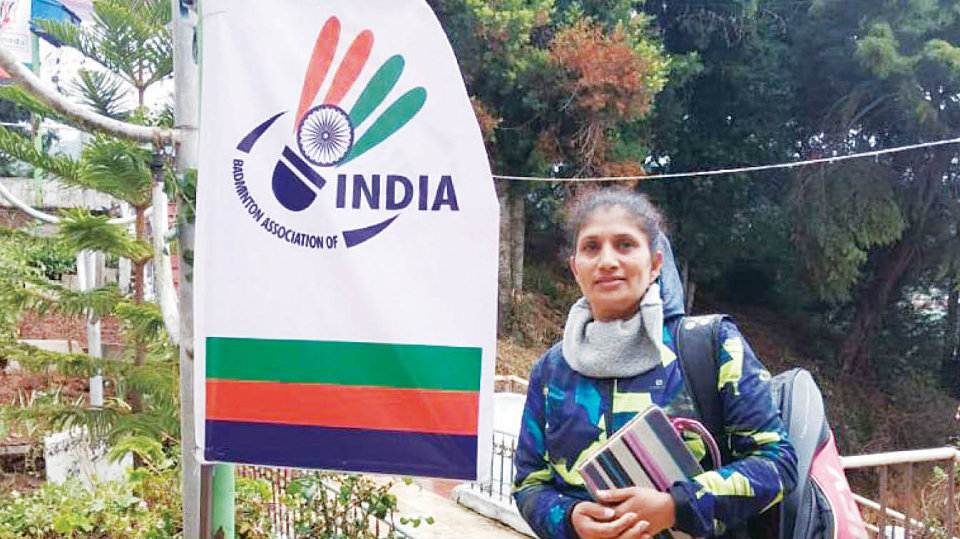
Thathapanda Jyothi Somaiah, daughter of Thathapanda Dally Somaiah and Pookunji Somaiah (Thamane Chettolira) has left for Poland to represent India in World Seniors Badminton Tournament 2019. The tournament will be played from Aug. 4 to 11.

The 2019 BWF World Senior Championships, officially BWF World Senior Badminton Championships Katowice 2019, is a tournament which will be held at Spodek in Katowice, Poland.

This is an individual championship with men’s and women’s singles and doubles, and mixed doubles events. The age categories are divided as: +35, +40, +45, +50, +55, +60 +65, +70 and +75.

The World Senior Championships is a prestigious individual event for players and the winners of each category is awarded a gold medal and crowned World Senior Champion in their particular age category. The runner-up gets a silver medal while the third place winner gets a bronze medal. Jyothi studied in Government Primary School, Maragod and Junior College, Madikeri. She graduated from of FMKMC College, Madikeri and did her B.Ed at Sarvodaya College, Virajpet.

Jyothi has the credit of being a Kodavathi to take part in Republic Day Parade at Delhi in 1984. She has worked as an announcer on AIR, Madikeri.

source: http://www.starofmysore.com / Star of Mysore / Home> Sports / August 02nd, 2019

Staging Of Kodava Play ‘Badk’ In City On Aug.4

KodavaPlayKF02aug2019

Mysuru:

Adamya Rangashale, in association with Rangabhoomi Pratishtana, Kodagu, has organised staging of the Kodava play ‘Badk’ at Sri Kuvempu Ranga Mandira, Sri Kuvempu Vidyavardhaka Trust (Vivekananda PU College premises), Jayalakshmipuram, in city on Aug. 4 at 6.30 pm.

The play, brought out by Addanda C. Kariappa, will be enacted by the Kodagu theatre troupe. The play has already been staged in Bengaluru and Delhi, well-acclaimed by critics and theatre buffs. Kariappa has scripted the play based on the story ‘Mithuna’ by Vasudendra. The play is a classic example of Kodava culture and projects the art of theatre in Kodagu.

Kariappa is well-supported by his wife and senior theatre artiste Anitha Kariappa and budding artiste Santhosh Medappa with direction by Malatheesh Badigera.

source: http://www.starofmysore.com / Star of Mysore / Home> News / August 02nd, 2019

Baba’s Beans brings coffee experiments, front and centre

White pepper infused espresso, alongside a mint espresso   | Photo Credit: Special arrangement
White pepper infused espresso, alongside a mint espresso | Photo Credit: Special arrangement

Baba’s Beans is not shy to experiment with coffee, and this is what makes them stand out.

The passion for a well-brewed cuppa started back in 2013 when friends-from-college, Sadhvi Ashwani and Mrinal Sharma, now 29, took a trip to Coorg. But the journey onward, to opening a coffee bar wasn’t obvious. The duo, one a philosophy major and the other a commerce graduate, had a nose for coffee and kept at it. They visited the homes of farmers kind enough to educate them about the crop; they collaborated with chefs, pairing coffees with menus; they even did a course at the Coffee Board of India.

The duo’s latest venture, at ALOFT in Aerocity, Baba’s Beans is here to break every pre-existing notion of coffee: the brew isn’t exclusive to those who know their mocha from a macchiato; it doesn’t have to be in a mug, a shot cup, or a tumbler. And most importantly, coffee isn’t just fuel that minimises sleep and maximises productivity.

The name, Baba’s Beans, is a hat-tip to Baba Budan, the 17th century Sufi saint from the subcontinent who smuggled in the bean from Mocha, in Yemen to Chikmaglur, in Karnataka in 1616 AD; they talk about how coffee really drove the Enlightenment; and about how the Tontine Coffeehouse was the birthplace of the New York Stock Exchange.

The vibe: Enter ALOFT, and they’re to the immediate left. It’s one of those open nooks, like stores in an airport, which dilutes Baba Bean’s personality a little bit. Their older outlet at The Ambassador Hotel sees a distinctly older crowd. They’re expecting a younger audience here.

Do try: Everything on their lab menu. The Berry Brew is a lightly sweet and fresh cold brew, with an infusion of four berries, coffee being the most prominent, with undertones of strawberry, blueberry, and blackcurrant. It’s a healthier version of the coffee-tonic. The Coconut Capuccino beings in a gentle nuttiness to the cup, a welcome change from the sugary hazelnut syrups of big coffee chains. The Blackbird is bound to be a hit this winter, served in a brandy snifter, this espresso-based drink is infused with ginger, clove, lemon, honey, and mint. Is there anything that coffee can’t do?

Skip: Their regular menu, if you’re tired of looking up the difference between a doppio, ristretto, and lungo. The staff will help, but you can find this anywhere else in the multitude of coffee places that’ve sprung up in the last handful of years, all also made from the same handful of estates of Kerala and Karnataka.

Go with: With a book, or work for long hours. Meet a friend or two in transit at the IGI airport. Not for big groups.

Space bar: 600 sq ft approximately; 20 covers

How much: ₹1,000 for two

Reach: A 10-minute walk from the Delhi Aerocity metro station on the Airport Line on Delhi Metro.

source: http://www.thehindu.com / The Hindu / Home> Life & Style> Food – Review / by Vangmayi Parakala / July 31st, 2019

70 Groups Come Together To Preserve Green Cover In Kodagu

Over 400 volunteers to plant 50,000 seed balls, 10,000 saplings near Anechowkur on July 27

GreenCoverKF31jul2019

Mysuru:

Year-by-year weakening of regular rainfall in Kodagu and depleting green cover along the Cauvery River basin and the resultant shortage of water has made environmentally conscious groups to come together to organise a massive tree-plantation drive in Kodagu, the principal catchment of Cauvery.

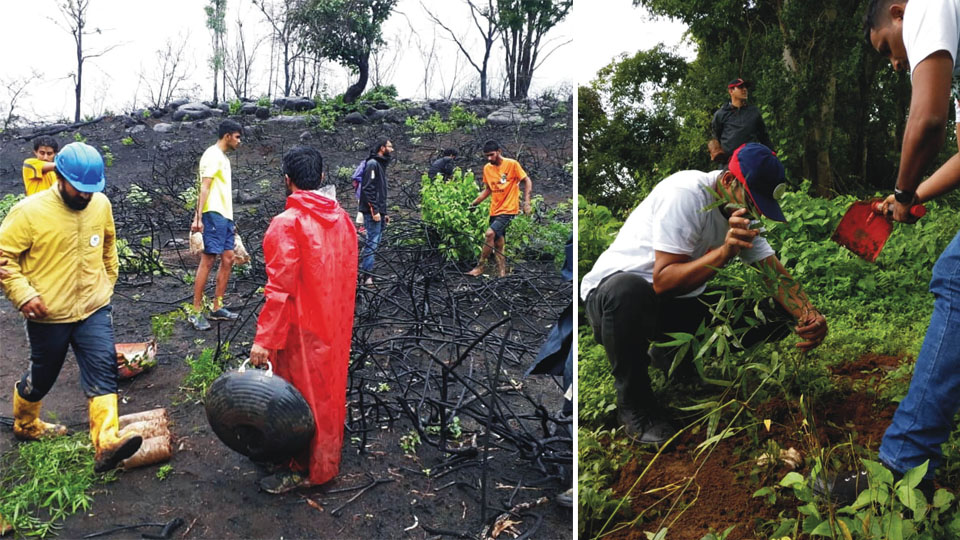
An initiative taken up by Kodavaame, Team Roots of Kodagu, Kodagu Jawa Yezdi Motorcycle Club and Forest Department of Karnataka, TATA Coffee, Madikeri Akashavani, Kodava Samaja Bengaluru and over 72 organisations and voluntary groups from Kodagu, Mysuru, Bengaluru and Chennai are coming together for the tree-plantation drive on July 27 from 9 am onwards near Anechowkur Gate, Thithimathi Forest Range in Kodagu under the Nagarahole Tiger Reserve.

This plantation drive is kick-started by individual volunteers to help rejuvenate and rebuild green cover in Kodagu. Volunteers have sourced more than 50,000 seed balls to be planted during the drive and the Forest Department will provide 10,000 saplings of various wild species that are native to Kodagu and the Nagarahole forests.

Kodavaame initiated this annual tree-planting drive three years back and last year, saplings were planted at Aanekaadu forest near Kushalnagar.

Speaking to Star of Mysore yesterday, Shammi Belliappa of Team Roots of Kodagu said that the Forest Department will identify the places where saplings are to be planted and all the necessary permissions and approvals have been taken.

“Different groups and individuals are coming together in Kodagu to work towards the common goal of protecting the flora and fauna. This event can be an ideal start to a great new direction in Kodagu and further can spread to other districts,” he said and added that as it is an annual event, the next plantation initiative is likely to be taken up at Chennangi in Kodagu.

All volunteers have been directed to wear water-proof jackets, rain coats and gum boots or rain shoes. While many volunteers will be grouped to plant saplings and seed balls, the rest will look into the supply of logistics and will ensure smooth traffic flow.

Organisers are expecting over 400 volunteers and as it is a Tiger Reserve, the volunteers will strictly follow the instructions from the Forest Department, he said.

While Lions Club-Gonikoppal and Rotary Club Kushalnagar will provide food and beverages for the volunteers, Kodava Samaja, Bengaluru, will sponsor the free bus ride to and fro for volunteers who are travelling for this greening event.

source: http://www.starofmysore.com / Star Of Mysore / Home> News / July 24th, 2019

Smell The Coffee

Coffee Board has adopted blockchain in an attempt to provide an edge to growers and coffee from India

Photograph by Reuben Singh

How much do coffee growers make from a cup coffee that costs $4 on streets of New York or London?” asks Srivatsa Krishna, Chairman and CEO, Coffee Board of India. Based on street shopping experience, I say 50 cents. He asks me to take another guess. Figuring that it could be lower, I come up with 35 cents. Srivatsa says, “All that they make is 4-5 cents on a $4 cup of coffee.” That’s just 1 per cent of the price charged in New York for the world’s only shade-grown, hand-picked coffee and sun-dried beans, which fall under the mild category.

India, which began commercial coffee production in the 18th century, has 3,50,000 farmers who grow around 3,19,000 metric tonnes (in 2018/19) over 4,50,000 hectares. Despite it being among the top 10 coffee growing countries – over 80 per cent of the crop is exported – returns to farmers are minuscule. Growers have all along struggled to make extra bucks out of the coffee value chain.

According to the Coffee Board, cultivable coffee land in India, which was around 92,000 hectares in the 1950s, had grown to around 4,00,000 hectares in 2010. Since then, there has been little addition. Currently, coffee is cultivated by small growers (under 10 hectares). While cultivable area has stagnated, productivity has grown 10 times. “Our productivity was 100 kilograms per hectare in 1950. Today, we are at around 1,000 kilograms per hectare,” says Srivatsa.

However, higher production has not been of much help to farmers, and that’s what the Coffee Board is hoping to address by using blockchain technology. Blockchain is a distributed ledger technology which allows members to record transactions in a decentralised data log maintained on a network of computers rather than a physical ledger or a single database. The aim is the reduce the middlemen in the value chain. Ethiopia and France already do this.

Sahadev Balakrishna, former Chairman of the Karnataka Planters Association, says in a commodity business like coffee, trading margins are low, 1-1.5 per cent for exporters and curers. The bulk of the profit goes to roasters and retailers. “If a grower sells to a curer or roaster, the price realisation is much better.” There are a number of middlemen clogging the coffee value chain in India. The number of middlemen could be three-six people depending on whether the coffee is for domestic consumption or for export. A blockchain marketplace could disrupt this.

On the Same Platform

The Coffee Board asked Bengaluru-based Eka Software, which offers commodity software, to develop a blockchain software. This is being tested as an app. The pilot, as of now, has 22 participants, which includes buyers, coffee roasters and growers. The stakeholders in the coffee ecosystem – which includes coffee farmers, traders, coffee curers, exporters, roasters, importers and retailers – have to register. Growers can offer any quantity and quality at their expected price for sale. The buyers can either agree to buy at the said price or make alternative offers. Once both parties agree on a price, the transaction is completed.

Blockchain provides a real-time secure framework for sharing ledgers and transactions, a digital ID that follows a physical product, smart contracts, and also the source of record accessible to all parties, making the platform transparent.

Nishan R. Gurjer, a sixth generation coffee grower and exporter who opted to be a part of the experiment, says the entire coffee industry is seeing a shift. “The coffee world is moving away from the traditional middlemen. Right from the origin to the attributes of coffee beans, from taste profile to carbon footprint, blockchain provides key information that consumers are seeking,” he adds. The grower provides this information and it is certified by the Coffee Board.

More importantly, growers have a bigger say in the price they get. “With the grower getting less than 10 per cent of the value, blockchain addresses the issue of transparency and gives better bargaining power for good coffee,” adds Gurjer. Though the blockchain platform is at a nascent stage, Gurjer says he is seeing more enquiries than before, and the democratic pricing gives him more comfort.

Second, the technology also provides agility and scalability. Even though the platform currently does not have an in-app payment option, it is likely to be integrated shortly.

Manav Garg, CEO and Founder of Eka Software, says the building applications on blockchain have been simplified: one can define the fields where data has to be captured, and set rules regarding who can create a record and who can modify. “You can deploy the contract quickly. The whole infrastructure is fairly distributed and there are miners who check them to verify legitimacy,” says Garg. Agility also comes from the fact that multiple versions of the contract can be deployed and changed to stay in step with evolving contract regulations. “For example the current coffee marketplace has gone through several modifications since the work began. When we started discussions, the model envisaged was a bid-ask system like in any stock exchange. Later, we became grower centric so that buyers don’t bring down the price. Later, buyers also wanted better control, so the model was tweaked to enable them to start contracts. On blockchain, it was fairly easy for us to modify and migrate through these multiple models,” Garg adds.

For growers, the platform provides democratic pricing. He can quote a price and negotiate discreetly with the buyer, with other growers not knowing the final price of the coffee, hence offering a better chance of higher price realisation for specialty coffee.

Premium Efforts

The government, too, is taking some steps to support the coffee market. In a bid to increase value and traceability, the Department for Promotion of Industry and Internal Trade recently awarded five new geographical indication (GI) tags – Coorg Arabica, Chikmaglur Arabica and Bababudangiris Arabica from Karnataka, Wayanad Robusta from Kerala and Araku Valley Arabica from Andhra Pradesh.

The franchise of the Coffee Board’s quick service restaurant India Coffee House has been given to two private players – Cafe Coffee Day and Afoozo group – for a facelift. India will also host the prestigious World Coffee Conference, the first ever in Asia, in September 2020.

International coffee prices have declined since 2017, mostly due to over-supply, says the International Coffee Organisation. There is a surplus of 4.16 million bags from 2017. It expects production at 168.05 million bags for 2018/19 compared to 165.54 million bags in 2017/18, and consumption at around 164.99 million bags. So, a surplus of 3.06 million bags is expected, making it a straight second year of surplus.

With low prices for coffee expected to continue, Indian coffee growers now stand at the cusp of technology adoption and creation of a brand identity as India readies to serve a fresh brew to the world.

@rukminirao
source: http://www.businesstoday.in / Business Today / Home> Business Today> The Hub> Story / by Rukmini Rao, New Delhi / print edition August 11th, 2019 – online edition 25th July 2019

Dist-level young scientist competition

The district-level ‘Yuva Vijnani’ competition will be held at the Madikeri Block Resource Centre in town on August 8 at 10 am, said a press release.

The selected candidates will be given the ‘Yuva Vijnani’ award for 2018-19 by the Rajya Vijnana Parishat and the Department of Science and Technology. Students who have applied for the competition should attend along with their guides.

Those who wish to apply should fill the application in the prescribed format and submit the same at the DDPI office in Madikeri before July 31. Students from Class 9 to II PU may apply for the award.

Another set of application should be submitted to the head office of the Rajya Vijnana Parishat in Bengaluru.

For details, people may contact: S T Venkatesh, District Physical Education Inspector, DDPI Office, Madikeri, on mobile phone number 94488 73999 or the T G Prem Kumar, Raja Vijnana Parishat District Director, on mobile phone number 94485 88352.

source: http://www.deccanherald.com / Deccan Herald / Home> State> Mangaluru / by Adithya K A / DH News Service, Madikeri / July 29th, 2019