Brahmagiri Development Society joins hands with Coffee Board
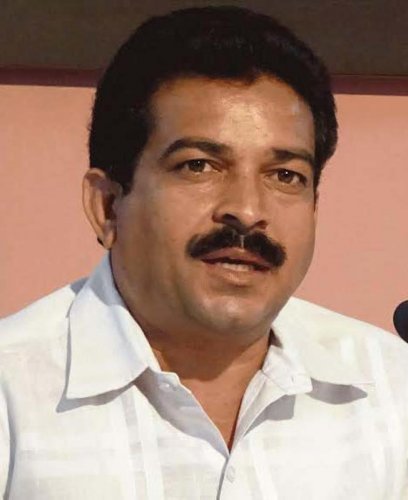
The Brahmagiri Development Society (BDS), a people’s initiative in Wayanad, has joined hands with the Coffee Board to support small-scale coffee growers in the district, a major Robusta coffee growing region in the country.
The BDS recently signed a memorandum of understanding with the Coffee Board for preparing a comprehensive business plan to promote coffee-based livelihoods in Wayanad.
“According to the Coffee Board, domestic coffee consumption has shown an annual growth of 8%. But the farming community is yet to benefit from it as the profit is pocketed by middlemen and international corporate giants,” P. Krishnaprasad, chairman, BDS, told The Hindu.
“Hence, we are planning to double the income of the coffee farmers in a time-bound manner by avoiding middlemen,” Mr. Krishnaprasad said.
Value addition
They are planning to execute a project in which the BDS would initiate a set of activities, including collective marketing and value addition, along the entire coffee value chain to increase the income of small-scale coffee growers.
Market study
The board, as the consultant, would conduct a comprehensive market study in south India on the feasibility and viability of the initiative and also specify the marketing strategy.
It would hand over the study to the BDS in a month.
The Kerala Chicken Project of the BDS was a huge success and it inspired us to enter into the new venture, he said.
A team of experts from the Coffee Board will interact with the coffee growers in Wayanad at Kattikulam on February 21 and 22.
State initiative
Meanwhile, the State government has initiated a three-pronged strategy, including selling coffee of Wayanad under the brand name ‘Malabar’ to support and double the income of coffee farmers in the district.
The State government allocated a budgetary provision of ₹150 crore to set up a KINFRA mega food park with KIIFB funding in the district.
source: http://www.thehindu.com / The Hindu / Home> News> State> Kerala / by E.M. Manoj / Kalpeta – February 12th, 2019
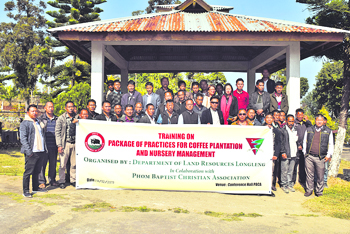
Participants with department officials at the one day training program organized by the Land Resources department at PBCA Centre in Longleng on February 15. (NP)
In collaboration with the Phom Baptist Christian Association (PBCA) Longleng, the department of Land Resources Longleng conducted a one day training on ‘Package of practices for coffee plantation and Management’ on February 15 at PBCA Conference Hall with John Tsulise Sangtam, Deputy Commissioner Longleng as the guest of honour.
Appreciating the PBCA for taking up the joint venture which is the first of its kind in the state, the DC said that Nagaland was coming up as a favorable land for cultivating coffee in the country. He explained that the state government signed a Memorandum of Understanding (MoU) with the Coffee Board of India recently to boost the State’s economy through supplying coffee.
Tsulise also said that Churches in Nagaland have an important role to play. According to the DC, preaching from the pulpit and collecting from the congregation alone will not better the Church economy. He urged Churches to encourage people to venture into income generating activities.
He also urged the people to not only look for subsidies alone but take up coffee farming so that they may build for themselves a sustainable source of income.
District Project Officer (DPO) Longleng, Kughalu Chishi, in his welcome note advocated for use of improved technologies to increase yield.
He said that coffee production in Nagaland was still in its infancy even if it has been blessed with an ideal climate to yield the best quality coffee in the country. He therefore urged all stakeholders to nurture and grow the industry.
In the technical session, resource person Rongsenkoba Ao, inspector of the Land Resources department Longleng, spoke on the principles of Coffee plantation and its management.
According to Rongsenkoba, there are two different species of Coffee — Arabica and Robusta. He said Arabica grows well at altitudes, and requires gentle to moderate slopes. It is less tolerant to pest and diseases. Robusta grows well in lower altitudes, in plain to gentle slopes and is more tolerant to pest and diseases.
He also explained that coffee is a permanent cultivation and can be grown under the shade of a tree or any other high rise plantation. He said in order to grow healthy coffee plants and for better yield, it is very important to pay attention to soil health.
Speaking about harvest, Rongsenkoba said that to maintain quality, aroma, brew thickness, taste, and acidity, the right kind of coffee beans have to be harvested in the right time adhering to proper suggested guidelines.
During the interactive session, many queries were raised by the participants which were clarified by the resource person.
During the training, more than 50 people from 16 Churches under PBCA and well wishers were in attendance in the program which included a field demonstration and distribution of coffee seeds.
The program was chaired by N. Tialemba Phom, executive secretary, Phom Baptist Christian Association and invocation prayer was pronounced by Nganlang Phom, PBCA Longleng.
source: http://www.nagalandpost.com / Nagaland Post / Home> State / February 15th, 2019
Significant changes have been ushered in the rank and file of the district Congress party.
A week ago, the party high command had appointed Surayya Abrar as the president of the district Congress women’s wing. Now, K Manjunath has been appointed as the new president of the District Congress Committee.
Following the defeat of the Congress candidates in Madikeri and Virajpet constituencies during the 2018 Assembly elections, there had been a demand from the party workers to strengthen the party base in the district by reshuffling the top leadership. The demand was made in order to draw excellent results in the Parliamentary elections.
As Kodagu has been a strong base of the BJP, the Congress party high command has bowed before the demand and carried out major changes.
Replacement
District Congress Committee president Shivu Madappa has been replaced by K Manjunath. Shivu, a sitting members from the Kuttu seat in Kodagu Zilla Panchayat, had been appointed the District Congress Committee president before the Assembly elections were announced. Although his term as the DCC chief was set to end in 2020, Shivu has been forced to step down, sources said.
The newly appointed president K Manjunath hails from Kudluru village near Kushalnagar. He earlier served in the Education Department and in various capacities in the teachers’ association. He took voluntary retirement from government service in 2012 to join the Congress party, in which his family members had been actively involved for many years.
New president
Manjunath had also served as a personal assistant to former Zilla Panchayat president K P Chandrakala. Manjunath unsuccessfully contested the MLC elections twice from the teachers’ constituency. He also earlier contested as an independent candidate and later on Congress ticket in 2018.
In spite of a chequered career in politics, he has been selected by the Congress party high command as DCC president in appreciation of his active involvement in the party, sources in the Congress said.
Manjunath, when contacted, said that his immediate priority was to organise the party members from the booth-level. He would strive to ensure victory for the Congress candidate contesting the Parliamentary elections, Manjunath added.
source: http://www.deccanherald.com / Deccan Herald / Home> State> Mangaluru / by Adithya K A / DH News Service, Madikeri / February 14th, 2019
Most profound of tragedies are made when the valour of a soldier goes unnoticed and unawarded. While we have many heroes whose bravery encounters have gone down in the Indian armed forces’ annals of history, there must be some who remained unsung.
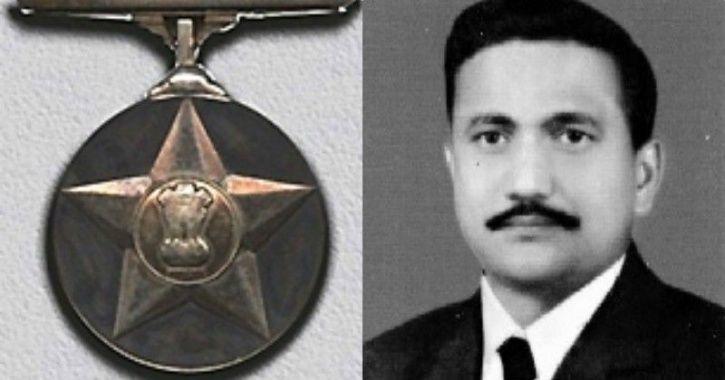
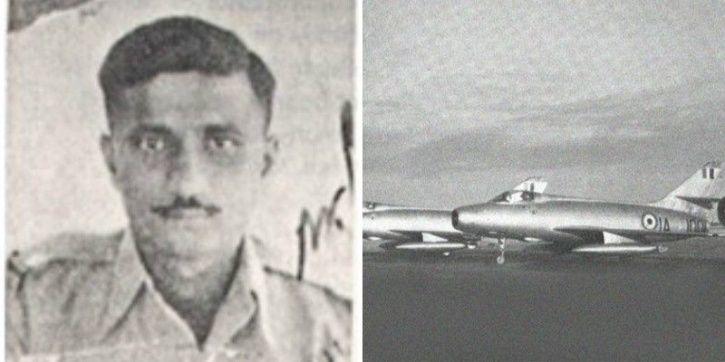
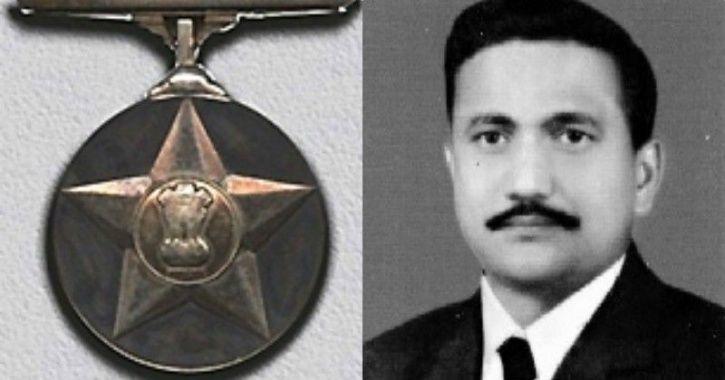
One such hero whose valour could have remained unsung was the Maha Vir Chakra (MVC) recipient Squadron Leader Ajjimada Bopayya Devayya who was awarded this honour 23 years after in 1988 for his sacrifice in an epic dog fight on September 7, 1965 war against Pakistan Air Force’s Supersonic F-104 Star-Fighter.
INDIA’S SECOND HIGHEST BATTLE HONOUR MAHA VIR CHAKRA/ SQN LDR AB DEVAYYA, PHOTO COURTESY: WIKIPEDIA
But whether it’s the destiny or the solace from the enemy that his valour and sacrifice was first recognised by Pakistan and then by Indian Air Force after which the second battle honour for him followed.
If it had not been Pakistani Flt Lt Amjad Hussain admission whose plane was destroyed by Sq Ldr Devayya and the book written by British writer John Flicker’s Book-Battle for Pakistan: The Air War of 1965, the valour of Sq Ldr Devayya would have gone unnoticed.
INDIAN ARMY FACEBOOK PAGE
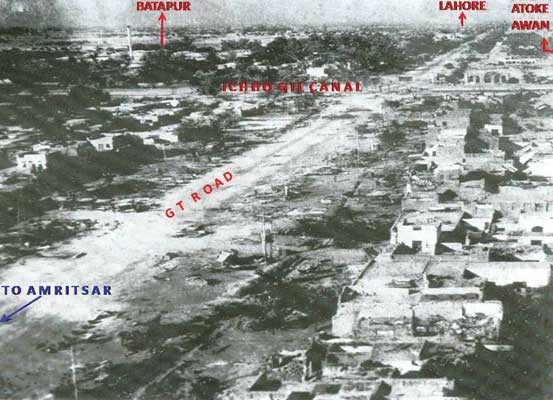
Flt Lt Hussain survived the dog fight as he ejected in due time, but during one sortie in the same F-104 Star-Fighter to destroy Indian assets stationed at Amritsar air base in 1971 war, Flt Lt Hussain’s plane was hit and this time too, he ejected safety, only to be taken as Prisoner Of War (POW) by Indian forces.
A The Tribune report published in 2015 and a PIB documentary available on YouTube titled 1965 Indo-Pak Air War claims that Flt Lt Hussain told the story of a dog fight between his F-104 Star Fighter and Sq Ldr Devayya’s Mystere and how Sq Ldr Devayya despite being hit, destroyed Flt Lt Hussain’s plane before being martyred in the crash.
7th September 1965
The India-Pakistan war was in its thick and going gaga over the initial gains, Pakistan Air Force (PAF) was raiding Indian airbases on the western border. IAF was tasked to reply and attack the Pakistan airbases.
“Squadron Leader Ajjimada Bopayya Devayya flew in a Mystere Aircraft as a member of a strike formation that was assigned the task of attacking the heavily defended Sargodha airfield in Pakistan at 0555 hours on 7th September 1965. All members of the mission except Squadron Leader Devayya returned safely to base. As no other details were available at that time, Squadron Leader Devayya was listed as ‘Mission in Action,” reads the IAF Citation about Sq Ldr Devayya.
IAF/BHARAT RAKSHAK
The IAF had carried various strikes on Sargodha, Chota Sargodha and other bases of PAF and despite the difference having less advanced fighter jets- both in terms of speed and manoeuvrability, the IAF pilots gave their Pakistani counterparts befitting and scores of Pakistan highly advanced American F-86 Sabres and F-105 Star Fighter were destroyed.
When Sq Ldr Devayyas grit won over Flt Lt Hussain’s F-104
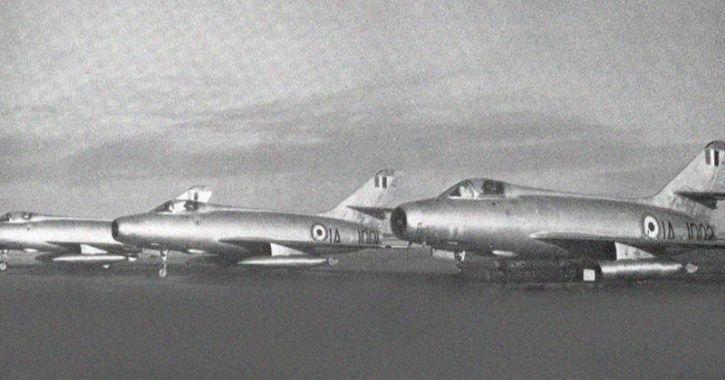
French Dassault Mystere was no match to F-104 Star Fighter as it was the first plane in the world which touched the Mach 2 Speed. Seeing the Mystere approaching the Sargoda airbase, F-104 intercepted Sq Ldr Devayya’s jet and dog fight which remained elusive and unsung resumed.
“The pilot of F-104 first fired an air-to-air Sidewinder missile, which Squadron Leader Devayya successfully evaded and the missile hit the ground. However, by virtue of its faster acceleration, the F-104 rapidly closed in on the Mystere and fired a burst of its 20 mm multibarrel cannon and succeeded in damaging Squadron Leader Devayya’s Mystere. The F-104 went ahead of the Mystere due to its higer speed,” reads the Citation.
IAF MYSTERES, PHOTO COURTESY: BHARAT RAKSHAK
Flt Lt Devayya despite being hit, didn’t eject and decided to give a far superior plane, a fight for its life. He chased F-104 and rained the bullets on it from his Mystere’s power gun. The F-104 got hit and soon the flames enveloped it and Flt Lt Hussain had to eject.
“Undaunted and with utter disregard for his personal safety, Squadron Leadder Devayya flew his damaged Mystere in pursuit after the F-104. His decision was critical because the Mystere were operating at the extremity of their range and combat with an F-104 meant significantly lowering his chances of return to base.”
“Neither the Pakistani pilots flying skill nor the F-104 superior performance were apparently a match for Squadron Leader Devayya’s determination and single-minded purpose. Manoeuvring a damaged aircraft, he finally shot down the F-104. Thereafter, it is conjectured that Squadron Leader Devayya was unable to maintain control of his aircraft and was either killed in an unsuccessful low-level ejection or in a crash because of the damage that his aircraft had sustained.”
First taken as missing and then presumed dead
The then Wing Commander O.P. Taneja, who had led the first wave of attacks of which Sq Ldr Devayya was a part of, waited for him after returning to the base, but he didn’t come.
“I was told he must have gone to 32nd Squadron to return their aircraft and to change,” Taneja told IndiaToday years later during an interview published in 1988, “but when more than 40 minutes passed, I insisted on seeing him.”
As a customary, Flt Lt Devayya was presumed dead after a year.
The book
The PAF in later years commissioned a British writer, John Flicker to write about air war between two countries in 1965. Since he was commissioner by PAF, Flicker obviously painted PAF as superior air force which had caused harm to IAF in the air battle.
But the truth was a larger version of the dog fight between Sq Ldr Devayya’s Mystere and Flt Lt Hussain’s supersonic F-104 and the IAF had literally annihilated technically superior aircraft like F-84 Sabres with the relatively older and less advanced fleet of Mysteres, hunters and others.
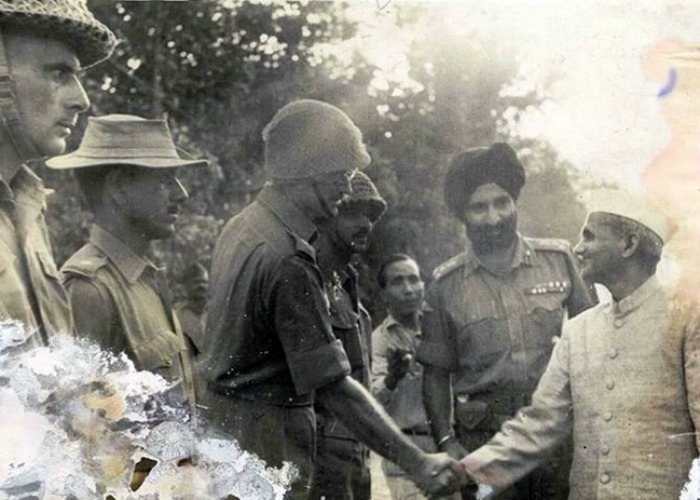
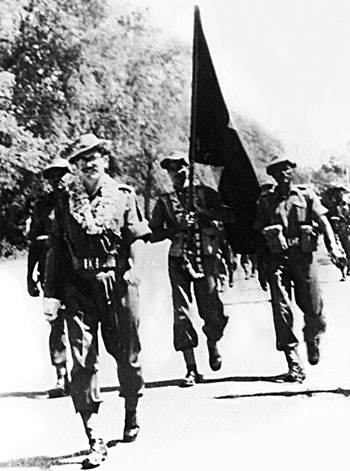
VICTORY IN 1965 WAR. PHOTO COURTESY: INDIAN ARMY FACEBOOK PAGE
But the book had an anecdote about this dog fight where it was admitted that a Mystere had destroyed F-104 before crashing with its pilot.
PAF’s retired Air Commador, Kaeser Tuffail has also written about it on his blog-Mystery of the Downed Mystère where he also talks about how locals gave Sq Ldr Devayya burial.
The struggle
The book left many surprised, especially the then Wing Commander O.P. Taneja who led the attack at Sargodha who said approached higher authorities with this as quoted by IndiaToday. “I moved higher authorities and told them it had to be Devayya.” Wing Commander Taneja was sure because that day only two were lost-one Sq Ldr Devayya in the morning and another Flt Lt Bahul Guha in the evening.
But none paid heed to his appeals.
But in 1987, the War Studies Division of the Ministry of Defence saw Fricker’s book and one of its members, the then Air Commodore Pritam Singh paid attention to an important anecdote. Singh had also seen action in 1965 as a young pilot. He told IndiaToday in 1988. “I knew all the pilots in the Mystere formation and began to trace them,” Singh said when he commanding the airbase in Jodhpur.
SAINIKSAMACHAR.NIC.IN
Singh put all his efforts to connect the dots and talked to all people concerned including Wing Commander Taneja apart from collecting evidence from Pakistani broadcast acknowledging the loss of an F-104 on September 7 morning. In November 1987, Singh presented all his findings to the high command and the pieces of evidence were compelling and convincing.
And finally, the Mahavir Chakra for the great air warrior
Finally, 1988, Sq Ldr AB Devayya was posthumously awarded the Maha Vir Chakra (MVC) for an act of unparallel courage and bravery. His 51-year-old wife Sundari Devayya who received the news that husband was missing at the age of 29, had spent 23 long years without the country recognising her husband’s sacrifice.
INDIA
She spent those years in bringing up the couple’s two daughters, Smitha, 24, and Preetha, 23 (then in 1988) her gallant husband had left. Preetha was just eight months old her father sacrificed himself for the country.
(With inputs from IAF website, IndiaToday, The Tribune, blog of Air Commodore Kaiser Tuffail and PIB Documentary)
source: http://www.indiatimes.com / IndiaTimes.com / Home> News> India / by Maninder Dabas / February 14th, 2019
In Michael Ondaatje’s Running in the Family, he stitches together an almost dreamlike journal that navigates a return to his origins in Sri Lanka, evocatively confronting the gnawing incompleteness in his cultural identity, along with the layer of dust settled over his ancestral line in Ceylon. Ondaatje’s imagery shimmers with tropical heat and the haze of memory, and the exciting semi-autobiographical account he’d crafted stuck with me. Reading about his hollow connection with home felt uncomfortably familiar, and although I’m in far greater proximity to my own native land of Kodagu, a cultural enigma still persists somewhere.
Kodagu (anglicised as Coorg), despite its indistinguishable and seamless borders, has always been recognised as an independent region in the country. The district hums a wild rhythm of lime groves and red squirrels and sweet cardamom, and has had an electric pull on tourists in recent years. However, we’ve been tucked away for decades, earning a certain cultural obscurity in our isolation and lack of political voice.
As Kodava writer Kaveri Ponnapa observes in her exhaustive book The Vanishing Kodavas, “These rustic mountain people, their extraordinary way of life, and the exhilarating beauty and mystery of their land have intrigued generations of writers, travelers, soldiers, and administrators. Where did they come from, these people acknowledged by everyone who encountered them, as puzzlingly different from all the people in the lands surrounding them, even from those with whom they had lived in close proximity for centuries?” I still think of Kodagu with a childlike wonder, each time I visit contains the magic of a first visit, but also with a little guilt – detachment is a symptom of living in the city, as well as ignoring how inextricably linked we are to our cultural identities and ancestors in every sense.
The Kodava community is a recognised microcosm of distinct social observances, but how my people actually came into being within the pitted hills of the Western Ghats remains an anthropological question mark. It’s a discussion that is bursting with rather muddled speculation, but little concrete information to rest on. In the vast universe of Hindu mythology, Kodagu was gifted its name from Lord Brahma, who created the river Kaveri that runs through the land. According to another legend from the Puranas (ancient texts), Kodagu was once called “Krodadesa”, a name which symbolised the land (“desa”) blessed by the Mother Goddess.
THE KODAVA COMMUNITY IS A RECOGNISED MICROCOSM OF DISTINCT SOCIAL OBSERVANCES, BUT HOW MY PEOPLE ACTUALLY CAME INTO BEING WITHIN THE PITTED HILLS OF THE WESTERN GHATS REMAINS AN ANTHROPOLOGICAL QUESTION-MARK.
Among many historical conclusions is that after Alexander the Great had invaded North India, many of his soldiers remained, married the native women, and settled down in the valleys of the Western Ghats, particularly the Kodagu region. Another theory by Abdul Gaffar Khan in his book Kodavaru Arabiyaru draws a connection between Kodavas and Arabs, based on the similarities of the patterns and styles of traditional clothing in both communities. Perhaps the strangest explanation floating around is that Kodavas descended from Mt. Caucasus, which belonged to the former USSR territory.
A foolproof historical point from which we can actually begin tracing Kodagu’s roots is its first recorded appearance in second century Tamil literature, where the district is dubbed “Kudakam” in reference to its western geographical location. Furthermore, Ponnapa rationalises the etymology of Kodagu: “Given the simplicity of the Kodava language, and the practical nature of the people, the name Kodagu is most likely rooted in the word ‘kodimalenad’, meaning the ‘hill country’, or ‘forested highland country’.”
Ponnapa also cautions her readers about the dangers of experiencing Kodagu’s rich and complex past through the many ‘problematic’ colonial accounts that exist as the few contemporary narrations of Kodagu and her people. According to Ponnapa, the British records of the rajahs that ruled over Kodagu paint a flawed and antagonising image of “tyrannical, bloodthirsty monarchs ruling over a dispirited, craven people.” It’s a reminder to consume information about people and places responsibly, since history is always written by the victors. Unfortunately, the physical sources that could potentially have captured the life and times of a bygone Kodagu are stained by the East India Company’s manipulative censorship and efforts of proselytisation.
I THINK THIS IS MOST ESSENTIAL IN UNDERSTANDING HOW THE KODAGU SOCIETY TREATED ITS WOMEN, AS THEY WERE PRESENTED WITH THE RIGHT TO CHOOSE, AND MANAGED TO PRESERVE A SENSE OF AUTONOMY FOR THEMSELVES.
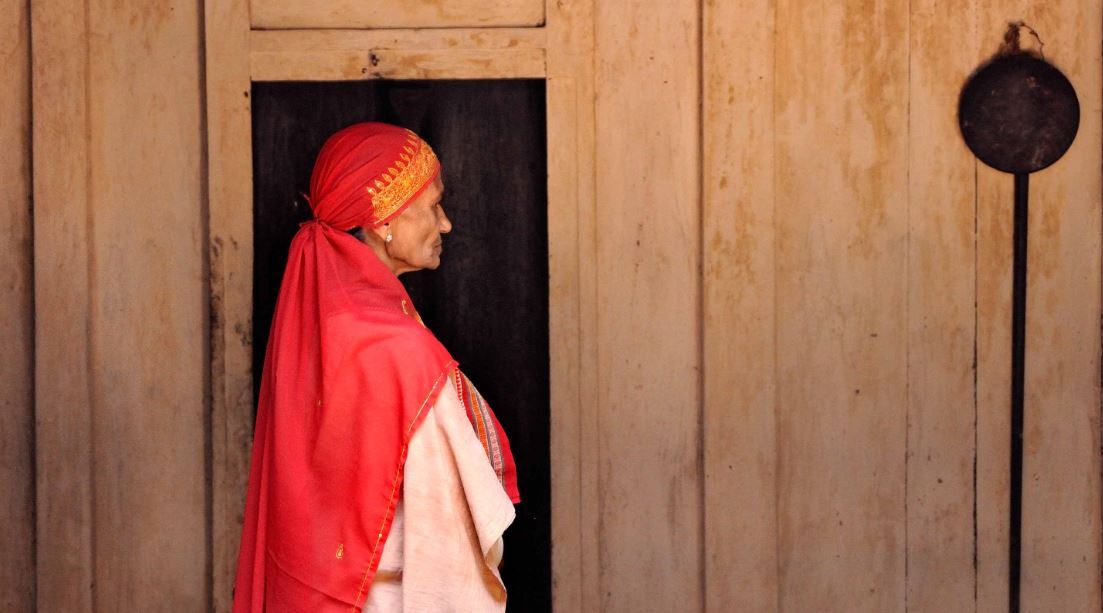
Recognising the Kodavas’ singularity as a community is impossible without also recognising its strong matriarchal undertones. Kodagu women were and still are extraordinary in their commanding wisdom and hardiness. One would think they had steel stitched into their spines, as they balanced burdensome farm and menial work. Their ability to have carved out an individual role for themselves in a male-dominated society is striking, and some believe that Kodava society may have, at one point in time, been matrilineal in nature.
The physical and social environment of Kodagu generated certain selection pressures that pushed its people to embody a sense of bravery and strength, and as Ponnapa phrases it, “society endorsed a cult of heroism”. Men weren’t the only ones lionised for their fearlessness, as women were also held in high esteem.
In regard to matrimonial matters, women were considered marriageable at any age, and those who decided to remain bachelorettes could do so without any social disapproval. Most importantly, the tradition of dowry was non-existent during marriage. I think this is most essential in understanding how the Kodagu society treated its women, as they were presented with the right to choose, and managed to preserve a sense of autonomy for themselves. Moreover, Kodavas liberated themselves from the oppression of the caste system, and isolated themselves from the archaic Aryan varnsashram, or the Vedic system that divides society into natural groups. Instead of castes, Kodavas arranged themselves into family-based communities with units called okkas.
The rapid pace of globalisation has triggered the inevitable dwindling of Kodagu culture as people migrate into the cities in search of job and opportunity, but Ponnapa reminds us of the vulnerability of small ethnic groups and the urgency to safeguard cultural identities. Her painstaking research and commitment to telling our stories is a comforting reminder that even if Kodagu traditions and values are endangered, they can still be protected through little and big measures.
All photography credits: Sudeep Gurtu
source: http://www.feminisminindia.com / Feminism In India / Home> Magazine> Culture / by Anoushka Narendra / February 15th, 2019
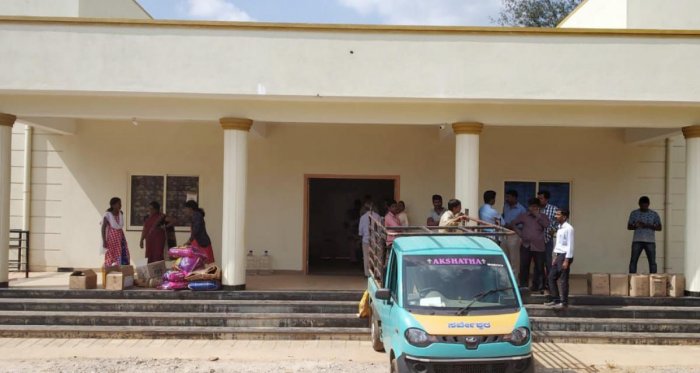
Awaiting distribution: A view of the Madikeri Junior College building where the relief materials have been stored
The Kodagu district administration has decided to supply the relief materials meant for the natural calamity victims that were stored in Junior College building for the last six months, to various orphanages and old-age homes in the district.
There were allegations from the public that the stored relief materials are getting spoiled over a period of time. Even the Zilla Panchayat meeting had discussed the issue at length and had decided to distribute the relief materials among the needy.
‘Priority for victims’
Officials said, “Priority will be given for the natural calamity victims. The remaining relief materials will be supplied as per the directions of the deputy commissioner.”
Representatives from Swasthya Kendra, Suntikoppa, Sthree Shakti old age home, Madikeri, Vikasa Janaseva Trust, Hiriya Nagarikara Vedike and Amritavani arrived on Monday to collect the food grants.
Swasthya Kendra representative Sathish said, “I have come here on the direction of the officials. The officials have promised to give 25 kg rice, which will be beneficial for us to serve the children at the kendra.”
Vikasa Janaseva Trust president Ramesh said, “Officials should ensure that food grains at the godown are not wasted.”
A large quantity of relief materials are stored in the godowns of Madikeri and Kushalnagar.
Deputy Commissioner Annies Kanmani Joy said that food grains will be distributed among the victims. The remaining food materials will be distributed among old-age homes.
source: http://www.deccanherald.com / Deccan Herald / Home> State / by DH News Service, Madikeri / February 11th, 2019
Kodagu has been included in the Malabar Tourism Zone by the stakeholders in Kerala for promoting tourism in Malabar region.
The two districts that are closer to the Malabar region will benefit from the initiative
Tourism in Kodagu is set to get a boost with the district being assured of getting a stall at the newly-opened Kannur International Airport in Kannur, Kerala, to promote tourism to international travellers landing in the coastal city.
Kodagu and Mysuru have been included in the Malabar Tourism Zone by the Kerala authorities for the development of tourism in Malabar and nearby areas, including vast tourist destinations in the land of coffee and also in the City of Palaces.
Kannur International Airport Limited (KIAL) Managing Director V. Tulsidas said the Tourism Department of Kerala and other agencies have come up with a plan for promoting Malabar tourism. Several projects were being chalked out as part of the Malabar Tourism Zone.
Kodagu and Mysuru, which are closer to the Malabar region and already have tourism links with the neighbouring State with people in the tour and travel industry operating services, will benefit from the initiative.
Mr. Tulsidas was speaking at a seminar on tourism in the Malabar region organised jointly by the North Malabar Chamber of Commerce and the KIAL at Kannur recently. Many stakeholders from the Kodagu tourism sector also attended the seminar. Tourism and economic activities in the areas closer to Kannur would benefit with the launch of the international airport, he opined.
With the launch of several international flights from Kannur, Kodagu’s tourism would see a rise in footfall, he said and added that the hospitality sector in these places should come up with attractive offers for foreign travellers.
Mr. Tulsidas said the Kerala Industrial Infrastructure Development Corporation has come forward to allot over 5,000 acres of land near Kannur airport for the development of economic activities in the area and called upon investors from Kerala and Karnataka to make use of the opportunity.
Kodagu Hotels, Restaurants and Resort Owners’ Association president B.R. Nagendra Prasad, who attended the seminar, said the association would provide all possible support in realising the objectives of the Malabar Tourism Zone.
Entry tax
Association Consultant G. Chidwilas said tourist taxis from Karnataka were being charged exorbitantly upon their entry into Kerala and this could be a hurdle in attracting the people from the State to Kannur for boarding flights. In reply, Mr Tulsidas said the governments of Kerala and Karnataka need to arrive at an amicable solution to the issue of the entry tax.
source: http://www.thehindu.com / The Hindu / Home> News> States> Karnataka / by Special Correspondent / Mysuru – February 11th, 2019
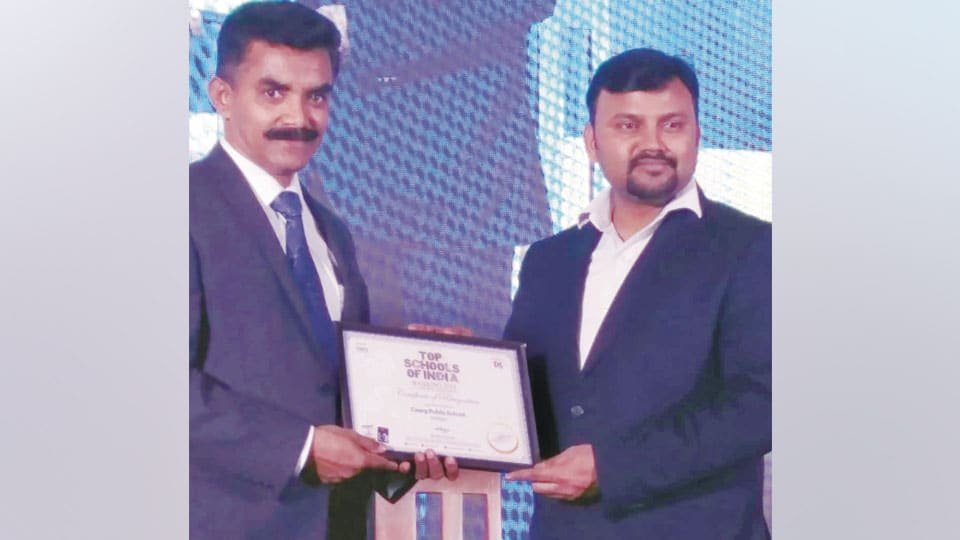
Coorg Public School (COPS), Gonikoppal, South Kodagu, was awarded with ‘Top Schools of India Ranking-2018’ by Dr. Ravi Gupta, Editor-in-Chief, Digital Learning and CEO, Elets Technomedia Pvt. Ltd., at the School Leadership Summit held in Bengaluru recently.
Benny Kuriakose (left), Principal of Coorg Public School, who was selected as the Brainfeed Edu Leader of the Year 2018-19, received the award from the dignitary.
source: http://www.starofmysore.com / Star of Mysore / Home> Photo News / February 07th, 2019
Chief Minister H.D. Kumaraswamy has announced ₹100 crore in his budget for the construction of a 450-bed teaching hospital in Madikeri for Kodagu Institute of Medical Sciences (KIMS).
The college was lacking the hospital since its establishment and the district hospital was supporting it.
Other budget announcements for Kodagu include – ₹2 crore for the newly-formed Kodagu Reconstruction and Rehabilitation Authority; ₹5 crore for Kodava Samaj Hockey Stadium in Virajpet taluk; a grant of ₹10 crore for the overall development of Kodava community; resurvey of Mysuru and Kodagu using drones. A new sports hostel has been announced for Madikeri with a few other cities at a cost of ₹12.5 crore.
source: http://www.thehindu.com / The Hindu / Home> News> States> Karnataka / by Special Correspondent / Mysuru – February 09th, 2019
Talakaveri in Coorg district is where the mighty River Kaveri takes birth. Chitra Ramaswamy traces its journey, all the while enjoying some scenic spots along the way… Talakaveri
The sky blushes a monochrome in blue tending to grey-black, with clouds that promise rain. Driving through the winding roads of Kodagu flanked by lush coffee estates and fields of spices, we bring our vehicle to a halt at Talakaveri, the birthplace of the sacred River Kaveri. We are as much awestruck by our surrounds as by the legends associated with the waterbody.
A river’s journey
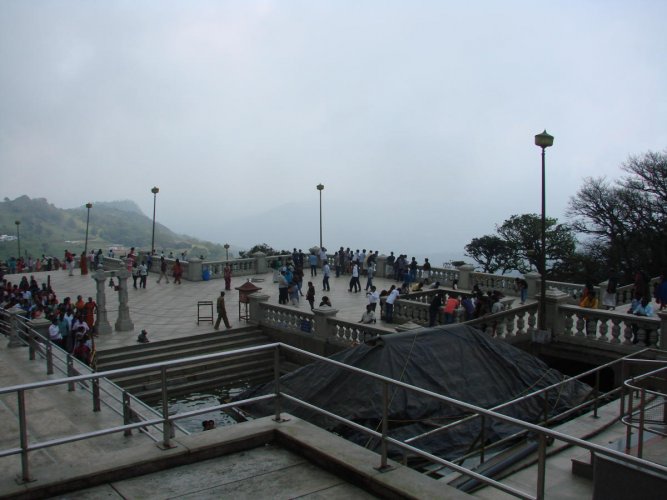
Kaveri, the sacred, easterly-flowing river of peninsular India, commonly referred to as Dakshina Ganga, was born here in the Brahmagiri ranges of the Western Ghats, at an elevation of 1,341 m. However, Kaveri is not visible as a river at Brahmagiri. Rather, she originated as a gurgling spring that to date feeds a tank built on the hillside by the Kodavas of Kodugu. We witness devotees fill pots and bottles with the holy water from the tank, while others take a dip in it. Kaveri miraculously bubbles up every year at an auspicious moment in rebirth, on Tula Sankaramana day, which falls between October and November. Pilgrims in hundreds of thousands flock here to cleanse themselves during this time.
A temple to Goddess Kaveri, that is also dedicated to Shiva as Agasthyeswara, and Ganesha, overlooks the tank and attracts devotees in droves throughout the year. Talakaveri’s importance as a place of veneration gained greater importance since it is believed that Sage Agasthya was blessed here by Brahma, Vishnu and Ganesha as he sat meditating under the ashwaththa tree. Legend also has it that the saptarishis or the seven great sages who are extolled by the Vedas performed their yajna or ritual sacrifices at Brahmagiri Peak.
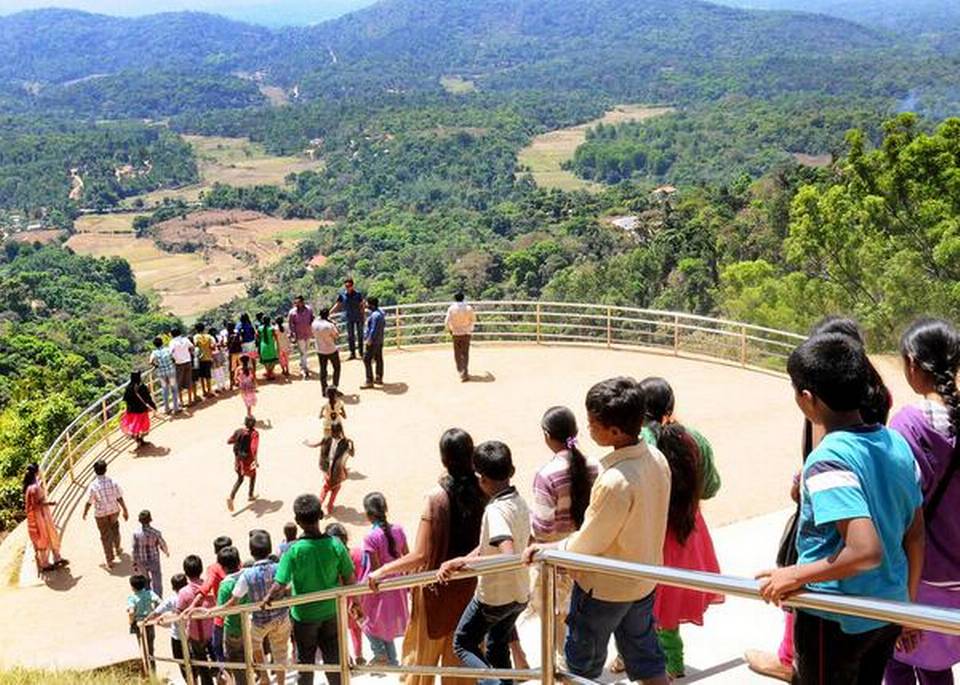
After offering prayers at the tank shrines, we ascend a flight of steps leading up to the summit of the mist-kissed Brahmagiri Hill, which offers stunning glimpses of the valley below. It is from here that the shimmering body of blue gleefully begins her downward journey, only to disappear underground. However, Kaveri resurfaces in a steep tumble at Bhagamandala, located at the foothills of Talakaveri where she swells with pride as she unites with River Kannike, and Sujyoti, a mythical river. The trio of rivers forms the much venerated ‘Triveni Sangam’. A dip at this confluence is believed to purge one from all evil and negative influences. Believers proceed to Talakaveri after taking a dip at the sangam and performing rituals for their ancestors.
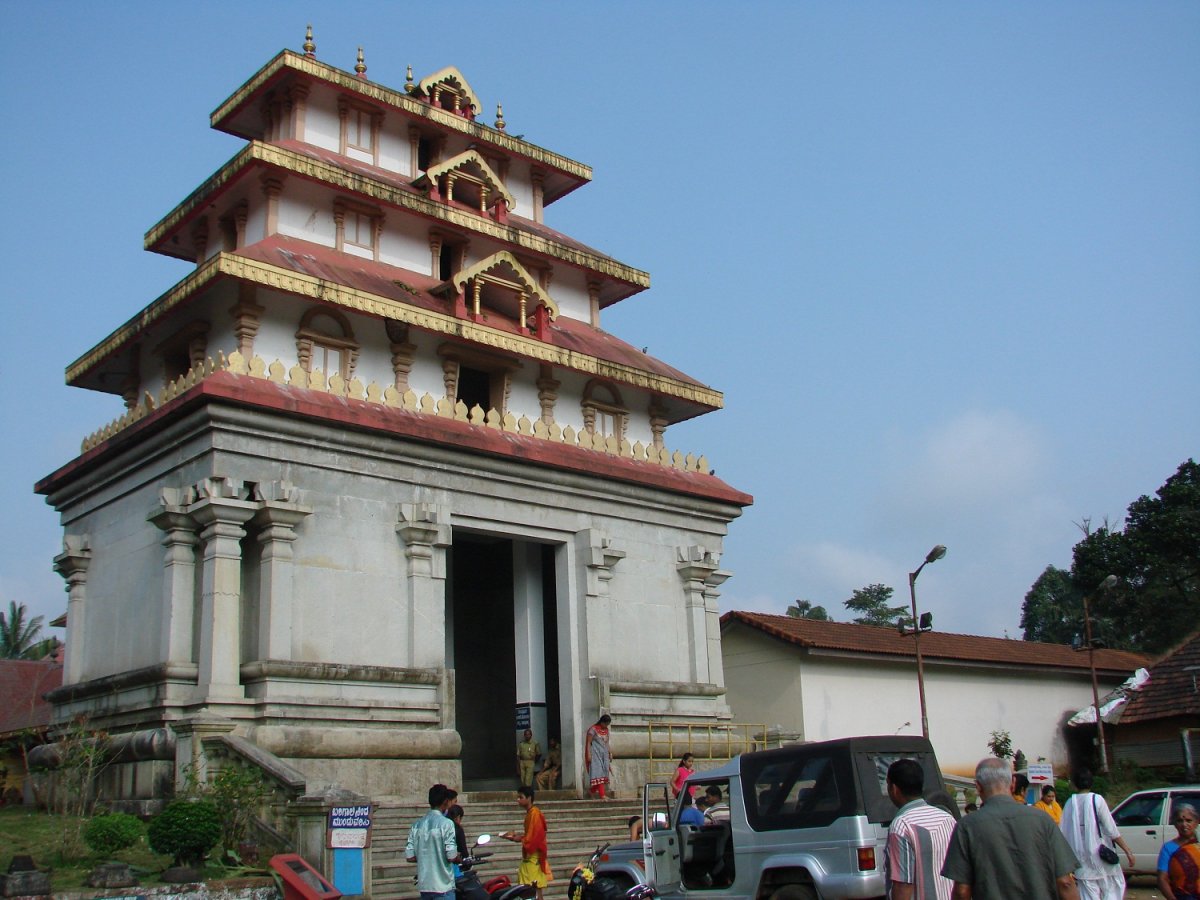
The entrance to Bhagamandala Temple
Our next halt then is Bhagamandala or Bhagandeshwara Kshetra which derives its name from the Bhagandeshwara Temple dedicated to Lord Shiva. Though the temple complex was built by the Cholas around the 11th century, it displays Kerala-style temple architecture with copper roofs that curve up at each corner, into rearing and hooded cobras. Shrines to Vishnu, Ganesha and Subramanya with rimmed brass doors dot the courtyard. Painted sculptures of the pantheon of Hindu deities, flora, fauna and men in battle adorn the ceilings.
An inscription in its premises refers to Bhagamandala as having been captured by Tipu Sultan in the 1780s. He renamed it as Afesalabad, and as a tribute to himself for the feat he had accomplished, Tipu placed the ‘Salam Kallu’, a stone on the way to Talakaveri. The stone bears testimony to the brutal bloodbaths that he caused. However, in 1790, in a fiercely fought battle, Dodda Veera Rajendra, the most famous of the Haleri rulers of Coorg, regained the territory. Further, he donated the stupika stupika and golden pinnacle of the temple’s cone-shaped shikhara.
Our Bhagamandala trip takes us to Karnataka’s only museum that exhibits objects related to bee-keeping. Bhagamandala is also home to Madhuvana, a bee-rearing and honey marketing centre.
Stuff of legends
A host of legends, most of which have their origins in the Puranas, are associated with Kaveri that has inspired several civilisations that have flourished on its banks. She is inextricably linked with Sage Agasthya, King Kavera and Lopamudra, a trio of puranic icons. The most popular tale associated with the river is that Lord Brahma sent his daughter Vishnumaya to earth as Lopamudra. He had twin objectives in doing so. One, to assist Lord Vishnu as the damsel Mohini, in his ploy to vanquish a demon. Secondly, to allow his daughter to fulfil her keen desire to serve humanity on earth. Brahma gave Lopamudra in adoption to King Kavera who meditated upon him to beget progeny.Pleased with the king’s worship, Brahma gave Lopamudra in adoption to him. As the king’s daughter, she was rechristened Kaveri, and she grew up to be a gorgeous maiden.
Sage Agasthya, who was meditating on Brahmagiri Hill, was entranced by the young Kaveri’s enchanting looks. He sought her hand in marriage. Kaveri accepted him, upon the condition that she would leave him for good if he left her alone for long, at any point in time. As fate would have it, Agasthya once became engrossed in a philosophical discussion and forgot his deal with Kaveri. She immediately left him, transfigured herself into a river, and began to flow in order to fulfil her own desire to serve mankind.
According to another popular myth, Sage Agasthya, by his yogic powers, turned Kaveri to water which he filled in his kamandalu or water pot, and kept it in his ashram. But on one occasion, when he entrusted the pot to his disciples and returned late from a debate, Kaveri used her divine powers to jump out of the kamandalu and emerge as a river to serve humanity. A variant of this version claims Lord Ganesha as having taken the form of a crow and toppling the water from the kamandalu.
Nalaknad Palace
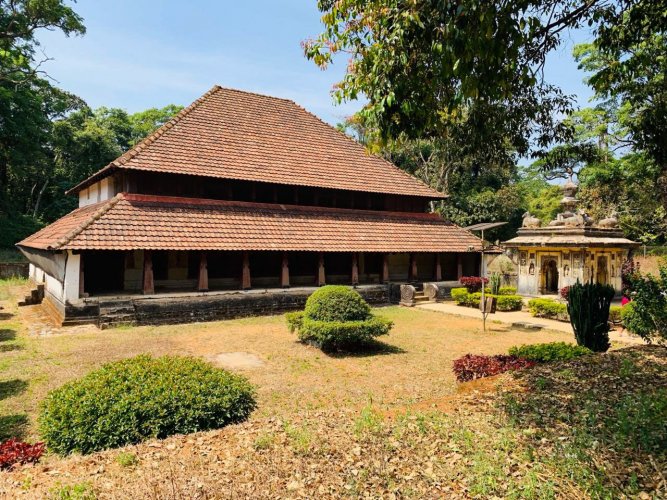
Having feasted our senses on the picturesque Talakaveri and Bhagamandala, we then explored the neighbourhood within a radius of 70 km. Igguthappa Temple, 26 km away, is one of them. After paying our obeisance to Igguthappa, the chief preceptor of the Kodavas, their god of rain and crops, we delight in the verdure surrounding Chelavara Falls, a natural waterfall formed by a tributary of the Kaveri, and Nalaknad Palace which is located at the foot of Tadiandamol, Kodagu’s highest peak. The edifice was built in 1792 by Dodda Veera Rajendra to celebrate his victory against Tipu. It is adorned with exquisite wall murals in various states of preservation. The twin-storeyed palace with a simple exterior has intricate wooden carvings, low conical roof, crested dome and pillared facade.
About 70 km from Bhagamandala, we visit the serene and breathtaking Nisargadhama, a 64-acre island surrounded by River Kaveri. A scenic spot accessed by a hanging bridge across the river, it is ensconced by foliaceous teak and sandalwood trees and bamboo groves. Uma Maheshwara Kshetra and Harangi Dam are our final halting spots on this explorative sojourn of Kodava land. Our hearts and minds fill with a sense of pride at belonging to the land of this holy river. In her 800-km-long long thrilling odyssey, Kaveri traipses amid varying landscapes of Karnataka, Kerala and Tamil Nadu, bounding over boulders, crisscrossing through clusters of expansive palm and paddy fields. She displays several shades of her whimsical nature on this jaunt — a young bride, serene and shy at once, a capricious and tempestuous prankster the next. The mirthful lass creates little and large waterways en route, joins forces with lesser streams, until she takes a final bow and loses herself in the fathomless depths of the Bay of Bengal.
source: http://www.deccanherald.com / Deccan Herald / Home> Supplements> Travel / by Chitra Ramasamy / February 09th, 2019
WELCOME. If you like what you see "SUBSCRIBE via EMAIL" to receive FREE regular UPDATES.
Read More »