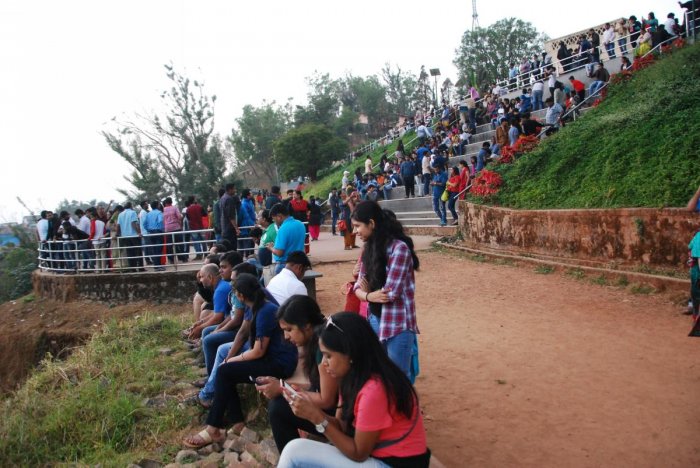
Kodavas take part in a programme as a part of the Kodava National Day observed by the Codava National Council in Madikeri on Sunday.
The 28th Kodava National Day is dedicated to the memory of those who lost their lives during the floods and landslides, Codava National Council (CNC) President N U Nachappa declared while inaugurating the Kodava National Day organised by CNC at Gandhi Maidan on Sunday.
Nachappa while addressing the gathering said that CNC has been fighting for the self-respect of the villagers rendered homeless by nature’s fury.
“The government should fulfil all the demands of victims at relief camps. A disaster of bigger scale is waiting to happen if Harangi dam is not rebuilt. The government should initiate an enquiry into the fitness of Harangi reservoir,” he urged.
He said that a probe should also be done into the alleged misappropriation of relief materials.
Nachappa also urged the government to establish a separate department for disaster management.
“The genocide of Kodavas in Devati Parambu by Tipu Sultan can never be forgotten. Yet the state government is observing the birthday of Tipu, hurting the sentiments of Kodavas,” he said and alleged that miscreants had been disrupting CNC’s campaign.
“The genealogy studies on Kodavas was also stopped abruptly,” he added.
Traditional celebrations were the highlight at the 28th Kodava National Day.
After the traditional Kodava ritual, a cultural procession was taken out from General Thimayya Circle to Gandhi Maidan, through General Thimayya Circle.
Youth wearing the traditional Kodava attire walked in the procession to the beats of ‘Dudikott Patt’.
‘Bolakkatt’, ‘Kattiyatt’ and ‘Kolata’ drew the attention of people.
CNC members Chandira Raja, Karavanda Saraswathi, Boppanda Bollamma Nanaiah, Hanchettira Nayak and Areyada Savitha were present among others.
source: http://www.deccanherald.com / Deccan Herald / Home> State> District / by Adithya K A / DH News Service, Madikeri / December 02nd, 2018
The resort and homestay owners have initiated a campaign to promote tourism in the district.
The campaign ‘Kodagu is Back’ is aimed at promoting tourism in the district which had been affected by landslides and flash floods causing extensive damage during August.
The tourism industry has sprung back to life in the face of floods affecting Kerala. However, in Kodagu, the tourism industry failed to recover. Hence, the resort and homestay owners in the district have posted two short films to highlight that Kodagu is safe and tourists can visit without any fear. The duration of the video is one-and-a-half minutes and has gone viral on social media.
The short films produced by Drishti have attempted to showcase safety in tourists spots, trekking areas, rivers and mist-filled Kodagu district. There are over 4,000 homestays in the district. After the massive floods that ravaged the district in August, a majority of the homestays have remained closed.
“Other than horticultural crops, the main source of income for the district is tourism. Though tourists are visiting the district since November first week, it has not grown as per the expectations. Hence, the short films are an effort to promote tourism in the district,” said Hotel and Resort Owners’ Association President Nagendra Prasad.
Over one lakh people in the district are dependent on the tourism sector for livelihood. After the landslides, the labourers have returned to their native places. About 80% of the business has been affected. Resort and homestay owners are attempting to sell the resorts. However, there are no buyers, he lamented.
The Karnataka State Tourism Development Corporation too joined hands with the resort owners in promoting tourism.
KSTDC Managing Director, Kumar Pushkar said, “There are two hotels run by KSTDC in the district. In the last four months, we have incurred a loss of Rs 1.50 crore.”
source: http://www.deccanherald.com / Deccan Herald / Home> States> Districts / by Adithya K A / DH News Service,Madikeri / November 30th, 2018
Attention, coffee lovers. Here’s your chance to live and work at an estate during harvest season.
Much work goes into the perfect cup of coffee, even before the myriad stages of pulping, grading, roasting, brewing et all can begin. What bothers Marc Tormo, is that most of us don’t know about any of it.
Marc is a coffee expert, roaster and brewer of repute. Originally from Barcelona, he settled in Auroville in 1996 and has since been making a living out of specialty coffee. This harvest season, Marc wants to spend an immersive weekend at a coffee estate in Coorg — with enthusiasts, aspiring entrepreneurs, or just those who love their coffee — demonstrating every step that goes into coffee-making. Aptly titled From Crop To Cup, the workshop will help participants learn what happens in every step of the process.
So expect to spend a day with coffee pickers, helping them in their task. Be prepared to lend a hand in the washing, drying and roasting as well. And it’s not only about cultivation: “Participants will also be introduced to international standards of cupping (coffee tasting), and taught how to assess flavour, aroma, body consistency, sweetness, bitterness and the like,” he says over a phone call. “There will also be blind tasting sessions, as well as collaborative sessions where participants will have to work with each other,” he adds. Home brewing lessons are also included.
All this will take place at the estate of Old Kent, whose owners are facilitating the workshop. Participants will be put up in English cottages in the estate.
Crop To Cup will be held at Old Kent Estates and Spa, Coorg, from December 7 to 10. The cost per head is ₹24,000. For details, call 9789896454.
The estate can be contacted through www.oldkentestates.com and reservations@oldkentestates.com
source: http://www.thehindu.com / The Hindu / Home> Life & Style> Food / by Meghan Majumder / November 30th, 2018
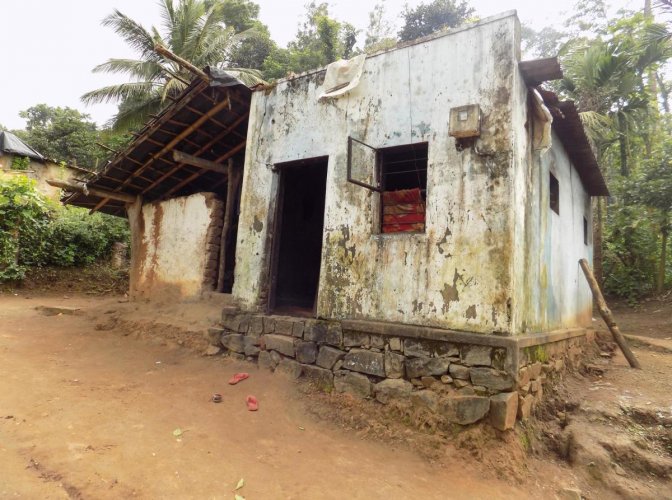
The pathetic condition of a house in the tribal colony at Devarapura in Gonikoppa.
Lack of basic facilities is haunting the Jenukuruba community members at Devarapura tribal colony in Gonikoppa.
The colony is situated between Gonikoppa and Thithimathi with 120 Jenukuruba families and 40 Yarava community families residing in it.
It was during 1988 when Jammada Karumbaiah was the Jilla Parishat president, the government constructed 40 houses with asbestos sheets as the roof for the tribals. Now, the houses are in a deplorable condition and are waiting for a facelift.
The remaining 120 tribal families are still living under thatched roof huts covered with plastic sheet to prevent rainwater from seeping inside.
As the land comes under “Devara Kadu” (sacred grove), the residents are not even issued the title deeds for the land on which they are residing. Hence, they are deprived of basic facilities from the gram panchayat.
The houses neither have electricity connections nor a drinking water supply.
The houses lack toilets. There is no proper road leading to the houses. The children still depend on kerosene lamps for completing their homework. The ITDP department had supplied solar lamps in the past. However, a majority of the lamps are defunct .
“On the ground of the sacred grove land, a landowner has filed a case in the court urging the government not to sanction land for the tribals. Thousands of acres of sacred grove lands in the district have been encroached by the rich. When a poor labourer seeks land to build a house, the government has failed to respond,” said colony leader and DSS activist Jenukurubara Subramani.
Women in the colony have to walk for several kilometres to fetch a pot of water from a water body.
Every year, at least two to three women are trampled by wild elephants while on there way to fetch water. In spite of it, the authorities have failed to initiate measures to supply water to the colony, alleged residents.
Further, they said the electricity poles were installed with a transformer to supply electricity to the colony five years ago. However, electricity is yet to reach the households.
Without proper road connectivity, the residents also find it difficult to reach the main road in case of an emergency.
source: http://www.deccanherald.com / Deccan Herald / Home> States> Districts / by DH News Service, Gonikoppa / November 27th, 2018
Spit, dung and more — these expensive coffees are not for the faint-hearted
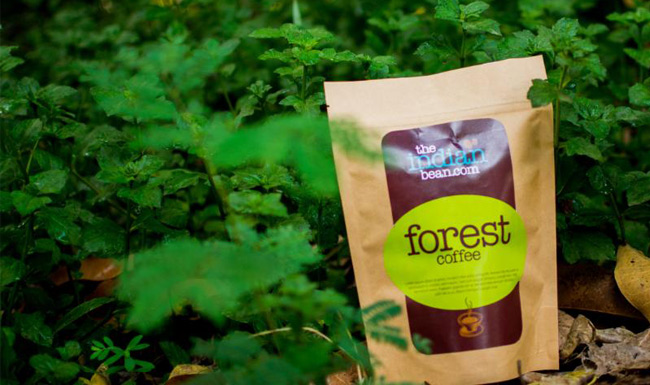
The Indian Bean
The first sip tastes almost like a regular cup of Joe — it’s earthy, smooth but minus the usual bitterness. In fact, it tastes so unique that no one can pinpoint for sure its complex flavours. Some say it even has a hint of chocolate or fruity taste. Wonder what kind of coffee this is? Considered one of the most expensive coffees in the world, the secret ingredient behind this coffee might make you reconsider your love for the drink. This famous brew called Kopi Luwak or civet coffee is made from the faeces of civet cat and has its roots in Indonesia. Don’t be surprised, because cat poop coffee is just one of the many new trends in the coffee industry.
Civet cats consume coffee cherries for the fleshy pulp of the beans
Civet cats have a natural tendency to roam around in coffee plantations. More often than not, they pick on coffee cherries — the perfectly ripped ones of the lot. These coffee cherries are picked by civets for the fleshy pulp of the beans. During the digestion process, a unique fermentation process occurs, such that after passing through the civet’s intestines, the beans are defecated with other faecal matter. While this might just be faecal matter for some, others consider this a treasure. Rajat Badami, founder and CEO of Kingsmen Coffee says, “The sale of this coffee is primarily outside India. There is demand for this coffee in the US and many European nations.” But the process doesn’t end at collecting cat poop, argues Badami. He says, “Identifying the civet’s faeces, handpicking it and then washing, drying and pounding is a long and tedious process. Since so much effort goes into making it, we sell this coffee at $600 a pound in Western countries.”
On the other hand, Thamoo Poovaiah, managing partner of Ainmane brand of coffee, the first company in India to make Kopi Luwak prefers to keep the rates lower for Indian audiences. He says, “We have more than 235,000 acres of coffee plantations in India and we produce 40% of India’s coffee. Since civet coffee is hard to obtain naturally, we can get only five to 10 tonnes of it per annum.” Ainmane sells civet coffee for 1,060 per 100gms.
While coffee made of litter selling for a few thousands might seem like an absurd concept, there is more to it. The brainchild of Thailand’s Anantara Resort produces coffee straight from elephant dung. Known widely as Black Ivory Coffee, this unique product finds a place in the list of ‘rare and expensive coffees of the world’. A single cup of this coffee is said to cost around $50. Its producer, Black Ivory Coffee Company, maks a very limited amount on an yearly basis, given that this natural process is time-consuming. Blake Dinkin, founder of Black Ivory Coffee is wants to keep the process a secret. He believes many people have mistaken the idea to be as easy as collecting elephant dung containing coffee beans.
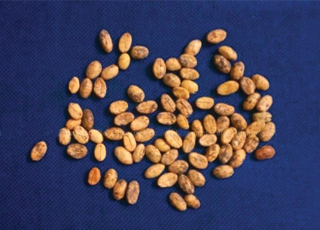
Another special coffee with animal component is the monkey parchment coffee produced near Araku Valley. The process of collecting beans is slightly different than the previous varieties. The monkeys, just like the civets, pick on the ripest coffee cherries. The difference being they eat only the flesh, but instead of swallowing the bean, they usually spit it out. The natural enzymes in their saliva give the coffee beans a tinge of acidity. Kunal Ross, founder and CEO of The Indian Bean says, “It is difficult to spot these spit beans in a forest, as compared to civet or elephant litter. A bite mark on a coffee bean is how we distinguish our beans.” This makes the discovery process longer, but once collected, the beans are washed under running water and dried to ensure the consistent roasting. The Indian Bean’s monkey parchment coffee costs around 4,000/kg. These beans are collected around October, and what makes this coffee even more exclusive is its limited number of vendors in India. Coffee lovers are slowly warming up to the idea of artisan coffees, but it would be intriguing to see what new ingredient will join the list next.
source: http://www.outlookbusiness.com / Outlook Business / Home> C’est la vie> The Good Life / by Aishwarya Parikh / July 21st, 2018
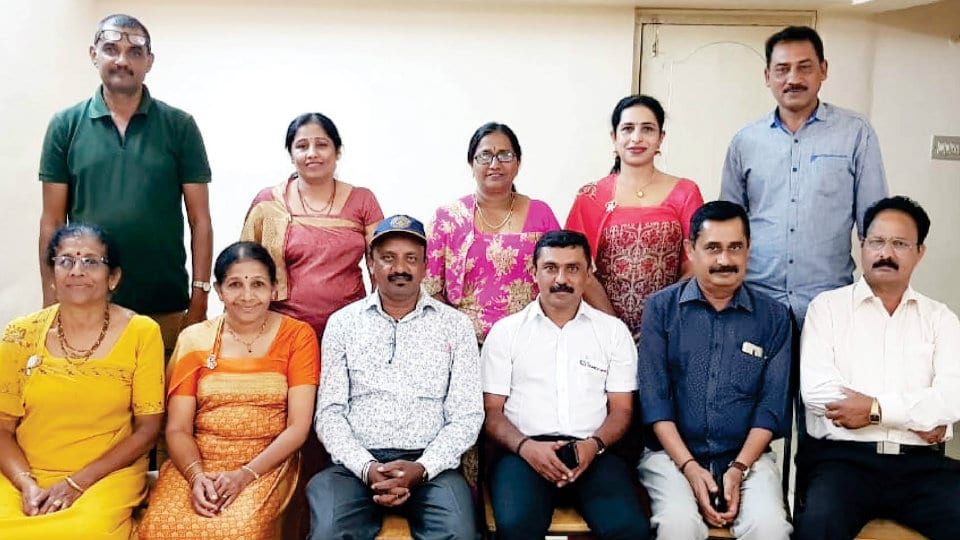
The Annual General Body Meeting of Sri Igguthappa Kodava Association, Vivekanandanagar, was held recently at Kodagu Sahakara Sangha in Jayalakshmipuram.
The following were elected as office-bearers and committee members for the next two years:
Ponjanda A. Ganapathy – President, Moovera Chinnappa – Vice-President, Anjanda Kumari Ganapathy – Secretary, Mundanda Sunitha – Treasurer, Kuppanda Subbaiah – Joint Secretary, Chottekalapanda Prema Uthaiah, Kotera Thammaiah, Pandira Sarala, Balyameederira Pallavi Bopanna, Chakkera Bopanna and Nandineravanda Somanna — all Committee Members.
source: http://www.starofmysore.com / Star of Mysore / Home> Photo News / September 24th, 2018
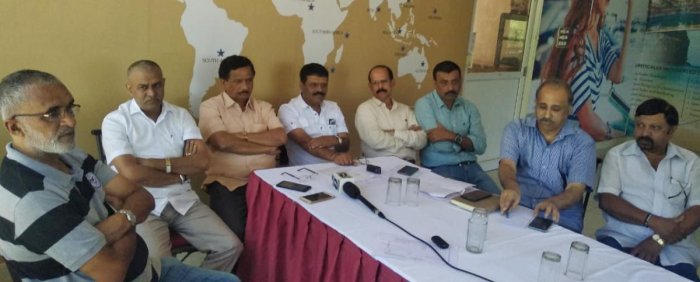
Codava National Council (CNC) will observe Codava National Day on at Gandhi Maidan in Madikeri December 2.
Addressing reporters in Mangaluru on Tuesday, CNC president N U Nachappa said that the objective of the Codava National Day is to re-insist and rejuvenate the geo-political aspiration for the quest for autonomy and ratify the solidarity for self-determination right of Kodava tribal world.
The theme of this year’s congregation is ‘Right to Live’ and is dedicated to the landslide victims in northwestern Kodagu. The victims should be able to regain their land, he said.
Nachappa urged the Government of India to accord geopolitical autonomy to Kodagu, under the Sixth Schedule of Indian constitution for durable and permanent political solution to the long-standing unrest of the Kodava tribal world. The proper constitutional mechanism should be exercised by the Union government in the interest of justice and equity, he urged.
“Kodagu should be given political autonomy and right for internal political self-determination for Kodava tribes. A permanent political package should be granted to provide Union territory status to Kodava land, under Article 2 and 3 of the Constitution. Kodava martial tribe should be added to the schedule list of out constitution under articles 340 and 342. Kodava Thakk should be included in the eight schedules of the constitution,” he said.
Nachappa said that the Devati Parambu genocide by erstwhile Mysore province ruler Tipu Sultan in which maximum Kodava clans lost their lives and the forced merger of Kodagu with Karnataka are the two unfortunate incidents in the history of Kodagu. Kodavas need justice and compensation for these two incidents, he said and alleged that Karnataka is treating Codava land as its internal colony and its native Kodava people as second class citizens.
The ethnographic survey started by the state government following a direction from the Central government has been stalled since December 2016, Nachappa said and sought completion of the survey.
The number of people speaking Kodava and Konkani languages has dipped, shows the 2011 census data. While Konkani is a scheduled language, Kodava is a non-scheduled language.
Data from the 2011 census on mother tongues indicate that the number of people speaking Konkani decreased from 24.9 lakh in 2001 to 22.6 lakh in 2011, registering a 9.3% dip in decadal growth. The number of Konkani speakers had rocketed by 41.4% in 2001 over 1991. In absolute numbers, it went up from 17.6 lakh to 24.9 lakh.
The number of Kodava speakers decreased from 1.7 lakh in 2001 to 1.1 lakh in 2011, registering a 31.4% dip. Compared to just 97,011 speakers in 1991, the figure was up by 71.3% in 2001.
While Konkani is spoken as a major language in several States including Karnataka, Maharashtra and Goa, Kodava language is largely restricted to Kodagu district, besides a few settlers in Mysuru, Bengaluru and other major cities in the country and abroad.
According to Kodava Sahitya Academy President P.K. Ponnappa, the number of Kodava language speakers is dipping because of declining population.
“Several Kodavas, especially those who have moved out of Kodagu, speak English at home. As it is the number of Kodavas is declining. If our own people do not speak Kodava language, Kodava mother tongue will have no future,” Ponnappa regretted.
He added that awareness campaigns must be initiated to tell people about the danger that the language is facing and urge more and more Kodavas to save the language by speaking it in their day to day lives.
Going by census data since 1971, the number of people speaking both these languages has dipped for the first time in 2011. Both communities are planning campaigns to increase their numbers in the 2021 census.
source: http://www.starofmysore.com / Star of Mysore / Home> News / November 24th, 2018
Legislators at a meeting on the implementation of the Kasturirangan report recommendations on the conservation of the Western Ghats.
MLA K G Bopaiah said that habitation area should be dropped from the purview of the ecologically sensitive area (ESA) while implementing the recommendations of the Kasturirangan panel on the conservation of the Western Ghats.
There is time till December 2 to file objections to the draft notification issued by the Ministry of Forest and Environment on the implementation of Kasturirangan recommendations, he added.
Speaking at a meeting organised to discuss on Kasturirangan report on Monday, he said the first draft notification on the recommendations was issued in 2014. The fourth draft notification was issued in the month of October.
Following a stiff opposition from the people living in the Western Ghats area, the Green bench had ordered to collect public opinion in the matter. The people from Kodagu should file objections to the report to ensure that the recommendations are not implemented, he added.
He said that the recommendations are harmful to the farmers as well. If more number of objections are submitted, it will benefit the people of Kodagu district, he said.
He appealed to the gram panchayats, taluk panchayats and zilla panchayats to file objections based on the resolution passed against the implementation of recommendations of Kasturirangan report.
Varadi Anushtana Virodhi Samithi office bearer Nanda Subbaiah said, “The Kerala government had made an on-the-spot verification of the villages falling within the ecologically sensitive areas (ESA) and kept agricultural land, plantations, and habitations out of the purview of the ESA.”
MLA M P Appachu Ranjan, MLC Sunil Subramani and others were present in the meeting.
source: http://www.deccanherald.com / Deccan Herald / Home> States> Districts / by Adithya KA, DH News Service / November 26th, 2018
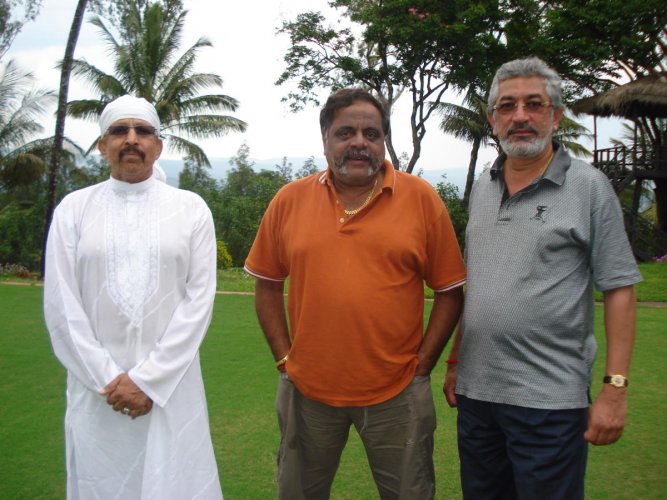
Ambareesh flanked by Vishnuvardhan and Bettageri Estate owner Vinod Shivappa.
The actor-turned-politician Ambareesh had a close affinity for Suntikoppa, a tiny place in Kodagu.
Amid the busy schedule between films and political life, Ambareesh would visit the Bettageri Estate, owned by Vinod Shivappa, near here, to find a time for himself. Vinod and Ambareesh have been friends for years.
Remembering the bygone years, Vinod said, “Vishnuvardhan and Ambareesh would stay in my house for five days. They would come at least five to six times in a year.”
“After the death of Vishnuvardhan, Ambareesh would come alone. He would invite his other friends in Kodagu and would dine together. No one would know of his visit to the estate,” said estate manager Changappa.
“Ambianna, who would visit our owner’s house, would spend time by jovially speaking with us. He would mingle with us freely,” said labourer Deju.
Another labourer Shivappa remembered the shooting of the movie “Mannina Maga” at the estate.
source: http://www.deccanherald.com / Deccan Herald / Home> States> Districts / by Adithya K A / DH News Service, Suntikoppa / November 25th, 2018
WELCOME. If you like what you see "SUBSCRIBE via EMAIL" to receive FREE regular UPDATES.
Read More »