Eat local. Why the eating principles of the Kodavas are worth emulating

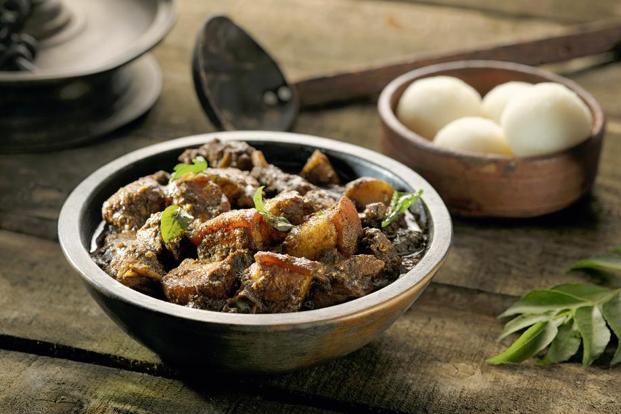
What stands out about this cuisine is the heavy use of spices and coconut.

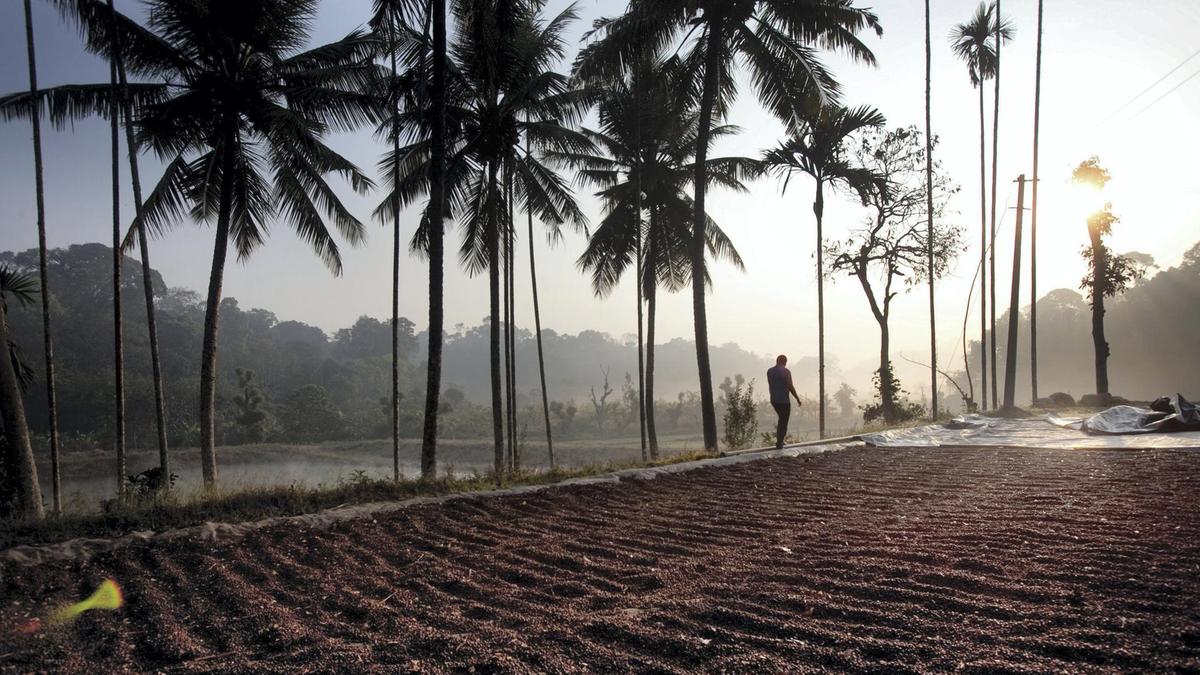
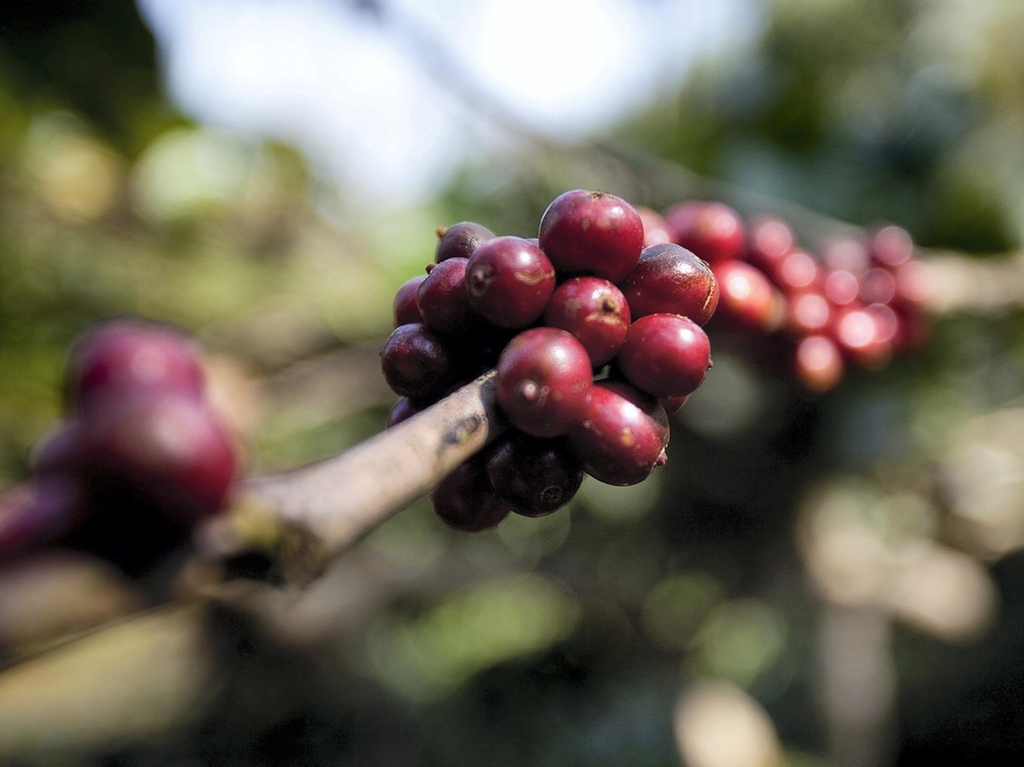
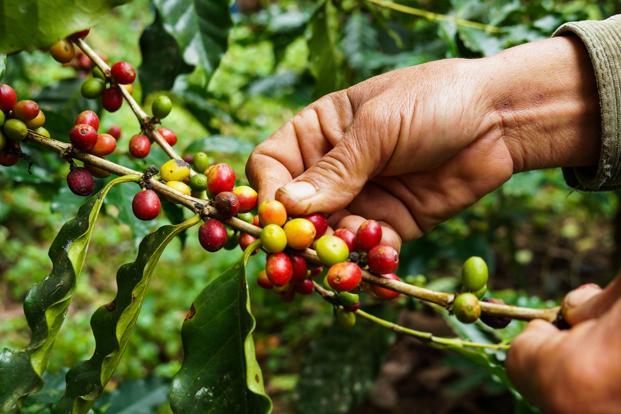
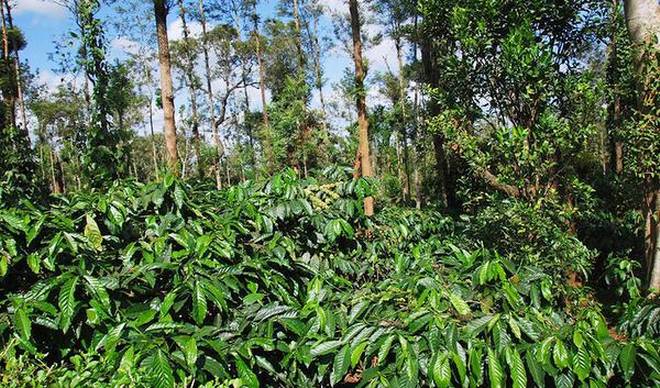
I am just back after spending a few blissful days in the coffee capital of the country – Coorg. The superlative coffee there is a draw without doubt, and so are the long stretches of deep green coffee plantations (it’s a different soul soothing green altogether!), and of course the pure, clean air that effectively cleans out our city slackened innards. But that’s not all this amazingly beautiful district, the smallest in Karnataka is worth visiting for. There’s their food too – the local Kodava cuisine; and during this trip, I realised that a lot of their eating principles are worth emulating.

First is their eat local rule. Traditionally Kodavas always ate what was available off the land, and that continues till date. For example, rice is grown in abundance in the Coorg region, so boiled rice, rice dumplings, Kanjee (a fermented rice gruel) and Akki roti (made out of rice flour) is their staple diet. Wheat is hardly eaten. Makes sense. If the genes are used to rice, and the digestive system is acclimatised to a particular grain, so why mess with it!

Other aspects that stands out about this cuisine are the heavy use of spices and coconut. Coorgi food is redolent of fresh spices. “You simply pluck the spices and put them in your food — and that’s what makes the food so special,” shared chef Chandikunju Vargchese (or Chef Chandy as he is fondly called) of Evolve Back Resort in Coorg when I asked him the secret for the sheer deliciousness of the cuisine. Besides spices as we all know are adaptogens, foods that add a lot of antioxidants and health giving and immunity boosting components to our diet and counter the daily physiological stresses effectively.

Coconut helps to restore the stress-induced and age-related oxidative tissue damage in our body and delivers healthy fats too. The medium-chain triglycerides it has converted into monoglycerides and medium-chain free fatty acids during digestion, and the good news is that our body doesn’t store them as fat, instead uses as an energy source right away. Thus, coconut actually encourages weight loss and help you shed unwanted pounds. Surprised!

Coconut also delivers multiple minerals, specially the often missed trace minerals like manganese, copper, selenium, iodine, potassium, iron, phosphorus, magnesium and zinc. All of which we need for staying healthy, and keep fatigue away. In addition some specific fats found in coconut – caprylic, capric and lauric fatty acids – are antibacterial and antiviral so they help bolster our immune system and destroy pathogens, keeping us safe from seasonal, viral diseases.

Now Kodavas are primarily non vegetarian, pork is practically a staple, but there they make some killer vegetarian dishes too. In fact stems and leaves of vegetables (like kembh leaves, edible colocasia) and fruits (for example jungle mangoes) feature prominently in the cuisine. In fact Kachampuli, a thick concentrated juice from a local fruit (Garcinia Gummi Gutta) provides the sauce base for most Coorgi dishes.

Green chillies are used liberally, and there is a potent local variety called little Kanthari (also grown in Kerala), known in the Kodava language as parangi malu. It is tiny but very hot. I spotted little shrubs growing outside my cottage at the resort and their in-house naturalist told me that every kitchen garden in Coorg by default has a shrub of this potent chilli. Makes sense, as besides its sharp flavour, apparently this chilli has cholesterol-lowering effects.

Mushrooms are quite a favourite too. A local dish worth trying is Kummu curry, a wild mushroom curry. Made in an onion-tomato-coconut gravy, I had this dish a couple of times during my stay. It’s a very tasty way to eat more of this health giving fungi. Try it.

Finally chutneys and pickles are also an important part of the Kodava food. Chef Chandy taught me how to make an amazing bitter gourd pickle. It’s simple: Deseed and cut bitter guard (250 gm). Crackle mustard seeds (a pinch) in oil (25 ml), sauté ginger, garlic, green chilly (10 gm each) and a few curry leaves. Add bitter guard and sauté well. Add turmeric powder, chilly powder (1 tsp each), asafoetida powder and fenugreek powder (a pinch each). Pour the vinegar (100 ml) and cook it for few minutes. Season with salt and sugar (both to taste). Let it cool. I made a batch as soon as I got back home, and now relish (and relive) the taste of Coorg with all my meals. You could too!

source: http://www.dailyo.com / DailyO / Home> Variety> Hello Health / by Kavita Devgan @kavitadevgan / August 04th, 2018

I.B. Uthaiah From Kodagu Appointed As Rear Admiral

UthaiahKF03aug2018

Madikeri:

Ichettira B. Uthaiah from Kodagu District has been appointed as Rear Admiral of the Indian Navy. This is for the first time in the history of the district such an appointment has been made in the Indian Navy. In the Army, however, Kodandera M. Cariappa has risen to the rank of Field Marshal (Commander-in-Chief) and Kodandera S. Thimayya has risen to the rank of General.

Rear Admiral is a naval commissioned officer rank above that of a Commodore and Captain, and below that of a Vice Admiral. It is generally regarded as the lowest of the “Admiral” ranks, which are also sometimes referred to as “flag officers” or “flag ranks”.

The Admiral (Chief of Naval Staff) will be assisted by a Vice Admiral who will command the lead ships which would bear the brunt of a naval battle. In the rear of the naval squadron, a Rear Admiral would command the remaining ships as this section of the squadron was considered to be in least danger.

The Equivalent ranks of Rear Admiral in the Indian military are Major General (Army) and Air Vice Marshal (Air Force). Many from the district have served as Lieutenant Generals and over 20 have served as Major Generals.

Uthaiah with his wife Ramya.

Likewise, in the Air Force too though none from Kodagu have been appointed as Air Chief Marshal, over four officers from the district have served as Air Marshals. In the Indian Navy, though many officers have served the nation under various capacities, it is for the first time an officer has risen to the rank of Rear Admiral, the third highest rank after Admiral and Vice Admiral. Officers including Chekkera Belliappa, Pandanda G. Muthanna and Kaliyanda Bopanna have served as Commodores in the Navy.

Uthaiah joined the Indian Navy in 1984 and apart from serving the nation, he has completed his B.Tech, M.Tech and M.Phil courses. Prior to his appointment as Rear Admiral, he was serving as Commodore at Prime Drive Ship Productions in New Delhi.

Uthaiah is the son of Ichettira M. Belliappa (Bollu) and Lalitha (Cheppudira). Belliappa was serving as an officer at the Housing Board in Chennai. After retirement, he came to Kodagu and was settled in Makkandur. He passed away last year.

Uthaiah married Ramya, daughter of Maneyapanda Ravi. The couple has two children. While their daughter is pursuing her legal studies, their son is an architect. Uthaiah’s brother I.B. Viju Bopanna is working as a Global Drive Officer with Coco-Cola in the US.

source: http://www.starofmysore.com / Star of Mysore / Home> News> Madikeri – August 03rd, 2018

New district in-charge minister faces challenges

Sa.Ra.MaheshKF03aug2018

As Tourism Minister Sa Ra Mahesh has been appointed as the Kodagu district in-charge, expectations are rife within party cadres as well as the general public, on the new district-in-charge handling the peculiar issues in Kodagu.

The district is also a strong fortress of BJP, which poses challenges before the minister as there is a need to address the political issues tactfully.

Congress party has failed to establish its position in the district even though the party is an ally in the coalition government. The only elected member from Congress party from the district is MLC Veena Achaiah.

On the other hand, JD(S) is hit by rebel politics. Recently, there has been a demonstration before the chief minister, against the district JD(S) President Sanket Poovaiah.

Though Poovaiah tendered his resignation following the incident, the same has not been accepted.

One faction of JD(S) has been demanding for the appointment of a new district president.

Rumour has it that former minister B A Jeevijaya has requested party veterans to appoint his son for the party’s district president’s post, while another faction has been persuading Sanket to withdraw his resignation.

The name of minister K J George had surfaced for the position of the district-in-charge. However, the chief minister finalised the name of Sa Ra Mahesh, after George’s name was ruled out by some.

Sa Ra Mahesh had visited Madikeri in the second week of June and had said that he would visit the district often, hinting towards his appointment as the district-in-charge.

Tourism development

Tourism in Kodagu is in need of overall development. The district attracts around 18 lakh tourists annually. Incidentally, Kodagu district in-charge minister Sa Ra Mahesh holds the tourism department portfolio. This has exalted hope among people about the development of a number of tourist spots in Kodagu.

Many tourist destinations in Kodagu are facing lack of facilities such as road connectivity. Meanwhile, the problem of illegal homestays continues to haunt the district.

During his earlier meeting with officials, the minister had warned of initiating stern measures against the owners of illegal homestays. However, there is no progress in the registration of homestays.

Heavy rain has caused havoc in the district, causing loss of property. The roads are badly hit. Though the fund towards relief measures have been released after the visit of the chief minister, the work has not gathered momentum.

The private bus stand has not been shifted and there are allegations about the poor quality of construction.

As the news on the appointment of the district in-charge ministers broke in, JD(S) leaders visited the official residence of Sa Ra Mahesh in Bengaluru and discussed the problems in the party and in the district.

The delegation which met the minister in Bengaluru comprised of JD(S) District President Sanket Poovaiah, JD(S) Propaganda committee President K M B Ganesh, JD(S) State Vice President M M Sharif, District spokesperson Adil Pasha, Madikeri constituency backward castes committee President N C Sunil, district Youth JD(S) General Secretary K G Nasir, Senior Vice President D P Bhojappa, Virajpet City President P A Manjunath and Madikeri city minority cell President N A Ibrahim.

source: http://www.deccanherald.com / Deccan Herald / Home> State / by DH News Service, Madikeri / August 01st, 2018

Coffee Revolution

Coffee pubs may be next zingy avatar of buzzing cafes as the country’s young discover the cool quotient of the rich brew.

CoffeeKF01aug2018

Forget decaf, now’s the time to get high on coffee. For investors, traders and connoisseurs alike, it’s time to wake up and smell the coffee. It is not yet a mass consumption beverage in India — remember, we are mostly tea-guzzlers — and coffee is being served to those who have arrived.

The world over, coffee rules the beverages market. No wonder it is the second largest traded commodity after crude oil. Although coffee is believed to have arrived in India long before the British got us addicted to tea, it is only in the last couple of decades that cafes and the instant variety have evangelised it beyond the south of this country. Ironically, down south, where coffee has long ruled the roost, tea is also emerging as the morning cuppa. For a highly prized commodity, coffee has had its ups and downs in the global commodities market. And, at US $500 per kilogram, going through (civet) excreta was actually a high — civet coffee is made out of coffee beans eaten and excreted by civets.

A coffee story can’t be narrated without invoking India’s staple beverage, tea, multiple times. We have been a tea land from British times and coffee, by and large, remained a privilege and pride of south India for hundreds of years. The cafe culture that began to kick in some 10 years ago has, to an extent, disrupted the traditional and regional divide between tea and coffee at least in the metros and small towns.

Coffee is said to have been introduced to India by a Muslim saint, Baba Budan, who smuggled seven coffee beans from Yemen and took them to Mysore. Later he cultivated coffee out of these beans on Chandragiri Hills, also called Baba Budan Giri now. India’s total area under coffee cultivation is almost 400,000 hectares, with Karnataka alone accounting for over 70 per cent of the production while the rest comes from Kerala and Tamil Nadu.

The country’s organised coffee retailing was started by Bangalore-based cafe chain Cafe Coffee Day in 1996. By the time Uncle Sam’s much celebrated cafe chain Starbucks forayed into the country in 2012, coffee culture had already set in. Barista Coffee Co Ltd, Costa Coffee and others too came in. All these cafes have ushered in the experiential proposition to coffee drinking, with an attractive, relaxed and cosy ambience accompanied by an assortment of food items.

Waiting in the wings

Italy’s Elli and Lavazza, global brands that are already active in the Indian coffee market with roasting and blending, and many other foreign cafe brands are waiting in the wings to land in the cafe business in this country. Cafe Coffee Day’s 1,722 outlets and around 600 coffee kiosks serve over a billion cups of coffee in six countries while Starbucks has 120 stores across seven cities in India and the chain serves close to 250,000 customers every week with brews of French press, pour over, siphon, chemex and white eagle. Barista has around 50 stores around the country and the brand currently focuses on opening up more cafes through franchisee route.

All the players are aggressively trying to expand their chains across the country. India’s coffee retail industry is projected to experience its fastest growth so far between 2018 and 2025, said a recent Grand View Research. Coffee chains market was valued at $128.6 million in 2016 and its growing at a CAGR of 20 per cent. “After all who on earth can ignore over a billion lips? We always had coffee stalls and coffee houses operated out of staid and dull environs. Only coffee fanatics frequented these places. Once the cafe era set in and vibrant cafes with great ambience came up, India’s cafe scene started buzzing. Coffee no doubt remains a more frequently used conversation starter than tea,” said Himu Gowda, a young coffee grower and coffee enthusiast of Rajarajeshwari Estate, Chikmagaluru.

How did the cafe culture of the West and Europe start sweeping across India? There are millions of Indian professionals working in these geographies around the globe in the last few decades. In addition to that, India’s knowledge economy created a large army of techies and other professionals who often travelled to the West and Europe on work. Again, close to 30 million Indians travel overseas — UN World Tourism Organization predicts this figure to cross 50 million by 2020 — on leisure and they are exposed to cafe culture in various countries. So for many Indians, names like Cafe Central (Vienna), San’t Eustachio il Caffe (Rome), La Cafeotheque (Paris), Winkel (Amsterdam), Toma Cafe (Madrid), Kaffeine (London), Caffe Vita (Seattle), Reslau (Auckland), Double Tall (Japan) and several other famous cafes in Melbourne, Reykjavik (Iceland), Singapore, Istanbul in Turkey, Vancouver in Canada, Portland (US), Wellington (New Zealand), Havana in Cuba are familiar.

The key drivers of India’s cafe revolution are: increasing disposable income, influence of western culture, sudden spurt in outbound travel, rapid urbanisation, boom in tech jobs, exposure to foreign cafe brands and acceptance of coffee as a premium beverage. Today, coffee as a bean beverage has been able to capture either a mindshare or a market share from a large portion of Indian population. As a result, cafes have emerged as ideal venues for daily conversations, socialising, work interactions, entertainment and the actual unwinding of the mind with a cup of quality brew. Also, the number of coffee enthusiasts, evangelists and hardcore coffee fans are on the rise in the country, with coffee emerging as a versatile beverage.

Sudheer Gopinath, 35, a techie who worked in the US and many European countries at client sites over a decade said, “Cafes are a big thing in the US and Europe. They transport you to a different world. They may be buzzing with music and chit chats…still you’ll find your quiet corner. India didn’t have such quality cafes until 10 years ago, but today our cafes are almost on par with cafes across the world.”

Arunachalam, a 65-year-old migrant labourer from Tamil Nadu and a self-confessed coffee addict has not had tea in 40 years. “I pass by cafes to capture the aromas emanating out of them. I simply love it. I can never afford a coffee there. Even if I decide to spend Rs 100 per coffee, I may not be allowed inside these five star cafes as I don’t have decent shoes and pants and I speak no English. I love my home made kattan kappi (black coffee) and two meter coffee from the roadside stall which costs only Rs 10,’’ he said and laughed loudly, revealing a set of tobacco-stained teeth.

High growth

According to a report on coffee retailing by Grand View Research, the Indian coffee retail chain business witnessed tremendous growth in recent times as outlets are gaining popularity as hangout zones. The increased acceptance of coffee, attributed to the emergence of premium cafes like Cafe Coffee Day, Tata Starbucks, Boutonniere Hospitality operated Barista, Bedfordshire-based Costa Coffee, promoted by Devyani International in India and others fuelled the market growth.

The coffee retail shops in India are popular hangouts for those between group 16 and 45-years-old, the report said, adding: “The youth of the country has developed greater inclination towards coffee which previously favoured tea. Reading, working, or just casual discussion in the coffee shops is a usual sight. The complementary services provided by the coffee shops such as free WiFi, music, and others have succeeded to retain customer footfall in the shops.”

Techies and social media enthusiasts Pratik Choudhari and Arvind Jain recently launched an app-based startup venture. “Most of our ideation talks, preparation of business plans, pre and post launch debates and discussions happened in cafes. Even now we work out a cafe, we don’t have an office,” they said.

Global exposure and rapid urbanisation along with increasing disposable incomes have created the ground for modern coffee retail outlets offering premium coffee and variants costing more. Moreover, lifestyle preference influenced by the western world has created opportunities for the key players to witness tremendous growth and success. Foreign investment in India’s coffee retail sector has increased in recent years.

For US cafe chain Starbucks, India is one of the most exciting markets in the world with a diverse and dynamic culture. The discerning Indian consumer is well-travelled and well-informed, and appreciates quality experience. Interestingly, India has seen the fastest rollout of stores in the first five years of operation in Starbucks’ history in any new market.

Veetika Deoras, head, marketing, category and loyalty, Tata Starbucks (a joint venture of Tata Global Beverages and Starbucks) said that in India, coffee consumption is on the rise and coffee is slowly becoming a tool for self-expression. This perfectly ties in with the mission of Starbucks where it inspires and nurtures the human spirit — one person, one cup and one neighbourhood at a time.

“Starbucks believes in building a ‘third place experience’ and our stores are neighbourhood gathering places for meeting friends and family. Our customers enjoy quality service, an inviting atmosphere and an exceptional beverage. We are passionate about delivering the highest quality coffee house experience to customers and believe that every moment is a moment of connection and recognition.”

“Coffee as a beverage is loved by traditional coffee drinkers and the younger audience. Coffee today is a part of one’s routine, it has social connotations, and affection towards coffee goes beyond age or gender. Constant innovation is a testament to the growing appetite for a deeper exploration of coffee among Indians. We are humbled by the way customers have embraced Starbucks and have begun to make it a part of their daily ritual,’’ she adds.

At Starbucks, innovation is the core. It is always innovating customer experience whether it be with beverage, store design, community impact. Meeting this need for innovation is Nitro Cold Brew, a naturally sweet nitrogen-infused coffee, which takes 48 hours of making. Its heightened coffee craft, which allows customers to enjoy small-batch, slow-steeped coffee which is brewed using an interplay of coffee, water, temperature and time. Starbucks Coffee Company has a 47-year history of sourcing, roasting and serving high-quality Arabica coffee.

Coffee is no new romance for its local partner Tata Coffee. The seeds of Tata Coffee’s estates were sown more than 150 years ago by resilient planters who brought coffee to the hills of Coorg in the then state of Mysore in South India. The land, the weather and the people came together to create what are today some of the finest coffees in the world. “Today, we produce some of the best Arabicas and Robustas in the country, in Washed and Natural offerings. Our coffees are shade grown in our own Rainforest Alliance, UTZ and SA 8000 certified estates, among lush forests in a thriving ecosystem, teeming with biodiversity. We handpick the coffees and delicately process them to bring about the intrinsic romance in every cup. Every step of the cultivation, harvest and processing is handled with an utmost emphasis on sustainability,” said an official at Tata Coffee.

The ‘best coffee’

India is the only country in the world that grows coffee under the shade of dense rain forests today. The country grows the best quality coffee, including several specialty varieties. It has been exporting all its surplus coffee for decades, which is almost 85 per cent of its total produce.

Anil Kumar Bhandari, president, India Coffee Trust, said, “Despite this exclusivity, Indian coffees are not able to command a premium in the global markets because we have not yet built a brand for it. So the need of the hour is to build a sophisticated campaign for our coffee for the domestic and international market. It is also extremely critical that we develop a strong domestic market so that our coffees can be insulated from global market vagaries and price volatilities. Our cafes are doing a good job in creating a passion for the bean based beverage in the country.”

The irony is that coffees from Central American countries, South American countries, Kenya and Ethiopia are getting a premium in the global markets although none of these countries grow superior quality coffee like India does. During fiscal 2017-18, India exported coffees worth around Rs 6,000 crore, that’s the basic price the India produce fetched at the New York Futures Exchange. “We have the potential to double the value, with the same quantity of exports, if we are able to position our coffee under specialty and premium varieties and not as bulk commodity sold at the basic price,” said Bhandari. “The Ministry of Commerce should set up a special focus group for coffee, involving all stake holders in the industry, to create a profile, brand and a sophisticated communication for Indian coffee at home and outside. The government also has to sanction a fund to build a brand. All these are required to enhance the profile of Indian coffee in the global markets and also increase its domestic consumption,” he added.

Domestic consumption

To improve domestic consumption, the largest producer of coffee in the world, Brazil, has done something very smart. It introduced coffee in a school mid-day meal scheme about 10 years ago. It was like catching them young, and when this generation grew up, instead of visiting pubs and taking to drugs, they frequented cafes. This gave a big push to domestic coffee consumption.

Rohith Rajagopal, owner of Kerehuchloo Estate, Mudigere, Chikmagalur, said, “India can take this path, we in fact have the world’s best coffee to serve in schools for free. We should also make coffee more affordable and easily accessible. The industry players and the Coffee Board should take the initiative to make coffee decoction or liquid sachets available in the market.”

Chitralekha Rohith, a coffee enthusiast and also a coffee planter at Mudigere, Chikmagalur said, “We have a lot of people and friends visiting our gardens round the year. After seeing the green environment where coffee is grown and how it is cultivated, most of them return home with a newfound respect for this southern Indian beverage.”

Coffee Board chairman Boje Gowda said India consumes less than a third of its coffee production. The rest of the coffee is exported mostly to Europe and Russia. “In our country, per capita coffee consumption is too low, we are nowhere in comparison to major coffee consuming geographies. The consumption here is mostly restricted to coffee producing states. This has to change and coffee should become a pan India beverage.”

“The practice of making chicory mixed coffee should be legally banned. Nobody is saying chicory is bad, in fact it has health benefits, though not as much as coffee. But let chicory be sold as chicory and coffee as coffee. Using chicory to adulterate coffee and calling the final product coffee is an unethical practice,” said Rajagopal.

Specialty coffee & single estate brands

India has several specialty coffees and estate brands while many more are in the making. Some estates are spending a lot of money in developing and marketing these brands globally. The cuppers, graders and tasters and others are trying to tell a story, about the origin of a particular coffee, though Indian green coffee on its own is capable of fetching premium prices in the global markets.

Tata Coffee’s Nullore estate microlot became the first Indian microlot to be selected by Starbucks Reserve, Seattle. The feat was repeated by its Yemmigoondi estate microlot this year. Tata Coffee also produces other specialty varieties like monsooned coffees and single-estate coffees. Also Tata Coffee is the first Indian organisation to be part of the Sustainable Coffee Challenge, a global sustainability initiative anchored by Starbucks and Conservation International.

Keeping in mind the global trend of ethically grown specialty coffees, the company developed a microlot programme — which is less than 0.1 per cent of its total green bean production — using the absolute best of its production. With highly selective picking and innovative processing methods, these coffees have graced some of the most discerning specialty coffee roasters across the world, say officials at Tata Coffee.

Dr Sunalini Menon, Asia’s first woman professional in the field of coffee cupping (tasting), a coffee quality control expert and founder of Bangalore-based Coffeelab, said, India grows the best coffee in the world and therefore it is placed at a great vantage position in terms of specialty coffees that can fetch great premiums in the international markets, but it comes with a responsibility. Specialty coffee is exclusive, exotic and unique as its origin is traced back to the bean it came from, the coffee plant it belongs to and to the estate it was grown on. The cultivar and terroir of a bean or coffee plant is well explained in black and white. All information related to seed and soil conditions, cultivation, fertilisation, harvesting, post harvesting processes, storage, packaging and shipping methods are made available to the consumer in detail.

India’s Monsooned Malabar (both Arabica and Robusta), Mysore Nuggets extra bold (Arabica) and Robusta Kappi Royle are India’s specialty varieties, developed by the Coffee Board. Tata Coffee, Allana Sons, Cafe Coffee Day and many others have coffee units on coastal areas of Karnataka and Kerala where sea wind, moisture, rain and special humidity conditions are available to cure specialty coffee Monsooned Malabar that offers a mild, mellow, soft and silky brew. KD Thimmaiah, general manager, Coffee Division, Aspinwall & Co, Mangalore, India currently exports over 5,000 tonnes (4000 Arabica and over 1000 tonnes of Robusta) of Monsooned Malabar, of which his company has a share of around 60 per cent.

The specialty coffee segment in the country has been growing at 5 per cent annually and it fetches up to 20 per cent premium in the global markets compared to standard coffee. Some of India’s estate coffee brands that are making waves in the domestic and international markets include Veer Athikan, Temple Mountain, Papakuchi, Jal, Taste of Freedom, Harley Estate Classic, Butter Cup Bold, Balanoor Bean, Monsooned Mellows, Monsooned Mystique, Riverine Coffee, Estate Craft and Halli Berri.

Growers’ woes

Coffee is a colourful industry. It comes with flavours and biodiversity. The green bean is the master and plays a critical role in the global markets. But all these come for a huge price paid exclusively by the growers. “Sudden uptick in growing cost, labour shortage, constant fall in prices, erratic rainfall and climate change, pests, increase in fertiliser prices are some of the key issues that are plaguing coffee estates,” said Coffee Board chairman, Gowda.

Nanda Belliappa, Vice president Karnataka Growers’ Federation, Committee member at Coorg Planters’ Association and also former member of Coffee Board, said, “Global warming, erratic rains, depredation by pests, apathy by central government and Coffee Board have in the last 25 years sent coffee cultivation and income into a tailspin that we growers will take a long time to recover from.”

Outbreak of pests and diseases due to global warming and weather-related issues have made Arabica coffee virtually impossible to cultivate and so farmers are converting their fields into Robusta which is hardier and not susceptible to pests and diseases. Coupled with the vagaries of nature, labour wages have gone up, input cost are up, cost of manure and fertilisers are also up and overall cost of cultivation per acre has gone up multiple times, Belliappa added. There are about two lakh coffee growers in the country and the coffee industry supports over 10 lakh people directly and indirectly by the coffee industry.

Price situation

Over production and bumper crops are always a price spoiler. The International Coffee Report said that during 2018/19, Brazil coffee crop is expected to be 53.2 million 60 kilo bags, 14.9 per cent more than last year. Colombia reported a coffee production of over 15 million bags, sharply up against the projection of over 13 million. Colombia is planning to increase its annual coffee harvest to 17 million 60 kg bags in 2030. Again, Honduras is expected to have a bumper crop of Arabica coffee. Excess coffee production from leading coffee growing countries like Brazil, Colombia, Vietnam and Indonesia has caused an oversupply with the prices of the commodity falling by about 30 per cent in the global markets.

India’s coffee exports reached an all-time high of 3.95 lakh tonnes in 2017-18 as compared to 3.53 lakh tonnes a year ago. The country’s coffee shipments have risen 12 per cent in volumes during the first half of calendar 2018 over last year on good demand from traditional buyers such as Italy and Germany. In value terms, the exports were up by over 7 per cent, both in rupee and dollar terms.

source:http://www.mydigitalfc.com

Tennis star Rohan Bopanna forays into fitness business, here is what he launched

Bopanna said India is a potential market for CT and that he would like to open such initiatives in other cities as well.

Bopanna said India is a potential market for CT and that he would like to open such initiatives in other cities as well. (File photo: PTI)

India’s doubles tennis star Rohan Bopanna today announced his foray into sports-inspired fitness business with the launch of ‘Cardio Tennis.’

Cardio Tennis is a group cardio-workout, combining the best features of tennis and cardiovascular exercises to create an invigorating, full-body, high-intensity workout, with music and fitness drills along with innovative tennis games.

Bopanna said India is a potential market for CT and that he would like to open such initiatives in other cities as well.

He, however, did not reveal the size of investment he made into this venture.

“In fact, I have put almost all the money into it,” he told reporters here.

The tennis star had earlier launched a range of speciality coffees – Rohan Bopanna’s Master Blend – in association with city-based micro roastery and cafe – The Flying Squirrel – in January.

Bopanna, who was World Number Three in ATP ranking in 2013, said he hopes to take both tennis and fitness to people with the help of CT.

“One of the most exciting aspects of this regimen is that it is heart-rate monitored and a detailed performance report is sent to each participant at the end of every session,” Meraki Sport & Entertainment MD Ajit Ravindran said.

CT is licensed in India Bopanna and Meraki Sports and Entertainment.

Apart from regular sessions at key locations, Meraki’s role would be to reach out to corporates and the IT sector across India, Ravindran said.

CT (India) Director Harsha Thimmaiah said it is open to participants of all ages, and varying levels of tennis proficiency.

A CT session runs for about 50 minutes, where participants can expect to burn about 500-600 calories on an average, with four different segments, he said.

“We can accommodate up to 12-14 participants per session and can conduct back-to-back or parallel sessions, based on the infrastructure available,” Thimmaiah said.

A CT session can also be conducted in areas other than a tennis court, ranging from a large hall to a playground and football turfs, he added.

CT is very popular in the US, UK and Australia.

The programme is held over weekends at the Karnataka State Lawn Tennis Association and will soon be available at key locations across the city in the next two to three months.

source: http://www.financialexpress.com / Financial Express / Home> Industry / by PTI, Bengaluru / July 29th, 2018

Tata Coffee unit finds US fee too hot

Tata Coffee
Tata Coffee

A one-time fee for distribution in the US has become a drag on the profitability of Eight O’Clock Company, a coffee company owned by Tata Coffee Ltd, a subsidiary of Tata Global Beverages Ltd.

During an analyst call, Tata Coffee managing director and CEO Sanjiv Sarin said the impact on Ebitda is “a necessary one” and is largely driven by a listing requirement in the trade in the US for distribution.

“The temporary hit has happened,” said Sarin, without disclosing the quantum of the listing fee.

In 2017, Tata Coffee through Eight O’ Clock Coffee (EOC) had signed an agreement with Keurig Green Mountain, Inc. for manufacturing, sale, licensing and distribution of EOC coffee in K-cup pods for use in Keurig brewers.

Keurig had agreed to pay royalty on the sale of EOC K-cup pods in certain channels and EOC agreed to pay co-packing fee to Keurig in certain other channels, as per a regulatory disclosure in March 2017.

K Venkataramanan, executive director – finance, and CFO, while addressing the analyst call, said, “The new arrangement is kind of settling down”.

EOC, held through company’s overseas subsidiary Consolidated Coffee Inc, recorded higher sales with a total income of $39.64 million in the April-June quarter of the current fiscal compared to $28.86 million in the year-ago period, while the consolidated pre-tax profit for the quarter under review was lower at Rs 41 crore as against Rs 63 crore in the same period last year partially due to one-time exceptional expenses in the US operation, a recent press release said.

Meanwhile, profits of Tata Coffee were also impacted due to lower realisation from its tea and pepper segments. The company reported a consolidated net profit of Rs 31.22 crore in Q1FY19, a decline of 30.4% over the same period last fiscal.

Sarin said that pepper has been a focus area and a “strategic growth driver”.

According to him, the overall domestic production of pepper has exceeded by around 14% and Vietnamese pepper was trading at a significant discount to Indian origin pepper.

However, despite the minimum import price restriction of Rs 500 per kg, pepper prices have dipped from Rs 403 a kg at the beginning of the quarter to Rs 372 per kg at the end of the quarter, he said, adding that the market price drop has been quite steep and “has severely impacted profits”.

Tata Coffee announced its first quarter result on July 26. In a press release, the company had said the plantation segment has reported revenue of Rs.73 crore in the first quarter of the current fiscal as against Rs 74 crore in the year-ago period. The operating profit was Rs 5 crore in Q1FY19 as against Rs.18 crore in the corresponding period on the back of lower tea and pepper realisations.

Sarin also said that the weather in Annamalai, where its tea estates are located has been “extremely adverse”. Continuous rainfall has impacted crop output, and is “one of the major impacts on Tata Coffee’s overall quarterly profits”.

However, to mitigate the impact, it is maximising its bought-leaf operation and has also brought in multiple cost optimisation measures, Sarin said, adding that the strategic step of converting one of its crush-tear-curl (CTC) factories into orthodox has also helped garner better realisations.

Filling the cup

Eight O’ Clock had signed an agreement with Keurig Green Mountain for sale of its coffee in K-cup pods for use in Keurig brewersKeurig had agreed to pay royalty on sale of EOC K-cup pods in certain channels whereas EOC agreed to pay co-packing fees to Keurig in certain other channels.

source: http://www.dnaindia.com / DNA / Home> Business / by Soumonty Kanungo / July 31st, 2018

RainForest Challenge India 2018: Jagat Nanjappa and Chetan Chengappa of V5 Offroaders Coorg crowned Winners

The 2018 Rainforest Challenge concluded today with veteran rallyist Jagat Nanjappa and co-driver Chetan Changappa of Coorg’s Team V5 Offroaders emerging as winners.

The team overcame constraints like funding and not the most advanced of setups through experience, hard work and great co-ordination between them.

Jagat Nanjappa and Chetan Chengappa, winners of the 2018 RFC India with the organizers of the event

Following them in overall ranking at second place were the Malaysian driver Mervyn Lim (co-driver Alex Tan) of Team G.O.A. Fairmont. He was followed by the winners of the last two editions, Gurmeet Virdi (co-driver Kirpal Singh Tung) of Gerrari Offroaders Chandigarh. The final points tally stood at 2006 points out of 2600 for Nanjappa, followed by 1849 and 1800 for the other two winners.

The winners will represent the country at RFC 2018 Global Series Grand Finale. The total benefits they have received amount to USD 10,000, including the entry fee, airfares as well as support towards car rental in Malaysia. Jagat Nanjappa adds this to a long list of achievements over a motorsport career spanning four decades. He is a nine-time Indian National Rally Riders Champion winning from 1986 to 1996 in the motorbike section, a Great Desert Rally Champion in 1988, Coimbatore Rally Champion of 1992, MASA Rally Mumbai Champion of 1993 and 1994.

The last two days saw participants tackle dense forests and tricky terrain in Maina for SS22 to SS25 before moving to a more sedate but still difficult to navigate final stage in Dona Paula.

Speaking at a prize distribution ceremony held on the final day, Ashish Gupta, the organizer of ISUZU RFC India 2018, and the head of Cougar Motorsport, said that they witnessed an unprecedented intense level of competition this year. They continuously upgrade the toughness quotient of the Special Stages every year, They added a night stage this time around, expecting the competition to be highly challenging. He was extremely happy that contenders have managed to sail through such tough challenges as well.

He said this proves that Indian off-roading is now attaining maturity and off-roaders here are no less than their international counterparts. He went on to congratulate and applaud all the competitors of ISUZU RFC India 2018 for their exemplary display of offroading skills, valor, hard work and determination throughout the course of the competition.

source: http://www.overdrive.in / OverDrive / Home> News / by Tuhin Guha / July 28th, 2018

Coffee needs a boost from the government

Guest Column: Harish bijoor, brand expert

HarishBijoorKF31jul2018

Typically, coffee in India has been a beverage that has had a deeper connect in the south of the country, with literally no, or anecdotal connect in the north of the Vindhyas. This was the story of the past. Then came the liberalisation wave, the early 90s, when the free sale quota for individual planters came by. Earlier, coffee was a controlled commodity and growers could sell their beans only through a pooling system via the Coffee Board. The free system opened up the markets in the country and across the globe. Planters were now free to market their produce anywhere they wanted. And they did. A few did a brilliant brand game in the market, and the leader of the pack was VG Siddhartha, the founder and owner of country’s home-grown cafe chain Cafe Coffee Day. Others followed.

Instant coffee players such as Nestle and HUL had always been at the cutting edge of creating consumption in non-traditional markets. They continued in the game. Brands such as Nescafe, Bru and Sunrise criss-crossed consumption patterns in all regions of the country. However, till the mid-90s, coffee consumption was largely in solid form, in the form of packaged filter or instant coffee. Tata Coffee, Nestle and HUL were pioneers in the respective spaces of pure filter, chicory mixed filter, pure instant and mixed instant coffees.

With serial entrepreneur Siddhartha from Karnataka starting off Cafe Coffee Day with its first outlet on Brigade Road (which celebrates 22 years this month), Indian coffee was moving into its LIQUID era. And this has been the single most dominant strategic shift that Indian coffee saw in years. Cafe Coffee Day was pioneering the concept of the cafe style, which Starbucks had revolutionised in the US and in parts of Europe. With this, Indian coffee had two avatars: the SOLID in packet form and the LIQUID in the cafe at the corner form.

Coffee Cafes

That was the start point. Cafe Coffee Day started the cafe revolution in India in 1996. I remember being there at the first cafe on Day 1 which was really a Cyber-Cafe for a start with spanking new desktops and coupons of Rs 30 per hour being sold. I remember buying a T-shirt which I still possess and wear. It says proudly, “do Caffeine”!

Coffee today is about both solid and liquid. The liquid form is available at cafes of every kind all across the country and the solid form has a demand that is better, thanks to the liquid evangelist cafes doing their job quietly, but surely!

Yes, consumption of coffee in India is still small, and just no match for tea, but we have travelled long distances in these 22 years!

There is a lot of love for coffee in this country and that’s only growing. But coffee is an island drink. In an ocean of tea-consumers, coffee occupies a small fraction of space. Coffee was and is therefore a niche drink. A special drink even. Tea is easy to make, coffee is that much more difficult. Coffee was shared when special guests came home. Coffee meant bonding that was different. Young people embraced coffee as the most fashionable and happening drink to be seen with. It suddenly became young, from being fuddy-duddy. The environment of swanky cafes added zing and fizz to it all.

There are many more elements helping the South Indian brew to go mainstream from the staid and dull environs of Indian coffee houses to vibrant and buzzing coffee restos. Private players added big value. The Indian Coffee House of the Coffee Board had become more like a buzzing canteen where the middle-aged and the old congregated. The cafe to that extent adopted the avatar of the pub for the young. The coffee pub even! This added hangout value, fashion-tinges and more. Differentiation of the drink, niche-value, multiple flavours served etc brought in uncommon value and more takers for the Indian cuppa.

Big Challenge

Having said all this, domestic consumption still is a big challenge for India. The country is failing in promoting coffee as a beverage. There is a need for institutional involvement in this space. Instant coffee itself has big potential. The Government of India needs to adopt coffee as a drink of the future. The Coffee Board is a nodal body. I have been a member on it for five years and know the kind of work the board does in terms of plantation work, R&D and maintenance. The board needs to get a lot more front-ended in its work than it is today. It needs to adopt coffee promotion at the front end of consumption as its primary role.

The government, Coffee Board and the industry should not forget the fact that coffee growing is a tough job and growers need to be acknowledged for their hard work and their contribution to the economy. Karnataka alone accounts for almost 80 per cent of the country’s entire coffee production. Over 200,000 growers are involved in coffee and each grower faces every problem there is to pick. Costs are going

up while realisations are not. In fact, prices are only falling. Labour is getting to be expensive and maintenance of estates is a big-cost exercise. Cost of production overall is on the rise. Coffee goes through cycles of prosperity in terms of prices and doom in terms of prices as well. But, we hope to see domestic consumption increasing and cafe culture catching up, not just across metros and tier-I and II cities but also in tier-III cities, smaller towns and villages across the country. As of now, almost 85 per cent of our coffee is exported, a forex earning of around $10 billion per annum. Only a strong domestic market can insulate Indian bean from the price volatilities and related pressures in the global markets.

The author is the founder of Harish Bijoor Consults Inc, formerly head of Consolidated Coffee (Currently Tata Coffee) and a former Coffee Board member)

source: http://www.mydigitalfc.com / Financial Chronicle – Mydigitalfc.com / by Guest Column : Harish Bijoor, Brand Expert / Julyu 2018

Chasing the Cauvery

Side by side: The Cauvery (left) and the Kollidam at the Kambarasampettai check dam near Srirangam in Tiruchi. PHOTO: M. MOORTHY
Side by side: The Cauvery (left) and the Kollidam at the Kambarasampettai check dam near Srirangam in Tiruchi.
PHOTO: M. MOORTHY

Broad, menacing and gushing, the river has gained new life aided by a generous southwest monsoon

Originating as a small spring at Talacauvery in the Brahmagiri Hills of Kodagu district in Karnataka and through its 802-km journey before emptying into the Bay of Bengal at Poompuhar on the Coromandel coast, the Cauvery evokes strong emotions, both sublime and mundane. The generous monsoon this year has infused new life into the river. All the major dams in Karnataka (Krishnaraja Sagar, Hemavathi, Kabini and Harangi) are brimming over. With the combined rate of outflow from the reservoirs being 75,000 cusecs to 1,00,000 cusecs, the Cauvery, barely visible in summer, is now a river in spate.

Among the more popular sights on its course is the Abbey Falls in Madikeri, where a few natural streams jump off the cliff and join the river downstream. The Lakshmantirtha, a bigger tributary originating from Brahmagiri, jumps down the cliffs in a series of rapid falls from a height of nearly 170 feet to form the Iruppu Falls and snakes through the Nagarahole tiger reserve before merging with the Cauvery at the Krishnaraja Sagar. Meandering and gliding along through the rough and rocky terrain, the Cauvery splits into two and forms the riverine island of Shivanasamudra and presents the breathtaking sight of the Gaganachukki and Bharachukki segmented falls, plummeting from a height of 320 feet (and almost a 1,000 feet wide) with a deafening roar before hitting the rocky gorge below releasing clouds of vapour and foam.

It is at the Hogenakkal falls that the river tumbles down, after traversing for 64 km along the inter-State boundary. The river spreads into the Mettur Dam in Salem district, the largest in Tamil Nadu with a capacity of 93.47 thousand million cubic feet. From Mettur, the river proceeds south and turns eastward.

At the Upper Anicut, or Mukkombu (which is about 15 km above Tiruchi), the Cauvery splits into two, with the southern branch retaining the original name and the other, known as Coleroon (Kollidam in Tamil), and drains into the sea near Portonovo (Parangipettai) in Cuddalore district.

Text by R. Krishnakumar and T. Ramakrishnan

source: http://www.thehindu.com / The Hindu / Home> News> States> Tamil Nadu / July 29th, 2018

Book On Sri Ramakrishna In Kodava Language Released

SriRamakrishnaKF31jul2018

Ponnampet:

Guru Poornima was celebrated in a grand manner at Sri Ramakrishna Sharada Ashrama Ponnampet in South Kodagu. A series of programmes have been organised since yesterday at the Ashrama premises at Ponnampet and several other places including Kushalnagar and Madikeri.

At the event held at Ponnampet this morning, Swami Mukthidanandaji Maharaj, President of Advaitha Ashrama Mayavati, Uttarakhand and Kolkata, released a book “Karunasindhu Sri Ramakrishna Paramahamsa’ written in Kodava language by Hottengada Sundari Medappa of Vivekananda Jnanavahini Kendra Aruvathokkalu.

The book has been written by the author to cater to the population of Kodavas. According to the author, while many books have been written on Sri Ramakrishna Paramahamsa and his teachings in various languages, there was no book on the Saint in Kodava language. She said that she was tremendously influenced by the Sri Ramakrishna Mission and its noble works to the society.

According to Swamy Bodhaswaroopananda Maharaj, President of Sri Ramakrishna Sharada Ashrama Ponnampet, Hottengada Sundari Medappa, through Vivekananda Jnanavahini Kendra, has done the work of a preacher. The book in Kodava language is special as the teachings of Sri Ramakrishna will reach more homes in Kodagu.President of Federation of Kodava Samajas K. Vishnu Cariappa, President of Kodagu Education Fund K.C. Uthappa, Swami Jagadatmanandaji Maharaj and Dharmathmanandaji Maharaj were present.

source: http://www.starofmysore.com / Star of Mysore / Home> News / July 27th, 2018