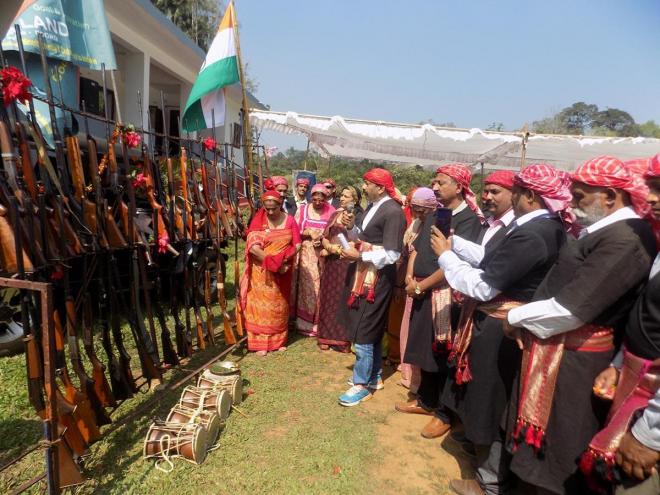
Codava National Council President N U Nachappa offers prayers to firearms as a part of Thok Namme, at an estate in Kolakere near Napoklu on Monday.
Codava National Council observed Thok Namme at an estate in Kolakere near Napoklu on Monday.
Speaking after offering prayers to firearms, CNC President N U Nachappa said that ‘Thok Namme’ (Gun Carnival) is organised to highlight the significance that guns represent in Kodava culture and life. “Possessing firearms is a right of the Kodavas.
It is also a religious and cultural symbol of the Kodavas.
The programme is being conducted in order to create awareness on the constitutional rights of Kodavas to own a gun. The programme also features mass worship of guns and aims to pass the message to the government that the possession of a gun is a birthright of a Kodava,” he said.
Nine resolutions, including urging the government to recognise the importance of guns in Kodava culture were passed on the occasion.
source: http://www.deccanherald.com / Deccan Herald / Home> District / DH News Service / Napoklu – December 18th, 2017
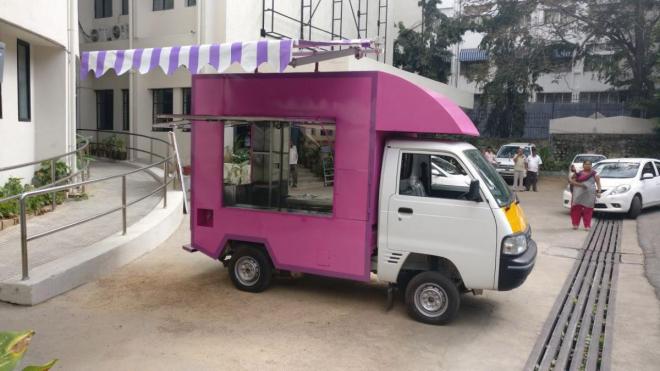
The ‘Saviruchi’ mobile canteen, run by Sthree Shakthi Okkuta, will hit the roads in Kodagu shortly.
The canteen will offer breakfast and afternoon meals.
Chief Minister Siddaramaiah, in his budget 2017-18, had announced the launch of the ‘Saviruchi’ canteen. Accordingly, the canteen will start functioning in all the 30 district headquarters by December end or January 15.
The ‘Jilla Sthree Shakthi Mahila Okkuta’, comprising women, has been formed in each district to run the canteen. The federation members themselves will run the canteen. Each federation will be given loan of Rs 10 lakh by Karnataka State Women’s Development Corporation to purchase specially-designed vehicle, utensils and as working capital, said Women and Child Development deputy director Mumthaz. The federation has to repay the loan within 60 months.
Along with breakfast and meals, they can also prepare tea, coffee, snacks and fruit juice for sale. Measures will be taken to sell even “sandige,” pickle, and masala in the canteen.
The 10-member team of the federation has already availed two-day training in management of the canteen along with maintaining hygiene.
source: http://www.deccanherald.com / Deccan Herald / Home> District / DH News Service / Madikeri – December 17th, 2017
Sunil Chhetri and Aditi Ashok bagged top honours at the ACT Fibernet-SWAB awards in Bengaluru on Saturday. Before a star-studded gathering that included chief guest Abhinav Bindra and sporting luminaries from the city, former India hockey captain M.P. Ganesh was presented the ‘Lifetime Achievement’ award. – SUDHAKAR JAIN
Sunil Chhetri and Aditi Ashok bagged top honours at the ACT Fibernet-SWAB awards here on Saturday. The pair claimed the ‘Best Sportsperson of the Year’ awards in the senior category while Anil Kumble was declared the ‘Coach of the Year’.
Before a star-studded gathering that included chief guest Abhinav Bindra and sporting luminaries from the city, former India hockey captain M.P. Ganesh was presented the ‘Lifetime Achievement’ award.
Bengaluru FC was adjudged the ‘Team of the Year’ while racing driver Arjun Maini and swimmer Damini K. Gowda emerged the ‘Best Sportspersons of the Year’ in the junior section.
“Bangalore holds a very special place in my heart,” said Bindra, in an eloquent address laced with humour. “I spent many days of my youth shooting at the SAI South Centre here. There is something in the air of Bangalore that makes it special for sports, and I am not saying that because I have just flown here from Delhi.”
Chhetri, whose exploits for the Indian National team and BFC saw him edge out the likes of K.L. Rahul, Rohan Bopanna, and Pankaj Advani for the top prize, said: “When I started off, I was scared of journalists. Over time, I recognized the role they played and built a relationship with them.”
Ganesh, who won a bronze medal at the 1972 Olympic Games, spoke of his playing career and his transition into administration. The 72-year-old felt government officials, journalists and former athletes needed to join hands to nurture sporting talent.
Harendra Singh, coach of the Indian women’s hockey team, presented the ‘Coach of the Year’ award to Kumble, under whom India won five successive Test series between July 2016 and March 2017.
Kumble was modest in his acceptance of the award.
“I think coaches in cricket don’t have too much to say or too much to do. But nonetheless, this is an excellent recognition of all the good work that the team did over the past one year and they have continued with their winning ways,” he said.
“I’m confident that the team which we have will certainly go on to create history in South Africa and then beyond. The team under Virat certainly has the capabilities to achieve that.”
K. Sriram, a member of the KSCA’s media staff, was presented with the ‘Behind the Scenes’ award while the Karnataka Badminton Association was declared the ‘Association of the Year’.
source: http://www.sportstarlive.com / SportStar / Home> More Sports / by Team Sportstar / Bengaluru – December 16th, 2017
A project in PPP model for opening India Coffee House outlets in the district has been proposed by the Coffee Board, board member Manukumar said.
Addressing reporters here on Thursday, Manukumar said that these coffee houses will be similar to that of the cafes in metropolitan cities. It has been planned to launch the outlets in Kemmannugundi Cross, Seethalaiahnagiri, Devirammana Betta, Horanadu, Shringeri and Taluk office premises. A survey in this regard is in progress. The price of the coffee served in these outlets will be lesser as compared to other cafes, he said.
“While the land will be given by the government, the Coffee Board will construct the cafes and the management will be handed over to private organisations,” he said.
Subsidies for planters
The coffee board has provided Rs 9.10 crore for coffee planters between April 2017 till date towards mechanisation, warehouses, water facilities and transplantation. A subsidy amount of Rs 2.2 crore has been released by banks to 900 coffee planters towards interest, he said.
Research is on to control the menace of white stem borer. Kits have been distributed to farmers to control snails in coffee plantations, he said.
The Coffee Board has recommended maintaining a ratio of 51:49 for coffee – chikori mixing and a letter in this regard has been sent to the Food Safety and Standards Authority of India (FSSAI).
The board has also requested the Central government to provide subsidy to encourage coffee planters.
A memorandum has been submitted to the state government to bring white stem borer and wild snail in the ambit of Karnataka Pest e Control Act, he said.
Board office bearers Pradeep Pai and M L Kallesh were present.
source: http://www.deccanherald.com / Deccan Herald / Home> District> Chikkamagaluru / DH News Service – December 14th, 2017
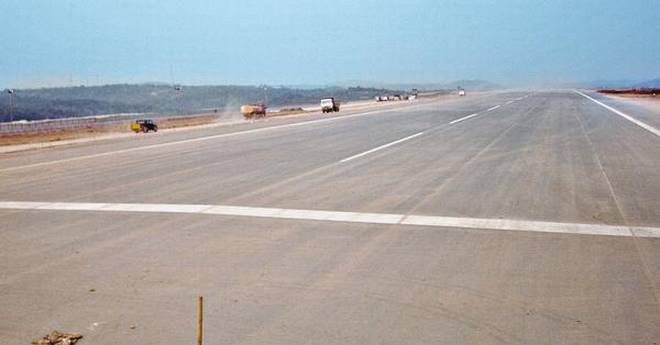
A file photo of the runway at the Kannur International Airport.
Authorities invite Mysuru Travels Association for a tour of the greenfield airport
Tourism industry in Mysuru and Kodagu is hoping for a surge in tourist footfall — all thanks to Kannur International Airport, a greenfield airport in Kerala, which will be inaugurated for flight operations shortly.
Stakeholders here argue that the airport will open a new gateway for tourism development as Kodagu is closer to Kannur and eventually improve connectivity between the two States boosting tourism.
According to tour and travel operators here, some section of tourists wishing to visit Mysuru and Madikeri may opt to travel via Kannur airport instead of Bengaluru’s Kempegowda International Airport and the itinerary will alter once the airport becomes operational. Mysuru Travels Association (MTA) has been invited by the authorities for a tour of the greenfield airport.
Confirming this to The Hindu, MTA president B.S. Prashanth said tour and travel operators from Mysuru will soon be visiting Kannur to take a look at the facilities at the airport. The airport has been developed under public-private partnership.
Transit route
“Mysuru is the transit route to Madikeri. Once the airport becomes operational, Kodagu may become the new transit zone to Mysuru if tourists prefer flying to Kannur instead of Bengaluru when they plan their vacation to the ‘Land of coffee’. Tourism is booming in Kodagu with scores of homestays and popular hill resorts to unwind,” he said.
The new airport will also open new access way to tourists planning to visit Wayanad and Ooty — the other two popular hill stations in south India. The road connectivity from Kannur is said to be good further pushing tourist arrivals to Kodagu. Kannur is around 70 km from Virajpet in Kodagu while the distance from Mysuru is around 120 km.
People flying to Kannur need not have to bother about traffic to reach their destinations – Madikeri or Mysuru – unlike from Bengaluru. Reaching the city from Kempegowda International Airport at Devanahalli near Bengaluru and thereafter to Mysuru under bumper-to-bumper traffic on the busy National Highway is a challenge for tourists, who fly into the State capital. “If you provide good and hassle-free connectivity, people will definitely patronise,” the stakeholders claim. “The traffic doubles in weekends with the travelling time stretching up to four hours between Bengaluru and Mysuru. Barring the ghat section, the drive is smooth between Mysuru and Kannur,” he said.
The spurt in homestays and luxury resorts in the ‘Land of Coffee’ – Kodagu – has made it one of the busiest hill stations in south India.
“There is a little worry as Kodagu is getting commercialised. We don’t want the place to meet the same fate as Ooty which has undergone rapid commercialisation. To some extent, Kodagu should retain its serene identity to be in the competition,” sources in tourism sector here told The Hindu.
Some unconfirmed statistics said Kodagu has over 35,000 rooms – at homestays, hotels, and resorts. The number has increased only in recent years.
source: http://www.thehindu.com / The Hindu / Home> News> States> Karnataka / by Shankar Bennur / Mysuru – December 15th, 2017
The district administration has formulated a 10-year project to popularise coffee plantation in the district.
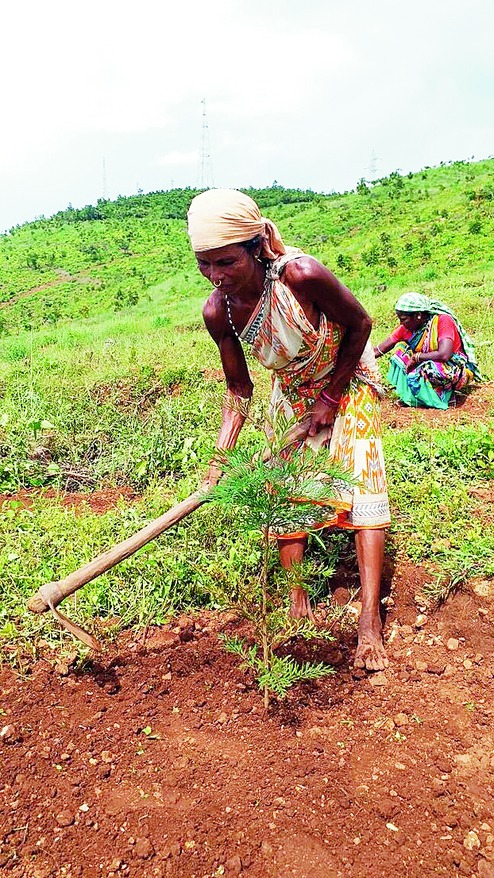
It aims to provide sustainable income to tribal farmers and make the district a coffee hub. A farmer of Pogra village plants shade seedlings. / Telegraph picture
The project will undertake coffee plantation over 46,500 hectares of government land in next 10 years. It is being implemented from the current fiscal.
“Even though the climatic condition of Koraput is conducive for coffee plantation, it has, however, remained neglected for various reasons. Hence, an initiative has been taken to popularise coffee plantation among the tribal farmers and to make the district a hub for coffee, other spices crop and allied plantations,” said district collector Anupam Saha.
“After planting coffee seeds, the areas will be distributed among the tribal beneficiaries to be identified through gram sabhas. The plantation area to be distributed among each beneficiary will be decided later,” he said.
The administration has also formed a coffee development trust with the district collector as its head, and accordingly, the trust has decided to take up advance shade planting of silver oak trees on 1,026 hectares in 2017-18.
“Till now, we have taken up shade plantation on around 1,250 acres and more than 25 lakhs of shade plants seedlings have been raised at 15 locations of the district,” said Bhabani Shankar Kalo, deputy director of the trust stationed in Koraput.
He said that nearly after two years of shade plantations, coffee saplings would be planted as the coffee plant required filter sun rays for its growth. “From the fifth year, the beneficiaries could be able to harvest coffee. In between, they can earn by inter-cropping of spices such as black-pepper,” said Kalo. “The life span of a coffee plant is around 60 years and requires minimum maintenance.”
Coffee plantation had first been introduced in Koraput by erstwhile king of Jeypore in 1930. However, after abolition of feudatory estates in 1951, the state government through the soil conservation department had undertaken coffee plantation as a measure to prevent siltation in the Machkund basin of the district in 1958.
Though the coffee estates, developed by the state government, had been maintained till 1990, it was neglected subsequently confining the coffee plantation to a few private parties.
“It’s a welcome move by the administration. We see how farmers are reaping benefits from coffee plantations in the bordering Araku valley of Andhra. Hope, here also we will be benefitted,” said Hare Krushna Majhi, a tribal farmer of Pogra village under Nandapur block.
According to government survey, at least 1.45 lakh hectares under Koraput, Semiliguda, Nandapur, Pottangi, Dasmanthpur, Lamataput and Lakshmipur blocks of the district are ideal for coffee plantation. But at present, only 1,467 hectares is under coffee cultivation.
source: http://www.telegraphindia.com / The Telegraph, Calcutta,India / Home> Odisha / by Telegraph Correspondent / December 14th, 2017
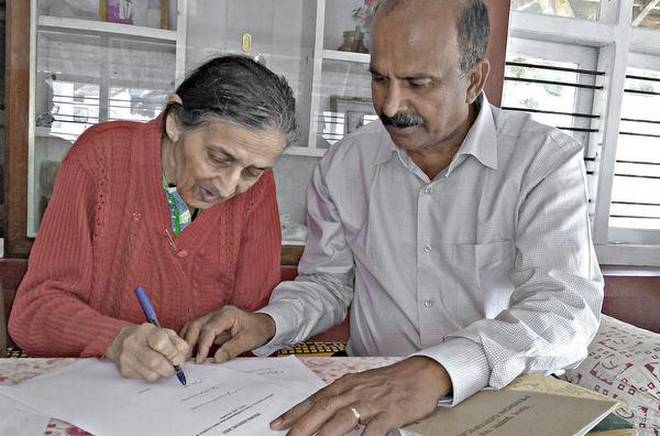
Ex-Sergeant Subramani assisting Kaveriamma in preparing the documents for her fight for pension
Kaveriamma is almost 80 and lives in Kiggal village of Kodagu district. She is the wife of an ex-serviceman who fought in World War II, the India-China war of 1962, and and the Indo-Pak war of 1965. And she is now waging her own battles, only it is for pension.
She first had to battle for nearly 12 years to get the pension denied because of a clerical error spelling her name Kaveriammal. She is now waging a second battle with the army authorities as she has received less than what was due to her.
The first round of trouble began when her late husband, Naib Subedar Ballachanda Nanjappa Aiyappa (JC-19016), mentioned his wife’s name as Rani — as he used to address her in private — instead of Kaveriamma in the family pension endorsement application submitted when he was alive.
Mandetira Subramani, retired Senior Non Commissioned Officer of the Indian Air Force and founder of the Mysuru-based Vekare Ex-Servicemen’s Trust (VKET), which is fighting Ms. Kaveriamma’s case, explained that Aiyappa had enrolled in the Indian Army (Corps of Electronics and Mechanical Engineering or EME) on August 19, 1940, retired on February 16 1966, and was later re-employed in the Central Excise and Customs Department as a lower division clerk. He died in 2000.
And that is when Ms. Kaveriamma’s ordeal began — her name in the EME records office at Secunderabad was spelt as Kaveriammal.
“While the descriptive roll of Mr. Aiyappa mentions his wife’s name as Ms. Kaveriamma, a clerical error resulted in it being changed to Kaveriammal,” said former Sergeant Subramani, who is also an advocate who takes up cases involving ex-servicemen.
Lakhs missing
It has now transpired that Ms. Kaveriamma has received pension with effect from September 12, 2012, and not from the date of her husband’s demise, he said.“The total arrears due to her is ₹7,42,874,” he added.
The reason given by the authorities is that she failed to exercise her option for family pension within two years of her husband’s demise. “But pension cannot be time-barred and even if such a retrograde law exists, we will fight to get it squashed,” he argued.
But cases like Ms. Kaveriamma’s are just the tip of the iceberg and there are countless incidents of pension held up because of petty clerical errors, he said.
Besides, there is a lack of awareness of the latest rules governing pension schemes, Mr. Subrami said, pleading for a more humane approach by the authorities in settling the pension affairs of ex-servicemen.
source: http://www.thehindu.com / The Hindu / Home> News> States> Karnataka / by R. Krishna Kumar / Mysuru – December 14th, 2017
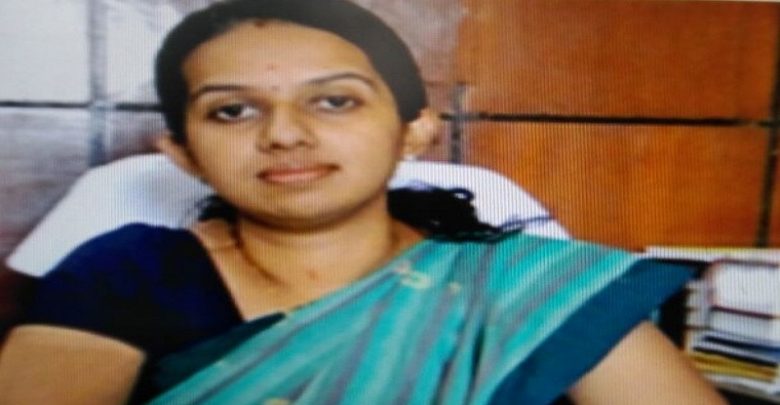
Sreevidya P I has been appointed as the new Deputy Commissioner of Kodagu District replacing Dr Richard Vincent D’Souza.
The state government has transferred Dr D’Souza and he has been replaced by Sreevidya who had earlier served as the Chief Executive Officer of the Kodagu Zilla Panchayat.
Earlier, Sreevidya has also served as the Assistant Commissioner at Sakleshpur in Hassan district.
It is alleged that the state government has replaced Dr D’Souza in the wake of allegations against him with regard to an order passed by him in a property dispute.
The Karnataka High Court recently directed the Chief Secretary of the state to initiate department proceedings with regard to the alleged orders passed by Dr D’Souza in a property dispute. The case has been adjourned to December 14. Now the appointment of the new DC to Kodagu has raised many eye-brows in the district.
It is alleged that Dr D’Souza had issued two different orders in a property dispute matter involving conflicting parties on the same day and a case was filed against him in the High Court. -(KK, NGB)
source: http://www.citytoday.news / City Today / Home> Mysore / December 13th, 2017
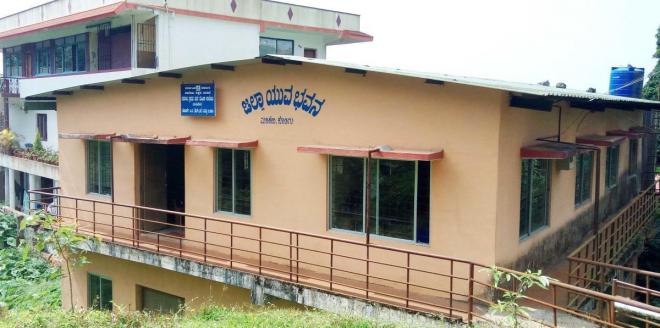
Government first grade college for women in Madikeri has been functioning from Yuva Bhavana of District Youth Federation for the past four years.
The government first grade college for women is all set to get a new building of its own at last. Two acres of land has been identified for the purpose near Karnangeri in the taluk.
The state government gave approval for the establishment of the college during 2014-15. At that time, the institution had no building of its own and hence has been functioning from “Yuva Bhavana” of the District Youth Federation.
The government had released Rs 2 crore for the purpose of constructing a building for the college. Initially, it was rumoured that the women’s college would come up near the pre-university college in the town. But, there were no such plans. On the other hand, the Youth Federation had sought the college to vacate the building. It had even approached the deputy commissioner in this regard. In the absence of any other alternative building, the college authorities too were in a fix. Deputy Commissioner Richard Vincent D’Souza had directed the officials to identify a suitable location for constructing a building for the state-run institution.
D J Javarappa, Head of the Commerce Department at the college, said that the college had been functioning from Yuva Bhavan for the past four years. He hoped that the new building would be ready in around two years. “At present, we have 41 students in arts stream and 95 in commerce. With the college getting its own building, the admission too will go up,” he said.
However, the Youth Federation is peeved at the “delay” in handing over Yuva Bhavan back to it. President of the federation, B Joyappa, said that several activities of the federation had been affected due to non-availability of a suitable accommodation. “We have requested the college authorities several times for vacating the building and there is no positive response till now. We will stage a dharna in front of the deputy commissioner’s office if the building is not handed over to us by December 6,” he said.
source: http://www.deccanherald.com / Deccan Herald / Home> District / DH News Service / Madikeri – December 04th, 2017
Karnataka, one of two major black pepper producers in the country, has wholeheartedly welcomed the Union Commerce Ministry’s decision to fix Minimum Import Price of `500 per kg on pepper on CIF (Cost, Insurance and Freight) basis.
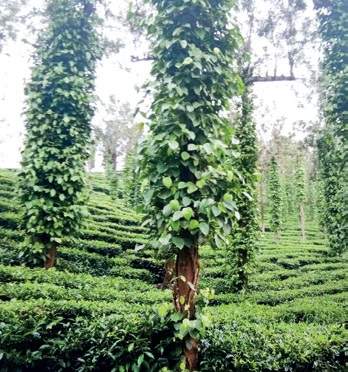
India produces about 65,000 tonnes of pepper of which state’s contribution is about 30,000 tonnes. Kodagu, Chikkakamagaluru and Hassan districts are the major pepper growing areas in the state apart from the coastal districts of Dakshina Kannada and Udupi.
Konkodi Padmanabha, convenor, Consortium of Pepper Growers Association, told reporters here on Thursday that the decision will automatically block the import of poor quality pepper especially from Vietnam and as a result the demand for Indian pepper will increase. At present, farmers are getting a minimum of `380 per kg and experts believe that the prices may jump by `50-60 per kg in a fortnight and growers may get at least `700 a kg for the next season’s pepper.
CAMPCO MD Suresh Bhandary M said it may take another 2-3 months for the new prices to stabilise after the old stock is cleared.“The MIP will not be applicable for the licences already issued for import for Vietnam pepper. It will apply only for fresh licences.” Further, he said the fixing of uniform MIP for all grades of pepper and even crushed and ground pepper will avoid chances of adulteration.
Organisation’s co-ordinator K K Vishwanath urged the Centre to ban the import of black pepper into the country, impose dumping duty on imported pepper, hike the import duty from present 64 percent to 108 percent, allow the import of pepper only through any two ports for better monitoring, take strict measures to certify the quality of imported pepper and bring in laws to issue ‘Fake country of origin’ for imported pepper. He said they want ban in pepper import as traders may now use the Nepal route.
“Since there is no port in Nepal, foreign countries import to Nepal through ports in Kolkatta. Then it become easy for them to push it inside India as there is free trade agreement between the two countries.” Padmanabha thanked commerce minister Suresh Prabhu for his positive response to their petition in just 13 days and union minister Ananth Kumar Hegde and MPs Nalin Kumar Kateel, Prathap Simha and the state government for taking up their cause.
source: http://www.newindianexpress.com / The New Indian Express / Home> States> Karnataka / by Express News Services / December 08th, 2017
WELCOME. If you like what you see "SUBSCRIBE via EMAIL" to receive FREE regular UPDATES.
Read More »