Monsoon-chasers rush to Kodagu

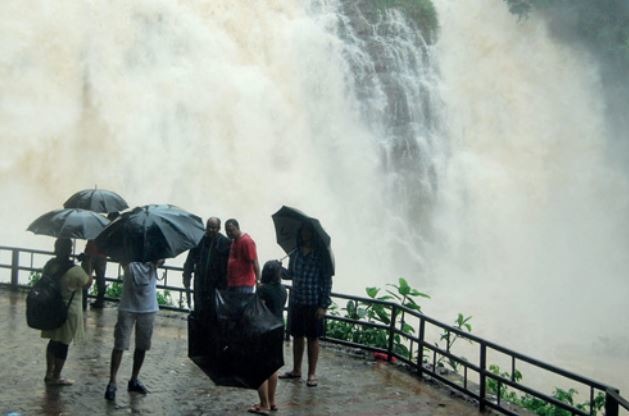
Tourists at Abbey Falls near T Shettigeri, with rain catching up by monsoon end, all falls in the State are putting up their best show

Madikeri :

City dwellers might hate rain with its attendant problems but when they flock to Kodagu, the rain is an added attraction. Tourist inflow has gone up in the rainy months which were once considered off-season.As many as 91,619 visitors came to Kodagu in July, a jump over the figures for 2016.

Between January and July this year, 6.9 lakh people visited Kodagu, of whom 91,619 people visited in July. This is a jump of 21% over last year, when just 75,492 tourists came. In 2015, only 74,798 tourists visited in the month of July. But even these are conservative numbers, say officials, since it only accounts for guests at registered homestays. The number could be almost double if the other homestays, not on paper, are factored in as well.

What helped probably was that the rain wasn’t as heavy as expected. The district as a whole received 51cm of rain in the month against a normal of 90cm, allowing tourists to enjoy the showers while finding time to move around as well. The tourist count estimate for this August had crossed 50,000 by the middle of the month.

While most tourists visit the staples in Kodagu -Talacauvery, Cauvery Nisargadhama in Kushalnagar, the Nalaknad palace in Kakkabe and Raja’s Seat – some also make their way to Irupu falls near Shrimangala, Mallalli falls off Somwarpet, Abbey falls near Madikeri, the golden temple at Kushalnagar, Dubare elephant camp, Ha rangi and Mandalapatti near Madikeri.

Shobha Shetty , a retired bank employee from Mangaluru, says she had a magical experience visiting Talacauvery in the morning hours. “The mist-covered slopes, the moving fog and the gathering dark in daylight made me forget everything else. This can happen only during monsoon,” she says. Around 45,616 tourists visited Talacauvery between January and May this year.

Shashi Monnappa, who runs Mythili homestay at Madikeri, said many tourists preferred to visit during monsoon and opted to go to waterfalls, for river rafting and on safari in Nagarahole.

Boosting the tourist inflow, homestays drop rates during the rainy off-season. Coravanda Madan Somanna, who runs a homestay in BB estate at Kadagadal near Madikeri, said the discounts ranged between 25% and 30% on the room tariff.

Kushalnagar assistant conservator of forests Chinnappa said an average of 3 lakh tourists visit the Dubare elephant camp every year.And around two lakh tourists visit Irupu falls in south Kodagu every year, says Kodagu DFO Jaya.

Given the surge, the tourism department has taken up some development projects. It is building a Kodava heritage centre at Madikeri at a cost of Rs 2.6 crore, a pathway for tourists at Mallalli falls at Rs 1.4 crore and providing a chain barricade at Abbey falls for Rs 86 lakh.

The district administration has sent proposals for another 12 projects which include road development in Mandalapatti, Talacauvery and Dubare; building a hanging bridge to Irupu falls and setting up a garden at the Nalaknadu palace. It has also proposed building a concrete road from Nanjarayapatna to Dubare to reach the elephant camp. These proposed projects will need nearly Rs 17 crore from the government.

source: http://www.timesofindia.indiatimes.com / News> City News> Bangalore News / TNN / September 25th, 2017
Kids win audience hearts at Makkala Dasara

Children’s Dasara wins hearts at Madikeri Dasara Janotsava
‘Makkala Dasara’, the children’s Dasara, doubled the joy of Dasara Janotsava at Gandhi Maidan in Madikeri on Tuesday.

The youngsters kept themselves as busy as bumble bees, sold various items including vegetables and fruits at ‘Makkala Santhe,’ the children’s shandy market.

There was a competition between the ‘vendors’ in attracting more customers and selling the items, using their communication skills. Buyers were offered discounts on the purchase of vegetables and other items. The traditional attire of some of the vendors added to the spirit of the shandy market.

Altogether, there were 100 tiny stalls featuring coconuts, ‘Chur Muri,’ bangles, fancy items and game shows. The low-priced coconuts were sold briskly, even before the formal inauguration of the programme. A stall put up by ‘Shanti Niketana Raita Bandhu’ too made a swift business.

Customers thronged the stall of Keerthan and Aneesh from St Micheal’s School, to grab the tasty lemon juice. Likhitha and Roshni from St Joseph School sold buttermilk. Packaged water bottles with the brand name ‘Coorg’ were sold by Shrinidhi and Hitesh of St Joseph School at 50% discount rates. Items such as bags, watches and flags prepared by Government Girls Balamandira, gathered appreciation from people.

A canine show organised by children at the venue drew the attention of onlookers. One could take selfies with dogs by paying a fee of Rs 5 to its owner.

The ‘Mantapa’ tableaux decorated by children were colourful. Children who took part in the fancy dress competitions seemed to be the live miniatures of historic heroes, social reformers and national leaders. An exhibition of clay models and science models created by the tender hands was also an added feature of the Children’s Dasara.

On the other hand, the children were engaged in playing rural games of ‘Goliyata’, ‘Lagori’, ‘Chowka Bara’ and ‘Baleyata.’

Inaugurating Children’s Dasara, City Municipal Council (CMC) president Kaveramma Somanna said the programme provides a good platform to showcase the talents of children.

Dasara Committee Working president Mahesh Jaini, general secretary A C Devaiah, treasurer Sangeetha, District Janapada Parishat president B G Anantashayana, Chummi Devaiah, CMC commissioner B Shubha, Dasara Cultural Committee president H T Anil and Rotary Misty Hills representative Sandeep were present.

The programme was organised in association with Rotary Misty Hills.

source: http://www.deccanherald.com / Deccan Herald / Home> District / DH News Service, Madikeri / September 27th, 2017

Karnataka is now biggest pepper producer in the country

For the second year running, Karnataka has been named the country's largest pepper producer, accounting for 45% of the spice produced in India
For the second year running, Karnataka has been named the country’s largest pepper producer, accounting for 45% of the spice produced in India

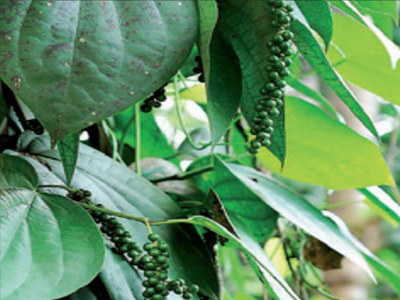
Karnataka has overtaken Kerala and become the country’s leading pepper producer, accounting for 45% of the total production.The Centre’s Spices Board data puts Karnataka ahead of Kerala for the second year running. While Karnataka produced 33,000 metric tonnes of pepper in 2014-15, against Kerala’s 28,000MT, the margin widened in 2015-16 as Karnataka’s yield remained 33,000MT and Kerala’s fell to 26,000MT.

Kerala’s decline, to a great extent, has been because of its black pepper vines falling to quick wilt, a disease that causes sudden wilting, drying and death of the vines. In Wayanad district in Kerala, farmers lost almost 90% of their vines to the disease. The Spices Board has taken up extensive research to contain the pest. The sudden scourge, however, has turned the focus on pepper production in south Karnataka districts.

Pepper is grown in several parts of Karnataka, mainly in Chikkamagaluru, Shivamogga, Madikeri and Kodagu.

Alternative to areca, rubber

The state’s plantation growers have adopted the spice as an economically profitable alternative to areca (palm), coffee, rubber and coconut. The spice crop is grown in the middle of coffee plants, said Bose Mandanna, former vice-president of Coffee Board and a leading planter in Suntikoppa in Kodagu. At least 40 pepper vines are planted in an acre of robusta coffee plantation. This goes up to 80 vines if it is an arabica plantation, because these are grown at lower heights and produce less coffee per hectare.The harvest is done during February-March.

“Kodagu accounts for 25% of the pepper production in the country,” Mandanna said. An acre fetches 100kg to 150kg of pepper but with intensive cultivation, some growers get up to 500kg.

There is some difference in the production data of the government’s Spices Board and the National Commodity & Derivatives Exchange (NCDEX), but both sources indicate that Karnataka is beginning to unseat Kerala from the No.1 spot. NCDEX data shows Karnataka having a big lead over Kerala in 2014-15, marginally losing out to Kerala the following year, but regaining the lead in 2016-17.

NCDEX says India accounts for 17% of the world’s production of pepper, and is the second largest producer after Vietnam. The exchange relaunched its pepper contract on the platform in July, after about five years. In just three days, it saw a total volume of 807 tonnes of pepper, valued at Rs 38 crore, being traded.

Sarat Mulukutla, chief (commercial segment) of NCDEX, said considering the rise in pepper production in Karnataka, the exchange is launching a third delivery centre in Hassan. The other two are in Kochi and Kozhikode in Kerala.

Attractive price

Anish Madappa of T Shettigeri in south Kodagu said pepper production had grown in Karnataka for a decade due to the good price it fetches. Ten years ago, a kilo of pepper fetched Rs 260, now it is about Rs 680. Coffee planters have started growing pepper on poles with the help of biomass, leading to a jump in production. Drip and sprinkler irrigation have helped minimise water loss and increased the yield per acre. “Once a high rising (pepper) creeper is planted, it will provide yields for 35 to 50 years with little or no investment,” said Kannagi Sheshadri, a farmer cultivating plantation crops in Theerthhahalli taluk. “The plants need to be carefully treated to achieve maximum yield. I reaped 12 tonnes last year and hope to double it this year,” said Joney Mathew, a farmer with crops in Shivamogga and Chikkamagaluru districts.

“Pepper produced in Kodagu is of the best quality,” said Madappa. “This is because we normally use only Bordeaux spray, which contains lime and copper sulphate.” The spray helps protect the pepper vines from fungal problems and resists quick wilt disease.

source: http://www.timesofindia.indiatimes.com / The Times of India / News> City News> Bangalore News / by Shalina Pillai & G. Rajendra & CV Raghavendra Rao / TNN / September 26th, 2017

Oman hockey: Dhyan Chand Day six-a-side hockey tournament a grand success

Muscat:

An overwhelming response from hockey aficionados and equally existing action produced by the participating teams made the 12th Dhyan Chand Day six-a-side hockey tournament a grand success.

The annual event, organised by Team Coorg and Friends of Naqvi Group under the patronage of Indian Embassy, took place at the OFA Ground in Al Qurm on Friday.

Four teams, each named after former India captains and Olympians – Dhyan Chand XI, Kishen Lal XI, K.D. Singh Babu XI and Balbir Singh Senior XI – entertained the hockey lovers while competing for the top honours in the tournament.

In the end it was Dhyan Chand XI who emerged the winners with Kishen Lal XI taking the second place. K.D. Singh Babu XI settled for the third place.

With Indian Ambassador Indramani Pandey missing the event due to other commitments, Rakesh Adlakha, the First Secretary and Head of Chancery, was the special guest and handed over the prizes.

In his speech Rakesh Adlakha paid rich tributes to Dhyan Chand who is known as the hockey wizard and spoke about the legends contribution to the world hockey.

The Indian Embassy official also spoke highly about Team Coorg, Belu Kuttappa, SAS Naqvi and other members of the organising committee and lauded their efforts in organising such hockey events.

During the occasion, the organisers also honoured the young talents and women from the expatriate community for their achievements and contribution to sports.

Among those honoured during the event were Sanskar Dubey, an Indian School Muscat student who has been excelling both in tennis and table tennis on the local circuit, and Madhulika Gupta, a well-known social worker as well as a women’s cricket and sports volunteer.

Meanwhile, the organisers thanked Dr. Hammad Hamed Al Ghafri, the former President of Oman Olympic Committee and presently the Advisor of Ministry of Civil Services, and the Future Group of Companies for their support to the event.

source: http://www.timesofoman.com / Times of Oman / Home> Sports> Hockey / by Times News Service / September 25th, 2017

Would you drink a Rs. 25,000 coffee if you knew what it was made of?

We can only wonder why the rich love this

CivetKF22sept2017

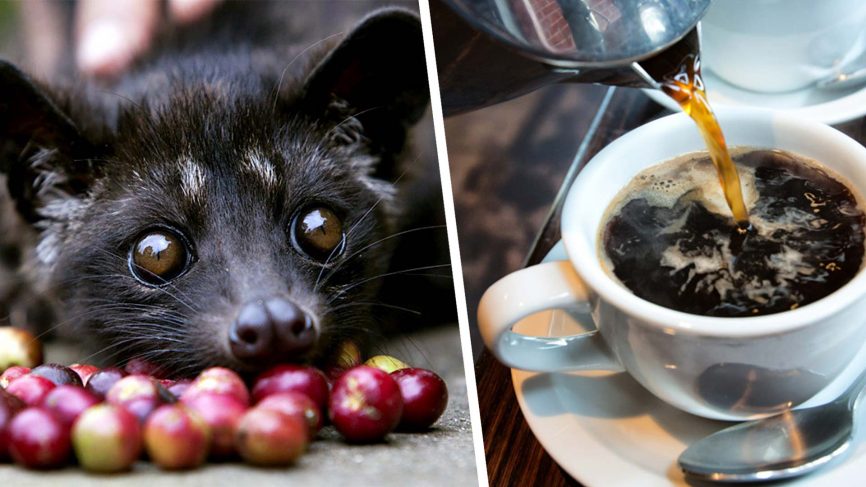
Before you take a sip of Civet coffee, the world’s most expensive coffee, there are two things you should know: 1) A single kilo of it costs between ₹20,000 to ₹25,000; for those who don’t buy their own groceries – that’s approximately 25 times (2500% more) of what your everyday brew retails at, and 2) It is made from the droppings of the Civet cat.

That’s right, droppings as in that smiley brown emoji you love sending your sibling.

Though it is a common drink of the elite in both the richest parts of the Middle East and Europe, you won’t have to go too far to take a sip. Civet coffee is made right here in India, in Karnataka’s Coorg and Chamarajnagar districts. Its high price comes from the uncommon (to say the least) method that is involved in its production.

There’s a reason why the most expensive coffee in the world derives it’s name from the civet cat, a largely nocturnal creature that resembles any child a raccoon and a cat may have some day. The end of the civet’s digestive process is the beginning of the coffee’s life cycle.

When the civet eats the flesh of the coffee cherries, the natural enzymes in the animal’s stomach enhances the flavour of the eaten bean within those cherries. The bean is then found in the poop of the civet, processed and, after a routine check, packaged. The fact that it has been through the civet’s digest tract is what apparently makes it nutritious and its steep price tag attributed to the high cost that goes into sourcing the animal and quality certification.

However, unlike other countries where civets are caged and fed forcefully, India uses a more natural method: the waste of wild civets is collected from coffee plantations that stand at the edge of the forests in Coorg and Chamarajnagar. That’s great news for farmers too because though we’re no coffee experts ourselves, we’re going to guess that locally sourced organic coffee bean-laden poop fetches a better price than the cage manufactured variety.

source: http://www.gqindia.com / GQ / Home> Live Well> Drink / by Tracy Ann / September 20th, 2017

With output rising, India is now a hub for instant coffee

Coffee Board to finalise estimates after consulting stakeholders
GenericCoffeeKF21sept2017

Coonoor :

India is becoming a manufacturing hub for instant coffee after Brazil and Peru, said Y Raghuramulu, Director of Research, Coffee Board.

In his presentation on coffee at the 124th UPASI annual conference here, he said the country is doing extremely well on the export front

The total volume of export between April and August this year stood at 1.78-lakh tonnes, up from 1.63-lakh tonnes in the corresponding period the previous year.

The country has moved from bulk exports to value-added coffee exports, he said. “We are consistently importing more for re-export. Imports are mainly for value-addition and re-exports by EOUs with duty free under FTP.”

Import volumes during 2015-16 stood at 65,618 tonnes and the re-export volume at 67,283 tonnes. This surged to 78,042 tonnes and 79,254 tonnes the following year. Value-wise, the imports were estimated at ₹927 crore (₹802 crore) in 2016-17 and re-export at ₹ 1,346 crore against ₹1,147 crore in the previous year.

Green coffee exports account for 70 per cent of the total export volume, with specialty green coffee exports inching its way from 3.20 per cent between April and August last year to 3.80 per cent during the corresponding months of this year. Value-added coffee exports have stagnated at around 25 per cent.

Reverting to production, Raghuramulu said: “USDA has forecast India’s production at 3.3-lakh tonnes, but the Coffee Board is yet to release the estimate for 2017-18. The board is in consultation with various associations for finalising the estimates. We do not want to release as in earlier years and come out with a revision.”

The board has undertaken a couple of fresh initiatives, such as the revamping of India Coffee House, brand ambassadors to promote Indian coffee and organising outreach programmes.

“We are looking to franchise at least 10,000 vending machines in the medium-term. Our initiatives will indirectly benefit small coffee growers. We have also initiated discussions with small growers to form producer organisations to help them achieve better returns.”

source: http://www.thehindubusinessline.com / Business Line / Home> AgriBusiness / by L N Revathy / September 13th, 2017

Eight O’Clock Coffee aims for younger drinkers with new infused blends

EightOClockCoffeeKF20sept2017

Dive Brief:

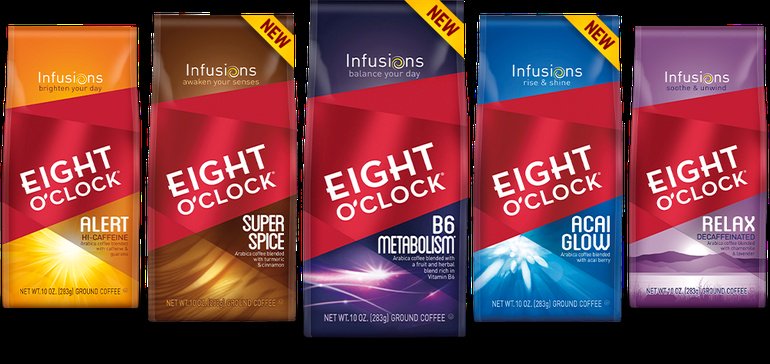
Eight O’Clock Coffee has expanded its line of infused Arabica coffees with three new products designed to appeal to younger and more adventurous java fans, according to a news release.

Joining its already established Relax Decaf and Alert Hi-Caffeine coffee blends is an offering blended with acai berries, another with turmeric and cinnamon, and a third featuring a fruit and herbal concoction rich in vitamin B6.

Established in 1859 as the house blend for the Great Atlantic & Pacific Tea Company, Eight O’Clock Coffee is now a subsidiary of India-based Tata Global Beverages, which also owns Tetley tea in the U.K. and Good Earth Tea in the U.S.

Dive Insight:

Eight O’Clock Coffee is far from the first coffee brand to offer infused and functional blends. There have long been various flavor-infused coffees in the marketplace, and now there are wine-infused and THC-infused coffees for that extra buzz. VitaCup produces a line of vitamin-infused coffees sold in pods for one-time use with specialized machines.

Tata Global Beverages has applied several marketing tools to reinvigorate its Eight O’Clock Coffee brand since acquiring it from Gryphon Investors in 2006. The former A&P grocery chain in-store coffee brand was sold to the private equity firm in 2003.

Tata pulled out all the stops last year with a marketing campaign promoting whole bean coffee to consumers, and in 2012 joined with Green Mountain to launch Eight O’Clock K-cups for Keurig coffee machines. That move is credited with helping Eight O’Clock Coffee take a 7% share of the single-serve market within two years.

The popularity of packaged coffee has been growing recently, primarily due to double-digit growth in the single-serve format. Ready-to-drink varieties are also becoming a popular choice and pose a challenge to the Eight O’ Clock brand as consumers increasingly prize convenience. It’s unclear if the health and flavor benefits of turmeric and cinnamon, or the trendy flavor of acai will win millennials over to taking the time to brew coffee.

Tata clearly plans to continue efforts to better position Eight O’Clock Coffee within the very competitive packaged coffee marketplace, and these infused products are one more example. Whether they will resonate with younger coffee drinkers — who are typically more receptive to trendy formulations and packaging — is something Tata along with other companies will closely follow in the months ahead.

source: http://www.fooddive.com / FoodDive / Home / by Cathy Siegner / September 19th, 2017

When Rakshit & Rashmika took lessons in domesticity

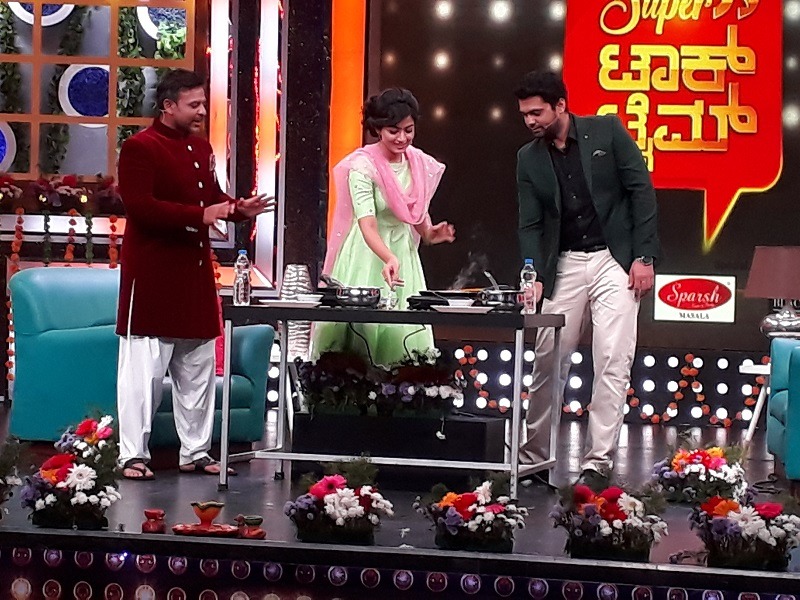
They may be the latest couple on the Sandalwood block, but have been known to maintain a low profile when it comes to their relationship. Which is why, it came as a huge surprise when the recently-engaged pair Rakshit Shetty and Rashmika Mandanna agreed to come on the celeb chat show — Super Talk Time.

RashmikaMandannaKF19sept2017

What’s more, the two even took a shot at domesticity — they were asked to make dosas by host Akul Balaji. The challenge? To make them heart shaped. While Rashmika managed to make a semblance of a heart, Rakshit’s according to Akul looked like a kidney. “Now every time dosas are made at my house, I’ll think of Rashmika,” said Rakshit.

Did you know:
In order to make it to the show. Rashmika had to juggle quite a bit with her schedule. She was shooting in Hyderabad the previous day, after which she shot for Anjaniputra until late night. In five hours after she wrapped up with Anjaniputra, she reported on the sets of the chat show. Having wrapped up the chat show, she left for another event out of town. Phew!

source: http://www.timesofindia.indiatimes.com / The Times of India / News> TV> News> Kannada / by Madhu Daithota / TNN / September 18th, 2017

World’s costliest coffee made with cat-poop is now available in India. Here’s where you can get a hot cuppa

Take your love for cats to the next level by consuming their faeces. Yes, coffee made out of cat poop is now available in India.

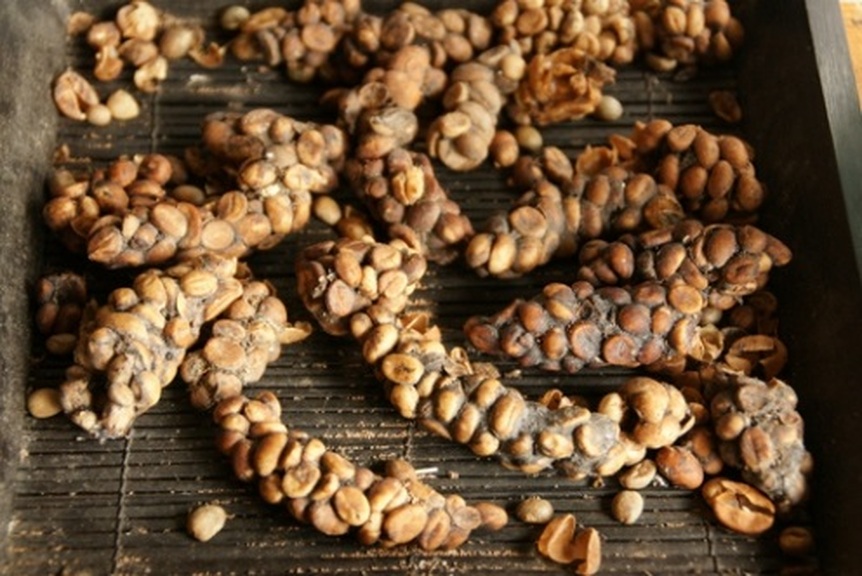
What happens when you take your love for cats to the next level? You consume their faeces. Yes, you read that right. Civet coffee is the most expensive coffee in the world and is made from the excreta of civet cats. India has recently delved into the production of this purr-fect coffee and we’re pretty excited. The production will start at a very small scale at Coorg in Karnataka. Being the third largest producer of coffee, we gotta try out everything that’s out there, right. If you’re wondering what this coffee looks like, here you go:

CivetKF18sept2017

Here’s the icky part: The coffee is made by getting the civet cat to ingest coffee beans. Then the cat’s poop is collected and processed. Why would someone do that, you ask? And WHY is this cat-poop thingy the most expensive coffee on the planet? Well, this coffee is considered more nutritious than other varieties of coffee and there are a lot of certifications involved too. The cat eats the flesh off of the coffee berries and not the actual bean plus the enzymes in the cat’s stomach enhance the bean flavour and that’s why this coffee is such a big hit all over the world!

A startup called Coorg Consolidated Commodities is producing this cat poop coffee and they’ve also decided to open up a café to serve this coffee locally! This coffee is presently being sold locally under the name ‘Ainmane’ and is available only at the Club Mahindra Resort at Madikeri for Rs 8,000 per kg.

source: http://www.inuth.com / inUth.com / Home> Lifestyle> Food / by Fukres / September 14th, 2017

Dasara cultural extravaganza in Madikeri

Cultural programmes for Dasara at Madikeri will be organised from September 22 to 30 and renowned musicians and artistes will regale the public on the occasion.

Dasara Cultural Committee president H.T. Anil stated in a release that the audience will be treated to a variety of programmes daily at Gandhi Maidan. The inaugural day events feature a saxophone recital, a dance by students of Saandipany School, Rasamanjari by Vikas Janaseva Trust group, fusion dance and music, folk art performances and more from 6.30 p.m.

On September 23, there will be a comedy programme by members of Bhagamandala Abhinaya Kalamilana Charitable Trust followed by a dance by artistes from Sandalwood. Mahila Dasara programmes will be held on September 24 and will commence from 10 a.m. They will include ethnic dressing, garland making contests and more. At 6.30 p.m, renowned artiste Dr. Shamala Malnad and her team will present a concert that will be followed by dance programmes by various groups from Madikeri and other areas.

On September 25, the public will be treated to Bollywood hip hop dance programmes besides a whistling concert featuring C.N. Madhav Bhat. On September 26, there will be a Children’s Day and rural sports events followed by cultural presentations in the evening.

A concert by Bollywood singer Sangeetha Rajeev is the main feature for September 27 while on September 28, there will be a Yuva Dasara programme including dance and music from various groups.

On September 30, to mark Vijayadashmi, the organisers have arranged a Karnataka Darshana laser show, Dollu Kunitha, Kamsale and other folk art programmes among others, Mr. Anil said.

source: http://www.thehindu.com / The Hindu / Home> News> States> Karnataka / by Staff Reporter / Mysuru – September 18th, 2017