Remembering FM Cariappa on his birth anniversary

CariappaKF29jan2017

During the 1965 war, his son K C Nanda Cariappa, an Indian Air Force pilot who went on to become Air Marshall, was shot down over Pakistan by Army officer Major Zaidi. He was captured and imprisoned as a PoW by him. On realizing the identity of the wounded soldier at Dargil, Radio Pakistan immediately announced the safe capture of Flt. Lt K C Nanda Cariappa. Gen Ayub Khan, himself contacted Field Marshal Cariappa, who was living a retired life at Mercara, his hometown, with information about his son’s safety. When Gen. Khan offered to release his son immediately, Field Marshal is reported to have scoffed at the idea and told him to give his son no better treatment than any other PoW. “He is my son no longer,” the old soldier is reported to have thundered. “He is the child of this country, a soldier fighting for his motherland like a true patriot. My many thanks for your kind gesture, but I request you to release all or release none. Give him no special treatment,” the Field Marshal is reported to have said.

As a token of gratitude for the exemplary service rendered by him to the nation, the Government of India conferred the rank of Field Marshal on Cariappa in his 87th year, on 14 January 1986. He is among only two Indian Army officers to hold the highest rank of Field Marshal (the other being Field Marshal Sam Manekshaw).

Today is the birth anniversary of Field Marshal Kodandera Madappa Cariappa – the first Indian Commander-in-Chief of the Indian Army.

On this occasion, MCC had organised a celebration of the birth anniversary of the Field Marshal. MCC Mayor M J Ravikumar garlanded the statue of K M Cariappa, near Metropole circle, Mysuru. Sweets were distributed to public.

Bopanna, Chengappa, Aiyappa, members of Kodava samaj, members of MCC participated in the function.

source: http://www.citytoday.news / City Today / Home> Mysore / CT Bureau / January 28th, 2017

Navy to support Cariappa Museum in Madikeri

The Indian Navy will extend support to Field Marshal K M Cariappa Museum coming up at his residence Sunny Side here, Commandant of Indian Naval Academy (INA) (Ezhimala) Vice Admiral S V Bhokare said.

He was speaking at the 118th birth anniversary celebrations of Field Marshal Cariappa organised by district administration, Karnataka Kodava Sahitya Academy here on Saturday. “Kodagu has given birth to first Indian commander-in-chief K M Cariappa. His service to the country is remembered even to this day,” he recalled. “With dedication and hardwork, one can achieve success. Cariappa is a inspiration for present generation,” he said.

Recalling an incident, Bhokare said Cariappa’s son K C Nanda Cariappa had crossed the Line of Control once. The then Pakistan General Ayub Khan called Cariappa and informed that all efforts will be made to release Nanda Cariappa. Cariappa said there is no need to give special treatment for his son and asked him to release his son on the day when all others are released. He was a true patriot, he recalled.

MLA M P Appacchu Ranjan said Cariappa was known for discipline and honesty. The youth should imbibe Cariappa’s qualities to achieve success in life, he observed. Field Marshal Cariappa and General Thimmaiah Forum Convener Major (retd) B A Nanjappa said, “While visiting Cariappa’s house, one had to compulsorily have pen, notebook and a kerchief. He would daily offer honour to the portrait of his parents with a sepoy.”

Forum President Col (retd) K C Subbaiah said, “The district administration has sanctioned land for museum at Sunny Side. The forum will make an effort to enrol students from Kodagu to Sainik School at Koodige.”

Winners
As part of Cariappa’s birth anniversary, various competitions were organised for students. The winners are – Essay—Shafana (I), Deepthi (II), Rishika (III); patriotic song — General Thimmaiah School (I), Ammathi High SChool (II), A V School, Nelyahudikeri (III); marchpast — Government PU College, Madikeri (I), Kodagu Vidyalaya (II) and General Thimmaiah Public School (III); PU category — patriotic song — PU College, Moornadu; marchpast — PU College, Moornadu; Degree college category — patriotic song — FMC College (I), Government First Grade College (II); marchpast—Field Marshal College (I).

source: http://www.deccanherald.com / Deccan Herald / Home> District / DHNS – Madikeri, January 29th, 2017

Fighter pilot in the making: Kodagu girl does State proud at parade

A.G. Aishwarya is a student of St. Joseph’s PU College in Madikeri.

It was a moment to savour for senior under officer A.G. Aishwarya of Kodagu as she led the all-girls National Cadet Corps (NCC) contingent at the Republic Day parade held at Rajpath, New Delhi, on Thursday.

For the student of St. Joseph’s PU College in Madikeri, participating in the parade was a childhood dream inspired by her elder sister Ambika, who was decorated as the ‘Best Cadet’ and honoured at her institution a few years ago.

Her father Ajjinanda Ganesh, mother Monthi Ganesh and sister were in New Delhi on Thursday to witness the parade and cheer her on. Aishwarya belongs to the 19KAR Battalion and was also part of the Republic Day camp in 2015 as a junior wing cadet. She hopes this is just the beginning of an incredible journey as she is determined to join the Indian Air Force and become a fighter pilot.

Ms. Ganesh spoke to The Hindu from New Delhi soon after witnessing the parade and said the entire family was proud of Aishwarya. “There are no words to explain how proud we felt at that moment,” she said.

She recalled that Aishwarya was in class 2 when she witnessed seniors, including her sister, participate in NCC activities. She was also inspired by her uncle Major Nanjappa and other relatives in the armed forces. “She joined Bulbul while in primary school and later joined the Guides and finally the NCC when she was in class 8 and 9,” she said.

Aishwarya, who is a science student with good academic track record, has a little more than a month to prepare for her II PUC examinations, which commence in March, but she is not at all tense. “She has consistently secured distinction in all subjects despite her extracurricular activities and [she] is not tense at all,” her mother said.

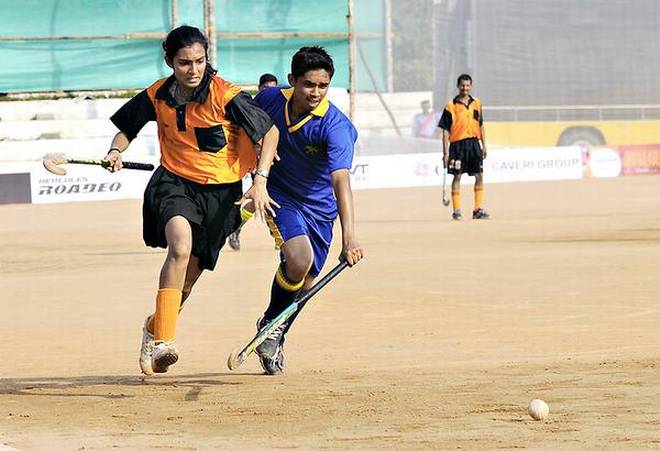
Aishwarya is an accomplished skater and hockey player apart from also playing the guitar.

source: http://www.thehindu.com / The Hindu / Home> News> States> Karnataka / by Special Correspondent / Mysuru – January 26th, 2017

Thimmaiah rescues Dabang Mumbai

Action-packed: Dabang Mumbai’s Affan Yousuf (left) and Ranchi Rays’s Timothy Deavin battle it out.

Nikkin Thimmaiah pulled Dabang Mumbai back from the brink of defeat to an honourable 3-3 draw against Ranchi Rays in the Coal India Hockey India League 2017 opener. The Indian striker applied the finishing touch to a deliberate indirect penalty-corner conversion (worth two goals) in the 59th minute. The home team trailed 1-3 till that point at the Mahindra stadium.

Christopher Ruhr was the stand-out performer for the visitors, justifying being the costliest foreigner in the league at $75,000. He floated all over the rival half, and set up a field goal for Rays with a stinging carpet drive to Simranjit. The latter responded with a neat trap and reverse hit. Ruhr later converted a stroke. Three out of four goals came in the third quarter.

Eventually, the rule awarding two goals for a field attempt, aimed at entertaining fans and giving opportunity to players in front of the goalmouth to showcase stick skills or power in their wrists, determined the outcome of the match.

Two video referrals were taken in the last minute.

Dabang’s move to question the umpire decision proved fruitful, resulting in the fifth penalty corner and the equaliser off a pass from Harmanpreet Singh.

Ruhr was kept under constant watch by the home team in the first quarter. Rays went for the direct route in the first penalty corner, Mitton’s drag was blocked by the Dabang custodian. Tryon shuttled between marking and distribution duties smoothly on the right. Manpreet got a yellow for a reckless tackle as the score remained goalless at half-time.

Ruhr turned creator on the right, spotting teammate Simranjit lurking near the centre just beyond the D. The latter trapped a powerful hit first-time and sounded the boards with the reverse hit. Harte, under the bar, was beaten by the time he shifted position and dived to block. Dabang replied with a drag-flick conversion by Harmanpreet Singh eight minutes later.

Rays’ second goal came via a penalty stroke. A Dabang defender failed to get his foot out of the way from a Sumit deflection. Ruhr stepped forward and beat Harte from the penalty spot with a firm push to the left post. Dabang forced two penalty corners in the action-packed third quarter, but did not make headway.

The score: Dabang Mumbai 3 (Harmanpreet Singh 37 PC, Nikkin Thimmaiah 59 FG) drew with Ranchi Rays 3 (Simranjit Singh 31 FG, Christopher Ruhr 38 PS).

source: http://www.thehindu.com / The Hindu / Home> Sport> Hockey / Hockey India League – Hockey / by Nandakumar Marar / Mumbai – January 22nd, 2017

Rs 7.5 crore for rural development: Minister

Every Assembly constituency will be allocated Rs 7.5 crore for development of rural areas under Gram Vikas scheme, said District In-charge Minister M R Seetaram.

Speaking after hoisting the National Flag at the 68th Republic Day celebrations at General Thimmaiah stadium in Madikeri on Thursday, he said steps are taken to provide houses to the destitute tribals of Kodagu. The district administration has earmarked and will distribute sites among the beneficiaries soon.

The tender process for Rs five crore for the private bus stand in Madikeri is completed and construction work will be carried out with the funds of DELT and CMC. The work on court buildings in Madikeri and Ponnampet is on at a cost of Rs 36.7 crore and Rs 9.50 crore respectively. Construction work of the Zilla Panchayat administrative block will be carried out at a budget of Rs 18.25 crore. Site for district-level officers’ quarters has been identified, said Seetaram.

Development work on 478 rural roads was carried out at a cost of Rs 44.25 crore. Of these, 300 roads are open for public. Up to 26 lakes will be developed at a cost of Rs 56 lakh. Measures have been taken to make Kodagu free from open defecation.

Housing facilities have been provided to 3,955 beneficiaries under Indira Avas, Ambedkar Housing and other schemes. Grants of Rs 50 lakh have been released for establishment of a horticultural technology park at Madapur. The work on apiculture park at Bhagamandala is in progress. A honey museum is also being developed, he added.

A march past was held while various departments exhibited their tableaux.

Horticultural Department assistant director Girish, zonal conservator of forests Paul Antony, ZP superintendent A K Anjaneya, Hudikeri revenue inspector Radhakrisha, physical education director Nanda, Rojirani, assistant teacher Jayashree, Field Marshal Cariappa College NCC cadets Gautam, Ashwini and Nanjappa were felicitated for being awarded with Seva Prashasti.

MLC Veena Acchaiah, Zilla Panchayat president B A Harish, vice president Lokeshwari Gopal. DC Dr Richard Vincent D’Souza, SP P Rajendra Prasad and CMC president Kaveramma Somanna were present for the programme.
DH News Service

source: http://www.deccanherald.com / Deccan Herald / Home> District / DHNS – Madikeri, January 27th, 2017

Harshika Poonacha completes Upendra Matte Baa shooting

HarshikaKF27jan2017

Sandalwood actress Harshika Poonacha, who is sharing screen space for the first time with Upendra in Upendra Matte Baa, has finished shooting for the movie. The actress on her social networking website page along with the picture, posted, “My last day of shoot for Upendrab Matte Baa Will miss all the fun..Will miss by bestest co Star.”

The film directed by Lokanath marks comeback of actress Prema after a long hiatus. The film has been extensively shot around Mysuru and Mandya region.

source: http://www.timesofindia.indiatimes.com / The Times of India / News> Entertainment> Kannada> Movies> News / TNN / January 24th, 2017

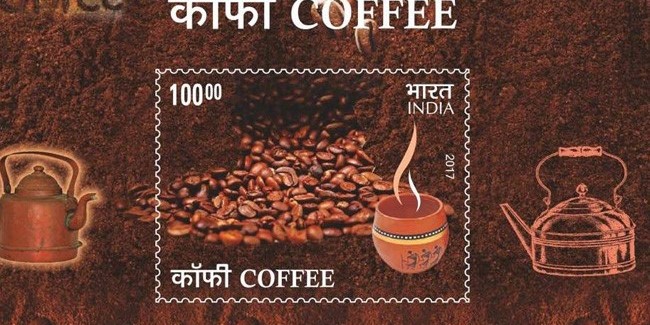
Coffee prices climb to a five-year high

coffeeKF26jan2017

Bengaluru :

Coffee growers in Karnataka, who went through a rough patch recently, are happy, thanks to a huge drop in production and supply from major coffee-growing countries in the global market.

Growers in Kodagu, Chikkamagaluru and parts of Hassan are upbeat after coffee prices hit a five-year high despite the state registering a low yield this time due to severe drought and demonetization.

According to a senior official in the coffee board, Bengaluru, severe drought in major coffee-producing countries like Brazil, Vietnam and Indonesia has resulted in poor yield and quality issues. As a result, there’s a great demand for Indian coffee, 70% of which is produced in Karnataka.

According to Kabir, a leading coffee dealer in Madikeri, Kodagu, coffee prices are rising for the past fortnight and the trend is expected to continue till April. A 50-kg bag of Robusta variety, produced mostly in the state, costs Rs 4,000 while Arabica costs Rs 9,600. Last year, the average price of Robusta was Rs 3,000 and Arabica Rs 4,600.

The prices have picked up in the retail market too after remaining at a low for the past five years. The prices range between Rs 150 and Rs 200 a kg.

Coffee board former vice-chairman Sannuvanda M. Kaverappa added that a shortfall of 2.08 million bag of 60 kgs each in the international market this year will lead to a rise in coffee prices in India.

“About 70% of Indian coffee will be exported and the rest will meet the domestic demand,” he added.

B S Jairam, president, Karnataka Grower’s Federation (KGF), said the Robusta yield has been good this season in the state compared to Arabica.

“Most growers are in distress owing to poor yield. The drought, labour crisis and demonetization have virtually pushed growers to the wall. The marginal current price rise will definitely not compensate for losses over the years,” said Karnataka Planters’ Association chairman M M Chengappa.

(With inputs from G Rajendra in Madikeri)

source: http://www.timesofindia.indiatimes.com / The Times of India / News> City News> Bangalore News / by Manu Aiyappa Kanathanda, TNN / January 26th, 2017

Nyamasheke moves to enhance coffee quality, farmers’ income

Nyamasheke seeks to create more jobs along the coffee value chain.

The quality of coffee is critical in the marketing of the beans locally and on the global arena. This fact is not lost on one of the major coffee producing areas in Rwanda, Nyamasheke District.

The district has been attracting investors to setup more coffee washing stations to help increase the quality and quantity of coffee production. The initiative also aims at job-creation as part of efforts to support realisation of the second Economic Development and Poverty Reduction Strategy (EDPRS II) objectives.

Coffee production in Nyamasheke contributes at least Rwf3 billion of the farmers’ income per year, according to district officials. The officials said seven new washing coffee stations will be commissioned this year, increasing the number of stations from 50 to 57 stations across the district, Polyphile Harerimana, the district cash crops officer, said. He added that besides boosting quality, the growing number of stations will increase farmers’ revenue and support economic growth.

Besides, doubling the proportion of coffee exported as fully-washed, Rwanda could increase coffee exports by 10-20 per cent, according to a study done in 2015. Only 30 per cent of Rwanda’s coffee is characterised as fully-washed at export and, yet coffee washing stations operate at little more than 50 per cent capacity.

Nyamasheke District has been attracting more investors in coffee production since 2013 when one of coffee washing stations in the district scooped the best coffee producer during the fourth edition of Rwanda Cup of Excellence competition. The annual contest rewards the best local coffee and is the most esteemed international award given to farmers with quality coffee. “Before the introduction of washing stations, coffee had less value and one kilogramme would cost about one dollar. But since washing stations were created the cost of the crop increased up to four dollars,” Harerimana said.

Karambi, Macuba and Nyabitekeri sectors located near the shores of Lake Kivu are some of the areas in the district that are favourable for coffee growing. Rwanda mainly grows Arabica coffee given its mountainous nature.

Harerimana said the district targets to produce 16,000 tonnes of coffee this year. Last year, the production was more than 11,000 tonnes while in 2015, the district produced 14,000 tonnes. He said this year farmers have increased use of fertilisers to 821 tonnes, adding that trees are also sprayed to guard against pests and diseases.

A 2015 survey showed that the number of coffee trees in Nyamasheke has increased to 13 million, up from eight millions of trees in 2009.

During the 2015 edition of Cup of Excellence competition, eight coffee washing stations from Nyamasheke were among the top 20 finishers. Therefore, it is no surprise that more investors are putting their money in the district’s coffee sector. Harerimana said the district works closely with farmers to ensure quality along the value chain to guarantee better returns. Annonciata Mukandanga, a farmer, said the increasing number of washing stations will boost morale as farmers will be assured of ready market, adding that it will also ensure quality of the crop.

Andre Iyakaramye, another farmer, said the setting up of more washing stations in the district has helped increase farmers’ income and welfare, adding that he is now classified in the third category in Ubudehe classification, thanks to coffee farming.

Rwanda’s coffee exports grew by 10.9 per cent in volume over the first half of last year, with 5,956.9 tonnes shipped out compared to 5,141 tonnes of coffee that were exported over the same period in 2015, according to figures from the central bank.

source: http://www.newtimes.co.rw / The New Times, Rwanda / Home> Business / by Frederic Byumvuhore / January 24th, 2017

Nidhi Subbaiah to tie the knot in February

NidhiSubbaiahKF29jan2017

Actress Nidhi Subbaiah is all set to wed her beau of one and a half years, Lavesh Khairajani, in an intimate ceremony in Coorg (her hometown) this February.

The actress tells us that she met Lavesh, a tech entrepreneur hailing from a business family in Mumbai, through common friends.

“He had the most romantic proposal, and the cherry on the cake was that it was in Coorg. He had booked a table at a resort on January 1, replete with champagne, cheese, flowers and the works. He spoke for an hour about his love for me and, eventually, went down on his knees to tell me, ‘Nidhi, marry me’ and put a ring on my finger,” recalls Nidhi.

As for Coorg being the wedding venue, she says, “The options were between Coorg and Goa. Since Goa has been done to death and Lavesh’s friends find Coorg exotic, we chose to have it in my hometown.”

But will marriage and domestic bliss put an end to her acting career? “Lavesh’s family is supportive and has told me that I can do as I please when it comes to work and they will stand by my choices,” adds Nidhi.

The actress plans to invite her closest industry buddies to the ceremony.

source: http://www.timesofindia.indiatimes.com / The Times of India / Home> News> Entertainment> Kannada> Movies> News / by Sunayana Suresh, TNN / January 21st, 2017

Edifices of togetherness

The invigorating aroma of the coffee blossoms carried by chilled breeze, the midnight green ambience along the loopy roads… it is not just the abundant natural beauty that makes Kodagu a distinct place. Its people — the Kodavas — with discrete culture and heritage, boost the glory of this coffee land.

Be it the language (Coorgie), cuisine, attire or rituals, Kodava culture moves away from the humdrum reckoning a distinct ethnic identity. And safeguarding this ethnicity while preserving their way of life is the architectural legacy known as the ain mane or ballya mane.

Ain Manes (ain in Coorgie translates to original) are the ancestral heritage homes of the Kodavas that reflect the eminence of a sanctum sanctorum. With quintessential framework, an archetypal heritage home comprises traditionally-carved wooden pillars, bricked white and red walls, intricately-carved wooden doorways and windows. With a typical style, each of them has an unmatched old-world charm.

Every corner of the house is given a name and holds mythical importance. With two types — the othe pore (single roofed house) and mundh mane (courtyard house) — the traditional features of ain manes include kannikamba (a sacrosanct pillar), kayyale (verandah), aimaras (wooden slabs in the verandah), machi (wooden ceiling), mundh (open courtyard) and kannikombre (worship room). Most of the ain manes have kaimadas – a sacred shrine built to worship the ancestors. Since the existence of nuclear families, there were outhouses built around the premises called ale pore.

While the interiors reflect somber and subdued beauty, its exteriors manifest valour and strength. As Chakku Chengappa, a member of Nadikerianda clan, explains, “Hidden and safeguarded amidst the estate were the fort-like structures of ballya mane (ballya means huge); built in this manner to prevent an ambush from enemies. The entrance to the ain mane has many sections. There is a long curvy oni (alley), bakka pare and ala pare (extensions of the alley), which lead to the verandah.”

Nonagenarian Nadikerianda Muthamma adds, “The Kodava women were known to be beautiful, and this is why ain manes needed to be protected at the time of British rule. However, today the ain manes play an important role in reuniting families.”

“Much more than just a roof over the head, ain manes are an important part of the tangible heritage of the native community of Kodagu,” write Boverianda Chinnappa and Nanjamma in their book Ainmanes of Kodagu. Built in the ancestral or the jamma land, the ain mane is a binding force that is a pillar of strength — both literally and figuratively. Many findings state that the inception of the concept of ain mane dates back to eighth century.

The origins

“The early settlers of Kodagu stayed in forests as a family. Due to feudal fights, it was common for people with the same bloodline to stay together in a small thatched hut. These settlements grew in size and became stronger, which made the ruling king seek their support. In return, the king gifted them land, which is the jamma land. As their living conditions improved, they built a strong fort-like structure on the jamma land, which came to be known as ain mane or ballya mane,” explains Boverianda Nanjamma.

However, the architectural style takes its root from Kerala. She adds, “Kodagu grew paddy abundantly but depended largely on Kerala for other commodities. During the travel for exchange of commodities, the Kodavas were pleased by the Kerala architectural style and there flowed workmanship from Kerala to build the ain mane.”

While there are over 900 clans in existence in Kodagu, not all of them have an ain mane. Nanjamma explains, “During the research work for our book, we found out that many deteriorating ain manes were never rebuilt.” According to their findings, only 40% of the ain manes were renovated keeping the tradition intact and the rest did not see the light of the new era.

Today, there are over 400 ain manes in existence and each of them belongs to a patriarchal clan, which is recognised by unique family names known as mane pedas. They bustle with ritualistic celebrations during festivities including Putthari, Kailpodh and annual kola (spirit dance). “The annual hockey matches conducted between families shed light on the revival of ain manes,” opines Kayapanda Shashi Somaiah, a journalist in Kodagu. Nonetheless, the revival of the ain manes are not just a process of renovation of age-old structures but also a resurgence of Kodava culture.

Unity in diversity

The Kundyolanda clan, which has 35 families, has its ain mane in Kolakeri village that was recently renovated to its pre-eminence. The rituals followed in this ain mane are uncompromising and many. “It is a family temple for us. We strictly adhere to the rituals and it is mandatory for women to wear traditional Coorgie saree and vastra (veil) over the head while entering the house. Apart from this, there are various other restrictions followed religiously in the ain mane,” explains Kundyolanda Dinesh, owner of a hotel.

They have a 400-year-old othe pore ain mane with 14 rooms, but there is no one residing here. However, it is made sure that lamps are lit twice a day and the house is maintained meticulously. “Each nuclear family of the clan takes turn to maintain the house and no one can back out from their duties,” he explains.

The Nadikerianda clan, with over 40 families, has a mundh ain mane in Karada village, which bustles with ritualistic activities during the festivals. A diligently maintained heritage home, it reflects the glory of the past and is keeping alive the culture and traditions. A 350-year-old house, it has a kaimada and a snake shrine in its premises. With 10 rooms, it has a beautifully-carved wooden window frame and a small wooden post box at the entrance. The huge mundh open to the skies is supported by four wooden pillars — all carved differently.

The Arapattu Mukkatira clan has their ain mane in Kadanga village. With 13 rooms, the uniqueness of this ain mane is that it has two mundhs and two kayyales. A 300-year-old structure, it is said that the temple treasure from the village Bhagavathi Temple was locked safely in a wooden treasure box kept in the attic of this ain mane. This wooden treasure box still lies in the attic. “We are a clan of 45 families. The age-old rituals are still in practice here. The renovation of the house is soon to take place with help from all the family members,” explains Katty Uthappa, deputy manager of a bank.

The Biddanda family has the ain mane built in the property gifted by King Veeraraja in 1795. With eight partitions in this mundh mane, there is a kaimada close by and the pictures of ancestors of eight generations can be seen hanging on the wall at the entrance. “One of our ancestors, Sarvakayaka Bopanna, was very close to the king. His (Bopanna’s) tombstone is right next to King Veeraraja’s tombstone,” explains Biddanda S Ganapathi, a retired navy officer.

The ain manes are a matter of pride to the Kodavas and are unique to their ethnicity. This uniqueness in architecture has been adopted by many resorts in Kodagu that woo the tourists. However, ain manes do not just demonstrate pride but bespeak culture. They are the souls of Kodava rituals, and their revival provides a surety to Kodavas’ customs and legacy.

source: http://www.deccanherald.com / Deccan Herald / Home> Supplements> Spectrum / Prajna G R / January 24th, 2017