Sandalwood actress Harshika Poonacha was originally supposed to be making her Tamil debut in the 4K (Kanavil Kanda Kadhal Kavithai) that had Jai in the lead.
But director Hashim Marikar has pushed the filming of Jai’s project to later this year and has begun working on his next, which is said to be a thriller, in which she’s a part of.
Talking about the film, she says, “I play a college girl in this film. She’s both bold and bubbly. She stands up for the issues in her college and help it solve. She rides a sports motorbike and dresses up in a rather rugged style. She’s more of a charmer, I should say. While so many guys try to woo her, I have my eyes on only one.”
Malayalam actor Maqbool Salmaan plays her love interest in the film. “We shot most of our portions in a college in Kochi. We will be shooting some city portions in Chennai soon,” she adds.
The film also stars Sampath Kumar, Paoli Dam and Lena in the lead. “We all have different stories to tell, but all of them are somehow connected. It has been a fun shoot so far,” she reveals.
source: http://www.timesofindia.indiatimes.com / The Times of India / News> Entertainment> Tamil> Movies> News / by Sharanya CR / TNN / March 17th, 2017
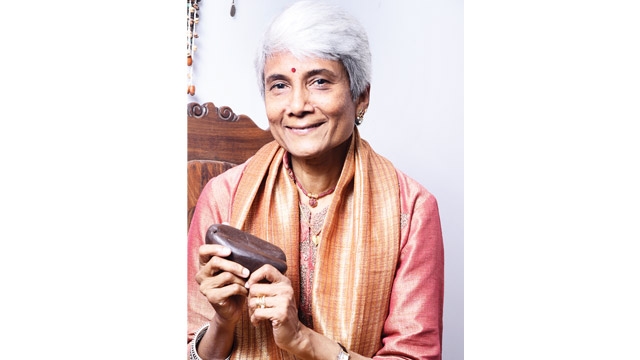
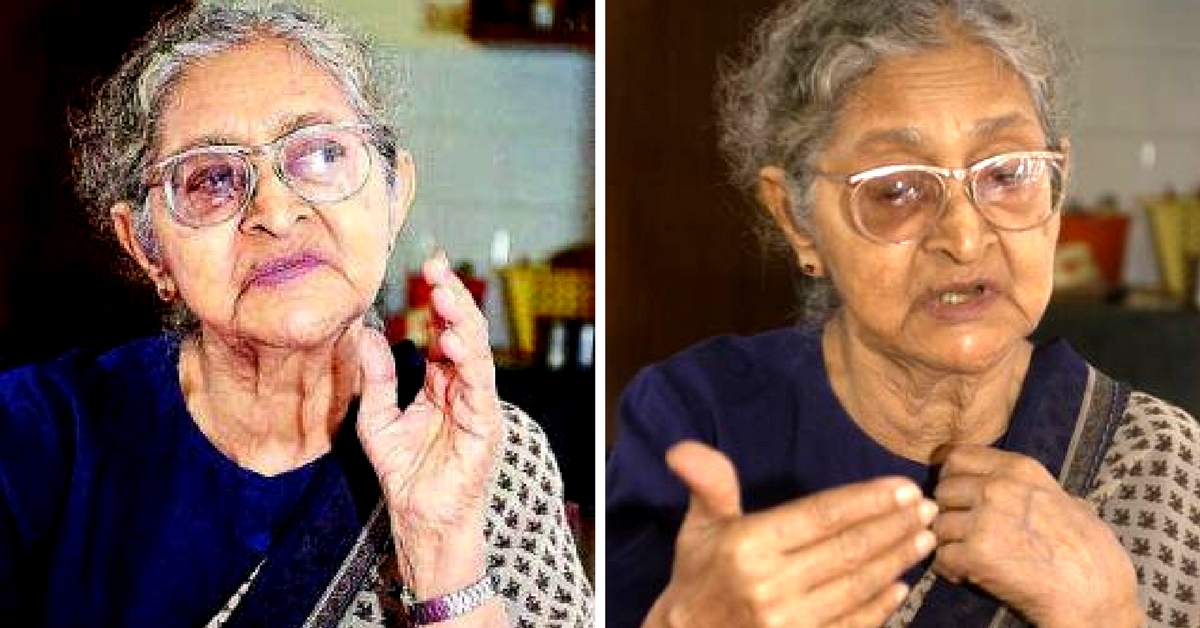
Sunalini Menon started out as an assistant cup taster for the Coffee Board of India in 1971
The journey of Asia’s first female coffee expert, Sunalini Menon, is one of beating the odds while consuming copious amounts of coffee, says Phorum Dalal
“But she is a woman, and will be married off soon,” a panel argued.
The year was 1971, and the dilemma was whether to give the candidate a job of an assistant cup taster on the Coffee Board of India.
She had topped the written examination and oral tests, competing with PhDs and coffee experts, but the hesitation was due to her gender.
The person in question was Sunalini Menon, who spent the next 25 years, sipping, slurping and spitting coffee, identifying flavour notes, and determining the quality of the drink for coffee growers in India.
“The slurping is to expose the sip to oxygen and open its flavours, and spitting is to avoid consuming so much coffee,” the tiny figured lady explains with a broad smile when we meet her in Coorg.
Her melodious voice has us in rapt attention, as she excitedly spoke of Block no. 19, Tata Coffee’s micro lot from the Nullore estate, selected last year by Starbucks for sale under the Reserve Brand in USA.
Menon, who consults several traditional coffee growers, has carved a niche for herself. She closely worked on the micro lot (cream of the crop with artisanal properties, usually sold in small quantities for a higher price) that put Indian coffee on the global map.
The seed was sown in childhood. “In the summers, we would go to Polachi in Coimbatore and visit the tea plantation my uncle was posted at. Labourers picked tea and put it through steaming, drying and rolling processes. During tastings, the tea master would use a penny to weigh the tea. Tasters would slurp, sip and spit out the liquid,” says Menon.
Imitating them, the kids would take the leftover tea “gargle and make horrendous noises,” laughs Menon.
After a degree in dietetics, while applying for scholarships in New York Institute of Dietetics, Menon saw Coffee Board of India’s job ad for an assistant cup taster, and “memories of sipping, slurping and spitting came flooding back.” As no woman had ever held the post, she was sure she wouldn’t make it, but soon she completed the board’s two-member team.
The board sent her to Witnerthone near Zurich for a year-long intensive course in coffee tasting in 1976, followed by a six-month review training in 1982.
“My hosts exposed me to a lot of international coffees from Peru and Costa Rica, and also sent me to Germany. This was an eye opener, and palate too, because at the time, India didn’t have such exotic coffees. I learnt to identify characters and use my palate to decipher coffee”. When she returned, her boss had retired and she took over to become India’s first cup taster.
Friends and family would tease her, “Your job is to take coffee breaks. What fun’.
The sensorial method, though, involved a lot: focusing on fragrance, aroma, flavour, aftertaste, acidity, mouthful, sweetness, balance, uniformity, overall taste and cleanliness of the cup to determine the coffee’s quality.
“One that secures 80 or above is considered a speciality coffee,” explains Menon, adding that the science and chemistry behind the cup can also be evaluated individually to provide accurate results. “But so far, a holistic scientific value hasn’t been arrived at to conclude on the cup rating. Till it does, I guess we tasters will have a job,” says Menon.
After the market liberalised in 1996 and growers could sell their own coffee, the board shifted focus to research and training. Menon moved to Japan, where her husband was posted, but coffee growers coaxed her to return and continue independent quality checks and research on their plantation.
“Coffee has come a long way in India, primarily a tea growing country. The British introduced the coffee plant from Ethiopia. A drink for the elderly and usually consumed at home, it didn’t have a special aura. But the vision of grandmothers using the dabba filter to brew their cup has become a fad after Café Coffee Day (CCD) launched in Bengaluru in 1996,” recalls Menon.
That’s why, Block No 19 is special. Indian coffee being selected for a limited edition sale by an international company will encourage more plantations to work on micro lots. This milestone has opened a door to make artisanal Indian coffee a stand out,” says the woman who has paved way for women tasters in India. As for her poison, it’s “a blend of robusta and Arabica beans. Black please,” she signs off.
source: http://www.dnaindia.com / DNA India / Home> Lifestyle / DNA Sunday Team / Sunday – March 05th, 2017
The scholarship is open only to meritorious students from South India.Susmita Gunda
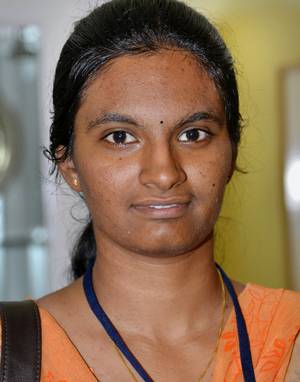
Susmita Gunda, an engineering student from Andhra Pradesh has been selected for this year Pemanda Monappa Commonwealth Scholarship. A meritorious student from the Jawaharlal Nehru Technological University, she completed her B.Tech in Electronics and Communication there.
Susmita has secured admission at Cambridge University. “Am happy that I have been selected for this scholarship. I came to know of this scholarship in the Cambridge University website. It is a prestigious one and the aid I receive will cover 60 per cent of my educational expenses,” Ms. Gunda says. She will pursue her MPhil in Industrial Systems, manufacturing and management Department of Engineering at the Newnham College, Cambridge University. “It is a project intensive course and I will be working in four live projects as part of my course,” she says.
This scholarship is open only for South Indian students with outstanding academic achievements and, who have secured admission for post graduation study at the Cambridge Univeristy.
For details, contact phone: 044 – 28253241. Weblink: www.cambridge trusts.org and search for Pemanda Monappa Scholarship.
source: http://www.thehindu.com / The Hindu / Home> Features> Education Plus / by Chitradeepa A / September 12th, 2012
Over the years, India has had several woman diplomats, ambassadors and high commissioners who have done stints in countries like the USA, China, Spain, Sri Lanka, Australia, Lebanon, Bangladesh, Qatar, Switzerland, Serbia, Russia, Slovakia and Ghana. We’ve also had two women Foreign Secretaries – Chokila Iyer and Nirupama Rao – who were highly respected for their tough stance and unflappable poise during their years of distinguished service.
It’s a far cry from what India’s first IFS woman officer, Chonira Belliappa Muthamma, had to face when she joined service in 1949.
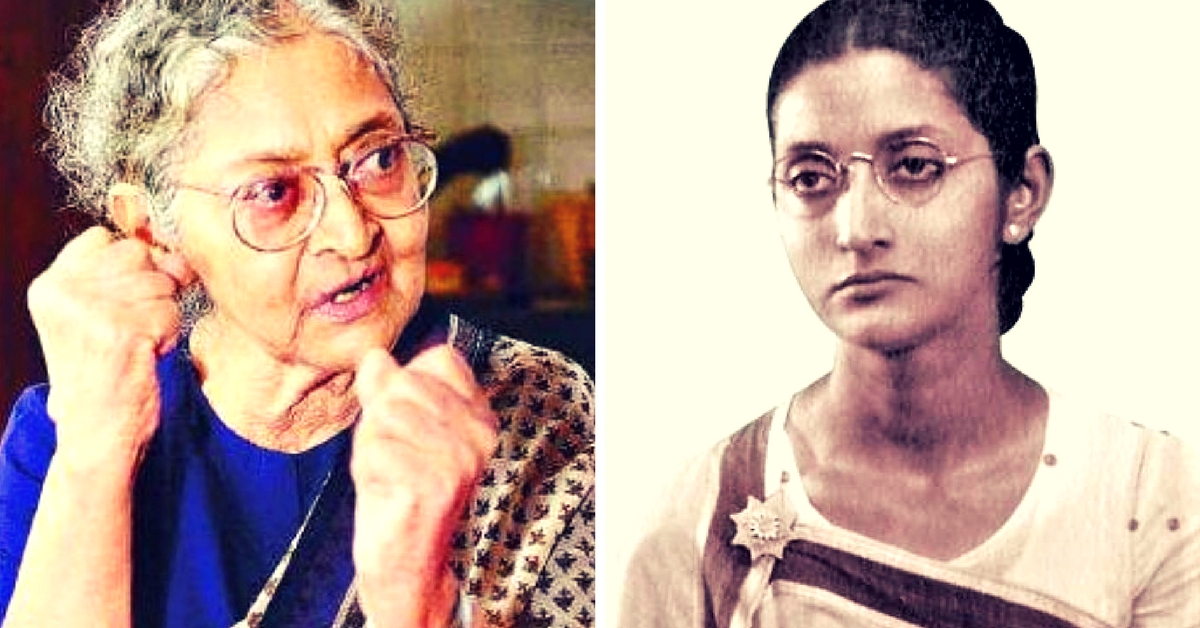
In an age when most Indian women didn’t even try getting into foreign service, this gutsy Kodava woman didn’t just choose IFS when she qualified UPSC, she fought gender bias, stood her ground and went on to become India’s first female ambassador.
photo source: mea.gov
Born in Virajpet in Karnataka’s Kodagu (then Coorg) district in 1924, Muthamma lost her father, who was a forest officer, when she was nine. Raised singlehandedly by her mother, Muthamma completed her schooling in St Joseph’s Girls School in Madikeri before graduating from the Women’s Christian College in Chennai (then Madras) with a triple gold medal.
Muthamma completed her post-graduation in English Literature from Presidency College in Chennai before deciding to appear for the UPSC examinations. She performed brilliantly, becoming the first Indian woman to clear the UPSC examinations in 1948. She wanted to join the Indian Foreign Service but the board that interviewed her discouraged her from joining this ‘not suitable for women’ service.
However, Muthamma was determined to get her choice of service. She convincingly argued her case, stood her ground and joined the foreign services in 1949, becoming India’s first IFS woman officer. Incredibly, she had to sign an undertaking which stated that she would resign if she got married. However, after a couple of years, the rules were changed.
For the next few decades, Muthamma served with distinction in many capacities in Europe, Asia and Africa. However, she had to fight against gender bias all through her diplomatic career. Despite serving in the foreign service for long, her case was overlooked when it came to posting her as an ambassador.
photo source: inmemoryglobal.com
Not the one to accept any injustice lying down, Muthamma filed a petition against the Indian government in the Supreme Court on the ground that she had been unjustly overlooked for promotion. The determined and stubbornly honest officer argued that the rules governing the employment of women in the service were discriminatory.
The government of India, represented by Solicitor General Soli Sorabjee, argued that that the chances of leakage of confidential information of strategic significance was a dangerous risk, should women ambassadors marry. Realising that this was flagrant prejudice against women, the court asked the Solicitor General how leakage of information was not a possibility if a male ambassador married.
Finally, in 1979, a three-member Supreme Court Bench headed by Justice V.R. Krishna Iyer quashed the government’s argument, struck down the discriminatory provisions governing foreign service personnel and upheld Muthamma’s case.
The nation’s apex court also impressed upon the government of India “the need to overhaul all service rules to remove the stains of sex discrimination, without waiting for ad-hoc inspiration from writ petitions or gender charity.” A landmark judgement for women’s rights in India, it was distributed at many a women’s meeting in support of their struggle for equality.
Consequent to this ruling, Muthamma was posted as India’s Ambassador to Hungary, the first woman from within the service to be appointed to this prestigious post. Later, she served in Ghana and her last posting was as Indian Ambassador to the Netherlands.
After 32 years of exemplary service, she retired from the IFS in 1982 but only after breaking the South Block’s glass ceiling for the women who joined the IFS after her.
photo source: alchetron.com
Even after retirement, Muthamma remained active in various fields. She was nominated as the Indian member of the Independent Commission on Disarmament and Security Issues set up by the then Swedish Prime Minister Olaf Palme. She was also a prolific writer, and during her retirement authored several works on a range of interests, from a cookbook on Kodava cuisine to a collection of scholarly articles titled “Slain by the System: India’s Real Crisis.”
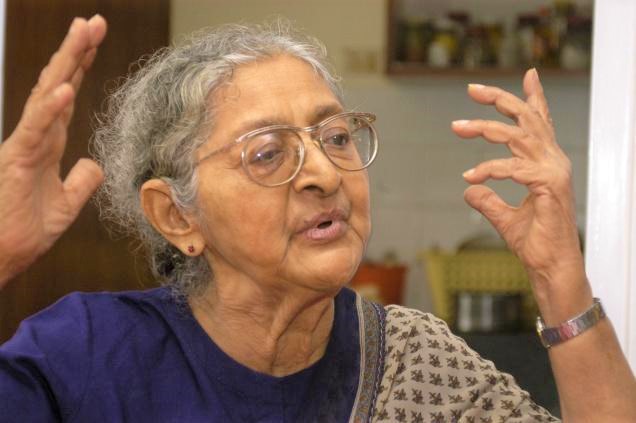
People like Chonira Belliappa Muthamma come along very rarely. Civil servants like her are rarer. The courageous lady lived a life only a handful of other women of her time lived, fighting a lonely battle against the sexist principles – a few written, many more unwritten – that governed the Indian civil services of her time. A woman who broke barriers and set examples, she inspired many other Indian women to take up the challenge of civil service in the coming years.
source: http://www.thebetterindia.com / The Better India / Home> Civil Services / by Sanchari Pal / March 01st, 2017
Annual art show at Taj West End from February 24 to 26
Bengaluru, Karnataka :
Rotary Club of Bangalore (RCB) will be showcasing its annual art exhibition Kala for Vidya on Friday, February 24, at The Taj West End – Art Corridor.
The event is to be inaugurated by Ms. Shefali Vaidya, the eminent columnist and Mr. Prasad Bidappa, the fashion guru, guests of honour.
26 prominent Indian artists have joined hands with RCB along with The Taj West End for the cause, the education of economically weaker section children. The Art Show will be on display February 25th and 26th, 2017, from 11.00 a.m. to 8.00 p.m. for art lovers to enjoy and contribute.
‘Rotary club of Bangalore has a long history of service projects. We have constructed 40 government primary schools, run our own high school, build toilet blocks, and similar projects. A successful Kala for Vidya show will mean one more step in the direction of making India free of illiteracy.
This initiative by Rotary Club is part of the larger effort to bring in underprivileged children into the mainstream through education’, said Rtn. President Ranga Rao, RCB. He further added “What is special about this show are the fine artists coming to partner with us for the cause. Well-known artists such as Gurudas Shenoy, Milind Nayak have been our source of inspiration for us to sustain the cause for over 9 years generating smiles on the faces of the children of rural India.”
Mr Somnath Mukherjee, the General Manager of Taj West End,’ The Taj West End has always aimed to showcase the finer things in life and the Art Corridor is a perfect example of it. We have partnered with RCB for Kala for Vidya in the past as well and is an extension for the support we provide for artists’.
Rotary club of Bangalore is 82 years young and has an enviable spectrum of service projects. We have partnered in running the Rotary TTK blood bank, significant dialysis presence, inculcate solar and green values in rural areas, and many other socially relevant projects.
source: http://www.indiaprwire.com / IndiaPRWire.com / Home> Healtcare-Hospital, Childrens related News / February 20th, 2017
The lissome Coorg beauty took a breather after Vajrakaya, and is now back as the love interest in this new Kannada film.
Shubra Aiyappa
Two years ago, at almost six feet, a svelte and beautiful Coorg beauty towered into Sandalwood and created waves, and “simply” wowed audiences in a song. She then went off the radar for a bit.
Now, back as the love interest of John Seena, Shubra Aiyappa hopes for some more tall claims. Her ‘John Seena’ however has nothing to do with the WWE popular wrestler John Cena. It’s just the title of the upcoming directorial venture of Simple Suni of the Simple Aag Ondh Love Story and Bahuparak fame.
The model-turned-actress Shubra makes a comeback after two years and speaks to Bengaluru Chronicle about her love for John Seena, and what made her wait for a while despite the huge popularity she attained after her short and sweet special appearance in Vajrakaya’s famous song No Problem alongside Shivanna.
“My second film in Kannada is very different from my earlier one, as an actress. I had never expected that first-ever song in Kannada featuring me along with the great Shivarajkumar Sir would become so popular, and would go onto be the number one song of that year. That is so so wonderful.”
Though, I play the love interest in my John Seena, the character I am portraying is very interesting, though revealing any more about her would spoil the whole fun of the movie,” says Shubra, adding that it will be a complete transformation for her.
On why she chose to wait for some time despite her huge popularity, the actress feels that she is not a person who will do something just because she has to, but only when she wants to. “I love my craft so much that I will be a part of something if I have a connect with it. When the first film came to me, it was very exciting. I knew that there would not be too much of a screen presence but sharing the screen space with Shivarajkumar Sir, playing his love interest, and also the song was a great debut,” Shubra says.
She admits that she did get a lot of offers, but did not accept them out of choice. “After doing a film of that level, it only made sense to either do something on par with it or to wait for something higher,” she says. In a first for her, she will be lending her own voice in John Seena.
“I got many calls and enquiries but nothing got caught my attention. The numbers are irrelevant, and also, if I choose the wrong film, it would be difficult to bounce back as history has seen such actresses typecast.
Hence, I have been a little more careful with the choice of movies, and decided to take a break for something after Vajrakaya. I got an offer that involved Suni Sir for his next directorial. He has such a great reputation since Simple Aag Ondh Love Story, and the kind of films he has been making are different. Once I heard the fantastic script, I had to accept it,” she adds.
With the shoot in progress, the actress is doing her home work for John Seena — there are strict instructions at home to speak only in Kannada, amongst a huge to-do list.
“Featuring in the No Problem song, as a beautiful girl was easier for me, as I was a model. Now working for Suni has been very great. He is quirky at work, and there is never a dull moment,” she says.
The actress thanks her modelling days for helping her to a great extent when she took up films. “I started modelling at 15, and have worked for almost all the designers in India, and walked on the international catwalk as well. I am certainly not over-confident, but modelling helped me face my fears (in front of the camera). When I started doing ads, I was identified, and I was also interested in doing films as it allows me to explore different characters and evolve,” Shubra explains.
Before signing off, the actress who loves dancing says that her parents have been the greatest support for her, and post No Problem, they have changed their caller tunes to the song that saw her catapult to fame. “Even now, they help me with rehearsals at home as they know Kannada very well,” she ends.
source: http://www.deccanchronicle.com / Deccan Chronicle / Home> Entertainment> Sandalwood / by Shashiprasad SM – Deccan Chronicle / March 01st, 2017
The city’s art connoisseurs were in for a treat early this week, when US-based Sri Lankan artist Geramin Sebastian La Brie held a charity exhibition of her work.
The proceeds of the show were in aid of underprivileged children suffering from cleft lip and palate, and art lovers wasted no time in picking up the paintings.
The show was curated by Rubi Chakravarti and supported by Deutsche Cleft’s Regional Director, South Asia, Dushyant Prasad, and Lalit Sanghvi.
source: http://www.timesofindia.indiatimes.com / The Times of India / News> City News> Bangalore News / TNN / January 05th, 2017
Not only do they handle business in acres, but also take utmost care to manage the crop sustainably. Care T Acres, a private initiative begun in 1998, has been helping coffee planters in Kodagu manage their properties. This initiative has become a boon to many planters who are unable to look after their estate.
“Care T Acres has stopped planters from selling their property and moving away from Kodagu,” says Nanjappa Kuttaiah, a coffee grower. With eight partners — Bose Mandanna, N K Chinnappa, N P Machaya, K M Cariappa, K Ajit Appachu, Aruna Biddappa, B Ram Bopaiah and K M Appaiah — the team comprises competitive planters with a combined experience of over 300 years!
The beginnings
Kodagu, the coffee haven that contributes to over 40% of India’s coffee production, has a lot of estate owners staying overseas. While selling the property has sentimental issues, maintaining them from overseas is illogical. This is where Care T Acres steps in, with the role of prime mover being Managing Director, N K Chinnappa. So, how did ‘Care T Acres’ come into existence? Among the founding members, Late Arun Bidappa was a well-known coffee trader. However, he needed expertise in maintaining his estate, which he developed with the help of expert planter Bose Mandanna.
Arun’s estate was the first property that received tendering from ‘Care T Acres’. “He (Arun Bidappa) said, ‘I help you trade your coffee, why don’t you help me look after my estate?’” recalls Bose. This conversation got the best planter friends together and thus began ‘Care T Acres’ with a maxim that “no one should neglect or sell their estate in Kodagu,” as Bose states.
The initiative is currently managing 600 acres, all under the constant supervision of Chinnappa — who grooms them like brides-to-be. The bottle green coffee plants nurtured by him are shaped like woven skirts. “Chinnappa’s way of raising and nurturing estates is a win-win proposition,” notes Nanjappa.
Professional care & support
The service (for estates that are more than 30 acres) begins with the client signing a five-year contract. Once done, the company starts looking after the ailing estates and fosters them like their own. When a grower approaches them, the team members visit the estate and analyse it. Then, the operations required to revive the estate are prioritised and the ‘surgery’ begins. “The person who can take care of his estate very well will not come to us. It is always the owner unable to manage his property who comes to us. In many cases, the grower would be suffering financial loss. So, the foremost ‘operation’ would be to clear the debt,” explains Chinnappa.
The team acts not just like a doctor but also that of an antibiotic as the second step towards betterment would be to develop proper infrastructure. Drying yards, labour line, proper cut roads, pulping yard and irrigation facility are developed to make the estates sustainable and self-reliant. Simultaneously, the grooming session begins — coffee plants are pruned, nourished, irrigated and shades are regulated to produce better yield.
With constant efforts, the estate breathes a new life. While they work for remuneration in the first two years, they sign up for a 30% profit from the third year. “I might be getting 70% of the profit, but that is equal to 150% of what I was earning before. Also, you get the profit without having the headache of managing it,” opines Nanjappa.
Another grower, Dalia Chengapa, has her estate being cared for by the company since 2007. She recalls how the estate owned by her father, Late A T Chengapa, lost its focus after he fell ill. “My father was a wonderful planter and he looked after the estate properly. But after his health deteriorated, the estate needed support. My sister Ramona and I stayed in different cities, and we did not have the practical knowledge for growing coffee. My father was unable to guide us as he was unwell. That is when we approached ‘Care T Acres’,” she recalls. While her estate incurred loss before the team took over, it is now making good profit.
Nanjappa’s story goes on the same lines. His mother passed on and the 45- acre estate in Suntikoppa that she looked after relied on him for tending. He had known that ‘Care T Acres’ turned the estates around and yearned for their support; eventually the deal was sealed. “Eight competitive planters, financially trustworthy and among the best planters in the district took over my estate and it was a blessing at the right time,” he says. Chinnappa started the work here and looked at two primary problems. Firstly, he pruned the coffee plants in a better way — there were more branches and nodes earlier, which reduced the picking cost. “When pruning is done properly, the plant flows down and it becomes easy to pick berries. The yield also increases,” explains Chinnappa. Secondly, the roads were laid for convenient movement.
The estates cared for by the team improve their pepper yield as well. With a systematic auction and tendering system in place, planters get an optimal price for pepper. The team has taken up risks as challenges and revived many estates. However, Mandanna explains, “While we have gone beyond limits and put money from our pockets to revive the estates, there are instances where we have rejected a few. These estates are uncultivable and there would be no absolute hope for coffee.” Chinnappa adds, “It is not just about profits but it is about leaving a legacy behind.”
One can contact the team at rkpagastya@gmail.com.
source: http://www.deccanherald.com / Deccan Herald / Home> Supplements> Spectrum / Prajna GR / November 22nd, 2016
WELCOME. If you like what you see "SUBSCRIBE via EMAIL" to receive FREE regular UPDATES.
Read More »