Chief minister N Chandrababu Naidu on Tuesday turned out to be a brand ambassador of Araku Valley Coffee at a national conference of tribal women sarpanches here.
He saw to it that the organic brew was served to Union rural development minister Chowdari Birender Singh, minister for tribal welfare Jual Oram and Sudarshan Bhagath, union minister of justice and social empowerment and let them taste it to their content right on the dais.
Even as the programme anchor invited Birender Singh to address, Naidu intervened with a plea to let the minister finish his last sip. The CM appealed to all the 3000-odd women sarpanches who came from 10 states to promote the organic brand of Araku coffee.
It may be recalled that Prime Minister Narendar Modi felt bowled over by the rich aroma of the Araku brew at the International Fleet Review (IFR) in Visakhapatnam in February last.
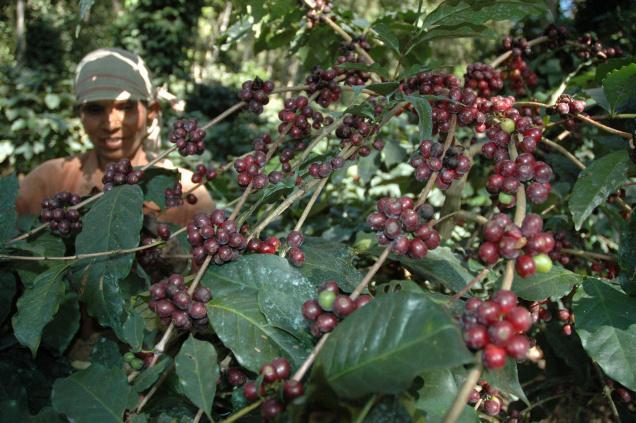
Araku coffee is India’s first tribal growers organic brand launched in the Araku valley in 2007. The brand has got high demand in the US, UK and parts of European Union nations.
Naidu informed that the coffee production in the Araku Valley was increased by 1 lakh tons to 8 lakh with an increase of coffee plantation area by 1 lakh acres.
The coffee plantations helped the tribals increase their income levels with each family receiving at least Rs 3,000 per year by raising plantations and selling the produce.
Chandrababu said 13 products of Araku Valley including coffee and pepper have received organic certificates recently.
source: http://www.timesofindia.indiatimes.com / The Times of India / News Home / TNN / April 19th, 2016
The unusually high temperatures and the delay in arrival of pre-monsoon or blossom showers could shrink the robusta coffee crop for the 2016-17 season, starting October.
Growers in the key regions of Coorg and Chikmagalur are concerned over the delay in pre-monsoon showers, crucial for blossoming of the coffee floral buds, and fear that it could impact robusta output by up to a fourth.
Blossom showers and subsequent backing showers are crucial for a good crop. Traditionally, the robusta and arabica areas should receive pre-monsoon showers by March 15 and April 15, respectively, for a good blossom.
“The blossom shower has been very sporadic and scanty this year and it is definitely going to affect the crop, both robusta and arabica,” said Baba PS Bedi, Chairman of the Karnataka Planters’ Association.
“Small growers, who cannot afford to take up sprinkler irrigation, are going to be hit hard,” Bedi said, adding that the planters’ association will soon urge the State government to take up cloud seeding to create artificial rain in the key growing regions.
Water crisis Though most of the robusta area is irrigated, with growers deploying sprinklers to irrigate their estates without waiting for the blossom showers, the lack of sufficient water storage this year has turned out to be a cause for concern.
Two back-to-back droughts triggered by successive deficient monsoons have created water stress thereby affecting the availability for irrigation, Bedi added.
“The delay in blossom showers and the prevailing unusually high temperatures across all the growing regions is a real cause of worry. It will have a significant impact on the crop loss, but it is too early to quantify the impact,” said Y Raghuramulu, Director of the Balehonnur-based Central Coffee Research Institute (CCRI).
The Coffee Board is expected to take up crop assessment sometime in mid-May.
In addition, the depleting shade pattern in some areas is aggravating the problem this year, Raghuramulu added.
“The situation is terrible in South Coorg. With temperatures ruling 2-3 degrees higher than normal, there is a fear of coffee plants dying in some areas,” said N Bose Mandanna, a planter in Suntikoppa, near Madikeri. About 30 per cent of the robusta area is impacted by the delayed rainfall, he added.
“The overall situation is not comfortable. Though it has rained in some pockets, the quantum of rainfall is not sufficient. The water stress and high temperatures will affect the blossom, thereby impacting the crop,” said Nishant Gurjer, a planter in Chikmagalur.
Plants under pressure Another factor that could affect the output this year is stressed out plants. “In the last two years, we have been picking some good crop. As a result, the plants are relatively stressed and the output could be impacted,” Gurjer added.
The Coffee Board has estimated the 2015-16 crop’s output at 3.5 lakh tonnes, a 7 per cent increase over the previous year’s 3.27 lakh tonnes.
source: http://www.thehindubusinessline.com / Businessline.com / Home> Economy> Agri Business / Vishwanath Kulkarni / Bengaluru – April 19th, 2016
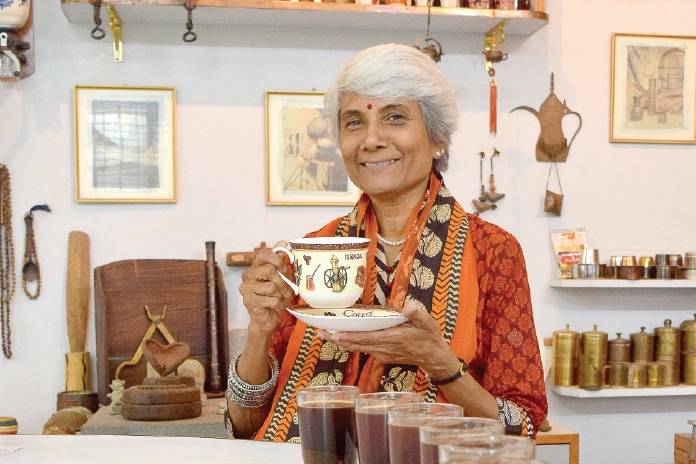
There is a chance that Sunalini Menon is addicted to her work but there’s a compelling reason for it: she is Asia’s first woman coffee taster. Menon’s affair with Coffea Arabica and Coffea Robusta began when she was a college-going girl. No wonder, Bengaluru-based Menon, who later founded her own company Coffee Lab, likens the coffee bean to that of spreading wisdom, teaching her humbleness, perfection, passion and friendliness.
At a time when women were still trying to cement their place in the social order of things, Menon was miles ahead of the same. She completed her schooling from Good Shepherd Convent and broke the record by securing first position in BSc at the Women’s Christian College. While pursuing her master’s in Science, she got a paper published in the Indian Journal of Medical Research, a rare feat for a non-medical professional. After completing her PG, she applied for the position of a coffee taster and moved ahead in the selection rounds. Though her appointment was objected to, on the basis of her being a woman, Menon finally made it as an assistant cupper in the Coffee Board.
An unusual profession it may be, but it comes with its own set of unique challenges. “If you are a professional cupper, you need to preserve your palate and I do so by avoiding spicy food, alcohol and tobacco. I ensure that I am always in good health to be able to taste and identify the subtle nuances of coffee,” says Menon. By that same logic, ice cream too is a strict no-no for me.
There are other senses to be employed as well. Menon shares that one needs to use their eyes to see size, the degree of roast, and colour of the beans; while the sense of smell comes handy in knowing the green beans, roasted beans, coffee brew and processing of the coffee. The sense of touch helps in understanding the strain of coffee beans, while the sense of sound in measuring the right temperature —when you roast the coffee beans, they will crack or pop at certain temperatures.
Over and above, a good cupper comes equipped with an innate acuity of taste, intense training, experience and exposure to coffees from around the world, repeated calibrations of the palate with global tasters, good memory, fine concentration skills and most importantly, the ability to communicate what one has experienced in the palate.
Sunalini Menon
Menon quit the Coffee Board in 1995, to set up her company Coffee Lab in 1997, which provides a whole range of services—right from evaluation, certification to advisory. Coffee Lab, which won the Hidden Treasure Award in 2006 by the Speciality Coffee Association of Europe (SCAE), is now developing brands for green coffee beans. “Flavours in coffee are very diverse. You could have sugar browning flavours such as chocolate, caramel, nuts, malt and vanilla; dry distillation flavours such as spices of pepper, clove, thyme; medicinal such as camphor; resinous such as black currant; or enzymatic flavours such as herbal, floral, citrus, berries, legumes etc,” elaborates Menon.
Tasting not less than 100 samples per day, Menon says: “Some coffees around the world possess very distinctive floral notes, some have blueberry flavours, some with intense citrus flavours of oranges and lemons, besides red and green apple.” She is also the proud recipient of the 2014 Alfred Peet Passionate Cup Award, conferred by the Specialty Coffee Association of America (SCAA) during their 26th annual exposition and conference at Seattle.
When asked about any coffee buying tip, she quickly replies: “One needs to look at whether the coffee is dark-roasted or medium-roasted. A medium-roasted coffee will have a balanced taste, while a dark-roasted one will have a strong mouth feel, but with bitter edges. To make the perfect blend the proportion of powder-chikri (chicory) is 70-30 and also the freshness of say an hour of the decoction is important.” But the best advice is saved for the last. “Coffee means friendship. If you have coffee with someone, you become friends with them,” concludes a smiling Menon.
source: http://www.newindianexpress.com / The New Indian Express / Home> LifeStyle> Food / by Sujitha J / April 16th, 2016
While agreeing with popular belief that agriculture “is risky business”, Director-General of the Indian Council of Agricultural Research (ICAR) S. Ayyappan said on Thursday that, however, farmers in places such as Kodagu had shown how farming could be profitable.
He was inaugurating the golden jubilee of the Cardamom Research Centre (CRC) at Kodagu, an Indian Institute of Spices Research (IISR) release here said.
The cardamom centre at Kodagu comes under the purview of the IISR. Dr. Ayyappan said the ICAR would also set up a planters’ home at Madikeri to offer training to farmers in the region.
Diversification
“Agriculture being probably one of the riskiest businesses, for it to be profitable, we have to give importance to diversification of crops and specialty agriculture,” Dr. Ayyappan, who is also the Secretary in the Department of Agricultural Research & Education (DARE), said.
He was all praise for planters for their success in spices cultivation. He said that spice plantations at Kodagu were model farms for farmers from the other States. “They have proved that farming is a profitable venture. The productivity of black pepper in these plantations is far above that of Vietnam,” he said.
He said the decision to upgrade the CRC and set up the planters’ home were New Year gifts for farmers at Kodagu.
N.K. Krishnakumar, Deputy Director-General of Horticulture, who presided, wanted the IISR and the CRC to identify pockets where cultivation of cardamom and black pepper and other profitable spices could be grown on a large scale.
M. Anandaraj, IISR Director, Amrik Singh Sidhu, Director of the Indian Institute of Horticultural Research, Bangalore; George V. Thomas, Director of the Central Plantation Crops Research Institute, Kasaragod, spoke.
Publications such as Capsule, a souvenir of the golden jubilee celebrations, Sadaram, a comprehensive publication on 50 years in cardamom research, and special issues of Spice India and Indian Journal of Arecanut, Spices and Medicinal Plants published to commemorate the golden jubilee were also released at the function.
Progressive farmers from Kodagu such as S.B. Jayaraj of Murugarajendra Estate, Madapur; B.M. Mahesh Kumar of Hosathota Estate, Sakleshpur; John Thomas Ramapuram of Doona Ann Plantations, Siddapura; C.P. Pramod of Cauvery Estate, Madikeri; Duleep Nanjappa of Pakka Estate, Madikeri, and Prema Ganesh of Prema Estate, Madikeri, were honoured by Karnataka Speaker K.G. Boppiah at the programme.
___________________________________________________________
Former Bigg Boss contestant and cricketer N C Aiyappa is ready to dabble with films as well as cricket. Aiyappa claims that he is flooded with offers in Sandalwood industry, since he was evicted out of the Bigg Boss house. In an interview to a Kannada news paper, he has said that he has heard two stories, but nothing has impressed me.
Aiyappa adds that both Pooja Gandhi and Gowthami Gowda are his good friends, we have been projected wrongly to the people, we are just good friends even now, but I have not met them since we all are busy in our own life, he said.
source: http://www.timesofindia.indiatimes.com / The Times of India / News Home> TV> News / TNN / April 15th, 2016
Former international athlete Ashwini Nachappa was known as much for her on-field achievements as for her style quotient off it. She was the first to beat PT Usha’s 200 metres at the Open National and the International Permit meet.
An Asian silver medallist in 200 metres, she was honoured with the Arjuna Award in 1989. Ashwini believes that it is her confidence and the strong value system she grew up in that has brought out the best in her.
At present, Ashwini holds various responsibilities as the president of the Bangalore Urban District Athletics Association, vice-president of Karnataka Athletic Association and the president of Clean Sports India.
Cinema – Amitabh Bachchan
“I admire the work of Amitabh Bachchan because I don’t think anybody can ever take his place either in acting or voice. I’ve acted in about five movies and stopped after our first child was born. I like to watch comedy which could be in just about any language and prefer watching them at home. I like ‘Devadas’ for its grand setting and ‘Taare Zameen Par’ for its relevance.”
Music – Lionel Richie
“I listen to a few select tracks by Cliff Richard, Lionel Richie, Celine Dion… but all this depends on my mood. I can also never tire of listening to Lata Mangeshkar and Mohammed Rafi. Lately, I’ve have begun listening to Adele, who has sung for most of the James Bond movies. She makes some great conversation through her songs.”
Philosophy – Learning from mistakes
“I’ve learnt a great deal from the failures and mistakes. I look at everyday as a new experience. I always give my cent percent to whatever I do and I live by that philosophy. I don’t get stuck in the past or let the ‘ifs and buts’ hamper my progress.”
Author – Robin Sharma
“I never get too much time to relax with a book but whenever I do get a chance , I make it a point to read the works of Robin Sharma, ‘The Monk Who Sold His Ferrari’ being one of my favourites. I am also fond of J Krishnamurti’s books. When I was much younger, I loved reading Jeffrey Archer and Robin Cook.”
Travel – San Francisco
“I travel a lot between Coorg and Bengaluru and I occasionally fly to San Francisco to be with my older daughter. Our school Karaumbiah’s Academy of Learning and Sports (KALS) and Sports Academy- ASF in Coorg which has about 800 students takes up a lot of my time. Most of my travel happens for work purposes and I also find this as a perfect excuse to not only go home to Coorg but to get away from the maddening pace of city life.”
Cuisine – ‘Chaat’
“I am not much of a meat-eater and I am happy with my plate of vegetables. I also have a fetish for ‘Chaats’. But I think I am a good cook and make it a point to cook for my daughter and her friends whenever I go visiting in San Francisco. I make ‘Biryani’, ‘Paneer’ and ‘Chole bhature’.”
Inspiration – Parvathy Nachappa
“My mother Parvathy Nachappa is my biggest inspiration. She has struggled to bring my sister and me up. I’ve never heard her complain even once despite all the hardship. She has stood by us and seen our success and failures too. She has always taught us never bow down to anybody and to walk with our heads held high. She wants us to give our 100% to whatever we do and to have faith in God.”
(As told to Nina C George)
source: http://www.deccanherald.com / Deccan Herald / Home> Supplements> MetroLife / by Nina C. George / DHNS, Bengaluru – April 14th, 2016
Can the way coffee is grown offer a cure to the adverse effects of climate change? Conservation and agriculture experts in Wayanad are in the affirmative and have mooted revitalization of historic ‘shade grown coffee plantation’ system in Wayanad as the best defence against the adverse effects of climate change acutely being felt in the hill district. Wayanad is one of the four climate change hotspots in the state and listed as highly vulnerable to vagaries of weather.
The district, which is the largest coffee producer in the state – with 85,359 hectares of land under coffee and producing over 80% of the state’s coffee output- has over the years shifted from ‘shade coffee’ to intensive ‘sun coffee’ system.
“For centuries coffee used to be grown in an agro-forest eco system with coffee plants grown under a thick green canopy provided by tall shade trees,” said, director of the biodiversity programme of M S Swaminathan Research Foundation (MSSRF) N Anil Kumar. “But during the recent years the farmers have massively cleared trees from coffee plantations and started growing the crop in full sunlight with high input of agro-chemicals for getting maximum crop productivity. This has contributed to the marked changes in the unique micro- climate of the district,” he said.
It has also caused adverse environmental impact and exposed the farmers to effects of unprecedented climate change, currently witnessed in the district in the form of weakening in the early phase of the south-west monsoon precipitation, increasing polarization of daily rainfall, rising minimum temperature and increasing pest attacks.
An approach paper prepared by MSSRF said that the revival of shade grown coffee plantations would also help regulate micro climates and induce conditions favourable to the development of wildlife diversity with provisioning of healthy ecosystem services. It would also help in increasing carbon removal and promoting sustainable coffee farming. Experts say that shade grown coffee would provide enhanced income generation for farmers as it commands a premium in global markets.
source: http://www.timesofindia.indiatimes.com / The Times of India / News Home> City> Kozhikode / TNN / April 13th, 2016
There’s so much to see and do in Kodagu! But if you’re looking for something off the beaten track, there are exotic destinations hidden deep inside the woods, like Mallalli falls.
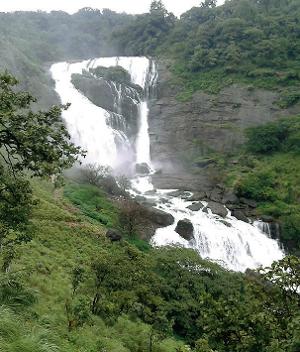
Mallalli falls flow quietly and with pride inside a deep and thick forest at the foothills of the Pushpagiri hills. Formed by the Kumaradhara River, Mallalli falls is about 45 km from Madikeri and 28 km from Somvarpet.
To get there, on the way to Pushpagiri hills, take a turn at Bidahalli village, from where it is about 7 km away. The trail to the falls is motorable for about 4 km, after which the remaining 3 km is a trek through a thick forest.
The path from the junction towards the falls is filled with coconut and systematic coffee plantations on either side of the road. The roads are slushy, slippery and filled with gravel, so it is advisable to take a jeep here. Surrounded by the constant chirping of birds and the noise of insects, you wonder how a waterfall could possibly exist in such a dense forest.
When you ease into the comfortable drive to Mallalli Falls, the road begins to curve left on to a small, relatively unused road. To make sure you are taking the correct turn, look for a pale blue tiled house just before exiting on to the muddy path. This road ends in a Forest Department office where all vehicles are halted. Here, you make an entry at the department office. The parking place in front of the office is the last plain ground you will see. Carry loads of water and eatables from here because the trek down to the falls is tiring.
There are wide concrete steps to the falls, but they are not what you’d expect. Huge and constructed in a zig-zag manner, they take a lot of focus and concentration to descend. Even as your body tires, fresh, tiny droplets and a mist which parts reveal the gigantic Mallalli falls.
The view from these steps which are laid only for a few metres, is breathtaking. You will see a huge carpet of greenery around you and in between water falls. It wouldn’t be wrong to call Mallalli falls the queen of all falls in Kodava Nadu. The noise of the falls is equal to that of a roaring lioness. If you want to go further down, know that it’s risky. But if you’re confident, trek ahead, which will take you through fresh and scented fruit orchids where hundreds of birds thrive.
You can also try to reach the base of the falls, but you need to be extremely careful as most of the stones are covered with algae, making it a slippery trail. There are loads of bushes and trees you can use for support to reach the base. Make a comfortable place for yourself to rest, and take in a complete 360 degree view of the hills and the falls. But beware of the leeches when you walk down to the base.
The locals love the fact that Mallalli falls flows through Kukke Subramanya and Nethravathi River in Uppinagadi and forms a Sangamam which is considered to be holy. You can make a visit to the falls in the summer, just to refresh yourself from the scorching heat, but the best time to visit the place is between July and December.
Getting There
Mallali falls is 260 kms from Bengaluru. Take the Bangalore- Mysore- Hunsur- Kushalnagar- Somavarpet. You can also reach Kodagu by bus and from there head towards the falls which is around 45kms. You can also go in your bike, but it is not advisable during monsoons.
—Kumaran P
source: http://www.bangaloremirror.com / Bangalore Mirror / Home> Columns> Others / Bangalore Mirror Bureau / April 12th, 2016
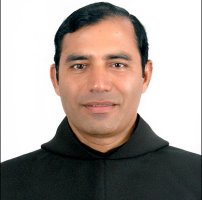
Fr Wilfred Rodrigues OCD, current rector of Carmelite novitiate house, Tapovana, Kushalnagar was awarded PhD in philosophy by the University of Mysuru.
He did his thesis on ‘Personal fulfillment and happiness through freedom from cravings – a comparative study of Gautama Buddha and St John of the cross’ which he defended on March 11. The thesis was completed in record time of around three years. The research work was much appreciated by the external examiners as well as the guide and members of the doctoral committee of the University of Mysuru.
Fr Wilfred has made the Rodrigues family and the entire Carmelite Order, especially the Karnataka-Goa Province proud. This is a very good contribution both to the field of philosophy as well as spirituality which will help millions of people to free themselves from their cravings so that they may find fulfillment and happiness in their lives.
More information can be viewed on www.carmelbangalore.com
source: http://www.daijiworld.com / DaijiWorld.com / Home> Karnataka / Media Release / Monday – April 04th, 2016
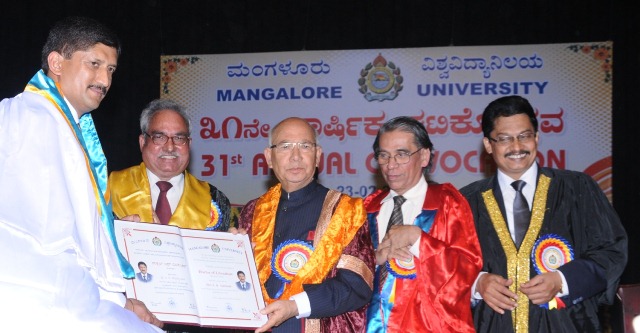
Air India’s Senior Manager (In-flight Services), Bangalore and Hockey Olympian Mr A B Subbaiah has been conferred the degree of Doctor of Literature (Honoris Causa) by Mangalore University for his contribution to the field of Sports and Social service.
Hans Raj Bhardwaj, the Governor of Karnataka, conferred the same on Anjaparavanda Bopaiah Subbaiah on the occasion of the 31st Annual convocation of the University held on February 23, 2013 at Mangalore, in the presence of Mr T C Shivasankara Murthy, Vice-chancellor of Mangalore University, Mr. Ramasami, Secretary, Department of Science and Technology, New Delhi, besides other dignitaries. He shared the stage with two other noted recipients Padma Shri. Kadri Gopalnath, a pioneer in Carnatic music on saxophone, and Chandrashekhara Kambara, the founder Vice-Chancellor of Kannada University at Hampi and a Jnanpith awardee.
Born in Madikeri of Kodagu district in Karnataka, Subbaiah joined Air India in 1989 and has represented the airline’s hockey team over many years. He has been involved in the game of Hockey for over 30 years and has represented the national team in more than 285 international matches. Between 1988 and 1998, he took part in over 285 international fixtures, thereby winning several gold, silver and bronze medals.
He represented India in Barcelona Olympics in 1992, led the India International Hockey team 1993, represented World cup in 1994 and Atlanta Olympics in 1996 besides three Asian games winning one Gold and two silver medals. He was honoured with Karnataka Rajyostva award in 1993, Arjuna award in 1997, Ekalavya award in 2003 and Karnataka Olympic association award for life time achievement in 2010.
Subbaiah led the Bangalore University’s hockey team in 1986-87. In the recent league tournament fixtures, he donned a new role, that of a commentator. He continues his services to the game by acting as the coach, Manager, umpire, administrator and selector.