Kushalnagar, which is popularly known as the commercial centre of Kodagu district, has many historical monuments which are in a deplorable condition and crying for attention.
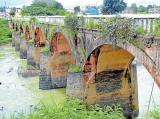
One such structure is the Praserpett Bridge built across River Cauvery, 167 years ago. The bridge, situated near the Kushalnagar Tollgate is 200 metre long and rests upon eight stone pillars of 40 feet wide each. Every pillar is 30 feet far from each other. The specialty of the pillars is that they have been plastered with a ground mixture of sand, eggshell and lime. The pillars from the ground level, are built in the shape of towers.
Every pillar contains valves so as to release the excess water during floods. When River Cauvery is in full spate, people drop by to watch the splendorous scene at the bridge.
The protective walls built on either side of the bridge are built to resemble the constructions in palaces and are intact to this day. The bridge dates back to the regime of Madras Presidency. The then Superintendent of Kodagu W C Hanslow, laid the foundation for the bridge on January 1, 1846. The construction of the bridge was completed in 1848.
The then Madras Governor George Markawis of Twidel and the then Mysore Commissioner Major General Mark Cubbon left the bridge open for public on May 12, 1848. The name of the bridge has been inscribed in English as well as Kannada on marble stone slabs, on either sides of the bridge.
But, after the new bridge was built, the old Praserpett Bridge was completely neglected.
Peepul trees have grown on the protective wall and pillars of the bridge. The people have urged to protect the historical monuments such as Praserpett bridge, Tippu’s Fort and the Old Inspection Bunglow.
Bar Association, Kushalnagar, president R K Nagendrababu urged that the Archeological Dept take an initiative and protect the bridge.
source: http://www.deccanherald.com / Deccan Herald / Home> District / Khushalnagar – DHNS, August 25th, 2015
They have worked in the tea gardens of Assam but in Madikeri they are tending the Coffee plants. Labourers from Assam working in coffee plantations in Kodagu have become a common sight since the past two years.
It is in south Kodagu that more number of Assamese labourers find work in houses and estates.
A few days ago, nearly 200 people arrived from Assam and were divided in teams to meet the demands of the local agents.
According to the labour department officials, there are seven labour camps in and around Kodagu where these people stay.
A few big planters will host some of the Assamese labourers in their own camps in the estates.
In Kodagu, over the years, shortage of labourers have been very severe and existing workers have been demanding more salary and benefits. In 2011, the acute shortage of labour and the high demands of local labourers had put the planters in a spot.
Earlier, the planters were getting labourers from Sullia in Dakshina Kannada and Arasikere in Hassan district, but the Assamese labour comes much cheaper than the usual lot, the officials added.
A labour contractor from Dakshina Kannada, Rajappa Gowda, who takes labourers from Sullia and Puttur every week, says Kodagu has a heavy demand for labourers.
Many escape the labour work in the estates and get into more cozier jobs as servants at home-stays.
But the migrants tend to stay for longer as they get all the benefits, from schooling for their children and higher social security.
Former vice-chairman of Coffee Board of India, Bose Mandanna, told Express that though Assamese workers do not know the scientific work of coffee cultivation, those who settle here learn how to spray, borer tracing and other works. Since all migrants show records like BPL cards, voter IDs and other records, it is the responsibility of the officials to trace fake cards, he says.
However, according to Codava National Council president N U Nachappa, these workers are all Bangaldeshis possessing fake documents. He recalled the protests held early this year urging officials to verify the labourers’ antecedents.
A coffee planter from Gonikoppa told Express, “Since we are getting Assamese labour, demand for more salary from workers who come from far away places cease.”
Another planter from Suntikoppa in Somwarpet taluk said many estates would run into trouble if the Assamese labour did not flow into Kodagu.
The police department have asked all coffee growers to check the documents and collect photos of workers and their family members and submit copies to them without fail.
source: http://www.newindianexpress.com / The New Indian Express / Home> States> Karnataka / by Express News Service / August 24th, 2015
The rain deficit in Kodagu, the origin of Cauvery river, has become a major cause of worry for the farmers here.
As far as the monsoon is concerned, the rainfall seems to be following an erratic pattern.
Heavy rain lashed the district in the beginning of the monsoon causing havoc. Later, it slowed down causing a drought-like situation.
Generally, in the 90-day monsoon season, the rainfall was sufficient for farmers as it was enough to fill the Harangi reservoir. But this year, the situation is different.
Though Harangi is full, Krishna Raja Sagar (KRS) reservoir is yet to be filled as the crest gates in Harangi were opened only once.
Kodagu district received 60 cm of rain in the first 10 days of the monsoon causing floods.
In July and August, rainfall was deficient by 70 and 60 per cent respectively.
Cloud seeding was taken up in Kodagu six years ago, but it was not conducive with the weather here.
According to figures available with Express, the average expected rainfall in January was 5 mm, but the district received 0.3 mm; February – 3.2 mm (5.6 mm expected); March – 37.4 mm (14.7 mm); April – 133.4 mm (73.5 mm); May – 191.4 mm (146 mm); June – 804 mm (486 mm); July – 366 mm (938 mm) and till August 20 – 164 mm (250 mm).
This erratic rainfall seriously impacted the water requirements of paddy, coffee and pepper crops.
The total average rainfall from January to August should have been 2,100 mm, but Kodagu has recorded 1,710 mm. The district is facing a deficit of 300 mm rainfall.
A minimum of 600 mm rain is required on a weekly basis to fill the reservoirs in Kodagu.
source: http://www.newindianexpress.com / The New Indian Express / Home> States> Karnataka / by B C Dinesh / August 24th, 2015
Tourism Department Assistant Director V Phanish has said that there is a need for better facilities at tourist spots all over the district.
“About 30 lakh tourists visit Kodagu district every year and business transactions of Rs 700 crore take place in the district due to tourism related activities. With the completion of work on the Kannur international airport, the inflow of tourists to the district is only expected to increase,” he said.
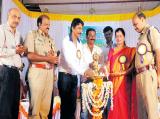
The official was speaking after inaugurating the Kodagu District Tourist Vehicle Owners’ and Drivers’ Association.
Listing out the tourism-related work carried out in Kodagu, Phanish said, “In the last two years, works worth Rs 12.29 crore have been taken up in the district to support tourism. A proposal of Rs 5.19 crore has been submitted to develop the road leading to Mallalli waterfalls in Somwarpet. The work on the concrete road worth Rs 3.19 crore has also been taken up. A sum of Rs 40 lakh has been released to provide basic facilities at Mallalli waterfalls. In addition, Rs 60 lakh has been released to develop the road leading to Makkala Gudi Betta at Kiragandoor, while Rs 1.53 crore has been released to develop Kodava Heritage to introduce culture and tradition of the Kodagu people.”
Development work on the road and footpath on the Abbey Falls stretch will be taken up at a cost of Rs 20. Senior Motor Vehicle Inspector B S Rajashekar said that an insurance scheme for drivers of private commercial vehicles has been launched by the government.
source: http://www.deccanherald.com / Deccan Herald / Home> District / DHNS – Madikeri, August 23rd, 2015
The week-long international trade fair organised in the heart of the city at Beniabagh is all about ‘Make in India’ offering a variety of products ranging from handloom to handicrafts and others from different state pavilions. But the main attraction of the event was the exclusive stall put up by the Coffee Board of Government of India offering the taste of palatable Indian coffee varieties.
Intrigued buyers were seen congregating at the coffee stall, seeking details of preparation of filtered south Indian coffee from the staff and also savouring a cuppa of ‘filtered’ coffee. Some were even seen grabbing free samples available at the stall.
“Several local buyers thronged the trade fair and ensured to give us a visit and inquire about the specialty of coffee, its distinct method of preparation and how it sets itself apart from the packaged coffee of various brands,” assistant secretary of Indian Coffee House, South Black, Coffee Board of India, HM Nagraj told TOI on Saturday. “We are aware that Indian coffee is not as much popular in Northern India, hence our main purpose is to promote the Indian filtered coffee among North Indians,” he added.
Explaining about the kinds of coffee and the method of preparation, Nagraj said, “There are two kinds of coffee beans, arabica and robusta, grown in hills of Karnataka, Tamil Nadu, Kerala and Andhra Pradesh. The coffee beans processed after curing works are available in various grades and the method of preparation is simple and one-of-its-kind.” The coffee is brewed in two cylindrical cups of a metal device, one of which that rests at the vertex is loaded with freshly ground coffee with small outlets at the bottom to filter the brewed coffee. Boiling water is then added to grounded coffee and after compression, the decoction is mixed with sugar and boiling milk, he explained.
At this stall the Indian coffee packets are available in 100g, 200g and 500g and are priced at Rs 400 per kg. “Our stall has become more of an eye-catcher at the fair and we are getting suggestions from the buyers and visitors to open an outlet here in the city,” said Nagraj.
Suyash Bajpayee, a visitor at the stall said, “The coffee tantalized my taste buds and I am glad to have visited the stall where I got to learn so much about the varieties of Indian coffee beans.” Another visitor Abhishek Mishra said, “This coffee is a perfect example of the ‘Taste in India’, ‘Made in India’.” A local resident, Brihaspati Bhattacharya, was pleased by the hospitality at the stall and thanked the staff for giving detailed information about coffee.
source: http://www.timesofindia.indiatimes.com / The Times of India / News Home> City> Varanasi / by Punkhuri Kapoor, TNN / August 23rd, 2015
Kodagu Zilla Panchayat is all set to begin “Namma Yojane, Namma Chinthane” (Our projects, our thoughts) programme on All India Radio (Akashvani) to create awareness among people about the development schemes of the government as well as to get feedback from them.
Addressing mediapersons here on Saturday, Zilla Panchayat Chief Executive Officer M Koorma Rao said that it has been thought to get public feedback about Swacch Bharath campaign, Mahatma Gandhi National Rural Employment Guarantee Act (MGNREGA), housing projects, Rajiv Gandhi Chaitanya Yojana, collection of revenue in Gram Panchayats and few other issues.
Public opinion would be collected through Akashvani on Swacch Bharath campaign on August 26, about MGNREGA on August 27, housing projects (August 28), self-employment and Rajiv Gandhi Chaitanya Yojana (Aug 31), revenue collection in GPs (September 1) and on Panchayat Raj Act and Gram Sabha on September 2, she added.
Zilla Panchayat Deputy Secretary Vishwanath Poojary, Chief Project Officer Takat Rao, Chief Project Officer Takat Rao and Project Director Narendra Hittalamakki were present.
source: http://www.deccanherald.com / Deccan Herald / Home> District / DHNS – Madikeri, August 23rd, 2015
The Coffee Board Pensioners Association, Bengaluru, has organised a meeting of the Coffee Board pensioners residing in Mysuru and Kodagu districts here on August 15, on the premises of the Coffee Board Biotechnology Centre, Dr. S. Radhakrishnan road, Manasagangothri, here.
All the members of the association have been asked to attend the meeting.
Those who have not yet become members of the association could also attend the meeting and enrol as members of the association.
For further details, contact C.S. Srinivasan on 9886319648.
source: http://www.thehindu.com / The Hindu / Home> National> Karnataka / Mysuru – August 12th, 2015
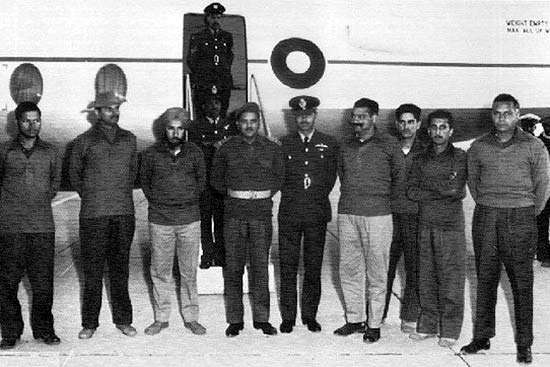
Prisoners of war at Delhi’s Palam airport after repatriation on January 22, 1966. The author is second from left
Fifty years ago, Cariappa’s Hunter aircraft got shot down over Pakistan. This is the fascinating story of the four months that followed…
by Kodendera ‘Nanda’ Cariappa
The second, or could it be called the third, Indo-Pak War was now nearly three weeks old, and there were no talks of a cease fire. To us in the field we did not really have a clear picture of how the war was going, or how either the Army or the Air Force was doing, on the ground or in the air. We knew of Air Force casualties more through the grapevine rather than through authentic sources. Our hope as young fighter pilots was to be detailed for as many operational missions as possible against the enemy. And of course, each of us hoped we would encounter him in the air and to shoot him down.
So it was on 22nd Sep ’65, I was detailed as the leader of what was meant to be a four-aircraft formation of Hunters. We took off at about 0830. Our target was enemy armour in an area some distance South of Lahore. Once the primary mission was accomplished, we could take on any ‘targets of opportunity’ that we might see. Now, in hindsight it would appear that our mission was not going to be as successful as one might have wished. At the take-off point final checks were carried out by the ground crew, rockets were ‘armed’ and the 30mm cannon were made ‘live’. This was when one of the aircraft had to return to dispersal because of a technical snag.
The first few minutes of the mission were over Indian territory, but as always, we were ‘keyed’ up and on the look out for enemy aircraft that might be on a sortie to attack our positions. As always happened, at least where I was concerned, there were butterflies in my stomach. The uncertainty of what awaited us across the border and what enemy opposition we might encounter was at the back of my mind. It was at this point that the pilot of the third aircraft found something seriously amiss with his aircraft and I ordered him to return to Base. And then there were two!
However, once over Pakistan, nothing mattered other than finding the enemy and doing what we could to destroy his armoured formations. We did not see too much by way of enemy activity other than a few dust columns that were kicked up by vehicles that were slow in following the standard dictum of ‘freezing’ in their tracks if enemy air was in the sky. We attacked what little we could see and then decided to return home. On the way back we spotted an enemy target that gave away its position by opening fire on us. We retaliated. Within moments of doing so my aircraft was hit by ground fire.
All the warning lights in my cockpit were illuminated, indicating that many systems and my controls had failed, and also to tell me that my aircraft was on fire. Shrapnel went through my cockpit and I found my controls jammed. My ‘wing-man’ called out on the radio that I was on fire and that I should abandon the aircraft. I acknowledged his transmission and ejected. All I can recall is my boots flying off and within seconds I was on the ground lying in a semi-supine position. Within moments I was surrounded by troops who ordered me to raise my hands in submission, and to stand up. I replied that I could not do so as I was hurting badly, and felt paralysed. The troops were in khaki uniform and for some unknown reason I thought they were Indian. At about that time I could hear artillery opening up and one of the troops said, “Those are your guns firing at us”.
I was a Prisoner of War!
The time was 0904 because my watch had stopped, presumably on impact with the ground. I was asked who I was and from where I had taken off. As per standard procedures, I rather parrot-like gave my ‘name, rank and number’. It was then that I was asked if I was related to General Cariappa. I feigned a faint because of the pain, or maybe I did pass out. The next thing I knew was that I was lying on a litter in the back of a jeep and was being questioned by a Brigadier.
After some first aid I was moved to a rear location, to a place called Luliani where for some time I was left on the floor awaiting treatment and then as it transpired, evacuation to a hospital. I have no recollections of that journey. When I did come to, I found myself in a hospital bed and in excruciating agony. This was the military hospital in Lahore. The following day I was taken to the operation theatre and was told the extent of my injuries. I was impressed by the number of doctors who had returned from abroad to be of service to their nation at this juncture in its history.
I stayed in hospital for about a week during which time General Musa the Pakistan Army Commander in Chief visited. He came to see me, knowing by now that I was General (KM) Cariappa’s son. He asked if there was anything I wanted. All I could think of was being with the other Indian prisoners of war. From Lahore I was flown to Rawalpindi and kept in the hospital there, and it was during this time that I was visited by President Ayub Khan’s son. Treatment and food in the hospital was good, yet being in solitary confinement I was hankering to be with the other Indians.
This happened soon enough and suddenly one fine morning I was discharged from the MH and moved blindfolded to what turned out to be a prison cell. Here I was given a pair of black armoured corps overalls, and a pair of rubber-soled slippers. It was by now almost mid-October with the winter chill beginning to manifest itself. There was one charpoy for furniture and nothing else. I was also given three typical army blankets; one served as the mattress and the other two as a covering. By day the outer wooden doors were closed, I was in darkness with no light penetrating, and by night they were kept open with the single dull electric bulb switched on.
If I wanted to use the toilet I would be taken blindfolded to the lavatory about 50 yards away. There the sentry would wait till I was through, and then would escort me back to my cell. It was here that a Major first interrogated me, and it was here that I really experienced the ‘fear of the unknown’ for the first time as a POW. There is no more frightening condition than being in solitary confinement. I was not subjected to ‘third degree’ treatment, but I was told that I had better answer all questions because if I did not, there would be no hesitation in ‘putting me away’!
I realized then that the standard ‘rank/name/number response would not help and so I did ‘reveal’ what I thought to be innocuous information. This lasted over a period of three days. During this tend days I was incarcerated in the cell I was fed thick wholesome ‘chappatis and dal’ twice a day. There would be a mug of sweet ‘langar’ tea at 0700 and again at 1500. ‘Lights on time’ was 1600. A few days later I was told that I would be moving to the main POW camp. I first moved to a transit camp in Rawalpindi itself where I was kept in ‘solitary’ again for two days. It was here that I met a Pakistan Army JCO who, having learned that I was my father’s son, came up to me and said he heard that I was in the Sadr Kothi (he meant the President’s home). I, of course, denied this.
A train journey to Dargai, throughout which I was blindfolded, to the main POW camp followed. Winston Churchill was supposed to have been billeted here too! Meeting with the 38 other Indian prisoners was a momentous occasion for me, who had, for the preceding six weeks been deprived of any form of company. I was the only airman with that group. I learned later that the others were kept in separate enclosures within in the same complex.
The next few days were filled with getting to know my mates, and settling into some kind routine. Soon thereafter, I joined the other airmen, who were Squadron Leaders Sikand and Pilloo Kakar, and Flt Lieutenants Mani Lowe, Lal Sadarangani, MV Singh and Vijay Mayadev. A third compound housed the twelve Sikh officers who had been segregated for political reasons. Our compound had a small forecourt about thirty feet long and some seven feet across. Then the billet that housed us comprised three rooms. One that had our seven charpoys packed closely together, a dry-toilet facility (more about this later) and our dining area.
We were given three blankets, and an olive green army pullover was all that we had to protect ourselves from the severe winter chill of the NWFP. As a result by 1700 hours we got into our beds and were regaled by stories and experiences by ‘Siki’ Sikand who seemingly had an endless fund of them. He often had us in splits of laughter! In the first week of November, quite inexplicably, Mani Lowe and I were told to ‘pack our bags’ as we were going “somewhere”. Blindfolded, we were put into a van and driven off to a place about two hours South from Dargai and put into two adjacent dank, cold and airless cells, similar to the ‘lock-up’ in our own Air Force Guardrooms.
The toilets were about fifty paces of so from our cells, and as was the practice, we would be blindfolded when being taken to and from there. We were not interrogated, and were unable to figure out as to why on earth we were separated from our mates. All we knew is that we were at an air force base because every evening and through the night we would hear the typical and unmistakable whine of Hercules aircraft starting up, taxiing and taking off. About ten days later we were returned to Dargai, much to our delight, and indeed relief.
The first Red Cross parcels came in on 7th Dec and our lot improved considerably. One packet that thrilled us was that the film star Asha Parekh had sent us dried fruit! Now, we were even provided with a quilt that was paid for from out of the approximately Rs 60 that was our entitlement as prisoners. The arrival of the ‘goodies’ from the Red Cross was an indication that our folks at home knew that we were alive!
Food was always the focus of attention. Breakfast was a boiled egg with three puris and a mug of tea. Lunch and dinner were always, monotonously identical; either lacy, glutinous “lady’s fingers” or well watered turnips to be eaten with chappatis and/or rice. We would be given a mug of tea at about 1500 hours and then we would play quoits for an hour or so. Once a week we had the luxury of a hot bath. Dinner would come by 1700 hrs after which Pilloo (Sqn Ldr Kakkar) would read to us from the Bhagavat Gita that we received with our Red Cross parcels.
Siki our ‘master chef’ was able to convince our ‘minders’ that we needed mustard oil to keep away the winter dryness from our skins. This then was used as a cooking medium and our dinner was a much more palatable meal with fried onions and some condiments being added. Dessert was usually a biscuit sandwich that had cocoa or melted chocolate providing the filling.
As 31st December approached we agreed that we must do something to celebrate New Year’s Eve. The first pre-requisite for a successful party was ‘hooch’! So, we decided to make some moonshine. The main ingredient would be methylated spirits to be purloined from the nursing orderly’s tray when he came every afternoon to dress MV’s wounds and mine. Our stratagem was to keep him distracted somehow, and for this Siki was particularly successful.
I cannot remember what excuse or reason we gave for asking for a pitcher, but we were given one. This was our ‘still’ into which put raisins, the bitter lemon (rind and all, and called for some unknown reason as “mitha”) that was provided as dessert and jaggery. We also added a few chappatis for good measure in the belief that the yeast would cause fermentation and therefore provide the desired ‘kick’ to our hooch. The ‘matka’ was then wrapped in a blanked and placed close to the fireplace where we hoped and believed its contents would mature!
Came New Year’s Eve, Dec 1965, the evening progressed as usual and we looked forward with eager anticipation to the dinner that Siki had planned. Dinner came at the usual time and then our chef got down to work. It is now almost 50 years since then, and I don’t remember too well all that we had to eat. But I do recall the unexpected arrival of the Camp Commandant who turned out to be a very pleasant chap. He wished us and then produced the unbelievable…some mutton, or, was it chicken? He left soon thereafter. We then drank our brew that tasted like nothing on earth, enjoyed a veritable repast, and talked late into the night.
Life carried on unchanging from day to day, when suddenly about the January 10 we received some intelligence that something was afoot. The source of our information was the sweeper who came in every morning to clean our ‘thunder boxes’. He was a Hindu, and therefore it appeared was sympathetic towards us. Given the menial and unpleasant nature of his duties it was not surprising that the guards accompanying him were reluctant to enter the toilets.
Siki ‘cashed’ in on this and wrapping his face securely to keep out the obnoxious smells, he would ‘chat up’ the sweeper. It was he who mentioned that in a few days a tailor would come to take our measurements, but he was unsure as to why. The tailor did arrive and within a few days we were outfitted with warm serge trousers and shirts, and even provided new olive-green pullovers. Events now moved fast, so fast that we did not realize we were being prepared for repatriation!
In fact, I don’t think we knew till the day of departure on 22 Jan 66. We were once again blindfolded, bundled into a vehicle and driven to Peshawar where we emplaned a Fokker F-27 that was going to Delhi to bring back the Pakistan COAS. We crossed the international border at approximately 0905, about the identical time that I was shot down exactly four months earlier.
Thus ended an unforgettable period in our lives. Siki retired as Air Marshal, Pilloo became a Wing Commander but was killed in an HF 24 accident. Lal Sadarangani, Mani Lowe and Vijay Mayadev left the Service as Wing Commanders and joined Air India. MV continued in uniform and retired as Air Commodore.
Will improve basic infrastructure to attract tourists in large numbers
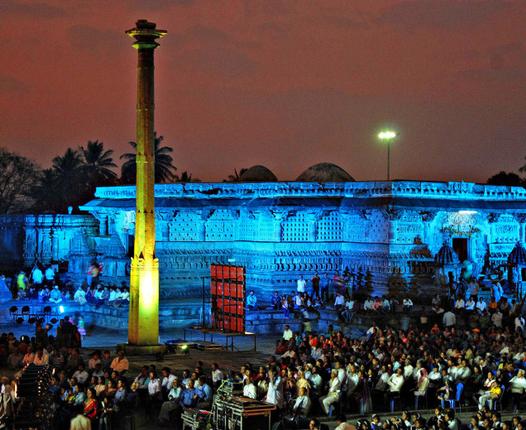
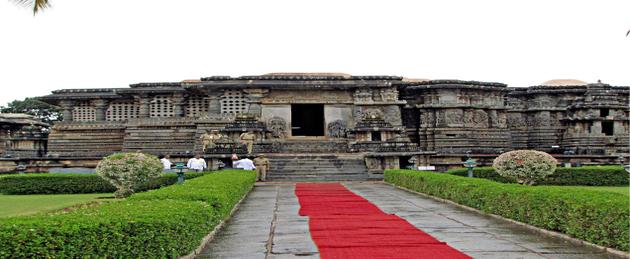
Belur and Halebid, two major tourism destinations in Hassan district, are expected to get a facelift following the Tourism Department’s initiative to involve non-governmental organisations in driving tourists to the State.
Coffee Day Enterprises Ltd. (CDEL) has shown interest to adopt the two tourism destinations, known for the Hoysala period temples, to improve basic infrastructure so as to attract tourists in big numbers.
The department launched the Adopt Tourist Destination programme in 2014. M.R. Prakash, Assistant Director of the department, told The Hindu on Tuesday that CDEL had shown interest to adopt Belur and Halebid.
“The company’s proposal is being examined by the department. The objective is to provide basic amenities such as drinking water, washrooms and toilets, and improve connectivity to the destinations,” said the officer.
When The Hindu contacted Devahuti, in-charge of media relations in CDEL, she said the company had shown interest to adopt the two places.
Details of the mode of developing these destinations will be made public later, she said.
“The CDEL has entered into an understanding with the Archaeological Survey of India and the Department of Tourism for infrastructure development in Belur and Halebid. The company is hoping to help in development work by building drinking water facilities, washrooms and toilets for tourists along with soft skill training programmes for tourist guides,” a note issued by the company said.
Belur and Halebid are widely known for the Hoysala sculptures. The Channakeshava temple in Belur (left) and the Hoysaleshwara temple in Halebidare famous tourist destinations.— File Photos: Prakash Hassan
However, the places lack basic amenities for tourists. The State government is making efforts to develop the place around Channakeshava Temple in Belur by acquiring private properties.
Similarly, in Halebid, tourists encounter problems of finding decent hotels.
“We can develop these centres with the help of private companies. Then, the number of those visiting these destinations will also increase,” Mr. Prakash added.
source: http://www.thehindu.com / The Hindu / Home> National> Karnataka / by Staff Correspondent / Hassan – August 26th, 2015
Kodava Samaja, Mysuru, has organised the annual Kail-Poldh festival get-together at Field Marshal K. M. Cariappa Community Hall in Vijayanagar I Stage here on Sept. 6.
Kambeyanda C. Biddappa, retired Senior Vice-President, ITC, will be the chief guest.
Mechanda M. Karumbaiah, President, Kodava Samaja, Mysuru, will preside.
The day-long programme from 9 am to 5 pm comprises Ayudha Pooja, Assembly, Sports and Games, Lucky Dip, felicitation to eminent Kodavas and distribution of scholarships to merit students.
In all, 35 scholarships will be awarded to Kodava students, who have studied in Mysuru and passed the respective exams. Children of members of the Samaja are eligible for scholarship irrespective of their place of study as also Kodava students who have studied in Mysuru.
Details of scholarship: Highest scorers in final exams of 7th std., SSLC, SSLC (English), SSLC (CBSE), SSLC (economically weaker section), PUC, BA., B.Com., B.Sc. (Comp. Sc., 1 Maths), BBM, MBA, Law, MA, MCom., MSc., (PCM,CBZ); BE, BE (Mech), BE (Arch), BE (Comp. Sc. BDS, MBBS, Dip. in Commercial (Secretarial) Practice, Best sports students in I and II PUC; CBSE XI and XII and ICSE I and II, SSLC (CBS E) highest marks in Science.
Those with Post-Graduation in Medicine, MD or MS, achievers in Sports at State-level, graduation in Home Science or Hotel Management are also eligible.
Applications for the award of scholarship and felicitation for achievers should be sent to the Hon. Secretary, Kodava Samaja, Mysuru before Sept.1 by 5 pm along with xerox copies of the relevant marks card and certificates. The family name and Phone number should be mentioned in the applications for scholarship, according to a press release from K. M. Belliappa, Hon.Secretary, Kodava Samaja, Mysuru.
source: http://www.starofmysore.com / Star of Mysore / Home> General News / Monday – August 24th, 2015
WELCOME. If you like what you see "SUBSCRIBE via EMAIL" to receive FREE regular UPDATES.
Read More »