‘Action plan being prepared to address water woes’

District-in-Charge Minister K J George has directed the officials to prepare an action plan for multi village drinking water scheme to supply water to Gonikoppa, Ponnampet in Virajpet and Chettalli in Somwarpet.

Speaking to media persons on Friday, he said that the plan will be chalked out to mitigate drinking water woes.

Tender has been invited for sand extraction, and sand will be available for public use in the next 15 days, he said. Only those government lands with five acres and above encroachments, are being cleared in the district.

Notices issued
Notices are being issued to those parties who have encroached less than five acre of land to ascertain whether they have submitted applications for regularisation of land.

He said that the district administration had been receiving complaints pertaining to unauthorised home stays in the district, and that all the home stay owners should register.

An action plan of Rs 5.4 crore has been prepared for the development of Raja Seat.
Measures will be taken to release funds for the construction of General K S Thimmaiah Memorial and Kalabhavana in the district.

Five acres of land has been identified for the construction of Zilla Panchayat Bhavan on the outskirts of city at Vidyanagara, the minister added.

George added that the Cabinet sub-committee to collect public opinion on Kasturirangan report will visit the district on January 31.

Deputy Commissioner Anurag Tewari, MLC T John and others were present.
DH News Service

source: http://www.deccanherald.com / Deccan Herald / Home> District / DHNS – Madikeri, January 17th, 2015

Recollections of a Communicator : General K. M. Cariappa made the Indian Army Truly Indian

On January 15, we will be observing Army Day with a ceremonial parade in the Delhi Cantonment. It was on this day, in 1949, when General Kodandera Madappa Cariappa took over as the first Indian Commander in Chief of the Indian Army from General Roy Butcher, a British Army Officer.

Many of us who had the opportunity of serving with the Indian Army had read about General Cariappa and the role he had played in consolidation of the Indian Army, establishing high traditions.

I first came into contact with him in 1958 when I was working as the Assistant Editor of the Sainik Samachar, the multi-lingual weekly journal of the Armed Forces, earlier known as the Fauji Akhbar, which enjoyed the status of being the premier journal available in the reading rooms for the soldiers.

A month after my taking over as the Assistant Editor, I was told to cover a meeting of the Ex-Servicemens’ Association which was being presided over by General Cariappa The meeting was being held at the National Stadium, near the India Gate in the Capital. I went to the venue about ten minutes earlier. I was introduced to General Cariappa. General Cariappa asked me my full name, where I came from and what was my educational and service background.

While making his initial statement, I was pleasantly surprised when he said that the Assistant Editor of the Fauji Akhbar was there, and mentioned that I was a post-graduate and that I would give good coverage for the meeting. He called me to sit by his side during the rest of the meeting.

When I left the meeting, he asked me to take interest in matters relating to retired soldiers. I was touched by his sense of involvement with the welfare of the troops.

The next encounter that I had with him was in 1963. I was posted in Jammu and Kashmir and had donned the uniform with the rank of a Captain.

My assignment was to cover the activities of the XV Corps-the troops on the Pathankot-Jammu-Srinagar-Leh-Chushul areas. I used to be on the road at least twenty days in a month, visiting Army units, or conducting senior journalists who were keen to observe and write how the Indian Army was being reorganised and re-equipped to face the Chinese in addition to the Pakistan Army. In the spring of 1963, I was asked to conduct B. G. Verghese who was then a senior correspondent of the Times of India to various units in Ladakh. I had arranged the itinerary for him, taking him from Leh to Chushul along the Indus, and driving up the Chang-la, the highest pass in the region. I had almost completed my task.

On the last morning, as I was getting ready to proceed with Verghese for the next appointment, the unit in which I was staying got a message that I should get in touch with the Divisional Headquarters. I rang up the General Staff Officer to find out what was the requirement. He heaved a sigh of relief and said that the Corps Commander, Lieutenant General Bikram Singh was in Leh and he wanted me around as General Cariappa was visiting the area.

I took George Verghese along with me and went to the Division Headquarters. I was ushered into the presence of Lt. Gen Bikram Singh, who was sitting on the lawns of the Alpha Mess, located near the Division Headquarters. He asked me what was I doing. I explained my assignment-that I was conducting a senior correspondent of the Times of India. He snapped back: “When the former Commander in Chief of the Indian Army is here, you have no business to muck around with civilians. Get out. You will get no facility from the Division and you may walk to Srinagar or wherever you want with that civilian”.

Crestfallen, I was climbing the steps back to the Mess, when I saw General Cariappa coming down. He said, Hey Rao, what are you doing here. I muttered that I was conducting a correspondent of the Times of India to brief him about the Army defences in Ladakh. General Cariappa, said good you are here. He patted my shoulder and introduced me to Lt. General Bikram Singh as a bright young Public Relations Officer.

Lt. General Bikram Singh nodded in acquaintance and told me to join him when the Commander-in-Chief was addressing the troops. Gone was his anger against me. Meanwhile, I arranged for an escort from the Divisional Headquarters for George Verghese. General Cariappa was from the Rajput Regiment, and so was Lt. Gen. Bikram Singh. The speech of General Cariappa was heard with rapt attention. It was not in chaste Hindustani, but very motivating for the soldiers.

He told the soldiers that he had brought with him Kala Mirch-black pepper-from Coorg which will keep them warm in the high altitude, and create the right mood to fight the Chinese. He went round the parade ground distributing black pepper to each row of soldiers. He asked them about their food, general comforts, whether they received letters from home-and when he met Sikhs and Punjabis, inquired whether they got mustard oil. He knew the habits of soldiers of the Indian Army.

After the function, I got myself dropped at the Signal Centre to file my report to Delhi. As I got down from the jeep, General Cariappa said he was going to visit Kargil and asked me whether I was coming. Lt. Gen. Bikram Singh said yes, and told me to file a good report.

Next day, we landed in a propeller driven aircraft at a makeshift airstrip at Kargil. On arrival at Kargil, General Cariappa addressed the troops more or less on the same lines as he did in Leh and finished the stock of black pepper that he had brought from Coorg.

I remember the little flutter in the Kargil mess that morning, when he asked for a ‘tailor kit’. He wanted thread and a needle. I managed it for him. He had a couple of buttons loose in his shirt. Patiently, he mended his shirt and got it pressed and wore it. All his clothes were in a small overnight bag. He was ‘properly dressed’ in a three-piece suit, when he sat down for his breakfast or dinner

It was during this tour with General Cariappa that I heard many stories about his contribution to the Army and, on the lighter side, about his Hindustani. The story was that when he addressed troops on August 15 in 1947, he told the soldiers: “Is waqt aap muft, ham muft, mulk muft hai.” For him the word muft meant ‘free’.

General Cariappa was the General Officer Commanding-in-Chief of the Western Command during the Jammu and Kashmir operations. General Roy Butcher, who was then the Commander in Chief, had tried his best to tie General Cariappa’s hands during the operations by not approving plans to evict Pakistani ‘raiders’ from some sensitive areas. General Cariappa, as GOC-in-C quietly decided to clear the Pakistani raiders from Jammu – Naushera axis. He was then fighting on two fronts, the Army Headquarters led by General Roy Butcher and the Pakistani Army led by General Messervy.

Only recently, British records of that period have been declassified. Not many know that General Roy Butcher was more loyal to the King of England than the Government of India. He used to send messages to the British Government through the British High Commissioner, over the head of the Defence Minister. He also advised the Indian Cabinet against launching the operation against the Nizam’s forces in Hyderabad.

He is reported to have said: “As your C-in-C, I ask you not to start the operations.” And he offered his resignation if his advice was not heeded. There was a general silence while a distressed and worried Jawaharlal Nehru looked around. Sardar Patel, who was the Home Minister, remarked: “You may resign, General Bucher, but the police action will start tomorrow.”

An angry Bucher stormed out of the meeting. All these indicated the importance for the Indian Army to have an Indian Army Chief. General Cariappa as Commander-in-Chief turned the imperial army into a national army. He raised the Brigade of Guards and the Parachute Regiments on an all-India caste composition and directed the raising of the National Cadet Corps and the Territorial Army.

General Cariappa was keen that Army Officers, on retirement, should have a say in the affairs of the nation. He did contest elections in Bombay, but lost. I last saw General Cariappa in 1986 when the rank of Field Marshal was conferred on him. When the order was read in the Rashtrapati Bhavan before the President Zail Singh handed over the baton, considering his age, he was offered a chair to sit down, but he preferred to stand-ramrod straight.

Not many remember that Field Marshal Ayub Khan served under General Cariappa in the British Indian Army. When his son Flt. Lt. K. C. “Nanda” Cariappa (who later rose to the rank of an Air Marshal) was taken prisoner after his Hunter aircraft was shot down during the 1965 war, Field Marshal Ayub Khan contacted General Cariappa in Mercara and offered to release his son.

The reply of General Cariappa was:”He is my son no longer… He is the child of this country, a soldier fighting for his motherland like a true patriot. My many thanks for your kind gesture, but I request you to release all or release none. Give him no special treatment”.

A great deal of credit goes to Field Marshal Cariappa to have made the Indian Army, truly Indian. Today, the nation can take pride in the role played by the Army in guarding it against external threats and insurgency promoted by hostile elements.

The views expressed in the above article are that of Mr. I. Ramamohan Rao, Former Principal Information Officer, Government of India. He can be reached on his e-mail: raoramamohan@hotmail.com.

source: http://www.business-standard.com / Business Standard / Home> News-ANI> National / by ANI / New Delhi – January 14th, 2015
SK Uthappa ready to make a big impression in Hockey India League

UthappaKF27jan2015

New Delhi:

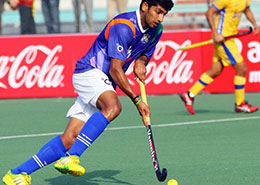
Amid the excitement ahead of the Hero Hockey India League 2015, India’s forward SK Uthappa is all set to rattle the grounds of the stadium with his impressive performance. Playing for Uttar Pradesh Wizards consecutively for the third time, Uthappa looks more confident on putting up a good show making it to the finals for his team this season.

In the first edition of the league, Uthappa without any failure showcased his talent and ability and helped the Uttar Pradesh-based franchisee claim the third spot win. However, in the second season of the league, the 23-year old player played with more maturity in order to materialize the given opportunities into goals. He got his name featured in the list of the ‘Man of the Match’ in the second season. In the same edition, he also got his name in the list of ‘Goal of the Match’ where the score was knotted to 1-1 against Delhi Waveriders.

With all the experience and skill set developed in the upcoming league, Uthappa is spotted sweating it out striving hard not to miss any scoring opportunities. With an aim to give a tough challenge to the opponents and come out as a stronger team, Uthappa will find support of the team’s strong forward- line. The forward position will see players like Tushar Khandker, Ramandeep Singh, Nikkin Thimmaiah and Jeroen Hertzberger to name a few.
Eagerly awaiting for the HHIL to begin, SK Uthappa said, “I am sure it will be a great season of Hero Hockey India League 2015. We not only have some of the best players from the world but also the top coaches. I am expecting that the team will do much well than what we did last season.”

Speaking further, he added, “I am looking to push a bit harder this year and make it to the top two and eventually emerge as the winners of the league. Not only it’s a good learning experience for us, but a great opportunity for every player to be a part of this league.”

The 3rd edition of the Hero Hockey India League will start from 22 January 2015. The opening day of the League will witness Kalinga Lancers taking on Ranchi Rays in Bhubaneswar.

Hero Hockey India League will be telecasted LIVE on Star Sports.

source: http://www.indiansportsnews.com / Indian Sports News / Home> Hockey / Wednesday – January 14th, 2015

The Laxmans’ sojourn in Madikeri

LaxmanKF27jan2015

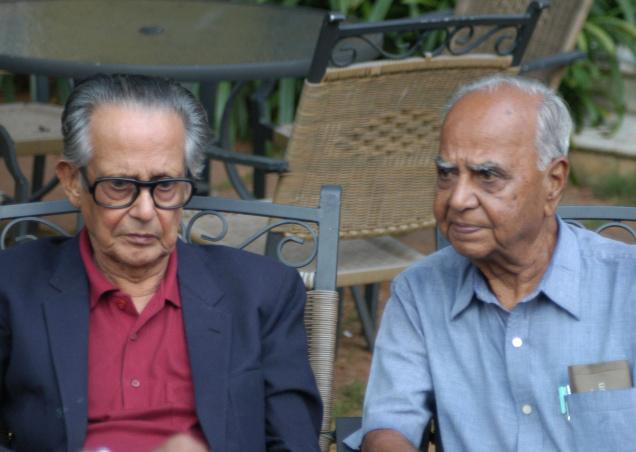
The day was cloudy and there was a light drizzle when R.K. Laxman and wife Kamala visited Madikeri city in October 2006. “It’s quite disappointing,” the eminent cartoonist had observed when this correspondent met him at a private resort, near Madikeri, in Kodagu district.

Perhaps, not many, were aware of the credentials of the man who visited the picturesque city, leaving the couple to enjoy a quiet stay at the resort. RK belongs to a rare genre of cartoonists who have stirred peoples’ imagination, inspiring myriad thoughts through his cartoons in a subtle yet satirical style.

Then 85-years-old, RK had told The Hindu that it was his third visit to Kodagu, but the inclement weather was an anti-climax. The couple had visited the pilgrim centre of Talacauvery, Omkareshwar temple in the city and the Golden Temple at Bylakuppe. A keen observer, he had also expressed displeasure over the poor road conditions in Kodagu.

His ‘Common Man’ cartoons had formed one of the main planks of the conversation where he quipped the “common man never gets into trouble, the common man is an eternal observer. He watches the happenings in society. He is omnipresent and omnipotent. He is joyous at times, and is disappointed watching developments in society on certain occasions”.

RK’s humility also came to the fore when he was asked whether he had any message for the people. “I have no message for the people, and I am not that big. I only take messages from them,” he had said.

Quote hangers for Laxman

He was an institution by himself and was an inspiration to many budding cartoonists. He had great wit and humour. His lines were eloquent which he used to bring out the best portraits. He came to the Indian Institute of Cartoonists in Bengaluru in 2009 and inaugurated an exhibition of his cartoons. Recently, we had an exhibition of his unpublished doodles. – V.G. Narendra, Managing Trustee, Indian Institute of Cartoonists

He had both a sense of humor and draftsmanship which made him stand apart. His cartoons were very elaborate and had a great amount of detailing. He was also a good speaker and one could sit through his lectures for hours together. – B.G. Gujjarappa, senior cartoonist

source: http://www.thehindu.com / The Hindu / Home> News> National> Karnataka / by K. Jeecan Chinnappa / Bengaluru – January 27th, 2015

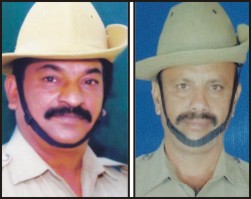
City Cops get President’s Medal

1. Ravindra. 2) Aiyanna

Mysuru :

Two Policemen from the city are among the 20 cops from the State, who have been conferred President’s Police Medal for meritorious service on the occasion of Republic Day yesterday.

Also, four other Police Officers from the State were conferred with the President’s medal for distinguished service.

B.M. Ravindra and N.U. Aiyanna, both Head Constables at 5th Battalion, KSRP Mysuru, are the city cops who have been conferred the Medal.

B.M. Ravindra, originally hailing from Napoklu in Madikeri Taluk, has been serving in the Department for over 30 years while Aiyanna, who hails from Kushalnagar in Kodagu district, is associated with the Department for over 34 years.

source: http://www.starofmysore.com / Star of Mysore / Home> General News / Tuesday – January 27th, 2015

Fancy dress contest, breaking pots add colour to Krishna Janmashtami

Sri Krishna janmashtami was celebrated with grandeur and religious fervour across the district on Sunday.

For the first time, the district administration organised the festivities at the Fort hall in Madikeri.

KrishnaKF27jan2015
Speaking on the occasion, Zilla Panchayat President Chodumada Shareen Subbaiah said that the preachings of Sri Krishna should be studied in depth to lead a life with harmony in society. There is a need to understand the preachings of Krishna.

Vice President Allaranda Beena Bollamma said that weaving harmony, peace, happiness and brotherhood is the need of hour to lead a good life.

Sankeerthana Das of ISKCON said “in the materialistic world we are forgetting ourselves. The internal peace is missing within us. We are not living for ourselves. Instead, we are living for others.” Deputy Commissioner said that all of us should be honest in our work.

Zilla Panchayat Standing Committee on Social Justice President S N Raja Rao also spoke.

Meanwhile, the little ones turned up as Lord Krishna and Gopikas fancy dress competition held as a part of Krishna Janmashtami celebrations at Omkara Sadana in Madikeri.

Janmashtami Acharana Samithi, Kaveri Kala Parishat and Kushalnagar Bhajan Mandali celebrated the festival at Government Model Primary School in Kushalnagar on Sunday. Nine-month-old child too participated in the fancy dress contest on the occasion.

Men and women enthusiastically participated in the competition of breaking the pot by tying a cloth on the eyes. Mosaru Kudike brought streets back to life. Six teams had taken part in the competition. Kanayya team of Somwarpet were successful in breaking the pot in 24 seconds by forming human pyramid and won Rs 5,000.

source: http://www.deccanherald.com / Deccan Herald / Home> District / DHNS – Madikeri, August 17th, 2014

German Tool maker Andreas Stihl reaches out to customers to strengthen R&D

Seen are (from left) Parind Prabhudesai, Managing Director, Andreas STIHL Pvt. Ltd; Norbert Pick, Board Member and Head of Marketing and Sales, Andreas Stihl, Germany; Uday Shankar, Founder, Aqua Services and Ranjit Patil, Marketing Manager, Andreas STIHL Pvt. Ltd., during their visit to Gonikoppal, Kodagu, on Jan. 13.

Gonikoppal (Kodagu) :

“Stihl is bringing advanced technology to users in India, helping them to be more productive and cost effective. Our products offer state-of-the-art features that help customers be more productive and cost effective,’’ said Norbert Pick, Board Member and Head of Marketing and Sales, Andreas Stihl, Germany, during an interaction with planters and farming fraternity at Kodagu on Jan. 13.

Andreas Stihl is a world leader in chainsaws and other hand-held power tools and Andreas Stihl Pvt. Ltd., is a wholly owned Indian subsidiary of Andreas Stihl, AG & CO KG, Germany.

Stihl is powered with a culture of innovation over the decades that has inspired over 2,000 patents. The products are innovative in design with low weight minimising the burden for user and the environment. A variety of equipment for all purposes come in various power outputs of 1.3 KW to 6.4KW.

Quoting Dr. Nikolas Stihl, Chairman, Advisory Board, on the company’s philosophy on quality, Pick said, “We are excellently positioned with our wide-range of products. We have substantially invested in Research and Development (R&D) with the focus on growth in production and distribution. We are keen on long term and organic worldwide growth.”

“India is a growing priority market for the Andreas Stihl group and we want to develop this market with our varied product offerings. The Indian subsidiary has been growing over 25 per cent consistently for the past five years,” Pick said.

“We at STIHL believe in listening to the market and today’s meet is one such initiative where we will take feedback from the end users to our R&D department for product improvement. India is very important growth market for the STIHL group and management is committed to invest more in terms of presence, service and new products into this market,’’ said Parind Prabhudesai, Managing Director, Andreas STIHL Pvt. Ltd.

Uday Shankar, Founder, Aqua Services, has been dealing with Stihl from 2002 even before the company started its India operations. Speaking about Stihl products, he said the products are extensively used in the region for agriculture, horticulture, plantation, nurseries and landscaping. Aqua Services has dealerships in Gonikoppal and Mysuru.

In India, Stihl offers many outdoor power tools. Among them are chainsaw, pole pruners, brush cutters, clearing saws, mist blower and hedge trimmers.

Many of these products are eligible for government subsidy in Karnataka.

source: http://www.starofmysore.com / Star of Mysore / Home> General News / Sunday, January 18th, 2015

Madikeri: Nothing Fishy! Captive-bred Pangasius Set to Find Big Market Share in Kodagu

Madikeri:

Pangasius is a genus of medium-large to very large shark catfishes native to freshwater in south and southeast Asia. They breed in all the important east-flowing rivers, from the Ganga to the Cauvery, mainly in their lower reaches.
They are currently being bred captively in cages in KRS reservoir near Mysuru. With a view to introducing the taste to the people of the district, an experimental sale was held on Friday. About 430 kgs were sold by noon. Buyers were seen standing a long queues from 10 am.

The sale was launched by zilla panchayat president Chodumada Shareen Subbaiah. She said that there was a great demand for fish in the district and therefore fish production should get all encouragement.

TMC agriculture and industry standing committee chairpeson T P Sandesh said that it was for the first time that Pangasius was being sold in the district. He suggested that the fish be made available on the various days of the week at different places where the weekly fair was held.

Mysuru region fisheries deputy director Ramakrishna informed that captive aquaculture was being undertaken in the KRS reservoir under the National Mission for Protein Supplements (NMPS). Pangasius and other species were being bred in two rows of 24 cages which have been installed in the reservoir.

Fisheries department joint director Gangadhar V Madikeri said that arrangements would be made to sell Pangasius fish on different days of the week wherever the weekly fair was held.

ZP vice president Allaranda Beena Bollamma, members Biddanda Usha Devamma, taluk panchayat president Kandanda Pratija Achappa, members Sabu Thimmaiah, Bollachattira Suresh, fisheries assistant director Darshan and others were present.

source: http://www.mangalorean.com / Mangalorean.com / Home> Broadcast> Madikeri / by Special Correspondent / Sunday – December 21st, 2014

A flying beetle in India threatens to push up latte prices

(Reuters) – It’s 10 o’clock in the morning and a dozen workers are uprooting coffee plants, piling them in the corner of a field at M.G. Bopanna’s plantation in southern India where they lie ready to be burned.

The plants are bursting with green cherries but inside their hard bark lurk destructive white stem borer beetles. The bushes have to be destroyed to prevent the tiny winged creature from threatening Bopanna’s entire crop of arabica coffee.

The beetle, which bores through plants’ bark and feeds on their stems, is thriving this year due to unusually warm weather and scant rains in arabica growing areas in India, the world’s sixth biggest coffee producer.

If the hot spell continues and the pest continues to spread, India’s coffee crop could fall to its lowest in 17 years when the harvest starts in October, pushing up global prices that are already rallying due to drought in top exporter Brazil.

The damage caused by the beetles is so severe that Bopanna has hired an excavator to uproot affected bushes on his 63 acre plantation at the hill station in the tropical forest of the Western Ghats, west of high-tech hub Bangalore.

“Every time we think we have uprooted all the infected plants, then after a few weeks we find more,” says Bopanna, 69, who has tended the plantation bought by his father for nearly four decades.

“Earlier whenever there was an outbreak, we used to uproot five to 10 plants per acre. This year I have uprooted more than 200 plants per acre,” he said.

There is no effective pesticide to control white stem borers, so the state-run Coffee Board advises farmers to uproot and burn infested plants to limit their spread.

“You may take all precautions, but if your neighbour is lethargic then white stem borers will fly from your neighbour’s plantation,” said N. Bose Mandanna, a grower from Madikeri who has removed all affected plants from his 34 acre plantation, five kilometres west of Bopanna’s field.

SCANT RAIN

In most years heavy rainfalls and low temperatures restrict the spread of the white stem borer. But this year southern Karnataka state’s Kodagu and Chikmagalur districts, which account for two-third of India’s total coffee production, have received half the usual rainfall since the start of monsoon season on June 1.

The state run weather department said earlier this month that rainfall in July and August is expected to remain below average.

“The pest infestation will rise quickly if rainfall remains subdued in the next few weeks,” says Mandanna, a fourth-generation arabica coffee planter.

India’s arabica coffee production could drop as much as 20 percent in the 2014/15 season to 60,000-70,000 tonnes, said a spokesman at Ruchi Soya, a coffee exporter.

That would pull down India’s total coffee output, three quarters of which is exported, to 260,000 tonnes, the lowest level since 1997/98, estimates Ruchi Soya.

Italy, Germany and Belgium are the main buyers of Indian coffee and usually pay a premium for it over global prices. Starbucks, J.M. Smucker Co and Kraft Foods Group are leading buyers of arabica.

ARABICA TO ROBUSTA

Bopanna and other farmers are replacing affected plants with new seedlings, cultivating instead a robusta variety that is cheaper than arabica but resistant to white-stem borer.

“I would love to have an entire coffee plantation with arabica, but I have to consider earnings as well. How I would pay workers if the pest damages my entire arabica crop?” asks Bopanna, who is planning to convert 16 acres to robusta this year.

Arabica coffee is typically roasted and ground for brewing and can range widely in quality, with some reaching the highest levels. Robusta, on the other hand, is more bitter and either processed into instant coffee or added to a roasted blend to reduce the cost.

India, which started coffee cultivation in 1670 with seven smuggled beans, produced mainly arabica until a few decades ago. Now arabica accounts for just one third of India’s total output compared to 82 percent in 1950.

That share will fall further unless the Coffee Board develops new arabica varieties that can withstand white stem borer, says Marvin Rodrigues, former chairman of the Karnataka Planters’ Association.

“Farmers can’t absorb shocks of white stem borer,” said Rodrigues said.

“It is not hurting just one year’s income; it is squeezing four year’s earnings.”

Coffee seedlings start flowering and produce cherries only after four to five years, meaning the impact of this year’s pest infestation will persist in India’s arabica production for at least that long.

Besides, arabica is also a labour-intensive crop at a time when wages are rising quickly due to labour shortages yet yields around half the cherries of robusta.

“Though robusta prices are lower than arabica, it is economical to have robusta. You can recover at least input cost even during bad year,” said Sundaram Ramasamy, executive director at Amrutha Coffee.

For Bopanna though, this year’s crop will be costly.

“Hopes of a bumper crop flourished with widespread flowering in March, but white stem borer ruined those expectations,” he said.

“I was expecting a crop of 15 tonnes, now harvesting 10 tonnes seems difficult.” (Reporting by Rajendra Jadhav; Editing by Rachel Armstrong)

source: http://www.reuters.com / Reuters – edition U.S. / Home / Madikeri , India / by Rajendra Jadhav / June 23rd, 2014

Chikka among 4 Indians to make Asian Tour cards

Four Indians, led by S Chikkrangappa, earned their Asian Tour cards while Swede Daniel Chopra topped the Asian Tour Qualifying School Final Stage presented by Sports Authority of Thailand today.

ChikkaBF24Jan2015

While Chikka (68), the leader after the second round was tied fourth at nine-under 276, former winner on Asian Tour, Himmat Rai (72) and young Angad Cheema (72) qualified in tied 12th place at five-under 280 each.

The fourth Indian to make the grade was another young talent, Abhijit Chadha (71) at one-under 284 in tied 37th place.

Amardip Malik (67) at two-over 287 missed out in 62nd place as did Khalin Joshi (74) at four-over 289 in tied 77th place and former Hero Indian Open winner, C Muniyappa faltered in the final round with a 76 to end at five-over 290 in tied 84th place.

Chopra, a two-time winner on PGA Tour and a former winner on Asian Tour carded a final round of three-under 68 and finished at 15-under 270 to top the Qualifying School.

Chopra, who played most of his golf in the formative years in India, outclassed the field by signing for a three-under-par 68 to win by four shots on 15-under-par 270 total at the Springfield Royal Golf Club.

Finland’s Kalle Samooja, a former member of the Asian Tour, returned with the day’s lowest round of 65 to take second place while Thailand’s Phiphatphong Naewsuk settled one shot back in third on 275 at the Qualifying School.

Himmat Rai also returned to the Tour by finishing 12th, while Angad Cheema and Abhijit Chadha made the card for the first time by finishing inside top-40 and ties.

Chopra, who fired six birdies against three bogeys, shrugged off the final round pressure and credited his experience for a remarkable performance this week.

Chikka made up for the disappointment of missing out on his Tour card by one shot last year by putting up a remarkable display in what was only his second attempt at the Qualifying School.

“This means a lot to me. I really worked hard for this. It took me a year to come back again and finally get my Tour card. It has a tough week.
Missing out last year was really emotional for me but it has made me a stronger person. My attitude in my game got better and I am really happy I made it,” said the 21-year-old Indian.

All Qualifying School entrants will be eligible to compete on the burgeoning ADT, which was inaugurated in 2010 as a gateway to the premier Asian Tour.

With the Olympic Games looming in 2016 where golf will be reintroduced as a medal sport, players in the region could earn their spots in Rio de Janeiro by earning Official World Golf Ranking points through the Asian Tour and ADT.

source: http://www.deccanherald.com / Deccan Herald / Home> Sports / by Hua Hin (Thailand) / PTI / January 24th, 2015