The legend of the hills

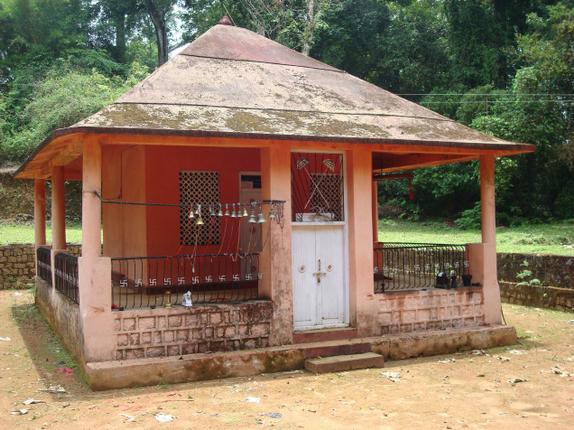
Panagalammai temple. / Photo: Lakshmi Sharath / The Hindu

Who is Iguthuppa, the lord who can’t bear to see anyone hungry?

Our journey into Coorg’s heritage takes us on a spiritual quest — atop mountains, inside forests and coffee estates and by the riverside. These are temples etched in the cultural landscape of the Kodavas, although some of them never find mention in any religious texts.

It is misty as we climb a small hilltop to the Padi Iguthuppa temple in Kakkabe. The bells toll the moment we enter the temple, as a gentle breeze blows from the rolling hills around.

The priest Kush Bhat welcomes us and insists we stay back for lunch. “No one comes to the Iguthuppa temple and goes away without lunch,” he says. For, Iguthappa means giver of food, and the deity is a form of Subramanya or Muruga, son of Shiva.

Legend has it that centuries ago, Shiva and Subramanya came here, and loved the hills so much that they decided to settle down here. The temple is known to feed every visitor, and all pilgrims offer food, not money, to the deity. “Iguthappa told the people of Coorg that they would never go hungry as long as he was there and if they accepted him as God,” explains Kush Bhat.

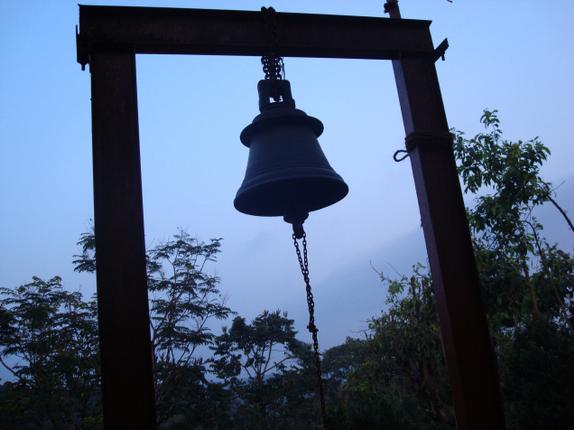
The bell tolls at Iguthuppa temple. /  Photo: Lakshmi Sharath / The Hindu
The bell tolls at Iguthuppa temple. / Photo: Lakshmi Sharath / The Hindu

Now, every festival of the Kodavas starts with an invocation to Iguthappa; the most important festival of the temple is Tulabharam.

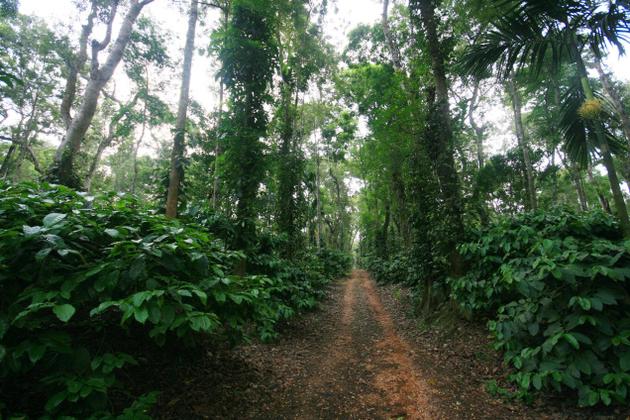
We go to the another Iguthappa temple in Naljee, inside a forest through a lush coffee plantation. There is not a soul around, and it is peaceful to just listen to the sounds of the forest.

These monuments are probably lost to the average tourist, but one finds sanctity in the silence around them.

source: http://www.thehindu.com / The Hindu / Home> Features> Friday Review> History & Culture / by Lakshmi Sharath / August 08th, 2010

Coffee in Coorg

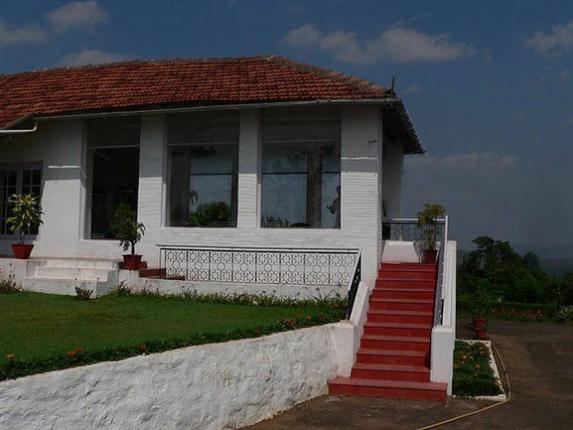
Cottabetta Bungalow. Tata owns seven bungalows in Coorg, and every bungalow is set amidst a 1,000 acre plantation.

COTTABETTA BUNGALOW

SOUTH KODAGU, KARNATAKA

USP: Live the planter’s life

There is freshness in the crisp air caressing your face. Picture-postcard greenery fills your senses. Add to it a welcome shower. There is magic in Coorg, the coffee country.

SMELL THE BEANS At Cottabetta Bungalow. Photos: Special Arrangement

The escape to the Tata plantation coffee trails in Coorg during the monsoon turns out to be a bonanza. After a six-hour drive from Bangalore, past the Mysore Highway, Ranganathittu bird sanctuary, bamboo forests, cinnamon trees interspersed with teak trees on which pepper vines climb to great heights, and the ubiquitous coffee plantations, we reach Tata’s bungalow in Cottabetta (meaning cold mountain).

Tata owns seven bungalows in Coorg, and every bungalow is set amidst a 1,000 acre plantation. The three-bedroom and five-bedroom bungalows, occupied by the managers of Tata, have been converted into cottages, superior, luxury and heritage rooms and heritage suites. “The bungalows went vacant after the managers took VRS. As the butlers, cooks and gardeners continued working to maintain the bungalows, our management came up with the idea of homestays,” says K.C. Poovaiah, head of Plantation Trails, Tata Coffee.

Once occupied by British planters, the bungalows are more than 100 years old, but modified suitably for modern-day needs. Every bungalow is built on a higher elevation, overlooking the mountains and the plantations. Cottabetta is one of them. And, what a view! The majestic mountains open up — on the south is Kerala and to the North is Periyapatna, Kushal Nagar and the Madikeri hills.

Once occupied by British planters, the bungalows are more than 100 years old, but modified suitably for modern-day needs.

As you take in the picturesque landscape from the portico, a curved road amidst the Tithimathi forests catches your eye. “It is a part of the Mysore Road,” Poovaiah explains. “When the British planters used to drive down, they would dim and dip the headlights at this point to alert the cooks.”

I check into one of the luxury rooms — the decoration is minimal but it has the comfort of a home. However, the bathroom is lavish with a bath tub. And, there is a beautiful balcony to sit and soak in the silence.

Barbets, drongos, golden orioles, parakeets, red whiskered bulbuls, flower peckers and sunbirds flutter by and feast on the jamuns, guavas, chikkus, mangoes and gooseberries, the inter-crops supported by the plantations.

Our tour of the bungalows begin with Woshulli, known for the spectacular view it offers of the Durbeen (binoculars) Road snaking through the plantations. (Vishal Bhardwaj has shot here for his new film “Saat Khoon Maaf”, starring Neil Nitin Mukesh, Priyanka Chopra and John Abraham.)

At the manicured 25-acre, nine-hole golf course in Polibetta, it is monsoon magic again. As it buckets down, we take cover under the majestic ficus tree, watch the rain pour down in sheets and sprint back to the car.

Then, we set off to Surgi bungalow and the plantation trail at Taneerhulla and Woshulli plantations spread across a sprawling 1,340 acres. “We get tonnes of litchis every year,” says plantation guide M.K. Umesh, pointing to the giant litchi tree (planted by the British) at the bungalow.

Umesh peppers the trail with scary elephant stories, and we stop at intervals to touch and smell coffee beans, pepper and vanilla. The Robusta coffee bushes here are 130 years old. Back at the bungalow, biting into crisp, hot onion pakodas served by the courteous staff, sipping coffee and watching the mist-capped hills is just the perfect way to end a beautiful outing in the hills.

source: http://www.thehindu.com / The Hindu / Home> Features> Metroplus> Travel / by K. Jeshi / August 26th, 2010

The pulse of Pollibetta

PollibettaKF12nov2014

The most conspicuous thing to note about Pollibetta, deep in the heart of Coorg, South-West of Bangalore, is that there is absolutely nothing to do in this town.

Ask any inhabitant or a visitor and you see him struggle to list out the usual touristy stuff and happening places that are there to see. This was precisely the reason why this town had been highly recommended and also why we had motored down all the way from Bangalore, 250 km away.

We wanted to relish the mountain fresh air, inhale the invigorating aroma of coffee and pepper, and to be amidst misty hills, sprawling coffee plantations and breathtaking landscapes. This was the way to experience Coorg without the crowds.

It was dark by the time we took the curved road through the Tithimathi forests to arrive at the centre of the town. After a six-hour drive from Bangalore, past the Mysore Highway, through bamboo forests, silver oak trees interspersed with teak trees and the ubiquitous coffee plantations, we reached Pollibetta’s main road.

A few shops were still open on (what, in the usual hill-station jargon, would be termed the Mall Road) the main road where all tourists and town folk converge for their evening stroll. Only on this road there were hardly any folks but we did manage to find somebody to guide us to our destination – the Bamboo Club.

This southern part of Coorg was known earlier as the Bamboo District, and so, the club started by coffee planters in keeping with the British tradition of establishing a club wherever they resided, became the Bamboo Club, a ‘Little England’ where they could meet, play games, dance and party to overcome their nostalgia for home.

The club, which continues to be a home-away-from-home for today’s members was to be our abode for the duration of our stay at Pollibetta. True to club traditions, we were handed a strict dress code, after conforming to which, we made our way to the club dining room.

A three-course dinner served by uniformed attendants later, we turned in for a restful sleep, tired after our journey through the plantations and forest trails that were waiting to be discovered at break of day. We woke the next morning to the chatter of birds and to see through the windows, acres and acres of coffee plantations interspersed with tall gigantic silver oak trees. From the beautiful balcony, meant to sit at and soak in the ambience, we could see several varieties of bamboo forests with myriad butterflies of striking colours darting here and there.

We had to choose from a number of recreational activities that included a safari through coffee plantations, nature walks, bird watching and trekking. Instead, we chose to visit a temple. One of the several dotting the cultural landscape, this was devoted to Lord Ganapathy. We had to drive through a lush coffee plantation, as the temple was situated inside the forest.

The architecture and layout were relatively modern, except for the sanctum sanctorum which was laid out in traditional temple style. The gopuram was positioned with sculptures culled from mythology.

There was not a soul around, and it was peaceful to just listen to the sounds of the forest. As typical city dwellers used to the din of the metro living, we could not
immediately adjust to the pace of Polli-betta life and so, as to do something, we decided to go on a tour of the Raj-era estate bungalows that dot the plantations.

Once occupied by British coffee planters, the bungalows are more than 100 years old. Every bungalow was built on an elevation, overlooking the mountains and the
plantations so that the British planters could lead lives of perfect tranquillity
waited upon by butlers, cooks and gardeners. Later, managers of the Tata group occupied these heritage bungalows for a while, till the management came up with the idea of homestays. Talk about the perks of a job!

We first visited the Woshully Estate Bungalow where the European planters had first met in the 1880s to establish the Bamboo Club. The view of plantations, from here, was so spectacular that we were not surprised the bollywood film Saat Khoon Maaf starring Neil Nitin Mukesh, Priyanka Chopra and John Abraham was shot here.

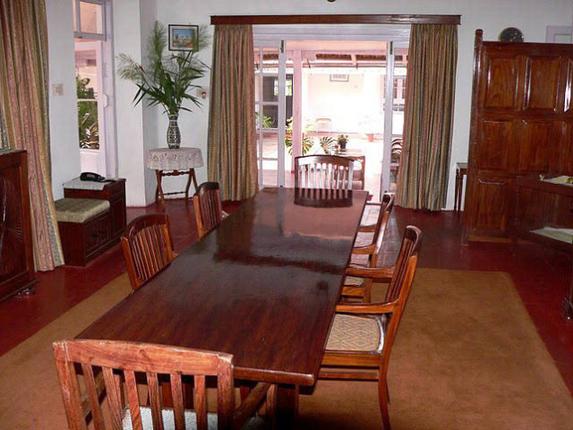
Another heritage bungalow we visited was the Thaneerhulla Bungalow, so known because of the beautiful water pond that’s just a short walk away. We could imagine the bullock carts and the horse-drawn carriages emptying the planters onto the bungalow’s patio in a bygone era. With antiquated wooden floors and a cosy fire place, this bungalow had an old world charm about it.

There were several others we could see, but we decided to visit only the Cottabetta Bungalow. The freshness of the crisp air caressed our faces picture-postcard
greenery filled our sight. The majestic mountains seemed to open up from the bungalow’s veranda — on the south was Kerala and to the North, Kushal Nagar and the Madikeri hills.

There was a hill we wanted to climb where porcupines inhabited the area
earlier. The driveway was quite challenging. The slope was so steep that our car’s engine roared, coughed and spluttered in protest, but it was worth it.

Back at the club, biting into crisp, hot onion pakoras, sipping coffee and
viewing the mist-capped hills was just the perfect way to end a beautiful outing in the forests, while narbets, drongos, parakeets, bulbuls, flower peckers and sunbirds flurried by. It seemed like there was not much to do apart from lounging around in the bungalow, and yet, there was so much to soak in.

source: http://www.deccanherald.com / Deccan Herald / Home> Supplements> Spectrum / by Dipika Priyan Naik, Bangalore / DHNS – November 11th, 2014
MoEF gives clearance for Kushalnagar-Madikeri railway line survey

The Mysore-Madikeri railway line project has inched a step forward with the Ministry of Environment and Forests (MoEF) issuing clearance for the survey work between Kushalanagar and Madikeri.

This was disclosed by the railway officials at the Divisional level Rail Users Consultative Committee meeting on Wednesday. The environmental clearance was received last week and the authorities plan to complete the survey and submit the report to the Railway Board by March 31st, 2015.

The preliminary engineering-cum-traffic survey for the proposed railway line was launched in December 2011 but was taken up only between Mysore to Kushalnagar and the partial survey report was submitted to the Railway Board. Though the project was shelved by the Railway Board on grounds of commercial unviability, the State Government has evinced interest in the project and has agreed to take it up on a cost-sharing basis apart from providing land to the railways.

The first phase of the project entails providing railway link between Mysore and Kushanlagar at a cost of Rs.660 crore and would also connect Hunsur and Periyapatana.

Interestingly, the project was included in the Railway Budget 2010-11 under the socially desirable rail connectivity and the first proposal for providing a rail link between Mysore and Madikeri was mooted in 1881-82, according to the Mysore Gazetteer.

Divisional Railway Manager Mr. Rajkumar Lal, Senior Divisional Commercial Manager Mr.Anil Kumar, senior officials of different departments from the Railways, stakeholders from various districts coming under Mysore Railway Division were present.

source: http://www.thehindu.com / The Hindu / Home> News> National> Karnataka / by R. Krishna Kumar / Mysuru – November 05th, 2014

Starbucks sources from Tata Coffee for Asia, US markets

Tata Starbucks Ltd, the 50:50 joint venture of US beverage chain Stabucks with Tata Global Beverages, plans to source more coffee from Tata Group company Tata Coffee, company officials said in a statement on Tuesday.

CoffeeCupKF11nov2014

To mark the company’s second anniversary in India, Tata Starbucks launched a locally sourced, roasted and packaged arabica blend, ‘Starbucks India Estates Blend’, in select Starbucks stores in Asia as well as online in the United States.

“We will see such initiatives only growing in the future, displaying the strong unity between Starbucks and Tata Coffee. It is a reflection of the shared commitment between Starbucks and Tata Coffee to develop and promote Indian-grown arabica coffees,” Avani Davda, chief executive officer, Tata Starbucks Limited said in a statement.

The arabica beans from Tata Coffee have been selected by Starbucks coffee experts from Tata Coffee’s estates across Coorg and Chikmagalur, the birth place of coffee in India. The blend has been named to represent the origin of the coffee and the packaging has been carefully created to reflect traditional Indian designs, the company said.

“This commitment to highlighting India’s rich coffee heritage, builds on the strong growth of 59 Starbucks stores across six cities and more than 1,000 passionate partners (employees) in India,” John Culver, group president, Starbucks China and Asia Pacific, Channel Development and Emerging Brands, said.

Starbucks entered the Indian market in October 2012 and currently operates 59 stores in India across Mumbai, Delhi NCR, Pune, Bangalore, Chennai and Hyderabad.

source: http://www.deccanherald.com / Deccan Herald / Home> Business / DHNS – Bangalore, November 04th, 2014

Jamma Bane issue will be resolved soon : CM

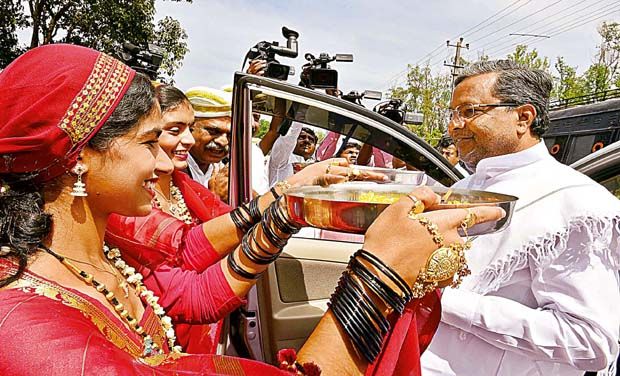
CM Siddharamaiah, who was in Madikeri yesterday, was felicitated with a traditional Kodava headgear and Odi Kathi by Kodava Sahitya Academy President B.S. Thamaiah.

Madikeri :

The government, which has made several amendments in laws regarding the Jamma Bane issue in Kodagu, will soon resolve the issue after holding talks with stake holders and officials of the Revenue Department, declared Chief Minister Siddharamaiah here yesterday.

He was speaking after inaugurating the newly built Rs. 14.44 crore District Administration Complex and laying of foundation stone for several developmental works at an estimated cost of Rs. 26.14 crore at the Gandhi Maidan here.

Continuing, Siddharamaiah said that the new rule regarding settlement of the Jamma Bane issue, as proposed by former Speaker K.G. Bopaiah while he was in office, had already been ratified by the President of India and added that his Government was committed to resolve the issue, irrespective of the opinion of the Revenue Department.

Giving a piece of advice to officials, the CM said that failing to fulfil the aspirations of the people was as criminal an act as accepting bribes. He also instructed the officials to address the grievances of the people by utilising various facilities for smooth functioning of the offices.

Speaking on the controversial High Tension power-line passing through parts of Kodagu, the CM said that the three-member panel formed to look into the matter had submitted its report and added that the issue would be resolved after holding talks with farmers of the district.

Promises fulfilled: “Within 17 months of assuming office, my government has implemented as many as 59 of the 165 programmes announced in our manifesto for election to Assembly,” Siddharamaiah claimed and added that his government had waived off Rs. 2,500 loans taken by the farmers including an interest amount of Rs. 1,000 crore.

Website launched: Siddharamaiah also launched a website of Karnataka Arabhashe Sahitya Academy on the occasion.

source: http://www.starofmysore.com / Star of Mysore / Home> General News / Tuesday, November 04th, 2014

CM inaugurates new DC office complex at Madikeri

SiddaramaiahKF08nov2014

It has been constructed at a cost of Rs. 14.43 crore

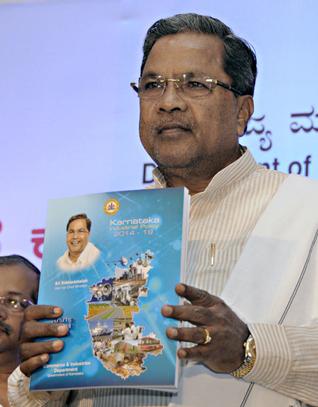
Chief Minister Siddaramaiah on Monday promised the people of Kodagu that his government is committed to resolving their various issues.

Mr. Siddaramaiah was speaking after inaugurating the new Deputy Commissioner’s office complex constructed at a cost of Rs. 14.43 crore and laying the foundation stone for a slew of development projects, estimated to cost Rs. 32.39 crore.

The Chief Minister said that an action plan to clean the Cauvery river, which was increasingly being polluted, was in the offing. The action plan would be on the lines of Ganga Action Plan. He also assured the people that an overpass would be constructed at Bhagamandala to help people cross over during floods, which was a long-pending demand of local community.

Emphasising the importance of road connectivity, Mr. Siddaramaiah said, he would increase the allocation and grants for road repair work in the district. Referring to the controversy and lingering confusion over Jamma Bane land, Mr. Siddaramaiah said the government had amended the law and it would be enacted in due course.

On the man-elephant conflict, which is rampant in the region, the Chief Minister said the government had earmarked Rs. 212 crore in the budget for the purpose and would be utilised in areas where the conflict was high.

Referring to coffee growers’ problems, the Chief Minister said that the government had released compensation based on the Coffee Board’s report last year and would follow suit this year as well.

He referred to the Kasturirangan Report on Western Ghats conservation including Kodagu and other regions and said his government was committed to upholding the interests of local people.

The Chief Minister distributed benefits of various government programmes among the beneficiaries besides launching the virtual guide facility of the Tourism Department.

Review meeting
The Chief Minister conducted a district development review programme at the new complex and instructed the Revenue Department officials to issue Scheduled Tribe certificate to all Kurubas in Kodagu district. The government had already issued a directive to this effect and covers Jenu Kurubas, Betta Kurubas, Kadu Kurubas, Halumatha Kurubas, he said.

K.G. Bopaiah, Virajpet MLA, drew the attention of the Chief Minister to drinking water problem, power, housing and other related issues in the district. District in-charge Minister K.J. George, Revenue Minister V. Srinivas Prasad, PWD Minister H.C.Mahadevappa were among those present.

source: http://www.thehindu.com / The Hindu / Home> News> National> Karnataka / by Special Correspondent / Mysuru – November 04th, 2014

Like Ganga, like Cauvery: Chief Minister Siddaramaiah

Chief Minister Siddaramaiah being greeted in traditional style on his arrival in Kodagu to launch developmental projects on Monday

Mysuru:

The State will soon evolve a plan of action on the model of that for River Ganga, to purify Cauvery river water which is getting polluted with every passing day, said Chief Minister, Siddaramaiah at Madikeri, here on Monday.

Speaking to press persons, Mr Siddaramaiah, said, Cauvery is not just the source of drinking water for Bengaluru and other cities in Karnataka but the lifeline for neighboring States like Kerala, Tamil Nadu and Puducherry. ‘Hence the State will take necessary action to ensure its cleanliness,” he said.

He reiterated that the State has already opposed the Union government’s proposal to include the eco sensitive Western Ghats in the UNESCO’s list of World Heritage sites.

The State Government is very much committed to honor local sentiments in this regard, he said.

The Chief Minister also said that, the State government is evolving a permanent solution for the elephant attacks, for which the government has allocated 212 Crores in the current budget. The State has already released 58 crores for the purpose.

Barricades will be built alongside railway tracks across the forests to prevent elephant deaths, he said.

Mr Siddaramaiah also said, that among 22,000 vacant posts in the state police department, his government is committed to fill 11,000 posts in phases in the coming years.

Speaking after inaugurating the District Administration Complex in Kodagu worth Rs 14.44 Crores and laying foundation stones for various developmental projects at Gandhi Maidaan (Grounds) at Madikeri, Mr Siddaramaiah said, “Accepting a bribe to do the government’s work by government officials by itself is not corruption, but creating undue delay to get bribes amounts to corruption which every government servant should remember. Government’s work is God’s work’” he reminded.

source: http://www.deccanchronicle.com / Deccan Chronicle / Home> Nation> Current Affairs / DC / Shilpa P / November 04th, 2014

Chikkarangappa rallies to clinch crown

Success at home for youngster as overnight leader Abhishek Jha falters in final round

ChikkaKF07nov2014

Abhishek Jha suffered a severe bout of final-round nerves while a tenacious S Chikkarangappa scripted a sensational fightback to emerge champion in the inaugural Take Solutions India Masters here on Saturday.

Leading by a whopping six shots overnight, Jha appeared completely beset by stage fright as he reserved his worst for the last, carding a disastrous three-over 75 to end runner-up in painful fashion in front of his home crowd at the Eagleton Golf Resort.

The crowd, whose loyalties were divided all day with two homegrown boys slugging it out for supremacy in the Asian Development Tour event, had plenty to cheer about as well with Chikkarangappa carding a brilliant five-under 67 to total 270 and score an out-of-nowhere two-shot victory.

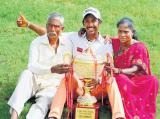
“I won my first junior and amateur titles here but I’ve always come short in a pro tournament,” said a delighted Chikkarangappa, watched by his parents, after pocketing $12,250 (approx Rs 7.5 lakh). “To finally get a pro win at your home course is something amazing. I could not sleep until 2.30 in the morning because of the injury I suffered in the third round. But all that pain has vanished with this victory that I’d been dreaming of.”

Although just 21 and six years younger to Jha, Chikkarangappa is miles ahead of his practice partner and friend in terms of top-level experience and that was what proved to be the difference in the end. While Chikkarangappa conjured all his experience in rising to the challenge, Jha, playing as a final-round leader for the first time in four years, was totally overwhelmed by the occasion, his game collapsing amidst the tension he brought upon himself.

Things started to unfold as early as in the third hole itself when Chikkarangappa nailed a 25-footer birdie and Jha three-putted as the lead was cut short to four. That poor putt seemed to have an immediate bearing as Jha found the woods on the par-5 fourth hole, from where he could only bogey at best.

Chikkarangappa then birdied the eighth hole, draining a 10-footer as he turned in just two strokes behind Jha. Both birdied the 10th before Jha dropped a shot again on the 12th, the par-putt agonisingly lipping out. Chikkarangappa brought himself level with Jha on the 15th after pulling off a stunning 35-foot birdie putt.

That scorcher appeared to knock the stuffing out of Jha, who picked up a double bogey on the 16th. He drove the ball next to a banyan tree, hit it to the greenside rough with his second attempt before duffing it on the third. He then chipped way over the pin, two-putting from there as Chikkarangappa, aware the title was just handed over to him on a platter, coolly parred to take a two-shot lead.

Chikkarangappa birdied the penultimate hole and although Jha too matched his friend, it was way too late as the former completed a brilliant win.
“I wish I could play the final round again,” said a disappointed Jha. “I just suffered from final round blues. It’s been a four years, since I played as leader and I just didn’t know how to pace myself. I just did everything wrong. It’s a big lesson for me.”

Leading scores (after 72 holes, Indians unless mentioned): 270: S Chikkarangappa (64, 70, 69, 67); 272: Abhishek Jha (66, 66, 65, 75); 274: Nils Floren (Swe, 71, 62, 74, 67); 275: C Muniyappa (69, 68, 72, 66), Niall Turner (Ire, 67, 70, 70, 68); 276: SSP Chowrasia (74, 68, 69, 65), R Murthy (71, 68, 64, 73); 277: Pijit Petchkasem (Tha, 65, 73, 70, 69); 278: Khalin Joshi (67, 69, 71, 71), Deepinder Singh Kullar (67, 69, 71, 71), M Dharma (67, 71, 69, 71).

source: http://www.deccanherald.com / Deccan Herald / Home> Sports / by Sidney Kiran / Bangalore – DHNS, November 02nd, 2014

CM to open Dist. Adminstration Complex at Madikeri on Nov.3

MadikeriKF05nov2014
Madikeri :

Chief Minister Siddharamaiah will inaugurate the new Kodagu District Administration Complex here on Nov. 3.

The CM will arrive from Bangalore by a helicopter and land at the Golf Ground Helipad, Madikeri at 12.25 pm, following which he will inaugurate the newly built District Administration complex constructed near the Gandhi Maidan at a cost of Rs. 14.45 crore. Several developmental programmes will be launched after which a progress review meeting will be held at 1.30 pm.

More than 20 government offices which were functioning from the Fort premises for decades, are all set to move to the new building.

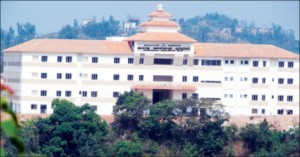
The new structure is a 4 storeyed building (including the ground floor), featuring spacious rooms for functioning of the offices.

The Archaeology Department had served several notices to the District Administration, asking it to evacuate the government offices from the Fort premises. But as there were no alternate arrangement, the offices continued to function from the Fort premises.

Continued efforts by the District Administration and the people’s organisations have ultimately bore fruit with the new District Administration complex coming up at the sprawling 2.20 acre area of the central workshop at Gandhi Maidan in the town.

Once the location for the new structure was finalised, the State government released Rs. 3 crore in 2009. The construction contract was awarded to Bangalore-based Gadiraju construction company.

The District Administration complex, having a built up area of 90,000 sq.ft., facilitates vehicle parking and records store room in the ground floor.

The first-floor provides for housing 22 departments apart from separate rooms for the Lok Sabha MP and District in-Charge Minister.

The second-floor houses the Assistant Commissioner’s office and the office of the Sub-Divisional Magistrate.

The third-floor houses the DC office, the additional DC’s office, court hall and video conference hall.

Lift facility: The 4-storeyed building will have a lift facility for the benefit of public.

As students of St. Michael’s school, adjoining the District Administration complex, may find it difficult to walk freely on account of the heavy traffic density with most of the government offices all set to shift to the new complex, the authorities have taken up construction of a flyover running from the school to the Church, at a cost of about Rs. 10 lakh. MLC T. John has released Rs.10 lakh out of his Legislator’s fund for its construction.

In order to secure the building from natural disasters, the Karnataka Housing Board has sent a proposal of Rs.256 lakh to the government for construction of retaining wall at the eastern side of the building facing the Madikeri-Mangalore highway.

Experts feel that the construction of a retaining wall is vital from the geological point of view, for the protection of the structure from landslips, landslides etc.

The dreams of the people of Kodagu for a new complex has finally been realised with the new building all set for inauguration by the CM on Nov.3.

source: http://www.starofmysore.com / Star of Mysore / Home> General News / Friday, October 31st, 2014