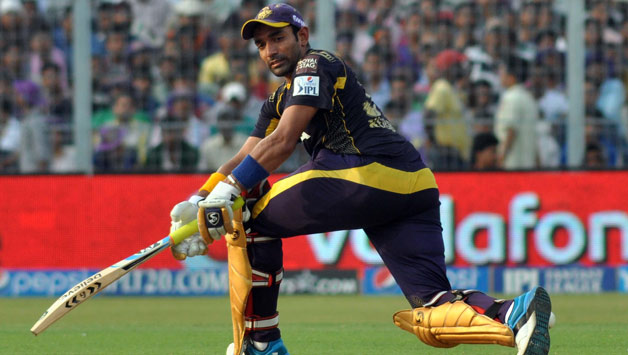
Robin Uthappa completes 4000 T20 runs

Uthappa also became the highest run-getter in CLT20 2014 © IANS

Robin Uthappa recorded 4000T20 career runs in the final match of the Champions League T20 (CLT20) 2014 against Chennai Super Kings (CSK) in Bangalore on Saturday.

Uthappa became the sixth Indian to register 4000 runs in this format. Suresh Raina has scored 5000 runs in this format and is the only Indian to touch this figure. Overall, Chris Gayle has scored the most runs in the format.

The Karnataka batsman had a sublime IPL 2014 and also ended up as the highest run-getter in the tournament after which he was also selected in the Indian squad for the Bangladesh tour.

source: http://www.cricketcountry.com / The Cricket Country / Home> News / by Cricket Country Staff / October 04th, 2014

Genes decide if you will love coffee or not

Genes decide if you will love coffee or not (Thinkstock Photos/ Getty Images)

In a first, researchers have identified six new genetic variants associated with habitual coffee drinking, suggesting why some people love to have coffee while others hate to sip it.

The genome-wide large study, led by the Harvard School of Public Health and Brigham and Women’s Hospital, helps explain why a given amount of coffee or caffeine has varied effects on different people.

“Our findings identifies sub-groups of people most likely to benefit from increasing or decreasing coffee consumption for optimal health,” said Marilyn Cornelis, research associate in department of nutrition at Harvard School of Public Health.

To reach this conclusion, researchers, part of the Coffee and Caffeine Genetics Consortium, conducted a genome-wide meta-analysis of more than 120,000 regular coffee drinkers of European and African-American ancestry.

They identified six variants that mapped to genes in areas involved in caffeine metabolism, influencing the rewarding effects of caffeine and involved in glucose and lipid metabolism.

“The findings suggest that people naturally modulate their coffee intake to experience the optimal effects exerted by caffeine and that the strongest genetic factors linked to increased coffee intake likely work by directly increasing caffeine metabolism,” Cornelis explained.

Genetics have long been suspected of contributing to individual differences in response to coffee and caffeine.

“Like previous genetic analyses of smoking and alcohol consumption, this research serves as an example of how genetics can influence some types of habitual behaviour,” added Daniel Chasman, associate professor at the Brigham and Women’s Hospital.

The study appeared online in the journal Molecular Psychiatry.

source: http://www.timesofindia.indiatimes.com / The Times of India / Home> Life & Style> Health & Fitness / IANS / October 08th, 2014

Smriti Mehra wins golf title in Coorg

Coorg :

Smriti Mehra won the Hero-CGL Women’s Professional Golf Championship amidst tough weather conditions to clinch the third title of the season here Friday.

With a score of 8 over 78 on the last day, Smriti grabbed her second win in successive weeks. Delhi’s Vani Kapoor and the Kapurthala’s Gursimar Badwal finished tied second with an identical score of 224.

Smriti, who carded an impressive 2 under 68 in the second round, struggled with the conditions and holed four bogies in her front nine on the second, fourth, fifth and seventh.

She carded three more bogies on the 12th, 17th and 18th with a double bogey on the 10th. Her only birdie came on the 12th to finish with a total of 222.

Gursimar carded the day’s lowest score of 3 over 73. At one stage she looked set to force a play-off but a double bogey on the 18th pushed her to second spot.

She started off with an impressive front nine which included just one bogey on the third along with two birdies on the eighth and ninth. She carded two more bogies on the 11th and 15th to finish second with Order of Merit leader Vani.

Vani had an off day, starting with a double bogey on the first. She tried to make a comeback with a birdie on the second but faltered again to card two more double bogies on the third and fifth along with a bogie on the ninth and a birdie on the seventh.

She tried to control her game on the back nine but with three more bogies on the 10th, 12th and 14th, she finished with 8 over 78.

Kolkata’s Neha Tripathi finished fourth with 231. Her score of 6 over 76 on Friday included two double bogies, five bogies and two birdies.

Jaipur’s Pallavi Jain, Delhi’s Ankita Tiwana and Chandigarh’s Saaniya Sharma finished fifth, sixth and seventh, respectively.

After the Rs.5 lakh event here, the caravan moves to Prestige Golfshire, Bangalore.

source: http://www.timesofindia.indiatimes.com / The Times of India / Home> Sports> Golf> Top Stories / IANS / September 19th, 2014

Starbucks to promote Indian coffee blends

Global coffee retailer Starbucks which had set shop in India in joint venture with the Tata Group, is keen to send more of Indian coffee blends, which it sources from around Coorg, to its stores in the US and other Asian countries.

“We have taken two very popular blends from India, to the US and Asia Pacific markets. India is a very long term market for us and we see such initiatives only growing in the future,” said Avani Davda, chief executive officer, Tata Starbucks.

The one blend, Indian estates blend, sourced from various plantations around Coorg and processed at the company’s roasting facility at Kushalnagar in Karnataka. Launched only in September, the blends may see a pick up after the US Autumn season.

In the two years of its presence in India, the Nasdaq listed Starbucks has set up 58 stores. Davda was in Hyderabad on Tuesday to set up their first store in the city. “We wont grow to prove store count. There have been a couple of international players who tested waters and shut down. But Starbucks is an iconic and respected brand and are here to understand the Indian consumer,” she said.

According to her, the coffee joint would customise itself to local tastes, even as the changes may not appear on the menu. “We look at social trends and it is definitely about coffee. We are not focused on the Indian competition but on how well we could weave a customer centric coffee experience,” she said.

The coffee retailing space is growing at around 12-15 per cent every year.

trushnaudgirkar@mydigitalfc.com

source: http://www.mydigitalfc.com / mydigitalfc.com / Home> My Brand / by Trushna Udgikar / Hyderabad – September 30th, 2014

Vehicles to Madikeri banned from Saturday

The district police have banned the entry of vehicles to Madikeri and Abbi Falls from Saturday 2 pm to regulate traffic in view of the Dasara procession.

“Dashamantapa” procession (a procession of the mantapas made by 10 major temples of Madikeri) is a major attraction of the Dasara festivities in Kodagu.

People who witness Jamboo Savari at Mysore travel to Madikeri to take part in the procession leading to traffic congestion. “The entry of vehicles and visitors to Abbi Falls and Golf course has been prohibited after 2 pm on Saturday.

One-way rule has been imposed on several roads in the town. The restrictions will be in place till 10 am on October 5 (Sunday),” Deputy Superintendent of Police Prasanna V Raju said. Security has been beefed up by setting up a checkpost at the town entrance, he added.

source: http://www.deccanherald.com / Deccan Herald / Home> State / DHNS – Madikeri, October 02nd, 2014

Starbucks to take Coorg coffee global

StarbucksKF02oct2014

Hyderabad:

Tata Starbucks Limited, a 50:50 joint venture between Tata Global Beverages and Starbucks Coffee Company, is planning to take its Indian coffee blends global. For this, the world’s largest coffee retailer plans to send its Coorg sourced coffee blends to its stores in the United States and other Asian countries.

Speaking on the sidelines of launch of its flagship outlet in Hyderabad, the firm’s chief executive officer (CEO) Avani Davda said, “We have taken two very popular blends from India Indian estate blends and Indian espresso roast to the United States and Asia Pacific markets. India is a very long-term market for us and we see such initiatives only growing in the future.”

The coffee retailer, which has almost 58 stores spread across six cities in the country, has about 15-17 coffee estates spread in the Coorg region and out of this four are of the India estate blends. Processed at the company’s roasting facility at Kushalnagar in Karnat-aka, the blends may see a pick up after the United States autumn season, opined Ms Davda.

Elaborating on the expansion plans and also on their competitors, the chief executive said, “We look at social trends and it is definitely about coffee”.

“We are not focused on the Indian competition but on how well we could weave a customer centric coffee experience,” Ms Davada added.

source: http://www.deccanchronicle.com / Deccan Chronicle / Home> Business> Companies / DC Correspondent / October 01st, 2014

India wins gold in 4x400m women relay

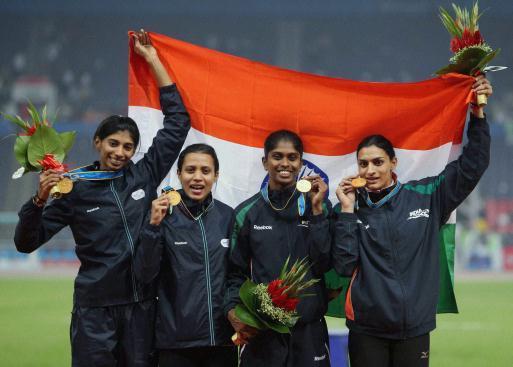
Mandeep Kaur (second from left), who ran an impressive third leg was part of that gold-winning quartet in the 2010 Guangzhou Games. File Photo / PTI

India continued their stranglehold in women’s 4x400m relay event in the Asian Games as its quartet ran a brilliant race to win the gold for the fourth time on the trot in Games record time in the 17th edition in Incheon on Thursday.

The quartet of Priyanka Panwar, Tintu Luka, Mandeep Kaur and M.R. Poovamma won an easy race in 3:28.68 to improve upon the earlier Games record of 3:29.02 which was also in the name of the gold-winning Indian team in 2010. This was the second gold for India from athletics after Seema Punia bagged the yellow metal in women’s discus throw.

Japan won the silver in 3:30.80 while China bagged the bronze in 3:32.02. The first lapper, Panwar was, however, lagging behind her Japanese counterpart but Luka, who won a silver in 800m race, ran a brilliant race to recover the loss ground for India.

India took a small lead after two laps before Mandeep widened the gap in the third lap after holding out a strong challenge from her Japanese counterpart. Poovamma, who won a bronze in 400m race, then anchored India to gold by blasting her way to the finishing line.

This was the fourth time India has bagged gold in women’s 4x400m relay in Asian Games as the country has been winning the event since the 2002 Busan Games.

Mandeep Kaur, who ran an impressive third leg was part of that gold-winning quartet in the 2010 Guangzhou Games.

source: http://www.thehindu.com / The Hindu / Home> Sport> Other Sports / PTI / Incheon – October 02nd, 2014

Siddhant, Poovamma are ‘best athletes’

Going a step further: Chandrodaya Narayan Singh of Uttar Pradesh won with his second throw of 67.84, to better his own mark of 67.78, beating national record holder Kamalpreet Singh. Photo: Akhilesh Kumar


Athletics:
Tamil Nadu and Kerala win the overall men’s and women’s team championships

Siddhant Thingalaya equalled his National record of 13.65 as he won the men’s 110 metres hurdles in the 18th Federation Cup athletics championships at the NIS Complex here on Tuesday.

Siddhant Thingalaya and M.R. Poovamma were adjudged the ‘best athletes’ of the championships. Tamil Nadu won the overall team championships ahead of Kerala. The teams won the men’s and women’s titles respectively.

In men’s triple jump, national record holder and Commonwealth Games medallist Arpinder Singh had no difficulty winning with his third jump of 16.70 in the final. Renjith Maheshwary could not fight, as he had a best of 16.43 on the last attempt, after efforts of 16.40 and 16.41.

Krishna Poonia risked an injured left knee to clinch the women’s discus gold with her last throw of 56.84 metres, more than three and a half metres ahead of World junior bronze medallist Navjeet Kaur Dhillon. After throws of 54.83, 55.38 and 55.49, the Delhi Commonwealth Games gold medallist stepped it up in the last throw.

In women’s 400m, M.R. Poovamma clocked 52.42, beating Priyanka Panwar for the gold.

In men’s hammer throw, Chandrodaya Narayan Singh of Uttar Pradesh won with his second throw of 67.84, to better his own mark of 67.78. Kamalpreet Singh, who holds the national record of 70.37, settled for the silver with his third throw of 66.78.

Sushmita Singha Roy won the heptathlon two points ahead of Bengal teammate Swapna Barman, with a score of 5402 points.

In the morning, Rahul Kumar Pal of Maharashtra sprinted past Laxmanan of Tamil Nadu for the gold in the 10,000 metres. He had focused on the event and thus enjoyed an advantage over the exhausted 5000m runners, including gold medallist Kheta Ram, who grabbed the bronze after having led for the most part.

In the women’s 10,000 metres, Asian Games gold medallist Preeja Sreedharan was a class apart, finishing at 34:27.94 beating Swati Gadhave by more than two minutes. Meanwhile, the jury reinstated the original results in the men’s 3000m steeplechase, after having disqualified Naveen of Haryana and Ashish of Assam for “pacing”.

The IAAF rules clearly state that any athlete “giving or receiving assistance” from within the area during an event should be warned by the referee and advised that he would be disqualified from that event if it was repeated. It further clarifies about “assistance” being from a “lapped” or “about to be lapped” athlete.

Arguing that that they were from different States, and that one would not assist the other, Naveen was conveniently reinstated champion, and Ashish labelled “DNF” (did not finish), having finished a lap short.

The results: Men: 200m: 1. Manikanda Arumugam 21.21; 2. Velayutham 21.83; 3. M.G. Joseph 21.87. 400m: 1. Kunhu Muhammed 46.40; 2. Arokia Rajiv 46.41; 3. Jibin Sebastian 47.28. 1500m: 1. Jinson Johnson 3:52.60; 2. Ravindra Rautela 3:53.09; 3. Sajeesh Joseph 3:53.38. 10000m: 1. Rahul Kumar Pal 30:04.77; 2. Laxmanan 30:05.20; 3. Kheta Ram 30:08.98. 3000m steeplechase: 1. Naveen 8:46.18; 2. Jaiveer 8:53.36; 3. Manju 8:54.43. 110m hurdles: 1. Siddhant Thingalaya 13.65 (ENR); 2. K. Prem Kumar 13.96; 3. Surrender 14.24. Triple jump: 1. Arpinder Singh 16.70; 2. Renjith Maheshwary 16.43; 3. Rakesh Babu 16.15. Hammer: 1. Chandrodaya Narayan Singh 67.84 (NMR, old 67.78); 2. Kamalpreet Singh 66.78; 3. Neeraj Kumar 66.71. 4x100m relay: 1. Tamil Nadu 40.96; 2. Kerala 41.08; 3. Maharashtra 41.18. 4x400m relay: 1. Navy 3:11.44; 2. Kerala 3:11.62; 3. Punjab 3:13.07.

Women: 200m: 1. Asha Roy 23.89; 2. Srabani Nanda 24.02; 3. Archana 24.94. 400m: 1. M.R. Poovamma 52.42; 2. Priyanka Panwar 53.40; 3. Debashree Majumdar 53.79. 1500m: 1. O.P. Jaisha 4:09.14; 2. Sini Markose 4:18.18; 3. Sushma Devi 4:20.43. 10000m: 1. Preeja Sreedharan 34:27.94; 2. Swati Gadhave 36:28.46; 3. Monika Athare 36:44.15. 100m hurdles: 1. M.M. Anchu 13.80; 2. Deepika 13.81; 3. K.V. Sajitha 13.86. Discus: 1. Krishna Poonia 56.84; 2. Navjeet Kaur Dhillon 53.26; 3. Praveen Kumari 46.65. Heptathlon: 1. Sushmita Singha Roy 5402; 2. Swapna Barman 5400; 3. Liksy Joseph 5351. 4x100m relay: 1. Kerala 46.47; 2. West Bengal 46.56; 3. Punjab 47.27. 4x400m relay: 1. ONGC 3:42.26 (NMR, old 3:42.70); 2. Kerala 3:45.96; 3. Haryana 3:48.50.

source: http://www.thehindu.com / The Hindu / Home> Sport> Other Sports / by Kamesh Srinivasan / Patiala – August 19th, 2014

Expert panel gives go-ahead for power line; 50,000 trees in Kodagu forests will go

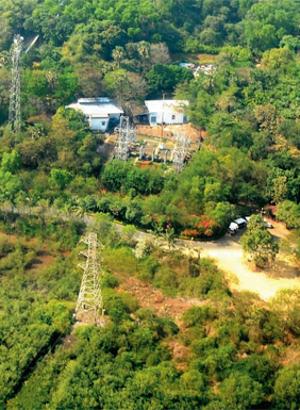
The figure is floated by green activists and is disputed by the authorities, though within the government agencies it varies from 2,247 to 21,000. The trees fall in the verdant forests of Kodagu and the activists could be close to the mark, admit official sources
KodaguTreeKF30sept2014

Protests and campaigns have come to a nought, and the axe is set to fall on over 50,000 trees in the evergreen deciduous forests of Kodagu with an expert panel giving its nod to the power line project meant to light up towns and villages in Kerala.

Terming the alternative routes proposed by the locals as technically and financially unfeasible, the three-member expert committee has given its go-ahead to the high power transmission line between Mysore and Kozhikode. Activists of the ‘Save Cauvery’ movement in Kodagu say the decision will ring the death knell for more than 50,000 trees.

While the Power Grid Corporation of India (PGCI) continued to maintain only 2,247 trees will be cut, deputy conservator of forests, Virajpet, has submitted an affidavit before the Green Tribunal in Chennai that a total of 21,000 trees will be felled along the alignment line proposed by PGCI. However, activists who have trekked the entire stretch using GPS coordinates argue that not less than 55,000 trees, both in private areas and on forest land, will face the axe.

Following widespread protests across Kodagu district over the large-scale clearance of forest and degradation to the fragile eco-system of the area, the state government had appointed a three-member expert committee to look into the issue and study the feasibility of possible alternative routes as proposed by the activists. The committee comprising noted elephant expert Prof Raman Sukumar of Indian Institute of Science (IISc) and Ajai Misra, Additional Principal Chief Conservator of Forests (APCCF) was headed by R S Shivakumara Aradhya of Central Power Research Institute (CPRI).

‘Other routes not feasible’

NGOs and activists had proposed alternative routes that would be less damaging to the eco-system, but the committee has stated in its report that these routes are not only detrimental to wildlife conservation, but require huge capital and are technically not feasible. According to the report, accessed by Bangalore Mirror, adopting other routes would require more forests to be cleared than what the present proposal will necessitate. Activists had suggested use of the D-line (District line dividing the two districts of Mysore and Wayanad in Kerala) passing via Nagarhole or the existing 220 KV line on the Kadakola-Kaniyampetta corridor for linking Karnataka with Kerala and Tamil Nadu in the South, besides upgrading the 110 KV corridor between Kasaragod and Mangalore.

“Alternative routes will destroy the Kodagu environment as a large number of trees will have to be cut, adversely affecting the Dubare-Devamachi reserve forest which has considerable presence of elephants and tigers. Using these routes will not only affect the tribal settlement inside forests, but also call for felling of trees in coffee estates which are part of Kodagu ‘s ecosystem. The paddy fields along the proposed line would become unfit for cultivation. The temperature of line conductors will affect coffee plants and affect the national forest policy, which envisages about 33 per cent forest and tree cover. Work in these areas would not only reduce inflow to Kaveri and its tributary Lakshmana Theertha, but also intensify the man-animal conflict,” the report said.

‘Existing lines are over-exploited’

On the prospects of using the existing corridors, the committee observed: “While the corridors are designed to carry a load of 130 MW to 140 MW, they have been used to transmit 180-200 MW of power regularly. Due to overloading, there already has been high sagging of conductors. Further, the ground clearance is low and there have been instances of elephants being subjected to fatal shocks. The Dasara elephant ‘Drona’ too had been a victim of this in the past. The existing 220 KV line runs North East-South West of Kabini for about 32 km of which 20 km is through Nagarhole forest; upgrading the line would only further disturb the ecology.”

‘Tunnelling will hit coffee estates’

Studying the feasibility of laying underground cables, the committee reported it would cost five to 20 times more than the cost of overhead transmission lines. “If the cable is laid, the ground above has to be cleared of vegetation and must be provided with access roads for maintenance. The cable has to be cooled by forced air or by way of circulating water. Further, the repair time is 25 times greater than that of overhead line repair,” the report states.

The experts clarified that laying a double circuit line along the D-line will require 130 hectares of dense tropical forest to be cleared. Besides, reactive power absorption devices have to be installed every eight to 10 km along the cable route; these sub-station-size structures requiring about 2,500 sq metres, the experts said.

‘Project crucial for Karnataka too’

Even though the line between Mysore and Kozhikode was planned under Kaiga Stage II for transferring the generated power from Kaiga to other places way back in 2007, work could not be taken up for several administrative and technical reasons. “Besides this project, there is absolutely no grid connectivity between Kerala and Karnataka. The proposed line, besides helping Kerala, will help us draw power from Koodankulam and other new stations planned along the Tamil Nadu coast. This Southern grid connectivity will help Karnataka harness more than 3,500 MW wind power generated in Tamil Nadu,” said a senior official from the energy department.

Referring to illegal clearance of forests in excess of what was permitted, the committee said, “The line route, proposed by the Power Grid Corporation, requires about 6,000 trees to be cut within a 12-km stretch of coffee plantations in Kodagu, in addition to the 2,247 trees (above 55 cm girth) already felled in that stretch.” Acknowledging clearance of forest for about 52 metres as against the permitted 46 metres along a four-km stretch, the experts suggested efforts to regenerate the natural vegetation in the stretch of land between the 46-52 metre width in Dubare and Devmachi reserved forests.” The committee has also directed the forest department to implement a conflict mitigation plan for preventing man-animal conflict in the area which will completely be funded by PGCI for a minimum of three years after completion of the project.

Reacting over the recommendations of the committee, power minister DK Shivakumar told BM, “The committee has given us a green signal to go ahead with the project. The activists, farmers have to understand this and must support the government by giving all the necessary help. There is tremendous pressure from the Centre to accomplish the project and it is more important from the energy security of the state in future. It helps us draw more and more power in a short duration time from the generating stations of Tamil Nadu. We are just waiting for the rains to stop and once the rains are officially ended, we will take up the work along the proposed corridor.”

source: http://www.bangaloremirror.com / Bangalore Mirror / Home> Bangalore> Cover Story / by Niranjan Kaggere, Bangalore Mirror Bureau / September 29th, 2014