Sainik School Kodagu gets new principal

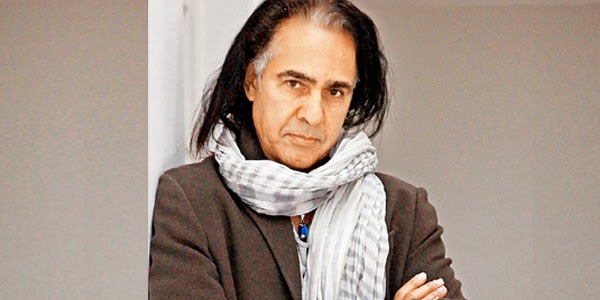
Capt (IN) Ben H Berson assumed charge as the new principal of Sainik School Kodagu, at Kudige, near Kushalnagar, Kodagu district, recently.

CaptBersonKF19jun2014

After assuming charge, he said, “Every life needs a dream, every dream needs a plan, every plan needs a team”. He said, with team spirit, India can become the best country and Sainik School Kodagu, the best school in the world.

He briefed about his plan of action, expressing that his prime area of concern was development of intellectual and emotional faculties of cadets and staff as well as academic infrastructure in the campus.

Earlier, Berson was accorded an elegant guard of honour and received by Wg Cdr M K Khan, the headmaster, and Lt Cdr A P Ajesh, the registrar. A special assembly was held on the occasion, wherein the headmaster introduced the incumbent principal. During the function, Princy Berson gave away prizes to cadets, who had excelled in various competitions. Saira Khan, president of the Kodagian Ladies Club, was present.

Captain (IN) Berson had headed the faculty for Basic Sciences and Humanities at INA Ezhimala earlier. After getting his engineering degree from Karunya, Coimbatore, he was commissioned as a direct entry officer into the Education Branch of the Indian Navy in 1991.

He has served as instructor and registrar at the erstwhile Naval Academy at Goa and Senior Education Officer at INS Dronacharya and INS Shivaji. He was also the Deputy Director at the Naval Institute of Education and Training Technology, Kochi.

source: http://www.deccanherald.com / Deccan Herald / Home> District / Mysore, DHNS – June 19th, 2014

Squash: Dipika-Joshna win women’s doubles title in Malaysia

Kuala Lumpur:

India bagged their second title at the Tri-Nation squash doubles tournament here on Thursday when Dipika Pallikal and Joshna Chinappa emerged winners in the women’s doubles final.

Pallikal and Joshna rallied to beat New Zealand’s Joelle King and Amanda Landers Murphy 8-11, 11-5, 11-1 at the National Squash Centre.

Hosts Malaysia were the other country to participate in the three-day event, seen as a warm-up to the next month’s Commonwealth Games.

It was Pallikal’s second title in as many days after she won the mixed doubles with Saurav Ghosal.

The Indians put up a commendable show considering they are busy playing singles for major part of the season.

Pallikal said it was good practice for the Glasgow Games beginning July 23. “I am glad to have won the doubles too. We started off slow today but got better as the match progressed. Joshna played some amazing shots to shock our opponents,” Pallikal told PTI.

She alongside Joshna stunned the mighty Malaysian pair of Nicol David and Low Wee Wern in the semi-finals on Wednesday.

“The win here does a lot of good to our confidence going into the Commonwealth Games. Winning there is our main aim and this tournament helped us understand where we stand in the pecking order. Among top Commonwealth nations, only England and Australia were not here. It was a good test overall,” said the singles World No. 10.

How tough is it switch to doubles while playing singles on the professional tour?

“It is tough but you have to switch off, switch on when necessary,” Pallikal added.

source: http://www.ibnlive.in.com / IBN Live / Home> Sports> Other Sports / Press Trust of India / June 19th, 2014

‘Panel on deemed forest land to meet within a week’

The district-level committee formed to do a reality check of the deemed forest land in Kodagu district will convene its first meeting in a week and is likely to submit a comprehensive report to the government within six months.

The committee chaired by the deputy commissioner comprises of the deputy conservator of forest, deputy director of land records and officers from revenue and forest departments.

In order to verify the report submitted by an experts committee on deemed forest in 2002, the State government has formed district committee in district level, zonal committee in revenue level and state committee in state level.

According to sources, the district committee will conduct a survey in the district and prepare a report on deemed forest scenario in Kodagu. The functioning of the district committee will be supervised by the zonal committee and state committee on a time bound manner and give suggestions as and when required.

What is deemed forest

If a land has the features of forest, where trees are grown outside the purview of government recognised forest land, it is called as deemed forest. The experts committee formed in 2002 had put the deemed forest land figure in the State at 9,94,881 hectare. About 69,205 hectare deemed forest land identified in Kodagu district, also comprises of Bane, Paisari, Kumki Malai, C and D land and plantation.

It all started with the Supreme Court directing all states to provide information about the forest land, during the hearing of Godavarman Thirumalapad case in 1995. As per the order, the Karnataka government formed the first experts committee, which submitted the report to the government on April 2, 1997.

While submitting the report before the apex court, the government stated that it has completed the process of identifying the area which has been officially declared as forest land. The government requested additional time for identifying the forest land which has not been officially declared.

On observing the delay by the Karnataka government in submitting the report, the Central Empowered Committee of the SC took the government to task, following which the government revised the experts committee.

This second committee identified 33,24,854 hectare land as notified forest and 9,94,881 hectare as deemed forest. The committee, in fact, included even the barren forest land as deemed forest. It also included C and D land, Bane and Paisari.

Due to identifying even Paisari land as deemed forest in various districts including Kodagu, the government is neither able to take up various projects in this land, nor it can make sites to be distributed to poor. Even the work on providing basic facilities like construction of road can not be taken up.

In several cases, the revenue land (Paisari) which has been sanctioned to beneficiaries under Akrama Sakrama, is also considered in the list of deemed forest, due to which RTC can not be made in the name of beneficiaries. To solve the impeding problem the new committee has been formed for conducting a joint survey.

source: http://www.deccanherald.com / Deccan Herald / Home> District / by Shrikanth Kallammanavar / Madikeri, DHNS – June 19th, 2014

Biddu: Composing Pop music is for young and not young at heart!

Who can forget the sex siren Zeenat Aman dancing and singing to the sensational disco beats of ‘Aap Jaisa Koi…’ in Feroz Khan’s super hit movie QURBANI in the 80’s. Wanna know who composed this all time hit song? Well the music was composed by Biddu Appaiah, popularly recognized as Biddu, the Indian-born, England based music composer who is regarded as a pioneers of Disco, Euro disco and Indi-pop around the globe.

Zeenat-AmanKF20jun2014

Winner of the prestigious Gramm Award and ranked 34 in the 50 Greatest Producers Ever list of New Musical Express (NMI), Biddu after five decades of career in music has moved to writing and has penned a fictional novel ‘The Abundance of Nothing’ published by Times Group Books.

Speaking about his switch from music to writing he confessed, “I have been regarded as the king of Pop music but truly speaking producing pop music is purely for the young, just being young at heart does not qualify to compose pop music. Hence I decided to silently shift gears from music to my other passion writing.”

Few know that QURBANI had music by famous Bollywood music director duo Kalyanji Anandji but Feroz Khan happened to hear the disco beats of Biddu in London and was so impressed that he hired him to compose just one song for his movie.
BidduKF20jun2014

Initially Biddu declined the offer as he was busy in the West but when he found Feroz Khan to be serious and willing to pay an enormous amount he gave in.

In an interview Biddu had said, “I am the first person to introduce disco in India thanks to Feroz Khan. It was his obsession that made me compose the song. Before ‘Aap Jaisa Koi…’ the disco fever was nonexistent in India, however the song became such a craze that after ‘Aap Jaisa Koi…’there was a literal flood of disco songs and no Bollywood movie was released without (at least one) disco song

Like today’s item numbers, disco songs had become a permanent fixture till the late 90’s.”

source: http://www.indiaglitz.com / IndiaGlitz / Home> IndiaGlitz> Bollywood / Tuesday – June 10th, 2014

Students from sister city Cincinatti visit Mysore, Kodagu

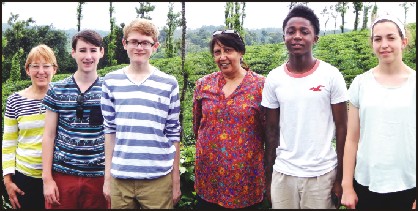
Students from Sister City Cincinatti, USA, at a tea estate in Kodagu. Seen are (from left) teacher Sarah Langenderfer, Jack Langenderfer-10th grade, Sam Krimmer-11th grade, Sister City President Dr. Ratee Apana, Kevion Howzie-10th grade and Molly Giglia-11th grade. These students are from two schools in Cincinnati — Walnut Hills and Schroeder.

Mysore :

High School students from Cincinatti — Molly Giglia, Sam Krimmer, John Langenderfer and Kevion Howzie — together with teacher Sarah Langdenderfer are in city to see their Sister City, learn about high school students here, their daily lives and get a feel of the culture of Mysore.

They were given a warm welcome by students and staff of Kautaliya Vidaylaya who will also perform a small cultural piece for these students. They will visit and spend time in the classroom at St. Joseph’s School. They will meet with students from Rotary School in Mysore, who will accompany them on a service learning session at the NGO Odanadi. On this visit, they have seen Shravanabelagola and Brindavan Gardens. They experienced Mysore city through the Royal Mysore walking tour company, visited Chamundi Hill as well as the Palace.

They spent two days in Kodagu at Dubare, Siddapur, Kutta, Nagarhole and the interactive park in Kadamakolli. Students learnt about tea and coffee cultivation and enjoyed many different plants, fruits and wild animals of the area.

Teacher Sarah Langenderfer has created a blog for their visit.

Varsha Vittal and Dr. Ratee Apana, President of the Cincinnati Sister City Association are in Mysore to assist with their arrangements in Mysore together with Vice-President of the Sister City Association Dr. Pat Niskode and MaryAnn Niskode in Cincinnati to make this visit a success.

Many families in Kodagu especially Kolera Tuckoo and Puthli, Karthamada Nirmala and Suju and H. Vittal and Sujatha Vittal welcomed students into their homes. They have a good understanding of the cuisine and day-to-day life of their hosts.

“We would like to encourage Mysoreans to contact us and connect with the students. They would love to visit a typical Mysorean home and learn about students their age in this city. We are waiting for a committee in Mysore to be set up that can help us strengthen and sustain this relationship,” said Ratee Apana, speaking to SOM.

source: http://www.starofmysore.com / Star of Mysore / Home> General News / June 14th, 2014

400 KV Line : Expert panel gathers public opinion

Kodagu residents oppose the project

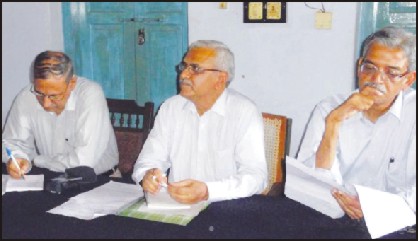
The three-member Technical Experts’ Committee seen gathering public opinion in Madikeri on Thursday.

Madikeri :

A three members Technical Experts’ Committee visited Kodagu district on Thursday to study the possibilities of finding an alternate route to lay 400 KV hi-tension line from Kozhikode in Kerala to Mysore. This has come up in the backdrop of stern opposition from the people against the electricity line passing through Kodagu district.

The committee members visited the places in and around Maldare where the project is implemented and collected public opinion. Representatives from various organisations, including Viju Biddappa from Maldare, Kaveri Sene President Raghu Machaiah, Convener Ravi Chengappa, K.C. Subbaiah, Basavana Devana Bana Trust President B.C. Nanjappa, Chennayyana Kote Gram Panchayat member Shyam, Coorg Wildlife Society President Colonel C.P. Muthanna and others, shared their opinions.

They all said that thousands of trees will be felled if the line passes through Kodagu. This will have negative impact on the environment, wildlife and coffee growers. Therefore, an alternate route has to be found out for laying the wires, they insisted.

Speaking to reporters after the meeting, Committee Head R.S. Shivakumar Aradhya said that a lot of factors like environment and technical feasibility and project expenditure has to be taken into consideration while finding an alternate route. “We will submit the report to the government within a month. We will visit Kutta and surrounding region on Friday and examine the problem,” he said.

The government formed the Committee chaired by Shivakumar Aradhya, in response to the continuous opposition and protest by villagers and various organisations opposing the project. Forest Department senior officials Ajay Mishra and elephant expert Sukumaran are the other two members of the Committee.

source: http://www.starofmysore.com / Star of Mysore / Home> General News / June 14th, 2014

Coffee Board to offer coffee courses to increase local coffee demand

SUMMARY
Indian Coffee Board is set to launch a program to train people to be coffee makers or baristas.

______________________________________________________________________________________________

Indian Coffee Board is set to launch a program to train people to be coffee makers or baristas. (Thinkstock)

In an effort to make coffee available and more popular across the country, especially in tea dominated northern India, the Indian Coffee Board is set to launch a program to train people around the country to be coffee makers or baristas. The ‘Barista training program’ of the Indian Coffee Board, involving a specially crafted syllabus will guide aspirants interested in coffee on the various aspects of coffee making, and will be launched in July according to the chairman of the Coffee Board Jawaid Akhtar.

Trainees will study the different types of coffee seeds, the right temperatures for roasting them, the best ways of grinding, and the right chemistry for a good coffee, says Akhtar who is also Chairman of the International Coffee Council. Trainees will be taken on a study tour to research centers of the coffee board, its coffee estates and will be given an internship opening at coffee chains. When they graduate from the program the coffee board with certify its trainees as qualified coffee makers, the Coffee Board chief said.

“Youngsters, especially those who have stayed abroad and have imbibed the global work culture are drawn to coffee in a significant way. Many see coffee making as a trendy thing to do. With coffee being affordable we want to create more interest in coffee making at home,” Akhtar said. In offering coffee courses for amateurs the coffee board is following in the footsteps of similar initiatives seen in emerging markets like China, Brazil, Russia and South Korea where coffee drinking has received huge impetus in recent times including home brewing.

The Indian Coffee Board’s Barista training program will allow aspiring coffee makers to train at its headquarters in Bangalore or the coffee board will depute its staff to conduct group classes in any part of the country, the head of quality control at the coffee board K Basavaraj said.
While the fee for the four-week training program has not been fixed the coffee board claims that it will run the program on a not-for-profit basis aimed purely at skill development and employment generation. “A similar program in a private institution will cost nothing less than a lakh,” a member of the coffee board faculty for the program said

“Indian coffee beans like Robusta and Arabica have earned fame the world over but very little is known about it in the Indian market. Consumers in cities like Mumbai, Delhi, Chandigarh and other parts.

source: http://www.financialexpress.com / The Financial Express / Home> Commodities / by Harsha Raj Gatty, Bangalore / June 17th, 2014

How love turned Robin into batsman

Tennis player girlfriend Sheetal Goutham was key to Robin Uthappa’s return to the top.

by Akshay Sawai

One day Robin Uthappa called up his girlfriend, former tennis player Sheetal Goutham, and asked her about her workout. She said she did 3,000 squats. “3,000 squats. Wow.

That sort of stuff inspires athletes,” Uthappa tells ETPanache at the Mumbai Cricket Association Recreation Centre, Bandra Kurla Complex. The 28-year-old had just finished net practice with Ajinkya Rahane, under the supervision of coach Pravin Amre. Uthappa was the top-scorer in the IPL for Kolkata Knight Riders and earned a recall in the Indian ODI side. Among the people he credits for his revival are Amre, his personal coach, and Sheetal, who he has known for almost eight years. ,”If not for her, I wouldn’t be playing cricket,” he says.

Uthappa was one of the stars of India’s stirring victory in the inaugural World T20 in 2007. Fame and riches followed. At the first IPL, Mumbai Indians bought him for $800,000 ( Rs 4.75 crore). At the 2011 IPL, Pune Warriors paid him an eye-popping $2.1 million ( Rs 12.45 crore. But soon he lost his form and desire. And though financially secure, he was not happy.

“I turned into a bitter person who did not enjoy other people’s success,” Uthappa says. “That did not sit too well with me. I thought I’d go abroad and do something different.” He discussed this with Sheetal, who spoke sense into him. “First, she put me onto a nutritionist. I was 95kg, in the worst shape of my life. Once I lost weight, I felt better emotionally and physically.”

Two years later, Uthappa is IPL champion, IPL topscorer and in the Indian team. While material things do not define his relationship with Sheetal, he has been generous with gifts to one of the people who made it all possible. “It was her birthday on June 6. I bought her summer dresses. Then there was a DKNY watch she wanted. Some of us got together and bought her that.

RobinKF19JUN2014

During the IPL, I got her an iPad mini.” Nutrition was key to Uthappa’s return to form. It also inspired his first foray into business. Last October, Uthappa and a few friends started ITiBSE 0.48 % f fin, a healthy meal service for professionals and school children. Uthappa invested `1.5 crore in the operation. A senior employee of a major financial institution is a minority stakeholder.

“I lost 20 kilos in a year-andhalf and know the difference healthy eating made to me,” Uthappa says. “Professionals sit at their desks for long hours doing stressful jobs. In India, there are so many people with diabetes and hypertension. We offer cultural food calculated to meet an individual’s requirement and prepared with fresh and natural ingredients. We are providing meals to 300 professionals on a daily basis, and 500-600 school kids per day.”

ITiffin’s target is 15 lakh customers per day across India. “We want to scale up a bit and are looking for investors,” Uthappa says. As far as scaling up his relationship with Sheetal, meaning marriage, he says, “The world will know when it happens. No fixed plans, but it will be soon.”

source: http://www.economictimes.indiatimes.com / The Economic Times / Home> Panache / by ET Bureau / June 12th, 2014

Coffee connoisseurs help drive Benugo sales

The hunt for the perfect cup of coffee drove sales at Benugo, the upmarket delicatessen that serves visitors to London’s V&A museum, the BFI Southbank and Edinburgh Castle in Scotland, 24 per cent higher in the year to December.

The company, which started as a bar in the capital’s fashionable Clerkenwell district in 1998, has 15 cafés in London railway stations and high streets in addition to its concessions in museums, galleries and historic buildings.

It has plans to expand further, opening six more of its New York-style delicatessens on the high street each year in London, Edinburgh and Oxford. It is also bidding for more museum and art gallery contracts, looking to sell its sandwiches throughout the UK and Europe.

Alastair Storey, chief executive and chairman of Westbury Street Holdings, the parent company of Benugo, said that the business was doing well from rare, “single-sourced bespoke coffee blends” in an increasingly competitive café market. The company’s emphasis on locally sourced food has also helped, he added.

“We’re seeing people looking for a simpler, less complicated dining experience. Five years ago 25 per cent of sales were sandwiches, and 15 per cent were salads and wraps,” he said. “Now that has completely reversed. People are wanting to eat less bread; fewer carbohydrates.”

The growth helped WSH to hire at its fastest rate since it was formed in 2000. The company created 1,800 new jobs, taking total employment at the company, which runs an extensive range of training and apprenticeship schemes, to nearly 14,400 staff.

Sales at Benugo grew from £56.5m to £70m in the year to December. WSH also owns catering brands Baxter Storey, Caterlink, Holroyd Howe and Portico. This week the company will report that operating profits rose 36 per cent from £18.2m to £24.6m on sales that grew 15 per cent to £530m in the year ended 27 December. Pre-tax profits fell from £6.2m to £2m due to an exceptional charge of £15m as a result of a debt restructuring in November.

WSH is the third biggest player by sales in the British catering league table, behind Compass and Sodexo.

Caterlink, its state schools catering division, which accounts for 12.5 per cent of WSH revenues, saw sales rise 20 per cent in the past year, as take-up of school meals became more popular amid a renewed focus on health.

The British government is committed to spending £600m a year on free school meals from September – increasing the market from 3.5m school meals a day to 5m a day – and Mr Storey said he expected to “mop up” some of this growth in business.

Sales at its main Baxter Storey contract catering brand, which accounts for nearly three-fifths of sales grew 12 per cent underpinned by 44 new client wins, including Reed Smith, Shell UK, Verizon and BAE Systems. But Mr Storey added that the corporate hospitality market had not yet recovered to pre-recession levels.

“It’s interesting just how severe the reduction in corporate hospitality has been,” he said. “It’s improved but its still not back to precession levels.”

Mr Storey set up the company in 2000 after 25 years at Sutcliffe Catering, later part of Granada Food Services. Since going it alone, he has expanded his business rapidly, acquiring independent rivals including Halliday Catering, BaxterSmith and Holroyd Howe.

http://www.ft.com/cms/s/0/d9548a5c-f173-11e3-9fb0-00144feabdc0.html#ixzz36WQGfjgB

http://www.ft.com/cms/s/0/d9548a5c-f173-11e3-9fb0-00144feabdc0.html#axzz36WQBxLCi

source: http://www.ft.com / Financial Times / Home / ft.com> Companies> Retail & Consumer> Food & Beverage / by Gill Plimmer / June 11th, 2014

Biddu: From making music to penning stories

BidduKF19jun2014
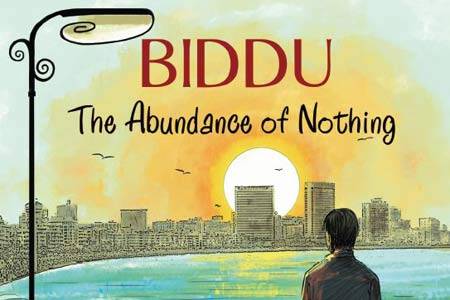
Book title: The Abundance of Nothing

Author: Biddu

Publisher: Times Group Books

Pages: 304

Biddu ventured into Bollywood with the sensational composition ‘Aap Jaisa Koi’ for ‘Qurbani’ and popularised Indie-pop in India with another best-selling album, ‘Disco Deewane’. He later produced the 3 million-selling album, ‘Made in India’ that kicked off Alisha Chenoy’s career. From this connoisseur of music and the receiver of a ‘Lifetime Achievement Award’ by Rolling Stone magazine comes a spellbinding tale of a young rag picker.

Set against the backdrop of Mumbai in the 90s, the novel takes you through a journey of a young man who comes to terms with life when he’s suddenly left alone in a big bad world. The rise and fall of the vagabond kid amalgamated with the impeccable use of metaphors captures the heart and makes you realign your perception about materialism.

How did the transition from music to writing come about?
I decided that at my stage, and dare I say age, I should walk away quietly from the music scene. Creating pop music is for the young, not for the young at heart. Anyway, I was sitting in my house in Spain, watching the sunset and the surf washing the shoreline and I thought what next? I did not want to go through life with just one experience, one career. The idea of opening a restaurant was tempting, but everyone said ‘You crazy’, you’ll be tied to the restaurant 20 hours a day. So then I thought about writing a novel. Since I had always written my own lyrics (in English), I thought I’d go down that avenue.

Did you hear from your fans after publishing books? How have they taken to your literary abilities?
Almost everyone has been impressed by the stories and my grasp of the language. But then I was brought up in Bangalore, where Hindi was a foreign tongue and English was the lingua franca of the middle class.

What according to you killed Indie-pop in India? As one of the pioneers of Indie-pop, do you feel saddened by the same?
A lack of talent and a plethora of sub standard music killed the Indie-pop industry. Also for a while Indie-pop ruled the waves, because Hindi film music was stuck in a time warp. But they listened to Indie-pop, got the ideas, and sounds among others , plus they had the Moola. A music video of Shah Rukh Khan fronting a song from a major film with the attendant heavyweight promo and publicity is going to have more impact than some unknown doing the same in a pop video.

What inspired you to pen down a story detailing the journey of a young rag picker on the streets of Mumbai?
I had already written my first novel ‘Curse of the Godman’ which was set in Darjeeling circa 1951, when the British had left India. So, I decided to bring my next novel to the present times and set it in Bombay as it’s the city which gave me my fondest memories as a youth in India.

The novel provides a perfect description of Mumbai’s subculture. How did you manage to delve so well into this part of the city despite moving to England long ago?
Writing is all in one’s mind. That and the Internet. The first novel ‘Curse of the Godman’ was set in Darjeeling. A lot of people emailed and wrote to me saying I had captured Darjeeling perfectly. I had to lie and say I spent time there. Why kill the illusion. You can travel the world sitting in front of your computer. But coming back to Mumbai’s sub culture, I lived there for four years and visit it every year. So, in many ways, I used to think of Mumbai as my home in India.

From where do you draw inspiration for your characters?
Inspiration is usually from perspiration. You let your mind wander, sometimes ideas come when you’re swimming, sometimes when you’re walking along the beach and sometimes when you wake up in the middle of the night and can’t go back to sleep. The mind wanders, ideas spring up, you filter them, the good ones from the bad and in the morning you rush to your lap-top and hit the keys.

What has been the biggest surprise or learning experience while writing the book?
The biggest surprise is when you read back a few chapters of what’s been written and if it’s impressive, you ask yourself ‘Did I really write that?’ and a smile percolates through and you get a warm all over feeling and the confidence and adrenalin pumps through your body. It was the same feeling I got when I used to compose a song and it felt like a winner and you knew it would be a hit.

As a child, what did you want to do when you grew up?
As a child of 12, I want to be a 13! But seriously, from a kid, I either wanted to be a film star or a singer. I couldn’t act out of a paper bag (like a lot of stars today!), so I became a singer. When I went to London, I took up writing, arranging and producing because I couldn’t get any work or gigs. So, I made my own records. Which on reflection was a far more lucrative way of doing things.

A literary figure who has inspired you in your life
Shakespeare for sure. I’m not a guy who has heroes. There are people I admire like Mother Teresa and Mahatma Gandhi. But the truth is, even in the world of music, I had no heroes or people I looked up to. You put people on a pedestal only to be disillusioned or disappointed when you actually meet them. Then you bring them down.

Readers interested can order their own copy of the book here tgb.indiatimes.com.

(Originally published on June 09, 2014)

source: http://www.timesofindia.indiatimes.com / The Times of India / Home> Life & Style> Books / by Pallavi Bansal, TNN / June 28th, 2014