Account of an uprising

KodavasKF11mar2013The Kodavas put up a brave fight against the British in 1837, three years after the latter invaded Kodagu. Mookonda Kushalappa narrates the story of the resistance.

In 1834, the British East India Company had resolved to invade Kodagu and annex it. The Company sent in an army of 6,000 sepoys, divided into four columns, into Kodagu — one column was to enter from the east, one to enter from the north and two to enter from the west. They were to march into the capital Madikeri. The northern column marched towards Harangi (now famous for the dam) to meet the eastern column. A village in the woods at the base of a mountain pass lay in their path.

This village was the chief base of the resistance in Kodagu led by an official called Mathanda Appachu. He had secured the village with thick wooden palisades. Behind the wooden palisades through the arrow-slits of the palisades, the Kodavas aimed their guns at the British and shot at them. The column couldn’t hurt them. It was a fierce battle which raged on for four-and-a-half hours. Col. Mills tried to attack the village from the flank. But he was shot dead in the process. Forty eight soldiers, including three officers, were shot dead and 118 were left wounded on the East India Company’s side. There were no known casualties on the side of the natives. The East India Company was forced to retreat and take a different route.

The western column also met with some resistance. Its men marched towards Virajpet but came across several palisades. After some persistence, the palisades fell to the column’s attack one by one and the men marched on. But the column counted a dozen dead, including a lieutenant, and 36 wounded by the time they made their way through. Elsewhere as well, the Kodavas provided some resistance but were eventually forced to retreat. The eastern column which arrived through Kushalnagar brought in howitzers. Six Kodavas were killed on the banks of the Cauvery. The remaining retreated and the Company troops proceeded. The war ended when the last Raja of Kodagu sent his dewans to surrender to the east column and escort them into Madikeri. Within three days, the Raja emerged from hiding in his private palace at Nalknad, also known as Nalnad, and surrendered.

Amara Sulya

In the 18th century, Amara Sulya was given to the Raja of Kodagu by the Raja of Nagara. The Raja of Kodagu had aided the Nagara Raja in collecting tribute from another raja. As a symbol of their friendship, the Nagara Raja gave Amara Sulya to the Kodagu Raja. From this region, a regular supply of coconuts would arrive at the temple of the river goddess Cauvery. Immediately after Kodagu came under the East India Company in 1834, Amara Sulya was separated from it and made part of South Canara (now Dakshina Kannada) district of the then Madras province.

Cause for the insurgence

Under the Kodagu Rajas, the people of Sulya paid their revenues in kind. But now they came under the District Collector of Mangalore, who demanded that they pay their taxes in money. They were now placed under the mercy of those who gave them money in exchange for their produce. For three years, they paid their revenue in money but in 1837, they were unable to pay the money. The agriculturists expressed their inability to pay the revenue. Instead they had their agricultural produce which they could give.

The District Collector of Mangalore and his shrestidhar (clerk) arrived at Puttur in March. They were accompanied by a troop of over 150 soldiers and three officers. The Collector and his shresthidar tried to intimidate the people by warning them that only money would be accepted. They had nothing to do with agricultural produce. If the taxes weren’t paid on time then their cattle and lands would be confiscated.

Meanwhile two monks, Aparampara and Kalyanaswamy, claimed the thrones of Kodagu and Nagara respectively. They took advantage of the agriculturists’ grievances against the Company to start the insurgence.

On March 29, 1837, Atlur Rammappayya, a local officer, was killed by unknown people. This is seen as the start of the insurgence.

Capture of Mangalore

People were enraged with the Collector and gathered at a jungle clearing in Puttur. Some 500 of them go together, and took up sticks, oidekattis (Kodava war knives) and guns. That day the Bellare treasury was ransacked. The mob chased the Collector and his men who were resting at the travellers’ bungalow.

On seeing the irate mob, the Collector and his men left for Mangalore in the middle of the night. It was March 30, 1837.

Along the way government offices were attacked and treasuries captured. On April 2, the insurgents reached Bantwal. Here three local chieftains, Lakshmappa Banga of Nandavar, Manjappa Hegde of Dharmasthala and Chandrashekhara Chowta of Mudabidri, joined them with their men and resources.

Fifty-nine soldiers among the Collector’s men were killed in those few days. The Collector and his surviving men arrived at Mangalore on April 3. On April 4, the European military and civilians stationed at Mangalore resolved to leave the town’s port by boats to Cannanore (Kannur) port in Malabar (Kerala). As there were few boats, the women and the children were sent away first, while some of the men, especially the soldiers stayed back. The Judge of Mangalore and his assistant led the fleeing people to a ship called the Eamont.

The Eamont set sail towards Cannanore on April 5. The ammunition depot in Mangalore caught fire and blew up. That day in the afternoon Mangalore was occupied by the mob. The prisoners in Mangalore jail were released. The flag of the natives was flown at Mangalore.

When Eamont reached Cannanore, its passengers informed the authorities about the situation in Mangalore.

Troops were sent from Cannanore to Mangalore. They arrived in the evening of April 6 to reinforce the European garrison. On April 7, the native mob returned but were driven out and killed in large numbers. More European troops arrived in from Cannanore, Mumbai, Bangalore and Madikeri.

By April 16, the British had taken control of Mangalore. Troops were stationed at the place who remained there until December 12, 1837.

Leading lights

In Kodagu, the insurgence had three leaders: Guddera Appaiah (or Guddemane Appaiah/Appayya) of Kodagu Balamuri, Mandira Uthaiah of Nalnad and Mallaiah of Shantali. On April 14, proclamation letters seeking support for the movement had reached several parts of Kodagu. Plans were made to capture Madikeri fort. The Kodavas of Nalnad and Tavunad immediately rose and followed Subedar Guddera Appaiah and Subedar Mandira Uthaiah. Kodavas from Beppunad and other parts were unsure about what needed to be done so they consulted the dewans at Madikeri. One of the three dewans, Laxminarayana supported the revolutionaries. Laxminarayana was captured by the British and imprisoned.

Superintendent LeHardy was the British officer in charge of Kodagu. He instructed the two remaining dewans, Bopu and Ponnappa, to support him. LeHardy accompanied Bopu’s men to scout the parts of Kodagu towards Sulya. However they didn’t find any of the revolutionaries there. Only then that LeHardy came to know of the involvement of Uthu (Mandira Uthayya), Subedar of Nalnad. Some of dewan Bopu’s own relatives and friends supported the movements cause. LeHardy suspected Bopu, an old man, and charged him of treason because it was his sources who had misinformed them. Bopu wept before him and pleaded innocence. The native police was then mobilised to suppress the revolt.

Then Bopu and his police force went towards Sulya. The men had armed themselves with sticks and two of them proceeded before Bopu because Chetty-Kudiya, a revolutionary, had promised to shoot down Bopu on seeing him. They went a little beyond Madikeri when they met Muddayya and Appayya, one a former Subedar and the other a former Parpatyagara. They were two of Bopu’s friends who secretly supported the insurgence. They had been responsible for misinforming Bopu and thus embarrassing him before LeHardy.

The dewan’s men beat them up and left them for half dead. Further on the march, the force met insurgent Kodavas from Nalnad. They were beaten up severely and their leader Subedar Mandira Uthayya, who was among them, was made to surrender.
A regiment of Europeans and natives arrived under Col. Williamson to Madikeri. On April 16, the people of Yedavanad in Kodagu had planned to take over Madikeri as instructed by the proclamations. But LeHardy and Williamson had their troops stationed at Madikeri and they sent men towards Yedavanad to eventually thwart these plans. The Yedavanad people who were involved in the insurgence were made to surrender.

The battle at Sulya

Bopu marched into Sulya with his native policemen. There were skirmishes between his men and the revolutionaries. Dr. Palmer, an assistant surgeon, and his family had been made captives by the revolutionaries for 18 days.

When the revolutionaries were fleeing, Bopu caught up with them near Udoor and got Palmer and his family released. Later Bopu got Devappa of Mangalore, a minor government official who was held prisoner by the insurgents at Puttur, released as well.

While Bopu was already in Sulya, a Company officer, Col. Green, led his troops into the region. The revolutionaries were cornered and this culminated into the battle of Katkai Sulya. Subedar Guddera Appayya was captured and the treasury was recovered. Col. Willamson then entered Sulya from Madikeri. By April 26, the revolt had ended in Kodagu and Sulya.

source: http://www.DeccanHerald.com / Home> Supplements> Spectrum / March 05th, 2013

Moving away from the chaos

Nature’s Company

coorgKF10mar2013Bangalore has always welcomed all forms of entertainment, especially concerts and music festivals. But now, places close to the City are also opening up to new and interesting events.

Known for its serene surroundings, Coorg in the recent past has played host to a couple of big events like the Rahul Sharma and ‘Deep Forest’ concert and the ‘Storm Music Festival’.

The response to both these events has been huge. Bangaloreans have turned up for the event in large groups from the City and made a great holiday out of it. Apart from it being a good excuse for a holiday, people say that they don’t really have to worry too much about the curfew, loud music and parking spaces at this place.

‘Storm’, a two-day long music festival, even created facilities for people to camp at the venue. There, they could not only enjoy the music but the scenic location as well. Music lovers say that this form of partying has a charm of its own. Darshan, a support software engineer, says that he attended ‘Storm’ because he also wanted a change in his party life. “A big bunch of my friends and I drove down to Coorg in two cars for the festival. It went beyond our expectations as everyone got along so well. The event was also managed very well,” he adds.

What Aanya, a professional who went for the ‘Deep Forest’ concert in Coorg, really liked was the fact she didn’t have to worry too much about the parking or the cops. “Everyone who comes for these events is in a relaxed mood and the surroundings too help maintain that tempo,” she adds.

Lavanya, a professional, who attended the same concert, says that such festivals are memorable. “Unlike a concert in the City, where you have to worry about how to get to the venue and back, here everyone is in a holiday mood. I feel the government should encourage more such festivals as it also promotes tourism
indirectly,” she adds.

Ankit, a professional, has been to many music festivals across the country. He says that such venues provide an opportunity to enjoy good music and explore a new culture.

“The combination was perfect. During the day, I visited the popular joints and tourist spots and in the night, I partied. The experience of camping and listening to good music under the stars was a different one. You didn’t have to worry about the noise disturbing others,” says Ankit, who adds that he extended his trip after the festival.

Lavin Uthappa, festival director, Storm and MD of Liquidspace Entertainment, agrees that a music festival not only promotes good talent but also the local economy and culture, thus benefiting everyone involved with it.

“Post the positive response to ‘Storm’ in Coorg, we have had a lot of people showing
interest to host the festival in other parts of the country. We are, of course, looking at taking it nation-wide so that we can spread the message of love, harmony, nature and music in specially created spaces,” he sums up.

source: http://www.DeccanHerald.com / Home> Supplements> Metrolife / by Megha Shenoy / March 09th, 2013

Karavalli at The Gateway Hotel, Bangalore Awarded one of the Top 50 Best Restaurants in Asia

The legendary Karavalli, the well-known South Western Coastal cuisine restaurant, at The Gateway Hotel, Bangalore has been voted 44th of the top 50 restaurants in the Eleventh annual listing of The S. Pellegrino World’s Best Restaurants.
KaravalliKF09mar2013
Karavalli at The Gateway Hotel, Residency Road

Bengaluru, Karnataka :
The legendary Karavalli, the well-known South Western Coastal cuisine restaurant, at The Gateway Hotel, Bangalore has been voted 44th of the top 50 restaurants in the Eleventh annual listing of The S. Pellegrino World’s Best Restaurants.

This list organized by William Reed media, a British trade publishing house celebrates the top 100 restaurants of the world annually, a credible indicator of the best places to eat in different parts of the world. The list of Asia’s best restaurants was voted for by The World’s 50 Best Restaurants Academy, made up of 936 voters from the hospitality industry.

Chef Natarajan Kulandai, Corporate Chef, The Gateway Hotels & Resorts, acknowledged the recognition and said, “Being 44th on the Asia’s 50 Best Restaurants list is a great honour for us as this is also the highest rank and recognition achieved by any restaurant from Bangalore. Critics, gourmets and celebrities across the world celebrate Karavalli. The chefs at this culinary destination continue to delight diners with exceptional meals, using the wealth of local spices, red chillies, coconut, pepper, fresh fish, meats and vegetables unique to these coastal regions. It reiterates our place among gourmands at the global platform, and is testament to the highest standard of an authentic culinary experience that we offer our guests”.

Chef Naren Thimmaiah, Executive Chef, The Gateway Hotel Residency Road Bangalore adds, “We are delighted and proud to be voted among the best in Asia. Karavalli captures the essence of 22 years of extensive research, reflecting the culinary legacy of the coastal regions of south west India We have been exploring the mystique of the region and have been fascinated by the bouquet of flavours of the south western coast It gives us immense joy to share these epicurean pleasures with you at Karavalli.”

Having embarked on a journey in 1990 to offer guests traditional and authentic cuisine of the South Western Coastal region, Karavalli promises to give connoisseurs and gourmands a rejuvenated epicurean experience. Authenticity is the hallmark at the iconic Karavalli, where well-researched home-food recipes come together to ensure an experience like never before – be it a refreshed blend of novel additions to the menu which includes a distinctive compilation of vegetarian and non-vegetarian delicacies with extensive culinary journeys ranging from the best of the Mangalorean Bunts and Konkani’s, Kodavas from Coorg, Malayalees, Calicut Muslims and Syrian Christians of Travancore, Havyaka Brahmins of Vitla and the Portuguese of Goa; innovative desserts or unique dining proficiencies. Another acclaimed highlight of the restaurant is its West Coast Seafood Grills section in the alfresco area, which gives guests the opportunity for an interactive session with the chef and co-creation in the cooking experience.

Asia’s 50 Best Restaurants list features the restaurants in Asia that have received the most votes from The World’s 50 Best Restaurants Academy. The S. Pellegrino World’s Best Restaurants List 2013 also included restaurants like Narisawa (Tokyo), Wasabi (Mumbai), Nahm (Bangkok), Ultra Violet (Shanghai), Varq (New Delhi) and others from the world over.

source: http://www.indiaprwire.com / Home> Restaurants, Awards / India PRWire / March 01st, 2013

Bespoke beauty comes to Bangalore

State-of-the-art, Lakme Absolute Salon at 1 MG Mall opened its doors to the creme de la creme of Bangalore on March 4. Fashion guru, Prasad Bidapa, makeup artist Sushma Khan, skin expert Disha Meher and hair stylist Sangita Raj made it a memorable evening for the ladies present there with their expert tips on all things beautiful.
fashionKF08mar2013
(Sushma, Jackie, Pushkaraj,…)

With personalized consultations and designed-to-order beauty solutions, the luxurious interiors of the salon made an apt setting for the fashionable folk present. The bespoke skin consultation which tailors the perfect facial for your beauty concerns was a big draw for most of the guests. Ex-Miss India Rekha Hande was enamoured by the swish VIP room while Laila Barker appreciated the thought behind the ipads, which showed a preview of various hair-do’s on one’s face.

Aviva Bidapa was seen shopping the TIGI Hair Reborn range at the extensive retail area before she got a make over by Sushma Khan and Sangita Raj. Also available here are the organic Eminence facials. The exclusive nail art and signature foot massages added to the experience of a highly enjoyable evening.

source: http://www.articles.timesofindia.indiatimes.com / Home> Life & Style> Bangalore> Parties / TNN / March 07th, 2013

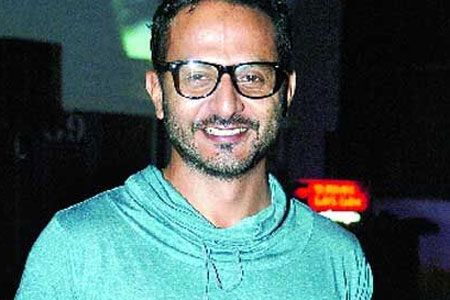
DJ is not meant to play your favourite requests at party: Nikhil

Veejay and DJ Nikhil Chinappa was in Ahmedabad recently for an event performing a gig for Amdavadis, and he appeared very articulate and full of love for his music. In an interview, he tells us why he does not like it when someone asks him for favourite requests at a party and how playing music for him is a journey than just an entertaining event!

What do you like about the crowds in Ahmedabad?

I have done some really nice parties in Ahmedabad. The crowd are very open and appreciative of good music, unlike bigger cities like Mumbai where people are sometimes ‘too cool’ to enjoy good music. They often don’t dance on the floor thinking that their make-up will go away, their hair is sweating so gel will go and all that! Amdavadis do not have such frills when they come to a party! At my gig I will be playing House music because that’s what crowds like here.
NikhilKF07mar2013

What puts you off when you play music?
Another thing I don’t like about people when I play at some places is that they expect a deejay to play their favourite requests. I play only what I love and it is my responsibility to entertain the crowds. But if you are wanting to listen to a Punjabi song in the middle of some interesting English songs I am playing, then you should go home or your car and play your song. The minute you play a favourite request the person will go home! Why would I want that? I like people who have high levels of energy. Unlike to what people think, the last gig I enjoyed the most was in Indore.

Will you pursue acting in films? Why did you connect with the masses?

I like Bejoy (Nambiar) so I worked in Shaitan and David. I think I connected as a deejay or veejay with the masses because I was very cool about my what I liked and what I didn’t like. I hated maths, I loved chemisty and I said it! I didn’t take off my clothes on stage to look cooler but I loved my music and digged my heels into it and did it right.

I started deejaying 10 years back and people are loving electronic dance music now. I even know that I am not a great deejay and there are many better deejays in the country. But I got many good deejays to perform for my company.

Don’t you feel people miss the shows on MTV where VJs presented music?

Not at all. MTV is a youth channel and a major research goes into what they show on television. In the past 6 years, trends have changed. When I was in college, TV played music constantly, and you waited for your veejay to play or recommend new songs ….now its Youtube and Internet. I feel MTV is 100 percent right on the content andyes the number of people who want VJs are much smaller today. Nobody wants to watch veejays recommend songs on television.

Do you feel that there was a greater recall value for the kind of western music played at gigs before than now?
Every generation has felt that their music is the best but change is constant, today a cold play band song has an enormous following like Eric Clapton had its followers in his time. In fact I am constantly fascinated by the variety of bands and singers who are emerging on the party scene. There is a lot of new disco that s coming out here. When I started my own company and my first party we threw in a club that had 800 capacity and we only had 42 people on the floor. But we had so much fun playing for them, and we did what we felt right. Today my company is doing 7 gigs in 2 days in 2-3 different cities.

source: http://www.articles.timesofindia.indiatimes.com / Home> Music> Entertainment / by Tanvi Trivedi, TNN / February 28th, 2013

Madikeri records maximum rainfall in Karnataka

Mangalore :

Madikeri in Madikeri taluk of Kodagu district recorded maximum rainfall of 3.5mm in Karnataka in the last 24-hours up to 8.30am on Monday. Puttur hobli in Puttur taluk of Dakshina Kannada district recorded highest maximum temperature of 39.2°C on February 24 at 2.30pm. Kunigal hobli in Kunigal taluk of Tumkur district recorded lowest minimum temperature of 10.9°C on February 25 at 7am, KSNDMC, Bangalore stated.
Belur hobli of Belur taluk in Hassan district recorded maximum relative humidity of 99.9% on February 24 at 8.45am. Holenarsipura hobli in Holenarsipura taluk of Hassan recorded minimum relative humidity of 4.6% on February 24 at 6.30pm. Rainfall was isolated in one district and negligible in remaining 29 districts. Light rain was recorded in one district, very light rain in four districts and no rain in 25 districts in the above 24-hours.

Karnataka for the period February 19 to February 25 recorded deficit rainfall of 82%. Against normal weighted average rainfall of 1.1mm in south-interior, north-interior, malnad and coastal parts, state recorded rainfall of 0.2mm. For 24-hours period ending 8.30am on February 25, four geographical regions received 0mm actual weighted average rainfall against normal weighted average rainfall of 0.2mm, 100% deficit from normal.

source: http://www.timesofindia.indiatimes.com / Home> City> Bangalore / by Jaideep Shenoy, TNN / February 25th, 2013

Karthik to lead South Zone in Deodhar Trophy quarterfinal

Tamil Nadu’s Dinesh Karthik will lead a 15-member South Zone squad in their quarter-final match against East Zone in the Deodhar Trophy in Guwahati on Sunday.

R Vinay Kumar of Karnataka has been named the vice-captain.

Six players from Karnataka, including Robin Uthappa and Abhimanyu Mithun have been included in the side.

South Zone squad: K Dinesh Karthik (capt, Tamil Nadu), R Vinay Kumar (vice-capt, Karnataka), Robin Uthappa (Karnataka), K L Rahul (Karnataka), Sachin Baby (Kerala), Stuart Binny (Karnataka), C M Gautam (wk, Karnataka), B Aparajith (Tamil Nadu), Abhimanyu Mithun (Karnataka), B Sudhakar (Andhra Pradesh), K Srikar Bharat (Andhra Pradesh), S Sandeep Warrier (Kerala), Ashish Reddy (Hyderabad), G H Vihari (Hyderabad) and Sanju S Viswanathan (Kerala).

Reserves: Rohan Prem (Kerala), Sagun Kamat (Goa), Rahil S Shah (Tamil Nadu), Prasanth Parameswaran (Kerala).

Team Officials: M Senthilnathan (Coach), R Ananth (Physio), K Manoj Kumar (Trainer) and K Sriram (Manager).

source: http://www.Business-Standard.com / Home> PTI stories> National> News / by Press Trust of India / Bangalore, March 05th, 2013

Team Coorg Oman returns with bronze

OmanCoorgKF05mar2013
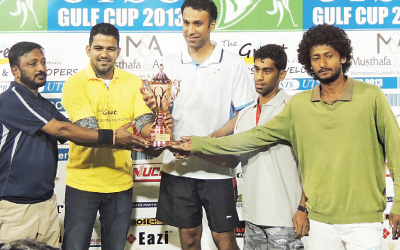
Team Coorg members pose with the third place trophy. Photo – Supplied photo

Muscat:

Defending Champions Team Coorg, Oman, took the third place in the Gulf Cup Hockey 2013, held at the Dubai Sports City turf ground on March 1.

Organised by UTSC for the fourth consecutive year, once again, 10 teams participated in this increasingly popular event in the region. The local clubs, having played a few tournaments leading up to the event, were tested to their limits, with a few teams bringing in professional players to ensure they were better positioned to win the trophy.

After an engrossing series of round-robin matches, where Team Coorg won against last year’s runners-up Axiom Dubai (2–0), Dubai Hockey Club ‘B’ (6–0), Sharjah Tigers (4–0), and UAE Falcons (Red) (1–1), the semifinals were played against the team from Pakistan, UAE Falcons (Green).

Easily one of the best matches of the tournament, both teams played skilfully and made repeated attacks on their opponents’ goal post. Team Coorg succeeded in gaining a penalty stroke and took the lead. The UAE Falcons (Green) team tried their best to break into Team Coorg’s circle of defence. A foot goal wrongly called by the referee enabled UAE Falcons (Green) to level the score, despite Team Coorg’s strong protests against the goal. The drawn game resulted in penalty shoot-outs, which UAE Falcons (Green) won, and they went on to take the trophy. Team Coorg defeated the Axiom team in the third-place playoff.

The predominantly female team from Dubai Hockey Club played some scintillating hockey and stood their ground against stronger teams.

The UAE Falcons (Red), with a mix of European and Asian styles of hockey, enthralled the spectators, while Axiom played a very decent game to take the “Fair Play” award. The Best Goalkeeper award was won by Team Coorg’s Mohammed Ayyad.

With the current general secretary of the Oman Hockey Association (OHA), Redha Taqi Al Lawati, under the guidance of the Chairman of the OHA Sheikh Mahfoodh Ali Juma Al Juma, announcing the Arabian Hockey Club championship to be held in March in Muscat as well as the upcoming 6-a-side tournament for the locals to be organised by the local expats’ United Tallassery Sports Club, March will be a hectic month for hockey enthusiasts.

SAS Naqvi, the sports consultant to the OHA, gave high praise to Team Coorg on their creditable performance and encouraged more expats to emulate their hard work.

Manager and Player of Team Coorg M.U. Kuttappa thanked the sponsors Al Qurum Centre, Al Rawahi International, Services and Trade Company LLC, Al Ansari, Elite Trading, Berger Paints, and the numerous individuals who came forward to contribute to the teams’ expenses. He also thanked all the supporters who turned up at the stadium in Dubai. Team Coorg Captain N.A. Cariappa congratulated the organisers for raising the bar for the competition and hoped other enthusiasts would hold similar events in other countries too. He also thanked the Oman media for their support and efforts in promoting hockey in the Sultanate.

Team Coorg: M.U. Kuttappa, K.K. Poonacha, N.A. Cariappa (C), C.A. Nikkin Thimmiah, K.D. Bidappa, K.G. Kiran Kumar, Zaman Qureshi, Poorna Chandra Shetty, Mohammed Ayyad (G), Salah, Ali Humaid, Aiman Abdullah, Jarvis Ahmed, and Adil.

source: http://www.timesofoman.com / Times of Oman / Home / by Times News Network / Monday, March 04th, 2013

Fate of the insurgents

The two monks who played a role in the Kodagu uprising were later captured, while they were trying to escape, and sent away for imprisonment. Kalyanaswamy was tried and hanged on June 19. Aparampara was imprisoned for thirty years in Bangalore.

Many other insurgents were imprisoned and tried by the courts.

Lakshmappa Bangarasu of Nandavar (in South Canara) was sentenced to death on May 23, 1837. Kumble Subbaraya Hegde of Kasaragod was hanged in Mangalore. Guddera Appaiah was hanged in Madikeri on October 31.

Manju of Uppinangady was also hanged in Mangalore. Kukanur Chennayya of Bellare, Subraya of Kayartody in Bantwal and Kedambadi Annaiah of Bantwal were awarded the death sentence. Kedambadi Rama Gowda, Chetty Kudiya, Kurta Kudiya and Peraje Krishnaiah were deported and imprisoned rigorously, probably for life.

Subedar Uthaiah of Nalknad, Shantaiah and Mallaiah were awarded imprisonment for fourteen years.

Much of these events were mentioned in the letters written by the Company government officers of South India.

The 1834 events that occurred in Kodagu are mentioned in Richter’s book, ‘The Gazetteer of Coorg’.

The events that occurred in Dakshina Kannada are narrated in B S Rao’s book ‘South Kanara, 1799-1860’.

source: http://www.DeccanHerald.com / Home> Supplements> Spectrum / March 05th, 2013

RC KSCA Academy cricket coaching camp from April 15

Mangalore :

The Royal Challengers KSCA Academy is organising summer cricket coaching camp from April 15 to May 31 at various places in Dakshina Kannada, Udupi and Kodagu districts.

The camp in Mangalore will be held at RC-KSCA Academy ground at Sahyadri College (Dr Srikanth Rai 9845202879); Udupi at Manipal End point Ground, Manipal (Balakrishna Parkala 9448252703); Kundapur at Gandhi Maidan (Pradeep Vaz 9448252649); Ujire at SDM College ground (Vasanthraj 9481391516); Puttur at St Philomenas College ( Vishwanath Naik, 9448121494); Madikeri at Kodagu Vidyalaya (Damodhar 9945273688) and Gonikoppa at KALS (Datta Karumbaiya 9845055366).

The selection trials for this will be held on March 9 and 10 at 8.30am at the above mentioned places. Players those born on or after September 1, 1994 are eligible for U-19 and September 1, 1997 for U-16 years.

Players must bring their own kits original date of birth certificate along with the copy of the same.

source: http://www.articles.timesofindia.indiatimes.com / Home> Sports> Cricket / by Jaideep Shenoy, TNN / March 02nd, 2013