Category Archives: Nature

Smiles at hidden spots of Somwarpet in Coorg

There is always a thrill to go to places that are off the beaten track and this time we decided to go on a short drive around the Somwarpet taluka of Coorg.

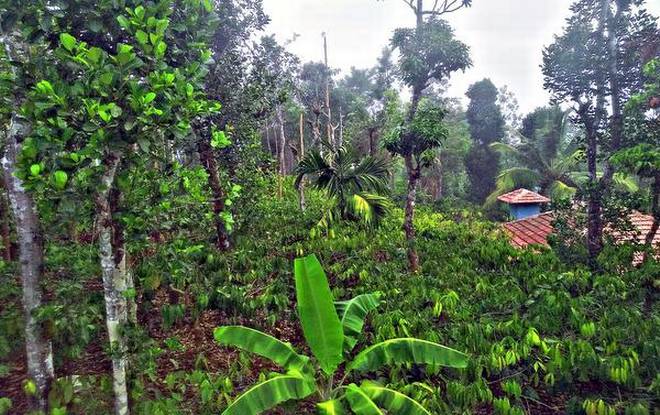
The lush greenery, the winding roads, the up and down terrain, the coffee and pepper plantations on either side made me feel really blessed to have so many rich natural wild sights to admire in South India. Even the quaint village of Shanivarsanthe felt as if time had stood still there since ages.

And thankfully these places are quite free of the noisy tourist crowds that I usually see elsewhere. Our dear local friend Prasanna insisted that we visit the the biggest lake in Coorg called Honammana Kere.
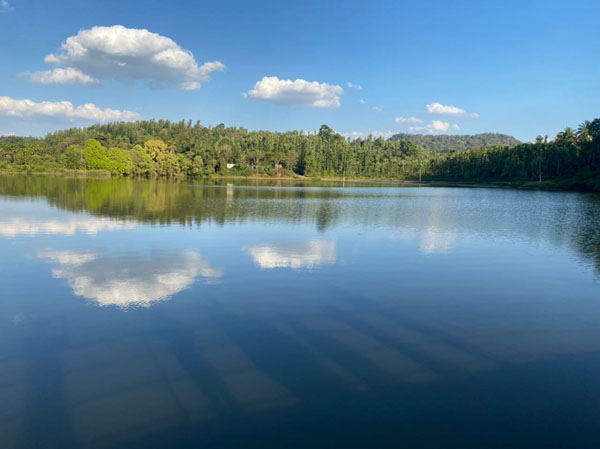
Our first impression was just a silent awe for the stunning natural beauty of this place. The reflection of the blue skies, the white clouds and the rich green foliage on the crystal clear waters was mesmerising. This lake was nestled in between the hills called Morí beta and Govi beta. On a more adventurous note, if we had more time, we could have undertaken short treks to the temples on top of the hills to admire the stunning views from the hilltops too!

There is a Honnamma devi temple besides the lake that has an interesting history. A local ancient king had prayed during the times of water shortage and refused to sacrifice his daughter-in-law, when asked to do so. However his pregnant daughter in law Honnamma walked into the waters and drowned, sacrificing her life for the well being of the people and ensuring abundance of water for all.

She is revered by the locals as a Goddess in a unique shrine dedicated to her on the banks of the lake. I noticed an ancient stone with carved inscriptions in front of the temple probably recording this interesting piece of history.

A lot of devotees come here for the powerful blessings of the Devi for marriage or child prospects. I was told that on Gauri festival day, at least 101 ladies immerse sets of many Pooja items like fruits, vegetables, turmeric kumkum, bangles etc. in the waters.

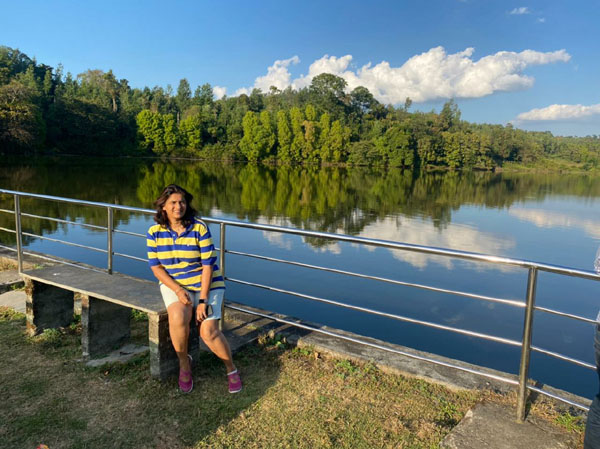
Yes, the spiritual energy of the place was something that could not be expressed in words. The calm serene feeling of the mesmerising natural ambience made the lake feel like a hidden gem. I could probably spend hours sitting on the temple steps, dipping my feet in the water and doing absolutely nothing.

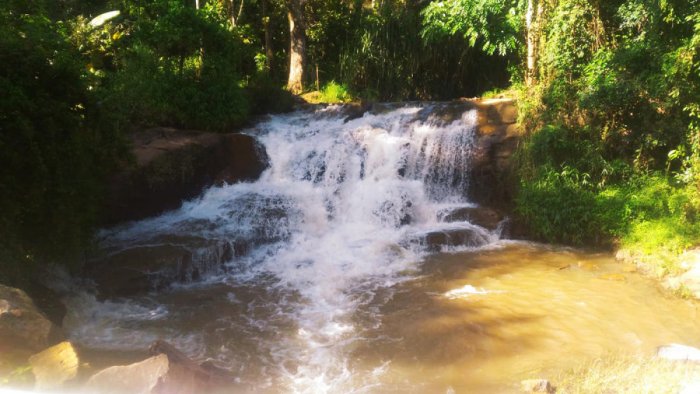
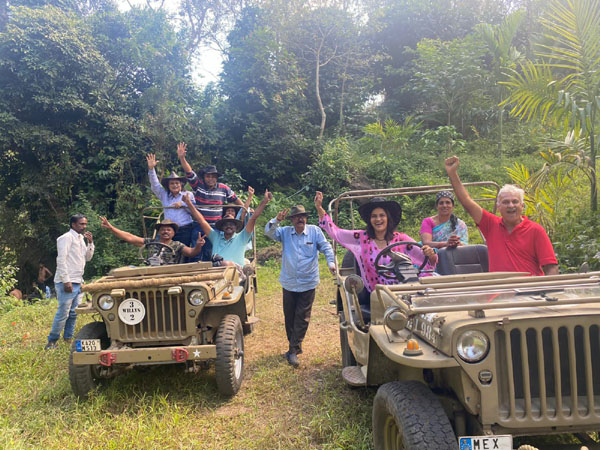
We had a sumptuous lunch with our gracious host Jairaj Shetty at a place called Whisper Valley. The 360 degree natural view made it feel as if we were in heaven! The open air jeep ride through the coffee plantation to a hidden stream was an adventure by itself! And we just had to frolic in the gushing waters feeling rejuvenated like kids again!

It was a day well spent with good friends and lots of smiles in the unknown nooks and corners of Somwarpet.

_________

Shobha Rao Smilemaker has a vision of living in a world where people use their ability to find and make smiles in any situation. She is a lawyer by qualification, a soft skills trainer by passion, a motivational speaker, a freelance journalist, a bestselling author, an avid traveler and founder of ‘Smilemakers Trainings’. She can be contacted at www.shobhasmilemaker.com

______________

source: http://www.daijiworld.com / DaijiWorld / Home> Karnataka / by Shobha Rao Smilemaker / January 18th, 2022

HC junks PIL against construction of jungle resort in Kodagu, slaps Rs 50K fine on petitioners

The petition was filed by PS Mohan and others from Kodagu district on the ground that permission was not obtained from the central government under the provisions of the Forest Conservation Act.

Bengaluru :

The Karnataka High Court on Tuesday slapped a cost of Rs 50,000 on a group of petitioners for wasting the precious time of the court by filing a public interest litigation challenging the construction of the Jungle Lodges and Resorts (JL&R) by the Karnataka State Tourism Development Corporation (KSTDC) at Dubare forest in Kodagu district.

“We are of the view that the writ petition is filed without any material to support the contention raised in the petition and it appears that it has been filed with ulterior motives in order to pressurise the respondents — the state authorities. The conduct of the petitioners as such is deprecated for the purpose of wasting the precious time of the court by imposing cost of Rs 50,000 which has to be paid to the Karnataka State Legal Services Authority,” said a division bench of Chief Justice Ritu Raj Awasthi and Justice Suraj Govindaraj.

The petition was filed by PS Mohan and others from Kodagu district on the ground that permission was not obtained from the central government under the provisions of the Forest Conservation Act for construction of JL&R.

In counter, the government advocate contended that no permission of the central government is required for construction of the jungle lodge by the KSTDC in the reserve forest area coming under the state government.

The counsel of JL&R raised preliminary objections regarding the maintainability of the petition. It was alleged this petition was filed on some personal interest and that JL&R has installed river rafting activities in Dubare area which adversely affected the petitioners. But no public interest is involved in the petition and it has been filed with ulterior motives, the counsel of JL&R argued.

After hearing the parties, the court noted that the JL&R which was constructed in Dubare is a body created by the KSTDC which itself is totally controlled by the state government and no private interest is involved in the activities of the JL&R.

source: http://www.newindianexpess.com / The New Indian Express / Home> States> Karnataka / by Yathiraju, Express News Service / January 04th, 2022

Rs. 50 Lakh Released For New Elephant Camp At Harangi

Madikeri:

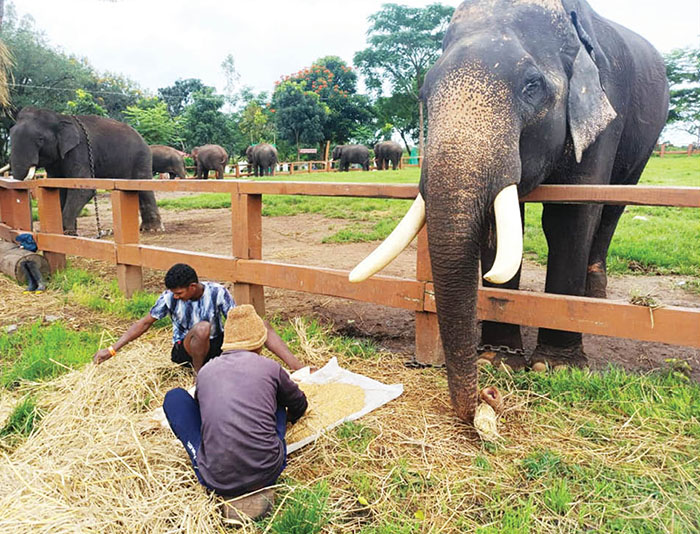
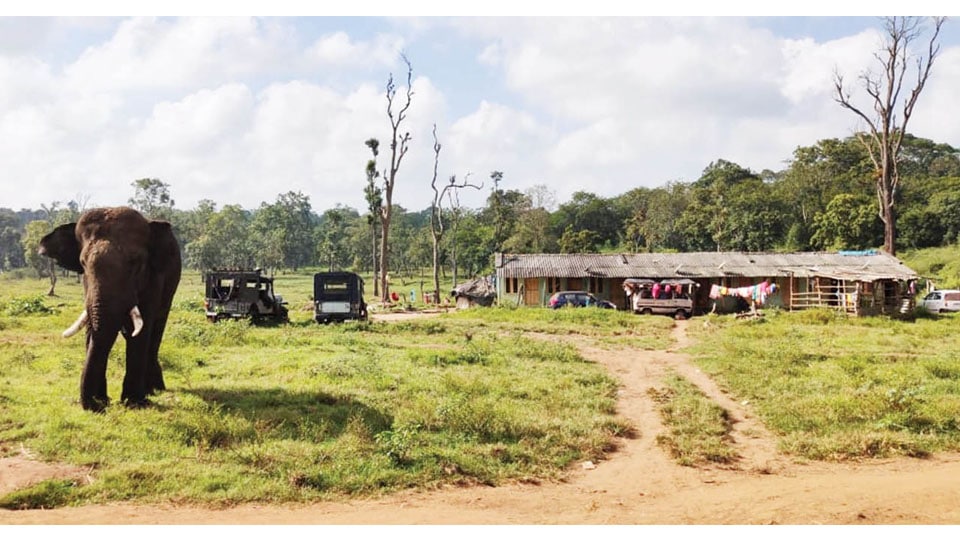
The State Government has released Rs. 50 lakh to set up a new elephant camp at Harangi in Kodagu District. Already, Kodagu has two elephant camps, one at Dubare and another at Mathigodu near Anechowkur Gate that borders Mysuru.

The aim of the new camp is to decongest the existing eight camps across Karnataka where the pachyderm population has increased over the years. The State Government in February this year had ordered the setting up of a new elephant camp at Harangi.

Replying to a question raised by Madikeri MLA M.P. Appachu Ranjan in the on-going Legislature session at Belagavi regarding the Harangi Elephant Camp and a Tree Park, also at Harangi, Forest Minister Umesh Katti said that from 2017 till 2021-22 Rs.1.38 crore has been released by the Government and works are on to create the Tree Park.

This apart, Rs. 50 lakh has been released for Harangi elephant camp under funds from Compensatory Afforestation Fund Management and Planning Authority (CAMPA). Apart from setting up a new elephant camp, there are plans to initiate other related development programmes including developing the camp as a tourist centre and at the same time provide shelter to the elephants, he added.

File photos of Dubare Elephant Camp near Kushalnagar in Kodagu district.

The Forest Department will establish the elephant camp in a 40-acre land at Athur Reserve Forest beside Harangi Reservoir in Kushalnagar Taluk. The place, located near the Harangi Dam backwaters, is ideal to set up the elephant camp.

The Government has also plans to closely develop Cauvery Nisargadhama in Kushalnagar and together with the new elephant camp in the region, the initiatives will boost eco-tourism activities, the Minister told the Assembly.

Currently, Karnataka has eight jumbo camps housing about more than 100 tamed elephants that are used to rescue wild animals and for logging purposes at Government timber depots.

The new elephant camp is expected to reduce the burden on the nearby Dubare Elephant Camp, which currently has over 32 elephants, the highest in the State.

source: http://www.starofmysore.com / Star of Mysore / Home> News> Top Stories / December 20th, 2021

Huthari festival observed with traditional fervour

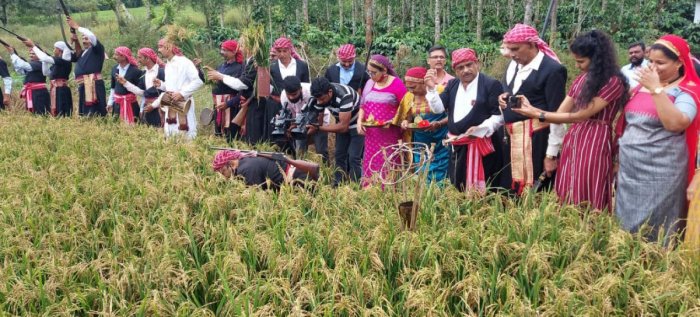
The paddy sheaves were cut by the CNC members during Huthari celebrations at the paddy field belonging to Nandineravanda Uthappa, in Chikkabettageri.

The Codava National Council (CNC), led by its president N U Nachappa, celebrated Huthari or Puthari — the harvest festival of Kodagu, at a paddy field of Nandineravanda Uthappa, in Chikkabettageri village, near Kushalnagar, on Friday.

Wearing traditional Kodava attire, the members participated in the celebrations by cutting paddy sheaves. Later, they offered prayers for the prevalence of peace and to eradicate Covid-19 from the world. 

The members offered prayers to the gods and initiated the process of Huthari celebrations by ‘Nere Kattuva’ ritual using the leaves of Arali, mango, jackfruit, Kumbali and cashew nut trees. 

After the rituals, the members took out a procession to the paddy field, accompanied by the ‘Dudikottpat’. After firing thrice in the air, Nachappa offered puja rituals and cut paddy sheaves.

Later, the paddy sheaves were brought back to the house and puja rituals were conducted.

CNC members presented ‘Kolata’, ‘Pareyakali’ and other cultural programmes.

Later, they also danced to the traditional beats and relished rice payasa, ‘Thambittu,’ ‘Kadubu,’ ‘pandi curry,’ ‘chicken curry’ and others. 

Speaking on the occasion, Nachappa urged the government to declare a national holiday for the Puthari festival. 

The Kodavas should be considered as a separate race to save the Kodava tribal culture for the future generation. Kodava language should be included in the Eighth Schedule of the Constitution, he said. 

“Kodava culture has all the qualifications to be included in the Intangible Cultural Heritage List of Unesco. By showcasing our rituals, we can assert our rights,” he added.

source: http://www.deccanherald.com / Deccan Herald / Home> State> Mangaluru / by DHNS, Kushalnagar / November 19th, 2021

Farmer From Kodagu Has Won An Award For Preserving Local Pepper Crop

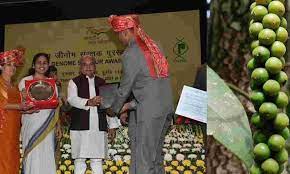
Left, N Poonacha receiving the award at the ceremony in New Delhi. Right, Snapshot of the indigenous ‘Adi Pepper’ spikes.

HIGHLIGHTS

  • Napanda Poonacha of Kodagu district, a progressive farmer, who hopes to be recognized as a pro-nature farmer
  • He was recently granted the Plant Genome Saviour Farmer Reward (2019-20) for his efforts to save indigenous ‘Adi Pepper’ crop

Napanda Poonacha of Kodagu district, a progressive farmer, who hopes to be recognized as a pro-nature farmer and has set examples for the other farmers to come forward to encourage them. He is working hard to establish commercial crops that have minimal or no negative impact on biodiversity, and he was recently granted the Plant Genome Saviour Farmer Reward (2019-20) for his efforts to save indigenous ‘Adi Pepper’ crops.

The Union Agriculture Ministry’s Protection of Plant Varieties and Farmers’ Rights Authority bestowed the honour on Poonacha, who received it from union agriculture minister Narendra Singh Tomar at an event in New Delhi on November 11.

He is the owner of Adi Pepper Demo Farm and Research Center in Garvale, where he is actively engaged in discovering natural crops in the district that have the capacity to become commercial crops while inflicting minimal environmental impact.

Napanda Poonacha expressed his happines for recieving the award. He said that farmers who recognise, conserve, and cultivate crops that are beneficial to biodiversity have been given this honour. Furthermore, He received the prize for his research, conservation, and promotion of the ‘Adi Pepper,’ an indigenous kind of pepper mainly grown across the natural habitat of Garvale village borders in Kodagu, India.

He further explained that Adi Pepper crops can be discovered all around the Garvale region in their natural habitat. They undertook the responsibility at the research centre to obtain this species of pepper registered under PPFRI, and in 2015, this high-quality pepper was recognised as a farmer’s variety pepper. This is the only pepper species that has passed biochemical testing, and it is regarded the best of the seven pepper species growing in Kodagu.

Since that particular form of pepper was once known as forest pepper and was mainly used for domestic reasons by the people, it has recently reached a brand value of Rs 3500 per kilo, generating more than six times the earnings of the other black pepper species sold in the district.

source: http://www.thehansindia.com / The Hans India / Home> News> State> Karnataka / by Susmita Modak / by Hans News Service / November 19th, 2021

CFTRI Scientist Develops New Beverage From Coffee Leaves

Mysore/Mysuru:

Here is a chance for coffee growers to get additional cash from their plants throughout the year apart from income from the sale of beans. Mysuru-based Central Food Technological Research Institute (CFTRI) has developed a technology to prepare a value-added product from coffee leaves that packs in health benefits too.

Coffee is only harvested for a few months every year, depending on the country’s harvest season. This can leave a number of producers and workers without work (and income) for a significant portion of the year.

Pushpa S. Murthy

However, some producers have decided to diversify the crops that they grow and sell. As coffee leaves are constantly being produced, growers can harvest them in the off-season if there is demand, according to Pushpa S. Murthy, Principal Scientist (Spice and Flavour Science Department) of CFTRI.

This technology follows a CFTRI project on the development of value-added products from coffee leaves taken up in 2019. The project was funded by the Union Ministry of Food Processing Industries.

If farmers can use the leaves which can be harvested during the off-season or during pruning, without interfering with coffee bean growth, it will have a great impact on the social elevation of coffee farmers, she said.

Around 70 percent of the coffee industry is unemployed or underemployed during nine months of the year due to the nature of the growth cycle of the coffee beans. The project aimed to provide a year-round sustainable process for the coffee farmers.

With CFTRI technology, the brew can be prepared with water, allowed for a few minutes to steep, filtered and consumed. The institute has initiated the transfer of this technology to the coffee industry, and a few industry participants have already extended their consent, she said.

The leaf brew does not really taste like coffee, according to Murthy. “The brew is subtle with less caffeine compared to coffee or tea,” she said. On the nutritional value of the beverage, she said coffee leaves are rich in phenolic acids with potential health benefits. A coffee leaf contains around 17 percent more antioxidants than green tea. The beverage should be consumed plain.

The beverage accords health-promoting polyphenols like chlorogenic acid and mangiferin which help in reducing blood glucose levels, inflammation and blood pressure, she said.

 Leaf drink ‘kuti’ and ‘kahwa daun’ popular in Sumatra, Ethiopia

Coffee leaf tea has been consumed in Sumatra, Ethiopia, Jamaica, Java and Sudan for centuries. From the 16th century to the 19th century, Ethiopian farmers set aside their harvested coffee for trade or consumption in special ceremonies. As a day-to-day drink, the Harari people in Ethiopia instead enjoyed ‘kuti’.

‘Kuti’ tea was made by boiling coffee leaves in hot water, sometimes with a pinch of salt or some sugar. It was generally boiled for at least 30 minutes, as it was believed that the longer the leaves were boiled for, the sweeter the resulting brew would be.

Coffee leaf tea bears some similarities to green tea, but it is more earthy and sweeter. It is lower in caffeine than green tea, and thanks to its high levels of antioxidants, it has historically been believed that it cures or relieves cold symptoms.

In the 19th century, Dutch colonists transported coffee plants to designated farming regions in Indonesia. Workers on the coffee plantations were forbidden from consuming the coffee they harvested, so they drank something called “kahwa daun” instead.

‘Kahwa daun’ was made by drying coffee leaves in the sun to reduce their bitterness. The leaves were then smoked and roasted for a few hours. Finally, they would be steeped in boiling water, and then served in a coconut shell.

source: http://www.starofmysore.com / Star of Mysore / Home> Top Stories / November 14th, 2021

Native shade trees in coffee plantations vital for diversity, abundance of birds, says study

The joint study found bird species richness to be higher in shade coffee plantations that had 78 species than in open coffee plantations that had 55 species

‘Alteration of canopy, woody plant composition can influence pattern of functional composition of resident birds’

Verdant coffee and tea plantations are more than an ideal backdrop for photos; they support a thriving avian population. In a study that underscores the need to understand the patterns and drivers of bird species composition and diversity outside Protected Area (PA) networks to develop landscape-level conservation strategies, researchers found that they varied in differently-managed plantations.

The findings were the result of collaborative work by Kannur University, Kerala, Salim Ali Centre for Ornithology and Natural History, Coimbatore, Ashoka Trust for Research in Ecology and the Environment (ATREE), Bengaluru, and Ferns Nature Conservation Society, Wayanad. It was published in July 2021.

Focussing on the coffee plantations in the Western Ghats, which are an important agro-ecosystem and help maintain a significant portion of regional avian diversity, the researchers compared the composition and functional diversity of resident birds between shade and open coffee plantations.

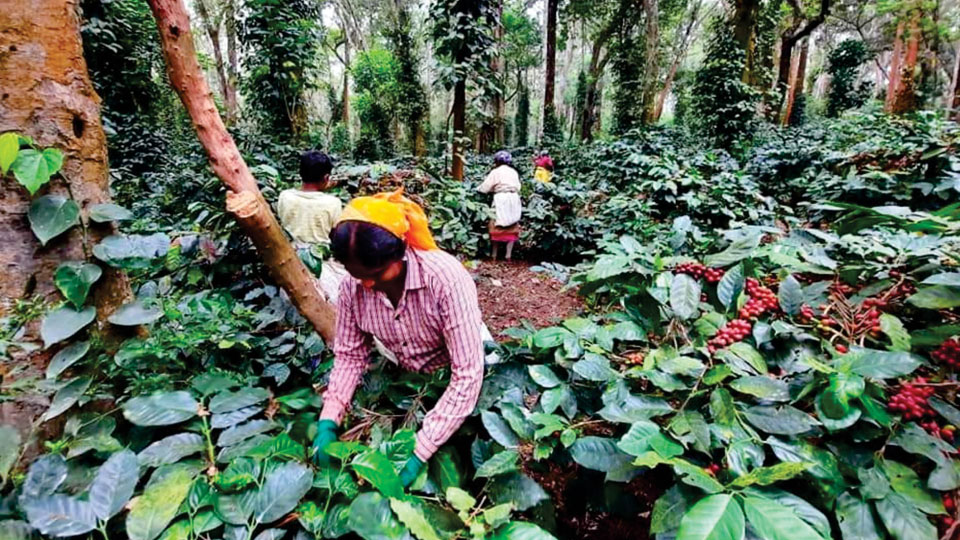
They counted 3,846 birds of 87 species, and found species richness to be higher in shade (78 species) than in open coffee plantations (55 species). “Interestingly, 32 species were unique to shade and nine were unique to open coffee plantations, with 46 species found in both types of plantation. Species richness and abundance were higher in shade coffee,” the study says, adding that the results reveal that different farm management practices can affect functional bird richness and its abundance in coffee plantations. They have made a case for retaining shade-trees of native varieties in coffee plantations to support high functional diversity, richness, and abundance of birds in the coffee plantation of the Western Ghats.

The study, ‘Resident birds show different patterns in species composition and functional diversity in differently managed coffee plantations in the Western Ghats, India’, was published by the Ornithological Science journal in July 2021.

Speaking to The Hindu, Santhanakrishnan Babu, one of the authors, said the study was conducted between May and August, 2016, in the northern part of Wayanad district. “Wayanad is a major coffee producer, producing 90% of the Kerala’s coffee. Our study aimed to understand how resident birds respond to differently-managed coffee plantations – shade and open,” he said.

The Kerala government recently passed an order to chop all resident trees on private land except sandalwood. This will lead to extensive chopping of resident trees from the coffee plantations which will affect biodiversity, he added.

Another author Athira S. Variar and Mr. Babu said retaining shade trees of native varieties in coffee plantations is important for supporting high functional diversity, richness, and abundance of birds. “Shade plantations support several habitat specialists and range-restricted birds, and alteration of the canopy and woody plant composition can influence the pattern of the functional composition of resident birds. Since our study covered only one season, year-round study in these plantations may shed more light on the composition of resident, breeding and migratory bird species,” they said.

Conservation strategies

They have called for landscape-level conservation strategies. Author Anoop N.R. pointed out that the Forest Department has little authority over the plantations located outside forest areas, and trees in these plantations are increasingly being replaced with exotic trees such as Grevillea robusta. “To promote the protection of large native trees in coffee plantations, we recommend initiating programmes to provide financial incentives to private landowners. Education programmes will also help to improve community support for retaining texisting indigenous tree varieties and promote planting more of the same,” he recommended, adding that a framework needs to be developed with regard to which species can be planted and which must be maintained, or removed, from the plantations.

source: http://www.thehindu.com / The Hindu / Home> News> States> Karnataka / by K C Deepika / Bengaluru, October 04th, 2021

Sustainable ecotourism mooted for Kodagu

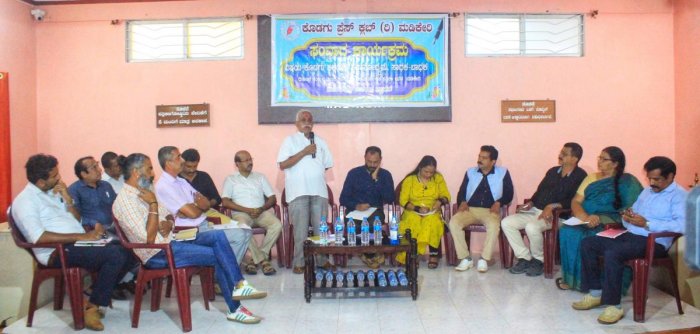
Chamber of Commerce president M B Devaiah speaks during a discussion on the pros and cons of tourism in the district, held at Kodagu Press Club, Madikeri, on Tuesday.

Various stakeholders in the tourism sector gave their suggestions towards developing sustainable and eco-friendly tourism in Kodagu, during a discussion on the pros and cons of tourism in the district, held at Kodagu Press Club, Madikeri, on Tuesday.

Chamber of Commerce president M B Devaiah said that it is the foremost duty of the people of Kodagu to preserve the environment of the district. Businesses can be carried out while maintaining ethics. Money is not everything.

“Nature-friendly industries should be set up in the district to provide jobs for people,” he added.

Pravasodyama Avalambitara Okkoota president K K Manjunath Kumar said that tourism contributes immensely to the development of a country.

Tourism in Kodagu has been generating good revenue, he said and pointed out that the countries which are backward in tourism are backward in development as well.

Resort and Hotel Owners’ Association president Nagendra Prasad said that there has been a significant rise in investment in the tourism sector in the district after the market for coffee fell. There are 1.50 lakh people in the district who are depending on tourism activities for their livelihood.

Kodagu Press Club president Ajjamada Ramesh Kuttappa in his introductory remarks, said, “Every citizen of the nation has a right to carry out legal work in any part of the country to make a living. No restrictions can be imposed on him or her in carrying out a job. A forum has been formed to discuss the problems of people working in the tourism sector and to find possible solutions.

Hotel, Lodges and Restaurants’ Association advisor Chidvilas said that coffee growers switched to homestay and hotel industry after they suffered losses in the coffee industry. He also advised imposing a total ban on plastic at tourist destinations in the district.

Kodagu Samrakshana Vedike convener Chammatira Pravin Uttappa said that there is a need to curb illegal activities which are carried out in the name of tourism.

“Insulting the traditional Kodava attire in some resorts should stop immediately. Tourism activities should stop during the Cauvery fair,” he added.

District Working Journalists’ Association president Savitha Rai, writer Bharadwaj K Anandateertha, Kodagu Hitarakshana Samiti president Rajiv Bopaiah, Travel Association president Cheyyanda Satya Ganapathy, Kodagu Tourism Association president Madetira Timmaiah and others were present.

source: http://www.deccanherald.com / Deccan Herald / Home> State> Mangaluru / b y DHNS, Madikeri / October 05th, 2021

Waterfalls in Suntikoppa are in full splendour

Haleri Falls near Suntikoppa.

Several waterfalls in Suntikoppa hobli have been attracting people and tourists with their natural splendour.

Some of these waterfalls in Suntikoppa are located inside plantations.

As the region has witnessed intermittent rainfall from the past week, many waterfalls have regained their natural beauty.

The sound of the water flowing down the hills has been beckoning the tourists.

Haleri Falls is situated at a distance of 2 km from Boyikeri. The sound of the flowing water can be heard till 2 km.

‘D’ Block Falls in Kedakal Gram Panchayat limits near Suntikoppa, is one of the most attractive falls. The waterfalls cascade amidst the greens, providing a feast for the eyes.

source: http://www.deccanherald.com / Deccan Herald / Home> State> Mangaluru / by DHNS, Suntikoppa / August 24th, 2021

Neelakurinji blooms beckon tourists, chopper rides on offer

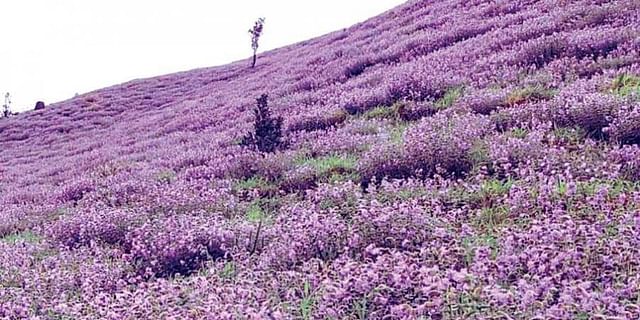
The mass blooming of the Neelakurinji flower (Strobilanthes kunthiana) in Kodagu district is giving the much-needed boost to the state’s tourism sector.

Neelakurunji flowers bloom at a hillock in Kodagu district | forest department

Bengaluru:

The mass blooming of Neelakurngi in Coorg has made it a rallying point for wildlife enthusiasts, botanists, photographers and tourists.

The blooming at the hillocks of Mandalpatti and Kote Betta in Kodagu, tourism has also taken up the north. Since the blooming has happened for the first time in a such a massive scale and is after 12 years, more so after tourism activities have opened up after the pandemic, every one are heading to India’s Scotland to see them. 

The new entrant in the list to draw tourists is heli- tourism. As the state government and the tourism department are trying the revive the long pending heli- tourism, a firm in Bengaluru has undertaken a heli- ride to Kodagu and surrounding areas, giving an areal view of the blooming Neelakurunji flowers on the hillocks. 

Govind Nair, Director, Thumby Aviation Private Limited said already one trip from Yelahanka air base to Coorg was done earlier this week. Now it is being offered as a part of the Nowhere trip to Coorg, a package tour, where a detour to Mandalapatti will be done. 

Tourism packages and inineraries are being revamped on the go, depending upon the blooming and withering of the flowers. But since it is a once in 12 years sighting, many resorts are offering a visit to the region as a part of the package, to draw more crowds. 

Trekking and flying has now taken the front seat to draw tourists. Even as the recent guidelines of the ministry of aviation states that drones are prohibited over national  parks, wildlife sanctuaries and other eco- sensitive places, conservationists and foresters object to helicopters flyover over the region. They point not just is the area a fragile Western Ghats region, little is know the species in Kodagu and so all precaution should be exercised to safeguard them. 

Botanists point that utmost care should be taken in the area as the flowering in this part of Western Ghats has not been recorded and documented. Karnataka as around 45 species of Kurunjis and in different altitudes different species have been recorded. Each species blooms at different intervals like once in six years, nine years, 11 or 12 years. So administration must ensure that tourism and footfall is limited to the region, so that they are well protected. 

source: http://www.newindianexpress.com / The New Indian Express / Home> Cities> Bengaluru / by Bosky Khanna, Express News Service / August 27th, 2021