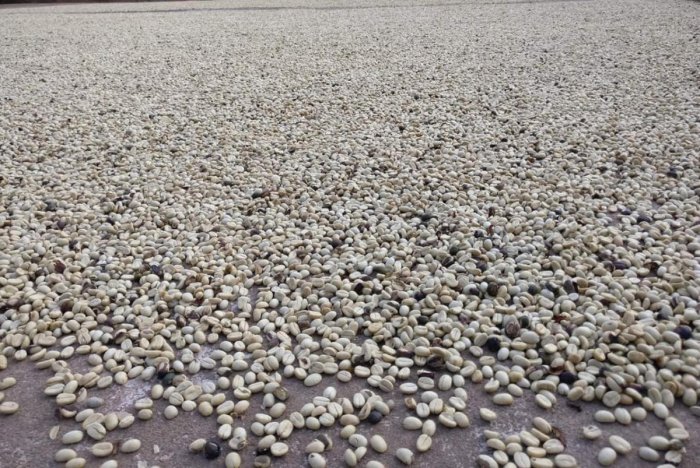
Coffee growers are happy as the market rate of Arabica parchment has reached a record rate of Rs 10,000 for a bag of 50kg. The rate has been the highest in the last eight years.
As on Wednesday, a 50kg bag of Arabica Parchment coffee was sold between Rs 10,400 to Rs 10,500, which according to the vendors, is the highest rate for Arabica parchment.
The cost of Robusta Parchment has increased to Rs 7,000 per bag. The last time when Arabica coffee reached the highest rate was in 2014. It was Rs 9,600 to Rs 9,800 per bag then. Later, the price moved downward and had touched Rs 6,000.
Arabica cherry costs Rs 4,000 per bag while the rate of Robusta cherry is Rs 3,200 to Rs 3,400 per bag.
Growers in Kodagu, Chikkamagaluru and Hassan have expressed their happiness on the improved market rate of coffee, despite problems of shortage of labourers and feasibility issue in the maintenance of the plantation.
The vendors said that the rates of Arabica parchment might increase further. Expecting the same, the growers who have stored coffee in ABC and other curing centres have decided to sell coffee after it hits an all-time high.
The increase in the rate of coffee was due to a significant decrease in production in Brazil and Columbia. There was a plunge in the production of coffee in Chikkamagaluru, Kodagu and Hassan districts as well, owing to floods. This has created an increase in demand.
Even though the market rates have increased, the quantity of coffee production is significantly less compared to previous years. The growers who grew 50 bags of coffee in the past have ended up producing only 10 bags of coffee.
“The coffee plants have been damaged due to the water-logging of the plantation. It might take another four years to restore the coffee plantations to its original condition,” said coffee grower Nanaiah.
Coffee vendor Abdul said that around 60% of coffee growers have sold their coffee. Those who had stored coffee have reaped benefits.
source: http://www.deccanherald.com / Deccan Herald / Home> States> Mangaluru / by Adithya K A / Madikeri – March 04th, 2020
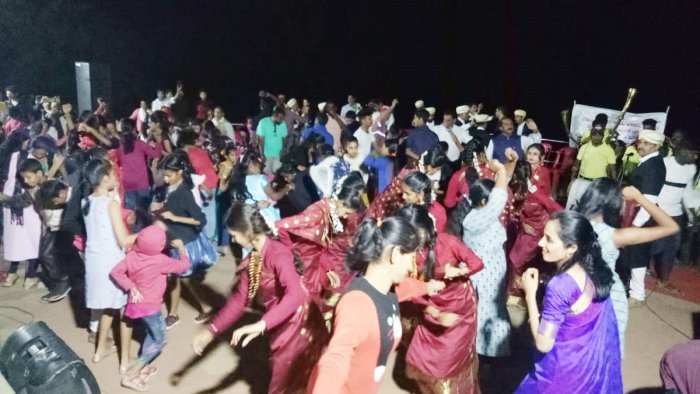
People dancing to the tune of the traditional ‘Kodava Valaga’, during the fruit and flower show at Raja Seat. DH Photo
Hundreds of visitors thronged the Raja Seat in Madikeri on Saturday and Sunday, for the fruit and flower show.
The four-day-long fruit and flower show organised by the district administration and the department of horticulture, began on Friday.
On Sunday, the localities and tourists who gathered in the venue, danced to the tunes of traditional ‘Kodava Valaga’ during the cultural programmes organised by Karnataka Kodava Sahitya Academy. ‘Arebhashe Kolata’ and ‘Sobhane Pada’ enthralled the audience.
Selfie zones set up at various parts of Raja Seat, were the centre of attraction among youth during the flower fest. Photo frames were designed with flowers for the purpose.
Open street
The police department restricted the movement of vehicles from M M Circle till Kundurumotte junction, from 6 pm to 10 pm on the evenings of the fruit and flower show. Raja Seat was made completely free from vehicular movements and the stalls featuring various snacks were opened on the road, reminding the ‘Open Street Festival’ organised during the Pravasi Utsav held in Kodagu last year. Traditional Kodava snacks were also sold in the stalls.
Students were provided with a chance to watch the fruit and flower show free of cost. A lot of students witnessed the show on Saturday and Sunday. Most of them were accompanied by their teachers.
The people also visited the stalls set by the departments of agriculture, horticulture, animal husbandry, fisheries and various other departments.
‘Mamateya Marukatte’
Various items such as children’s toys, unused clothes, stationery items, and electronic items in the working condition, were featured at ‘Mamateya Marukatte’ stall set up by Green City Forum and Madikeri City Municipal Council. The items were collected at Kaveri Kalakshetra.
The amount collected from the sale of these items were provided to the civic workers and stree shakti groups. Most of the items have been sold, said Satya, a member of Green City Forum.
source: http://www.deccanherald.com / Deccan Herald / Home> State> Mangaluru / by DHNS, Madikeri / February 10th, 2020
The annual fruit and flower show which began at Raja Seat in Madikeri on Friday has been attracting tourists and nature lovers in large numbers.
The traditional ‘Ainmane’ house made out of flowers, is the main attraction in the fruit and flower show in Raja Seat, Madikeri.
Artifacts featuring Virat Kohli, Wing Commander Abhinandan, Kuvempu, Atal Bihari Vajpayee, Narendra Modi, B S Yediyurappa, A P J Abdul Kalam, Mahatma Gandhi, Siddaganga seer, Dr B R Ambedkar, Field Marshal K M Cariappa, General Thimmaiah and Pejavara seer— all carved out of watermelons, mesmerise visitors, at the entrance of Raja Seat.
6,000 flower pots
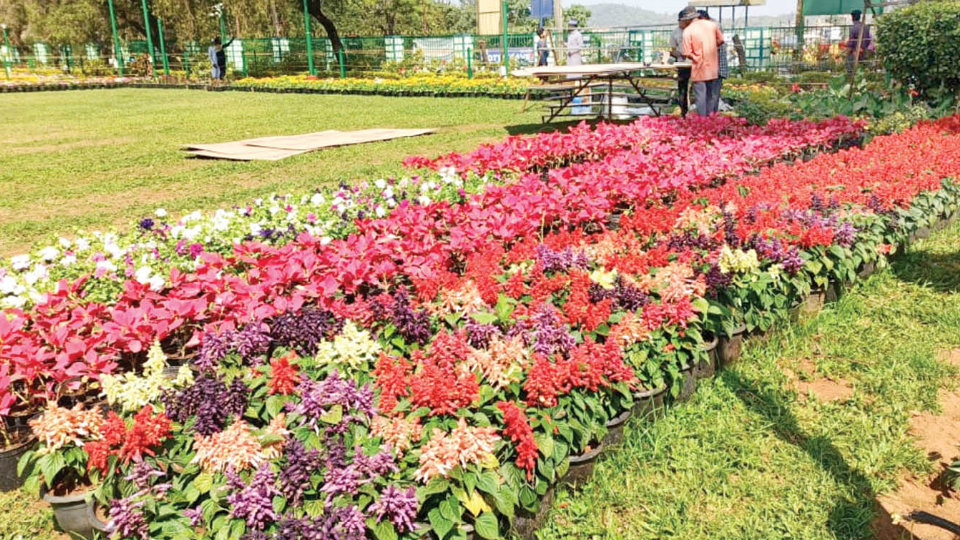
A total of 6,000 flower pots have been arranged in the park. Flowers exhibiting a wide spectrum of colours and species, arranged in artistic patterns, have been providing a visual treat.
Raja Seat, which had lost its sheen owing to lack of flower-bearing plants, is now wearing a refreshed look.
The main attraction, however, is the traditional ‘Ainmane’ (house), designed with lakhs of flowers. A lot of visitors were seen taking selfies in front of the Ainmane.
Rocket
The heart made out of roses, rocket launching station of ISRO, coffee pot and the cup, Mickey Mouse, Swami Vivekananda and other artefacts made out of flowers are making the people spellbound.
Cultural programmes will be held in the evenings, as a part of the fruit and the flower show. Food festival is being held in Gandhi Maidan. People have been relishing their taste buds with sugarcane juice from Mandya and other delicacies. Stalls have been put up by the Horticulture Department and private nurseries, featuring the sale of various flower-bearing plants.
MLA’s praise
Speaking after inaugurating the fruit and flower show, Madikeri MLA Appachu Ranjan called upon the people to come to Raja Seat in large numbers to see the show.
The show is being organised by the Department of Horticulture at a cost of Rs 20 lakh. Cultural programmes are being organised by the Department of Kannada and Culture and Karnataka Kodava Sahitya Academy, he said.
Deputy Commissioner Annies Kanmani Joy said it has been a tradition to organise fruit and flower show in the month of January or February every year. The show will be on till Monday.MLC Veena Acchaiah, MLC Sunil Subramani, Kodagu Zilla Panchayat President B A Harish, Vice President Lokeshwari Gopal, Hopcoms President Biddatanda Ramesh Changappa and Horticulture department Deputy Director Chandrashekhar were present.
source: http://www.deccanherald.com / Deccan Herald / Home> State> Mangaluru / by DHNS, Madikeri / February 07th, 2020
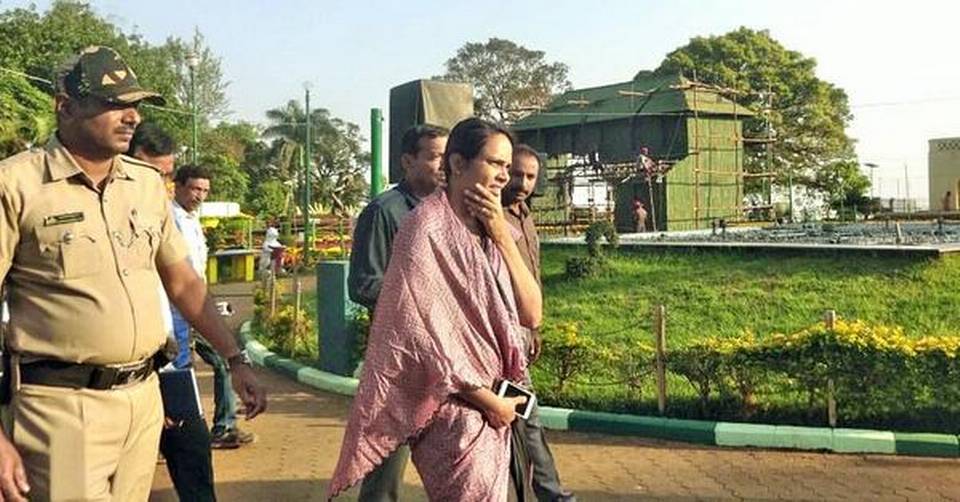
Kodagu Deputy Commissioner Annies Kanmani Joy inspect
The event at Raja Seat in Madikeri will be held from February 7 to 10
This year’s flower show in the sprawling garden of Raja Seat in Madikeri from February 7 to 10 will be plastic-free. The organisers have banned visitors from carrying plastic inside the show, which is expected to attract a lot of locals and tourists.
The organisers have urged the visitors not to carry plastic carry bags and bottles.
Kodagu Deputy Commissioner Annies Kanmani Joy on Wednesday inspected the arrangements for the show and later held a meeting with officials of the Departments of Horticulture and Tourism.
The Departments of Kannada and Culture, Kodava Sahitya Academy and other academies and cultural institutions will be presenting cultural shows on each day.
While the show is free for schoolchildren if they come wearing their uniform or with a letter issued by the heads of their schools, the entry fee for others would be ₹10, said Deputy Director of Horticulture Chandrashekar.
He requested the Police department to make arrangements for the parking of visitors’ vehicles and barricades at the venue.
Police Inspector K.B. Belliappa said temporary parking can be arranged at the old private bus-stand in view of the show from 5 p.m. to 9 p.m. and private buses can operate from the APMC premises until the flower show gets over.
Ms Joy told the officials to ensure convenience to the public and communicate information well in advance in case of changes in the arrangements.
Tourism officials urged the Deputy Commissioner to allow food stalls at the venue for the convenience of visitors.
The appeal was considered and those willing to set up food stalls will be getting space at the venue for free, a release said. Interested persons can call Tourism Department Assistant Director on 94480 04466 or 08272-228580 for information on establishing stalls and other details.
source: http://www.thehindu.com / The Hindu / Home> News> States> Karnataka / by Special Correspondent / Mysuru – February 05th, 2020
The Kodagu District Administration and the Department of Horticulture will conduct a Flower Show at Raja’s Seat in Madikeri from Feb. 7 to 10 in order to attract tourists, an official statement said. A special feature of the Flower Show will be the depiction of the lifestyle and traditions of Kodavas through floral replicas of “Kodagu Ainmane” or ancestral home.
According to the statement, this is to promote and create awareness of the lifestyle, culture and traditions of Kodavas to the present generation. Nearly 25 species of flowers and about 10,000 plants will be part of the show with floral decorations depicting the cultural facets of Kodagu.
Horticulture Department officials said the topiaries (practice of training perennial plants by clipping the foliage and twigs of trees, shrubs to develop and maintain clearly defined shapes, whether geometric or fanciful) will be brought for the festival.
In a bid to attract the children, floral statues depicting well-known personalities, will be created and serve as a selfie point for the visitors.
There will be cultural programmes in the evening on all the days of the Flower Show besides floral rangoli competition for women. Stalls will be put up for sale of handicraft items, the statement added.
As part of the Flower Show, thousands of flower pots are being arranged at Raja’s Seat. Flower pots and a large variety of flowers including African marigold, Celosia, Lady Lace, Gladiolus, Gerbera, Anthurium, Bird of Paradise, Carnations, Lilium, Tuberose, Orchids, Stasis, Chrysanthemum, and Limonium will attract visitors. Exclusive selfie spots will be created for tourists to click selfies and share on social media. Works are underway at Raja’s Seat.
source: http://www.starofmysore.com / Star of Mysore / Home> News / January 31st, 2020
Title : An Autobiography of a Kodava Forester
Author : Dr. Kodira Achappa Kushalapa, IFS (Retd.)
Pages : 228
Price : Rs. 200
Year : 2019
Publisher : Dr. K.A. Kushalapa, Mysuru.
In the film of 90 minutes duration, titled “Beautiful people: Some call them animals,” a comic allegory produced in 1974, focussing on various animals that live in arid desert environment of Africa by Jamie Uys, humorously draws parallels between animal and human behaviour. Dr. K.A. Kushalapa can vouch for the message in the film that the denizens of the forest are indeed beautiful people in a wide sense of the term, having shouldered the arduous duties of conserving India’s forests, steadily shrinking as a percentage of the total geographical area of the country. His empathy for the denizens and concern for enduring the flora have not witnessed even an iota of diminishing to this day despite retiring from an illustrious service for long years as a professional forester. Circle for Mysuru’s intelligentsia and senior citizens who have known him can testify to the vast knowledge of the author about A to Z of forest and its importance of vital role in sustaining the balance between human beings and other species on earth.
The narrative divided into 16 chapters, each with a caption indicative of specific aspects of the author’s early life and landmark events relating to his professional career culminating in his elevation to the highest post in the Department of Forest in the State Government.
Writing about Dr. Kushal-apa, in his foreword, Man-depanda K. Appayya, former Principal Chief Conservator of Forests, Government of Karnataka, has expressed his admiration of the author’s noble qualities of head and heart, that earned him respect, recognition and rewards by his achievements both academic and professional.
The events of the author’s childhood and in later stages presented in all humility and graphic details trigger in the minds of readers what a person can achieve by being stoic and steadfast along with the support of family members, as revealed by the author himself in his preface. The trials and tribulations that he has encountered at different periods of life but overcome with courage and hope sound poignant. His life’s saga belies the myth of Kodavas as a community of only planters and warriors, by emerging as a star among them in the world of academics also. The 128 published papers listed in the book’s Chapter 14, 10 abstracts of technical papers and 10 titles of social articles listed in Chapter 15 give the readers an insight into Dr. Kushalapa’s deep interest in enlightening the lay people dispelling their utter lack of knowledge about forests.
Dr. Kushalapa has thought-fully included 69 photographs, many in colour, with images of his family members as well as people who were his colleagues, showing him as an impeccable handsome person. If his dream of generating in Kodava youth the desire to spread out into various areas of challenge by pursuing professions outside the ambit of restricted areas for which Kodavas are known, is fulfilled, the author’s autobiography gets full worth of the work of writing and publishing. The proceeds of the sale of the publication is meant to be utilised for philanthropic cause. —BRS
source: http://www.starofmysore.com / Star of Mysore / Home> Feature Articles / December 22nd, 2019
This year, the marathon was completely eco-friendly and trash-free, with water being served in coconut shells, food in banana leaves and plates made out of areca leaves.
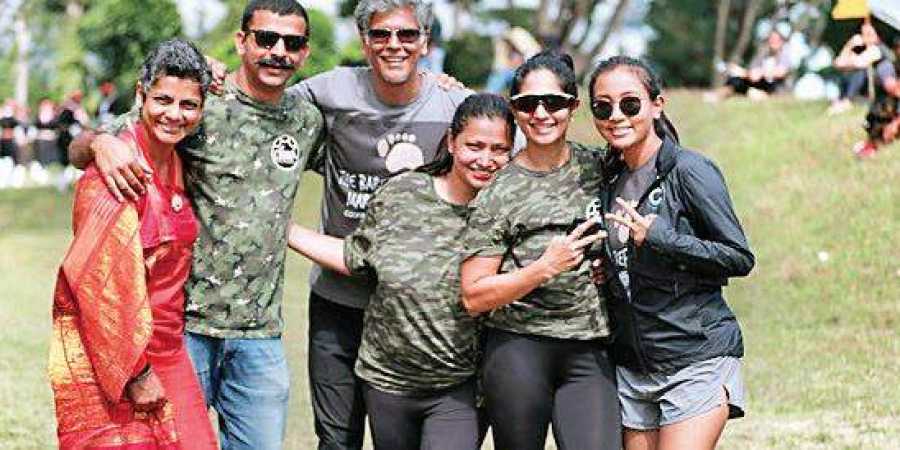
Nikki Ponnappa (left) along with Milind Soman (in grey) and members of The Coorg Wellness Foundation
Bengaluru :
Bengaluru-based golfer Cheppudira Nikki Ponnappa can never decide what she is passionate about more – her love for sports or working towards saving the ecology of her hometown, Kodagu. The international-level golfer recently arranged the fifth edition of Barefoot Marathon, which happened on Sunday in Kodagu. The marathon was an initiative by her organisation, The Coorg Wellness Foundation, in association with avid marathon runner and her friend, Milind Soman.
This year, the marathon was completely eco-friendly and trash-free, with water being served in coconut shells, food in banana leaves and plates made out of areca leaves. The warm-up exercise before most marathons is usually Zumba, but keeping up with local traditions, Valaga music, which is traditional Kodava music, pumped up the participants. The highest prize being `42,000 for 42 km, the marathon had some interesting rules for the prizes that were distributed.
The cash prize went to runners from the neighbourhood area, while the non-local runners got to bring home produce by local farmers, which included rice, coffee, spices etc. All the funds collected from this event will go towards betterment of the families who lost everything in the landslide that hit Coorg in 2018.
More than 400 people participated in this marathon. Ponnappa says the main objective of the run was to bring people closer to nature. “When you run barefoot and feel the soil, it makes you feel closer to Mother Nature. Barefoot is a symbolic way to do something auspicious, plus it has lot of scientific benefits too. We have many nerve points in our feet and these runs work wonders for them.
It was great to see so many people travelling to Coorg, especially from Bengaluru, to participate in this marathon,” says Ponnappa, who was first introduced to golf at the age of 14-15 by her father, who was then serving in the Indian Army. She is also a certified coach and a social activist. Ponnappa’s organisation, the Coorg Wellness Foundation, which was set up in 2014, works towards the development of the people of Kodagu and its eco-system. Along with free education and boarding, they also provide training to join the Army.
source: http://www.newindianexpress.com / The New Indian Express / Home> Cities> Bengaluru / by Monika Monalisa / Express News Service / December 10th, 2019
– Rare ‘Ring of Fire’ visible in South Kodagu
– Over 2,000 hand-picked students to witness celestial event from 8 am to 11 am
– Organisers aim for India Book of Records
Mysuru:
Kaimaani, a remote village in Kutta, South Kodagu, is all set to witness the rare Annular Solar Eclipse on Dec. 26 — the third and final solar eclipse of the year 2019. The Mysore Science Foundation (MSF) is organising a sky-gazing event at Kutta where nearly 2,000 children and general public will witness the spectacular event.
In the Annular Solar Eclipse, Moon does not completely obscure the Sun as the Moon is farther away from us than normal, making it appear smaller. As a result, the Sun is not totally eclipsed, leaving a ‘Ring of Fire’ around the edges.
The Mysore Science Foundation has tied up with Aseemit Edutech Private Limited, a Pune-based organisation (Mitee as its sub-group) for the event. Aseemit Edutech Private Limited is involved in secondary and senior secondary education.
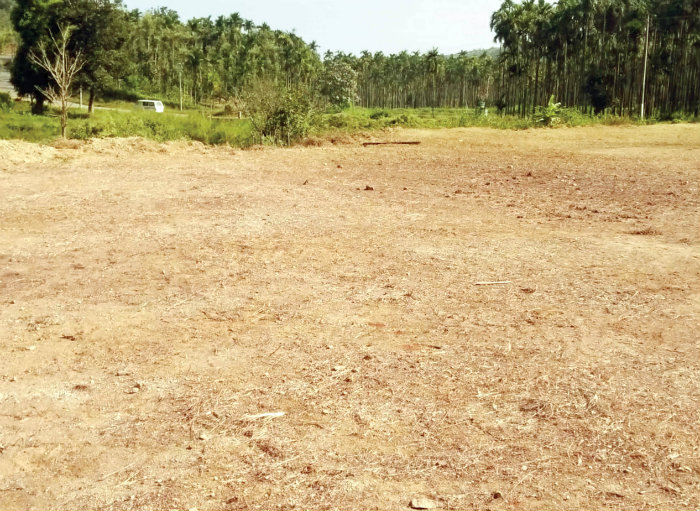
The spot in Kutta where the sky-gazing event will be witnessed on Dec.26.
Kutta falls on Solar Path
Speaking to Star of Mysore, G.B. Santosh Kumar of Mysore Science Foundation, said that Kutta falls on the Solar Path and as such, the visibility is clear. The visibility of Annular Solar Eclipse in Mysuru is only 75 percent.
“Mangala in Gundlupet, Coimbatore in Tamil Nadu, Udupi in Dakshina Kannada and Kutta in South Kodagu fall on the Solar Path where there is a clear visibility.
“We did not get permission from the Forest Department for the event as Mangala falls under the limits of Bandipur Tiger Reserve. And 2,000-strong crowd going to Coimbatore and Udupi was a distant possibility. As such, we have zeroed in on Kutta where the event can be viewed from 8 am to 11 am,” Santhosh said.
Kaimaani coffee yard
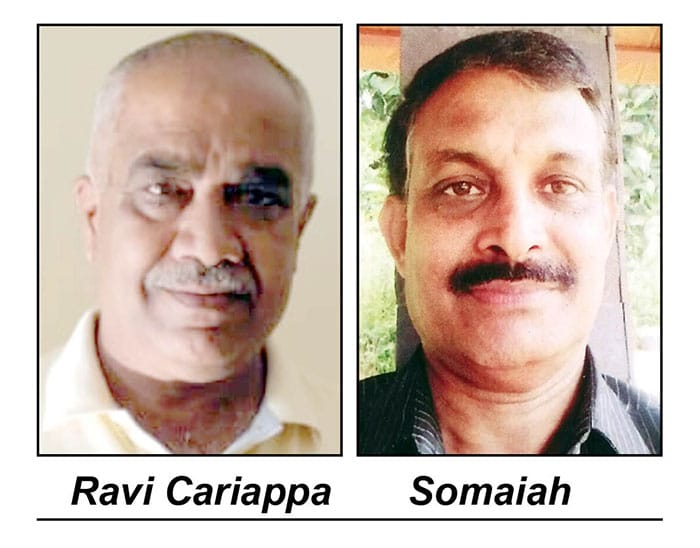
At Kutta, the event will be organised at the newly-developed coffee drying yard of Kolera Ravi Cariappa in Kaimaani village. “The place is by the side of the road and the land is in a higher altitude and there is an arecanut plantation below. This is a perfect location for witnessing the once-in-a-lifetime event,” said Kotrangada Somaiah, a teacher at Manchalli Government School, who played a key role in identifying the location for the organisers.
“People from Mitee Pune contacted me two months back and requested me to find out an ideal place in Kutta to view the event. First we considered the Government Higher Primary School Cinkona in Kutta for the event but had to cancel it as the approach road was not good. The Kaimaani coffee yard is a perfect location as it is by the side of the road. There are facilities including toilets and I have requested the local residents to allow children to use their toilets,” said Somaiah.
India Book of Records
The event organisers have already registered in the India Book of Records for the largest gathering of children in one place to view Annular Solar Eclipse. “On Dec.17, the Mysore Science Foundation will organise another programme called “Video Viewing” where students will be seeing eclipse-related videos to prepare them for the main event. For the actual event on Dec.26, we are expecting students from Maharashtra, Tamil Nadu and Kerala,” Santhosh added.
On that day, occurrence of eclipses, types of eclipse, science behind eclipse, myths and misconceptions, eclipse watching and safety shall be explained in addition to demonstration on pressure variation and temperature variation.
Food & accommodation
For outstation students coming from Maharashtra, Kerala and Tamil Nadu, choultries have been booked in Virajpet for their food and accommodation. “Along with them, students from Mysuru, Bengaluru and Kodagu too are participating in the event,” Santhosh said.
Student selection
On the student selection process, the Mysore Science Foundation had communicated to schools to send 10 children who are interested in astronomy and a teacher. Registrations were on first-come-first-serve basis and we have kept last-minute registrations open as we are aiming for India Book of Records, he added.
source: http://www.starofmysore.com / Star of Mysore / Home> News / December 07th, 2019
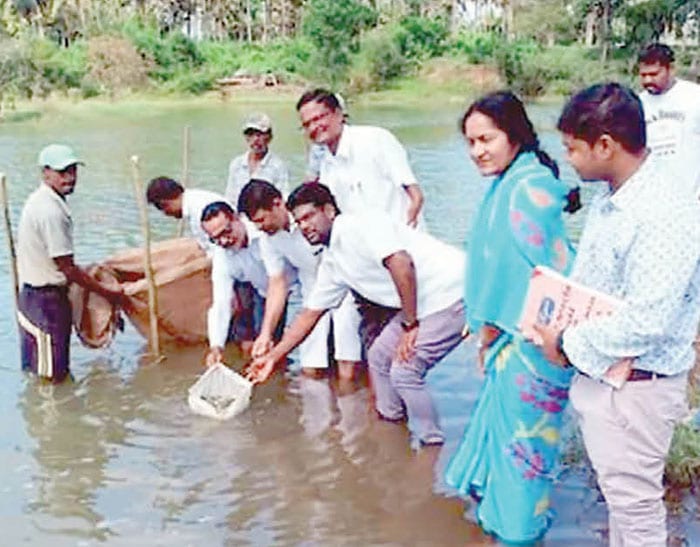
10,000 rare Mahseer fingerlings released to Harangi River at Koodige
Kushalnagar:
There are many possibilities of utilising Harangi Reservoir in Kodagu and its backwaters. One among them is fishing and fisheries development. Realising this potential, an exclusive fishing cultivation pond will be set up at Kushalnagar with Rs. 2 crore assistance from National Bank for Agriculture and Rural Development (NABARD).
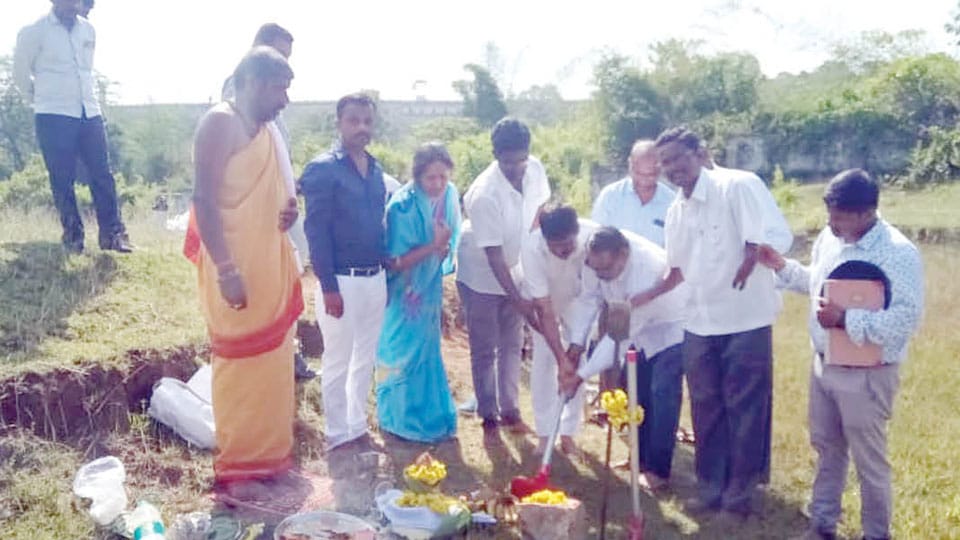
The Bhoomi Puja for the 2-acre pond was performed recently in Kushalnagar by Madikeri MLA M.P. Appachu Ranjan. Speaking on the occasion, the MLA said Harangi was one of the major reservoirs built across River Cauvery. “Due to the reservoir, there are great possibilities of pisciculture in a large scale due to abundant availability of water backed by groundwater support. Rare fish varieties like the Mahseer can be cultivated and six such ponds will be constructed in the land owned by the Fisheries Department,” he said.
Traditional fishing is being held from many years in the backwaters of Harangi, which spreads over 1,886 hectares in area. Lakhs of fingerlings are released into the reservoir every year. “As part of the project, fish cultivation enclosure has been set up in the backwaters of Harangi Reservoir and the sample of fish is being collected to study the growth of fingerlings, said Sachin, Assistant Director, Harangi Fish Rearing Centre.
He added that the Centre was set up by the Government 25 years back to support farmers who are willing to rear fish in the cultivation ponds. Varieties of fish, including Mahseer, Katla and Rohu, are reared in the Centre. Along with these, fingerlings procured from Kabini and Bhadra reservoirs are being provided to farmers at subsidised costs, he said.
On the occasion, over 10,000 Mahseer fingerlings were released to 5.6 km Harangi River stretch from the Dam to Koodige Bridge. “Through this, we intend to cultivate the Mahseer fish that is on the verge of extinction. Fishing has been banned on this particular stretch to save the Mahseer variety,” he added.
source: http://www.starofmysore.com / Star of Mysore / Home> News / November 25th, 2019
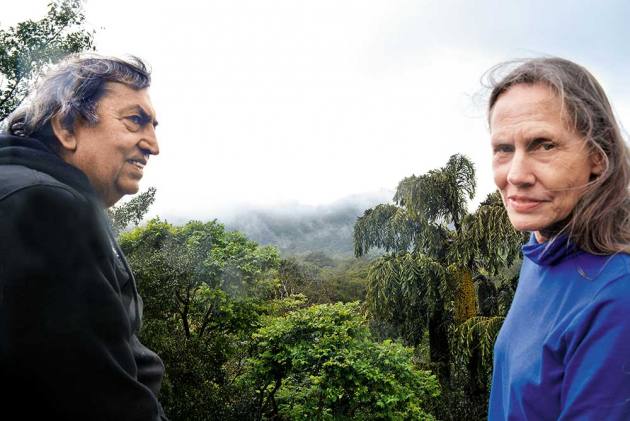
Foresters Anil and Pamela Malhotra have found peace among the coffee plantations of Coorg. Embracing nature has been their passion.
PHOTOGRAPH BY AJAY SUKUMARAN
Around four in the evening, after a late lunch, Pamela Gale Malhotra is standing at a bay window of her living room looking out at a picture-perfect landscape—a gushing stream in a rain-soaked forest with the abutting Brahmagiri hills framing the backdrop. It was about 25 years ago that she first stumbled onto this view. At the time, she was out scouting for a site for their home and had been hurrying up a hill trying to escape the rain and leeches when it struck her speechless.
The place is now more wooded than it was in 1995 when Pamela, 67, and husband Anil Malhotra, 78, built their home in south Coorg—in a coffee estate that had been listed. How they got here is quite a story, told amidst a primordial symphony—the burble of the stream and the call of the crickets.
Their first port of call in India was in the Himalayas in Uttarkashi along the Assi Ganga, where they stayed for nearly a decade before deciding to move south. After scouting through a few states, they finally found what they were looking for at the Brahmagiri foothills in Theralu—a remote plantation where they could raise a forest, as bizarre as it sounded to the folks around back then.
It might still sound like a nutty proposition, until you drive past the gates of the Save Animals Initiative (SAI) Sanctuary. Suddenly, you are in a thicket with a narrow driveway that meanders some distance to a garage and beyond that the dark peach walls of the Malhotra home. Around you is a 300-acre native rainforest through which the elephant and tiger freely saunter.
___________________________________________
“When you are away from Nature you aren’t thinking clearly…This is our passion.”
___________________________________________
Every morning, in more hospitable weather, Pamela and Anil set forth into this grove—their walks take an hour-and-a-half usually unless she’s checking on the dozen or so camera traps dotting the landscape, replacing batteries, swapping memory cards or switching locations. Over the years, Pamela has collected a mountain of data—otter, porcupine, leopard, sambhar, all kinds of species on video. Since it’s a wilderness—whatever remained of the coffee plants became humus for the trees—the couple merely follow the paths the elephants have cleared.
“We’ve set up this private model,” Anil tells Outlook. “We want other Indians who can afford it, we need even those who can’t, to join together to build this.”
The hills get covered up and the rain comes down. It’s been bucketing down all through the south-west monsoon this year, casting a gloomy outlook for coffee growers in Coorg. “When we came here, it was normal to have 350 inches of rain a year. Even if it was buckets of it, we had this,” says Pamela, pointing to the woods. “This is what the forest canopy is for. It’s like using an umbrella with pores in it, it’s going to break it up and slow it down.” But over the decades, Coorg’s forest cover has been dwindling. “The coffee plant is useless when it comes to retaining moisture…they have extremely small, shallow roots. We’ve warned people again and again, “don’t cut down your big native trees.””
The Malhotras put together their 300-acre sanctuary piece by piece, starting 1991, first by purchasing a 55-acre coffee estate. “Patches were cleared for coffee. So what we did was to fill up the patches with native trees,” says Anil. They planted jackfruit, Nandi, Rosewood, Matti and hundreds of fruit trees. “And, of course, the native trees come out way on top in absorbing carbon,” adds Pamela, pointing to sequestration studies which show that SAI Sanctuary acts as a carbon sink, helping the neighbourhood as well as providing a haven for the wildlife moving between the Brahmagiri reserve forests and Nagarahole national park, an hour away by road.
Down by the stream, a snake slithers away as we approach the water. Most days, the couple crosses over onto two rocks on a small island to meditate. “We were sitting on these rocks once and a matriarch elephant came up,” says Anil. It didn’t sound pleased, he recalls. “We kept sitting and mentally saying we have come in peace. They may not speak English but they know vibrations. She started eating the bamboo and then 8-10 members of the family came. They surrounded us for 45 minutes. It was such a beautiful experience.” Frequently, local people and the forest department bring them injured animals—dogs, cats, parakeets—which find a ready home.
Anil says it is possible for others to do what they did—buy land and restore forests—even if it’s difficult. “It can be done. People tell us “we haven’t made the money you made in America”. We bought at the right time. I can’t afford it today.”
Pamela and Anil met in the US in the early 1970s at her hometown, Red Bank, New Jersey, where he ran an Indian restaurant. She worked at an all-night cafe at Asbury Park, where a young Bruce Springsteen (then playing in a band called Steel Mill) would drop in to play sometimes during breaks from the music club upstairs.
“But Anil and I were on complete opposite sides of the political spectrum then,” she laughs. “I’ve always described it as fire and petrol…explosive encounters.” Mostly over the Nixon presidency and the anti-war movement. Soon after, she went back to college to study political science—the breaking-out of her conservative mindset of ‘materialistic Americana’ happened then. He sold up and followed her to Colorado, where they stayed for a few years, she working as a sales rep in a pharma company and he with a mortgage firm. The commissions he got were reinvested in real estate in Colorado and then in a forested patch in Hawaii, which they fell in love with on their honeymoon. The couple moved to India in 1986 to visit Anil’s ailing father and eventually settled in Uttarkashi where they wanted to recreate their wooded Hawaii home. The land ceiling regulations prompted the decision to look at plantation land in the south.
“I could have continued the real estate and all that in America, but what is the point of life then. I can’t take it after me,” says Anil. “I’d rather drink pure water and breathe fresh air than breathe carbon dioxide and be ill half the time and give all my money to doctors and hospitals.” Adds Pamela: “Being in Nature helps us physically. Kids today are being hot-wired by not having time out in Nature to play.”
Pamela, who received the Nari Shakti awards for her efforts in afforestation in 2016, has given numerous presentations across the country—including a recent one at the Apple facility in Cupertino while on her first visit to the US in 20 years—to raise awareness. She’s currently working on an autobiography titled From the Heart of Nature, slated for publication next year. “When you are away from Nature you aren’t thinking clearly,” says Anil. “Grow fruit trees, grow organic food…the demand far outstrips supply. We have planted thousands of native fruit trees now. Last year, we distributed thousands of saplings at schools and colleges telling them this is the future.”
The Malhotras, like successful permaculturalists, are mostly self-sufficient for most of the year. They rely on roof-top solar panels, installed in 1997—a year after the house was built. The patch next to the house is an organic food garden where most of their vegetables and salads come from. Pamela prefers cooking on biogas.
“Everything comes out of our pockets, except approximately two per cent in the form of donations if we are lucky,” says Pamela. Eco-tourism—they have four rooms for guests—helps meet expenses. “This is our passion, our life. So we have to keep things going. But there are things we’d love to do, like Payment for Ecosystem Services. We’d like to sponsor more organic farming,” says Pamela. “I cannot tell you how frustrating it has been trying to raise money for any of these programmes.”
The rain lets up for a bit, but the clouds hang low. Pamela and Anil climb up a wet, metal ladder to the rooftop for a sweeping view of their sanctuary. Pamela recalls a dream she once woke up with, years earlier. “I had seen a house on a small hill, overlooking a pond with the river flowing past in the middle of a wooded valley with white-capped mountains all the way around and a lot of wildlife. This was that view…those mountains are white-capped from the mist.” This was before they bought this place in Coorg. “I thought we’d find that in the Himalayas. But it wasn’t in the Himalayas, it was here. So, you never know.”
By Ajay Sukumaran in Coorg
source: http://www.outlookindia.com / Outlook / Home> Magazine> National> Cover Stories / by Ajay Sukumaran / November 21st, 2019
WELCOME. If you like what you see "SUBSCRIBE via EMAIL" to receive FREE regular UPDATES.
Read More »