Category Archives: Nature

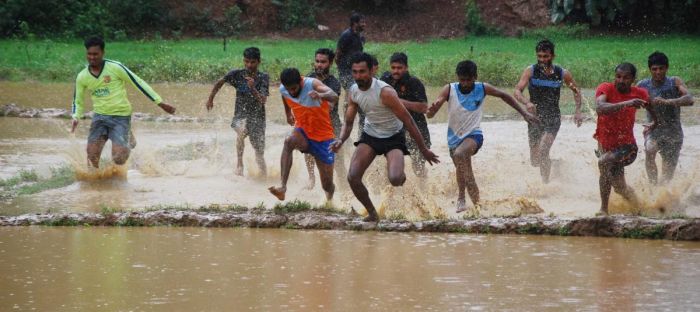
Marshy field sports held in Madikeri amidst rain

Youth take part in a marshy field race in Madikeri. DH PHOTO

From tiny tots to the elderly, a large number of people became a part of fun and frolic amid rain, at a marshy field in Madikeri on Sunday.

Various competitions were held at a marshy field belonging to Kukkera Palangappa in Devasturu village in Madikeri taluk, as a part of ‘Aatinaati Koodukoota’ organised by Karnataka Arebhashe Samskruthi mattu Sahitya Academy.

Men and women took part in volleyball, tug of war, throw-ball and running race. Rural games were conducted for children.

Speaking on the occasion, MLA M P Appacchu Ranjan felt the need to preserve paddy transplantation for the next generation.

“People should not think about profit alone and should get into the marshy field, as an effort to rediscover traditional agriculture which is vanishing,” said Ranjan.

Pattedar of Devastur, Kukkera Thammaiah flagged-off the paddy seedling transplantation and marshy field race.

He said that agriculture was a social activity in the past and people in the village help each other in paddy seedling transplantation work. But, today, fields have been left fallow.

In a good development, a few youth associations have come forward to carry out paddy transplantation work, he added.

Karnataka Arebhashe Samskruthi mattu Sahitya Academy Chairman P C Jayaram said that the traditional methods of agriculture reflected social harmony.

MLA K G Bopaiah, Kolar Excise Department Deputy Commissioner Sumitha Lingaraju, academy members Ramesh Joyappa, Kakkera Pradeep and A K Himakara were present among others.

source: http://www.deccanherald.com / Deccan Herald / Home> State> Districts / by DH News Service, Madikeri / July 22nd, 2018

H D Kumaraswamy promises all help to rain-hit Kodagu

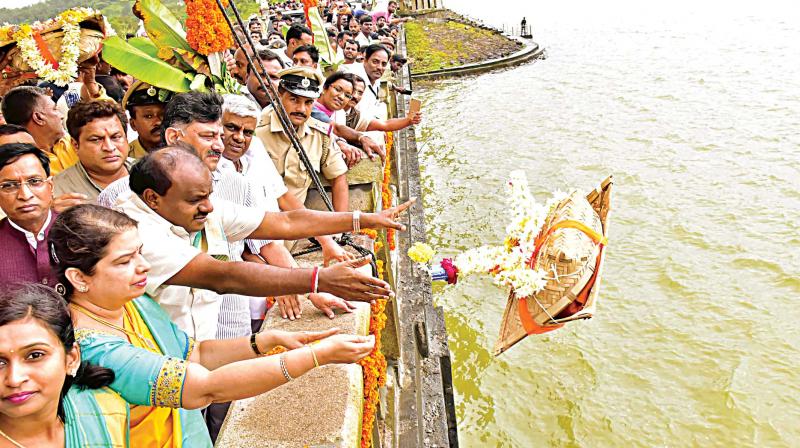
CM offers ‘Baagina’ to the Cauvery at Harangi n To perform poojas at Talacauvery today.

Chief Minister H.D. Kumaraswamy offers ‘Baagina’ to river Cauvery at Harangi dam in Kodagu on Thursday. His wife Anitha Kumaraswamy and ministers D.K. Shivakumar and H.D. Revanna are seen (Photo: KPN )

Mysuru:

After a three-year-long drought with all the reservoirs in Cauvery catchment area having reached full reservoir levels because of the record rainfall, Chief Minister Kumaraswamy offered ‘Baagina’ to river Cauvery at Harangi reservoir in Kodagu district, as a gesture of thanks to ‘Mother Nature’ on Thursday. His wife Anita Kumaraswamy joined him for the special poojas. Water resources minister D.K. Shivakumar, Public Works minister H D Revanna Tourism Minister Sa Ra Mahaesh, BJP MLAs K.G Bopaiah (Virajpet) and M.P. Appachu Ranjan (Madikeri), and MLCs Sunil Subramani and Veena Achaiah participated in the function.

Harangi reservoir is the second after Kabini to fill to the brim in the State this year. Kumaraswamy will follow this up with Cauvery poojas at Talacauvery in Kodagu on Friday morning, and later he will offer baagina to the Kapila at Kabini reservoir and the Cauvery again at KRS on Friday. He will participate in Aashada Friday poojas at Chamundeswari temple atop the Chamundi Hills which will begin on Friday.

Expressing his happiness that all the reservoirs have filled up after good rains, the CM said: “Kodagu has received this huge record rainfall after 35 years. I am here to respond to problems of people of Kodagu, which is the birthplace of the Cauvery.” Holding a meeting of officers on the losses incurred by people of Kodagu, due to rain havoc, he said, “Personnel from Hassan and Mysuru are being deputed to reinstate electricity connections in Kodagu.”

Authorities at reservoirs said that while the Kabini reservoir filled on June 15, Harangi on July 7, and KRS and Hemavathi on 14 July, it is usually on the day that Chief Minister offers Bagina to rivers at reservoirs, that the maximum level is recorded. And with CM’s programme to offer Bagina slotted on Thursday and Friday, outflow from all the reservoirs was reduced on Thursday. As on July 19, the KRS (78,04,11,672 cusecs) and Kabini (78,15,22,776 cusecs) received more than 78 lakh cusecs of water each from June 1 till July 18. During the same period, 34,58,31,120 cusecs of water was released from the KRS reservior and 64,06,78,770 cusecs from the Kabini reservoir this water year.

According to water resources department sources, on Thursday, 26,844 cusecs of water was released from the KRS reservoir and 35,800 cusecs from the Kabini reservoir. With good outflow from the state, water level at the Mettur dam in Tamil Nadu stood at 102.680 feet as against its full capacity 120 feet, on Wednesday. The sources said 24,300 cusecs of water was released from the Hemavathi reservoir and 9100 cusecs from the Harangi reservoir on Thursday.

source: http://www.deccanchronicle.com / Deccan Chronicle / Home> Nation> Current Affairs / by Shilpa P , Deccan Chronicle / July 20th, 2018

Measures to protect tourists at Mallalli waterfalls

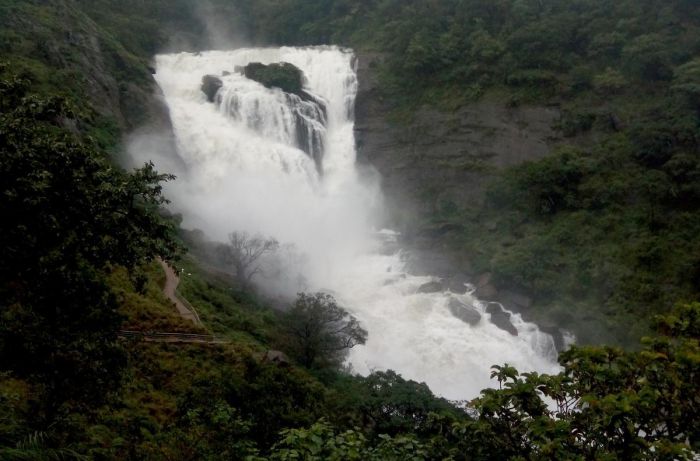
Mallalli falls near Somwarpet is in full splendour, following heavy rain in the region.

After 11 lives were claimed at Mallalli falls near Somwarpet, the Kodagu district administration has taken up protective measures at the tourist spot.

Like other falls in the district, Mallalli falls is now in its full splendour. Over the years, the place has been a favourite destination for tourists visiting Kodagu during vacations.

Mallalli falls, cascading from a height of around 150 foot in Bettadalli Gram Panchayat jurisdiction, attracts tourists during monsoon.

The falls is situated at a distance of three kilometres from Hanchinalli village, on the way from Shanthalli to Pushpagiri.

In spite of being one of the tourist destinations, the spot lacks basic facilities, including the toilet facilities, due to the apathy of the department.

So far, a total of 11 tourists, who visited the falls, have lost their lives, as there were no protective measures on the spot. Some tourists have been creating a nuisance by misbehaving and littering waste in the spot, it is said.

After some local residents staged a protest and urged the district administration to take proper measures for the protection of tourists, the district administration has installed iron rods and grills near the falls.

Prashant, a tourist from Anantapur, Andhra Pradesh, said that there are no information signboards or warning boards at the spot. But the Gram Panchayat collects a hefty entrance fee from tourists, he charged.

Taluk Panchayat former president K M Lokesh urged the Tourism Department to develop the Mallalli falls by into a tourist place, by providing basic facilities, such as drinking water and toilets for tourists. Also, necessary staff should be deployed at the spot for protection, he said.

source: http://www.deccanherald.com / Deccan Herald / Home> State> Districts / by DH News Service, Somwarpet / July 20th, 2018

Video Of Class 8 Boy Narrating Kodagu’s Rain Woes Goes Viral

KalleraFatehMPOs16jul2018

Madikeri:

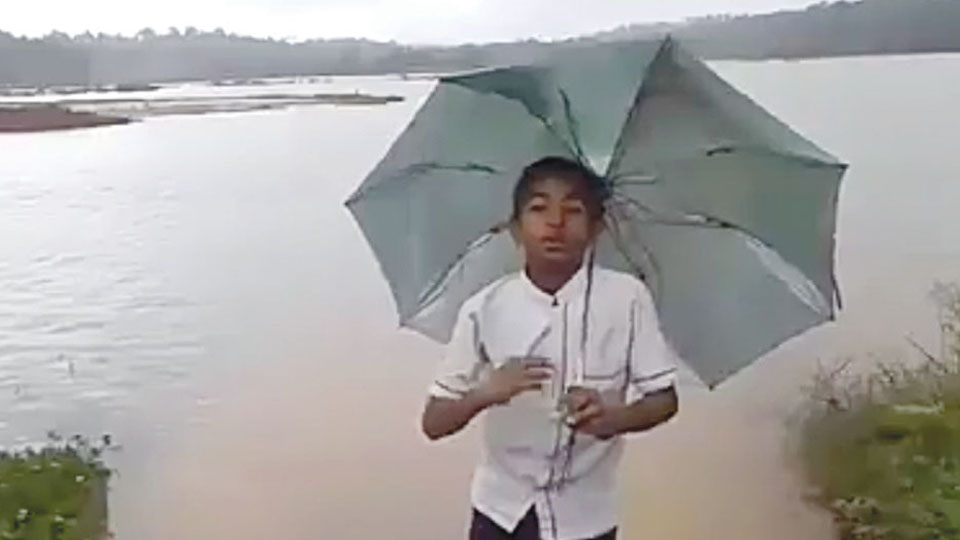
While many people have expressed their dissatisfaction about Chief Minister H.D. Kumaraswamy (HDK) for not sanctioning any funds to Kodagu in his Budget, this little boy from Yemmemadu village near Napoklu takes the cake. In a video that has gone viral, the boy vents his anger at the CM and at the same time highlights how Kodagu is ravaged by rain and how man-animal conflict has made lives miserable in this tiny district.

In the video, the Class 8 student, Kallira Fateh, son of Kallira Ummar and Rukya, says the district which has given River Cauvery to Mysuru, Mandya, Bengaluru and Tamil Nadu has got nothing from Kumaraswamy.

Hailing from a farming and daily wager family, Fateh, holding an umbrella, is seen pleading with the CM to provide relief to the rain-affected Kodagu farmers. Taking a dig at the Chief Minister for ‘neglecting’ Kodagu district in the Budget, Fateh said, “Mysuru, Mandya and half of Tamil Nadu get water, if it rains in Kodagu district. But the unrelenting rain has destroyed coffee, pepper, areca and paddy crops in Kodagu.”

“The wild elephant menace is on the rise in Kutta, Birunani, Balele and Ponnampet because of which daily wagers and agriculture farmers fear to venture out of their houses. The rain-battered Kodagu-Kerala Road has become non-motorable. “Who should people approach to get their problems addressed? It is you (CM), who else,” he said.

He continued, “Kumaraswamy has meted out injustice to Kodagu by not sanctioning grants to Kodagu and added that the CM should treat all districts equally.”

The boy then addressed BJP State President B.S. Yeddyurappa to impress upon Prime Minister Narendra Modi to announce compensation for the distressed farmers.

“Modiji is Prime Minister for 130 crore people of the country. He should treat people of all religions and castes on equal footing. This holds good for the CM too,” Fateh said.

The video went viral and reached the CM too. Kumaraswamy told reporters in Bengaluru that since Independence, many rulers have come. “Why am I being targeted, that too after taking charge just two months ago? I know about the problems faced by people of Kodagu. I will visit Kodagu and stay there for two days and hear the grievances of people and solve their problems,” he said. Fateh’s father Umar said his son was pained by the destruction of standing crops on 3,500 acres of paddy fields in the village.

“Our paddy field has been waterlogged for the past 13 days. No official or people’s representative visited our area. In our village, we get electricity only for six months a year. All this upset him,” he said. “I’m happy that the State Government and the CM have responded to our demands,” he said.

source: http://www.starofmysore.com / Star of Mysore / Home> News / Madikeri – July 15th, 2018

Tree Lovers Club Plants 700 Saplings At Vijayanagar

Urban greening initiative…

TreeLoversKF14jul2018

Mysuru:

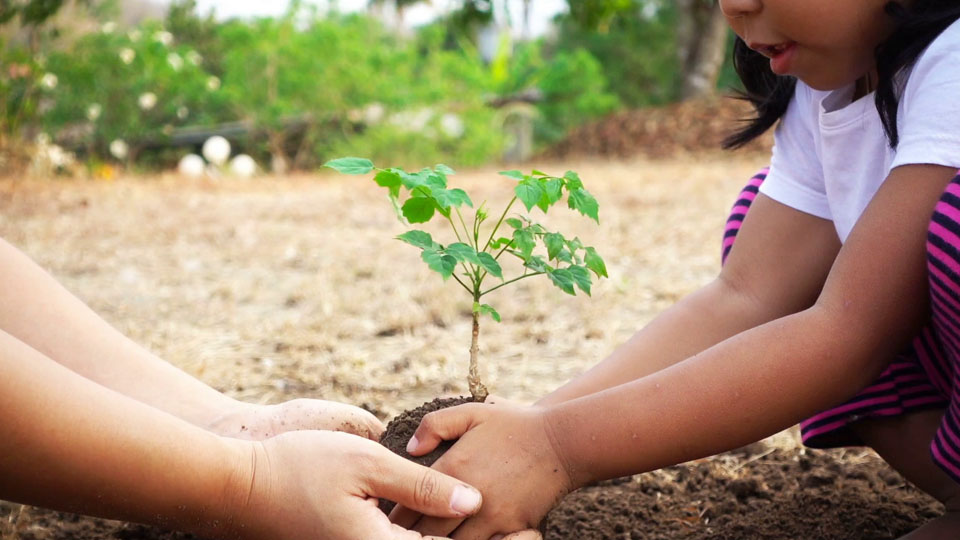
The newly-floated Tree Lovers Club, Vijayanagar, planted around 700 saplings including fruit-bearing indigenous trees in Vijayanagar 3rd Stage on Sunday last.

The Club, an offshoot of Vekare Ex-Servicemen Trust (VKET), will take up urban greening and promote it by example and through public campaigns.

Speaking to SOM, VKET and Tree Lovers Club President Mandetira N. Subramani said that it is the responsibility of every citizen to take care of the ecology and environment around their neighbourhood, first by planting a couple of fruit-bearing saplings in places wherever it is feasible. Subsequently, it should be the individual’s responsibility to nurture them after their maintenance for five years till they grow at least 15 feet in height.

He said, it is the collective responsibility of the residents and NGOs to take the initiative to impress upon the Forest Department to plant more saplings.

He further mentioned that the Tree Lovers Club will accomplish its mission of apprising the Chief Conservator of Forests in Mysuru to plant over 5,000 different species of saplings including fruit-bearing trees in Vijayanagar 1st, 2nd, 3rd & 4th Stages.

Vice-President Shakunthala Subramani, Gen. Secretary A.B. Bojappa, Jt. Secretary Poornima Raghu, Treasurer S. Somashekara and Hon. Advisor P.S. Bose Subramani led the morning walkers and residents of Vijayanagar 3rd Stage, numbering over 150, in planting the saplings.

Addressing the gathering after planting over 25 fruit-bearing trees in the Park opposite Heritage Club, the Tree Lovers Club President thanked the participants, members of Brahmagiri Kodava Association and Heritage Club for giving moral support to the Club in accomplishing the greening initiative. Tree Lovers Club intends to adopt the Park in Vijayanagar 3rd Stage for development and maintenance after obtaining the consent of authorities concerned.

Speaking on the occasion, A.B. Bojappa said that the Club would form a Committee of Tree Lovers to look after the saplings already planted in Vijayanagar 3rd Stage in the past one week.

The Secretary also requested those present to give their suggestions to improve the ecology of Vijayanagar 3rd Stage via e-mail: tree.lovers@yahoo.com or infowicket@gmail.com

source: http://www.starofmysore.com / Star of Mysore / Home> News / July 10th, 2018

Voice of The Reader : A Mysurean’s Tryst With Kodagu

KodaguKF12jul2018

Sir,

I should consider it treason on my part if I don’t respond now to KBG’s Abracadabra titled “Will Kodagu, heaven on earth, cease to exist ?” (SOM dated June 23). Yes, I consider Kodagu my second homeland, if KBG calls Mysuru his homeland.

Ever since KBG advised me to go to Tadiyandamol in 1984 to enjoy a good trekking experience, my tryst with the land has been, probably, more significant than that of anybody else living outside Kodagu. During the first six years thereon (1984), one could find me wandering around seldom tread remotest and wildest paths of the district, along with my students. During 1990 and 1995 people could very regularly find me around Talacauvery, measuring rainfall and monitoring flows in small streams, including Cauvery and Kannike at their origin, and developing theories on ‘Pipeflow’ for my Ph.D.

Later, for about a decade, one could find my students working on data we collected from the region and me coming out with significant publications telling the world about the thrills of my work in the Western Ghats. Ever since I was awarded a Funded Project by ISRO in 2006, my association with Kodagu started expanding in multiples. Innumerable number of our (NIE) students started getting benefited from the project, and enjoyed working in the wet areas of the Watershed of Kumaradhara, which originates on the eastern slopes of Pushpagiri.

We instrumented streams, installed rain gauges and collected precious data. The project culminated in me setting up a very unique “Field Hydrological Laboratory” which now caters to teaching PG students of NIE practical Hydrology. The Annual Survey Camp for UG students was also being held for a few years in Garwale, exposing students to real-life problems.

Recently, I have got funds to the tune of Rs. 30 lakh from MoES, for continuing my work in Kodagu — this means I can work with freedom in the Ghats till my retirement from service at NIE. I hope, people will understand how formidable my emotional attachment with Kodagu is.

For this very reason, I oppose all forces working towards the fall of Kodagu. I assure you that my ‘alilu seve’ continues to be available for purposes that will do good to Kodagu. To add to my earlier write-ups, I now have a point to emphasise on.

During the over seven decades of independence and democratic rule in the country, very sadly, Kodagu has had the opportunity of sending only one of its own sons to the Parliament. People of Kodagu have cast votes 16 times and have seen their representative (C.M. Poonacha) becoming an MP only once. During the last four decades, which I have seen, no MP has ever done anything favourable to Kodagu, except for shedding crocodile tears. Hence, I strongly feel that the people of Kodagu take up the challenge of installing their own representative.

A true representative of the people is of utmost importance in shaping political decisions and a strong lobby which alone can bear fruits. No doubt that a long-lasting battle is required to achieve this goal.

– Prof. Yadupathi Putty, Krishnamurthypuram, 1.7.2018

You can also mail us your views, opinions, and stories to voice@starofmysore.com

source: http://www.starofmysore.com / Star of Mysore / Home> Voice of the Reader / July 11th, 2018

Mulled and brewed at home

Bottled Goodness

WineKODAGU11jul2018

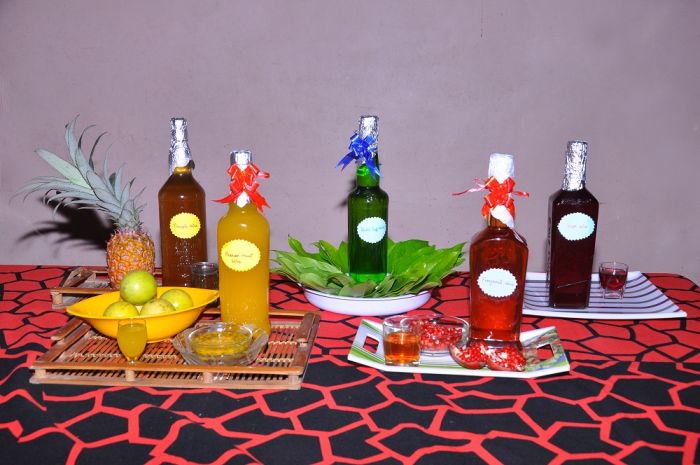
It is common to think of grapes when we talk about wines. But women of Chikkamagaluru, Kodagu and Hassan districts have shown that there’s more to wine than just grapes. Here, wine is made from a wide range of locally grown fruits and spices like jamun, ginger, pepper, betel leaf, gooseberry, orange, cashew apple, rice, banana, coffee, etc. These wines, traditionally mulled and brewed in the coffee estates of the State, are being perfected to be sold in domestic and international markets. Women entrepreneurs, who are at the helm of winemaking, ferment different flavours of wines as well.

In these districts, it is a custom to serve a cup of freshly brewed coffee to guests. In addition to coffee, homemade wine is now offered as a welcome drink at weddings and other joyous gatherings. It is also presented as a gift to relatives and friends. Not just that, it has become a good addition to the various products that travellers look for in these places.

Wine heritage

Amongst the three districts, Kodagu holds a prominent place as the producer of wine. The district has a uniformly distributed wet climate. The British have left their cultural footprints here, which reflects in the culture and lifestyle of the Kodavas. The wine has historically been a part of the Kodava diet and heritage and has been bettered through generations.

With the tourism sector experiencing a steady growth in the district, more than 1,000 women are now engaged in winemaking. While many of them brew for home consumption, the number of women taking it up as an income-generating activity is also on the rise. Winemakers say that since they produce wine in small quantities, they don’t have to register with the Wine Board.

Wine is made throughout the year and the ingredients change with the season. This art of perfecting homemade wine has seen higher success rates with the involvement of self-help groups. One such group is Rajarajeshwari Self-Help Group(RSHG) established by the women of Kargunda village in Madikeri taluk. For the past 16 years, the members of this group have been selecting the best quality fruits grown in their coffee plantations and blending them with various other locally sourced ingredients to make homemade wine.

RSHG is one of the first such groups to be formed by the Coffee Board of India. With 18 women entrepreneurs in its fold, two women work every day to ensure continuous production. “The health benefits of these wines are significant. For instance, black plum has positive effects on controlling diabetes and ginger has several medicinal effects,” says Jarina Uthappa, president of RSHG. Members Saroja Kalappa, Girija Chermanna and Gowramma Kaverappa say that over the years, there is an increase in tourist footfall to their shop, which is located on the route from Madikeri to Bhagamandala. And, many consider this outlet as a must-stop place for tourists.

The process

Sugar and the fruit of choice are added to boiled water and stirred at regular intervals for a period of five days. Then it is kept for 25 days, after which the fruit and sugar mixture is filtered into a bottle without any traces of the pulp being mixed. In order to separate the pulp from the liquid, Muslin cloth is used in the filtration process.

Only good quality fruits are used in winemaking. They do not use alcohol, yeast or any other form of preservatives during preparation. Of late, sugarless wine is also prepared. Customers can buy their products after tasting samples. The wine wine has a shelf life of up to two years. However, due to the natural process of fermentation, as years go by, the wine acquires five to 10% of alcohol content in it. It is safe to consume wine up to 60 ml after which it leads to intoxication. They sell about 150 to 200 bottles in a month and one bottle costs Rs 200.

Another successful self-help group, Coorg Wine Association(CWA) in Suntikoppa, is also a known name in wine production. Manu, a member, states that Kodavas have a cultural association with wine and it is seen as an energy drink here. At CWA, the process of fermentation is carried on for 90 days. Along with fruits, they also use pudina(mint), Bermuda grass and mulberry. At CWA, the filtration process takes place after 50 days and the wine is sold at Rs 250 to 300 per bottle.

Distinctive methods

Though the wine culture is not as widespread as Kodagu, the concept of homemade wine is catching up in Chikkamagaluru and Hassan districts, mainly because of the demand created by the tourists. “It has also become a source of regular income for women entrepreneurs,” states winemaker Divya Uday of Kitthagalale estate in Sakaleshpura.

Every winemaker follows a distinct method and even the ingredients vary. For one kilogram of fruit, Divya Uday adds one handful of rice, wheat flour, cloves, cinnamon, a pinch of yeast and little black pepper. The wine is sold at homestays in and around Sakaleshpura. She adds that beauty parlours are now placing orders for grape wine, which is used in facial cleansing.

I then interacted with two innovative entrepreneurs, Geeta Sunil and Sumitha Raghudev, in Chikkamagaluru. They have created a niche for themselves in the field with a wide variety of wines such as cashew wine, rose wine, passion fruit wine, pomegranate wine, pineapple wine and betel leaf wine. They have been supplying these unique flavours to homestays located in the region.

Bhagya Lakshman, an experienced winemaker in Mudigere taluk, remembers that in her childhood, after a day of hard labour, to de-stress from the physical and mental strain endured, people used to consume a primitive form of wine before dinner. The ingredients were mainly fruits and berries picked from surrounding community forests and plantations. The fruits were blended with jaggery, sprouts, ginger, black pepper and rice.

Over the years, there has been a lot of changes in the preparation and consumption practices, reflecting the evolution of customs, traditions and culture. And the change is for the better, she feels. She says that many Ayurvedic practitioners recommend consumption of one spoon of betel leaf wine or ginger wine on a daily basis to maintain good health.

It is very fashionable these days to serve wine as a welcome drink in the social gatherings that women organise. It is always served in limited quantities. Wine must always be stored in glass bottles and must never be refrigerated. Wine, when preserved for more than seven years, gives the same intoxicating feeling as whiskey.

So, when you visit this part of the State next time, don’t forget to try these fruity flavours.

source: http://www.deccanheral.com / Deccan Herald / Home> Spectrum> Spectrum Top Stories / by Poornima Kanahalli / July 07th, 2018
It’s Honey Calling

CoorgHoney01KF02july2018

Madikeri:

Any talk of Kodagu often begins with the aromatic coffee, golden-glazed honey and some lip-smacking authentic delicacies. Honey has a special place in the district and Kodagu is known to produce distinct and rich honey that is famous for its originality, purity, taste and longevity even when stored in closed containers for years together.

However, the district hit a low in honey production in the 1990s as Thai Sac Brood disease hit the industry hard. Said to have originated in Thailand, the disease killed bees, including the queen bee and so far there has been no effective remedy for the disease. Also, the red ant menace further crippled the industry and most of the apiculturists were forced to switch to other means of livelihood. So badly affected was the industry that the honey production in Kodagu has dipped to a low of 50 percent in the late 1990s.

Now slowly the industry is regaining foothold and thanks to people who are growing conscious about their health and healthy habits, there is a global market for Coorg Honey. Honey is produced mainly in Bhagamandala, Galibeedu and Cherangala of Madikeri taluk, Birunani, T. Shettigeri and Kedamulloor in Virajpet taluk, Shanthalli, Jakkanalli, Soorlabbi, Hammiyala, Hachchinadu, Kumbaragadige and Mutlu in Somwarpet taluk.

CoorgHoney02KF02july2018

At present, Kodagu has over 7,000 bee-keepers and Bhagamandala region alone accounts for more than 50 percent of production of the district with the total being about 850 tonnes.

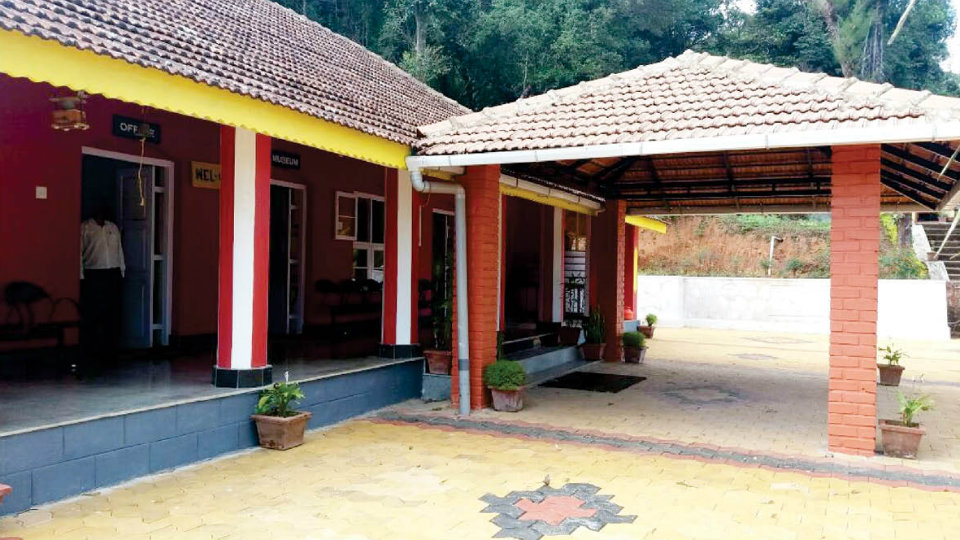
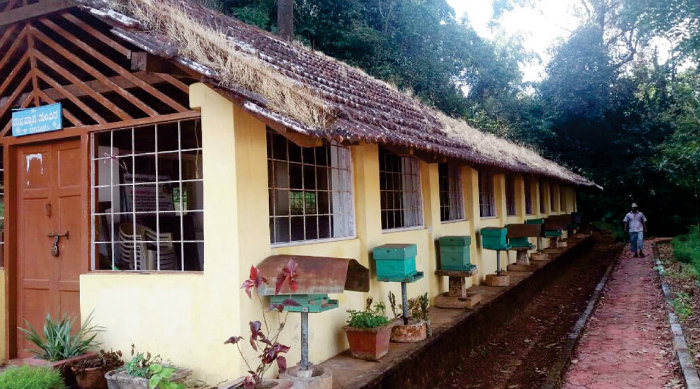
To bring back the glory of honey production in Kodagu, the State government has set up a Honey Park in Bhagamandala where the only Apiculture Technical Training Centre of State is located. The Park also houses a Honey Museum. The Park and the Museum are the first in the State.

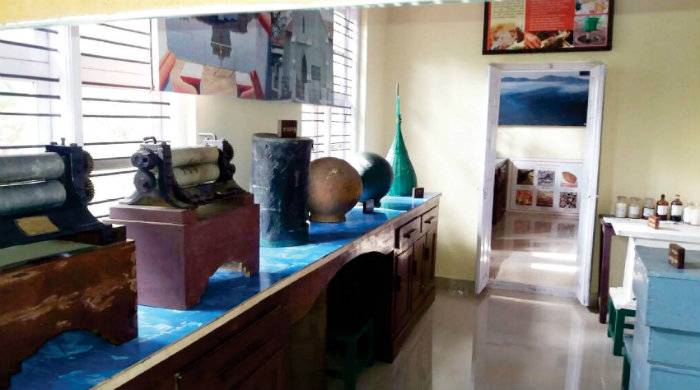
Honey extractors, beehives, honey containers, honey pots on display at the Honey Museum.

Built at a cost of Rs. 1.42 crore, works on the Honey Park began in 2015 and is completed now. The Park is housed at Apiculture Technical Training Centre that was established at Bhagamandala way back in 1948 by the then Coorg State Government. Funds for the Honey Park was released by the State Horticulture Department and initially in 2015-2016, Rs. 50 lakh was released. Later, in 2016-2017, Rs. 82 lakh was released and Rs. 10 lakh was released in 2017-2018.

A honeycomb kept for demonstration at the Honey Park.

The Honey Park acts as a comprehensive centre for honey production and related activities. It would also endeavour to provide marketing facilities for the product in the entire State. The Park is being maintained by food processing division of Agriculture Department. The Park has been set up to promote apiculture, which will supplement the income of the farmers.

According to officials managing the Honey Park, they get regular visitors who want to know about honey production, the costs and apiculture procedure.

CoorgHoney05KF02july2018

Certificate course

“We will provide a three-month certificate course during November-December-January for students and professionals who want to take up apiculture as a part-time business,” they said. Hostel facilities will be provided to the trainees during their three-month stay at Bhagamandala and already many students from Mysuru, Belagaavi, Koppal and Dharwad have enrolled for the training programme.

This apart, the Honey Museum traces the history of honey in Kodagu, its origin, golden period, its gradual decline owing to diseases and the present state. Also, it gives the visitors information about global honey growth and how it has become popular among health freaks. Models have been prepared and ways and means of honey extraction with machines and bare hands without getting bitten or stung by bees are demonstrated here.

A short movie screening is another attraction in the Honey Park. It captures the honey development in Kodagu. The centre will train local tribals and farmers in apiculture. Tribals will be trained in collecting honey in forests. This in turn will help in improving their economic conditions.

source: http://www.starofmysore.com / Star of Mysore / Home> Feature Articles> News / June 30th, 2018

Cauvery Gallery may soon become a reality

CauveryKF30jun2018

The Cauvery River Gallery, which was proposed to be established in the city, five years back, may finally be a reality with Chairman of the Karnataka Knowledge Commission and former chairman of ISRO K Kasturirangan announcing that he has spoken about the project with Chief Minister H D Kumaraswamy, in Bengaluru, recently.

The formation of the Cauvery Tourism Development Authority was mooted in March 2015 and the idea of the Cauvery River Gallery was discussed in the first meeting of the authority, chaired by then Tourism minister R V Deshpande, in June 2015. Neither of them materialised so far, even though the previous chief minister was a native of Mysuru district, the nucleus of the Cauvery River basin.

According to the annual report (April 2016 – March 2017) of the National Academy of Sciences of India (NASI), River Cauvery is among the most sacred rivers in the southern region of India and is thought to be the Dakshina Ganga, on account of its diverse characteristics and attributes.

“Originating from the Brahmagiri Hill in the Western Ghats and flowing towards the Bay of Bengal, the river travels along Karnataka and Tamil Nadu in the southeastern direction. River Cauvery is well inscribed in Tamil and Kannada literature because of its sacredness. Bathing in waters of Cauvery is a traditional belief. The striking Shivanasamudram falls of Cauvery River is the second biggest waterfalls in the country.

At the request of Minister for Higher Education and Tourism, Government of Karnataka, K Kasturirangan, Chairman of Karnataka Knowledge Commission, requested Manju Sharma, former president of NASI, to establish a Cauvery Gallery on the lines of Ganga Gallery and Brahmaputra Gallery.

Manju Sharma, with the consent of the NASI Council, sent a preliminary intent proposal to establish a high-quality gallery that captures the etymological, ecological, cultural, heritage and social characters of River Cauvery,” the report states.

The Cauvery Gallery can be established with the help of the National Council of Science Museums (NCSM), Kolkata, and the financial support of the department of Tourism, Government of Karnataka. Interactive multimedia with diorama, animation, graphics and the 3-D display will be used to make the gallery interactive and interesting for visitors, the report states. At present, there is a gallery for River Brahmaputra in Guwahati, in Assam, and a gallery for River Ganga at Allahabad, in Uttar Pradesh .

The gallery is expected to showcase the life, culture and biodiversity along the Cauvery River from its birth in Talacauvery of Kodagu district till it reaches the Bay of Bengal at Poompuhar (now Pombuhar) in Nagapattinam district of Tamil Nadu. It splits into two, twice, and forms the islands of Srirangapatna and Sivanasamudra in Karnataka.

Kasturirangan has said that he held talks with Chief Minister Kumaraswamy on setting up of the gallery on the Karnataka Exhibition Authority Grounds (Dasara Exhibition Grounds) in Mysuru and a detailed project report would be prepared soon.

In 2016 itself, Karnataka’s Tourism department and the NASI had signed a memorandum of understanding to set up the gallery at Mysuru. Then, the Tourism department officials and NASI experts had decided to establish the gallery on the premises of the Karnataka Exhibition Authority (KEA) complex. The project was scheduled to be completed in six to nine months and was expected to be a major tourist attraction in the city. The KEA complex is also yet to be constructed.

source: http://www.deccanherald.com / Deccan Herald / Home> State> Mysuru / by T.R. Sathish Kumar, DH News Service, Mysuru / June 28th, 2018

Opinion divided on private sanctuaries next to reserves

Majority of those who attended stakeholders’ meeting sceptical of the concept

The stakeholders’ meeting on the State’s attempt to permit private sanctuaries adjoining national parks and tiger reserves, held in Bengaluru on Monday, elicited conflicting opinions. This only served to underline the division between the conservationists and officials on the initiative.

It also brings to the fore the imperatives of a thorough discussion on the subject given the sensitivity of the issue and the environmental and social ramifications.

Vandita Sharma, Additional Chief Secretary, Forests, Ecology and Environment, who chaired the meeting, said she has been flooded with views on why the private conservancy rules should or should not be introduced. Hence this calls for a comprehensive discussion on wide-ranging aspects before taking the initiative forward.

Some of the speakers cautioned that the concept of private conservancy was non-existent in the Indian laws or the Wildlife Protection Act. Hence the very legality of framing a policy on private conservancies in Karnataka has to be examined because the Wildlife Protection Act, being a Central Act, overrides the State laws if it is at variance or conflict with the former.

There were also views that one had to study the pros and cons that prevail in other countries where such a model is in place and wondered whether such a law should be proposed at all in the first place.

Sanjay Gubbi, wildlife biologist, said one should consider ecological and social aspects, the economic incentives local communities derive etc., and then go ahead with the experimentation.

“I am not sure how many promoters would be willing to invest as the area has to be first notified as a Private Forest under the existing legal provisions. Once it is declared as a Private Forest, then the laws governing the Forest Conservation Act, Supreme Court order of WP 202/1995, etc. will all become applicable,” he said.

Col. C.P. Muthanna ((retd) of Coorg Wildlife Society was sceptical of the concept reducing the conflict situation by merely augmenting the sanctuary boundary with private conservancy.

He feared it would only bring animals closer to human habitation and escalate human-animal conflict, besides increasing local communities’ hostility against the Forest Department and wildlife.

However, Sudheer, of Voice for Wildlife, opined that the proposal provided a legal framework for genuinely interested people keen to promote conservation and forests.

Allaying fears of commercial exploitation, he argued that the draft rules make it clear that only 5% of the private conservancy area can be utilised for tourism and no change of land use would be permitted for the remaining 95%. This itself was a disincentive to keep investors who are not conservation-minded, out of the picture, he added.

D. Rajkumar of Wildlife Conservation Foundation, said there was no rationale to suggest that by merely declaring a portion of land outside forest boundary as “private sanctuary” it would mitigate conflict situations. The general drift of the argument against the concept was that it cannot be pushed merely to promote tourism and one had to look at the ecological and social aspects as well.

P. Sridhar, head of Forest Force; Jayaram, Principal Chief Conservator of Forests (PCCF); former Forest Department officials; wildlife conservationists; NGOs; and representatives of the hospitality sector were among those present.

source: http://www.thehindu.com / The Hindu / Home> News> States> Karnataka / by Special Correspondent / June 26th, 2018