Category Archives: Nature

Severe summer unveils gem in Kodagu

KodaguTempleKF28apr2017

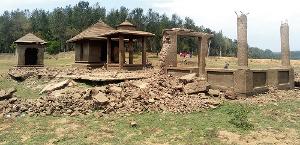
Lord Shiva temple accessible to devotees after 33 years as water in Chiklihole reservoir near Suntikoppa recedes

Summer is peaking in the state to compound the prevailing drought and as a result of receding water levels in dams across the state, submerged structures have been resurfacing. With some of the buildings showing up being temples, people have some reason to celebrate even in the eventuality of a shortage of water. So it is, at the Chiklihole dam near Suntikoppa of Kodagu district, after a lord Shiva temple emerged recently.

The temple that was submerged in the reservoir is visible for the first time in 33 years. The spot has since been attracting tourists, who are otherwise missing the pleasing sight of surging waters in the Cauvery catchment area in Kodagu they have been familiar with.

The Chiklihole reservoir, from which water is supplied to farmers of Kushalanagar, Rangasamudra, Bettageri, Nanjaraya Pattana and Guddehosuru among others, has a storage capacity of 0.18 TMC.

The temple area was included in the Chiklihole dam basin in 1983, after experts concluded the land was a good source of water. The government ordered an alternative temple to be built nearby, and in 1993, a Magdooru family constructed the temple of Vishwanatha and installed the main idol of lord Shiva from the old temple in it.

That Vishwanatha temple of Magdooru went on to become famous.

According to residents of Magdooru, Shivaratri is celebrated grandly in the new temple of their village, but with them now being able to access the old temple, they will celebrate the festival even better. Sai Kumar of the Magadooru family, which hails from Kerala, told Bangalore Mirror, “Our ancestors moved from Kerala to this place
in 1947 and they constructed the temple in 1969. As the temple was sunk in the reservoir in 1983, we constructed another one in 1993 on land allotted by the government. We are very happy to see the original temple now.”

Karthik Prasad, a tourist from Mysuru, visits the reservoir at least once a year. “This year I saw the temple, which was like a fantasy,” he said.

source: http://www.bangaloremirror.indiatimes.com / Bangalore Mirror / Home> News> State / by Bangalore Mirror Bureau / by Manoj Sharma / April 26th, 2017

Docu showcases decline of Kodagu

KodaguKF25apr2017

Coorg: The Untold Story blames mushrooming resorts for district’s garbage pile-up

A six-and-half minute documentary shot by a group of environmentalists highlights the environmental degradation of Kodagu district.

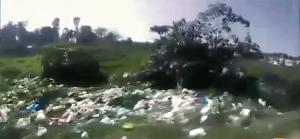
The documentary titled Coorg: The Untold Story was shot by Clean Coorg Initiative in association with Surfing Swami Foundation and Mantra Surf Club. Shot in Madikeri and other parts of Kodagu district, it highlights the garbage pile up due to the mushrooming of resorts across the district.

It further went on to state that illegal land conversion, encroachment and sand mafia were turning out to be a nightmare for the district and how the garbage pile up on the banks of the river Cauvery is a threat not just for the residents of the district but for people living in Bengaluru and other cities.

Blaming the government and tourists, environmentalists have accused authorities of going soft on the resorts.

The activists fear that Kodagu district is not far from becoming the Mandur landfill where Bengaluru’s garbage is dumped.

Speaking on the crises, Col Muthanna from the Coorg Wildlife Society said, “Kodagu has an overall population of 5.5 lakh people whereas the number of tourists who visited the district last year was 13 lakh. In fact, the density of population in Kodagu is just 135 per sq/km, which is one of the lowest in the country.

“There are many resorts which have been constructed near the banks of Cauvery river, which release their bio-waste into the river. The government should never allow the expansion of resorts as it may also lead to the landslides and other disasters. We are not against the resorts but against their expansion,” he added.

Another environment activist Sundar Muthanna said that Kodagu which is known as the Scotland of India was fast becoming the Garbage Dump of Karnataka. He said that all resorts must mandatorily have sewage and garbage processing units in the resorts.

He warned that the district was turning into an urban jungle which will not just impact the people of the district but also people residing in Bengaluru and other parts of the state as the main source of drinking water is from the district.

The untold story

* The documentary titled Coorg: The Untold Story was shot by Clean Coorg Initiative in association with Surfing Swami Foundation and Mantra Surf Club.

* Shot in Madikeri and other parts of Kodagu district, it highlights the garbage pile up due to the mushrooming of resorts across the district.

* It further went on to state that illegal land conversion, encroachment and sand mafia were turning out to be a nightmare for the district and how the garbage pile up on the banks of the river Cauvery is a threat not just for the residents of the district but for people living in Bengaluru and other cities.

* Blaming the government and tourists, environmentalists have accused authorities of going soft on the resorts.

source: http://www.bangaloremirror.indiatimes.com / Bangalore Mirror / Home> News> State / Bangalore Mirror Bureau / April 21st, 2017

An Environmentalist Who is Nothing Short Of a Saviour!

Muthanna01KF05apr2017

We were born to help the world, not to destroy it… Then why we are destroying the very environment we live in?

Too much pollution, loss of biodiversity, not enough clean fresh water, soil contamination, deforestation, global warming are just some of the environmental issues we are facing today. We need to make some changes in our daily lives to live in a greener, more sustainable way.

Saving our planet, lifting people out of poverty, advancing economic growth… these are one and the same fight. We must connect the dots between climate change, water scarcity, energy shortages, global health and food security for the love of protection and preservation of the environment and wildlife.
Muthanna02KF05apr2017

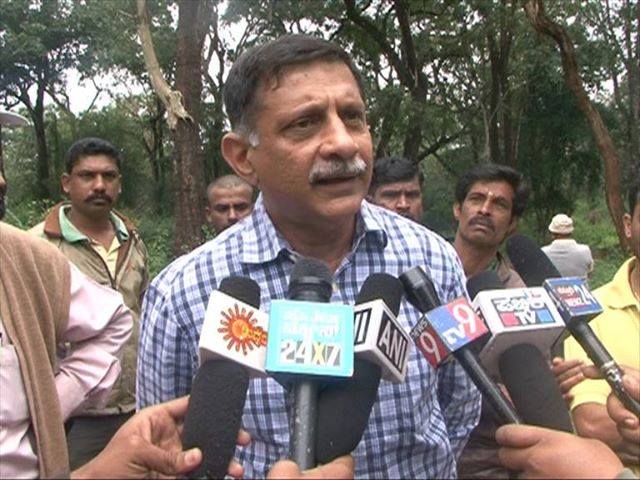
The environment is being destroyed at an alarming rate. Fortunately, there are hard-core environmentalists who are nothing short of saviours that are working tirelessly and round the clock to save our habitat. One such person is the President of the Coorg Wildlife Society – Col C P Muthanna (Retd).

Col Muthanna was born in Coorg (now known as Kodagu) in 1953. His father, late Shri CM Poonacha, was an active freedom fighter and imprisoned a number of times and was once hung in chains for 15 days along with other freedom fighters of Kodagu. In the post-Independence era his father became the first Chief Minister of the erstwhile Coorg ‘Part C’ State, then the Chairman of the State Trading Corporation of India and subsequently the Cabinet Minister for Railway at the Centre. Later during the seventies he served as Governor of Madhya Pradesh and Orissa.

In spite of the political antecedents of his father, Col Muthanna chose the life of the uniform and joined the army in December 1972, commissioned into the 4th battalion of the Maratha Light Infantry. He moved out to a new Raising, 18 Maratha Light Infantry, which he subsequently commanded. On completion of his command tenure in April 1996, he took premature release. One of the reasons for leaving his checkered career from the army was his desire to serve the cause of protecting the environment.
Muthanna03KF05apr2017

After retirement, he founded the Environment and Health Foundation (EHF), India in 1998. The EHF has been working mainly on water related issues. He conducted a number of water management awareness programs and wrote a book in Kannada on rainwater harvesting for Malnad region. He has set up a number of rainwater harvesting structures for institutions and houses in Kodagu.

A conservationist and nature-lover at heart, he was President of the Coorg Wildlife Society from 2003 to 2009, and again from 2012 till date. In 2006, Col Muthanna received the Dr. APJ Abdul Kalam award for his work in the field of environment by the government of Karnataka. He has been nominated on three occasions as ‘Coorg Person of the Year’. He has also founded the Kodagu Boxing Association in order to tap the boxing potential in Kodagu and spot talent at a young age.

Under Col Muthanna, the Coorg Wildlife Society filed a PIL and prevented a hydroelectric project in the Evergreen Hill forests of Kodagu that would have inundated large areas of the Brahmagiri Wildlife Sanctuary in Kodagu. He has also helped a local village community in halting a large stone quarrying unit close to the sanctuary.

He has campaigned for over seven years against a High Tension Power Line through Kodagu which would result in the destruction of more than 54,000 trees. Due to his efforts the power line was realigned and thousands of trees have been saved.

Work on the power line had caused disturbance to wild elephants in the area and had increased attacks by elephants. Col Muthanna was instrumental in compelling the Power Grid Corporation of India to provide Rupees six crore to the Forest Department for mitigation of Human Elephant Conflict.

On behalf of the Coorg Wildlife Society, Col Muthanna has prepared a concept note on Management of Elephant habitat in South India. The primary habitat of elephants in South India is shared between the three States of Karnataka, Kerala and Tamil Nadu. These are known as Mysore Elephant Reserve, Waynad Elephant Reserve and Nilgiris Elephant Reserve respectively.

These three reserves represent a contiguous landscape spread across 12,587 square kilometres and with a population of over 10,000 elephants. It is the largest population of Asian Elephants in the wild. The pressures on the habitat have manifested in serious escalation of Human Elephant Conflict in this region over the past two decades.

Col Muthanna has highlighted the need for a coordinated approach by the three states with directions from the Ministry of Environment and Forests at the Centre so that there is a comprehensive and long term plan that can be implemented. He is in discussion with the Karnataka Forest Department on this very important subject. He has emphasized in his note that improvement of habitat for elephants will benefit all forms of wildlife.

The three elephant reserves also represent important river catchments and watersheds of South India and protection of these forests is vital for the water security of the region.

He is also working on a policy document for protecting the Kodagu landscape, which is the principal catchment for the Cauvery River. The Cauvery is the life line for South India and sustains 8 crore people and over 600 major Industries.

Col Muthanna often states that protection of the Kodagu landscape is in the ‘National Interest’. However, his efforts have met strong and often vicious opposition from local politicians backed by the timber lobby and land mafia. Col Muthanna jokes that the thick hide that the Army has provided him is more valuable than his Army pension!

On behalf of the EHF, Col Muthanna has prepared a proposal termed as the HIMEK Alliance for Stabilization of Climate Change in the Himalayas and the Mekong Basin. The concept is to mitigate climate change through drastic reduction of Black Carbon emissions, which have a regional impact.

This is to be coupled with a massive program of Forest Land Restoration to regain the lost glory of the forests across the Himalayas and the Mekong basin. The proposal has obtained the approval of the International Union of Conservation of Nature and involves 11 countries including the Himalayan nations, Bangladesh and the countries of the Mekong Basin.

Through his coordination, a working group including resource persons from Bangladesh, Nepal, Thailand and India are working on the draft project document. The Rivers originating from the Himalayas and flowing through the Indian Subcontinent and Mekong Basin in South East Asia sustain one fifth of the world’s population. Therefore the HIMEK Alliance could be one of the largest regional initiatives on environment ever.

He is also in communication with the army on protecting the Himalayan ecology. The army is a major stake holder in the Himalayas and he has written an article on this subject which was published in the 2015 July to September edition of the Indian Defence Review. He has also prepared a draft document on Food, Water and Economic Security for India, based on the concept of sustainable development by zoning the country and protecting important catchment areas and food producing regions in India.

The snow fed rivers of the Himalayas sustain over one fifth of the human population. Col Muthanna stresses on the point that it is, therefore, a matter of deep concern to the entire global community and to the people of South Asia particularly that the Himalayan environment is under serious threat due to the effects of climate change. Lester Brown of the World Watch Institute in USA says that due to the effects of global warming, the pattern of precipitation in the Himalayas and the regions contiguous to the Himalayas will undergo a more drastic change in the years to come.

There is agreement that effective reduction of Short Life Climate Forces will enable the temperatures in these principal eco-regions to stabilize over a short period of time and supplement the on-going international agreements and action programs for long term reduction of CO2 levels.

The urgency of the situation has been highlighted by statements from climate scientists who say that the ‘tipping point’ may be a mere five years away. The formation of the HIMEK Alliance comes at an urgent time where the effects of climate change are critical and cannot wait.

We all have a duty to spread the word to Go Green! Dare to be a force of Nature. Each and every one of us has the power to make a difference.

~ Let us join hands to Save the Earth for future generations ~

source: http://www.thecitizen.in / The Citizen / Home> Life / by Rashmi Oberoi / Tuesday – April 04th, 2017
Broken up by man, killed by inbreeding

Inbreeding among trees and higher rates of offspring deaths may see some tree species in isolated forest patches die out slowly. In perhaps the first elaborate study of its kind in the Western Ghats, a team of researchers from across the globe has found that breaking up forests by even 200 metres can lead to the gradual death of tree species.

The results of the study — published recently in the journal New Phytologist — are disconcerting and show that less than 10% of germinated seeds survive in such patches owing to genetic faults, when compared to over 50% in contiguous forests.

Researchers from ETH Zurich in Switzerland, University of Aberdeen in the United Kingdom, and College of Forestry in Ponnampet, Kodagu, along with Ashoka Trust for Research in Ecology and the Environment (ATREE) and the University of Agricultural Sciences — both in Bengaluru — studied the seed dispersal patterns of Dysoxylum malabaricum (white cedar) which harbours the Malabar grey hornbill. More than 35 sacred groves of Kodagu, protected and worshipped by the local community, were studied across a 216 sq.km landscape where these forest patches are islands surrounded by paddy or coffee plantations.

The team used a combination of GPS and genotyping (DNA sequencing) to find out the lineage of the offspring in these isolated forests. Of the 321 trees that were sequenced, just 0.3% had emerged from “parents” that were in different patches. A staggering 267 trees (83%) had both their “parents” from the same forest patch.

“The seedlings are often mutated and completely devoid of chlorophyll (that is, their leaves have no colour), and these die out in a few months. This has affected forest regeneration,” said G. Ravikanth from ATREE.

The researchers also found that 95% of the seeds were dispersed within 200 m of the parent tree, but the sacred groves are usually situated at least 400 m and even 24.5 km apart; this leaves inbreeding as the only option. “The growth of areca and coffee plantations over three decades has isolated these forests and we are now seeing the effects of inbreeding depression. When the older trees die, we will start to see these forests disappear entirely,” said Mr. Ravikanth.

C.G. Kushalappa, Dean of the College of Forestry, said that while wind-dispersed species could perhaps overcome the gaps in forests, species that rely on birds or insects for pollination will struggle to get genetic diversity to survive.

Re-establishing tree corridors

The disappearance of plant species owing to inbreeding can be contained either through artificial dispersal of seeds or by setting up tree corridors, say researchers.

The research comes at a time when the lush forests of the Western Ghats are fragmented by reservoirs, hydroelectric projects, large highways, industries and plantations. At present, the team is researching on dispersal rates of wild nutmeg (an important tree for the hornbill population), the wild Amla tree in M.M. Hills and B.R.T. Reserve, and other plants in order to study the effect of fragmentation.

While the concept of corridors for elephants and tigers is well established in the country, the need for a similar approach to ensure constant gene flow for trees has been ignored. “We are trying to establish tree corridors to connect broken-up patches. Near Tiruchirappalli, we are restoring the connections of Myristica swamps. These corridors will provide genetic flow between forest patches,” said G. Ravikanth of the Ashoka Trust for Research in Ecology and the Environment.

In terms of conservation, the disappearance of plants and trees will have an adverse effect on animals that are symbiotically linked. For instance, hornbills and butterflies prefer only certain species of trees or shrubs.

source: http://www.thehindu.com / The Hindu / Home> News> States> Karnataka / by Mohit M Rao / Bengaluru – April 03rd, 2017

Coorg brews a winner

StarbucksReserveKF30mar2017


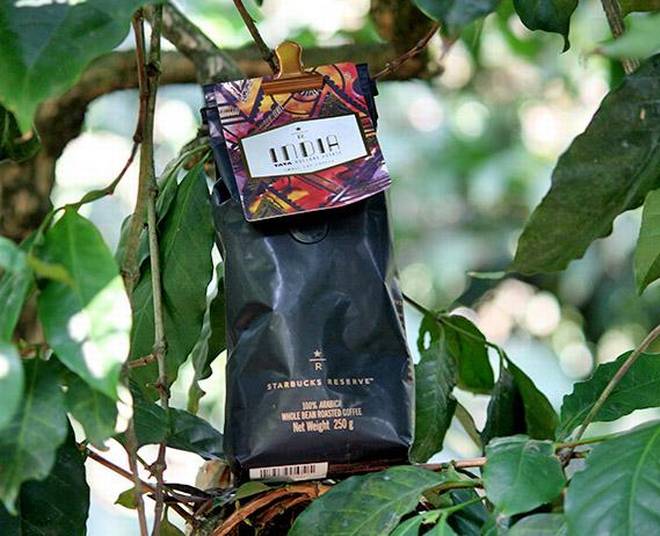
Coffee grown in the hills of Karnataka is making its way to the Starbucks Reserve store in Seattle

Coffee is undergoing something of a transformation in India. Local beans, grown in the country, are finally making it onto store shelves, where provenance and growing techniques are emphasised. Meanwhile, a certain section of savvy consumers trawls the Internet, searching for new ways to brew their daily cuppa using a range of different home-grown beans, each of which comes packaged with tasting notes that emphasise subtle flavours.

Meanwhile, an ocean away, India’s coffee prowess was given a different stamp of approval, when last October, Starbucks sold Indian coffee for the first time at its flagship Starbucks Reserve store in Seattle, the city in which the brand was founded. The coffee came from Tata’s Nullore estate in Kodagu, Karnataka, and was the company’s first microlot coffee. While Tata has 19 plantations in Kodagu (spread over 7,300 hectares), this was the first time that the company’s arabica beans made it to international shelves.

Microlot coffee refers to beans that are generally the best of the estate, and are those that imbibe flavours of the terroir. Arabica is one of two types of coffee beans, and is prized for its flavour, lower caffeine content and almost twice the concentration of sugar than is found in robusta. As a result, arabica is more expensive, and harder to grow.

Place of origin

Walking around the Nullore plantation’s block 19 (where the beans grew), what strikes you is the sense of calm that comes with standing in the midst of a 505-acre estate.

The microlot that was ultimately produced got its flavours from plants and trees that fruit bats propagate, while they make their homes in the silver oak trees above that provide shade to the arabica plants below. This two-tier system allows the coffee to grow under a canopy of trees, which includes jackfruit, pepper vines and fruits such as orange and lychee. On a tour of the block, Mandana, plantation manager, says, “We collected the coffee berries separately from eight hectares of this [block], where the fruit bat population is high.”

Changing trends

The story of the coffee though, goes beyond its growth, and rather is the story of how Tata Coffee is responding to changing customer demands, especially at the high-end, where international coffee drinkers are willing to spend between $10-30 to buy beans with unique tasting notes. Sunalini Menon, a well-known coffee cupper, who is also an independent member of the Tata Coffee board, has been instrumental in galvanising the plantation managers to experiment with microlot coffee. Chacko Thomas, the deputy CEO and executive director, says, “As a result of Nullore, we have 150 [microlot] experiments in progress.” Processing aside, the recognition has showed employees, that the beans grown in Kodagu can be cupped alongside the best in the world.

source: http://www.thehindu.com / The Hindu / Home> Life & Style> Food / by Aatish Nath / March 30th, 2017

‘Declare Kodagu district eco-sensitive zone’

The entire Kodagu district should be declared as eco-sensitive zone, said Coorg Wildlife Society president Col (retd) C P Muthanna.

Speaking at an interaction with various organisations on conservation of environment here on Wednesday, he said, “River Cauvery is the lifeline of entire South India. Around 8 crore people are dependent on the river, which also supports more than 600 industries. With the increase in attack on environment, River Cauvery is drying up. To prevent this, the entire district should be declared as ecosensitive zone.”

Land conversion

He added that in the name of urbanisation, about 2,800-acre land has been converted for commercial purpose in the last 10 years in the district. “There is a need to arrest the opening of new layouts, resorts, homestay, construction of railway lines and illegal sand extraction. About 54,000 trees were felled to lay high tension line to Kerala,” the colonel reminded.

He said permission should not be given for the setting up of new resorts in the district. The construction of a mini aerodrome and a cricket stadium in the district would be opposed by the Coorg Wildlife Society. The society will also oppose any move to divert the Kongana river.

Stating that the laying of the Mysuru-Kushalnagar railway line will affect the ecology of the region, he said infiltrators from Bangladesh earlier used to arrive in the district in buses. With the introduction of train services, they will arrive on trains.

Air Marshal (retd) Nanda Cariappa said there is a need to conserve land and environment for future generation. “The land is not being converted for commercial purpose in Kerala, however, the land is being converted for commercial purpose indiscriminately in Kodagu district,” he concurred and added that there has been a rise in wild animals-man conflict in the district.

He expressed concern over tigers entering human habitations in the district.

source: http://www.deccanherald.com / Deccan Herald / Home> District / DHNS- Madikeri, February 16th, 2017

4 elephants from Mathigodu camp leave for Uttarakhand

ElephantsKF23feb2017

Four elephants from Mathigodu elephant camp in Kodagu district left for Uttarakhand on Monday. The elephants have been sent to Jim Corbett Tiger Reserve as per the MoU signed between the Karnataka and Uttarakhand governments.

The elephants that left for the north Indian state are Thunga (15), her two-year-three-month-old calf Karna (7) and Bheeshma (7). Mahouts Gopal, Rama and Lingappa, are accompanying the pachyderms.

The elephants halted at Kallabettu forest in Hunsur on Monday evening and will resume their journey on Tuesday morning, said Mathigodu RFO Kiran Kumar. He said the elephants will travel by lorry. The mahouts will be with the elephants till they get accustomed to the new environment, said the RFO.

Elephant Thunga is the daughter of Varalakshmi, who is at the elephant camp. Karna is the son of Chamundi who was captured at Dandeli. Bheeshma is an orphaned elephant who was found on the periphery of Veeranahosahalli. He was separated from his mother and was reared by mahouts at the camp.

source: http://www.deccanherald.com / Deccan Herald / Home> State / DHNS- Gonikoppa (Kodagu District) / February 21st, 2017

Ibnii Coorg first resort in India to be IGBC Platinum certified

Ibnii Coorg is nestled on 120 acres of which 50 acres is being used for coffee plantation

Ibnii Coorg, an eco luxe resort located in Coorg (Kodagu) district of Karnataka, has become the first hospitality project in India to receive the IGBC Platinum certification for energy and resource-efficient, sustainable, cost-effective buildings.

source: http://www.financialexpress.com / The Financial Express / Home> Lifestyle> Travel Tourism / by Steena Joy, Madikeri / February 21st, 2017

Ibnii Coorg, an eco luxe resort located in Coorg (Kodagu) district of Karnataka, has become the first hospitality project in India to receive the IGBC Platinum certification for energy and resource-efficient, sustainable, cost-effective buildings that impose minimal stress on the environment. The resort is also gearing to get its LEED (Leadership in Energy & Environmental Design) certification by April.

The Indian Green Building Council (IGBC), part of the Confederation of Indian Industry (CII) was formed in the year 2001.The rating systems are based on the five elements of nature (Panchabhutas) and are applicable to all five climatic zones of the country.

Ibnii Coorg is nestled on 120 acres of which 50 acres is being used for coffee plantation. The resort has just finished with its first coffee harvest. Speaking exclusively to FE Online, Dr Sherry Sebastian, director, Ibnii Coorg, informed, “In the last 60 years, no pesticides have been used on this land. So it is an ecological and biodiversity hotspot. Very few trees were cut during construction of Ibnii Coorg. We are also very actively involved in rainwater harvesting as we have three large water catchment areas. We harvest nearly five million litres of water every year. Apart from a waste management plant, we have a state-of-the-art Sewage Treatment Plant (STP) too to further minimise our dependency on fresh water. The treated water is used for landscaping and other utilities. Ibnii is also a vehicle free zone with only electric buggies used for internal movements. Guests are encouraged to walk around the resort.”

The resort also has introduced other ecological initiatives such as an inhouse tailoring facility where many articles are created out of recycled materials like shopping bags out of used cement sacks and bubble wraps; use of steel fruit and vegetable crates in the kitchens instead of the conventional plastic crates; use of drop pops in the restaurants in place of finger bowls for washing hands. The resort is also part of a new project with Madikeri town for making a road using recycled plastic from the resort.

Ibnii Coorg also has TieCop, its Environment Conservation Programme.

Dr Sebastian added, “We also want our supply chain to be eco sensitive – so we source only from vendors who have the same sensitivity towards the environment. Presently, we source the coffee for the resort from Halli Berri, a fourth generation all woman owned concern coffee estate in Chikmagalur with a similar vision towards sustainability, but soon we hope to be able to use our own coffee. We have a vegetable garden where we source most of the vegetables for our salads. Another bigger vegetable garden is being created which is expected to give us around 14 tonnes of vegetables.”

The resort has a robust waste segregation system where the organic waste is used in a vermicompost to generate high-yield, organic manure which is in turn used in the green house to grow fresh organic vegetables and fruits.

source: http://www.financialexpress.com / The Financial Express / Home> LifeStyle> Travel Tourism / by Steena Joy ,Financial Express, B2B / Madikeri – February 21st, 2017

Wake up and smell the coffee!

ArshiyaKF13feb2017

Kochi :

Some of the coffee tasted bland, others were a bit over-the-board bitter. The 33-year-old Arshiya Bose, social entrepreneur and owner of Black Baza Coffee who was in Kochi recently to hold a coffee-tasting session, says that there is no short cut to making a good cuppa of coffee.

Arshiya02KF13feb2017

So, Arshiya takes her students on a trip on the perfect ways of making coffee. At the end of the session, she introduces them to the Black Baza Coffee, which is warm and has the lure of a refreshing evening drink. What’s unique with this coffee is not only the way it is processed, but that the beans are grown in the most fertile of soils in India – right next to the Kodagu and B R Hills in Karnataka, where the river Cauvery flows in all its glory.

Karnataka-based Arshiya Bose is currently on a mission to promote this coffee, which is grown under large tree canopies, right next to the river beds. According to her, Indians have forgotten the taste of original and eco-friendly coffee, and has hence taken it upon herself to bring back the lost glory.

“Indians drank one of the most unique coffees in the world. In the past, the coffee beans, especially in Karnataka, were grown under forest covers and under shades of trees.

However, constant deforestisation forced our farmers to grow coffee directly under the sunlight,” she said. According to her, this method was detrimental to the environment (as it encouraged deforestisation), and also led to early maturation of the coffee beans, which supposedly also lead to a compromise in quality and taste.

For this, Arshiya got in touch with farmers who were growing coffee beans in Karnataka.

“ This is how we zoomed in on Kodagu and B R Hills. We said we would buy their produce and sell it across the country, if they were willing to heed to the eco-friendly norms. They agreed. So, they started growing coffee under available trees and were given the responsibiltiy to look after it too,” says Arshiya.

Right now, Arshiya’s Black Baza Coffee, named after the small bird of prey found in heavenly dense forests of South and South East Asia, is sold across the country. In Kochi, it is available at Pepper House Cafe.

source: http://www.newindianexpress.com / The New Indian Express / Home> Cities> Kochi / by Princy Alexander / Express News Service / February 05th, 2017

Learning the basics of black pepper cultivation

Kodagu, the coffee land of Karnataka, is also known as a major producer of black pepper. Many pepper growers here have opted for innovative methods to get a good and sustainable yield.

One such grower is M G Hoysala, a former banker. Being the son of a farmer, he got exposed to farming at a very young age. After studies, he worked in the banking sector for five years before quitting his job to take up farming.

Once back to farming, Hoysala started following traditional cultivation methods in his coffee plantation with black pepper as the parallel crop.

In his 40-acre coffee estate, Arabica coffee is planted at a six-by-six feet spacing in about 30 acres. Since Arabica coffee demands a comparatively higher shade, indigenous trees are grown in the estate. Black pepper vines trail on these plants. Dadap trees with restricted height and silver oak trees are also grown as shade trees.

However, lack of experience and guidance made Hoysala struggle in the initial years.

Meticulous planning

Subsequently, Hoysala came in contact with the Indian Institute of Spices

Research when he participated in a seminar organised by its regional centre in Madikeri, Kodagu. Here, he was able to gather information on black pepper, its production techniques, and know about the processing technologies developed by the institute.

Afterwards, he made it a point to visit the regional centre regularly and interact with the scientists to get more information about the crop. Now he feels that shade regulation, proper irrigation and integrated management practices are key to sustain both coffee and pepper crops. “Though I use both chemical and organic fertilisers to ensure proper growth of the plants, I strictly avoid chemical pesticides and insectides. One can avoid pests and diseases through efficient irrigation and proper nutrient management,” he says.

Even though Hoysala has sufficient water to irrigate his estate, he has stressed on water conservation by constructing water harvesting structures like farm ponds. In some parts of the estate, pits of size 10x1x1.5 feet have been made to check surface runoff, and enrich soil moisture. “These water management practices are not new to estates in Kodagu. With the changing weather patterns, following these traditional techniques becomes more important now than before,” he says.

“By adopting improved technologies and sustainable practices, we are able to increase the pepper yield of the estate from six tonnes to 12 tonnes within a span of five years,” he reveals. Though it is difficult to double the production in such a short span, proper planning and implementation has helped Hoysala achieve this feat.

The black pepper vines are irrigated with 70-100 litres of water in every round (in this estate, it takes three weeks to complete one round), depending on the canopy size, from March to June. Currently, the management of coffee and black pepper in one acre costs about Rs 85,000 per year for Hoysala. In turn, Hoysala earns a net profit of Rs one lakh per annum per acre from these crops.

Encouraged by the success of pepper crop in 30 acres, Hoysala has transformed 10 acres ginger cultivated area into a high-density black pepper plot with silver oak as the standard tree. Here, Robusta coffee is the parallel crop.

Hoysala’s innovative and sustainable methods have inspired many other
pepper growers in the region. Meticulous planning, flawless implementation of agricultural practices, and efficient labour management coupled with relentless efforts to improve production have made agriculture sustainable and helped improve the yield.

To know more about his work, one can contact
M G Hoysala at hoysala.mg@gmail.com or on 9449682430.

S J Ankegowda

source: http://www.deccanherald.com / Deccan Herald / Home> Supplements> Spectrum / DHNS / January 31st, 2017