Category Archives: Nature

Green is my colour!

On the eve of World Environment Day, Pamela Malhotra tells SRAVASTI DATTA about re-examining our obsession with technology and our lifestyles choices can have an impact on the environment
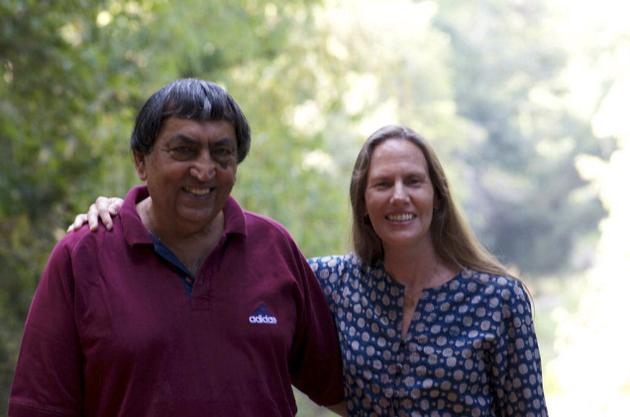
A.K.Malhotra and Pamela Malhotra

Her story is well-known. About two decades ago, Pamela Malhotra and her husband Dr. A.K. Malhotra bought 55-acres of land in the Western Ghats in Kodagu district, with the intention of reforesting the land that had fallen into various states of misuse. They Pamela and her husband were in the U.S. before they relocated to this land, in the Brahmagiri range, that is about 40 minutes away from Srimangala.

“K.M. Chinnappa of Wildlife First was the Warden at Nagarhole National Park when we first came to India in January of 1986. He It was he who encouraged us to buy land to protect in the Coorg/Kodagu district. We also met Ullas Karanth on that trip and also network with Ravi Chengappa of Cauvery Sene on environmental issues in the district,” says Pamela, who has dedicated her life toin protecting wildlife and the environment, and is a well-known speaker on climate change, watershed protection, bio-diversity and species extinction. Today that land has been converted into a 300-acres SAI (Save Animals Initiative) sanctuary of rich foliage and diverse species.

“The process took a long time. Did we ever expect to have the sanctuary we have today? No!” says Pamela, who was one of the speakers at the recently-concluded TedxBangalore.
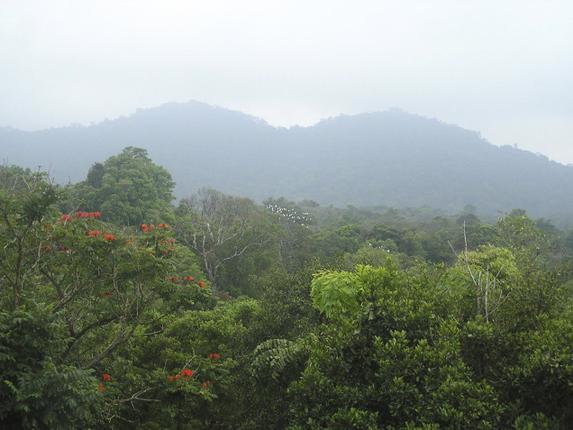
SAIkf04jun2016

“We took advice from the former owner of the 55 acres of land and the adivasis, because they have the knowledge of the native trees needed in that area. You need to understand which tree species belong where. The land was in various different conditions. The parts where cardamom was grown, there were a lot of shade trees, because cardamom requires a lot of shade, big native trees. But in the coffee plantations, big trees were taken out and there were smaller trees, because coffee requires sunlight. But coffee prices got de-regulated, so the cardamom plantations were pulled out, and they cut down the big trees. That was the first wave of deforestation. The second was when unregulated home stays were being built.”

Pamela says the Kodagu district is the source of fresh water for the Southern Indian peninsula. And so every drop of water that we take for granted in our cities is extremely precious. Bengaluru due to rapid, and often mindless, development is desperately holding on to the last vestiges of being a garden city. Even though forests do not lie within our immediate surroundings, we often take them for granted. Pamela says scientific studies have shown that 50 per cent of rainwater comes from forests, much more than oceans. So do we in our technology-obsessed cities have a responsibility towards Nature? Yes. Does the action of a single individual have an effect on climate change and conservation? Yes. Pamela says it is essential, therefore, to examine one’s lifestyle. “To save water, there is rainwater harvesting, recharging groundwater and conserving water. We also have to examine our obsession with technology. Do we need the latest iphone? Do we really need the latest tech toys? Rare earth minerals and materials are used in computers and mobile phones. And those materials, are just that, rare!”

Some of the measures we adopt to control diseases in cities is way off the mark. “Tanks are being poisoned to get rid of mosquitoes. But instead of poisoning tanks, see how we can breed frogs because they eat insects and mosquitoes. Swallows eat 2,000 mosquitoes! You could plant trees and small bushes in your backyard. It will also bring back small wildlife like butterflies and birds.”
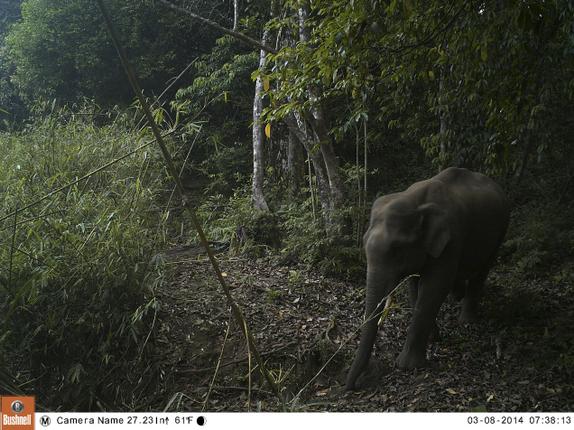
Elephant at SAI Sanctuary in Coorg

Pamela says conserving our rainforests is about survival. “It’s not a touchy-feely thing,” she emphasises. She reveals trivia about wildlife that is relatively unknown: “Elephants are the number one protectors of the forest. Recent studies by the Indian Institute of Science have shown the comparison between elephant impact on protection versus the roaming of domestic cattle. Elephants cover a 1000 square kilometre radius, while cattle cover a five km radius. Elephants also consume wholeseed, so they are scattered in their dung across a wide distance. It has also been proven that the seed in elephant dung sprouts much faster than those that even fall directly from trees.”

****

Brimming with wildlife, you can spot these at the SAI Sanctuary

Animals

Elephant, Gaur, Tiger, Bonnet Macaque, Jackal, Fox

Birds

Little cormorant, Little egret, Oriental honey buzzard, Butterflies, Malabar spotted flat, Pygmy scrub hopper

Snakes

King Cobra, Russell’s Viper, Common Sand Boar

***

Green up, clean up your city

Conserve water, resort to rainwater harvesting and charging underground water

Think about our obsession with technology. Do we really need the latest i-phone and tech toy? Rare earth material goes into the making of them. And as the name suggests, rare earth material is really, rare!

Plant trees or grow small bushes in your backyard. That will help attract small wildlife, like butterflies and small birds. Swallows, for example, can eat up to 2,000 mosquitoes, which can prevent diseases like malaria and dengue.

Instead of poisoning tanks to get rid of mosquitoes think of earth-friendly options such as frogs who eat mosquitoes

source: http://www.thehindu.com / The Hindu / Home> Features> MetroPlus / Sravasti Datta / Bengaluru – June 03rd, 2016
Human Rights Commission bats for Green Patch, to save 3 tree species

In an unusual act, the State Human Rights Commission (SHRC) has stepped in to save three tree species, especially in Coorg. It has asked the state government to withdraw its notification that included the three species, Hebbevu (Melia dubia), Belanji (Acrocarpous fraxnifolious) and mango, in the list of 23 trees exempted from the forest act which forbids tree felling.

The commission decided to act as the March 2015 notification was being misused to fell these trees rampantly in Coorg by the timber mafia. The commission, besides directing the authorities to check cases where the notification has been allegedly misused, sought a report by the state government. SHRC passed the order on May 21 after hearing a complaint filed by local activist K A Ravi Chengappa.

It’s an unusual action for the SHRC which deals with human rights violations, to take up the cause of maintaining green cover.

But this has been done considering it as one of key aspects supporting human existence. Chengappa is fighting an uphill battle to retain the greenery in Coorg. He has filed petitions with the High Court, Supreme Court and SHRC.

He had earlier filed complaints with the forest department and the Lokayukta too.
Chengappa said, “The order was being blatantly misused by those in illegal timber trade. Some forest officials were also handin- glove with them.” He said, “Only tree species grown by farmers in Coorg – like lemon, coffee and sapota (sapodilla) were exempted earlier (2002 and 2004). Now though including new species requires legislation, three species were included by the state government last year. Because of this exemption, Belanji which is a fine soft wood and which has grown naturally, is being felled rampantly. Wild mango, which is spread across forests and yields high value wood, is being rampantly cut and transported from forests. Even those in private lands are cut and transported. These species are spread across Coorg, Chikkamaga lur and Mangaluru which are part of Western Ghats. The government notification has proved detrimental and over 30-40 lakh trees face the threat of being cut.”

CG Hungund, SHRC member who has taken up the case, said, “The state government notification has many loopholes.

Prior to such orders, there should have been a mechanism of self-declaration by the land owners in place. This could have given figures on the number of trees. But now, there is no such thing. The trees are cut and transported haphazardly from the reserve forests. There is no proper mechanism to monitor the cutting and accountability is absent. Hence the government has been asked to withdraw the order as it may prove dangerous to state forests.”

Hungund has asked the chief secretary and principal chief conservator of forests to reconsider the notification and submit an action taken report within six weeks. Though the petitioner was successful in making government withdraw mango from notification, the other trees are being felled, SHRC brass said.

source: http://www.bangaloremirror.com / Bangalore Mirror / Home> Bangalore> Others / by Chetan R, Bangalore Mirror Bureau / May 28th, 2016

Scientist brews a green idea to give coffee growers their due

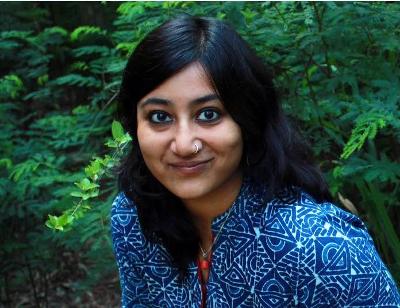
Arshiya Bose, founder, Black Baza Coffee

Bengaluru:

Verdant forests, picturesque mountains, lush coffee plantations — for many, Coorg is the perfect place to unwind. However, it was a different quest which took Arshiya Bose to the coffee land. A PhD holder in geography and environmental science from the University of Cambridge, she visited Coorg as part of a research project. Her mission — to make coffee production environment-friendly.

Realizing not all is well with the current production process — use of pesticides, exploitation of farmers, growth of coffee in the sun instead of shade — Arshiya, 32, started looking for ways to make it sustainable. She wanted to address these problems by adopting a holistic approach that ensures the well-being of both the environment and the coffee producers. The result — Black Baza Coffee, an entrepreneurial idea currently being incubated at the NS Raghavan Centre for Entrepreneurial Learning (NSRCEL), IIM Bangalore. The centre mentors innovators and supports their ventures.

During her research, Ashriya got the opportunity to work with forest dwellers and tribal communities in the Western Ghats, which helped her get closer to her goal. “I studied the social and environmental impacts of coffee production and found there were a number of problems no one was doing anything about. Traditionally, coffee in India has been grown under the shade of trees. But now, it is grown directly under the sun’s harsh rays, which adversely impacts biodiversity. Also, the trade market is extremely unfair to the producers, with the exploitation levels being very high. To fix the loopholes in the social and environmental ecosystem, I started Black Baza Coffee,” said Arshiya, who has tied up with many producers.

So far, the Kolkata resident has got 35 coffee producers on board, of whom 31 are marginal farmers from Biligiriranga Hills in Chamarajnagar. All of them are small growers —they own farms spanning less than 25 acres. “Under our partnership, we promise to buy coffee from farmers, support them through agronomic training and quality improvement and build safeguards for unforeseen price crashes. Many small growers are exploited and we hope to be the most fair buyer of their product ensuring they get their due,” said the young entrepreneur.

Explaining the potential of the idea, professor Suresh Bhagavatula, chairperson, Entrepreneurial Ecosystem Development, NSRCEL, IIMB said, “Coffee is among the top five most popular legally traded products in the world, including oil. It is a $90 billion industry and supports about 75 million people. While India is among the top 10 coffee-producing nations, it accounts for about 3.5% of the world exports. Unlike the rest of the world where sustainability and fair trade are becoming important for consumers, it is yet to catch on in India”.

“Black Baza Coffee would like to market the produce from farmers who practice sustainable methods for production. Consumption of coffee in India has started to increase, which will make it more feasible for ventures such as BBC to be established and serve the local markets as well,” Suresh added.

MUTUAL BENEFIT

We make conversational agreements with farmers and enter into a mutual understanding with them to grow coffee under certain kinds of trees, restrict the use of pesticides and protect their water resources. In return, Black Baza Coffee guarantees to buy coffee from these farmers at a higher premium

source: http://www.timesofindia.indiatimes.com / The Times of India / News Home> City> Bangalore / Shilpa Baburaj, TNN / May 25th, 2016

Madikeri CMC readies itself to face tough rains

Task force formed for help during loss of houses, lives.

The City Municipal Council is all set to face eventualities from the heavy rain during monsoon in the next three months.

The Municipality has formed a task force to address the grievances of the people in case of house collapse and loss of life following heavy rain.

City Municipality Commissioner B B Pushvathi has directed the teams to visit the spots immediately in case of any mishap during monsoon. The task force members should not leave the headquarters from June to August, she added.

Problem places
Areas like Tyagaraja Nagara, Rajarajeshwari Nagara, Ukkuda, Gaddige, Azad Nagara, Indira Nagara, Chamundeshwari Nagara, Jyothi Nagara, Ventakaramanna Layout, Rifle Range Nagara, Webs layout, Dairy Farm, Mangaladevi Nagara, Moornadu Road, Mangaluru state highway, Jayanagara, Sudarshan Layout, Ashokapura, Mallikarjuna Nagara, Thippegundi, Ranipete, Bhagavathi Nagara, FMC College, Putani Nagara, Dechur are likely to have rain-related mishaps in town. The artificial flood entering the houses and uprooting of trees on the road are common in these areas. The Municipality has deployed officials to such flood-prone areas to mitigate the damages.

Desilting drains
She said that officials have been directed to remove the silt in the open drains for the easy flow of rainwater. Senior Programmer M N Sandhya and Second Division Assistant B R Harini have been given the responsibility of collecting information on the rain damage and submit it to the district administration daily. The revenue and health inspectors have been directed to shift the people in low lying areas to the safer places in case of necessity.

The City Municipality has appealed to the contractors to give utmost importance to the safety of the labourers working during the monsoon.

source: http://www.deccanherald.com / Deccan Herald / Home> District / by Aditya K A / Madikeri – DHNS, May 21st, 2016

‘Bhagamandala-Talacauvery glory should be retained’

Rakshana Vedike member opposes fire rituals for rains

Talacauvery Moolaswaroopa Rakshana Vedike Member Ulliyada M Poovaiah urged the government to retain the original glory of Bhagamandala and Talacauvery.

These two spots should not be converted into tourist destinations, he said.Addressing mediapersons here on Tuesday, Poovaiah said that in the official documents of the government, such as maps, Cauvery kshetra is mentioned as a tourist centre.

“The mistake should be rectified. Necessary measures should be taken to control the activities of tourists at the theerthakola (pond) of Talacauvery and Brahmagiri Hills. Security personnel should be appointed at the junction near Kailasa Ashrama and a gate should be erected,” he said.

Dress code

“Also, a dress code should be implemented at the Cauvery kshetra. The maintenance of theerthakola and Brahmakundike must be carried out as mentioned in the letter by Neeleshwara Padmanabha Tantri to the deputy commissioner. The water of the theerthakola has not been changed the last several months. The polluted water may cause harm to health. Hence, the theerthakola should be cleaned regularly. Measures should be taken to implement green police system in Talacauvery,” he demanded.

‘No rituals’

“There is an information saying some seers will perform sacred fire rituals at Talacauvery for rains. Singing the glory of God through bhajan and namasmarane is allowed, but sacred fire rituals are not entertained,” he said.

Ulliyada Poovaiah said that the plastic sheet above the brahmakundike is against religious beliefs. The cover should be removed immediately. The pooja timings should be displayed on a venue. The pooja should be conducted on specific timings.

Kodava Makkada Koota President Bollajira B Ayyappa, Talacauvery Moola Swaroopa Rakshana Vedike Convener Kokkalera A Cariappa, Secretary Karun Kalaiah, members Kodiyara Muttanna and Ratan Thammaiah were present.

source: http://www.deccanherald.com / Deccan Herald / Home> District / Madikeri – DHNS – May 12th, 2016

Pre-monsoon rainfall perks up coffee growers

To restrict further crop damage caused by dry weather

Bengaluru :

The recent pre-monsoon rainfall in key coffee growing regions of Karnataka and Tamil Nadu is expected to help restrict damage to the 2016-17 crop, which has been impacted by the prolonged and higher than usual temperatures and delayed blossom showers.

The rainfall over the past few days has provided some relief to growers of arabicas, the premium and mild coffee variety, besides being seen as beneficial for the pepper crop, largely grown as a key intercrop in the coffee estates and arecanut plantations in the region.

“The plantation districts of Coorg, Chikmagalur and Hassan have received widespread rains over the past few days. The rainfall will help contain the damage caused by the delayed arrival of blossom showers,” said Baba PS Bedi, Chairman of the Karnataka Planters Association.

Blossom rain

Timely arrival of pre-monsoon showers is crucial for the blossoming of the coffee floral buds. Traditionally, the robusta and arabica variety growing areas should receive pre-monsoon showers for a good blossom by March 15 and April 15 respectively.

However, the blossom showers were delayed this year and were erratic in some areas, thereby hurting the prospects of the robusta variety. “It is too early to quantify the impact of delayed showers on robustas,” Bedi said.

Though some growers had taken up sprinkler irrigation for the robustas, the inadequate availability of water due to deficient rainfall in the last two years did pose a challenge to them. The coffee growing regions started receiving widespread rainfall from the first week of May, and some regions continue to receive rains. “It rained even today,” said N Bose Mandanna, a large grower in Suntikoppa near Madikeri in Coorg, on Thursday.

The rain has helped Arabica blossom and the crop should be good, provided there is no significant incidence of the pest – the white stem borer, Mandanna said. However, the delayed rainfall has already hurt the prospects of robustas in some areas, which cannot be reversed.

“It has been raining in most of the growing areas in Karnataka where coffee has blossomed,” said Y Raghuramulu, Director of the Balehonnur-based Central Coffee Research Institute. The rain should help in setting of the crop. Even the coffee growing areas of Tamil Nadu have received rain since last week, which is very good for the arabica crop, he said.

Crop estimate

“If only the rains had arrived two to three weeks earlier, there would not have been much impact,” Raghuramulu said, adding that the Coffee Board has started the estimating the crop size for 2016-17 based on the blossom, which is likely to be finalised by end-June.

After two years of good harvest, coffee is facing an off-year for the 2016-17 season starting October. The Coffee Board has estimated the 2015-16 crop at 3.5 lakh tonnes, a 7 per cent increase over the previous year’s 3.27 lakh tonnes.n

source: http://www.thehindubusinessline.com / Business Line / Home> Economy> Agri-Business / by Vishwanath Kulkarni / May 12th, 2016

Develop Bhagamandala, Talacauvery, say locals

Local leader K J Bharat has urged the state government to develop Bhagamandala and Talacauvery in the taluk.

Addressing mediapersons, he said the government has neglected Talacauvery, the origin place of River Cauvery. Development works have been initiated here, he charged.

He claimed that soil has been dumped into paddy fields near Chamundi Bane of Bhagandeshwara Temple in Bhagamandala.

The soil, dumped on a large proportion and on a 100 metre wide and 10 foot tall area, will result in storm water flowing towards the temple and Bhagamandala, creating artificial floods. People cannot use the boats as the mud is dumped in front of the building where the boats are placed. Though a memorandum has been submitted to the local gram panchayat, no measures have been taken yet, Bharat charged.

He said Bhagandeshwara temple was renovated ten years ago. The kitchen and the room of the priest leak in rainy season. The tender process to carry out repair of the temple roof has stopped abruptly. There is no proper door for the temple. Though there is a fund of Rs 2 crore in the temple account, the officials are taking up repair work, he charged.

‘No safety measures’

Bharat said thousands of devotees and pilgrims visit Talacauvery and Bhagamandala every year. But their protection is not taken care of.

The bridge at Chedukaru in Tavoor village has collapsed. The bridge is only 10 years old and the narrow bridge constructed during the British period is still strong and vehicles move on that bridge.

The contractor who has constructed the Tavoor bridge should be blacklisted, he urged and warned of staging a rasta roko protest, if the demand is not fulfilled.

Local residents K S Prabhakar, K C Parashuram, Manoj Kumar, Yoganand and Poonaccha among those who were present in the press conference.

source: http://www.deccanherald.com / Deccan Herald / Home> District / DHNS – Madikeri, May 06th, 2016

For the love of coffee

Is the modern day coffee cultivation threatening our biodiversity? Read on to find out how you can responsibly source your favourite morning cuppa

It’s the quintessential breakfast drink, the morning elixir, the ambassador for good days and the one drink with absolute power to wake you up. Yes, our morning cuppa coffee is what we all look forward to wake us up from a slumber hangover.

But, what if we didn’t have coffee anymore? Or, if the modern day production of coffee is impacting forests and wildlife, in turn, affecting our consumption? Alarming isn’t it?

ArshiyaBoseKODAGU03may2016

Arshiya Bose has set out on a quest to responsibly source coffee without making an imprint on our environment. She started Black Baza Coffee in an attempt to save biodiversity. Technically, coffee is grown under a marquee of trees.

But, because of deforestation, coffee is now grown under direct sunlight, giving way to monoculture which affects our biodiversity levels drastically. “After my Ph. D., I started spending time at coffee landscapes in India, mostly Coorg,” says Arshiya, a wildlife scientist.

“We found that compared to other parts of the world where forests had been clear-felled to grow coffee, India had retained forest trees and planted coffee underneath the shade of these trees. This meant that coffee farms in India have supported all kinds of beautiful biodiversity for decades. The challenge arises because, since the 1970s onwards, many farms have been removing shade trees in the hope of better coffee yields. The trade-off here is that the yields of coffee are actually higher when coffee is grown under direct sun (which is why in high coffee producing nations like Brazil, Vietnam etc., there are no shade trees). This was the problem we were trying to address. How can we make it economically viable for farmers to grow a more ecologically-friendly coffee?”

The first step involves identifying farms in places like Kodagu and B.R. hills, based on factors like potential of the farm to support biodiversity and willingness to participate in conservation projects. A conservation agreement is then drawn up with the farms that include maintaining 100 trees per acre, protection of water sources, restricting the usage of chemical pesticides and maintaining 60-80 per cent shade cover which means no cutting of tree branches.

“In 2009 I met a young scientist – Claude Garcia, a French, who spoke fairly good Tamil,” recalls Arshiya. “He told me: ‘if we can’t achieve biodiversity-friendly farming with coffee we probably can’t achieve with any other farming system either’. That sentence stuck on as I believe that coffee is the perfect crop to experiment with. Coffee gets the attention of people and then becomes a way to engage someone who previously never cared about conservation. I always say: we want to bring conservation to everybody’s breakfast table.”

Black Baza Coffee is already available at natural and health food stores, where they partner with like-minded cafes and institution who would want to serve great coffee with a story.

The bean cause -  Working together for that perfect cuppa
The bean cause – Working together for that perfect cuppa

Aesthetic packaging and cheeky questions on their cover makes Black Baza Coffee a unique product. “What does moth-friendly coffee taste like?” “What does Otter-friendly coffee taste like?” – are some of the questions you get to see on their packages. “All of our coffee varieties are a tribute to the charismatic plant and wildlife species that share the Western Ghats landscape with coffee,” says Arshiya, “For example, the Otter coffee comes from two riverside farms in Kodagu where we are protecting the Cauvery River from effluents and degradation of riverside vegetation. The Luna Moth is a magnificent indicator of ecological health as well. So while we could test our coffees in the lab for chemical residues etc. (which we do), we also go out to the farm and count Luna moths or Ficus trees or Otters because these species tell us the whole ecological picture – lab tests don’t tell us whether farms are biodiversity-friendly or not.”

Black Baza Coffee now works with 30 farmers and there are over three lakh small-medium growers in India. While Arshiya isn’t sure about the future of the model in India, she is positive and fiercely relentless about being a major coffee player that makes biodiversity-friendly coffee a household staple instead of an exception.

source: http://www.thehindu.com / The Hindu / Home> MetroPlus / by Rehna Abdul Kareem / May 03rd, 2016

City gets ‘plant a tree’ message on Earth Day

ChildKF25apr2016

Tree plantation and workshops on saving the planet marked the World Earth Day in Bengaluru on Friday.

In Haralur, Hennur and other places, citizens planted saplings of different trees while a composting activity was held at the Bangalore Scottish School in JP Nagar where students were given demonstration on converting wet waste into compost.

Environmentalist Vijay Nishant visited MEG Centre in Ulsoor to check the status of trees that were in bad shape and treat them, going with the theme of World Earth Day, ‘Plant a tree, save a sin from Thee’.

He said: “Two trees here are suffering from fungal infection. Since it’s summer, termites start attacking the bark of trees and weakening them.”

On Saturday, the nonprofit ‘Save Kodagu’, with the support of Kodava Samaj, Lions Club Kodigehalli, Coral Waters and Rescue Roadside Vehicle Assistance, will hold a bike rally from Bengaluru to Madikeri to spread the message of conserving the environment and saving Kodagu from deforestation.

The nonprofit expects more than 200 people to take part in the rally, after which a memorandum will be submitted to the Kodagu deputy commissioner to save the forest from developmental projects.

Concern expressed

The NGO expressed concern over chopping of one lakh trees to make way for high-tension wire in Kodagu. In other programmes, the Green Path Organic Store held a ‘Bhoomi Habba’ and the Geological Society of India and the Ministry of Earth Sciences held a panel discussion on ‘Trees for the earth’, in which environmentalist Yellappa Reddy and other dignitaries took part.

source: http://www.deccanherald.com / Deccan Herald / Home> City / Bengaluru – DHNSD, April 23rd, 2016

Coffee Growers Feel the Heat

Somwarpet :

The rising temperatures and a lack of rain have caused a desperate situation for coffee growers.

According to an estimate, nearly 30 per cent of the coffee plantations received blossom showers during March and April, while the remaining 70 per cent are yet to receive the first rainfall.

This situation might have a bearing on the prices of coffee and pepper in the coming season.

Last year, the total production of coffee in the country was 3.5 lakh tonnes while the district produced around 1.6 lakh tonnes of coffee, on an area of 1.10 lakh hectares. According to sources, this year, coffee production will be reduced by at least 20 per cent, due to insufficient and delayed rain, as well as rising temperatures.

Madikeri Coffee Board deputy director Ananth Kumar said delayed rain adversely affected young coffee plants and crop this year.

He said the Coffee Board will conduct pre-monsoon surveys in the month of May every year, to ascertain the production.

He said growers should maintain shade in estates, as temperatures had risen to 32 degrees in some parts of the district, causing dryness of soil.

In some dry areas where annual rainfall is below 50 inches, young plants wilted and died, even under the shade of trees.

In Banavara, Abburkatte, Yedavare and Yedavanadu, coffee growers are worried about crops wilting and dying. Coffee grower M L Ravi from Aigoor said growers are in distress owing to falling prices of coffee, and that delayed rains have added to their woes.

He said last year 50 kg Arabica coffee sold at Rs 10,000-Rs 10,200, but now, the price had fallen to Rs 8,200.

source: http://www.newindianexpress.com / The New Indian Express / Home> States> Karnataka / by Coovercolly Indresh / April 22nd, 2016