Category Archives: Nature

ICAR to set up planters’ home at Madikeri

Expert lays stress on diversification of crops

While agreeing with popular belief that agriculture “is risky business”, Director-General of the Indian Council of Agricultural Research (ICAR) S. Ayyappan said on Thursday that, however, farmers in places such as Kodagu had shown how farming could be profitable.

He was inaugurating the golden jubilee of the Cardamom Research Centre (CRC) at Kodagu, an Indian Institute of Spices Research (IISR) release here said.

The cardamom centre at Kodagu comes under the purview of the IISR. Dr. Ayyappan said the ICAR would also set up a planters’ home at Madikeri to offer training to farmers in the region.

Diversification

“Agriculture being probably one of the riskiest businesses, for it to be profitable, we have to give importance to diversification of crops and specialty agriculture,” Dr. Ayyappan, who is also the Secretary in the Department of Agricultural Research & Education (DARE), said.

He was all praise for planters for their success in spices cultivation. He said that spice plantations at Kodagu were model farms for farmers from the other States. “They have proved that farming is a profitable venture. The productivity of black pepper in these plantations is far above that of Vietnam,” he said.

He said the decision to upgrade the CRC and set up the planters’ home were New Year gifts for farmers at Kodagu.

N.K. Krishnakumar, Deputy Director-General of Horticulture, who presided, wanted the IISR and the CRC to identify pockets where cultivation of cardamom and black pepper and other profitable spices could be grown on a large scale.

M. Anandaraj, IISR Director, Amrik Singh Sidhu, Director of the Indian Institute of Horticultural Research, Bangalore; George V. Thomas, Director of the Central Plantation Crops Research Institute, Kasaragod, spoke.

Publications such as Capsule, a souvenir of the golden jubilee celebrations, Sadaram, a comprehensive publication on 50 years in cardamom research, and special issues of Spice India and Indian Journal of Arecanut, Spices and Medicinal Plants published to commemorate the golden jubilee were also released at the function.

Progressive farmers from Kodagu such as S.B. Jayaraj of Murugarajendra Estate, Madapur; B.M. Mahesh Kumar of Hosathota Estate, Sakleshpur; John Thomas Ramapuram of Doona Ann Plantations, Siddapura; C.P. Pramod of Cauvery Estate, Madikeri; Duleep Nanjappa of Pakka Estate, Madikeri, and Prema Ganesh of Prema Estate, Madikeri, were honoured by Karnataka Speaker K.G. Boppiah at the programme.
___________________________________________________________

Planters’ home to offer training to farmers

Planters lauded for success in spice cultivation

___________________________________________________________

source: http://www.thehindu.com / The Hindu / Home> Kerala / by Special Correspondent / Kozhikode – December 22nd, 2012
TripTease : The magical Mallalli Falls

MallalliFallsKODAGU14apr2016

There’s so much to see and do in Kodagu! But if you’re looking for something off the beaten track, there are exotic destinations hidden deep inside the woods, like Mallalli falls.

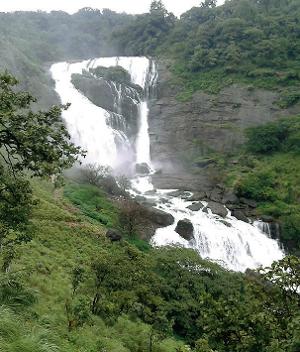
Mallalli falls flow quietly and with pride inside a deep and thick forest at the foothills of the Pushpagiri hills. Formed by the Kumaradhara River, Mallalli falls is about 45 km from Madikeri and 28 km from Somvarpet.

To get there, on the way to Pushpagiri hills, take a turn at Bidahalli village, from where it is about 7 km away. The trail to the falls is motorable for about 4 km, after which the remaining 3 km is a trek through a thick forest.

The path from the junction towards the falls is filled with coconut and systematic coffee plantations on either side of the road. The roads are slushy, slippery and filled with gravel, so it is advisable to take a jeep here. Surrounded by the constant chirping of birds and the noise of insects, you wonder how a waterfall could possibly exist in such a dense forest.

When you ease into the comfortable drive to Mallalli Falls, the road begins to curve left on to a small, relatively unused road. To make sure you are taking the correct turn, look for a pale blue tiled house just before exiting on to the muddy path. This road ends in a Forest Department office where all vehicles are halted. Here, you make an entry at the department office. The parking place in front of the office is the last plain ground you will see. Carry loads of water and eatables from here because the trek down to the falls is tiring.

There are wide concrete steps to the falls, but they are not what you’d expect. Huge and constructed in a zig-zag manner, they take a lot of focus and concentration to descend. Even as your body tires, fresh, tiny droplets and a mist which parts reveal the gigantic Mallalli falls.

The view from these steps which are laid only for a few metres, is breathtaking. You will see a huge carpet of greenery around you and in between water falls. It wouldn’t be wrong to call Mallalli falls the queen of all falls in Kodava Nadu. The noise of the falls is equal to that of a roaring lioness. If you want to go further down, know that it’s risky. But if you’re confident, trek ahead, which will take you through fresh and scented fruit orchids where hundreds of birds thrive.

You can also try to reach the base of the falls, but you need to be extremely careful as most of the stones are covered with algae, making it a slippery trail. There are loads of bushes and trees you can use for support to reach the base. Make a comfortable place for yourself to rest, and take in a complete 360 degree view of the hills and the falls. But beware of the leeches when you walk down to the base.

The locals love the fact that Mallalli falls flows through Kukke Subramanya and Nethravathi River in Uppinagadi and forms a Sangamam which is considered to be holy. You can make a visit to the falls in the summer, just to refresh yourself from the scorching heat, but the best time to visit the place is between July and December.

Getting There

Mallali falls is 260 kms from Bengaluru. Take the Bangalore- Mysore- Hunsur- Kushalnagar- Somavarpet. You can also reach Kodagu by bus and from there head towards the falls which is around 45kms. You can also go in your bike, but it is not advisable during monsoons.

—Kumaran P

source: http://www.bangaloremirror.com / Bangalore Mirror / Home> Columns> Others / Bangalore Mirror Bureau / April 12th, 2016

The urban escape

coorgKF07apr2016

With a sweltering summer on the threshold, Bengalureans are eager to get packing. Idyllic beaches, trekking adventures, wildlife tours and culinary trails, the possibilities are immense.

With airfare and hotel prices set to rise, they are trying to get the best deal without breaking the bank. Tour companies and adventure groups while pointing out how holiday-goers are exploring newer destinations, spell out whats ticking and what’s not!

By all accounts, summer holidays are the perfect time to revisit childhood. Keeping that in mind, ‘F5 Escapes’, a Bangalore-based, alternate travel company, which specialises in designing and executing all-women travel experiences, is holding a ‘Mom and Kids’ Trip’ to Coorg this summer.

Explaining the concept, Malini, founder and chief travel officer, says “As children, we have all chased fireflies. There was a certain magic in those quick, shining flickering lights in the dark. Of course, with time, glaring neon lights took over our night sky. With the concept ‘Chasing the fireflies in Coorg’, moms and kids will have the opportunity to explore the rainforests of Coorg. We help relive the childhood and watch the fireflies. It is also an occasion to learn about organic cultivation and solar living. We are organising the trip on April 23 and 24. Apart from that, we are also planning day trips in May.”

For the wanderlust-struck, any chance to get away from the cacophony is a winning deal. Across the country, the options are unlimited with every nook and corner having a story to tell and every nondescript hamlet something to offer. Himachal Pradesh has been high on the list of Bengalureans for some time now, be it for adventure or for the serene locale.

“When it comes to domestic travel, Kashmir has bounced back this year to be the top trending destination for domestic travel followed by Himachal Pradesh, Sikkim and Ladakh,” informs Karan Anand, head, relationships, Cox & Kings. As far as overseas destinations are concerned, “Switzerland and France continue to be hot favourites this summer. A new addition this year is Russia whereas Thailand, Malaysia, Singapore, Hong Kong and Macau are the most popular destinations in Southeast Asia among Indian travellers. Cambodia, Philippines, Vietnam and Bali are offbeat lovers’ paradise,” he adds. Planning a vacation is no easy task, but for the many nomads in the city, an escape from the city has become inevitable. In fact they are happily infected by the travel bug.

“Summer has always been a popular time to travel amongst many Indians,” points out Ravish Doctor, manager- growth strategy, Skyscanner India. “Be it for a long weekend or an extended holiday, we have witnessed an increase in the number of travellers making the most of the holidays during the summer,” he says.

“From Bengaluru, there has been a steady rise in search for destinations within Southeast Asia. Much like the majority of Indians, travellers from Bengaluru also favour summer travel to more popular destinations such as Bangkok, Singapore, Bali and Kuala Lumpur.

While across the country, London and Paris continue to be the most searched destinations in Europe; in spite of the soaring temperatures, Dubai is emerging as a destination. This may be attributed to Dubai as an all-round family destination which makes it perfect for children during their summer vacations,” he says. In spite of the recent happenings in Europe, surprisingly, there is still a sizable chunk who wants to explore its picturesque locales. “Europe is the perfect holiday destination for Indian travellers who want to escape the summer heat and we are observing an upward trend for this destination. While, destinations such as France, UK, Ireland, Switzerland and Italy continue to be favourites, there are many small regions within these countries that are getting very popular such as Charmonix in France,’’ adds Karan. Clearly, this summer seems to hold plenty of choices and surprises.

source: http://www.deccanherald.com / Deccan Herald / Home> Supplements> MetroLife / by Anupama Ramakrishnan / DHNS – April 05th, 2016

Planters feel relieved as Karnataka scraps agriculture income tax

Bengaluru :

In a relief to the beleaguered coffee, tea and rubber growers in Karnataka, the State government has proposed to abolish the agriculture income tax with effect from April 1, 2016.

“There is a long standing demand of growers of coffee, tea, rubber and other plantation crops to abolish Agricultural Income Tax. I propose to abolish Agricultural Income Tax with effect from 1st of April 2016,” Karnataka Chief Minister Siddaramaiah said presenting the State Budget for 2016-17 here on Friday.

With this, Karnataka, the largest coffee producer, has followed the neighbouring Tamil Nadu, which had abolished agriculture income tax way back in 2004. Even Kerala has provided a relief to the planters community by exempting the income tax for a year in 2016-17.

Karnataka’s latest move will provide relief to about two dozen companies such as Tata Coffee and Bombay Burmah Trading Corporation that operate coffee, tea and rubber plantations in the State besides thousands of individual coffee growers. Plantation companies had to pay a 35 per cent tax on their net income in the State and the total outgo in the State is estimated at around ₹20 crore.

“It is a good news for the plantation industry and will give us a boost,” said Baba PS Bedi, Chairman of the Karnataka Planters’ Association (KPA). Bedi further said the proposed move would provide some relief for the plantation sector that is becoming unviable, reeling under the impact of declining realisations and rising input costs.

Though Karnataka had suspended the agriculture income tax for individual growers way back in 2004 when the coffee prices had touched a 100-year-low of around 0.40 cents per pound, the growers had to wait for the notification every year exempting the income tax. “It was a kind of Damocles Sword hanging on our head. Now, with this budgetary announcement, we need not have to worry at all,” said N Bose Mandanna, a large grower at Suntikoppa.

K Kurian, Managing Director of Devon Plantation & Industries Ltd, said the move would help the plantation companies to re-invest in developing their estates in the long run.

Besides providing a higher allocation of ₹4,344 crore to the agriculture department, Karnataka is targeting to distribute ₹11,000 crore in agriculture loan to 23 lakh farmers in the State. To implement the new crop insurance scheme during 2016-17, the State has earmarked ₹675.38 crore.

source: http://www.thehindubusinessline.com / Business Line / Home> Markets> Commodities / by The Hindu Business Line Bureau / March 18th, 2016

Govt plans to buy plantations to restore elephant corridors

Bengaluru:

In the wake of increasing human-elephant conflict in Hassan, Kodagu and Chikkamagaluru districts, the state forest department has decided to acquire coffee and tea plantations to curb such conflicts and ensure a safe passage for jumbos.

The department mooted this proposal after some coffee and tea planters volunteered to give up their land as they’re unable to cope with many problems including acute labour shortage, weak prices and rising maintenance cost of their estates.

But planters are not ready to give up their plantations cheaply. “The offers have started to come, with one from Sakleshpura for about 2,300 acres that would cost approximately Rs 300 crore,” principal chief conservator of forests (PCCF) Vinay Luthra said.

With a recent amendment to the Forest Development Tax (FDT), funds needed to buy these estates would not be an issue, said Luthra. The department can rake in up to Rs 600 crore per annum through FDI and utilise it for purchase of properties.

Wildife experts welcomed the idea but expressed caution, citing that the purchase of properties should be done scientifically.

“While it is a good start, the purchase of properties must be taken up after a peer review and an expert panel on elephant habitats giving its approval that such parcels of land are a good investment,” said wildlife expert Pradeep Bhargava.

Bhargava said forest minister Ramanath Rai and the department had held a consultative meeting in Mysuru in December 2015. He said the starting point should be the linking of Bandipur, Nagarahole, Brahmagiri, Satyamanagala, BRT Hills and Mudumalai.

Forest authorities have been holding talks with corporates to seek their assistance through their Corporate Social Responsibility funds to restoreg elephant corridors and other wildlife conservation projects.

Luthra, however, said the department doesn’t plan to buy all 2,300 acres in Sakleshpur. The purchase will be based on a study done by wildlife scientist Raman Sukumar. The study has identified 88 traditional elephant corridors in India.

“We’ll restore only those areas where there is a possibility of restoring the traditional corridors. Our biggest concerns are in and around the Bhadra Reserve, Hassan and Kodagu and the department will buy properties in these region on top priority,” he added.

Luthra said the primary reason for people selling their properties is the difficulty in maintaining coffee estates and tea gardens. “Most people in Kodagu, Chikkamagalur, Hassan and other parts of the coffee- and tea-growing belts are old-timers. With their children living abroad and labour becoming increasingly difficult to procure, they have come forward with offers to the forest department for selling their land. It’s a good way for us to resolve this man-animal conflict,” said the PCCF.

The forest department also took measures recently to ensure that new constructions don’t come up in the elephant corridors or affect elephant movement in the forest area. The department has also interlocked forest ranges across the Western Ghats to ensure the smooth passage of elephants.

Expertspeak

* The purchase of land must be strategic and it needs to be taken up on a project mode. Dedicated forest persons should be involved in the process and land should be procured after taking into account the valuation of the location and not any other factor.
Pradeep Bhargava | wildlife expert

* This is a start. The proposal may not solve the problems immediately, but it will help in the long term to end the human-animal conflict in the state.
Vinay Luthra | PCCF

source: http://www.timesofindia.indiatimes.com / The Times of India / News Home> City> Bangalore / Sandeep Moudgal, TNN / February 23rd, 2016

Capturing Wildlife Needs a Trip to Wild, He Makes it Happen

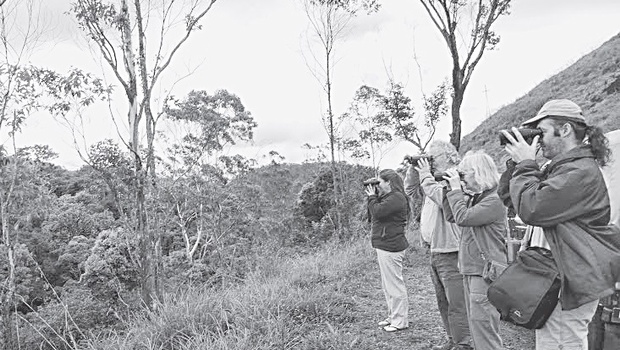
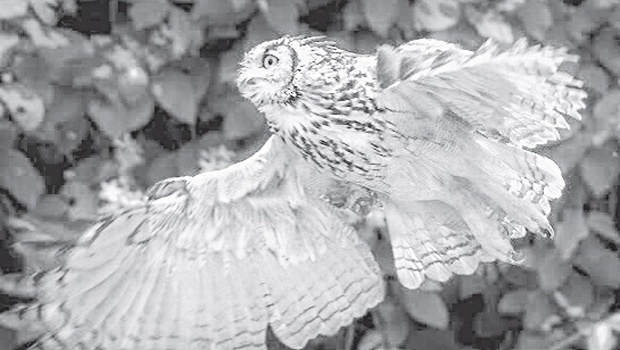
(From left) A kingfisher bird in flight; tourists clicking wildlife; Bopanna Pattada, and a rare sight of flying owl

Bengaluru :

Photographing birds, especially the rare ones in the wild, and spending time outdoors are Bopanna Pattada’s passions. He quit his job as software engineer at Wipro to make his passion a profession. When he realised that he is not the only one in love with birds and Nature, he decided to start India Birding Adventures. Now, Bopanna finds places where photography enthusiasts can get good wildlife and avian shots and arranges trips to these locations. His clients vary from engineers to doctors to businessmen. “I plan one-day trips around Bengaluru. Sometimes we also go on longer trips to Ooty, Masinagudi, Bandipur, Mysuru, Nagarhole and Coorg,” he says. He also takes nature enthusiasts to places like Corbett National Park and Pangot at the foothills of Himalayas.

The best places to spot birds in Bengaluru according to him would be Nandi Hills for winter migrants, Hoskote lake for waterbirds, Ramdevarabetta for vultures, Bannerghatta for forest birds.He doesn’t take more than three to four members at a time. “Firstly, with smaller groups, it is easier to give personal attention and secondly large groups scare the birds away,” he says.

“As a trained photographer and naturalist, I instruct people on photography – what settings to use in which situation, and also help them in spotting birds and wildlife.” The job, for him, is an escape from a sedentary life.

“It takes me closer to nature,” he says. It can be challenging to click birds in flight. Bopanna suggests that the best time to click pictures is either in morning or evening, when they are most active. “Birds tend to be shy. They don’t let you get very close for photographs. Part of my teaching is on how to get closer to birds to take better photographs and also how to position yourself so that the photograph has a nice backdrop.” Bopanna’s images were featured in Sanctuary Asia Magazine and Bombay Natural History Society calendar-2015.

Wildlife02KF14feb2016

He specialises in photographing birds flying or in action.

Photography enthusiasts can reach Bopanna through his website www.indiabirding.com or bopannap@gmail.com

source: http://www.newindianexpress.com / The New Indian Express / Home> Cities> Bengaluru / by Pratima Shantaveeresh / February 10th, 2016

Annual Flower Show at Balyatri Estate near Madikeri, Today, Tomorrow

F. M. Khan is taking a walk in his home garden. Picture right shows Dahlia in full bloom.

Madikeri :

Former Rajya Sabha member F. M. Khan is holding the annual flower show at his home garden for the public in Boikeri, near Madikeri, on Jan. 30 and 31.

The garden at Khan’s Balyatrie Estate, with more than 100 varieties of flowers — most of them rare — is spread over more than half-an-acre in front of his house.

Multi-hued roses, dahlia, chrysanthemum, jasmine are in full bloom to welcome the visitors.

Addressing media persons here yesterday, he said floriculture helps in the economic progress of the country and urged the government to support floriculture.

Stating that there is a huge demand for flowers at the international market, he said floriculturists should grow flowers in a natural atmosphere.

With the vagaries of nature, one needs to give special emphasis on protection of plants, he added.

Flowers like Jasmine, anthurium, marigold, salvia, Gerbera, Zenia, Dahlia, Cosmos, croton, colin, Plectranthus, Impatiens, Daisy, Gardenia, sun flower, Hollyhocks, Clarkia, Cockscomb, Lupine, Verbena, Fuchsia, pinks, spider flower, oster flower, calendula flowers, cupia, Gazania, Sweet pea, Cineraria, stock flower, love in a mist flower, devil in the bush and others are on display.

The flower show will be open to visitors from 10 am to 5 pm today and tomorrow.

source: http://www.starofmysore.com / Star of Mysore / Home> General News / January 28th, 2016

Karnataka to establish Cauvery River Gallery

KaveryKF07jan2016

Bengaluru :

After flip-flopping for many months, there is a concrete sign of Karnataka getting its first river museum. On Wednesday, the state government took first baby steps to expedite on its dream project, Cauvery river gallery.

The gallery, expected to be thrown open to the public in six months from now will showcase cultural and socio economic aspects of the river. It will feature exhibits, detailed satellite images, multimedia displays, digital video-shows and real-time experience of cruising along the river which is around 765 km in length.

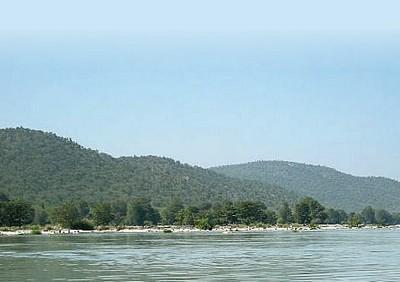
Originating in the Brahmagiri Hill in Kodagu, the river flows from the western ghats and descends into the eastern ghats in a south-easterly direction covering 320 km in Karnataka and drains itself into the Bay of Bengal. “The proposed gallery would be set up with the support of the National Academy of Sciences of India (NASI).

The government has already earmarked Rs 3.5 crore for the project. NASI would run it for first three years, train local personnel and then hand it over to the state government,” tourism minister R V Deshpande after signing an MOU with NASI on Wednesday said. By capturing the etymological, ecological, cultural, heritage, and social characteristics of the river, the gallery which would be set up in about 2500 sq ft area will also serve as a learning centre on the major south Indian river. The modalities are being worked out by the NASI, he added

Though the proposal was mooted by the Karnataka Knowledge Commission headed by K Kasturirangan, the government failed to find an appropriate place.

Initially, the commission had suggested establishing the gallery on the banks of the river Cauvery at Mysuru on the lines of Ganga Gallery at Allahabad and Brahmaputra Gallery at Guwahati. Later it was planned to establish the gallery in the premises of University of Mysore and also at a century old mansion on Kantharaj Urs Road in Mysuru.

source: http://www.timesofindia.indiatimes.com / The Times of India / News Home> Good Governanace> Karnataka / Manu Aiyappa / TNN / January 07th, 2016

From Here & There-Green wishes from Kodagu

Dr S V Narasimhan, a medical practitioner in Virajpet in Kodagu district, is perhaps better known as a bird enthusiast. An avid bird watcher, he has been carrying out an awareness campaign with focus on conservation for the past three decades.

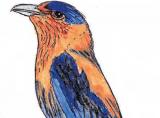
As part of the initiative, every year he sends hand-painted cards to over 1,000 people across the world. The card consists of meticulous painting of a bird or an animal with information about it, and conservation messages.

Here are some sample messages — “ We co-exist, can’t you?” by a tiger and a spotted deer; “It was we who filled the world with melodious music,” by common iora bird.

Narasimhan feels that all creatures are equally important for the survival of life on earth. He chose this signature campaign to motivate people to think about environment and our roles in conserving it. These wildlife message cards are individually handpainted and sent to people across the world, free of cost, during the wildlife week every year. In the last 32 years, he has painted 62,420 cards.

BirdKF08dec2015

This year alone, he painted 1,930 cards. In the process, he has painted more than 480 species of animals, birds and butterflies. One of his messages said, “Let us join hands to make our earth a greener place to live. This is the only place where all the elements of life can live in health, happiness and harmony.” He has also authored a bilingual book (Kannada and English) on birds called Feathered Jewels of Coorg.

To know more about the campaign, visit www.drsvnarasimhan.blogspot.in.

source: http://www.deccanherald.com / Deccan Herald / Home> Supplements> Spectrum / AP – December 08th, 2015

Sole for a cause

CoorgFestivalKF06dec2015

Most of us think of ways to reconnect with the world — go on adventure trips, explore the offbeat locations of the City and more — but ever considered going barefoot for all your expeditions? As part of the ‘Coorg Reconnect Festival’, the Coorg Wellness Foundation, the Coorg Wildlife Society and the United Sisters Foundation are jointly organising the first barefoot marathon.

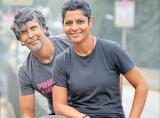
Milind Soman and Nikki Ponappa are the face of the event and are hoping to meet barefoot runners from across the country to share their stories.

“This is going to be the first barefoot marathon in the world, so you can image how excited we are about it. Barefoot running in general is becoming popular around the world and to be able to do it in a beautiful place like Coorg is a plus point,” says Milind.

Much has been spoken and lots has been heard and read. But this time, one can take the time to reconnect with the earth and be their innermost being. With the initiative called ‘Reconnect’, the organisers are inviting people from around the country to participate in the marathon.

“We have been getting a lot of entries from around the country. People from North East, Mumbai, Tamil Nadu and even Delhi have registered. We didn’t think it would generate such a huge response, but we’re thrilled to start the first of many in a grand way,” shares Nikki.

But it’s not just the barefoot running marathon that’s the primary focus. The focus is also on supporting rehabilitation of elephants in Coorg and on afforestation. Milind says, “The whole idea of running barefoot was to feel connected with the world. When we go to holy places, we take off our shoes and that makes sense because we’re trying to be one with the world. There are also many rural communities who walk around without shoes and live in harmony with the environment. So this marathon is symbolic to the that kind of emotion.”

And what’s the one piece of advice the ironman wants to share with the runners? “Have fun. Don’t do anything that you don’t want to do. The most important thing about running a marathon is to train yourself. If you’re running too fast and you can’t talk, you’re doing it wrong. So just have fun and everything else will fall in place,” he says.

But when asked what he thinks will be some of the challenges he might face during this marathon, he laughs and says, “I won’t be running this marathon. But the challenges I have right now is being the organiser. It’s a lot of work getting everything in place and also to make sure that the runners are comfortable during the run.”

However, he runs on a regular basis and does not let anything stop him. “I make sure that I run whenever I can. I don’t set any goals for myself; I run till I have a meeting to attend. Running for me is a way to de-stress and get energised for the day, not exhausted. So I’m always up for a run!”

The marathon will take place on December 5 in Coorg and December 6 in Bengaluru. For more details, log on to www.thebarefootmarathon.com

source: http://www.deccanherald.com / Deccan Herald / Home> Supplements> MetroLife / DHNS – December 02nd, 2015