Category Archives: Nature

Springs of life

TalacauveryKF29nov2015

Springheads, the point where springs emerge, are to be treated carefully so that people using the waters do not cause pollution or damage.
by S. Vishwanath

This part of the beautiful Sahyadri or the Western Ghats is lush green, thanks to a long spell of rain. Talacauvery is an hour’s drive from Madikeri in Kodagu district. Here the beautiful river Cauvery rises. On the day celebrated as Sankranti, the waters appear here in a small pool. It then disappears to reappear at Bhagamandala as a stream, meeting the Kannika and the unseen Sujyoti.

What appears in Talacauvery is a spring. On the upper reaches of the hills of the Brahmagiri, rainwater infiltrates and percolates into the ground. Filling up the aquifers, it forms the groundwater in the space.

Groundwater which emerges naturally onto the surface is called a spring. As Himanshu Kulkarni, a leading hydro-geologist, would say, springs are best treated and understood as groundwater.

In India springs have long suffered neglect in terms of research. Though they have been the lifeline for many communities, especially in the hilly regions of the Himalayas, the Western Ghats and the Eastern Ghats, not much effort has been put in to understand and model them better. Dr. Kulkarni points out many typologies for springs. In one particular case he shows how the recharge zone, where the water enters the aquifer, is on the other side of the hill from where the spring emerges.

The traditional watershed approach would fail to recharge the aquifer of this typology of springs because it would be addressing water flows and recharge in the same side of the hill without understanding the nature of the geology at the place. Instead of a ridge to valley approach to manage water, a valley to valley approach would have to be envisaged for such spring management.’ In simple language there is a recharge zone for a spring and the spring itself is in the discharge zone. Understanding, mapping and managing recharge zones is crucial to the health of the springs. For long Indians have trekked to the source of rivers and paid homage to the life-giver. They have in actuality been worshipping springs. It is time that we understood this source of water better and managed them better. That would be water wisdom.

zenrainman@gmail.com

source: http://www.thehindu.com / The Hindu / Home> National> Kerala / by S. Vishwanath / November 28th, 2015
M.C. Nanaiah seeks Rs. 100 Cr. for development of Kodagu

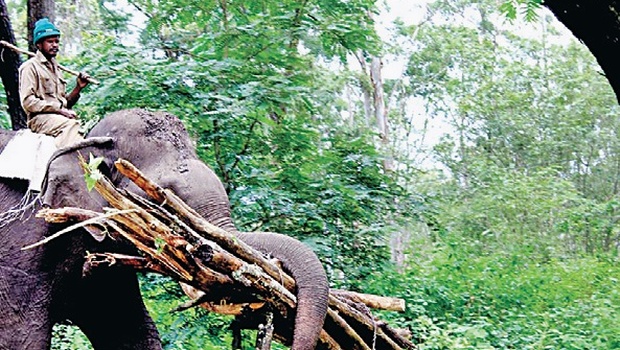
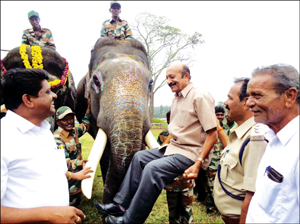
Former Law Minister M.C. Nanaiah enjoying a ‘JUMBO’ ride sitting on the tusk of an elephant at the Aane Utsava held at Dubare Elephant Camp in Kodagu yesterday.

NanaiahBF16nov2015

Kushalnagar :

Former Minister M.C. Nanaiah has urged the Government to release Rs. 100 crore for overall development of Kodagu district.

Speaking after inaugurating the 61st wildlife month and elephant day celebrations at Dubare Elephant Camp, near Kushalnagar yesterday, Nanaiah asked the State Government to take Cauvery River cleaning on the lines of Ganga River cleaning taken up by the Prime Minister.

Urging the Government to announce a special package for Kodagu, Nanaiah stressed on the need for initiating appropriate measures for ending man-animal conflict across Malnad region, which has seen an alarming rise over the past few years.

Calling for installation of solar fencing and construction of trenches in order to prevent elephant intrusions into farm lands and human habitats, he urged the Government to move the Supreme Court for taming wild elephants, which are causing havoc across Malnad region.

The former Minister then urged the government work towards conservation of Western Ghats, preservation of forest wealth and water bodies. He also urged the Govt. to regularise the services of Dubare Elephant Camp Mahouts who have been serving for years.

Karnataka Forest Industries Development Corporation Chairman T. Eshwar, in his address, said that the Corporation has sent a proposal to the Government on setting up a mega Bamboo Industry at Kushalnagar at a cost of Rs. 100 crore. Madikeri Division DFO Yedukondalu called upon the involvement of everyone in putting an end to man- elephant conflict.

source: http://www.starofmysore.com / Star of Mysore / Home> General News / Monday – November 16th, 2015

Dubare ‘AANE UTSAVA’ celebrating Elephants

Kushalnagar :

The majestic march of the elephants, spraying of water on anxious tourists, movements in tandem, trumpeting to the command of mahouts to the delight of spectators, playing football, etc. were the major attractions at ‘Aane Utsava’ (Elephant Festival) at the Dubare Elephant Camp on the banks of the River Cauvery near Kushalnagar in Kodagu yesterday.

The festival was organised by Madikeri Wildlife Division in association with Dubare Ammale Grama Aranya Samithi.

A total of 25 elephants participated in various games such as running race, football, basketball, sugarcane eating competition, obeying the commands of mahouts, spraying water on tourists, etc.

Elephants Vikram, Gopi, Cauvery, Harsha and Prashanth, which had participated in Dasara festivities at Mysuru, were decorated with ornaments. Gopi held the Kannada flag high to greet everyone and led the elephants in a march past, which received huge applause from the cheering crowd.

Older elephants were joined by calves in the performance. Elephant calves namely Agasthya, Mythili and Pruthvi also enthralled the crowd with their mischievous performance.

Elephants Gopi, Ranjan, Kapila, Gange and Aiyappa sprayed water to the delight of kids while Aiyappa, Karthik, Parashuram and other elephants walked like newly-weds by holding each other’s trunks.

Tourists and visitors, who had thronged the venue to witness the festival, were seen standing next to the elephants and getting themselves photographed besides taking selfies with them.

Former Minister M.C. Nanaiah, Karnataka State Forest Industries Corporation Chairman T. Eshwar, Madikeri Division DFO Yedukondalu, ACF Poornima, Kushalnagar Zone Forest Officer M.S. Chinnappa and Dubare Elephant Camp Asst. Forest Officer Ranjan were present.

source: http://www.starofmysore.com / Star of Mysore / Home> General News / Monday – November 16th, 2015

Experience bliss, serenity

HonnamannaLakeKF11nov2015

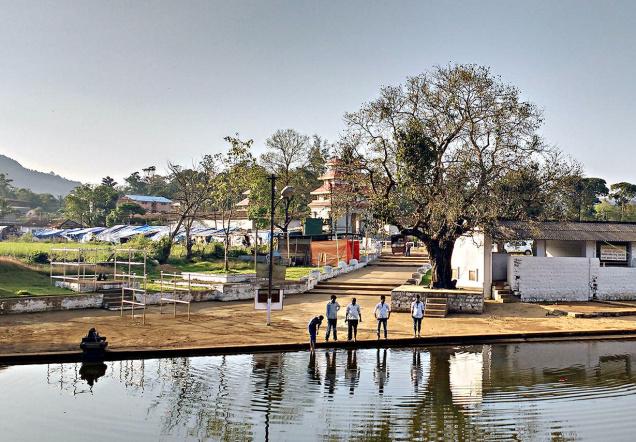
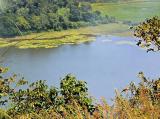
Pure divine bliss is what you feel when you sit on the banks of Honnammana Kere, a holy lake, located in Doddamalthe, six km away from Somwarpet town in Kodagu district. The 16-acre lake, surrounded by beautiful mountains, cliffs and coffee plantations, is perhaps the largest lake in Kodagu district. Two hills, Gavi Betta and Mori Betta, lie near the lake.

There is a temple — dedicated to Goddess Honnamma — adjacent to the lake. The Honnamma Devi Temple has a multicoloured shikhara-style gopura with a flag fluttering high on it. The idol in the sanctum is made of black stone and is well adorned with ornaments. The shilashilpa (temple history) stone is set on the ground in front of Honnamma Devi sanctum. The ancient Temple was renovated some years ago, with the financial help of villagers.

On the occasion of Gowri festival, every year, thousands of devotees, especially newly-weds, visit the Temple and offer prayers to Goddess Honnamma. They also offer bagina (puja items along with flowers and bangles placed in a bamboo sieve) to the lake and pray for good rains. There is another temple on the banks of this lake, dedicated to Lord Shiva as Amrutheshwara. There are two more shrines, dedicated to Basaveshwara and Ganapathi, in this complex.

Adjoining the lake is the 300-feet-high Gavi Betta. A short walk and a climb of about 260 cemented steps brings one to this cave. From the top of the hill, one can enjoy the panoramic view of the lake and its scenic surroundings. Some devotees also undertake a short trek up the close by rocky hill, visit another cave and offer prayers to the holy spring that trickles inside the cave.

Another hill, Mori Betta, is a stiff rocky facade on the other side of the lake. It is said that the Pandavas lived in a cave here during their vanavasa (exile). Cool breeze, fresh air, emerald-coloured lake, green canopy and the rocky edifices attract tourists to Honnammana Kere. The local Gram Panchayat has installed benches along the lakeside.

Picnic by the lake
A trip to the lake can be a fun and enjoyable activity for the entire family, but safety comes first. Locals say that the water level in the lake is very deep and one should be very careful. Tourists are advised to stay within the safety limits around the bathing ghat steps. Though there is good road connectivity as the lake is located close to the Somwarpet-Shanivarsanthe Road, there are no food stalls around the lake. One can carry a picnic basket, spread a sheet on the lakeside and enjoy a good sumptuous picnic lunch here. Ensure that you carry back the litter and drop it in the waste-bin placed at a corner.

Ceremonies like wedding, christening, annadana and pujas are regularly held in the Temple premises. Sitting beside the lake, one can enjoy the sight of water being rippled by the light breeze, and listen to nature’s melody and the occasional reverberation of temple bells. Nothing but pure divine bliss.

source: http://www.deccanherald.com / Deccan Herald / Home> Supplements / by Viswas Menon / DHNS – November 10th, 2015

The Timeless Allure of Kodagu

Dubare Reserve Forest is a great place to ride on elephants | Manjusha Naik

Kodagu, also known as Coorg or Kodava Nadu, is undoubtedly one of the best places I’ve visited. It is Karnataka’s well-known tourist attraction and known for it’s coffee plantations, oranges and various spices. Kodavas are the most dominant community at Kodagu.

Kodava cuisine is famous for its bamboo shoot curry, rice rotti and Kadumbuttu-rice dumplings, usually consumed with Pandi (pork) curry. It is also known for its homemade wines made of grapes, sugarcane, beetel nuts, orange, chikoo and gooseberry. These wines are made out of carefully handpicked fruits and are available at the local stores. Homemade chocolates are quite famous too. Honey and Kachampuli (vinegar) are the favourites of the locals.

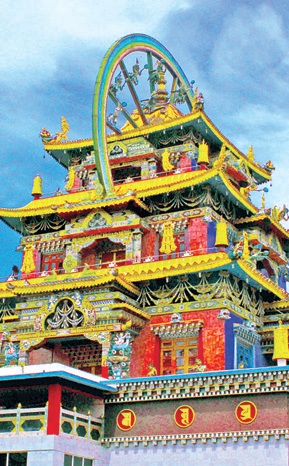
Buddhist shrine at Bylakuppe

I loved visiting the Dubare Reserve Forest and Elephant Camp and running into over 150 elephants. The Buddhist temple and monasteries at Bylakuppe was another delight. I loved photographing the cheerful monks, the multi-coloured Tibetan flags strung across the sky and the detailed murals.

The serenity here evokes within a sense of stirring spirituality and the feeling of being above it all continues when you visit Abbi or Abbey falls, located amid the lush coffee plantations. This place is best visited during monsoon. As I walked across the bridge near the falls for a better view of the scenic beauty, I was mesmerised.

Raja’s seat, located in Madikeri, is known for it’s beautiful view of the valleys that are covered by mists early in the morning. Sunsets here are worth watching too.

I clicked a lot of pictures too at the Nagarhole National Park with the beautiful Kabini lake. There was much to photograph here, including tigers, leopards, wild boar and deer. For a better visual access to the national park, visit it in the summer as during monsoon this place is overgrown by lush forests.

Talacauvery, located in the Brahmagiri hills, is a sacred place where River Kaveri originates. It attracts tourists from all over the world. During the Kaveri Sankramana festival, there are hundreds of people here, trying to collect holy water.

I also visited the Kandi Makki Devastana at the Arji village, Virajpet, in the month of March. A special pooja was held here for about three-and-a-half days for the deities Murthillu, Muthappan, Puakka, Korathi, Potathere and so on. It has been about eight months now since my visit and I am still overwhelmed by the way I felt when I stepped into this sacred place.

Kodagu has a pleasant weather throughout the year. Between June and August, there is heavy rainfall. There are plenty of homestays and resorts. The most recommended ones are The Orange County in Virajpet, Tamara in Yavakapdi village and Amanvana and Honey Pot in Madikeri.

source: http://www.newindianexpress.com / The New Indian Express / Home> Cities> Bengaluru / by Manjusha Naik / October 22nd, 2015

Forest dept may acquire land in Kodagu to reduce man-elephant conflict

ForestKF13oct2015

To reduce man-elephant conflict, especially in Kodagu, the Forest Department is keen to acquire land from people and has joined hands with Wildlife Trust of India (WTI) in this regard.

The department wants to acquire about two kilometre of land belonging to the Huvinkadu and Faith coffee estates, which is part of the Kutta-Tiranahalli corridor, which in turn is part of the Nagarahole-Brahmagiri elephant corridor link. “Elephants use this stretch and we want to acquire it to reduce man-animal conflict,” Manoj Kumar, Chief Conservator of Forests, Kodagu, told reporters here on Friday on the sidelines of a workshop on ‘Dealing with leopards and elephants in human-use landscape’ here organised by Wildlife Conservation Society-India Programme (WCSIP).

“Landowners are demanding Rs 20 lakh for an acre. Hence, we have approached the WTI to map the area, ascertain land width and find out if that is necessary because there is another route through Wayanad which is also frequented by elephants,” he said.

To further reduce man-elephant conflict, the Forest Department will soon hold meetings with officials in forest departments of Kerala and Tamil Nadu on how to strengthen the Nilgiri Biosphere Reserve. The 6,000-sq km biosphere reserve presently houses 6,000-odd elephants. The last meeting in this regard was held in December 2014.

“We will hold meetings with the deputy and assistant conservators of forests of the two states to assess ground reality and undertake research. There is a need to know how many elephants can the biosphere hold and for how long. It’s crucial since this is the only habitat left for elephants. That will also help strengthen corridors,” Kumar added.

Prithviraj Fernando, Trustee and Scientist at the Centre for Conservation and Research, Sri Lanka, stressed the importance of ensuring safe habitats for elephants. “Case studies in India, Malaysia and Sri Lanka have shown that elephant relocation has not been very successful. Relocation is temporary and shifts the problem from one area to another,” he said while speaking on human-elephant interaction.

Fernando, who has been working on elephant conservation in Sri Lanka for many years now, said there was a huge population of jumbos in the island nation, and 70 people and 250 elephants died in conflict every year.

Vidya Athreya, Senior Research Fellow at WCSIP, spoke on human-leopard interaction and Ranjeet Jadhav, a journalist at Mid-Day, Mumbai, spoke on ‘Reporting human-leopard interactions in Maharashtra: A case study’.

source: http://www.deccanherald.com / Deccan Herald / Home> City / DHNS, Bengaluru – October 10th, 2015

B’luru MP announces Rs.10 lakh for Conservation of Kodagu Mandhs

Mandya MP C.S. Puttaraju is seen addressing the gathering at the valedictory of ‘Jabhoomi Baalo-2015’ padayatra at Kodava Samaja in Bengaluru yesterday.

Bengaluru :

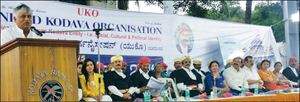
Rajya Sabha member from Bengaluru, Kupendra Reddy, has promised Rs. 10 lakh for conservation of Kodagu mandhs and revival of paddy cultivation across Kodagu district, said Mandya MP C.S. Puttaraju at the valedictory of ‘Jabhoomi Baalo-2015’ padayatra at Kodava Samaja in Vasanthnagar here yesterday.

Puttaraju said that he was authorised to announce this by MP Kupendra Reddy, who is currently in USA, on his behalf.

Stating that Reddy has announced Rs. 10 lakh for UKO’s cause as the first instalment, Puttaraju said Reddy has promised more funds for UKO’s various plans.

Stating that the people of Mandya were always indebted to river Cauvery, which originates in Kodagu, Puttaraju assured of extending all support for the protection of Kodava land, culture and its environment.

UKO Convenor Kokkalemada Manju Chinnappa, in his address, said that the funds provided by Kupendra Reddy will be utilised for conservation of Kodagu mandhs and other programmes. He also said that Puttaraju has handed over Rs. 10 lakh grant to UKO as the first instalment as promised by Reddy.

Karnataka State Handicrafts Development Corporation Chairperson Shantheyanda Veena Achaiah, former MLC Cheppudira Arun Machaiah, Kodagu District Congress President Biddatanda T. Pradeep, former Kodagu District BJP President Machimada M. Ravindra, Federation of Kodava Samajas President Mallengada Dada Belliappa, Bengaluru Kodava Samaja President Mandeda Ravi Uthappa, Vice-President Mukkatira Vani Nanaiah, Secretary Chennapanda Subbaiah, actress Prajwal Poovaiah, Madikeri Kodava Samaja President Moovera Shambu Pemmaiah, Ponnampet Kodava Samaja Secretary Chottekmada Rajiv Bopaiah, Kodava Sahitya Academy President Biddatanda S. Thammaiah, UKO office-bearers and others were present.

source: http://www.starofmysore.com / Star of Mysore / Home> Generla News / Monday – October 05th, 2015

Farmer on Padayatra to Bengaluru to ensure Kodagu remains green

Manju Chinnappa and team began walking from Talacauvery to Bengaluru to stress need to save the district’s ecosystem.

ManjuChinnappaKF04oct2015

This farmer has been walking for 11 days to take his fight against environment degradation in Kodagu district. Manju Chinnappa, 37, started his padayatra from Talacauvery on September 18. Chinnappa, a native of Hudikeri, started the movement after severe drought that affected Virajpete this year. A Bcom graduate, Chinnappa says, “Even from my early days, I wanted to work towards the preservation of the culture and tradition of my motherland. Over the years, the district has seen several atrocities on land, deforestation and cultural aggression. The main aim of this walkathon is to bring to the attention of the social and economic problems that Kodagu district faces today. I hope it motivates people to preserve the culture and sanctity of the native people.”

Chinnappa has managed to cover close to 25 kms everyday and en route he is celebrated by the people of that particular village who walk with him for a few kilometres to express their support. On Monday, he reached Mysuru. He also gives awareness talks on how to keep the heritage of the district alive.

A founder of the United Kodava Organisation that was formed in 2011 to focus on preserving the environment and heritage of the place, he says, “We know merely submitting a resolution to the state government might not bring much change. We wanted to make a noise through this padayatra to get the attention of as many people as possible. We hope to reach Bengaluru by October 4 and we want to submit a memorandum to the chief minister regarding our demands.” His plan is to cover a distance of 414 km considering he has taken a route inside Kodagu within the villages to spread his message. After reaching Bengaluru, the final leg will start at 9 am from Jnanabharathi campus (Bangalore University) where the local Kodava population will join him in the walk up to 20 kms that will culminate at the Kodava Samaja in Vasantha Nagar. The local Kodavas will come in their traditional dress to show their support to Chinnappa.
Chinnappa says, “In the name of tourism, several trees are being removed which has harmed the people living in that region. Our main resolution is to put pressure on authorities to stop the conversion of wetland not only in Kodagu but across the state. Many infrastructure plans by the state government have destroyed the ecology of the district completely and we want to draw everybody’s attention to this.”

The Kodava community in the city is all set to welcome Chinnappa. They have also started a Facebook page to update the information of padayatra from time to time.

Children are also taking part

Route plan

Talakaveri-Igguthappa Temple-Madikeri-Bayarambada-Virajpet-Gonnikoppa-Anechowkur-Hunsur bypass- Mysuru-Srirangapatna-Mandya-Chennapatna-Bidadi-Jnanabharathi-Kodava Samaj, Bengaluru

source: http://www.bangaloremirror.com / Bangalore Mirror / Home> Bangalore> Others / by Vandana Kamath, Bangalore Mirror Bureau / September 30th, 2015

Cauvery theerthodbhava on Oct 17

Madikeri :

The annual theerthodbhava of river Cauvery will occur at the holy pond at its birth place Talacauvery at 12.15am on October 17.

Cauvery water will spring at the ‘Kundike’ at the thula sankramana muhurtham.

Apart from devotees from Kodagu, a large number of people from Mandya, Mysuru and Bengaluru and also from neighbouring Kerala and Tamil Nadu are expected to witness the religious ceremonies.

source: http://www.timesofindia.indiatimes.com / The Times of India / News Home> City> Mysuru / TNN / September 12th, 2015

It flattered to deceive

Cauvery — which is the lifeline of the people in south Karnataka and people living along the downstream in Tamil Nadu — has its origins in Kodagu which is the key catchment area of the river.

Kodagu received 33 per cent excess rains when the monsoon set in during June this year. It recorded a rainfall of 826.2 as against the normal of 622.4 mm. But the monsoon slackened during July and August.

In July, Kodagu received 360.2 mm of rains as against the normal of 904.7 mm, which is 60 per cent below normal whereas in August the district as a whole received only 289.4 mm of rains as against the normal of 597.7 mm which is 48 per cent below normal.

The cumulative rainfall deficiency for the period June 1 to September 6 is minus 31 per cent and against the normal of 2181.2 mm of rains, Kodagu received only 1,504 mm rainfall. The deficient rain was uniform across the district, resulting in depleting inflow into the KRS.

Likewise, the adjoining districts of Mysuru and Mandya through which the Cauvery flows, also received deficient rains during July and August, adding to the reduction in the inflow into the reservoirs.

source: http://www.thehindu.com / The Hindu / Home> National> Karnataka / by R. Krishna Kumar / Mysuru – September 07th, 2015