Category Archives: Nature

Madikeri: Nothing Fishy! Captive-bred Pangasius Set to Find Big Market Share in Kodagu

Madikeri:

Pangasius is a genus of medium-large to very large shark catfishes native to freshwater in south and southeast Asia. They breed in all the important east-flowing rivers, from the Ganga to the Cauvery, mainly in their lower reaches.
They are currently being bred captively in cages in KRS reservoir near Mysuru. With a view to introducing the taste to the people of the district, an experimental sale was held on Friday. About 430 kgs were sold by noon. Buyers were seen standing a long queues from 10 am.

The sale was launched by zilla panchayat president Chodumada Shareen Subbaiah. She said that there was a great demand for fish in the district and therefore fish production should get all encouragement.

TMC agriculture and industry standing committee chairpeson T P Sandesh said that it was for the first time that Pangasius was being sold in the district. He suggested that the fish be made available on the various days of the week at different places where the weekly fair was held.

Mysuru region fisheries deputy director Ramakrishna informed that captive aquaculture was being undertaken in the KRS reservoir under the National Mission for Protein Supplements (NMPS). Pangasius and other species were being bred in two rows of 24 cages which have been installed in the reservoir.

Fisheries department joint director Gangadhar V Madikeri said that arrangements would be made to sell Pangasius fish on different days of the week wherever the weekly fair was held.

ZP vice president Allaranda Beena Bollamma, members Biddanda Usha Devamma, taluk panchayat president Kandanda Pratija Achappa, members Sabu Thimmaiah, Bollachattira Suresh, fisheries assistant director Darshan and others were present.

source: http://www.mangalorean.com / Mangalorean.com / Home> Broadcast> Madikeri / by Special Correspondent / Sunday – December 21st, 2014

A flying beetle in India threatens to push up latte prices

(Reuters) – It’s 10 o’clock in the morning and a dozen workers are uprooting coffee plants, piling them in the corner of a field at M.G. Bopanna’s plantation in southern India where they lie ready to be burned.

The plants are bursting with green cherries but inside their hard bark lurk destructive white stem borer beetles. The bushes have to be destroyed to prevent the tiny winged creature from threatening Bopanna’s entire crop of arabica coffee.

The beetle, which bores through plants’ bark and feeds on their stems, is thriving this year due to unusually warm weather and scant rains in arabica growing areas in India, the world’s sixth biggest coffee producer.

If the hot spell continues and the pest continues to spread, India’s coffee crop could fall to its lowest in 17 years when the harvest starts in October, pushing up global prices that are already rallying due to drought in top exporter Brazil.

The damage caused by the beetles is so severe that Bopanna has hired an excavator to uproot affected bushes on his 63 acre plantation at the hill station in the tropical forest of the Western Ghats, west of high-tech hub Bangalore.

“Every time we think we have uprooted all the infected plants, then after a few weeks we find more,” says Bopanna, 69, who has tended the plantation bought by his father for nearly four decades.

“Earlier whenever there was an outbreak, we used to uproot five to 10 plants per acre. This year I have uprooted more than 200 plants per acre,” he said.

There is no effective pesticide to control white stem borers, so the state-run Coffee Board advises farmers to uproot and burn infested plants to limit their spread.

“You may take all precautions, but if your neighbour is lethargic then white stem borers will fly from your neighbour’s plantation,” said N. Bose Mandanna, a grower from Madikeri who has removed all affected plants from his 34 acre plantation, five kilometres west of Bopanna’s field.

SCANT RAIN

In most years heavy rainfalls and low temperatures restrict the spread of the white stem borer. But this year southern Karnataka state’s Kodagu and Chikmagalur districts, which account for two-third of India’s total coffee production, have received half the usual rainfall since the start of monsoon season on June 1.

The state run weather department said earlier this month that rainfall in July and August is expected to remain below average.

“The pest infestation will rise quickly if rainfall remains subdued in the next few weeks,” says Mandanna, a fourth-generation arabica coffee planter.

India’s arabica coffee production could drop as much as 20 percent in the 2014/15 season to 60,000-70,000 tonnes, said a spokesman at Ruchi Soya, a coffee exporter.

That would pull down India’s total coffee output, three quarters of which is exported, to 260,000 tonnes, the lowest level since 1997/98, estimates Ruchi Soya.

Italy, Germany and Belgium are the main buyers of Indian coffee and usually pay a premium for it over global prices. Starbucks, J.M. Smucker Co and Kraft Foods Group are leading buyers of arabica.

ARABICA TO ROBUSTA

Bopanna and other farmers are replacing affected plants with new seedlings, cultivating instead a robusta variety that is cheaper than arabica but resistant to white-stem borer.

“I would love to have an entire coffee plantation with arabica, but I have to consider earnings as well. How I would pay workers if the pest damages my entire arabica crop?” asks Bopanna, who is planning to convert 16 acres to robusta this year.

Arabica coffee is typically roasted and ground for brewing and can range widely in quality, with some reaching the highest levels. Robusta, on the other hand, is more bitter and either processed into instant coffee or added to a roasted blend to reduce the cost.

India, which started coffee cultivation in 1670 with seven smuggled beans, produced mainly arabica until a few decades ago. Now arabica accounts for just one third of India’s total output compared to 82 percent in 1950.

That share will fall further unless the Coffee Board develops new arabica varieties that can withstand white stem borer, says Marvin Rodrigues, former chairman of the Karnataka Planters’ Association.

“Farmers can’t absorb shocks of white stem borer,” said Rodrigues said.

“It is not hurting just one year’s income; it is squeezing four year’s earnings.”

Coffee seedlings start flowering and produce cherries only after four to five years, meaning the impact of this year’s pest infestation will persist in India’s arabica production for at least that long.

Besides, arabica is also a labour-intensive crop at a time when wages are rising quickly due to labour shortages yet yields around half the cherries of robusta.

“Though robusta prices are lower than arabica, it is economical to have robusta. You can recover at least input cost even during bad year,” said Sundaram Ramasamy, executive director at Amrutha Coffee.

For Bopanna though, this year’s crop will be costly.

“Hopes of a bumper crop flourished with widespread flowering in March, but white stem borer ruined those expectations,” he said.

“I was expecting a crop of 15 tonnes, now harvesting 10 tonnes seems difficult.” (Reporting by Rajendra Jadhav; Editing by Rachel Armstrong)

source: http://www.reuters.com / Reuters – edition U.S. / Home / Madikeri , India / by Rajendra Jadhav / June 23rd, 2014
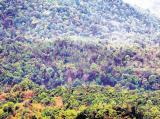
Greens in Kodagu bat for Kasturirangan report

Vested interests are creating confusion in the minds of people’

To preserve the greenery in Kodagu, there is a need to implement recommendations of Kasturirangan report on conservation of Western Ghats. If the recommendations are not implemented, then the environment will be at stake, said office bearers of Wildlife First.

Addressing a press meet here on Thursday, K M Chinnappa, A Thammu Poovaiah, T M Somaiah, P M Muthanna and M K Appacchu said that the report will not harm environment and its dwellers. However, a few vested interest, politicians and officials are engaged in creating rumours against the report. It has created fear in the minds of the people.

“Timber mafia, mining lobby and encroachers are engaged in misleading people. Thousands of trees have been felled to facilitate the work on high-tension wire in Virajpet. Will the environment in Kodagu intact if hydel power and railway line projects are implemented,” they asked.

“Those who have opposed the report have not read the report. It is better if people read the report on their own. If we initiate a discussion, then we are projected as pseudo environmentalists and anti-development.”

He lamented at the untoward incident reported during state-level committee’s visit to collect opinion on the recommendations in Madikeri.

The office-bearers said as per the recommendations, only 37 per cent of the Western Ghats have been identified as Specially Economic Areas. There is no problem in taking up development work in the remaining 63 per cent of the area. “ESAs are those areas considered sensitive, less populated, National Park, Reserve forest, project tiger and elephant corridor areas. Only 55 villages in the district have been identified as SEAs and not the entire district,” they said. “There is no proposal to acquire agricultural and coffee estates. There is no restriction on the felling of trees on private land. The land owners can seek permission and fell trees in Kodagu as per the Karnataka Forests Act 1963 and Karnataka Preservation of Trees Act 1976. There is no proposal to check felling of silver, acacia trees grown by the land owners.

They said “the recommendations have not laid down any restrictions on the cultivation of coffee, black pepper, paddy and oranges in Kodagu. It has not laid down restrictions on the construction of houses as well. Commercial activities like coffee, tea processing units, home stays, commercial complex, cement unit, furniture units and tiles manufacturing units are listed in green zones and no restrictions have been laid down on it.”

The recommendation has banned quarry, sand mining, setting up of thermal power projects and construction of more than 20000 square metre building in the identified areas, they added.

source: http://www.deccanherald.com / Deccan Herald / Home> District / Madikeri – DHNS, December 19th, 2014

Forest department says no to inter-state road

Kodagu Zone Chief Conservator of Forest Jagmohan Sharma has submitted a report to the State government that permission should not be given to proposed Ezhimal-Bengaluru inter-state road which would pass through Talacauvery Wildlife Sanctuary.

The proposed project (Ezhimal- Vellur- Padiyottuchal- Cherupuzha-Pulingome-Talacauvery) would pass through Mundrotu- Talacauvery- Bhagamandala, which is a part of the wildlife sanctuary known for biological diversity.

The officer, in his letter to the government on September 2, has said that the region is part of the Western Ghats, with evergreen forests and grasslands. The road construction, allowing public intervention would adversely affect the wildlife, and the government should reject the proposal of the Kerala government, the letter states.

Madikeri Division Deputy Conservator of Forest Shivashankar also opined the same. The road from Mundrotu to Talacauvery comes under Padinaalku Naadu reserve forest, where there is a rough stretch with a width of 7 to 10 feet.

To convert it as an inter-state road, it should be widened. In many places, new roads will have to be constructed between the mountains. It would impact the wildlife. Also, theft of trees would increase, the DCF has mentioned.

There is an alternative road to the proposed road already between Bhagamandala- Karike- Mundrotu. However, the only problem was that commuters would have to travel 39 km more than the proposed plan. Just to cut the distance, it was not fair to construct an inter-state road, which would cause danger to the ecology, he has opined.

Speaking to Deccan Herald, Shivashankar said that the report was submitted by DCF Hanumanthappa to the government before his transfer from the district.
DH News Service

source: http://www.deccanherald.com / Deccan Herald / Home> District / by Shrikanta Kallammanavar / Madikeri – DHNS, December 08th, 2014

Kasturirangan report on ESZ: Public hearing in Madikeri tomorrow

Madikeri :

The State-level Expert team will be visiting Madikeri tomorrow to hold a public meeting with respect to the Kasturirangan Report, which recommends declaring 53 villages in Kodagu district as Eco-Sensitive Zones (ESZs).

The meeting is scheduled to be held at the Fort Mini Hall at the DC’s office at 3 pm.

There has been a wide range of protests by people of Kodagu and organisations demanding the State Government not to consider the Kasturirangan Report. The team is visiting Madikeri to hear public grievances on the issue.

Meanwhile, a few organisations under the banner of Kasturirangan Varadi Virodi Samithi have also planned to stage protests tomorrow.

Deputy Commissioner Anurag Tiwari said that it was an opportunity for the public to put forward their objections before the team. He added that the video recording of the meeting would be sent to State Government.

Tiwari has urged the people to maintain peace during the meeting and added that security would be beefed up around the meeting venue.

Kasturirangan Report also recommends for prohibition of mining and industrialisation, ban on chemical fertilisers and control over development works in areas declared as ESZs.

source: http://www.starofmysore.com / Star of Mysore / Home> General News / December 03, 2014

Expert panel to arrive at Madikeri today

Kasturirangan Varadi Horata Samiti Member Cheranda Nanda Subbaiah called upon people of Kodagu district to arrive at large number to express their opposition to Kasturirangan report, during the visit of State-level expert panel members, at Fort premises in Madikeri on Friday.

Speaking at a press conference here on Thursday, he said: “The people of the district should stop the recommendations of Kasturirangan report from implementing as it is question of our future generation. The draft published by the Central government is completely anti-people. Members of the various organisations and general public should express their objections before the expert panel members,” he said.

“The recomendation is made to identify Western Ghat and 10 km of nearby area as ecologically sensitive areas and ban mining and other activities in the region. So, opposing the reporting is our necessity and need of the hour. We have do demand to keep residential areas, farm land, coffee plantations, Devarakaadu areas of tribal out of the ecologically sensitive area. If we don’t get positive response from government’s side, we will continue our protest,” he said.

If they declare ecologically sensitive areas, C and D land, Baane lands will be declared as deemed forest. Buffer zones will also be declared. Later, where is the land for people for living? he questioned. The people of the district have same opinion about the Kasturirangan report and the government can not implement the recommendations of the report against public opinion. People from every village will come to Madikeri to submit their objection, he added.

Committee Member Bottangady Raju said that panel should make changes in the demands submitted by the people.

Ready to share woes

Various political party leaders and heads of organisations would submit memorandums to the panel members who will collect opinions of people who live in the areas which come under ecologically sensitive areas. Along with Kasturirangan Varadi Virodhi Horata Samiti, Congress, BJP and JD(S) leaders, MP Pratap Simha, MLA K G Bhopaiah, Appachu Ranjan, Zilla Panchayat President Shareen Subbaiah and many others will submit memorandums.

Congress District President B T Pradeep said that no development work can be started in 53 villages which would come under ecologically sensitive areas. It would make life hazardous for the people. JD(S) District President V P Shashidhar said that similar protest was conducted against Kasturirangan report at Kerala and the Central government had to drop many places from the list.

Concession should be given in Kodagu also. We will give a memorandum to the expert panel, he said.

DH News Service

source: http://www.deccanherald.com / Deccan Herald / Home> District / Madikeri, DHNS – November 27th, 2014

‘Submit report on ESAs by Nov 24’

MadkeriKF22nov2014

The High level Working Group of Western Ghats (HLWG) has identified 1,576 villages in Karnataka as Ecologically Sensitive Areas (ESA). Of which, 53 villages have been included in Kodagu district. Additional DC Abhiram G Shankar and DCF Manikanta have directed the officials from Forest and Revenue departments to submit the report on ESAs after conducting a survey by November 24.

Speaking at a training for the officials on Monday, the Additional DC said that the officials should visit the identified villages and submit a report. After compiling the reports submitted by the officials, a detailed report will be sent to the State government.

Teams have been constituted to identify natural landscapes. The district level committee will have DC and forest officials as its members, while the village level committee will have officials from revenue, forest and gram panchayat president as its members. The public and NGOs can give their representation on ESAs to the district level committee.

The Additional DC said, if need be, the survey would be undertaken after consulting Horticulture and Agriculture departments.

Villages
The villages identified as ESAs are Ayyangeri, Bettathooru, Bhagamandala, Chelavara, Cherangala, Galibeedu, Hammiyala, Kalooru, Karada, Karike, Kolagadalu, Kopatti, Kundachery, Made, Melchembu, Monnangeri, Mukkodlu, Naladi, Peroor, Sampaje, Sannapolikotu, Tannimani and Yavakapady in Madikeri taluk; Aanekadu, Athoor forest, Bageri forest, Jainkalabetta, Yadavanadu, Jainkalabetta 2, Kattepura, Kumaralli, Maralli, Malambi, Mavinahalla, Mulluru, Nidta, Soorlabbu and Yadavanadu forest -2 in Somwarpet taluk and Arekeri forest-1, Arekere forest-3, Badaga, Badagarakeri, Chennayana Kote, Devamacchi forest, Devanooru Hathugattu, Teggalli, Karadigodu, Kedamullur, Kurchi, Kutta, Kuttandi, Maldare, Manchalli, Nalakeri forest, Palangala forest, Parakattageri and Badaga in Virajpet taluk.

source: http://www.deccanherald.com / Deccan Herald / Home> District / Madikeri – DHNS, November 11th, 2014

Tap for information: Madikeri gets tourism kiosk

Mysuru :

If you are holidaying in Madikeri and want to know the must-see places or cuisine or its rich cultural fabric, just head to this touchscreen kiosk. All the information about the district is one tap away.

The kiosk, a near-replica of the official website, has information in English and Kannada in both text and video formats. Kodagu tourism department, the district administration and a Bangalore-based software company have developed the kiosk, which chief minister Siddaramaiah inaugurated at the newly built district office complex in Madikeri on Monday.

“Tourism department and the district administration should utilize IT resources to develop and boost tourism in this picturesque hill district,” the CM said.

Tourism department assistant director V Panish said the department has sent a proposal to the state government to extend this facility to all tourist destinations in Karnataka. “Using the kiosk, tourists can directly contact hotels, homestay facilities and other service providers,” he said.

The department also plans to set up Coorg House.

Tourism authorities claim that such facilities will bring a unique brand identity to Kodagu. “Information kiosk will guide tourists about the ongoing cultural events, history, coffee plantations, festivals and local cuisine.”

“The project aims to develop a fully operational web portal service in five phases in two years. Work is on to develop apps for cellphones, iPad and tablets covering all tourist destinations in Karnataka. The current Android mobile application focuses only on Kodagu. It allows users to contact home stay owners, local artists, resorts and tour operators. Using this app, tourists can also book hotels and tickets for various events,” Panish said.

Tourism department and the district administration will provide an enriched tourism experience to visitors. The web portal service will also create jobs for locals, he added.

The kiosk, a near-replica of the official website, has information in English and Kannada in both text and video formats. Tourism authorities claim that such facilities will bring a unique brand identity to Kodagu.

source: http://www.timesofindia.indiatimes.com / The Times of India / Home> City> Mysuru / by Maramkal Basavarajappa, TNN / November 08th, 2014

Tourism establishes tourist friendly kiosks in Kodagu

Mysuru :

Kodagu tourism department in association with district administration and a private software company from Bangalore has developed a touch screen tourist information kiosk. According to tourism department sources, this is said to be first of its kind kiosk in India to leverage IT technology and holistic approach to developing tourism in Kodagu besides facilitating the tourists visit.

Tourism authorities claim that touch screen facility to tourists will bring a unique brand identity for Kodagu by helping them to utilize rich history, heritage, events, festivals, activities, coffee, legacy of kings and unique culture along with its cuisine.

Using agile methodology, the website portal developed concentrating IT and non IT services will provide varied information to the tourists. In later stages a fully developed website portal works will reveal the tourist information on Kiosk, computer, laptap, mobile, iPAD and tablet. Disclosing about the project , Tourism department assistant director V Panisha said the project aims to develop fully operated web portal service in five phases in two years of tenure. At present the released android mobile application is focused on Kodagu tourist content and ability to contact home stay owners, local artists, resorts and tour operators also aims to tap the services of booking accommodations, tickets for events and seats availability for various cultural and socio events.

The kiosk will be having the same features that website portal will have. The Kodagu tourism will propose to set up “Coorg house” to unveil the rich tourism potential of Kodagu, he added. Augmented reality is a technology that overlays an image, video or information from GIS on top of Google map or any other map. In the smart phones with GPS device fitted, navigation assistance in local language with information fed from GIS, Koisk will have the information in English and Kannada in text and video format, he said.

Panish said Kodagu tourism department and district administration would like to provide hassle free and enriched tour experience to tourists in coming days. And this web portal service will create local job opportunities and many unemployed having little IT knowledge will get jobs, Panish added.

Chief minister Siddaramaiah inaugurated the kiosk on 3 November at the newly built district office complex and expressed his happiness on the venture. Siddaramaiah said Kodagu tourism department and district administration should utilize the IT technology to develop and boost tourism in this picturesque hill district known for its natural beauty.

Panish said the department has sent a proposal to the state government to spread this facility to all the tourist destinations in the state and important tourist arrival places. ” Most notable feature of the kiosks and new technology is the tourists are prevented from being cheated by agents, touts and middlemen and they can directly bargain with the facility providers,” he said.

source: http://www.timesofindia.indiatimes.com / The Times of India / Home> City> Mysuru / by M B Maramkal, TNN / November 07th, 2014

‘Coffee plantation in Kodagu can not be considered as deemed forest’

Kodagu Circle Chief Conservator of Forest Jagmohan Varma has clarified that coffee plantation in Kodagu can not be considered as deemed forest. This is based on the government’s order that plantation in private property should not be considered as deemed forest.

Speaking to Deccan Herald, the officer said that the process of identifying deemed forest is under progress in the district, in the backdrop of the Supreme Court and State government’s order.

It is a common notion that a land with features of forest is deemed forest. But, as per the government order dated May 15, 2014, private plantation with any number of forest will not be considered as deemed forest. Therefore, there is no reason for coffee, cardamom, pepper and rubber planters to worry about, he assured.

Private forest

Explaining the word ‘private forest’ as defined in the government order, the Chief Conservator of Forest said that private forest is the land comprising of more than 50 trees per hectare land and each tree with a width of more than 30 cm. “The forest department along with revenue department is collecting details about private forests in the district. A district-level meeting chaired by Deputy Commissioner Anurag Tewari too has been convened. Village level inspection will be carried out soon,” he said.

Further, Jagmohan Varma said that the State government’s order describes a wide range of forests that exist in Kodagu, including Forest-Paisari which is considered as forest land.

According to Coorg Land and Revenue Regulation 1899, Section 143, Sub Section (1) (F), Forest-Paisari land has been notified as forest in 1901. Therefore, the recent order too considers Forest-Paisari as forest land.

The land that is mentioned as forest in government documents, will be considered as deemed forest. The government has given the instruction to all district administration to submit a detailed report on deemed forest in every district, within May 15.

What is deemed forest?

Deemed forest is the private and paisari land with forest like features. The Supreme Court while hearing Godavarman Thirumalapad case in 1995, had directed all the States to collect information about deemed forest. Following the order, the State government polled information about forest land and deemed forest.

However, the survey was not concrete, as the deemed forest list also comprised of paisari and empty (khulla) land and details like survey number and map too was not appropriate.

Therefore, re-survey has been taken up to prepare a comprehensive report on deemed forest in the State.
DH News Service

source: http://www.deccanherald.com / Deccan Herald / Home> District / by Shrikanth Kallammanavar / Madikeri – DHNS, November 06th, 2014