Category Archives: Nature

Union Forests Ministry approves Kushalnagar–Madikeri rail line survey

UnionForestsKF15nov2014
With this, Mysore–Madikeri project has taken a step forward

The Mysore–Madikeri railway line project has taken a step forward with the Ministry of Environment and Forests (MoEF) issuing clearance for the survey work between Kushalnagar and Madikeri.

Meeting
This was disclosed by Railway officials at the Divisional Railway Users’ Consultative Committee meeting here on Wednesday.

The environmental clearance was received last week and the authorities plan to complete the survey and submit the report to the Railway Board by March 31, 2015.

The preliminary engineering-cum-traffic survey for the railway line was launched in December 2011, but was taken up only between Mysuru and Kushalnagar and the partial survey report was submitted to the Railway Board. Though the project was shelved by the Railway Board on grounds of being commercially unviable, the State government has evinced interest in the project and has agreed to take it up on a cost-sharing basis, apart from providing land to the Railways.

The first phase of the project entails providing railway link between Mysuru and Kushalnagar at a cost of Rs. 660 crore. It will also connect Hunsur and Periyapatna.

Interestingly, the project was included in the Railway Budget 2010–11 under the ‘socially desirable rail connectivity’.

The first proposal for providing a rail link between Mysuru and Madikeri was mooted in 1881-82, according to the Mysore Gazetteer.

Another project

On the Shivamogga–Harihar railway line project, it was pointed out that the detailed survey for the new broad-gauge line had been completed. The 76-km project is expected to cost Rs. 832 crore and will be taken up on a cost-sharing basis between the Railways and the State government. Though the Railway authorities had sought 1,000 acres of land, it is yet to be acquired.

The work can commence, provided the State government hands over adequate land to take up the work on at least a 40-km stretch, according to the officials.

Divisional Railway Manager Rajkumar Lal, Senior Divisional Commercial Manager Anil Kumar, senior officials of different departments from the Railways, and stakeholders from various districts coming under the Mysore Railway Division were present.

source: http://www.thehindu.com / The Hindu / Home> News> National> Karnataka / by R. Krishna Kumar / Mysuru – November 06th, 2014

Coffee in Coorg

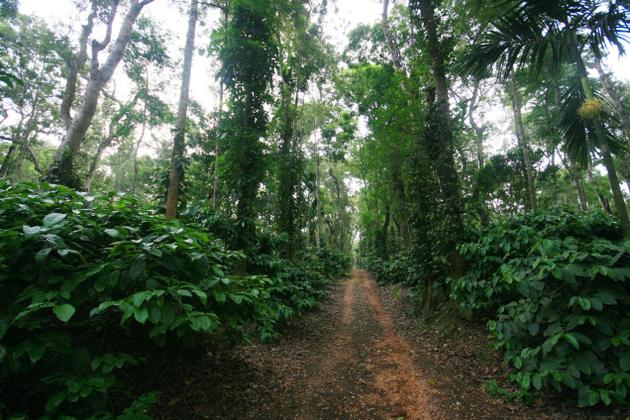
Cottabetta Bungalow. Tata owns seven bungalows in Coorg, and every bungalow is set amidst a 1,000 acre plantation.

COTTABETTA BUNGALOW

SOUTH KODAGU, KARNATAKA

USP: Live the planter’s life

There is freshness in the crisp air caressing your face. Picture-postcard greenery fills your senses. Add to it a welcome shower. There is magic in Coorg, the coffee country.

SMELL THE BEANS At Cottabetta Bungalow. Photos: Special Arrangement

The escape to the Tata plantation coffee trails in Coorg during the monsoon turns out to be a bonanza. After a six-hour drive from Bangalore, past the Mysore Highway, Ranganathittu bird sanctuary, bamboo forests, cinnamon trees interspersed with teak trees on which pepper vines climb to great heights, and the ubiquitous coffee plantations, we reach Tata’s bungalow in Cottabetta (meaning cold mountain).

Tata owns seven bungalows in Coorg, and every bungalow is set amidst a 1,000 acre plantation. The three-bedroom and five-bedroom bungalows, occupied by the managers of Tata, have been converted into cottages, superior, luxury and heritage rooms and heritage suites. “The bungalows went vacant after the managers took VRS. As the butlers, cooks and gardeners continued working to maintain the bungalows, our management came up with the idea of homestays,” says K.C. Poovaiah, head of Plantation Trails, Tata Coffee.

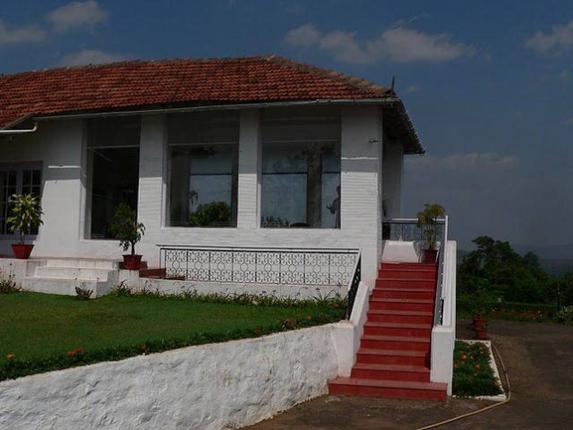
Once occupied by British planters, the bungalows are more than 100 years old, but modified suitably for modern-day needs. Every bungalow is built on a higher elevation, overlooking the mountains and the plantations. Cottabetta is one of them. And, what a view! The majestic mountains open up — on the south is Kerala and to the North is Periyapatna, Kushal Nagar and the Madikeri hills.

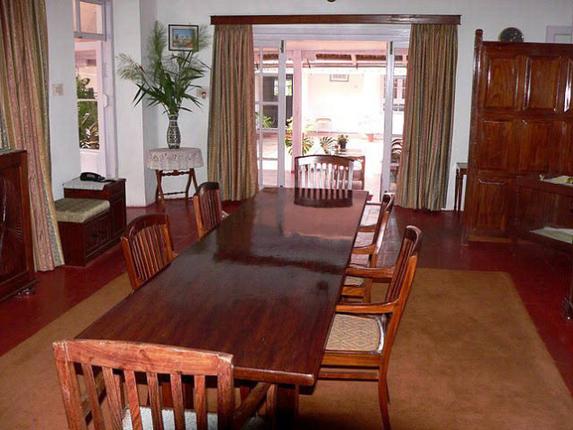
Once occupied by British planters, the bungalows are more than 100 years old, but modified suitably for modern-day needs.

As you take in the picturesque landscape from the portico, a curved road amidst the Tithimathi forests catches your eye. “It is a part of the Mysore Road,” Poovaiah explains. “When the British planters used to drive down, they would dim and dip the headlights at this point to alert the cooks.”

I check into one of the luxury rooms — the decoration is minimal but it has the comfort of a home. However, the bathroom is lavish with a bath tub. And, there is a beautiful balcony to sit and soak in the silence.

Barbets, drongos, golden orioles, parakeets, red whiskered bulbuls, flower peckers and sunbirds flutter by and feast on the jamuns, guavas, chikkus, mangoes and gooseberries, the inter-crops supported by the plantations.

Our tour of the bungalows begin with Woshulli, known for the spectacular view it offers of the Durbeen (binoculars) Road snaking through the plantations. (Vishal Bhardwaj has shot here for his new film “Saat Khoon Maaf”, starring Neil Nitin Mukesh, Priyanka Chopra and John Abraham.)

At the manicured 25-acre, nine-hole golf course in Polibetta, it is monsoon magic again. As it buckets down, we take cover under the majestic ficus tree, watch the rain pour down in sheets and sprint back to the car.

Then, we set off to Surgi bungalow and the plantation trail at Taneerhulla and Woshulli plantations spread across a sprawling 1,340 acres. “We get tonnes of litchis every year,” says plantation guide M.K. Umesh, pointing to the giant litchi tree (planted by the British) at the bungalow.

Umesh peppers the trail with scary elephant stories, and we stop at intervals to touch and smell coffee beans, pepper and vanilla. The Robusta coffee bushes here are 130 years old. Back at the bungalow, biting into crisp, hot onion pakodas served by the courteous staff, sipping coffee and watching the mist-capped hills is just the perfect way to end a beautiful outing in the hills.

source: http://www.thehindu.com / The Hindu / Home> Features> Metroplus> Travel / by K. Jeshi / August 26th, 2010

The pulse of Pollibetta

PollibettaKF12nov2014

The most conspicuous thing to note about Pollibetta, deep in the heart of Coorg, South-West of Bangalore, is that there is absolutely nothing to do in this town.

Ask any inhabitant or a visitor and you see him struggle to list out the usual touristy stuff and happening places that are there to see. This was precisely the reason why this town had been highly recommended and also why we had motored down all the way from Bangalore, 250 km away.

We wanted to relish the mountain fresh air, inhale the invigorating aroma of coffee and pepper, and to be amidst misty hills, sprawling coffee plantations and breathtaking landscapes. This was the way to experience Coorg without the crowds.

It was dark by the time we took the curved road through the Tithimathi forests to arrive at the centre of the town. After a six-hour drive from Bangalore, past the Mysore Highway, through bamboo forests, silver oak trees interspersed with teak trees and the ubiquitous coffee plantations, we reached Pollibetta’s main road.

A few shops were still open on (what, in the usual hill-station jargon, would be termed the Mall Road) the main road where all tourists and town folk converge for their evening stroll. Only on this road there were hardly any folks but we did manage to find somebody to guide us to our destination – the Bamboo Club.

This southern part of Coorg was known earlier as the Bamboo District, and so, the club started by coffee planters in keeping with the British tradition of establishing a club wherever they resided, became the Bamboo Club, a ‘Little England’ where they could meet, play games, dance and party to overcome their nostalgia for home.

The club, which continues to be a home-away-from-home for today’s members was to be our abode for the duration of our stay at Pollibetta. True to club traditions, we were handed a strict dress code, after conforming to which, we made our way to the club dining room.

A three-course dinner served by uniformed attendants later, we turned in for a restful sleep, tired after our journey through the plantations and forest trails that were waiting to be discovered at break of day. We woke the next morning to the chatter of birds and to see through the windows, acres and acres of coffee plantations interspersed with tall gigantic silver oak trees. From the beautiful balcony, meant to sit at and soak in the ambience, we could see several varieties of bamboo forests with myriad butterflies of striking colours darting here and there.

We had to choose from a number of recreational activities that included a safari through coffee plantations, nature walks, bird watching and trekking. Instead, we chose to visit a temple. One of the several dotting the cultural landscape, this was devoted to Lord Ganapathy. We had to drive through a lush coffee plantation, as the temple was situated inside the forest.

The architecture and layout were relatively modern, except for the sanctum sanctorum which was laid out in traditional temple style. The gopuram was positioned with sculptures culled from mythology.

There was not a soul around, and it was peaceful to just listen to the sounds of the forest. As typical city dwellers used to the din of the metro living, we could not
immediately adjust to the pace of Polli-betta life and so, as to do something, we decided to go on a tour of the Raj-era estate bungalows that dot the plantations.

Once occupied by British coffee planters, the bungalows are more than 100 years old. Every bungalow was built on an elevation, overlooking the mountains and the
plantations so that the British planters could lead lives of perfect tranquillity
waited upon by butlers, cooks and gardeners. Later, managers of the Tata group occupied these heritage bungalows for a while, till the management came up with the idea of homestays. Talk about the perks of a job!

We first visited the Woshully Estate Bungalow where the European planters had first met in the 1880s to establish the Bamboo Club. The view of plantations, from here, was so spectacular that we were not surprised the bollywood film Saat Khoon Maaf starring Neil Nitin Mukesh, Priyanka Chopra and John Abraham was shot here.

Another heritage bungalow we visited was the Thaneerhulla Bungalow, so known because of the beautiful water pond that’s just a short walk away. We could imagine the bullock carts and the horse-drawn carriages emptying the planters onto the bungalow’s patio in a bygone era. With antiquated wooden floors and a cosy fire place, this bungalow had an old world charm about it.

There were several others we could see, but we decided to visit only the Cottabetta Bungalow. The freshness of the crisp air caressed our faces picture-postcard
greenery filled our sight. The majestic mountains seemed to open up from the bungalow’s veranda — on the south was Kerala and to the North, Kushal Nagar and the Madikeri hills.

There was a hill we wanted to climb where porcupines inhabited the area
earlier. The driveway was quite challenging. The slope was so steep that our car’s engine roared, coughed and spluttered in protest, but it was worth it.

Back at the club, biting into crisp, hot onion pakoras, sipping coffee and
viewing the mist-capped hills was just the perfect way to end a beautiful outing in the forests, while narbets, drongos, parakeets, bulbuls, flower peckers and sunbirds flurried by. It seemed like there was not much to do apart from lounging around in the bungalow, and yet, there was so much to soak in.

source: http://www.deccanherald.com / Deccan Herald / Home> Supplements> Spectrum / by Dipika Priyan Naik, Bangalore / DHNS – November 11th, 2014

MoEF gives clearance for Kushalnagar-Madikeri railway line survey

The Mysore-Madikeri railway line project has inched a step forward with the Ministry of Environment and Forests (MoEF) issuing clearance for the survey work between Kushalanagar and Madikeri.

This was disclosed by the railway officials at the Divisional level Rail Users Consultative Committee meeting on Wednesday. The environmental clearance was received last week and the authorities plan to complete the survey and submit the report to the Railway Board by March 31st, 2015.

The preliminary engineering-cum-traffic survey for the proposed railway line was launched in December 2011 but was taken up only between Mysore to Kushalnagar and the partial survey report was submitted to the Railway Board. Though the project was shelved by the Railway Board on grounds of commercial unviability, the State Government has evinced interest in the project and has agreed to take it up on a cost-sharing basis apart from providing land to the railways.

The first phase of the project entails providing railway link between Mysore and Kushanlagar at a cost of Rs.660 crore and would also connect Hunsur and Periyapatana.

Interestingly, the project was included in the Railway Budget 2010-11 under the socially desirable rail connectivity and the first proposal for providing a rail link between Mysore and Madikeri was mooted in 1881-82, according to the Mysore Gazetteer.

Divisional Railway Manager Mr. Rajkumar Lal, Senior Divisional Commercial Manager Mr.Anil Kumar, senior officials of different departments from the Railways, stakeholders from various districts coming under Mysore Railway Division were present.

source: http://www.thehindu.com / The Hindu / Home> News> National> Karnataka / by R. Krishna Kumar / Mysuru – November 05th, 2014

Like Ganga, like Cauvery: Chief Minister Siddaramaiah

Chief Minister Siddaramaiah being greeted in traditional style on his arrival in Kodagu to launch developmental projects on Monday

Mysuru:

The State will soon evolve a plan of action on the model of that for River Ganga, to purify Cauvery river water which is getting polluted with every passing day, said Chief Minister, Siddaramaiah at Madikeri, here on Monday.

Speaking to press persons, Mr Siddaramaiah, said, Cauvery is not just the source of drinking water for Bengaluru and other cities in Karnataka but the lifeline for neighboring States like Kerala, Tamil Nadu and Puducherry. ‘Hence the State will take necessary action to ensure its cleanliness,” he said.

He reiterated that the State has already opposed the Union government’s proposal to include the eco sensitive Western Ghats in the UNESCO’s list of World Heritage sites.

The State Government is very much committed to honor local sentiments in this regard, he said.

The Chief Minister also said that, the State government is evolving a permanent solution for the elephant attacks, for which the government has allocated 212 Crores in the current budget. The State has already released 58 crores for the purpose.

Barricades will be built alongside railway tracks across the forests to prevent elephant deaths, he said.

Mr Siddaramaiah also said, that among 22,000 vacant posts in the state police department, his government is committed to fill 11,000 posts in phases in the coming years.

Speaking after inaugurating the District Administration Complex in Kodagu worth Rs 14.44 Crores and laying foundation stones for various developmental projects at Gandhi Maidaan (Grounds) at Madikeri, Mr Siddaramaiah said, “Accepting a bribe to do the government’s work by government officials by itself is not corruption, but creating undue delay to get bribes amounts to corruption which every government servant should remember. Government’s work is God’s work’” he reminded.

source: http://www.deccanchronicle.com / Deccan Chronicle / Home> Nation> Current Affairs / DC / Shilpa P / November 04th, 2014

Karnataka nixes Kerala plan for road via Kodagu forests

Madikeri :

The Karnataka forest department has turned down a Kerala government proposal to build a road through Kodagu forests for a smoother access to Bangalore.

The decision was taken based on a report submitted by the Kodagu wildlife division’s deputy conservator of forests.

It’s learnt that the Kerala chief minister had sent in a letter to his Karnataka counterpart, suggesting carving out a road through Mundrotu forests near Talacauvery in the district. In the letter, Oommen Chandy said the distance from Kerala’s Ezhimala in Kannur district to Bangalore through Talacauvery is 376 km, and wanted a 16km stretch from the state boundary to Talacauvery for a comfortable journey.

Some 43km stretch of the road is in Kerala and the rest in Karnataka.

The Kodagu wildlife division sent in a report to its headquarters, saying construction of a road through the forests was not desirable as Mundrot forests were home to many wildlife species. Of the planned 16km road, at least 8km stretch was to scythe through the reserve forest, presenting hunters and smugglers a chance to poach trees like rosewood, nandi and jackfruit, among many others.

The Karnataka forest department nixed the proposal and communicated it to the Kerala chief minister, it’s learnt.

source: http://www.timesofindia.indiatimes.com / The Times of India / Home> City> Bangalore> Namma Metro / TNN / October 31st, 2014

A purposeless power-line via Kodagu to Kerala

‘A case of spending money to benefit contractor, bureaucracy and politicians’

The following is the text of a talk delivered by Maj. Gen. S.G. Vombatkere (Retd.) at a meeting held at Kodava Samaja, Ponnampet, South Kodagu, on Tuesday, 21st Oct. 2014.

MajGenVombatkereKF02nov2014

by Maj. Gen. S.G. Vombatkere (Retd.)

Sri S. Gopal, dignitaries on the dais, Members of Kaveri Sene and Coorg Wildlife Society, and members of the august audience, I thank you for giving me this opportunity to say a few words about the 400 KV Double Circuit (D/C) HT line connecting Mysore with Kozhikode.

The 210-km 400 KV Double Circuit HT line connecting Mysore with Kozhikode is under construction by Power Grid Corporation of India Limited (PGCIL). It is said to be required to evacuate electric power generated by Kaiga Nuclear Power Station to supply North Kerala.

PGCIL claims that of 210-km, about 92-km in Kerala’s Wayanad District and about 63-km in Mysore District is completed, and 55-km through Kodagu District remains to be constructed. This “remaining” portion in Kodagu District is being opposed by the people of Kodagu, spearheaded by Kaveri Sene and Coorg Wildlife Society on grounds of environmental destruction that will adversely affect the Kaveri watershed which is the source of life-giving water to Karnataka and Tamil Nadu.

Also it will ruin coffee plantations due to tree-felling and intensify the human-animal conflict especially related to elephants, which is already claiming human lives in Kodagu. The objections of the Kodava people to this project are not new, but are several years old. I will speak on this issue and ask some questions concerning technical, environmental and governance matters.

Technical questions

Let us first examine whether this 400KV HT line is at all required. As on date, there are seven HT lines supplying power to Kerala, five from Tamil Nadu and two from Karnataka. These seven lines have a total capacity of 3,000 MW while the share of Kerala from the national grid is only 1,000 MW. Further, although the energy share of Kerala from the national grid is 9,350 Million Units (MU), Kerala is drawing about 11,350 MU from the existing seven HT lines. This shows that the existing seven HT lines are more than adequate for Kerala’s power needs from the national grid, and the proposed 400KV D/C HT line is not at all required.

Thus the question arises as to why PGCIL has constructed 155-km when the project is not necessary and also when the 55-km segment within Kodagu District is facing objections from the people of Kodagu. The environmental and social costs of the project have obviously not been taken into account.

Karnataka State officials have deposed before the National Green Tribunal (NGT), stating that the objections of Gram Sabhas are “belated,” “motivated” and are an “after-thought.” These statements are uncalled for, and show the dismissive attitude of officials towards simple people. The objections may be “belated” because village people did not get to know about the PGCIL project earlier. And if the village people are “motivated” in objecting to the project, their motivation is in preserving the environment which is a vital watershed for South India, saving their own coffee plantations which are their livelihood, and trying to mitigate the growing human-elephant conflicts. Thus, the question arises as to why our own officials have this attitude towards projects.

The 90-paise “disease”

The fact is that even though all officials are not corrupt, many officials are interested in getting large projects sanctioned and executed because a good portion of every rupee of public money spent does not go towards the project work but gets diverted into private pockets. When Rajiv Gandhi was the PM, he had estimated that 80-paise in the rupee went astray. Now, decades later 90-paise, possibly more, would be seen vanishing if an honest, transparent audit were to be made. When a project is estimated at Rs. X crores, X-crore 90-paise portions vanish. Some people indelicately refer to such standard practice as corruption. But if at least the project was a genuine requirement and was executed with quality and in time, one could still wink at the corrup… oops, sorry, the vanishing 90-paise. And this 400KV HT line is an unnecessary project as has been shown earlier.

Environment and Governance

The felling of trees in forest areas and in coffee plantations is harmful to the environment. PGCIL argues that felling a “mere” few thousand trees may not harm the environment. But this argument fails to address the cumulative effect of felling trees for different projects of roads, HT power lines, etc., in the Western Ghats which is an “eco-sensitive hot-spot” in India and even in the international context.

The Ministry of Environment, Forests and Wildlife (MoEFW) is busy giving clearances to any and every project and weakening the Environment Protection Act. When Article 48A of the Constitution reads, “The State shall endeavour to protect and improve the environment and to safeguard the forests and wildlife,” this attitude of MoEFW is condemnable.

The cumulative effect of this deforestation, especially in special regions like the Western Ghats and in particular Kodagu, is not at all a consideration for MoEFW, in the country’s mindless rush towards industrialisation at the cost of environmental destruction.

Kodagu District is special in two ways. One, its famed soldiers protect our country as a fundamental duty, in accordance with Article 51A(d), to defend the country. And two, its people are saving the source and vital watershed of Kaveri, and performing their fundamental constitutional duty “to protect and improve the natural environment including forests, lakes, rivers and wildlife” in accordance with Article 51A(g), doing what MoEFW should be doing but is actually doing the opposite. For all this, we all need to salute the people of Kodagu.

When the State, consisting of the Executive, the Legislative and the Judiciary, fails the People, the people have to resist and uphold the Constitution of India. In opposing this 400 KV Double Circuit HT line, we are performing our fundamental constitutional duty. Let us join together to do our duty!

Jai Hind!

source: http://www.starofmysore.com / Star of Mysore / Home> Feature Articles / Tuesday, October 28th, 2014

Karnataka nixes Kerala plan for road via Kodagu forests

Madikeri :

The Karnataka forest department has turned down a Kerala government proposal to build a road through Kodagu forests for a smoother access to Bangalore.

The decision was taken based on a report submitted by the Kodagu wildlife division’s deputy conservator of forests.

It’s learnt that the Kerala chief minister had sent in a letter to his Karnataka counterpart, suggesting carving out a road through Mundrotu forests near Talacauvery in the district. In the letter, Oommen Chandy said the distance from Kerala’s Ezhimala in Kannur district to Bangalore through Talacauvery is 376 km, and wanted a 16km stretch from the state boundary to Talacauvery for a comfortable journey.

Some 43km stretch of the road is in Kerala and the rest in Karnataka.

The Kodagu wildlife division sent in a report to its headquarters, saying construction of a road through the forests was not desirable as Mundrot forests were home to many wildlife species. Of the planned 16km road, at least 8km stretch was to scythe through the reserve forest, presenting hunters and smugglers a chance to poach trees like rosewood, nandi and jackfruit, among many others.

The Karnataka forest department nixed the proposal and communicated it to the Kerala chief minister, it’s learnt

source: http://www.timesofindia.indiatimes.com / The Times of India / Home> City> Bangalore> Namma Metro / TNN / October 31st, 2014

Trekking alongside clouds

TadiyandomolKF30oct2014

If you are looking for a getaway that takes you through green hills, misty clouds and silent paths, Tadiyandamol is for you, says Maya B.

Imagine walking through the clouds, running your fingers across cold ice crystals, and watching the rains from above the clouds. These are a few soothing moments one can experience from standing at the summit of Tadiyandamol, the second highest peak in Karnataka. Situated in the hilly district of Kodagu, Tadiyandamol is the tallest mountain in the district, with its highest point being 1,748 metres above sea level.

It is a lesser-known trekkers’ paradise that has fortunately not been commercialised yet.
The mountain is wide and gigantic, with two peaks, and lies on the Kerala border. Tadiyandamol in Malayalam or Kodava loosely translates to tall hills with a broad base. The best time to start the trek would be early in the morning, around 6 am. It is approximately an eight-km trek, which could be mildly strenuous.

Adventure enthusiasts can begin the trek at a small waterfall, about half a km from the foothills. A tarmac road leads to the waterfall, and further up, there are no motorable roads. A safer option to park vehicles would be at the Nalaknad Palace.

“A stream is a nice place to begin and end the trek as the cold water is invigorating,” says Aalok Gokhale, a regular trekker who has scaled Tadiyandamol twice. Trekkers first traverse through a dirt-road, which leads to a fork. Take the road sloping upwards as it passes through a forest area and a couple of streams. On the downside, the stretch is infested with leeches during monsoons.

Dreamy routes
And then there is a winding route that leads you into the open. That’s when you get the first glimpse of the mountain you will be climbing, and a complete view of the hills you are surrounded by. The trick is to simply walk in the direction of the peaks. You will come across a huge boulder on the way which is an ideal spot for a break and has the perfect viewpoint.

Here, the trekkers can choose one peak out of the two. The one on the left is higher than the one on the right. “When hiking to the peak on the right, you can take the route less travelled on, through the grass, or the man-made path. Once you reach the peak, you can see that the path continues to two more viewpoints, and the best view awaits at the end of the range, and it is tranquil,” shares Aalok.

“When it starts raining, a dreamy mist sets in. You can see clouds moving up the mountain side, towards you, and then finally, you walk through the clouds,” he adds.
The route to the peak on the left, that is the highest point of the mountain, leads you to a false summit at first and then,unexpectedly, opens up into a dense forest area.

The path leading to the forested area could be barren or grassy, depending upon the season. There is a natural stair-like formation throughout the mini-jungle which could be very steep at times. Once this tedious journey ends, you are out in the open yet again and the majestic mountain rises in front of you. The ground up the mountain is full of gravel and slippery, so be careful while trekking.

The summit of the mountain is a wide area which slopes down slightly to culminate in a cliff, and it is breathtaking view from the top. The boulders around could be great for picnics.

All in all, Tadiyandamol is a wonderful weekend getaway and takes you away from the hectic urban life.

Single peaks can be covered on the same day, and both the peaks can be trekked in a single day or over a course of two days by camping on the mountain overnight. But trekkers must be wary of elephants, as their dung can be spotted at certain places.

Ankith Joshi, founder of the travel agency ‘Time to Trawel’, who regularly sends troupes to Tadiyandamol for camping says, “There are several points across the hills where you can pitch tents. But the best would be at the peak as it has a wide base and the experience is thrilling. You can’t enjoy the beauty of the place if you camp elsewhere.”

Those who prefer warmer accommodation can choose homestays in Kakkabe and Virajpet. The best seasons to visit Tadiyandamol would be mid-monsoon and winter (August-January). During these seasons, the atmosphere is cool and misty, which feels heavenly.

source: http://www.deccanherald.com / Deccan Herald / Home> Supplements> Spectrum / Maya B / DHNS, October 28th, 2014

Gram Panchayat least bothered about basic facilities near Abbey falls

Abbey waterfalls in Kodagu district is one of the itinerary included in the list of tourists who visit the district.

Breathtaking waterfalls, its roaring sound and beautiful cascades spring back to life with the monsoon. A large number of tourists visit the waterfalls during weekends. Inspite of the fetching income from tourism, the gram panchayat has failed to provide basic facilities for the tourists near the waterfalls.

Abbey waterfalls is situated amidst coffee plantation. It cascades down 30 to 40 feet from a hillock. The land where Abbey falls is situated belongs to a private individual.

The land belongs to Neravanda Indira. To ensure that tourists are not disappointed, she has allowed them to walk in between her estate. However, the gram panchayats have not taken any measures to ensure that no harm is done to the estate.
Those who visit the waterfalls pluck coffee plants, throw plastic carry bags, cigarettes, beedi, gutka packets and liquor bottles, she said.

Indira said “the gram panchayat had promised to lay grills to the foot road that passes through estate. However, the promises have remained only on paper. The tourists damage the plants.”

“In protest against apathy of the gram panchayat, I had even locked the main gate. To ensure that no inconvenience is met to the tourists, I started opening the small gate to allow the tourists to enjoy the beauty of nature,” she said.

“The gram panchayat fetches income by collecting parking fee. However, they are least bothered to provide toilets, drinking water and cleanliness in the region,” said tourist Subrahmanya from Shimoga.

source: http://www.deccanherald.com / Deccan Herald / Home> District / by Srikanth Kallammanavar / DHNS, Madikeri – October 19th, 2014