Category Archives: Nature

Kodagu DC prohibits tourist vehicles on Talacauvery road

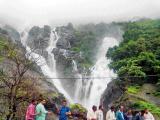
Several waterfalls have come alive, attracting scores of tourists

Kodagu
Kodagu

The monsoon may not have reached its peak in the State. But, they have intensified in some places, while disappointing farmers in other places. Showers have been heavy, especially in the coastal and Western Ghats belts of the State.

Kodagu

Deputy Commissioner Anurag Tewari has banned the entry of tourist vehicles on the Bhagamandala-Talacauvery road for 15 to 20 days.

This is a precautionary measures as cracks have developed on the boulders of a hillock on the roadside. On Monday, the deputy commissioner visited the spot where boulders had caved in on the road.

He said as the Talacauvery area is receiving heavy rainfall, there are possibilities of flood. The boulders beside the road have developed cracks. Thus, officials of the PWD and Mines and Geology department had been directed to submit a report on the safety of the road, Tewari said. Only light vehicles will be allowed on the road.

A boat has been arranged to ferry people in Bhagamandala to safer areas. It will be better if tourists do not come to Bhagamandala-Talacauvery during rainy season, Tewari said. In the meantime, rain receded in Madikeri, Bhagamandala, Napoklu, Kushalnagar and Somwarpet. Balele, Nittur and Srimangala received good rainfall.

Two persons suffered injuries when a branch of a tree fell on them at Arameri in Virajpet. Bhagamandala received 13.7 cm rainfall. The water level in Harangi
reservoir stood at 2,841.66 feet. The inflow of water was 8,359 cusecs.

Shimoga

Though several parts of the district continued to receive moderate to heavy rain on Monday, the intensity was less.

The Malnad taluks of Teerthahalli, Sagar, Hosanagar received moderate to heavy rain. In the last 48 hours, Agumbe received the highest rainfall of 283 mm, followed by Yadur (Hosanagar taluk) 240 mm, Hulikal 205 mm, Chakra 227 mm, Savehaklu 190 mm, Teerthahalli 145.2 mm and Sagar 85.4 mm.

Following the heavy rain in Teerthahalli, the Mandagadde bird sanctuary was submerged. The nests of birds were washed away in rain. The mantap near the Korpalaiah convention hall on the banks of River Tunga in Shimoga city was submerged, following the release of water from Tunga dam.

Water levels in various reservoirs across the district witnessed a drastic rise following heavy rainfall in the catchment areas. The level in Linganamakki reservoir rose to 1,754.50 against the maximum level of 1,819 feet. The inflow of water was 38,183 cusecs and the outflow 175 cusecs.

The water level in Bhadra dam rose to 144 feet against the maximum level of 186 feet. The inflow was 24,854 cusecs and the outflow 120 cusecs. The level in Tunga dam rose to 588.21 metres against the maximum level of 588.24 metres. The inflow of water was 68,000 cusecs. As many as 48,000 cusecs of water was released from 19 out of the 22 crest gates.

Dakshina Kannada

Heavy rain that lashed Dakshina Kannada district on Sunday receded on Monday. However, intermittent rain continued to lash the district. The sky remained overcast the whole day.

In the last 24 hours, Bantwal received 135 mm, followed by Belthangady—114.6 mm, Moodbidri—104.2 mm, Sullia—98.2 mm and Puttur—72 mm. The water level has receded in Kumaradhara river.

Three houses were partially damaged when a hillock caved in on them at Shantigudde near Jokatte in Mangalore taluk.

The road leading to Athoor Mahaganapathy temple at Pakshikere in Mulki was inundated, following heavy rain on Sunday night.

Udupi

The district recorded an average of 104.1 mm rainfall in the last 24 hours. Karkala taluk received 134.4 mm, Kundapur taluk 106.6 mm and Udupi 71.3 mm.

Following gusty winds, a house at Nejar in Mooduthonse village of Udupi was damaged. Another house was partially damaged in Karkala taluk. A tree was uprooted on the Hebri-Karkala road, disrupting the movement of vehicles for a few hours. River Sita is in spate.

Chikmagalur

Rain has receded in NR Pura, Chikmagalur, Tarikere and Birur. However, rains continued to lash Kottigehara, Javali, Gonibeedu, Kalasa, Kigga and Sringeri. Kerekatte received the highest of 195.4 mm of rainfall in the last 24 hours.

Belgaum

The Malaprabha, Mahadayi and Pandari rivers are in spate following heavy rains in the Western Ghats region of Khanapur taluk in the district. The Gawwali, Kongala and Pastoli villages of Nerasa Gram Panchayat have been cut off and have formed an island as the Mahadayi river and the Bandora canal are overflowing.

Power supply was disrupted in the Shiroli Gram Panchayat as several trees and electricity poles were uprooted, snapping power lines. Overflowing ponds have hit movement of vehicles on the roads.

source: http://www.deccanherald.com / Deccan Herald / Home> State / Bangalore, DHNS – July 14th, 2014

‘Madikeri to get water from Kundamestri shortly’

The work on a temporary project to supply water from Kundamestri is nearing completion. The water from Kundamestri is likely to be supplied to the citizens of Madikeri by the week end.

Sand bunds have been laid to store water. The collected water will be supplied to Kootuhole through pipes. After filtering the water at a Filter house at Stuart Hill, water will be supplied to the citizens.

Madikeri reels under water crisis every year during summer. The work on Kundamestri project was initiated to mitigate water crisis.

However, owing to delay in release of funds, the work could not be completed. Now the estimated cost of the project has been escalated.

The Kundamestri project is being implemented by Karnataka Water Supply and Sewage Board. It will take another one year to complete the work.

Board Executive Engineer Balachandra has expressed confidence of completing the work. The project has been taken up keeping in mind the development of Madikeri in the next 50 years.

When the water level declines in Kootuhole, water will be supplied from Kundamestri to Kootuhole.

source: http://www.deccanherald.com / Deccan Herald / Home> District / Srikanth Kallammanavar / Madikeri – DHNS, July 26th, 2014

Visitors flock to picturesque spots along the Cauvery

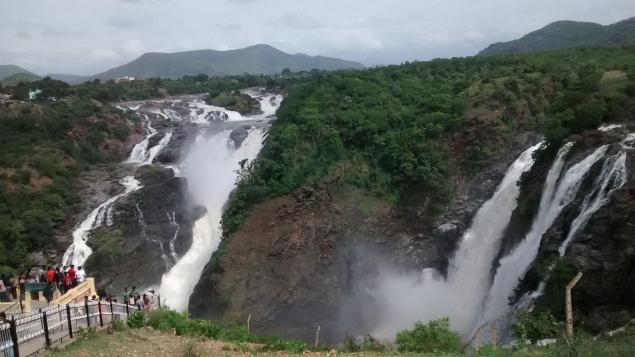
The Gaganachukki waterfalls in Mandya district is one among the tourist spots along the Cauvery that has been attracting visitors every day for the past two weeks / . Photo : Special Arrangement / The Hindu

The outflow from the reservoir was at the rate of just 350 cusecs on July 8. However, it rose to 8,052 cusecs on July 15 as the Irrigation Department began discharging water to Tamil Nadu.

With the Irrigation Department releasing water from the Krishnaraja Sagar (KRS), tourism spots along the Cauvery have been witnessing a steady rise in the number of tourists for the past couple of weeks.

Catchment areas of the Cauvery in Kodagu district and areas upstream of the reservoir received good spells of rainfall in recent days and therefore, the inflow rate into the reservoir has increased significantly. The authorities have increased the outflow from the reservoir, owing to which, these tourism spots now look vibrant and picturesque.

Tourism spots
Visitors are flocking to KRS, Balamuri waterfalls, Ranganathittu Bird Sanctuary, Srirangapatna, Paschima Vahini, Gende Hosahalli Bird Sanctuary, Mahadevapura, Muthathi, Bheemeshwari fishing camp, Shivanasamudra and Gaganachukki waterfalls in the district.

The outflow from the reservoir was at the rate of just 350 cusecs on July 8. However, it rose to 8,052 cusecs on July 15 as the Irrigation Department began discharging water to Tamil Nadu. It continuously increased till Sunday, when it was 11,475 cusecs at 6.30 a.m. The CNNL then reduced the outflow rate to 446 cusecs on Sunday night. It was, however, increased to 3,100 cusecs on Tuesday morning.

At least 20,000 tourists — domestic and foreign nationals — have been visiting these places every day for the past two weeks. Many of them come from Bangalore and other parts of south India to take in the beauty of nature, a senior officer of the Department of Tourism told The Hindu here on Tuesday.

He said that the number of people thronging these tourism spots was expected to increase in the coming days.

Meanwhile, the Mandya police have deployed additional policemen at Muthathi, Gaganachukki and Balamuri, KRS and other places to prevent loss of life and property.

source: http://www.thehindu.com / The Hindu / Home> News> National> Karnataka / by M. T. Shiva Kumar / Mandya – July 23rd, 2014

Shirin in a horror film

Actress Shirin will be seen next in a lead role in a horror film titled Dhigil, directed by Santosh Kodenkeri, an ad filmmaker who is making his feature film debut. Ashok of Pidichirukku fame plays the male lead.

ShirinKF18jul2014

Says Santhosh, “The entire film happens in one night. Shirin plays a TV script writer who is travelling from Chennai to Coorg. She stays in a home stay in Coorg for the night as she wants to surprise her boyfriend, played by Ashok, on his birthday the next morning.
The mysterious happenings that occur during her stay and her ordeal through the night form the plot.” He adds that though there will be a few supernatural ele ments, the film is basically a psychological thriller.

Interestingly, Santhosh is making the film in Kannada as well. “Since the subject is universal, I decided to make this as a bilingual. While Ashok reprises his role, Sayali Bhagat plays the female lead in the Kannada version,” he reveals.

source: http://www.timesofindia.indiatimes.com / The Times of India / Home> Entertainment> Tamil> Movies / M. Suganth, TNN / July 15th, 2014

Madikeri Farmer Eyes Record With 41-ft Cane

Madikeri :

B Hoovaiah is a happy man. A stalk of sugarcane grown by Hoovaiah in Madikeri is all set to enter the Guinness Records as the tallest in the world. The earlier record, set in 2001, was held by Venkatesh Gowda of Kolar.

Hoovaiah, a BSNL tower operator in Convent Junction in Madikeri, has been protecting the cane for three years now. All the required inspections have been completed by expert committees and a team from Guinness is expected to arrive shortly, before an official announcement can be made.

Hoovaiah told Express that an expert team inspected the stalk and measured it at 41.1 feet.

He then formally approached the Guinness authorities, asking them to consider it for a world record.

Later, he received an acknowledgement from Guinness records in-charge, Era Norroy.

Hoovaiah, who served in the Indian Army for 26 years, lives at Bettathoor in Madikeri taluk and has served as a tower operator for 11 years.

He expressed happiness that the cane had been grown organically.

source: http://www.newindianexpress.com / The New Indian Express / home> States> Karnataka / by B C Dinesh / July 10th, 2014

Saving Kodagu

Kodira A Kushalapa writes why there is an urgent and dire need to protect the natural landscape of Kodagu, the “Scotland of India”.

The erstwhile state of Kodagu is now a district in Karnataka with nature and culture, that require immediate efforts to conserve, not only for the present, but also for the future generations to survive.

The district is partly located on the Western Ghats with a portion on the east.

The Western Ghats is considered an ecologically sensitive area and requires careful scientific approach in its development and management, failing which, it will have adverse impacts on the entire southern part of India.

Under Article 48A of the constitution, the government is under an obligation to protect and improve the environment and to safeguard the forests and wildlife of the country.

Under Article 51A(g), likewise, each one of us as citizens, has the obligation to “protect and improve the natural environment including forests, lakes, rivers and wildlife and to have compassion for living creatures.” There are several issues that require careful and urgent handling.

Paddy cultivation
The district, on an average, receives over 2500 mm of rainfall annually and is ideally suited for rain-fed paddy cultivation.
People were cultivating only paddy till the British invasion in 1834 and took up coffee cultivation subsequently.

Now, only 10 to 12 per cent of its total area is under paddy. It is been discovered recently that paddy cultivation is not economical and farmers are diverting their paddy fields for cultivating cash crops or for construction, without any concern and forethought.
This has increased the run-off during the rainy season, resulting in flash floods, damaging the lands by accelerated soil erosion. Paddy cultivation was impounding rainwater for about 100 in paddy fields, allowing slow infiltration enriching the subsoil groundwater.

This would be beneficial to us later, due to slow release of the groundwater, to maintain continuous flow in rivers.

Now the rivers are almost dry during summer, indicating that there is a need for encouraging paddy cultivation all over Kodagu district by introducing incentives, subsidy and support price.

The government should immediately prohibit conversion and use of paddy fields for any other purpose, like it has been done in Kerala and Dakshina Kannada.

Another issue which needs immediate attention is reduction of crop damage by wild animals, which has forced many farmers to abandon paddy cultivation.

Forest conservation

Nearly 31 per cent of the geographical area of Kodagu is under forests managed by the government. Tropical evergreen forests dot this landscape.

Any disturbance to them will make the area barren, like we see around Talacauvery, where the once dense forests have now been reduced to grasslands due to continuous use of wood by pilgrims.

These lands are so degraded with poor nutrient top soils, that reforestation has become a hard task.

The forests have to be protected to facilitate infiltration of rainwater and to prevent accelerated soil erosion.

Natural forests once destroyed cannot be recreated and reforestation can only create plantations.

The various forest and wildlife acts should be strictly implemented and the persons who violate them should be suitably punished.

Relocation

There are a number of cases of encroachment in the forests. Even high forests like Devarakadu and national parks have been encroached upon, where wildlife need relocation and rehabilitation, outside the forests and possibly even out of Kodagu district to drier areas suitable for agriculture.

The Forest Rights Act envisages the issue of khatha to all tribals and others, residing inside forests for 2 to 3 generations, not to continue there only inside the forests, but as an important document to get equal areas outside forests during relocation.

The union government is committed to grant Rs 10 lakh per family during the relocation to bigger and compact blocks.

Fodder development is another important activity to contain wild animals inside government forests. The flowering of bamboos has left only dried clumps and have become hazardous to forest fires.

Grass and other fodder species have been destroyed and invaded by lantana and other weeds as ground flora, preventing natural regeneration of native species.

It is impossible to raise any fodder plants now in government forests unless large blocks or compartments are properly fenced and protected and then planted with tall seedlings of fodder species annually to cover the entire forests.

In addition, profuse aerial seeding of treated bamboo and other miscellaneous seeds should be taken up with the onset of monsoon all over the forests.

The old plantations of teak covering over 7000 ha in Nagarhole National Park and other areas should be harvested and liquidated in a phased manner (with special permission of the Central government) and followed by planting of bamboo seedlings to develop fodder resources to wild animals.

The forest department should give priority for creating barriers along the boundaries of government forests and develop fodder resources for herbivores inside such forests.

Development of tourism

Kodagu has attracted tourists from all over the world, creating irreparable damage to the landscape.

The presence of numerous resorts and homestays all over the district has attracted more tourists resulting in landslides, water scarcity, waste management problems, bad roads, felling of trees for constructing houses, influx of outsiders for business and settlement and high cost of living.

There is no proper guidance and control for activities like registration of homestays and resorts, study of environmental impact assessment and carrying capacity of every activity.

The building and house constructions have been taken up on steep terrains as seen in Madikeri and Virajpet landscapes, making the hills barren.

The riverside areas are all occupied unauthorisedly, polluting river water.

There is a need to control and restrict the tourists coming to Kodagu, by studying the carrying capacity of land involved in every activity and their impact on environment and framing suitable guidelines.

Management of private forests

Nearly 75 per cent of the area in the district is covered by trees.
Coffee estates maintain sufficient shade trees per ha in which silver oak gets precedence due to its faster rate of growth, straightness of bole, multiple use of wood for planks, furniture, peeling, plywood etc and exempted from felling and transit permits and fetches revenue returns in about 30 years.

However, its cultivation should be restricted to allow other indigenous species to maintain biodiversity, to facilitate birds and bees to control pests and increase pollination.

Jamma malai and Jamma bane land holders who have also maintained trees in their land should be given tree rights as an incentive to grow more trees to supplement their income when necessary.

There is, however, a section in the Karnataka Forest Act with a provision to take over the management of private forests by forest department, if the owners violate the provisions of the Act and management principles. This would be binding on the owners to protect the standing trees.

Under the provisions of Karnataka Protection of Trees Act, if a tree is felled, double the number of seedlings should be planted by the owners and this would ensure the sustainability of tree cover.
Therefore the ownership rights of the trees should be with the owners.


Land ownership

Jamma land holder
s have been enjoying the land tenure even before the rule of Lingayat Rajas, who surveyed, documented and levied necessary land tax.

The Bane lands attached to paddy fields called Jamma Bane, in many families, have been converted into coffee and other plantations and by paying necessary tax, are now the property of those families.
The Jamma malai owners have been negotiating with the government to surrender their privileges for a reasonable compensation, which should be accepted as these malais are situated on the ecologically sensitive hill ranges and the composition is similar to natural evergreen forest types.

Compensatory Afforestation Fund Management and Planning Authority (CAMPA) funds could be utilised to pay compensation. Necessary amendments to the KF Act should be introduced to make the families of Jamma holders as the rightful owners of Jamma lands.

However, to safeguard the unique culture of natives of Kodagu, the sale of their Jamma property should be prohibited, except for other Jamma holders only.

High Tension 400 kV line

The proposal to draw a 400 kV line, partly along the reserve forest, private wetlands and coffee estates was met with stiff opposition from local people.

There are several alternate routes available, such as, along the Mysore-Kodagu forest boundary line, or by upgrading the older available 220 kV line or taking through an underground tunnel (not feasible here) without clearing much forest growth.

Amendment 4.4 to the FC Act issued by Ministry of Environment & Forests (MoEF) on January 7, 2013, indicates that for linear projects, alternate routes, if available should be indicated and availed of, so that forest lands are saved.

This linear project should be aligned outside the protected area without any consideration of increased cost and accordingly the MoEF may be appraised to allow the HT line through alternate non-forest areas.

source: http://www.deccanherald.com / Deccan Herald / Home> Supplements> Environment / by Kodira A. Kushalapa / DHNS – July 08th, 2014
DK drenched, but rain plays truant in Kodagu

Monsoon gained momentum in Dakshina Kannada with the region receiving intermittent rains on Monday. In the last 24 hours, Sullia received the highest of 43.4 mm rainfall, followed by Mangalore—15.2 mm, Moodbidri—13.2 mm Bantwal—14.8 mm, Puttur—11.4 mm.

The rain brought the much-needed relief from the scorching heat for the people.
“If the region continues to receive rain, we can start agriculture activities,” said a farmer. The roof of a house collapsed at Kumpala Hanuman Nagara in Someshwara Gram Panchayat limits, following rain on Monday. The house belongs to Pushpa.

To invoke the blessings of rain god, seers from Karnataka, Tamil Nadu and Kerala conducted ‘parjanya japayajna,’ at Talacauvery (the birthplace of River Cauvery) in Kodagu district on Monday.

There was drizzling in Talacauvery, Madikeri, Napoklu, Gonikoppa, Virajpet and Kutta. The inflow of water to the Harangi reservoir was 221 cusecs. It was 8050 cusecs during the corresponding period last year.

In Shimoga

Parts of Shimoga district received moderate rain on Monday. In the past 24 hours, Shimoga received 2.2 mm of rain followed by Bhadravathi (1.8 mm), Thirthahalli (1.6 mm) and Sagar (0.6 mm).
DH News Service

source: http://www.deccanherald.com / Deccan Herald / Home> State / Mangalore – Madikeri, DHNS – July 08th, 2014

Water from Kundamestri to flow to three water bodies

The ambitious Kundamestri drinking water project is all set to supply water to three keres (streams) in Madikeri. Deputy Commissioner Anurag Tiwari has given his nod for the laying of pipelines at an estimated cost of Rs 20 lakh to flow water Roshanara kere, Pampina kere and Kannandabane open well.

KundamestriKF07jul2014

There were no pipelines to flow water to these water bodies. Hence, barring these areas, water from Kundamestri was supplied to other areas. If the work on laying pipelines are complete, then water from Kundamestri project will reach entire Madikeri town.

Following delay in completion of work on Kundamestri project, the water was flowed to Kootuhole and later to filter house to be supplied to the residents.

Once the work on pipelines are complete, then water can be supplied to the residents directly from Kundamestri.

Normally, Kannandabane kere, Roshanara kere and Pampinakere goes dry during peak summer. The CMC was depending on tankers to supply water to the residents. If the project on supplying water from Kundamestri is success, then the CMC can save money.

The DC has given nod for an action plan of Rs 32.80 lakh for taking up 14 different works under second phase of SFC grant during 2013-14.

Kannandabane, Chaingate and surrounding areas, Raghavendra temple, Tyagaraja colony, Azad Nagara and Putani Nagar will be covered under Kundamestri water project.

The remaining 11 works include cleaning of borewells, installing pumps for borewells at Mangaladevi Nagara and Sudarshana Circle, deepening a borewell at Azad Nagara, drilling borewells at Dasavala Jayanagara and Chamundeshwari Nagara, sources said.

source: http://www.deccanherald.com / Deccan Herald / Home> District / by Srikanth Kallammanavar / DHNS-Madikeri, July 07th, 2014

400 KV- HT line passing through Kodagu Reserve Forest

No justification to sacrifice natural forests

DrKodiraKF02jul2014

by Dr. Kodira A. Kushalapa, IFS (Retd.) and former RCCF, Bhopal under MoEF

Forests all over the world are being threatened with the rise of human population, leading to the increased level of Co2 in the atmosphere, global warming, climate change, submersion of low lying areas due to the rise of water levels in the oceans, disappearing forest areas and trees etc. Therefore, we have to take all possible measures to save natural forests, not only for our survival but also for the future generations to come.

The Central Government has added Article 48A and 51A (g) to our Constitution to protect and improve our environment, safeguard forests and wildlife and we citizens are obliged, duty-bound and responsible to save these natural resources. The common phrase is: think globally but act locally. This will apply in this case also while considering the route for High Tension (HT) line through natural reserve forests of Kodagu.

Fortunately, there are two or three alternate routes to draw the transmission line avoiding natural forests. Therefore, there is ample justification to avoid forests on a priority basis, to save and conserve forests locally. The value of forests cannot be just the timber and firewood value down to certain minimum girth of standing trees, for comparing the costs but should be the value of whole forest ecosystem called environmental values or ecological benefits, which will be lost permanently after clearing the forests.

These values include the absorption of Co2, production and release of oxygen by all plants existing, habitat for birds and wildlife, soil and water conservation, adding fertility to soil etc. These environmental values are far more than whatever the total cost of laying the linear line and is not comparable. Thus the question of shortest route through the forests for cost-cutting is ruled out in the interest of saving forests. The Power Grid Corporation can recover the extra cost by increasing the tariff per unit of electricity.

The HT line can go through the D-line between the erstwhile Coorg and Mysore States, which is now the D-line between Kodagu and Mysore districts, where due to the annual D-line clearances earlier, the trees are smaller in size and less in numbers. The proposed HT line is running almost parallel to the D-line and hence a more feasible alternate route.

The other route is by upgrading the present 220 KV line for which the necessary permission under the Forest Conservation Act 1980 has been already obtained to pass through the National park and requires the replacement of towers only. It is almost a straight line passing through H.D. Kote and D.B. Kuppe. The temporary problem of the PG Corporation is that during the progress of upgrading the 220 KV, they have to de-activate the present line and is left to them to solve by fast progress and using the other grid lines.

The third alternate is to take up the line through an underground tunnel which will be at an exorbitant cost and not feasible through forest areas with standing trees and their root systems.

The FC Act envisages to take up compensatory afforestation in new areas equal in extent of area (twice the extent in forest area) diverted for non-forestry purposes by the forest department at user’s cost. But the fact is that nobody can re-create a “natural forest,” which has by a series of succession over centuries, stabilised into a climax type of forests with rich biodiversity. But at the most we can create a “plantation forest” of few species only, if the new compensated area is good for growing trees. If such plantations are raised in semi-arid regions like Bijapur and Gulburga for want of land in Kodagu, there will be complete failure of the objectives of compensatory plantation. Similar type of areas only should be allotted for compensatory afforestation. It is therefore imperative and justifiable to protect and conserve the existing natural forests than going for compensatory plantations that too, when alternate routes are available for linear projects.

[e-mail: kodira1@hotmail.com/ Mob: 94480-58549]

source: http://www.starofmysore.com / Star of Mysore / Home> Feature Articles / Friday – June 27th, 2014

‘Don’t depend on single crop’

Growers should concentrate on floriculture, pisciculture and piggery units along with coffee, said Shimoga Agriculture University Vice Chancellor Dr C Vasudevappa.

KodaguKF24jun2014

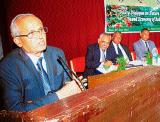
Speaking at a policy dialogue on future of coffee based economy of Kodagu organised by National Research Programme on Plantation Development (NRPPD), Agricultural Scientist Forum, Coorg Planters Association and Bangalore Institute for Social and Economic Change, he said that farmers should not depend on single crop for livelihood. Along with coffee, other crops should be grown.

The growers should focus on technology, quality in coffee, improvised processing technologies to fetch profit.

Coffee Board former vice president N M Bose Mandanna said that there are 90 per cent small growers.

The Board and the Centre should come to solve the problems faced by the growers. Coffee is part of Kodagu’s life. When the prices slashed in 2004, the growers did not stop growing coffee.

Institute for Social and Economic Change (Bangalore) Prof P G Chengappa said that on the lines of National Horticulture Mission, Coffee Mission should be set up. The Central government and the Coffee Board should also focus on marketing of the coffee. “We have failed in marketing coffee,” he added.

Dr K J Joseph of NRPPD, ISEC Director Dr Binay Kumar Patnaik, and ASFK President Dr B C Nanjappa among others were present.

source: http://www.deccanherald.com / Deccan Herald / Home> District / DHNS – Madikeri, June 07th, 2014